Mandatory Enrollment of Graduates at Employment Exchange

 Government does not have any proposal to make it mandatory for graduates to register at employment exchange at districts across the country. The registration at employment exchanges across the country for availing employment related services is voluntary.

The Ministry is implementing National Career Service (NCS) Project to provide a variety of career related services viz. job search and matching, career counselling, vocational guidance, information on skill development courses, etc. The services are available online on the National Career Service Portal (www.ncs.gov.in).

Scholarship Schemes

 The Ministry of Minority Affairs implements three Scholarship Schemes viz. Pre-Matric, Post-Matric and Merit-cum-Means based Scholarship Schemes for the educational empowerment of students belonging to economically weaker sections of the six notified minority communities i.e. Buddhist, Christian, Jain, Muslim, Parsi and Sikh in all States/UTs across the country. A total of thirty (30) lakh Pre-Matric, 5 lakh Post Matric and 60,000 Merit-cum-Means scholarships are targeted to be distributed as ‘Fresh’ Scholarships every year, besides, Renewal scholarships. The  three  scholarship  schemes are  being  implemented  through  the  National  Scholarship  Portal  (NSP)  and are  being  disbursed  under  direct  benefit  transfer (DBT)  mode  to  improve  the  efficiency  and  bring  transparency  by  removing duplicity  and  stopping  pilferages.  


The details of number of applications received, verified by States/UTs and sanctioned by the Ministry of Minority Affairs under the above mentioned schemes during 2016-17 to 2021-22 are as under:


Year

Pre-Matric Scholarship


Number of verified applications received

Number of applications Sanctioned


2016-17

74,25,553

41,53,524


2017-18

85,70,708

53,11,257


2018-19

86,88,465

56,91,854


2019-20

70,84,410

55,68,025


2020-21*

60,38,248

52,29,148


2021-22**

78,29,283

24,05,498


Total

4,56,36,667

2,83,59,306


Post-Matric Scholarship Scheme


2016-17

13,65,838

6,24,990


2017-18

14,07,780

6,98,069


2018-19

12,80,958

6,84,265


2019-20

11,24,202

7,43,141


2020-21*

11,61,252

6,62,912


2021-22**

9,91,534

1,38,105


Total

73,31,564

35,51,482


Merit-cum-Means based Scholarship Scheme


2016-17

189584

121937


2017-18

180421

119472


2018-19

180274

117771


2019-20

145398

118359


2020-21*

137340

120208


2021-22**

118351

52720


Total

9,51,368

6,50,467


   *   Disbursement of Scholarships for 2020-21 continues in 2021-22.

** It includes sanction for finally verified renewal applications of 2021-22 only. Disbursement for fresh application 2021-22 is yet to begin.

(d):  The details of budget allocated and released under the above mentioned schemes from 2016-17 to 2021-22 are as under:-

(In ₹ Crore)

Scheme

Pre-Matric

Post Matric

Merit-Cum-Means

Year

Budget Allocated

Amount Released

Budget Allocated

Amount Released

Budget Allocated

Amount Released

2016-17

931.00

585.94

550.00

287.11

335.00

220.54

2017-18

950.00

1108.13

550.00

479.72

393.54

388.79

2018-19

980.00

1176.19

692.00

354.89

522.00

261.17

2019-20

1220.30

1324.84

496.01

428.77

366.43

285.63

2020-21

1330.00

1325.54

535.00

512.81

400.00

396.34

2021-22

1378.00

474.52*

468.00

80.58*

325.00

134.09*

Total

6789.30

5995.16

3291.01

2143.88

2341.97

1686.56

*Expenditure as on 31.01.2022.

National Adaptation Fund for Climate Change (NAFCC)

 The National Adaptation Fund for Climate Change (NAFCC) was established to support adaptation activities in the States and Union Territories (UTs) of India that are vulnerable to the adverse effects of climate change. NAFCC is implemented in project mode and till date, 30 projects are sanctioned in 27 States and UTs.

The Ministry of Environment, Forest and Climate Change has demarcated the Hazard Line for the entire mainland coast of India under its Integrated Coastal Zone Management (ICZM) project. Further, Coastal Regulation Zone Notification 2019 has been notified to conserve and protect the unique environment of coastal stretches and marine areas to promote sustainable development.

The NAFCC projects implemented in the states of Kerala, Tamil Nadu and Andhra Pradesh include activities relating to coastal areas and these projects are- (i) Promotion of integrated farming system of Kaipad in coastal wetlands of North Kerala (ii) Management and rehabilitation of coastal habitats and biodiversity for climate Change Adaptation and Sustainable Livelihood in Gulf of Mannar, Tamil Nadu and (iii) Climate Resilient interventions in Dairy Sector in coastal and Arid areas in Andhra Pradesh. Till date, a sum of Rs. 6,35,68,108/- has been released to the State of Andhra Pradesh under NAFCC.

Crores of students, teachers and parents from India and abroad to participate

 Union Education Minister Shri Ramesh Pokhriyal ‘Nishank’ today announced the commencement of the registration process of the fourth edition of Prime Minister’s Interaction Programme with school students, teachers and parents – Pariksha Pe Charcha 2021 through his social media platform.

Pariksha Pe Charcha is a much-awaited annual event where the Prime Minister responds to questions related to examination stress and related areas posed by students in his uniquely engaging style in a live programme. Shri Pokhriyal informed that this time the programme will be held virtually. He further stated that questions related to dealing with examination stress from school students of class 9 to 12 will be invited through MyGov platform and selected questions will be featured in the programme. He also informed that school students, teachers and parents from all across the country are to be selected through an online creative writing competition designed specifically for them on MyGov platform. There are different topics assigned for students, parents and teachers in the contest. The applicants can also pose their questions on this platform. The selected participants will be participating in the programme online from their respective State and UT headquarters and will be presented with a special PPC kit (Pariksha Pe Charcha kit). The portal for online creative writing competition will remain open till 14thMarch 2021, he added.


Click here to access the link of the portal: https://innovateindia.mygov.in/ppc-2021/

Topics for creative writing competition on MyGov

For Students

Topic 1: Exams are like festivals, celebrate them

Activity: Draw a scene depicting a festival around your favourite subject.

Topic 2: India Is Incredible, Travel and Explore

Activity: Imagine your friend visits your city for three days. What memories would you create for him or her in each of the following categories?

  • Places to See: (Word Limit: 500 Words)
  • Food to Relish: (Word Limit: 500 Words)
  • Experiences to remember: (Word Limit: 500 Words)

Topic 3: As One Journey Ends, Another Begins

Activity: Describe the most memorable experiences of your school life in not more than 1500 words

Topic 4: Aspire, Not to Be, but to Do

Activity: If there was no restriction on resources or opportunities, what would you do for society and why? Submit a write up in not more than 1500 words

Topic 5: Be Grateful

Activity: Write ‘Gratitude Cards’ for those whom you are grateful to in not more than 500 words

For Teachers

Topic: Online Education System – Its benefits and how it can be improved further.

Activity: Write an essay on the topic in about 1500 words

For Parents

Topic 1: Your Words Make Your Child’s World – Encourage, As You Have Always Done

Activity: Write a story about the vision you share with your child for his or her future. Let your child write the first sentence. Then you write the next and so on. (Word Limit: 1500 Words)

Topic 2: Be Your Child’s Friend—Keep Depression Away

Activity: Write a postcard to your child and let him or her know why they are special. (Word Limit: 100 Words)


*****


Concerns over Railway Exam

 “We will handle the issues and grievances of candidates/aspirants with utmost sensitivity”, said Shri Ashwini Vaishnaw, Minister of Railways in his interaction with DD News last evening. Concerns have been raised by some candidates over the process of shortlisting of candidates for the second stage of the ongoing recruitment examination under RRBs Centralised Employment Notice (CEN) No. 01/2019 (for Non-Technical Popular Categories – Graduate and Under-graduate) – results of which were announced on 14.01.2022.

Speaking to DD News over this issue, Shri Ashwini Vaishnaw said that the matter will be handled with sensitivity. A high-power committee comprising senior officials to look into these concerns, has already started receiving representations of candidates/aspirants. Senior Railway Recruitment Board (RRB) officials are meeting groups of students and taking their representations. The Minister assured the candidates/students that all their problems will be resolved with utmost sensitivity and they need not get confused/influenced by anyone’s words.

Articulating the issue of number of candidates to be shortlisted for the 2nd stage of Exam, the Minister informed that as an old Railway practice the number of Candidates to be called for NTPC Second Stage Exam was only 10 times the number of approved vacancies. This number of calling 10 times of the number of vacancies was increased to 15 times the number of vacancies in CEN 03/2015 and 20 times the number of vacancies in CEN 1/2019, so that more and more students get a chance to write the exam.

Elaborating further, Shri Vaishnaw said that “if you look at each category, 20 times students/candidates have been selected in each category”. The issue is that more than one candidate has applied in more than one category. Since a 2nd Stage consists of CBT of five different levels and a candidate can be shortlisted for more than one level as per eligibility, merit and option, the lists of 7 lakh roll numbers will have some names appearing in more than one list. The Minister said that this issue can be sorted out and there is no need to hit the road or set the train or fire as the Railway infrastructure is public property.

Talking about the solution of this issue, Shri Ashwini Vaishnaw said that the high-level committee which has been constituted to look into the concerns/grievances of candidates, is comprised of very senior officials having vast experience in recruitment process. He requested the concerned students/candidates to submit their grievances/concerns to the committee within three weeks of time i.e. by 16.02.2022 and we will come up with a solution immediately after that.


RKJ/M

Register with Sainik Schools Society for setting up new schools

 Marching ahead in tune with National Education Policy (NEP), Government has decided to provide increasing focus on value-based education enabling children to develop pride in rich culture and heritage of this nation, effective leadership with character, discipline, sense of national duty and patriotism through setting up of 100 new Sainik Schools under Sainik Schools Society, Ministry of Defence in partnership with Private Schools/NGOs/States. 

Towards this end, applications were invited for joining the initiative only through the web portal https://sainikschool.ncog.gov.in. Presently, 284 schools have registered therein and the evaluation for identifying prospective partners is underway for the academic session 2022-23. In view of the response to this initiative and the need for finalising the evaluation in a time bound manner, it is now being considered to close the receipt of further applications. Accordingly, closing date for any fresh registrations on the web portal https://sainikschool.ncog.gov.in is 31 January 2022. No fresh registrations will be accepted after 31 January 2022 as the portal will be closed for this purpose for the academic session 2022-23.

Initiatives by Navodaya Vidyalaya Samiti to ensure continuity of education

 Navodaya Vidyalaya Samiti (NVS) with the support of Ministry of Education, MHA and state administration ensured safe return of 3173 migrated students of Class-IX during COVID pandemic period. By imparting online training to teachers and conducting online classes, NVS made all efforts to ensure no academic loss to students. For students without proper devices, proper education is being ensured by providing study materials, AAC and printed assignments.  The following activities in academics and capacity building were undertaken:  

  1. Academics
  • Opening of JNVs: NVS developed SOP for opening of JNVs on the basis of SOP issued by MOE, MHA & MoHFW by incorporating the salient features of state administration guidelines.  Accordingly, Students of classes X and XII have reported in JNVs for physical classes with their parents’ consent. 406 JNVs have been reopened in states/UTs where permission to open residential schools have been given. Bridge courses and special classes are being carried out for the students to fill up the learning gaps.  National Pre board Exams have been completed for classes X and XII. 
  • Launch of Vigyan Jyoti Phase-2: Vigyan Jyoti Project is an ambitious collaborative initiative between Dept. of Science & Technology and Navodaya Vidyalaya Samiti for promotion of Girls Students in JNVs. Vigyan Jyoti Project (Phase I) is going successfully in 58 JNVs since December 2019.  The same is extended to 42 more JNVs in Phase-II.
  • Fulbright Teacher Exchange Program:  Mr Vivekananda Gosh, JNV Kolar Karnataka & Mr Amit Kumar, JNV Shimla Himachal Pradesh have been selected for the Fulbright Teaching Excellence Achievement (FTEA) & The Fulbright Distinguished Awards in Teaching Program for International Teachers (FDAI) for 2020-21.

B.    Capacity building  Programmes in collaboration with other organizations

  1. Six Days’ Training Programme for Regional Language Teachers in collaboration with CIIL, Mysore in light of NEP-2020

Keeping in view the importance of Regional languages as per NEP-2020, 45 Malayalam, 106 Marathi, 94 Kannada & 69 Telugu language teachers of NVS have been trained.

  1. Five Days’ Online Training Programme on Pedagogical Leadership for NVS Principals in collaboration with NIEPA New Delhi

NEP-2020 has outlined the Role of Principals focussing on preparing & implementing Pedagogical Plans based on Competency based Education. NVS in collaboration with NIEPA, New Delhi is organizing Five Days’ Online Training for preparing Principals as Master Trainers to impart further training to their fellow Principals on Pedagogical Leadership in two batches of 50 Participants in each batch. The training programme for the first batch is scheduled from 22nd February, 2021 and second programme is scheduled in the month of April, 2021.

C. Kala Utsav 2020- NVS Performance

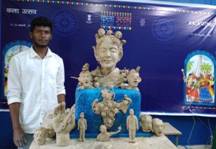
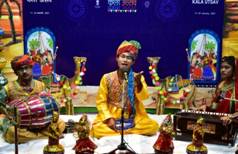
In Kala Utsav-2020, RUPESH DEBBARMA from JNV Gomti, Tripura won first prize in Folk Music and D VENKAT RAO from JNV East Godavari, AP won first prize in 3D Sculpture. 


D VENKAT RAO from JNV East Godavari, AP who won first in 3D Sculpture


RUPESH DEBBARMA from JNV Gomati, Tripura who won first in Folk Music

*****

Student attendance on the rise in KVs across the Country

 Kendriya Vidyalayas across the Country have resumed face-to-face teachings for various classes as per the guidelines issued by the MHA and State Governments. KVs started opening from the month of October in a phased manner.

According to the data compiled on February 11, 2021 from all the KVs, an average of 42% Students of Class 9, 65% Students of Class 10, 48% Students of Class 11 and 67% Students of Class 12 are physically attending classes all over the Country. These figures are dynamic and trends indicate consistent increase every day. Face-to-face classes for class 1 to 8 have also been started in some KVs where State Governments have permitted to open Schools for junior grades.

Regular contact with the Parents and Guardians is being established by the Schools in case of any apprehension from students/parents. Students are being permitted with the prior consent of their guardians.

The SOPs issued by the State and Central Governments are being followed completely in view of the Corona Pandemic. All KVs are clearly advised to follow staggered timings for the students of various classes and ensure adequate safety measures including maintenance of proper physical distance in the classrooms.

However, for students who are not attending the School, the provision of online classes is also running. Students are also in touch with their teachers through various digital platforms.

*****

Steps taken to provide online education amidst COVID-19 pandemic

 The Government has taken various steps to provide online education amidst COVID-19 pandemic. These include PRAGYATA Guidelines on Digital Education, Internet access under BHARAT NET scheme, etc

PRAGYATA Guidelines on Digital Education:Keeping in view the availability of digital infrastructure, guideline briefs on various modes of digital education including online mode that depends more on availability of internet, partially online mode that utilizes the blended approach of digital technology and other offline activities, partial and offline mode that utilizes television and radio as a major medium of instruction of education. The guidelines can be accessed at:

https://mhrd.gov.in/sites/upload_files/mhrd/files/pragyata-guidelines_0.pdf

Internet access under BHARAT NET scheme has been made available to Govt institutions and to improve the internet connectivity in rural areas the CSC e-Governance Services India Ltd (CSC-SPV) of MEITY has been assigned the task of providing Fibre to the Home (FTTH) connectivity to the Government Institutions, including schools. This project is for providing Internet connection to Government schools in respective Gram Panchayats.

The states & UTs have been advised to Map the students school wise with their individual performance. Accordingly, the state governments have been directed to act based on the situation prevailing at every place to meet the demands of all students for providing them with the digital access required for learning digitally.

In order to enable online education benefit to the children of every categoryandteachers,Learning Enhancement Guidelines have been issued.

https://www.mhrd.gov.in/sites/upload_filehs/mhrd/files/Learning_Enhancement_0.pdf

National Girl Child Day Celebrated Across the Country to Promote Awareness about the Rights of Girl Child

 The Ministry of Women and Child Development celebrated the National Girl Child Day on 24th January, 2022. In view of COVID-19 situation in the country, the programmes were organised on virtual/online mode across the nation to promote awareness about the rights of the Girl Child and to celebrate their achievements in various fields.

Online Interactive Programmes     

As part of Azadi Ka Amrit Mahotsav, a virtual function was organised to recognise the exemplary achievements of children by conferring Pradhan Mantri Rashtriya Bal Puraskar (PMRBP) Awards-2022. Prime Minister Shri Narendra Modi interacted virtually with the winners of PMRBP-2022.  The children along with their parents and concerned District Magistrate of their respective district joined the event from their district Head Quarters.

A series of online live interactive programmes were also organised by various Ministries in which the Ministers interacted with young girls and motivated them to have belief in their ideas and to follow their heart.

(i)The Ministry of Women and Child Development together with UNICEF celebrated ‘Kanya Mahotsav,’ a festival of the girl child. Union Women and Child Development Minister, Smt Smriti Zubin Irani, engaged in an interactive online conversation with nine adolescent children from different States. The interaction and the digital campaign emphasized, ‘Har Ladki Khaas Hai’, i.e. ‘every girl is special’.

Delivering the keynote address, Minister Smt Irani welcomed the participation by the adolescent girls and boys who shared their stories of courage, determination and hope. Acknowledging UNICEF’s support in bringing forth these voices of children from across India and suggestions from the children, the Minister  requested for focus on mental health challenges faced by children and support the Samvaad programme with Ministry of WCD; to bring together a coalition of young girls who contribute to ending child marriage in their communities and incorporate the recommendations for services for children in alternative care and family based care situations through Mission Vatsalya.

The Regional Director, UNICEF South Asia, George Laryea Adjei appreciated India’s steadfast commitment and significant progress in preventing child marriage, promoting adolescent empowerment, and ending violence against women and girls. He emphasized UNICEF’s commitment to this agenda and working with the Government of India.

(ii)Union Minister, Ministry of Textile, Commerce and Industries, Consumer Affairs and Food & Public Distribution, Shri Piyush Goyal held a virtual interactive session with young girls who have made noteworthy innovations in different areas.

(iii)Union Minister of State, Ministry of Science and Technology, Dr Jitendra Singh also interacted on a virtual platform with young women entrepreneurs who have made noteworthy achievements in the field of science, technology and innovation.


Webinars

Following webinars were organised by the WCD Ministry on the National Girl Child Day:

(i)National Commission of Women (NCW) organised a virtual discussion on the topic “Save the Girl Child” through which their speakers contributed to raise awareness about the rights of girls and on the importance of girl education. Shri Om Prakash Dhankhar Ex Cabinet Minister, Haryana discussed on the “Ideologies, Mindset and Role of the society towards saving the girl child” and Ms Pragya Vats, Head of campaigns- Save the Children, Bal Raksha Bharat enlightened the attendees on “Awareness about the rights of girls and the importance of girl education and  various policies and its outcomes”.

(ii)The Ministry of Women and Child Development and the National Institute of Public Cooperation and Child Development (NIPCCD) organized a National Webinar on “Addressing Comprehensive Needs of Adolescent Girls in India #ladkiyanjahankhusiyanwahan” on 24th  January, 2022, the National Girl Child Day. The objectives of the Webinar were to: celebrate the National Girl Child Day; provide an understanding on the nutritional needs of adolescent girls; identify the challenges faced by adolescent girls with reference to education; and understanding the importance of psycho-social development among the adolescent girls. A total of 3000 participants from across the country participated in the Webinar. The participants included: adolescent girls from child care institutions, students from colleges, Government Officials, Counsellors, functionaries of Anganwadi Services Scheme and Child Protection Scheme, principals, teachers, PhD scholars, officials from civil society organisations, social workers, administrators, etc.

(iii)National Commission for Protection of Child Rights (NCPCR) organised a webinar on the topic, ‘Legislative Rights of a Girl Child’ which was live streamed on NCPCR’s Facebook and Twitter. Justice Shri Kalpesh Satyendra Jhaveri, former Chief Justice of Orissa High Court was the main speaker for the webinar.


Programs organized by different Ministries

(i)M/o Education, M/o Skill Development, M/o Youth Affairs & Sports, Ministry of Science & Technology organised informative webinars on various issues to highlight the achievements of their Ministries in empowering girl child in the field such as education, health, hygiene, marriage, empowerment, gender equality etc. on the occasion of the National Girl Child Day.


(ii)The Department of school Education & Literacy, Ministry of Education celebrated the achievements of girls on National Girl Child Day under 75th Azadi Ka Mahotsav. The theme of the programme was ‘Hamari Beti Hamari Shaan’. 75 Girl achievers in different fields of academics, sports, Kala Utsav,  Rashtiya Avishkar Abhiyan, environment and culture were  selected across India to participate in the programme.


In this programme, panellists namely, (i) Ms. Anita Karwal, Union Secretary, Ministry of Education, (ii) Ms. Tessy Thomas, Scientist, (iii) Ira Singhal, IAS, (iv) Ms. Ankita Sharma, IPS (v) Ms. Kanta Singh , Deputy Representative, UN Women India and (vi) Ms. Bhavna Kanth, First Fighter Pilot were invited to interact with the achievers and share their life experiences  and success stories with the girls. The profile of the panellists were shown highlighting their work and achievements in the programme and a show reel was also shown during the programme depicting the success stories and the achievements of all the 75 participants.


(iii) Ministry of Culture organized Rangoli Utsav ‘Umang’ to celebrate National Girl Child Day under Azadi ka Amrit Mahotsav. A nationwide event was organized where the participants drew rangoli decorations on the roads and squares named after the female freedom fighters or the female role models of the country. The rangoli decorations were made at more than 70 locations in 19 States.


Celebration under BBBP scheme in districts

All the 405 multi-sectoral districts under BBBP organised programmes such as:

(i)Gram Sabha/Mahila Sabha on CSR

(ii)Programme with schools (Gov/Privates) on value of girl child

(iii)Posters/Slogan-writing/Drawing/ Painting competition among school on STEM related topics

(iv)Stories in local media about BBBP local champions etc.

Some of the events organised by the districts are as follows:

(i)Felicitation of talented girls by Dr. Virendra Kumar, Hon’ble Minister of State, Ministry of Minority Affairs in the Tikamgarh district of Madhya Pradesh.

(ii)Webinar session on menstrual hygiene in Saraikela, Jharkhand.

(iii)Felicitation of block level toppers of 10th and 12 and district toppers of 10th and 12th by District Collector Saraikela, Jharkhand.

(iv)Drawing competition among the Child club members of Ramachandi child club, Kendrapara District, Odisha.

(v)Additional District Magistrate and the team of ICDS Nalanda, Bihar celebrated the National Girl Child Day by blowing the balloon and discussing on to improve the level of health, nutrition and education of the girl child.

(vi)In North Sikkim, National Girl Child Day was celebrated at Mangshila Gram Prashashan Kendra. Shri Pintso Namgyal Lepcha MLA, Panchayats, Zilla Member and Adolescent Girls participated in the programme. Programme started with awareness on the scheme of Girls like Suknya Samridhi Yojana, Child rights, POCSO etc. by DPO/Mangan./North Sikkim.

(vii)Paintings were drawn by the students of GSSS JASSIA Rohtak, Haryana to mark the occasion of National Girl Child Day.

Some Important Tweets on National Girl Child Day

********

PRADHAN MANTRI RASHTRIYA BAL PURASKAR-2022

 29 Children have been conferred the Pradhan Mantri Rashtriya Bal Puraskar this Year, selected from all regions of the country for their exceptional achievements in Innovation (7), Social Service (4), Scholastic (1), Sports (8), Art & Culture (6) and Bravery (3) categories.  There are 15 Boys and 14 Girls among the awardees belonging to 21 States and UTs.

In view of the unprecedented circumstances emerging due to COVID-19 situation in the country, it was not possible to organise a physical ceremony at New Delhi. In order to felicitate and motivate the exceptional works of children, a function was held virtually on the occasion of National Girl Child Day today and also as part of Azadi Ka Amrit Mahotsav. The Awardees of PMRBP 2021 and 2022 along with their parents and concerned District Magistrate of their respective district joined the event from their district Head Quarters. 

During the function, Hon’ble Prime Minister Shri Narendra Modi gave digital certificates to the 61 winners of PMRBP 2021 and 2022 using a Block Chain-driven technology developed by IIT Kanpur under the National Blockchain Project.  The digital certificates are stored on digital wallets installed on the mobile devices of the recipients. The digital certificates issued using the blockchain driven technology are unforgeable, globally verifiable, selectively disclosable and sensitive to user content. Block Chain Technology is being used for the first time for giving certificates to the awardees.

The cash prize of Rs.1,00,000/- was given to the awardees of PMRBP 2022 which was transferred online to the respective accounts of winners during the programme by the Hon’ble PM.

The Hon’ble Prime Minister interacted virtually with the winners of PMRBP 2022. Union Women and Child Development Minister Smt Smriti Zubin Irani and Dr. Munjpara Mahendrabhai, Minister of State were among those present on the occasion.

Interacting with Master Avi Sharma of Indore, Madhya Pradesh the Prime Minister enquired about the secret of his prolific output with regard to various aspects of Ramayana. Master Avi Sharma said that he got the inspiration by the decision of broadcasting the serial Ramayana during the lockdown. Avi also recited some couplets from his creation. The Prime Minister narrated an incident when he went and heard Sushri Uma Bharti Ji when, as a child, she showed immense spiritual depth and knowledge in a programme. He said there is something in the soil of Madhya Pradesh that gives rise to such precocious talent. The Prime Minister told Avi that he is an inspiration and an example of the adage that you are never too young to do big things.

Interacting with Kumari Remona Evette Pereira from Karnataka, the Prime Minister discussed her passion for Indian Dance. He inquired about the difficulties she faced in pursuing her passion. The Prime Minister complimented her mother for ignoring her own adversities to realise her daughter’s dreams. The Prime Minister said that Remona’s achievements are much bigger than her age and told her that her art is a way of expressing the strength of the great country.

Interacting with Kumari Puhabi Chakraborti of Tripura, the Prime Minister enquired about her COVID related innovation. She also informed the Prime Minister about her fitness app for sportspersons. The Prime Minister asked about the support she receives from the school, friends and parents in her endeavour. He asked about her balance in devoting her time to sports as well as developing innovative apps.

Interacting with Master Dhiraj Kumar from West Champaran, Bihar, the Prime Minister asked about the incident where he saved his younger brother from a crocodile attack. PM asked about his state of mind while saving his younger brother and how he feels after the fame he got now. The Prime Minister praised his courage and presence of mind. Dhiraj told the Prime Minister that he wants to serve the country as an Army soldier.

Interacting with Master Meedhansh Kumar Gupta from Punjab, the Prime Minister enquired about his achievement of creating an app for COVID issues. The Prime Minister said that in children like Meedhansh he feels that the government efforts to promote entrepreneurship are bearing fruit and a tendency to become job providers instead of being job seekers is becoming more pronounced.

Interacting with Kumari Tarushi Gaur from Chandigarh, the Prime Minister enquired about her opinion on the balance between sports and studies. The Prime Minister asked why Tarushi idolises Boxer Mary Kom. She informed the Prime Minister that she likes her because of her commitment to excellence and balance that she strikes as a sportsperson and as a mother. The Prime Minister said that the government is committed to providing all the facilities to the sportspersons and creating a mindset of winning at every level.

Addressing the gathering, the Prime Minister noted that these awards become all the more significant in the light of the fact that they have been conferred during the important period when the country is celebrating Azadi Ka Amrit Mahotsav. He said this is the time to draw energy from the past and dedicate oneself to achieving great results in the coming 25 years of the Amrit kaal. He also greeted the daughters of the country on National Girl Child Day. The Prime Minister remembered the glorious history of the Freedom Struggle and the contribution of Birbala Kanaklata Barua, Khudiram Bose and Rani Gaidinilu. “These fighters had made the country’s freedom the mission of their lives at a very young age and had dedicated themselves for it” the Prime Minister noted.

The Prime Minister also recalled his visit to the Nowshera sector of Jammu and Kashmir on Diwali last year where he met Baldev Singh and Basant Singh who had played the role of child soldiers in the post-independence war. They Helped his army at such a young age without caring about their life. The Prime Minister paid tribute to the bravery of these heroes.

The Prime Minister cited examples of the bravery and sacrifice of the sons of Guru Gobind Singh Ji. He pointed out that when the Sahibzadas had sacrificed with immense valour, they were very young. Their sacrifice for India’s civilization, culture, faith and religion is incomparable. The Prime Minister asked the youngsters to know more about the Sahibzadas and their sacrifice.

The Prime Minister remarked that a digital statue of Netaji Subhas Chandra Bose has also been installed near India Gate in Delhi. “We get the biggest inspiration from Netaji – duty of the nation first. Taking inspiration from Netaji, you have to proceed on the path of duty for the country”, Shri Modi added.

The Prime Minister said that in any sector, policies and initiatives are keeping youth at the centre. He cited initiatives like Start Up India, Stand Up India, Digital India, Make in India along with Jan Andolan of Aatmnirbhar India and creation of modern infrastructure. This, he said, is in sync with the speed of the youth of India who are leading this new epoch both in India and outside. The Prime Minister underlined the growing prowess of India in the innovation and start-up sphere. He conveyed the nation’s pride in the fact of major global companies being led by Indian young CEOs. “Today we feel proud when we see the youth of India excelling in the world of startups. Today we feel proud when we see that the youth of India are innovating, taking the country forward”, the Prime Minister said.

The Prime Minister said in areas where daughters were not even allowed earlier, daughters are doing wonders in them today. This is the new India, which does not hold back from innovating, courage and determination are the hallmarks of India today.

The Prime Minister lauded that the children of India have shown their modern and scientific thinking in the vaccination program as well. Since January 3, in just 20 days, more than 40 million children have got the corona vaccine. He also lauded them for their leadership in the Swachch Bharat Abhiyan. The Prime Minister appealed to them to be an ambassador for Vocal for Local and lead the campaign of Aatmnirbhar Bharat.

List of the PMRBP, 2022 awardees are as under:

AWARDEES OF PRADHAN MANTRI RASHTRIYA BAL PURASKAR-2022


S. No.

Name

Category

State


Gauri Maheshwari

Art & Culture

Rajasthan

  1.  

Remona Evette Pereira

Art & Culture

Karnataka

  1.  

Deviprasad

Art & Culture

Kerala

  1.  

Syed Fateen Ahmed

Art & Culture

Karnataka

  1.  

Daulas Lambamayum

Art & Culture

Manipur

  1.  

Dhritishman Chakraborty

Art & Culture

Assam

  1.  

Gurugu Himapriya

Bravery

Andhra Pradesh

  1.  

Shivangi Kale

Bravery

Maharashtra

  1.  

Dhiraj Kumar

Bravery

Bihar

  1.  

Shivam Rawat

Innovation

Uttarakhand

  1.  

Vishalini N C

Innovation

Tamil Nadu

  1.  

Jui Abhijit Keskar

Innovation

Maharashtra

  1.  

Puhabi Chakraborti

Innovation

Tripura

  1.  

Aswatha Biju

Innovation

Tamil Nadu

  1.  

Banita Dash

Innovation

Odisha

  1.  

Tanish Sethi

Innovation

Haryana

  1.  

Avi Sharma

Scholastic

Madhya Pradesh

  1.  

Meedhansh Kumar Gupta

Social Service

Punjab

  1.  

Abhinav Kumar Choudhary

Social Service

Uttar Pradesh

  1.  

Pal Sakshi

Social Service

Bihar

  1.  

Aakarsh Kaushal

Social Service

Haryana

  1.  

Arushi Kotwal

Sports

Jammu & Kashmir

  1.  

Shriya Lohia

Sports

Himachal Pradesh

  1.  

Telukunta Virat Chandra

Sports

Telangana

  1.  

Chandhary Singh Choudhary

Sports

Uttar Pradesh

  1.  

Jiya Rai

Sports

Uttar Pradesh

  1.  

Swayam Patil

Sports

Maharashtra

  1.  

Tarushi Gaur

Sports

Chandigarh

  1.  

Anvi Vijay Zanzarukia

Sports

Gujarat


Following is the Link for Details of Awardees of PMRBP-2022:

Pradhan Mantri Rashtriya Bal Puraskar 2022 – Awardees – YouTube

Challenges & opportunities to combat Climate Change through technology-led Carbon Capture

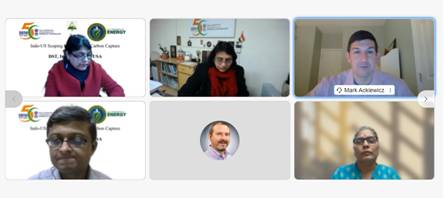
 Experts from India and US discussed the challenges and opportunities to combat climate change through technology-led Carbon Capture and Utilisation solutions at the Indo-US Scoping Workshop on Carbon Capture held on 21st  January 2022, jointly organized by DST India and DoE USA.

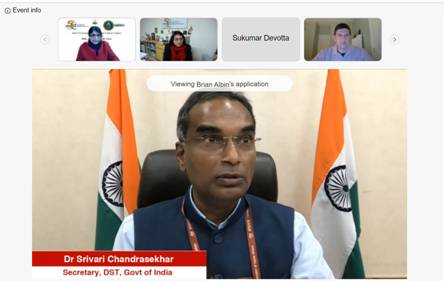
Dr. S Chandrasekhar, Secretary, Department of Science & Technology (DST), Govt of India, said that at the recently concluded COP-26 at Glasgow, the Hon’ble Prime Minister Shri Narendra Modi brought forth the country’s remarkable performance as well as ambitions to meet the climate goals despite being one of the fastest growing economy in the world. “The PM has given a mandate for all of us to become a net-zero emissions nation by the year 2070,” Dr. S Chandrasekhar highlighted in his opening remarks.

“Under a strict climatic regime, we can realize the identification and adoption of a right balance of portfolio of emission curtailment technologies. Carbon Capture, Utilization, and Storage (CCUS) is among one such key pathways to reduce emissions while continuing to develop sustainably at an unprecedented pace. CCUS clearly aligns with five of the seventeen Sustainable Development Goals (SDGs), namely, climate action; clean energy; industry, innovation, and infrastructure; responsible consumption and production; and partnerships to achieve the goals,” he said at the first workshop on thematic of Carbon Capture.

Dr. Chandrasekhar briefed about the recent initiatives of the Department of Science and Technology towards technology-led RD&D in the area of CCUS. He informed that DST India became part of the transnational multilateral platforms such as Mission Innovation and Accelerating CCUS Technologies (ACT) along with other member countries, including USA for Collaborative RD&D in the area of CCUS. He further added that the Department of Science & Technology, Govt of India, and Department of Energy, USA are jointly organizing these series of Indo US Scoping Workshops on Carbon Capture, Utilization, and Storage scheduled to be held from 21st  January 2022 to 25th  February 2022 for exploring the complementary strengths and gaps in the area of CCUS between the two countries and evolve collaborative techno- led endeavours for together working towards achieving net Zero Carbon goals.

Dr. Jennifer Wilcox, Acting Assistant Secretary, Office of Fossil Energy and Carbon Management (FECM), U.S. Department of Energy (USDOE), USA, said that India is a valuable partner in developing new technologies to help in combating climate & clean energy goals. This partnership was underscored when last year Prime Minister Shri Narendra Modi launched a new “India-US Climate and Clean Energy Agenda 2030 Partnership,” which envisages bilateral cooperation on strong actions in the current decade to meet the goals. 

Dr. Wilcox gave an overview of the US initiatives regarding clean energy and said it is a global crisis and requires a global response in clean energy technologies and an international partnership to achieve carbon net-zero status. She hoped that this workshop would provide an opportunity to broaden and deeper collaborations & engagements.

The participants comprised of academicians, researchers, experts, industry, and policymakers from domains of Carbon Capture, Utilization, and Storage, Climate Change, and Environmental Engineering,  The Experts from both countries delivered their technical insights and views for broad discussion within the contours of the proposed thematics of Carbon Capture, around complementary strengths and gaps to evolve future collaborative endeavours between India and USA to collectively work towards achieving carbon net Zero status.


*****

First Convocation ceremony of Indian Institute of Petroleum and Energy (IIPE)

 The Vice President, Shri M. Venkaiah Naidu today called for increasing indigenous production of crude oil through strong R&D efforts to ensure energy security of the country. 

Calling for ‘Atma Nirbharta’ in the country’s energy mix, Shri Naidu suggested focussing more on increasing domestic exploration of petroleum, harnessing the full potential of renewable sources and aiming for excellence and innovation in the energy industry.

Noting that India is the world’s third largest consumer of crude oil and yet import-dependent for more than 80 percent of its needs, Shri Naidu underlined the importance of increasing production, not only to save foreign exchange but also to ensure energy security. He noted various policy reforms of the government such as the Hydrocarbon Exploration Licensing Policy (HELP) aimed at increasing exploration in new sedimentary basins.

The Vice President was attending the First Convocation ceremony of the Indian Institute of Petroleum and Energy (IIPE) in Visakhapatnam. IIPE is a dedicated university for petroleum research and was recognized as an Institution of National Importance in 2017 through an Act of Parliament.

Noting the impact of population and industrialisation on increased energy demand, Shri Naidu said that ‘India’s primary energy demand is expected to grow at an average rate of more than 3% till 2045 as compared to less than 1% growth for the rest of the world.’

In this regard, Shri Naidu called upon IIPE and other energy institutes to  bridge the supply gap of skilled manpower for the petroleum sector and build stronger industry-institute linkages with the prominent market players.

He also suggested encouraging Ph.D. students to undertake research on problems faced by the industry and thus ‘bring a multi-disciplinary approach into academic research, which is the aim of National Education Policy 2020.’

Observing that India is blessed with ample renewable sources such as solar, wind and tidal power, the Vice President suggested fully tapping the potential of these sources of energy as part of the efforts to reduce the use of fossil fuels.

To achieve this, he suggested institutes specialising in energy should also seek to diversify their portfolio and take up projects which have a component of renewable energy research. “Even a tiny improvement in the efficiency of harnessing green sources will deliver great benefits of scale to our economy and ecology”, he noted.

The Vice President expressed confidence that IIPE will show the way forward by becoming an exemplar in the domain of energy research. He appreciated the efforts of the administration and complimented the graduating students for their achievements. Shri Naidu presented awards to the gold medalists from the batches 2016-20 and 2017-21.

On this occasion, the Vice President called for caution and utmost adherence to COVID-19 protocol as the country is going through the third wave of the pandemic. Appreciating the government’s efforts for vaccination, he called upon civil society groups, students, medical professionals and others to reach out to as many people as possible and encourage people to get vaccinated. “It is now well established that vaccination drastically reduces the need for hospitalisation, including admission to ICU. Vaccination can indeed save lives,” he observed.

Shri Rameswar Teli, Union Minister of State for Petroleum and Natural Gas, Labour and Employment, Dr. Seediri Appala Raju, Andhra Pradesh Minister for Animal Husbandry and Fisheries & Dairies Development, Prof P.K. Banik, President of the Board of Governors, IIPE, Prof VSRK Prasad, Director, IIPE, Vice Chancellors of various Universities, other dignitaries and the graduating students participated in the event.

Following is the full text of the speech:

“Sisters and brothers,

I am indeed honoured to be here for the First Convocation ceremony of the Indian Institute of Petroleum and Energy (IIPE) in Visakhapatnam.

At the outset, I wish to congratulate all the graduating students for acquiring a degree of high contemporary relevance from this institution. My best wishes to all of you as you mark an important milestone in your journey of learning. I would like to convey my appreciation to the teachers who nurtured the students to be proficient in their disciplines and imparted the necessary skills to make them competent professionals.

Sisters and brothers,

We are meeting at a difficult time when the world is undergoing another wave of the pandemic. The Governments at the Centre and in various states are taking all measures to prevent the spread of the virus, including the implementation of the world’s largest vaccination drive. It is imperative that we complement these efforts as responsible citizens and do our bit in protecting ourselves and our community.

I call upon civil society groups, students, medical professionals and the government to reach out to as many people as possible and encourage people to get vaccinated. It is now well established that vaccination drastically reduces the need for hospitalisation, including admission to ICU. Indeed, vaccination can save lives and those harboring doubts must shed their hesitancy and get vaccinated at the earliest.

Friends,

It is truly a matter of delight for me to attend the first convocation of this institute. I remember that the foundation stone for the campus at Vangali village was laid by me as the then Minister for Urban Development along with the then Minister of Petroleum and Natural Gas.

I have been informed that the campus could not be shifted to the new premises due to some legal issues. However, I am glad to know that with the concerted efforts of the Ministry of Petroleum and Natural Gas, the Government of Andhra Pradesh and the institute, things are looking bright and soon, the institute is likely to be shifted to the new campus.

Sisters and brothers,

Petroleum and its byproducts have played a critical role in propelling the progress of the world in modern times. From the discovery of the first oil reserves in Digboi, Assam in 1889, the industry has seen a phenomenal rise in India, greatly aiding the country’s progress post-independence.

India today is the third-largest consumer of crude oil in the world. While petroleum comprises an important component of India’s energy mix, we are still import-dependent for more than 80 percent of our oil needs. It is indeed important to focus on increasing indigenous crude oil production and reducing imports to not only save precious foreign exchange but also to ensure energy security.

With increasing population, urbanization and industrialization, the use of petroleum products is only expected to increase. For India, the primary energy demand is expected to grow at an average rate of more than 3% till 2045 as compared to less than 1% growth for the rest of the world.

This highlights the importance of local exploration of petroleum and shifting to alternative sources. To this end, the government’s policy reforms such as Hydrocarbon Exploration Licensing Policy (HELP) aim at increasing domestic production, liberalizing exploration of new sedimentary basins, including ultra-deepwater blocks.

In this quest for ‘Atma Nirbharta’ in energy security, institutions like IIPE have a central role to play. As a dedicated university for petroleum research, IIPE should take the lead in two aspects: One, in bridging the supply gap of skilled manpower for the Petroleum Sector and two, to aim for excellence in research of petroleum and its by-products. It was thus duly recognized as an Institution of National Importance in 2017, and IIPE should live up to that expectation in the years ahead.

Overall, there is a need to invest in research institutes in a big way and create the ecosystem for innovation to thrive and help the country to become ‘energy secure’ in the coming years.

Sisters and brothers,

As we strive for excellence in the hydrocarbons’ research, it is important to promote ‘industry-institute’ linkages to boost R&D outcomes. Sponsored research, collaboration and consulting with industries are integral to today’s R&D landscape and institutes in this area should explore opportunities with all prominent private players. I am happy to know IIPE has collaborated with oil majors in the country such as HPCL, IOCL and even entered into MoUs with foreign universities to pursue joint research.

More such mutually beneficial tie-ups between academia and industry must be explored. In addition, bottlenecks in our patenting regime must be resolved, Ph.D. students must be encouraged to undertake research on problems faced by the industry. Such a move towards partnership will also bring a multi-disciplinary approach into academic research, which is the aim of National Education Policy 2020.

Sisters and brothers,

Fossil fuels, despite having driven the world’s economic engines for a long time, have a big downside. Combustion of these fuels emits pollutants, whose deleterious effects on the planet have been well documented.

The potential of small and renewable sources of energy needs to be fully tapped as part of the efforts to reduce the use of fossil fuels. I am happy to note that solar, wind, small hydro, and tidal energies are being well explored and their costs also have been coming down over the years.

Thus, as the world is looking for clean and sustainable energies, institutes specializing in energy should also seek to diversify their portfolio by adopting a multidisciplinary approach to energy and bringing out alternative solutions. Even a tiny improvement in the efficiency of harnessing green sources will deliver great benefits of scale to our economy and ecology.

India in particular is blessed to have ample sunlight throughout the year, good wind power potential in the Southern and Western Regions and inexhaustible tidal energy in the seas. A great start has been made with the formation of the International Solar Alliance, an initiative led by India.

While many institutions have been taking up renewable energy seriously, we must also invest in training the workforce with the latest technologies in the renewable sector. This will open up great employment opportunities while also driving the green energy sector.

Universities must also take up research work and projects which have a component of renewable energy research.  While IIPE is presently offering Petroleum Engineering and Chemical Engineering at UG levels and Ph.D., I am happy to note that the institute is planning to promote research in alternative energy sources.

Sisters and brothers,

I am confident IIPE, a young institution as it is, will show the way forward by becoming an exemplar in the domain of energy research. Despite being a new institution, IIPE, has shown good promise already due to the untiring efforts of the administration, faculty and most importantly, its students. My appreciation and best wishes to all of you for your future endeavors!

Once again, I am very happy to be present at the First Convocation of this promising National Institute. On this momentous occasion, I once again congratulate the graduating students for acquiring their coveted degrees, prizes and medals.

Thank you all.

Namaskar. Jai Hind.”


*****

Ānandam: The Center for Happiness in IIM Jammu

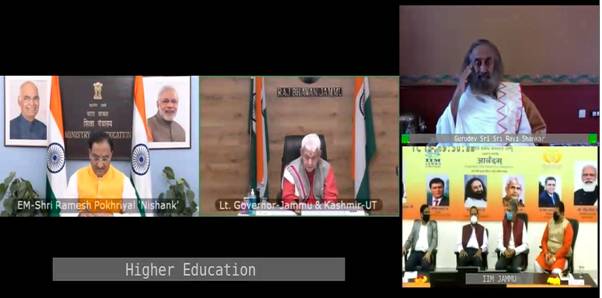
 Union Minister of Education Shri Ramesh Pokhriyal ‘Nishank’ inaugurated “Ānandam: The Center for Happiness” virtually today. Lieutenant Governor, Jammu and Kashmir, Shri Manoj Sinha; Founder, Art of Living Foundation, Sri Sri Ravi Shankar virtually graced the ocaasion. Dr. Milind Kamble, Chairman, Board of Governors, IIM Jammu presided over the event, whereas Prof. B. S. Sahay, Director IIM Jammu was also present.


https://static.pib.gov.in/WriteReadData/userfiles/image/image001WLFA.jpg


Speaking on the occasion Shri Pokhriyal congratulated IIM Jammu for the new venture and defined the need for Ānandam: The Center for Happiness. He said that incorporating happiness in the academic curriculum of students is a very crucial step towards empowering our nation. This step will take our education system to newer heights, similar to the times of ancient Indian universities like Nalanda and Takshashila. He explained that how Anandam: The Center for happiness aligns with the National Education Policy 2020 that aims to transform India’s education system by 2021. He concluded his speech by encouraging other institutions in our country to have their own center for happiness, to help students live a stress-free life.

The Minister said that students and faculty tend to undergo stress due to deadlines, coursework, teaching-load, and professional and personal life pressure. This tends to result in depression and anxiety amongst the teachers as well as students. Hence, the center will help people overcome mental stress and help spread positivity and it will encourage and propagate holistic development for all the stakeholders at IIM Jammu, he added.

He further said that the purpose of establishing ‘Ānandam’ at Indian Institute of Management Jammu is to bring holistic well-being.’ Regular physical exercises at the Center will contribute to the wellness at the physical level for both the students and the faculty, he added. Shri Pokhriyal further informed that the Center envisions that all shall attain the state of ānanda through conscious efforts. There are going to be practices for breathing exercises like prāṇāyāma and mindfulness, which help in enhancing vitality. Other than this, the practice of Meditation and contemplation will also be encouraged.

The Minister also informed that the prime activities envisaged under the concept of ‘Ānandam: The Center for Happiness’ will be divided into five broad categories, namely, Counselling, Holistic wellness, Elective courses on Happiness Development, Research and Leadership & Faculty Development. The Advisory Board of Experts for the Center constitutes of numerous experts from academics, research and industry, he added.

Addressing the participants Shri Sinha provided his idea of happiness wherein he gave us an example of our neighbouring country, Bhutan, which is ranked very high in the happiness index. He said that “The right way to measure wealth is to measure happiness and not money”. He explained the benefits of yoga, meditation, and other spiritual practices for students to maximize their overall performance that staying happy is the best prayer that anyone can offer to a god and is real idea of happiness.

The Center for Happiness acquires its name ‘Ānandam’ from the Indian wisdom tradition where the pure consciousness is being as “anandam”. “Ānandam” doesn’t aim for only happiness but knowing the truth, doing good and enjoying the beauty around. The tagline for “Ānandam” further reinforces its ideology that it will work for the well-being of all. The tagline “Sarvabhūtahiteratāḥ” stands for being always engaged for the well-being of all.


*****


Online Registration Process for admissions in KVs to commence from April 1

 Online Registration for Admission to Class I in KendriyaVidyalayas for the Academic Year 2021-2022 will commence from April 1st 2021, while registrations for Class II and above will be done from April 8th 2021 in offline mode.

For Class I, online registrations will begin at 10:00 am on 1st April 2021 and will close at 7:00 pm on 19th April 2021. The Admission details can be obtained through website https://kvsonlineadmission.kvs.gov.inand also through Android Mobile App.

The official Android Mobile App for KVS Online Admission for Class I for the academic year 2021-2022 and instructions for downloading and installing the App will be available at https://kvsonlineadmission.kvs.gov.in/apps and also on Google Play Store.

Registration for Class II and above will be invited on the basis of availability of seats from 08.04.2021, 8:00 am to 15.04.2021 till 4:00 pm in offline mode.

For Class XI, Registration forms may be downloaded from Vidyalaya Website as per the schedule for admission 2021-2022 available on KVS (HQ) Website (https://kvsangathan.nic.in)

Reckoning of age for all Classes shall be as on 31.03.2021. Reservation of seats will be as per KVS Admission Guideline available on the Website (https://kvsangathan.nic.in)

Under present situation of COVID -19, KVS appeals to all guardians to follow the directions issued by Competent Authority (Central/State/Local).

Currently, Kendriya Vidyalaya Sangathan is running a chain of 1247 KVs.

*****