Mid-Day Meal (MDM) Scheme

The Mid-Day Meal Scheme was launched in India on August 15, 1995, as the ‘National Programme of Nutritional Support to Primary Education (NP-NSPE).’ In October 2007, it was renamed the “National Programme of Mid-Day Meal in Schools,” commonly known as the Mid-Day Meal (MDM) Scheme. It is the world’s largest school meal programme aimed to attain the goal of universalization of primary education. Under the MDM plan, one meal is supplied to all students enrolled in government schools, local body schools, government-aided schools, special training centers (STC), maktabs, and madrasas funded by the Sarva Shiksha Abhiyan. Cooked lunches are served to every child aged six to fourteen who is enrolled in and attending school. Meals are served to pupils in Classes I through VIII.

Key Points:

(A) Needs –

According to research, a healthy breakfast in the morning hours can be productive for the study of cognitively more demanding subjects, and so these hours can be maximised by offering a simple yet stimulating breakfast in addition to midday meals.

(B) Challenges –

Severe financing The scheme is likely to be pushed back due to the crunch.
The present spending on the Midday Meals Scheme by the Centre is around Rs. 11000 crore. Free breakfast will require an additional budget of 4000 crore, while the School Education Department has seen a budget decrease of over 5000 crore for the fiscal year 2020-21.

Objectives Of Mid-Day Meal Scheme:-

  1. To increase the number of students enrolled in schools who come from underprivileged backgrounds.
  2. To increase the number of pupils enrolled in government and government-aided schools.
  3. To keep the children in grades I through VIII.
  4. To provide nutritional assistance to primary school-aged children, particularly in drought-stricken areas.
  5. To combat starvation and malnutrition while also improving caste socialization.

Features Of Mid-Day Meal Scheme:-

  1. Every school should have a sanitary cooking infrastructure for sanitary mid-day meals.
  2. Mid-day lunches are only to be offered on school grounds on all school working days.
  3. The headmaster or headmistress has the authority to use school money due to the depletion of the mid-day food fund. However, the money will be returned to the mid-day food fund as soon as the school receives it.
  4. AGMARK-certified products are purchased for use in the preparation of mid-day meals in schools.
  5. The school administration committee’s cooked meals are tasted by two or three adult members.
  6. The State Food and Drug Administration might collect samples to ensure the quality and nutritional content of the meals.
  7. The State Steering-cum Monitoring Committee (SSMC) will oversee the scheme’s execution, including the establishment of a system to ensure the meals’ quality and nutritional criteria.
  8. When prepared meals cannot be delivered due to unforeseen circumstances, the following food allowance is given to the children:

(a) Quantity of food grains based on a child’s entitlement, and

(b) The cost of cooking in the individual state.

Issues and Challenges:

  1. Corrupt Practices: There have been reports of simple chapatis being given with salt, water being mixed into milk, food poisoning, and so forth.
  2. Caste Bias and Discrimination: Because food is essential to the social system, many schools require pupils to sit separately based on their caste position.
  3. Covid-19: Covid-19 has created significant risks to children’s health and nutritional rights. Access to critical services, such as Mid-Day Meals, has been hampered as a result of the national lockdown.
  4. Malnutrition is a threat: According to the National Family Health Survey-5, some states have reversed direction and recorded rising levels of child malnutrition.
  5. Global Nutrition Report-2020: According to the Global Nutrition Report 2020, India is one of 88 nations that are on track to fall short of global nutrition objectives by 2025.
  6. 2020 Global Hunger Index (GHI): The Global Hunger Index (GHI) 2020 ranks India 94th out of 107 nations. India has a “severe” degree of hunger.
Poverty In India

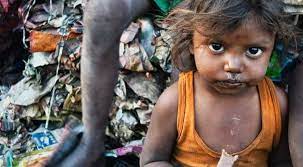
Poverty is defined as a condition in which a person is deprived of fundamental needs of existence. Furthermore, the individual does not have an insufficient amount of food, housing, or clothing. In India, the majority of the poor cannot afford to pay for a single meal each day. They also sleep on the side of the road and dress in filthy old clothing. Furthermore, they do not receive appropriate healthy and nutritious food, as well as medicine or any other required item.

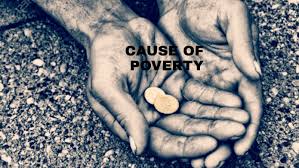
Causes of Poverty:-

Poverty in India is growing due to a rise in the urban population. People from rural areas are flocking to cities in search of better opportunities. The majority of these individuals find a low-wage employment or an activity that just pays for their meals. Most significantly, lakhs of urban residents live below the poverty line, with many more on the verge of destitution.

Furthermore, a large number of people live in slums or low-lying regions. These individuals are generally uneducated, and despite their best efforts, their situation stays unchanged and there is no satisfying outcome.

Furthermore, there are several factors that may be identified as important causes of poverty in India. Corruption, increasing population, poor agriculture, a huge disparity between wealthy and poor, ancient customs, illiteracy, unemployment, and a few more factors are among these causes. A significant number of people work in agriculture, yet the compensation is relatively low in relation to the labour done by employees.

Furthermore, as the population rises, so does the need for food, housing, and money, and in the absence of these resources, poverty spreads rapidly. Furthermore, being extremely poor or extra affluent widens the divide between rich and poor.

Furthermore, the affluent are getting richer while the poor are increasing poorer, creating an economic divide that will be difficult to close.

Effects of Poverty:-

It has a wide range of effects on people’s lives. It also has a variety of impacts, such as illiteracy, bad nutrition and food, inadequate housing, child labour, unemployment, poor hygiene and lifestyle, and feminization of poverty, among others. Furthermore, impoverished people cannot afford a good and balanced diet, attractive clothing, appropriate education, a stable and clean housing, and so on since all of these amenities cost money, and if they can’t afford to eat two meals a day, how can they afford to pay for these amenities?

The Solutions for Ending Poverty:-

It is critical that we act swiftly and appropriately to address the issue of poverty. One approach to addressing these issues is to equip farmers with enough infrastructure. So that they can make agriculture lucrative rather than migrating to cities in search of work.

Illiterate individuals should also be provided the necessary instruction in order to live a better life. Family planning should be practised in order to control the growing population. Furthermore, steps should be done to eliminate corruption so that we can address the wealth disparity.

List of Indian states and union territories by poverty rate:-

India’s GDP per capita income is around $2241 (or 168,075). This is a list of Indian states and union territories rated in terms of poverty as of 2021. Number and Population – The rank is determined by the percentage of persons living below the poverty line and is based on MRP consumption.

State/U.T.Percentage of population living below the national poverty line
Goa5.09
Kerala7.05
Himachal Pradesh8.06
Sikkim8.19
Punjab8.26
Andhra Pradesh9.2
Haryana11.16
Uttarakhand 11.26
Tamil Nadu11.28
Meghalaya11.87
Tripura14.05
Rajasthan14.71
Gujarat16.63
Maharashtra17.35
Nagaland18.88
West Bengal19.98
Mizoram20.4
Karnataka20.91
Uttar Pradesh29.43
Madhya Pradesh31.65
Assam31.98
Odisha32.59
Bihar33.74
Arunachal Pradesh34.67
Manipur36.89
Jharkhand36.96
Chhattisgarh39.93
TelanganaN/A
Andaman And Nicobar Islands1
Lakshadweep2.77
Puducherry9.69
Daman and Diu9.86
Delhi9.91
Jammu and Kashmir and Ladakh10.35
Chandigarh21.81
Dadra and Nagar haveli39.31

Conclusion

To summarize, poverty is a national problem, not a personal one. It should also be addressed as soon as possible by the deployment of appropriate solutions. Furthermore, poverty eradication has become critical for the long-term and inclusive progress of individuals, society, country, and economy.

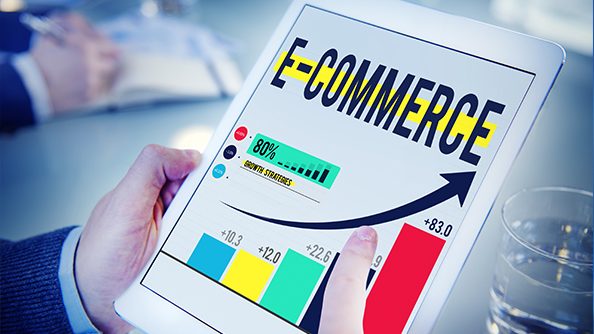
E-Commerce and it’s Impacts on Market and Retailers in India…

The internet is quite crucial in our everyday lives. We utilise the internet practically every day for almost every task. Before e-commerce, purchase and sale were done physically in marketplaces, but with the introduction of e-commerce in India, our lives have become more comfortable due to a variety of benefits. Online shopping is a subset of ecommerce that is primarily done by users thanks to e-commerce websites in India that allow us to purchase and sell items of our choosing at reasonable prices. E-commerce websites have a wide range of effects on various marketplaces and merchants. In this article, we will explore the various marketplaces and merchants, as well as the effects of ecommerce on them.

INTRODUCTION:-

E-commerce is the purchase and sale of products and services through the internet.  Earlier e-commerce, buying and selling were done physically in marketplaces, but with the introduction of e-commerce in India, our lives have become more comfortable due to a variety of benefits. The benefits of e-commerce include online purchasing of anything at any time and from any location; buyers may find items on e-commerce websites that are not accessible in physical marketplaces; it saves money and time; and we can obtain our product without leaving our homes. Along with e-commerce, there is also a common word known as e-business, which refers to how businesses have expanded electronically with the assistance of the internet, allowing them to reach a larger number of consumers and so improve their sales. The phrases E-commerce and E-business are used interchangeably and have no precise definition. In reality, E-commerce is a subset of E-business that focuses on external operations, whereas E-business focuses on a company’s internal and external activities. Ecommerce has a variety of positive and negative effects in many sectors. The key to establishing a successful e-commerce is to limit the negative consequences while increasing the advantages.

DIFFERENT MARKETS AND RETAILERS IN INDIA:-

[A] Markets

  1. Physical Markets:- A physical market is one in which clients come to the market and engage with the vendor face to face before purchasing a product or service in return for money. Shopping malls, department stores, and other physical markets are examples.
  2. Non-Physical Markets/Virtual Markets:- Non-Physical Market is a market in which clients do not go to the vendor physically and do not engage face-to-face. The customer purchases the merchandise via the internet and exchanges money electronically. These markets include Flipkart, Amazon, and eBay, among others.
  3. Knowledge Market:- In this market Information and knowledge based products are sold.
  4. Market for Intermediate Goods:- In these markets, raw materials are offered, while final products are created by combining them.
  5. Auction Market:- The auction market is one in which items are auctioned to the highest bidder while lower bids are disregarded.
  6. Black Market:- Unauthorized items like as narcotics, guns, and alcohol are sold at these markets, which are controlled by illegal vendors.
  7. Financial Market:- This market exchanges liquid assets or money. Financial markets are classified into three types: Stock exchange, where equities are traded; Bond market, in which debt securities in the form of bonds are exchanged; The foreign exchange market, often known as the currency market, is where currencies are exchanged.

[B] Retailer

  1. Department Store–A department business is a store that combines several small stores under one corporation and offers a large range of items. It offers value for clients by providing a diverse range of items at one location.
  2. Supermarkets–Supermarkets traditionally sell food and drinks, but owing to client demand, they increasingly now sell fashion and electronic products. It has strong purchasing power, which explains why it sells at low prices.
  3. Warehouse Retailers–Warehouse retailers are located in areas where the premises rent is relatively inexpensive, allowing them to store, display, and sell a huge number of items.
  4. Convenience Store–These stores can be found in residential areas. sells a restricted number of items at a premium price because they bring value in the form of convenience
  5. Discount Retailer–Discount retailers are those that give discounts on less trendy goods by purchasing them from suppliers, reselling them till the end of the line, and then returning the remaining products at the discounted price to the source.
  6. Specialty Retailers–Specialty retailers provide a unique service or product and give consumers with professional expertise and excellent service. They offer value by selling accessories and related items at the same location.
  7. E-tailer–E-tailers are vendors who allow clients to buy products via the internet and offer home delivery, allowing them to reach customers in a large geographic region and supply items to them. Because they have little rent and overhead, they can provide reasonable pricing.

IMPACT OF E-COMMERCE ON MARKETS AND RETAILERS:-

Impact on Markets

  1. Product Promotion-Through Ecommerce, products can be promoted in an interesting way and with lots of information directly to customers, lowering the cost of offline promotion because the internet can interact with a large number of customers and save money on advertisements that can be used in other areas of business.
  2. Customer Service-Customer service may be improved since customers can look for specific information about a product or marketplace that sells the product and compare pricing from other market places.
  3. Brand Image– New business owners may develop their brands on the internet by employing beautiful pictures at a low cost.
  4. Advertisement– Traditionally, advertisements were one-way to attract customers and inform them about a new product or market place; however, with the advent of e-commerce, advertisements are now two-way, allowing customers to browse the market place and products, compare prices, and ask questions to online retailers.
  5. Customization-Customized items can be made accessible to consumers based on their specific requirements. It will be an excellent site to do business in the market, and new consumers will be drawn in.
  6. Ordering Process-Traditionally, intermediaries are employed to take orders from consumers, which takes a lot of time and money, but with ecommerce, order taking is so simple that it saves a lot of time and money, and they can generate more sales.
  7. Customer Value-Traditionally, obtaining a high value from consumers was the primary goal. Consumers were the only ones who were drawn, and they were the most important goal, but now sellers cultivate long-term connections with customers in order to achieve long-term value by providing them with unique discounts.

Impact on Retailers

  1. Customer Service– Offline businesses provide a variety of services that internet stores do not. Repair and items of services, home delivery, and after sales services, as well as online stores, are examples of such services.
  2. Window Shopping– Due to the low costs given by internet retailers, people visit physical locations to window shop before purchasing a product online. As a result, they have more prospective consumers than actual customers.
  3. Advertisement– Offline shops concentrate only on ads in order to attract customers and improve sales. They don’t miss a single opportunity to market.
  4. Discount– Offline merchants sell their items at reduced prices since online stores provide substantial discounts to customers, and in order to remain competitive and attract customers, they must sell their products at reduced prices.
  5. Variety of Stocks– Online stores provide a wide range of items that offline merchants cannot compete with since excess stock at the end of the year might result in a significant loss for the retailer.
  6. Turnover– As a result of e-commerce, the turnover of offline shops has decreased, which is a warning indicator for the business.
  7. Profit Margin– With the introduction of internet stores into the market, traditional businesses have suffered from price issues. To stay in business, businesses must offer their products at legal rates that cover only their operating expenses, with no profit margin.

CONCLUSION:-

This paper concludes that e-commerce is highly beneficial to us since it offers us with a broad range of items and services, as well as a wealth of information and appealing images, at a cheap price, right at our doorstep. It is convenient for clients and helps businesses to extend their operations over the internet. Ecommerce has a positive impact on markets because it reduces the cost of advertising because many customers can be attracted through the internet, it allows for the development of new brands, it allows for the maintenance of good relationships with customers, and it allows for the creation of customized products based on the needs of the customers. However, e-commerce has a negative influence on offline retailers since people buy at low prices from online shops, forcing them to cut their prices as well, resulting in no profit. Retailers cannot maintain a vast stock like online shops have stores because it would cost them a tremendous loss. To entice customers, they must spend more money on offline marketing. Along with the benefits, e-commerce has some limitations in terms of markets and retailers. These limitations include website cost, which is required to create and maintain a website; infrastructure cost, which is required to fulfil orders online retailers must maintain a large stock in a large warehouse, which is costly; security and fraud, which is due to the popularity of online shops. Criminal elements are also drawn to them, since they may hack personal information and exploit it; consumer trust, it is difficult for customers to trust a new brand without viewing, touching, and face-to-face connection.

Overpopulation: Cause and Effect

Debates concerning overpopulation may rapidly turn contentious because they raise the question of who is to blame for the problem and what, anything that, should be done to address it. Numerous population experts are concerned that debates about overpopulation will be exploited by small-minded people who claim that some humans are “right people” to be on the planet and others are the “wrong people” (typically people living in poverty, people of colour, foreigners, and so on). However, there are no “right” or “wrong” individuals on the world, and debating the issues of global overpopulation should never be used as a justification or as a platform for such a discussion.

Every human being has a legal right to an adequate and equitable share of the Earth’s resources. However, with a population reaching 8 billion, even when everyone chose a comparatively low materialistic quality of life, the Earth would still be pushed to the brink of ecological disaster. Furthermore, the “average individual” on Earth consume at a pace that is more than 50% more than what is feasible. Surprisingly, the average American consumes over five times more than the planet’s sustainable output.

If we are using the word “overpopulation,” we explicitly imply a scenario in which the Earth’s resources cannot be replenished each year due to the world’s population. According to specialists, this has been the situation every year since 1970, with each succeeding year growing increasingly harmful. To help moderate this highly unsustainable scenario, humans have to understand what is causing overpopulation and overconsumption, as well as how these patterns influence everything from climate change to sociocultural instability.

THE CAUSES OF OVERPOPULATION:

The Earth now has a population of over 7.8 billion people. And according to United Nations, the world’s population would reach 10.8 billion by 2100, assuming sustained fertility decreases in many nations. Surprisingly, if more progress can be made in women’s reproductive self-determination and fertility decreases faster than the United Nations predicts, the population in 2100 may be a relatively smaller 7.3 billion.

For the time being, the world’s population continues to grow at a rapid pace (approximately 80 million people per year), and our supply of critical nonrenewable resources is depleting. Many variables, including declining death rates, underused contraceptives, and a poor education for females, contributes to these unsustainable trends.

FALLING MORTALITY RATE:

An imbalance between births and deaths is the fundamental (and arguably most visible) driver of population increase. According to the World Health Organization, the worldwide infant mortality rate has dropped, with 4.1 million newborn deaths in 2017 compared to 8.8 million in 1990. Of course, this is good news for public health.

At the same time, people are living longer lives all across the world. Those of us alive now will most certainly live far longer lives than most of our forefathers. Because to advances in medical, technologies, and hygiene practices, global average life expectancy has more than quadrupled since 1900. Falling death rates are also nothing to grumble about, but universal lifespan contributes to the math of growing population numbers.

UNDERUTILIZED CONTRACEPTION:

According to the UN Population Division, the worldwide fertility rate has consistently declined over the years, falling from an average of 5 children per woman in 1950 to 2.4 children per woman now. Along with that encouraging trend, worldwide contraceptives use has gradually grown, going from 54 percent in 1990 to 57.4 percent in 2015. Nonetheless, contraceptives usage is underused in general. According to the World Health Organization, an estimated 214 million women in poor nations who wish to avoid pregnancy do not use contemporary contraception.

These women are not taking contraception for a number of reasons, including societal norms or religious beliefs that prohibit birth control, misunderstandings about negative side effects, and a lack of autonomy for women to make sex and family planning decisions. Between 2010 and 2014, an estimated 44 percent of pregnancies were unplanned. Giving more women access to and control over family planning options might go a long way toward flattening the population curve.

THE EFFECTS OF OVERPOPULATION:

It seems to reason that as the world’s population grows, so will the demand on resources. Higher population equals more demand for food, water, housing, energy, healthcare, transportation, and other necessities. All of this consumption adds to environmental degradation, increasing conflict, and an increased likelihood of large-scale calamities such as pandemics.

ECOLOGICAL DEGRADATION:

Population growth will undoubtedly generate pressures that will result in increased deforestation, diminished biodiversity, and increases in pollution and emissions, all of which will worsen climate change. Eventually, many experts think that unless we take action to assist prevent future population increase in the duration of this decade, the extra pressure on the planet will lead to ecological upheaval and breakdown so extreme that it affects the survival of life on Earth as we know it.

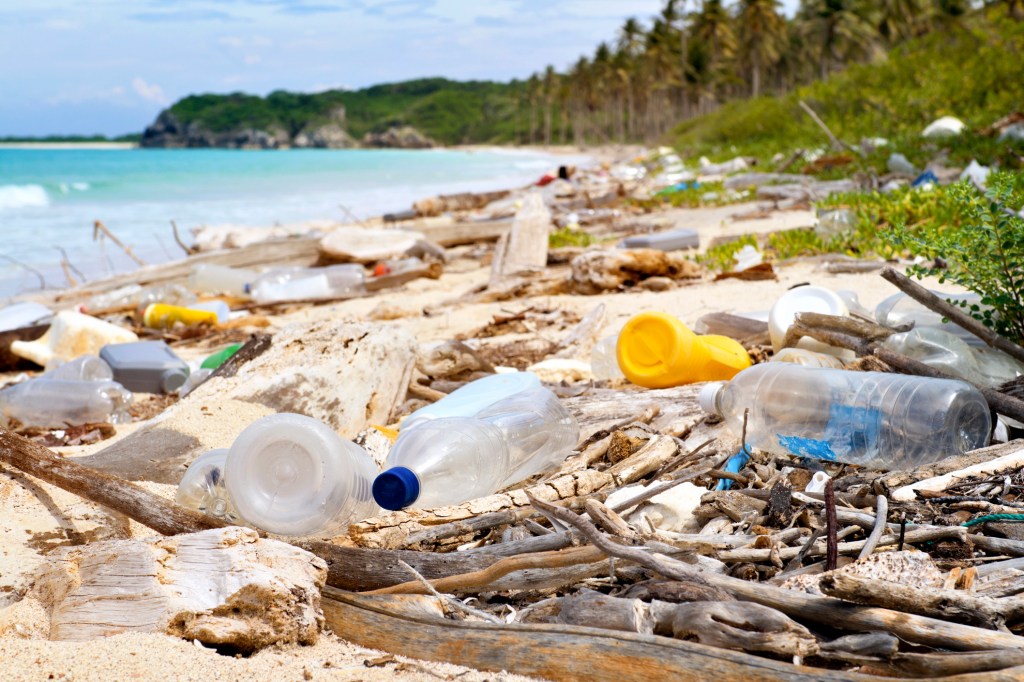
Garbage and pollution on beach

Each spike in the global population has a measurable impact on the planet’s health. According to estimates a family having one fewer child could reduce emissions by 58.6 tonnes CO2-equivalent per year in developed countries.

INCREASED CONFLICTS:

Scarcity caused by environmental damage and overpopulation has the ability to promote violence and political upheaval. Warfare over water, land, and energy resources is already taking place in the Middle East and other places, and the unrest is certain to worsen as the world population rises.

HIGHER RISK OF DISASTERS AND PANDEMICS:

Some of the recent new diseases that have wreaked havoc on humans throughout the world, such as COVID-19, Zika virus, Ebola, and West Nile virus, emerged in animals or insects before being transmitted to humans. Part of the reason the globe is approaching “a time of heightened outbreak activity” is because humans are demolishing natural habitats and coming into more frequent contact with wild animals. Now that we’re in the grip of a pandemic, it’s apparent how impossible it is to maintain social distance in a globe populated by over 8 billion people.

WHAT CAN BE DONE?

When tackling overpopulation, it is critical to use an empowerment-focused strategy while organising against anybody promoting the use of compulsion or violence to solve our issues. The combined efforts of expanding family planning information, enhancing women’s autonomy, and refuting commonly held contraceptive misconceptions will have a significant impact on the world’s population trajectory.

At Population Media Center (PMC), we observe firsthand how raising knowledge about family planning options and the environmental and economic benefits of having fewer families may influence reproductive behaviour. Listeners to our Burundian radio show Agashi (“Hey! Look Again!”), for example, were 1.7 times more likely than non-listeners to verify that they were willing to negotiate condom use with a sexual partner, and 1.8 times more likely to say that they generally approve of family planning for limiting the number of children.

At PMC, we use the power of storytelling to inspire listeners to live healthier and more affluent lives, which helps to stabilise the global population and allows people to live sustainably with the world’s renewable resources. Discover how PMC is combating overpopulation right now!

Differences Between A Cheque And Demand Draft — Ektajain

Every business strives to make a profit, and clients utilise a variety of payment methods for commodities transactions, either online or offline. Offline mechanisms are often specified in the negotiable instruments used to transfer a certain amount of money to the receiver, whose name is mentioned in the document, at a specific date. With the […]

Differences Between A Cheque And Demand Draft — Ektajain