

Tribal settlements, villages and towns are the three main components of india’s social formation. a sharp distinction between tribal settlement and village and between village and town cannot, however be easily drawn due to some common characteristics shared by them. there are big tribal villages in some parts of the country and they are not significantly different from non tribal multi caste villages. distinctions based on kinship, wealth and power amoung some tribal villages are as sharp as we find amoung the non tribal villages. tribals are not theoritically a part of hindu social organisation, but they have always been in touch with wider society in india. they have been exploited economically and socially by the non tribals living in tribal areas. a number of tribes have revolted against their exploitation.
TRIBAL IDENTITY IN INDIA:
The state shall promote with special care the educational and economic intersects of the weaker sections of the people, and in particular, of the scheduled tribes and shall protect them from social injustice and all forms of exploitation. there are however, tribes which are not scheduled tribes and are generally weaker sections of india’s population like the scheduled castes. the tribes are backward particularly in regard to education and economic standing. they were exploited in the past, by the dominant sections of indian society, namely, hindu landlords, moneylenders and industrialists who purchased their lands to establish industries in tribal areas. forest produces which tribals bring to the market for sale, are bought at throwaway prices. a number of tribes have hinduised or converted to christianity or islam to break away from their tribal indentity, to get redemption from exploitation and to elevate their status and honour. sometimes it becomes difficult to draw a clear line between a tribal and a caste group. there are hunters and food gatherers amoung the tribals on the one end, and there are tribals settled in villages, practically functioning as caste groups on the other. a large number of tribals in india live in hilly and forested areas where population is sparse and communication is difficult. they are spread over the entire sub continent but are found mainly in the states of west bengal, jharkhand, orissa, chattisghargh, rajasthan, gujarat and maharastra.
DEFINING TRIBAL SOCIETY:
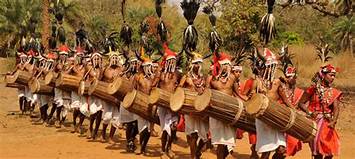
In tribal life the principal links for the whole society are based on kinship. kinship is not simply a principle of social organisation it is also a principle of inheritance, division of labour and distribution of power and privilages. tribal societies are small in size. they possess a morality, religion and worldview of their own, corresponding to their social relations. however some tribes such as santhals, gonds and bhils are quite large. the segementary systems have relations on a small scale. they enjoy autonomy, and are independent of each other in a given region. the principle of organic relationship explains interdependence of various caste groups upon eachother in social life. caste groups are heirarchally arranged on the basis of certain ascriptive criteria. these criteria do not apply to tribes in india. distinctions between folk, peasant and urban or between tribal, folk and elite are not very useful for the understanding of tribes in india. the tribes of jharkhand mobilised their members against their exploiters. they interacted with the administration, town elite, and outsiders. the jharkhand which contains numerous tribes, is a tribal cultural zone comprising several tribal sub cultures. the mundas, oraons, hos and santhals the major tribes of this region depend upon forest produce, settled agriculture, employement in industries, coal mines and governament jobs. some have settled in towns, others are in villages and some of the latter are economically very well off. thus tribal culture is in part a peasent culture and in part an urban culture. even the revival of tribal aboriginaliy has been expressed in the form of an instrument of protest against the external intrusions and impositions of rules and regulations. the tribals of jharkhand are peasents to a large extent and therefore their pesants qualities should become the basis to understand their economic problems.
TRIBAL SOCIAL STRUCTURE:
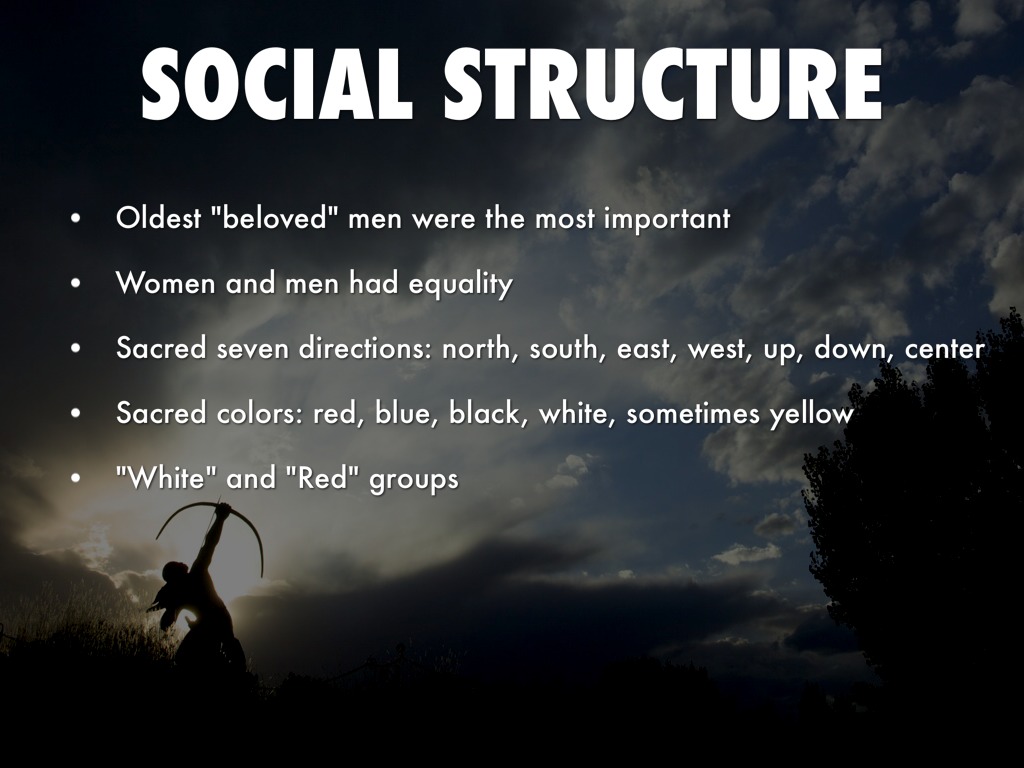
Lack of hierarchy amoung men and groups. communitarian basis of landholding. lack of distinction between form and substance of religion and a distinct psychological make up for enjoying life. tribes have been seperated from other social categories on the basis of these features. in india the british conducted a detailed enumeration of the tribals in the 1930s. the large tribes of india are the gonds of chattisgargh maharastra and andhra pradesh. tribes in india differ from one another in racial traits, language, social organisation, cultural patterns e.t.c the dominant racial type amoung tribes is the protoaustraloid.










 Eduindex
You must be logged in to post a comment.