Psychological Tests in HR

Psychological tests are verbal or written assessments conducted by psychologists or trained professionals to evaluate a person’s behaviour. Although it has multiple uses and can be used in many fields, it is now a popular step in the recruitment process to look for traits, values and behaviour in potential candidates that the ideal person for the job must have according to the Job Specification.

Psychological tests are usually standardised, which means that there is a standard format used for all candidates to get valid and reliable results. They should be non-discriminatory and according to the test norms.

Objectives of Psychological Tests

  • To assess mental abilities
  • Measure aptitude
  • Recruitment and Selection
  • Diagnose disorders
  • Learning disability
  • Research
  • Determine strengths and weaknesses
  • Career Counselling

Methods

  • Questioning/Interview
  • Examination of work: Historical data or past work is examined to measure performance.
  • Written/Recorded examination
  • Direct observation: Usually, the supervisor observes the behaviour or performance of his/her subordinates.
  • Group Discussion

Types of Psychological tests

The different types of Psychological tests are based on different functions and help in assessing different things. For example, Personality tests helps gain insights into the candidate’s personality (traits) and behaviour.

  1. Aptitude test: An aptitude test measures a person’s ability to perform different kinds of tasks. This is done to determine the areas in which their skills are the strongest. Some people may be better with quantitative tasks that require math and logical reasoning skills, some at language, and some at creative thinking.
  2. Intelligence/Cognitive test: A cognitive test measures a person’s cognitive abilities— problem solving, reasoning, vocabulary, comprehension, and memory. They are more commonly known as intelligence or IQ tests.
  3. Interest test: Interests tests help you define your interests and determine what you like most.
  4. Personality test: A personality test focuses on the personality traits of an individual. It helps evaluate if a person is more introverted or extroverted, cautious or spontaneous, and how they may react or respond to various life situations. It can help in assessing if a person has leadership qualities and is capable of being a Manager or Group Leader.
  5. Achievement/Educational test: Educational testing is conducted to test how much an individual has progressed in learning a specific subject—like mathematics, reading comprehension—to identify any difficulties they may have had in it. Achievement tests are the examinations that students take in schools and colleges.
  6. Emotional Intelligence test: An Emotional Intelligence test taps various emotions through situations presented to the test-taker. An emotional intelligence test requires a person’s honesty in it to accurately evaluate a person’s EQ [Emotional Quotient] and suggest ways to improve it. It is often noted that people who have higher EQ are much more content and successful than people otherwise. Even though emotional intelligence can overlap with other aspects like personality or genetic compositions, Emotional Intelligence of a person tends to fluctuate or change. It often requires constant consciousness in your actions and evaluation of its consequences. 

Depending on the nature of the job and the level of management and responsibility that comes with the job, different combinations of the tests mentioned above can be used to assess if the candidate is the right person for the job. For example, for the position of a Middle level Finance Manager, an Intelligence, Aptitude and Personality test can be taken to determine the candidate’s skill set, intelligence and leadership traits.

Estate Planning

In these unprecedented times, one thing we know for sure is that life is very unpredictable. One might think that they have years left to worry about ‘what happens to family when I’m gone?’ but everything could change in just seconds. Hence, it is important to plan before and be ready for any uncertainties.

Estate refers to all kinds of assets one owns. It includes financial assets, tangible personal assets (vehicles, art, collectibles), immovable property and intellectual property.

Estate planning refers to the process of transferring wealth from one generation to another. The most common ways of doing this is through Nomination and Joint ownership. However, both these methods are legally disputable. Let’s look at some effective Estate Planning tools-

Will

Will is a legally accepted document and allows one to make decision to transfer wealth after their demise. However, Will is public and controlled by court. Changing or modifying will becomes difficult with time, in case the owner becomes mentally or physically challenged with age. It can lead to rivalry between the beneficiaries.

Trust

Trust can be used in place of Will. It forms a legal relationship where one party holds property for the other. However, it can effectively help in avoiding probate process (validation of Will) and expenses. Trust can be public or private and is controlled by the family only. However, this implies that the Trustee can misuse assets of Trust.

It can also be used as a firewall or shield to separate assets. It implies that if the owner becomes bankrupt, lender cannot seize assets under the Trust. Moreover, it reduces estate tax on transfer of assets.

It is recommended to have a combination of Will and Trust as they nullify each other’s demerits. Using Trust, one can avoid probate process and expenses and keep things private and out of court. It also allows you to modify the terms at any time and all assets under the Trust are protected. However, one can also use Will to avoid misuse of assets by the Trustee.

Lifetime Gifts

Lifetime gifts refers to the wealth transferred during life to near and dear ones. It is exempted from tax within a limit. For transfer of immovable property, a gift deed has to be made.

Power of Attorney

It is a legal arrangement where one party authorises the other to act on their behalf. This can include two types- Financial and Medical. Financial POA lets your agent make decisions about your money and property. For example, your agent could pay your bills, make bank deposits, collect your retirement benefits, and sell or rent your real estate.

A medical POA (also called a healthcare POA) lets your agent make important healthcare decisions on your behalf. These decisions could be about your treatment options, medication, surgery, end-of-life care, and more. Without a medical POA, your loved ones could be left trying to guess what kind of care you want to receive. There’s also a possibility you’d receive different care than you would’ve chosen for yourself.

Letter of Credit

In the era of Globalisation, businesses all over the world rely on each other, be it for raw materials, consultation services, marketing or capital goods. This led to an increase in international payments, especially with increase in exports. Some of the most common methods of international payments include- International cheque, Wire transfer and the safest and the most convenient method preferred by most exporters- Letter of Credit.

Letter of Credit is a bank guarantee given by the buyer’s (importer) bank to seller’s (exporter) bank. It is the most secure instrument, also known as Documentary Credit. The main concern of most exporter is safety which is why they prefer Letter of Credit over other modes of payment. It is guaranteed by the bank and the verification of all necessary documents including the inspection certificate is also done by the bank.

Documents required by the bank includes Bill of Lading, Marine insurance, Custom attested Packing list and invoice, Pre-shipment Inspection certificate and Certificate of origin.

Merits of LC

  • Exporter is assured of payment as it is guaranteed by the buyer’s bank.
  • Exporter can get advance payment from bank if the LC is confirmed and irrevocable.
  • It eliminates commercial risk.
  • It enables the importer (seller) to expand their sources of supply as exporters are always willing to supply against Letter of Credit.
  • It prevents blockage of funds and bad debts.

Types of LC

There are 10 types of Letters of Credit. Different LCs have different terms of payment associated with them and hence, it is important for exporters and importers to assess and wisely decide which type suits them the most.

  1. Sight LC: In a sight LC, the exporter immediately receives payment after goods are received.
  2. Usance LC: With a Usance LC, the exporter grants a credit period for payment which is jointly accepted by both banks.
  3. Confirmed LC: Confirmed LC does not allow the Issuer bank (importer’s bank) to modify the terms of LC. Ideally, LC should be confirmed as it is safer.
  4. Unconfirmed LC: Unconfirmed LC allows Issuer bank to modify the terms of LC.
  5. Red clause LC: In a Red clause LC, the importer must make partial or full advance payment.
  6. Green clause LC: Green clause LC allows the importer to make the payment after dispatch of the shipment.
  7. Negotiable LC: Issuing bank (importer’s bank) authorises any bank to be the Nominated bank (exporter’s bank) to negotiate the terms of the LC and receive the payment on behalf of the exporter.
  8. Revolving LC: For regular transactions between the same two parties, one can get a Revolving LC. It allows the parties to set a limit and use the same LC for multiple payments till the limit is reached.
  9. Transferable LC: This type of LC allows the exporter to endorse the LC in favour of a third-party which simply implies that the amount owed to the exporter by the importer is paid to the third-party directly, on behalf of the exporter.
  10. Back-to-back LC: This LC involves 3 parties and two payments under one LC. For example, payment to vendor by manufacturer for raw material and payment to the manufacturer by the retailer under the same LC. It eliminates the need for applying for two LCs.

Manufacturing Systems

What are Manufacturing Systems?

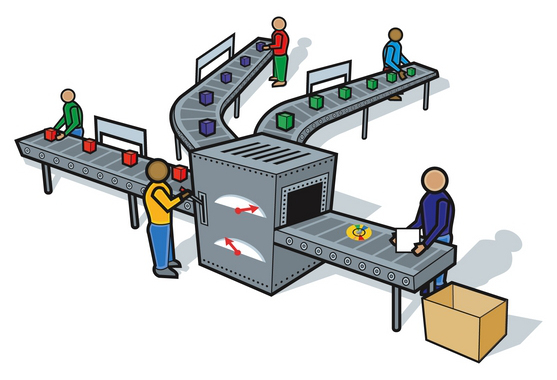
A collection of integrated equipment and human resources whose function is to perform one or more processing or assembly operations. Manufacturing systems essentially integrates and transform inputs (raw material, labour and machines) into output (final goods and services).

Components of Manufacturing Systems

  • Production machines: Most of the actual assembly work is accomplished by machines or with aid of tools. These machines are classified into- Manual, Semi-automated and Automated machines.
  • Material Handling Systems: Material handling systems include machines that help in loading, unloading of units, positioning of units, transporting and storage of work units.
  • Computer Control Systems: Computer control systems help in controlling the machines by communicating instructions, scheduling production, failure diagnosis, quality control, safety monitoring etc.
  • Human Resources: Human resources are essential to ensure smooth functioning of all systems. They operate and manage systems, monitor the process, ensure all machines are in optimum condition and working properly. In some cases, they even help in loading, unloading and positioning of units.

Types of Production Systems

  1. Intermittent: The flow of production is not continuous i.e., units are produced according to its demand or on order on a small scale in large varieties.
  2. Continuous: Flow of production is continuous and not affected by its demand. Units are produced on a large-scale for stocking and selling.

Intermittent Production System

It can be classified into 3 categories-

  • Project Production
  • Jobbing Production
  • Batch Production

In Project production, company accepts a single, complex order or contract. The order is to be completed within a specified amount of time at estimated cost. Requirement of resources varies with phases of production. In project production, many agencies are involved and interrelated. It is highly flexible but produced in low volume. An excellent example of Project Production is Construction.

In Jobbing Production, company accepts order to produce one or few units of a product strictly as per specifications given by the customer. It is also produced within a specified time at a specified cost. Units are produced in small lots and highly skilled labour is needed. An example of Jobbing Production is Repair and Tailoring services.

Batch Production: ‘Batch’ refers to a single production run according to demand. Batch size is the number of units produced in one batch size. It ranges from 100-1000 units. Every batch requires changes in Machine set-up. For example, daily production of numerous freshly baked goods in a bakery.

Continuous Production System

It can be classified into 2 categories-

  • Mass Production System
  • Process Production System

Mass Production System is also known as Repetitive Manufacturing System. Mainly one or two types of products are produced. Demand of such products is always high. Produced in large quantities and hence, mostly automated and handled by machines. This makes supervision easy. It involves limited work in progress. It also reduces per unit cost of production.

In Process Production System, a single product is produced and stocked. The product is standardised hence, there is hardly any scope for variety or customisation. It involves lower Work-in-Progress. It requires low skilled labour and skilled technicians. Automated/Mechanised systems are used for Material Handling.

Equity vs Preference shares

We keep hearing the term ‘shares’ or ‘stock’ nowadays as it is a common topic of discussion. However, it is essential to know the different types of shares available in the market to be aware of our options as investors and also to determine which type suits the objectives of the investor better.

According to section 86 of the companies act, a company can issue only two types of shares:
(a) Preference shares
(b) Equity shares

PREFERENCE SHARES

As the name suggests, a preference share gives a preferential right to its shareholder, to get a fixed rate of dividend over other types of shares. This implies that preference shareholders are entitled to receive their dividends BEFORE any dividend is paid to equity shareholders from the profits.

Preference shareholders are also entitled to return of share capital before equity shareholders when the company is winding up. This implies, that after the company has paid off its debts to outsiders, the surplus and remaining assets are used to return the share capital to preference shareholders before equity shareholders. The remaining assets and surplus, if any, is distributed among the equity shareholders.

However, Preference shareholders don’t get to enjoy voting rights. They are only allowed to vote on

a) Any resolution affecting their rights

b) All resolutions when dividend has not been paid to them for the time period mentioned in the Act.

Types of Preference shares

Different kinds of shares have different rights associated with them.

  • Cumulative Preference Shares– Dividends not declared and paid in the current year (due to loss or inadequate profit), is accumulated and can be paid out of profits of subsequent years before dividend is paid to equity shareholders. Preference shares are always cumulative, unless the contrary is expressly stated in the Articles of Association.
  • Non-Cumulative Preference Shares- In the case of non-cumulative preference shares if dividend is not paid in any particular year, it lapses. It does not accumulate. Hence, it is not paid in the subsequent years.
  • Participating Preference Shares- In addition to the fixed rate of dividend, these shares carry a further right to participate with the equity shareholders in the surplus profits which remain after paying a certain rate of dividend to equity shareholders. Thus, they get two kinds of dividend, one fixed rate and the other changing every year depending on the level of excess profits. Similarly, such preference shares have a right to participate in the surplus assets of the company on its winding up after paying in full the preference and equity share capital.
  • Non-Participating Preference Shares– These shares are entitled to only a fixed rate of dividend. They do not participate either in the surplus or in the surplus assets on winding up after paying in full the preference and equity share capital. Preference shares are presumed to be non-participating unless specifically stated otherwise in the articles.
  • Convertible Preference Shares– These shares can be converted into equity shares within a specified time period.
  • Non-Convertible Preference Shares- These shares cannot be converted into equity shares. Preference shares are presumed to be non-convertible unless specifically stated otherwise in the articles.
  • Redeemable Preference Shares- Capital raised by means of these shares can be returned after a specified period or at any time at its options after giving notice as per terms of issue. These shares can be redeemed either out of profits or out of the proceeds of a fresh issue of shares.
  • Irredeemable Preference Shares- Any preference share that cannot be redeemed during the lifetime of the company is known as irredeemable preference Shares. Such shares are not offered anymore.

EQUITY SHARES

Equity shareholders are entitled to get dividend only after the fixed rate of dividend is paid to preference shareholders. Similarly, at the time of winding up of the company, only after returning preference share capital in full, and if there is any surplus, it will be paid to equity shareholders.

The rate of dividend is not fixed as it varies from year to year and depends on the profit earned every year. Higher the profits, higher the dividends of equity shareholders. However, in case of loss or inadequate profits, equity shareholders often do not get dividends for that year. Moreover, even in case of profits, the company can choose to retain the surplus in the business instead of paying dividends to equity shareholders. Hence, dividends for equity shareholders are not assured.

However, equity shareholders are considered as the owners of the company and hence, get voting rights on all resolutions.

To conclude, equity shares are quite risky since dividends and return of capital when the company is winding up is not assured. However, if the company is reputed and does well, equity shareholders dividends are usually more than fixed dividends of preference shareholders. Moreover, equity shareholders enjoy voting rights and are more involved in the management of the company as they are the owners.

On the other hand, for investors looking for fixed rate of return (dividends) and assured return of capital invested, preference shares should be a good investment.

CSR at Cafe Coffee Day

Corporate social responsibility, often abbreviated “CSR,” is a corporation’s initiatives to assess and take responsibility for the company’s effects on environmental and social wellbeing. The term generally applies to efforts that go beyond what may be required by regulators or environmental protection groups.

As the business environment changes, customer’s expectations from a company also change. Nowadays, Customers prefer brands that are socially responsible and give back to the society. Let’s take a look at CSR initiatives taken by the Cafe Coffee Day, one of India’s leading coffee brands.

CSR goals at Cafe Coffee Day

  1. Improving livings standards for communities through increasing employment opportunities- CCD believes in working for the people, and working with the people. It ensures that it creates new employment and livelihood opportunities for millions across the globe. This is done through direct employment and contracts, as well as through inclusive business opportunities.
  2. Enhancing the health and wellbeing of communities– It works with communities at large and aims to help them become healthier and happier.
  3. Reducing environmental footprint– It works towards reducing its environmental footprint by ensuring that it allows the legislation regarding carbon production and release. It works towards designing operational processes that reduce water and land pollution. All products manufactured and distributed come with a disposal method to reduce wastage, and increase recycling.

Corporate social responsibility is an integral part of CCD’s operations. They are committed to offering ethically purchased and responsibly produced products of the highest quality, and serving quality coffee that is responsibly grown and ethically traded. They facilitate UTZ and Rainforest certification for their major coffee supplier’s estates. The UTZ Code of Conduct is a recognized global ‘decency’ standard for coffee and production criteria for socially and
environmentally appropriate growing practices and efficient farm management techniques. The Rainforest Alliance works to conserve biodiversity and improve livelihoods by promoting and evaluating the implementation of the most globally respected sustainability standards in a variety of fields which are designed to generate ecological, social and economic benefits. CCD aims to create the most value in the following aspects:

  1. Nutrition- The primary focus remains on ensuring health safety for children and infants.
  2. Water- It administers all its internal sewage plants to dispose of waste optimally without risking water life.
  3. Air Cleansing- The company also takes responsibility for ensuring that all its industrial sites and operations are placed away from residential areas to reduce maximum exposure of plant operations to the public.
  4. Rural Development– It created varied employment and livelihood opportunities for these communities to help them raise their living standards and quality of life.
  5. Protecting water- With the high scarcity of clean drinking water, CCD works and strives to provide communities with clean drinking water through having installed filter plants.
  6. Protecting natural resources- It ensures that all its operational sites are designed in a way that they do not harm or risk the natural ecosystem. In addition, the company works towards protecting the environment by building green spaces.
  7. Safeguarding the environment- The operations of CCD, like other players in the industry, are being affected by the climatic changes, and the weather alterations. To fight this change, and to safeguard the environment, CCD works towards creating safe green spaces through high rate plantations. This is to ensure environmental sustainability and
    enrichment of the ecosystem.

Commitments made by CCD

Commitments at CCD have helped shape its CSR and CSV approach based on multiple trends from across the globe. These commitments have helped maintain focus in giving back to the community as well as in developing a more sustainable environment and workplace. Commitments are the long-term goals that CCD wants to fulfil and
achieve in the following different aspects:

  1. For individuals and families
    Living healthier lives– Helping individuals attain a balance between healthy nutrition and physical exercise as a means of a healthier lifestyle and healthy living. With today’s work style and busy schedules, this is quite a challenge. 
    Having Nutritional Knowledge- CCD works with the long-term aspiration of enhancing the lifestyles of communities. The company plans to do it by sharing information regarding nutritional facts, and by raising awareness of nutritional intake.
  2. For Communities

Rural Development– It works towards developing rural communities-especially where it is operational and present. The company engages not only in employment creation but also infrastructure development and education deployment programs to help communities improve their living standards.
Promoting Diversity– It works towards inclusion through its diversity programs. The company has designed programs and policies to ensure the inclusion of all community groups in the employment cycle. In addition, the company also conducts training and skill enhancement sessions for all community groups including disabled and special persons.

Finding the potential in coffee is a key part of success. Similarly, CSR activities focus on finding
the potential in the people, society and environment.

TRAINING
CCD works through a unique partnership model wherein they have established strategic partnerships with various training bodies, non-governmental organizations, and government and leverage their relationship to provide skill training and employability to the under privileged. In states like Jammu and Kashmir and Orissa, they have provided self-improvement and vocational training to youth.

DIFFERENTLY-ABLED EMPLOYMENT
Coffee Day Global has also tied up with NGOs such as “Enable India” to work out avenues to employ more differently-abled people. Over 150 speech and hearing-impaired people are employed at their cafés, popularly called as “silent brew masters”.

WATER, SANITATION AND HYGIENE
During the manufacturing process and value additions, Cafe Coffee Day maintains an emphasis on water, sanitation and hygiene. All plants and manufacturing units operated by Cafe Coffee Day have an authorized sanitation system in place which ensures minimal water wastage. Besides, all industrial waste is disposed of off through authorized channels only ensuring that no natural water body and water source is harmed or polluted.

NATURAL RESOURCE STEWARDSHIP
Cafe Coffee Day is also an active pioneer of natural resource stewardship. Cafe Coffee Day has devised ways to ensure that natural resources are sustainably used for industrial operations, and are not damaged during business processes. Cafe Coffee Day shares this knowledge publicly for the overall welfare of the environment and the planet.

WOMEN EMPOWERMENT
During its manufacturing process, Cafe Coffee Day also ensures to employ women labour in various managerial and operational level jobs. These women are usually from local communities and are trained for new skill development and enhancement. In doing so, Cafe Coffee Day ensures that women are equipped with the confidence and decision-making abilities that they advance not only in their professional but also in their personal and social lives.

ANIMAL WELFARE
In all its sourcing, CCD ensures that no animals are harmed. CCD makes sure that all animals are fed high quality fodder, and that they are kept in a clean and safe environment. In addition, it also provides safe breeding grounds for
animals and regularly authorizes veterinary check-ups for all animals in partner farms.

HUMAN RIGHTS
CCD is also particularly careful to ensure that all human rights are upheld in its business operations. This
includes no child labour, and inclusive diversity, amongst other things. Also, the business operations of CCD also include high dependence on local workers for labour and management, making sure all local and global human rights are followed thoroughly.

CCD changing lives with Education and Employment

· Their social transformation initiatives are led by SVGH Vocational Training College (VTC) at Chikmagalur, Karnataka and are fully funded by their Promoter. VTC seeks to promote education to economically underprivileged rural youth and supporting them to be independent, responsible and adaptable to urban environment. VTC has trained over 2,500
students, many of whom have since joined CCD Group companies, including Coffee Day Global’s outlets across the country. The entire expenses of the course which includes imparting education, providing food and accommodation, uniforms and transport facilities is borne by VTC.

· The institute provides free education and training to youngsters, with all their expenses being covered by the chairman’s trust. The chairman and founder, V G Siddhartha, was keen to create employment for the rural youth, so that they could lead a productive life and contribute to society. A large number of youths were unemployable due to skill gaps, so it was decided to offer hotel management courses at Yuva (their vocational training institute).

· The institute provides a one-year course in hotel management, which includes six months of theory and six months of internship, where students get an on-the-job experience. Apart from hotel management, the institute also provides courses in audit, micro-finance, supply chain and culinary skills, which depends on the needs and demands of the organisation.


· It provides them an opportunity for personal and professional development thereby equipping them with skills to handle the rapidly changing environment. The college has trained 1180 students many of whom have found employment at CCD outlets across the country. Courses offered include Certificate Course in Hospitality Management & Micro Finance. The Trust bears the entire expenses of the course which includes imparting education, providing food
and accommodation, uniforms and transport facilities. The trained students are guaranteed employment. Current employees are involved actively in SVGH programs and help by conducting modules etc.


· “Communication skills are critical to success in customer-service roles and there is a strong commitment to building job-ready skills.” The focus has been on right skilling and reskilling to keep pace with the dynamic market needs. They aim to groom students who can think, ideate, solve problems, communicate and collaborate. They also provide specialisation studies to the students in the last quarter of the course, so as to place them in various roles at CCD in
accordance with their skills. Placements are done within the organisation. By providing quality education and employment to these students, the organisation is changing their lives and offering them a great career path. 


· Every year, around 350 students pass out from the institute and are employed by the organisation. Almost all of them are hired by Café Coffee Day. This kind of programme also creates loyalty in the minds of the employees and they are likely to stick around for a longer period of time.


· Providing a good career path, professionalism and quality skill training, the institute— which had taken birth as a simple CSR activity—is changing the lives of its students and their families. This is the best way to not only educate the underprivileged but also provide jobs to those who actually need them.


Declaration of Dividend

As more and more people invest in the stock market, dividends as a source of income gains popularity. Therefore, it is important to understand the legal framework of the process and its details in order to make a well-informed investment.

Sources of Dividend declaration

The basic principle of declaration of dividend is that it shall be paid out of profits only. However as per companies act dividend can be paid out of-
1) Current year’s profit of the company, or
2) Undistributed or accumulated profits of the previous years, or
3) Out of money provided by the Central Government or a State Government for the payment of dividend by the company in pursuance of a guarantee given by that Government.

Dividend Declaration Provisions

1) Depreciation: – Before the declaration of dividend, a company shall provide depreciation to all its depreciable assets, in accordance with the rates or useful life, as the case may be provided in Schedule – II of Companies Act -2013.
2) Transfer to Reserves:- A company may, before the declaration of any dividend in any financial year, transfer such percentage of its profits for that financial year, as it may consider appropriate to the reserves of the company.
3) Set off of previous year losses and depreciation: –A company shall not declare dividend unless carried over previous losses and depreciation not provided in previous year or years, are set off
against profit of the company for the current year.
4) Free Reserves: – A company shall not declare or pay dividend out of its reserves, other than free reserves.

Conditions for declaration of dividend out of surplus reserves

As per Companies (Declaration and Payment of Dividend) Rules, 2014 a company may declare dividend out of surplus reserves subject to the fulfilment of the following conditions, namely: –
1) Rate of Dividend: – The rate of dividend declared shall not exceed the average of the rates at which dividend was declared by it in the three years immediately preceding that year. However, this condition shall not apply to a company, which has not declared any dividend in each of the three preceding financial year.
2) Total Amount to be withdrawn: – The total amount to be drawn from such accumulated profits shall not exceed one-tenth of the paid-up share capital and free reserves as appearing in the latest audited financial statement.
3) Utilization of withdrawn amount: – The amount so drawn shall first be utilized to set off the losses incurred in the financial year in which dividend is declared before any dividend in respect of equity shares is declared.
4) Balance amount of Reserves:- The balance of reserves after such withdrawal shall not fall below 15% of its paid up share capital as appearing in the latest audited financial statement.

Payment of dividend: According to section 123(5):

■ Dividends are payable in cash. Dividends that are payable to the shareholder in cash may be paid by cheque or
warrant or in any electronic mode.

■ Dividend shall be payable only to the registered shareholder of the share or to his order or to his banker.
■ This subsection shall apply to the company, subject to that any dividend payable in cash may be paid by crediting the same to the account of the member, if the dividend is not claimed within 30 days from the date of
declaration of the dividend
.
■ Nothing in sub-section 5 of section 123, shall prohibit the capitalization of profits or reserves of a company for the
purpose of issuing fully paid-up bonus shares or paying up any amount for the time being unpaid on any shares held by the members of the company.

Dividends 101

As an investor, entrepreneur or even as someone aiming to be financially literate, one must know about Dividends, its types and implications as it is common source of additional income for many investors. Dividends are also considered as an important reflection of the company’s value as it is used in calculating the value of the stock in many methods. One can also determine the future yield or dividends estimates from historic data. Therefore, it is essential to know about dividends, from investor’s, management and entrepreneur’s perspective.

What is a Dividend?

A dividend is a distribution of a portion of a company’s earnings, decided by the board of directors, to a class of its shareholders. A share of the after-tax profit of a company, distributed to its shareholders according to the number and class of shares held by them is called dividend.

The amount and timing of the dividend is decided by the board of directors, who also determine whether it is paid out of current earnings or the past earnings kept as reserve.

Dividend for Preference vs Equity shareholders

Holders of preference shares receive dividend at a pre-determined fixed rate and are paid first. But preference shareholders are not entitled to treat the preference dividend as debt and sue for its payment.

Holders of equity shares are entitled to receive any amount of dividend, based on the level of profit and the company’s need for cash for expansion or other purposes.

Dividend can be defined as the distribution of any sums to Members out of profits and wherever permitted out of free
reserves available for the purpose.
The right to claim dividend will only arise after a dividend is declared by the company in the General Meeting and until and unless it is so declared, the shareholder has no claim against the company in respect of it.

Types of Dividends

  • Final Dividend

Dividend is said to be a final dividend if it is declared at the annual general meeting of the company. Final dividend once declared becomes a debt enforceable against the company. Final Dividend can be declared only if it is recommended by the Board of Directors of the Company in the Directors’ Report.

  • Interim Dividend

Dividend is said to be an interim dividend, if it is declared by the Board of Directors between two annual general meetings of the company. All the provisions relating to the payment of dividend shall be applicable on the interim dividend also.

Dividends can tell us a lot about the company’s position. A deeper study of a company’s financial statements and dividends pay-out ratio (ratio of the dividend paid per share to earnings per share) can tell one about the company’s future plans as well.

For example, if the company chooses to retain most of its earnings and pay lesser dividends to its shareholders, it could possibly mean that it is planning to expand/grow by purchasing more machinery or opening another branch or outlet or introducing another product line. It could even mean that it is planning to invest in another company. This could increase the possibility of getting higher returns in the future. However, it is also riskier so investors with lesser risk appetite should sell their shares.

Hence, it is important to understand dividends and its implications in order to analyse the situation wisely and take decisions according to the risk appetite and wealth objectives of the investor. For the same reason, the management should also understand its implications to make sure the implications derived from company’s data and statements is in line with its future goals and objectives.

Financial Inclusion by Indian Public sector banks

In today’s world, where the main focus of private banks is to earn profits, it is important to understand the role and need for public-sector banks especially in a heavily populated country like India.

What are Public-sector banks?
Public sector banks are those banks in which the government has majority shareholding at least 51 percent.
In other words, we can say that the government controls such banks to protect the interests of the people and regulate the supply of money in the economy.

This article is based on one such role or function of Public-sector banks, i.e., financial inclusion. Financial inclusion is an effort to make every day financial services available to more of the world’s population at a reasonable cost. The objective is to make financial services or products accessible and affordable for all citizens irrespective of their professions, level of income, location etc.

Here are some strategies and initiatives taken by Indian public sector banks for Financial Inclusion:

  • SMALL ACCOUNTS: Those persons who do not have any of the ‘officially valid documents can open “Small Accounts” with banks. A “Small Account” can be opened on the basis of a self-attested photograph and putting his/her signatures or thumb print in the presence of an officials of the bank. 
  • BUSINESS CORRESPONDENT AGENTS (BANK MITRAS) are retail agents engaged by banks for providing banking services at locations where opening of a brick-and-mortar branch / ATM is not viable. Scope of activities of Business Correspondents / Bank Mitra are as under:
    a) Creating Awareness about savings and other products and
    education and advice on managing money and debt counselling.
    b) Identification of potential customers.
    c) Collection and preliminary processing of various forms for
    deposits including verification of primary information /data.
  • LOANS AND ADVANCES TO WEAKER SECTIONS: It offers advances to weaker sections, consisting of beneficiaries belonging to scheduled castes/scheduled tribes, small and marginal farmers, landless labourers, rural artisans, beneficiaries under Govt. Sponsored schemes.
  • CREDIT FLOW TO WOMEN BENEFICIARIES
    Women are assuming greater responsibilities and playing an active role in the economic growth of the nation but remain under-represented while receiving the credit delivery from the financial institutions of the
    country. So, for strengthening of credit flow to women, OBC has implemented 14-points action plan as advised by the government of India. Banks have designated 10 branches as specialized branches for women entrepreneurs. Credit schemes like Oriental Mahila Vikar Yojana, Loan scheme for Professional & Self-employed women, Loan scheme for Beauty parlour/Boutiques/Saloons/Tailoring, Oriental Swaran Yojana etc. are designed by the bank especially for women.
  • SWARN JYANTI GRAM SWAROJGAR YOJANA
    The scheme is operative in rural areas of the country and covers the aspects of self-employment such as organisation of rural poor into Self- Help Groups (SHGs) training, Credit technology, infrastructure and marketing.
  • PRADHAN MANTRI JAN DHAN YOJANA: The Pradhan Mantri Jan Dhan Yojana under the National Mission Mode envisages provision of affordable financial services to all citizens within a reasonable distance. It comprises of the following six pillars: –

1.1 Universal access to banking facilities: – Mapping of each district into Sub Service Area (SSA) catering to 1000-1500
households in a manner that every habitation has access to banking services within 5 km.

1.2 Providing Basic Banking Accounts with overdraft facility and RuPay debit card to all households: – To all households, efforts should be made to first cover all uncovered household with banking facilities. Facility of an overdraft of Rs.10,000/- through RuPay debit card.

1.3 Financial Literacy Program: Financial literacy would be an integral part of the Mission in order to let the beneficiaries make best use of the financial services being made available to them.

1.4 Creation of Credit Guarantee Fund: Creation of Credit Guarantee Fund would be to cover the defaults in overdraft accounts.


1.5 Micro Insurance: To provide micro-insurance to all willing and eligible persons by 14th August, 2018, and then on an ongoing basis.

1.6 Unorganized sector Pension schemes like Swavlamban: By 14th August, 2018 and then on an ongoing basis.

Conclusion

We can say that Public-sector banks are playing an active role in making financial services and products available and
affordable for various groups/categories of people. These schemes and their implementation help in bridging economic
opportunities with outcomes in the following ways-

  • Access to credit enables businesses to expand, creating jobs and reducing inequality.
  • Providing access to financial services opens doors for families, allowing them to smooth out consumption and invest in their futures.
  • By increasing consumption level of households and investment level of private sector, it leads to increase in opportunities for economic growth.
  • Direct cash transfers to beneficiary bank accounts, instead of physical cash payments against subsidies will become possible.
  • This also ensures that the funds actually reach the intended recipients instead of being siphoned off along the way.
  • It also helps in bridging the wage gap between the rich and the poor and reducing poverty rates.

To conclude, these schemes and efforts by Public-sector banks and the government of India have led to a substantial increase in availability of various financial services for various people divided into categories like- farmers, small rural organisations and businesses, self-employed and working women (rural and urban areas), SCs, STs and the general public.

Demand and Supply

What is Demand?

Demand refers to the quantity of goods that consumers are willing to buy at given level of income during a given period of time. In order to understand the relationship of demand with different variables, let’s take a look at the factors that can influence demand.

Factors affecting demand

  1. Price of the Given Commodity: One of the most important factors affecting the demand of the commodity is its price. An inverse relationship exists between price and demand of a commodity. This means that as the price of a good increases its demand falls due to fall in the level of satisfaction of the consumer.
  2. Price of Related Goods: Demand of a product is also determined by the prices of other related products. Related products include Complementary and Substitute goods. Complementary good refers to goods that are usually bought together by consumers. For example, pencil and erasers. If the price of pencils goes up, the demand for erasers also decreases because they are used together (direct relationship). Substitute goods refer to goods that can replace each other. For example, Coke and Pepsi. If the price of Coke increases, the demand for Pepsi would increase. (inverse relationship)
  3. Income of the Consumer: Income of a consumer plays a major role in determining the demand of the product. Higher level income groups generally have higher demand than lower level income groups. If the income of a consumer increases, his demand and purchasing capacity also increases (direct relationship).
  4. Tastes and Preferences: Tastes and preferences of the consumer directly influence the demand for a commodity. They include changes in fashion, customs, habits, etc. An individual who prefers rice over bajra might not get affected by the increase in the price of rice where as a small increase in price of bajra will discourage them to buy bajra.
  5. Expectation of Change in the Price in Future: If the price of a certain commodity is expected to rise in future, then consumers will demand more of that product in the future than they normally would. There exists a direct relation between expectations of change in prices in future and its demand in current period of time.

What is Supply?

In economics, supply is the amount of a resource that firms, producers, laborers, providers of financial assets, or economic agents are willing and able to provide to the marketplace or directly to another agent in the marketplace.

Factors affecting Supply

  1. Price of the given Commodity:
    Price of a commodity is one of the most important factors which determine the supply of a commodity. Generally, price of the commodity and its supply are directly related, that is as the price of product increases, its supply will also increase and vice-versa. The price rise in the market promotes the producers to produce more, in order to earn more in the market.
  2. Prices of Other Goods:
    The quantity supplied of a commodity depends not only on its price, but also on the prices of other commodities. Increase in the prices of other goods makes them more profitable in comparison to the given commodity. As a result, the firm shifts its limited resources from production of the given commodity to production of other goods, reducing its supply (Inverse relationship).
  3. Prices of Factors of Production (inputs):
    If there is a rise in price of factors of production like:- land, labour, capital etc. the cost of production also increases as a result of which the product becomes less profitable and suppliers might reduce the production of that commodity and vice-versa (inverse relationship).

4. State of Technology: Advancements in technology plays a major role in determining the supply of the product. Introduction of new technology in the market reduces the cost of the product which increases the profit margin and induces the supplier to increase production of the product.

  1. Government Policy (Taxation/ Subsidy Policy):
    Increase in government taxes reduces the profit margin of product due to increase in the cost. This demotivates the supplier as a result of which he will reduce the production of that particular commodity (inverse relationship).

MIS in Airline Industry

Management Information System is the use of information technology, people, and business processes to record, store and process data to produce information that decision makers can use to make day to day decisions.

With advancements in technology, we can observe use of MIS in every industry and business whether it’s to simply keep a record, collect data or process and analyse it to make decisions. In this article, we’ll be understanding how it contributes to a smooth flow of process in the airline industry.

Need for MIS in the Airline industry

Airlines exist to connect people to distant locations very efficiently and safely while making profit for the shareholders. There has to be a trade-off between the three aspects. Thus, the designing of information system is very essential and its management helps them reach the organization’s purpose.
The 4 basic factors that the airline industry has to carefully tackle are: Safety, Comfort, Speed, Efficiency. Hence, the
importance of the technology of integrated systems has become clearer and unavoidable in the airlines for the future
as well.

Airline companies use cutting edge IT Infrastructure and application to support services including employee transition, data centre operations, help desk support and storage operations, internet security services, network management, airport operations, direct distribution and frequent flier programs and various other operating systems.

A good information system in practice can ensure that the operation is able to run efficiently with clear focus on
customers.
By incorporating better and better technology systems, airline companies can reach out to demands of
more customers and also strengthen vital features like security, avoiding delays, reducing the cost of travel.

Role of MIS in the Airline Industry

  • To store basic data like passenger information, flight details, traffic flow between towns and cities, record of add-on services and fares, flight schedules etc. (Flight Operation System)
  • To maintain and interpret important data like market share and profit margins to make decision making process easier. (Pricing and Revenue Management System)
  • To have records of revenues and cost to compare performance with the competitors or with past years performance and find deviations. (Pricing and Revenue Management System)
  • To have records of all flights and their schedules for effective air traffic controlling. (Flight Communication System)
  • To have a record of all the employees (pilots, air hostesses, transport and luggage, security guards etc). (HR management System)
  • To keep track of luggage and belongings of the customers flying with the airline. (Baggage Handling Systems)
  • To keep track of boarding, check ins and landing of each customer in each flight and coordinating the same to give maximum customer satisfaction. (Airport Management System)
  • To maintain all records of recent fares and discounts allowed to come up with marketing and pricing strategies to survive in the competitive industry with strong competitors. (CRM System)
  • To keep a record of all the funds and their sources and their allocation and ensure optimum utilization. (Finance System)
  • To keep a track of expenses and ensure availability of resources like fuel, food, water, life jackets etc whenever needed. (Flight Operation System).

To conclude, in the airline industry, MIS is not only used in the basic departments like Marketing, Finance, Sales and HR like every organisation but also makes the operations flow smoothly in the different stages of the service like airport checking in, baggage handling, flight operations, flight communication etc to ensure that everything is coordinated and the all stages and parts of the process are carried out smoothly and on time.

Everything you should know about SEBI

Securities and Exchange Board of India (SEBI) is a statutory regulatory body entrusted with the responsibility to regulate the Indian capital markets. It monitors and regulates the securities market and protects the interests of the investors by enforcing certain rules and regulations.

SEBI was founded on April 12, 1992 under the SEBI Act, 1992. Headquartered in Mumbai, SEBI has regional offices in New Delhi, Chennai, Kolkata and Ahmedabad along with other local regional offices across prominent cities in India.

The objective of SEBI is to ensure that the Indian capital market works in a systematic manner and provide investors with a transparent environment for their investment. To put it simply, the primary objective of setting up SEBI is the creation of such an environment that helps in effective mobilization as well as the allocation of resources with the help of securities market of India.

Objectives

SEBI has many objectives and is meant for the betterment of each participant in the market, be it investors, intermediaries or the issuers of securities. Some of these objectives are-

  1. Provide protection: It guides and educates people who are willing to invest their money in the securities market. This is done in order to protect their interests.
  2. Preventing malpractices: It aims at prohibiting of all kinds of malpractices which are prevalent in the trading market.
  3. Professional and Competitive environment: SEBI has the objective to develop a code of conduct through which it can easily regulate the activities of the intermediaries. Brokers, merchant bankers are some of the intermediaries. The main objective of SEBI is to make these intermediaries professional and competitive.
  4. Orderly Functioning: SEBI has been entrusted with the duty of promoting the functioning of the securities industry and stock exchanges in an orderly manner.
  5. Establishing balance: SEBI also maintains a balance between the regulations provided by various statutes and the regulations made by the securities industry.

Functions of SEBI

SEBI is entitled to fulfil various functions, which can be divided into the following three parts:

  • Developmental functions
  • Protective functions
  • Regulatory functions

These broad functions can be subdivided into various other functions. Some of them are as follows:

DEVELOPMENTAL FUNCTIONS

There are various developmental functions of SEBI. Some of them are as follows:

  • Promoting fair trade: SEBI has made underwriting optional in order to achieve the goal of promotion of fair trade.
  • Research: SEBI also makes a publication of the data and information which is necessary for various participants of the market in order to conduct effective research.
  • Training of brokers: Intermediaries of the securities market are trained to promote the efficiency of the market.

PROTECTIVE FUNCTIONS

There are various protective functions of SEBI. Some of them are as follows:

  • Prevention of various Fraudulent and Unfair Trade Practices: Price ragging and purchase or sale of securities with the help of several misleading statements are some of instances of Fraudulent and Unfair Trade Practices. SEBI aims at prohibiting such practices.
  • Prohibition of Insider Trading: Promoters, directors and other key managerial personnel of the companies take advantage of the possession of the unpublished price sensitive information for making profits by trading into securities. SEBI aims at preventing such insiders to trade.
  • Educates Investors: SEBI organizes various campaigns in to order to promote awareness amongst the investors. This is done to protect them, from various fraudulent activities prevalent in the securities market.
  • Promotion of Fair Practices: SEBI is also responsible for the promotion of code of conduct and other fair practices in the market of securities in India. For instance, SEBI regularly keeps a check on the interests of debenture holders with respect to any midterm revision of rates of interest and many more.

REGULATORY FUNCTIONS

  • Notifications of various Rules and Regulations: SEBI is empowered to issue various rules and regulations to make the functioning of all the intermediaries existing in the securities market smooth.
  • Levying of Fees: If any of the players of the market contravenes any order or direction passed by it, SEBI has the power to levy penalties, fees and other charges for the same.
  • Registration of Agents and Brokers: For the purpose of making a safe market place for trading into the securities, it is mandatory for all the transfer agents, brokers, merchant banks, sub-brokers and so on to register themselves.
  • Regulator of Investment Schemes: It has made the registration of mutual funds and collective investment schemes mandatory in order to regulate them.
  • Exercising and Performing Powers: SEBI has been delegated various powers under the Securities Contracts (Regulation) Act 1956 by the Government of India. SEBI exercises and performs all such powers.
  • Enquiries and Inspection: SEBI conducts various inspections and undertakes audits and enquiries of stock exchanges of India.

India’s Foreign Trade Policy

Foreign Trade Policy is a set of guidelines for the import and export of goods and services of the country. In India, it is formulated by the Directorate General of Foreign Trade (DGFT) under the Ministry of Commerce and Industry. DGFT is a body formed for promotion and facilitation of exports and imports. The policy is formulated every five years for the next five years.

India’s first foreign trade policy was formulated in the year 1985 with the aim of boosting exports (by finding opportunities and encouraging exporters by making industry-friendly policies), generating employment and improving competitiveness of the local market and the quality of the products. With 2020 coming to an end, it was announced that the 2015-2020 policy has been extended till September 2021. Let’s take a look at the highlights of 2015-2020 policy and the new 2021-2026 policy.

2015-2020 Highlights

  • Policies were simplified and new export incentives were introduced for the following categories- Merchandise Export of India (MEIS) and Service Export of India (SEIS). Under these schemes, countries have been categorized into 3 groups and the rewards vary from 2-5% under MEIS and 3-5% under SEIS.
  • Main focus was on Skill Development and Make in India to increase value-addition.
  • It encouraged ‘ease of doing business’ by promoting E-documentation and Digitalisation.
  • It facilitated and encouraged exports.
  • Export Obligation has been reduced to 75% under Export Promotion Capital Goods scheme (EPCG).
  • It also focused on giving a boost to Defence Exports- Tanks, Helicopters, Aircraft etc.
  • New duty exemptions on certain items.
  • Addressal of quality complaints and improvement.
  • Manufacturers labelled as “status holders” (certified by DGFT for their major contribution leading to growth of India’s exports) to self-certify their goods as a product originated from India. This helps them qualify for preferential treatment under various bilateral and regional trade agreements.
  • Construction of three additional ports (to improve connectivity) which is still in progress. These ports are being constructed in Kerala, Gujarat and Andhra Pradesh.
  • Introduction of duty-free schemes for reduction in tariffs
  • Development of additional export excellence zones. Moreover, fast track clearance facility, permitting inter unit transfer of goods and services and permitting warehouses set ups near ports for businesses located in 100% EOU (Export Oriented Units)/EHTP (Export Hardware Technology Park)/STPI (Software Technology Parks of India).

2021-2026 Highlights

Due to the ongoing pandemic, the new policy mainly revolves around ‘ease of doing business’ and digitalisation to promote and support export business in these tough times. It is an extension of 2015-2020 policy as it was extended till September 2021.

The main highlights of the 2021-2026 policy-

  • Digitalisation of business
  • Simplification of export-import procedures- Making documents accessible in digital form.
  • Ease of business by providing easy access to credit and self-certification.
  • Increasing Export awareness: Many exporters and manufacturers are not aware of the duty exemptions and schemes they can benefit from.
  • Help districts reach their potential as an Export Hub. Commerce department will ensure implementation with the help of the State Governments and Union Territories.
  • Improve infrastructure for domestic manufacturing sector to correct the trade imbalance.

Financing sources for Start-ups

Presently, there are various schemes and financing options available to new businesses as it becomes easier to procure funds for new businesses with time. In fact, entrepreneurs can actually choose the source that is the most convenient and suitable according to the nature of their business and the amount they need. Let’s take a look at some of the most commonly used sources-

a) CROWDFUNDING

Crowdfunding is that the use of small amounts of capital from an outsized number of people to finance a new business venture. Crowdfunding makes use of the straightforward accessibility of vast networks of individuals through social media and crowdfunding websites to bring investors and entrepreneurs together, with the potential to extend entrepreneurship by expanding the pool of investors beyond the normal circle of householders or relatives

Advantages-

  • Reduced financial risk– Crowdfunding enables small businesses to test the viability of their business ideas before making huge investments. With crowdfunding, you can test the market and get some feedback before spending heavily.
  • Safe for investors– Investors are always searching for opportunities with big benefits and low risks. As such, investors find this option a good choice, considering it is an independent sector that is not linked to other financial markets. It remains stable even during times of economic instability.
  • Tax-free– Crowdfunding decreases the investor’s tax burden as they don’t have to pay tax on these investments.

Disadvantages-

  • Time and effort– Successful campaigns require a lot of personal devotion, in terms of time, effort, and money. You will spend a lot of time and money creating prototypes, convincing videos, and persuasive content to sell your idea.
  • Theft of idea– Unless your crowdfunding idea is patented and you have all the copyrights and trademarks in place, someone could steal it. Some individuals could steal your idea and build a better version (or just market it more successfully).

b) ANGEL INVESTORS

An angel investor is a high net-worth person who provides capital for small start-ups or entrepreneurs, usually in exchange for equity in the company. The financial backing, they provide may only be a one-time investment, or it could be ongoing financial support to help the new company in its early stages. Angel investors are often looking for a higher return on their money than they would get if they were to invest in the stock market. However, their interest in start-ups usually goes beyond just monetary return. They may be interested in working within a particular industry, mentoring a new generation of entrepreneurs or making use of their skills and experience in a new way.

Advantages-

  • Flexible & Less Risk– Unlike loans, there isn’t a need to pay back the funding from an angel investor because they receive equity in exchange for financing. When compared with others, Angel investors are usually negotiable, since they invest it from their own pocket. In most of the cases, many angels are successful entrepreneurs who have cashed out and understand the amount of risk involved with establishing a business.
  • Offer valuable knowledge– Since most of the angels are season investors, they can provide contacts, expert support, and guidance that can support the business grow swiftly. Their insight and resources can be of tremendous value for the company’s growth.

Disadvantages-

  • Loss of control– After investing the money in a start-up, most angel investors take a hands-on approach to the business and thus the founder and the company might lose control.
  • Expectations of Angel investors– They may expect a substantial return on their investment, sometimes equal to 10 times their original investment within the first five to seven years. This can create additional pressure. Therefore, before accepting funding, it should be evaluated whether the business can grow at the rate that an investor would expect, and establish expectations for growth.

c) Venture Capitalists

A venture capitalist (VC) is a private equity investor that provides capital to companies exhibiting high growth potential in exchange for an equity stake. This could be funding start-up ventures or supporting small companies that wish to expand but do not have access to equities market. Venture capitalists are willing to risk investing in such companies because they can earn a massive return on their investments if these companies are a success. VCs experience high rates of failure due to the uncertainty that is involved with new and unproven companies.

Advantages-

  • Business expertise– Aside from the financial backing, obtaining venture capital financing can provide a start-up or young business with a valuable source of guidance and consultation. This can help with a variety of business decisions, including financial management and human resource management. Making better decisions in these key areas can be vitally important as your business grows.
  • Additional resources– In a number of critical areas, including legal, tax and personnel matters, a VC firm can provide active support, all the more important at a key stage in the growth of a young company. Faster growth and greater success are two potential key benefits.
  • Connections- Venture capitalists are typically well connected in the business community. Tapping into these connections could have tremendous benefits.

Disadvantages-

  • Loss of control– The drawbacks associated with equity financing in general can be compounded with venture capital financing. You could think of it as equity financing on steroids. With a large injection of cash and professional – and possibly aggressive – investors, it is likely that your VC partners will want to be involved. The size of their stake could determine how much say they have in shaping your company’s direction.
  • Minority ownership status– Depending on the size of the VC firm’s stake in your company, which could be more than 50%, you could lose management control. Essentially, you could be giving up ownership of your own business.

Keeping in mind the pros and cons of various options available, an entrepreneur can choose the option that is easily available and suitable for their new business.

Inventory control and valuation

With the advancements and introduction of new and efficient techniques of inventory control and valuation, it is essential for every business to keep up and adopt these methods to improve their profitability and efficiency.

What is Inventory control and valuation?

Inventory control is the process of maintaining sufficient stock of raw material and ensuring the continuous process for uninterrupted production schedule. The main objective is to avoid overstocking or understocking. It is essential to do so because:

  1. Overstocking leads to higher costs of holding the inventory
  2. Understocking acts as a hindrance to the production process and interrupts the flow

It reduces wastage and cost by allowing the enterprise to purchase raw material economically by purchasing the exact number of units needed for production at the time.

There are two commonly used inventory control techniques- Just in time Approach (JIT) and Economic order quantity (EOQ).

  • Just In Time (JIT) Approach: This approach focuses on increasing efficiency and minimizing inventory. This is done by aligning the raw material orders directly with the production schedules on an as-needed basis. It ensures minimal wastage of material and reduces storage cost as well. However, it relies on steady production, high-quality workmanship and most importantly, reliable suppliers. It can be used for items that are not essential for daily production and are not needed in huge quantities. For example, machine spare parts.
  • Economic Order Quantity: This method focuses on determining the number of units to be purchased at one time which ultimately reduces the ordering and carrying cost of the company. Ideally, it is used when demand for a particular input is constant throughout the year. This method is ideal for placing orders for raw material that is needed in huge quantities and is a common ingredient or material required in the production of various goods.

Inventory Valuation is the process of determining the monetary value of the inventory with the company. The value is ascertained on the basis of the cost incurred to acquire to inventory and get it ready for sale.

It is essential that the value of the inventory is accurate as it-

  • is used to determine Cost of Goods Sold (COGS) and Gross Profit for the year.
  • helps in ascertaining the financial position of the company
  • allows companies to maintain accurate records and gives a realistic picture

There are several methods of Inventory Valuation-

  • First In First Out
  • Last In Last Out
  • Weighted Average Method
  • First In First Out: This method is based on the premise that the first inventory purchased is the first to be sold. It is one of the most common methods of inventory valuation used by businesses as it is simple and easy to understand. Unfortunately, the FIFO model fails to present an accurate depiction of the costs when there is a rapid hike in prices.
  • Last in First Out: Under this inventory valuation method, the assumption is that the newer inventory is sold first while the older inventory remains in stock. This method is hardly used by businesses since the older inventories are rarely sold and gradually lose their value. This results in significant loss to the business.
  • Weighted Average Method: Under the weighted average cost method, the weighted average is used to determine the amount that goes into the cost of goods sold and inventory. It is the most efficient method and gives a realistic picture of the inventory value.

It is essential to weigh the pros and cons of the inventory valuation and control methods mentioned above and choose the ones that would give the most realistic and accurate picture of the company’s inventory according to the nature of the business operations.