The Mancini Revolution – Calcio’s Rebirth

The Overhaul

After Italy failed to qualify for the 2018 World Cup in Russia, first time since 1958 for the 4 time winners and a shameful moment for Calcio(Italian Football), the Italian Olympic committee reacted by appointing two high commissioners to do an in depth review of the Italian Football Federation(FIGC) and what went wrong. One of them was the legendary Ex Milan center back Alessandro Costacurta. He re watched Italy’s ill fated world cup qualifying draw with Sweden, the very game which condemned the Italians to their disqualification. Along with Roberto Mancini, the ex Manchester City and Internazionale Milan manager, Costacurta concluded Italy were playing too defensive form of Calcio(Football) even singling out the two Italian strikers Andrea Belotti and Ciro Immobile for playing too deep in their own halves. Costacurta wanted Azzuri(Italy) to play with no fear, with directness and taking the game to their opponents. He mentioned all his observations and wishes to Mancini who simply replied “You have come to the right man.”

The new Man at the helm

Mancini was not Costacurta’s first choice to play fast, flamboyant football, but his appointment has proven to be a masterstroke who immediately took over from Gian Piero Ventura in 2018. Mancini has predominantly played a 4-3-3 formation. Building his team around the core of Lorenzo Insigne, Marco Verratti and Jorginho. Mancini has done a fantastic job of rebuilding, handing out 35 debuts. He has aptly integrated the country’s exciting upcoming young players like Federico Chiesa, Alessandro Bastoni, Manuel Locatelli, Gianluigi Donnarumma, Niccolo Barella, Giacomo Raspadori with seasoned veterans like Giorgio Chiellini, Leonardo Bonucci and Ciro Immobile. Italy waltzed through the Euro qualifiers without conceding many goals. This Italian squad has included many players from mid to lower Serie A table clubs like Sassuolo, Torino and Fiorentina, a testament to the manager’s approach. He has got them playing exciting, attractive football which is a radical shift from the country’s famed ‘Catenaccio’ defensive tactics. Italy scored 7 goals without conceding any in this summer’s Euro group stages and after beating Austria, Belgium and Spain are in the final which will be played on 12th July.

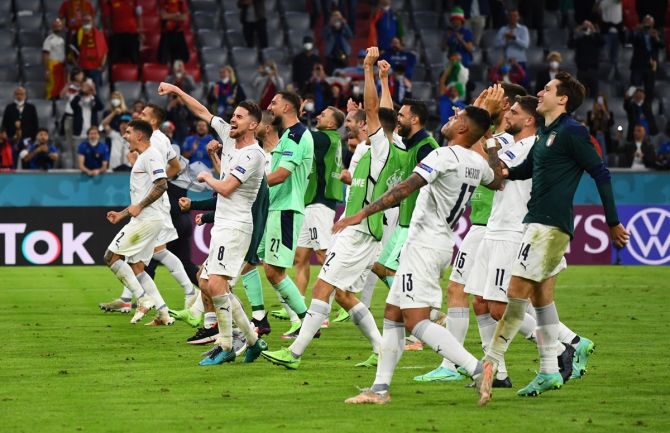
Italy qualified for the Euros with 3 games to spare and will be playing the final 4 of the nations league in October. Italy went from being the 21st ranked country in FIFA world rankings to 7th under Mancini’s watch. They are on a fiery 33 match unbeaten streak counting all qualifiers. The Euro Final appearance is the culmination of Mancini’s fine work with the Azzuri.
Insight on International Trade

Introduction

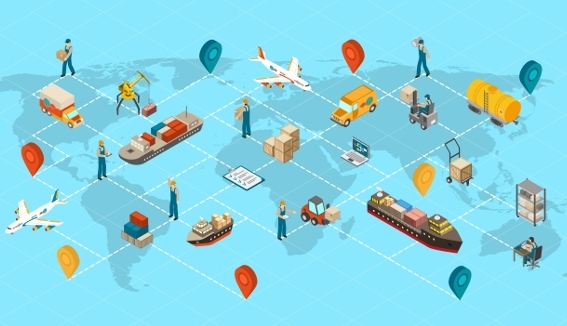
International trade is an exchange involving a good or service conducted between at least two different countries. The exchanges can be imports or exportsImports and ExportsImports are the goods and services that are purchased from the rest of the world by a country’s residents, rather than buying domestically. In many countries this trade represents a significant share of their gross domestic product (GDP).

History

While international trade has existed throughout history (for example the Silk Road, Amber Road, Trans Atlantic Slave trade, Salt Roads), its economic, social, and political importance has been on the rise in recent centuries. International trade has a rich history starting with barter system being replaced by Mercantilism in the 16th and 17th Centuries. The 18th Century saw the shift towards liberalism. The First World War changed the entire course of the world trade and countries built walls around themselves with wartime controls. Post world war, as many as five years went into dismantling of the wartime measures and getting back trade to normalcy

Differences with Domestic Trade

1)International trade is, on paper, not different from domestic trade as the motivation and the behavior of parties involved in a trade do not change fundamentally regardless of whether the trade is cross border or not.

2)However, in practical terms, carrying out trade at an international level is usually a more complex process than domestic trade. The main difference is that international trade is typically more costly than domestic trade.

3)This is due to the fact that a border typically imposes additional costs such as tariffs(an excise that is paid on the sale of imported goods), time costs due to border delays, and costs associated with country differences such as language, the legal system, or culture.

Most Traded export products

They are Crude Oil followed by Cars, Processed Petroleum Oils, Phone systems, Integrated Circuits, Autombile parts, Gold, Computers, Aircraft, Diamonds etc.

Top Traded commodities by value – Exports

  1. Mineral Fuels, Distillation products
  2. Electronics
  3. Nuclear Reactors
  4. Machinery
  5. Vehicles
  6. Plastics
  7. Optical Photo
  8. Medical apparatus
  9. Pharma products
  10. Pearls, Precious Stones.

Largest Countries by International Trade

  • European Union
  • United States
  • China
  • Germany
  • UK
  • Japan
  • France
  • Netherlands
  • Hong Kong
  • South Korea
  • Italy
  • Canada
  • Belgium
  • India
  • Singapore
  • Mexico

The ecology of Valley Of Flowers

Introduction

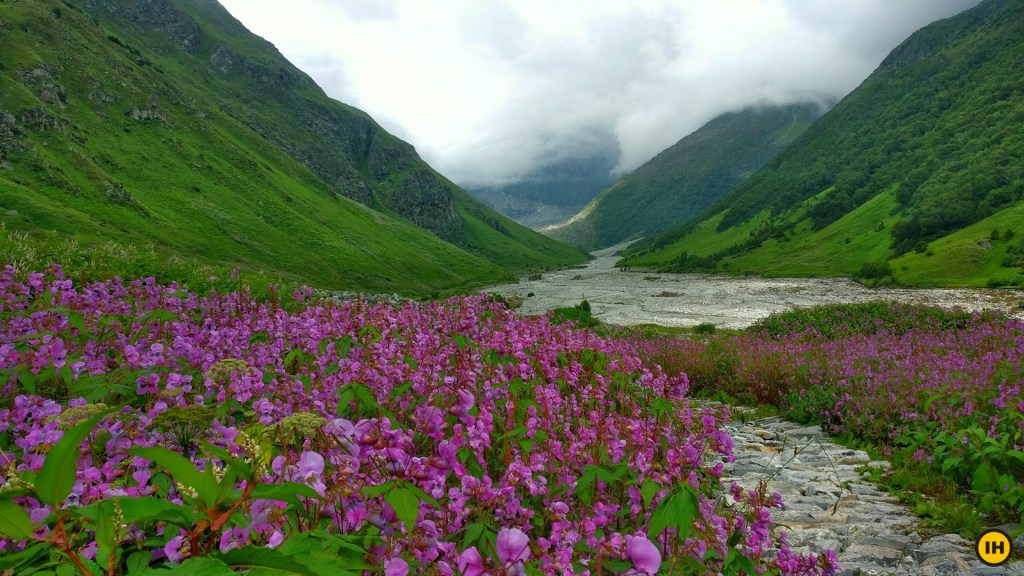
Valley of Flowers is an Indian National Park, located in North Chamoli, in the state of Uttarakhand and is known for its meadows of endemic alpine flowers and the variety of flora. It is a UNESCO world heritage site.  This richly diverse area is also home to rare and endangered animals, including the Asiatic Black Bear, Snow Leopard,Musk Deer,Brown Bear,Blue Sheep and Red Fox. The Birds found in the park include Himalayan Monal Pheasant and many other high altitude birds. Valley of Flowers is one of the core zones of the Nanda Devi Biosphere reserve.

Location

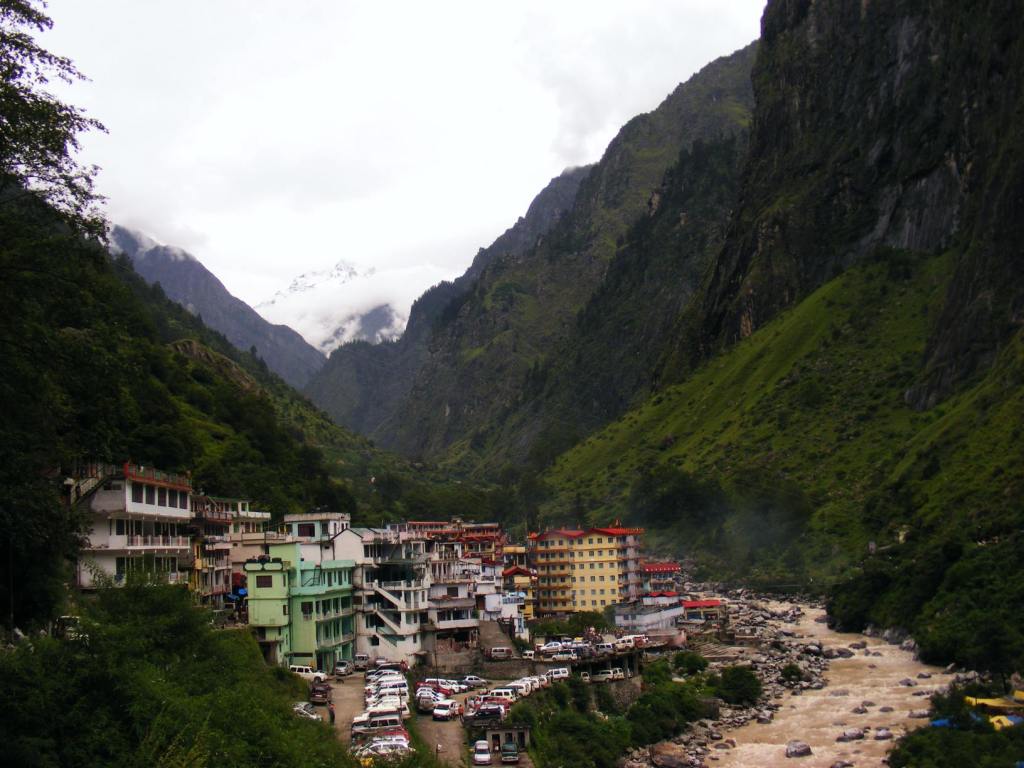
The Valley of Flowers is nestled in the upper expanses of Bhyundar Ganga near Joshimath in Garhwal region. To reach the valley one has to reach Joshimath then the nearby Govindghat, trek all the way to a small village named Ghangaria in an approximate 14 km ascent, where there are several trekking routes to the valley. This route is the most popular is followed by many trekking groups. One can also hire a porter, mule or helicopter to reach Ghangaria. The trek from Govindghat to Ghangaria is common to the Sikh Temple at Hemkund and one is likely to find many Sikh pilgrims on the route. The Trek happens during the monsoon season and Ghangaria is closed off for the rest of the year.

Flora

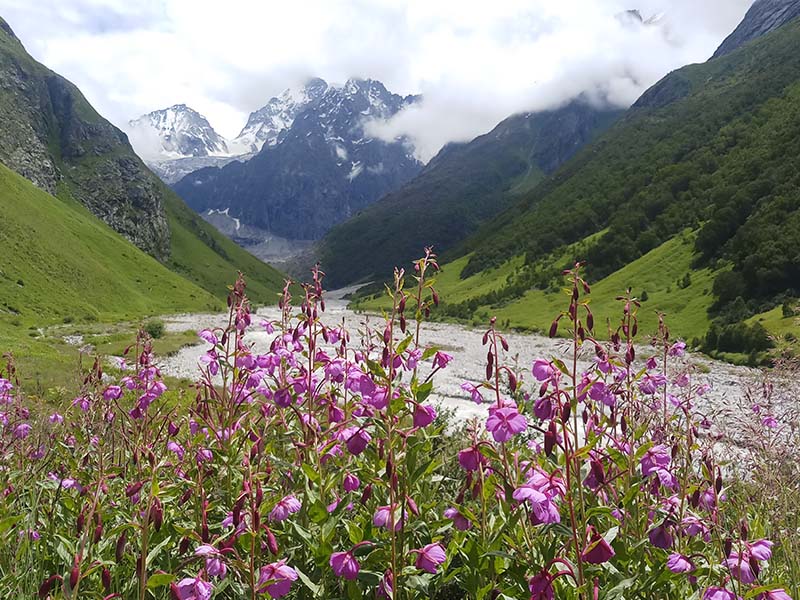
Flowers that carpet the meandering meadows of Valley of Flowers include Orchids, Poppies, Primilas, Marigold, Daisies, Geranium, Petunia, Sediams, Lilies, Calendula, Himalayan Bell Flower, Zinnia and several others. Sub-Alpine forests of birch and rhododendron cover the valley’s area. The park has many species of medicinal plants including Dactylorhiza hatagirea, Picrorhiza kurrooa, Aconitum violaceum, Polygonatum multiflorum and Fritillaria roylei.

Fauna

There are many sub-alpine animals found in the valley. The Red Giant flying Squirrel, Himalayan Black Bear, Red Fox, Himalayan Weasel, Himalayan Goral, Himalayan Musk Deer, Himalayan Tahr and even Snow Leopards are some of the examples of the diversity of the valley’s Fauna.

Far Cry 4’s Indian Connection

Introduction

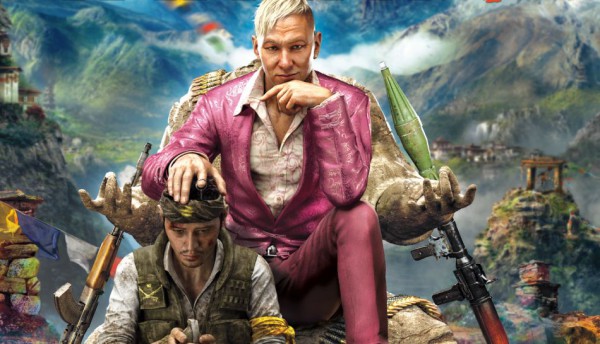
Far Cry 4 is an open world, first person shooter made and released by Ubisoft Montreal in 2014 and is the fourth installment in the popular Far Cry series. The game takes place in Kyrat, a fictional Himalayan country based on Nepal,Indian and Tibetan Himalayan frontier. The main story follows Ajay Ghale, a young Kyrati-American, where he is caught in a civil war involving Kyrat’s Royal Army, controlled by the tyrannical king Pagan Min, and a rebel movement called the Golden Path.

Interesting Features

The story is loosely inspired by the Nepalese Civil War, an armed conflict between the Government of Nepal and the Communist party of Nepal (Maoist) (CPN-M) between 1996 to 2006. The games’s location is modeled on the Himalayas and the developers have done an amazing job on the all the details.The game has many interesting characters and as per the Far Cry tradition, the villain, Pagan Min, takes the spotlight in an amazing performance Troy Baker. The local ‘Kyratis’ speak Hindi and their religion, temples, monasteries and culture are inspired by Hinduism and Buddhism. There are even missions based on Buddhist legends and folklore. The game, in its parallels, aptly portrays the adrenaline rush and dread of the real civil war and mountain warfare. Even the melee weapon is the Khukri which is famous for it’s association with Gurkhas. The names of all the places, regions, landmarks and frontiers sound very Desi showing the developers did their homework by visiting and studying the locations they modeled the whole game on. The soundtrack by Cliff Martinez consists of usage of traditional Nepalese and Indian instruments which combined with electronic samples had high octane action and mystical wondering.

Globalization

Introduction

Globalization is the process of interaction and integration among people, companies, and governments worldwide. It is used to describe the growing interdependence of world’s economies, cultures, and populations, brought about by cross-border trade in goods and services, technology, flow of investment, people, and information. Countries have built economic partnerships to facilitate these movements over many centuries and years. Globalization has accelerated since the 18th century due to advances in transportation and communication technology. The term gained popularity after the Cold War in the early 1990s, precisely after the fall of the Soviet Union, as these cooperative arrangements shaped the modern daily life.

Importance

This increase in global interactions has caused a growth in international trade and the exchange of ideas, beliefs, and culture. The wide-ranging effects of globalization are complex and politically charged. Economically, globalization involves goods, services, data, technology, and the economic resources of capital. Advances in transportation, like the steam locomotion, steamship, jet engine, and container ships, and developments in telecommunication infrastructure, like the telegraph, Internet, and mobile phones, have been major factors in globalization and have generated further interdependence of economic and cultural activities around the globe. Globalizing processes affect and are affected by business and work organization, economics, socio-cultural resources, and the natural environment. Academic literature commonly divides globalization into three major areas: economic globalization, cultural globalization, and political globalization

Negative Effects

Despite its benefits, the economic growth driven by globalization has not been done without awakening criticism. The consequences of globalization are far from homogeneous: income inequalities, disproportional wealth and trades that benefit parties differently. In the end, one of the criticisms is that some actors (countries, companies, individuals) benefit more from the phenomena of globalization, while others are sometimes perceived as the losers of globalization. 

https://youmatter.world/en/definition/definitions-globalization-definition-benefits-effects-examples/

Marco Polo – Netflix’s Underrated Gem

Introduction

Netflix’s ‘Marco Polo’, as the name suggests. is a drama series based on the famous Venetian traveler who traveled through Asia along the Silk Road between 1271 and 1295 and his early years in the court of Kublai Khan, grandson of Genghis Khan and founder of the Yuan Dynasty. The show made its debut on netflix in December 2014, it was renewed for a second season the following year but the show was cancelled by Netflix following generally mixed critical reception.

Story

The series was created by John Fusco and stars Italian actor Lorenzo Richelmy as the titular character and the magnificent Benedict Wong as Kublai Khan, in a performance which was widely praised. Season 1 follows Marco’s Journey from a young but naive boy to a loyal servant and friend of the Khan, assisting him in the working of his empire and even saving his life. Season 2 expands on this by following on stories about The Khan’s heirs and the looming threat to his grand Khanate.

Review

Marco Polo certainly has its flaws like pacing and even in many aspects Kublai Khan takes the spotlight instead of the titular character due to better writing and an amazing performance from Wong. Many of the story details are exaggerated in respect to historical context and some is outright fiction but one can hardly expect it to be historically accurate as it is not a documentary. The show’s strength’s are its production values which is easily amongst the best in Netflix. The show is shot in a gorgeous location like the steppes of Kazakhstan, which substitute for Mongolia and China. The costume and set designs are beautiful and the battles & action sequences are well choreographed.

Death of the Aral

Introduction

The Aral Sea was an endorheic lake lying between Kazakhstan and Uzbekistan in Central Asia. By definition it is a lake contrary to it’s name, translates to ‘Sea of Islands’ as it had around 1000 islands dotting it’s waters. It’s drainage basin flows through Uzbekistan and parts of Tajikistan, Turkmenistan, Kyrgyzstan, Kazakhstan, Afghanistan and Iran. It was formerly the fourth largest lake in the world with an area of around 70,000 square km. The Lake began shrinking since 1960 and largely dried up by 2010s.

History

The lake began shrinking after the rivers that fed it were diverted by Soviet irrigation projects. Kazakhstan was not an independent country then but a state or a ‘ socialist republic’ of then USSR, known as Kazakh SSR. The Soviet Government wanted Cotton to become a major export. They devised many projects diverting the Amu Darya river in the south and the Syr Darya river in the east to irrigate the nearby desert in an attempt to grow cotton, rice and cereals. There were large scale construction of irrigation canals which were poorly built allowing leakage and evaporation. Overtime the lake began to shrink at an alarming rate which didn’t exactly surprise the Soviet engineers as they, in a twisted sense, expected it. The salinity of the lake increased at an alarming pace . By 1987, the lake split into two separate water bodies, the North and South Aral Seas. Uzbekistan gained independence in 1991 after the fall of the Soviet Union but it’s first leader, Islam Karimov’s government continued the previous Soviet policies destroying the already beleaguered lake and causing an unprecedented ecological disaster.

The Post Soviet era

Uzbekistan gained independence in 1991 after the fall of the Soviet Union but it’s first leader, Islam Karimov’s government continued the previous Soviet policies destroying the already beleaguered lake. In 2003, South Aral sea further divided into east and west basins. At the same time a plan was put into motion by the Uzbek Government to recover the North Aral Sea by building Dike Kokaral, a dam, which was completed in 2005 and in the next year substantial recovery of sea level was recorded. By 2009, the southeastern lake had disappeared. By 2014, the entire Eastern basin of Aral Sea had dried up, which is now known as the Aralkum desert.

Environment Effects

Due to it’s shrinking countless unfortunate impacts on environment, economy and public health have been recorded. Worsening of the soil, pollution of the lake due to pesticides, death of the local flora and fauna, fish species, spike in cancer, lung diseases, tuberculosis, anaemia due to the locals drinking water and inhalation of contaminated dust which has caused many fatalities. Bustling fishing towns along the shores have now become grim ship graveyards. The town of Aral’sk, the main fishing port is now many kilometres away from the lake and has seen its population decline, most notably the town of moynak on the southern shores of the Aral Sea which used to be Uzbekistan’s biggest port.

Restoration Plans

There have been many restoration strategies planned out for Aral sea’s recovery. There is the Aral Sea basin programs where all five Central Asian countries help in the stabilization and rehabilitation of the local environment. There is also the North Aral sea restoration plan which has so far succeeded in recovery. Kazakhstan has partially revived and replenished it’s parts of the Aral Sea while Uzbekistan isn’t planning on abandoning the Amu Darya to irrigate their number one export cotton and are even moving towards oil exploration in the South Aral seabed.

https://tidsskriftet.no/en/2017/10/global-helse/vanishing-aral-sea-health-consequences-environmental-disaster

https://www.wearewater.org/en-IN/the-aral-sea-the-difficult-return-of-water_322871

India’s Geographical Blessings

Introduction

The Current World powers have always had some sort of geographical shields protecting them. India is no exception and is blessed by many natural geographical factors which has effectively shielded the country from various external forces. The Himalayas, Indian Ocean and the Thar desert are some of the of regions which act as a shield for India.

The Himlayas

The Himalayas are largest and tallest mountain ranges in the world. Many of the world’s tallest peaks like Mt.Everest, K2, Kanchenjunga, Nanda Devi are situated in this majestic range. The Himalayas stretch from the edges of the Hindu Kush mountains of northeastern Afghanistan, through the Indian states of Jammu & Kashmir, Ladakh, Himachal Pradesh, Uttarakhand, Sikkim and Arunachal Pradesh and countries like China(Tibet), Nepal, Bhutan and Northern Myanmar. The Himalayas have historically acted as a buffer between India and China and was even considered as a factor which prevented Genghis Khan’s ferocious Mongol Armies from invading India. During the 1971 Bangladesh Liberation war, India chose to declare war on Pakistan in winter as it was almost impossible for China to mobilize their armies during the brutal Himalayan winter. India has fought many wars with it’s neighbor Pakistan in the region to maintain the status quo as both understand how vital control over this region is.

The Thar Desert

The Thar desert in Rajasthan acts as a natural border between India and Pakistan. The scorching desert and sand means it’ll be difficult for Pakistan to maintain supply lines and logistics incase of an invasion of India. This applies for India as well but it would be far easier to defend than to attack through this frontier.

The Seas

India is a peninsula, as it is surrounded by water on three sides. The Arabian sea to the west, Indian ocean to the south and the Bay of Bengal to it’s east. All these water bodies ensure India will be well protected by a natural barrier as it would require an external navy to invade, ensure naval supremacy so a land invasion is possible which is an almost impossible task given India’s naval strengths.

https://en.wikipedia.org/wiki/Himalayas

Geopolitics

Introduction

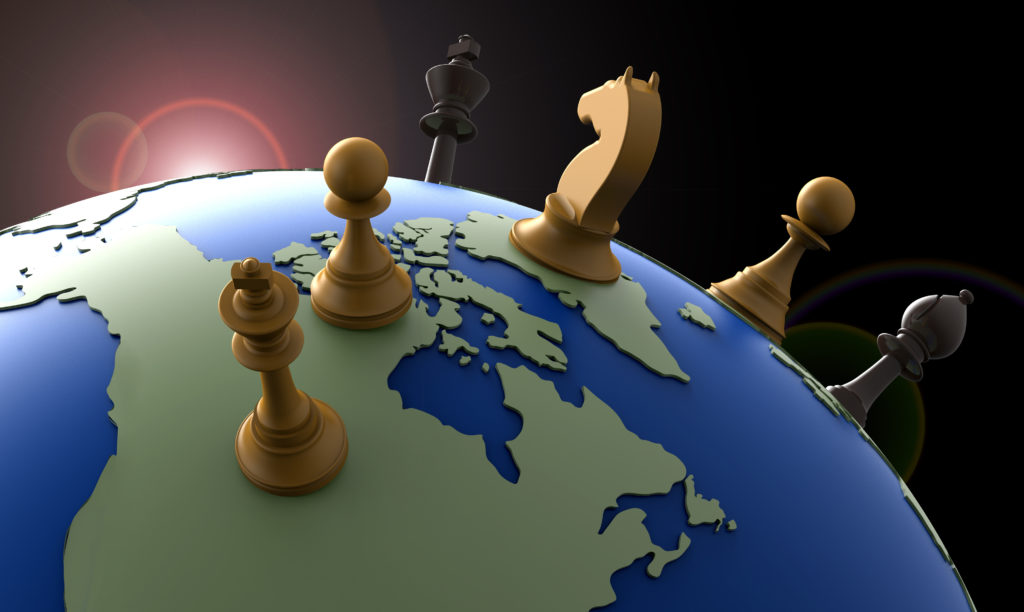
Geopolitics combines the the words Geo, referring Earth and Politics, is the study of the effects of Earth’s geography on politics and international relations. It can also be termed as the study of how political power is reinforced or undermined by geographical arrangements(boundaries, coalitions, spatial networks, natural resources etc.) At international relations level, geopolitics is a way of studying foreign policies, to understand, explain and predict the international political behaviours of the countries and their governments through various geographical variables. These variables include climate, topography, area studies, demographics and natural resources of the regions being evaluated.

Contents

Study of Geopolitics primarily focuses on political power linked to geographic space. Particularly, land territory and territorial waters in relation with diplomatic history. A branch of geopolitics, critical geopolitics, interprets different classical geopolitical theories by showing their political functions for the world’s great powers. There are even some works that follow the geopolitics of renewable energy. Finally, geopolitics clarifies the range of strategic choices, providing a guide for achieving strategic efficiency. While it places particular stress on geographic space as a critically important strategic factor and source of power, it recognizes that geography is only a part of the totality of global phenomena. There are many geopolitical case studies like the Kashmir conflict, Arctic Ocean disputes, China’s disputes in south China sea, US’s foreign policies, annexation of Crimea by Russia, ongoing conflicts in the Middle-East etc.

Future

In today’s world geopolitical studies are becoming more and more important in relations to international relations and diplomacy studies.

https://www.sciencedirect.com/topics/earth-and-planetary-sciences/geopolitics

https://en.wikipedia.org/wiki/Geopolitics

Football Analytics

Introduction

Data analytics have come to play an important role in the football industry today. Clubs look to gain a competitive edge on and off the pitch, and big data is allowing them to extract insights to player scouting, improve player performance, prevent injuries, their suitability to the club’s system and ethos, output prediction and increase their commercial efficiency. However, contextualizing the information and extracting valuable insights is not always an easy task.

Moneyball & Football

Overtime, Analytics has started to play more important roles in Football with respect to player recruitment. There are many Football clubs in the world who pride themselves over their player recruitment models based purely data and metrics. Billy Beane, the pioneer of the ‘Moneyball’, a system of player recruitment based purely on stats instead of the old, tried and tested ‘eye-tested’ proved to revolutionise recruitment in Baseball. Nowadays clubs like Liverpool FC, Brentford FC, Barnsley, Midtjylland, AZ Alkmaar the Red Bull Franchise and many other clubs are known for their data driven approach to player recruitment.

The Metrics

There are many metrics over which a football player is analysed. These include Xg(Expected Goals), Xa(Expected assists), turnovers, dribbles, different per 90 minutes stats like passes, dribbles, pressures, tackles, interceptions etc. These stats can be viewed by the helps of charts and graphs which can present a player’s overall stats and make it easy for assessment. This model also helps in predicting potential risks and assessing the weaknesses of a player which reduces the chances of signing a player who can prove to be a flop, significantly.

Future

Moneyball and the modern data driven approach in football has been proved to be a efficient, smart and cost effective way of recruitment. This model has allowed many smaller clubs to punch above their weight and challenge the bigger, more established clubs and have a successful trophy winning runs.

There are many football applications and websites available where one can view player stats like Sofascore, StatsBomb, FbRef etc. This field has gained more demand recently and many clubs are moving towards a pure data driven approach towards recruitment.

https://statsbomb.com/

http://sbibarcelona.com/test/data-analytics-in-the-football-industry/#:~:text=Data%20analytics%20have%20come%20to,and%20increase%20their%20commercial%20efficiency.

Markha Valley – Ladakh’s Gem

Introduction

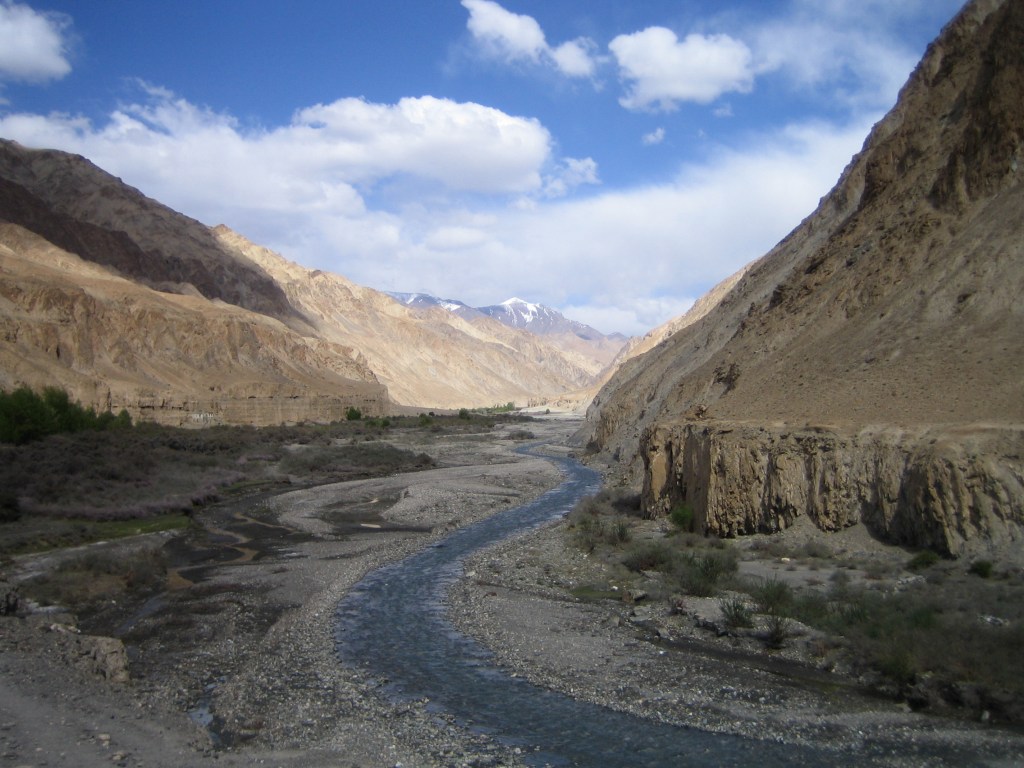
The barren but enchanting landscapes of Ladakh have many enthralling places to trek but arguably the best of them is the Markha Valley situated on the river of the same name. The Markha River is a tributary of the Zanskar river, who is the first major tributary of the great Indus River. It lies within the Hemis National Park just on the outskirts of the capital, Leh and the valley is the largest in the Union Territory. The River starts at the junction of Langtang and Nimaling with the villages along the river valley including Skyu, Hangkar, Rumbak, Yurutse and Markha.

The Route

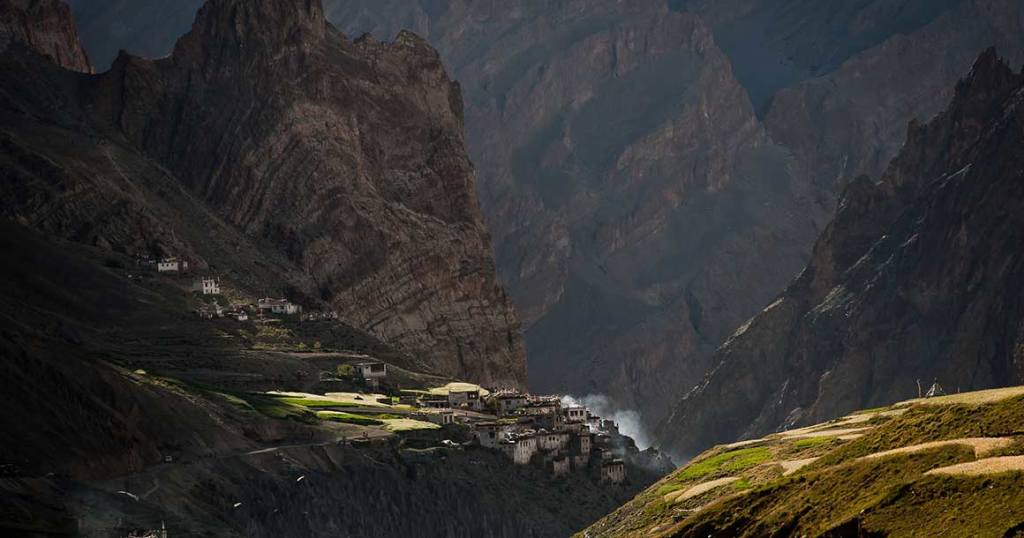
Markha Valley is one of the most popular trekking routes in Ladakh. Leh is the starting point of this trek. The valley is accessible near Spituk in the west which is generally the starting point of the trek and Gongmaru La pass near Hemis, where the trek ends. There are many tiny hamlets present throughout the valley. The villages in the valley have preserved monasteries, temples and ruined forts. The Tacha Gompa is the most important Buddhist monastery in Markha Valley.

Views of the Heights

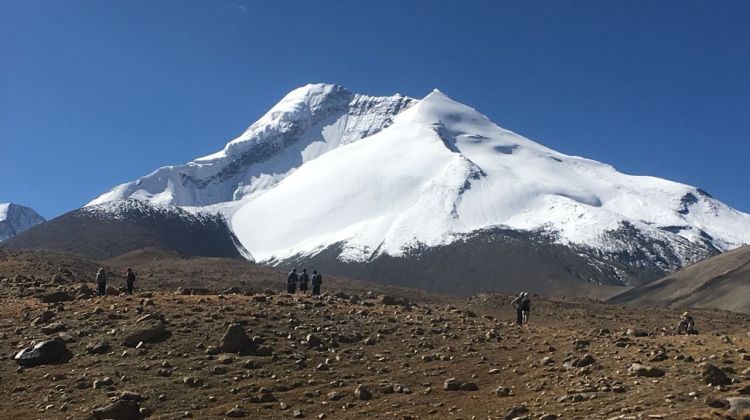
Kang Yatze
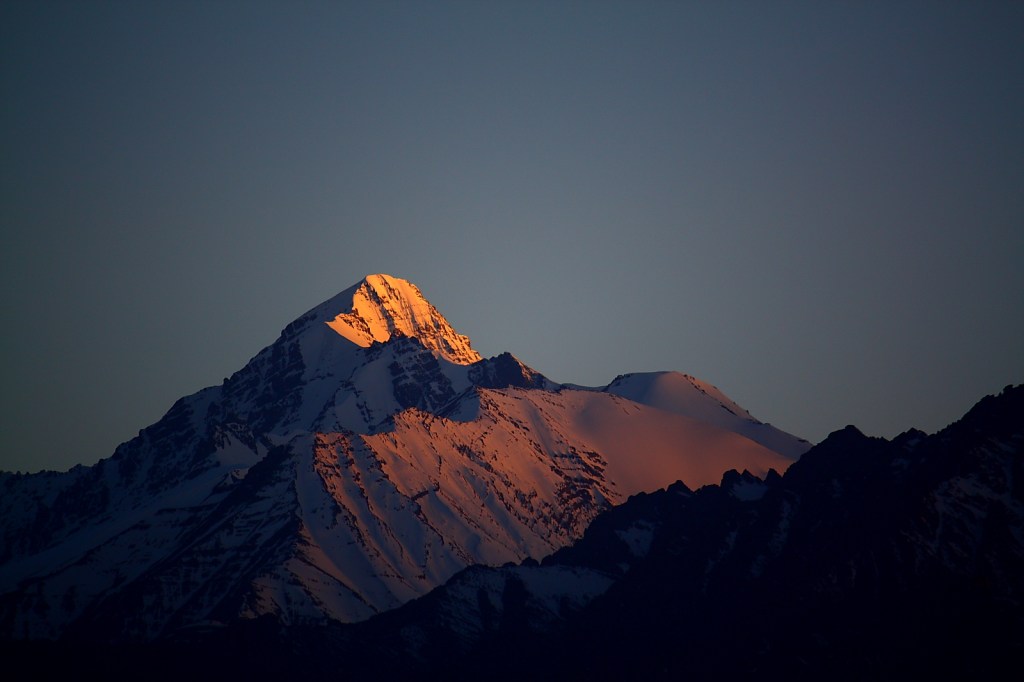
Stok Kangri

As the trail goes through Hemis National Park, all it’s cherished fauna, mountain sheep, rabbits and even snow leopards can be spotted. The majestic K2 Peak, Stok Kangri and the Kang Yatze peaks are visible from the valley. Even the region of Tibet is visible on a clear day.

https://www.trekthehimalayas.com/Markha-Valley-Trek/

https://wikitravel.org/en/Markha_Valley_Trek

Blackgaze – The Union of Metal’s ferocity and ethereal soundscape

Blackgaze is a fusion genre, the combination of black metal(which includes shrieking vocals, fast tempos, heavily distorted guitars and an emphasis on atmosphere) and shoegazing(delicate mixture of obscured vocals, guitar distortion and overwhelming volume). The word is a blend of the mentioned genres. It can be defined as a mixture of the hardcore instrumentation of black metal with the mellower, more dreamy soundscapes of shoegaze.

The genre was primarily influenced by atmospheric black metal bands like Ulver, and pioneered by French musician Neige in around 2004 through the projects Alcest, Amesoeurs and Lantlôs. Alcest’s ‘Le Secret’ is termed by many as “the birth of blackgaze”. It really developed through the band by their debut album Souvenirs D’Un Autre Monde, released in 2007. Alcest has since released several albums like Les Voyages de l’âme, Shelter, Kodama and Spiritual Instinct, with Neige describing the sounds delivered in an ‘angelic cod’ and a ‘raw, distant shriek’. Alcest has risen to prominence not only in blackgaze, but metal folklore.

Alcest

American band Deafheaven are also credited for promoting the genre with their success. The Guardian even termed them as ‘Blackgaze’s de facto poster boys’, describing their second album ‘Sunbather’ as pivotal to blackgaze. Deafheaven’s vocalist George Clarke himself cites the work of Alcest as the bands blueprint for their musical inspiration and direction.

With the blackgaze gaining more and more hardcore fans by the day though bands like Agalloch, Alcest, Altar of Plagues, Deafheaven, Ghost Bath, Liturgy, Oathbreaker and Wolves in the Throne Room the genre is just warming up.

The New Silk Road

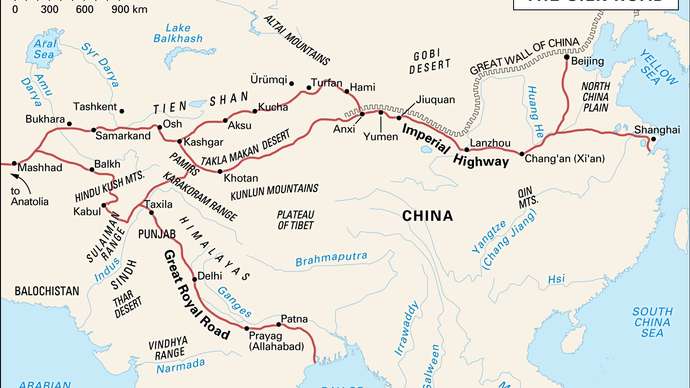
The Silk Road also called Silk Route was an ancient trade route, linking China  with the West, that carried goods and ideas between the two great civilizations of Rome and China. Silk went westward, and wool, gold, and silver went east. China also received Nestorian(Eastern) Christianity and Buddhism(from India) via the Silk Road.

The Silk Road began in north-central China in Xi’an (in modern day Shaanxi province). A caravan track stretched west along the Great Wall of China, across the Pamirs, touching the Indian province of Ladakh, then through Afghanistan, and into the Levant and Anatolia(Turkey). Its length was about 4,000 miles (more than 6,400 km). Goods were then shipped to Europe via the Mediterranean Sea.

China, now a global superpower seeks to revive this ancient trade route to open new channels of trade with the West in light of various geopolitical and border disputes with her neighbouring countries.

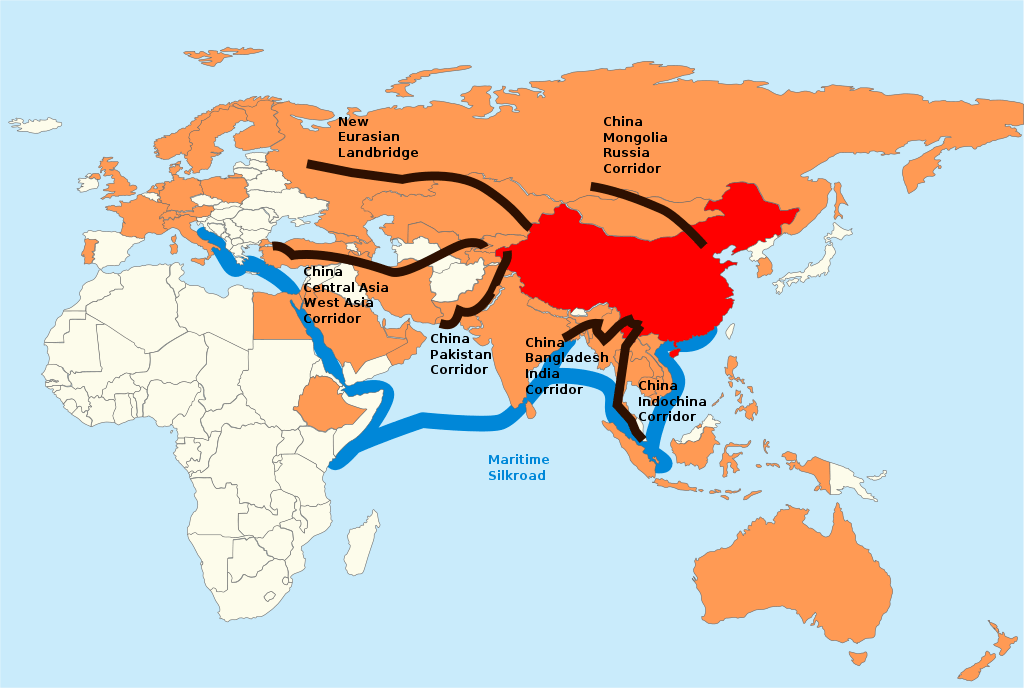
Parts of the Silk Road survives in the form of a paved highway connecting Pakistan and China’s Uyghur Autonomous Region of Xinjiang. In the 21st century the United Nations planned to sponsor a trans-Asian motor highway and railroad. The Silk Road also inspired China’s Belt and Road Initiative, a global infrastructure development strategy authored by President and General Secretary Xi Jinping. The Asian Infrastructure Investment Bank and the Silk Road fund will be the financing this gigantic project.

It’s flagship projects include the China-Pakistan economic corridor(CPEC), where China will fund the construction and development of a big port in Gwadar, Pakistan for trade and maritime shipment to Africa & West Asia.

China is investing heavily in BRI which includes many railway, energy sector, roadway and agriculture projects. Which is not surprising as the country being the world’s biggest oil importer, it’s energy security is a very important concern while current sea routes used to import Middle Eastern Oil continue to be frequently patrolled by the US Navy.

It remains to be seen whether the modern revival of the famous trade route is a successful endeavor.

Ladakh – The link between India and Central Asia

Ladakh, situated in northernmost India bordered by the Tibet autonomous region to it’s east, the Indian state of Himachal Pradesh to it’s south, both Indian Jammu & Kashmir and Gilgit-Baltistan(PoK) to it’s west and the southwest corner of the Chinese Xinjiang autonomous region across the majestic karakoram pass in the far north, has always been a land of intrigue. The name ‘Ladakh’ means the land of high passes is full of great mountain passes like the Karakoram, Khardungla etc.

The largest town and capital of Ladakh is Leh, followed by Kargil. The Leh district contains the Indus, Shyok and Nubra river valleys while the Kargil district has the Suri, Dras and Zanskar river valleys. Being administrated as a union territory recently, it is the largest and second least populous union territory of India.

Since past, Ladakh has been important due it’s strategic location at the crossroads of important trade routes. Most notably the renowned Silk Road, which was and still is a network of trade routes connecting the East and West, and was key to the economic, cultural, political and religious interactions between these regions from the 2nd century BC to the 18th century. It primarily refers to the land but also sea routes connecting East Asia & Southeast Asia with South Asia, Persia(Iran), the Arabian Peninsula, East Adrian and Southern Europe.

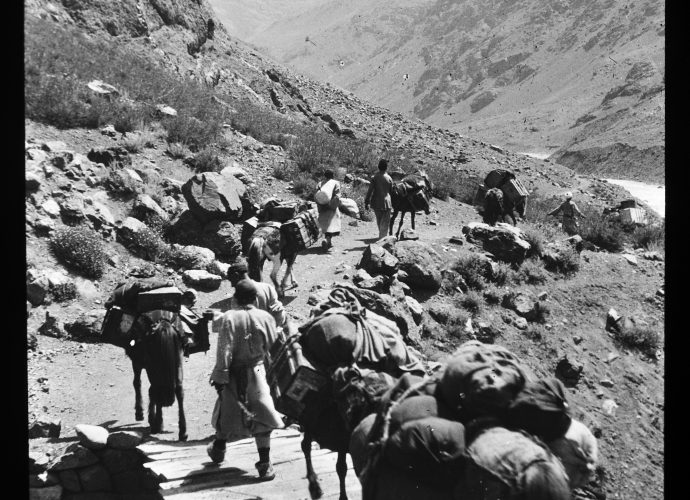
Due to its contiguity with Xinjiang and Tibet and its close proximity to Central Asia, and enjoying a central position in the network of overland caravan routes that were linked to the Silk Route, Ladakh acted as an important gateway in the Indo-Central Asian exchange of men, materials and ideas through the ages. The great mountain barriers of the Hindu Kush, Karakoram, Kun Lun mountains and western Himalayas where not successful in stopping the trade from thriving.

The Central Asian Museum in Leh celebrates this rich cultural & trade history with Central Asia having many artifacts, photographs and art installations depicting trade through Ladakh. Notable exports to Central Asia were the famous Pashmina Shawls, Tea, Indigo, Coral, Salt etc. Imports from Central Asia were Bukharan and Kokandi gold coins(from the area which is now the country of Uzbekistan), Silk Cloth, Russian currency etc.

The trade and the caravan traders even helped in the urbanisation of Ladakh and giving it’s unique identity.

Wanderlust is enchantment

“Travelling – It leaves you speechless, then turns you into a story teller”.

-Ibn Batuta.

Traversing new lands and frontiers. Exploring people and culture has always been of significant importance for mankind. Nowadays travelling has become too mainstream with planned packages, theme parks, resorts which kind of rob the good old ‘free travel’ of its essence. Going solo, which gives you the feeling of being independent, entirely self dependent and the accomplishment of something unique has become some what of a prized adventure.

Even trekking(taken from the Afrikaans word ‘trek’ meaning to hike/travel) which has always been in the conversation of ‘free travel’ has become some what stagnant and less exciting because of it being planned down to the smallest of details. This isn’t entirely a bad thing as it’s done for the safety of travellers, but the charm is diminishing none the less.

Because of this, ‘Road less travel’, has become the ultimate toast of travelling. Going with a small group of friends or family or even alone, on journeys which are spontaneous although reserved for pragmatic changes.

As time goes by, the solo travel, synonymous with the 60s Hippie culture is on a resurgence. Our land, India, is a fertile ground for such adventures! As we see many foreign tourists travelling as if they were a local, and this is what led me to write this blog in the first place.

Hope we all will have plenty of stories to tell.