MOST BEAUTIFUL ISLANDS IN THE WORLD

Islands conjure dreams of paradise: an escape from the rat race and a perfect patch of sand where you can relax under rustling palms and gaze at a serene blue sea.

But not all islands are created the same. The beauty of some is defined more by the sea that surrounds them, which can captivate connoisseurs with its crystalline clarity and thriving coral kingdoms.

Other islands feature luxuriant jungles and velvety peaks, and some enchant travelers with their cultural jewels. Whether it’s sublime beaches, stunning topography, or exotic cultures you seek, these islands lie far from the workaday clamor but close to creature comforts.

From the Seychelles to Santorini and the Caribbean to Capri, find your very own Shangri-la in this list of the most beautiful islands in the world.

1.Maldives:



The Maldives are home to some of the world’s most ravishing islands, but it’s the sea, which truly makes these islands shine. Luminous aquamarine waters with a crystal clarity lap upon these dazzling white shores, which barely peek above the Indian Ocean.

Consisting of 26 natural atolls, the Maldives archipelago is the planet’s lowest lying nation, rising no more than three meters above the sea at its highest point, a measurement that shrinks every year.

Beneath the mesmerizing waters, coral reefs flourish, luring divers and snorkelers from around the world. Surfers also flock here to ride the uncrowded breaks.

Back on land, luxury resorts provide the perfect launching points for adventures focused upon the sea, the archipelago’s greatest asset, but also, as the planet’s climate changes, its single greatest threat.

2.Bora Bora, French Polynesia:

Shaped like a giant sombrero, this lush volcanic island stars in countless South Pacific fantasies. The focal point and best asset of this tropical beauty is its ravishing lagoon in technicolor turquoise. Fish, turtles, sharks, and rays swim in the clear waters, and tiny islets or motus dot the lagoon.

The island, of course, is distinctly French, with mouthwatering cuisine to match. Diving and snorkeling are excellent in the surrounding reefs, and hiking trails weave through the palm-studded forests.

If you can afford it, hide out here in a luxurious over-the-water bungalow and bask in your good fortune as you fall asleep to the gentle slosh of the sea.

3. Palawan, Philippines:

Palawan is the Philippine’s answer to paradise. This island province stretches southwest to Borneo, with lush limestone peaks rising from a jewel-like sea so clear, that you can almost see the expressions on the fish from above the surface.

Slivers of gleaming white-sand beaches fringed with rustling palms rim many of these jungle-clad islands, while under the water, coral reefs teem with an impressive diversity of tropical fish, offering some of the best diving in the world.

Other attractions include the islands’ unique wildlife, emerald lakes, and quaint fishing villages. Coron is home to plush resorts, and El Nido drips with natural beauty and is one of the most alluring islands in the chain. From here, you can island hop around the spectacular Bacuit archipelago.

One of Palawan’s top attractions is the World Heritage-listed Puerto Princesa Subterranean River National Park, an impressive limestone cave system with a long underground river.

4. Seychelles:

Pristine and picture-perfect, the Seychelles are worth traveling for. East of Kenya, this relatively unspoiled archipelago of 115 coral and granite islands is packed with attractions, from UNESCO-listed jungles and thriving coral reefs to palm-lined, powdery beaches flanked by giant boulders.

Almost half the total land area of these equatorial isles is protected, and many of the islands lie within fish-rich marine sanctuaries with excellent diving and snorkeling.

The Seychelles also feature some of the planet’s richest fishing grounds, making this a top destination for anglers. Add some spicy Créole cuisine into the mix, as well as the plush resorts of Mahé, Praslin, and La Digue, and it’s easy to understand the Seychelles’ allure.

5. Santorini, Greece:

Encircling a sea-filled caldera, spectacular Santorini scores top points for its dramatic beauty. Bleached white villas tumble down volcanic cliffs. Blue-domed churches rise against the sparkling sea, and bright sprays of bougainvillea add to the eye-popping palette of color.

Perched atop the black lava cliffs, the settlements of Firá and Oia are the island’s most picturesque — and pricey, destinations — and Oia ranks among the most photographed locations in the world.

Other highlights of Santorini include Akrotíri Archaeological Site, Ancient Thira, the black sand beach of Perissa, and of course, the sublime sunsets. Sailing into this stunning caldera surrounded by soaring sea cliffs makes an unforgettable first impression.

6.The Cook Islands:

If you’ve ever dreamed of being a castaway in the South Pacific, the Cook Islands are for you. Strung between French Polynesia and Samoa but with strong ties to New Zealand, the archipelago’s 15 islands are among the most beautiful islands in the South Pacific.

Among the islands’ top attractions are enticing aquamarine lagoons, palm-fringed beaches, and volcanic peaks. Best of all, the locals are among the friendliest in the South Pacific.

Rarotonga is the main tourist hub, with its many resorts, lush peaks, and plentiful beaches. Aitutaki is one of the most beautiful islands in the South Pacific. Hibiscus-laced villages snuggle on the hillsides, and 21 motus or small islets lie along its heavenly lagoon, many within kayak distance of the resorts.

Ensconce yourself here in an over-the-water bungalow or hole up in a rustic beach shack on a remote out island and live your Robinson Crusoe fantasies.

7. Bali, Indonesia:

Bali’s intoxicating culture is a feast for the senses. Incense wafts from Hindu temples, rice paddies glow in electric greens, and the food jolts the taste buds. Surfing, swimming, and sunbathing are popular activities at the island’s beautiful beaches, and tourists will find so many other things to do on this exotic isle, from temple hopping and sightseeing in the lush countryside to spa treatments, shopping, and hiking.

Soak up the spiritual side of Bali in Ubud, see Seminyak, and family-friendly Sanur, feel the pumping pulse of touristy Kuta, or explore the attractions on the neighboring volcanic island of Lombok.

Looking for somewhere chic to stay? Choose from beautiful beach resorts, and if you’re bringing the kids, you’ll find plenty of good-value places to stay with the family.

One thing’s for sure: Bali’s enchanting spirit will wash over you like a warm, tropical wave.

BENEFITS OF CARDIO WORKOUT

Cycling. Running. Dancing. Hiking. Kickboxing. When it comes to cardiovascular exercises, the options are endless to improve your overall quality of life.

When part of an overall heart-healthy lifestyle, not only can regular cardio exercise lead to creases in your resting blood pressure and heart rate, but these basic changes can also mean your heart doesn’t have to work unnecessarily hard all of the time, says clinical exercise physiologist Erik Van Iterson, PhD, MS.

But how often should you do cardio to reap the health benefits? The American Heart Association recommends achieving at least 150 minutes of moderate-intensity heart-pumping exercise or 75 minutes of vigorous-intensity exercise spread out over most days of the week.

“Try getting in a 30-minute workout five or more days a week that raises your heart rate for the duration of the activity,” says Dr. Van Iterson. “Or try three, 10-minute workouts, five or more days a week.”

The benefits of cardio go beyond just your heart. Dr. Van Iterson explains how it affects your entire body:

1.BRAIN AND JOINTS:
Cardio exercise can benefit brain and joint health. One study reported that physical activity may reduce dementia risk, no matter what age you are. Other benefits include:

Increases blood flow and decreases chances of stroke.
Improves memory and thinking ability.
Combats decline in brain functioning with age.
Helps protect against developing Alzheimer’s disease.
Fights osteoporosis and reduces chances for a hip fracture.
Helps manage arthritis discomfort and maintains joint range of motion.

2.SKIN,MUSCLES AND WEIGHT:
No matter how you choose to move, being active helps increase circulation, which leads to clearer, healthier skin. Other health benefits can go much deeper than just your skin, too.

When you work your muscles, it increases oxygen supply, therefore allowing muscles to work harder. Over time, regular cardio exercise allows your muscles to adapt to an increased workload, making regular activities seem easier.

When paired with a heart-healthy nutrition plan, safe weight loss comes with doing regular cardio exercise. Not only are you less likely to develop diseases like diabetes, certain cancers and heart disease, but your body can more easily circulate blood. Less sitting time and more physical activity also helps you maintain a healthy weight by burning more calories throughout the day.

3.PANCREAS,LUNGS AND BLOOD:
Your pancreas is the organ that helps convert the food you eat for energy while also helping aid in digestion. Staying active helps improves blood sugar control, decreases stress on this vital organ and reduces your chance of developing type 2 diabetes. It also helps improves good cholesterol levels while lowering blood fats.

“Your lungs are also positively affected by physical activity,” says Dr. Van Iterson. “Cardio helps decrease how frequently you have to breathe as exercise ability improves and can lead to reductions in fatigue and shortness of breath in chronic lung problems.

4.MOOD:
Our moods fluctuate on a daily basis but staying active helps boost your mood, especially after a stressful day. So next time you’re feeling stressed or you’re having an off day, get to moving your body.

“Not only that, but it combats depression, improves your self-esteem and releases tension-fighting hormones like serotonin, dopamine and norepinephrine,” says Dr. Van Iterson.

5.SLEEP AND ENERGY:
There’s a reason why you feel amazing after a workout. Physical exercise helps your energy by releasing endorphins, giving you more, lasting energy throughout your day. When it comes to hitting the sheets, struggling to fall asleep is the last thing you want after that long, busy day. The good news is that cardio helps you doze off faster and promotes REM sleep.

“Make sure to avoid rigorous exercise too close to bed or you’ll be too energized to count sheep,” warns Dr. Van Iterson.

Grab your workout clothes and throw on your sneakers, you’ll not only boost your immune system — helping you steer clear of the cold or flu — but by improving your cardiorespiratory fitness, you can also increase your chance of living longer.

GLOBAL WARMING

Glaciers are melting, sea levels are rising, cloud forests are dying, and wildlife is scrambling to keep pace. It has become clear that humans have caused most of the past century’s warming by releasing heat-trapping gases as we power our modern lives. Called greenhouse gases, their levels are higher now than at any time in the last 800,000 years.

We often call the result global warming, but it is causing a set of changes to the Earth’s climate, or long-term weather patterns, that varies from place to place. While many people think of global warming and climate change as synonyms, scientists use “climate change” when describing the complex shifts now affecting our planet’s weather and climate systems—in part because some areas actually get cooler in the short term.

Climate change encompasses not only rising average temperatures but also extreme weather events, shifting wildlife populations and habitats, rising seas, and a range of other impacts. All of those changes are emerging as humans continue to add heat-trapping greenhouse gases to the atmosphere, changing the rhythms of climate that all living things have come to rely on.

What will we do—what can we do—to slow this human-caused warming? How will we cope with the changes we’ve already set into motion? While we struggle to figure it all out, the fate of the Earth as we know it—coasts, forests, farms, and snow-capped mountains—hangs in the balance.

Understanding the greenhouse effect:

The “greenhouse effect” is the warming that happens when certain gases in Earth’s atmosphere trap heat. These gases let in light but keep heat from escaping, like the glass walls of a greenhouse, hence the name.

Sunlight shines onto the Earth’s surface, where the energy is absorbed and then radiate back into the atmosphere as heat. In the atmosphere, greenhouse gas molecules trap some of the heat, and the rest escapes into space. The more greenhouse gases concentrate in the atmosphere, the more heat gets locked up in the molecules.

Scientists have known about the greenhouse effect since 1824, when Joseph Fourier calculated that the Earth would be much colder if it had no atmosphere. This natural greenhouse effect is what keeps the Earth’s climate livable. Without it, the Earth’s surface would be an average of about 60 degrees Fahrenheit (33 degrees Celsius) cooler.

In 1895, the Swedish chemist Svante Arrhenius discovered that humans could enhance the greenhouse effect by making carbon dioxide, a greenhouse gas. He kicked off 100 years of climate research that has given us a sophisticated understanding of global warming.

Levels of greenhouse gases have gone up and down over the Earth’s history, but they had been fairly constant for the past few thousand years. Global average temperatures had also stayed fairly constant over that time—until the past 150 years. Through the burning of fossil fuels and other activities that have emitted large amounts of greenhouse gases, particularly over the past few decades, humans are now enhancing the greenhouse effect and warming Earth significantly, and in ways that promise many effects, scientists warn.

Aren’t temperature changes natural?


Human activity isn’t the only factor that affects Earth’s climate. Volcanic eruptions and variations in solar radiation from sunspots, solar wind, and the Earth’s position relative to the sun also play a role. So do large-scale weather patterns such as El Niño.

But climate models that scientists use to monitor Earth’s temperatures take those factors into account. Changes in solar radiation levels as well as minute particles suspended in the atmosphere from volcanic eruptions, for example, have contributed only about two percent to the recent warming effect. The balance comes from greenhouse gases and other human-caused factors, such as land use change.

The short timescale of this recent warming is singular as well. Volcanic eruptions, for example, emit particles that temporarily cool the Earth’s surface. But their effect lasts just a few years. Events like El Niño also work on fairly short and predictable cycles. On the other hand, the types of global temperature fluctuations that have contributed to ice ages occur on a cycle of hundreds of thousands of years.

For thousands of years now, emissions of greenhouse gases to the atmosphere have been balanced out by greenhouse gases that are naturally absorbed. As a result, greenhouse gas concentrations and temperatures have been fairly stable, which has allowed human civilization to flourish within a consistent climate.

Now, humans have increased the amount of carbon dioxide in the atmosphere by more than a third since the Industrial Revolution. Changes that have historically taken thousands of years are now happening over the course of decades.

Why does this matter?

The rapid rise in greenhouse gases is a problem because it’s changing the climate faster than some living things can adapt to. Also, a new and more unpredictable climate poses unique challenges to all life.

Historically, Earth’s climate has regularly shifted between temperatures like those we see today and temperatures cold enough to cover much of North America and Europe with ice. The difference between average global temperatures today and during those ice ages is only about 9 degrees Fahrenheit (5 degrees Celsius), and the swings have tended to happen slowly, over hundreds of thousands of years.

But with concentrations of greenhouse gases rising, Earth’s remaining ice sheets such as Greenland and Antarctica are starting to melt too. That extra water could raise sea levels significantly, and quickly. By 2050, sea levels are predicted to rise between one and 2.3 feet as glaciers melt.

As the mercury rises, the climate can change in unexpected ways. In addition to sea levels rising, weather can become more extreme. This means more intense major storms, more rain followed by longer and drier droughts—a challenge for growing crops—changes in the ranges in which plants and animals can live, and loss of water supplies that have historically come from glaciers.

SWIMMING SKILLS

Swimming is a fun and great activity to stay fit. It offers tremendous health benefits, improves mood, decreases anxiety and helps to burn lots of calories. Apart from this, it is also good for those suffering from arthritis and other pain conditions. As per the Centers for Disease Control and Prevention, swimming for just 2.5 hours per week decreases the risk of chronic illnesses.

To swim smoothly, co-ordination of the entire body is a must. One needs to focus on the movement of the legs and arms, as well as breathing control and swimming strokes. So, to expertise the skill of swimming you must start with the basics. Here are 5 basic swimming skills beginners need to learn:

5 Basic Swimming Skills Everyone Needs To Learn:

1.BREATHING:


This is a frequently overlooked basic skill, but it is an important one. If are not comfortable breathing while swimming, you won’t be able to enjoy it completely and learn new things. The basic idea is that you need to breathe out with both your nose and mouth when your head is underwater. Then when you lift your head to the side take a full breath before putting your face back down.

2.FLOATING:

Before you start kicking and stroking, first learn to float in the water. Floating helps you to get used to the habit of moving through water properly. Floating helps to keep your body on the surface of the water. Our body experiences a vertical buoyant force when immersed in water and floating helps to keep your body in a horizontal position. Floating is important because if you accidentally fall in the water you will be able to float on the surface till you are rescued.

3.YOUR BODY MOVEMENT SHOULD BE WELL COORDINATED:

In swimming, all your body parts should be well co-ordinated with each other. You must be able to move the muscles of your lower back, abdomen, and hips in a synchronized way to keep moving forward. Your hands should move and cut through the water first, followed by your elbow and then your body should make way through the water.


4.KICKING:


Kicking is another important skill to learn if you want to master swimming. Kicking helps your body to move in the forward direction. Many swimming coaches use kickboards to support swimmer’s body.


5.STROKES:


Now that you know how to float and kick, it is time to learn some strokes. Strokes are the arm movements that help to pull the body through the water. The front crawl, sidestroke, backstroke, and butterfly are some of the common swimming strokes.

HOW TO BE AN OPTIMISTIC PERSON?

7 Best Ways To Become An Optimistic Person:


Optimistic people are those who look at world as full of opportunity. You cannot find them complaining about anything. This is the reason so many people want to become an optimistic person. But they never get the right information which can help them to become one.

You will always find optimists chasing their dreams and big goals in life. They are successful in everything they do.

If you want to become an optimist, you are on right place.

Here are 7 Best Ways To Become An Optimistic Person.

1.Think as big as possible:

Optimistic people think big. When I say big, it means as big as possible. They set high achievable goals. It’s impossible for them to think small.

They set high expectations from life.

You will never find an optimistic person talking about small ideas or goals.

You need to start thinking as big as possible in order become an optimist.

2.Focus on solutions:


When the whole world is facing the problem and complaining about it, Optimistic people are looking for solutions.

Optimistic people are the ones who are changing the world for better.

They never complain about anything. Because they are the problem solvers.

You need to start focusing on solutions in order to become an optimistic person.

3.Surround yourself with winners:


Surround yourself with people who will lift you up. They will help you to think big and achieve big things in life.

You cannot succeed by staying with small minds.

You need to hang around with winners and eventually you will become one.

You need a mindset that winners have, then you can win in life as well.

4.Keep your eyes on the goals:

Optimistic people never get scared in difficult times. No matter how hard the situation is presented, they will keep their eyes on the goals.

Most people quit in difficult times and this is what separates optimistic people from average people ( pessimists ).

When things gets hard, optimistic people raise their game and play harder.

You need to keep your eyes on goals in difficult times in order to become an optimistic person.

5.Believe:


Optimistic people are believer. They believe that anything is possible. It makes them pumped up with positive energy.

They stretch their limits and it makes them believe that there are no limitations in life.

It helps them to reach their full potential and expand it even more.

Start believing and you will be optimistic person in life.

6.Never listen to small minds:


Optimistic people never listen to small minds. People will try to convince you that you are thinking too big or it’s impossible to achieve this goal.

Never even believe those people who try to pull you down.

Listen to those people who have achieved the success you want in life.

7.Take control of your life:


Optimistic people are the controller of their lives. They are not the victim of their circumstances. However, they take charge of their lives.

You cannot find any optimistic person playing the blame game of excuses.

You need to take control of your life in order to become an optimistic person.

Conclusion:

Successful people are optimistic people. If you want to become successful in life, you need to become optimistic person.

Start thinking as big as possible for you and try to focus on solutions.

You must surround yourself with winners who pulls you up and believe in order to reach success in life.

Make sure you keep your eyes on the goals and find solutions whenever a problem comes along the way.

Stay away from small minds and never listen to them. And don’t let anything control your life.

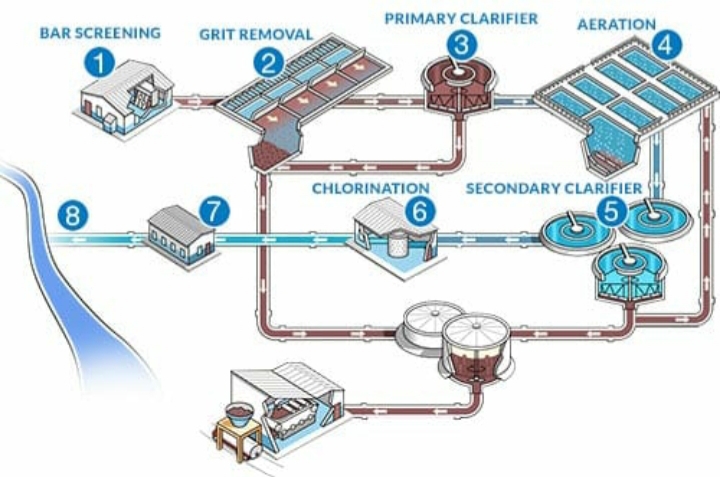
THE WASTE WATER TREATMENT PROCESS

8 Stages of the Waste water Process:

Stage1: Bar Screening

The process of treating and reclaiming water from wastewater (any water that has been used in homes, such as flushing toilets, washing dishes, or bathing, and some water from industrial use and storm sewers) starts with the expectation that after it is treated it will be clean enough to reenter the environment.

The quality of the water is dictated by the Environmental Protection Agency (EPA) and the Clean Water Act, and wastewater facilities operate to specified permits by National Pollutant Discharge Elimination System (NPDES). According to the EPA, The Clean Water Act (CWA) establishes the basic structure for regulating discharges of pollutants into the waters of the United States and regulating quality standards for surface waters. Under the CWA, EPA sets wastewater standards for industry. The EPA has also developed national water quality criteria recommendations for pollutants in surface waters. EPA’s National Pollutant Discharge Elimination System (NPDES) permit program controls discharges.

As an example of expected standards, the Biochemical Oxygen Demand (BOD) of average wastewater effluent is 200 mg/L and the effluent after treatment is expected to be >30 mg/L. It is crucial a wastewater facility meets these expectations or risk stiff penalty.

The physical process of wastewater treatment begins with screening out large items that have found their way into the sewer system, and if not removed, can damage pumps and impede water flow. A bar screen is usually used to remove large items from the influent and ultimately taken to a landfill.

Step 2: Screening

Fine grit that finds its way into the influent needs to be removed to prevent the damage of pumps and equipment downstream (or impact water flow). Too small to be screened out, this grit needs to be removed from the grit chamber. There are several types of grit chambers (horizontal, aerated or vortex) which control the flow of water, allowing the heavier grit to fall to the bottom of the chamber; the water and organic material continue to flow to the next stage in the process. The grit is physically removed from the bottom of the chamber and discarded.

Stage 3: Primary Clarifier

Solids known as organics/sludge sink to the bottom of the tank and are pumped to a sludge digestor or sludge processing area, dried and hauled away. Proper settling rates are a key indicator for how well the clarifier is operating. Adjusting flow rate into the clarifier can help the operator adjust the settling rates and efficiency.

After grit removal, the influent enters large primary clarifiers that separate out between 25% and 50% of the solids in the influent. These large clarifiers (75 feet in diameter, 7½ inches at the edges and 10½ feet in the center as an example) allow for the heavy solids to sink to the bottom and the cleaner influent to flow. The effectiveness of the primary clarification is a matter of appropriate water flow. If the water flow is too fast, the solids don’t have time to sink to the bottom resulting in negative impact on water quality downstream. If the water flow is too slow, it impacts the process up stream.

The solids that fall to the bottom of the clarifier are know as sludge and pumped out regularly to ensure it doesn’t impact the process of separation. The sludge is then discarded after any water is removed and commonly used as fertilizer.

Stage 4: Aeration

Once converted to NO3, the bacteria remove/strip oxygen molecules from the nitrate molecules and the nitrogen (N) is given off as N2↑ (nitrogen gas).

At the heart of the wastewater treatment process is the encouragement and acceleration of the natural process of bacteria, breaking down organic material. This begins in the aeration tank. The primary function of the aeration tank is to pump oxygen into the tank to encourage the breakdown of any organic material (and the growth of the bacteria), as well as ensure there is enough time for the organic material to be broken down. Aeration can be accomplished with pumping and defusing air into the tank or through aggressive agitation that adds air to the water. This process is managed to offer the best conditions for bacterial growth. Oxygen gas [O2] levels below 2 ppm will kill off the bacteria, reducing efficiency of the plant. Dissolved oxygen monitoring at this stage of the plant is critical. Ammonia and nitrate measurements are common to measure how efficient the bacteria are in converting NH3 to N2↑.

A key parameter to measure in wastewater treatment is Biochemical Oxygen Demand (BOD). BOD is a surrogate indicator for the amount of organic material present and is used to determine the effectiveness of organic material breakdown. There are a number of other tests used to ensure optimal organic material breakdown (and BOD reduction) such as measuring pH, temperature, Dissolved Oxygen (DO), Total Suspended Solids (TSS), Hydraulic Retention Time (flow rate), Solids Retention Time (amount of time the bacteria is in the aeration chamber) and Mixed Liquor Suspended Solids. Ongoing and accurate monitoring is crucial to ensure the final required effluent BOD.

Stage 5: Secondary Clarifier

As the influent exits the aeration process, it flows into a secondary clarifier where, like the primary clarifier, any very small solids (or fines) sink to the bottom of the tank. These small solids are called activated sludge and consist mostly of active bacteria. Part of this activated sludge is returned to the aeration tank to increase the bacterial concentration, help in propagation, and accelerate the breakdown of organic material. The excess is discarded.

The water that flows from the secondary clarifier has substantially reduced organic material and should be approaching expected effluent specifications.

Stage 6: Chlorination(Disinfection)

With the enhanced concentration of bacteria as part of the aeration stage, there is a need to test the outgoing effluent for bacteria presence or absence and to disinfect the water. This ensures that higher than specified concentrations of bacteria are not released into the environment. Chlorination is the most common and inexpensive type of disinfection but ozone and UV disinfection are also increasing in popularity. If chorine is used, it is important to test for free-chlorine levels to ensure they are acceptable levels before being released into the environment.

Stage 7: Water Analysis and Testing

Testing for proper pH level, ammonia, nitrates, phosphates, dissolved oxygen, and residual chlorine levels to conform to the plant’s NPDES permit are critical to the plant’s performance.
Although testing is continuous throughout the wastewater treatment process to ensure optimal water flow, clarification and aeration, final testing is done to make sure the effluent leaving the plant meets permit specifications. Plants that don`t meet permit discharge levels are subject to fines and possible incarceration of the operator in charge.

Stage 8: Effluent Disposal

After meeting all permit specifications, clean water is reintroduced into the environment.

ONLINE SHOPPING

Introduction:

Online shopping is a form of electronic commerce which allows consumers to directly buy goods or services from a seller over the Internet using a web browser or a mobile app. Consumers find a product of interest by visiting the website of the retailer directly or by searching among alternative vendors using a shopping search engine, which displays the same product’s availability and pricing at different e-retailers. As of 2020, customers can shop online using a range of different computers and devices, including desktop computers, laptops, tablet computers and smartphones.

An online shop evokes the physical analogy of buying products or services at a regular “bricks-and-mortar” retailer or shopping center; the process is called business-to-consumer (B2C) online shopping. When an online store is set up to enable businesses to buy from another businesses, the process is called business-to-business (B2B) online shopping. A typical online store enables the customer to browse the firm’s range of products and services, view photos or images of the products, along with information about the product specifications, features and prices.

Online stores usually enable shoppers to use “search” features to find specific models, brands or items. Online customers must have access to the Internet and a valid method of payment in order to complete a transaction, such as a credit card, an Interac-enabled debit card, or a service such as PayPal. For physical products (e.g., paperback books or clothes), the e-tailer ships the products to the customer; for digital products, such as digital audio files of songs or software, the e-tailer usually sends the file to the customer over the Internet. The largest of these online retailing corporations are Alibaba, Amazon.com, and eBay.

History of Online Shopping:

One of the earliest forms of trade conducted online was IBM’s online transaction processing (OLTP) developed in the 1960s and it allowed the processing of financial transactions in real-time. The computerized ticket reservation system developed for American Airlines called Semi-Automatic Business Research Environment (SABRE) was one of its applications. Here, computer terminals located in different travel agencies were linked to a large IBM mainframe computer, which processed transactions simultaneously and coordinated them so that all travel agents had access to the same information at the same time.

The emergence of online shopping as we know today developed with the emergence of the Internet. Initially, this platform only functioned as an advertising tool for companies, providing information about its products. It quickly moved on from this simple utility to actual online shopping transaction due to the development of interactive Web pages and secure transmissions. Specifically, the growth of the internet as a secure shopping channel has developed since 1994, with the first sales of Sting album ‘Ten Summoner’s Tales’.Wine, chocolates, and flowers soon followed and were among the pioneering retail categories which fueled the growth of online shopping. Researchers found that having products that are appropriate for e-commerce was a key indicator of Internet success. Many of these products did well as they are generic products which shoppers did not need to touch and feel in order to buy. But also importantly, in the early days, there were few shoppers online and they were from a narrow segment: affluent, male, 30+. Online shopping has come along way since these early days and -in the UK- accounts for significant percents (depending on product category as percentages can vary).

Growth in Online Shoppers:

As the revenues from online sales continued to grow significantly researchers identified different types of online shoppers, Rohm & Swaninathan identified four categories and named them “convenience shoppers, variety seekers, balanced buyers, and store-oriented shoppers”. They focused on shopping motivations and found that the variety of products available and the perceived convenience of the buying online experience were significant motivating factors. This was different for offline shoppers, who were more motivated by time saving and recreational motives.

English entrepreneur Michael Aldrich was a pioneer of online shopping in 1979. His system connected a modified domestic TV to a real-time transaction processing computer via a domestic telephone line. He believed that videotex, the modified domestic TV technology with a simple menu-driven human–computer interface, was a ‘new, universally applicable, participative communication medium — the first since the invention of the telephone.’ This enabled ‘closed’ corporate information systems to be opened to ‘outside’ correspondents not just for transaction processing but also for e-messaging and information retrieval and dissemination, later known as e-business. His definition of the new mass communications medium as ‘participative’ [interactive, many-to-many] was fundamentally different from the traditional definitions of mass communication and mass media and a precursor to the social networking on the Internet 25 years later. In March 1980 he launched Redifon’s Office Revolution, which allowed consumers, customers, agents, distributors, suppliers and service companies to be connected on-line to the corporate systems and allow business transactions to be completed electronically in real-time. During the 1980s he designed, manufactured, sold, installed, maintained and supported many online shopping systems, using videotex technology. These systems which also provided voice response and handprint processing pre-date the Internet and the World Wide Web, the IBM PC, and Microsoft MS-DOS, and were installed mainly in the UK by large corporations.

The first World Wide Web server and browser, created by Tim Berners-Lee in 1989, opened for commercial use in 1991.Thereafter, subsequent technological innovations emerged in 1994: online banking, the opening of an online pizza shop by Pizza Hut, Netscape’s SSL v2 encryption standard for secure data transfer, and Intershop’s first online shopping system. The first secure retail transaction over the Web was either by NetMarket or Internet Shopping Network in 1994.Immediately after, Amazon.com launched its online shopping site in 1995 and eBay was also introduced in 1995. Alibaba’s sites Taobao and Tmall were launched in 2003 and 2008, respectively. Retailers are increasingly selling goods and services prior to availability through “pretail” for testing, building, and managing demand.

ELECTRIC SCOOTER

PROS TO USE ELECTRIC SCOOTER:

Let’s see how some of the main advantages of choosing to buy an electric scooter:

1.Storage Space: The electric scooter has an area under the seat that allows us to carry bags, packages or backpacks in any comfort.


2.Fuel Savings: One of the significant advantages of the electric scooter is substantial for the pocket of the final consumer: the considerable savings in gasoline.


3.Freedom: Get from Point A to Point B fast, no more waiting for the bus, waiting for the taxi. Simply unfold your scooter and you are ready to go.


4.Ecology and Respect for the Environment: Every time we use an electric scooter we are contributing our bit to that ecological spirit that should be present in our daily lives.


5.Lower Maintenance cost among many other differences with gasoline engines: electric motor does not need to spend time or money on maintenance tasks such as oil changes, filters, etc.


6.Lower Acoustic Impact: Although some detractors of the electric scooter wield the argument that “it does not make noise” we have to keep in mind that noise pollution is one of the severe problems of the current urban society. It has been shown that street noise reduces between 30% and 40% the productivity of people working in the environment. However, the constant noise suffered by the motorcyclist affects his concentration on the road over time and to their levels of stress, anxiety, and aggression. Electric scooter, on the other hand, is less noisy.


I don’t know what you think about the electric scooter, but for us, it is a clean, fast and agile way to get around the city. There are many advantages offered by this way of driving through large cities. It makes more and more people prefer to move in this way.

HOW TO BECOME AN ENTREPRENEUR

7 steps to Becoming an Entrepreneur:

STEP 1:Find The Right Business For You

Entrepreneurship is a broad term, and you can be an entrepreneur in just about any area. However, you will have to pick a field to work in and business to start. Find a business that won’t only be successful, but is something that you are passionate about. Entrepreneurship is hard work, so you want to focus your attention on something you care about.

STEP 2: Determine If You Should Get An Education

You don’t need to have any type of formal education to be an entrepreneur, but that doesn’t mean you should ignore education entirely. If you want to start a tech company, experience in business, computer programming and marketing could all be valuable. Also, some industries will likely require some type of education, such as your own accounting or law firm.

STEP 3:Plan Your Business

Before you begin your business, you need to have a business plan. A business plan lays out any objectives you have as well as your strategy for achieving those objectives. This plan is important for getting investors on board, as well as measuring how successful your business is.

STEP 4:Find Your Target Group/Audience

Not every business appeals to everyone. The age, gender, income, race and culture of your target group will play a large role in determining where you open up shop – or if you even need to have a physical address for business. Research which group fits your business model best, and then gear everything to attract that demographic.

STEP 5: Network

While networking is important in all fields, it may be most important for entrepreneurs. Networking is how you meet other people that might have skills you can use in your business. You can also find potential investors through networking to help get your business model off the ground. Your network can also support your business once you open, helping send new customers your way.

STEP 6: Sell Your Idea

Consumers want products, but they don’t always know which product to pick. Your job as an entrepreneur is to convince people that whatever you’re selling is the best option available. You’ll have to find out what makes your product unique and then sell it based off the value it adds.

STEP 7: Market

You should be focused on marketing before, during and after you start your business. You may have the best restaurant in the city, but nobody will visit if they don’t know it exists. Marketing is tricky, but if you should be able to focus your marketing efforts on your target audience. For example, millennials may be more likely to see an ad on social media than on a billboard downtown.

HERE ARE THE TOP 8 GOVERNMENT SCHEMES EVERY ENTREPRENEUR SHOULD BE AWARE OF:

1.Modified Special Incentives Package Scheme(M-SIPS)

2.The Venture Capital Assistance Scheme

3.Credit Guarantee

4.Raw Material Assistance

5.Infrastructure Development Scheme

6.MSME Market Development Assistance

7.Credit Linked Capital Subsidy For Technology Upgradation

8.Atal Incubation Centres(AIC)

INTERESTING FACTS ABOUT MARS

1.Mars Had Water In The Ancient Past:

We’ve been debating for centuries about whether Mars had life or not. In fact, the astronomer Percival Lowell misinterpreted observations of “canali” — the Italian word for channels — on the planet as evidence of alien-made canals. It turned out Lowell’s observations were hampered by poor telescope optics of his day, and the canals he saw were optical illusions. That said, several spacecraft have spotted other signs of ancient water — channels grooved in the terrain and rocks that only could have formed in the presence of water, for example.

2.Mars Has Frozen Water Today:

We’re very interested in the question of water because it implies habitability; simply put, life as we know it is more likely to exist with water there. In fact, the Curiosity rover’s mandate on Mars right now is to search for habitable environments (in the past or present). Mars has a thin atmosphere that does not allow water to flow or remain in large quantities on the surface, but we know for sure that there is ice at the poles — and possibly frosty locations elsewhere on the planet. The question is if the ice is capable of melting enough water in the summer long enough to support any microbes.

3.Mars Used To Have A Thicker Atmosphere:

For water to flow in the past, the Red Planet needs more atmosphere. So something must have changed in the past few billion years. What? It is thought that the Sun’s energy striking the atmosphere must have “stripped” the lighter forms of hydrogen from the top, scattering the molecules into space. Over long periods of time, this would lessen the amount of atmosphere near Mars. This question is being investigated in more detail with NASA’s Mars Atmosphere and Volatile EvolutioN (MAVEN) spacecraft.

4.Mars Has Some Extreme Highs And Lows In Terrain:

The surface gravity of Mars is only 37% of what you would find on Earth, which makes it possible for volcanoes to be taller without collapsing. This is why we have Olympus Mons, the tallest volcano known on a planet in the Solar System. It’s 16 miles (25 kilometers) high and its diameter is approximately the same as the state of Arizona, according to NASA. But Mars also has a deep and wide canyon known as Valles Marineris, after the spacecraft (Mariner 9) that discovered it. In some parts, the canyon is 4 miles (7 kilometers) deep. According to NASA, the valley is as wide as the United States and is about 20% of the Red Planet’s diameter.

5.Mars Has Two Moons- And One Of Them Is Doomed:

The planet has two asteroid-like moons called Phobos and Deimos. Because they have compositions that are similar to asteroids found elsewhere in the Solar System, according to NASA, most scientists believe the Red Planet’s gravity snatched the moons long ago and forced them into orbit. But in the life of the Solar System, Phobos has a pretty short lifetime. In about 30 million to 50 million years, Phobos is going to crash into Mars’ surface or rip apart because the tidal force of the planet will prove too much to resist.

6.We Have Pieces Of Mars On Earth:

Remember the low gravity on Mars that we talked about? In the past, the planet has been hit by large asteroids — just like Earth. Most of the debris fell back on the planet, but some of it was ejected into space. That sparked an incredible journey where the debris moved around the Solar System and in some cases, landed on Earth. The technical name for these meteorites is called SNC (Shergottites, Nakhlites, Chassignites — types of geologic composition). Gases trapped in some of these meteorites has been practically identical to what NASA’s Viking landers sampled on the Red Planet in the 1970s and 1980s.

7.Mars Would Kill An Unprotected Astronaut Quickly:

There are a lot of unpleasant scenarios for somebody who took of their helmet. First, Mars is usually pretty cold; its average temperature is -50 degrees Fahrenheit (-45 degrees Celsius) at the mid-latitudes. Second, it has practically no atmosphere. The air pressure on Mars is only 1% of what we have (on average) on the Earth’s surface. And third, even if it did have atmosphere, the composition is not compatible with the nitrogen-oxygen mix humans require. Specifically, Mars has about 95% carbon dioxide, 3% nitrogen, 1.6% argon and a few other elements in its atmosphere.

8.In The Early Space Age,We Thought Mars Was Like The Moon:

The early NASA probes that flew by the Red Planet all, coincidentally, happened to image spots on the planets that had craters. This led some scientists to (mistakenly) believe that Mars has an environment similar to the moon: cratered and practically unchanging. This all changed when Mariner 9 arrived at the planet for an orbital mission in November 1971 and discovered the planet engulfed in a global dust storm. What’s more, odd features were poking out above the dust — features that turned out to be dormant volcanoes. And as mentioned earlier, Mariner 9 found the vast Valles Marineris. It changed our view of the planet forever.

9.Mars Has Methane In Its Atmosphere:

Methane can be interpreted as a sign of biological activity — microbes emit it — or even of geologic activity. And active planets, it is thought, are more likely to have life on them. So the question of methane on Mars is one that scientists are trying to figure out. The consensus? There is no consensus. Telescopic observations have had wildly different measurements over the years, and few spacecraft have been designed to probe for the element in detail. The Curiosity rover has detected tenfold spikes in methane in its area, but we don’t know where it came from and why the fluctuations are happening.

10.Mars Is A Popular Spacecraft Destination:

There have been so many spacecraft that attempted a Martian mission that it’s hard to pick notable ones in a short article. NASA’s Vikings were the first landers in 1976; in fact, NASA is the only agency that has managed to land on the planet so far. Some of its other missions include Pathfinder-Sojourner (the first lander-rover combination) in 1997, the Mars Exploration Rovers Spirit and Opportunity in 2004, and the Curiosity rover of 2012. And this doesn’t even mention the fleet of orbiters that have mapped Mars over the years from the Soviet Union, NASA, the European Space Agency and India. And there are many more spacecraft to come in the next decade.

SHARE MARKET

Stock investments are one of the most popular avenues of generating wealth in the modern world. You might have heard several things about stock market investors ranging from some horrific losses to inspiring ‘rags-to-riches’ stories. The beauty of this investment avenue is that it treats every investor differently based on his/her approach to investments. Hence, understanding how to invest in stocks is paramount to your success.

What is the share Market?

Before we talk about the share market, let’s understand shares.

What are shares?

Imagine a company running its regular business earning profits and looking for ways to expand.

It decides to launch a new type of product that requires a huge factory installation and skilled workforce – a huge investment.

The company does not have the required funds to create this set-up. Hence, it looks for a loan from a bank or a financial institution or raising money in some other way that does not require interest payment on the raised sum.

One way to do this is to add partners by asking them to contribute a certain amount towards the capital of the company.

A company is legally permitted to do this by issuing shares. When a company decides to raise capital, it issues shares to people. The amount of shares held by you determines the percentage of holding you have in the company.

So, if a company is worth Rs.10 lakhs and you hold shares worth Rs.1 lakh, then you are a 10% partner in the company. You will be eligible to receive a share of the profits made by the company.

This is a very simple way of understanding shares.

Since a share is a document certifying your ownership in a company, you can sell it to someone for a price.

So, if you are a partner in ABC Ltd, you can transfer your rights in the company to a third party by informing the company about the same.

For Example,

Let’s say that you want to become a partner in HDFC Bank Ltd. Where would you go to find its shares? The company issues shares only when it wants to raise capital. How do you find the existing shareholders of the company and at what price do you buy the shares?

To facilitate this, regulators around the world developed a marketplace where investors could buy and sell shares of any company listed on the stock exchange.

So, if you wanted to buy shares of HDFC Bank Ltd., you can visit this marketplace and buy them at the current market price.

The marketplace has a process with several intermediaries that ensures that the company is informed about the change in shareholder, the buyer receives the shares, and the seller receives the money. This is the Share Market.

When a company issues shares to the public for the first time, it launches an Initial Public Offering (IPO) by predetermining the share price.

This is the primary share market where you purchase the shares directly from the company during an IPO. As soon as the company finishes issuing shares through the IPO, they are listed on a stock exchange. This is the secondary market where you can buy and sell shares to other investors.

Intermediaries in a Share Market:


When you buy a share of a company from another shareholder, there are many things that can go wrong. Hence, every country has a regulatory body that ensures that the stock transactions are smooth and devoid of fraud.

In India, this body is the Securities and Exchanges Board of India (SEBI). This body has defined a process for share transactions to help ensure maximum protection to all investors that include the following intermediaries:

1.Stock Broker– SEBI has mandated that all transactions in a stock exchange must be done through a stockbroker registered with the exchange.


2.Depository and Depository Participant While traditionally, shares were allotted in the form of physical share certificates, this has now given way to electronic or dematerialized shares. Just like you need a bank account to keep a record of your dematerialized money, you need a Demat account for your dematerialized shares. This account is provided by a depository participant.


3.Bank- You need money to buy shares and a bank account to receive sales proceeds. Hence, a bank is an essential intermediary in share transactions.


4.Clearing Corporation- This body ensures that all transactions are cleared successfully.

How to Invest in the share Market?

Now that you understand shares and the concepts of a share market, we come to the next important question i.e:How to invest in shares?

REQUIREMENTS TO INVEST IN THE SHARE MARKET:

Let’s first look at what you need to begin investing:

1.PAN Card– It is mandatory to have a PAN Card to invest in stocks.


2.Demate Account– This is the account that will hold the shares in the name of the buyer. You can open a Demat account with any depository participant. Most banks offer Demat account services. New age investment platforms also offer Demat account opening in a hassle-free manner.


3.Trading Account- To start making a stock market investment, you need a trading account with a stockbroker. Remember, stockbrokers, register with stock exchanges. While most good-quality stocks are listed on both primary exchanges (BSE & NSE), some might only be available on either of the two. Ensure that you open a trading account with a broker registered with both BSE & NSE.
4.Linked Bank Account– Since you are investing in stocks, you will be buying and selling them over time. Hence, you will need a bank account that is linked to your trading account to ensure that money flows in and out of your account seamlessly when you transact.

DOCUMENTS NEEDED:

1.PAN Card
2.Aadhaar Card
3.A cancelled cheque from your bank account with your name on it
4.Proof of address (from the list of documents accepted by the bank/depository participant/broker)
5.Proof of income
6.Photographs
With these accounts in place, you are set to begin your stock market investment journey.

INVESTMENT PROCESS:

As explained above, there are two markets that you can consider – primary and secondary. We will look at the investment process in both these markets.

1.Investing in the Primary Market(IPOs):


Investing in the primary market involves investing in an IPO. You will need a Demat account to hold the allotted shares and a trading account to apply online. You can also apply through your bank account. Now it’s important to remember the number of shares allotted to you will depend upon the market’s response to the IPO. Once the company receives all IPO applications, it allots shares based on the demand and availability of shares.

You can easily apply for an IPO through your net banking account through a process called ASBA (Application Supported by Blocked Amount). In this process, if you have applied for shares worth Rs.1 lakh in an IPO, the amount is blocked in your banking account instead of being sent to the company. Once the shares are allotted the exact amount is debited and the balance is released. It is mandatory for all IPO applications to follow this procedure. Once the shares are allotted, they are listed on a stock exchange within a week and you can start trading them.

2.Investing in the Secondary Market:

This is where all the action is. The secondary market is usually what we refer to when we say the stock market. It is the place where investors and traders buy and sell stocks. To invest in the secondary market, you will need a trading account, Demat account, and a linked banking account. If you are thinking about how to invest in share market online, then the answer is simple:

i) Open a Demat and trading account with a linked banking account.
ii) Log in to the trading account
iii) Choose the share that you want to buy or sell
iv) Ensure that you have funds in your account for buying and shares in your Demat account before selling
v) Determine the price at which you want to buy/sell
vi) Wait for the seller/buyer respectively
vii) Complete the transaction by transferring shares/money and receive money/shares
The process is simple. However, becoming a successful investor is hard work. Let’s look at some concepts that you need to understand and tips that you can use for investing in the secondary market.

THINGS TO KEEP IN MIND BEFORE INVESTING:

Now that you are clear with the basics, let’s see what are the other things you need to consider before investing.

i)Understand Your Investor Profile:

Every investor is unique. Hence, you must ensure that you invest based on your investor profile. There are three critical factors that can help identify your profile:

Financial goals– Define your financial goals. What are you trying to achieve? Retirement corpus? Funding your world tour? Planning a marriage? Thinking of buying a house? These goals will help you get clarity on how and which stocks to invest in.

Risk Tolerance – How much risk can you stomach? If you invest in the stock of a strong company like Tata, then the price will not move up or down a lot. It will be relatively stable. On the other hand, if you invest in a small company that seems promising, then every small achievement will boost the stock price and failure will result in a crash. You need to determine how much volatility you can handle without panicking and making wrong decisions.

Investment Horizon – Stock investments tend to offer good returns over a period of 7-10 years (long-term). Based on your financial goals, determine the period for which you want to stay invested in a particular stock.

ii)Research the Company Before Investing:

Unless you are trading, don’t make investment decisions based on the stock price alone. Stock investment is a marathon – not a sprint. Hence, you need to invest in a stock that can endure a long journey and generate good returns too.

One of the best ways to find such stocks is by looking at the financials of the company. Without complicating things, simply try to assess if the company is financially sound and can withstand any economic turbulence that the future might bring. A strong company usually attracts positive investor perception and a higher stock price.

iii) Diversify:


Since stock investments carry market risks, it is important to make efforts to reduce the risk of your equity portfolio as much as you can. One of the best ways of reducing risk is diversification. Here’s why –

a) If you invest in too many banking stocks and some policy change or international event impacts the banking sector negatively, then a huge part of your investment can suffer. Hence, while investing ensure that you diversify across sectors and industries.
b) If you invest in stocks of companies having their primary office in Mumbai and some incident brings Mumbai to a halt, then your returns can get impacted. Hence, diversify across cities, states, and even countries to minimize this impact.
c) We all like to bet on the dark horse. In the share market, stocks of small-cap companies are the proverbial dark horses, and stocks of large-cap companies are the defending champions. While choosing either is your decision, it is better to invest across all market-caps.

iv) Track Your Investments Regularly:


While many investors believe in the concept of ‘invest and forget’, investors must keep track of their investments. A stock market is a volatile place. By tracking your investments, you can identify opportunities to sell and rebalance your portfolio to maximize gains. You can also curb your losses by selling non-performing stock before they hit rock-bottom.

We hope that this article covered most of your questions regarding how to invest in the stock market. This is one of the best ways to generate wealth but requires some patience, persistence, and a strategic approach.

HAPPY INVESTING!

TIPS FOR DEVELOPING THE COMMUNICATION SKILLS

Learning effective communication skills is a straightforward process that allows you to express yourself and improve both your personal and professional relationships. Knowing how to listen well and communicate clearly will help you express yourself in job interviews, business meetings, and in your personal life as well.

What is Effective Communication?

Being an effective communicator means being able to both actively listen and clearly express yourself to those around you. Unfortunately, there is no one skill or technique that will make you a better communicator. Effective communication requires a diverse skillset that covers both verbal and nonverbal communication cues, as well as close listening.

Why Is Effective Communication Important?
Effective communication is vital both in and out of the workplace because it allows you to clearly translate your intentions and feelings into easily understandable messages. Effective communication makes you a more productive worker and cuts down on unintended consequences that arise as a result of miscommunication. Developing an effective communication process helps you understand what others are saying and makes you a better collaborator and team member.

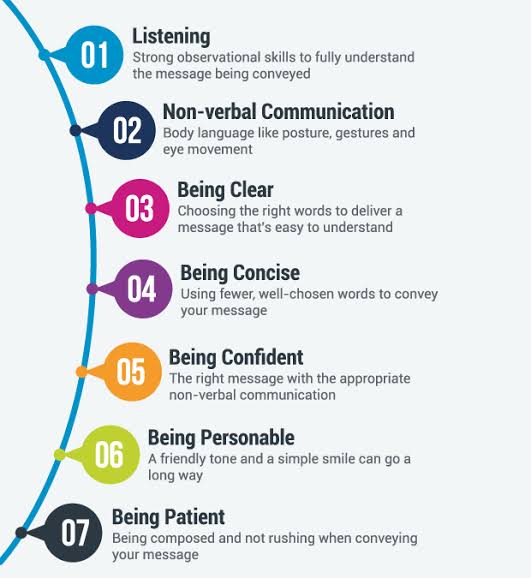
4 Skills That Are Necessary for Effective Communication:
Developing better communication habits requires several important skills that work in tandem with each other. Some of these skills involve the way you speak or hold your body, and others are more emotionally based interpersonal skills. Here are a few skills that good communicators possess:

1.Listening skills: Clear communication starts with active listening. If you’re just focused on how you are expressing yourself, chances are you are not listening or reacting to what others are bringing to the table. An effective communicator uses a variety of listening styles. They pay close attention to what’s being said and make others feel heard and considered.


2.Empathy: Being able to understand the feelings of those around you is an integral part of being an effective communicator. Empathizing means both understanding and relating to someone else’s feelings. Having high emotional intelligence and demonstrating an ability to empathize builds rapport between you and others and increases your ability to communicate.


3.Nonverbal Communication skills: In addition to verbal messages, effective communication relies on nonverbal cues. Developing an awareness of your body language and tone of voice will improve your messaging and presentation skills.


4.Teamwork: The ability to actively engage in team-building and consistently collaborate with coworkers is an important part of building your business communication skills. The more you build strong relationships and rapport with others in the workplace, the more effectively you’ll be able to communicate with them.

How to Improve Your Communication Skills:

If you feel like you lack the basic skills required for good communication, there are a number of reliable ways to improve. Here are a few tips for developing your Communication skills:

1.Practice active Listening: Effective communicators are always good listeners. Active listening means engaging with what people say by giving affirmative replies and asking followup questions to show that you are paying attention.


2.Focus on Nonverbal Communication: Mastering nonverbal cues and nonverbal signals can help prevent miscommunication and signal interest to those around you. Pay attention to your facial expressions and body language when you are speaking with someone in a professional setting. Your nonverbal cues affect the first impression you make on someone. Maintaining eye contact, limiting hand gestures, and having good posture go a long way when meeting someone for the first time.


3.Manage your Own Emotions: For the sake of clear communication and your own personal wellbeing, it’s important to manage your emotions and express them appropriately in context. Allowing strong emotions to unnecessarily creep into a professional setting can lead to poor communication and conflict.


4.Ask for Feedback: There’s no shame in asking for honest feedback on your communication skills from colleagues. Asking your peers or subordinates for their advice on improving your communication skills can help you better understand how you are coming across in your work environment. Cultivate a willingness to seek out other points of view and forge better relationships with your coworkers.


5.Practice public speaking: Public speaking may sound daunting, but there’s no better way to develop good communication skills than by seeking out public speaking opportunities. Great communicators are able to clearly articulate their feelings, whether they’re speaking to a large group or talking face-to-face to one other person. Regularly speaking in front of a group will magnify your strengths and weaknesses and force you to develop great communication habits.


6.Develop a Filter: Effective communicators generally have highly developed social skills and are able to modulate how they express their thoughts and feelings to those around them. Know what’s appropriate to express in different interpersonal contexts. Developing a filter will help supplement other communication techniques and ensure that you maintain a certain level of decorum and avoid conflict in the workplace.

ARE YOU FEEL FRUSTRATED?HERE SOME STEPS TO OVERCOMING FRUSTRATION 👇👇

Frustration. It happens to everyone at one time or another. Itcan make you angry, feel anxious, and be very overwhelming.

When you’re frustrated, it can feel like nothing is under your control and everything is chaos. It’shard to know where to begin. When you’re flooded with emotion,it’s difficult to think straight.

How do you calm down and begin to tame those feelings when they come up? Where do you begin?

Here are some steps to help you manage your frustration in a productive and enriching manner. Believe it or not, frustration can teach you a lot about your problem and when it’s dealt with, it can help you can you gain the skills for managing other intense feelings.

“To conquer frustration,one must remain intensely focused on the outcome, not the obstacles”.

Here are 10 steps:

1.Calm down. This will help stop your mind from racing, which is something that happens at the start of an anxiety producing situation. There are several ways to do this. One is to work on your breathing. Take five deep breaths. Slowly breathe air in through your nose, hold it for five seconds, and then exhale slowly through your mouth. Another way to calm down is to close your eyes and focus on a place that relaxes you, such as a beach or a forest.


2.Clear your mind. Everyone does this differently. Some people stand and stretch. Others pet an animal, or step outside for a moment. There are many more examples you can try. Find one or two that work best for you. What’s important is that it’s something that you can focus on for a couple of minutes that is not what’s bothering you. Clearing your mind is taking a quick mental break.


3.Come back to your problem or stressor, but this time do it in a calm manner. Look at it in a new way. Imagine how a friend would see it if they just came across it. Try to see it differently.


4.Describe the problem in one sentence. For example, “I’m frustrated that I spilled coffee on my paper and I am not going to have time to print off a clean copy.”


5.Define why this frustrating thing concerns or worries you. It could be something simple like “I’m worried I’m going to be late again to work” or as complex as “My marriage is falling apart and I’m afraid our relationship will end in divorce.”


6.Think through realistic options. It could be making a phone call, agreeing to begin therapy, start walking with a friend.


7.Make a decision, and stick to it. If you waffle back and forth, you’ll fall back into frustration again. This is one of the most difficult steps and one of the most important steps.


8.Act on your decision.Once you’ve made the commitment to decide on a way to reduce your frustrating situation, take action.


9.Get it out of your mind. Don’t spend any time or energy thinking through it. It’s done and whatever will happen will happen.


10.Allow yourself to enjoy being done with what was frustrating you. Think about what you want to do now that the stress is gone.


Frustration happens to everyone. The key to managing it is to understand your feelings and emotions before they get out of control and you lose the ability to think clearly.You can’t avoid frustration in life, but you can learn to effectively manage it in the beginning. Like so many other things, managing feels of frustration may not be easy at times,but it is definitely worth it in the end.

MODERN TECHNOLOGY

Technological advances are about much more than the new electric car from Tesla or autonomous vehicles by Mercedes. It is much more than just advanced wrist jewelry from Apple and fitness trackers that can tell you what you ate two weeks ago.

For senior people, technological change can mean the difference between dependency and independence. Forget your Ubers and your social media; forget about Ultra HD TVs, virtual reality gadgets, and other ever-changing technology, as a senior, all these things mean nothing if you are going to be confined to a nursing home with no freedom to enjoy it all.

The kind of modern technological advancements that seniors need may not hit the headlines like the new rocket by SpaceX, but that does not mean that they are any less significant. To the seniors who need these gadgets, advanced wearable tech is fast becoming an integral part of their safety, health, and happiness.

WHAT IS MODERN TECHNOLOGY AND HOW IS IT CHANGING?

Modern technology is all about efficiency and speed; it is about ensuring face-to-face communication, connecting you to your healthcare provider, and empowering you by giving you more access and control to the kind of care you get as well as service you receive.

Think about it this way: how often do you go online to look up information on…everything, really? Millennials do that every day and would almost never buy into any kind of service without reading the reviews and comments online first.

It is one way to determine whether or not a provider is to be trusted as well as see just how beneficial whatever service they are looking into will be to their day to day lives.

The same should be for your health and care as a senior. Technological advancements such as the Internet and computers have opened up a whole new world for you to learn and choose what is best for your health and happiness.

By 2020, these ever-changing technology innovations will ensure the kind of care you receive will be faster, better, efficient, and more effective—even offering social change. But that does not mean that you have to wait for years to arrive before you can start enjoying these benefits. There are wearables right now that are built specifically for the seniors who need them.

Gadgets That Can Tell Your:

1.Blood pressure
2.Sugar levels
3.Gather data that can be interpreted by your caregivers for better care.
4.Suggest dietary needs
5.Sound off an alarm in case of sudden immobility on your part indicating falls or loss of consciousness.


The kinds of things these wearable gadgets can do are unimaginable. With that in mind, here is some wearable tech for seniors that you should try today if you want to lead a better and more medically secure life.

THE BENEFITS OF TECHNOLOGY TO AN AGING SOCIETY:

The benefits of technology on any senior’s life will depend entirely on how much of that technology the senior embraces. If you are open to trying out new things, you will find that you have a lot to gain from this advancement and future tech.

Some of the Main Benefits of Technology to the Aging Community Include:

1.Improve your levels of safety: Now you can get help with the push of a button.

2.Help with Exercise Options:Thanks to exercise DVDs and online trainers, now you can get your exercise done from the comfort of your living room.


3.Connectivity:Things like Skype calls and Facebook have made it easier for seniors to keep in touch with loved ones who are far away.


4.Health Management:Thanks to wearable tech, your doctor can now keep closer track of your health through the data recorded by your devices.


5.Medication Management:There are apps now that ensure you do not take the wrong kind of medication. These apps also keep track of your pills and send you reminders if you forget.


6.Smart Homes Increase Your Security:Although still not as widespread, there is technology that will ensure most homes are voice controlled to minimize the number of times seniors have to walk up and down the stairs to answer or lock the door. This technology also ensures that the home is always connected to a command center that can send help whenever the resident needs it (all voice activated).

All of these benefits go to show that technology is something to be embraced by people of all ages. While the younger generation may be engrossed in their virtual reality headsets and other forms of entertainment options available thanks to technological advancements, seniors who embrace this march forward can use the same advancements to improve the quality of their own lives.

Although compared to what else is going on out there in the technological world (self-driving cars and smart homes) most of the options listed here might seem rudimentary, but as time goes by, the advancements will keep coming and your life as an aging member of the society will only keep getting better and easier.

It is safe to say that the future holds wonderful things for seniors who are not technologically averse and are willing to give the new tech a try.

IMPORTANCE OF STUDYING AGRICULTURE

Why is Agriculture Important and its Role in Everyday Life

For decades, agriculture has been associated with the production of essential food crops. At present, agriculture above and beyond farming includes forestry, dairy, fruit cultivation, poultry, beekeeping, mushroom, arbitrary, etc. Today, processing, marketing, and distribution of crops and livestock products, etc. Are all acknowledged as part of current agriculture? Thus, agriculture could be referred to as the production, processing, promotion, and distribution of agricultural products. Agriculture plays a critical role in the entire life of a given economy. Agriculture is the backbone of the economic system of a given country. In addition to providing food and raw material, agriculture also provides employment opportunities to a very large percentage of the population.

The Factors why Agriculture is Important:

1.Source of Livelihood

2.Contribution to National Revenue

3.Supply of Food as well as Fodder

4.Significance to the International Trade

5.Marketable surplus

6.Source of Raw material

7.Significance in Transport

8.Foreign Exchange Resources

9.Great Employment Opportunities

10.Economic Development,etc.

Agriculture Important and its Role in Everyday Life:

In most parts of the world, agriculture is an important source of livelihood.

This entails hard work, but it contributes to the nation’s food safety and health.

Agriculture was the primary source of the economy prior to the industrial revolution.

With many trade options coming up, many are dependent on their income on agriculture.

Agriculture is the most peaceful and environmentally friendly method.

It is a very reliable source of life for humanity, as well as one of the honest sources of income. Many people from developing countries rely for their livelihood on agriculture.

Some people still have agriculture as a side business in other businesses or jobs.

Agriculture is not limited to cultivation and farming alone. It also includes dairy, poultry, forestry, beekeeping, and sericulture.

CARRIER IN AGRICULTURE

Career in Agriculture is one of the largest industries and a good source of employment across the country.

Agriculture also plays a vital role in Indian economy. At present, students from all over the country are selecting the agriculture field for their career prospective.

Agriculture is the method and science of farming & cultivation of plants, animals, fungi, medicinal plants and other products which are used to enhance human life.

The study of agriculture is defined as “Agricultural Science”.

Agricultural Science is a multidisciplinary field that comprises of a variety of scientific, technical & business subjects. It promotes the efficient production of quality food in the agricultural-food industry & on the farm linked to the farming.

Agriculture Field includes horticulture, farm management, businesses & industries which buy & process farm products, manufacture agricultural machinery, banking activities, research for improving quality & quantity of farm products, etc.

A person who is specializes in this field is called as “Agriculturists”.

The history of agriculture dates backs thousands of years ago. Wild grains were collected and eaten from 105,000 years ago, rice was domesticated in China between 13,500 & 8,200 years ago and pigs were domesticated in Mesopotamia around 15,000 years ago.

Students can get the options to choose specialization at the master and doctoral level agriculture courses.some top specialization are listed below:

1.Agronomy

2.Horticulture

3.Floriculture

4.Agriculture Economics

5.Forestry

6.Plant Breeding

7.Agriculture Genetics,etc…

CARRER SCOPE:

“Presently, the demand for trained professional is high in the agriculture field”.

In India, career in agriculture is one of the preferred choice of the science students.

After pursuing courses in agriculture field, you can apply for jobs in government as well as in private organizations. There are various job opportunities are available for agriculture graduate aspirants. This field can easily lead you towards the highly paid jobs.

Agriculture field offers job opportunities in horticulture, poultry farming, plant science, soil science, food science, animal science, etc. Some of the other agricultural activities that give attractive returns are horticulture, dairying & poultry farming. As a landscapers and horticultures you can get employed in hotels, health farms, resorts, etc.

“A degree in agriculture gives you the skills and knowledge to deal with agricultural sales, agriculture business, food production, etc.”

Self employment opportunities are also available in this field. After completing graduation in this field and with some experience, you can start up your own business like agriculture firms, agriculture products shop, agribase industry, etc.

After completing your postgraduate degree in agriculture, you can work as a supervisors, distributors, researcher & engineer.

JOB TITLES:

Crop specialist
Fertilizer sales representative
Food microbiologist
Food researcher
Plant geneticist
Soil surveyor
Farm manager

SALARY AND PAY-SCALE:

“Agriculture field rewards a good salary package to the smart & hard working people”.

In India, many government and private industries offer good salary packages to the agriculture aspirants. With a higher degree and good experience in this field, you can earn a lot in this field.

“As a B.Sc (Agriculture) graduate, you can easily earn around 3 to 4 lacs per year in India”.

Some sectors where you can find job opportunities with the agriculture degree are:

Agro-industry Sector
Estates and tea gardens
Services Sector
Agricultural Engineering
Corporations
Agriculture Management