TOURISM MANAGEMENT

Meaning

Tourism Management is the leading international journal for all those concerned with the management, including planning, of travel and tourism. The journal takes an interdisciplinary approach and includes planning and policy aspects of international, national and regional tourism as well as specific management studies.

Is tourism management a good career?

Getting started in tourism management-what do I need to know?

Here we see example for Tourism Management is,South Africa.

Tourism opportunities in South Africa are booming! International guests continue to flock to our coastlines and cities to experience a little “local is lekker? and the 2010 World Cup is certain to keep them coming well into the second decade of this millennium.

If you have a love of travelling, passion for people and are a great ambassador for SA, tourism management is a worthwhile career option for you. So, how do you get involved in this hugely popular industry and get a career in tourism management?

Quinton Meiring, Career Guidance Counsellor from INTEC College gives Skills Portal the inside scoop on tourism management day-to-day.

Am I suited To A Carrer In Tourism Management?

If you answer Yes to most these questions, you could have what it takes to be a successful tourism manager!

Do I have good oral and written communication skills?
Y/N

Do I have good management skills?
Y/N

Have I got a flair for marketing?
Y/N

Do I have an interest in the outdoors and nature?
Y/N

Do I enjoy working with people?
Y/N

Have I got a good geographical knowledge of SA?
Y/N

DO I NEED ANY SKILLS WHEN APPLYING TO STUDY TOURISM MANAGEMENT?

Excellent communications skills, a love of SA and its culture will give you a strong advantage.

What career Opportunities Are There For Me?

A career in tourism management can lead you into a number of different job opportunities where you will be responsible for maintaining a positive image and development of local destinations. You could look into working in a travel consultancy and arranging packages and holidays for international and local guests. Or you could work for the tourism information offices and assist people on their travel itineraries.

A career as a tour guide may be more your thing and you could align with car rental groups and bus groups to take guests to exciting new destinations. Even consider combining your knowledge of tourism management with other areas in hospitality such as guest house management, wildlife management or event coordination, hotel management or even food and beverage related industries to achieve a comprehensive and thorough skills base to work across these careers.

What will My Typical Day Be Like On The Job As A Tourism Manager?

You could manage a tourism information centre which would include areas like business management, staff supervision and office systems

You may be responsible for ensuring services are in place to respond to day-to-day tourism enquiries

You may be required to check and regularly report to management on the status of the tourism marketing budget

You may need to give presentations on tourism awareness or new initiatives on behalf of the employer to industry, community or interest groups

You may assist in planning, development and implementation of the tourism marketing budget

You may liaise and build close relationships with the media to promote issues, and encourage community involvement and awareness.

You may act as the executive officer of the local tourism committee.

Where Can I Study Tourism Management?

INTEC College is one of the recommended SA institutions where you can study tourism management and is structured according to tertiary level developments in tourism studies, universities of technology and colleges. You can enrol into the Certificate of Tourism Management or a National Diploma.

Both of these distance learning courses will allow you to study while you work, giving you the option of gaining some in-house practical training at the same time.

Areas of study in the tourism management field include:

Introduction to tourism

Tourism management

Communication

Marketing management

Financial accounting

Top 10 CARRIERS IN TOURISM:

1.Travel Agent

2.Tour Operator

3.Event and conference Organiser

4.Tour Guide

5.Leisure Activity Co-Ordinator,etc…
HISTORY OF CRICKET

Early Cricket(pre 1799)

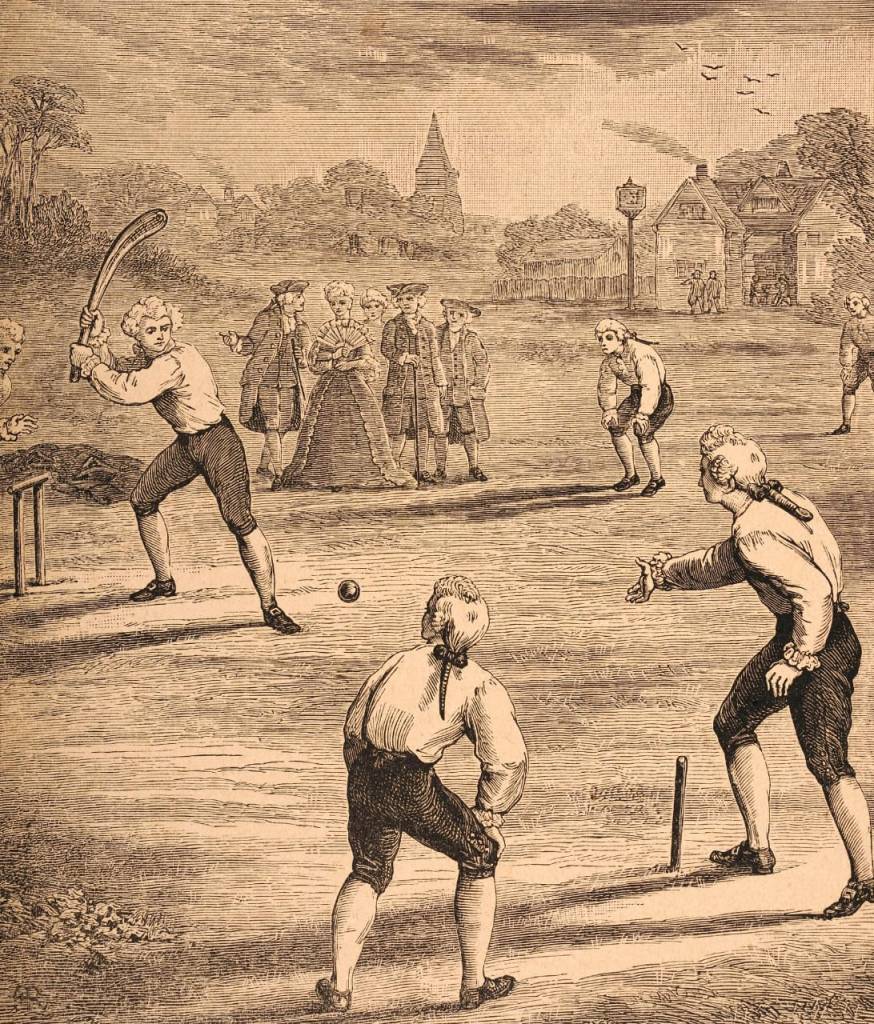
There is a consensus of expert opinion that cricket may have been invented during Saxon or Norman times by children living in the Weald, an area of dense woodlands and clearings in south-east England. The first reference to cricket being played as an adult sport was in 1611, and in the same year, a dictionary defined cricket as a boys’ game. There is also the thought that cricket may have derived from bowls, by the intervention of a batsman trying to stop the ball from reaching its target by hitting it away.

Village cricket had developed by the middle of the 17th century and the first English “county teams” were formed in the second half of the century, as “local experts” from village cricket were employed as the earliest professionals. The first known game in which the teams use county names is in 1709.

In the first half of the 18th Century cricket established itself as a leading sport in London and the south-eastern counties of England. Its spread was limited by the constraints of travel, but it was slowly gaining popularity in other parts of England and Women’s Cricket dates back to the 1745, when the first known match was played in Surrey.

In 1744, the first Laws of Cricket were written and subsequently amended in 1774, when innovations such as lbw, a 3rd stump, – the middle stump and a maximum bat width were added. The codes were drawn up by the “Star and Garter Club” whose members ultimately founded the famous Marylebone Cricket Club at Lord’s in 1787. MCC immediately became the custodian of the Laws and has made revisions ever since then to the current day.

Rolling the ball along the ground was superseded sometime after 1760 when bowlers began to pitch the ball and in response to that innovation the straight bat replaced the old “hockey-stick” style of bat. The Hambledon Club in Hampshire was the focal point of the game for about thirty years until the formation of MCC and the opening of Lord’s Cricket Ground in 1787.

Cricket was introduced to North America via the English colonies as early as the 17th century, and in the 18th century it arrived in other parts of the globe. It was introduced to the West Indies by colonists and to India by British East India Company mariners. It arrived in Australia almost as soon as colonisation began in 1788 and the sport reached New Zealand and South Africa in the early years of the 19th century.

19th century cricket

The growth of cricket in the mid and late 19th century was assisted by the development of the railway network. For the first time, teams from a long distance apart could play one other without a prohibitively time-consuming journey. Spectators could travel longer distances to matches, increasing the size of crowds. Army units around the Empire had time on their hands, and encouraged the locals so they could have some entertaining competition. Most of the Empire embraced cricket, with the exception of Canada.

In 1864, another bowling revolution resulted in the legalisation of overarm and in the same year Wisden Cricketers’ Almanack was first published. W. G. Grace began his long and influential career at this time, his feats doing much to increase cricket’s popularity. He introduced technical innovations which revolutionised the game, particularly in batting.

20th century cricket

Growth of Test Cricket:

When the Imperial Cricket Conference (as it was originally called) was founded in 1909, only England, Australia and South Africa were members. West Indies (1928), New Zealand (1930) and India (1932) became Test nations before World War II and Pakistan (1952) soon afterwards. The international game grew with several ICC Affiliate Members being appointed and, in the last quarter of the 20th century, three of those became full members: Sri Lanka (1982), Zimbabwe (1992) and Bangladesh (2000). They were followed in the early 21st century by Ireland and Afghanistan (both 2018).

Test cricket remained the sport’s highest level of standard throughout the 20th century but it had its problems, notably in the infamous “Bodyline Series” of 1932–33 when Douglas Jardine’s England used so-called “leg theory” to try and neutralise the run-scoring brilliance of Australia’s Don Bradman.

Analytic and Graphic Technology:

Limited-overs cricket increased television ratings for cricket coverage. Innovative techniques introduced in coverage of limited-over matches were soon adopted for Test coverage. The innovations included presentation of in-depth statistics and graphical analysis, placing miniature cameras in the stumps, multiple usage of cameras to provide shots from several locations around the ground, high-speed photography and computer graphics technology enabling television viewers to study the course of a delivery and help them understand an umpire’s decision.

In 1992, the use of a third umpire to adjudicate run-out appeals with television replays was introduced in the Test series between South Africa and India. The third umpire’s duties have subsequently expanded to include decisions on other aspects of play such as stumpings, catches and boundaries. From 2011, the third umpire was being called upon to moderate review of umpires’ decisions, including LBW, with the aid of virtual-reality tracking technologies (e.g., Hawk-Eye and Hot Spot), though such measures still could not free some disputed decisions from heated controversy.

21st century cricket

In June 2001, the ICC introduced a “Test Championship Table” and, in October 2002, a “One-day International Championship Table”. As indicated by ICC rankings, the various cricket formats have continued to be a major competitive sport in most former British Empire countries, notably the Indian subcontinent, and new participants including the Netherlands. In 2017, the number of countries with full ICC membership was increased to twelve by the addition of Afghanistan and Ireland.

The ICC expanded its development programme, aiming to produce more national teams capable of competing at the various formats. Development efforts are focused on African and Asian nations, and on the United States. In 2004, the ICC Intercontinental Cup brought first-class cricket to 12 nations, mostly for the first time. Cricket’s newest innovation is Twenty20, essentially an evening entertainment. It has so far enjoyed enormous popularity and has attracted large attendances at matches as well as good TV audience ratings. The inaugural ICC Twenty20 World Cup tournament was held in 2007. The formation of Twenty20 leagues in India – the unofficial Indian Cricket League, which started in 2007, and the official Indian Premier League, starting in 2008 – raised much speculation in the cricketing press about their effect on the future of cricket.