A Great Freedom Fighter and Patriot but Forgotten India: Rash Behari Bose

For the independence of India many persons sacrificed their lives and many suffered physically or humiliated by the British who came thousands kilometres away to exploit our human, agricultural, natural and mineral resources. Even many British insulted Indians in many ways by using filthy language. One example may be cited here, Prof E F Otten made a racist remark against the Indian students in Presidency College of Calcutta for which Netaji Subhas Chandra Bose and other students vehemently objected.            .

      In this article, I am presenting a case of a great patriot, a great human being but presently forgotten by many in India, is Rash Behari Bose. He was born in present state of West Bengal to Binod Behari Bose and Bhubaneshwari Devi on 25 May 1886. Since childhood, he had interest in sports. Bose became famous after the Delhi-Lahore conspiracy case, which was a series of assassination attempts on Lord Hardinge and Commissioner Lawrence Gordon (www.sirfnews.com/rash-behari-bose-the-forgotten-hero).

  During World War I, Bose was involved with the Gadar (Ghadar) Revolution that attempted a revolt against the British in India in February 1915. He was that time one of the leading figures in the Party. The philosophy of the Gadar/Ghadar leaders was to get rid of the slavery caused by the British. But it was not successful and many Gadar (Ghadar) functionaries were arrested and punished. Anyway, Rash Behari managed to escape and reached Japan in 1915.   The British wanted to extradite him from Japan, but subsequent hostilities between the two countries helped him to stay in Japan. It is pertinent to mention that the wealthy Soma family of Japan managed to save him by hiding him in the basement of their Nakamuraya bakery, where he worked with the chefs to make Indian curry and later on he married Soma’s daughter Ms. Toshiko Soma, happy married life and they had two children also.  Bose also taught his wife Toshiko how to wear Indian sari. Bose got Japanese citizenship in 1923 but unfortunately because of bad health his wife passed away in 1924. After her death, he never remarried (theprint.in/theprint-essential/rash-behari-bose-the-indian-freedom-fighter-japan-remembers-as-its-beloved-chef/62722).

   Rash Behari Bose’s enormous contribution as great patriot may be seen from the following few lines, “With the bombing of Pearl Harbor on 7 December 1941, Japan was officially at war with the allied forces. Rash Behari Bose seized this opportunity to convince Prime Minister Tojo of Japan to support Indian cause. Japanese spared Indians in the British and American territories they conquered. This proved vital as Indian PoWs were treated respectfully and later on handed over to Rash Behari Bose who organised them as the Indian National Army in the year 1942.   The Japanese set up a War Council with Rash Behari Bose’s IIL (Indian Independence League) and the INA (Indian National Army) to launch a campaign in India” (www.sirfnews.com/rash-behari-bose-the-forgotten-hero).

 On 4 July 1943, Rash Behari Bose handed over all operations to Netaji Subash Chandra Bose, another great patriot of India. It is noteworthy to mention that Aiyappan-Pillai Madhavan Nair (1905–1990), A.M. Nair was closely involved in Indian independence movement. Nair helped in establishing the Indian Independence League (IIL) in Japan which was set up under Rash Behari Bose and later he (Nair) and Rash Behari Bose advised Japan Government to bring Subhas Chandra Bose to Japan. Finally when Subhas Chandra came Nair greatly helped him in various ways.

     Rash Behari Bose although passed away on 21 January 1945 and many Indians might have forgotten in India but in Japan, he was given the highest honour: the Second Order of the Rising Sun.

Pronam to such a great soul of the country.

.  Dr. Shankar Chatterjee

 Former Professor& Head (CPME)

NIRD &PR (Govt. of India),

Hyderabad-500 030

Telangana, India

Email <shankarjagu@gmail.com>

Kazi Nazrul Islam: A Secular Poet Born in India died in Bangladesh

In the month of May 25 in 1899 a great patriot as well as a poet was born in Burdwan District of undivided Bengal which presently comes under West Bengal. He was none other than Kazi Nazrul Islam. Due to his powerful writing mainly through his poems reflecting Hindu-Muslim unity and patriot feeling British was always scared of him as sequel imprisonment him several occasions. Nazrul’s father Kazi Faqeer Ahmed was an Imam and caretaker of a local mosque and mausoleum and his mother Zahida Khatun, was a house maker. Kazi Nazrul Islam studied up to Class X and then joined in army in 1917 at the age of 18 years but left the army in 1920 and settled in Calcutta (present Kolkata), and involved in journalism. . He assailed the British Raj in India and preached revolution through his poems “Bidrohi” (“The Rebel”) and “Bhangar Gaan” (“The Song of Destruction”), as well as his through his publications in “Dhumketu” (“The Comet”). His continuous support in Indian freedom movement antagonized the British and often led to his imprisonment by the British authorities. On April 14, 1923 he was shifted from Alipore jail to Hooghly jail in Kolkata and he began a 40-day fast to protest against ill-treatment by the British jailer. Nazrul broke his fast more than a month later and was released from prison in December 1923. He composed a large number of poems and songs during this period of imprisonment and many his works were banned in the 1920s by the British authorities.  

      He never tolerated any fundamental activities. In his ‘Kandari Husiar” poem he specifically wrote, “Hindu or Muslim should not be an issue. We should fight to save our motherland”. He was a secular and broad-mined person and married to Pramila Devi, (belonged to Brahmo Samaj), on April 25, 1924. Nazrul wrote an editorial in Joog Bani in 1920 about religious pluralism, “Come brother Hindu! Come Musalman! Come Buddhist! Come Christian! Let us transcend all barriers, let us forsake forever all smallness, all lies, all selfishness and let us call brothers as brothers. We shall quarrel no more”. In another article entitled Hindu Mussalman, published in Ganabani on 2 September 1922, he wrote the religious quarrels were between priests and Imams and not between individual Muslims and Hindus.

     He was also feeling for the women and poor echelons of the society which is reflected in his poem ‘Daridro'(Poverty). Few lines may be quoted here (keeping in view of the meaning are translated in English).

“O my child, my darling one
I could not give even a drop of milk
No right have I to rejoice.
Poverty weeps within my doors forever,
as my spouse and my child.
Who will play the flute?”

      In those days in Bengal dowry, exploitation of women etc., were also major issues and keeping in mind of these issues he wrote the poem Nari (Woman), where he has mentioned, “I don’t see any difference between a man and woman. Whatever great or benevolent achievements that have taken place in the world half of that was by woman and the other half by man.”

         His secular feeling is reflected in many of his songs and poems where he explained lucidly about the power Hindu God and Goddess. His poem ‘Indrapatan’ is a marvellous one. In addition, he wrote and composed many devotional songs like Shama Sangeet (about Goddess Kali Mata), Bhajans and Kirtans and while listen these songs by any Hindu person, the person will be astonished whether these are written by a Muslim or a Hindu poet. He equally gave importance to Islamic songs where he explained importance of Islamic practices like Namaz (prayer), Roza (fasting), Hajj (pilgrimage) and Zakat (charity). His poem ‘Eid Mubarak” is awesome creation.  Nazrul’s secularism is reflected in his personal life when he kept his sons name keeping in mind both Hindu and Muslim background-  Krishna Mohammad, Arindam Khaled(bulbul), Kazi Sabyasachi and Kazi Aniruddha.

    Rabindranath Tagore and Kazi Narul Islam had special likings to each other. Tagore called Nazul, “the mutinous child of the Goddess of the Universe”. Nazrul had also special respect for Rabindranath Tagore and was shaken by the death of Rabindranath in August 1941. He composed two poems in Tagore’s memory, one of which, “Rabihara” (loss of Rabi) was broadcast in All India Radio during that time. After creation of Bangladesh, then Government invited him with his family members where Nazrul and his family moved in 1972, and he died on 29 August 1976. He is officially recognized as the National poet of Bangladesh and his song “Chal, Chal, Chal” (move, move, and move) is the national song of Bangladesh. As a mark of respect for his death, Bangladesh observed two days national mourning, and the parliament of India observed a minute of silence.

Dr. Shankar Chatterjee

Former Professor& Head (CPME)

NIRD &PR (Govt. of India),

Hyderabad-500 030

Telangana, India

Email <shankarjagu@gmail.com>
Senior Citizens in Gated Community: A Case Study from Hyderabad

Ageing is an issue in a society as after attaining 60 years of age different types of problems crop up inter alia of which are health problem, earning problem, dependency syndrome, security of life and property etc. In India according to the website, www.popeindia.org/english/elderly-people, two major socio-demographic changes have contributed to bring about significant changes within the family and are having a major impact on communities.  The first one is the increased longevity of people and the second one is a breakdown of joint family and the emergence of nuclear family.  Industrialization, westernization and globalization are the major factors responsible for the breakdown of joint family system.  Increased individualization and new technologies are also leading for marginalization of the senior citizens and, unfortunately, today they are considered as a social burden. Based on the author’s study, he (the author) has observed that many senior citizens prefer to stay in a gated community because of security, prompt health facilities etc. In this paper, a case of senior citizens staying in a gated community is presented. In Hyderabad city at Bandlaguda Jagir, a gated community is located which is spread over to an area of 17 acres of land having all faculties like basic indoor and  outdoor games, gym, park, swimming pool, function hall etc. The gated community can accommodate 192 households; of course around 80 percent have been occupied. This gated community, under the banner of ‘Libdom Villas’ has been constructed under the leadership of Sri G. Vinod Reddy of M/s. Niyas Projects.

senior citizen photo 2020

In the ‘Libdom Villas’ gated community, 19 senior male citizens in between age of 63 years and 84 years have remained  active  as every day they have been sharing different types of information, news, proverb, ‘dos and don’ts’ etc. by forming one WhatsApp group. In addition, every evening many of them sit and chit-chat in the park and happily passes the time. The author while interacted with them came to know few of them have come by selling their individual house from other place and settled here by purchasing a villa and few have come on rent also. While interacted with them, the author came to know that they are from different service background and either retired on superannuation from service or left business handing over to next generation. Regarding service background, it has been reported that someone worked in Indian Navy as senior officer; few were in nationalised banks in senior position, and few others were in various capacities in State Government and Central Government organisations. Further, all in unison informed that they felt happy to stay in the gated community as all facilities which require for elderly persons, toddlers, children, ladies and youths are available. Also, 24 hours electricity, water, security of the area, maintenance staffs, video call if outsiders come, are accessible at the door step. In case of individual house security, maintenance etc. are great issues. And to meet another person even for time pass one has to go.

Before winding up, it may be concluded that (www.un.org/en/events/olderpersonsday)

between 2017 and 2030, the number of persons aged 60 years or over is projected to grow by 46 per cent (from 962 million to 1.4 billion) globally outnumbering youth, as well as children under the age of 10. The older people have always played a significant role in the society as leaders, caretakers and custodians of tradition, yet they are also highly vulnerable.

The International Day of Older Persons is an opportunity to highlight the important contributions that older people make to society and raise awareness of the opportunities and challenges of ageing in today’s world.

Dr Shankar Chatterjee
Former Professor & Head (CPME),NIRD & PR ( Govt. of India), Hyderabad,  India
Former Associate Professor, Eritrea

Former Assistant Prof, Govt. Degree College, Tripura, India
Former Senior Planning Officer, Govt of Assam, India 

Netaji Subhas Chandra Bose: A Born Patriot and Selfless Leader

Dr. Shankar Chatterjee

Former Professor& Head (CPME)

NIRD &PR (Govt. of India),

Hyderabad-500 030

Telangana, India

Email <shankarjagu@gmail.com>


On 23 January 1897, a legendary figure, a great patriot and a selfless leader of undivided India was born in Cuttack of present Odisha who is popularly known as Netaji with full name Subhas Chandra Bose.  Netaji   Subhas Chandra Bose is still respected not only in India but also in Bangladesh and Pakistan for his immense contribution in freedom movement. While I was in abroad as faculty many Pakistani and Bangladeshi academicians told me in this regard.   

netaji-subhas-chandra-bose-jayanti

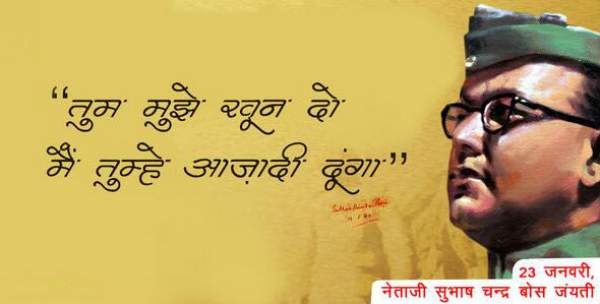
     Netaji’s patriotic feelings can be understood by this quotation, ‘You give me your blood and I will give you Independence!’ He stated if ‘you are willing to die for a cause without regard to your own wants or desires that is as close as you can get to invincibility. Even if your physical body is killed, your efforts and ideas will live on’. He had the opinion that ‘Independence is rarely obtained through peaceful means. Conflict is often the only way to gain freedom or revolution’.

Netaji Subhas with heart and soul was Indian and never tolerated any foreigner talking against Indians. In this context, an incident may be cited. He thrashed a British Professor E.F. Otten in the Presidency College of Calcutta in 1916 for Prof Otten’s racist remark against Indians and for this Subhas Chandra had to suffer also, however with the intervention of Indian scholars and other stalwarts the matter was resolved.

   During freedom struggle many persons participated –some were in the forefronts and some were in behind, many lost their lives and many were crippled, many were mentally disturbed and finally we became independent nation so we are grateful to all of them. Also Indian National Army/Azad Hind Fouz’s contribution under the leadership of Netaji Subhas was massive.  The Congress Government after independence always highlighted few leaders’ contribution towards freedom movement but not much about Netaji’s contribution. On the other hand, the British acknowledged Subhas Bose’s contribution.  Clement Richard Attlee, who was the Prime Minister of the United Kingdom from 1945 to 1951 and the Leader of the Labour Party from 1935 to 1955 agreed Netaji was the toughest challenge to the British Empire faced.  In 1956, Clement Attlee came to India and stayed in Calcutta (now Kolkata) as a guest of then Governor, P.B. Chakraborty who was at that time Chief Justice of Calcutta High court and acting Governor of West Bengal. He asked Sir Attlee “… since Gandhi’s Quit India movement had tapered off quite some time ago and in 1947 no such new compelling situation had arisen that would necessitate a hasty British departure, why did they had to leave?” As stated by Chakraborty “In his reply Attlee cited several reasons, the main among them being the erosion of loyalty to the British crown among the Indian Army and Navy personnel as a result of the military activities of Subhas Chandra Bose”.

Lt General S.K. Sinha, former Governor of Assam and J & K, one of the only three Indian officers posted in the Directorate of Military Operations in New Delhi in 1946, made his observation in 1976. “There was considerable sympathy for the INA within the Army… It is true that fears of another 1857 had begun to haunt the British in 1946.” In this regard Dr. Ambedkar-saheb may also be referred “two things led the Labour party to take this decision” (to free India). According to Dr Ambedkar saheb, “The national army that was raised by Subhas Chandra Bose. The British had been ruling the country in the firm belief that whatever may happen in the country or whatever the politicians do, they will never be able to change the loyalty of soldiers. That was one prop on which they were carrying on the administration. And that was completely dashed to pieces. They found that soldiers could be seduced to form a party- a battalion to blow off the British.”

Subhas Chandra Bose was a great human being also and had never had ill feelings towards any leader of then Congress party. In this context, Ashis Ray’s article published on 12 November 2019 may be quoted. “Jawaharlal Nehru and Subhas Chandra Bose, charismatic stalwarts of the Congress and the Indian struggle for Independence, were comrades, not adversaries. In June 1935, when the former (Nehru) was imprisoned in India, his wife Kamala needed to go to Europe for treatment of tuberculosis. Bose, who had been exiled to Europe by the British, unsurprisingly took charge by accompanying her from Vienna to Prague where she was to receive initial medical care. With Kamala’s condition deteriorating, the British permitted Nehru to join her. She was moved to Badenweiler, a Black Forest resort in Germany. Bose messaged Nehru: “If I can be of any service in your present trouble, I hope you will not hesitate to send for me.” Eventually Kamala was shifted to Lausanne in Switzerland, where she prematurely passed away in 1936 in the presence of her husband, daughter Indira and Bose” (www.nationalheraldindia.com/opinion/jawaharlal-nehru-and-subhas-chandra-bose-politics-never-affected-their-personal-ties).

On the auspicious occasion of Netaji Subhas Chandra Bose’s birthday, Pronam to this great soul.

Swami Vivekananda: A Great Legendary Personality and Selfless Person

January is an auspicious and significant month for many people in the world. With the starting of 1 January, English New year starts. Many Orthodox Christians celebrate Christmas on 7 January as they believe date works to the Julian calendar that pre-dates the Gregorian calendar (when I was in Eritrea, Africa observed the Orthodox Christians celebrate Christmas on 7 January). Anyway, in India Makara Sankranti, Magh Bihu, Lohri, Thai Pongol etc., are celebrated in this month and on 26 January our country became Republic.  In addition, two great souls were born in January in our country – Swami Vivekananda and Netaji Subhas Chandra Bose.

Swami Vivekananda was born on 12 January 1863 in Kolkata then Calcutta.  His real name in school / college was Narendranath Dutta and pet name was “Biley”.  By this (“Biley”) name parents used to call him.  Although he is considered a key personality in introduction of Vedanta philosophy and Yoga to Western countries mainly in USA and Europe but humanity was his only consideration. Swami Vivekananda was intelligent since childhood. He was the only student to have received first division marks in Presidency College entrance examination. He was a positive and broad-minded person with the feeling for all human beings irrespective of caste, creed and religion. To get an in-depth idea about his philosophy few lines from his speeches are quoted here, “All power is within you, you can do anything and everything.  Believe in that; do not believe that you are weak.  You can do anything and everything, without even the guidance of any one.  Stand up and express the divinity within you. Arise, Awake, and Sleep no more.  Within each of you there is the power to remove all wants and all miseries.  Believe in this, and that power will be manifested”.

Love and affection towards others is reflected from his saying, “All expansion is life, and all contraction is death.  All love is expansion, all selfishness is contraction.  Love is therefore the only law of life”.  His positive feeling towards different religious is realized by this discourse, “The Christian is not to become a Hindu or a Buddhist, nor a Hindu or a Buddhist to become a Christian.  But each must assimilate the spirit of the others and yet preserve his individuality and grow according to his own law of growth”.  He further told, “Feel like Christ, you will be a Christ; feel like Buddha and you will be a Buddha. It is feeling that is the life, the strength, the vitality, without which no amount of intellectual activity can reach God.” Thus one can easily understand Swami Vivekananda’s feeling towards human beings.

He was great believer of welfare of humanity and hard work without selfish attitude.  In his words, “It is a tremendous error to feel helpless.  Do not seek help from anyone.  We are our won help.  If we cannot help ourselves, there is none to help us.  The moment you fear, you are nobody.  It is fear that is the great cause of misery in the world”.   His patriotic fervour can be understood through this line, “The soil of India is my highest heaven, the good of India is my good and repeat and pray day and night…….O Thou Mother of Strength, take my weakness, take my unmanliness and make me a man!”

Swami Vivekananda was always in favour of development for all. In fact today’s Inclusive Growth concept may be termed as his vision. His beautiful message in this regard, “In India there are two great evils, trampling on the women and grinding the poor through caste restrictions.” “…..forget not – the ignorant, the poor, the illiterate, the cobbler, the sweeper, are thy flesh and blood, thy brothers.  Thou brave one, be bold, take courage, be proud that thou art an Indian and proudly proclaim – ‘I am an Indian – every Indian is my brother’, Say, The ignorant Indian, the poor and destitute Indian, the Brahmin Indian, the pariah Indian, is my brother. ……..Our only work is to arouse this knowledge in our fellow-beings.  We see that they too are the same pure self.  Only they do not know it; we must help them to rouse up their infinite nature”.

Our former Prime Minister Pandit Jawaharlal Nehru had high regards for him. This one line of Nehruji’s saying reflects fully about Swami Vivekananda, “I think that our younger generation will take advantage of his fountain of wisdom, spirit and fire that flows through Swami Vivekananda”.

Although, Vivekananda passed away on 4th July 1902 but no Indian can forget him as his thought-provoking lecture in Chicago in 1893 at the Parliament of the World’s Religions conquered heart of the millions of the people of the World. The people of the world could get an in-depth idea about Hindu philosophy which earlier many of them had no knowledge or superficial knowledge.                                  

Dr. Shankar Chatterjee

Former Professor& Head (CPME)

NIRD &PR (Govt. of India),

Hyderabad-500 030

Telangana, India

Email <shankarjagu@gmail.com>


                                        ****************

Wonderful Experience to meet Father of Green Revolution: Prof M S Swaminathan Sir

Prof. Mankombu Sambasivan Swaminathan, popularly known as M.S. Swaminathan, (born 7 August 1925) is a great personality not only in India but across the world as he has shown the path how a country can be self-sufficient in food-grains after experiencing severe food shortage because of drought. And for his enormous contributions in the field of agriculture, he was awarded with many national and international awards. The recent one is the first World Agriculture Prize in 2017. There is not an iota of doubt that because of Prof M.S. Swaminathan sir’s contribution today India is self-sufficient in food grains and 130 crores people are getting food. In the backdrop, we all know severity of the food problem in 1943, the Bengal famine and later on in 1965 because of monsoon failure India seriously suffered from food crisis. Now all are in history as Swaminathan sir has shown the path to both Indian Government and our farmers, how one can be self-sufficient which all know as ‘Green Revolution’. His vision is to get rid of the world from hunger and poverty and he is great believer of sustainable development, especially using environmentally sustainable agriculture and preservation of biodiversity, which he calls an “evergreen revolution.” He successfully completed various coveted positions and inter alia of which are – Director General of Indian Council of Agricultural Research from 1972 to 1979, after that Principal Secretary, Ministry of Agriculture, Government of India from 1979 to 1980. He served as prestigious post of Director General of the International Rice Research Institute (1982–88) and selected as the President of the International Union for the Conservation of Nature and Natural Resources. For his excellent contributions, in 1999 the prestigious Time Magazine placed him in the ‘Time 200’ list of most influential Asian people of the 20th century.

Another praiseworthy contribution of Swaminathan Sir to the world in general and India in particular is setting up of the MS Swaminathan Research Foundation, popularly known as MSSRF in Chennai, Tamil Nadu. MSSRF (established in 1988) is a non-profit organisation.

The MSSRF aims to accelerate use of modern science for sustainable agricultural and rural development. It focuses specifically on tribal and rural communities with a pro-poor, pro-women and pro-nature approach. The Foundation applies appropriate science and technology options to address practical problems faced by rural populations in agriculture, food and nutrition.

MSSRF is carrying out research and development in the following major areas:

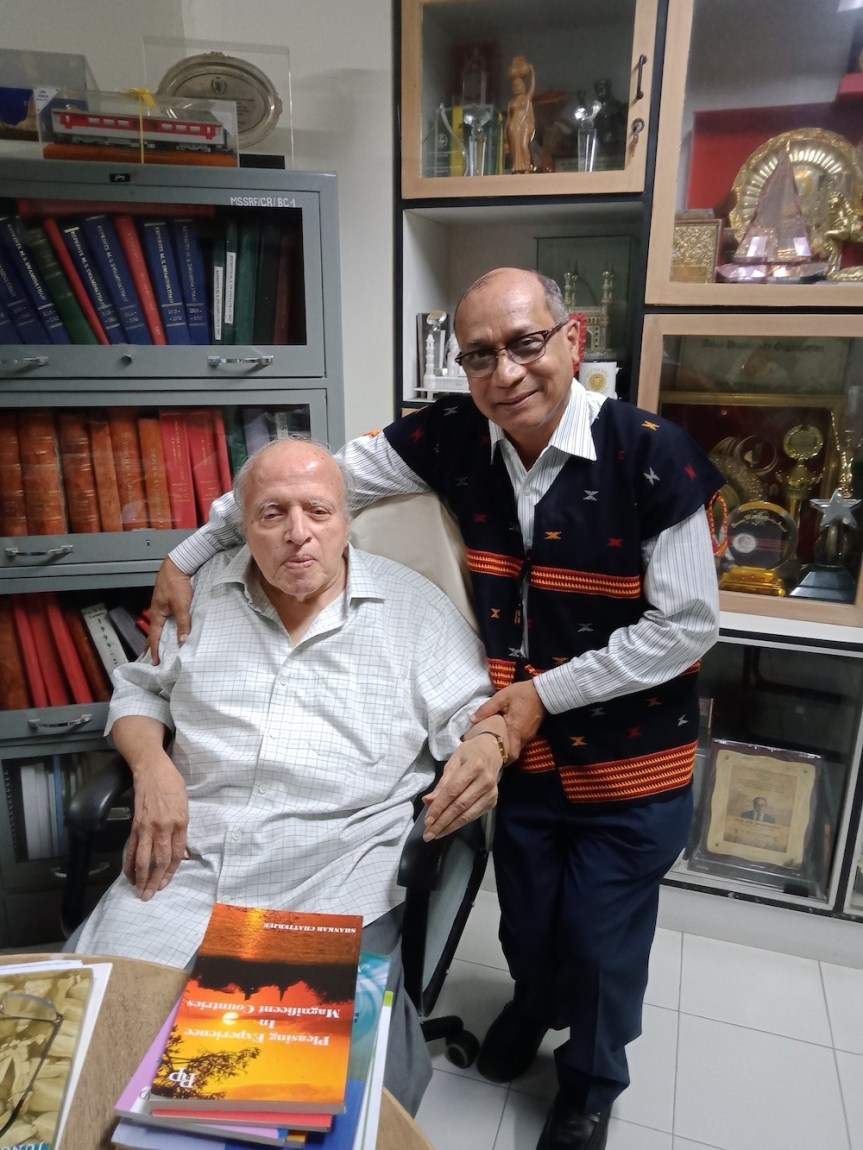
I had the opportunity to meet Prof Swaminathan sir on 18 December 2019 at MSSRF in Chennai and took his blessing as I feel he is ‘Annadata’ (food provider) to all of us. Interaction was although few minutes but I was greatly enlightened.  I was charmed to see such a simple and wonderful human being although endowed with ‘ocean of knowledge’, awards etc.; he is ‘down to earth’ person. Immediately the Sanskrit proverb, which I read in school days, came to my mind ‘Vidya Dadati Vinayam’ (simple meaning Knowledge makes a man perfect).


Dr. Shankar Chatterjee

Former Professor& Head (CPME)

NIRD &PR (Govt. of India), 

Hyderabad-500 030

Telangana, India 

Email <shankarjagu@gmail.com>
 

Batticaloa District of Sri Lanka endowed with Pristine Beauty

My visit in Sri Lanka in two occasions – one in first part of March 2018 and another was in November 2019 has greatly fascinated me.  I could get more insight about the Island and its people and culture as well as seen many places. Everywhere wonderful people with pristine beauty and peace can be observed. In this article , few points about Batticaloa District (visited in last part of November 2019) and my interaction with senior district official Mr M. Uthayakumar ( district head) officially called Government Agent or District Secretary are highlighted. He was very through about the Governments’ programmes, an erudite person and a dynamic officer.

Let me start first with Sri Lanka and in view of this, few lines about Sri Lanka’s socio-economic conditions are presented.   Sri Lanka is spread over to an area of 65,000 square kilometres home of little more than 2 crore people. It has to be appreciated that country’s socio-economic development is better than many countries. In this regard by referring, Rural Development Statistics, 2016-17 prepared by National Institute of Rural Development and Panchayati Raj popularly known as (NIRD&PR, an Organisation of Government of India), Hyderabad few particulars on Sri Lanka are presented. Annual population growth rate of Sri Lanka during 2010-15 was 0.8 per cent with crude birth rate 17.6 per 1,000 people and death rate 6.2 per 1,000. Infant mortality per 1000 live births was 8.2 in 2013 while mortality rate under five years of age was 9.6. Average life expectancy at birth (2015 data) in general was 75 years- male 71.7 years and female 78.4 years.  Literacy is important for the development of people and effective literacy skills open the doors to more educational and employment opportunities so that people are able to pull themselves out of poverty and chronic underemployment.  The statistics show adult literacy rate (15 years and above) in the country during 2005-13 was 91.2 per cent. Whereas youth literacy rates (15-24 years) for male and female during the same period were 97.7 and 98.6 years respectively.  While I was in the country talked to cross section of youths, educated persons and observed youths were more interested in study discouraging child marriage. The married persons prefer two children.

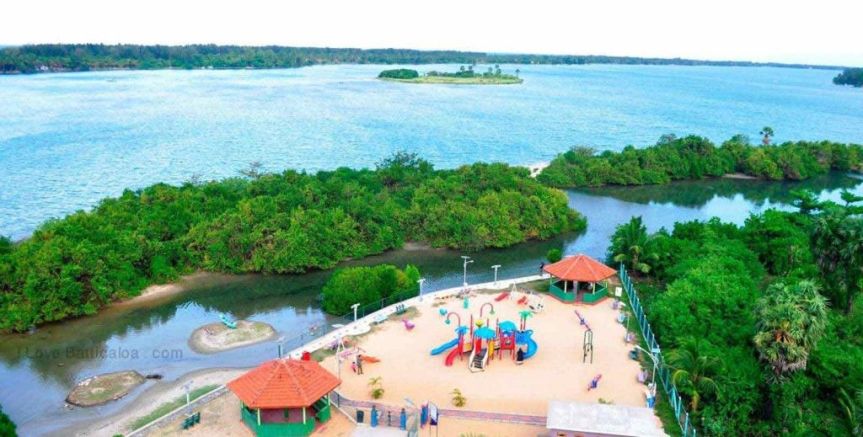
As already mentioned, in November 2019, I visited Batticaloa District and interacted with senior district official Mr M. Uthayakumar also many local residents. The district is located at eastern side of Sri Lanka. The data provided by the district officials based on 12 April 2019 publication, reveal that the total land area of the district is 2610 square kilometres and inland water area is 224 square kilometres and thus total area of the district is 2854 square kilometres. The Batticaloa Lagoon, beach, old Catholic Church and Hindu temples are attracted places from tourism pint of view.

The total population of the district was 603,192 and male and female were – 296,513 and 306,679 respectively indicating more female than male.  Further the data reveal that 72.2 per cent were Sri Lankan Tamil, 26.3 per cent Sri Lankan Muslim (they also speak Tamil), rests Sinhalese and Burgers.

The district had a total of 177,440 families (as mentioned earlier total population 603 192) and of these 31,946 families were headed by woman member (18%). A little more than 83, 000 (in actual figure 83,091) families were dependant on agriculture and paddy is the main crop with average yield was around 4000 kilograms per hectare. Altogether 23,726 families were eking out their livelihoods through fishing both Sea and Lagoon. Therefore, it is evident that primary sector, covering agriculture and fishing, was the source of livelihood for 106,817 families (60 per cent). Further, the data reveal that total milk production in a year was to the tune of 95 lakh litres which were available from three main source viz. cows, buffaloes and goats.  There were no large industry till the day of visit but as medium scale industry there were four garments factories in the district. In addition, there were 11, A-category Tourism hotels. The district had little more poverty than the national average – (11.3% in the district) against the national average of 4.1 per cent (as per 2016 report).

During my visit to the district, I had interacted with many persons all in unison praised Indians as peaceful country. Many goods are imported from India so they expressed their happiness with the quality. I also personally feel, people across Sri Lanka (after my two visits) are amicable and hospitable to Indians. Sri Lanka is a worthy place for visit as peace prevails in the country and many of the places have its own importance from tourism point of view. Also Sri Lankan’s tea, coffee, cashew and fish curry have greatly attracted me.

Dr. Shankar Chatterjee

Former Professor& Head (CPME)

NIRD &PR (Govt. of India), 

Hyderabad-500 030

Telangana, India 

Email <shankarjagu@gmail.com>
 

RTP Mela of NIRD & PR (Government of India) Promotes National Integration

Hyderabad is an important city of India as it is endowed with many historical places, mouth-watering dishes including veg and non-veg biryani, different types of fruits and vegetables, ornamental items (pearl and related items), famous for medical tourism, etc. Hyderabad is also a city of national integration and above caste, creed, and religion all live amicably. As an example, a legendary figure may be mentioned here as known to all that Sarojini Naidu being a Bengali lady was born in Chattopadhyay/Chatterjee family in 1879 in Hyderabad and married to a Telugu man, Dr. Govindarajulu Naidu and finally settled down in Hyderabad. Her parental home was in undivided Bengal.

RTP Mela of NIRD
RTP Mela of NIRD

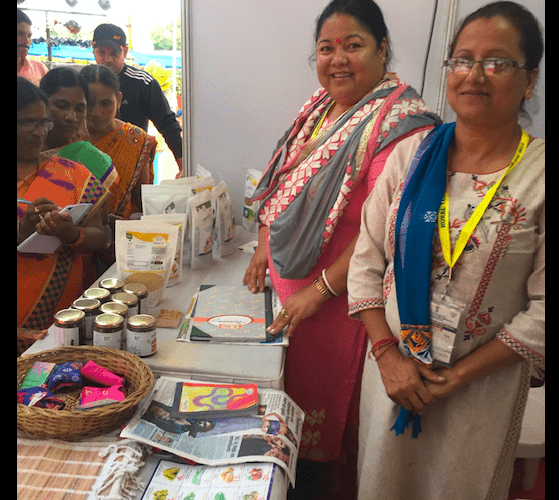
In this section, a case of national integration promoted by the National Institute of Rural Development and Panchayati Raj (popularly known as NIRD&PR), an autonomous organization of the Ministry of Rural Development, Government of India is presented. The NIRD&PR, apart from its academic activities, has been organizing Mela every year from 2003 where across India, rural artisans mainly self-help group (SHG) members participate with their products for scaling up of selling.

In 2019, 17th Mela held from 29 November to 3 December 2019 was inaugurated by the Governor of Telangana, Dr. Tamilisai Soundararajan on 29 November 2019.  As reported by Mr Md. Khan, Sr. Consultant of RTP-NIRD&PR, in the Mela mainly women members of Self Help Groups (SHG) from 24 states across the country including Arunachal Pradesh, Meghalaya, Mizoram, Manipur, Tripura, Sikkim, J&K participated. The participation of so many states from north-east in other years of the Mela was seldom. Further, around 200 stalls were set up covering various items like veg and non-veg foods, dress materials for ladies, gents and children, different types of ornamental items, etc.

RTP Mela of NIRD
RTP Mela of NIRD

The author interacted during the time of Mela with few members who came with their products from different parts of the country. And all in unison appreciated stay, food, etc. which were provided free of cost to the guests by the NIRD&PR. Of course, travel costs had to be borne by the respective state or organisation or by the SHG may be from their corpus fund.

While interacting, Mrs Ronita, a member of Laxmi SHG, from Imphal East district of Manipur observed she (also her woman friend) was absolutely happy as for the Mela both of them could visit Hyderabad. She informed that albeit their SHG was established in January 2018 but earlier did not visit Hyderabad. Their travel cost was borne by the district officials. They brought a special variety of black rice, different types of pickles, fruit candies, etc. Both have enjoyed Hyderabad as a huge city with peaceful environment. Mrs Kamal Kumari Jamatia of Tripura, a member of Golap SHG (10 women members in SHG and all ST) also expressed her happiness as first time she attended the Mela. She brought different types of ladies dresses made by tribal women, craft and bamboo products etc. From Sikkim, two women came first time came in Hyderabad with local products such as ginger powder,   raw turmeric, and other local food products. Also from Haryana two women participated as well as their first visit in Hyderabad. They brought and made in the stall different types of food items and I tasted their delicious ‘laddus’. From West Bengal of Birbhum district, two women with different types of Sarees first time attended the Mela.  Also near Darjeeling area of West Bengal few Lepcha women members came who were well versed with ‘Momo’ preparation. On the spot, they prepared tasty ‘Momo’ and such taste may not be found in other restaurants.  Mrs. Shalini of Kerala also expressed her happiness after participating first time in the Mela. She along with her husband participated Mela with a different types of clay items used in cooking. Although the SHG was established in 2003 with 16 women members this was their first visit.

It is evident that Mela is an important place of marketing of SHGs’ products.  It acts as an important forward linkage as sellers can bring their products from far-flung areas and buyers can get within their area with reasonable price and thus both are benefitted. Further, Mela has been promoting national integration. In view of this, it is suggested that such Mela should be organised across the country more in numbers. NIRD&PR can organise two times in a year.

Dr Shankar Chatterjee
Former Professor & Head (CPME),NIRD & PR ( Govt. of India), Hyderabad,  India
Former Associate Professor, Eritrea

Former Assistant Prof, Govt. Degree College, Tripura, India
Former Senior Planning Officer, Govt of Assam, India