Bermuda Triangle

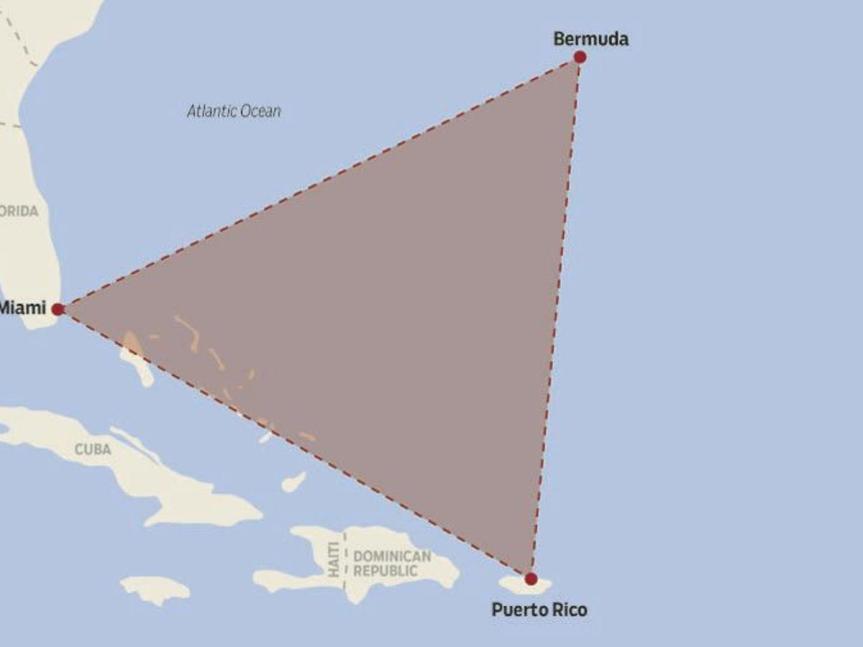
The area referred to as the Bermuda Triangle, or Devil’s Triangle, covers about 500,000 square miles of Atlantic Ocean off the southeastern tip of Florida, bounded by Miami, Bermuda and Puerto Rico. When Christopher Columbus sailed through the area on his first voyage to the New World, he reported that a great flame of fire (probably a meteor) crashed into the sea one night and that a strange light appeared in the distance a few weeks later. He also wrote about erratic compass readings, perhaps because at that time a sliver of the Bermuda Triangle was one of the few places on Earth where true north and magnetic north lined up.

Did you know? After gaining widespread fame as the first person to sail solo around the globe, Joshua Slocum disappeared on a 1909 voyage from Martha’s Vineyard to South America. Though it’s unclear exactly what happened, many sources later attributed his death to the Bermuda Triangle.

Nonetheless, reports of unexplained disappearances did not really capture the public’s attention until the 20th century. An especially infamous tragedy occurred in March 1918 when the USS Cyclops, a 542-foot-long Navy cargo ship with over 300 men and 10,000 tons of manganese ore onboard, sank somewhere between Barbados and the Chesapeake Bay. The Cyclops never sent out an SOS distress call despite being equipped to do so, and an extensive search found no wreckage. “Only God and the sea know what happened to the great ship,” U.S. President Woodrow Wilson later said. In 1941 two of the Cyclops’ sister ships similarly vanished without a trace along nearly the same route.

A pattern allegedly began forming in which vessels traversing the Bermuda Triangle would either disappear or be found abandoned. Then, in December 1945, five Navy bombers carrying 14 men took off from a Fort Lauderdale, Florida, airfield in order to conduct practice bombing runs over some nearby shoals. But with his compasses apparently malfunctioning, the leader of the mission, known as Flight 19, got severely lost. All five planes flew aimlessly until they ran low on fuel and were forced to ditch at sea. That same day, a rescue plane and its 13-man crew also disappeared. After a massive weeks-long search failed to turn up any evidence, the official Navy report declared that it was “as if they had flown to Mars.”

Bermuda Triangle Theories and Counter-Theories

By the time author Vincent Gaddis coined the phrase “Bermuda Triangle” in a 1964 magazine article, additional mysterious accidents had occurred in the area, including three passenger planes that went down despite having just sent “all’s well” messages. Charles Berlitz, whose grandfather founded the Berlitz language schools, stoked the legend even further in 1974 with a sensational bestseller about the legend. Since then, scores of fellow paranormal writers have blamed the triangle’s supposed lethalness on everything from aliens, Atlantis and sea monsters to time warps and reverse gravity fields, whereas more scientifically minded theorists have pointed to magnetic anomalies, waterspouts or huge eruptions of methane gas from the ocean floor.

In all probability, however, there is no single theory that solves the mystery. As one skeptic put it, trying to find a common cause for every Bermuda Triangle disappearance is no more logical than trying to find a common cause for every automobile accident in Arizona. Moreover, although storms, reefs and the Gulf Stream can cause navigational challenges there, maritime insurance leader Lloyd’s of London does not recognize the Bermuda Triangle as an especially hazardous place. Neither does the U.S. Coast Guard, which says: “In a review of many aircraft and vessel losses in the area over the years, there has been nothing discovered that would indicate that casualties were the result of anything other than physical causes. No extraordinary factors have ever been identified.”

JUSTIN BIEBER: The Pop Superstar

2007-2008

Justin Bieber’s mother begins uploading videos of him singing R&B covers to Youtube. Scooter Braun, a media proprietor, accidentally discovers him while searching for videos of another singer on the site, and convinces Beiber and his mother to sign with him and Usher. With Usher’s help, Bieber receives his first record deal.

2009

Beiber begins recording his debut album. His first single “One Time” peaks at No. 17 on the Billboard Hot 100 and goes platinum. In November, he releases his first project My World, an EP (Extended Play).

2010

Bieber releases his full-length debut album My World 2.0 shooting up to No.1 on Billboard, making him the youngest male solo artist to top the album charts since Stevie Wonder in 1963. The album’s single “Baby” breaks out as an international hit. Bieber begins dating Selena Gomez on and off.

2011

Bieber stars in a biopic and concert movie Justin Bieber: Never Say Never, which grosses nearly $100 million at the box office. In June, Forbes names him on their list of Best-Paid Celebrities Under 30 for the first time. The youngest person on the list at just 17, Bieber reportedly made $53 million in the 12 months prior to the list’s release. He releases two albums Under the Mistletoe and Believe.

2012

Believe hits No.1 album debut. Bieber moves away from teen pop sounds, taking on more contemporary pop and R&B notes.

2013

Embarks on a 10-week campaign called Music Mondays, dropping one song every week. His second film Justin Bieber’s Believe hits theatres.

2014

Bieber has several run-ins with the law involving DUI, vandalism, assualt, and reckless driving.

2015

Releases his fourth studio album Purpose to a No.1 album debut.

2016

Wins his first Grammy for Best Dance Recording with the song Where Are U Now.

2017

The Chines government bans him from performing in China, citing his past behaviour.

2018

Breaks up with Selena Gomez for the last time. Marries Hailey Baldwin.

2019

Launches his own streetwear label, Drew House. Announces his fifth album at Coachella.

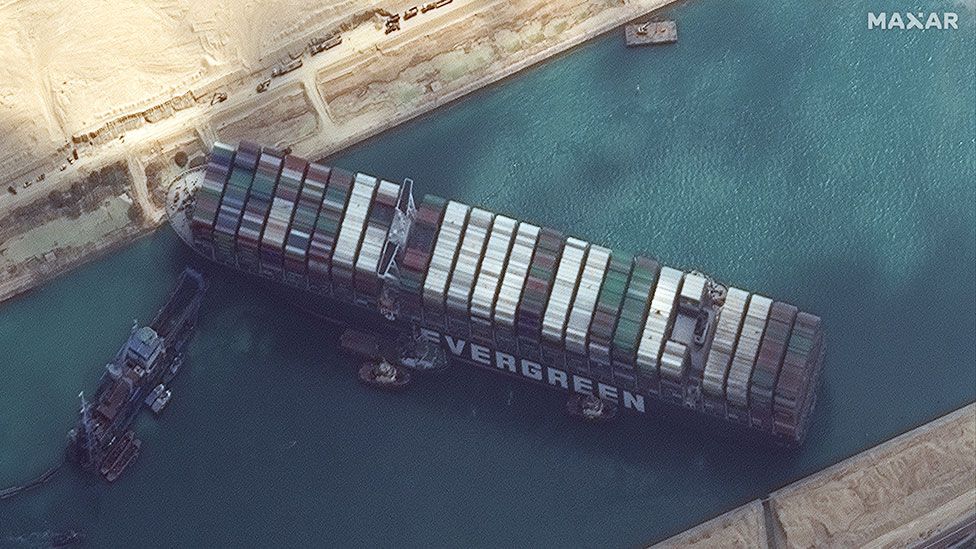
Ever Given : Ship that blocked Suez Canal

The 193km (120 mile) Suez Canal connects the Mediterranean Sea at the canal’s northern end to the Red Sea in the south and provides the shortest sea link between Asia and Europe.

On 28 March, at least 369 ships were queuing to pass through the canal. This prevented an estimated US$9.6 billion worth of trade. On 29 March, Ever Given was partially re-floated and moved by about 80 percent in the correct direction, although the bow remained stuck until the ship was finally freed by Egyptian, Dutch, and Italian tugs at and started moving, under tow, towards the Great Bitter Lake, for technical inspection. The canal was checked for damage, and after being found to be sound, the SCA allowed shipping to resume from 29 March. The vessel was subsequently impounded by the Egyptian government on 13 April 2021 for refusing to pay compensations demanded by the government, a claim deemed to be unjustified by the ship’s insurers. After the incident, the Egyptian government announced that they will be widening the narrower parts of the canal.

Suez Canal: How did they move the Ever Given? - BBC News

The ship has been impounded for three months near the canal city of Ismailia

The container ship was refloated following a six-day salvage operation that involved a flotilla of tug boats and dredging vessels. One person was killed during the operation. Since then, the Suez Canal Authority (SCA) has been seeking compensation from the Ever Given’s Japanese owner Shoei Kisen for the cost of the salvage operation, damage to the canal’s banks and other losses.

The SCA initially asked for $916 million compensation, including $300 million for a salvage bonus and $300 million for loss of reputation. But UK Club – which insured Shoei Kiswn for third-party liabilities – rejected the claim, describing it as “extraordinarily large” and “largely unsupported”.

The SCA later lowered its demand to $550 million. The final settlement, which has not been revealed, was agreed and signed and the ship was released on 7 July, 2021.

Amazon Rainforest

The Amazon is a vast region that spans eight rapidly developing countries: Brazil, Bolivia, Peru, Ecuador, Colombia, Venezuela, Guyana, Suriname, and French Guiana, an overseas territory of France.
The landscape contains:

  • One in ten known species on Earth
  • 1.4 billion acres of dense forests, half of the planet’s remaining tropical forests
  • 4,100 miles of winding rivers
  • 2.6 million square miles in the Amazon basin, about 40% of South America

There is a clear link between the health of the Amazon and the health of the planet. The rain forests, which contain 90-140 billion tons of carbon, help stabilize the local and global climate. Deforestation may release significant amounts of this carbon, which could have catastrophic consequences around the world.

The Amazon contains millions of species, most of them still undescribed, and some of the world’s most unusual wildlife. It is one of Earth’s last refuges for jaguars, harpy eagles, and pink river dolphins, and home to thousands of birds and butterflies. Tree-dwelling species include southern two-toed sloths, pygmy marmosets, saddleback and emperor tamarins, and Goeldi’s monkeys.

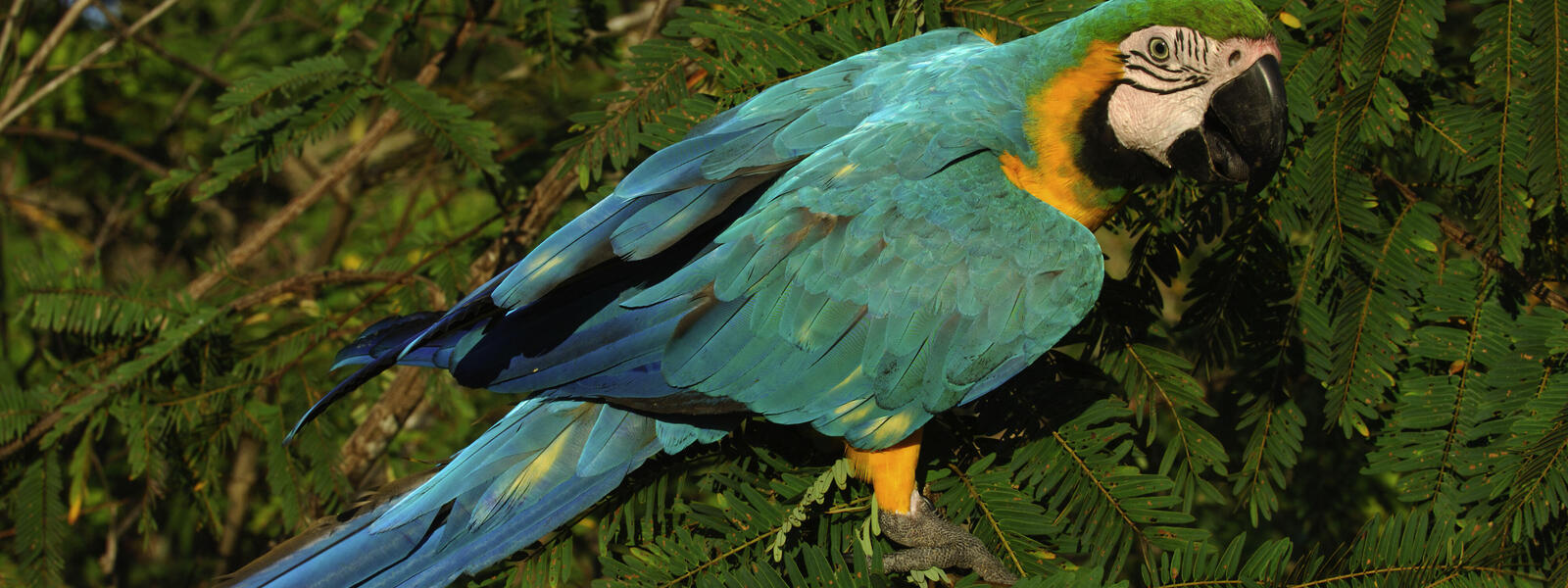
Macaw

The diversity of the region is staggering:

  • 40,000 plant species
  • 2,400 freshwater fish species
  • more than 370 types of reptiles
THREATS

Transportation and energy infrastructure are essential for national and regional development, but when they are poorly planned, negative impacts can exceed short-term benefits. For example, building new roads exposes previously inaccessible areas of forest to illegal and unsustainable logging. 

WWF works to promote best practices and decrease environmental damage from:

  • gold mining
  • oil exploration
  • illegal logging
  • overharvesting of fish and other aquatic species

There is high demand for the natural resources found in the Amazon, but weak law enforcement to safeguard them. In addition, inefficient extraction processes lead to the destruction of nature and wildlife. For example, some mining activities contribute to soil erosion and water contamination.

In recent times, warmer temperatures and less rainfall have produced droughts of historic proportions. The Amazon suffered its worst droughts of the last 100 years in 2005 and 2010. Long dry spells wither crops, decimate fisheries and lead to forest fires. This can result in significant shifts in the makeup of ecosystems and a loss of species. 

Snake Island

Ilha da Queimada Grande, also known as Snake Island, is an island off the coast of Brazil in the Atlantic Ocean. It is administered as part of the municipality of Itanhaém in the State of São Paulo. The island is small in size, only 43 hectares (106 acres), and has a temperate climate. The island’s terrain varies considerably, ranging from bare rock to rainforest.

The island is the only home of the critically endangered, venomous golden lancehead (pit viper), which has a diet of birds. The snakes became trapped on the island when rising sea levels covered up the land that connected it to the mainland. The resulting selection pressure allowed the snakes to adapt to their new environment, increasing rapidly in population and rendering the island dangerous to public visitation.

Queimada Grande is closed to the public in order to protect both people and the snake population. Access is only available to the Brazilian Navy and selected researchers assessed by the Chico Mendes Institute for Biodiversity Conservation, the Brazilian federal conservation unit.

The lancehead genus of snakes is responsible for 90 percent of Brazilian snakebite-related fatalities. The golden lanceheads that occupy Snake Island grow to well over half a meter long, and they possess a powerful fast-acting venom that melts the flesh around their bites. The potent venom of this species evolved due to the need for the snake to quickly incapacitate and kill seabirds that land on the island’s trees before they are able to fly away.

Because there are so many snakes on one island — by some estimates one snake to every square meter — there is competition for resources. On an island ecosystem occupied by hundreds of competitors, the deadly venom of the golden lancehead maximizes its potential to feed and survive. Golden lanceheads are so dangerous that, with the exception of some scientific outfits, the Brazilian Navy has expressly forbidden anyone from landing on the island.

The island was previously thought to have a population of about 430,000 snakes, but recent estimates are much lower. The first systematic study of the population of the golden lancehead found the number to be 2000 to 4000, concentrated almost entirely in the rainforest area of the island.

Nile River

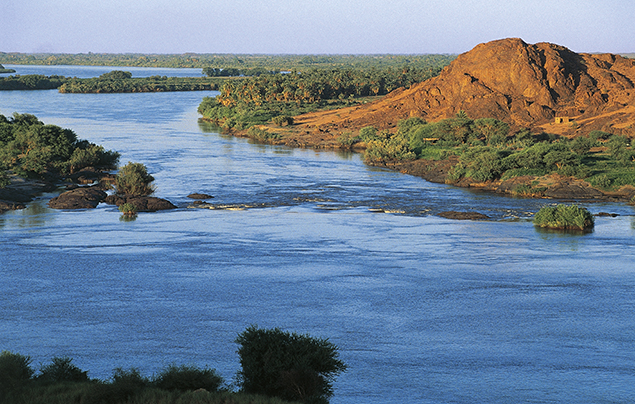
The Nile River flows from south to north through eastern Africa. It begins in the rivers that flow into Lake Victoria (located in modern-day Uganda, Tanzania, and Kenya), and empties into the Mediterranean Sea more than 6,600 kilometers (4,100 miles) to the north, making it one of the longest river in the world. The Nile River was critical to the development of ancient Egypt. In addition to Egypt, the Nile runs through or along the border of 10 other African countries, namely, Burundi, Tanzania, Rwanda, the Democratic Republic of the Congo, Kenya, Uganda, Sudan, Ethiopia, and South Sudan. Its three main tributaries are the White Nile, the Blue Nile, and the Atbara.

The soil of the Nile River delta between Cairo and the Mediterranean Sea is rich in nutrients, due to the large silt deposits the Nile leaves behind as it flows into the sea. The banks of the Nile all along its vast length contain rich soil as well, thanks to annual flooding that deposits silt. From space, the contrast between the Nile’s lush green river banks and the barren desert through which it flows is obvious.

For millennia, much of Egypt’s food has been cultivated in the Nile delta region. Ancient Egyptians developed irrigation methods to increase the amount of land they could use for crops and support a thriving population. Beans, cotton, wheat, and flax were important and abundant crops that could be easily stored and traded. 

The Nile River delta was also an ideal growing location for the papyrus plant. Ancient Egyptians used the papyrus plant in many ways, such as making cloth, boxes, and rope, but by far its most important use was in making paper. Besides using the river’s natural resources for themselves and trading them with others, early Egyptians also used the river for bathing, drinking, recreation, and transportation.

Today, 95 percent of Egyptians live within a few kilometers of the Nile. Canals bring water from the Nile to irrigate farms and support cities. The Nile supports agriculture and fishing. The Nile also has served as an important transportation route for thousands of years. Today, some residents of Cairo have begun using private speed boats, water taxis, or ferries to avoid crowded streets. Dams, such as the Aswân High Dam in Egypt, have been built to help to tame the river and provide a source of hydroelectric power.

However, the silt and sediment that used to flow north, enriching the soil and building the delta, is now building up behind the dam instead. Instead of growing in size through the soil deposits, the delta is now shrinking due to erosion along the Mediterranean Sea. In addition, routine annual flooding no longer occurs along parts of the Nile. These floods were necessary to flush and clean the water of human and agricultural waste. As a result, the water is becoming more polluted.

The Nile River also continues to be an important trade route, connecting Africa with markets in Europe and beyond.

India plans talks with Taliban preparing for life after US pullout

India is planning to activate direct channels of communication with the Taliban as the possibility of the Islamist group soon taking the centre stage in mainstream politics in Kabul is appearing to be an eventuality now.

The move comes as countries such as the US and the UK have already begun to recognise the legitimacy of the Taliban.

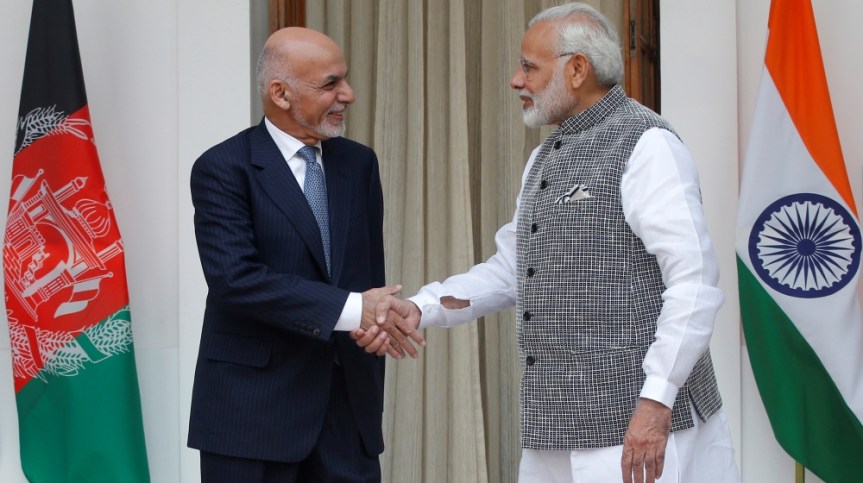
While India has assured support to the Ashraf Ghani government for peace and stability in Afghanistan as the Taliban has gone on an offensive, the Narendra Modi government believes it should begin to establish a network of contacts with those in the Taliban who sit in Doha, the capital of Qatar, and those who see New Delhi as their partner for development.

For this, India is now banking on Russia, which is planning on playing a greater role along with Iran. New Delhi is looking to be part of that arrangement even if it means supporting a transition government in Kabul, which looks imminent there after the US troops leave by 31 August.

Russia and India are believed to have held extensive talks on what stance regional partners will be taking now that violence in Afghanistan has surged and it has become all the more significant to bring in the Taliban as interlocutors. This is because the message then will “trickle down” to their commanders who are fighting the Afghan government forces, sources said.

According to a source, the government is planning to speak to those Taliban leaders with whom India had been engaging ever since External Affairs Minister S. Jaishankar participated in the intra-Afghan dialogue in Doha in September 2020.

Since the war began in Afghanistan two decades ago, India has invested about $3 billion in the development of the country.

Rakesh Jhunjhunwala trims stake in Tata Motors

Billionaire investor Rakesh Jhunjhunwala sold 50 lakh shares of automotive giant Tata Motors NSE -2.17 %, trimming his stake in the company to 1.14 per cent, latest shareholding data showed.

Jhunjhunwala held a total of 4.27 crore shares in the company at the end of March, which came down to 3.77 crore by the end of June. According to the last closing price, he sold shares worth Rs 154.35 crore. Tata Motors was the second largest bet in Rakesh Jhunjhunwala’s portfolio, after Titan.

Retail investors also trimmed their holdings in the company during the quarter. They now hold 11.94 per cent, down from 12.92 per cent at the end of the March quarter.

Life Insurance of India, the largest domestic investor, also slashed its stake to 4.03 per cent from 4.18 per cent. Overall, insurance companies now hold 4.83 per cent, down from 5.80 per cent.

Shares of Tata Motors fell 1.5 per cent to Rs 303.95 in Mumbai trading on Tuesday.

The company has been facing difficulties lately. Its biggest contributor to revenues, Jaguar Land Rover earlier this month said chip shortage in the international market could hit its business significantly.

However, some set of investors increased their holdings in the company. Mutual funds now hold 5.78 per cent in the firm, up from 5.30 per cent, the shareholding data showed. Foreign portfolio investors raised their holding to 14.28 per cent from 13.78 per cent.

Jeff Bezos’ spaceflight

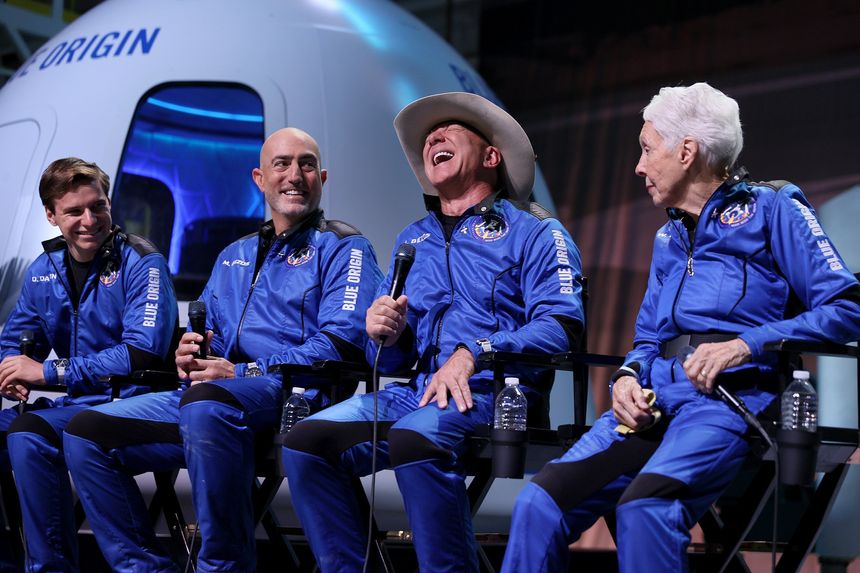
The sun climbed over a private spaceport in rural West Texas, a six-story-tall rocket lit its engines and lifted off, carrying a spacecraft with four people on board—the first passengers to ride Blue Origin’s New Shepard rocket to the top of the sky. The rocket hurtled star-ward, and at about 250,000 feet the crew capsule separated from the booster and continued to the edge of the atmosphere, while the rocket fell back to Earth and executed a controlled vertical landing. 

As the capsule climbed, the crew members unbuckled their seatbelts and floated in weightlessness for a few minutes, whooping excitedly as they took in the views out the windows. At 351,210 feet, not quite in orbit but well above the 62-mile line marking the internationally recognized boundary of space, the capsule began to fall. About ten minutes after launch, parachutes helped it safely alight back on Earth.

Jeff Bezos is going to space on Blue Origin's first crewed spaceflight in  July - The Washington Post

The flight carried a crew by spaceflight standards. One of the passengers was Jeff Bezos, founder of Blue Origin and currently the world’s richest person. His brother Mark joined him for the inaugural flight. And perhaps outshining the Bezos brothers, at least for those versed in aerospace history, is Wally Funk, an 82-year old aviator who has dreamed of being an astronaut since the early days of NASA’s human spaceflight program—when she trained to be an astronaut and outperformed the seven men chosen for the Mercury program on many of the tests, but did not get a chance to go to space.

Completing the crew is Oliver Daemen, an 18-year-old from the Netherlands, now the youngest person to visit space. Daemen’s father paid an undisclosed amount for his son to experience weightlessness, see the darkened sky, and gaze at Earth’s curved horizon for a few fleeting minutes. 

Bezos has said he founded Blue Origin because he wants to help create a future where millions of people live in space, residing on lush, rotating manufactured worlds in orbit.

It’s not clear how hefty the price tag for the opportunity will be—but Blue Origin says it has a list of passengers waiting for their turn to make the parabolic journey. One of those is an anonymous customer who bid $28 million for a chance to fly on this inaugural flight but had to postpone the trip to space at the last minute because of “scheduling conflicts,” the company said. 

Nikola Tesla

Serbian-American engineer and physicist Nikola Tesla (1856-1943) made dozens of breakthroughs in the production, transmission and application of electric power. He invented the first alternating current (AC) motor and developed AC generation and transmission technology. Though he was famous and respected, he was never able to translate his copious inventions into long-term financial success—unlike his early employer and chief rival, Thomas Edison.

Nikola Tesla and Thomas Edison

Tesla arrived in New York in 1884 and was hired as an engineer at Thomas Edison’s Manhattan headquarters. He worked there for a year, impressing Edison with his diligence and ingenuity. At one point Edison told Tesla he would pay $50,000 for an improved design for his DC dynamos. After months of experimentation, Tesla presented a solution and asked for the money. Edison demurred, saying, “Tesla, you don’t understand our American humor.” Tesla quit soon after.

Nikola Tesla and Westinghouse

After an unsuccessful attempt to start his own Tesla Electric Light Company and a stint digging ditches for $2 a day, Tesla found backers to support his research into alternating current. In 1887 and 1888 he was granted more than 30 patents for his inventions and invited to address the American Institute of Electrical Engineers on his work. His lecture caught the attention of George Westinghouse, the inventor who had launched the first AC power system near Boston and was Edison’s major competitor in the “Battle of the Currents.”

Westinghouse hired Tesla, licensed the patents for his AC motor and gave him his own lab. In 1890 Edison arranged for a convicted New York murderer to be put to death in an AC-powered electric chair—a stunt designed to show how dangerous the Westinghouse standard could be.

Buoyed by Westinghouse’s royalties, Tesla struck out on his own again. But Westinghouse was soon forced by his backers to renegotiate their contract, with Tesla relinquishing his royalty rights.

In the 1890s Tesla invented electric oscillators, meters, improved lights and the high-voltage transformer known as the Tesla coil. He also experimented with X-rays, gave short-range demonstrations of radio communication two years before Guglielmo Marconi and piloted a radio-controlled boat around a pool in Madison Square Garden. Together, Tesla and Westinghouse lit the 1891 World’s Columbian Exposition in Chicago and partnered with General Electric to install AC generators at Niagara Falls, creating the first modern power station.

What caused the Great Depression

The Great Depression was the worst economic downturn in the history of the industrilaized world, lasting from the stock market crash of 1929 to 1939.

Throughout the 1920s, the U.S. economy expanded rapidly, and the nation’s total wealth more than doubled between 1920 and 1929. The New York Stock Exchange in Wall Street in New York City was a center for reckless speculation, where everyone from millionaire tycoons to cooks and janitors poured their savings into stocks. As a result, the stock market underwent rapid expansion, reaching the peak in August 1929.

By then, production had already declined and unemployment had risen, leaving stock prices much higher than their actual value. Additionally, wages at that time were low, consumer debt was multiplying, the agricultural sector of the economy was struggling due to drought and falling food prices and banks had an excess of large loans that could not beliquidated.

The American economy entered a mild recession during the summer of 1929, as consumer spending slowed and unsold goods began to pile up, which in turn slowed factory production. Nonetheless, stock prices continued to rise, and by the fall of that year had reached strotospheric levels that could not be justified by expected future earnings.On October 24, 1929,as nervous investors began selling overpriced shares en masse, the stock market crash that some had feared happened at last. A record 12.9 million shares were traded that day, known as “Black Thursday”.

Five days later, on October 29 or “Black Tuesday”, some 16 million shares were traded after another wave of panic swept Wall Street. Millions of shares ended up worthless, and those investorss who had bought stocks “on margin” (with borrowed money) were wiped out compleytely.

As consumer confidence vanished in the wake of the stock market crash, the downturn in spending and investment led factories and other businesses to slow down production and begin firing workers. For those who were lucky enough to remain employed, wages fell and buying power decreased. Many Americans forced to buy on credit fell into debt, and the number of foreclosures and repossessions climbed steadily. The global adherence to the gold standard, which joined countries around the world in a fixed currency exchange, helped spread evonomic woes from the United States throughout the world, especially Europe.

Ola gets 1 lakh bookings for its e-scooter

Ola’s electric scooter has got over 1 lakh reservations within the first 24 hours of bookings opening in India making it the most pre-booked scooter in the world, the company said in a statement. 

Ola had opened reservations for its electric scooter on July 15 and had set a price of Rs 499 for booking the scooter on its website. Ola claims its e-scooter would be class-leading in terms of range, speed, boot space, and technology.
 
“I am thrilled by the tremendous response from customers across India for our first electric vehicle. The unprecedented demand is a clear indicator of shifting consumer preferences to EVs. This is a huge step forward in our mission to transition the world to sustainable mobility,” Ola Chairman and Group CEO Bhavish Aggarwal said in the statement.

Ola has stated that their scooters would be priced aggressively to make it widely accessible. 
 
The company plans to reveal the features and price of the scooter in the coming days.

The scooter will be manufactured at the company’s two-wheeler factory, being built in Tamil Nadu, the statement said, and the first phase of the Ola Futurefactory is nearing completion and will be operationalised soon, while the full capacity of 10 million vehicles per annum will be built by next year.

Self Driving Cars

A self-driving car uses a combination of sensors, cameras, radar and artificial intelligence (AI) to travel between destinations without a human operator. To qualify as fully autonomous, a vehicle must be able to navigate without human intervention to a predetermined destination over roads that have not been adapted for its use.

Companies developing or testing autonomous cars include Audi, BMW, Ford, Google, General Motors, Tesla, Volkswagen and Volvo. Google’s test involved self-driving cars – including Toyota Prii and an Audi TT – navigating over 140,000 miles of streets and highways.

How self-driving cars work

AI technologies power self-driving car systems. Developers of self-driving cars use vast amounts of data from image recognition systems, along with machine learning and neural networks, to build systems that can drive autonomously.

The neural networks identify patterns in the data, which is fed to the machine learning algorithms. That data includes images from cameras on self-driving cars from which the neural network learns to identify traffic lights, trees, curbs, pedestrians, street signs and other parts of any given driving environment.

Google’s self-driving car project, called Waymo, uses a mix of sensors, Lidar (light detection and ranging — a technology similar to radar) and cameras and combines all of the data those systems generate to identify everything around the vehicle and predict what those objects might do next. This happens in fractions of a second. Maturity is important for these systems. The more the system drives, the more data it can incorporate into its deep learning algorithms, enabling it to make more nuanced driving choices.

The following outlines how Google Waymo vehicles work:

  • The driver or passenger sets a destination. The car’s software calculates a route.
  • A rotating, roof-mounted Lidar sensor monitors a 60-meter range around the car and creates a dynamic three-dimensional (3D) map of the car’s current environment.
  • A sensor on the left rear wheel monitors sideways movement to detect the car’s position relative to the 3D map.
  • Radar systems in the front and rear bumpers calculate distances to obstacles.
  • AI software in the car is connected to all the sensors and collects input from Google Street View and video cameras inside the car.
  • The AI simulates human perceptual and decision-making processes using deep learning and controls actions in driver control systems, such as steering and brakes.
  • The car’s software consults Google Maps for advance notice of things like landmarks, traffic signs and lights.
  • An override function is available to enable a human to take control of the vehicle.

7 Amazing facts about Game of Thrones


Got Facts

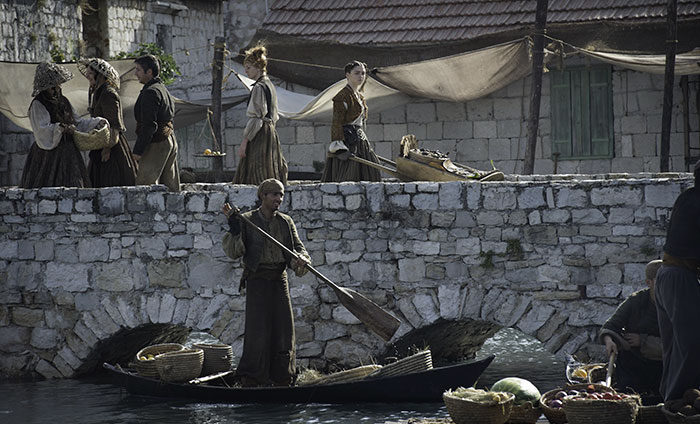
Executive Producers David Benioff and D.B. Weiss said the production of the show is a massive undertaking. It lasts the entire year and they shoot the show like a ten-hour movie. Season 5 alone was shot in five countries, on 151 sets, for 240 days, having 166 cast members, over 1,000 crew members and over 5,000 extras.


Got Facts

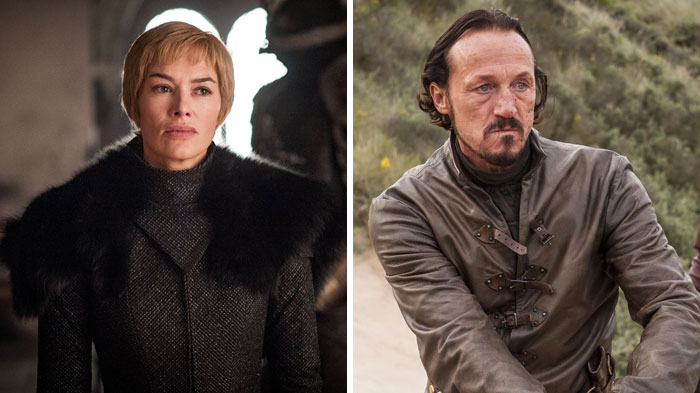
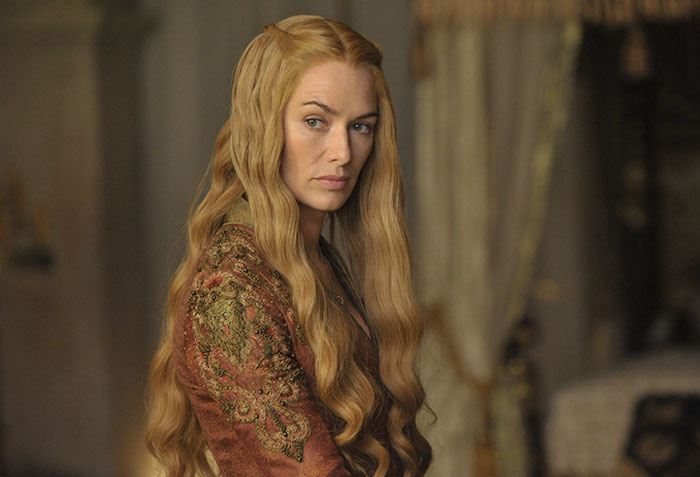
Prior to being cast, Lena Headey, who plays Queen Cersei, and Jerome Flynn, who plays Bronn, were in a relationship that ended on such bad terms that each had a clause inserted into their contracts that they were never to share scenes and must remain apart on set.


Got Facts

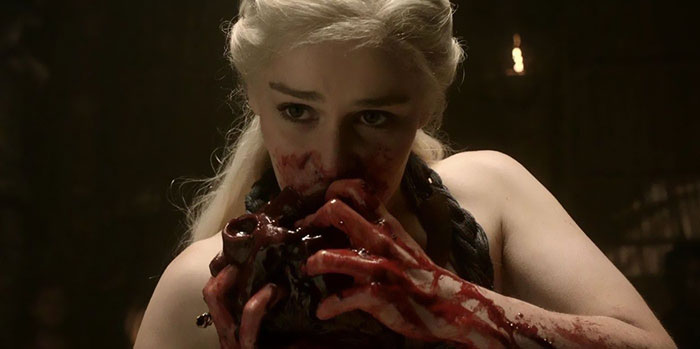
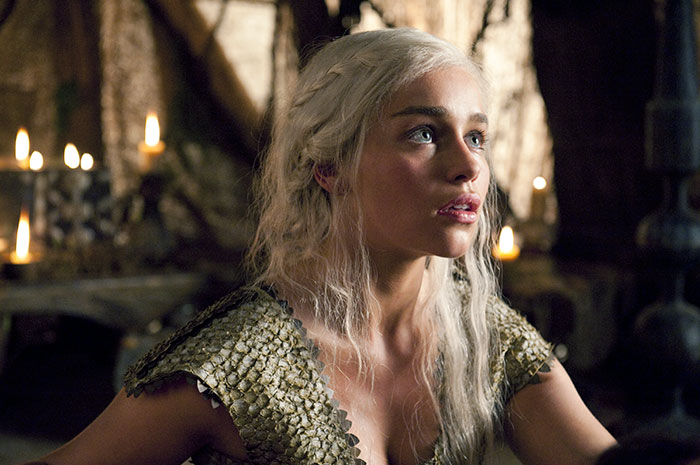
The horse heart Daenerys had to eat in Season 1 was essentially a giant gummy candy—one that, per Clarke, tasted a little bit like bleach. (It also had pasta running through it to mimic arteries.) She ate 28 hearts, and apparently did a lot of puking between takes. To make the proceedings even grosser, all the fake blood made Clarke so sticky that she got stuck to a toilet.


Got Facts

In June 2014, Queen Elizabeth II and Prince Philip visited the “Game of Thrones” set in Belfast as part of a three-day visit to Northern Ireland. Elizabeth was offered the chance to sit on the Iron Throne but declined, as the monarch of Great Britain is not supposed to sit on a foreign throne, even a fictional one. Some news sources claimed Elizabeth is a viewer of the series, though Maisie Williams remarked on the visit, “I did not get the impression she is a fan” as the Queen was unaware of her role in the show.


Got Facts

In the year 2012, around 160 baby girls in the U.S. were legally named “Khaleesi”, after the character in the show, although it is not the character’s name, Daenerys, but a title that is an equivalent of ‘queen’ in Dothraki language.


Got Facts

Queen Cersei was fan-voted as the series’ most hated character. The actress who plays the role, Lena Headey, said that the fans’ hatred for the character often translates to her personally as people at times insult or shun her in real life. While there are plenty of people who adore her and her portrayal of Cersei, Headey reported that during an autograph session at Comic Con, people would snatch their books from her hands to prevent her from signing it.


Got Facts

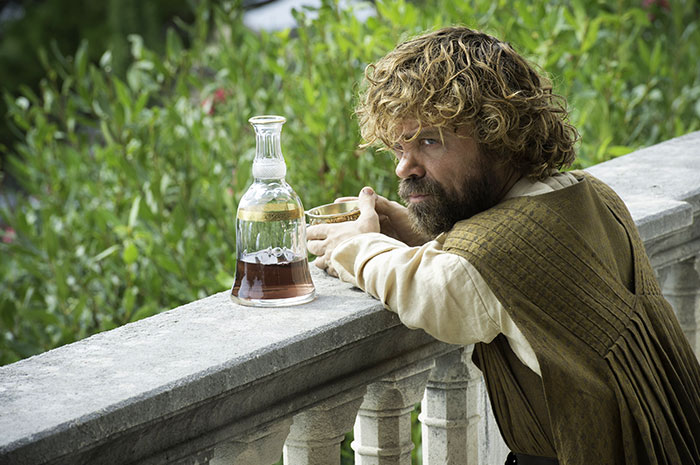
Peter Dinklage, who portrays Tyrion Lannister in the show, appears in more episodes than any other cast member. Dinklage is in total of 61 out of 67 episodes.


What happens if you drink too much water?

When you drink too much water, you may experience water poisoning, intoxication, or a disruption of brain function. This happens when there’s too much water in the cells (including brain cells), causing them to swell. When the cells in the brain swell they cause pressure in the brain. You may start experiencing things like confusion, drowsiness, and headaches. If this pressure increases it could cause conditions like hypertension (High Blood Pressure) and bradycardia (Low Heart Rate)

Sodium is the electrolyte most affected by overhydration, leading to a condition called hyponatremia. Sodium is a crucial element that helps keep the balance of fluids in and out of cells. When its levels drop due to a high amount of water in the body, fluids get inside the cells. Then the cells swell, putting you at risk of having seizures, going into a coma, or even dying.

Signs That You’re Drinking Too Much Water

The color of your urine. One of the best ways to determine if you’re drinking enough water is to monitor the color of your urine. It usually ranges from pale yellow to tea-colored due to the combination of the pigment urochrome and the water level in your body. If the pee is often clear, that’s a sure sign you’re drinking too much water in a short span.

Too many bathroom trips. Another sign is if you’re relieving yourself more than usual. On average, you should urinate six to eight times a day. Going up to 10 times is normal for water-drinking high achievers or people who regularly drink caffeine or alcohol.

Drinking water even when you’re not thirsty. A third way to avoid drinking too much water is to be aware of when your body needs it. The body can fight against dehydration by letting you know when you need to drink some water. Thirst is the body’s response to dehydration and should be your guiding cue.