COMPONENTS OF A MAP

A map should include the following components namely, the title, scale, direction, grid system, projection, legend, conventional signs and symbols.

Title

It indicates the purpose or theme of the map. Example: India – Physical, World – Political, Tamil Nadu – Transport.

Scale

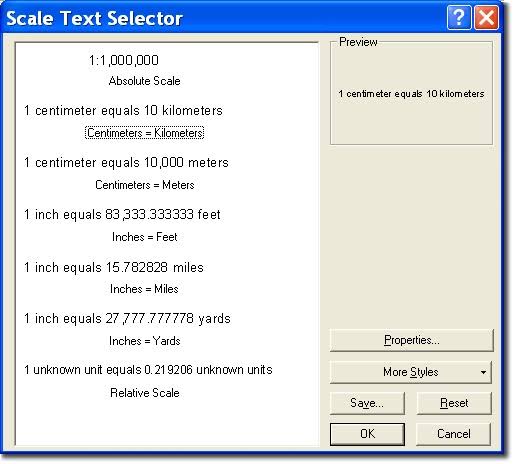
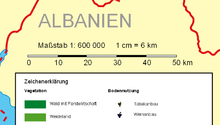
Scale makes it possible to reduce the size of the whole earth to show it on a piece of paper. A scale is a ratio between the actual distance on the map to the actual distance on the ground. Scales can be represented in three methods. They are the Statement, Representative Fraction (R.F) and Linear or Graphical scale methods.

Statement scale

Scale makes it possible to reduce the size of the whole earth to show it on a piece of paper. A scale is a ratio between the actual distance on the map to the actual distance on the ground. Scales can be represented in three methods. They are the Statement, Representative Fraction (R.F) and Linear or Graphical scale methods.
The Representative Fraction (R.F)

Representative Fraction (R.F) = Distance on the map/Distance on the ground
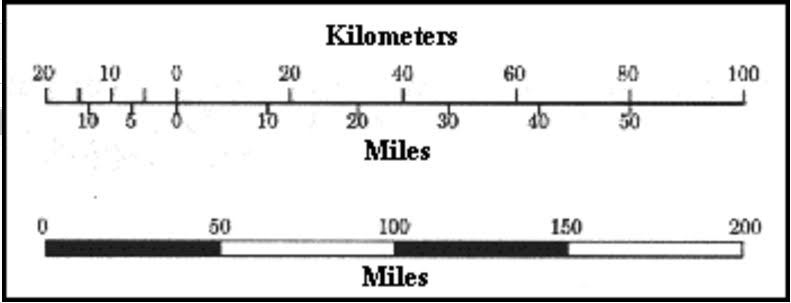
Linear or Graphical scale

In a map, a linear scale is represented by a straight line divided into equal parts (Primary and Secondary) to show what these markings represent on the actual ground. This scale helps in the direct measurement of distance on the map.
Direction

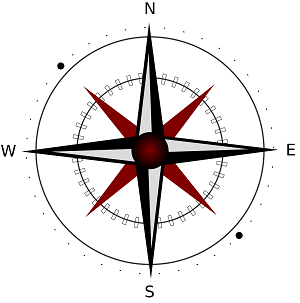
Maps are drawn normally with north orientation. North direction in a map is always towards the North Pole of the earth. If you position yourself looking at the North Pole, on your right will be the east; your left will be the west; at your back will be south. These four main directions are called the cardinal directions. Direction is usually indicated on a map by a North-South line, with the North direction represented by an arrow head.
Grid System

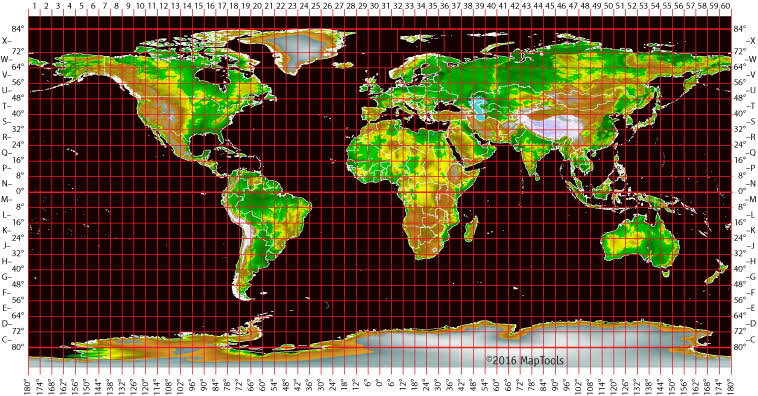
The location of a place can be simply defined by its latitude and longitude. In normal practice, latitude is stated first and then comes the longitude. The latitude and longitude of a place can be expressed in units of degree, minutes and seconds.
Projection

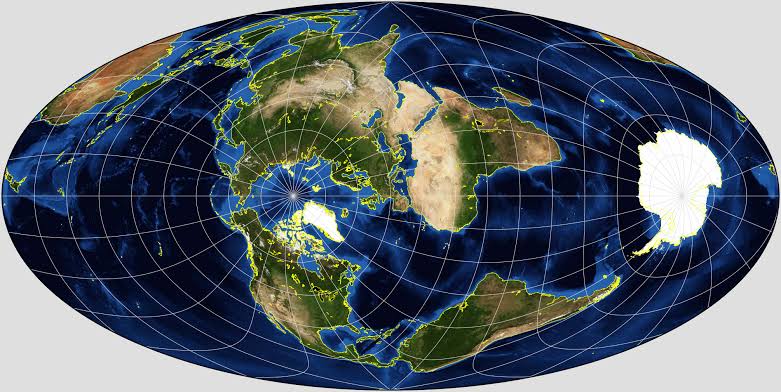
A map projection is a way of showing the spherical shaped earth on a flat piece of paper. Where does the word ‘projection’ come from? Imagine a clear globe with latitude and longitude lines and the outlines of the landmass on it. Suppose there was a light bulb inside the globe. If you wrapped a piece of paper around the globe and turned on the light bulb, the outlines of the grid and landmasses would be projected onto the paper. Map projection is defined as the transformation of spherical network of latitudes and longitudes on a plane surface. Projection are drawn to maintain the shape, area and direction.

The three methods in widest use are as follow:
• Projection on the surface of a cylinder
• Projection on to the surface of a cone
• Projection directly onto a flat plane, called planar or zenithal or azimuthal projection
Legend

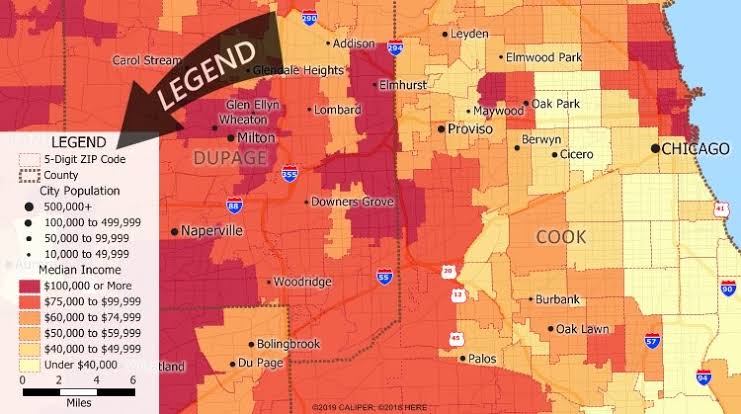
The legend of a map helps to understand the map details which are placed at the left or right corner at the bottom of the map.
Conventional signs and symbols

Conventional signs and symbols are standard symbols used on a map and explained in the legend to convey a definite meaning. The topographic map contains a variety of information about physical and cultural features.

These are shown by using signs and symbols in various colours so that the clarity of the map is maintained.
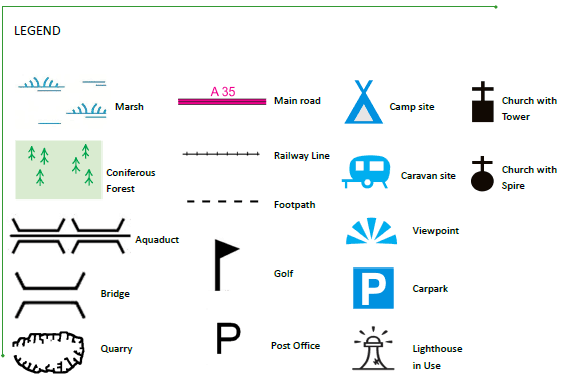
There are three types of map symbols

• Point Symbols – buildings, dipping tanks, trigonometrical beacons
• Line Symbols – railways, roads, power lines, telephone lines
• Area Symbols – Cultivated lands, ponds, orchards and vineyards

HUMAN SETTLEMENTS

Human Settlement means cluster of dwellings of any type or size where human beings live.Thus, the process of settlement inherently involves grouping of people and apportioning of territory as their resource base. Settlements vary in size and type. They range from a hamlet to metropolitan cities.

Classification of Settlements

On the basis of occupation, settlements may be classified as rural and urban settlements.

Rural Settlements

Any settlement where most of the people are engaged in primary activities like agricultural, forestry, mining and fishery is known as a rural settlement. Most of the world’s settlement are rural, they are mostly stable and permanent. The most important and unique feature of rural settlement is the vast, open spaces with green, pollution – free environment.

Patterns of Rural Settlements

Rectangular pattern

Rectangular pattern of settlements are found in plain areas or valleys. The roads are rectangular and cut each other at right angles.

Linear pattern

In a linear pattern, the houses are located along a road, railway line and along the edge of the river valley or along a levee.

Circular or semicircular pattern

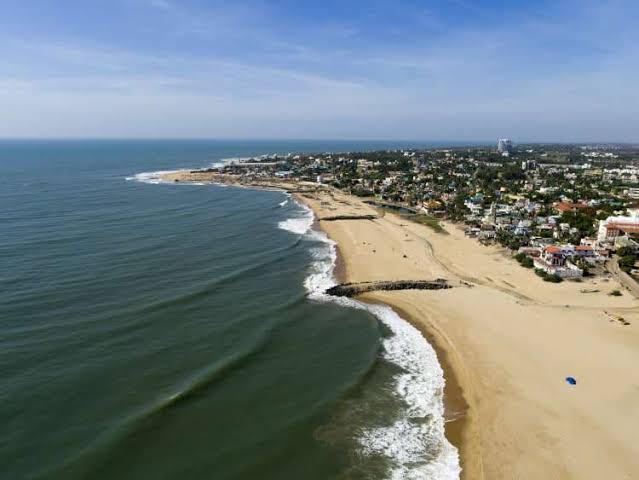
The pattern of settlement that is found around the lakes, ponds and sea coasts are called circular or semi circular pattern.

Star like pattern

Star shaped settlements develop in places where metalled and unmetalled road converged. In the star shaped settlements, houses are spread out along the sides of roads in all directions.

Triangular pattern

Triangular patterns of rural settlement generally develop at the confluence of rivers.

T-Shaped, Y-Shaped, Cross-Shaped or Cruciform settlements

T-shaped settlements develop at tri-junctions of the roads (T), while Y-shaped settlements emerge as the places where two roads converge with the third one. Cruciform settlements develop on the cross-roads which extend in all four directions.

Nebular pattern

The arrangement of roads is almost circular which ends at the central location or nucleus of the settlement around the house of the main landlord of the village or around a mosque, temple or church.

Urban Settlements

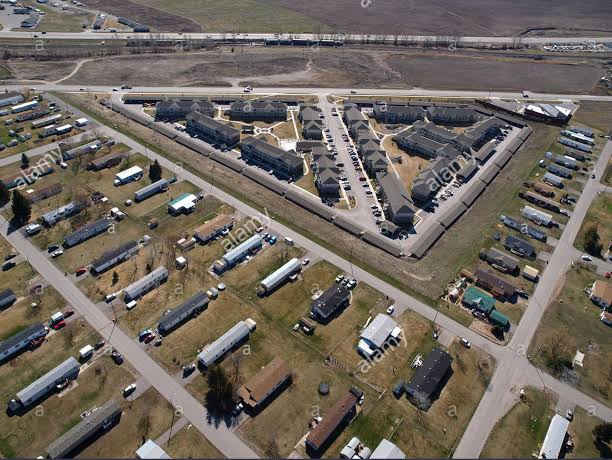
An Urban settlement is a concentrated settlement that constitutes or is part of an urban area. It is an area with high density of human-created structures. These geometrical patterns are usually in squares and rectangles and are well laid out.

Classification of Urban Settlements

Urban centres are classified as towns, cites, metropolitan cities, mega cities, conurbation, etc. , depending on the size and services available and functions rendered to it.

Town

A town is generally larger than a village, but smaller than a city. It has a population of less than 1 lakh. E.g. Arakkonam near Chennai

City

Cities are much larger than towns and have a greater number of economic functions. The population in cities are estimated to be more than 1 lakh. E.g. Coimbatore

Metropolitan cities

Cities accommodating population between 10 lakhs and 50 lakhs are metropolitan cities. E.g. Madurai

Megacities

Cities with more than 50 lakh population are called Megacities. E.g. Greater Chennai

Conurbation

A conurbation is a region comprising of a number of cities, large towns and other urban areas. E.g. Delhi conurbation

FUNDAMENTAL RIGHTS IN INDIA

Fundamental rights are required for the all round development of a human being. They make the life of people meaningful by giving them rights like speech and to live in an area of their choice.

The fundamental rights are :
☆ Right to Equality
☆ Right to Freedom
☆ Right against Exploitation
☆ Right to Freedom of Conscience and Religion.
☆ Cultural and Educational Rights for minorities.
☆ Right to Constitutional Remedies.

Right to Equality

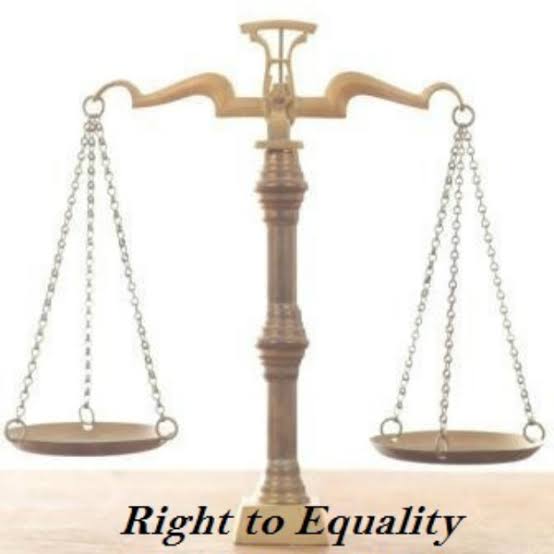
It refers to equality before law and equal protection of law. Prohibition or discrimination on the grounds of religion, caste, races, gender or place of birth is offensive and one can seek justice from court.

Right to Freedom

Six different types of freedom are mentioned in the Constitution. They are :
✓Freedom of speech and expression.
✓Freedom to assemble peacefully without arms.
✓Freedom to form association and unions.
✓Freedom to reside and settle in any part of India.
✓Freedom to move freely throughout the territory of India.
✓Freedom to practice any profession and carry on any occupation, trade and business.

Right against Exploitation

It is against the law to employ children below 14 years of age in mines, factories or other occupations. Neither contractor nor an employer can force a worker to do a job against the their will.

Right to Freedom of Conscience and Religion

This rights gives the citizens freedom to follow and practice a religion of their choice. All citizens have the freedom of conscience or ideas. The citizens also have the freedom to follow their own ways for practicing any religion.

Cultural and Educational Rights

The constitution gives us the right to preserve, protect and promote culture. We have the right to open schools, associations and societies to preserve and promote our tradition and culture. Similarly a group of people may open a school for imparting religious education to children. The government also promotes such activities by giving grants. However, such institutions cannot deny admission to anyone based on their caste, colour, creed or even religion.

Right to Constitutional Remedies

Fundamental Rights are guaranteed by the Constitution. By this right, a person can adopt Constitutional means and approach a court if he is denied the Fundamental Rights. The court then issues orders which are called ‘ Writs’ to the government to restore the rights to the citizen. The Constitutional Remedies put to right anything which may be wrong in terms of the Constitution. This right therefore protects and safeguards all other rights.
POPULATION GROWTH

‘It is easy to add but difficult to maintain’
Population is a dynamic phenomenon where the number, distribution and composition are constantly changing. Human population increases as babies are born and decreases as people die. For most of human history, births have only slightly exceeded deaths every year. As a result, human population grew slowly. About the time of Industrial Revolution, it began to increase rapidly.

Natural increase

Natural increase of population is the difference between the birth rate and death rate. In fact population is always increasing but only in very rare cases it may decrease through natural or man-made disasters such as famine, landslides, earthquakes, tsunami, epidemics, extreme weather conditions and war.

Population change

Population change refers to an increase or decrease in the population of an area influenced by the number of births, deaths and migration. The population of the world doubled from 500 million in 1650 to 1000 million in 1850. The projected population for 2025 and 2050 is about 8 billion and 9 billion respectively.

Population growth

Population growth refers to an increase in the number of people who reside in a particular area during a particular period.

Population increases when there are more births and immigration. It decreases when there are more deaths and emigration.

Distribution of Population

Population distribution refers to the way in which people are spread out across the earth’s surface.

The world population is not uniformly distributed, owing to the following factors.

Physical Factors

Physical factors include temperature, rainfall, soil, relief, water, natural vegetation, distribution of minerals and availability of energy resources.

Historical Factors

Regions with historical importance (river valley civilization), war and Constant invasions fall under historical factors responsible for population distribution.

Economic Factors

Educational institutions, employment opportunities, manufacturing industries, luxurious amenities, trade and commerce and other facilities encourage dense population in an area.

Density of Population

Density of population refers to the number of people living per square kilometre. An area is said to be sparsely populated when it has a large area with less number of people. Similarly, smaller the area with a large number of people, is said to be densely populated.

Population Density = Total Population/Total land area

The world’s population density is divided into three main groups.

Areas of high density (above 50 people per sq.km)

East Asia, South Asia, North West Europe and Eastern North America.

Areas of moderate density (10 to 50 people per sq.km)

The sub tropical regions like Angola, Congo, Nigeria and Zambia in Africa.

Areas of low density (less than 10 people per sq.km)

Central Africa, Western Australia, Northern Russia, Canada, etc…

ECOSYSTEM

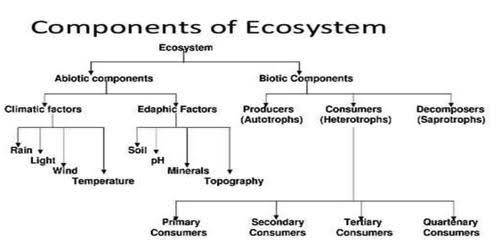
An ecosystem is a community, where all living organisms live and interact with one another and also with their non-living environment such as land, soil, air, water etc. Ecosystems range in size from the smallest units (Eg: bark of a tree) that can sustain life to the global ecosystem or ecosphere. (Eg: Cropland, Pond ecosystem, Forest ecosystem, Desert ecosystem etc.). Biosphere harbours all ecosystems on the earth and sustains life forms including mankind.

Components of Ecosystem

An ecosystem consists of three basic components, namely
✓Abiotic components
✓Biotic components
✓Energy components

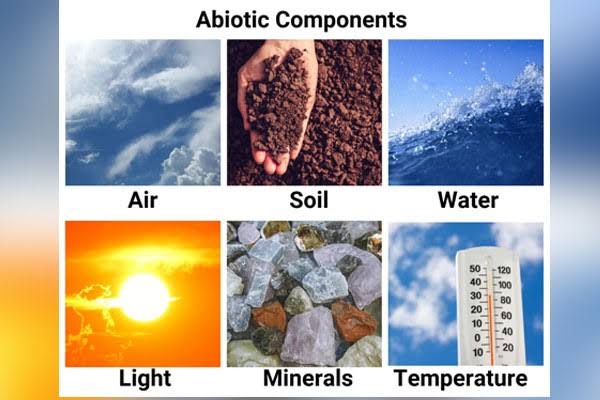
Abiotic Components

Abiotic components include the non-living, inorganic, physical and chemical factors in the environment. Eg. Land, Air, Water, Calcium, Iron etc.

Biotic Components

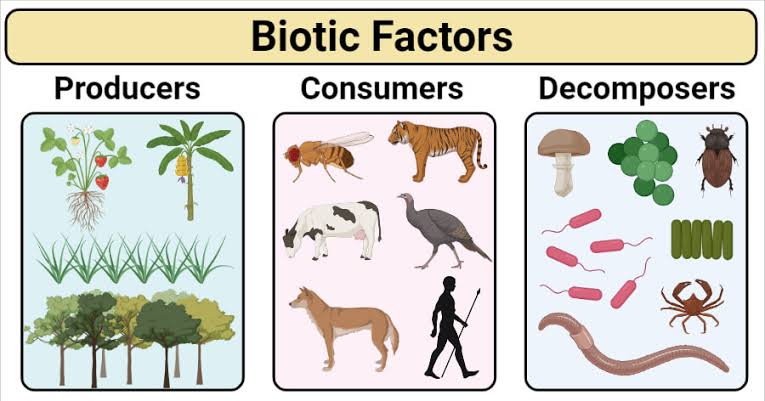
Biotic components include plants, animals and micro organism. Biotic components can be classified into three categories

Producers

Producers are self nourishing components of the ecosystem. Hence they are called Autotrophs. They are found both on land and water. Eg. Plants, Algae, Bacteria etc.

Consumers

Consumers are those that depend on producers, directly or indirectly. Hence they are called Heterotrophs.

The common category of consumers are:

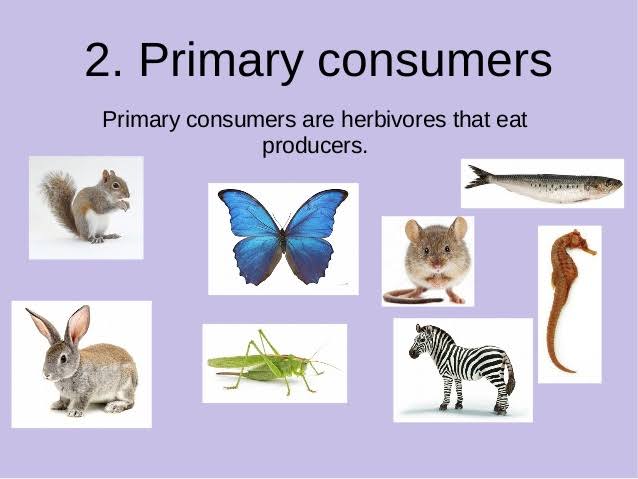
Primary Consumers

Primary consumers depend on producers for their food. They are exclusively herbivores. Eg. Zebra, goat etc.

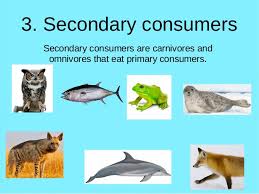
Secondary Consumers

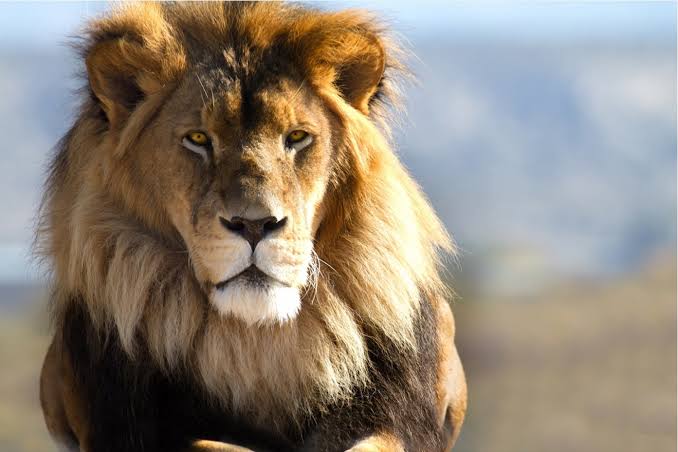
Secondary consumers are small carnivores i.e., they consume herbivores. Eg. Lion, Snake etc.

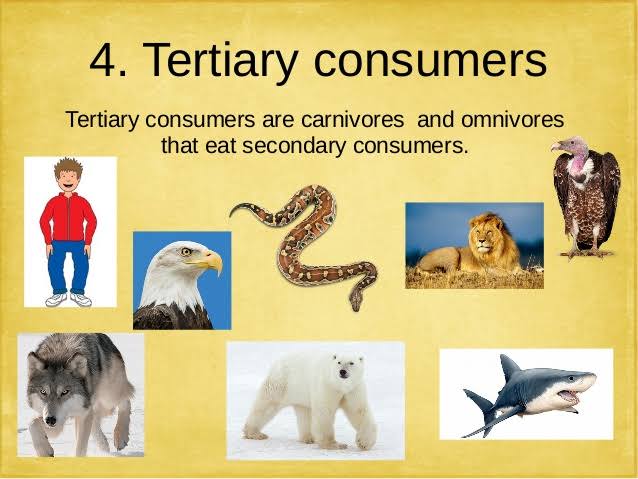
Tertiary Consumers

Tertiary consumers are top carnivores that prey on both herbivores and carnivores. Eg. Owl, Crocodile etc.

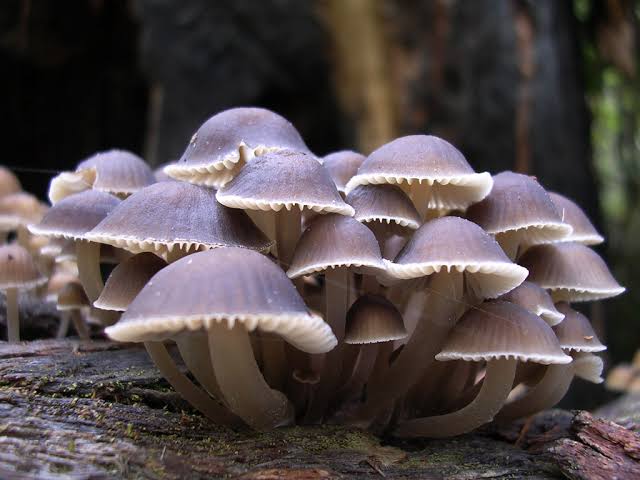
Decomposers

Decomposers are some organisms that are incapable of preparing its own food. They live on dead and decaying plants and animals. Hence they are called Saprotrophs. Eg. Fungus, Mushrooms etc.

Energy Components

All organisms in the biosphere use energy to work and convert one form of energy into another. The Sun is the ultimate source of energy for the biosphere as a whole. The solar energy gets transformed into other forms of energy through the various components in the ecosystem. The producers, consumers and the decomposers contribute a lot to the energy flow in an ecosystem.

Functions of an ecosystem

The living organisms form an interacting set of flora and fauna which are organized into trophic levels, food chains and food webs. The functioning of an ecosystem depends on the pattern of the energy flow, as it helps in the distribution and circulation of the organic and inorganic matter within an ecosystem. Energy flow generally takes place in a hierarchical order in an ecosystem through various levels. These levels are called trophic levels.

CLOUDS

According to their height, clouds are classified into the following types
☆ High clouds (6-20km Height)
☆ Middle clouds (2.5km-6km Height)
☆ Low clouds (ground surface to 25km height)

These major types of clouds are further divided into different types on the basis of shape and structure.

High clouds

Cirrus

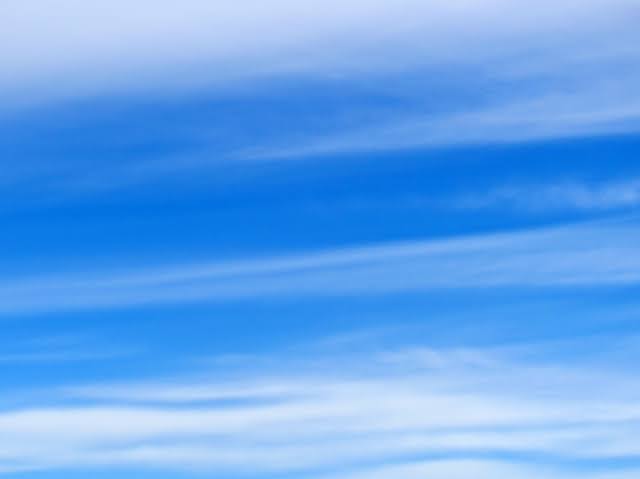
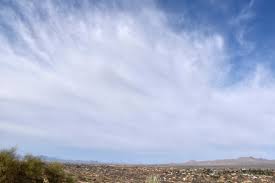
Detached clouds in the forms of white delicate fibrous silky filaments formed at the high sky (8000 meters to 12000 meters) are called Cirrus clouds. These clouds have Ice crystals and are dry and do not give rainfall.

Cirro-cumulus

Whitepatched, sheet or layer like clouds composed of ice crystals.

Cirro-stratus

Smooth milky transparent whitish clouds composed of tiny ice crystals.

Middle clouds

Alto-stratus

Thin sheets of grey or blue coloured clouds in uniform appearance. Consisting of frozen water droplets.

Alto-cumulus

Clouds fitted closely together in parallel bands, called as ‘Sheep clouds’ or wool pack clouds.

Nimbo stratus

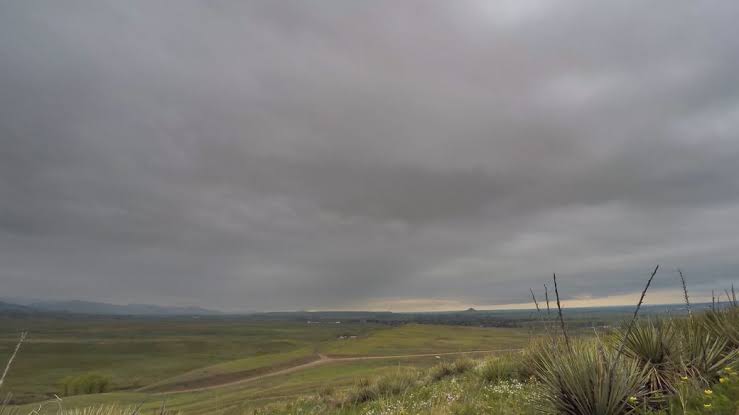
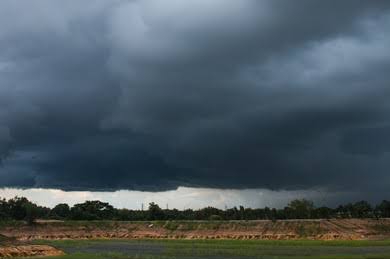
These are clouds of dark colour very close to the ground surface associated with rain, snow or sleet.

Low clouds

Strato-cumulus

Grey or whitish layer of non-fibrous low clouds found in rounded patches at an height of 2500 to 3000 meters, associated with fair or clear weather.

Stratus

Dence, low lying fog-like clouds associated with rain or snow.

Cumulus

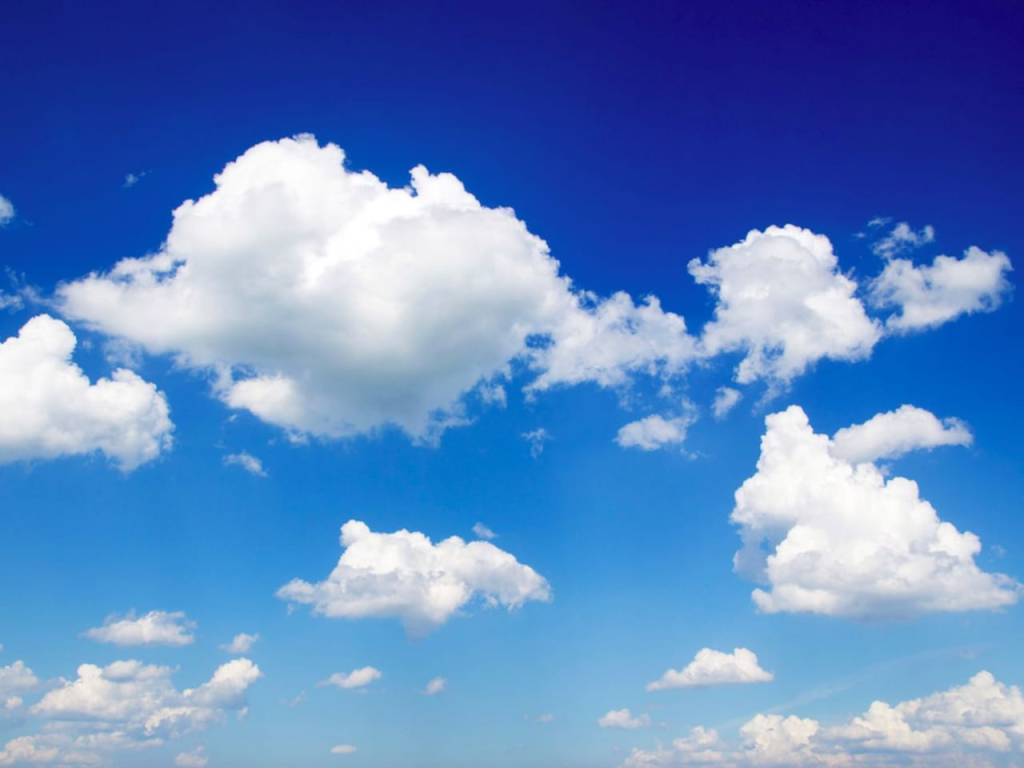
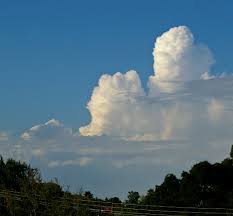
Dome-shaped with a flat base often resembling a cauliflower, associated with fair weather.

Cumulo-nimbus

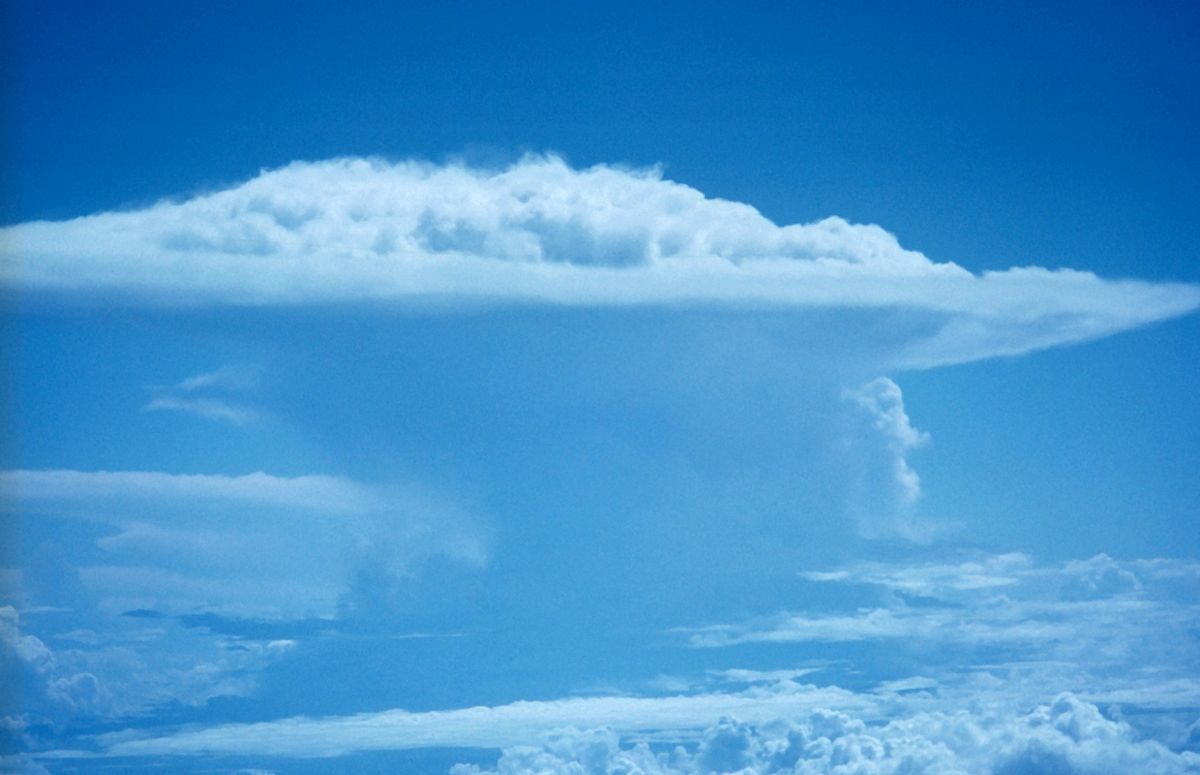
Fluffy thick towering thunderstorm cloud capable of producing heavy rain, snow, hailstorm or tornadoes.

Precipitation

Falling down of condensed water vapour in different forms is called Precipitation. When the dew point is reached in the cloud water droplets become saturated and start to fall. Hence, they fall on the earth as Precipitation.

The climatic conditions/factors influencing the forms of precipitation mainly are :
☆ Temperature
☆ Altitude
☆ Cloud type
☆ Atmospheric conditions
☆ Precipitation process
The main forms of precipitation include drizzle, rain, sleet, snow, hail etc.

Drizzle

Falling of numerous uniform minute droplets of water with diameter of less than 0.5 mm is called drizzle from low clouds. Sometimes drizzles are combined with fog and hence reduce visibility.

Rain

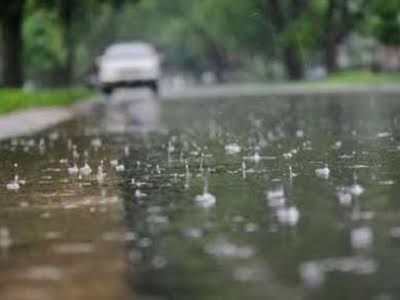
Rain is the most widespread and important form of precipitation in places having temperature above the freezing point. It occurs only when there is abundant moisture in the air. The diameter of a rain drop is more than 5mm.

Sleet

Sleet refers to a precipitation, in the form of pellets made up of transparent and translucent ice. This precipitation is a mixture of snow and rain.

Snow

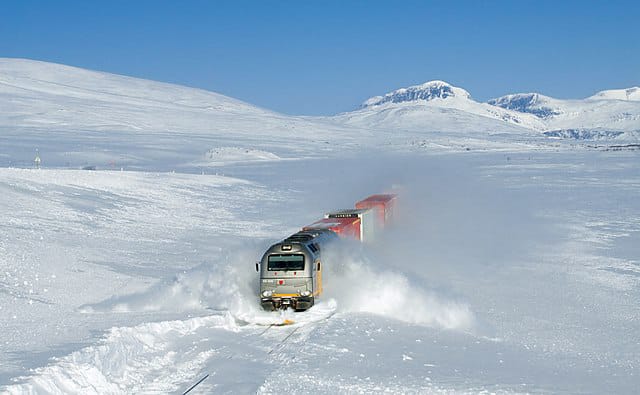
Snow is formed when condensation occurs below freezing point. It is the precipitation of opaque and semi opaque ice crystals. When these ice crystals collide and stick together, it becomes snowflakes.

Hails

Hails are chunks of ice (greater than 2cm in diameter) falling from the sky, during a rainstorm or thunderstorm. Hailstones are a form of solid precipitation where small pieces of ice fall downwards. These are destructive and dreaded forms of solid precipitation because they destroy agricultural crops and human lives.

WINDS

The horizontal movement of air along the surface of the earth is called the “wind” while the vertical movement of air is a called an “Air Current“. The winds always blow from a high pressure area to a low pressure area. Wind is mostly named after the direction from which it blows. For example, the wind blowing from the east is known as the easterly wind or easterlies.

An ‘anemometer‘ records wind speed while a ‘wind vane‘ measures the direction of the wind. The unit of measurement is kilometre per hour or knots.
Types of Winds
Winds are generally classified into the following four major types
✓Planetary winds
✓Periodic winds
✓Variable wind
✓Local wind

Planetary winds

The winds which constantly blow in the same direction throughout the year are called the Planetary winds. They are also called as permanent winds or the prevailing winds. These winds include Trade winds, Westerlies and Polar Easterlies.

Trade Winds

Trade winds blow from the subtropical high pressure belt to the Equatorial low pressure belt in both the hemispheres. They blow with great regularity, force and in a constant direction throughout the year. These winds were very helpful to traders who depended on the winds while sailing in the seas. And so, they are named as Trade winds.

Westerlies

Westerlies are the permanent winds that blow from the tropical high pressure belt to the sub polar low pressure belt in both the hemispheres. They blow from South West to North East in the northern hemisphere and North West to South East in the southern hemisphere. The velocity of westerlies become so vigorous and fast to be called Roaring Forties at 40°, Furious Fifties at 50° and Screaming Sixties at 60° latitudes.

Polar Easterlies

Polar easterlies are cold and dry polar winds that blow from the polar high pressure belt to the sub polar low pressure belt. These are weak winds blowing from North East direction in the Northern Hemisphere and South East direction in the Southern Hemisphere.

Periodic winds

The periodic winds are the seasonal winds that change their direction periodically. These winds are caused by the differential heating of land and ocean.

Winds which reverse their direction with the change of seasons are called monsoons. Tropical Monsoon winds of Indian subcontinent is a best example.

Variable wind

Cyclones

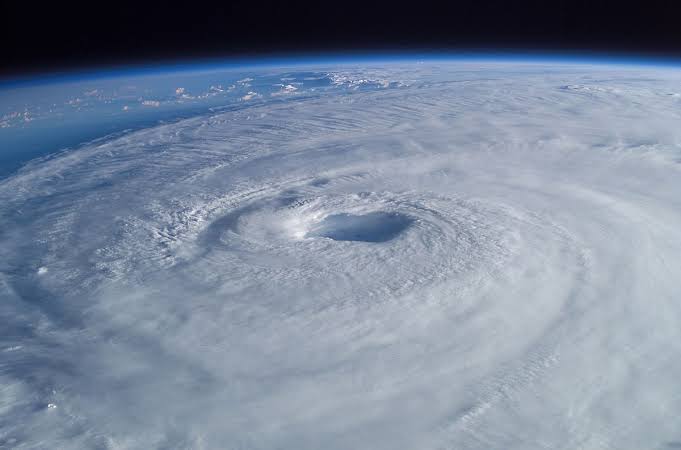
The term cyclone is a Greek word meaning “coil of a snake”. Cyclones are centres of low pressure where, winds from the surrounding high pressure area converge towards the centre in a spiral form. Due to the rotation of the earth, the cyclonic winds in the northern hemisphere move in anti clock wise direction, where as they move in clockwise direction in the southern hemisphere.
Cyclones can be classified into
✓Tropical cyclones
✓Temperate cyclones
✓Extra tropical cyclones

Tropical cyclones

Tropical cyclones are known as ‘cyclones’ in Indian Ocean, ‘typhoons’ in the western pacific ocean, ‘hurricanes’ in the Atlantic and eastern pacific ocean , ‘ baguios’ in Phillipines and ‘willy willy’ in Australia, Taifu in Japan. Tropical cyclones often cause heavy loss of life and property on the coasts and become weak after reaching the landmasses.

Temperate cyclones

Temperate cyclones are formed along a front where hot and cold air masses meet in mid-latitudes between 35° and 65°N and S. Temperate cyclones do not become weak like the tropical cyclones on reaching the land. Temperate cyclone commonly occurs over the North Atlantic Ocean, North West Europe, Mediterranean basin. Mediterranean basin’s temperate cyclones extend up to Russia and India in winter. In India it is as called western disturbances.

Extra tropical cyclones

Extra tropical cyclones occur in the latitudes between 30° and 60° in both the hemispheres. They are also called as mid-latitude cyclones. They collect energy from temperature differences which are found in higher latitudes. Extra tropical cyclones produce mild showers to heavy gales, thunderstorms, Blizzards and tornadoes.
Anticyclones

Anticyclones are the opposite of cyclones. Here an area of high pressure region is found in the centre surrounded by low pressure on all sides. The wind from the high pressure region move outwards to the low pressure regions in a spiral form. Anticyclones are often accompanied by cold and heat waves.
Local Winds

Local winds are the winds that blow only in a particular locality for a short period of time, The effect of these local winds are experienced only in that particular area.

Such as land and sea breeze, mountain and valley breeze. They are mostly seasonal and have local names like

✓Foehn (Alps-Europe)
✓Sirocco (North coast of Africa)
✓Chinook (Rockies-North America)
✓Loo (Thar Desert- India)
✓Mistral (Mediterranean sea in France)
✓Bora (Mediterranean sea in Italy)

WEATHERING

Weathering is the breaking, disintegration and decomposition of materials of the earth’s crust by their exposure to atmosphere.

There are three types of weathering
✓Physical weathering
✓Chemical weathering
✓Biological weathering

Physical weathering

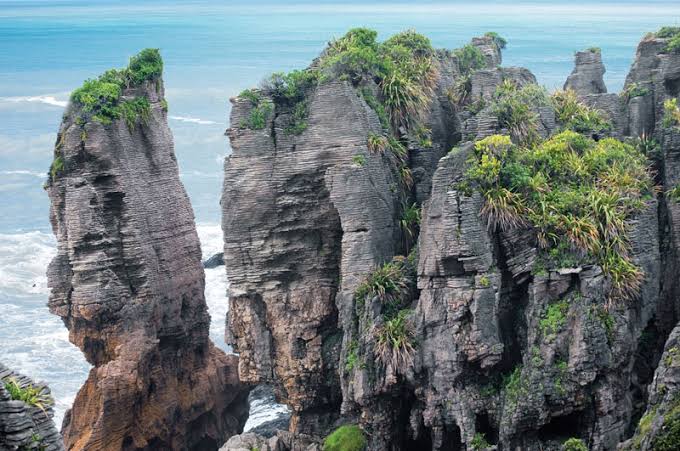
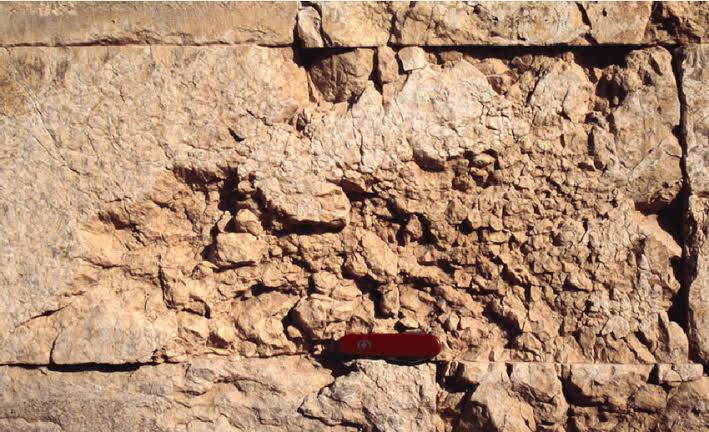
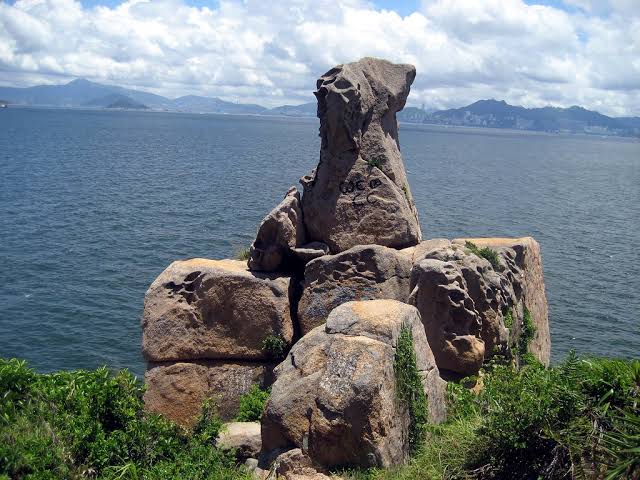
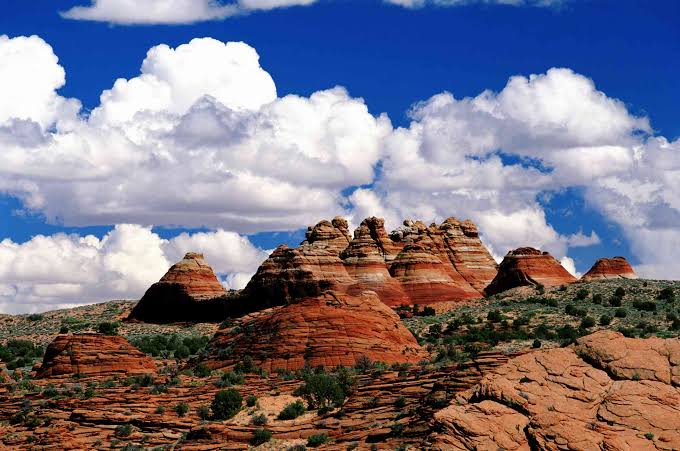
It is the breakdown of rocks without changing their chemical composition, through the action of physical forces. The constant freezing and thawing of rocks during the night and day leads to the expansion and contraction of rocks. Cracks are formed and disintegration occurs eventually. Exfoliation, block disintegration, granular disintegration are the major types of physical weathering.

Exfoliation

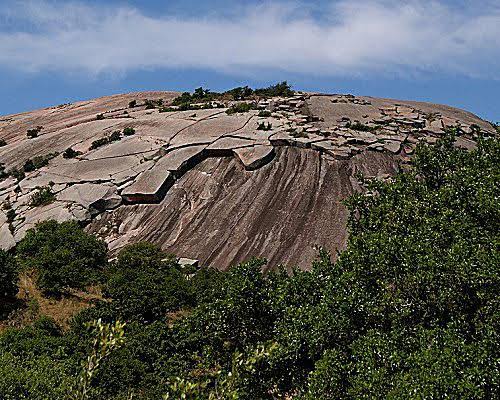
The alternate heating and cooling on rounded rock surfaces leads to the peeling of rocks, layer by layer like an onion. This is called exfoliation. Sheeting and shattering are the other forms of exfoliation.

Granular Disintegration

Granular disintegration takes place in crystalline rocks where the grains of the rocks become loose and fall out. This is due to the action of temperature.

Block Disintegration

Repeated expansion and contraction of rocks during day and night respectively causes stress on the joints of the rocks which results in block disintegration.

Chemical Weathering

Disintegration and decomposition of rocks due to chemical reactions is called Chemical Weathering. This is predominantly high in the hot and humid regions such as the equatorial, tropical and sub tropical zones. Chemical weathering takes place through the processes of oxidation, carbonation, solution and hydration. The agents of Chemical weathering are Oxygen, Carbon-dioxide, Hydrogen and water.

Oxidation

Oxygen in the atmosphere reacts with the iron found in rocks, thus leads to the formation of iron oxide. This process similar to the rusting of iron, pressure of air and water is known as oxidation, which results in the weakening of rocks.

Carbonation

Carbonation is the mixing of water with the atmospheric Carbon-dioxide, forming carbonic acid. Carbonation is important in the formation of caves, in limestone region. When the carbonic acid reacts with the carbonate rocks , the rocks get disintegrated.

Solution

The dissolution of rock substances in water result in the loosening of the rock particles. This inturn breaks down the rocks.

Hydration

Absorption of water into the mineral structure, certain chemicals in the rock enlarge in size in humid conditions. These minerals found in the rock swell and this results in the development of cracks and the rock wears down. This type of weathering is called hydration.

Biological Weathering

Biological weathering occurs due to the penetration and expansion of plant roots, earthworms, burrowing animals (rabbits, rats) and some human activities.

FOOD PRESERVATION

Food preservation is the process of prevention of food from decay or spoilage, by storing in a condition fit for future use. Food is preserved to
✓increase the shelf life of food
✓retain the colour, texture, flavour and nutritive value
✓increase food supply
✓decrease wastage of food

Methods of Food Preservation

The various method of food preservation are explained below.

Drying

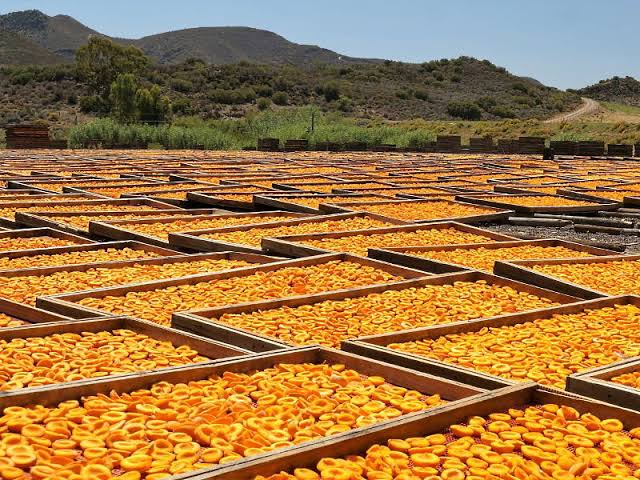
Drying is the process of preservation of food by removal of water/moisture content in the food. It can be done either by sun – drying, (e.g. cereals, fish ) or vacuum drying (e.g. milk powder, cheese powder ) or hot air drying (e.g. grapes, dry fruits, potato flakes ). Drying inhibits the growth of microorganisms such as bacteria, yeasts and moulds.

Smoking

In this process, food products like meat and fish are exposed to smoke. The drying action of the smoke tends to preserve the food.

Irradiation

Food irradiation is the process of exposing food to optimum levels of ionizing radiations like x – rays, gamma rays or UV rays to kill harmful bacteria and pests and to preserve its freshness.

Cold storage

It is a process of storing the perishable foods such as vegetables, fruits and fruit products, milk and milk products etc. at low temperature. Preserving the food products at low temperature slows down the biological and chemical reactions and prevents its spoilage.

Freezing

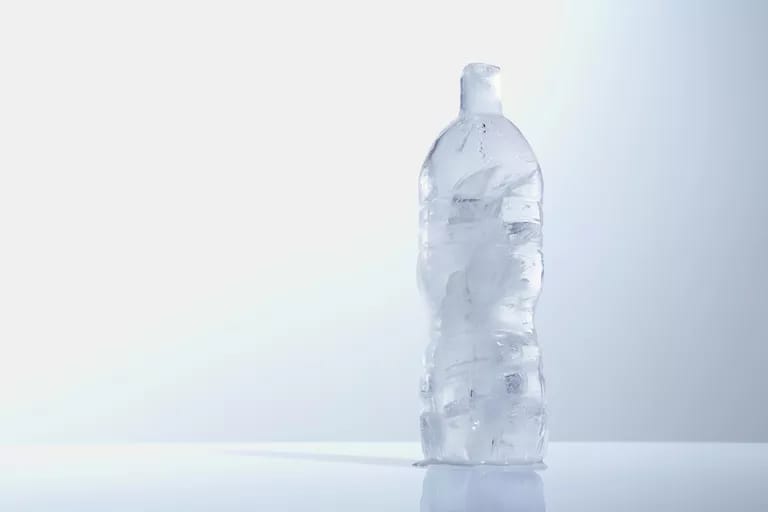
Freezing is one of the widely used methods of food preservation. This process involves storing the below 0°C at which microorganisms cannot grow, chemical reactions are reduced and metabolic reactions are also delayed.

Pasteurization

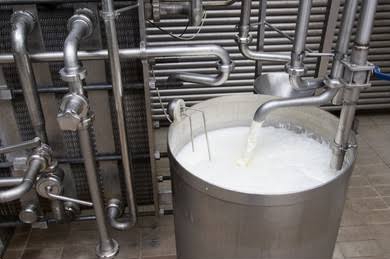
Pasteurization is a process of heat treatment of liquid food products. e.g. For preservation of milk and beverages. This process also involves boiling of milk to a temperature of 63°C for about 30 minutes and suddenly cooling to destroy the microbes present in the milk.

Canning

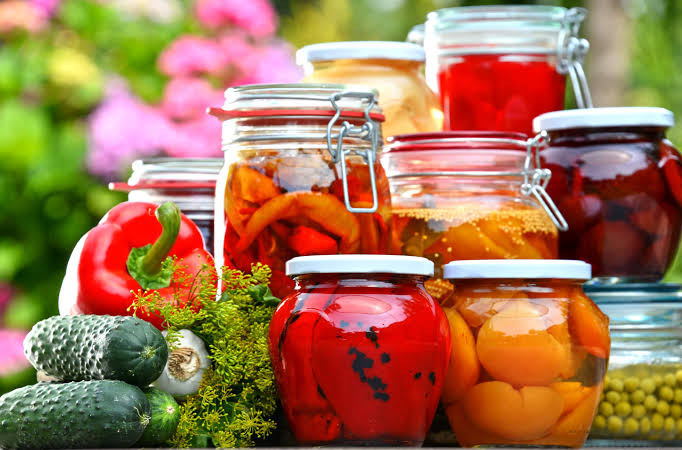
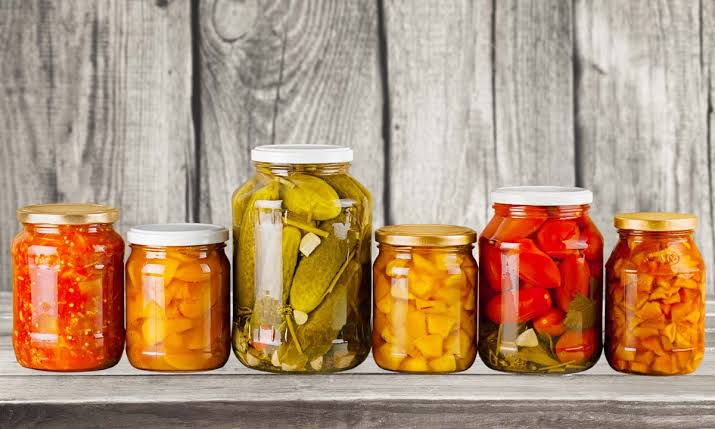
In this method of food preservation, most vegetables, fruits, meat and dairy products, fruit juices and some ready-to-eat foods are processed and stored in a clean, steamed air tight containers under pressure and then sealed. It is then subjected to high temperature and cooled to destroy all microbes.

Addition of Preservatives

Food can be preserved by adding natural and synthetic preservatives.

Natural preservatives

Some naturally available materials like salt, sugar and oil are used as food preservatives.

Addition of salt

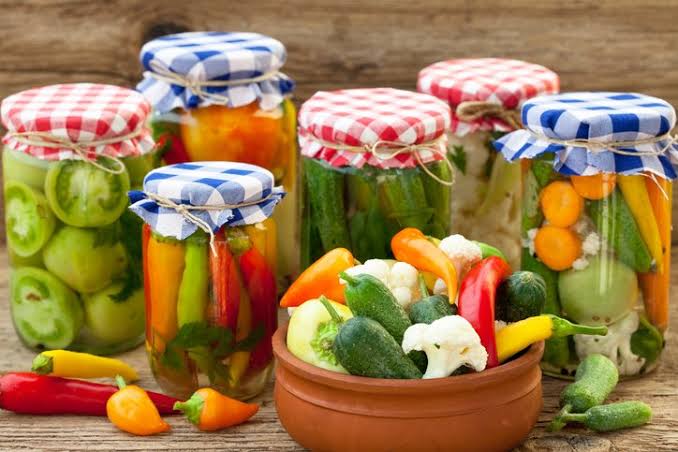
It is one of the oldest methods of preserving food. Addition of salt removes the moisture content in the food by the process of osmosis. This prevents the growth of bacteria and reduces the activity of microbial enzymes. Meat, fish, gooseberry, lemon and raw mangoes are preserved by salting. Salt is also used as a preservative in pickles, canned foods etc.

Addition of sugar

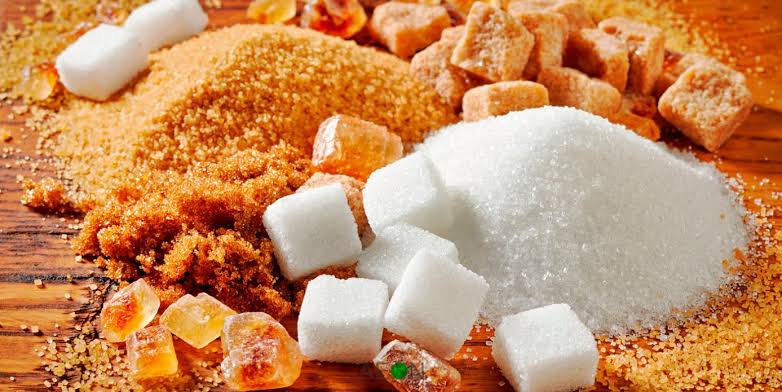
Sugar/Honey is added as a preservative to increase the shelf life of fruits and fruit products like jams, jellies, squash, etc. The hygroscopic nature of sugar/honey helps in reducing the water content of food and also minimizing the process of oxidation in fruits.

Addition of oil

Addition of oil in pickles prevents the contact of air with food. Hence microorganisms cannot grow and spoil the food.

Synthetic preservatives

Synthetic food preservatives like sodium benzoate, citric acid, vinegar, sodium meta bisulphate and potassium bisulphate are added to food products like sauces, jams, jellies, packed foods and ready-to-eat foods. These preservatives delay the microbial growth and keep the food safe for long duration.

WATER RESOURCE

Water is the precious gift of nature to humankind and millions of other species living on the earth.

Tamil Nadu constitutes 4% of India’s land area and is inhabited by 6% of India’s population, but has only 2.5% percent of India’s water resources. More than 95% of the surface water and 80% of the ground water have already been put into use.

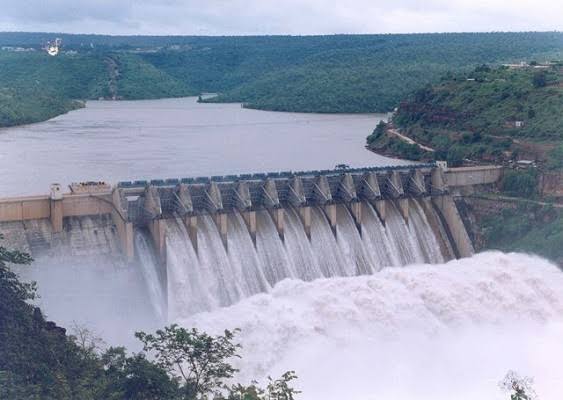
Multipurpose River Valley Projects

Multipurpose river valley projects are basically designed for the development of irrigation for agriculture and hydropower generation. However, they are used for many other purposes as well.

Mettur Dam

The Mettur Dam was constructed in a gorge, where river Cauvery enters the plains. It is one of the oldest dam in India. It provides irrigation to Salem, Erode, Karur, Tiruchirapalli, Thanjavur, Tiruvarur and Nagapattinam districts farmlands.

Bhavani Sagar Dam

The Bhavani Sagar Dam is located 80 km away from Coimbatore city in the district of Erode. It has been constructed across the river Bhavani. This dam is one of the biggest earthen dams in the country.

Amaravathi Dam

The Amaravathi dam is situated 25 km away from Udumalpet in Tirupur district. The dam has been constructed across the river Amaravathi, a tributary of Cauvery. The dam was built primarily for irrigation and flood control. A small Hydropower station has also been installed recently.

Krishnagiri Dam

Krishnagiri dam is situated at a distance of 7 km from Krishnagiri towards Dharmapuri.

Sathanur Dam

Sathanur Dam was constructed across the river Thenpennai in Chengam taluk. It is in the midst of Chennakesava hills. It irrigates the land in Thandrampet and Tiruvannamalai blocks. There is also a large crocodile farm and a fish grotto. Parks are maintained inside the dam for tourists and the gardens are used by the film industry.

Mullaperiyar Dam

Mullaperiyar dam was built by the British administration in 1895. It has been constructed on the Periyar river, which originates from Thekkady hills of Kerala. The dam was built mainly for watering the farming land of Tamil Nadu, which is perennially drought-prone.

Vaigai Dam

This dam built across the river Vaigai near Andipatti. The dam with a height of 111 feet can store water up to 71 feet. It is a located 7 km from Andipatti and 70 km from Madurai. This dam was opened on 21 January, 1959.

Manimuthar Dam

Manimuthar dam is located about 47 km from Tirunelveli.

The Papanasam Dam

It is also known as Karaiyar dam and is located about 49 km away from Tirunelveli and Thoothukudi districts.

Parampikulam Aliyar Project

It is a joint venture of Tamil Nadu and Kerala states. It envisages the construction of seven interconnected reservoirs by harnessing the water of seven rivers, which include major rivers of Parampikulam and Aliyar.

Parappalar project is located near Ottanchatram. Its storage capacity is 167 million cubic feet of water. It is about 75 km from Madurai and is in Palani taluk.

Water Resource Management

Water resource management is the activity of planning, developing, distributing and managing the optimum use of water resources. The demand for water in Tamil Nadu is increasing at a fast rate both due to increasing population and also due to larger per capita needs triggered by economic growth. Demands from other sectors such as domestic and industries have been growing significantly. The state is heavily dependent on monsoon rains. Since the state is entirely dependent on rains for recharging its water resources, monsoon failures lead to acute water scarcity and severe droughts. So, it is important to save water for us and the future generation.

RESPIRATION

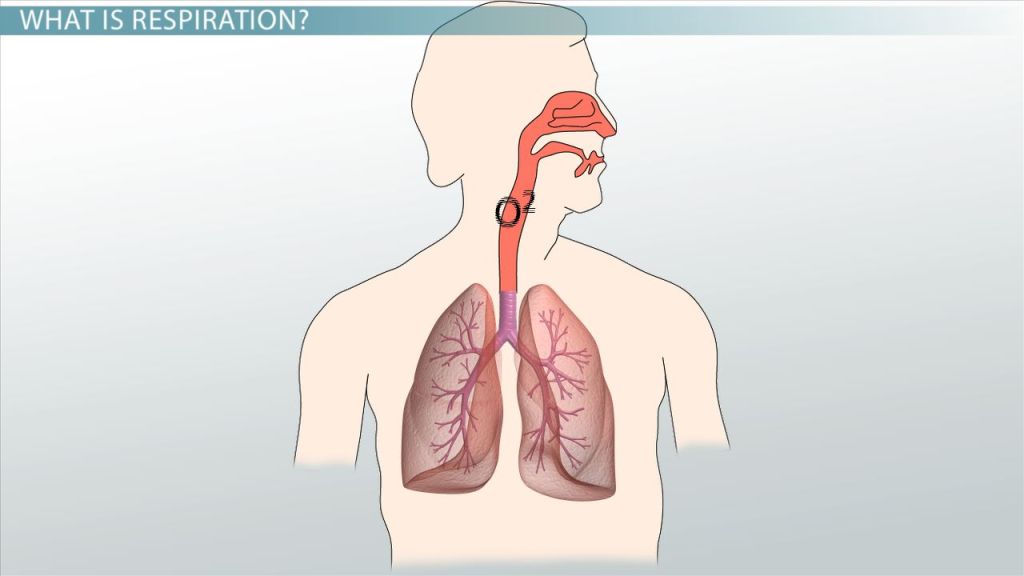
The term respiration refers to the exchange of oxygen and carbon dioxide between environment and cells of our body where organic nutrients are broken down enzymatically to release energy.

Respiratory functions

The five primary functions of the respiratory system are
✓To exchange O2 and CO2 Between the atmosphere and the blood.
✓To maintain homeostatic regulation of body pH.
✓To protect us from inhaled pathogens and pollutants.
✓To maintain the vocal cords for normal communication (vocalization).
✓To remove the heat produced during cellular respiration.

Respiratory organs in various organisms

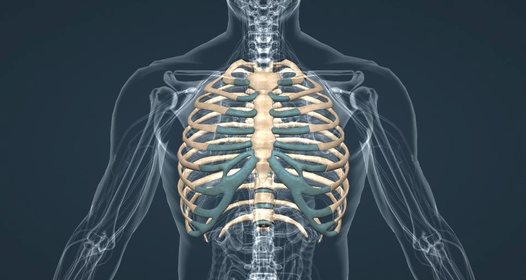
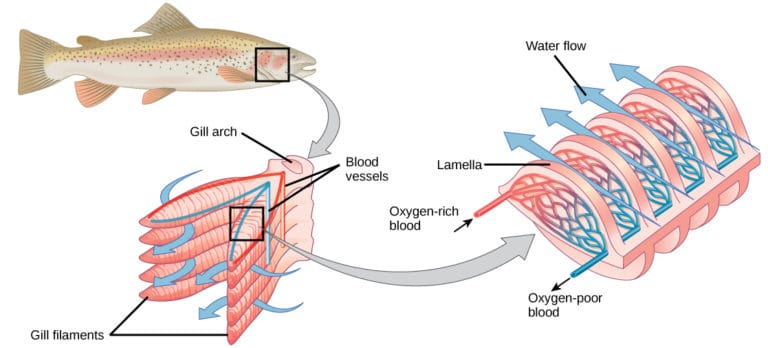
Different animals have different organs for exchange of gases, depending upon their habitats and levels of organization. The amount of dissolved oxygen is very low in water compared to the amount of oxygen in the air. So the rate of breathing in aquatic organisms is much faster than land animals.

Characteristics features of respiratory surface

✓Surface area must be very large and richly supplied with blood vessels.
✓Should be extremely thin and kept moist.
✓Should be in direct contact with the environment.
✓Should be permeable to respiratory gases.

The steps involved in respiration are
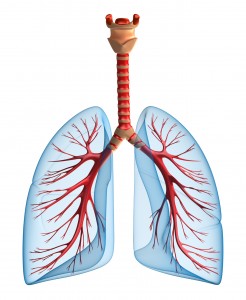
✓The exchange of air between the atmosphere and the lungs.
✓The exchange of O2 and CO2 between the lungs and the blood.
✓Transport of O2 and CO2 by the blood.
✓Exchange of gases between the blood and the cells.
✓Uptake of O2 by the cells for various activities and the release of CO2.

Respiratory Volumes

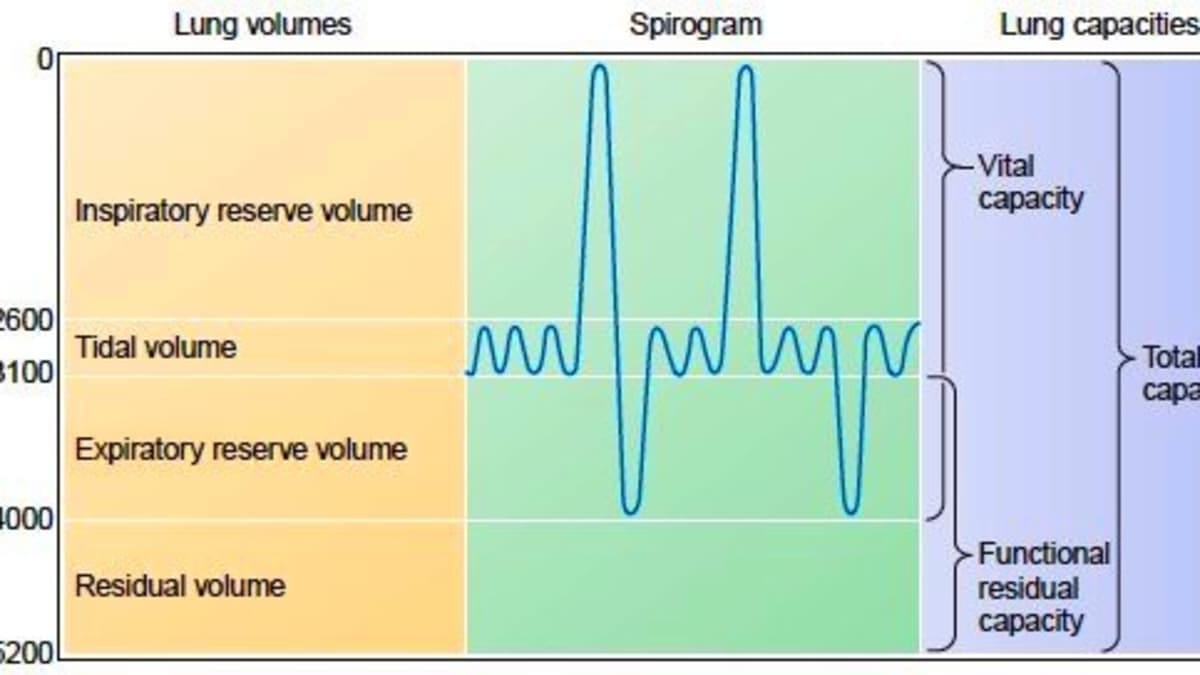
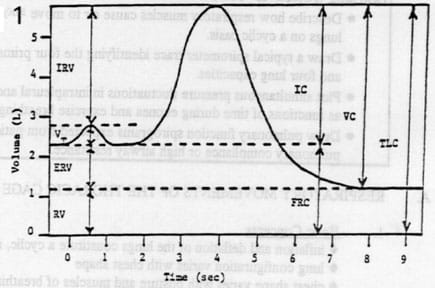
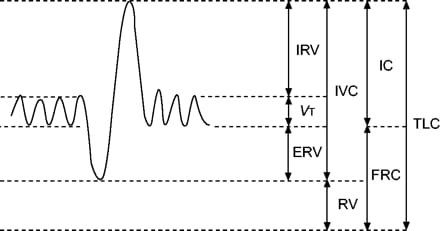
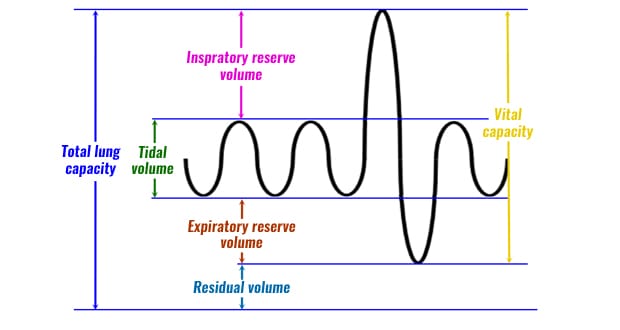
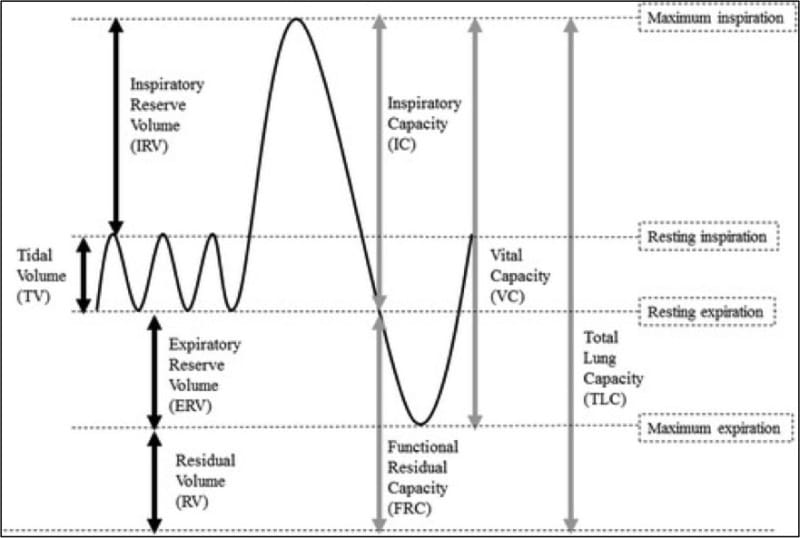
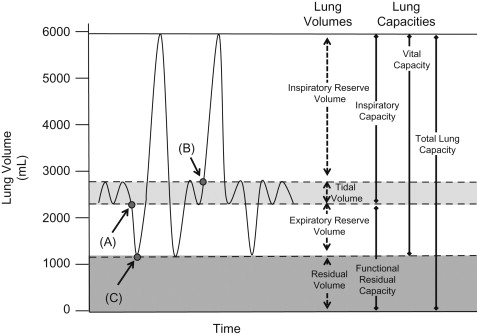
Tidal Volume (TV)

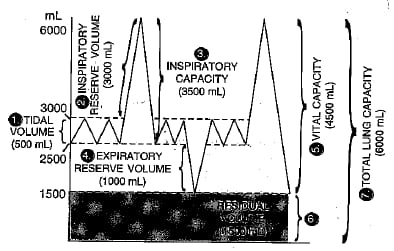
Tidal Volume is the amount of air inspired or expired with each normal breath. It is approximately 500 ml., i.e. a normal human adult can inspire or expire approximately 6000 to 8000 ml of air per minute. During vigorous exercise, the tidal volume is about 4-10 times higher.

Inspiratory Reserve Volume (IRV)

Additional volume of air a person can inspire by forceful inspiration is called Inspiration Reserve Volume. The normal value is 2500 – 3000 ml.

Expiratory Reserve Volume ( ERV)

Additional volume of air a person can forceful expiration is called Expiratory Reserve Volume. The normal value is 1000 – 1100 ml.

Residual Volume (RV)

The volume of air remaining in the lungs after a forceful expiration. It is approximately 1100 – 1200 ml.

Respiratory Capacities

Vital Capacity (VC)

The maximum volume of air that can be moved out during a single breath following a maximal inspiration. A person first inspires maximally then expires maximally. VC = ERV + TV + IRV

Inspiratory Capacity (IC)

The total volume of air a person can inhale after normal expiration. It includes tidal volume and inspiratory reserve volume. IC = TV + IRV

Expiratory Capacity (EC)

The total volume of air a person can exhale after normal inspiration. It includes tidal volume and expiratory reserve volume. EC = TV + ERV

Total Lung Capacity (TLC)

The total volume of air which the lungs can accommodate after forced inspiration is called Total Lung Capacity. This includes the vital capacity and the residual volume. It is approximately 6000ml. TLC = VC + RV

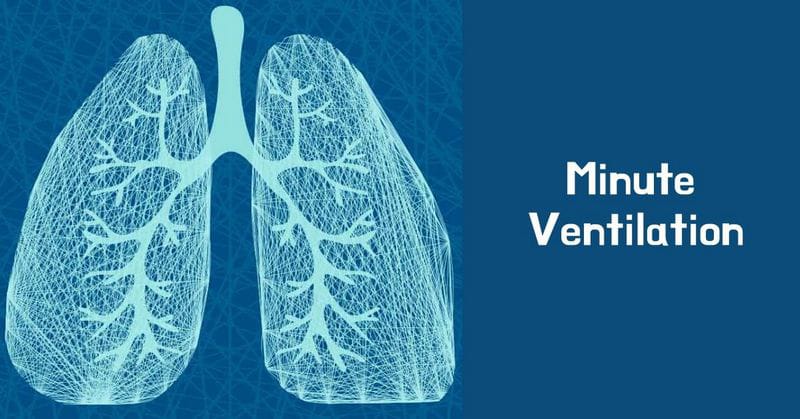
Minute Respiratory Volume

The amount of air that moves into the respiratory passage per minute is called minute respiratory volume.
Normal TV = 500ml ; Normal respiratory rate = 12 times / minute
Therefore, minute respiratory volume = 6 Litres/minute (for a normal healthy man).

Dead Space

Some of the inspired air never reaches the gas exchange areas but fills the respiratory passages where exchange of gases does not occur. This air space is called dead space.

Dead Space is not involved in gaseous exchange. It amounts to approximately 150ml.

Exercise increases the rate and depth of breathing and supplies extra oxygen to the muscles and removes more CO2 from the tissues.

DRAINAGE SYSTEM OF INDIA

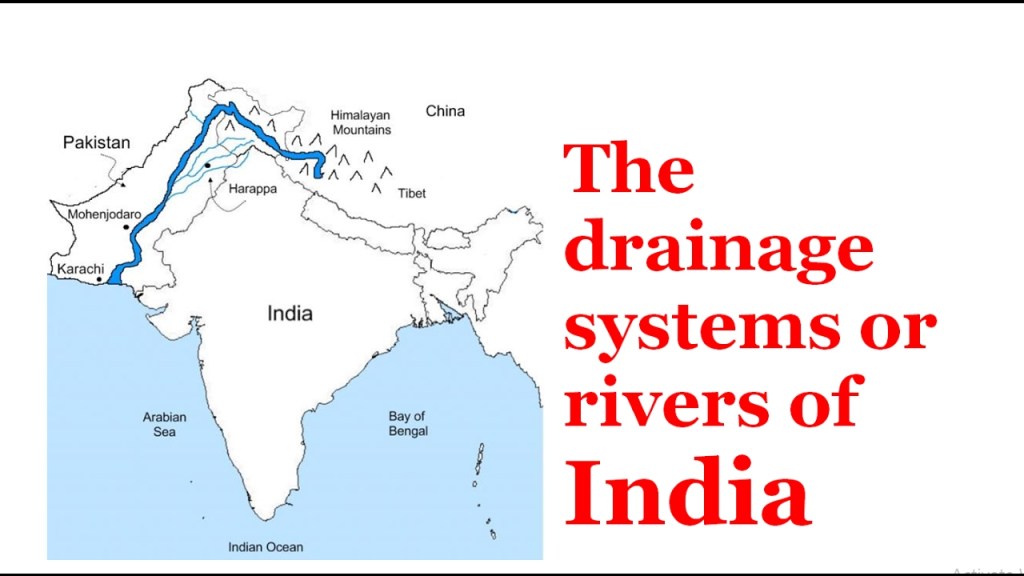
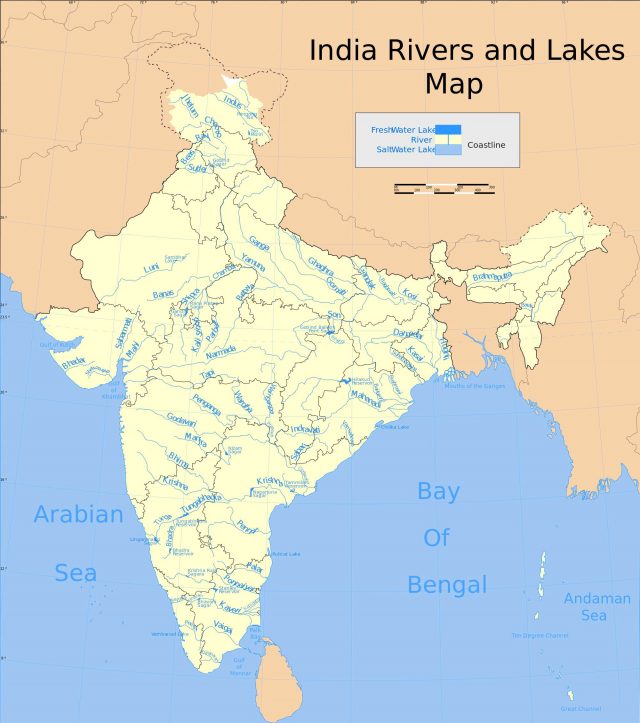
A drainage system is an integrated system of tributaries and a trunk stream which collects and drains surface water into the sea, lake or some other body of water. The total area drained by a river and its tributaries is known as a drainage basin. The drainage system of India is broadly divided into two major groups on the basis of their location. They are Himalayan rivers and the Peninsular rivers.

Himalayan Rivers

These rivers are found in north India and originate from Himalayas. So, they are also called as Himalayan rivers. These are perennial rivers.

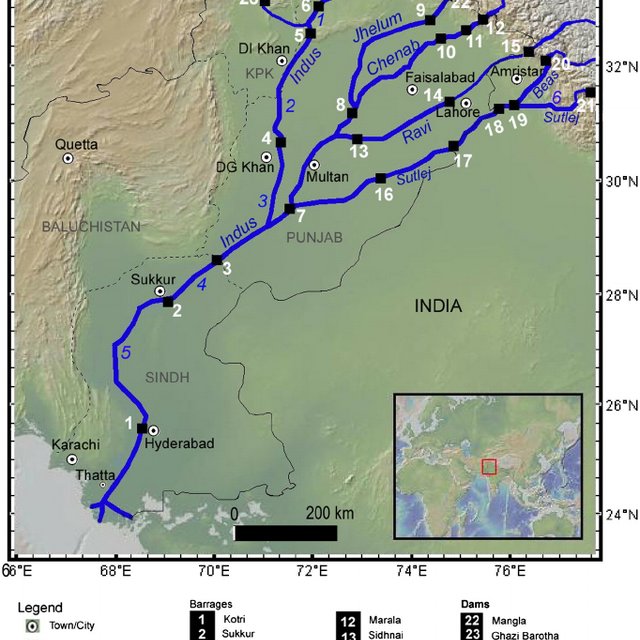
The Indus River System

The Indus River is one of the largest rivers of the world. It originates from the northern slope of the Kailash range in Tibet near Manasarovar Lake at an elevation of about 5,150 m. Its length is about 2,880 km (Only 709 km is in India). The river has a total drainage area extending 11,65,500 sq km in which 321,289 sq km areas are drained in India.

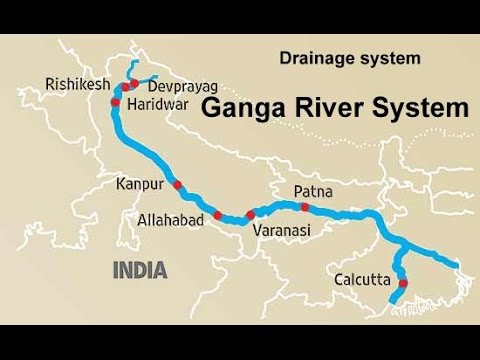
The Ganga River System

The Ganga River System is the largest drainage system of India. It extends over an area of 8,61,404 sq km. The Ganga plain is the most densely populated place in India and many towns are developed on the banks of this river. The river Ganga originates as Bhagirathi from the Gangotri Glacier in Uttar Khasi District of Uttarkhand state, at an elevation of 7,010 m. The length of the river Ganga is about 2,525 km.

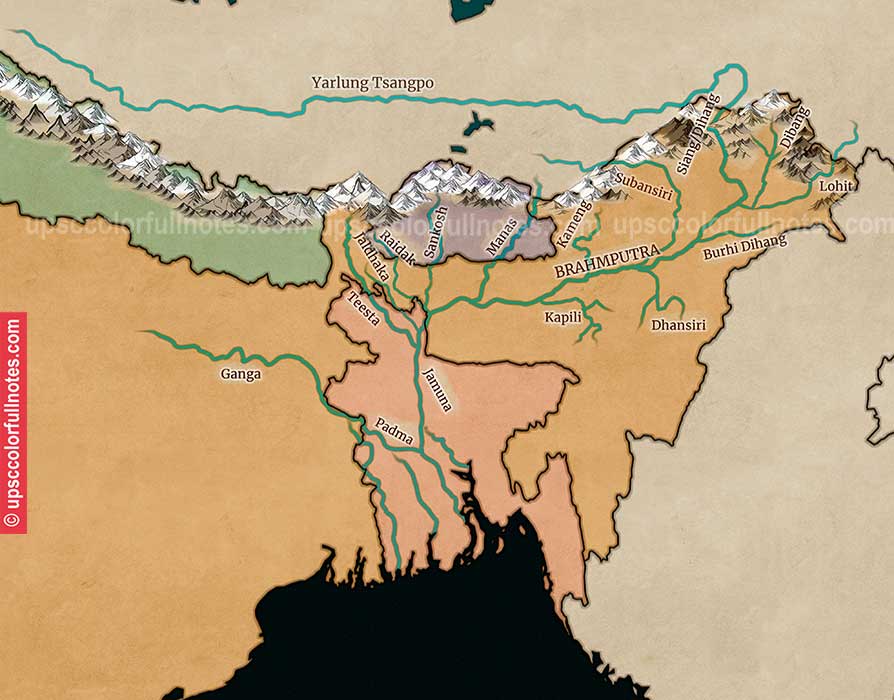
The Brahmaputra River System

The river Brahmaputra originates from the Chemayungdung Glacier of the Kailash range to the east of Lake Manasarovar in Tibet at an elevation of about 5,150 m. The total area is about 5,80,000 sq km but the drainage area found in India is 1,94,413 sq km. This river is known as Tsangpo (Purifier) in Tibet. The length of this river is about 2,900 km (900 km in India).

Characteristic of Himalayan Rivers

✓Long and wide.
✓Perennial in nature.
✓Unsuitable for hydro power generation.
✓Middle and lower course are navigable.

Peninsular Rivers

The rivers in south india are called the Peninsular rivers. Most of these rivers originate from the Western Ghats. These are seasonal rivers ( non – perennial ). They have a large seasonal fluctuation in volume of water as they are solely fed by rain. These rivers flow in valleys with steep gradients. Based on the direction of flow, the peninsular rivers are divided into the
✓West flowing rivers
✓East flowing rivers

East Flowing Rivers

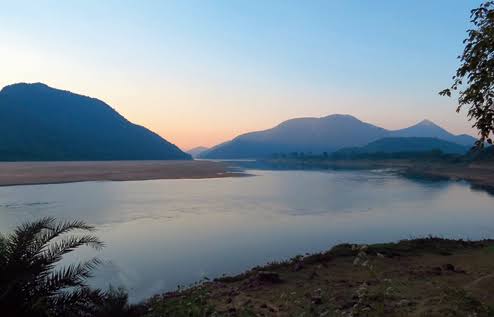
Mahanadi

The river Mahanadi originates near Sihawa in Raipur district of Chattisgarh and flows through Odisha. Its length is 851 km. Seonath, Telen, Sandur and Ib are its major tributaries. The main stream of Mahanadi gets divided into several distributaries such as Paika, Birupa, Chitartala, Genguti and Nun. The Mahanadi empties its water in Bay of Bengal.

Godavari

Godavari is the longest river ( 1,465 km ) with an area of 3.13 lakh sq km among the peninsular rivers. It flows through the states of Telangana and Andhra Pradesh before joining Bay of Bengal. Purna, Penganga, Pranitha, Indravati, Tal and Salami are its major tributaries. Kolleru, a fresh water lake is located in the deltaic region of the Godavari.

Krishna

The river Krishna originates from a spring at a place called Mahabaleshwar in the Western Ghats of Maharashtra. Its length is 1,400 km and an area of 2.58 lakh sq km. It is the second longest Peninsular river Bhima, Peddavagu, Musi, Konya and Thungabhadra are the major tributaries of this river. It also flows through Andhra Pradesh and joins in Bay of Bengal, at Hamasaladeevi.

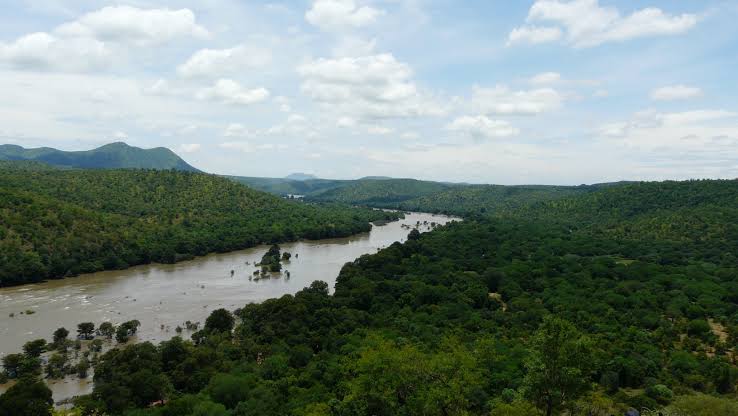
Kaveri

The Kaveri (also known as Cauvery, the anglicized name) is an Indian river flowing through the states of Karnataka and Tamil Nadu. The Kaveri river rises at Talakaveri in the Brahmagiri range in the Western Ghats, Kodagu district of the state of Karnataka, at an elevation of 1,341 m above mean sea level and flows for about 800 km before its outfall into the Bay of Bengal.

West Flowing Rivers

Narmada

The Narmada River, also called the Reva and previously also known as Narbada or anglicised as Nerbudda is the 5th longest river in India, the largest west-flowing river and largest flowing river of Madhya Pradesh. This river is located in Madhya Pradesh and Gujarat state of India. It is also known as “Life Line of Madhya Pradesh and Gujarat” for its huge contribution to the state of Madhya Pradesh and Gujarat in many ways. Narmada rises from Amarkantak Plateau in Anuppur district Madhya Pradesh.

Tapti

The Tapti River is a river in central India located to the south of the Narmada river which flows westwards before draining into the Arabian Sea. The river has a length of around 700km and flows through the states of Maharashtra, Gujarat and Madhya Pradesh. It flows through Surat, and is crossed by the Magdalla, ONGC Bridge.

Characteristic of South Indian Rivers

✓Originate from Western Ghats.
✓Short and narrow.
✓Non perennial in nature.
✓Suitable for hydro power generation.
✓Not useful for navigation.

pH SCALE

All the aqueous solutions may contain hydrogen and hydroxyl ions due to self-ionisation of water. In addition to this ionisation, substances dissolved in water also may produce hydrogen ions or hydroxyl ions. The concentration of these ions decides whether the solution is acidic or basic. pH scale is a scale for measuring the hydrogen ion concentration in a solution. The ‘p’ in pH stands for ‘Potenz’ in German meaning ‘power’. pH notation was devised by the Danish biochemist Sorensen in 1909. pH scale is a set of numbers from 0 to 14 which is used to indicate whether a solution is acidic, basic or neutral.

✓Acids have pH less than 7
✓Bases have pH greater than 7
✓A neutral solution has pH equal to 7

The pH is the negative logarithm of the hydrogen ion concentration
i.e pH = −log [H+]

We can measure the pH of a given solution using pH paper

The pH of a solution can be determined by using a universal indicator. It contains a mixture of dyes. It comes in the form of a solution or a pH paper.

A more common method of measuring pH in a school laboratory is by using the pH paper. A pH paper contains a mixture of indicators. It shows a specific colour at a given pH. A colour guide is provided with the bottle of the indicator or the strips of paper impregnated with it, which are called pH paper strips. The test solution is tested with a drop of the universal indicator, or a drop of the test solution is put on the pH paper. The colour of the solution on the pH paper is compared with the colour chart and the pH value is read from it. The pH values thus obtained are only approximate values.

Role of pH in Everyday Life

Plants and animals are pH sensitive

Our body works within the pH range of 7.0 to 7.8. Living organisms can survive only in a narrow range of pH change. Different body fluids have different pH values. For example, pH of blood is ranging from 7.35 to 7.45. Any increase or decrease in this value leads to diseases. The ideal pH for blood is 7.4.

pH in our digestive system

It is very interesting to note that our stomach produces hydrochloric acid. It helps in the digestion of food without harming the stomach. During indigestion the stomach produces too much acid and this causes pain and irrigation. pH of the stomach fluid is approximately 2.0.

pH changes as the cause of tooth decay

pH of the saliva normally ranges between 6.5 to 7.5. White enamel coating of our teeth is calcium phosphate, the hardest substance in our body. When the pH of the mouth saliva falls below 5.5, the enamel gets weathered. Toothpastes, which are generally basic are used for cleaning the teeth that can neutralise the excess acid and prevent tooth decay.

pH of soil

In agriculture, the pH of the soil is very important. Citrus fruits require slightly alkaline soil, while rice requires acidic soil and sugarcane requires neutral soil.

pH of rain water

The pH of rain water is approximately 7, which means that it is neutral and also represents its high purity. If the atmospheric air is polluted with oxide gases of sulphur and nitrogen, they get dissolved in the rain water and make its pH less than 7. Thus, if the pH of rain water is less than 7, then it is called acid rain. When acid rain flows into the rivers it lowers the pH of the river water also.

POLLINATION

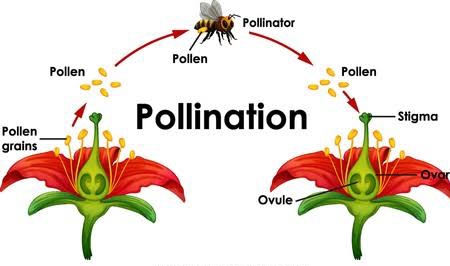
The transfer of pollen grains from anther to stigma of a flower is called as pollution.

Importance of pollination

✓It results in fertilization which leads to the formation of fruits and seed.
✓New varieties of plants are formed through new combination of genes in case of cross pollination.

Types of Pollination
✓Self-pollination
✓Cross Pollination

Self-pollination

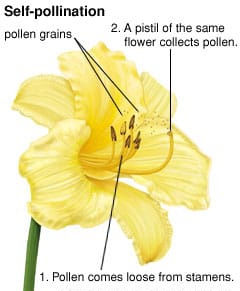
Self-pollination is also known as autogamy. The transfer of pollen grains from the anther to the stigma of same flower or another flower borne on the same plant is known as self-pollination. E.g. Hibiscus.

Cross Pollination

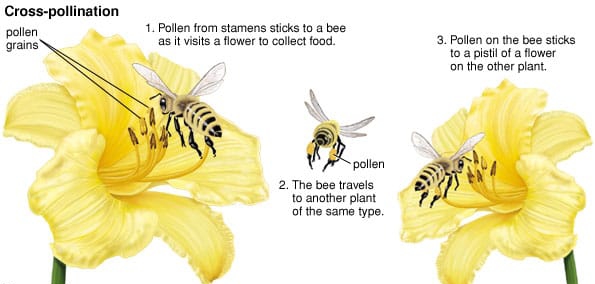
Cross Pollination is the transfer of pollen from the anthers of a flower to the stigma of a flower on another plant of the same species e.g.apples, grapes, plum, etc.

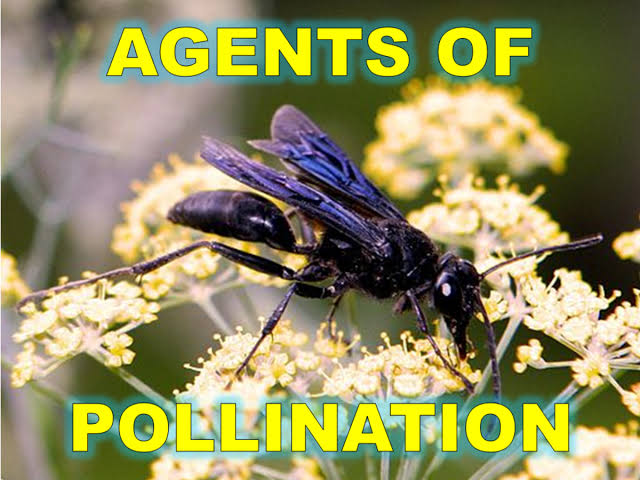
Agents of Cross Pollination

In order to bring about cross pollination, it is necessary that the pollen should be carried from one flower to another of a different plant.
This takes place through the agency of animals, insects, wind and water.

Pollination by wind

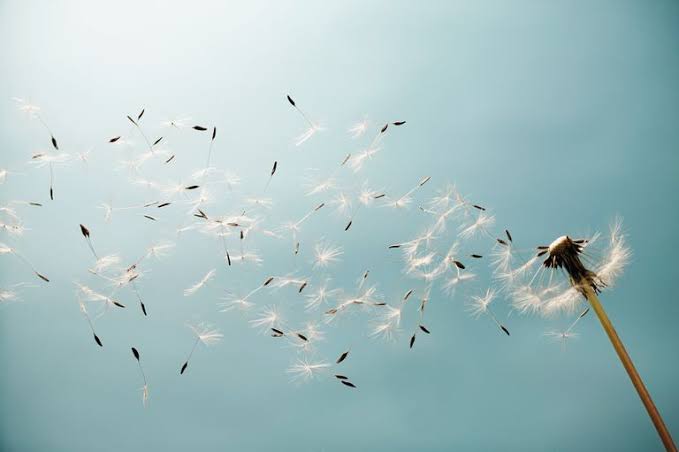
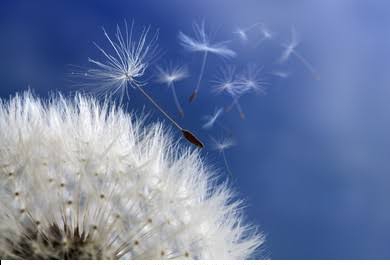
The Pollination with the help of wind is called anemophily. The anemophilous flowers produce enormous amount of pollen grains. The pollen grains are small, smooth, dry and light in weight. Pollen of such plants are blown off at a distance of more than 1,000 km. The stigmas are comparatively large, protruding and sometimes hairy to trap the pollen grains. e.g. Grasses and some cacti.

Pollination by insects

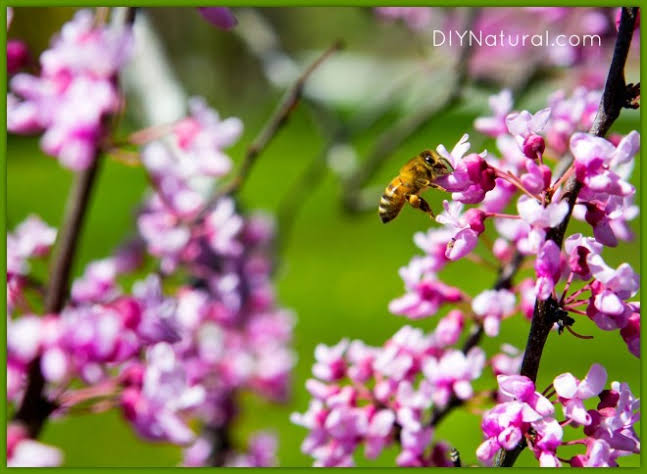
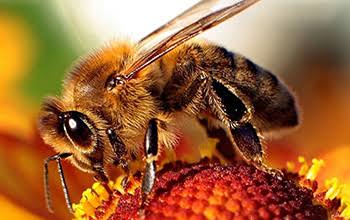
Pollination with the help of insects like honey bees, flies are called entomophily. To attract insects these flowers are brightly coloured, have smell and nectar. The pollen grains are larger in size, the exine is pitted, spiny etc., so they can be adhered firmly on the sticky stigma. Approximately, 80% of the pollination done by the insects is carried by honey bees.

Pollination by water

The pollination with the help of water is called hydrophily. This takes place in aquatic plants.
Pollen grains are produced in large numbers.
Pollen grains float on surface of water till they land on the stigma of female flowers e.g.Hydrilla, Vallisneria.

Pollination by Animals

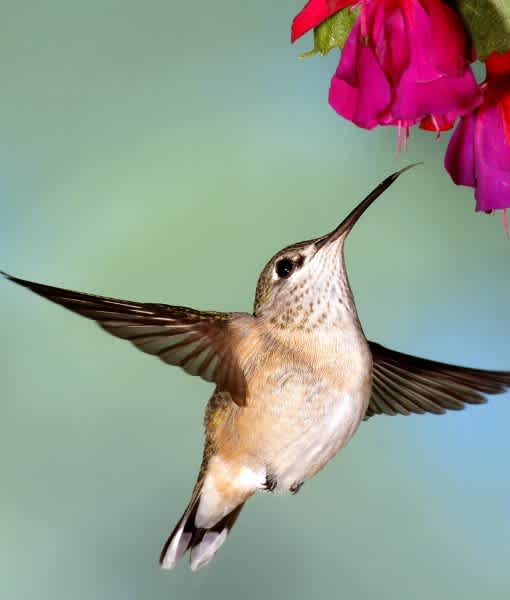
When pollution takes place with the help of animals, it is called Zoophily. Flowers of such plants attract animals by their bright color, size, scent etc. E.g. sun bird pollinates flowers of Canna, Gladioli, etc., Squirrels pollinate flowers of silk cotton tree.

BLOOD

Blood is the main circulatory medium in the human body. It is a red coloured fluid connective tissue.

Components of Blood

The blood consists of two main components. The fluid plasma and the formed elements (blood cells) which are found suspended in the plasma.

Plasma

It is slightly alkaline, containing non-cellular substance which constitutes about 55% of the blood. Organic substances like proteins, glucose, urea, enzymes, hormones, vitamins and minerals are present in the plasma.

Formed Elements of Blood

Blood corpuscles are of three types
Red blood corpuscles (RBC) or Erythrocytes.
White blood corpuscles (WBC) or Leucocytes.
Blood platelets or Thrombocytes.

Red blood corpuscles (Erythrocytes)

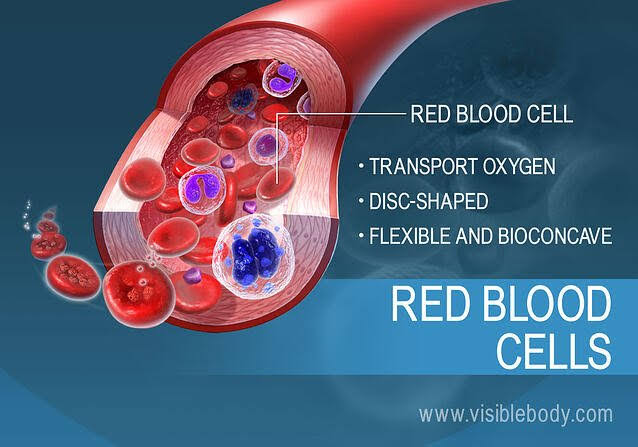
They are the most abundant cells in the human body. RBCs are formed in the bone marrow. The RBCs impart red colour to the blood due to presence of respiratory pigment haemoglobin. Matured mammalian RBCs do not have cell organelles and nucleus. They are biconcave and disc-shaped. Their life span is about 120 days. RBC is involved in the transport of oxygen from lungs to tissues.

White blood corpuscles (Leucocytes)

WBC’s are colourless. They do not have haemoglobin and are nucleated cells. It is found in the bone marrow, spleen, thymus and lymph nodes. They are capable of amoeboid movement.

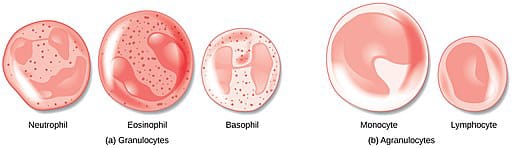
The white blood corpuscles can be grouped into two categories:
✓Granulocytes
✓Agranulocytes

Granulocytes

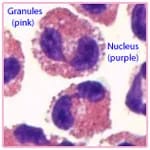
They contain granules in their cytoplasm. Their nucleus is irregular or lobed. The granulocytes are of three types
✓Neutrophils
✓Eosinophils
✓Basophils

Neutrophils

They are large in size and have a 2-7 lobed nucleus. These corpuscles form 60% – 65% of the total leucocytes. Their numbers are increased during infection and inflammation.

Eosinophils

It has a bilobed nucleus and constitute 2% – 3% of the total leucocytes. Their number increases during conditions of allergy and parasitic infections. It brings about detoxification of toxins.

Basophils

Basophils have lobed nucleus. They form 0.5-1.0% of the total leucocytes. They release chemicals during the process of inflammation.

Agranulocytes

Granules are not found in the cytoplasm of these cells. The agranulocytes are of two types:
✓Lymphocytes
✓Monocytes

Lymphocytes

These are about 20-25% of the total leucocytes. They produce antibodies during bacterial and viral infections.

Monocytes

They are the largest of the leucocytes and are amoeboid in shape. These cells form 5 – 6% of the total leucocytes. They are phagocytic and can engulf bacteria.

Blood Platelets or Thrombocytes

These are small and colourless. They do not have nucleus. There are about 2,50,000 – 4,00,000 platelets / cubic mm of blood. Life span of platelets is 8-10 days. They play an important role in clotting of blood. Platelets form clot at the site of injury and prevent blood loss.

Functions of blood

✓Transport of respiratory gases ( Oxygen and CO2).
✓Transport of digested food materials to the different body cells.
✓Transport of hormones.
✓Transport of nitrogenous excretory products like ammonia, urea and uric acid.
✓It is involved in protection of the body and defense against diseases.
✓It acts as buffer and also helps in regulation of pH and body temperature.
✓It maintains proper water balance in the body.