
Haruki Murakami’s ‘Kafka on the Shore’

Nobuyoshi Araki for The New York Times

Haruki Murakami is a Japanese writer whose novels and short stories have been translated and admired all over the world. Murakami’s works are a true testament to the genre of Magic Realism wherein seemingly unnatural things and incidents happens in the natural world. His stories revolve around inner conflicts, the dilemmas of human existence and a spectrum of psychological topics that makes us question the working of the world. His most notable works include Norwegian Wood, Sputnik Sweetheart, Tsukuru Tazaki and his Years of Pilgrimage etc. Through this unique method of narration, Murakami explores the warped realities of the human world.

“And once the storm is over, you won’t remember how you made it through, how you managed to survive. You won’t even be sure, whether the storm is really over. But one thing is certain. When you come out of the storm, you won’t be the same person who walked in. That’s what this storm’s all about.”

Murakami’s Kafka on the Shore is a Japanese novel that was published in the year 2002. Its 2005 English translation was among “The 10 Best Books of 2005” from The New York Times and received the World Fantasy Award for 2006. The novel alternates between two different stories that are happening simultaneously. One story revolves around a teenager a teenager who is on the run from home to escape his tyrannical father and a horrendous oedipal prophecy concerning his sister and mother. He renames himself Kafka Tamura after his favourite author. The other follows the story of an elderly man named Satoru Nakata, who as a child, goes into a coma after an unknown wartime affliction during the second world war. Despite being an academically bright child, after waking up from the coma, Nakata discovers that he can no longer read, write or do any of the normal mundane activities that humans indulge in. But he gains the special ability to talk to cats. Through a series of astonishing mystical events, the two are finally forced to cross paths resulting in a few exhilarating surrealist events.  

“Sometimes fate is like a small sandstorm that keeps changing directions. You change direction but the sandstorm chases you. You turn again, but the storm adjusts. Over and over you play this out, like some ominous dance with death just before dawn. Why? Because this storm isn’t something that blew in from far away, something that has nothing to do with you. This storm is you. Something inside of you.

Like any other Murakami novel, Kafka on the Shore is filled with symbolism, surrealist imageries, and mind-numbing parallels. With hints of time travel, hidden histories, conspiracy theories and magical underworld, the novel takes us through a rollercoaster of emotions in a world, where talking to cats, fictional characters, ghosts of a living person, raining of fishes and leeches, and opening up portals to different dimensions are all perceived into the rigid lines of reality. Through his grand narrating powers, Murakami fantastically combines elements of personal experiences, seemingly real supernatural experiences and Japanese folklore together. In most of Murakami’s works, the characters are influenced by the terrors of a post-war era all the while enthralling in the globalised community where Led Zeppelin and other global musical artists has an effect on everyday life. Music of both classical and contemporary nature plays a major role in most of his works. In this work, Murakami explores the inner turmoil and unexplored journeys existing within our minds as the two characters set out on a journey to find themselves.

Reference Links:

Hemmingway’s ‘Old Man and the Sea’

Ernest Hemmingway was an American novelist, short-story writer and journalist. He has written several best-seller classics and has also received the Nobel prize for literature in the year 1954. He was noted and admired both for the intense masculinity of his writing and for his adventurous and widely publicized life. His powerful prose writing style made an impact on the world in 20th Century. He served as an ambulance driver for American Red Cross during World War 1. His novel, The Sun Also Rises published in the year 1926 earned his first solid success. His other famous books include A Farewell to Arms, For Whom the Bell Tolls, A Moveable Feast etc.  

Old Man and the Sea is one of Hemmingway’s most famous books and the last major work of fiction that he published. Published in the year 1952, it received the Pulitzer Prize and is said to be one of the main reasons for gaining favour while being considered for the Nobel Prize. Set in the coastal regions of Cuba, it contains most of the themes that preoccupied Hemmingway as a writer and a man. It is a short heroic novel that entails the voyage of an old fisherman who ventures out into the vast sea for one last adventure. The old man is named Santiago and he sails across the sea, engaging in an epic battle to catch a large Marlin.

“But man is not made for defeat. A man can be destroyed but not defeated.”

The novel begins with Santiago mulling over his continues streak of misfortunes. Once a splendidly talented fisherman, he used to be considered the luckiest in catching fishes and selling them. But as old age started to haunt him, he was slowly overtaken by the younger folks who made fun of him for being out of luck lately. So much so that the parents of the young boy Manolin who assists him have forced him to desert the old man in favour of a more prosperous boat. In an attempt to regain his younger glory, on the eighty-fifth day of his unlucky streak, Santiago follows a large Marlin across the sea for more than forty-eight hours.

“Every day is a new day. It is better to be lucky. But I would rather be exact. Then when luck comes you are ready.”

Compared to the weakening old man, the Marlin tows Santiago’s boat into the ocean until it gets tired. Despite wanting to kill the Marlin, over the course of the journey, Santiago feels connected to the fish. He suffers hunger, sleeplessness and fatigue but feels that the Marlin has kept him company throughout. With great difficulty, he manages to kill the Marlin in a long-drawn-out duel. But as he proceeds to back home with the dead Marlin, it leaves a trail of blood into the sea attracting all sorts of sharks along the way. They attack him one after the other and he is finally left with nothing but a large skeleton of his prized fish. “The essential physicality of the story—the smells of tar and salt and fish blood, the cramp and nausea and blind exhaustion of the old man, the terrifying death spasms of the great fish—is set against the ethereal qualities of dazzling light and water, isolation, and the swelling motion of the sea.” (Britannica) Filled with symbols, allusions and strong poetic verses, the Old Man and the Sea is definitely worth the read.

Reference Links:
Dickinson’s “Much Madness is divinest Sense” – New Critics Perspective

“Much Madness is divinest Sense” is a poem by the American poet Emily Dickinson. This article will analyse the poem under the theoretical framework of New Criticism. New Criticism is a school of thought that viewed the text as an autotelic entity “constituted by internal relations and independent of reference either to state of mind of the author or the actualities of the external world.”

The New Critics emphasised on Close reading. Which means that, they looked at the poem as an organic entity of its own instead of associating it to the external cultural and historical background. A close reading of this poem would hence exclude all external factors such as the time period or the socio-political background which the poem might refer to. Furthermore, Wimsatt and Beardsley coined the terms intentional and affective fallacies. According to them, reading the poem by trying to understand the ‘intent’ of the poet would fall under intentional fallacy. In this poem, reading it with reference to Emily Dickinson or her views and criticisms on religion and patriarchy must be avoided. Affective fallacy refers to reading the text in terms of the emotional effect that it has on a particular reader.

The poem presents several sets of opposing forces like sanity and insanity, rationality and irrationality, and consequences of either assenting or demurring. The poet persona offers two opposing choices. If one chooses to assent and follow the orders without questions, then they are considered sane. But if one chooses to voice out their opinion and demur against the orders, then they are instantly branded as dangerous and are subjected to punishment. The persona does not specify which is better. Although assenting seems like the easier option of the two, the individual has to go against their beliefs and give up their freedom of choice to be labelled safely as sane. Meanwhile, demurring results in the curbing of physical freedom or the loss of a social status, but the individual at least had the satisfaction of being true to themselves. Both the choices ultimately result in the loss of freedom in one way or the other. Thus, the poem achieves perfect balance or equilibrium and is rendered invulnerable to irony.

Ambiguity, paradox and metaphors have been used throughout the poem. The terms ‘much’, ‘madness’ and ‘sanity’ are not terms that are adequately quantifiable. They are ambiguous in the sense that each of these are perceived differently by different individuals. What ‘much madness’ is to one person might not be the same to another. Similarly, madness in itself is an ambiguous term as it can be defined only with reference to context. In the beginning line, madness is considered to be the divinest sense, and yet, due to the subjective nature of the perception of madness, it is also seen as something dangerous. This serves as a paradox within the poem.

In his essay “The Well-Wrought Urn”, Cleanth Brooks speaks of the ‘heresy of paraphrase’ wherein, the text cannot be subjected to summarisation without losing its meaning. Similarly, in this poem, culling out a line from within the poem would render it meaningless. The poem works as an organic unity wherein all the lines complement each other within the context to give it full meaning.

The New Critics considered the form of the poem to be equal or reflective of the content of the poem. Here, the random capitalisation of words and the abrupt pauses disrupts the flow and rhythm of the verse, hence reflecting the sense of madness mentioned in the poem. Similarly, words like ‘much’ and ‘madness’ are repeated to emphasise on the inherent theme of the poem. In the sixth line, we see that the lines are much shorter and simpler as the persona speaks about assent and its simple consequences. But in the seventh and eighth lines, the lines are much complex and stretched out as the persona speaks of demurring which is reflective of the dire consequences mentioned in the poem. Dashes are present throughout the poem linking each line to another which is representative of the ‘chain’ mentioned in the final line. The poem “Much Madness is divinest Sense” can be regarded as an ‘ideal poem’ according to the framework laid down by the New Critics. The poem presents two opposing forces of assenting and demurring which achieves equilibrium by proving that neither is better off than the other, hence rendering the poem invulnerable to irony. The poem also uses ambiguity as well as paradox to convey the theme better. The form of the poem is reflective of the content which maintains the organic structure of the text.  

Agatha Christie’s Hercule Poirot

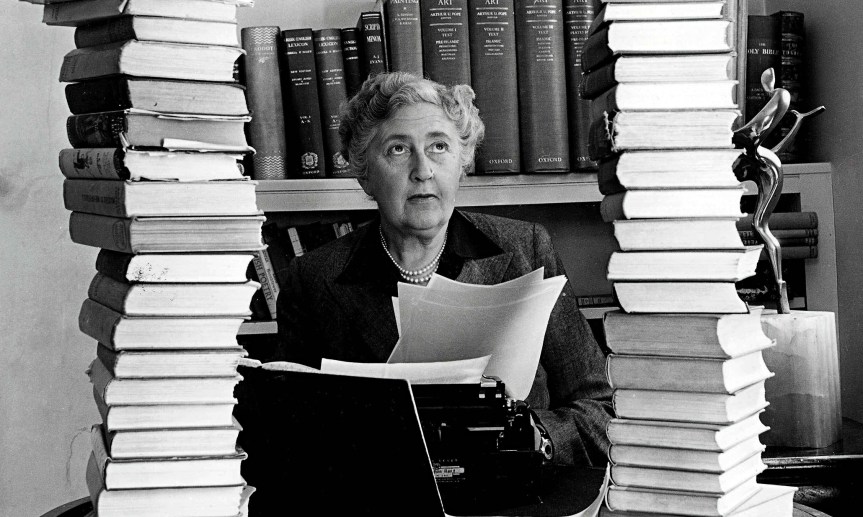
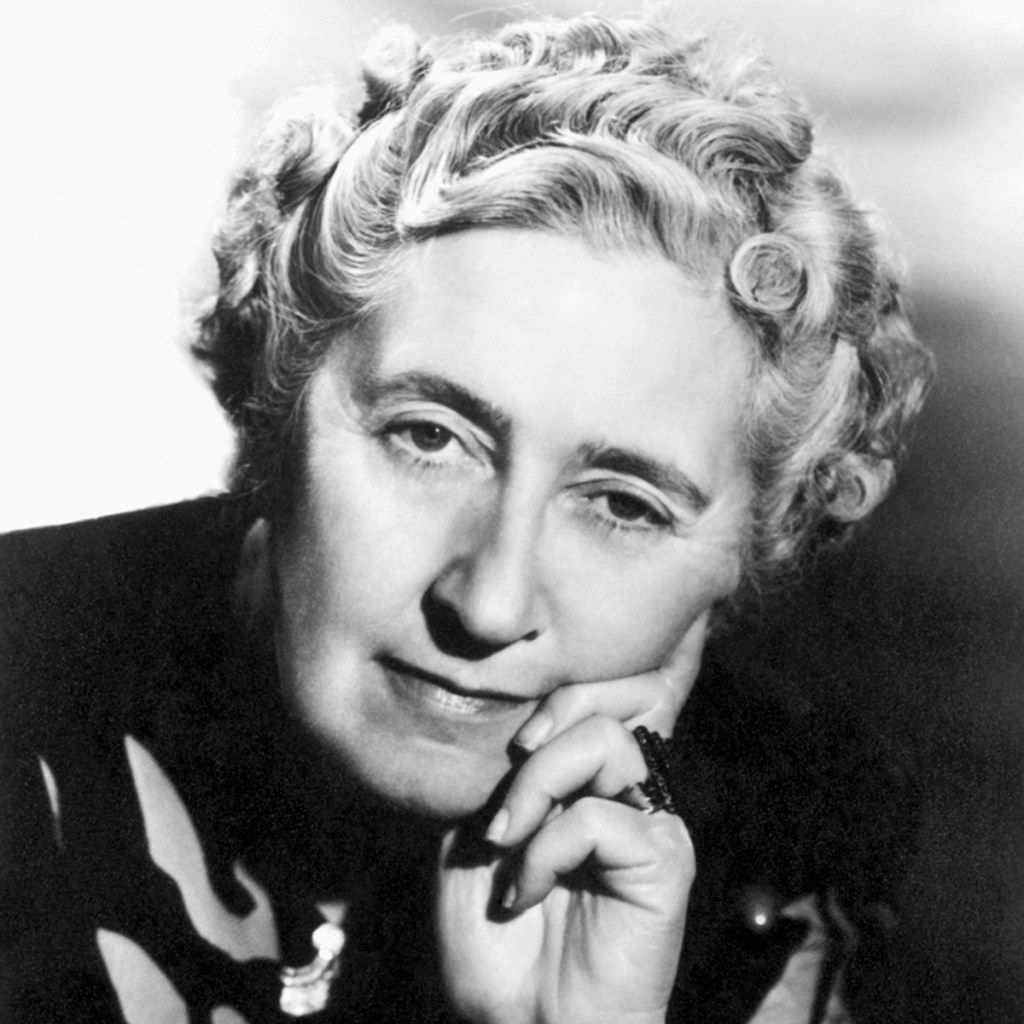
Agatha Christie is an English writer who is famous for her murder mysteries. Dubbed as the ‘Queen of crime’, she is the most widely published author of all time and in any language, outsold only by the Bible and Shakespeare. She is the author of 80 crime novels and short story collections, 19 plays and six novels written under the name of Mary Westmacott. Her play ‘Mousetrap’ is considered to be the longest running play. She has sold over a billion copies in English and another billion in 100 foreign countries. Her first novel ‘The Mysterious Affairs at Styles’, was written towards the end of First World War. In it she created Hercule Poirot, the little Belgian detective who was destined to become the most popular detective in crime fiction since Sherlock Holmes. Agatha Christie was made a Dame in 1971. She died in 1976, since then, a number of books have been published posthumously.

Here are the top 3 Hercule Poirot Books and their blurbs:

3. Death on the Nile

“It often seems to me that’s all detective work is, wiping out your false starts and beginning again.”

“Yes, it is very true, that. And it is just what some people will not do. They conceive a certain theory, and everything has to fit into that theory. If one little fact will not fit it, they throw it aside. But it is always the facts that will not fit in that are significant.”

Agatha Christie’s most daring travel mystery. The tranquillity of a cruise along the Nile is shattered by the discovery that Linnet Ridgeway has been shot through the head. She was young, stylish and beautiful, a girl who had everything – until she lost her life. Hercule Poirot recalls an earlier outburst by a fellow passenger: ‘I’d like to put my dear little pistol against her head and just press the trigger.’ Yet in this exotic setting’ nothing is ever quite what it seems…

2. Murder on the Orient Express

“The impossible could not have happened, therefore the impossible must be possible in spite of appearances.”

Murder on the Orient Express is undoubtedly one of Agatha Christie’s greatest mystery novels. Just after midnight, a snowdrift stops the Orient Express in its tracks. The luxurious train is surprisingly full for the time of the year, but by the morning it is one passenger fewer. An American tycoon lies dead in his compartment, stabbed a dozen times, his door locked from the inside. Isolated and with a killer in their midst, detective Hercule Poirot must identify the murderer – in case he or she decides to strike again.

1. The Murder of Roger Ackroyd

“The truth, however ugly in itself, is always curious and beautiful to seekers after it.”

Known for its startling reveal, this is the book that changed Agatha Christie’s career. Roger Ackroyd was a man who knew too much. He knew the woman he loved had poisoned her first husband. He knew someone was blackmailing her – and now he knew she had taken her own life with a drug overdose. Soon the evening post would let him know who the mystery blackmailer was. But Ackroyd was dead before he’d finished reading it – stabbed through the neck where he sat in the study.

Reference Link:

Draupadi by Mahasweta Devi

Photo by Jairo David Arboleda on Pexels.com

Mahasweta Devi is a Bengali writer and activist who is known for her strikingly social and poignant stories. She wrote several works ranging from novels and plays to essays and short stories. Her most notable works include Hajar Churashir Maa, Rudali, Aranyer Adhikar etc. She has received highest literary merits in India like Jnanpith Award and Padma Vibhushan. As an activist, she has also worked towards the empowerment and rights of tribal people from West Bengal, Bihar, Madhya Pradesh, and Chhattisgarh.

Draupadi is a thought-provoking short story that deals with the underlying caste system and tribal subjugation in India. Originally written in Bengali, it follows a raw narrative that depicts the struggles of the subaltern in a vastly power-imbalanced society. Draupadi narrates the story of Dopdi Mejhen, a woman belonging to the Santal tribe in West Bengal. Dopdi and her husband Dulna are wanted by the Indian Special Forces as they were the chief instigators in the murder of Surja Sahu, an upper caste man who selfishly drew all source of water to his own wells and tube-wells even during the drought. Their bravery in questioning the authority of the upper caste is seen as a threat and battalions of officers are deployed to capture this ‘untouchable’ couple. Senanayak, the appointed head of the task force, uses the power of knowledge, tactics and violence to capture them. He is pragmatic with his ideology that ‘In order to destroy the enemy, become one.’ He is ruthless and tries everything in his power to achieve this, even going as far as to bait Dopdi with her own husband’s corpse. After her capture, his command allows multiple officers to rape her to extract information. Capturing and torturing them for information becomes a pleasurable game to Senanayak. Where the fugitives struggle for their lives, he takes joy in decoding their language and ‘countering’ them.

Draupadi in this narrative is an implicit reversal of the mythical character Draupadi from the Mahabharatha Mythology. Where the young princess is married off to five princes and leads the life as a fugitive who finally gets back their kingdom, this Dopdi does not grow up in the luxury. She has always been considered an outcast by her country for her identity and she is always on the run. Despite being nearly raped to death, she fearlessly walks out naked and confronts Senanayak, demanding him to ‘Counter’ her.

The people in power always reinforce their power by asserting dominance and by manipulating the internalised stigma against the people born in lower castes. Mahasweta Devi narrates this story of oppression without overtly emotionalising it and yet, it affects the readers in such a way that it provokes these emotions within us. To bring out maximum impact, she portrays reality as it is in all of its rawness which makes us question the power play prevalent in the society. The gradual shift of power in the end can be seen as her way of hinting at a hopeful future.

Portrayal of Mental Health in Media

Photo by Masha Raymers on Pexels.com

“Depression (major depressive disorder) is a common and serious medical illness that negatively affects how you feel, the way you think and how you act.”

To many, the term depression is either a light-hearted substitute for sadness or simply a taboo. To most, admitting one has depression is asking to be put in a mental house. To the ones that are affected, depression creates perpetual sadness which might even become the cause of their death. Depression has taken over the lives of many, though most fail to reveal this. Signs of depression include extreme lack of social interaction, significant weight loss, extreme cases of Insomnia, self-harm, uncontrolled emotions, recurrent suicidal thoughts, etc. It is believed that the present social atmosphere is a huge factor as it often termed as ‘the plague of the 21st century’.

Scientifically, depression can be mapped with the change of various neurons and bio-chemical substances that are released in our system, namely: Serotonin, Dopamine and Norepinephrine. Any imbalance in their level can affect our emotions adversely. Stress and tension can also contribute a lot to this. At times, they can also be hereditary or genetic. Other factors for depression includes, Abuse, serious illness, conflicts, loss, substance abuse, etc.

It is often very hard to implement change in a society, to make people believe that their previous beliefs are not entirely right and are to be changed. To do so, a great power of influence is required. Such power can be obtained through media. To quote Malcolm X “Media is the most powerful entity on earth… Because they control the minds of the masses.” So how can this power be put to good use?

The current mainstream media has taken an initiative in bringing about awareness in the society. Various movies, book and television series have portrayed the intensity of growing depression among youth. For instance; ‘Thirteen Reasons Why’ is a book by Jay Asher that revolves around the reasons why Hannah Baker (A teenager) committed suicide. It emphasizes on how people turned a blind eye to her silent pleas and how that ultimately cost an innocent life. This book was later turned into a hit Netflix series that gained a lot of attention upon its release. Not only was it critically acclaimed, it also helped in giving courage to youngsters around the world to speak up.

Movies such as Anomalisa, World’s greatest dad, cake, Sylvia, Little Miss Sunshine, and various other movies have cast light upon depression and the different forms that it manifests in to different human beings. The Indian film industry also features movies that focus on these issues.

YouTube, being one of the most powerful social media platform has not failed short of showing its side of depression. Famous YouTubers like Kiera Rose, Daniel Howell, Jacksgap, Savannah Brown, John Green, Connor Franta and Lilly Singh etc have shared their personal struggle against depression and social anxiety. They have taken the liberty of portraying the raw side of depression that are often wrongly romanticized in the mainstream media. Lily Singh, a YouTuber turned Business Woman has written down her journey of starting out a video to make others laugh (despite fighting off depression herself) in her book ‘How to be a Bawse’. YouTube also carries various channels that are created just for the purpose of sharing experiences on various form of depression.

Internet also offers other platforms like blogs, websites and social media networking sites that allows healthy interactions and provides information centres. Online therapy sessions and websites have been created to support forums where the affected can reach out. Various celebrities have taken action in ensuring the lifeline supports through social media. For instance, ‘The Live Love Laugh Foundation’ is a mental health initiative taken up by the famous Bollywood actress, Deepika Padukone that illustrates the symptoms and form of depression to create awareness among the Indian youth.

Mental health is a very serious issue that must be tended to at the right time. The world cannot afford to lose another Chester Bennington or another Avicii. Depression is real and it is about time we removed the stigma against it. Spread the word, tame the taboo and lend a helping hand to anyone who is hurting.

Class in Mahasweta Devi’s ‘Rudali’

Mahasweta Devi is a Bengali writer and activist who is known for her strikingly social and poignant stories. She wrote several works ranging from novels and plays to essays and short stories. Her most notable works include Hajar Churashir Maa, Rudali, Aranyer Adhikar etc. She has received highest literary merits in India like Jnanpith Award and Padma Vibhushan. As an activist, she has also worked towards the empowerment and rights of tribal people from West Bengal, Bihar, Madhya Pradesh, and Chhattisgarh.

Rudali is a thought-provoking short story that deals with the underlying class and caste issues prevalent in India. Originally written in Bengali, it follows a raw narrative that depicts the struggles of the subaltern in a vastly power-imbalanced society. Rudali follows the story of Sanichari who labours hard all her life to make ends meet. The story begins by establishing her caste and how despite being the majority, the Ganjus and Dushads live in desperate poverty. They work as cheap labourers for the ‘Malik Mahajan’ who are the wealthy landlords and money lenders of the village. After losing her in-laws and her husband, she works hard to sustain for her son. But after his marriage, he slowly deteriorates due to tuberculosis and eventually after his death, his wife leaves, leaving Sanichari to look after their new born son. Later after he runs away from home, Sanichari finds an unlikely partnership with Bhikni, an old friend.

The two women forge a strong companionship and together they play a cunning game of getting back at their exploiters. ‘Rudali’ refers to a particular Rajasthani culture wherein women of lower castes are hired as professional mourners by the upper-class to mourn the deaths of their family members. The two women build a business together, harnessing this profession to get jobs to local lower-caste women who have been exploited and ostracised and exploited by the society. In no time, the upper-class people try to one up each other even in funerals and even go as far as purposefully killing themselves or the elders to hold grand funerals.

Entitled by the power of money, Devi reinforces the fact that people in power compromise morality to maintain their position through the shenanigans of the upper-class folks who are known as the ‘Malik Mahajan’. Historically, they were Rajput soldiers who pillaged and killed innocent tribes and conquered these lands. And then, Dulan says that “From century to century, their holdings and power increased. Even now, they take possession of land…” (Devi 73) They built up their power over the tribes and the lower caste through violence and debt traps. They spend lavishly on funerals to ‘uphold honour’ and ‘raise prestige’ by extracting money from the poor. Their greed for more lessens their humanity even with respect to their own kind. In this society, the rich are constantly rich while the poor are perpetually poor.

Where the privileged are divided amongst themselves due to greed for more, the powerless, though diverse, are united in their struggles against the elite. In Rudali, the lower caste and the shunned women look out for one another due to their shared resistance against the Malik Mahajan. Mahasweta Devi narrates this story of oppression without overtly emotionalising it and yet, it affects the readers in such a way that it provokes these emotions within us. To bring out maximum impact, she portrays reality as it is in all of its rawness which makes us question the power play prevalent in the society.

‘Colorless Tzukuru Tazaki and His Years of Pilgrimage’ By Haruki Murakami

“One heart is not connected to another through harmony alone. They are, instead, linked deeply through their wounds. Pain linked to pain, fragility to fragility. There is no silence without a cry of grief, no forgiveness without bloodshed, no acceptance without a passage through acute loss. That is what lies at the root of true harmony.”

-Haruki Murakami, Colorless Tzukuru Tazaki and His Years of Pilgrimage

Haruki Murakami is a Japanese writer whose novels and short stories have been translated and admired all over the world. Murakami’s works are a true testament to the genre of Magic Realism wherein seemingly unnatural things and incidents happens in the natural world. His stories revolve around inner conflicts, the dilemmas of human existence and a spectrum of psychological topics that makes us question the working of the world. His most notable works include Norwegian Wood, Sputnik Sweetheart, Kafka on the Shore etc. Through this unique method of narration, Murakami explores the warped realities of the human world.

His Novel Colorless Tzukuru Tazaki and His Years of Pilgrimage was written and published in the year 2013. It sold over a million copies in just a month and is a bestseller. It is a realist bildungsroman that follows the life of a railroad engineer in Tokyo named Tsukuru Tazaki. Bildungsroman novels include the development of the protagonist’s mind and character in the passage from childhood through varied experiences- and often through spiritual crisis- into maturity; this process usually involves recognition of one’s identity and role in the world. During his school days, he becomes best friends with four people; two boys named Akamatsu (Red) and Oumi (Blue) and two girls called Shirane (White) and Kurono (Black). Tsukuru had always felt left out from his gang of friends for all of their names included a colour while he always remained colourless. Despite that, he considered them his good friends. But one day, he finds to his utter surprise that all his friends have suddenly cut ties with him without any explanations. Highly depressed and shocked, Tsukuru is traumatised by this turn of events.

“As we go through life we gradually discover who we are, but the more we discover, the more we lose ourselves.”

-Haruki Murakami, Colorless Tzukuru Tazaki and His Years of Pilgrimage

 Later on in college, Tsukuru moves to another city and slowly recovers himself from the brink of suicide. He befriends a boy named Haida who narrates a peculiar story of a travelling man and his encounter with a particular kind of music. But before the start of the next semester, Haida leaves him as well. Now resigned to the conclusion that he was born to be lonely, Tsukuru is left with a fear of building close relationships.

Years later, Tsukuru nurtures his interests in trains and ends up being a railroad engineer. His girlfriend Sara advices him to embrace the past than run away from them, for she gives an ultimatum that unless he decides to confront his past, their relationship would never work out. Determined, he takes on a journey to find his lost friends and mend their relationships to work towards a healed future. Like all other Murakami books, this one retains a special place for music as well. In this novel, Lizst’s classical piano solo ‘Years of Pilgrimage’ serves as a recurring symbol that adds charm to the magic realist plotline.

‘Power’ by Audre Lorde

The difference between poetry and rhetoric
is being ready to kill
yourself
instead of your children.

I am trapped on a desert of raw gunshot wounds
and a dead child dragging his shattered black
face off the edge of my sleep
blood from his punctured cheeks and shoulders
is the only liquid for miles
and my stomach
churns at the imagined taste while
my mouth splits into dry lips
without loyalty or reason
thirsting for the wetness of his blood
as it sinks into the whiteness
of the desert where I am lost
without imagery or magic
trying to make power out of hatred and destruction
trying to heal my dying son with kisses
only the sun will bleach his bones quicker.

A policeman who shot down a ten year old in Queens
stood over the boy with his cop shoes in childish blood
and a voice said “Die you little motherfucker” and
there are tapes to prove it. At his trial
this policeman said in his own defense
“I didn't notice the size nor nothing else
only the color”. And
there are tapes to prove that, too.

Today that 37 year old white man
with 13 years of police forcing
was set free
by eleven white men who said they were satisfied
justice had been done
and one Black Woman who said
“They convinced me” meaning
they had dragged her 4'10'' black Woman's frame
over the hot coals
of four centuries of white male approval
until she let go
the first real power she ever had
and lined her own womb with cement
to make a graveyard for our children.

I have not been able to touch the destruction
within me.
But unless I learn to use
the difference between poetry and rhetoric
my power too will run corrupt as poisonous mold
or lie limp and useless as an unconnected wire
and one day I will take my teenaged plug
and connect it to the nearest socket
raping an 85 year old white woman
who is somebody's mother
and as I beat her senseless and set a torch to her bed
a greek chorus will be singing in 3/4 time
“Poor thing. She never hurt a soul. What beasts they are.”

Power by Audre Lorde is a poem that expresses anger against certain social injustices faced by the people of colour in a predominantly white-privileged society. The poem is said to be a reaction against an unjust trial of a white policeman who shot a black child to death in Queens in 1973. Owing to the title, the poem dabbles with various forms and magnitudes of power and the different ways in which it is made use of.

Lorde has structured the poem into irregular stanzas of five. She begins the poem by putting out two heavy options of poetry and rhetoric, through which one may choose to channel their power. In the second stanza, the poet paints a heart wrenching image of a powerless bleeding black child. She watches helplessly as the child slowly bleeds to death. Here, both the child and the poet are powerless; but the describing colour-contrasted imagery leaves a powerful impact on the readers. The third stanza highlights the power held by a white policeman who, in his trial, fearlessly admits that he fired the shot purely on the basis of colour. The poet then calls out the corrupt jury which exploits and manipulates its powers to set the policeman free. The jury was comprised of eleven white men who clearly held all the power and one token black woman. In the final stanza, Lorde concludes by pointing out that power, if not used right, can either end up corrupt or end up useless. She then draws up a metaphor between electricity to that of the power and anger surging within oneself. Finally, she puts forth a hypothetical situation of an old white woman being raped by a black man to point out the biased double-standards of the society that manipulates power to perpetuate racism.

Photo by Life Matters on Pexels.com

The poet explains how unlike rhetoric, poetry can be used as a medium to channel one’s anger. She makes clever use of numbers (both spelt out and otherwise) and capitalisation of certain key words to draw attention to the power play within a society. Lorde tries to describe the desperation that comes with being powerless and urges the readers to use their power productively. The poem can be seen as her hopeful attempt at empowering the otherwise powerless black community.

Despite the fact that Power was written in 1978, it holds strong relevance to the power imbalance prevalent in the society even to this date. It resonates with the several incidents of police brutality against certain African-Americans such as George Floyd and Breonna Taylor. This gave way to the strengthening of movements like ‘Black Lives Matter’, amassing strong protestors especially on several social media platforms. Unlike the one in the poem, the white policeman who attacked George Floyd was charged with a second-degree murder owing to the help of the massive number of protestors. Though it is disheartening to see such brutality prevailing after years of struggle, we see that Lorde’s advice on using power in the right way does make a difference.

Reference Link:

https://www.poetryfoundation.org/poems/53918/power-56d233adafeb3

Power Imbalance in ‘The Hunger Games’

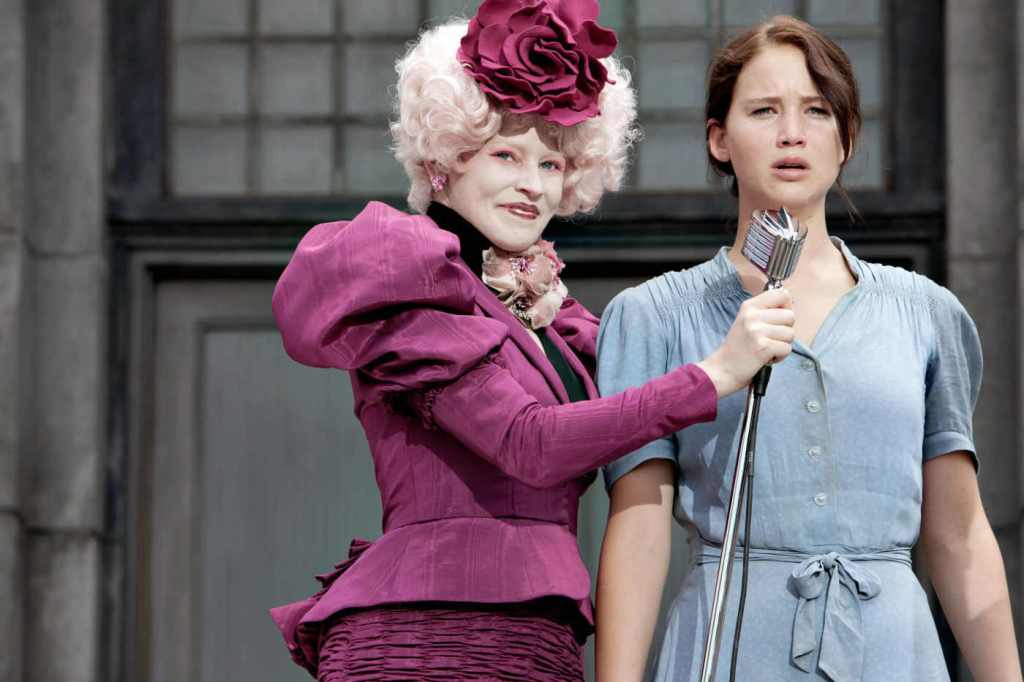
Suzanne Collins’s Hunger Games trilogy was published in the years 2008-2009. It is a fictional dystopian story it revolves around the lives of Katniss Everdeen and her family. Set in a post-apocalyptic nation called Panem, it captures the conflict between the rich capitol against its poverty stricken 12 districts. The history of the nation goes that the 13 districts were in war against the capitol. And after the Capitol’s victory over the 13 districts, the capitol starts an annual survival reality show wherein the districts competed against each other for a yearly supply of food. The contestants were chosen by the capitol and were usually children from each district. Hunger Games is basically a survival show where children are to kill each other to win victory for their district. This survival game takes place in an enclosed space named as the arena and the game is recorded and broadcasted live for the viewers of the capitol who enjoy seeing these children kill each other in combat.

The most obvious power imbalance is between the two conflicting divisions. The capitol is luxurious, everyone lives a grand life filled with events and marvellous technology. On the other hand, the 12 districts are in utter poverty without even food for survival. The rich are perpetually rich, while the poor are perpetually poor. The ignorance of the rich is even more highlighted when Katniss observes that the people in Capitol take pills to puke out their food so that they can eat more. They spend money lavishly on clothing items and ornate jewelleries while the children in the Arena have to earn their admiration to be sent sponsored food and gifts.

“We had to save you because you’re the mockingjay, Katniss,” says Plutarch. “While you live, the revolution lives.”

When Katniss volunteers to join the games in the place of her sister, she takes on an important journey and unknowingly ends up becoming the face of resistance against the capitol. After Rue’s death, Katniss treads carefully yet vengefully in the Arena. She does everything that it takes to survive and bring food for her district. When Peta and her end up being the final two standing, they threaten to commit suicide together instead of killing each other. This essentially serves as a threat to against the Capitol’s power because indirectly, she showed control over their tyranny. The capitol game makers as well as the citizens are ruthless and sadistic. The more the children in the Arena suffered, the more they enjoyed and the more they sent items to the children. By actively fighting and resisting against this sort of injustices, her actions set forth a chain reaction of events including a full-scale revolt which ultimately leads to the downfall of the Capitol dictatorship.  

“President Snow says he’s sending a message. Well I have one for him. You can torture us and bomb and burn our districts to the ground, but do you see that?” One of the cameras follows where I point to the planes burning on the roof of a warehouse across from us. “Fire is catching!” I am shouting now, determined he will not miss a word of it, “And if we burn, you burn with us!”

-Mockingjay

The power dynamic between the two warring units might seem like dystopia, but on a closer look we see that our world isn’t too far off. There’s a clear instance of hegemony and power imbalance between the weaker sections of a society and the more powerful sections. Despite being a young adult fictional story, The Hunger Games strikes a deeper chord with relation to the injustices happening all over the world.  

Keats’ ‘Ode on a Grecian Urn’

John Keats was an exemplary second-generation romantic poet who lived in the early 19th century. The romantic period refers to several literary movements that were characterised by their highly subjective form of writing, which was essentially a breakaway from the traditions of more rigid writing followed by the Neoclassical poets. Keats belonged to a group of poets who were later dubbed as the ‘second-generation romantics’ and it included other poets like Shelly, Wordsworth and Byron. The romantic age in England is generally marked by the publishing of ‘Lyrical Ballads’ by Coleridge and Wordsworth in 1789.

Thou still unravish'd bride of quietness,
       Thou foster-child of silence and slow time...

One of the main characteristics that set the romantics apart from the others is their intensely personal subject matter. It ranged from their own internal conflicts, to their philosophical thoughts, to praising the glory of nature and its effects on humans. Their poetic style was free and untamed (not that it did not have any metrical compositions, they were comparatively flexible in relation to the neoclassic poets.) like the vast untamedness of nature. They found their sources of poetry from particularly unique and seemingly unlikely experiences. For them, poetry conveyed its own truth and the sincerity was the true criterion for judging a poetry.

Heard melodies are sweet, but those unheard
       Are sweeter; therefore, ye soft pipes, play on;
Not to the sensual ear, but, more endear'd,
       Pipe to the spirit ditties of no tone:...

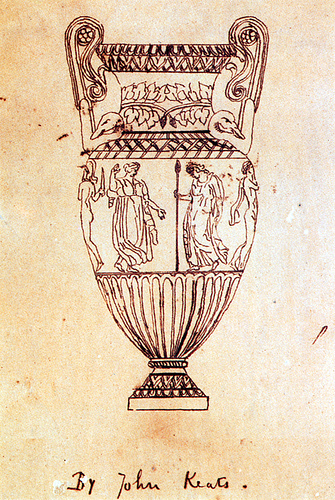
Several of Keats’ poetry questions the mortality and impermanence of human life with relations to art and its everlasting life on earth. In ‘Ode on a Grecian Urn’, the speaker comes across an old Grecian artefact and admires all the paintings on it. The urn contains several pictures of characters including a fair youth who sings beneath an evergreen tree, two lovers who are almost kissing, a melodist playing a pipe, a town of people on a procession with a sacrificial cow and so on. He takes a moment to think about each of their stories and wonders how it is to remain immortal.

For ever panting, and for ever young;
All breathing human passion far above,
         That leaves a heart high-sorrowful and cloy'd,
                A burning forehead, and a parching tongue...

He starts off the poem by describing the beautiful shape of the urn. He addresses it by several names and revels in the beauty and satisfaction that it gives him. He then addresses the sweetness of the music that might be coming out of the painted instruments. He assures himself by saying that the unheard melodies are sweeter because it speaks directly to our inner soul. He then moves onto the loves and assures them that though they may never kiss, they will forever remain young and fair. He complements the beautiful boughs of the trees and tells them that they will never wilt and will forever remain beautiful. In the later stanza, the poem takes a little turn as the speaker as he examines how they will live forever while humans living in the real world are all eventually bound to die one day. He then examines a procession of people who are carrying a sacrificial heifer and wonder which town or village is empty of this folk.

  "Beauty is truth, truth beauty,—that is all
                Ye know on earth, and all ye need to know."

In the final stanza of the poem, the speaker once again admires the beauty of the urn and decides that even after his lifetime, the urn will forever remain and tell its story for generations to come. The speaker finally neds the poem with one of the most beautiful verses in the poem going “Beauty is truth, truth beauty” which he confirms is the only eternal truth that one needs to know on earth.        

Reference Links:

  

George Herbert’s ‘Love (III)’

Love bade me welcome. Yet my soul drew back
                              Guilty of dust and sin.
But quick-eyed Love, observing me grow slack
                             From my first entrance in,
Drew nearer to me, sweetly questioning,
                             If I lacked any thing.
 
A guest, I answered, worthy to be here:
                             Love said, You shall be he.
I the unkind, ungrateful? Ah my dear,
                             I cannot look on thee.
Love took my hand, and smiling did reply,
                             Who made the eyes but I?
 
Truth Lord, but I have marred them: let my shame
                             Go where it doth deserve.
And know you not, says Love, who bore the blame?
                             My dear, then I will serve.
You must sit down, says Love, and taste my meat:
                             So I did sit and eat.
-George Herbert

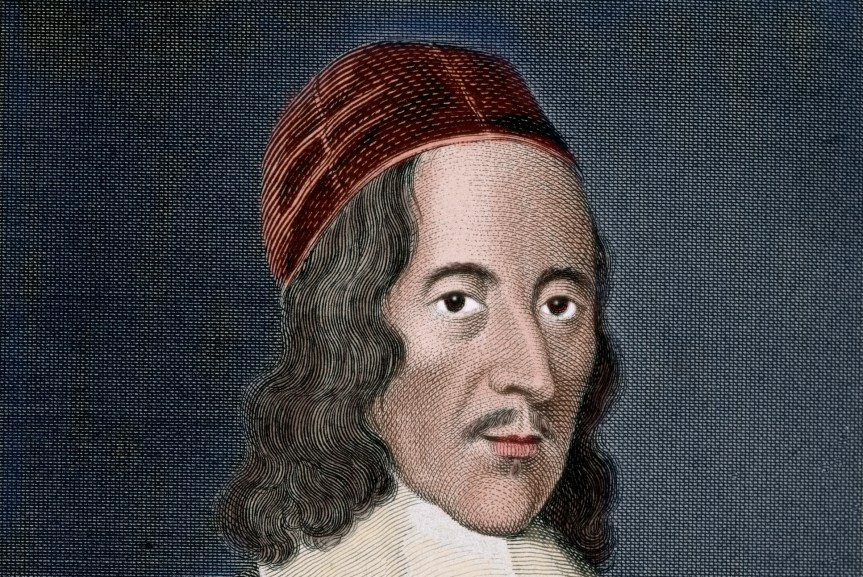
George Herbert was a metaphysical poet who was prominent during the Elizabethan era. He was also a theologian, priest and an orator. Herbert is renowned for his spiritually inclined poems that touches upon metaphysical and philosophical topics. Most of his spiritual poems recounted his wavering, yet strong relationship with God and the internal conflicts that ensues when he thinks of a material life beyond the constraints of a religious life. His poems are allegorical, auto-biographical and an intimate reflection of his own struggles as a devotee of God.

Herbert’s Love (III) is a part of ‘The Church’, a central part of his work ‘The Temple’. In his ‘Love’ series, he explores various types of relationships and connections. Love (I) entails the relation between mortal and immortal love. Love (II) explores the connection between divine love and human lust. Love (III) is an exploration of sacred love by personifying love in a dialogue between a worshipper and God. Herbert’s connection with his god is exemplified through his lexical simplicity. Here, Herbert’s God is kind and gentle, like an inviting lover whose love compensates for human weaknesses. His worries and doubts of his love for God despite his immense faith is a common theme that runs through this poem as well.

He explicates that Divine Love is unconditional. God, for Herbert, is all forgiving and considers the distance between himself and is devotee more sinful than the internal conflicts that a devotee has. He reinforces the Christian ideology that human resistance to love can be overcome by the love and sacrifice of Christ. His allusion of God as a host has been mentioned several times throughout the bible. And similarly, the part of the speaker resisting the God’s invitation is also a recurring notion that has been shown through prophets like Moses, Isiah, and Jeremiah. But nevertheless, the God is portrayed as a kind and gentle being which represents the idea of Christ. He embraces all his devotees and forgives them no matter how sinful they are. This is referred to as ‘The mystery of God’s love’ in Christian mysticism.

Herbert’s language is very simple and it reflects the conversational tone that has been represented between the God and the Man in the Bible. His style reflects the tender ways in which the psalmists addressed the god, or how the lovers talk to each other in ‘songs of Solomon.’ This is very unlike the vengeful version of God found in other poems of Herbert like ‘Discipline’. Although the concepts in his poems seem borrowed, they are fresh and delivers the simplest poem written on the Christian tradition of ‘Holy Communion’.  Thus Love (III) can be thus considered to be a quintessential Herbert Poem.  

Reference:

Agusto Boal and Aristotle’s Coercive System of Tragedy

Photo by Ibolya Toldi on Pexels.com

Agusto Boal was a Brazilian activist who brought revolutionary changes to theatre as an artform. In his work Theatre of the Oppressed, Boal extensively discusses about the theatrical form that he developed of the same name. He also explains the politics involved behind various dramatic techniques and criticisms from across the world like Aristotle, Hegel and Brecht. In the first chapter, Boal argues that the Greek tragedies, as defined by Aristotle, is actually a coercive system that enforces state ideologies onto the citizens.

Tragedy, then, is an imitation of an action that is serious, complete, and of a certain magnitude; in language embellished with each kind of artistic ornament, the several kinds being found in separate parts of the play; in the form of action, not of narrative; through pity and fear effecting the proper purgation of these emotions.

-Aristotle

According to Aristotle, Tragedy is an imitation of an action that, through its several characteristics, evokes catharsis or ‘proper purgation of soul’. Every tragedy has a tragic hero who is defined as “a man who is not eminently good and just, yet whose misfortune is brought about not by vice or depravity, but by some error or frailty”. This error in the hero is referred to as his tragic flaw or hamartia. The spectator establishes an empathic relationship with the protagonist and lives vicariously through him as he enjoys a state of happiness brought upon by the same hamartia. Then suddenly, the hero falls from happiness to misfortune. This is referred to as ‘peripeteia’. The spectator along with the hero suffers this but is unable to disassociate with the character due to ‘anagnorisis’, i.e, recognition of the flaw. Furthermore, the tragedy ends with a ‘catastrophe’ wherein, the hero suffers the consequences of his action through death or a fate worse than death. 

Boal sums up this process in three stages. Stage 1, where the protagonist and the spectator take a path towards happiness which then moves towards misfortune. Stage 2, the character and the spectator realise their own hamartia which Boal refers to as an ‘anti-constitutional flaw’; where the state reinforces certain unsaid social set-ups. Stage 3, where after the horror of the catastrophe, the terrified spectator undergoes catharsis through which they are purified of their hamartia. As explained by Arnold Hauser, the tragedians were paid by the state to produce the plays and thus, they naturally denied any plays that went against the state. Through the tragedies, the spectator is emotionally manipulated into thinking that having this hamartia would lead to a terrible fate, thus maintaining the status-quo in the society. This can also be analysed with reference to Althuser’s Ideological State Apparatus. In this context, the values of the state are propagated through theatre which acts as an institution.

Tragedy effectively coerces people into believing that any desire to go against the state will prove disastrous. This reinforces Boal’s statement that, theatre is the most perfect artistic form of coercion. Though Aristotle claims that poetry, theatre and tragedy are not associated to politics, Boal points out that reality states otherwise. And so, it can be argued that artforms, including theatre or its modern variants such as television and film – are all political.

Bridal Mysticism Across Religions

Photo by Arina Krasnikova on Pexels.com

Mysticism is a word derived from the Greek word ‘Mysticos’ which refers to the belief that a person has the potential to achieve oneness with the god. Spirituality and mystics have been around for a long time. It’s a part of humanity that defines a diviner affinity to the belief that God is watching over us and our ultimate goal in this life is to achieve oneness with God. Over the years, there have been several religions that have emerged all over the world, but one of the key differences that separates a spiritual mystic from the others is the fact that they have the tendency to break away from tradition and hence, other forms of religious practices which were considered the norm.

I watch the clouds rupture.
Mira says, nothing can harm him.
This passion has yet
to be slaked.
-Mirabai (Clouds)

A mystic might take on any sort of relationship with the God and it is not restricted to the traditional hierarchical relationship where God is the supreme force who rules over the devotees. The devotees might choose friendship, teacher-student bond, familial bonding or even romantic companionship with their God. Thus, the concept of Bridal mysticism isn’t a new one. It has been around for several ages and is a true form of devotion where a devotee loves their god as they would love their beloved.

Let him kiss me with the kisses of his mouth! For your love is more delightful than wine.
-Song of Solomon (1:2)

The mode of bridal mysticism is so unique, for it negates all the humane all the societal constraints that denies sexuality to women. Bridal Mysticism has no such earthly constraints, it celebrates and even glorifies the bodily union between a devotee and their god, for sexual union is considered to be one of the divinest methods of indicating oneness with God. In this relationship, it is not just the devotee who expresses love, they also understand that their God loves them similarly, just as passionately.  The love that persists between the devotee and the heavenly one is pure and true.

If I adore You out of fear of Hell, burn me in Hell!
If I adore you out of desire for Paradise,
Lock me out of Paradise.
But if I adore you for Yourself alone,
Do not deny to me Your eternal beauty.”
-Rabia Al Basri

Bridal mysticism is a practice that can be seen all over the world across all religions. In Christianity, the most explicit, yet the purest form of Bridal mysticism can be found in ‘Songs of Solomon’; a collection of love poems that has been included in the first testament. In it, two lovers go through a series of events that includes periods of blissful union as well as separation. It has been interpreted in several ways over the years, but the love that is cherished between the lover and her beloved is pure. In Hinduism, we see clear indications of Bridal mysticism in the poems of Mirabai from northern India and Antal from southern India. Both of the women adored and loved the Hindu God Lord Krishna. Like any couples, they express their love, grief, jealousy and fiery passion to their beloved God and relish in the devotion that flows through them. In Islam, the Sufi mystics are known for their poetic works which are brimmed with their love for God. Sufi saints like Rabia spoke of a divine selfless love for God which criticised those who loved God out of fear.

Bridal mysticism is also not gender specific. There are numerous instances of devotees from all genders expressing a romantic love, despite the conventional norms. Bridal Mysticism is thus one of the purest forms of devotion that solidifies the bond between a God and their devotee.

‘Wuthering Heights’ a Gothic Revenge Drama

“Catherine Earnshaw, may you not rest as long as I am living. You said I killed you–haunt me then. The murdered do haunt their murderers. I believe–I know that ghosts have wandered the earth. Be with me always–take any form–drive me mad. Only do not leave me in this abyss, where I cannot find you! Oh, God! It is unutterable! I cannot live without my life! I cannot live without my soul!”

-Heathcliff

‘Wuthering Heights’ is a 19th century gothic novel that revolves around the lives of two families: the Earnshaws, the Lintons and the peculiar boy adopted by the Earnshaws named Heathcliff. Set in the damp mysterious English moores, the story is riddled with the themes of love, revenge, and drama. It merges the supernatural with the real and creates a unique world that leaves us both horrified and curious. The novel has multiple levels of narrators ranging from the newly moved in Lockwood to Wuthering Heights’ lifetime caretaker Nelly Dean and finally to the inhabitants of both Heights and Thrushcross Grange.

“Treachery and violence are spears pointed at both ends; they wound those who resort to them worse than their enemies.”

The theme of violence and revenge runs constantly throughout Wuthering Heights and Heathcliff acts as the tool through which it is propagated. A chain reaction of continues revenge takes place when Old Earnshaw’s affection towards the foundling Heathcliff deeply upsets Hindley. After Earnshaw’s death, Hindley neglects Heathcliff and degrades him. Overcome with a desire for revenge, upon his return, Heathcliff successfully deceives Hindley into selling off Wuthering Heights. Furthermore, he also takes in Hareton Earnshaw and condemns him to a life of degradation and torture. Heathcliff also seeks revenge against Edgar for marrying Catherine and marries his sister Isabella. He tortures her both physically and mentally and even continues this mistreatment towards their son Linton, whom he uses merely as a tool to take over Thrushcross Grange. He forces marriage between Linton and young Catherine, confines her, and beats her up violently as he sees her as a proof of the union between his Cathy and Edgar. Heathcliff’s affinity for revenge and violence plays a major role in driving Catherine away from him. As he nears his death, he gradually abstains from it and is in turn able to reunite with a ghostly presence of Cathy.

“If all else perished, and he remained, I should still continue to be; and if all else remained, and he were annihilated, the universe would turn to a mighty stranger.”

As for the gothic elements, the novel can be considered the prime example of a gothic novel for a multitude of reasons. The setting of the English moors in itself reflects the untamedness of the novel’s characters and their mindsets. The house ‘Wuthering Heights’ is described as being old and gloomy, similar to the ruined castle-like gothic architecture. A few characters like the tyrannies, deceitfully handsome villains, fragile women and ghosts are said to be typical to a gothic novel. Heathcliff can be seen as a gothic villain, who loses sight of all morality in mad pursuit of his passion. The character of Isabella Linton is a typical example of the fragile woman who is beautiful and innocent but is brutally exploited by the villain. Another major element of the gothic is the inclusion of ghosts and other supernatural elements. In the start of the novel, the ghost of Catherine Earnshaw appears and grabs hold of Mr. Lockwood, whom he thinks is a ‘changeling’ and is mentioned throughout the novel. The weather also contributes to the damp dark setting and constantly reflects the melancholic feelings of the characters. Typical to a gothic narrative, Wuthering Heights touches upon concepts that are considered paranoid, barbaric and the tabooed.

Reference Links: