THE ENGLISH NOVEL

FAMOUS NOVELS:

The novel proper in English literature began in the 18th century. But the rudiments of the novel could be seen even in Chaucer’s conception of the gallery of characters in The Canterbury Tales. Several Elizabethan writers wrote prose fiction which laid the foundations of the English novel. Among them the most important were John Lyly who wrote ‘Euphues’ and Nash, the author of ‘The unfortunate Traveller’. The first work was a didactic prose fiction in the picarseque tradition and the second was a realistic story of action. In 1678 John Bunyan’s ‘The Pilgrim’s Progress’ was published. In many respects this ranks as a novel. Then came Defoe’s ‘Robinson Crusoe’ and Swift’s ‘Gulliver’s Travels’. Several critics thinking that Robinson Crusoe was the first great novel in English literature thought it was up your fantasy. Swift’s work is considered to be the first great satiric expression.
HOW IT EVOLVED:

It was in the 18th century that the novel acquired its modern form. Samuel Richardson, the author of ‘Pamela’ is regarded as the originator of this form. His great novel was told in the form of letters. Richardson was concerned with moral themes in all his novels he was an adept in expressing human feelings and motives through character. Henry Fielding parodied Richardson’s Pamela in his novel ‘Joseph Andrews’. His ‘Tom Jones’ is a great novel in the picarseque tradition. He anticipated Dickens in his social criticism and satire. Two other important points in the field of the novel were Smollet who wrote ‘Roderick Random’, ‘Peregrine Pickle’ and three other novels and Sterne, the author of ‘Tristram Shandy’. Among the later novelist of the eighteenth century Goldsmith deserves mention as the author of ‘The vicar of wakefield’ the earlist domestic novel in English. The first great women novelists first Fanny Burney who published her ‘Evelina’ in 1778.

VARIOUS DEVELOPMENT:

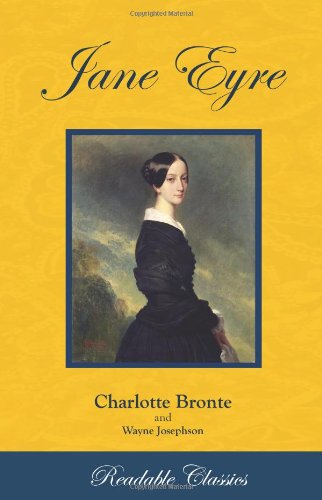
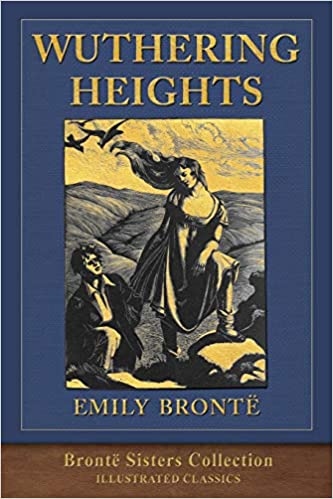
The 19th century saw the development of the novel in various directions. The novel discarded the sensationalism of the 18th century Gothic writers like Horace Walpole and Picarseque tradition of Fielding and smollet. It entered a new era of artistic refinement, thematic liberalism and stylistic innovations. Jane austen’s domestic novels reached unprecedented artistic perfection. Her novels such as ‘Pride and Prejudice’ and ‘Emma’ dealt with a respectable country society and the presented a miniature world dominated by graceful social conventions and manners. Scott inaugurated the historical novel in which picarseque details were combined with romantic feelings for the past. Some of his famous novels are Waverley, Ivanhoe, The Talisman and Kenilworth. The tradition of the historical novel was carried on by a few others including Charles Reade, the author of ‘The Cloister’ and the ‘Hearth’. The two women novelist Charlotte Bronte and Emily Bronte were a striking contrast to Jane Austen. In the novels Jane Eyre and wuthering Heights respectively they made use of the elements of horror and soul-suffering to heighten a human story of violent passion.

CHARLES DICKENS’S CONTRIBUTION:

The most outstanding name in the Victorian novel is Charles Dickens. He developed more complex plots than his predecessors and introduced greater human interest, pathos and humour. Some of his novels contain autobiographical elements. He was supreme in depicting the life of London and he used in novel as a platform for social reform. His most famous novels are there with David Copperfield, Great Exceptions, Nicholas Nickleby and A Tale of two cities. Thackeray excelled in the novel of ideas. Vanity Fair is his masterpiece. He moralizers and his weapons for social criticism and reforms are irony and satire.

OTHER NOVELISTS:

George Eliot novels contains philosophical observations on religion, politics and morals. Her famous novels are Adam Bede, Middlemarch and Silas Marner. Another novelist who stands out as a satirist and was George Meredith. His novel such as ‘The Egoist’ and ‘The ordeal of Richard Feveral’ anticipate the psycho-analytical method that become so popular with the 20th century novelists. Pain and tragedy found their most artistic expression in the novels of Thomas Hardy. He took his characters from the peasantry of his native Wessex and portrayed the innermost soul of his characters with great insight, affection and even humour. some of his important novels are ‘Tess of the D’Urbervilles’, ‘The Return of the Native’ and ‘The Mayor of Casterbridge’.
STREAM OF CONSCIOUSNESS:

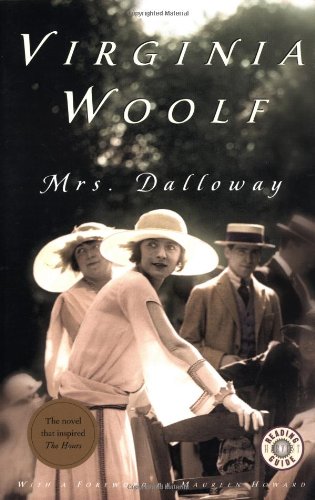
Stream of consciousness novel found its exponents in Virginia woolf and James Joyce. Novels like Virginia Woolf’s ‘Mrs dalloway’, ‘To the Lighthouse’ and James Joyce ‘ulysses’ inaugurated the trend of exploring the subconscious recesses of the human mind. Novelist such as D.H. Lawrence and Aldous Huxley introduced several innovations in theme and style. The most significant novels of D.H. Lawrence are ‘Sons and Lovers’, ‘Woman in Love’ and those of Huxley are ‘Brave New World’ and ‘Crome yellow’.

During the last fifty years the scope of the novel has widened to include almost every subject. It has become the most popular medium through which an author can reach the public. There have been as a host of good novelist during the last fifty years – E.M. Forster, Somerset Maugham, Charles Morgan, Graham Greene, Kingsly Amis, Iris Murdoch and William Golding.

The English novel is no more a drawing room entertainment address to the ladies as novelist George Moore once said.
WHAT IS TRAGEDY?

Drama presents fiction or fact in a form that could be acted before an audience. It is imitation by action and speech. A play has a plot, characters, atmosphere and conflict. Unlike a novel, which is read in private, a play is intended to be performed in public. Traditionally drama is divided into two categories tragedy and comedy. Tragedy deals with the dark side of the life and the other with its light side. In tragedy the characters are involved in circumstances and situations that force them towards an unhappy end. Thus a tragedy usually ends in happiness for the central characters and sometimes in their death.

HOW TRAGEDY WAS ORIGINATED:

In ancient Greece both tragedy and comedy originated in the rustic festivals which were held in honour of the nature-god Dionysus. Tragedy dealt with the more somber aspects of life exemplified by the stories and legends chosen from mythology. In ancient Greece, Aeschylus, Sophocles and Euripedes composed tragedies. Traditionally a tragedy required an exposition and complication or conflict, a climax or crisis, a denouement or resolution and a catastrophe at the end.

ARISTOTLE ABOUT TRAGEDY:

Aristotle thought that tragedy was the noblest form of literature. He laid down certain percepts to be followed by the tragic poet. They form the basis of the classical approach to tragedy. According to this a tragedy should have a plot, characters, structure and spectacle, catastrophe and catharsis. Only lives of famous and powerful men like kings and warriors were fit subjects for tragedy. The sufferings and death of such characters raves about their common plane evoked pitty and terror in the mind of the spectators. Aristotle spoke of the effect of tragedy as the evocation of pity and awe and the achievement of catharsis or cleansing of our emotions. However in the great tragedies of Marlowe and Shakespeare the insistence on great themes and illustrious persons was often violated. In modern times we have several tragedies of low and humble life.

HOW TRAGEDY AND COMEDY ARE SAME?

Like comedy, tragedy also aims giving pleasure. The pleasure tragedy provides is of a lofty order. The spectacle of a noble character caught in the cause of circumstances presented with artistrt of language raise higher passions in the spectators. The effect is rather exalted and enabled rather than distressing.

TYPES OF TRAGEDY:

Tragedy can be divided into two types the classical and romantic.

The Classical tragedy: It was based on Greek inventions like the observance of the unity of time, unity of action and unity of place and the employment of the chorus. The classical tragedy dealt with the great legends of mythical age, its chief characters were majestic heroes. An ideal tragic which was maintained in the dialogue and the rendering was marked by a stateliness and nobility of expression.

The Romantic tragedy: it reach its perfection in Shakespeare was not always limited by the observance of the three unities. It also dispensed with the chorus. In the romantic tragedy the plot may stretch over a long period of time there; may be subplots and there is usually mixing up of tragic and comic elements. That Romantic tragedy is generally concerned with matters remote from ordinary life. It is both a idealistic and realistic. It is not written to a set pattern and is never didactic. On the basis of themes there were several types of tragedy is like the horror and revenge tragedy of Kyd and Webster, heroic tragedies of Dryden and the domestic tragedies of George Lillo.

The Elizabethan Romantic tragedy was essentially poetic. However in the 18th century poetry give place to prose. In the 20th century poetic drama has been revived in the plays of W.B. Yeats, T.S. Eliot and Christopher Fry.

THE BALLAD

The ballad is a simple narrative poem in short stanzas telling a story. It may be called a short story in verse. Originally it used to be sung to the accompaniment of musical instrument like the hard by strolling bands of singers or minstrels. The word is derived from the Latin ‘Ballare’ which means to dance. This shows its connection with tribal dance.

A ballad deals with some episode of simple motive written in stanza suitable for all oral transmission. In ancient ballad, often, the authors were unknown. The themes were commonly furnished by the elementary aspects of life. Large space was given to tales of adventure and love, fighting and valour. Generally supernaturalism was an essential elements of such ballads.

HOW THE BALLAD IS EVOLVED:

The ballad begin to appear in England even before chaucer’s time. The earliest English Ballad is the fragmentary ‘Judas’ of the 13th century. The central characteristics of the Ballad are narative presentation, simplicity and spontaneity of expression. The most popular Ballad measure used to be there ‘quatrain stanza’ with rhyme at the end of the second and fourth lines.

TYPES OF BALLAD:

There are only two kinds of ballads. The traditional ballad and The Ballad of growth and the modern Ballad or the literary Ballad.

The traditional ballad: It is originated from the folk culture of each nation. Most of these ballads are of unknown of the authorship. They are the authentic ballads that have grown naturally among a primitive race and are transmitted orally from generation to generation. They are impersonal in character because they are not concerned with the subjective feelings of the narrator.

The Theme: The Ballad mostly deals with love and adventure. The narrator generally begins with the climatic episode and tells the story by means of action and dialogue. There is no attempt to give the details of place and time and no introductions are given. Most traditional ballads have a sudden and abrupt beginning as in the famous ballads ‘Sir Patrick Spens’ and ‘The Wife of Usher’s Well’. These ballads use refrains and repetitions. Many of these ballads have immense dramatic power and metrical beauty. Most of the ancient English ballads are collected in Bishops Percy’s ‘Reliques of Ancient English Poetry’ published in 1765. Majority of them are of Scottish origin. There are several ballads dealing with the legend of Robin Hood. Some other important traditional ballads are ‘Chevy chace’, ‘Edom O’ Gordon’, ‘Thomas, The Rhymer’ and ‘The Bailiff’s Daughter of Islington’.

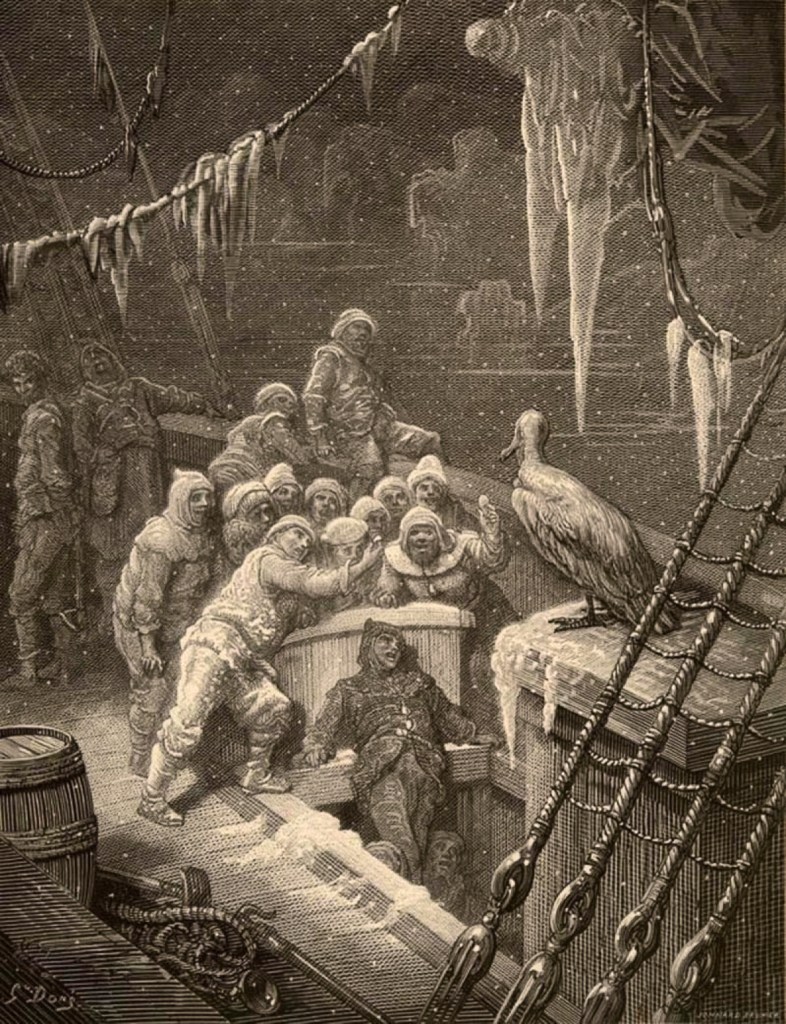
Modern or Literary ballad (Ballad of Art): It is generally written by a learnt poet in conscious and sophisticated imitation of the traditional ballad. Many of the conventional features like the stanza form are retained in the literary Ballad. Bishop Percy’s collections of songs and ballads gave a powerful impetus to the writings of ballads. Some of the greatest literary ballads were written during the period of the romantic revival. The most well-known among them is Coleridge’s ‘Rime of the Ancient mariner’ in which the ballad metre is used. Wordsworth wrote two ballads-‘We are Seven and ‘The Tables Turned’. Keats’s famous ‘La Bella Dame Sans Merci’ represents a variation on the traditional Ballad stanza.

Rime of the Ancient Mariner

The Theme: The theme strongly resembles that of the traditional ballads. Literary ballads show enlargement of description, psychological interest and a more finished style. In ballads like Tennyson’s ‘The Revenge’, Browning’s ‘Herve Reil’ and Rossetti’s ‘The king’s Tragedy’ we not only this sterling qualities of the old ballads but also traits of originality which make them modern and original poems. The theme strongly resembles that of the traditional ballads.

Important Literary Ballads: Scott’s ‘Eve of St. John’, Kingsley’s ‘The Sands of Dee’ and William Morris’s ‘Shameful Death’.

Mock ballad: the mock ballad is a minor form of literary Ballad in which a comic theme is treated with the seriousness appropriate to a regular ballard. It follows the ballad conventions in all respects except in the choice of the theme.

Important mock ballads: Cowper’s ‘John Gilpin’, William Maginn’s ‘The Rime of the Ancient Waggoner’ and an excellent parody of Coleridge’s ‘The Rime of the Ancient Mariner’.

TOKYO OLYMPICS (2020) AND INDIA’S TOP MEDAL CONTENDERS

The 2020 summer Olympics officially the Games of XXXII Olympiad unbranded as Tokyo 2020. Tokyo 2020 is an international multi sport event being held from 23 July to 28 August 2021 in Tokyo Japan with some preliminary events that begin on 21 July.

POSTPONED TO 2021:

During the 125th IOC session  in Buenos Aires held at Argentina, on September 7, 2013 TOKYO was selected as a host city to conduct 2020 Olympics. The actual date to conduct the Olympics was from 24th July to 9th August 2020. But due to Covid -19 pandemic the event was postponed to 2021 and now happening in Tokyo. This is the first time the Olympics games had been rescheduled. The name of the event remains the same Tokyo 2020 because of marketing and branding purpose. The event is been held with all safety measures behind the closed doors, without any public spectators. The Summer Paralympics will be held between 24 August and 5 September 2021.

The 2020 Games are the fourth Olympic Games to be held in Japan, following the Tokyo 1964 (Summer), Sapporo 1972 (Winter), and Nagano 1998 (Winter) games.[c] Tokyo is the first city in Asia to hold the Summer Games twice. The 2020 Games are the second of three consecutive Olympics to be held in East Asia, following the 2018 Winter Olympics in Pyeongchang, South Korea, and preceding the 2022 Winter Olympics in Beijing, China.

NEW GAMES:

This 2020 olympics introduces new games. Those games were once held but subsequently removed.  New games are 3×3 basketball, freestyle BMX (bicycle Motocross), Madison cycling (relay race). New IOC policies also allow the host organizing committee that is Japanese Olympic Committee to add new sports. The games are baseball and softball. The olympic debuts are karate, sport climbing, surfing and skateboarding.

Bermuda and the Philippines won their first ever olympic gold medals. San-Marino and Turkmenistan won their first ever olympic medals.

INDIA’S TOP MEDAL CONTENDERS:

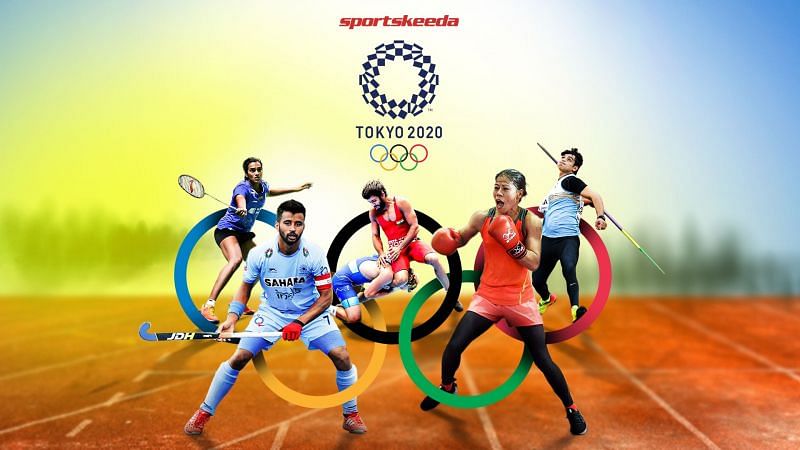
India is sending its largest ever contingent to the Tokyo Olympics. The nation has the great hope of bettering its medals hauls this time over previous Games. With 122 athletes competing in 13 events across 85 events, the country hopes to win medals for shooting, wrestling, boxing, archery and badminton.

In 2016 Rio Olympics, India returned with two medals. A silver for ace shuttler PV Sindhu in the Women’s Singles Badminton and a bronze for wrestler Sakshi Malik in the Women’s 58kg Freestyle Wrestling Event.

  • 2016 Rio Olympics: 1 Silver, 1 Bronze
  • 2012 London Olympics: 2 Silver, 4 Bronze
  • 2008 Beijing Olympics: 1 Gold, 2 Bronze

India has won a total of 28 medals since 1900 – 11 from hockey, five from wrestling, four from shooting, two each in badminton, boxing and athletics, and one each in tennis and weightlifting.

SHOOTING: India’s 15 member, shooting contingent is the favourite to bring back a big haul of medals.

Nineteen year old Manu Bhaker is one of the top contenders on the 10m Women’s Air Pistol event. She has won two gold medals in ISSF World cup in 2018 and she was the youngest Indian to win gold medals in ISSF World Cup to Commanwealth medal and Youth Olympics.

Shooter Saurabh Chaudhary, world number two and Youth Olympics champion, became the youngest Indian shooter to win a gold at the Asian Games in 2018 when he was just 16. Rahi Sarnobat in the pistol events, rifle marksman and two-time Olympian Sanjeev Rajput (2008 and 2012), and the current world-number-one Divyansh Singh Panwar and Elavenil Valarivan in the men’s and women’s air rifle, respectively.

BADMINTON: In 2016 Rio Olympics, India returned with two medals. A silver for ace shuttler PV Sindhu in the Women’s Singles Badminton.”I was just a participant back then, but now everyone says Sindhu has to get a medal,” she told the BBC recently. Last year, the ace shuttler won the inaugural BBC Indian Sportswoman of the Year award. In 2019, she was crowned the World Badminton Champion but her form has had inconsistencies since then. However, she remains India’s top medal prospect.

BOXING: Mary Kom also known as Magnificent Mary, the Iron Lady. She won bronze at the 2012 London Olympics. She is expected to win Gold medal when she participates in Flyweight section. In May, she picked up a silver when she lost the final to Kazakhstan’s Nazym Kyzaibay during the Asian Boxing Championships in Dubai.At 38, Kom may well be taking part in her last Olympics, and India will be rooting for her to increase her tally before she takes off her gloves.

WRESTLING: India had a decent run at the Rio Olympics in 2016, with Sakshi Malik earning a bronze medal. In Tokyo, Vinesh Phogat leads the women’s wrestling team. Having suffered a freak injury during the Rio Olympics, Phogat returned to India in a wheelchair and underwent surgery. The 26-year-old is now roaring to go in the 53kg category with some great wins in the last couple of months, as well as reclaiming the number one ranking. With three world championships to his name, wrestler Bajrang Punia is the top contender from India in the 65kg men’s category at his first Olympics.

WEIGHTLIFTING: The Tokyo Olympics will be Mirabai Chanu’s second time on the big stage. In 2016, she qualified for Rio but failed to record any legal lift in three attempts in the Clean and Jerk category, and was out of the running in the Women’s 48kg category.In 2017, she won gold in the World Weightlifting Championships and went on to win gold in the Commonwealth Games a year later and bronze at the 2019 Asian Weightlifting Championships.

She is the first athlete from India to win Silver medal in 2020 Summer Olympics.

ARCHERY: Only last month, archer Deepika Kumari won three golds at the Archery World Cup in Paris. Deepika Kumari is the number one ranked recurve woman in the world
She is now the world number one in the women’s recurve category and a strong candidate for a medal in Tokyo. Kumari has won nine gold, 12 silver and seven bronze medals at various World Cups and will be looking to add the Olympic medal to her tally now.

The nation is looking forward for more medals from the athletes competing in Tokyo Olympics and also feeling proud of Mirabai Chanu who is the one to win the first medal, silver medal for India in 2020 Olympics until now.

SHAKESPEAREAN ROMANCES

The plays of Shakespeare’s final period (1608-12) are called Romances. In Shakespeare’s own time they were simply classified as tragedies and comedies. Shakespeare must have written his tragedy and comedy plays under the influence of his younger contemporaries. Beaumont and Fletcher were very popular. The masques at the court of James I also must have influenced Shakespeare. Shakespeare’s romances are in fact, neither tragedies nor comedies but are a mixture of both.

Dowden has pointed out that the last plays of Shakespeare reveal society, serenity, and sanity as contrasted with the storm and strain of the tragedies. They supplement the tragedies with their more relaxed atmosphere and are marked by great forbearance, sense of reconciliation and forgiveness. However, Lytton Strachey thinks that these plays express a mood of boredom rather than serenity.

The romances of Shakespeare have certain common characteristics. They have motifs common in romance literature such as improbable happenings, separation, wanderings, reunion and reconciliation. They contain several elements of the tragi-comedies made popular by Beaumont and Fletcher. There are only a few memorable than heroes. In these plays Shakespeare has returned to his lyrical style of the earlier plays.

CHIEF CHARACTERISTICS:

1. The scene of these plays is unknown, remote and the setting is imagery. Cymbeline is set in early Britain and the setting of the Tempest is somewhere in the Mediterranean.

2. The happenings are fanciful. There is no logical cause and effect relationship. In the light of reason, the events appear absurd the feats of magic in The Tempest, the concealment of Hermione for sixteen years in The Winter’s tale and the abduction of two sons of Cymbeline would appear unnatural. But in Shakespeare’s world of imagination these events are delightful.

3. The romances are full of anarchronisms, long lapses of time (as in The Winter’s Tale), wizardry and fantastic voyages (as in The Tempest). These become part of the apparatus of the play.

4. Characters are types. They do not have marked personalities of the characters in the great comedies or tragedies. However, heroines are most memorable than heroes. Miranda, Perdita, and Imogen are lovely but weak. Villains like Iachimo in Cymbeline and Leontes in The Winter’s Tale are not hardened Villains. Even Ferdinand in The Tempest is no match for Benedick or Orlando.

5. Pastoral scenes are a part of the romances. In The Winter’s Tale, Florizel and Perdita are a part of pastoral life.

6. The supernatural element is predominant in the romances. The Tempest and Cymbeline are examples. The Tempest also shows Prospero’s magic and the elusive character Ariel. In The Winter’s Tale the Delphic Oracle is introduced and in Pericles the King’s Wife Thaisa becomes a priestess in the temple of Diana.

7. In the romances sea is dominant. There is shipwreck in Pericles and The Tempest. Sea voyage are mentioned in all of them. Sea is a symbol of regeneration.

8. The romances show breakdown of family relationships, separation of family members and their eventual reunion and restoration. In the opening of each play a father looses the offspring through his own folly and at the end the child is restored. This recovery of lost children is a part of the romances. In The Winter’s Tale, Perdita is restored to King Leontes; in Cymbeline the two sons of the king is restored; in The Tempest Fredinand is restored to his father and in Pericles, Marina is restored to her father, the King.

9. The romances are marked by a spirit of reconciliation and forgiveness. In The Tempest, Prospero’s forgives his wicked brother Antonio; in Cymbeline Posthumous reconciles with Imogen and in The Winter’s Tale, Leontes reconciles with Hermione.

10. In the romances there is an assumption that the events in the world of the play are subject to forces other than normal. There is a sense of magical reason of the errors of action. This assumption helps to enhance the dramatic situation and keeps the audience aware of the mystery of human personality.

A critic has called the romances ‘divine comedies’ because the divine grace imposes its beneficent will on the humans. The romances are ethical and spiritual and are the creations of an older and more sober Shakespeare. As Dowden has pointed out, the one word that interprets Shakespeare’s last plays is ‘reconciliation’, a word ‘over all, beautiful as the sky’.

THE ELIZABETHAN THEATRE

The early part of the Elizabethan age was a period of strolling players. It was a time when the actors had to go to the audience instead of the audience coming to the actors. These strolling players performed in improvised theatres anywhere in tavern, yards, palaces or gentleman’s house.

DRAMATIC COMPANIES OF ELIZABETHAN PERIOD:

There were many such touring traumatic companies but the most important where the Admiral’s Men and Chamberlain’s Men. When both these companies where patronised by Queen Elizabeth. James I who succeeded Elizabeth took Chamberlin’ Men under his protection and thereafter the company was called the “King’s Men“. It was to this company that Shakespeare belonged for most of his career as a dramatist.

THE THEATRES OF THE TIME:

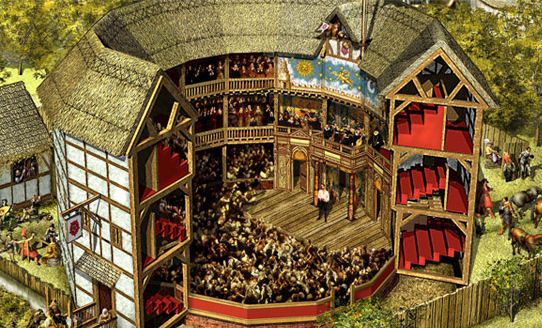
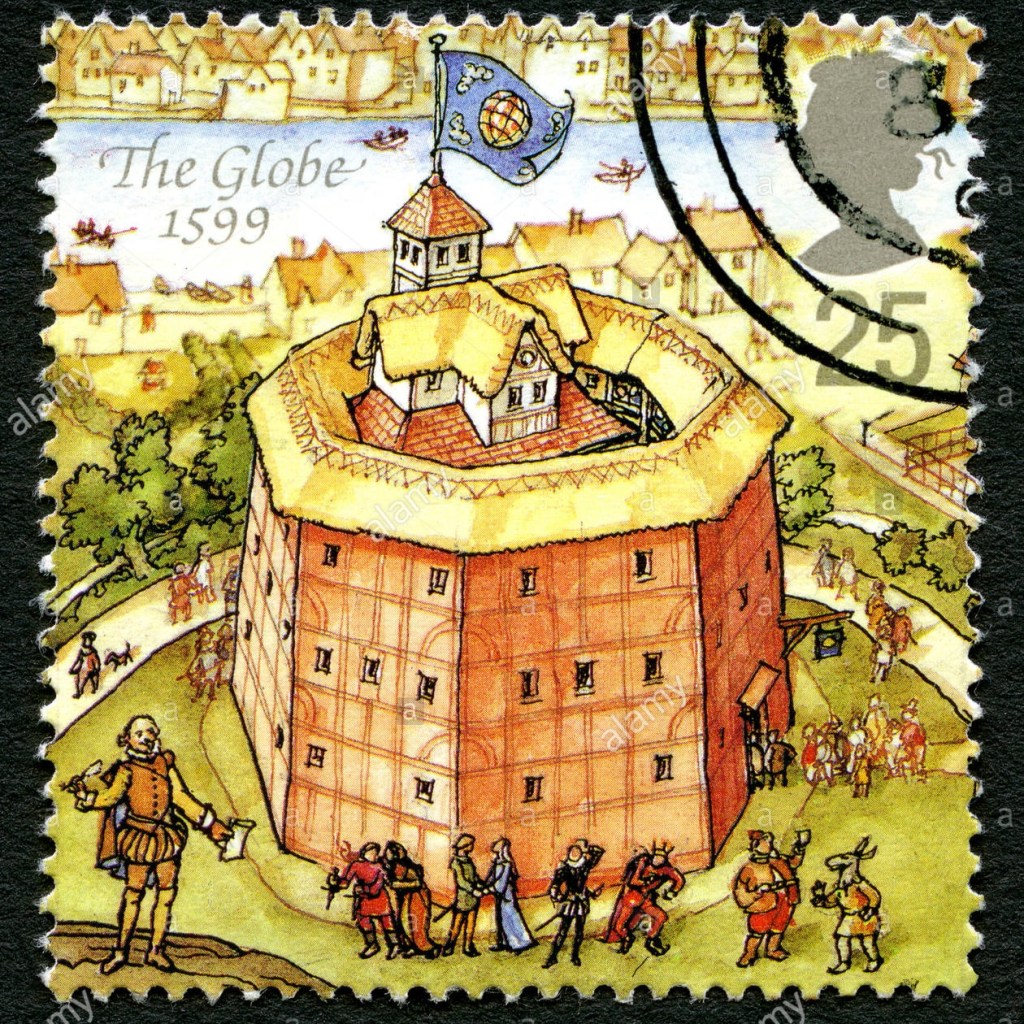
The first permanent theatre was built in 1576 by James Burbage, father of one of the colleagues of Shakespeare at Shoreditch, to the north of London. It was called the theatre as it was the only one of its kind in existence. Soon other theatres were also built thus the famous ‘Rose’ was built in 1587 the ‘Globe’ in 1599 and the ‘Fortune’ in 1600. Most of the theatres of the time was small as they were expected to accommodate only a limited number of spectators. They were different in shape, the Swan was after octagonal but the fortune was square. Part of the theatre that is the yard in the front of the stage was open to the sky where is the backstage as well as the galleries found in the yard was roofed.

THE STAGE ARRANGEMENT AND PRACTICES:

Throughout the Elizabethan period the theatre was half open to the sky and the place were acted during day time. But towards the end of Shakespeare’s career great changes for the better took place. In 1608 James Burbage bought the refectory of old Blackfriars Monastery and convert it into an indoor playhouse. Here plays where acted by candlelight and therefore most stage effects were possible.

The stage arrangement in the Elizabethan theatre was not so elaborate as in a modern one. Its main drawback was that there were no proper stage appliances to produce the effect of change in time and place. Placards were sometimes used to announce the location of the action. Shakespeare considered such devices as very and realistic and therefore tried to convey the effects of place time and action through the dialogues between characters. For instance, in Hamlet, Act I, scene 1, to let the audience know that the time of action is dawn for Horatio says to Marcellus and Bernardo.

“But look, the morn in russet mantle clad Walks o’er the dew of yon eastern hill”

There was no drop curtain in the Elizabethan theatre. The end of a scene was so often indicated by a rhyming couplet. In Hamlet, Act II,

“. . . I will have grounds

More relative than this, play is the king, Wherein I catch the conscience of the king”

NO FEMALE ACTORS:

A feature of great importance of Elizabethan stage was that there were no female performers. The acting profession was entirely masculine. It was only in the Restoration period that professional actresses became the accepted part of the English theatre. Women’s part was therefore played by young boys train from childhood for the purpose. The dramatic company for which Shakespeare wrote his plays, perhaps did not have many such ‘actresses’ and that is the reason why there are only a few women in most of his place. He had his own difference about the effect that was likely to be produced by these boy actresses and so he tried to overcome the difficulty by making his heroine is like Roselind, Viola and Beatrice appear under the disguise of boys. It was likely that this boy actors are not able act successfully like the part of somewhat grown up women of the type of Lady Macbeth and Cleopatra. Shakespeare himself is aware of this difficulty when he makes Cleopatra complain

“. . . and I shall see

Some squeaking Cleopatra boy may greatness”

AUDIENCE:

The audience of the Elizabethan age consisted of a small motley crowd drawn from all sections of society differing in tastes, education and wealth. Most of them were highly superstitious believing in ghost and witches and witchcraft and found of witnessing scenes of violence like brutal fights and bear biting. Those who could pay well was seated in the galleries from where they could have a better view of the performances. Some of the most privilege person sat on the stools on the stage and this enables them to pass remarks on the acting of the players. The rest of the audience known as groundlings, the most unruly and noisy section of the spectators, who pay just the penny stood on the floor around the uncovered part of the stage which jutted into the yard.

RELIGIOUS TO NON-RELIGIOUS DRAMA:

The Elizabethan age was a period of transition from the old religious trauma tomorrow and non religious plays. It is often said that the church was the cradle of English drama. In the beginning the dumb show were performed inside the church or the church premises by the clergyman. After the Renaissance there was a revival of learning and the demand was for the new type of classically influenced non-religious drama. At first this plays were written according to the classical tradition, observing the three unities of time, place and action. Later this rules were broken and the modern type of drama was evolved.

THE PLAYWRIGHTS OF THE PERIOD:

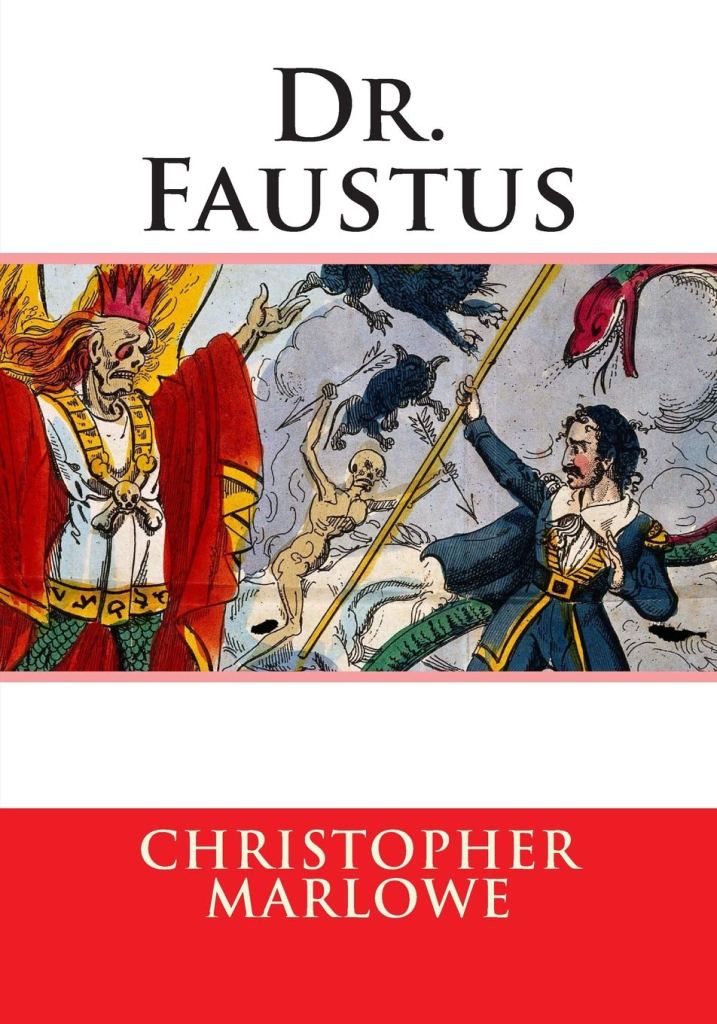
The first English dramatist of some originality was Robert Greene, who was one of “University wits“. The famous “Spanish tragedy” written by Thomas kyd is considered to be first tragedy in English. However, Christopher Marlowe, the author of Tamberline, The Jew of Malta, Dr. Faustus and Edward II is recognised by all as the father of english tragedy.

SHAKESPEARE’S CONTRIBUTION:

The presiding deity, however, of the Elizabethan stage, was William Shakespeare whose dramatic carrier extended to about 20 years from 1590 to 1610. Starting as an errand boy and actor of minor parts, be slowly rose to prominence and dominated the stage for years together without any break and without arrival anywhere in the vicinity. At the end of his career having earned a fortune sufficient to live comfortably for the rest of his life. ‘Shakespeare return to his native town, Stratford-on-Avon.’

FRENCH REVOLUTION (1789-1799)

France was for years ruled by the spots like Louis XIV. The kings ruled the country as they like without caring for the good of the common people. As a result of this indifference of the autocratic monarchs. There was famine and suffering all over the country the popular upsurge against the tyranny of kings culminated in the abolition of monarchy and their establishment of the French public.

CAUSES FOR THE REVOLUTION:

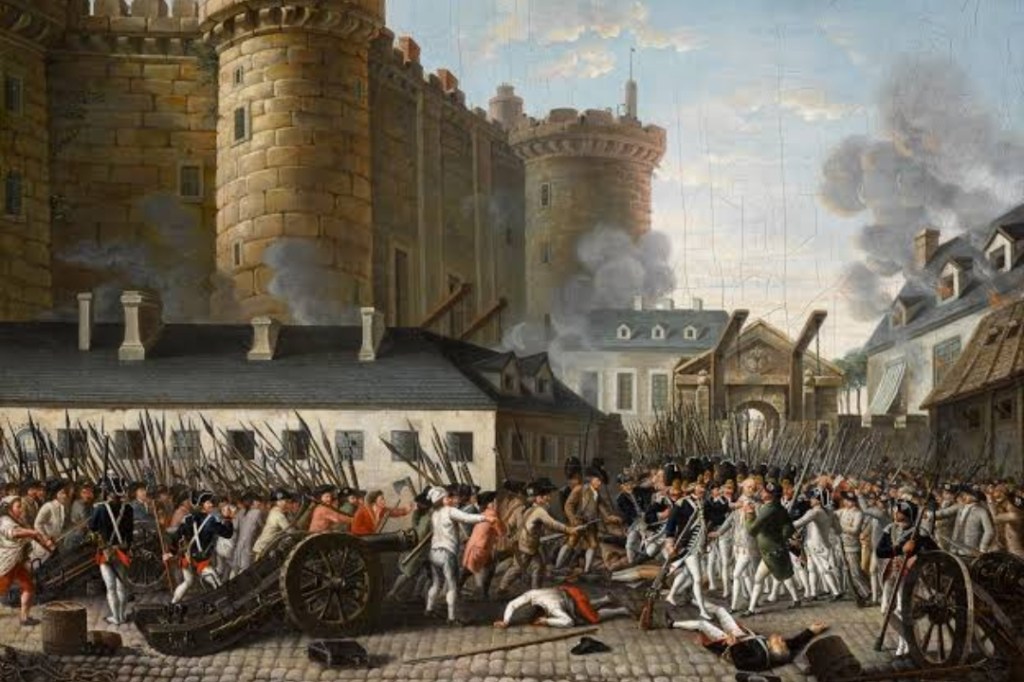
The French revolution started with the breaking open of the state prison “Bastille” on 14 July 1789 their reign of terror that followed their beheading of King Louis XVI and his Queen ended only when Napoleon became Emperor in May 1804. In 1793 England was forced to declare war against French Revolution because the French Revolutionary rules offered to help all nations who wished to follow the example of the French and overthrow their kings. The war continued up to the “Battle of Waterloo” in 1815 when Lord Wellington inflicted a crushing defeat on Napoleon.

EFFECTS OF REVOLUTION:

NATIONAL DEBT: This prolonged war of twenty years had lasting effects on England. The most important and immediate effect was the huge National Debt. It has been estimated that the cost of the war from the beginning to the end was nearly £1,000,000,000. The nation which consisted of nineteen million people had to pay annually a large amount by way of interest. In 1815 the country had to raise £ 74,000,000 by taxation alone.

UNEMPLOYMENT: The peace that followed the war was the cause of a fall in the prices of coal and iron. Many men employed in the industry was thrown out of their jobs. alAfter the signing of the peace treaty nearly half a million of soldiers sailors and others who had been engage directly in the war were dismissed from active service. They added to the already swelling army of the unemployed. Thus the problem of unemployment become much more accurate than before.

CORN LAW: During the twenty years of War there was no import of European corn into England. This caused the price of corn to go high. But the agricultural lords stood to the benefit by this. However after the Restoration of peace the free flow of European corn was resumed which brought down the price of English corn. This was resented by the English agriculturist. The corn law was passed in 1816 and this have disastrous effect on the poor and especially in the time of famine. Their sufferings led to the formation of Anti-corn law League. It was this association that was ultimately responsible for the repeal of the corn law in 1846 by the then Prime Minister of Robert Peel.

THE BATTLE OF PETERLOO: In 1819 the magistrates of Manchester foolishly attempted to arrest a radical leader known as Orator Hunt at a large gathering in St. Peter’s field. On meeting with resistance from the crowd the government officer order the cavalry charge upon the unarmed mob. Eleven persons were killed and 600 wounded. The even popularly was called the battle of peetalu or the Manchester massacre was used by agitators to embarrass the government. To get their grievances redressed the poor agitated for parliamentary reform and after much opposition from the lords the first reform bill was passed in 1832.

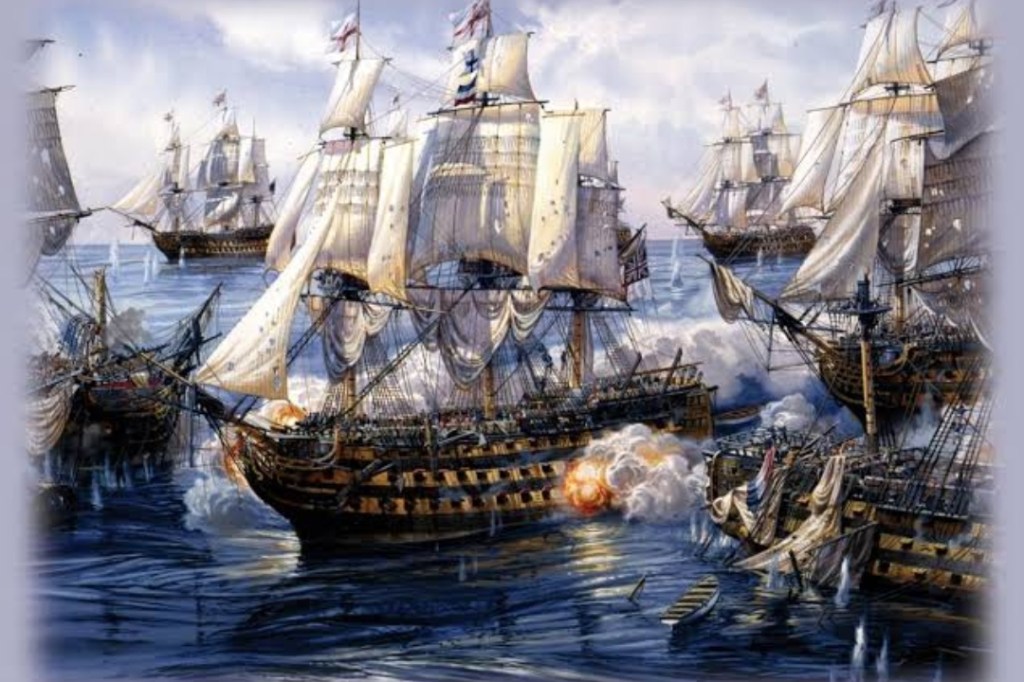
Battle of Trafalgar

THE ARMY AND NAVY BECOME THE NATIONAL INSTITUTIONS: Another effect of the French revolution was that both navy and army recognized as national institutions. The battle of Trafalgar won by Lord Nelson during the Revolutionary war in 1805 highlighted the greatness of the English navy. Their victory was commemorated renaming a part of London as Trafalgar square where the statue of Nelson stands on a lofty column. Trafalgar square with its 1.5 metre column top by the statue of Admiral Horatio Nelson looking out to the River Thames, is one of the favourite tourist spots in London. It is the traditional end of most protest marches and rallies in the capital. With the victories of Lord Wellington at Waterloo in 1815 on land the army became popular as it had never been before. Barracks were built to house the troops and the haphazard billeting of soldiers in public houses came to an end. This was done to the great relief of both the civilian population and the soldiers themselves.

INFLUENCE IN ENGLISH LITERATURE: The French revolution ushered in a new era in the history of English literature. Coming when it did, English romanticism should be considered as a byproduct of the great political event. Romanticism or the romantic movement started when Wordsworth and Coleridge together published the Lyrical ballads in 1798. Wordsworth discarded the artificial style and showed by practice that beautiful poems could be written on ordinary subjects and in ordinary language. The movement was completed by younger poets like Byron, Shelley and keats.

COLD WAR

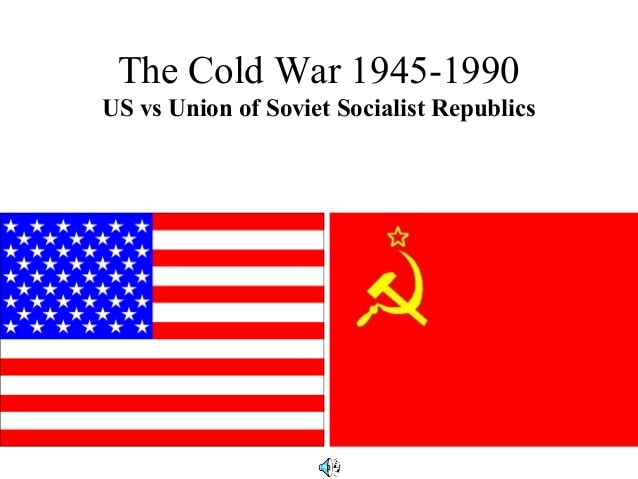
The Cold War is the term used to describe the extreme political and friendliness that existed from the end of world war II to the late eighties between groups of Communist and non communist countries. On one side with the USSR and its communist allies known as the Eastern bloc and walked and on the other side by the western powers of the USA and its allies.

There was mutual suspicion distressed and misunderstanding between two blocs. The USA and its allies felt that the USSR’s game of spreading communism throughout the world threatened their security. The soviets on the other hand accused the USA of practicing imperialism and after attempting to stop revolutionary activities in other Nations. Each bloc had its own political ideas which were diametrically opposed to the other.

THE BEGINNING OF COLD WAR:

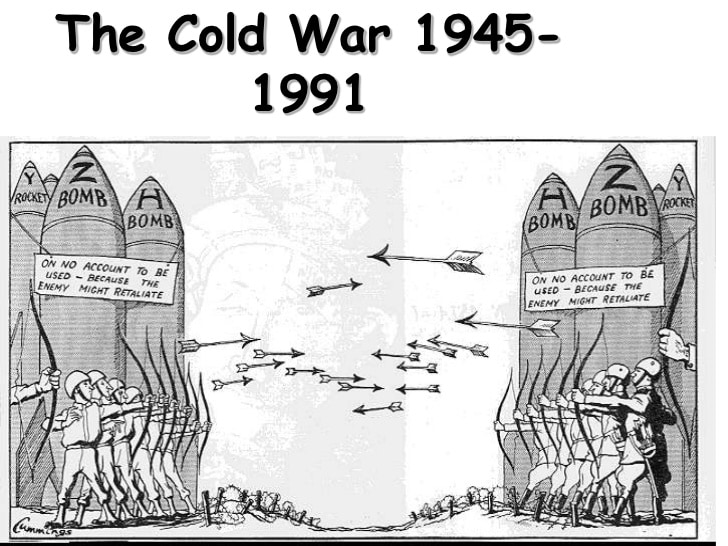
Soon after world War II the two great blocs were formed and the cold war began. It intensified during the 1940’s and 1950’s and reached its peak in the 1960’s. World peace was severely threatened the arms race begin a fresh with both sides experimenting with nuclear weapons at the same time there was a space race between the USA and USSR. The world was in astonishment as the Americans and the soviets try to outdo each other in conquering space. By the seventies both sides begin to realise the dangers involved in recklessly amazing powerful weapons that could wipe out large cities and populations in minutes. In the eighties many efforts were made to improve relations between the two superpowers.

HISTORIANS ABOUT THE COLD WAR:

Most historians agree that the cold war begin after the Yalta conference. The Big Three-President Franklin D Roosevelt of the USA, Premier Joseph Stalin of the USSR and the Prime Minister Winston Churchill of Great Britain met at the Yalta (Ukraine) in February in 1945 to plan for the peace that would follow the war. Stalin would not co-operate with the other leaders regarding the peacetime program. Great Britain join the USA in criticizing the USSR plan to spread communism in Eastern Europe.

IRON CURTAIN

During 1945 and 1946 the USSR broke off all contacts between west and the occupied territories of Eastern Europe in March 1946 Churchill want that an “Iron Curtain” had descended across the continent. The Berlin wall became a symbol of the confrontation between the two blocs.

NUCLEAR WEAPON:

In the 60 the world came dangerously close to a nuclear war. this time both block started to practice nuclear weapon and they started to treat each other with weapons many efforts made to improve relationship between both two superpowers. The cold war took a fresh turn in the eighties when Mikhail Gorbachev took over the leadership of the USSR. Glasnost ( openness) and Perestroika (reconstructio) were the terms which came to be associated with the campaign of Gobrachev to reform the economic and political missionary of the USSR.

GREAT BRITAIN:

Great Britain as one of the country’s belonging to The Western bloc, had to support the USA in any action that it took against the USSR. Britain had to pay a high price for the cold war she had to face every high military expenditure and there was uneasiness in the minds of the British that they were playing second fiddle to the USA. In the seventies Britain’s role as washington’s partner was reduced due to her economic deterioration.

MARGARET THATCHER:

Margaret Thatcher became the prime minister in 1979 and she paved the way for an economic revival and sought to avoid any public conflict with the USA. Through her personal friendship with President Reagan of the USA she was able to make Britain’s position more respectable. Up to 1982 to 83 Thatcher continue to repeat the anti-Soviet rhetoric of the Reagan administration. she was the “Iron Lady” in the USSR after she was re-elected in 1983 she changed her approach. The British government began to establish contact with the Warsaw pact countries. Thatcher paid a visit to Hungary and later she went to Moscow.

The Warsaw pact was a treaty signed by the communist nations of Europe that were under Soviet military command. They were Albania, Bulgaria, Czechoslovakia, East Germany, Hungary, Poland and Romania.

FRESH START BY THATCHER:

In 1984 she made a visit to the USA and the secured the Camp David pacts which said that the USA would not seek nuclear superiority over the Soviet member that played a major role in the negotiations leading to the signing of this treaty. President Reagan spoke of a fresh start in East West relationships.

BREAKING OF BERLIN WALL:

The breaking of the Berlin wall in 1989 was a symbolic act which site signalled the end of bitterness between the power blocs. The cold war become a thing of the past with the disintegration of the Soviet Union in 1991.

MOVIE REVIEW-THE HATE U GIVE

The title of the movie The Hate U Give is directly inspired by the acronym THUG , which stands for “The Hate U Give” coined by late rapper Tupac Shakur (who had it tattooed across his torso). I had no idea about the movie until i see it.

ABOUT THE MOVIE:

The Hate U Give is a 2018 American drama film directed by George Tillman Jr  based on the 2017 young adult novel of the same name by Angie Thomas. The movie follows the effects after Starr Carter a high school student witnesses a police shooting.

Starr Carter is constantly switching between two worlds -the poor, mostly black neighborhood where she lives and the wealthy, mostly white prep school that she attends. The uneasy balance between these worlds is soon shattered when she witnesses the fatal shooting of her childhood best friend at the hands of a police officer. Facing pressure from all sides of the community, Starr must find her voice and decide to stand up for what’s right.

THE PLOT:

Starr Carter is a teenager whose daily life goes on changing between her black community in Garden Heights and the prep school in the grand white and wealthy Williamson neighbourhood, her parents send her and her siblings. When Starr was nine years old her stern-voiced dad, Maverick used to teach his children what to do if a police officer stops the car they’re in. Put their hands on the dashboard; do as they say. The story then jumps forward to when Starr  is a vibrant 16-year-old who plays on her school’s basketball team and finds love in a earnest white classmate named Chris . But the unintended consequence of having one foot in two different social circles is that you never really feel balanced in either. She feels out-of-place both at her white prep school where white kids love to use black slang. One day she attends a party with her cousin where she met her childhood crush Khalil. After a fight breaks in the party both of them start to head to their houses and also trying to escape from cops who arrived at the party after the fight. In the middle on their way they were stopped by cops for unexplained reason, and Khalil gets defensive. Starr tries to coach him through her father’s warnings. When the cop walks away to run Khalil’s license, the teenager carelessly reaches for his hairbrush to pass the time. Shots ring out, killing Khalil. The officer handcuffs Starr next to her dying friend. He had mistaken the hairbrush in the boy’s hand as a weapon and shot first before asking any questions. This incident affected the Starr a lot. She suffers from post traumatic stress and seems to wander the halls of her school, unsure of what’s she doing there at all. She begins breaking rank from one of her white girlfriends who really doesn’t understand what’s going on. Her boyfriend, Chris, stumbles through a crash course in how to be an ally, trying his hardest to help her. After all this, facing pressure from all sides of the community, Starr must find her voice and decide to stand up for her community, get justice for his death friend Khalil and to do what’s right.

I really loved the movie and how they were trying to show the life of black community. The idea of prep school and Garden heights to show their difference felt so realistic. But at some points, i felt that the story was revolving only around Starr. The movie is really worth watching.

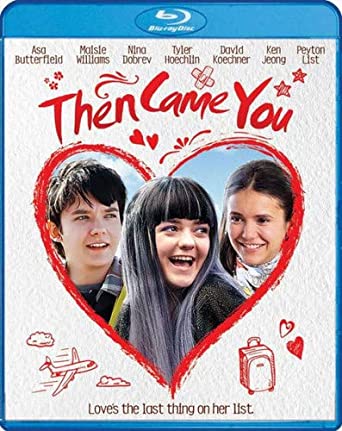
THEN CAME YOU (MOVIE)

I have been thinking about this movie for the past several days since watching it which is probably the sign of a good movie. 

ABOUT THE MOVIE:

Then Came You is a 2018 American  movie directed by Peter Hutchings and written by Fergal Rock. It is romantic comedy-drama. The movie is a about a spirited girl who brings life force to an uncertain male. The movie follows how Skye Aitken the terminally ill girl having a desire to enjoy her life before she dies. She develops friendship with Calvin Lewis a young man working as a baggage handler at the airport and also a college drop-out, whose doctor thinks he has a hypochondriac, though Calvin denies it.

THE PLOT:

The young man in need of a new start is Calvin Lewis, a shy, sad young boy. He is a college drop out working as a luggage handler along with his father and his brother. He is so obsessed with death that he keeps journal of his possible symptoms and attends a cancer patient support group even though he had no cancer. There he meets free spirit and dying Skye who enlist him to help fulfill her final wishes which she has dubbed her To Die List, because “Bucket List” is not cute enough. Skye has the kind of fatal disease we see only in movies, looking completely fine with her cute wigs and filled with energy. This all lasted until Skye collapse at a dramatic moment. she has to get Calvin to help her with her list of supposed-to-be-adorable rule-breakers like shoplifting and vandalism and a few things healthy people have time to wait for, like having sex with the guy she had a crush on before she got sick. This provides an opportunity for a montage with Skye and Calvin performing Shakespeare in a park, fencing, spray-painting a building, wearing funny outfits at a sidewalk stand selling fried chicken and tacos, and behind the wheel of a fire truck, none of which is close to being as charming as it intends. One of the items on her list is “help a sad case,” so she pushes Calvin to come clean about not having cancer and ask out Izzy, the flight attendant he has a crush on from afar. Just to make sure we have not had enough reminders about how Calvin is wasting his chance at life while a dying Skye is filling the time she has left with adventure, Calvin works at the airport but has never been on a plane.

This movie builds the emotional attachment you have to the characters until you start to truly feel what they are going through.  It also has a great message about living and life.  It’s not your usual vapid teen romance comedy but is relatable to any age.  I fell in love with Skye’s spirit and strength. The spirit and actions of Skye will make us to believe that she will get better and stay alive but it is not possible. The more she express her happinees outside the more the pain she is bearing from inside. Calvin who was waiting for a new start has finally met a person like Skye with whom he felt how life can be more interesting and enjoyable. Skye was the reason for Calvin to date with Izzy. In the middle of all crisis she also thought about Calvin’s happiness. It was another great performance by Maisie Williams  who I believe will be one of our premier actresses in the future.   Asa Butterfield, remember him from Sex Education. Overall definitely a must watch for when you are looking to sit and chill instead of getting hyped up watching an action movie.

THEN CAME YOU

I have been thinking about this movie for the past several days since watching it which is probably the sign of a good movie.  It builds the emotional attachment you have to the characters until you start to truly feel what they are going through.  It also has a great message about living and life.  It's not your usual vapid teen romance comedy but is relatable to any age.  I fell in love with Skye's spirit and strength and  it was another great performance by Maisie Williams  who I believe will be one of our premier actresses in the future.   Asa Butterfield ... remember him from Enders Gsme... can't tell...the guy has some range.  Overall definitely a must watch for when you are looking to sit and chill instead of getting hyped up watching an action glick.

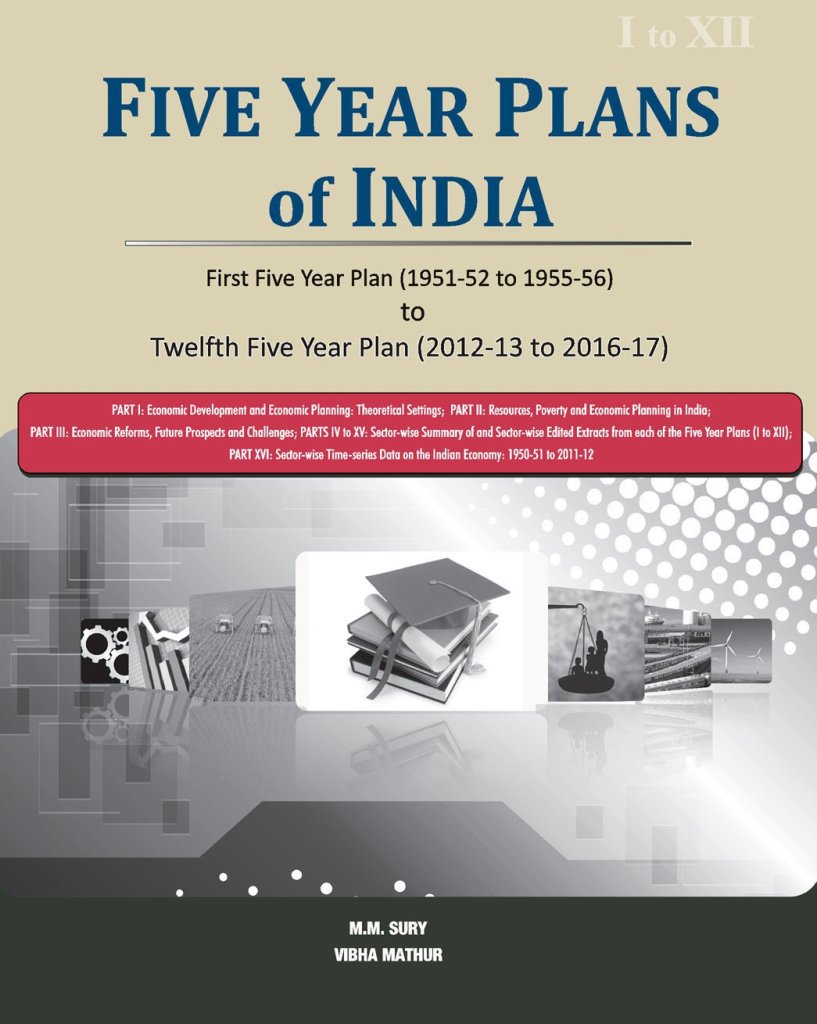
FIVE YEAR PLANS IN INDIA

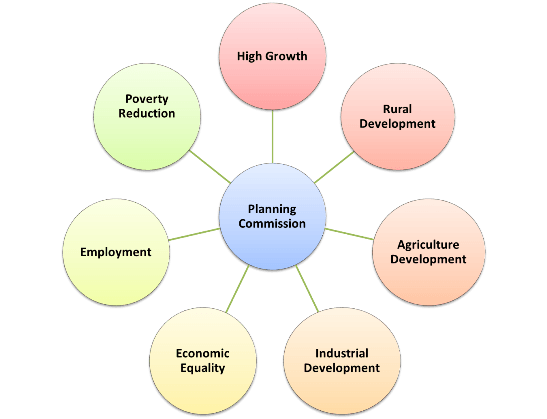
From 1947 to 2017, the Indian economy was premised on the concept of planning. This was carried through the Five-Year Plans, developed, executed, and monitored by the Planning Commission (1951-2014) and the NITI Aayog (2015-2017). With the prime minister as the ex-officio chairman, the commission has a nominated deputy chairman, who holds the rank of a cabinet minister. The first year plan was Harrod – Domar model of development economics. FYP had a target of 2.1% PA growth in national income. Top priority was given to the development of agricultural sector. The idea was agricultural development would lead to higher rate of economic growth.

FIRST PLAN (1951-1956)

Based on Harrod-Domar model. There were arrival of large number of refugees, severe food shortage and mounting inflation confronted the country at the onset of the first five year plan. High priority was given to agriculture, price stability, power and transport. It was a successful plan primarily because of good harvest in the last two years of the plan. Objectives of normal life of refugee, food self-sufficiency and control of prices were more or less achieved. The target growth rate was 2.1 and actual growth rate achieved was 3.7.

SECOND PLAN (1956-61)

Second plan was prepared by Prof. P.C. Mahalanobis. It has s also called Mahalanobis plan. Second plan was conceived in an atmosphere of economic stability. The plan was focused on rapid industrialization by setting up of heavy and basic industries. Importance was given to the public sector. The industrial policy was based on establishment of a socialistic pattern of society as the goal of economic policy. The target growth rate was 4.5 and the actual growth rate achieved was 4.3.

THIRD PLAN (1961-1966)

When this plan was started it was felt that Indian economy has entered a “takeoff stage”. Therefore it’s aim was to make India a self-reliant and self- generating economy. Based on the experience of first two plans, agriculture was given top priority to support the the exports and industry. The plan was thorough failure in reaching the targets due to Chinese aggression (1962), Indo-Park (1965), severe drought (1965-66), food shortage, inflation and adverse balance of payments, Devaluation of the rupee happened in 1966. The target growth rate was 5.6 and the actual growth rate achieved was 2.8.

ANNUAL PLANS (1966-69)

Failure of Third plan and that of the Devaluation of rupee along with inflationary recession led to postponement of fourth FYP. Three annual plans were introduced instead. During the Annual plan a whole new agricultural strategy called the High Yielding Variety Program also known as Green Revolution was implemented.

FOURTH PLAN (1969-74)

The main objective of the fourth plan was “growth with stability” and “progressive achievement of self- reliance. First two years of the plan saw record production. The plan was to improve the standard of living of the weaker sections of the society through employment programmes. The target growth rate was 5.7 and the actual growth rate achieved was 3.3.

FIFTH PLAN (1974-79)

The fifth plan was prepared and launched by D.P. Dhar in the backdrop of economic crisis arising out of run-away fuelled by hike in oil prices and failure of the Government takeover of the wholesome trade in wheat. The two main objectives of this plan is ‘removal of poverty’ (Garibihatao) and ‘attainment of self-reliance’. But due to high inflation, cost calculations for the plan proved to be completely wrong. The target growth rate was 4.4 and the actual growth rate achieved was 4.8.

ANNUAL PLANS (1978-80) AND HINDU RATE OF GROWTH

There were two annual plans 1978-79 and 1978-80. The objectives of first plan were removal of unemployment and provision of basic necessities of drinking water, primary education and health care. Second plan was focused on the rural sector with importance accorded to agriculture.

The phrase Hindu rate of growth, economist Raj Krishna who used it to describe India’s unsatisfactory growth trend in 1950-80 was stuck at 3.5 to 4 per cent per year. The word ‘Hindu’ was used to refer the inactive growth rate of Indian economy.

SIXTH PLAN (1980-85)

The plan was focused in national income and modernization of technology. Sixth plan was considered as success as most of the target were realised even though during the last year (1984-1985) many parts faced severe famine conditions and agricultural output was less than the record output of previous year. The target growth rate was 5.2 and the actual growth rate achieved was 5.7.

SEVENTH PLAN (1985-90)

The plan aimed at accelerating food grain production, increasing employment opportunities and raising productivity with focus on food, work and productivity. The plan was successful. The target growth rate was 5 per cent and the achieved growth rate was 6.

ANNUAL PLAN (1990-92)

The eight plan was postponed by two years because of political uncertainty at the centre. The focus of the plans was to increase employment opportunities and social transformation.

EIGHTH PLAN (1992-97)

There was issues during the launch of plan were Worsening Balance of Payment position, rising debt burden, widening budget deficits, recession in industry and inflation. The plan undertook drastic policy measures to combat the bad economic situation and to undertake an annual average growth of 5.6 percent under Prime Minister of Shri P V Narasimha Rao. The annual growth rate was 6.5 per cent and the achieved growth rate was 34 percent.

NINTH PLAN (1997-2002)

The plan prepared under United Front Government focused on “Growth with Social Justice and Equality”. The plan aimed to demand predominantly on the private sector, India as well as foreign (FDI). It assigned  priority to agriculture and rural development with a view to generate productive employment and eradicate poverty. The target growth rate was 6.5 and the actual growth rate achieved was 5.4.

TENTH PLAN (2002-2007)

Other than the economical growth, tenth plan had set “monitorable targets” in reduction in gender gaps in literacy and wage rate, reduction in infant and maternal mortality rates, improvement in literacy, access to potable drinking water cleaning of major polluted rivers. The target growth rate was 8.0 and the actual growth rate achieved was 7.6.

ELEVENTH PLAN (2007-2012)

Eleventh Plan was aimed “Towards Faster and More Inclusive Growth”. The vision of Eleventh Plan included several inter related components like rapid growth reducing poverty and creating employment opportunities. Access to essential services in health and education, specially for poor, extension of employment opportunities using National Rural Employment Guarantee Programme, environmental sustainability and reduction of gender inequality. Its growth rate was 8.1 per cent but it achieved only 7.9 per cent.

TWELFTH FIVE YEAR PLAN (2012-2017)

The Twelfth Plan commenced at a time when the global economy was going through a second financial crisis. This crisis affected all countries including India. Growth rate slowed down to 6.2 per cent. Therefore the plan emphasizes that the first priority must to bring economy back to rapid growth in all fields. The aim was bring back economic growth faster, more inclusive and with sustainable growth. The target growth rate was 8.0

With the Planning Commission dissolved, no more formal plans are made for the economy, but Five-Year Defence Plans continue to be made. The latest would have been 2017–2022. However, there is no Thirteenth Five-Year Plan.

STRATEGY PLANS FOR THE DEVELOPMENT OF INDIA AND ITS ACHIEVEMENTS:

India has achieved self-sufficiency in almost all basic and capital good industries and consumer good industries. There is a considerable rise in net domestic product, saving and investment. Self sufficiency in food grain production is achieved. There is a good deal of diversification in industrial structure.

STRATEGY PLANS :

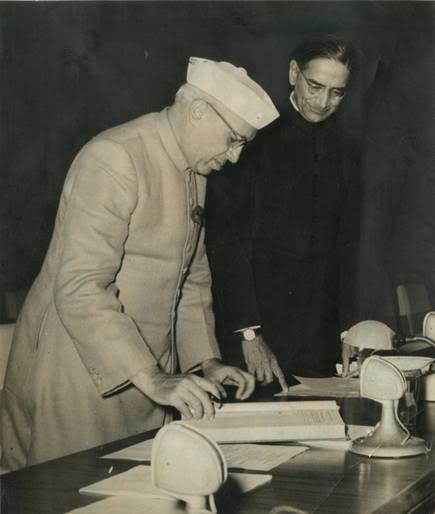
1. Nehru-Mahalanobis Model of Growth: Prof. P.C Mahalabonis is under the guidance of Prime Minister Jawaharlal Nehru developed the heavy industry model based on the Soviet experience. This model is popularly known as Nehru-Mahalanobis model formed the basis of the second plan. Jawaharlal Nehru emphasised that “The development of heavy industry in synonymous with industrialisation”. Mahalanobis was of the opinion that without adequate investment in basic heavy industries, it would not be possible to achieve a rapid self reliant economic growth. to achieve rapid economic growth and self reliance, it is necessary to give the highest priority to basic capital goods industries in the development strategy of a plan. It was during the second plan major steel plants were set up at Durgapur, Bhilai and Rourkela. ONGC, Ranchi Heavy Engineering Corporation, Neyveli Lignite Corporation were also set up during this plan.

JAWAHARLAL NEHRU AND MAHALABONIS

2. Gandhian Model of Growth: Gandhi called his ideal society Sarvodaya. It is a society that ensures the welfare and well-being of all its members. It emphasizes is on all the three components of well being material, mental and more spiritual he believed that “India lives in its villages”. This plan was based on truth and nonviolence. village is considered as the focal point of development and it is considered to be self-sufficient and self regulating economy. Importance given to small scale and cottage industries to reduce unemployment. Mechanization was opposed as it would displaced people out of employment.

3. Wage Goods Strategy of Growth: According to Vakil and Brahmananda, for removal of poverty, promotion of economic growth or capital accumulation alone in is not enough. “The way out of poverty is, therefore, to pay immediate attention to making good the capital gap in respect of wage goods capacity.

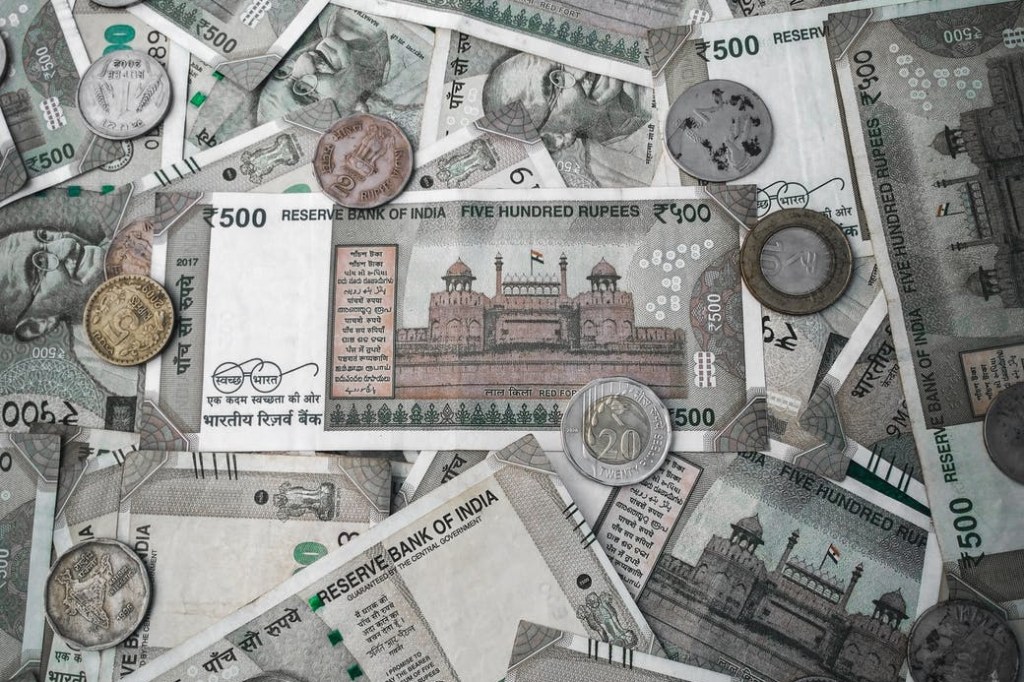
4. Rao- Manmohan Model of Growth: This growth model was introduced in 1991 with emphasis on privatisation and globalisation. There was severe economic crisis since 1990 in the Indian economy issues such as low foreign exchange reserves, balance of payments problem, public sector undertaking losses compelled the then Finance Minister Manmohan Singh and Prime Minister P.V Narasimha Rao to initiate various reforms. A market driven and pattern of development was adopted. Manmohan model of development in emphasized a bigger role for the private sector. A strategy of export led growth was propagated rather than import substitution.

5. Providing Urban-Amenities in Rural Areas: A strategy of developing rural areas this model of development was initiated by the former President APJ Abdul kalam. His vision was to transform rural areas and bring it on par with urban areas. Dr. A.P.J Abdul kalam visualised for connectivities namely physical electronic knowledge that would lead to economic connectivity of rural areas. In the first phase The ministry of Rural development implemented seven pirate projects from 2004 to 2005 and 2006 to 2007 with a total outlay of rupees three billion in the states of Assam, Andhra Pradesh, Bihar, Maharashtra, Rajasthan, Orissa and uttar Pradesh. The scheme was also relaunched as a central government scheme during the remaining period of Eleventh five- year plan.

6. Five year plans: From 1947 to 2017, the Indian economy was premised on the concept of planning. This was carried through the Five-Year Plans, developed, executed, and monitored by the Planning Commission (1951-2014) and the NITI Aayog (2015-2017). With the prime minister as the ex-officio chairman, the commission has a nominated deputy chairman, who holds the rank of a cabinet minister. The first year plan was Harrod – Domar model of development economics. FYP had a target of 2.1% PA growth in national income. Top priority was given to the development of agricultural sector. The idea was agricultural development would lead to higher rate of economic growth.

ACHIEVEMENTS:

1. A Higher Growth Rate: The Indian economy has reached rapid development in all sectors. India’s macroeconomic performance has been only moderately good in terms of GDP growth rates.

2. Increase in National Income: The national income of India has increased manifold. The average annual increase in national income was registered to be 1.2% from 1901 to 1947, 3% in 1950-70, 4% in 1970-80, 5% in 1980-90 and 5.8% in 1980-81 to 2000-01. the Gross income is estimated to have risen by 7% during 2016-17 in comparison to the growth rate of 8% in 2015-16.

3. Increase in per capita: Before independence increase in per capita income was almost zero. But after the adoption of economic planning in free India per capita income has continuously be increased.

4. Growth of Economic infrastructure: India’s performance in building up the necessary economic infrastructure is really praiseworthy At the Inception of economic planning, road kilometre was 4 lakh km. India has now more than 3 million km of road network making it one of the largest in the world.

5. Development of Basic and Capital Goods Industries: Major area of success of Indian planning is the growth of basic and capital goods industries. With the adoption of the Mahalanobis strategy of the development during the second plan period some basic and capital good industries like iron and steel witnessed spectacular growth.

6. Higher Growth of Agriculture: The most significant aspect of India’s five year plans is that their overall rate of growth of food production has now exceeded the rate of growth of population. Although in the early years of planning agricultural performance was measurable resulting in the emergence of food crisis.

7. Savings and Investment: The rise in the domestic savings rate from 10 % of GDP (Gross Domestic Capital) at the initial stages of planning to around 19% in 1980-81 is definitely impressive. The GDP of India has started to increase step by step in the following years and it rose to 36% in 2006 to 2007.

Those strategy plants also faced major failures, in spite of planning, poverty also exists and unemployment has risen. Inequalities of income have not been reduced. There is unequal land ownership, land reforms are inadequately implemented.

UNKNOWN FACTS ABOUT HARRY POTTER

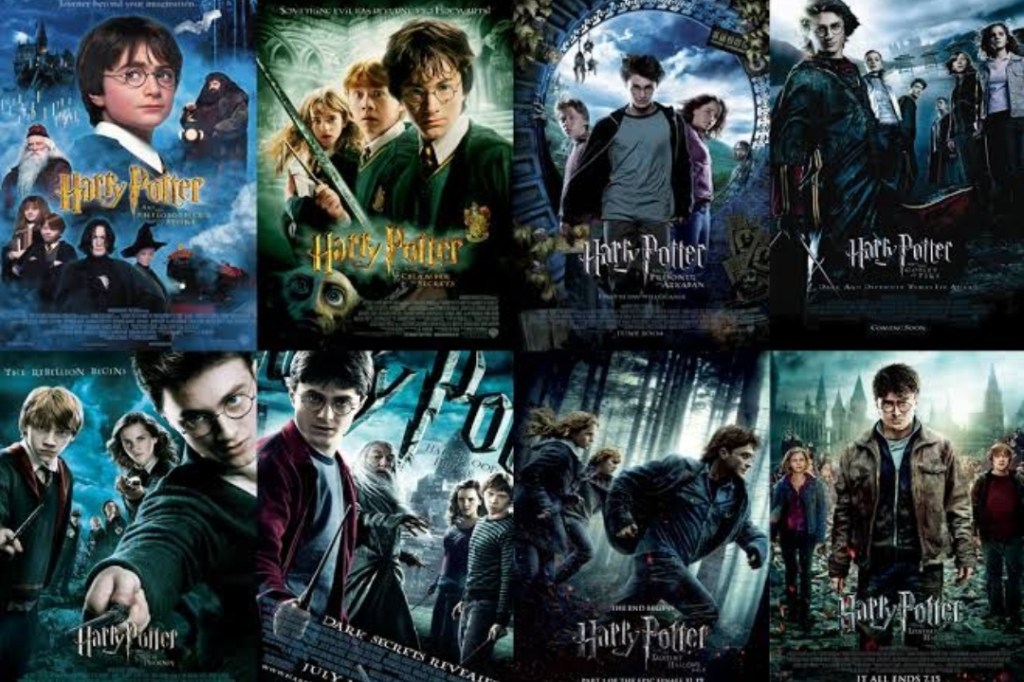
Harry potter doesn’t need an introduction. Speaking of Harry Potter, Potterheads are one of the biggest fandom in the world. Harry Potter and its eight movie parts were  adapted from the Harry potter books by J.K. Rowling.

FACTS:

1. Harry potter’s parents James and Lily are soulmates because the patronus charm is a physical representation of one soul. Because James sister and Lily’s is a doe they are a perfect fit together. Professor Snape was in love with Lily his patronus transformed into a doe when she died.

2. Rowling has said that if voldemort saw a boggart it would embody his own corpse since death was always his greatest fear. Boggart is immortal shape shiffting non being that will took on the form of its observers worst fear.

3. Dumbledore is an old English word foe “bumblebee”. Rowling said she chose this name because she pictured Dumbledore humming to himself.

4. Rowling has said that she almost reneged on her promise to herself to keep the Golden Trio alive (Harry Potter, Hermione Granger, Ronald Weasley) and almost killed Ron in Deathly Hallows. That time when she “wasn’t in a very happy place” in her life. She now believes that she wouldn’t really have been able to go through with it, but at that time she considered it “out of sheer spite” or to desire to harm someone.

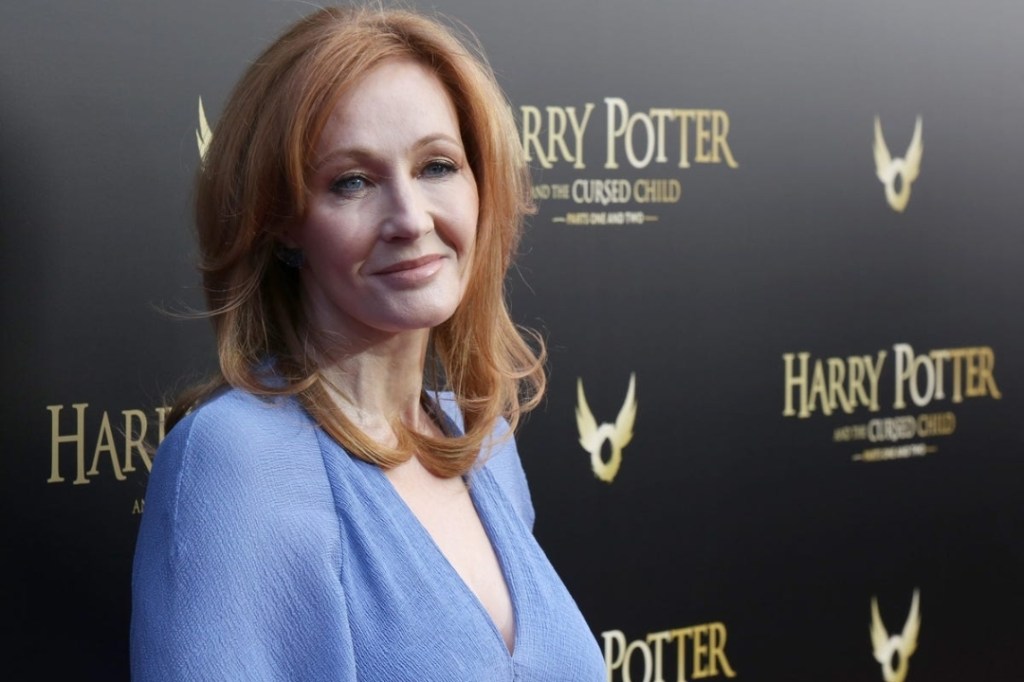
J.K. ROWLING

5. When Fred and George Weasley bewitched snowballs to hit Professor Quirrel’s turban they were unwittingly hitting Voldemort in the face.

6. On the 10 year anniversary of Harry’s parents’ death and the first time Voldemort was defeated, 31st October 1991, he and Ron saved Hermione from the troll in the bathroom. This is generally regarded as the day the trio became friends.

7. Sirius Black and Fred Weasley, two tricksters from different generations, both died laughing.

8. In Prisoner of Azkaban, Trelawney refuses to sit at a table with 12 other characters because she would be the 13th and the first one to get up after that would die. In Order of the Phoenix, 13 members of the order are sitting and Sirius is the first to stand.

9. In Deathly Hallows, Harry notes that Ron and Hermione had fallen asleep holding hands. Hermione’s Patronus is an otter, which sleep holding hands with other otters. Incidentally, Ron’s Patronus is a Jack Russell Terrier, known for chasing otters.

10. Rowling has admitted that Dementors are a physical depiction of her own debilitating experience with depression during her twenties.

10.The first Harry Potter book was published in 1998, the same year the final Battle of Hogwarts was fought. Rowling has said, “I open at the close”.

11. Harry Potter books might not have come to fruition if her mother hadn’t died. “The books are what they are because she died … because I loved her and she died.”

12. Controversial author J.K. Rowling’s “Harry Potter” books-turned-movies are a cultural phenomenon.

13. Rowling found inspiration for the setting of “Harry Potter” in Edinburgh, Scotland.

14. The Hogwarts School Motto is Draco Dormiens Nunquam Titillandus which translates as “never tickle a sleeping dragon”.

15. The only spells and incantations that appear in Harry Potter & The Philosopher’s Stone are Wingardium Leviosa, Petrificus Totalus, Alohomora and Locomotor Mortis.

16. In the books Harry Potter is described as having green eyes but Daniel Radcliffe has blue eyes. He tried wearing green contact lenses but found it uncomfortable and trying to make his eyes green post production didn’t look convincing. JK Rowling said the only thing that mattered was that his eyes should be same colour as his mother’s.

17. Harry Potter & The Philosopher’s Stone contains 77,869 words. There are 1,100,086 words in the entire series.

18. There were three owls on set for the first film all of them playing the role of Hedwig. There were seven different owls used in the films overall; Gizmo, Kaspar, Oops, Swoops, Oh Oh, Elmo and Bandit.

19. Having only written four of the books at the time filming started, Rowling was brought on as a creative consultant to make sure the movie did not contradict her plans for the remainder of the series. To this end, she revealed plot elements she had not yet written to Alan Rickman, whom Rowling had hand-picked to play Snape. This included the reveal of Snape’s love for Lily Evans, from the climax of “Deathly Hallows.”

20. If all the Harry Potter books sold were laid out in a line they would go around the equator over 1.6 times. And the line gets longer by the day!

THE BRONTË SISTERS

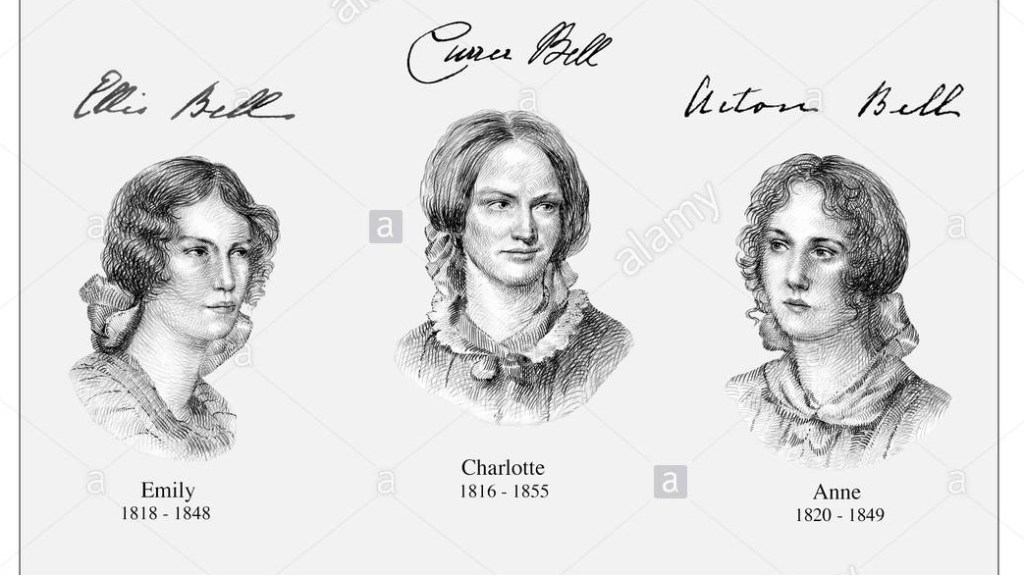
The Victorian era is known for the galaxy of female novelists. Charlotte Brontë, Emily Brontë, Mrs. Gaskell and George Eliot are in prime focus. However, the four most important women novelists, who yet are quite important, are charlotte Brontë, Emily Brontë, Mrs. Gaskell and George Eliot. Of the four, the two first named were sister, and their methods and achievement as novelists met at many places. But each of the remaining two priced her own line and made herself known in the field of English novel in her own way. 

BRONTË SISTERS LIVES:

Charlotte bronte was born in 1816. They were the daughters of an Irish clergyman Patrick Brontë who held the living in Yorkshire. Financial difficulties comepelled Charlotte to become a school teacher in 1835 to 1838 and then a governess. Along with Emily she visited Brussels in 1842 and then return home where family cares kept her closely tied. Later her books had much success and she was released from many of her financial worries. She was married in 1854 but died in the next year.

Emily was born in 1818. Emily was perhaps the greatest of the three Brontë sisters, but the record of her life is extremely meagre, for she was silent and reserved and left no correspondence of interest. She was never married and had no any romantic attachments.Soon after the publication of her novel (wuthering heights), Emily’s health began to fail rapidly. She had been ill for some time, but now her breathing became difficult, and she suffered great pain. She died of tuberculosis in December 1848.

Anne Brontë was born in 1820. Anne Brontë started writing her first novel some time between 1840 and 1845 while she was working as a governess for the Robinson family, at Thorp Green near York. She laboured away in her neat, elegant handwriting, Anne must have felt that she was writing a novel that would go off like a bomb. She was the least famous among famous among her sisters. She died in 1849.

THEIR WORKS:

Charlotte Brontë: Charles first novel “The professor” fail to find a publisher and only appeared in 1857 after her death. Jane eyre published in 1847 is her greatest novel. The love story of the plain but very with vital heroine is an unfolder with the frank truthfulness and depth of understanding that are new in English fiction. The next novel “Shirley” published in 1849, Charlotte Brontë reverts to a more normal and less impassioned portrayal of life. “Villette” published in 1853 is written in a reminiscent vein and the character of Lucy snowe is based on the author herself. the truth and intensity of Charles work are and questioned. Most of the plots of her novel are largely restricted to her own experiences, her seriousness is unrelieved by any humour and her passion is a times over charge to the point of rage. But her novels bought an energy and passion that gave to commonplace people the wonder and beauty of the romantic world.

Emily Brontë: Even though she wrote less than Charlotte, Emily bronte is in some ways the greatest of the three sisters. Her one novel “Wuthering heights” published in 1847 is unique in English literature. This novel is highly imaginative work of passion. Her single novel darkens rather than solves the mystery of her spiritual existence. A few of her poems reached the very highest levels, though the majority lack distinction. her finest poems were probably “No coward soul is mine” and “cold in the Earth” and “The deep snow piled above thee”.

Anne Brontë: Anne bronte is by far the least important figure of her sisters. Her two novels “Agnes grey” published in 1847 and the “Tenant of wildfell hall” published in 1848 are much inferior to those of a sisters, for she lacks nearly all their power and intensity.

THEIR IMPORTANCE IN THE HISTORY OF NOVEL:

With Brontës the forces which had transformed English poetry at the beginning of the century were first felt in the novel. They were the pioneers in fiction. Their works are as much the products of the imagination and emotions. In their concern with the human soul they were to be followed by George Eliot and Meredith.