Strengthening from the Grassroots – Ministry of Cooperation

A Ministry of Co-operation has been newly setup by the Central Government realizing the vision of ‘Sahkar se Samriddhi’ (Prosperity through Cooperation) and to give a new push and to strengthen the cooperative movement.

The Government has signaled its deep commitment to community based developmental partnership. It also fulfils the budget announcement made by the Finance Minister in 2021.

Ministry of Co-operation – The right step in the right time!

  • It will provide a separate administrative, legal and policy framework for strengthening the cooperative movement in the country.
  • It will work to streamline processes for ‘Ease of doing business’ for co-operatives and enable development of Multi-State Co-operatives (MSCS).
  • It will help deepen Co-operatives as a true people based movement reaching upto the grassroots.
  • Since the country is going through a deadly second wave of the pandemic, which has led to millions losing their means of food, this initiative comes as the right step to reform the co-operatives and help strengthen it from the grassroots.

What is a co-operative

  • According to the International Labour Organisation (ILO), a cooperative is an autonomous association of persons united voluntarily to meet their common economic, social and cultural needs and aspirations through a jointly owned and democratically controlled enterprise.
  • The cooperative society ensures benefit for its members and serves for the wider interest of the community as well .
  • In India, a Co-operative based economic development model is very relevant where each member works with a spirit of responsibility.
  • India is an agricultural country and laid the foundation of World’s biggest cooperative movement in the world.

Cooperatives and the Indian Constitution

  • The word “cooperatives” was added after “unions and associations” in Article 19(1)(c) under Part III of the Constitution. This enables all the citizens to form cooperatives by giving it the status of fundamental right of citizens.
  • A new Article 43B was added in the Directive Principles of State Policy (Part IV) regarding the “promotion of cooperative societies”.
  • The Constitution (97th Amendment) Act, 2011 added a new Part IXB right after Part IXA (Municipals) regarding the cooperatives working in India.

Cooperatives in India

Some examples of successful cooperatives in India

  • AMUL
  • Indian Coffee House
  • Indian Farmers Fertilizer Cooperative Limited (IFFCO)
  • Karnataka Milk Federation(KMF)
  • Kerala Co-operative Milk Marketing Federation (KCMMF)
  • Pratibha Mahila Sahakari Bank
  • Orissa State Cooperative Milk Producers’ Federation
  • Anyonya Co-operative Bank Limited

Significance of Cooperatives

  • Cooperatives provides credits and funds to its members and is also able to collect investment through voluntary contribution for the development of its members and the cooperative society.
  • Cooperatives creates a conducive environment for small and cottage industries.
  • Cooperatives provides strategic inputs for the cooperative societies.
  • Cooperatives may serve as an organisation for the poor who wish to solve their problems collectively.
  • Such an organisation softens the class conflicts and reduces the social cleavages.
  • Consumer cooperatives societies meet their consumption requirements at concessional rates.

Roadblocks in the path to Cooperatives

  • Lack of Awareness – The people are not aware about the cooperative societies.
  • Management issues – Since it does not have a trained personnel it may face management issues. Also A cooperative with a large membership turns out to be mismanaged unless some secure methods are employed to manage such co-operatives.
  • Manipulation – In the elections to the governing bodies, money became such a powerful tool that the top posts of chairman and vice-chairman usually went to the richest farmers who manipulated the organisation for their benefits

Way Forward

The pandemic has caused large scale disruptions in the economy, hence the network of cooperatives developed to help revive the economy.

The cooperatives have the ability to bring people with knowledge on the same line, together to make a stronger block and its potential can be used to develop our society. The cooperative society has the power to bring the people together and solving the problems as a community. Such stable and powerful blocks can be a powerful tool to achieve great heights.
Ethanol – The new White Gold

Recently the central government has released an expert committee report on the Roadmap for Ethanol Blending in India by 2025.

The roadmap proposes a gradual rollout of ethanol-blended fuel to achieve E10 fuel supply by April 2022 and phased rollout of E20 from April 2023 to April 2025.

What makes Ethanol so important?

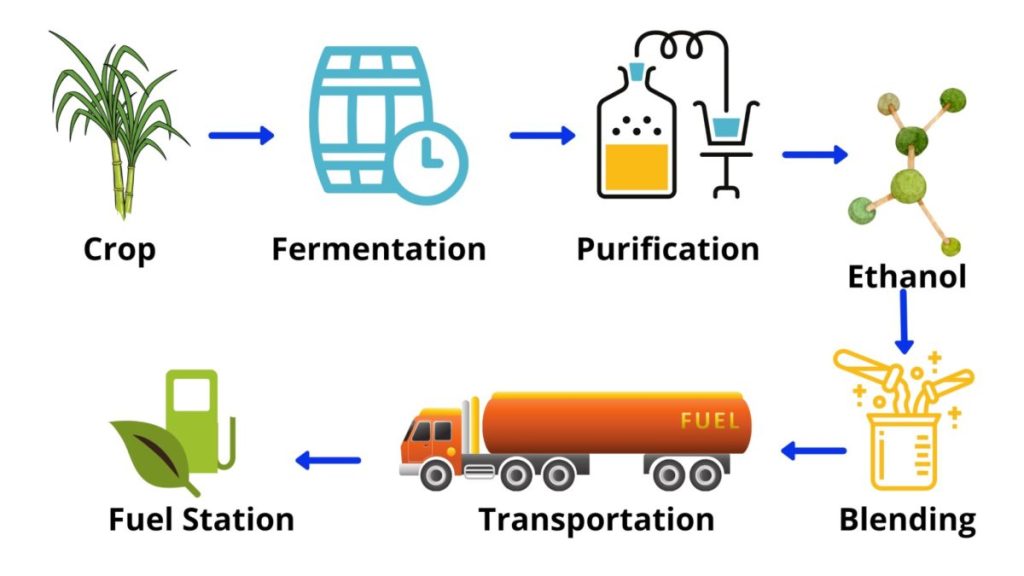
Ethanol is one of the principal biofuels, which is naturally produced by the fermentation of sugars by yeasts or via petrochemical processes such as ethylene hydration.

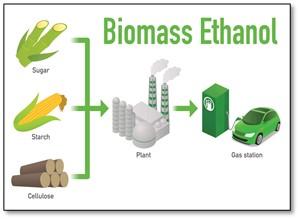
Ethanol can be produced from sugarcane, maize, wheat, etc which are having high starch content. In India, ethanol is mainly produced from sugarcane molasses by fermentation process.

Reasons for Ethanol Blending

Energy Sufficiency – It is estimated that a 5% blending can result in replacement of around 1.8 million Barrels of crude oil, Ethanol blending in fuels could reduce our dependency on imported fuel.

Green Fuel – As the ethanol molecule contains oxygen, it allows the engine to more completely combust the fuel, resulting in fewer emissions and thereby reducing the occurrence of environmental pollution. The renewable ethanol content, which is a by-product of the sugar industry, is expected to result in a net reduction in the emission of carbon dioxide, carbon monoxide (CO) and hydrocarbons (HC) which can help us reach our green targets faster.

Incentives for Farmers – The oil companies will procure ethanol from farmers that benefits the sugarcane farmers.

Protection against the fluctuating oil prices – Since most of our fuel is imported Ethanol blending can reduce on the oil bill and protect us against the sky rocketing oil prices.

India’s Blending Target

The Government of India has advanced the target for 20% ethanol blending in petrol (also called E20) to 2025 from 2030.

Currently, 8.5% of ethanol is blended with petrol in India.

Hence the roadmap proposes a gradual rollout of ethanol-blended fuel to achieve E10 fuel supply by April 2022 and phased rollout of E20 from April 2023 to April 2025

Challenges for Ethanol Blending

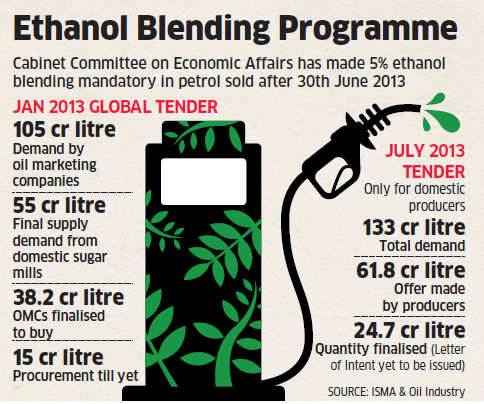
Less Production: Currently, domestic production of bioethanol is not sufficient to meet the demand for bio-ethanol for blending with petrol at Indian OMCs. Sugar mills, which are the key domestic suppliers of bio-ethanol to OMCs, are able to supply only 57.6% of the total demand. Sugar mills do not have the financial stability to invest in biofuel plants.

Water Crisis – Since sugarcane is an water intensive crop it will cause an environmental damage.

Compromise on sugar crystals – Since the availability of the crop is less it will lead to companies concentrating on Ethanol production more than sugar leading to price hike of sugar.

Management Issues – Ethanol being a highly flammable liquid marks obligatory safety and risk assessment measures during all phases of production, storage and transportation, thus increasing the cost and risk factor.

Steps taken by the Government

The government of India has advanced the target for 20 per cent ethanol blending in petrol (also called E20) to 2025 from 2030.

The central government has released an expert committee report on the Roadmap for Ethanol Blending in India by 2025. The roadmap proposes a gradual rollout of ethanol-blended fuel to achieve E10 fuel supply by April 2022 and phased rollout of E20 from April 2023 to April 2025.

The Ministry of Petroleum & Natural Gas (MoP&NG) had instituted an Expert Group to study the issues such as pricing of ethanol, matching pace of the automobile industry to manufacture vehicles with new engines with the supply of ethanol, pricing of such vehicles, fuel efficiency of different engines etc.

The Cabinet Committee on Economic Affairs (CCEA) has approved Pradhan Mantri JI-VAN (Jaiv Indhan- Vatavaran Anukool fasal awashesh Nivaran) Yojana to create an ecosystem for setting up commercial projects and boost to Research and Development in Ethanol sector.

The three public OMCs Indian Oil Corporation Ltd. Bharat Petroleum Corporation Ltd. and Hindustan Petroleum Corporation Ltd. are currently in the process of setting up bioethanol plants.

Initiatives of the Corporates

Balarampur Chinni has planned to setup its 5th Distillery unit in Uttar Pradesh to produce ethanol.

Dalmia Bharat Sugar has planned to double its ethanol manufacturing capacity by January 2022.

Dwarikesh Sugar has planned to sell 0.05 billion litres of ethanol in FY22 vs 0.03 billion litres in FY21.

Conclusion

Bioethanol not only provides a clean source of energy, but also increases income to farmers and help meet the aim of doubling the farmers income by 2020 and prevent them from having to burn agricultural waste which can be a major source of air pollution.

It has not just helped us reduce the import bill, also reduced our carbon footprint.

Though Ethanol production from sugarcane is water intensive, hence the Government can focus on non-cane sources to produce ethanol. Alternative feedstock like agricultural waste, recycled cooking oil, provides for more environmentally friendly bio-fuels.

India has an untapped resource of Ethanol, efficient use of resource could help the economy in huge. We can start utilising our resource by incentivising both public and private players to set up ethanol production facilities.