- Going Global can help you identify opportunities in the US and internationally. Its US city guides(47 including Atlanta, Boston, New York, Los Angeles, Nashville, and Seattle) have city-specific job resources including online job sites, staffing agencies, and city career fairs. You can plan financially by using the cost of living information, and you can find professional networking groups. Going Global’s country guides (41 including Australia, Brazil, China, Japan, and the UK) have everything the US city guides have and more including information on work permits and visas, resume/CV guidelines, interviewing tips, and cultural advice.
- You can use InterviewStream to practice interviewing before a job interview. It’s a helpful resource if you’re looking to improve your skills or looking for an interviewing refresher.
- Vault Career Insider can help you research companies and industries. It’s helpful if you are exploring new career paths or researching potential employers within your field. You can also access Vault’s blog for news and insights on career topics.
Author: Track2Training
2015 Summer Reading List for Your Career Development
Writing a Knockout Cover Letter
- Use over-the-top words; e.g.,: “love” “excited” “perfect” “unique” – it makes you sound immature.
- Put your contact info in the last sentence; it should be at the top of the letter.
- Write more than three-quarters of a page, down to your name at the bottom.
- Go on-and-on about how much you admire the employer. One sentence is enough.
The #1 Skill Employers want YOU to have… Oral Communication
“Must have strong oral and written communication skills.”
- Conducted a classroom presentation?
- Led a student group meeting?
- Negotiated with your student group on how to complete a project?
- Answered a customer’s question or resolved their concern through explaining a policy or procedure?
- Used the spoken word to de-escalate a tense situation?
- Provided spoken advice or counsel to a classmate, colleague, client or customer?
- Persuaded a colleague or classmate to adopt an idea or to use a particular approach to solve a problem?
- Participated in a debate?
- Nervous about public speaking? Try Toastmasters.
- Join the AU Debate Society
- Take a leadership role in any AU student club or community organization; ask to lead meetings or projects
- Shy? Intentionally work on speaking up in class.
- Take advantage of classroom opportunities to be a presenter- don’t cop out in a group presentation and let your teammate do all the talking.
- Above all, stretch your comfort zone to improve your skills in public speaking!
Anna’s Pondering the Question of the Week Series, Fall 2015: Tweaking a graduate student resume
- As you probably know, employers don’t spend much time reading each applicant’s resume. Therefore, you want the employer to see the most relevant information about you first, and it may be your graduate degree that you are currently pursuing. Start your resume with the EDUCATION section, even if you have worked for couple years. State your Master’s degree first, followed by the information about your undergraduate degree.
- If your language or computer skills (such as advanced knowledge of Excel, Photoshop, social media data analytics tools, etc.) are relevant for the position that you are applying for, put them right after the EDUCATION section in the SPECIAL SKILLS section.
- Review carefully the job description to figure out if you can use any of its language to describe your professional experience. Even if your professional experience has been so far in a different field, many keywords describing skills or activities may be similar, e.g. research, develop, evaluate, database, clients, projects, etc.
- Don’t overload your targeted resume with details that are not relevant for the employer. If you apply to an art organization do they really need to know specific lab tests you have worked on as a Biology major? However, your ability to work independently or in a team, perform under pressure, meet deadlines, will be important almost in any profession, in any field.
- Include quantifiable results/outcomes whenever possible, e.g. increased by 30%….; delivered presentations to the audience of 30; etc.
Skills Series: Skill #2 – Teamwork skills are Essential at the Modern Workplace
- Putting a lot of effort into mastering your academic major will help you build the knowledge base to work productively as a team member at your future workplace. Even if you are not planning or unsure about working in the field of your major, you will still have an opportunity to develop your intellectual capacity and transferrable skills that will help you be a productive team member (consult career guides to learn about transferrable skills related to each AU major)
- To excel in your major/minor, build relations with your professors, attend professors’ office hours, utilize ASAC, pursue research/internship opportunities, attend conferences, professional events, panels on, and off campus.
- Some AU majors include more teamwork-based courses while others are more lecture-based and independent research. Both approaches can prepare you well for future teamwork. For example, lectures provide an opportunity to practice your listening and comprehension skills and analyze the professor’s arguments and logic – the ability that helps develop synergies within the team.
- Interacting with highly accessible and diverse AU faculty will expand your comfort levels in communicating with professionals of different age groups, education, cultures, etc. Meet with professors during office hours, attend faculty led panels, etc. Look for opportunities to work as a teacher assistant, research assistant.
- Many major/minors in humanities, STEM, as well as creative majors specifically focus on fostering creativity, thinking out of the box, and communication skills.
- Language courses, courses on intercultural communication, as well as studying abroad expose AU students to different cultures and help build intercultural competencies. When you are abroad, look for opportunities to experience or learn about work-related values and cultural preferences. Reflect on how different/similar they may be to your preferences.
- Interacting with your peers during group work for your classes teaches a lot about team dynamics, managing conflicts, time-management skills, as well as diversity. Utilize AU advantage as an institution with high shares of students from other countries, states, religions, lifestyles, and viewpoints backgrounds. Reflect on your experiences in successful and failed group work. What lessons can you use at the workplace?
- Doing an internship, whether for credit or not, will give you an opportunity to participate directly in a team or observe a team at work.
- Utilize the advantages of the AU location by interning during the academic year in DC and exposing yourself to various workplaces and teams: a federal agency, not-for profit organization, international organization, professional association, art/entertainment organization, etc.
- Given the fact that DC has a diverse workforce comprised of people from different parts of the U.S. and the world, you have excellent opportunities to expand your intercultural competencies.
- At the workplace, continue to be a student, which means to study, through observation and reflection, how productive and non-productive teams operate, to practice good listening, negotiation, and conflict management skills whenever possible.
- As mentioned above, the diverse AU student body provides a lot of opportunities to learn how to interact with people different from you.
- Increase your intercultural competences by attend AU intercultural events organized through ISSS and CDI.
- Expand your experience in teamwork by engaging in student clubs, playing team sports, and participating in volunteering projects. Talk to the Center for Community Engagement and Service.
- Look for self-development opportunities: particularly as they pertain to improving your teamwork skills in the areas of oral communication, time-management, conflict-management, etc. You will find many workshops on campus, which teach these skills. Check regularly Today@AU and the events calendar.
- In your application materials (resume and cover letters), use relevant action verbs and keywords e.g.: collaborate with, worked in x number member team, partner with, interact, communicate, liaise, or serve as a liaison, facilitate, organize, coordinate, etc.
- Be prepared to market your teamwork skills at the job interview. The employer may ask questions directly: e.g., Do you enjoy working with a team or independently? Describe yourself as a team member? The employer will also use behavior questions to learn about your teamwork competencies. Such questions usually start with: “Tell me about the time when…. “ “Give me an example when….. “ Ask your career advisor about typical interview questions, check Career Center books on job interviews, research on-line. Practice giving narratives that highlight your specific experiences. Don’t forget to talk about your experience with diversity, managing and negotiating conflicts.
- Also, make sure to read carefully the job description and explore the employer’s website to understand any special teamwork characteristics required or desired by the specific employer.
- Attend #Ineedajob workshops on resume/cover letters and interviews, offered regularly by the Career Center. Check AU CareerWeb and the events calendar.
- Consult Career Center website resources on resumes and cover letters. Practice and record your mock interview utilizing Interviewstream.
- Schedule an appointment with your career advisor to have your application materials reviewed and prepare for a job interview.
Educational guidance School counselor
work meanderings
Source:
A lot has been happening at work. For a start we are lucky enough to have visits from a couple of people involved in flexible learning – Cathy Gunn (University of Auckland) and John Clayton (WINTEC – Hamilton, NZ)….more about this later.
FLUG meets Blackboard head on
I have been busy with the formation of the new and improved FLUG – a group of enthusiasts involved in flexible learning and support. With our organisational strategy of flexible teaching and learning, it was timely to change the name of the Blackboard User Group to FLUG (Flexible Learning Users Group).
We also needed to extend the group – so a bigger cross section of people involved in flexible options here could muck in and get their hands dirty.
This way the small core of enthusiasts and people involved with the Learning Management System will have more of \”a voice\” in some of the changes which are happening here in our organisation. So the Bb User Group has re-birthed as FLUG.
So…what does this mean? FLUG will hopefully provide information to the newly formed Flexible …committee about operational matters and stuff from the coal face. We also hope to assist in developing some sort of flexible learning and teaching strategy which is meaningful for our learners and staff in the organisation.
So who do we think we are…why should we have a say?
Because FLUG hopefully will represent the \”real users\” because it is made up mainly of people who get it. But do we?
We all know that flexible learning is a very important strategy for quality education.What gets me though is that every organisation seems to be busying themselves with the development of strategies for eLearning or flexible learning and teaching…..but what are these strategies based on?? What everyone else has been doing..or on the unique culture within an organisation? The former I believe because it is easier.
It is also easier to follow like sheep and stay with an LMS like Bb – the same as the others. It is also easier to stay with an imposition model – a model where the learners are told what they\’re getting rather than being asked how they want to approach teaching and learning.
The best model for a flexible learning and teaching strategy which I have seen is the one QUT (Queensland University of Technology) developed called the QUT Teaching Capabilities Framework. See overview at:
QUT surveyed staff and students who were using the LMS (Blackboard), to find out what was important to them as both teachers and learners. The project team took their findings and using a process of wide consultation, they developed a framework. This framework now underpins how teaching and learning is offered at the university, and has informed the professional development of staff.
Unfortunately, we have not gone down this track, but have taken the route followed by many. Additionally, we have also developed a teaching qualification without developing a teaching and learning strategy first. Now staff will be indoctrinated into \”a way\” of teaching which may not be right for our learners…or for our environment.
We have broken the first golden rule! We didn\’t find out what our learners actually wanted first!
As a result, our flexible learning and teaching strategy may also not be based on actualities but on assumptions. I believe we do have time to find out what our teachers and learners actually want, what their experience is to date and what they would like to see happening.
Wont this save time in the end! We are in a good position to really do something different and lead flexible learning in a new direction.
I would really like to see us get out from behind the herd, stop the baaing and mooing and get to the green grass first…for a change.
Watch this space to find out how the flexible strategy and the teaching qual evolve.
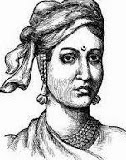
Short Essay on \’Rani Lakshmibai\’ (220 Words)
Rani Lakshmibai was married to Gangadhar Rao in 1842. Gangadhar Rao was the king of Jhansi. In 1851, the Rani had a son; he unfortunately died when he was barely four months old. Raja Gangadhar Rao could not bear the shock and after a long illness, he died on November 21, 1853.
Jhansi became a major center of the revolt of 1857. Rani Lakshmibai of Jhansi, began to strengthen security and started a volunteer army. Ordinary people also contributed to the revolt. In 1857, the kings of the neighboring state of Jhansi, Orchha and Datia attacked. Rani Lakshmibai defeated them successfully. In March 1858 the British army besieged the city of Jhansi. But Rani, with her adopted son Damodar Rao was able to escape. Rani died on June 18, 1858.
Rani Lakshmibai was the great heroine of the First War of Indian Freedom. She was the embodiment of patriotism, self-respect and heroism. Her life is a thrilling story of womanliness, courage, adventure, deathless patriotism and martyrdom. Rani Lakshmibai was the real meaning of the ideal heroine. She was proud of not just India but the world\’s women.
innovation JISC online conference
A couple of entries really caught my eye and very much match with some of the isssues our institution is currently facing. Peter Miller – University of Liverpool
pointed us to the idea of Shared Learning Contexts (SLCs) which are described in Scott Wilson\’s blog at The diagram of the SLC illustrates a learner-centred model using open source technologies.
Geoff Stead\’s statement summed it up really – \”VLE fervor has put shackles on a lot of creativity from people like ourselves who earn a living using technology to service learning. Five years ago we were creating learning tools that assisted low-literacy learners to find their voice and publish themselves online. We created project-based environments to share problems and strategies for dealing with low maths skills. But these things are impossible within SCORM (the standard VLE materials need to comply with) Almost 100% of the demand we get for resources to support learning need to fit into the lowest common denominator of VLEs … namely: a single thread of learning objects, each one insular, curriculum mapped, with no connection to the learning process, no inbuilt dialog / saving / thought origination for the student. So yes, they have provided an excuse for less adventurous staff to hide behind. But they have also imposed a set of standards on all purchasing that have ended out stamping out a lot of creativity that was previously embedded in the resources as well. And all with the best intent! \”
Some of the replies to this statement, referred to the usefulness of VLEs for staff new to eLearning. My thought on this is that we have basically trained people up to expect the VLE or Learning Management System approach whereas if the use of a variety of tools could have been \”sold\” to staff early on – through really good resourcing and support – we wouldn\’t all be caught up in using the corporate, expensive, proprietary tools. Tools which suit the company not the teachers and learners.
There was a very good article on one of the discussions – an evaluation of the use of blogging in a course related to technology.
Reflecting on professional practice by Annette Odell, University of East London. \”Applications of Learning Technologies\” is an accredited professional development course. Assessment is by means of a portfolio of work built up during the course and a key component within this is a reflective log, kept online using a blog.
This presentation describes the use of blogs on this context; briefly discusses different uses of blogs; reflects on personal experience with using blogs for different purposes and why the \’reflective blog\’ appears to be a consistently successful use; discusses factors that promote success and problems to be oversome; and summarises the participants\’ perspective on the value of keeping a reflective blog within this course and as part of their professional development record.
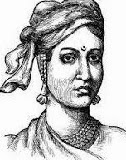
Short Essay on \’Rani Lakshmibai Jayanti: 19 November\’ (145 Words)
Rani Lakshmibai was the great heroine of the First War of Indian Freedom. She was the embodiment of patriotism, self-respect and heroism. Her life is a thrilling story of womanliness, courage, adventure, deathless patriotism and martyrdom. Rani Lakshmibai was the real meaning of the ideal heroine. She was proud of not just India but the world\’s women.
Rani Lakshmibai Jayanti is celebrated grandly in the whole country. On this occasion, cultural events, speeches and seminars are organized at many places. \’Deepdan\’ and \’Mashalyatra\’ are also held at number of places on this day.
Awesome 3D Painting
Facilitating flexible learning
Overall, I think it went well. Lots of discussion and questions and people were keen to make contact at the end of the class….always a good sign.
It appears that the title and the content offered were timely. There was a big contingent from one school who have a push on to put courses online. This was excellent. They did have concerns, however, about how to get their content online. They were advised to work with the programme developers, and offered assistance to have people work alongside them, but not do it for them. The mentality is still there to get stuff on Blackboard, rather than thinking how they would like to present content and activities, and what technologies could assist.
There was some discussion about models where content is handed over to a team to create resources. Leigh made a good point about models he had seen which didn\’t work and had cost lots of money. He believes it is best to start with finding resources which already exist and can be re-used…if possible. This makes a lot lof sense.
The total number who enrolled was 13 but 3 people didn\’t turn up. The group were very interested and gave positive evaluations.
I started the workshop off with an overview of facilitating online learning…well I sort of took charge of it really…we did brainstorm how we would approach it earlier in the week, but the actual content we presented was up to us individually. At the 11th hour, I felt the need to slap together some slides…too many bullet points..but for next time I will develop some concept maps.Hey I can try out CMAP.
I will try and get them done before this group finishes their online discussion. This will continue on until the end of the second week in May. Easter in the middle sort of interrupts the flow. The timing for the next workshop will be better. And hey next time we will try out Elluminate for the initial session.
People liked the different cases we presented. Merrolee had lots of practical advice and talked about how she managed the online discussion. It is good for people to hear the nitty gritty stuff from someone so experienced…well I am too. I talked about how assessment was linked in strongly to the discussions. We gave tips for managing prolific postings and motivating people to go online. I really have to do something about the amount of content in the evaluating eLearning for best practice course though…I will definitely be going with the learner-generated model for next year. hopefully i will still be teaching it then.
Leigh gave a very insightful overview of alternatives such as egroups, and how they are very useful platforms for handing over ownership of material to students….giving them something they can take away with them when they leave their 3 yr programmes…when they are locked out of the institutional platforms. Some of the OTs were very intrigued with the idea of having a community of practitioners able to remain in contact about professional issues.
It will take time but the ideas are filtering through. All we need are enthusiastic staff who act as \”hotpoints\” in their schools and talk about what they are doing to others. I do love running workshops with staff, and seeing the lightbulbs come on.
The next offerings will need to be a practical show and tell with staff demonstrating what they are doing. Oh when to schedule all these? We have two visiting speakers coming in May and June, Peter Mellow (AUT) on the Study Txt mobile learning project – article. Also John Milne (Massey) who is coming to work with us on the TEC eLearning guidelines an ECDF project. Exciting stuff.
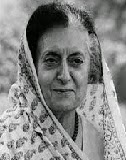
Short Essay on \’Indira Gandhi Jayanti: 19 November\’ (265 Words)
Indira Gandhi took active part in the freedom struggle of India. She became the President of the Congress party. In May 1964, Indira Gandhi became minister of information and broadcasting in Lal Bahadur Shastri\’s government. She became the third Prime Minister of India. She became Prime Minister after the death of Lai Bahadur Shastri. She served from 1966 to 1977. She was married to Feroz Gandhi and had two sons- Rajiv and Sanjay. She was assassinated on 31st October, 1984.
Indira Gandhi was the first lady Prime Minister of India. During her Prime Minister ship, India won the war against Pakistan in 1971. In 1962, during the Chinese-Indian border war, she coordinated civil defense activities. She was a great social worker and had introduced several schemes for the country. Indira Gandhi was a true patriot and will always be remembered as a bold Prime Minister of India.
Indira Gandhi Jayanti is celebrated grandly in the whole nation. Lots of work are carried out to celebrate this day. On this day conferences, seminars and speeches are held at various places. The struggles and contributions of Indira Gandhi are highlighted. Cultural programmes are also held at many educational institutions.
bronwynhegarty doctorate meanderings
Hartman, H.J. (2001). Developing students’ metacognitive knowledge and skills. In H.J. Hartman (ed.), Metacognition in learning and instruction. Kluwer, 33-68. Academic Publishers: the Netherlands.
I like the models she proposes:
Executive management metacognition – plan, monitor and evaluate progress.
Strategic metacognitive knowledge – what (facts), when and why (context) and how (procedures).
These models would enable participants to use metacognitive strategies for the three tasks in their course. This would help them develop metacognitive control and knowledge and also reflect.
For each task participants will be asked to plan, monitor and evaluate their progress using self-questioning techniques and reflect using a blog.
Why do I like the models she proposes:
1. Discipline diverse – these models can be used in a number of disciplines as they relate to any type of learning. The examples in the chapter relate to reading, maths, science social studies, writing.
2. Self-questioning is used and this can be modelled to encourage learners to create their own questions. The answers of course are generated by the learner.
3. Critical thinking – the models encourage this and by scaffolding the learning, critical thinking questions can be developed by the students themselves.
I also like the components of the BACEIS model and the internal and external supersystems.B = behaviour
A = affect
C = cognition
E = environment
I = interacting
S = systems
The cognitive system includes metacognition plus critical thinking, creativity and learning strategies. It would make it too big a project I guess to also look at motivation, affective self-regulation and attitudes (affective system) which are also part of the internal supersystem.
The external supersystem includes culture and instructional techniques as well as teacher characteristics etc as influences on thinking but they are not really relevant for this project.


You must be logged in to post a comment.