Short Essay on \’Influence of Advertisement in Our Lives\’ (160 Words)

Advertisements are essential for starting a new business. Promoting sales is the main motive of a large enterprise. Advertisements rule every aspect of our lives and provide a link between an individual and the world.

Advertising, by the definition, is a paid form of non-personal communication to promote the goods and services. It simplifies the choice of consumers by creating an awareness among people about several brands and products available in the market. As advertisements help in business expansion, the companies spend crores or millions on them.

Advertisements are contained in various means of communication such as magazines, newspapers, television, radio, bill boards etc. Attractive pictures, slogans, taglines etc shown in the advertisements lure customers, thereby pushing up sales.

Advertisements are popularized by the government for betterment of the society in the field of education, providing better facilities, housing facilities for poor, medical facilities like polio drops and other vaccines etc. So, we can conclude by saying that advertisements greatly influence our lives. 

Quality education and learning

In a discussion today at work about quality processes I remembered the model of education which has been successful for Athabasca university in Canada. Their enrolments have increased many fold because people can enrol for gap courses to complete qualifications they are taking at other universities etc.
Also students can enrol any time and at any stage of a course. To enable this flexible learning, Athabasca has a well resourced production team which goes through a strict quality control process to create high quality learning resources for distance students. The team comprises designers – educational and graphic, technical staff, editors, content experts, a project manager and others.
Once courses are developed for flexible/online modes, student support is well sychronised and tutors are employed to teach the courses which academics had a hand in developing as content experts. The academic staff merely oversee their courses and spend their time conducting research which increases the reputation of the university. Plus they are spreading the word and helping others to produce quality online learning.
For example, several staff have written a book on the Theory and Practice of Online Learning and it is freely available under a Creative Commons licence at:  The book is edited by Terry Anderson and Fathi Elloumi (2003).
It provides an overview of educational theory, strategic approaches and infrastructure, technologies, development of courses, team projects, copyright, teaching, support for discussions and learners, library support, quality.
I guess this model gauges quality by the enrolment rates and the reputation of the university. Academic staff become well known because their ideas and research is of a high standard and they get time to undertake research and present and write scholarly articles. This means they are up to date with current trends and in turn this raises the reputation of the university which then attracts students.
The research reputation of an institution does influence the status of institutions in the international arena and I guess this is what has happened with places such as Harvard, Cambridge, Stanford and Oxford. All you need is a few high status researchers and the place goes up in lights…and of course the ability to attract the rich and famous.

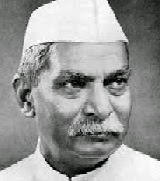
Short Essay on \’Rajendra Prasad Jayanti: 03 December\’ (230 Words)

\’Rajendra Prasad Jayanti\’ is celebrated on 3rd December every year. It is the birth anniversary of Dr. Rajendra Prasad. Rajendra Prasad was born on 3rd December, 1884 in the Ziradei village, Siwan district of Bihar, India. His father\’s name was Mahadev Sahai, who was a scholar of Sanskrit and Persian languages. His mother\’s name was Kamleshwari Devi, who was a religious woman.

Rajendra Prasad was a good political leader, lawyer, statesman and social worker. He took active part in the freedom movements of India. He joined the Indian National Congress in 1911. He was elected as the President of the Indian National Congress during the Bombay session in October 1934. He was sent to Jail many times. He was elected the President of Constituent Assembly on 11 December 1946. Dr. Rajendra Prasad was elected the first President of the Republic of India.

Dr. Rajendra Prasad was subsequently awarded the Bharat Ratna, the India\’s highest civilian award. He authored many books. He was a great educationist and a man of world fame. High principles and ideals of Dr. Rajendra Prasad will always alive to show the right path. His birth anniversary is celebrated on 3rd December every year through out the country in a big way. Rich tributes are paid to him on this day. On this occasion several functions are organized at various places. Floral tributes are offered at his samadhi sthal. 

More stuff about quality

This picture shows the damage done to the road when the Water of the Leith got out of control in the May 2006 floods. I took this on a sunday walk with the dogs. This illustrates for me that \”Quality is about preventing damage in education,not about fencing it off afterwards.\” 

This week and last we had two visiting speakers which focussed me in on quality again. John Milne from Massey university ran a workshop on eLearning Guidelines (an eLearning Collaborative development funded project). All NZ tertiary educators are invited to contribute to the guidelines and develop their own for practical use in their institutions through a wiki accessible from the eLearn website.

In response to a scenario we developed with a student who joined the workshop, we developed a couple of new and very important guidelines, and found several existing ones which were relevant. 

The scenario was:
An off-campus multimedia student is using blended methods (mainly eLearning)in a course. The student has a dial-up connection at home and has difficulty getting on-campus access to the computers and software. Not all computers have the necessary tools/software. The student also doesn\’t have them at home and no access from home. The students are given training in using some software in the first week, then no further training and little support from the lecturer. There is no after hours support.

Some people in the workshop found the session a bit wishy washy, but it was a collaborative and consultative exercise which doesn\’t suit everyone. Some people just want to be told. Guidelines are guidelines not standards and as such need ongoing discussion be dynamic and continually evolving.

The other speaker was Professor Fred Lockwood, a very experienced academic in the field of open and distacne learning. I went to hear his talk at the university about quality and distance education. I recorded part of the talk and had his permission to use it, though he did seem bemused that anyone would want to listen to it.

In his talk he made several interesting points in the way of questions about what we do in distance/flexible learning. Reading between the lines and through his humour it was clear to me that he thought the university was deficient in many areas – he had just conducted a review of their distance programmes and was helping them with a distance learning strategy.

The points which I identified with were:
1. Learner needs and how important it was to pay attention to them.
2. The need to conduct developmental testing with realstudents and reward them with free fees for such courses, with new flexibly offered courses. Even something as a textbook recommended by a lecturer can be unsuitable in the opinion of the students. This is rarely done at OP.
3. Too much information was a common problem so that students who were expecting to study for 5 hrs a week ended up getting increasingly more stuff to read and hand in until they could end up studying well over the 5 hrs per week. In Fred\’s words, \”good value for money getting 35 hrs a week of study…\”

I brought Fred back to OP to speak with a small group (in the Council room with tea) including some managers and people from EDC and other parts of OP which was good. We had an informal discussion and some good points came out e.g. open courseware. Looking out for the learners – part-time, lifelong learners etc. It was a useful session but I wish I\’d asked him to chat about developmental testing so the managers could have got the message.

Fred has also asked me to contact him about putting together a book proposal for something from NZ and across countries too for the Open and Flexible Learning series. Not sure whn I\’ll have time to do anything, but it would be good to coordinate something and collaborate to write a chapter.

Quality is very important in not only attracting students but also in helping with retention. Quality starts before students enrol (18% lost before they \”register\”) and should continue all the way through with the resources offered, access, teacher support/facilitation and should meet learners\’ needs. 

Unfortunately in the model we appear to be adopting, online and product is being pushed which is shoving us along the inflexible rather than the flexible path. If we were truly to meet learner needs, we would adopt a truly flexible model where learners negotiate their content and their assessments and the way they learn. We are trying this to some extent with the Design course.

Short Essay on \’Discipline\’ (171 Words

Discipline is an important virtue in one\’s life. Discipline means complete obedience to certain rules and regulations. Life without discipline is just like a house without a roof. It is absolutely essential for successful life.

Discipline is the structural and fundamental unit of a successful person. It is essential for us in home, for soldiers in battlefield, for students in school, for players in playground. A team of experienced players often lose the match because of indiscipline in the team. A horrible battle can be won by a disciplined army.

Discipline is very important in a student\’s life. He must obey his teachers, must abide by the rules of school. He should be sincere, dedicated, firm and focus his goals. If he violates, then he suffers a great deal in his future.

As a student is the future of our country, so, he needs to be very punctual to his routine, hard working, healthy and fit. Discipline demands self-control and dedication. It let to the formation of a good society and nation as well. 

IUT conference

The last few days have been spent attending the IUT conference (Improving University Teaching). Yes university teachers do care about good teaching! I went as a Doctorate in Education student and because it was nearby at the University of Otago. There were some interesting sessions on offer, and it was a different conference to the ones I normally go to – not eLearning but education.

The highlights were hearing Tom Angelo (University of Victoria) speak again and seeing him in action using interactive methods in a big lecture theatre. The man is magic…and he gets the audience to think and do!

Kathleen Weigert, Georgetown University USA was intriguing when speaking about justice. She asked us to define justice and then talked about three kinds of justice – commutative (fairness in exchange), distributive (allocation and how things are shared), social (contributive – contribute to common good and remove barriers e.g. education).

My definition was: \”Doing the right thing to serve the needs of people\”. She mentioned the importance of policies in institutions matching their practices, and whether the mission statements in our organisations had included statements about justice. I was interested in the Community-Based Learning programme she teaches in where students undertake community-based work to complement their academic learning. For example, students taking courses about homelessness actually work in the community with people experiencing homelessness.

Another speaker, Bland Tomkinson, spoke about the integration of interdisciplinary topics, sustainable development and global citizenship. Although he wasn\’t a particularly receptive speaker when I approached him afterwards, and and there wasn\’t any discussion about his topic, he had some good ideas. I will have to read his conference paper.

The first workshop on Teaching Philosophy (Elaine Laflamme) was partially useful in that it made me think about to which category of teacher I belong – my result from the inventory is that I am a humanist, progressive teacher.

I also found Robert Aitken\’s presentation about using audio journaling techniques with students very relevant – he believes that people think while they talk so the audio recordings demonstrate more thinking about the process whereas written journals tend to be censored and the actual process is rarely documented. The session I was particularly interested on metacognition was presented by someone who didn\’t know the subject very well, a co-author, so I will have to read the paper.

It was also good to meet up with friends and colleagues from my past biology life, and find out about Rob Wass and his research topic of looking at the Zone of current development (ZCD) and how it moves to the zone of proximal development (ZPD) during study in Zoology.

The podcasting and vodcasting workshop was okay, particularly because I was able to promote Leigh\’s courses. A little bit was covered on good practice so this was good. A bit gobsmacked to talk to someone who was planning to record biology lectures and put them up on Blackboard. Good for review I suppose. but the idea of taking them down if people stop coming to lectures is ludicrous. surely the measure would be if students liked them and actually learned better.

And the worst presentation by far had to be Gerrie Jacobs and his Powerpoint Karaoke. some good messages about integrity and credibility but too many flashy bits and not enough substance. good lessons for what not to do to an audience.

There were some very good posters – eportfolio at Massey university in an engineering programme, Rob\’s research study about Learning in the Zone and another one about pharmacy and experiential learning in the curriculum. I also got a couple of free books – one on Curriculum transformation and disability: Implementing universal design in HE and effective tutorial teaching. The former book also had a poster about their work. Oh yes the workshop where L Meyer used a questioning instrument to stimulate self-questioning was very useful. Qs such as how, why etc matched with other words which could be attached to a statement about a topic to get a class to generate their own questions to go away and research and think about. we had to throw a dice and choose the words which matched each number. The game aspect instilled a bit of fun, and the class shared the questions they came up with.

The next step is to look at some of the conference papers, especially the sessions I missed because of the flexible delivery operations committee inaugural meeting – papers on transformative learning – a subject close to my heart.

Short Essay on \’Importance of Newspaper\’ (200 Words)

Newspaper, as we know, is an essential part of our life. For a newspaper reader, it is the first and foremost thing that he would like to have early in the morning. It connects us with every field and every part of the world. Be it politics, entertainment, sports, films etc.

Newspaper provides information about the burning topics from all over world and keeps us well informed. Though news is also displayed on television and radio, there we don\’t have an option to choose. It results in wastage of time, as the news is repeated over and over again and is followed by a number of advertisements.

Apart from the information newspaper provides, it can be useful in a number of ways. The puzzles given in it develop the thinking ability. The job vacancies column help the people. A regular reader can improve his knowledge of language in which language he reads the newspaper. Newspaper also tells us about the different policies introduced by the Government and makes us aware about everything happening around us.

We can conclude by saying that the newspaper broadens our outlook and is an enormous source of information. Therefore one must develop the habit of reading newspaper everyday. 

FLLinNZ meeting

Our planning session for the Flexible Learning leaders in New Zealand planning meeting all the 1st and 2nd round FLLinNZers gathered at Wiapuna Hotel at Mt Wellington, Auckland. We started with a warmup and a discussion of what we are expecting from the third round of funding and any issues.

The facilitator presented on the situation in Australia. Main points were:

  • competency-based apprenticeships
  • qualifications recognised across Aus
  • maximum flexibility in system – impacts on quality
  • grow private training orgs with effective competition
  • school-based apprenticeships
  • RPL – want to improve uptake
  • industry wants to control knowledge base – web 2 does not fit
  • training providers not keeping pace with rapid technological change – important
  • costs, flexibility and access
  • need training to meet needs of lifelong learners – skills shortages, shiftworkers, contractors, mature learners, just-in-time and to suit learners
  • need to build capability – respond to physical and online environment
  • changing role of education and training
key activity: who can we connect with to make the most influence?
often fail to equip people with skills to be able to problem solve and think forthemselves.
Pedagogical shifts
  • more of the following:
  • distributed networks
  • social networking
  • blended and flexible models
  • facilitation driving pedagogy not instruction
  • innovation
  • market changes e.g. full employment
Less occurrence of the teacher teaching many.
Examples: Motor Traders Association – mp3 audio files used in training to capture their interest
Caryl Oliver – mlearning – there is a recording of an interview with Caryl.
Manager of 2020: multigenerations, longer later, more teams, flexible working, performance emphasised, innovation
Overview of pressures on the NZ tertiary education sector can be seen on the concept map (to be loaded).
Facilitator talked about Australian Flexible Framework and how we could have links with Australian projects. Learnscope and Knowledge tree online journal. eLearning networks project is running a September Online Event: Tapping into Resources for E-learning 6 – 8 September 2006

Short Article on \’Global Warming\’ (180 Words)

\’Global warming\’ is the observed century-scale rise in the average temperature of Earth\’s climate system. Rising of temperature of the Earth\’s atmosphere causes Global Warming. Since, last century temperature is increasing by 0.75 degree centigrade causing greenhouse effect.

Human activities have resulted in the increase of global warming. Some of them are deforestation, pollution, consumption of fossil fuel, burning of plastic etc. Due to global warming, polar ice caps are melting and as a result sea level is rising. Islands would be submerged. Ozone layer is becoming thinner day by day resulting in entering of harmful ray in the atmosphere causing skin diseases and many other diseases. Climate is changing day by day. There is a change in rainfall pattern and global warming also affects the agriculture.

Therefore, it is necessary for us to take prevention steps. We should practice afforestation. Government must check our deforestation. Instead of fossil fuels, we should use clean fuels such as natural gas. We should stop the burning of plastics etc. Hence, necessary steps must be taken. Earth should remain beautiful forever. 

initial planning FLLinNZ third round

Our planning session for the Flexible Learning leaders in New Zealand planning meeting all the 1st and 2nd round FLLinNZers gathered at Wiapuna Hotel at Mt Wellington, Auckland. We started with a warmup and a discussion of what we are expecting from the third round of funding and any issues. The facilitator presented on the situation in Australia.
Main points were:
  • competency-based apprenticeships
  • qualifications recognised across Aus
  • maximum flexibility in system – impacts on quality
  • grow private training orgs with effective competition
  • school-based apprenticeships
  • RPL – want to improve uptake
  • industry wants to control knowledge base – web 2 does not fit
  • training providers not keeping pace with rapid technological change – important
  • costs, flexibility and access
  • need training to meet needs of lifelong learners – skills shortages, shiftworkers, contractors, mature learners, just-in-time and to suit learners
  • need to build capability – respond to physical and online environment
    changing role of education and training
key activity: who can we connect with to make the most influence?
often fail to equip people with skills to be able to problem solve and think forthemselves.
Pedagogical shifts
  • more of the following:
  • distributed networks
  • social networking
  • blended and flexible models
  • facilitation driving pedagogy not instruction
  • innovation
  • market changes e.g. full employment
  • Less occurrence of the teacher teaching many.
Examples: Motor Traders Association – mp3 audio files used in training to capture their interest
Caryl Oliver – mlearning – there is a recording of an interview with Caryl.
Manager of 2020: multigenerations, longer later, more teams, flexible working, performance emphasised, innovation

Overview of pressures on the NZ tertiary education sector can be seen on the concept map (to be loaded).

Facilitator talked about Australian Flexible Framework and how we could have links with Australian projects. Learnscope and Knowledge tree online journal. eLearning networks project is running a September Online Event: Tapping into Resources for E-learning 6 – 8 September 2006

Short Article on \’My Life as a Teenager\’ (150 Words)

I am going to begin my real life out of the shell of security of my parents. What I know and understand about being a teenager is happiness, parties, friendship and attraction. But, what I am being told is that it is a period of life of rage and serenity. It is the delicate period of my life where I will be shutting between being a pampered child to being an adult of whom a lot is expected.

It will be difficult for me to understand the emotional and physical changes. I don\’t know how I will be able to handle the peer pressure but I will try to face all this with the support of my parents.

I hope that it will be a period which I will cherish and enjoy but within the limits, which if crossed then no Rama would come to save me from the clutches of Ravana. 

Digital information literacy

I have to prepare an outline for an online module on digital information literacy for the eCDF OIL project.

Digital information literacy is also called fluency, and I like the definition I found on the 21st Century information fluency project website.
This site also has micromodules – small tutorials about information literacy.

Digital Information Fluency (DIF) is the ability to find, evaluate and use digital information effectively, efficiently and ethically. DIF involves knowing how digital information is different from print information; having the skills to use specialized tools for finding digital information; and developing the dispositions needed in the digital information environment.

As well as the definition there is a useful diagram.

Therefore in a module geared up to help users gain skills in digital information literacy, the following needs to be covered:

  • Language and the meaning of terms used for digital searching e.g. subscription-based and free networked datasets, networked information – abstracting and indexing services, full-text material and digitised collections, access points, interfaces, search syntaxes
  • Terms used for digital material e.g. learning objects, resource-based, multimedia etc
  • Range of interfaces for accessing digital information – databases, datasets, electronic libraries, Internet, other multimedia – problem-solving so users can navigate sources and understand their scope
  • Formats of digital information – text, audio, video, images, blogs, wikis etc.
  • Portals, search engines, RSS feeds, subject gateway – catalogue, or directory, of internet resources e.g. OMNI Examples of several subject gateways via the OMNI website plus Internet tutorials on how to find information effectively and Internet detective.
  • Resource Discovery Network (RDN) and web collections and sub-collections e.g. JISC collections
  • Digital repositories e.g. OSLOR, Aeshare, Australian Flexible framework toolboxes
  • FOSS (free and open source software) – examples relevant to information literacy e.g. Diigo ( a web-based annotating tool), blogger, google etc.
  • Digital tools for searching – search engines, subject directories, gateways etc.
  • Data sets e.g. Citation Index, databases, data centres
  • Examples of online resources e.g. NZ National library, British library online gallery – world\’s oldest printed book \”Diamond Sutra\”, wikipedia
  • Publishing on the web, digital publications
  • Intellectual property and options for copyright – creative commons, JISC models, copyright licensing Ltd.

This module will need to be linked to search strategies, evaluating and ethics modules.

Short Article on \’Spices are the Essence of Indian cooking\’ (252 Words)

Spices have been used since ancient times. They have been mentioned in the ancient Hindu scriptures for example Vedas, ancient Egyptian papyruses and the Old Testament. Although it was not until the Roman conquests that western countries discovered their culinary possibilities. Spices have always been believed to have healing and magical qualities. They have been used to cast spells, as incense in religious rites, to embalm corpses, to add fragrance to perfumes and as medicines. The word Spice comes from Latin \’Species\’, meaning a commodity of value and distinction. During their long and fascinating history, spices have often been more valuable than gold or precious stones and the trade of Spices has been an extraordinarily influential factor in history.

Many researchers have attempted to explain why hot Spices are pleasant to taste. It seems the burning sensation is the pain of nerve endings on the tongue. This releases endorphins, the body\’s natural painkiller, giving rise to pleasurable and even euphoric sensations.

Flowers, leaves, roots, bark, seeds and bulbs (the simplest of natural ingredients) are used in endless combinations to produce an infinite variety of flavours: sweet, sharp, hot, sour, spicy, aromatic, tart, mild, fragrant and pungent. Their tastes and aromas combine to create a kaleidoscope of exotic flavours to delight the palate. It is best to obtain spices in whole seed form and to grind them just prior to use.

Indian spices offer significant health benefits and contribute towards an individual\’s healthy life. They add flavour and nutrients to dishes without fat or calories! 

Analysis and Evaluation next phase for OIL

The next phase for the Analysis and Evaluation Group for OIL (online information literacy) eCDF project was brainstormed today.

We did this after we finished the second presentation to research forums at both the polytechnic and the university (21 August and 24 August) to inform people about the evaluation processes which have taken place over the first year of the project. In particular, the presentations were to inform audiences about the findings of the research evaluation project – Real use research evaluation of an online essay writing module: In formation literacy eLearning modules project. The audiences at both venues were relatively small with approximately 15 at each event.

Brainstorm of ideas for the next phase of evaluation
1. Which modules from phase one do we need to test for usability?

  • Business report – scheduled for 1 September 0800 – 1000 in computer lab H517. M and I and myself plus D has volunteered to help as well. This could be usability testing and not part of the research project.
  • Science report – will not be used in class this year, but could be randomly used by second year students if they are referred to it by their lecturer. R wants to customise the module for first year students using the online editor. Then integrate it in the first year biology course in 2007. This would be ideal for the research project. Also D to get Rosemary to review the module for the Science Investigation – expert review.
  • NZ Information Sources
  • – review Leitesha and Joseph modules, also review modules with Learning Centre students and staff at university and polytechnic – usability testing.

2. Which modules to be investigated as part of the research project?
Depending on the research design, expert review and use of the online editor for customisation could be incorporated in the research. Also real use with students in class and critique of the modules by users early October). Observation, focus group interviews (record and transcribe) and questionnaire testing of usability will still be used as methods for collecting data when in real use. Also a feedback blog could be set up for participants to add their feedback. Staff who participate in customisation of the modules would be asked to keep a log of the process, and be interviewed in a focus group. This would comprise case study research.

  • Science report – as above.
  • Essay writing
  • – M wishes to customise this module for a foundation course.

  • Digital Information Literacy
  • – expert review & consultation – FLNW** conference visitors – this module and others.

  • Maori & Pasifika
  • – expert review & consultation – ongoing consultation

  • Ethics – expert review & consultation – copyright expert
  • Searching – expert review
  • Evaluation – expert review
  • Springboard (introduction to IL) module – expert review

Need to make modifications to the questionnaire (remove irrelevant features), information sheet and consent form. Also the feedback sheet onThe next phase for the Analysis and Evaluation Group for OIL (online information literacy) eCDF project was brainstormed today.

We did this after we finished the second presentation to research forums at both the polytechnic and the university (21 August and 24 August) to inform people about the evaluation processes which have taken place over the first year of the project. In particular, the presentations were to inform audiences about the findings of the research evaluation project – Real use research evaluation of an online essay writing module: In formation literacy eLearning modules project. The audiences at both venues were relatively small with approximately 15 at each event.

Brainstorm of ideas for the next phase of evaluation
1. Which modules from phase one do we need to test for usability?

  • Business report – scheduled for 1 September 0800 – 1000 in computer lab H517. M and I and myself plus D has volunteered to help as well. This could be usability testing and not part of the research project.
  • Science report – will not be used in class this year, but could be randomly used by second year students if they are referred to it by their lecturer. R wants to customise the module for first year students using the online editor. Then integrate it in the first year biology course in 2007. This would be ideal for the research project. Also D to get Rosemary to review the module for the Science Investigation – expert review.
  • NZ Information Sources
  • – review Leitesha and Joseph modules, also review modules with Learning Centre students and staff at university and polytechnic – usability testing.

2. Which modules to be investigated as part of the research project?
Depending on the research design, expert review and use of the online editor for customisation could be incorporated in the research. Also real use with students in class and critique of the modules by users early October). Observation, focus group interviews (record and transcribe) and questionnaire testing of usability will still be used as methods for collecting data when in real use. Also a feedback blog could be set up for participants to add their feedback. Staff who participate in customisation of the modules would be asked to keep a log of the process, and be interviewed in a focus group. This would comprise case study research.

  • Science report – as above.
  • Essay writing
  • – M wishes to customise this module for a foundation course.

  • Digital Information Literacy
  • – expert review & consultation – FLNW** conference visitors – this module and others.

  • Maori & Pasifika
  • – expert review & consultation – ongoing consultation

  • Ethics – expert review & consultation – copyright expert
  • Searching – expert review
  • Evaluation – expert review
  • Springboard (introduction to IL) module – expert review

Need to make modifications to the questionnaire (remove irrelevant features), information sheet and consent form. Also the feedback sheet on the OIL website needs to be modified to collect feedback. If we add an information sheet and include the consent on the questionnaire, then people critiquing the modules of the OIL site could be included in the research project.

  • Expert review will also be obtained re ANZIIL standards.
  • Notify college research office about changes in methodology – information sheet, consent form, questionnaire, research design.

Methods for disseminating modules

  • Add OIL link to institutional websites
  • Training in online editor – introduce mid-September with Terry Stewart eCDF project – inhouse group training first from 4 September when usernames and passwords issued.
  • Google not picking up site.
  • ITPNZ, DEANZ, FLLinNZ, eLearning Directors notified

**FLNW = Future of Learning in a Networked WorldThe next phase for the Analysis and Evaluation Group for OIL (online information literacy) eCDF project was brainstormed today.

We did this after we finished the second presentation to research forums at both the polytechnic and the university (21 August and 24 August) to inform people about the evaluation processes which have taken place over the first year of the project. In particular, the presentations were to inform audiences about the findings of the research evaluation project – Real use research evaluation of an online essay writing module: In formation literacy eLearning modules project. The audiences at both venues were relatively small with approximately 15 at each event.

Brainstorm of ideas for the next phase of evaluation
1. Which modules from phase one do we need to test for usability?

  • Business report – scheduled for 1 September 0800 – 1000 in computer lab H517. M and I and myself plus D has volunteered to help as well. This could be usability testing and not part of the research project.
  • Science report – will not be used in class this year, but could be randomly used by second year students if they are referred to it by their lecturer. R wants to customise the module for first year students using the online editor. Then integrate it in the first year biology course in 2007. This would be ideal for the research project. Also D to get Rosemary to review the module for the Science Investigation – expert review.
  • NZ Information Sources
  • – review Leitesha and Joseph modules, also review modules with Learning Centre students and staff at university and polytechnic – usability testing.

2. Which modules to be investigated as part of the research project?
Depending on the research design, expert review and use of the online editor for customisation could be incorporated in the research. Also real use with students in class and critique of the modules by users early October). Observation, focus group interviews (record and transcribe) and questionnaire testing of usability will still be used as methods for collecting data when in real use. Also a feedback blog could be set up for participants to add their feedback. Staff who participate in customisation of the modules would be asked to keep a log of the process, and be interviewed in a focus group. This would comprise case study research.

  • Science report – as above.
  • Essay writing
  • – M wishes to customise this module for a foundation course.

  • Digital Information Literacy
  • – expert review & consultation – FLNW** conference visitors – this module and others.

  • Maori & Pasifika
  • – expert review & consultation – ongoing consultation

  • Ethics – expert review & consultation – copyright expert
  • Searching – expert review
  • Evaluation – expert review
  • Springboard (introduction to IL) module – expert review

Need to make modifications to the questionnaire (remove irrelevant features), information sheet and consent form. Also the feedback sheet on the OIL website needs to be modified to collect feedback. If we add an information sheet and include the consent on the questionnaire, then people critiquing the modules of the OIL site could be included in the research project.

  • Expert review will also be obtained re ANZIIL standards.
  • Notify college research office about changes in methodology – information sheet, consent form, questionnaire, research design.

Methods for disseminating modules

  • Add OIL link to institutional websites
  • Training in online editor – introduce mid-September with Terry Stewart eCDF project – inhouse group training first from 4 September when usernames and passwords issued.
  • Google not picking up site.
  • ITPNZ, DEANZ, FLLinNZ, eLearning Directors notified

**FLNW = Future of Learning in a Networked WorldThe next phase for the Analysis and Evaluation Group for OIL (online information literacy) eCDF project was brainstormed today.

We did this after we finished the second presentation to research forums at both the polytechnic and the university (21 August and 24 August) to inform people about the evaluation processes which have taken place over the first year of the project. In particular, the presentations were to inform audiences about the findings of the research evaluation project – Real use research evaluation of an online essay writing module: In formation literacy eLearning modules project. The audiences at both venues were relatively small with approximately 15 at each event.

Brainstorm of ideas for the next phase of evaluation
1. Which modules from phase one do we need to test for usability?

  • Business report – scheduled for 1 September 0800 – 1000 in computer lab H517. M and I and myself plus D has volunteered to help as well. This could be usability testing and not part of the research project.
  • Science report – will not be used in class this year, but could be randomly used by second year students if they are referred to it by their lecturer. R wants to customise the module for first year students using the online editor. Then integrate it in the first year biology course in 2007. This would be ideal for the research project. Also D to get Rosemary to review the module for the Science Investigation – expert review.
  • NZ Information Sources
  • – review Leitesha and Joseph modules, also review modules with Learning Centre students and staff at university and polytechnic – usability testing.

2. Which modules to be investigated as part of the research project?
Depending on the research design, expert review and use of the online editor for customisation could be incorporated in the research. Also real use with students in class and critique of the modules by users early October). Observation, focus group interviews (record and transcribe) and questionnaire testing of usability will still be used as methods for collecting data when in real use. Also a feedback blog could be set up for participants to add their feedback. Staff who participate in customisation of the modules would be asked to keep a log of the process, and be interviewed in a focus group. This would comprise case study research.

  • Science report – as above.
  • Essay writing
  • – M wishes to customise this module for a foundation course.

  • Digital Information Literacy
  • – expert review & consultation – FLNW** conference visitors – this module and others.

  • Maori & Pasifika
  • – expert review & consultation – ongoing consultation

  • Ethics – expert review & consultation – copyright expert
  • Searching – expert review
  • Evaluation – expert review
  • Springboard (introduction to IL) module – expert review

Need to make modifications to the questionnaire (remove irrelevant features), information sheet and consent form. Also the feedback sheet on the OIL website needs to be modified to collect feedback. If we add an information sheet and include the consent on the questionnaire, then people critiquing the modules of the OIL site could be included in the research project.

  • Expert review will also be obtained re ANZIIL standards.
  • Notify college research office about changes in methodology – information sheet, consent form, questionnaire, research design.

Methods for disseminating modules

  • Add OIL link to institutional websites
  • Training in online editor – introduce mid-September with Terry Stewart eCDF project – inhouse group training first from 4 September when usernames and passwords issued.
  • Google not picking up site.
  • ITPNZ, DEANZ, FLLinNZ, eLearning Directors notified

**FLNW = Future of Learning in a Networked Worldthe OIL website needs to be modified to collect feedback. If we add an information sheet and include the consent on the questionnaire, then people critiquing the modules of the OIL site could be included in the research project.

  • Expert review will also be obtained re ANZIIL standards.
  • Notify college research office about changes in methodology – information sheet, consent form, questionnaire, research design.

Methods for disseminating modules

  • Add OIL link to institutional websites
  • Training in online editor – introduce mid-September with Terry Stewart eCDF project – inhouse group training first from 4 September when usernames and passwords issued.
  • Google not picking up site.
  • ITPNZ, DEANZ, FLLinNZ, eLearning Directors notified

**FLNW = Future of Learning in a Networked World

Short Debate on \’Should Students be allowed to carry Mobile Phones to School\’ [FOR] (254 Words)

The future is here, time has changed. With today\’s world becoming so technological, it is important that students should incorporate technology and communication into their daily lives. Cell phones are great, they enhance learning. But there can also be a distraction if students use them in the wrong way. When it comes to allowance of cell phones what matters is that students should be mature enough to use it justifiably.

Whenever teacher is teaching, he or she can ask the students to search for various answers on the Internet through the cell phones. By this way students will also take interest in studies.

While doing studies, students can also use cell phones for other purposes like for calculations which are complex through calculator. They can also use cell phones as dictionary for searching meanings of different words.

Students can record video or audio of what teacher teaches during his or her class and can watch it or listen to it later in the hour of need. Cell phones can also be useful to students doing adversity and problems. Cell phones will also minimize the educational expenses.

If it is a battle worth to ban or not, to ban the cell phones altogether, I feel that finding positive uses for this might become the key to success in the field of education. All we have to do is to find a balance. Nothing can replace the basics but, in my opinion, with technology ruling the world, gadgets should be allowed to become a part of the educational scenario.