E-Sports: The future of online games in India

PlayerUnknown’s Battlegrounds or PUBG is a name from which everyone is familiar with. No matter, adults or kids, this name is on the lips of everyone. Although for adults it’s because of the anger they have with this game. And for kids, that’s obviously because of their interest in the game. This game has promoted the E-Sports in India too. This wasn’t very famous in India before it. Though people used to play some online games like Counter Strike and Call of Duty but no one ever thought to make his/her career in this field.

This game was launched on PC in India but it wasn’t that famous. Later, a mobile version of this game released in 2017 and that changed the whole scenario. This was because of the release of the free mobile version of the game, so that everyone can play it.

Nowadays, there are many gamers who are playing E-Sports and are making their career through it. Mortal (Naman Mathur), Dynamo Gaming (Aditya Sawant), ScoutOP (Tanmay Singh) are few names who are the famous E-Sports players of India.

Even, e-sports have been recognized and included in the Olympic Games and Asian Games recently as a demonstration sport, which has already boosted the morale of so many young players to pursue their passion and make a career out of it. Maybe, by the year 2022 it will become a medal game with legit medals, prizes and rewards.

Other than these inclusions, e-sports has its own leagues where thousands of spectators are present. Moreover, these sports are broadcasted online as well as on TV. The total number of e-sports spectators as of now are more than 400 Million worldwide. The players that are involved in these sports are earning millions per year which is way more than the salary of any engineer or doctor. Just like the outdoor sports like cricket and football, e-sports also provides you name, fame and money which everyone desires of.

So this is sure that the future of E-Sports is really bright. But what about Indian E-Sports?
It’s still not getting enough exposure.

To make e-sports a viable career option, India still needs to build an eco-system like other countries where players can get sponsored by big companies which would pay for their hardware, travel, accommodation and other expenses when they need to travel abroad for various leagues and competitions. 

Secondly, it is important that the government recognizes this potential and treats it as legitimate sports and starts funding this community. India is such a big country with a large number of population where so many youngsters are interested in gaming. Only if they could channelize their energy and make something useful out of their energy.

Lastly, parents should get introduced with the technology of e-sports because for them it’s just way to spend the leisure time. If one is willing to make his/her career in e-sports, they should discuss it with their parents and make them trust you.

And the students, shouldn’t get involved much in to this. A school student should only spend 1-2 hrs playing any game on mobile and computers. It’s more important at that time to focus on studies.

ACCOUNTING

Accounting is used to keep a record of all transactions in the business. The accounting process includes summarizing, analyzing and reporting these transactions to oversight agencies, regulators and tax collection entities. It helps to handle all the documentation at a particular place. Accounting is a necessary function for decision making, cost planning, and measurement of economic performance measurement. Accounting process help to derive inference about the profit and loss transactions of the business. Accounting also helps organizations to plan their finances by developing budgets and forecasts.

CLASSIFICATION OF ACCOUNTING- i) Financial Accounting: This process help to develop the balanced sheets of a firm i.e. the net cash flow during a particular time period. These sheets are also called financial statements. This is important to develop by every organisation operating as it help to know the requirement of loan and net profits as a whole.

ii) Cost Accounting: It help to track down the production cost of the commodity on large scale. The difference between financial and coast accounting is that; In cost accounting, money is cast as an economic factor in production, whereas in financial accounting, money is considered to be a measure of a company’s economic performance.

iii) Managerial Accounting:  A managerial accountant must be careful in communicating confidential information and to whom. They work with their managers to analyze and create a budget to meet the needs of the short and long-term goals of the organization.

iv) Tax accounting: As the name suggest, it help to track the annual tax reports to be given as income tax. This helps to reduce tax burden on the firm.

v) Public accounting: Public accounting refers to businesses that provide accounting advice to clients based on their needs. They can work in auditing, assist with tax returns, consult on procedures tailored to the installation of technology or computer programs and provide legal advice.

ACCOUNTING CYCLE- The summoning of all type of accounting gives us what we called an accounting cycle. It help the organisation to establish a system of check and balances.The sequence of steps starts when a transaction occurs and ends with its entry in financial reporting. 

To have a successful business having a crucial knowledge of accounting is necessary.

DEMAND

Demand for a commodity is the desire to buy a commodity backed with sufficient purchasing power and the willingness too spend. Quantity demanded refers to a specific quantity to be purchased against a specific price of the commodity.

Demand curve is a graphic presentation of demand schedule, a table showing different quantities of commodity against different possible prices.The curve shows that how quantity demanded of commodity is related to its own prices. The slope of demand curve is estimated as (-)change in prices/ change in quantity. It shows the ratio between price and quantity change. Negative sign indicates the inverse relationship between price and quantity demanded of a commodity.

Demand Function or Determinants of demand: a) Individual demand function shows how demand for a commodity by the individual consumers in the market is related to various determinants.

1) Own price of commodity- other things remaining constant, with rise in own price of the commodity, its demand contacts and vice-versa. This relationship between own price and its demand is called LAW OF DEMAND.

2) Price of related goods- Goods can be divided into Substitute goods which can be interchanged for use, eg- tea and coffee. When price of substitute good increase, demand for that particular good rises. Next complementary goods which complete the demand for each other, eg. pen and ink. When price of complementary good increases, demand for given good falls and vice-versa.

3) Income of consumer- The demand for normal goods tends to increase with increase in income, and vice-versa.On the other hand demand for inferior goods tends to decrease with increase in income.

4) Taste and preferences- They are influenced by change in fashion, climate, innovations, etc. if taste and preferences for product is fading its demand will decrease.

5) Expectations- If the consumer fears acute shortage of commodity in future, he may raise his present demand for commodity at its existing price.

b) Market demand function- The determinants of this function is similar to above with two addition: i) population size or no. of buyers- demand increase with increase in no. of buyers for the commodity.

ii) Distribution of income- Distribution of income between rich and poor also influence the spending in normal and inferior goods.

10 With slow price adjustment, the shift of the demand curve from ...
DEMAND CURVE

Clean India green India

Clean India is the need of the hour. Garbage and wastes are serious threats facing the nation. It certainly destroys the aesthetic beauty of our country. Furthermore, several diseases can result from it. Many Indians fall ill due to improper waste disposal.

How to Clean India?

People can make India clean in a number of ways. First of all, carrying a small poly-bag is a must. Most noteworthy, a recycled paper bag is the best. Indians must certainly use it to throw trash in dustbins. Indians probably throw trash on the street because they dislike carrying it. However, a recycled paper bag makes it easier to carry waste. Hence, Indians can carry this bag to the dustbin for waste disposal.

Segregating wastes is also very important. It is something which many Indians ignore. Most noteworthy, the segregation of waste at home should be in 3 separate bins. These 3 bins are Biodegradable, Recyclable and Others. The waste management department should help in implementing this system.

Indians must learn to re-use old plastic items. Probably, most Indians just throw away such items after using them. One must do creative things with these old plastic items to re-use them.

Another notable way to clean India is the compost pit. Compost pit helps in the preparation of compost. To create compost pit at home, some items are required. These items are kitchen wastes, leaves, grass, etc. Consequently, the microorganisms convert this organic matter into compost.

Community cleanliness drive is yet another brilliant way of making India clean. It has a psychological benefit. This is because it is easier to do a thing when others are doing it. For example, Prime Minister Narendra Modi began Swachh Bharat Abhiyan.

Indians must use fabric bags rather than polythene bags. Indians must stop getting vegetables in a polythene bag from a vendor. Hence, Indians must carry their own fabric bags when shopping.

The Problematic Attitude of Indians

Indians probably pay a lot of attention to cleaning themselves. However, the same Indians don’t care much about the environmental cleanliness. Almost all Indians love to keep their houses clean, but don’t bother about the country. Unfortunately, many Indians avoid or ignore cleaning the country. This is certainly a sad situation.
Indians are also careless about waste disposal. Probably, many Indians throw away wastes on the streets. So, often one sees Indians throwing garbage on the streets. This makes the streets dirty. Indians don’t care about polluting various types of facilities.

One inspirational example for Indians can be Thailand. Thailand is a third world country just like India. However, in spite of being poor Thailand is still very clean. In contrast, India looks pretty dirty. The attitude of the people of India is to blame for that. In India, the unfortunate attitude is “make sure I am safe”. The attitude of Thai’s is – “make sure others are safe”.

In conclusion, clean India is a very important issue. Public awareness regarding it must certainly be spread. Clean India should be the rallying cry of the entire nation.

REGISTRATION OF A COMPANY

Incorporation of a Company-

Section 3 provides that a company may be formed for any lawful purpose by:

  1. Seven or more individuals, if the corporation to be established is a public company;
  2. Two or more individuals, where the company to be established is a private company;
  3. Only one individual, there where the company to be established is a one-person company, that is somehow, a private company,

By subscribing to a document of their name or name and by following the registration requirements of this Act. The Memorandum of One Person Company shall signify the name of the other person, with his previous written consent, who shall become a member of the pay Company in the event of the death of the subscriber or his inability to contract. The written consent of such other person shall also be filed with along with its memorandum and articles.

Procedural Aspects:

(a) Application for availability of name of company.

According to Section 4, the name stated in the memorandum of association-

  1. shall not be identical with or resemble too nearly to the name of an existing company registered under this Act or any previous company law; or
  2. shall not be such that its use by the company will constitute an offence under any law for the time being in force; or
  3. shall not be such that its use by the company is undesirable in the opinion of the Central Government.

Therefore, Section 4 further provides that a person may select six names in order of preference and make an application in the prescribed form accompanied by the prescribed fee to the Registrar for the reservation of name set out in the application as the name of the proposed company. On receipt of the application, the Registrar may reserve the name for a period of 60 days from the date of the application. If the Registrar finds the name undesirable, it shall inform the applicant within three days of receipt of application. He may ask for any other information in this matter or ask for resubmission of the application with new name.

(b) Preparation of memorandum and articles.

Memorandum of Association is charter of a company. It, inter alia, defines the area with which the company can operate. According to Section 4(1), memorandum shall state the name, registered notice, objects, liability of members, share capital in case of a company having share capital. In case of One Person Company, the name of the person who, in the event of death of the subscriber, shall become the member of the company be stated.

Section 5(1) provides that the articles of a company shall contain regulations for management of the company.

According to Section 7(1) (a) read with Rule 13 of the Companies (Incorporation) Rules, 2014, memorandum and articles must be-signed at least seven subscribers in case of public company, two in case of private company and one in case of One Person Company. Each subscriber should give his address, description and occupation, etc., and number of shares subscribed by them. The subscribers must sign these documents in the presence of at least one witness who shall verify the signature of the subscribers.

(c) Filing of documents with the Registrar of Companies.

The following documents, as per Section 7(1), shall be filed with the Registrar within whose jurisdiction the registered office of a company is proposed to be situated.

(i)Memorandum and articles of the company duly signed by all the subscribers to the memorandum in the prescribed manner. [Section 7(1(a)]

(ii) A declaration that all the requirements of the Companies Act and the rules thereunder have been complied with. Such a declaration has to be signed by an advocate, or any proposed director manager/secretary of the company or by a company secretary or cost accountant or chartered accountant who is in whole-time practice in India.

(iii) An affidavit from the subscribers to the memorandum and from the first directors (if any) to the effect that they are not convicted of any offence in connection with promoting, forming or managing a company or have not been found guilty of any fraud or misfeasance, etc., under the 2013 Act or any previous company law during the last five years along with the complete details of name, address of the company, particulars of every subscriber and the persons named as first directors (including nationality, director identification number, proof of identity).[Section 7(1) (c)]

(iv) The address for communication till the registered office is established. As per Section 12, a company is required to have a registered office within 15 days of incorporation. [Section 7(1) (d)]

(v) The particulars of name, including surname or family name, residential address, etc. [Section 7(1) (e)]

(vi) The particulars of the persons named in the articles as the first directors of the company, their names, including surnames or family names, the Director Identification Number, residential address and other identity proofs. [Section 7(1) (f)]

(vii) The particulars of the interests of the persons mentioned in the articles as the first directors of the company in other firms or bodies corporate along with their consent to act as directors of the company in such form and manner as may be prescribed. [Section 7(1) (g)]

Issue of Certificate of Incorporation by Registrar-

Section 7(2) states that the Registrar on the basis of the documents information filed under Section 7(1) shall register all the documents information referred to in Section 7(1) in the register and issue a certificate of incorporation in the recommended form to the effect that the projected company is incorporated under this Act.

Allotment of corporate identity member: Section 7(3) states that on and from the date mentioned in the certificate of incorporation issued und Section 7(2), the Registrar shall allot to the company a corporate ident number, which shall be distinct identity for the company and which shall also be included in the certificate.

The incorporation records to be preserved: Section 7(4) provides that the corporation shall retain and preserve at its registered office copies of all records and information as originally filed pursuant to Section 7(1) until such time the company is dissolved pursuant to this Act.

Registration and its effect (Section 9): Since the date of registration attributed to in the certificate of registration, all subscribers to the memorandum as well as all other individuals who may, since time to time, become members of the organization shall be the corporate body in the name set out in the memorandum.

It is capable of exercising all the functions of an incorporated company under this Act.

It has perpetual succession and a common seal.

It has power to acquire, hold and dispose of property, both movable and immovable, tangible and intangible.

It is capable of entering into contracts. It can sue and be sued, by the said name.

Conclusive evidence-

Section 35 of the Companies Act, 1956 provided that a certificate of incorporation issued by the Registrar in respect of any association shall provide definite proof that all the provisions of the Act have been satisfied with in respect of registration and the matters preceding and incidental thereto, and that the association is a company authorized to be incorporated and legally registered under the Act.

It means that once the certificate has been issued the existence of the company is not allowed to be questioned on the ground that either certain requirements of the Act have not been complied there was any other discrepancy in the process of formation of the company. For example, in Moosa v. Ibrahim1, the validity of the incorporation was not allowed to be questioned. In this case the memorandum of association was signed by two adult persons and by a guardian of the other five members, who were minors at that time, the guardian making separate signatures for each of the minors. The Registrar, then registered the Company and issued a certificate of incorporation. Likewise in Peel’s Case (1867) it was held that once the incorporation is given nothing is to be inquired into as to the regularity of the prior proceedings. In this case after signature and before registration a proposed memorandum of association had been materially altered without the authority of the subscribers.

In T.V. Krishna v. Andra Prabha (P) Ltd.2, the position was summarised by Chandra Reddy, C.J., as follows: “Thus the position is firmly established that if a company is born, the only method to get it extinguished is not by assailing its incorporation, but by resorting to the provisions of enactments, which provide for the winding up of the companies.” It was held in this case that even if some of the objects were illegal, the legal persona of the company could not have been extinguished by cancelling the certificate. Also in such a situation, the certificate is definitive and the solution will be to terminate the company. In Bowman v. Secular Society Ltd.3, it was held that if a company having illegal objects has been registered, the illegal objects do not become legal by the issue of the certificate of incorporation.

It may be noted that there is no section in the Companies Act, 2013 pertaining to conclusiveness of the certificate of incorporation. Section 7(7) of The Companies Act, 2013 provides that any person may challenge the validity of certificate of incorporation before the Tribunal, if the company is formed by furnishing false or incorrect information or suppressing any material fact. Punishment for furnishing false or incorrect information or suppressing any material fact.

Punishment for furnishing false or incorrect information at time of incorporation-

The Companies Act, 2013 prescribes severe punishment for furnishing false or incorrect information at the time of incorporation. These are as follows:

If a person provides any inaccurate or misleading information or suppresses any material information that he or she is aware of in any of the documents submitted with the Registrar in connection with the registration of a company, he or she shall be liable for action under Section 447. [Section 7(5) of the Rules].

Where a company has been incorporated by offering misleading or inaccurate representation or by suppressing any material fact or data in any of the documents or records submitted or rendered for the incorporation of that company or by malicious action, the promoters shall each be liable for the acts referred to in Section 447 as the first directors. [Section 7(6)].

Conclusion:

After incorporation a company:

It enjoys advantages such as; independent corporate existence, limited liability, separate property (owning, enjoying and disposing property in its own name), perpetual succession (no allotted span of life), capable of enforcing its legal rights or be sued for breach of legal duties, enabling transferability of shares, separation of management and ownership and lastly, allowance for raising capital from public.

It suffers disadvantages such as; formality and complications (incorporation is time consuming, expensive and formal process), loss of privacy, corporate governance, and lifting the corporate veil.

1 ILR (1930) 40 Cal. 1 PC

2 AIR (1960) AP 123

3 AIR (1917) AC 406

CASE SUMMARY: M/S. Century Textiles Industries V. Deepak Jain & ANR on 20 March, 2009


DETAILS:

Case Name: M/S. Century Textiles Industries … vs Deepak Jain &ANR

Citation: [2009] INSC 573 (20th March 2009)

Court of jurisdiction: The Supreme Court of India

Year of the case: 20th March 2009

Appellant: M/S. Century Textiles Industries

Respondent: Deepak Jain

Bench/ Judges: D.K Jain, R.M Lodha

SUMMARY:

Challenge in this appeal is to the judgment and order dated 18th November, 2004 rendered by a learned Single Judge of the High Court of Madhya Pradesh at Jabalpur, in Civil Revision No. 364 of 2004 filed under Section 115 of the Code of Civil Procedure, 1908 (for short `the CPC’). By the impugned judgment, the learned Judge allowing the Revision Petition has set aside the order passed by the Second Additional District Judge, Jabalpur in Execution Case No. 2 of 2004, whereby and whereunder he had held that the objector Deepak Jain and D.K. Jain are the same person and proprietor of M/s Surya Trading Company–the judgment debtor.

Shorn of unnecessary details, the case of the appellant, in brief, is that it is engaged in the business of manufacture of cement. It required the services of Clearing and Forwarding Agents. Respondent No.1, namely, Deepak Jain applied for the said agency in the name of a proprietary concern `M/s. Deepak Jain’ at 743, Sarafa Bazaar. In the application, he gave the reference of his father Shri S.C. Jain, Advocate, 744, Sarafa Bazaar. Both the properties, namely, 743 and 744 at Sarafa Bazaar are stated to be ancestral properties of Deepak Jain/D.K. Jain. The said respondent operated a Bank Account No. 454 with Punjab & Sind Bank for his dealings. He also had another account No. 453 with the same branch of the bank operated under the name and style of “M/s Surya Trading Company, Proprietor, D.K. Jain”, respondent No.2 in this appeal.

According to the appellant, though the agency was in the name of a proprietary concern, styled as M/s. Deepak Jain, but after sometime, Deepak Jain started dealing with them as “M/s. Surya Trading Company, Proprietor, D.K. Jain” as well. He corresponded from both the addresses, namely, 743 and 744, Sarafa Bazaar. In discharge of his liability towards the appellant, the first respondent issued a Cheque in the sum of Rs.10,68,335/- dated 2nd August, 1992 from Account No. 453 of “Surya Trading Company” as D.K. Jain. However, the Cheque was returned unpaid. The appellant filed a Civil Suit for recovery of the said amount against “M/s Surya Trading Company, Proprietor D.K. Jain”. The Suit was decreed ex- parte on 10th March, 1997. On summons being issued by the Executing Court, Deepak Jain appeared before the Court and filed objections, pleading that he was neither D.K. Jain nor proprietor of M/s. Surya Trading Company and not even a resident of 744, Sarafa Bazaar. Accepting the objections preferred by Deepak Jain, by order dated 14th August, 2001, the Executing Court held that the decree could be executed only against D.K. Jain and not against Deepak Jain. Aggrieved by the order passed by the executing Court, the appellant filed a Civil Revision before the High Court. Vide order dated 21st August, 2002, the High Court disposed of the Revision Petition with the following direction:  “After hearing the learned counsel for the petitioner, this Revision is disposed of with the direction that in case petitioner files an appropriate application disclosing and specifying the identity of the proprietor, an enquiry thereon shall be held by the Executing Court and the same shall be decided in accordance with law.”

None of the parties questioned the said order and thus it attained finality. On 2nd December, 2002, the appellant moved an application before the Executing Court disclosing and specifying the identity of the judgment debtor. The first respondent–Deepak Jain contested the said application by stating that he was not the proprietor of M/s. Surya Trading Company and that he had no connection with 744 Sarafa Bazaar as well. The Executing Court framed the following issues:

1. Whether the objector Deepak Jain, Advocate S/O Late Shri Sumer Chandra, Advocate, R/O 744, Saraffa Bazar, Kamaina Road, Jabalpur is the proprietor of M/s. Surya Trading Company?

2. Relief and expenses.

Parties led evidence on the first issue. The Executing Court, upon analysis of the evidence so led, came to the conclusion that Deepak Jain was the proprietor of M/s. Surya Trading Company and Deepak Jain and D.K. Jain are the same person. For the sake of ready reference, the relevant portion of the order passed by the Executing Court is extracted below:

“It appears from the perusal of the letter, Exh. P-4 that above letter has been written on the Letter Head in the name of Deepak Jain, 743, Saraffa Bazar, Kamania Gate. The letter has been addressed to M/s. Manikgarh Cement, Nagpur. The contents of the letter, related to sending cement and in place of account, M/s. Surya Trading Company has been written. It has not been clarified by the Objector that when he has no concern with M/s. Surya Trading Company, then on what basis name of M/s. Surya Trading Company has been mentioned on the letter, Exh. P-4 dated 2.11.1990 Thus, it is evident from the letter verified by the Objector himself that business of M/s. Surya Trading Company is being managed by Deepak Jain himself. Because as per statement of Objector as per letter, Exh. P-4, it is his Firm and writer of this letter on the Letter Head, is no one other than Deepak Jain himself. In this letter, demand has been given for M/s. Surya Trading Company. Thus, it is evident from the letter, Exh. P-4 that owner of M/s. Deepak Jain and proprietor of M/s. Surya Trading Company Shri D.K. Jain are the same person.”

Obviously, being aggrieved by the said order, Deepak Jain filed Civil Revision No. 364 of 2004. The main ground of challenge was that the Executing Court had wrongly placed the onus on him to prove that he was not D.K. Jain. However, there was no challenge to the jurisdiction or power of the Executing Court to decide the issues framed.

As noted earlier, by the impugned order, the High Court has come to the conclusion that the Executing Court could not decide issue No.1 in exercise of its jurisdiction under Section 47 of the CPC. It has been held that the Executing Court could not go behind the pleadings and the judgment in the Civil Suit, wherein the case of the appellant related to the transaction with “M/s. Surya Trading Company proprietor D.K. Jain” and there was no reference of objector Deepak Jain, S/o late Sumer Chandra Jain, Advocate, 743 Sarafa Bazaar, Jabalpur in the judgment of the Civil Court. It has been observed that without seeking amendment under Section 152 of the CPC of the judgment-decree, the appellant was erroneously endeavouring to execute the money decree against Deepak Jain.

Being aggrieved by the decision of the learned Single Judge, the appellant is before us in this appeal, by special leave.

Mr. Sunil Gupta, learned senior counsel appearing on behalf of the appellant, strenuously urged before us that by the impugned order, the High Court has in effect overturned its  earlier order dated 21st August, 2002 in Civil Revision No. 379 of 2002 (extracted above), whereby the Executing Court had been directed to hold an inquiry into the question of identity of the proprietor of M/s. Surya Trading Company. It was submitted that the High Court failed to appreciate that its own earlier order mandated the Executing Court to determine the identity of the proprietor of the judgment debtor and, therefore, the Executing Court was certainly competent and entitled to go into the said question in terms of Section 47, CPC. It was also contended that adjudication on the question of identity being a pure question of fact, it could not be interfered by the High Court in exercise of its jurisdiction under Section 115, CPC. In support of the proposition that the High Court should have taken into consideration the decision of the Co-ordinate Bench of the same High Court, dated 21st August, 2002, which had attained finality, learned counsel placed reliance on the decisions of this Court in Topanmal Chhotamal Vs. M/s. Kundomal Gangaram & Ors.1; Jai Narain Ram Lundia Vs. Kedar Nath Khetan & Ors.2 and Ravinder Kaur Vs. Ashok Kumar & Anr.3. AIR 1960 SC 388 AIR 1956 SC 359 (2003) 8 SCC 289

Per contra, Mr. Shiv Sagar Tiwari, learned counsel appearing on behalf of the respondents, supported the impugned judgment and submitted that the Executing Court had misread the evidence while coming to the conclusion that Deepak Jain and D.K. Jain are one and the same person and proprietor of M/s. Surya Trading Company. Learned counsel submitted that the High Court was justified in holding that the Executing Court could not go behind the decree and that the only remedy available to the appellant herein was to seek rectification of the decree by moving proper application under Section 152 of the CPC.

Having bestowed our anxious consideration to the background facts obtaining in the present case, in particular, the order passed by the High Court on 21st August, 2002, in the first round of litigation in execution proceedings, subject matter of Civil Revision No. 379 of 2002, in our opinion, the impugned judgment is unsustainable.

There is no quarrel with the general principle of law and indeed, it is unexceptionable that a court executing a decree cannot go behind the decree; it must take the decree according to its tenor; has no jurisdiction to widen its scope and is required to execute the decree as made. However, the  question which falls for consideration in the present case is that when a specific issue regarding the identity of the judgment-debtor had been raised and entertained by the High Court in the first Civil Revision Petition, decided on 21st August, 2002, and the Court having remitted the matter to the Executing Court.

REMARKS

In my opinion, on facts in hand, the Executing Court had no option but to determine the question of identity of the judgment-debtor because of the direction of the High Court and the issues raised before it. Indeed, no objection to the jurisdiction of the Executing Court to determine the issue could or was raised. It is also manifest that the said direction by the High Court was keeping in view the provisions of Section 47 of the CPC.

Section 47 of the CPC contemplates that all questions arising between the parties to the suit in which the decree was passed, or their representatives, and relating to the execution, discharge or satisfaction of decree, have got to be determined by the court executing the decree and not by a separate suit. In the instant case, the controversy before the High Court, in the first instance, was whether the decree against “M/s Surya Trading, Proprietor, D.K. Jain” could be executed against Deepak Jain, who according to the decree holder, was no one else but D.K. Jain. It is true that Deepak Jain, as such, was not a party to the suit but the fact remains that “M/s Surya Trading Company, Proprietor, D.K. Jain” was Deepak Jain himself and, therefore, the question referred to the Executing Court by the High Court for determination was whether “D.K. Jain” and “Deepak Jain” were two different entities. We have no hesitation in holding that in the peculiar situation arising in the case, the said issue could be adjudicated under Section 47 of the CPC, notwithstanding the fact that Deepak Jain was not a party in the suit, wherein the decree in question was passed.

Moreover, it is evident from the order of the Executing Court that no plea regarding the applicability of Section 47 of the CPC was raised on behalf of the judgment-debtor before that Court. We are unable to persuade ourselves to agree with the High Court that the only course available to the decree holder was to seek amendment of the decree under Section 152 of the CPC, as was canvassed before us by learned counsel for the respondents. A bare reading of Section 152 CPC makes it clear that the power of the Court under the said provision is limited to rectification of clerical and arithmetical errors arising from any accidental slip or omission. There cannot be re- consideration of the merits of the matter and the sole object of the provision is based on the maxim actus curiae neminem gravabit i.e., an act of court shall prejudice no man. In our judgment, the issue requiring adjudication by the Executing Court did not call for and was clearly beyond the scope of Section 152 CPC.

We are also constrained to observe that while dealing with the second Revision Petition, the High Court failed to take into consideration the order passed by a learned Single Judge on 21st August, 2002, whereby the Executing Court was directed to conduct inquiry in regard to the status of the objector to the execution proceedings. Time and again it has been emphasised that judicial propriety and decorum requires that if a Single Judge, hearing a matter, feels that earlier decision of a Single Judge needs re-consideration, he should not embark upon that enquiry, sitting as a Single Judge, but should refer the matter to a larger Bench. Regrettably, in the present case, the learned Single Judge departed from the said healthy principle and chose to re-examine the same question himself. In view of the foregoing discussion, the appeal is allowed and the impugned judgment of the High Court is set aside with costs, quantified at Rs.20,000/-.


Dhoni retires from International cricket: Announced by posting a video on instagram

Former India captain Mr Mahendra Singh Dhoni has announced his retirement from international cricket.

He announced his retirement by posting a slideshow video of his journey yesterday on his instagram. He wrote – “Thanks • Thanks a lot for your love and support throughout. From 19:29 hours, consider me as retired.” The boy from Ranchi, who made his ODI debut in 2004, changed the face of Indian cricket with his calm demeanour, sharp understanding of the game and astute leadership qualities.

One of the most admired and respected cricketers, Dhoni is also among the most successful captains in world cricket. It was under his leadership that India lifted the ICC Cricket World Cup in 2011 after having led India to triumph in the ICC World T20 in its maiden edition of the tournament held in 2007 in South Africa. With India winning the ICC Champions Trophy in 2013 in England, Dhoni became the first and is still the only captain till date to have won all three ICC Trophies.

While his heroics in the limited-overs formats are well documented, it was also under his leadership that India became the No. 1 Test side in 2009 and the team stayed at the top for over 600 days.

Achievements as a Captain:

He is the only captain who won all three major ICC tournaments.

He captained India 331 times across all formats which is the most by any captain followed by Ricky Ponting (324 matches).

He led India 199 times in ODI which is the highest by any Indian captain and third overall.

In ODI, he has an average of 53.92 as captain which is second highest after AB de villier (minimum 2000 runs). He has the highest average of 70.47 in 2009.

Dhoni is the only captain to lead an international team atleast 50 times in each format.

Under the leadership of Dhoni, India won the 2007 World T20, the 2011 ODI World Cup and the 2013 Champions Trophy. He led India in six finals of limited-over tournaments involving five or more teams and India won four of them, which is the joint most by any captain for a team in limited-over internationals.

Dhoni won 110 ODI matches as a captain, which is the second most by any player. Ponting is at the first place in the list by winning 165 ODIs.

MS Dhoni scored 6,633 runs as a captain in ODIs, which is the second most by any captain after Ponting’s 8,497 runs.

Dhoni led India in 72 T20Is, which is also the most by a captain out of which won 41 matches which is the most by any captain.

Dhoni hit 126 sixes as a captain in ODIs in his career, which is the most by any player in ODIs.

Indian Cricket team is surely going to miss the best captain who has led the team in very tough situations, a wicket-keeper who was faster than the speed of blinking of an eye and a great batsman.

The Bling of Red-Light Areas Lost in Lock-down

When we talk of the red-light area of any city, the image of women being clad in heavy make-up, adorned in shiny and bling clothes, standing on doors or windows, trying to attract customers by using different techniques comes into our minds instantly. Their livelihood depends on the arrival of customers, the more they arrive, the more these women will be benefited.

But what had happened to them during and after lock-down? How did they survive? Has the pandemic affected their business or has it shaken its roots? While reading an article I read that though their life was going on but the business has slowed down to the unimaginable level. They have opened the gates for their customers for the first week of August but only one or two customers are coming to visit.

They are following every protocol, the new customers are not invited and discouraged to come, those who come are made to wash their body in sanitizers, covered in mask and gloves and the whole place is sanitized like beds, door knobs etc to practice hygiene at the place. Because of lock-down many of the women had gone back to their native places and when the men who show up if they see less women, they don’t return back as they know there are less options.

Their essential needs and daily food needs are fulfilled by the local government, they go to government schools to collect essential items and non-essential needs are fulfilled by those clients who have been attached to the concerned brothels.

It looks from their faces that though business is going through dark phases but soon it will catch up and they will be able to live in bling again.

A Health Card

Today Prime Minister Narendra Modi, has declared about ‘One Nation One Health Card’ scheme on the event of 74th Independence Day in his ceremonial speech. This was on cards since long and is going to be implemented in order to transform the health care system of our country. A person’s medical history records including all the treatments, tests etc which the person has undertaken will all be stored at a digital database. The data can be accessed from anywhere by authorised personnel only in the country and now s/he doesn’t have to carry all his/her report files.  

It is not mandatory for now as those who don’t want can opt out from the service, same goes with the hospital as well. Those who want to have an experience of the service will be issued a Unique ID to log in into the portal. This scheme will run in different phases. For starters, Rs 500 crore budget has been allocated for the first phase.

The major issue which people are worried about is the possibility of data breach as the topic of data safety is selling like a hot cake nowadays. But officials are saying that strict privacy features are going to be incorporated to save people’s private data. They clarified more by saying that without permission of willing citizens none of the doctors or hospitals can access the data of health cards.

An insight into Indian Packaging Industry

Indian packaging industry accounts for 4% of the global packaging industry, making it the sixth largest
in the world. The increasing demand for packaged food products, coupled with the convenience
offered by plastic packaging material have helped in the growth of plastic packaging as well as flexible
packaging solutions.
According to Packaging Industry Association of India (PIAI), the flexible packaging industry in India is
growing by a CAGR of nearly 25%, Food & beverage industry is the largest consumer of flexible
packaging products, accounting for nearly 70% of the total consumption.
The demand from pharmaceutical industry for flexible packaging products has been growing by a
strong rate and is expected to continue in the coming years.
Bottle grade PET chips are used in manufacturing PET bottle, which finds application in food &
beverage industry for packaging purposes. The demand for pet bottles has experienced remarkable
growth as their consumption and application have dramatically gone up in various consumer goods
segment for food and non-food application.

Competitive Scenario in Indian flexible packaging industry is fragmented with large number of small and medium sized players and few large players. These large players are characterized by conversion capacities above 5000 tons
per annum, equipped with modern facilities, as well as offer printing solutions to films ranging from
co-extruded to sophisticated multi-layer laminates. India PET chip manufacturing industry comprise of few large players like Reliance Industries, Filatex India Limited, JBF Industries, and Dhunseri Petroleum. These large players account for a significant majority of the total production in India, with Reliance Industries being the clear leader. The
dominance of Reliance Industries could be attributed to the ease of availability of raw materials (which
is produced internally, as Reliance Industries has strong backward integration capabilities).

Rapid growth in demand for packaged food products coupled with increasing shift to flexible packaging from other traditional packaging have helped in increasing the demand for flexible packaging products.Considering the growth potential inherent in Indian packaged food industry, the future demand for flexible packaging products from food & beverage sector looks strong.The demand from pharmaceutical industry for flexible packaging products has been growing by a strong rate and is expected to continue in the coming years.The demand for pet bottles has experienced remarkable growth as their consumption and application have dramatically gone up in various consumer goods segment for food and non-food application. This growth in PET bottle usage has directly resulted in higher demand for bottle grade PET chips manufactured in the country.

Surrogacy in India

Commercial surrogacy was legalised in India in 2002. India has around 3,000 surrogacy clinics. This increased medical tourism to India. According to a 2012 report by Confederation of Indian Industries the income by surrogacy is $2 billion per year. But since there are no strict regulations regarding surrogacy in India which gave rise to a lot of problems. Some of them being exploitation of surrogate mothers, abandonment of surrogate child and Embryo rackets.

Thus, the Law Commission of India highlighted need for a law to regulate surrogacy and in its 208th report it proposed to stop commercial surrogacy completely. This is because due to lack of legal framework and interference of middlemen some of the surrogate mothers did not have any knowledge of the contract or agreement of surrogacy or were paid less than what was promised.

So after the recommendation of Law Commission of India notification was put out by the Government of India in 2015 where surrogacy was banned for foreigners. In 2016 the surrogacy regulation bill was passed in Lok Sabha. But the bill lapsed in 2019 when the parliament disolved. After this the Surrogacy Regulation Bill 2019 was brought by Ministry of Health and Family Welfare. This bill was brought in April 2019 in the Lok Sabha and was passed in August 2019. The bell is still pending in the Rajya Sabha because it was sent to a committee for further discussions.

This bill states that Surrogacy Boards will be created in both Central and state levels. Commercial surrogacy is not allowed, it allows only ethical altruistic surrogacy. Only Indian couples with minimum 5 years of marriage are eligible to go for surrogacy. For this they need a certificate which will be a proof of them be medically infertile. They will also have to give undertaking in which they will have to state that they will not abandon the child out of surrogacy in any condition. Sec selection will be illegal. As for the surrogate mother she should be a close relative of the couple. She should be between the age of 25 to 35 having a child of a own and should also not have been a surrogate mother before. She will also get an insurance coverage which will be valid till some time after delivery. The Surrogacy clinics have to be compulsorily registered.

A Long Way To Go

Happy Independence Day to all of us as today, it has been 74 years since we have achieved freedom. From then onwards we have come a long way. We were able to get this freedom as the fight was fought by male and female freedom fighters. They fought with our tormentors by fighting and bearing their responsibilities without even a furrow on their face. Today, women have gone a way ahead in society and achieved many impossible achievements. From being soldier to scientist, from being chef to aeronaut, from being teacher to politician, they are ruling and grabbing success in all the areas of this country and making the countrymen proud day by day with their hard work and achievements.

But still there are many facets of society where women are considered as the weakling, of inferior stature who don’t have the right to speak or achieve whatever they want. When we talk about giving more freedom to women or getting equal pay then some men will come out and say Why more freedom? They have been given reservations, maternity holidays and what not. So, why more freedom?

I would like to ask them a question: when you come from the office or workplace, you become so tired that you just want to relax but when your wife, mother or sister comes from the office, you want her to work in the kitchen. When you are just working in the office, she is managing the whole house, her office, her periods and if she is a mother then child as well. But you will say that it is just a meagre work which is of no value. But when she is unwell and you have to work then that work becomes a herculean task and you feel yourself as some superhuman who is managing all things alone and you will brag about it in front of everybody that how humanae you are that you share responsibilities with your other half.

It’s not that I am generalizing that all men are the same but, in my lifetime, I have seen only some men whom I can count on my fingertips who actually share responsibilities. This is just a glimpse in life of a woman from the working sector. Now I will talk about girls and women who are residing in villages. The story is entirely different there. The girl goes to school with lots of dreams but gets married as soon as she finishes school or she has just entered college. When that girl becomes a wife, she bears responsibility for the whole house along with its inhabitants. But at least there was a hope that they were able to go to school or college.

But the arrival of this pandemic COVID-19 and lockdown has made their situation become more pathetic. During the lockdown period, they were locked in the house with their tormentors and they abused women in whatever they wanted. There was an article in ‘The Hindu’ that ‘For the first time in 10 years, domestic violence complaint calls by women surged, such a pattern has not been for 10 years.’ The situation grew out of hand because when locked with their perpetrators they can’t go out and ask for help. So many of the women opted to still take a bold step by calling on helpline numbers, by hiding in their rooms, fearing that someone might hear them and they will become subject to abuse again.

Whereas women were seeing such worse conditions, the girls in several areas saw totally different and devastating situations. There are many areas in India where parents who are not much well off, to ease up their burden are marrying off small girls who have not even turned 18. Their parents either because they belong to a weak economic class, or as the administrative surveillance was not up to mark because of COVID-19, or as they would not have to shell a lot of money because of people’s limits, they opted for marrying their girl off who has not even crossed the tender age. One of the major roles which has played in early marriage of these girls is also that schools are closed because of lock down and schools used to play a huge role in the lives of these young girls. From sanitation to keeping check on their health, from keeping track of their studies to investigation of their absence, they kept all the data because of which parents also used to adhere to the fact that they can’t marry their daughter or son at an early age or they will become subject to punishment by law. Now as there is no such check they are doing according to their wish.

This is my innermost desire that a day should come when we are builders of this society; when we are not given a place, whereas we know it’s our place; when male members of family don’t help but share responsibility; when we are taken as a weakling but as the strongest creation of Nature, who we actually are.

6 Amazing Indian Model Villages

These Indian villages are more liveable and happier than any other Indian cities, villages and towns. They are model villages of India resulting from individual initiatives and NPO initiatives often using the Indian government schemes.

Piplantri

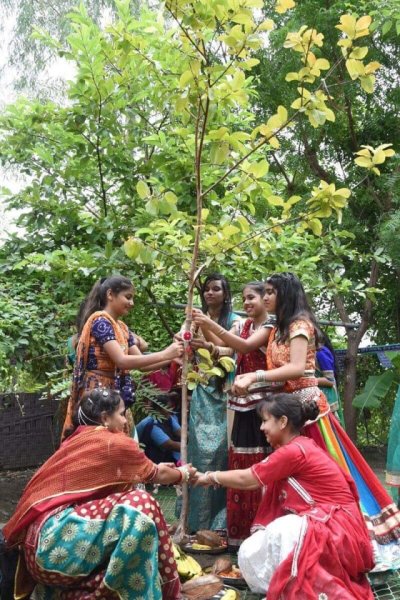
Piplantri village of Rajasthan is a hope for Indian development and prosperity as many families still mourn the birth of a female in the community.  Whenever a girl is born in the village, her family and all villagers come together to celebrate this occasion by planting 111 trees. Both are raised with equal respect. To provide financial security, a sum of Rs. 21,000 is contributed by the villagers and Rs. 10,000 is given by the family for every girl and kept as a fixed deposit which can be liquidated once she turns 20. In return, the parents are asked to sign a legal affidavit, which makes it mandatory for them to educate her, and prohibits them to make her marry before the age of 18. This move also tries to demolish the notion of girls being a burden on their parents. To save the plants from termite, villagers plant aloe vera around them. More than 3 million trees and aloe vera plants have been planted till now which is generating livelihood for many families. The trees planted include Neem, Sheesham, Mango, and Amla. This unique initiative was started by former village sarpanch Shyam Sundar Paliwal as ‘The Kiran Nidhi Yojana’ after he lost his daughter named Kiran in 2006. On Raksha Bandhan, girls tie Rakhi to tress. The villagers claim that this tradition has brought immense harmony in the village, and not a single police case has been registered in the last 7-8 years. Several villages nearby have started to adopt similar practice. The village today has eco-friendly gas stoves, toilets, solar lights, anganwaadi, healthcare centres, air-conditioned panchayat hall and modern schools.

Piplantri village
picture source: speakzeasy.wordpress.com

Punsari village

Punsari village of Gujarat is regarded as India’s smartest village. It is rurban village. The word ‘rurban’ (rural+urban) refers to an area which has the economic characteristics and lifestyles of an urban area while retaining its essential rural area features. The village has clean and proper roads, schools and education system, 24-hour electricity supply in every household, school bus and public transport system, proper water supply and RO treated drinking water with minimum charges. The classrooms are air-conditioned. There is a good communication system between the panchayat office and the whole village to keep people well-informed and be available for help anytime they need. A public address system which covers the entire population with the help of about 140 loudspeakers installed all over the village. The village has good healthcare services and employment opportunities. It is a model village of India where there is WIFI, all chowk monitoring by CCTV cameras, solar street lights, with literacy rate of 100%. There is a bio metric system for Gram Panchayat Employees. The transformation of this village is achieved by the efforts of the village sarpanch (headman) Himanshu Patel through effective planning and utilization of central and state government funds. Mr Patel leads an 11-member committee which runs the village affairs including five are female members. Mr Patel says the village council has spent 140m rupees ($2.28m; £1.43m) on development schemes between 2006 and 2012. The state chief minister at that time was Narendra Modi, current Prime minister of India who envisioned to stop migration out of the village. It has been a partial success , as 15-20 families have returned to the village from the cities like Mumbai in recent years.

Punsari village documented

Mendha Lekha village

To enter this Maharashtrian village, we have to walk through a bamboo entrance, which points to the rich growth of bamboo in this village. The villagers living here are mostly the Gond tribe of Madhya Pradesh. There is a notice board at the entrance which says “At the centre, there is Delhi government. At the state, there is Mumbai government, but here we are our own government.” This shows the pride the 450 people take in the way they have used an unexpected opportunity that came their way to reap a fortune. Mendha Lekha became the first village in India to secure community forest rights (CFR). The village is famous for the bio-diversity of its deciduous forest and the struggle of its tribal community towards self-rule. Nearly 80% of the village area is forested and under the legally-recognised control of the villagers represented by the village general assembly (gram sabha). This whole land can be inherited and used but cannot be not sold. Mendha Lekha has proved that legal security of their rights to control, use, manage and protect their own resources and lives, through processes of self-powering, can make people end poverty, maintain food and water supply, and protect local biodiversity.  And all this takes place much more effectively than capitalism and development programs created by central government.

Mendhe Lekha village and its story

Dharnai village

This village in Bihar has never seen electricity until 2014. The village is now fully solar powered. With the help of Greenpeace, the village installed a solar-powered micro-grid, which provides 24×7 electricity to more than 450 households and 50 commercial establishments. The entire project cost them 3 crores. Earlier, were forced to struggle with kerosene lamps and expensive diesel generators. This changed the lives of the villagers in many socio-economic and personal aspects. It created opportunities for female residents to access the public and personal spaces and move after sunset. Children can now study after sunset. People no longer needed to finish cooking before the sunset.

Dharnai village documented

Mawlynnong

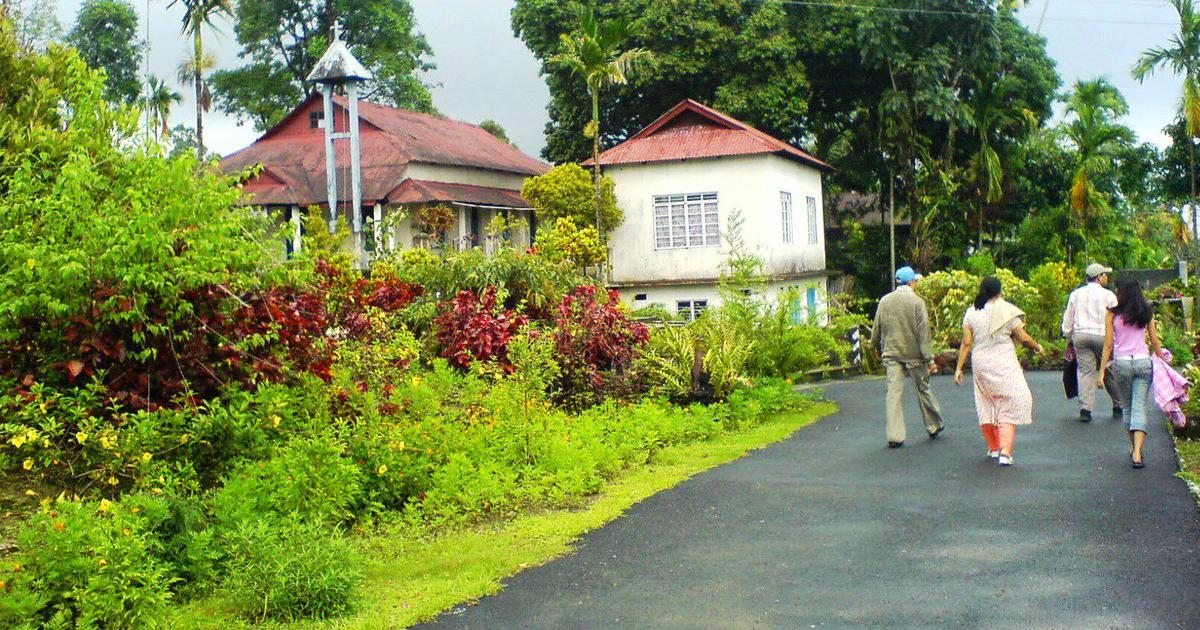
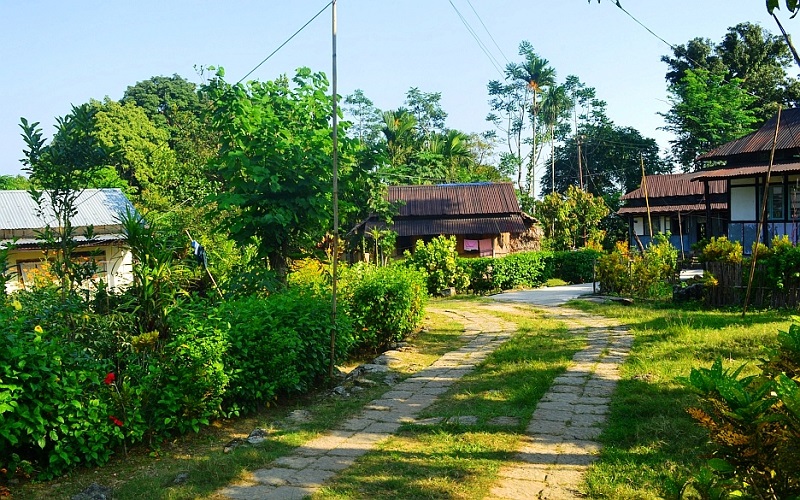
This north-eastern village of India is considered as Asia’s cleanest village. Located in Meghalaya, the village has many beautiful and interesting places which include a strange sight of a big rock balancing on another rock. The main occupation of the villagers is agriculture and also offer community based eco-tourism opportunities. A dustbin made from bamboo plant is found throughout the village. All the waste from the dustbins is collected and stored in a pit, which is later used as manure. The villagers plant trees to ensure that the virgin forest is kept intact and also replenished and are currently working towards plastic ban. The village has a literacy rate of 90%.

picture source: http://www.northeasttourism.gov.in

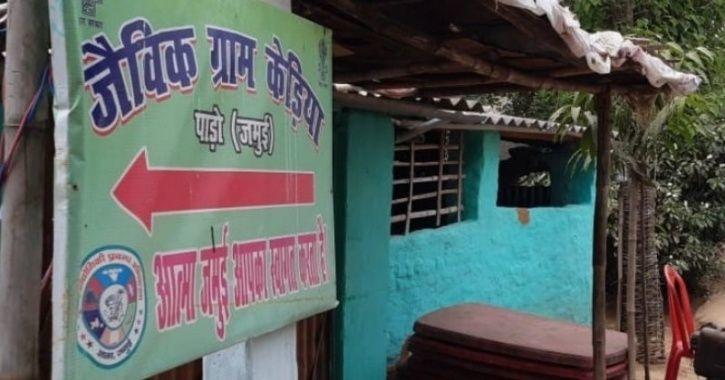
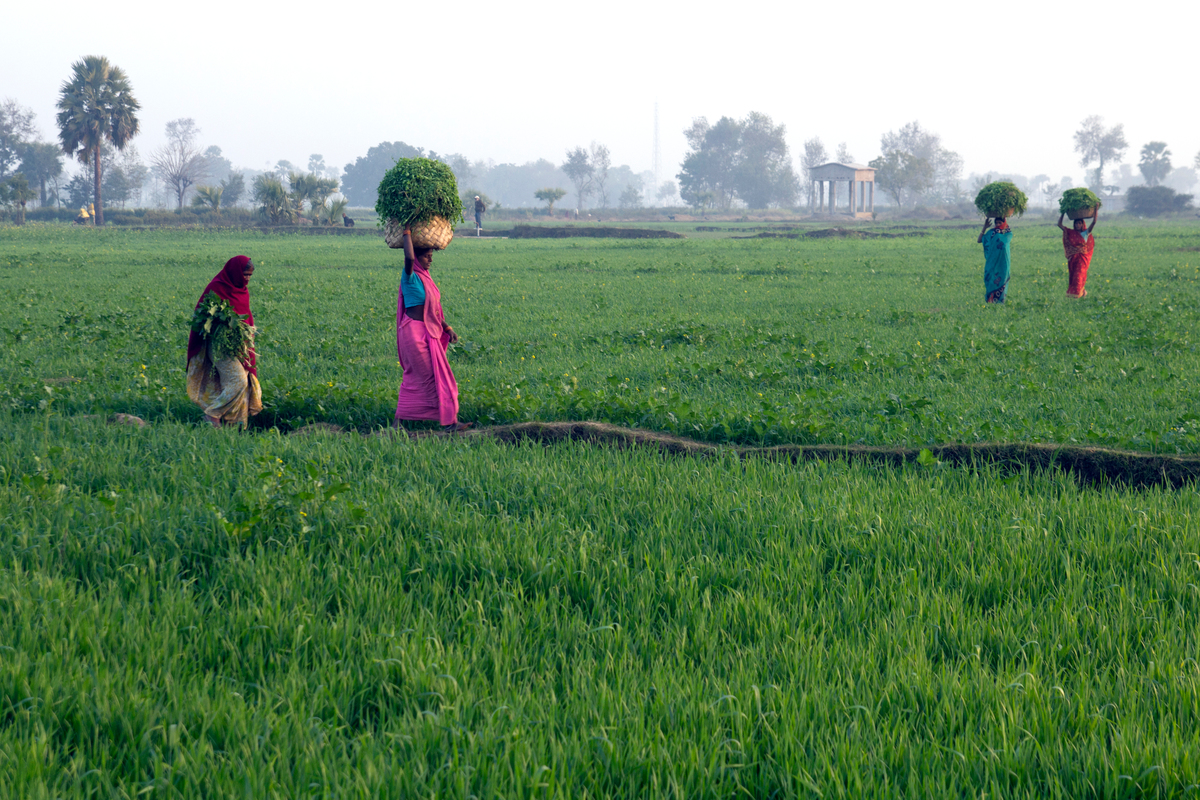
Kedia village

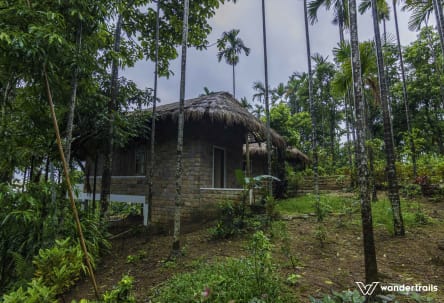
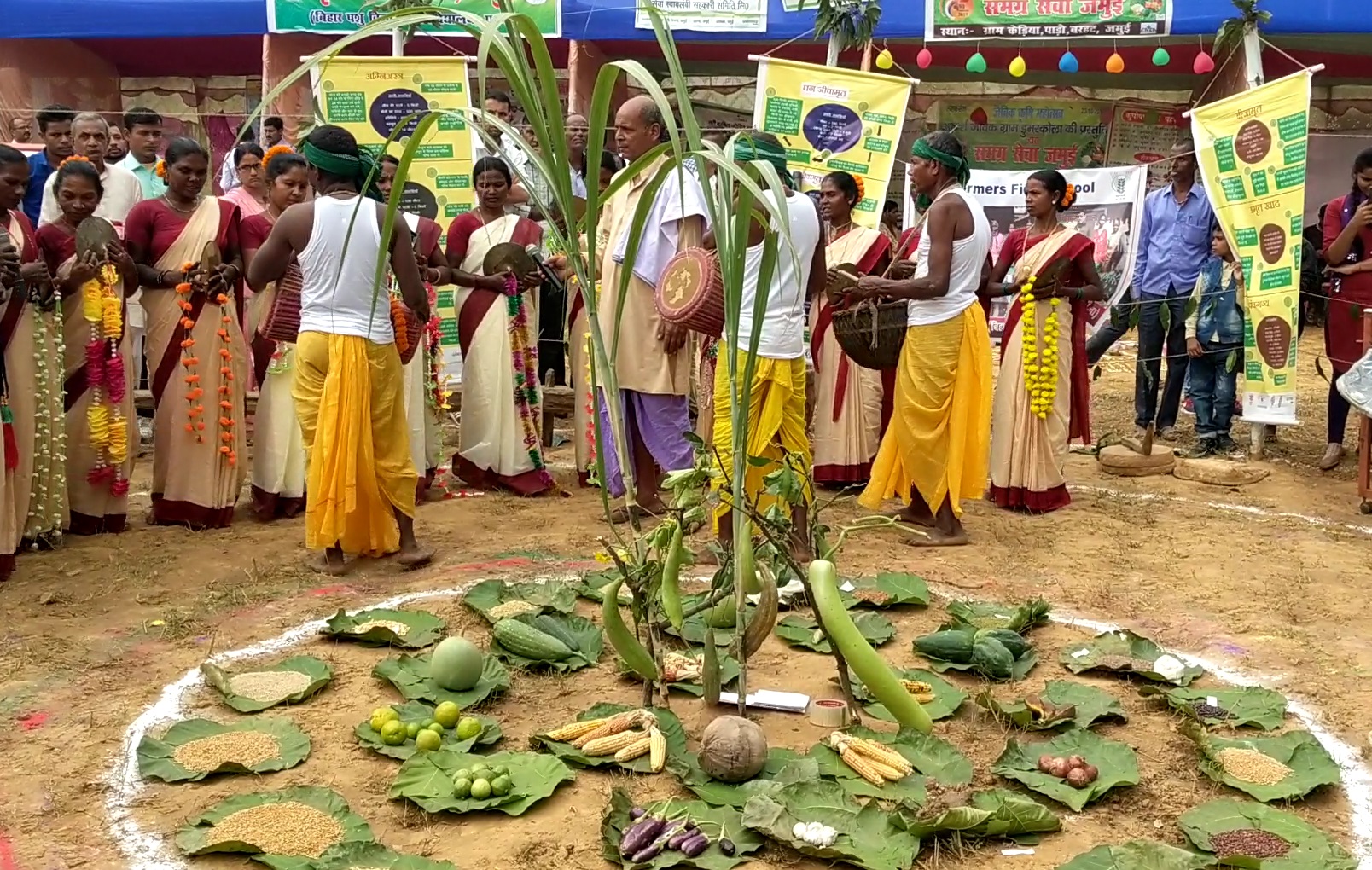
This Bihari village is an ecological village which practices organic farming and have prospered since then. Apart from that, the village has proper water conservation systems and cleanliness is maintained throughout the village. No one in the village is suffering from any kind of serious illness. Every house in the village has electricity supply and uses biogas to save electricity and fuel. All the farmers of Kedia village, followed the ‘Living Soils’ approach under ‘Food for life’ campaign’ run by Greenpeace. This approach is targeted to restore the ruined agricultural practices, by reducing chemical dependency and improve soil health through nourishment of the soil with biomass-based organic practices and materials. By applying scientific methods, existing knowledge and experiences the farmers successfully restored the soil of their village by coordination and collaboration with government for machinery. The villagers till date use only groundwater and lake water for irrigation. The unique toilets of the village households have no underground tanks so that the human waste can be used as a natural manure later on. The results have brought prosperity and happiness to the villagers by ending the dependence on commercial chemical-based materials and enjoying healthier yields with a up to 80% reduce in cost of inputs. The village organizes and celebrates a festival of organic farming called ‘Jashn-e-jaivik’. Greenpeace mentioned that they were able to make organic farming easier and successful in this village “With the help of many governmental schemes like ‘Swachh Bharat Mission’ and ‘Jaivik Krishi Yojana’ besides MNGREGA. Inspired by this, other villages around Kedia have also started adopting similar methods.

Picture sources: 1. India times, 2. Gaon connection and 3. Greenpeace.

The Author

BUDDHA MUDRAS

Mudras are the gestures or poses performed since early times. It helps to stimulate different parts of the body involved with breathing and to affect the flow of prana bindu, boddhicitta, amrita or consciousness in the body.

  1. Dharmachakra mudra: Dharmachakra in Sanskrit means the ‘Wheel of Dharma’. This mudra symbolizes one of the most important moments in the life of Buddha, the occasion when he preached to his companions the first sermon after his Enlightenment in the Deer Park at Sarnath. It thus denotes the setting into motion of the Wheel of the teaching of the Dharma. In this mudra the thumb and index finger of both hands touch at their tips to form a circle. This circle represents the Wheel of Dharma. The three remaining fingers of the two hands remain extended symbolizing the middle finger represents the ‘hearers’ of the teachings, the ring finger represents the ‘solitary realizers’, the Little finger represents the Mahayana or ‘Great Vehicle’.

2. Varada mudra: This mudra symbolizes charity, compassion and boon-granting. It is the mudra of the accomplishment of the wish to devote oneself to human salvation. It is nearly always made with the left hand, and can be made
with the arm hanging naturally at the side of the body, the palm of the open hand facing forward, and the fingers extended. The five extended fingers in this mudra symbolize the following five perfections: Generosity, Morality, Patience, Effort,and Meditative concentration.

3. Dhyan Mudra: It is also known as Samadhi or Yoga Mudra. It is performed with the help of two hands, which are placed on the lap and place the right hand on the left hand with stretched fingers (thumbs facing upwards and other fingers of both the hand resting on each other.)

4. Abhaya Mudra: It is a gesture of fearlessness or blessing that represents the protection, peace, benevolence, and dispelling of fear. It is performed with the help of right hand by raising to shoulder height with bent arm, and the face of palm will be facing outward with fingers upright whereas the left hand hanging down while standing. This gesture is characteristic of Buddha Shakyamuni and Dhyani Buddha Amoghasiddhi.

5. Bhumisparasa: Earth Touching Mudra,is the most famous mudra. In this mudra the right hand is poised with the fingertips downward and “touching the earth”, with the palm facing inward. The left hand is in the meditation (dhyana) mudra. When the Buddha became enlightened, he touched the earth with this mudra during his meditation. The earth was touched and witnessed the awakening.

MUGHAL ARCHITECTURE PART II

The next ruler to be in power after Babur was his son Humayun ( 1530-1540). He does not lay much effect on architecture as he had to stay in conflicts with Rajputs, afghans, for a long time. He tries to build Dinpanah city in Delhi, started to build but remains incomplete due to fighting with Sher Shah Suri where he got defeated.

Sher Shah Suri comes in power on 1540-1555. Qila-e-Quhunah, a mosque in Delhi s built by him. Rohtlas fort in Pakistan is a popular UNESCO world heritage site constructed during his period. Sher Shah Suri Masjid in Patna is a famous afghan style monument built with no Minars.  Sadak-e-Azam is popularly known as the Grand Trunk road is completed by him. A unique feature about the roads are the rest houses called, SARAIS were built between the roads for leisure activities.

Akbar took a keen interest in the development of art and architecture during his reign using red sandstone and marble. He introduced the use of Tudor architecture (four-centered style). Some prominent construction works undertaken by him were:  Agra Fort, Fatehpur Sikri, Humayun’s tomb, Hiran Minar, etc.

Agra Fort – built by Akbar, required 2000 stone- cutters, 2000 cement and lime makers, and 8000 laborers. The Agra gate contains Jaimal and Patta paintings to mark their bravery in war. Multiple buildings inside it- Diwani-i-am, Diwani-i-khass, Moti Masjid, Harem.

Fatehpur Sikri- 1) Buland Darwaza: built by Akbar to commemorate hid victory in the Deccan of Gujarat region.

2) Panch Mahal- famous due to the presence of the char bagh painting of Babur, five stories and have Persian influence with the impact of Buddhist architecture.

3) Ibadat khana- Scholars of different religions were used to come and discuss various issues here.

4) Salim Cistils Tomb- made from white marble, known for its jali work.

5) Hiran Minar- made in the memory of an elephant.

During the Jahangir period, architecture took a set back. He focussed more on paintings and other forms of art. He built Akbar’s and his tomb. Some famous creations- Shalimar Bagh in Kashmir, Moti Masjid in Lahore, Tomb of Itmad-ud-daulah. The development of gold coins was also done.

Shah Jahan’s reign witnessed a huge amount of construction activities, especially in Delhi and Agra. Ceremonial halls of the public and the private audience were carefully planned. These halls were called Chihil Sutun. Major construction were- Taj Mahal, Red Fort, Jama Masjid, complete shalimar bagh, city of Shahjahanabad, and Peacock Throne.

The development of architecture declines during Aurangzeb’s period as he shows no interest in monuments and forts. Biwi-ka-Maqbara was the only monument built by his son in the memory of his mother, in Aurangabad, Maharashtra.