Is humanity enough to handle crisis and serving people in need?

I don’t believe that any situation can be dealt with simply by empathy and helping those in need. 

The latest Corona virus outbreak is a glittering example of this respect. Much of the time , at least, mankind seems powerless in the face of the Corona virus and in assisting others in desperate need of support.

Because we all know, through millennia, the world has experienced disasters in one sort or another every 10 years. Whether we accept or not, yet Mother Earth herself, she is angry with us humans because of the way we have handled God’s gift itself. As mankind is part of Mother Earth and, at the same time, to survive itself in the universe of ours, it, i.e. civilization, must preserve its co-relationship or co-relationship. Not valuing this immense privilege has forced humans to confront the crisis as well. As a mere being, mankind must survive the crisis as well as carry out the varied gifts of nature for too long, mankind must value nature as its wife, but not as its lord. In the long run, it is civilization itself who will bow before Mother Earth in order to resolve all such crises.

Scientific advances also made life simpler for mankind. Around the same time, mis-use or over-use of technological innovations can certainly be a boomerang for mankind. I sincerely agree that, with the immense advancement of technology, research has often made us trustworthy and ignorant about how it influences nature. Therefore, research and technical developments may be defined as valuable, but at the same time efficient, servants.The use of atom bombs in the two cities of Hiroshima and Nagasaki and their impact on Japan during the Second World War is a glittering example of this. This has taken decades to resolve the effects of the two nuclear bombs, because humans can always sense their effect.

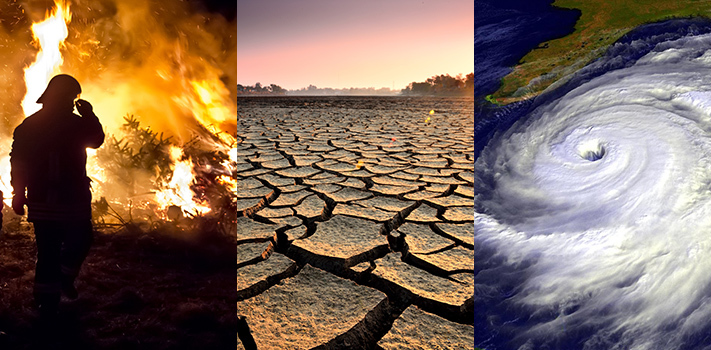
Looking at the entire situation, it should be prudent for mankind to honor existence, and not to yield to its dominance. The planet has witnessed the wrath of nature in different ways, such as hurricanes, flooding, epidemics, to name a handful. Each example of a natural disaster will teach its own lesson.People and human efforts to mitigate natural disasters must also be combined with the ability and grace of nature to maintain themselves in times of such crisis. It is because existence itself is both the maker and the killer of Mother EarthIt is therefore high time for mankind, in terms of coping with crises and helping citizens in need, that instead of moving through crises and then attempting to resolve them, it will be prudent for mankind to control crises (to the degree possible) by pursuing the will and rules of nature in every phase of its existence.In this respect, let the serene spirit of nature triumph over the devilish spirit of mankind. And, as it is properly said, ‘he is the founder of his own fate,’ the same principle extends to disaster management and to supporting others in desperate need of assistance. Around the same time, in this endeavor, mankind will behave according to the laws of nature and, in fact, on its own.

Defence equipments to be made in India

Indian defence Minister Rajnath Singh on Sunday tweeted and informed that India will stop the imports of 101 defence equipments after the pact with the respected countries on this regard ends.

This is done keeping the agenda of self reliant India. The decision will be e applied between December 2020 to December 2025. And Indian manufacturers will be motivated to create the equipments within the country. Kab will be on equipments like Assault rifle, Sniper rifle, Drone, Survey vehicle, Floating Dock, etc.

India currently imports 59% from Russia, 19% from America, 11% from Israel and 7% from France. Till date India has bought weapons worth ₹24 lakh crore from America since the year 2007. India has an agreement for S-400 missile defence system amounting to ₹45000 crore with Russia and 36 Rafale fighter jets from France. It is to be noted that India is the third biggest buyer of weapons in the world.

The top 5 government countries who you may be given the permission to produce the weapons are Hindustan Aeronautics Limited, Bharat electronics Limited, BEML Limited, Mishra Dhatu Nigam Ltd. and Bharat Dynamics Limited. In the next 6 to 7 years, around ₹4 lakh crore will be given to the Indian companies. In this 1.3 lakh crore for army, 1.4 lakh crore for navy and 1.3 lakh crore for air force will be used to buy the necessary defence equipments.

Risk management and worker protection

A large part of working in human resources (HR) is managing employee risk. It is HR’s job to keep employees safe and make sure the company isn’t liable for any employee injuries. Unfortunately, we live in an imperfect world so it is impossible to completely remove all risk, but HR’s goal is to minimize risk as much as possible and act swiftly when accidents do happen.

While managing risk is a lot of preventative work, you also need communication skills to explain accidents to employees/superiors when they arise. When you think of worker safety many people believe that this is only representative of jobs that require manual labor. However, every type of office has to consider their employees’ safety.

All different types of work environments require HR to manage risk and make sure that employees are protected.

The first step in identifying risk management is to identify the hazard. Some common hazards include wet floors, falls from heights, or dangerous equipment. Once your risks are identified, you must evaluate and decide how to prevent the risk from becoming an accident. In order to evaluate which risks are to be prioritized you should rank the risks on a scale of 1-5 based on the likelihood of an accident happening, and severity of the accident.

Making the workplace safer is an essential part of keeping employees happy and productive. If employees feel unsafe, they are less likely to be productive. HR bears this responsibility, and it should not be taken lightly. When HR departments ignore workplace risks, it is very evident and has a direct effect on everyone involved. When HR departments focus on maintaining a safe work environment, they tend to be much more respected by their coworkers and respected by their superiors. Overall, if you follow the formula for solving risk’s, your employees will feel much better coming into work every day.

Risk management: Involves responsibilities to consider physical, human and financial factors to protect organisational and individual interests.

Health: General state of physical, mental and emotional well-being.

Safety: condition in which the physical well-being of people is protected.

Security: Protection of employees and organisational facilities.

Ergonomics: Study and design of the work environment to address the physical demands placed on individuals.

Cumulative Trauma Disorders : Muscle and skeletal injuries that occur when workers repetitively use the same muscle to perform the tasks.

Substance abuse : Use of illicit substance or misuse of controlled substances, alcohol , or other drugs.

Health promotion: Supportive approach of facilitating and encouraging health actions and lifestyle among employees.

Wellness programs: Program designed to maintain or improve employee health before problems arise.

Employee Assistance Program: Program that provides counselling and help to employees having emotional, physical or other personal problems.

Security Audit: Comprehensive review of organisational security.

These are some ways which maintain risk management and worker protection in the organisation. And these are helpful to maintain and managing the risk management and worker protection at the workplace by HR.

Importance of risk management and worker protection

Through the risk management and the workers protection in the companies have delivered an opportunity to prepare for a global event by adjusting their strategies and prepare a contingency plan (Business Continuity Management). Every day they can manage internal risk, which have a greater impact. Similarly, companies operating risk, which is the day to day operations, seems to be more important than financial risk.

PREAMBLE – ‘IDENTITY CARD OF THE CONSTITUTION’

We have adopted the concept of preamble by American constitution. Preamble resemble as the preface or introduction to the constitution. NA Palkhivala; an eminent jurist called it as identity card of constitution.

the constitution derives its authority from people of India. Preamble declares Indian state as sovereign, socialist, secular democratic and republican.

Objective of constitution specifies justice, liberty, equality, and fraternity.

Date of adoption of constitution is November 26, 1949.

IMPORTANT TERMS:

1) SOVEREIGN- State is free to conduct its own affairs both externally as well as internally.

2) SOCIALIST– We believe in democratic socialism i.e. concept of mixed economy is persistent.

3) SECULAR– India embodies a positive concept of secularism so all religions have same status and support from the state accordingly articles 25 to 28 have been included as the fundamental rights of constitution.

4) DEMOCRATIC– India provides for a representative parliamentary democracy under which executive is responsible for legislature for all its actions.

5) REPUBLIC- It represents that India has an elected head called the President. It also means that people are vested with power of political sovereignty and there is absence of any privileged class.

6) JUSTICE– This concept is borrowed from Russian Revolution, providing people with social (equal treatment without discrimination on any bases) economic (elimination of glaring inequalities in wealth) and political (equal access to political offices and voice in government) justice.

7) LIBERTY– Absence of restraints on the activities of individuals, at same time providing opportunities for development of individual personalities.

8) EQUALITY– Absence of any privileges to any section of society and provision of adequate opportunities for all.

9) FRATERNITY- Sense of brotherhood involving dignity of individuals and unity and integrity of nation.

SIGNIFICANCE OF PREAMBLE:

It embodies basic philosophy and fundamental values. It is defined as ‘ horoscope of our sovereign democratic republic’ by KM Munshi.

Preamble is an important part of constitution which impacts the life of each individual.

“Law and order are the medicine of the body politic and when the body politic gets sick, medicine must be administered”.- B.R. Ambedkar

All about Journalism

What is journalism?

India is 7th largest country in the world and the second largest country according to the population. It’s obvious, something happens every day in such a big country which obviously affects people living in the country.
From all the events, some may affect a large amount of people and some may not. But it is important to share every information to the people living inside the country about what’s happening in the country and even the world where they are living. Journalism does that for them.

It is the profession to gather, access, write and share information about any news to the people via newspapers, radio, television or even internet. The one who works in this profession is called journalist.

INFORMATION AND NEWS:

You must have thought how these words are different from each other. We can define them in this way:

NEWS – News is account which is about what has happened in the world and is shown as a news in newspaper, as a news programmme on T.V or RADIO.

INFORMATION – Information describes facts and detail about a certain subject.

We can say, “Every news is an information but every information is not news”.

TYPES OF JOURNALISM:

There are many types of journalism one can practice. Few of them are Print journalism, Photojournalism, Advocacy journalism, Broadcast journalism, Investigative journalism, Tabloid journalism, Yellow journalism etc.

THE FIRST NEWSPAPER:

Journalism has a huge history. It was after 1440 when Johannes Guttenberg invented the printing press which started Printing Press revolution.

The art of printing first entered India through Goa. In 1965, when English was to cease being a principal language of the country, English newspapers numbered more than newspapers in any other language. Later, Hickey brought out the Bengal Gazette on January 29, 1780. This was the time after which many newspapers and magazines started to get printed, even in regional languages.

Later on, journalism started to get practiced on radio and television too. Many programs were broadcast on All India Radio and news bulletins were introduced digitally via televisions. Although, radio was introduced for entertainment purpose but then it was also used as a mass media to circulate news.

As technology is getting advanced, the whole is using internet for almost every purpose, journalism has also spread its legs in the world of internet. News articles are shared via websites and mobile applications throughout the world.

CAREER IN JOURNALISM:

Journalism is not commonly opted by the students after 10+2. But if you have a creative mind and if you are willing to step out of your comfort zone and do something adventures then you can surely go for it.
Journalism will never exhaust as long as there are incidents happening around us which needs to be reported, i.e it will never die. The digitalization might be hurting the traditional way of journalism, but something better is coming it’s way. You should be the one willing to step out of you.

Warrior Cells To Fight COVID-19!!!

Retrieved from genengnews.com

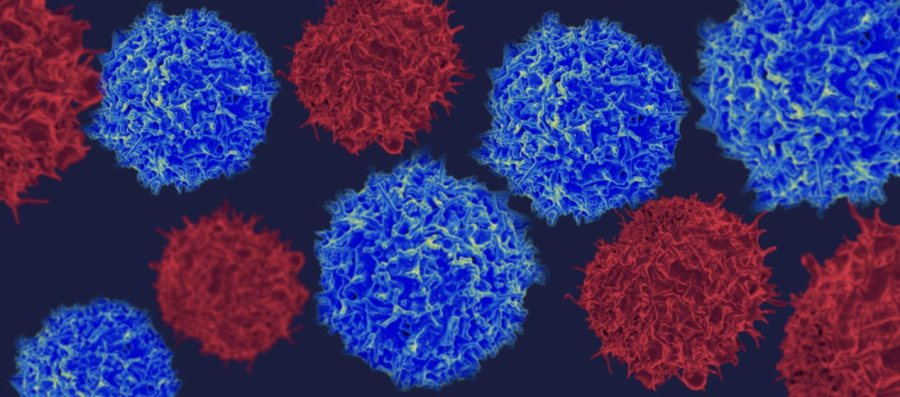
Yesterday I was talking about T cells and how they are being lauded for their fighting nature. Today I thought to throw some more light on T cells. The cells are emerging as warriors and have the capacity to destroy and win over virus infected cells.              

T cells are a type of white blood cell which acts like soldiers, searching out infected cells and killing them, hence they play a crucial role in the human’s immune system. It acts as an elemental part of adaptive immunity; adaptive immunity is a system that alters the response of the immune system to particular pathogens.

The T cells which are immature are known as T-stem cells and move towards the neck area where the thymus gland lies to attain maturity and gain activity in our immune system. During maturation processes many of the T cells are destroyed by our body system as they acquire the behavior of activating against it.

These cells are also termed as T lymphocytes where T stands for thymus; thymus is the place where these cells attain maturity. Recent studies suggest that body defence system has not only one soldier to rely on and T cells are perfect reminder of this. T cells produce a stable immunogenic response that’s why it’s immunity is really necessary for our system.

T cells may be able to kill virus infected cells as they can remember old diseases like SARS-COV-2 (which came into existence in 2003) and other common cold diseases. They also have the ability to raise those cells which have been abandoned in past fights as fresh ones. There have been many studies where people show T cell response to the disease which they defeated 17 years back. 

But for right now things are uncertain as the research into T cell’s fight against COVID-19 is at young stages and nothing concrete can be evaluated from them. We have to wait a bit more for really good news that will lead to perfect vaccination of the pandemic leading our lives back to our old normal as how much perfect this new normal is, we will take time to adapt it.

Bulimia:An Eating Disorder

In today’s instagram world,People especially adolescents are getting image and body conscious.They look at the perfect bodies of celebrities and aspire to be like them.In this aspiration,they are psychologically and physically wounded.Most of such people experience eating disorders where in they undergo extreme changes in their eating and exercise habits.Ultimately they damage themselves.

So,in today’s blog lets look at one of the eating disorders called Bulimia Nervosa,it’s causes and it’s impacts.Let’s get started.

Bulimia nervosa is an eating disorder characterized by episodes of binge eating—consuming a lot of food quickly—followed by compensatory behavior, most commonly vomiting or “purging.” People who are bulimic often feel a lack of control over their eating. A bulimic can consume as many as 3,400 calories in little more than an hour and as many as 20,000 calories in eight hours.

People with bulimia often know they have a problem and are afraid of their inability to stop eating. Bingeing is then followed by purging — namely, self-induced vomiting or the abuse of diuretics or laxatives. Bingeing and purging are often performed in secret, with feelings of shame alternating with relief.

The bingeing and purging cycle is usually repeated several times a week. As with anorexia, people with bulimia often have coexisting psychological illnesses, such as depression, anxiety, and substance abuse problems. Many physical dysfunctions result from the purging, including electrolyte imbalances, gastrointestinal troubles, and dental problems.

An estimated one to four percent of females have bulimia nervosa during their lifetime. The prevalence in males is unknown, but bulimia nervosa is far less common in males than females. Most cases begin in the late teens and early 20s, but can go undetected until the 30s or 40s.

SYMPTOMS

Bulimia signs and symptoms may include:

  • Being preoccupied with your body shape and weight
  • Living in fear of gaining weight
  • Repeated episodes of eating abnormally large amounts of food in one sitting
  • Feeling a loss of control during bingeing — like you can’t stop eating or can’t control what you eat
  • Forcing yourself to vomit or exercising too much to keep from gaining weight after bingeing
  • Using laxatives, diuretics or enemas after eating when they’re not needed
  • Fasting, restricting calories or avoiding certain foods between binges
  • Using dietary supplements or herbal products excessively for weight loss

CAUSES

Exact causes are not completely known and are believed to complex.Hence there is no single known cause of bulimia, but there are some factors that may play a part,such as:

  • Culture:As in strict body expectations:Slim and trim girls wanted for marriage in India.
  • Families:Constant pressure and criticism from parents on looks of children
  • Life changes or stressful events: can trigger bulimia.
  • Personality traits: Those with bulimia may have low self-esteem and feel hopeless.
  • Biology.:Genes, hormones, and other biological factors may contribute to development of bulimia.

Impact

Bulimia has a great impact on the individual and can lead to following complications:

  • Negative self-esteem and problems with relationships and social functioning
  • Dehydration leading to kidney failure
  • Heart problems
  • Severe tooth decay and gum disease
  • Absent or irregular periods in females
  • Digestive problems
  • Anxiety, depression, personality disorders or bipolar disorder
  • Misuse of alcohol or drugs
  • Self-injury and suicidal thoughts.

Management

If left untreated,bulimia can create major complications in life as mentioned above.Hence if you see your loved ones experiencing symptoms of bulimia,support them and console them.If the symptoms are unbearable,immediately consult a doctor and psychologist who will be able to help the patient successfully.

Please spread empathy and kindness.Acceptance and kindness can prevent bulimia in such insecure people.Every difficulty can be defeated with empathy,patience and willingness to improve and come out.

If you all found the article useful,do give it a like.

Thankyou!

Stay Kind!

PERSONALITY THEORIES

According to the American Psychological Association,Personality refers to an individual differences in characteristic patterns of thinking, feeling and behaving. The study of personality focuses on two broad areas: One is understanding individual differences in particular personality characteristics, such as sociability or irritability. The other is understanding how the various parts of a person come together as a whole.

So this blog will introduce the readers to some important theories used to describe personality.Let’s get started!

1) FREUD PSYCHOANALYTICAL PERSPECTIVE:

 According to Sigmund Freud Father of Psychoanalysis, an adult personality generally has three determinants: Id, Ego and Super Ego.The outcome of the combination of all the three determinants shapes an adult personality. Freud believed than an individual’s personality has three parts and thus is often called as tripartite personality.

  • Id:Irrational demands and urge.
  • Ego:Helps in fulfillment of Id after taking into consideration the reality.
  • Superego:Moral constraints of the individual.

Defense mechanisms play an important role in pushing unrealistic thoughts out of awareness. Stressful thoughts which are threatening to an individual’s survival should be pushed into unconscious mind to reduce anxiety through them.

2)ERIK ERIKSON:PSYCHOSOCIAL DEVELOPMENT THEORY:-

Erikson believes there are 8 stages in a person’s life and to enter into the next stage,a virtue has to be learnt from the previous stage and this leads to personality development.He focuses on different identity crisis in a person’s lifespan.As in

STAGE 1:Trust v/s Mistrust;Virtue:Hope

STAGE 2:Autonomy v/s Doubt;Virtue:Will

STAGE 3:Initiative v/s Guilt;Virtue:Sense of Purpose.

STAGE 4:Industriousness v/s Inferiorty;Virtue:Competence

STAGE 5:Identity cohesion v/s Role confusion;Virtue:Fidelity

STAGE 6:Intimacy v/s Isolation;Virtue:Love

STAGE 7:Generativity v/s Stagnation;Virtue:Care

STAGE 8:Ego Integrity v/s Despair;Virtue:Wisdom

3)CARL JUNG:INTOVERSION V/S EXTRAVERSION

Carl Jung established a theory, which saw universal types in human personality. The types categorized by Carl Jung are present in all of us. But, certain types are predominant over the normal mode of organizing our experience.Carl Jung also developed a theory of personality. His theory is one of the type theories of personality, as it involved typology of introversion and extraversion.There are 4 functions :Sensing,intuiting,thinking and feeling.

4)JULIAN ROTTER-LOCUS OF CONTROL

“Locus of Control.” For many people, their only exposure to the ideas of Julian B. Rotter is his concept of generalized expectancies for control of reinforcement, more commonly known as locus of control. Locus of control refers to people’s very general, cross-situational beliefs about what determines whether or not they get reinforced in life. People can be classified along a continuum from very internal to very external.
People with a strong internal locus of control believe that the responsibility for whether or not they get reinforced ultimately lies with themselves. Internals believe that success or failure is due to their own efforts. In contrast, externals believe that the reinforcers in life are controlled by luck, chance, or powerful others. Therefore, they see little impact of their own efforts on the amount of reinforcement they receive.

Thus we come to the end of the blog.This blog is aimed at introducing the readers to the world of personality analysis.However one must remember that human beings are complex and not one theory explains all the human behavior.The readers are requested to read more articles about the same and fill themselves with knowledge.

Give a like,if you all felt this article was informative and interesting.

Thankyou!

CAPTCHA- everything you need to know about this technology

Introduction
CAPTCHA stands for Completely Automated Public Turing test to tell
Computers and Humans Apart. Its now an astonishing term in the field of
security from the last few years. In present developing world where everything
is based and related to internet the security and privacy becomes a major
threat, all the deemed and established multinational companies like Google,
Microsoft, Yahoo etcetera have moved toward the CAPCHA to ensure
security and privacy to their customers.
In order to understand CAPCHA one needs to understand the term TURING,
It was coined by Alan Turing’s in 1950 in an article Computing Machinery
and Intelligence discussed conditions for considering a machine to be
intelligent
– “Can machines think?” “Can machines behave intelligently?”
– The Turing test (The Imitation Game): Operational definition of
intelligence.
This test consist of 3 room one of each room have an interrogator, machine
and the person.
Through the help of teleprinter the interrogator tries to communicate with the
Other two.
The interrogator tries to identify that which one is person which one is the
machine
If the machine is able to make believe to interrogator that he is the human
And If the machine succeeds in making interrogator believe, then it could be
Concluded that machine are intelligent enough to make fool of humans.
This is the thought behind building the capcha but it is not exactly same as the
TURING test, in capcha puzzles and blurry images are used in order to understand
the person who is using the device (computer, laptop, mobile) is a human or
computer. The puzzles and the images used could only be understood by a human not
by today’s machines.
Basically it is a computer program based on Artificial Intelligence that defend
various websites from web-bots, automated created attacks by other machines by
generating puzzles like tests that computer cannot pass but human can pass
Nowadays, it is exigent to take security related issue seriously because there are
many spammers ready to exploit privacy of others specifically who creates scripts
and programs that electronically submit various forms. However, technologies like
captcha are developed to deal with these kind of problems.


Types of CAPCHA
CAPACHAS are mainly classified into two categories visual and audio based
captchas

1 VISUAL based captchas– As the name suggest the meaning that these
captchas are visible to eyes. These type of captchas are very common as these
are easy to use these are broadly classified into 2 parts


A. TEXT based captchas – This type of captchas are very usual type of
captchas can be seen on almost every website as these are very easy to use, in
text based captcha, text is given in a distorted way which can be easily
understood by human but it will be a difficult job for the machines.
Various example of text based are

GIMPY it is an text based captcha stands for general image manipulation
program, it uses the technique of optical recognition the images are in
distorted manner such as the shape of the words are irregular which could be
easily understood by a human but will be difficult for a machine

BAFFLE text – the text is been picked randomly from various character or
alphabets to make a text that could be pronounceable

B.IMAGE based capchas– As the name suggests these kind of captchas consist of
images, the user are required to choose the result from various images provided to it
this type of captchas could also be seen in various websites. Various examples of
these captchas are
PIX- This is an IMAGE based captchas it select the pictures from the databases the
pictures could be of anything from daily life such as traffic signal, zebra crossing,
bridges etc, the user need to determine the object in the image there could be a
number of images one after the another it is just like the puzzle.

BONGO- This is another type of image captcha that consist of two types of images
that is left image and right images. Both the images differs from each other
sometimes there is one or two common type of image in both sides. It is a type of
pattern recognition problem where the user decide to which set the image belongs to.
Usually these type of captchas are not in used as these do not provide good security.

  • AUDIO based captchas- This captchas is basically for the people who are visually
    challenged or do not have proper vision. This captcha consist of audio such as words,
    number or it could be mixture of both provided with some kind of noises the user
    task is to hear to the audio and provide the details related to the audio.
  • VIDEO based captchas– This type of captchas consist of videos , the video taken
    from the database consists of various words the user task is to play the video and
    observe the details provided in the video in order to fill the details which is been
    asked in the captcha.

Applications of CAPCHA
There are a large number of application of captcha in today’s world in terms of
security as it is in demand technology several are mention below:-

  • Restrain the comments in the blogs- with the help of captchas users need not
    to worry about the comment spam as with the help of captchas the unnecessary
    sign in for comments can be prevented.
  • Security- This is the biggest advantage of captchas as they prevent the
    unnecessary spammer to threat the privacy of the user.
  • Assure registration on websites and the E-mails – There are large number of
    spammers who spam with free emails but with invent of captchas only the
    humans can register with free emails and also with the various websites that
    provide the services. As captchas hide the mechanisms of emails from the
    scrapers.
  • Provides restriction during the online polls- In online polls one person is
    required with one vote but during the online polls hackers or spammers can
    hack the system in order to win the poll but with captchas this problem is
    resolved.
    Conclusion
    Internet is a boon to human kind as it provides a lot of information on hand
    and saves a lot of time but as the machines are getting automatic and advanced
    day by day the privacy becomes an issues.
    CAPTCHA is based on artificial intelligence which is an emerging and
    advanced field and no technology is that build up that it could fool CAPTCHA
    in present scenario. So CAPTCHA is currently the best technology for
    providing the security, as every technology has its merits and demerits so does
    captchas have but in the long run these demerits could be resolved.
    There are a lot of application of captchas which make it difficult for the
    spammers to spam and create a threat to the security.
    As today many big companies have moved towards the CAPTCHA for their
    security and privacy. In coming future there would be more modification
    related to security.

ART AND CULTURE

AJANTA AND ELLORA CAVE ARCHITECTURE

Cave architecture had originated in prehistory or the stone age period leading to the development of paintings and sculptures.

Ajanta caves had their origin since the Satvahana dynasty during the pre-Mauryan period. It is located in the Aurangabad district of Maharashtra state. It comprises of 29 caves and has a C shaped structure. It is the only example of the first century BCE and fifth century CE.

It has four chaitya caves and the rest are vihara caves ( chaitya – used for prayers and vihara – residential halls).

FEATURES:  Mural paintings drawn on walls as well as ceilings  of the cave

Figures are dedicated to Buddhism teachings and worship.

Sculptures are found in abundance.

Famous paintings: dying princess, flying Apsara (taken from Jataka stories), Padmapani, and Vajrapani. A technique used to paint is the Fresco style of texture images with limited natural colors, drawn on wet surfaces. Expand during Vakataka kings.

Famous sculptures: Mahaparinibbana of Buddha, cave number 26

Naga king and his consort, cave number 19

Vidarbha sculptural tradition, cave number 2.

Ellora caves are also located in Aurangabad district, 100 km away from Ajanta. It comprises 34 caves build during the Rashtrakuta period, early medieval times.

Cave no. 1-12 are Buddhist caves, 13-29 are Hindu caves and 30-34 are Jain caves. It shows the religious tolerance of kings.

FAMOUS CAVES

Cave number 10 is a Buddhist chaitya called the Vishwakarma or carpenter’s cave. Buddha is seated in Vyakhyana mudra and a Bodhi tree is carved in his back.

Cave 14 is themed as Raavan ki Khai.

Cave 15 is called the Dashavatar temple.

Cave 16 is a Kailash temple dedicated to Lord SHIVA, formed by Krishna king. It is called as finest Ellora architecture.

Cave 21 is famous for Rameshwar temple and 29 for Dhumar Lena.

Famous Jain caves are INDRA SABHA and JAGANNATH SABHA cave 32 and 33 respectively.

Cave no. 4 is called rang mahal, meaning the palace of colors, paintings to walls are still visible.

Ajanta and Ellora caves are regarded as UNESCO world heritage sites.

The caves will bring you closer to our culture in understanding the past.

“If art is to nourish the roots of our culture, society must set the artist free to follow his vision wherever it takes him.” –John F. Kennedy, former American President

Tesco and it’s strategic changes during the ‘ Dave Lewis era’

Tesco is a multinational retailer company which was established in 1919 by Jack Cohen with its headquarters in the United Kingdom, being one of its ‘Big Four’ retailers. Tesco is known for implementing strategies that are effective in developing competitive advantages to acquire customer satisfaction. Tesco faced a major downfall in the year 2014 when it’s market share fell from 28.6% to 28.4% due to the growth of discounters and online retailers.
In the year 2014, Tesco’s chief Philip Clarke quit his job due to profit warning with r-£10m package after failing to halt slumping sales. After which Dave Lewis who led Unilever’s personal care business became the chief executive of Tesco in 2014. Tesco which was in dire need for a change expected Lewis whom they described as “responsible for a number of business turnarounds” to make their company’s strategies effective.
Tesco’s strategy analysis:

Lewis followed what Leahy, the former CEO of Tesco promoted profoundly, which was to put the customer first. This is very much evident in the 2015 strategic report of Tesco which quotes ” The champion of customers”. Lewis believed that small actions sum up to big differences with “every little helps”.

Lewis set top three priorities to get Tesco back on track. Firstly they set a goal to regain their customers focusing on four things – service, range, availability and price.There are three reasons companies should work on regaining it’s customers. Firstly because customers seek their services and have helped them have a stand in the market and not just any name on a cold call list. Secondly because they know the company better and treating them well decreases the marketing cost. Thirdly , with the improvement In technology and customer databases, it is easier to collect information on customer behaviour to the company’s services to build better successful offers and identify the profitable defectors. Tesco with the aim of regaining their customers invested in 4,652 new colleagues to improve services for them, reviewed their ranges across categories, increased the availability of products and made their prices stable, low and affordable by which they were able to attain the response of their consumers.
Secondly the company sort to protect and strengthen its financial stand as since they had a debt with with total leverage of £22bn .A difficult financial position of a company can be threatening to the existence of a company for which few measures have to be taken to recover from the crisis and obtain a state of balance for which the financial position has to evaluated which involves restructuring or making a change in its of its financial strategies. In order to revive from its crisis Tesco strengthened it’s capital spending by reducing their capital expenditure to £1bn, replaced their pension schemes and reviewed their profit portfolio by completing an asset swap with 21 British superstores to gain ownership and to increase the promotion of the stores they own.
Thirdly, Tesco strived to rebuild and improve their trust and transparency for which they set up a new management system to create long term, mutually beneficial partnerships with their consumers and suppliers in order to focus on cost prices. Suppliers help turn the ship around during tough times and companies need the help of their suppliers to have a turnaround in business for which they need to treat their suppliers fairly since the happiness of the supplier is vital to the success of the buyer. Tesco also created a new code of business conduct and to shift their focus on a more ethical and speak up culture .A study by Label Insight found that 94 percent of consumers were likely to be loyal to a brand if it is transparent and about 73 percent said that they would even pay more for a completely transparent product.
In the following year after Tesco had worked on regaining their customers the year seemed to be a transformational year for Tesco with their business on a road to recovery said Alan Stewart, the chief financial officer of Tesco. Tesco went on to adopt strategies for which it advanced it’s turnaround priorities. Tesco chose to regain their competitiveness in the market for which it improved the shopping experience by making easier shopping trips, better availability of goods and stable prices for the consumers which led them to regain their competitiveness with positive volume growths up-to 3.3% and transactions up-to 2.8% in the fourth quarter.

Stabilizing and driving Tesco forward:
Tesco encountered progress in its three priorities which Lewis put forth initially when he became the CEO. To ensure a stable long term horizon, Tesco enhanced six strategic drivers to enhance their competitiveness in the market.

Tesco’s six strategic drivers :

A differentiated brand:
2017-“Food love stories brought to you by Tesco” campaign
2018-Swaps with products that are lower in saturated fat, salt and sugar
2019-One hundred years of great value campaign
Reduce operating costs by £1.5bn:
2017-Generated £455m of cost savings, of which £226m contributes to the £1.5bn target.
2018-Delivered £541m of savings; logistics and distribution, with £104m of savings; and goods not for resale, making savings of £174m.
2019-Delivered in-year cost savings of £532m, with £1.4bn of savings.
Generate £9bn cash from operations:
2017-Generated £495m of retail operating cash
2018-Generated £2,773m of retail operating cash
2019-Generated £2.5bn of retail operating cash.
Maximise the mix to achieve a 3.5% – 4.0% margin
2017-driving growth in areas which deliver sustainable profits – in order to achieve a 3.5% – 4.0% Group operating margin
2018-Group operating margin for this year was 2.9%.
2019-Group operating margin was 3.79%.
Maximise value from property :
2017-Optimisation of freehold and leasehold mix.
2018-£1.4bn of value from property proceeds. 52% increase in freehold property in UK and ROI
2019-£285m of value from our property portfolio across the Group.
Innovation :
2017-Payquik digital wallet
2018-Tesco now app
2019-New brand – Jack, Thailand convenience proposition.
From the above data it is evident that the strategic plans used by Lewis has been effective for Tesco leading to its current strategic position.

Tesco’s business strategy is proven to be fit as it justifiably fits into three of these four categories – consistency, consonance, advantage and feasiblity.
Consistency :
Consistency must be followed between the organizational objectives a d the values of the company. It is impossible to have a successful strategy without consistency among the departments within the company. A business will be consistent only of the internal and external goals are aligned. Under Lewis’ strategical supervision Tesco was stabilizing and driving forward with a consistent business environment. This is evident from the strategical reports of Tesco from the year 2015-2019.
Consonance:
According to Rumelt “The strategy must represent an adaptive response to the external environment and to the critical changes occurring within it”. Lewis also was keen on creating value for his stakeholders (consumers, colleagues, suppliers and shareholders) . With the increase in the value for their stakeholders, Tesco created a 93% customer liking products which were exclusively at Tesco’s, 80% of the employees who were motivated by their purpose, an annual quantum sales of over £1bn and Diluted EPS of 15.4p . Lewis therefore established a compatibility between opinions and actions which led to the success of his strategies.
Competitive Advantage:
The strategy must provide for the creation and/or maintenance of a competitive advantage in the selected area of activity. Creation and maintenance of competitive advantage was created by the strategies created by Tesco. For maintaining this advantage Tesco created six key performance measures which included growing sales, delivering profit, improving operating cash flow, satisfaction of customers, providing power to colleagues and building trusted partnerships. With this simplification in the main performance indicators Tesco achieved the ‘advantage’ with 11.3% group sales, 33.5% operating profit, 9.8% retail operating cash flow and 77.5% of group supplier satisfaction.

Supply chain management :
Dave Lewis followed the supply chain management to make Tesco stable. A shift was made from a push to a pull in the supply chain with customers gaining more power in the marketing channel. Information systems gained more power and eliminated unnecessary inventory and he focused equally on both core and non core activities and increased its outsourcing. An effective supply chain management supply chain management with flexible organisations helps respond to customers faster ensuring profitability which is what Tesco under Lewis followed.


When Lewis became the CEO “There was no credible chairman or non-executives and colleagues were about to be prosecuted” said Clive Black. Now “The retailer’s departing boss did not solve all its problems. But the stable operation he leaves behind was in turmoil in 2014”.
In the year 2014 when Lewis joined Tesco as its CEO, an article by the guardian was written titled “We know Dave Lewis can sell soaps. Can he really run Tesco? “. The answer to that is a definite yes since he stabilised the company from its series of profit warnings and 33% share price drop to the success that Tesco is facing today and has definitely been this ‘Drastic Dave’ who back in Unilever was known for his ruthless approach to job cuts and excellent marketing strategies. He has followed this legacy even in Tesco.


HUMAN RIGHTS JURISPRUDENCE ‘THE INDIAN CONCEPT’

INTRODUCTION

A right is not a claim or demand but something which is not wrong. Natural Rights Theory as propounded by John Locke calls rights as pre-political which were available to man in his state of nature. These three human rights of life, liberty and estate were ensured to individuals by virtue of the ethical code of mutuality and moral order. The effort to safeguard, protect and promote basic Human Rights continues in every generation in every civilization. New rights arise from the roots of the old. Today we have broadened the field of Human Rights thought and action to new areas and population. The development of Human Rights and then recognition and protection is done with the support of Jurisprudence.

WHAT ARE HUMAN RIGHTS?

“The core of human rights discourse is that it is a right to which only human beings are entitled, which gives meaning to the essence of humanity, and without which humanity necessarily loses those special attributes that make it human”. Ajomo had earlier defined human rights in similar terms inter alia: “human rights are inherent in man; they arise from the very nature of man as a social animal. They are those rights which all human beings enjoy by virtue of their humanity”.

According to Joel Feinberg, “Human Rights as moral rights held equally by all human beings, unconditionally and unalterably” For Feinberg Human Rights are moral claims based on primary human needs.[1]

 Human rights are those liberties, immunities and assistance by which, through accepted contemporary values, all human beings should be able to demand the rights in the society which they live.

Human Rights are inherent rights which are made for protection, safeguard and development of humans all over the world and these rights cannot be waived off on someone’s will or whim. As said by some American Attorney, “If you remove them from any human being, he will become less than human. They are part of the very nature of a human being, and attach to all human beings everywhere in all societies, just as much as do his arms and legs.”

Human Rights are also defined as moral rights which every human being ought to have every time and everywhere which contrasts a being as moral and rational than the other. In other words, idea of human rights familiarize with morality and rationality but can be said as limitation or challenge to this definition, are new born, infants, juvenile, lunatics. These humans have rights but they lack sense of morality and rationality.

WHAT IS JURISPRUDENCE?

Jurisprudence originated from the Latin word ‘Juris-prudentia’, whereby ‘juris’ means law and ‘prudentia’ means skill or knowledge. Therefore, jurisprudence is skill or knowledge of law and its application. It covers the whole body of legal principles in the world. It deals with those relations of human and society which are regulated by law. It is a normative evaluation of basic legal values and ideas which impart validity and recognition to legal system.

 It is conceptional analysis between law and socio-political society, which provides significance to the legal system. Rapid changes in this progressive society has given birth to new issues and dynamic law, has lead to evolution of jurisprudence. In other words, evolution of society brings changes in the law to tackle the problems through pragmatic approach has given rise to functional jurisprudence i.e. law and justice.

Professor Gray defined, “Jurisprudence more or less in the same manner. He opined that jurisprudence is the science of law, the statement and systematic arrangement of the rules followed by the courts and the principles involved in these rules.”

HUMAN RIGHTS JURISPRUDENCE

Human rights are described as inalienable, fundamental, God-given etc. the basic purpose is that these rights are not created by constitution and other codes or any supreme authority but they have to declare and preserve those rights. This can be also said as human rights can exist as shared norms or human moralities which are supported and protected by strong reasons or as legal rights of a person.

Incidentally, human right generate from the realistic insight of ancient and medieval humanism. In the classical literature of
Prehistoric Greece from 5th century B.C. we come across a striking expression of the belief in the power exercised by the gods on human community which was based on law. According to the Ancient Greece writers, the god establishes a law which stand above the duties and prohibitions imposed by the rules of the community.

In Roman law there was dissimilarity between national law (jus civile) and the common law to all nations (Jus gentium). ‘Jus natural’ was the law of nature which is fixed and unchallengeable, higher to all human laws derived from the dictates of right reason.

In middle ages, a number of Acts were enacted to show the superiority of Human Rights. The principle of the Habeas Corpus Acts latent in the 39th clause of Magna Carta was acknowledged already in 1188 by Alfonso IX. Charters of liberty are steps towards the realization and implementation of Human Rights. Magna Carta of 1215, Petition of Rights of 1628; Habeas corpus Act of 1679, Bill of Rights of 1689 are some of such steps taken in England.

THE INDIAN CONTEXT

According to D.D. Basu, “Human Rights as those minimal rights which every individual must have against the State or other public authority by virtue of his being a member of the human family, irrespective of any other consideration”[2]

Development of jurisprudence and legal theory in India owes as much to ancient hindu legal thinkers as it owes to western jurists and legal philosophers. The ancient Indian legal thinkers expounded their own indigenous legal system which was based on sound principles of reasoning and human wellbeing and excelled in many respects from other legal systems of the world. Commenting on ancient Indian jurisprudence, Mayne observed:

“Indian law has the oldest pedigree of any known system of jurisprudence, and even now it shows no sign of decrepitude. At this day it governs races of men, extending from Kashmir to Capecomorin, who agree in nothing else except their submission to it.”

ANCIENT HUMAN RIGHTS JURIPRUDENCE

The positive law embodies certain values which holds universal validity, like Dharma (righteousness), Artha (wealth), Kama (desires), Moksha (salvation) were expounded by ancient Indian philosophers and thinkers years ago with a view to establish a cordial social order by striking a balance between inner and outer, spiritual and material aspect of life.

“Dharmasastras” and the “Arthasastras” and other legal treatises of the history have revealed an incredible system, which regulates the duties of Kings, judges, subjects and judicial as well as legal procedures. The ancient concept of Dharma enabled citizens to inculcate sense of discipline in conducting themselves in society. The message is “Dharma” as the absolute value, which fastens kings and citizens, men and women.

Human rights achieve meaning only when there is an independent judiciary to enforce rights. The administration of justice always remained separate from the executive; it is as a rule independent in structure and spirit. It was the Hindu judicial system that first realized and acknowledged the significance of the separation of the judiciary from the executive and gave this fundamental principle a realistic shape and form. The case of Anathapindika v. Jeta descript in the monastic rules of vinaya pitaka,’ is an unblemished demonstration of this principle. According to it, a Prince and a private citizen submitted their cases before court of law and the court decided against the Prince. The Prince accepted the decision as a matter of course and as binding on him. The evolution of the principle of separation of the judiciary from the executive was largely the result of the Hindu conception of law as binding on the sovereign.

As Nagendra Singh remarks, “The individual in ancient India existed as a citizen of the State and in that capacity he had both rights and obligations. These rights and duties have largely been expressed in terms of duties (Dharma) – duties to oneself, to one’s family, to other fellowmen, to the society and the world at large. The basis of ancient human rights jurisprudence was Dharma – the ideal of ancient Indian legal theory was the establishment of socio-legal order free from traces of conflicts, exploitations and miseries. Such a law of “Dharma” was a model for the universal legal order.”[3]

MODERN HUMAN RIGHTS JURIPRUDENCE

With the progress of Indian Society, Constitution of India came into force on 26th January 1950 with 395 Articles and 8 Schedules which is one of the most elaborate fundamental laws ever adopted. The Preamble to the Constitution declares India to be a Sovereign, Socialist, Secular and Democratic Republic. The term ‘democratic’ signifies that the Government gets its authority from the spirit of the people. It gives a feeling that they all are equal “irrespective of the  race, religion, language, sex and culture.” The Preamble to the Constitution pledges justice, social, economic and political, liberty of thought, expression, belief, faith and worship, equality of status and of opportunity and fraternity assuring the dignity of the individual and the unity and integrity of the nation to ail its citizens. With this evolution citizens are also expected to be self restrained and self disciplined and also conscious about their rights and duties.

The Indian Constitution in its Chapter Third envisaged seven fundamental rights with several Directive Principles for the establishment of a welfare polity in India. The 44th Amendment reduced them to six and accepted right to property as a mere legal (not fundamental) right of the citizen.

Similarly, several directives have been accepted as fundamental in the governance of the country. The rights to information, primary education and pollution free environment have come on the periphery of fundamental rights. As democracy matures in India, the judiciary is increasingly insisting on the development of human rights jurisprudence and the legal implementation of social legislation for the attainment of human rights in India.

Protection of Human Rights Act, 1993 there are certain legislations which directly or indirectly protect the Human Rights and Fundamental Freedoms of mankind in multidimensional approach. All these are in accordance with the mandate of Human Rights instruments as well as in accordance with the Constitutional provisions.

The Indian Constitution is a document rich in human rights jurisprudence. This is an elaborate charter on human rights ever framed by any State in the world. Part 3 of the Indian Constitution may be characterized as the ‘Magna Carta’ of India. The Judiciary in India plays a significant role in protecting human rights. The Indian Courts have now become the courts of the poor and the struggling masses and left open their portals to the poor, the ignorant, the illiterates, the downtrodden, the have-nots, the handicapped and the half-hungry, half-naked countrymen.

CONCLUSION

The concept of Human Rights Jurisprudence in India is prevalent from the ancient time and continues. There are certain legislations, which directly or indirectly protect the Human Rights and Fundamental Freedoms of humankind in multidimensional approach. All these are in accordance with the consent of Human Rights instruments as well as in accordance with the Constitutional Provisions.


[1] Joel Feinberg, “Social Philosophy”, 1973, Prentice Hall, N.J p. 85

[2] D.D Basu, “Human Rights in Constitutional Law”, 1994, Prentice Hall, Delhi, p. 5

[3] S.N. Dhyani, Fundamentals of Jurisprudence: The Indian Approach (Allahabad: Central Law Agency, 1992) Pg.79.


ENVIRONMENT IMPACT ASSESSMENT (EIA)

Definition of Environment Impact Assessment:

The International Association for Impact Assessment describes an environmental impact assessment as “a mechanism to determine, forecast, evaluate and mitigate the biophysical, cultural and other related effects of development initiatives prior to the adoption of major decisions and commitments”.

“A systematic process of identifying future consequences of a current or proposed action.” The process is- Transparency, Certainty, Participation, Practicability, Electricity, Cost effectiveness, Credibility, Accountability.

The Finnish International Development Agency (FINNIDA)[1], have defined Environment Impact Assessment in the most innovative way in following ways:

1. The Environment Impact Assessment may be defined as a planning tool which is used, together with the project feasibility study to ensure that, the project plan is the optimal economic. Environmental plan, i.e. the plan is environmentally as well as economically sound and thus represents the best approach to planning for development projects in order that continuing economic development will be sustainable. The essential message of the famed UN Brundtland Report of 1987 is that, the only sustainable development is economic-cum-environmental development;

2. The Environment Impact Assessment is not intended to disrupt nor to impede economic development, a project plan which is economic cum-environmental will have a higher benefit/cost ratio than a plan which is not responsive to environmental needs, especially when long term as well as short term effects are considered;

3. The role of Environment Impact Assessment is not just to identify and describe environmental hazards which a proposed project will likely cause if no EPM (Environmental Protection Measures) are included in the project. Rather, the Environment Impact Assessment should specify the necessary EPM and ensure that these EPM are included in the overall project plan as delineated by feasibility study.

Need for Environment Impact Assessment:

Every anthropogenic activity has some impact on the environment, but these activities cannot be stopped, because human beings cannot survive, without taking up these activities for his food, security and other needs. Environment Impact Assessment (EIA) is one such tool available with the planners to achieve the concerned goal.

Principle 17 of Rio Declaration, 1992 also requires the states to follow EIA. It states as follows:

“Environmental Impact Assessment, as a national instruments shall be undertaken for proposed activities that are likely to have a significant adverse impact on the environment, and are subject to a decision of a competent national authority.”[2]

The objective of Environment Impact Assessment (EIA) is to foresee the potential environmental problems that would arise out of a development address them in the projects planning and design stage.

The objectives of EIA described by Council of European Economic Committee are as follows:

“The effects of the project on the environment must be measured in order to take into account issues related to the security of human health, to contribute to the quality of life through an improved environment, to safeguard the diversity of species and to preserve the reproductive potential of the ecosystem as a basic resource of life. According to the EIA, the safest environmental strategy is to avoid negative consequences rather than seek to mitigate them subsequently.”[3]

By using Environment Impact Assessment (EIA) both environmental and economic benefits can be achieved, such as reduced cost and time of project implementation and design, clean-up costs and impacts of laws and regulations.

Origin of Environment Impact Assessment:

The technique of EIA finds its origin from the “precautionary principle” which requires refusal of consent or approval of the developmental activity by the competent authority, if such project poses threat of serious or irreversible environmental damage. To determine the serious or irreversible nature of the environmental effects on the developmental activity, EIA is necessary. The precautionary principle’ mandates that the EIA should be made obligatory for developmental activities which are likely to have significant adverse effect on the environment. In case, EIA reveals that the developmental activity poses threat of serious or irreversible environmental damage, the competent authority must withhold the consent for approval or permission to such activity.

The ‘precautionary principle’ mandates that EIA should be carried not only at the time of commencement of the developmental project development during the operation of the project. EIA involves continuing assessment and evaluation of the environmental effects on the developmental projects as the project is in operation and is not confined to pre-project evaluation of possible environmental effects.

India and Environment Impact Assessment:

EIA, in India started in 1976–77 as the Planning Commission asked the Science and Technology Ministry of the period to examine the projects in the river valley from an environmental point of view. This was subsequently extended to cover those projects which required approval of the Public Investment Board (PIB), but as these were only administrative decisions and lacks statutory backing the Government decided to give it statutory backing under Environment (Protection) Act, 1980. Thereafter, a notification in this regard was issued on 27th January 1994 under the Environment (Protection) Act, 1986 which was subsequently amended on 4th May 1994, 10th April 1997, 27th January 2000 and September 14, 2006 making environment impact assessment (EIA) mandatory for 30 activities. Some practices allowed under the Coastal Regulation Notification Zone 1991 also entail clearance.

Further, Government notifies, from time to time, certain areas in the country as ecologically sensitive and developmental activities to be taken up, these areas are regulated as per the provisions of these notifications. Such as include Coastal Regulation Zone, Doon valley, Murud-Janjira, Dahanud, Namaligarh, Taj trapezium and Aravalli ranges in Gurgaon (Haryana) and Alwar (Rajasthan) districts. Activities to be conducted in forest areas are administered by Forest (Conservation) Act and Wild Life Protection Act.


[1] Guidelines for Impact Association in Development Assistance, Finnish International FINNIDA’s Draft, 1989.

[2] https://www.iaia.org/wiki-details.php?ID=4

[3] “EEC Directive dated 27 June 1985, 85/337/EEC of 27 June 1985 OJL 175/40, 5 July 1985.”

Why is 9 to 5 the norm?

There are a lot of things that we take for granted in our day-to-day lives. Like maybe you were supposed to be right now even for those of you who are students or business owners, freelancers or part timers, there is no doubt that you in some way work around or are influenced by the 40 hour work week people arrive at work at 9:00 AM. Go home at 5:00 PM Monday to Friday and this is pretty much the standard arrangement among state vast array of professions and equally vast array of countries and companies that why what is going on here. Industry, technology and culture have all drastically changed since this arbitrary figure was introduced. Yet it has stood the test of time. So is 40 hours really the optimal work week? How is this filled out, and are there alternatives that are based more in economics rather than tradition?

The 40 hour work week has not been around forever, so before we start to explore alternatives, it’s important to understand how we got here. Our working lives are mostly determined by the value that we add the concept of having a set job with a contract in a set of expectations is a surprisingly modern concept. Of course, ultimately started from need to literally put food on the table. The days of Hunter gatherers and eventually developed into farming. Most societies that have existed from the Egyptians to Renaissance era Europe. People were primarily farmers. The working hours on a farm are very fluid. There are days and even entire seasons where pretty much nothing needs to be done. Then of course there are times of massive activity around harvesting and planting. But the take away from this is that a 40 hour work week would just not function in this type of environment, and that’s not to say that farmers need to put in more hours, although they definitely do, but it’s more so that clocking in at 9:00 AM and then clocking out at 5:00 PM just wasn’t going to work when animals need to be fed at 5:00 AM and rounding up cattle can take weeks at a time. The other key point is that there is a pretty serious point of diminishing returns on farming man hours, so long as a farmer gets done at what needs to be done, they aren’t going to get much more output from putting in any extra hours. You can’t harvest more week then what is growing in your field and even a 100-hour work week is not going to make a cow grow any faster.

This all started to change of course during the Industrial Revolution all of a sudden workers were moving into industrial settings on mass and into roles where they got out what they put in someone in a glass blowing factory could produce more jars in 12 hours than they could in six hours and a coal miner could dig more coal if they work six days a week rather than five days. So, the pressure was getting more people to work more hours to make more. Output industry at this time was still very labour intensive. The ultimate limitation on output was actually how many hours they could get people to work. This continued on for some time, but slowly and steadily technology did improve. All the while there was tension between the factory owners that control the land and capital and the workers that controlled the labour in the factors of production. If any of these factors went missing, production would stop. Things like labour strikes were kind of bad for everyone, but they were essential in pushing the agenda of workers with limited individual negotiating power. One of the big things that they do in the go she ate Ng was working hours working 14 hour days was great for outlook, but less great for workers sanity and safety, especially when you consider that they were working pretty much around the Clock and in amongst steam powered cast iron meat grinders by the late 1800s US Congress and individual states were starting to pass laws that mandated a maximum 8 hour workday, which sounded great, but of course factory owners lobbied hard against this. They argued that if something took 12 hours of constant work to manufacture, then it would no longer be possible to make.

In the US, and they would be ought to take their business overseas. Sound familiar. This led to most of these laws being built with so many allowances and loopholes it was pretty much business as usual. It’s actually going really make much progress for the next few decades, and it was only turned around by the decision of an unlikely champion of the working man. Henry Ford rolled out the 8-hour working day across all of these factories in 1914, much to the shock of his competition is workers and the government. This is also coming along with a sweeping pay rise to $5 per day, which at the time was pretty significant. The idea behind this was that even workers had more money in their pockets. And more hours in their day they would have more ability to go out and consume up. Until this point, economics was primarily determined by how much could be produced. The bottleneck of society was its industrial potential, but with the rise of heavy industry and production lines, these had shifted to consumption, making all the Ford model Tees in the world was useless. If nobody would buy them and you hours also had some much more tangible benefits for the company, it made them the place to work. Think of it in the modern world working at Google or Goldman Sachs is anecdotally seen as professional Nirvana. In the 1920s that was forward, they were on the cutting edge and they treated it and pay their employees. Well. This meant that they could attract the most experienced technicians, which in the age of production lines were starting to come up more and more important, the profits of the company soon jump from around $30,000,000. A year, two $60,000,000, to get it. This is, of course, due to a variety of factors. Big one was their new pool of experienced and motivated workers. Now, so far all looks like working hours have adapted to the needs of the day. Farm workers worked around farm. Judy’s early industrialists worked around. Early industry and modern industry just worked around modern industry. Office workers are kind of just followed suit so how is it decided that this is how we work? A 40 hour work week has a simple elegance to it. It divides working days neatly into three with eight hours to work. 8 hours of recreation, and 8 hours to sleep and it still has two days off a week for people to go out and be good little consumers. Outside of this the 40 hour work week has kind of mandated the 40 hour work week. If a company is engaged in any type of business to business, relationship is going to need to be able to accommodate deliveries or sales orders. At the time they are processed, which will be between 9:00 and 5:00, but it is easy to tell that this isn’t always the best arrangement, but those of you who work in a normal office environment think on how much of the day is actually spent on task. The figures vary wildly. Study to study an industry to industry, but most research notes that modern office workers only spend about 45% of their working hours on their primary task. The rest is made up of things like lunch and coffee breaks, meetings, distractions, and the infamous task of trying to look busy. Obviously, some of these in celery duties. But in many ways, office workers are a lot more like farmworkers number. How many hours in account? And putting up the office, they’re only going to be able to produce one quarterly report per company per quarter and times between those reports. They might not have anything to do at all. There are exceptions, of course. Things like sales, ad rolls with billable hours can benefit from more time in the office, but that’s not most workers. Most workers have a task they do, and so long as that task is done, they have justified their existence. Now this all causes the first major. The plight of the seasonal worker takes that corporate account again. They will be expected to come into the office 40 hours a week, but for a lot of that time there won’t be much for them to do at all between major reporting dates, there will be a lull in their responsibilities in the same way that farmers had a lull in their responsibilities between planting and harvesting. Of course, as we saw earlier, the farmers would just pull back on their hours during these levels, but accounts can’t really do that if they’re not there from 9 to 5, bosses possible start asking questions during major recording periods. Corporate accountants will be tasked with putting together major reports for investors. Regulatory bodies, or even just the companies I management and those tasks could very easily consume more than 40 hours a week. We refinery is happy to work 70 hour weeks during harvest because they can go back to work in 20 hours a week. Once they’ve done, an accountant might be less thrilled about that arrangement because they will only ever be able to go back to the standard 40 hour week despite overworking the poor accountant. It’s actually very bad for morale. Humans are very outcome driven animals.

Most research notes that people don’t actually mind putting in long hours, which even outcome like presenting or finishing a harvest because they can’t deal a sense of pride. Accomplishment in their work once it’s done, what they do hate is what some time spent doing very little interspersed with peaks of massive stressful expectations.

people’s behaviour deteriorating

The statement linking technology negatively with free thinking plays on recent human experience over the past century. Surely there has been no time in history where the lived lives of people have changed more dramatically. A quick reflection on a typical day reveals how technology has revolutionized the world. Most people commute to work in an automobile that runs on an internal combustion engine. During the workday, chances are high that the employee will interact with a computer that processes information on silicon bridges that are .09 microns wide. Upon leaving home, family members will be reached through wireless networks that utilize satellites orbiting the earth. Each of these common occurrences could have been inconceivable at the turn of the 19th century.

The statement attempts to bridge these dramatic changes to a reduction in the ability for humans to think for themselves. The assumption is that an increased reliance on technology negates the need for people to think creatively to solve previous quandaries. Looking back at the introduction, one could argue that without a car, computer, or mobile phone, the hypothetical worker would need to find alternate methods of transport, information processing and communication. Technology short circuits this thinking by making the problems obsolete.

However, this reliance on technology does not necessarily preclude the creativity that marks the human species. The prior examples reveal that technology allows for convenience. The car, computer and phone all release additional time for people to live more efficiently. This efficiency does not preclude the need for humans to think for themselves. In fact, technology frees humanity to not only tackle new problems, but may itself create new issues that did not exist without technology. For example, the proliferation of automobiles has introduced a need for fuel conservation on a global scale. With increasing energy demands from emerging markets, global warming becomes a concern inconceivable to the horse-and-buggy generation. Likewise dependence on oil has created nation-states that are not dependent on taxation, allowing ruling parties to oppress minority groups such as women. Solutions to these complex problems require the unfettered imaginations of maverick scientists and politicians.

In contrast to the statement, we can even see how technology frees the human imagination. Consider how the digital revolution and the advent of the internet has allowed for an unprecedented exchange of ideas. WebMD, a popular internet portal for medical information, permits patients to self research symptoms for a more informed doctor visit. This exercise opens pathways of thinking that were previously closed off to the medical layman. With increased interdisciplinary interactions, inspiration can arrive from the most surprising corners. Jeffrey Sachs, one of the architects of the UN Millenium Development Goals, based his ideas on emergency care triage techniques. The unlikely marriage of economics and medicine has healed tense, hyperinflation environments from South America to Eastern Europe.