The city of lights

Welcome everyone today, we are going to know about the City of light. Do you have any guess about which city I am going to tell you about, well some of you have guessed right? The city of light is nor other than Paris.

It is the capital and most famous city in France. Paris is referred to as the City of light because, at the Age of Enlightenment, Paris was the one is first to use gas street lighting on a large scale on its masterpieces and streets. Paris is the most visited place in the world of course who doesn’t want to go to Paris. I love traveling, but I had never visited out of India if I would get to chance to visit Paris I would like to go to see the Eiffel Tower because this is the wish that I want to fulfill. I know some of you who are reading this article had visited Paris and some have not, so don’t get upset if you have not visited Paris one day will come you will surely visit Paris. So, I hope your wish come true.

You all have heard there is a bridge where the couples go and lock in the bridge, and throw the key into the water, well I feel that is the most romantic places in Paris. Recently the love locks have been removed from the bridge for some safety reasons.

I hope you enjoyed this article, let me know have you attended Paris or not and what do you think about Paris.

Thank you for reading my article and have a nice day.

God help those who help themselves.

God indeed has provided everything in the universe for our life and comfort. One has only to reach out and enjoy the spendlor so abundantly bestowed for us.

According to Hindu mythology, Karma or deed is of supreme importance and in the purpose of life. Lord Krishna in the Bhagwad Gita, extolling the virtue of ‘Karma’ inspired Arjun, to fight for his right, for that was his Karma as a Kshatriya. According to The Gita one should continue to do Karma (duty) and not wait for reward, for it is bound to follow sooner or later.

Undoubtedly ‘God help those who help themselves’, for one activities nothing without effort. We must therefore strive for our own betterment.

E-commerce sites to display country of origin on products to promote made in India and Atmanirbhar Bharat.

New Delhi: The government had taken yet another big step after ban on 59 Chinese apps to make it compulsory for E-commerce sites to display ‘country of origin’ tag so that users can identify Indian products and help make Atmanirbhar Bharat a success. The online shopping sites have agreed with government to display’country of origin’ and are cooperating with government.

The Government e-Marketplace (GeM) portal, which is used by government departments for public procurement, on Tuesday made it mandatory for sellers to enter the “country of origin” while registering all new products.

The Department for Promotion of Industry and Internal Trade (DPIIT) asked e-commerce players including Amazon and Flipkart to display mention ”country of origin” on each product sold at their platforms.

While GeM says it has taken this step to promote ‘Make in India’ and ‘Aatmanirbhar Bharat’ (Self-reliant India), the move also comes days after a deadly border clash between Indian and Chinese soldiers. Sub-standard and cheap Chinese products often make their way into the Indian market, more so through online platforms. The government has ramped up efforts to curb the inflows of such low-grade imports and their consumption here.

The government has taken such steps to reduce dominance of Chinese products in Indian market and make India self-reliant country. We must support the efforts of government and use as much as possible made in India products.

Child rights in India


Children are the most important assets of the nation because they shape the destiny of the nation as future citizens. The children have a right to protection against any kind of abuse, trafficking and exploitation. Children are easily gullible, vulnerable to abuse and exploited by the vested interests since they are tender in their age. Children are abused by their parents, guardians, teachers and other forces within and outside the family. The UN Convention on the Rights of the Child called upon the States Parties to take appropriate educational, social, legislative and administrative measures to protect the child from all forms of abuse, maltreatment and exploitation. The national governments have also provided various constitutional provisions, opportunities and facilities to safeguard the interest of children and facilitate their integrated development.

Millions of children are not fully protected. Many of them deal with violence, abuse, neglect, exploitation, exclusion and/or discrimination every day. Such violations limit their chances of surviving, growing, developing and pursuing their dreams.

Children rights under the constitution

Fundamental Rights:


Fundamental means Basic. All rights that are basic to every human being has been listed by the Constitution Under Fundamental Rights:

Right to equality


Right to Equality Before Law (Article 14)

Right against discrimination


Article 15(3) requires the state to make special provisions for children.

Right to education


Article 21-A of the constitution states that “right to education-the state shall
provide free and compulsory education to all children of the age of six to fourteen years in such a manner as the state may, by law determine.”

The Supreme Court in its liberal interpretation of life and liberty as under
Article 21 held that the term liberty not only includes liberty but also
includes livelihood but also the right of human beings to live with dignity and that also includes the right to education, and therefore, right to
education is a fundamental right under the constitution. The case of Mohini
Jain case came to be fortified by the supreme courts subsequent
constitution bench of Unnikrishnan’s case, which held that right to education can be restricted to primary educational level and not to higher secondary level.

Article 45 Provision for early childhood care and education to children below the age of six years-

The State shall endeavor to provide early childhood care and education for
all children until they complete the age of six years.

This article has been substituted by the Constitution (eighty-sixth amendment) act, 2002 which received assent of the President on Dec. 12 2002. By this amendment a new Article 21-A providing for right to education has also been inserted. This is in keeping with the hope expressed in the Supreme Court in Unnikrishnan and Mohini Jain that conversion of the State’s obligation under Article 45 into a fundamental right would help achieve the goal at a faster speed. This is now also a
fundamental duty of parents and guardians to educate such children as
provided in clause (k) of Article 51-A.

Article 45 states the “provision for free and compulsory education for
children- the State shall endeavor to provide, within a period of ten years
from the commencement of the Constitution, for free and compulsory
education for all children until they complete the age of fourteen years”. However this goal has not been achieved even after fifty years of the commencement of the Constitution. It was held that there was nothing to prevent the State from discharging that solemn obligation through the government and aided the schools, and Article 45 does not require the obligation to be discharged at the expense of minority communities. It was held in the case of Mohini Jain v. state of Karnataka and others.

The directive principles which are fundamental in the governance of the country cannot be isolated from the fundamental rights guaranteed under part III. These principles, have to be read into the fundamental rights. Both
are supplementary to each other. The state is under the constitutional
mandate to create conditions in which the fundamental rights guaranteed to
the individuals under part III could be enjoyed by all. Without making “right to education” under Art.41 of the constitution a reality the fundamental rights under Chapter III shall remain beyond the reach of large majority which is illiterate.

“Right to life” is the compendious expression for all those rights which the courts must enforce because they are basic to the dignified enjoyment of
life. It extends to the full range of conduct which the individual is free to
pursue. The right to education flows directly from right to life.

Rights against exploitation
Article 23 states that “prohibition of traffic in human beings and forced labour.-

(1)Traffic in human beings and beggar and other similar forms of forced labour are prohibited and any contravention of this provision shall be an offence punishable in accordance with law.

(2)Nothing in this Article shall prevent the state from imposing compulsory service for public purposes, and in imposing such service the State shall
not make any discrimination on grounds only of religion, race, caste or
class or any of them.

Traffic in human beings means to deal in men and women like goods, such as or to sell or let or otherwise dispose them of. It would include traffic in
women and children for immoral or other purposes. The immoral traffic
(prevention) Act, 1956 is a law made by parliament under Article 35 of the
constitution for the purpose of punishing acts which result in traffic in human beings.

In pursuance of Article 23 the bonded labour system has also been abolished and declared illegal by the bonded labour system (abolition) act, 1976. To ask a person to work against his will and not provide him remuneration can be a breach under Article 23 of the Constitution. In no circumstances can a man be required to work against is will.

The Indian penal code and the criminal procedure code have separate provisions prohibiting traffic in human beings. According to the penal code, selling, letting for hire or otherwise disposing of, or buying, or hiring or otherwise obtaining possession of any girl under the age of 18 years for the purpose of prostitution or for any unlawful or immoral purposes is also an offence. In 1958, by a central enactment organized prostitution as a profession has been abolished all over the country and the running of brothels has been made an offence.

Article 24-“prohibition of employment of children in factories,etc- No child below the age of fourteen years shall be employed to work in any factory or mine or be engaged in any hazardous employment”

To Enforce Fundamental Rights :

•File a petition in Supreme Court
•Petition in the High Court
•Writing a letter to the High Court or Supreme Court
•Asking someone to file a petition on our behalf
•Write a letter on our behalf if one is unable to (as may be the case with children)

Rights under directive principles

Right to be protected from being abused and forced by economic
necessity to enter occupations unsuited to their age or strength (Article
39(e))
Right to equal opportunities and facilities to develop in a healthy manner and in conditions of freedom and dignity and guaranteed protection of childhood and youth against exploitation and against moral and material abandonment (Article 39 (f))

Article 45. The State shall endeavour to provide, within a period of ten
years from the commencement of this Constitution, for free and
compulsory education for all children until they complete the age of
fourteen years.

• Right to early childhood care and education to all children until they
complete the age of six years (Article 45)

Article 46. Right of weaker sections of the people to be protected
from social injustice and all forms of exploitation

Article 47. Right to nutrition and standard of living and improved
public health

Fundamental Duties Article 51

who is a parent or guardian to provide opportunities for education to
his child or, as the case may be, ward between the age of six and
fourteen years.

JUVENILE JUSTICE ACT


The Juvenile Justice (Care and Protection of Children) Act, 2000 is the primary legal framework for juvenile justice in India. The Act provides for a special approach towards the prevention and treatment of juvenile delinquency and provides a framework for the protection, treatment and rehabilitation of children in the purview of the juvenile justice system. This law, brought in compliance of the 1989 UN Convention on the Rights of the Child (UNCRC), repealed the earlier Juvenile Justice Act of 1986 after India signed and ratified the UNCRC in 1992. This Act has been further amended in 2006 and 2010.
The Act is considered to be extremely progressive legislation and the Model Rules 2007 have further added to the effectiveness of this welfare legislation. However, the implementation is a very serious concern even in 2013 and the Supreme Court of India is constantly looking into the implementation of this law in Sampurna Behrua V. Union of India and Bachpan Bachao Andolan V. Union of India. In addition to the Supreme Court, the Bombay and Allahabad High Courts are also monitoring implementation of the Act in judicial proceedings. In order to upgrade the Juvenile Justice Administration System, the Government of India launched the Integrated Child Protection Scheme (ICPS) in 2009-10 whereby financial allocations have been increased and various existing schemes have been merged under one scheme.

The rights of a delinquent child


There is to be a sharp and basic focus on the procedural safeguards that guarantee a fair and just trial of every juvenile before a competent authority. Basic procedural safeguards such as the presumption of innocence, the right to be notified of the charges, the right to remain silent, the right to council. The right to the presence of parents, etc.. shall be guaranteed at all stage.

As justice Bhagwati has rightly quoted “the child is a soul with a being, a nature and capacities of its own, who must be helped to find them, to grow into the maturity, into fullness on physical and vital energy and most breadth, depth and height of its emotional, intellectual and spiritual being”[13]. Children require guidance and support. They do not know the technicalities of life. It is for citizens like us to take their hand and show them the right way. The social workers play an important role in eradicating social evils and thus they is need for stricter analysis on their qualification and professional capacity.


JAIPUR: -THE PINK CITY

Hello everyone Today, I am going to discuss the Pink City. From the title, you all must have known about which city I am going to tell. The city is nor other than Jaipur-The Pink City.

Jaipur is known as the Pink City the largest city of Rajasthan in India. Jaipur was founded in 1727, by the Rajput ruler Jai Singh II, who was the ruler of Amer. The city name happened by the Rajput ruler Jai Singh II. Jaipur is known as Pink City because of the dominant color scheme of its building. It is a particularly popular tourist section. Jaipur has grand places and haveli which is surrounded by mighty fortresses which make Jaipur a welcome respite from high rise malls and urban living. Jaipur is the most famous tourist destination forming a part of the Golden Triangle.

Jaipur is also popular for its ancient beauty which is enclosed by colorful markets, and their events. In Jaipur, you can find fascinating city scape which is completely covered in a smooth, glowing shade of blush, and that depends on the sunset of each evening.

Let see the most famous places in Jaipur City to witness the beauty of the city.

1.Hawa Mahal:- The most romantic Pink fortresses was originally built in 1799 for the ladies of the royal household. It is made up of 152 windows into rounded balconies which showing the beauty of Rajput architecture. In every sunset, it displays the statues the relics, and other historical memorials.

2.Jantar Mantar:- Jantar Mantar is one of the most lookout located in the heart of Jaipur. Maharaja Sawai Jai Singh II executed the whole idea of making Jantar Mantar.

3.City palace:- City palace is the centerpiece of Jaipur city and the heart of founder Jai Singh II leave. City palace is the combination of Rajput, Mughal and European styles which are made with highly trained architectural care. It showcases the historical monuments and art from the city and region.

4.Albert Hall Museum:- It is an industrial Art Exhibition which is located near the city center. This museum presents the history and arts of Jaipur and Rajasthan.

If you all like this article let me know. Let me know in the comments what do you think about Jaipur!

Thank you for reading this and have a nice day!

Chinas President Xi Jinping loses biggest Bazar, PLA faith in border row with India

The latest satellite pictures from the Line of Actual Control (LAC) show that China has vacated the Galwan Valley area, where on June 15 night the Indian Army and PLA troops had a violent scuffle. The Chinese army has also uprooted its tents, moved trucks, and other military equipment from the spot but at what cost. This DNA report will throw a light on China’s misadventure that cost dearly to President Xi Jinping, whose expansionist agenda has also been exposed.

In the border row with India, China appears to have lost on several other fronts, and President Xi Jinping’s vaulting ambition to emerge as the most powerful global leader has also been hit. On the contrary, Indian Prime Minister Narendra’s shrewd diplomacy has earned global respect. He is being seen as the leader who compelled China to come to a negotiation table, agreeing to contribute to the disengagement process in a positive way. 

The DNA analysis has summarised China’s loss in the following points:null

1. For the first time after 1979, China lost its troops in the border clashes

2. China has also lost a big market like India in the wake of the border dispute

3. Chinese companies will no longer be able to invest in Indian firms.

4. Chinese deception has broken India’s trust forever 

5. China has suffered a diplomatic debacle in the world, as no big country is currently standing with it

If countries like India, America, Europe, and China’s neighbouring countries completely boycott it then the Communist nation, whose factories are dependent on these big global markets, will be left with the support of countries like Pakistan and North Korea and will meet the similar fate in all likelihood. 

Notably, the withdrawal of Chinese troops is based on the available photos received through American satellite. One photo is from June 28, showing the PLA position at the Galwan Valley and the second picture is of July 6 in which the whole area is seen empty. 

On Monday, there were reports that the Chinese Army was moving its military equipment a few kilometers behind from the LAC in the ​​Galwan Valley, Hot Springs, and Gogra. It was, however, stated that the Indian Army will verify it for 72 hours because of the earlier breach of trust by China. The new satellite photos have been released by America’s Space Infrastructure and Earth Intelligence Company Maxar Technologies. 

Although China has lifted its tents, military and military equipment from the LAC, its propaganda machinery is very active in launching campaign against India’s aggressiveness on the border while showing China merely protecting its sovereignty.

A programme on China’s state-run TV channel CCTV Four on Monday telecasted as to how China protected its sovereignty in the Galwan Valley and how the situation has been stabilized.

Through this CCTV Four channel, one of the six TV channels of China Central Television, China wants to tell its people that it has responded to India’s aggressiveness on the border and also forced India to retreat. Apart from this, the TV channel programmes are also trying to restore the image of President Xi Jinping that has been dented to a great extent in confrontation with India.

HEAVEN ON EARTH

Welcome everyone, so, you might get a bit of confusing by reading the topic, well it is true, there is a paradise not for the people who is a die or something it is the place where the living person can also go there. Well, that place is so gorgeous to see and with the valley on the lap of the majestic Himalayas.

So, you must all have got ideas!

The place which I am talking about is nor other than Kashmir-The Heaven on Earth. Nature had made Kashmir such a magnificent place with unbelievable beauty. Do you know how the people knew that Kashmir was only heaven on earth? In the 17th century Mughal emperor Jahangir visited there and saw this beautiful and breathtaking place. He said this place as Heaven.

Kashmir is in the northernmost state of India is surrounded by the mountains, Kashmir signifies represented with, stunning Chinar trees turn into the entire valley into yellow at autumn, Silver lakes that turn into golden at the crack of Dawn, that all the natural beauty feels like we are in the sky. Kashmir is the land of flowers at the time of spring and winter season.

Do you know the story about Kashmir? I am not telling you about the division between India and Kashmir. There is another story about Kashmir which some of you may know, so there was a classical story that the place which is now known as Kashmir was a Lake. There was a demon who used to live there and was creating difficulty to the souls of that place. So later on, Goddess Parvati with Maharishi Kashyap killed that demon. So this was the story about Kashmir.

Now, I am going to describe you some extraordinary elements in Kashmir.

1.Srinagar:- The most famous place in Kashmir in Srinagar. In Srinagar, you can go trekking, boating, bird watching, we can also say that Srinagar is the mirror image of mountains. In Srinagar, you can visit at the time of June to October and if you want to see snow then you should go from December to January.

2.Gulmarg:- Gulmarg is also known as the Meadow of Flowers, as you can see there many vibrant colors of flowers. It is the best place for Mountain Biking, trekking, and skiing. In Gulmarg, you can visit the place from December to January as it is time for whitening.

3.Sonamarg:- The land of Gold of Kashmir. It is the place to visit at the time of summer for camping, trekking. It is the best place to enjoy the aroma of flowers.

4.Leh:- You all have viewed the movie 3 idiots, this is the place where 3 idiots last scene has been shot. This place is best for the bikers. In this place, you will never get disappointed as it offers breathtaking views. So these were the most famous places in Kashmir.

In Kashmir, they wear there Traditional dress which is known as Phiran. This outfit is both for male and female. This traditional dress benefits them to keep warm in the place.

So these are all about Kashmir.

Let me know in the comments how you feel about Kashmir and has you visited Kashmir or not. I hope you all enjoy reading my article!

Thank you and have a nice day!

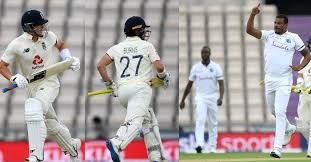
Southampton Test:West Indies ,England players take a knee to show solidarity with black lives matter movement.

The international cricket resumed after 117 days due to corona pandemic with all due precautions of safety. In this 117 days world witnessed many challenges besides impact of corona virus, one such major was the brutal killing of George Floyd by a us police officer for using counterfeit money to buy cigarettes. The officer knelt on neck of Floyd for almost 8 minutes, where Floyd pleaded the officer to leave him as he was unable to breathe,but to no mercy from officer he later chocked to death.This was most brutal act and against humanity, many protests were done against the officer and he was even suspended.

This led to disclosure of many incidents of racism ,discrimination on color many cricketers came forward to explain how they had faced such things.

England and West Indies cricketers took a knee to show their solidarity against racism and support the ‘Black Lives Matter’ movement before the start of the first Test of the three-match series here at the Ageas Bowl on Wednesday.

Cricketers take a knee to show solidarity with Black Lives Matter movement

A minute of silence was also observed before the start of play to pay respect to the victims of the coronavirus pandemic and West Indies legend Everton Weekes, who passed away last week at the age of 95.

The Premier League resumed its suspended season in June and all teams have been sending out a strong message to show solidarity with the ‘Black Lives Matter’ movement.All teams have been taking a knee to show their support, while jerseys of all teams have ‘Black Lives Matter’ written on them.

HOW DIGITAL ANIMATION CONQUERED THE HOLLYWOOD?

Welcome everyone today we are going to know how the animation is mo much popular in Hollywood and how animation conquered the Hollywood!Before 50 years there were animation of Disney now Pixar is also making lots of animation film and cartoon.Pixar masterpieces are Incredible,Toy story and many more which people had shown so much of love to this films.

Animation thought of as a more or less modern medium, has been being used in different forms since 1906!The earliest known animated film was made in France in 1906, titled Humorous Phases of Funny Faces, and was made from chalk pictures. Since then, other small animations were made, but the first animated cartoon with synchronized was made by Walt Disney in 1928, called Steamboat Willie. Many cartoons like this followed, and they were used to entertain viewers with gags and charades of drawn characters. Nine years later, Disney released the first full-length future film, Snow White. And in 1993, software for 3D animation was created.

Whys animation is better? Without animation can films will be not good?

Animation is important because it makes us be able to tell stories and communicate emotions and ideas in a unique, easy-to-perceive way that both small children and adults can understand. Animation has helped connect people throughout the world in a way that sometimes writing and live-action films cannot. Today, anyone can pick up a drawing tablet and show their ideas to the world. Drawn figures can be funny, or make something sad or serious have a playful, less intimidating feel to it to make the viewer feel more comfortable.

No matter animation had a great impact and change the Hollywood in a greater way! It is the most powerful key tool to create our imagination and make it realistic.I hope you all like to watch animated movies. I love to watch the animated movies. I never get bored while while watching animation. The kids also love to watch animation, they also learn some characters from the films and also have more interest in watching them.

Facts about animation:-

1.Walt Disney had only two animators working for him when he created Steamboat Willie in 1928.

2.During the production of Snow White, the Disney studio increased its animation team from 187 to 600.

3.Toy Story was the first animated feature ever generated completely on computers.

4.Computer-generated imagery enabled the filmmakers of Aladdin to create het magic carpet ride through the Cave of Wonders.

5.Did you know that the lamp from a Pixar opening has a name? It is called Luxo Junior, named after the animated cartoon short of 1986, which Pixar produced under the same title.

6.Animation is literally translated from French as “soul.” So, the process of animation is actually the “ensoulment” of characters!

7.“Tangled” is to date the most expensive animated film in the world, costing the studio $274 million. The film’s production took 6 years, since there were technical problems with one (longest) character – Rapunzel’s long hair. It took 9 years to create a program for ideal hair modeling for the film.

So this are some facts about animation.

I hope you like it and let me know in the comment which animation you like the most.

Thank you for reading my article and have a nice day!

The two welcome developments on deeper financial and commodity market

Two invite advancements in household money related markets have occurred in the previous week. Banks have started taking an interest in the seaward rupee subordinates showcase; and a dish India power advertise with 60 minutes ahead conveyance is currently useful.

Developing monetary markets would realize better allotment of scant assets, help chance relief and furthermore give quality occupations.

There stay capital controls on the rupee, however we currently have fluid markets for the rupee abroad, the non-deliverable forward (NDF) advertise, settled in a convertible money like the US dollar. Truth be told, forward agreements on the rupee exchanged over the counter in monetary focuses seaward presently rival inland money markets, and they have an expanding job in value disclosure here. The route ahead is for banks to use neighborhood information, mastery and aptitudes to productively support piece of the pie in rupee exchanging.

Couple, the Reserve Bank of India (RBI) needs to change interest in the seaward rupee advertise by giving simple access to outside assets and different partners in GIFT City.

Monetary administrations are, obviously, expertise and innovation concentrated and offer India upper hand. We should strategy initiate collaboration between Indian markets, nearby data, neighborhood request stream and nearby liquidity. The possibility of Atmanirbhar Bharat must not be restricted only to products. Mumbai can possibly figure among the best five worldwide money related focuses. Flourishing monetary markets would fire up efficiency gains.

India presently makes some genuine memories power showcase. It should prompt increasingly ideal limit utilization and better interest the executives. We need a lively market for product subsidiaries, and, keeping that in mind, a huge assortment of members, and an anticipated administrative structure set up.

Beyond the legal counsel predicament’s

The ‘vulture’ comment is just a refining of developed anxiety with structures of responsibility.

Or maybe unreasonably, Solicitor-General of India Tushar Mehta has been pulled over the coals for his ongoing exhibition — or, ‘upheaval’ as lawful journalists decided to call it — when the Supreme Court had, on May 26, chose to take suo motu note of the transients’ pitiable predicament in the wake of the across the country lockdown. Tushar Mehta is a contentious legal counselor; he isn’t a law specialist who needs to bring gravitas or grant; he isn’t a Fali Nariman nor is he a Soli Sorabjee. In any case, he has earned the notoriety of a skilful foe who doesn’t recoil over from a piece in the court. He does his expert best for his customer.

A political deputy

What’s more, his customer is as a matter of fact the Modi system. It is important to advise ourselves that a Solicitor-General is a political nominee; which implies that while Article 76 of the Constitution of India puts the Attorney-General for India positively on a raised roost , the Solicitor-General gets the opportunity to play a piecemeal job. He turns out to be a lot of a piece of the decision foundation’s inward coterie, and can’t avoid being sucked into the system’s day by day battles and likes. He can’t have a job or character outside the inclinations and inclinations of the administration of the day. Specialist General Mehta’s faultfinders are maybe not being reasonable for him when they blame him for being unpalatably forceful or unnecessarily presumptuous; all things considered, he is just mirroring his customer’s demeanor, his motivations and tendencies as well as could be expected. He is basically an instrument, a sharp and once in a while heavy-handed contrivance.

Many have resentfully discovered Mr. Mehta’s summon of ‘vulture’ illustration as especially unsuitable and hostile slur on the whole editorial clique. It did maybe verge on impiety since it was expressed in the country’s most elevated legal discussion. Mr. Mehta has accordingly attempted to explain [in a meeting with The Times of India of June 1, 2020] that his ‘vulture’ curse was not aimed at writers; he is qualified for an opportunity to be vindicated. What’s more, however it very well may be no comfort, it is calming to review that similarly harmful put-down and innuendoes have been heaved at the media by the decision foundation. Mr. Mehta’s maligning fails to measure up to Gen. (retd) V. K. Singh’s ‘presstitute’ slander. However, once more, it isn’t the individual tendency of a law official or a bureau serve that ought to keep us for a really long time; rather, it is the aggregate feeling of the system he speaks to that should be investigated by each just soul.

May there be no mix-up. A developed attitude is grinding away. It looks for authenticity for itself from the stuff of an elective majority rule government however utilizes the law based command to etch away at the center of vote based game plan. It is just hesitant to offer responses or clarifications of any sort to anybody.

Blunted establishments

It is not really a mystery that these most recent six years, the Modi system has unobtrusively however steadily and deliberately made broken — without disassembling — all the set up foundations intended to forestall maltreatment of power. Workplaces, for example, the Central Vigilance Commission, the Lokpal, the Central Information Commission, the National Human Rights Commission, India, the Election Commission of India, and so on have been rendered not as much as paper tigers. With extensive artfulness and with commendable road intelligence, the system has made sure that no Vinod Rai would be permitted to strike out on his/her own.

The Modi swarm accepts, earnestly and honestly, in the accuracy of its picked way; it hypnotizes itself with the ideas of respectability and responsibility of its faculty and pioneers and their vast insight. It dislikes just resistance. Of course, such a system sees no compelling reason to listen attentively to the ‘vultures’ in the media or the non-legislative associations.

The vagrant issue

In its decided inclination to pause dramatically of definitiveness and striking initiative, the officeholder system not just neglected to envision the outcomes of its unexpected, sudden and panicky lockdown choice; it additionally would not see the a huge number of half-starved residents trekking back to the wellbeing and security of their towns. It was maybe with a reasonable still, small voice that the Solicitor General could tell the top court that the legislature had the transient issue well under its capable hands.

Here is a law official who had made sure about from the pinnacle court a sort of unlimited authority for his customer to continue with its befuddled remedies . Maybe the Court had felt that given the tremendousness of the COVID-19 test, the administration was qualified for commit its errors and botches as likewise to its obtuseness and skepticism. Because of enticing contentions from the Solicitor-General, the Hon’ble makes a decision about most likely felt that it was not their business to observe huge difficulty incurred on our very own huge number residents. Mr. Mehta had made sure about for his customer a free hand to continue with its hit and preliminary experimentations.

A disaster could without much of a stretch be predicted. A system which has decided to deny itself of real wellsprings of data ends up left helpless when human wretchedness on a phenomenal scale grasps huge wraps of our residents. Since the system has built up a thought about scorn for the free and autonomous media, it just wouldn’t see the pictures of a huge number of hapless residents moving back to their towns. Faced with a surprising emergency of obscure measurements, the system equitably disliked any individual who called attention to the furthest reaches of its sloganised way to deal with administration.

At the point when the Court acted

At that point, a lot to the system’s dismay , unexpectedly the Supreme Court had permitted itself to be prodded to look for answers from the legislature for its bureaucratic lack of care, for its political haughtiness, for its strategy disarray and its managerial awkwardness. It was this volte-face that likely delivered the Solicitor General’s celebrated upheaval. It is conceivable to propose that Mr. Mehta’s resentment was coordinated less against the vultures among the columnists as it was a statement of restlessness with the most noteworthy court.

Implicit hatred was that the Supreme Court was looking for a clarification from the legislature in the wake of listening attentively to the individuals who have no information on the ‘ground circumstance’. In any case, the administration would not share data about the ‘ground’ with anybody. A day or two ago, three expert relationship of disease transmission specialists, general wellbeing professionals and social medication specialists have gotten out the ungainly and confounded dynamic rehearsed by the Leader-driven force structure. Millions have followed through on an overwhelming cost for the system’s haughtiness and ineptitude.

However, the legislature would not face any conversation of its errors and stumbles. Throughout the years the system has utilized a blundering way to deal with set its faultfinders in their proper place. It has brought to hold up under overpowering assets, force, esteem and abilities to fix its faultfinders, anyway little or dissipated. Neither a Sudha Bhardwaj nor a Gautam Navlakha nor the Pinjra Tod activists in upper east Delhi will be permitted to assemble dispute and difference against the system.

It is this oblivious conformity of prejudice and eagerness that was in plain view in the Supreme Court on May 26. Dissimilar to in the tremendously famous Hindi TV-sequential, Taarak Mehta Ka Ooltah Chashmah, Solicitor-General Mehta can be especially supposed to utilize a specially crafted pair of displays, endorsed by the system’s in-house optometrists.

Improve Hospitals, treat patients

Numerous Covid patients battle to get institutional treatment. States should boundlessly upgrade limit by ad libbing transitory medical clinics to oblige the flood of Covid-19 patients. We can’t have patients going around for affirmation and biting the dust for need of a spot to be dealt with.

Apparently, in Uttar Pradesh, a 48-year-elderly person experiencing intense respiratory issues kicked the bucket at the Meerut clinical emergency clinic on Sunday after purportedly doing the rounds of nine medical clinics in Noida, Ghaziabad and Delhi for two days, yet neglecting to go anyplace.

Distressingly, there are reports from Delhi and different states about significant delays of beset people outside emergency clinics, bringing about passings at times. This is inadmissible. States ought to promptly change over lodgings, public venues, schools and arenas into clinic wards to treat Covid-19 patients. This is additionally a basic piece of opening up the economy.

Evaluations recommend that the nation has around 19 lakh clinic beds, 95,000 ICU beds and just around 48,000 ventilators. Bed limit is soaked in government medical clinics. The lockdown gave a window for states to extend the wellbeing framework to contain the pandemic. That numerous states neglected to do so is shocking.

Introducing ventilators and assembling huge quantities of defensive attire and other rigging for emergency clinic staff in transitory broadened medical clinics ought to be a need now. Such spontaneous creation ought to be done the nation over to treat those distressed.

Labor (read: specialists and ICU pros) lack is the other test. Dr Devi Shetty of Narayana Hrudayalaya proposes that youngsters and ladies — including bombed clinical understudies — who have been prepared in the essentials of basic mind however don’t have a clinical degree must be presented at locale emergency clinics on treat Covid patients. That bodes well. Maybe, experienced medical attendants could be given extra preparing to manage treatment on ventilators. The need is to deliver both the difficulties to handle the general wellbeing emergency. We don’t have the advantage of leaving the best alone the foe of the great.

Help for the living – Hope for the dead

My Friends: I know how vain it is to gild a grief with words, where life and death are equal kings, all should be brave enough to meet what all the dead have met. The future has been filled with fear, stained and polluted by the heartless past. From the wonderous tree of life the buds and blossoms fall with ripened fruit, and in the common bed of earth, patriarchs and babes sleep side by side.


Why should we fear that which will come to all that is? We cannot say that death is not a good. We do not know whether the grave is the end of this life, or the door of another, or whether the night here is not somewhere else a dawn . . . .


Every cradle asks us “Whence?” and every coffin “Whithe?” The poor barbarian, weeping above his dead, can answer these questions just as well as the robed priest of the most authentic creed. The tearful ignorance of one the one is as consoling as the learned and unmeaning words of the other. No man, standing where the horizon of a life has touched a grave, has many rights to prophesy a future filled with pain and tears.


It may be that death gives all there is of worth to life. If those we press and strain within our arms could never die, perhaps that love would wither from the earth. Maybe this common fate treads from out the paths between our hearts the weeds of selfishness and hate. And I rather live and love where death is king, than have eternal life where love is not. Another life is nought, unless we know and love again the ones who love us here.


They who stand with breaking hearts around this little grave need have no fear. The larger and nobler faith in all that is, and is to be, tells us that death, even at its worst, is only perfect rest. We know that through the common wants of life – the needs and duties of each hour – the grief will lessen day by day, until at last this grave will be to them a place of rest and peace – almost of joy. There is for them this consolation: The dead do not suffer. If they live again, their lives will surely as good as ours. We have no fear. We are all children of the same mother, and the same fate awaits us all.


We, too, have our religion, and it is this: Help for the living – Hope for the dead.


By Robert Ingersoll


Taken from Light from many Lamps by Lillian Eichler Watson.

Who’s afraid of the monetization of the deficit? The shrill clamour against it!

The harsh fuss against it depends on misguided judgments; fears of swelling need substance.

As the administration grappled with the serious downturn brought about by the novel coronavirus pandemic, some monetary savants encouraged the legislature to go out and spend without stressing over the expansion in open obligation. They said the rating organizations would comprehend that these are irregular occasions. In the event that they didn’t and decided to downsize India, we ought not lose a lot of rest over it.

Rating and basics

Indeed, the choice of the rating office, Moody’s, to minimize India from Baa2 to Baa3 should come as a reality check. The current rating is only one indent over the ‘garbage’ class. Moody’s has likewise held its negative attitude toward India, which recommends that a further downsize is more probable than an overhaul.

The method of reasoning given by Moody’s ought to particularly cause individuals to sit up. The downsize, Moody’s says, has not calculated in the monetary effect of the pandemic. It has to do with India’s essentials before the beginning of the pandemic and the all-inclusive lockdown with which India reacted. The message ought to be sufficiently clear. Any further decay in the essentials starting now and into the foreseeable future will drive India into ‘garbage’ status.

We ought not lose rest over a further downsize and essentially get out of difficulty? Anyone who thinks so is living in cloud cuckoo land. Whatever the failings of the organizations, in the flawed universe of worldwide money that we live in, their evaluations do convey weight. Institutional speculators are to a great extent limited by pledges that expect them to leave an economy that falls underneath venture grade.

In the event that India is minimized to garbage status, remote institutional speculators, or FIIs, will escape in large numbers . The stock and security markets will take an extreme beating. The rupee will deteriorate enormously and the national bank will have its hands full attempting to fight off a remote trade emergency. That is the exact opposite thing we need right now.

Work towards an overhaul

We need to do our absolute best currently to forestall a downsize and achieve an update. To do as such, we have to take note of the key worries that Moody’s has refered to in affecting the current minimization to our rating: easing back development, rising obligation and budgetary area shortcoming. These worries are genuine.

Numerous financial experts as likewise the Reserve Bank of India (RBI) anticipate that India’s economy should contract in FY 2020-21. The consolidated financial deficiency of the Center and the States is relied upon to be in the locale of 12% of GDP. Moody’s anticipates that India’s open obligation should GDP proportion to ascend from 72% of GDP to 84% of GDP in 2020-21. The financial part had non-performing resources of over 9% of advances before the beginning of the pandemic. Powerless development and rising liquidations will build worry in the financial part.

The administration’s spotlight hitherto has been on consoling the money related markets that the fisc won’t turn crazy. It has kept the ‘optional monetary boost’s down to 1% of GDP, a figure that is generally humble comparable to that of numerous different economies, particularly created economies. (‘Optional monetary improvement’s alludes to an expansion in the financial shortfall brought about by government strategy as unmistakable from an expansion brought about by easing back development, the last being called a ‘programmed stabilizer’.

Keeping the financial deficiency on a chain tends to the worries of rating offices about an ascent in the open obligation to GDP proportion. Be that as it may, it does little to address their interests about development. The obligation to GDP proportion will compound and money related pressure will complement if development neglects to recuperate rapidly enough. The administration’s boost bundle depends vigorously on the financial framework to support development. In any case, there is just so much banks can do. Greater government spending is required, particularly for framework.

Clearing confusions

We have to expand the optional monetary boost without expanding open obligation. The appropriate response is monetisation of the shortage, that is, the national bank giving assets to the legislature. Notice ‘monetisation of shortage’ and numerous financial intellectuals will grovel in dread. These feelings of trepidation depend on misinterpretations about monetisation of the shortfall and its belongings.

A typical confusion is that it includes ‘printing notes’. One picture that jumps to mind is the print machines of national banks wrenching out notes with forsake. In any case, that isn’t the means by which national banks subsidize the administration. The national bank ordinarily reserves the legislature by purchasing Treasury bills. As advocates of what is gotten Modern Monetary Theory bring up, even that isn’t required. The national bank could basically acknowledge the Treasury’s record for itself through an electronic bookkeeping section.

At the point when the administration spends the additional supports that have come into its record, there is an expansion in ‘Base cash’, that is, money in addition to banks’ stores. In this way, indeed, monetisation brings about an extension of cash gracefully. In any case, that isn’t equivalent to printing cash notes.

What could be the issue with such an extension in cash flexibly? It may be the case that the extension is inflationary. This complaint has little substance in a circumstance where total interest has fallen pointedly and there is an expansion in joblessness. In such a circumstance, monetisation of the deficiency is bound to raise genuine yield nearer to possible yield with no extraordinary increment in expansion.

Types of the MMT make an additionally striking point. They state there is nothing especially upright about the administration bringing about consumption and giving bonds to banks as opposed to giving these to the national bank. The extension in base cash and consequently in cash gracefully is the equivalent in either course. (The exact succession of national bank exchanges in these two cases and the personality in results is appeared in Macroeconomics by Mitchell, Wray and Watts, three financial analysts who are among the main types of MMT). The inclination for private obligation is deliberate. MMT examples state it has more to do with an ideological inclination for constraining government consumption. In any case, that is a discussion for one more day.

National banks worldwide have depended on gigantic acquisition of government securities in the optional market as of late, with the RBI joining the gathering generally. These are completed under Open Market Operations (OMO). The effect on cash gracefully is a similar whether the national bank procures government securities in the optional market or legitimately from the Treasury. So why the high pitched clatter against monetisation of open obligation?

About swelling control

OMO is supposed to be a lesser evil than direct monetisation in light of the fact that the previous is a ‘transitory’ development in the national bank’s accounting report while the last is ‘perpetual’. In any case, we realize that even purported ‘transitory’ developments can keep going for significant stretches with indistinguishable consequences for expansion. What makes a difference, along these lines, isn’t whether the national bank’s accounting report extension is transitory or perpetual yet how it impacts expansion. For whatever length of time that expansion is monitored, it is difficult to contend against monetisation of the shortfall in a circumstance, for example, the one we are presently faced with.

We currently have an exit from the limitations forced by sovereign appraisals. The legislature must keep itself to the extra obtaining of ₹4. 2 trillion which it has declared. Further optional financial boost must occur through monetisation of the deficiency. That way, the obligation to GDP proportion can be monitored while additionally tending to worries about development. The rating organizations ought to be stressing not over monetisation fundamentally however about its effect on expansion. For whatever length of time that expansion is monitored, they ought not have concerns — and we need not lose rest over a potential downsize.

The need for an anti- discrimination law

India is interesting among popular governments in that an established right to correspondence isn’t supported by complete enactment.

Game is regularly a microcosm of society. Much as we would once in a while consider it to be a leveler, it constantly will in general underscore increasingly endemic imbalances. Late disclosures made by the previous West Indies cricket chief Darren Sammy, thusly, must stir us to a difficult that goes a long ways past the cricket field and its tight limits, of a general public packed with bigotry.

Voices in sport

In our nation, this issue is just exacerbated by other generally imbued types of separation, along the lines of rank, class, sex, and religion in addition to other things. To be sure, in responding to Mr. Sammy’s announcements, the previous Indian cricketer Irfan Pathan pointed not exclusively to how players from the south of India routinely confronted maltreatment from swarms in the north — something which the Tamil Nadu and India opener Abhinav Mukund excessively validated — yet in addition to another type of partiality significantly increasingly settled in the public eye. On June 9, Mr. Pathan stated, in a tweet, that bigotry in our nation goes past the shade of our skins, that upholding embargoes on individuals looking to purchase houses dependent on their confidence should similarly be viewed as an element of partiality.

Typically, Mr. Pathan confronted a volley of maltreatment for his tweet. Various individuals revealed to him that India had given him everything — love, notoriety and cash — and that he should check with Pakistan on how they were doing. In any case, on the off chance that anything, these reactions just strengthened his contention. Here was a cricketer, who had spoken to India on the world stage with some differentiation, being approached to demonstrate his dedication once more, basically because of his confidence. So poisonous were a portion of the reactions that Mr. Pathan was in the end constrained into explaining that his sentiments “are consistently as an Indian and for India”. He didn’t have to do this, not least since his judgment had caught the bit of the discussion: that over 70 years after Independence, our general public stays overflowing with auxiliary separation.

Blow against race-lack of bias

These preferences, which infest each part of life, from access to fundamental products, to training and work, are now and then show. In any case, on different events, the segregation is aberrant and even unintended. The last mentioned, be that as it may, is similarly as vindictive. The structures that it takes were maybe best clarified by the U. S. Incomparable Court’s decision in Griggs versus Duke Power Co. (1971). There, the court held that a vitality organization had fallen foul of the U. S. Social liberties Act of 1964 — which made racial separation in private working environments illicit — by demanding a pointless composed test by candidates for its better section level occupations. In spite of the fact that, by all accounts, this necessity was race-impartial, by and by it permitted the organization to mislead African-Americans.

In a critical judgment, conjuring an Aesop tale, Chief Justice Burger composed that “tests or measures for work or advancement may not give uniformity of chance simply in the feeling of the famous proposal of milk to the stork and the fox. ” despite what might be expected, the law, he stated, turning again to the tale, “gave that the vessel wherein the milk is proffered be one all searchers can utilize. ” That will be, that it wasn’t just “clear separation” that was illicit yet in addition “rehearses that are reasonable in structure, yet prejudicial in activity”.

State and private agreements

Both immediate and backhanded types of separation militate against India’s established vision of uniformity. The decision in Griggs was eminently applied by Justice S. Ravindra Bhat in the Delhi High Court’s 2018 judgment in Madhu versus Northern Railway. There, the Railways had denied free clinical treatment to the spouse and little girl of a representative which they would somehow or another have been qualified for under the standards. The Railways fought that the representative had “abandoned” his family and had their names struck off his clinical card. The court held that to make fundamental advantages, for example, clinical administrations subject to a statement by a worker may be “facially nonpartisan”, yet it created a dissimilar effect, especially on ladies and youngsters.

In any case, while this case concerned segregation by the state, section obstructions to products, for example, lodging, schools and work will in general capacity in the domain of private agreements. The Constitution, however, is especially vocal on this as well. Article 15(2) specifies that residents will not on grounds just of religion, race, station, sex, or spot of birth be denied access to shops, open eateries, inns and spots of open diversion. However, now and again, this right, which applies on a level plane, entomb se people, collides with the privileges of people to connect with others, frequently to the avoidance of specific gatherings. This is the reason each time an instance of segregation is brought, the gathering that separates guarantees that he has a freedom to do as such, that he should be allowed to act as per his own feeling of still, small voice.

The Supreme Court, in 2005, in Zoroastrian Cooperative Housing Society versus District Registrar Co-employable Societies (Urban) and Others, supported one such prohibitive bond, when it decided for a bye-law of a Parsi lodging society that denied the offer of property to non-Parsis. This option to deny such a deal, the Court controlled, was inherent in the Parsis’ principal option to connect with one another. In any case, in holding in this way, the judgment, as Gautam Bhatia calls attention to in his book, The Transformative Constitution, not just conflated the opportunity to contract with the protected opportunity to relate, yet in addition ignored inside and out Article 15(2).

From the outset become flushed, Article 15(2) might have all the earmarks of being to some degree constrained in scope. Be that as it may, “shops” utilized in it is intended to be perused generally. An investigation of the Constituent Assembly’s discussions on the condition’s encircling gives us that the authors expressly proposed to put limitations on any financial movement that looked to prohibit explicit gatherings. For instance, when an individual will not rent her property to another dependent on the client’s confidence, such a refusal would run straightforwardly counter to the assurance of correspondence.

An overruling of the decision in Zoroastrian Cooperative, while attractive, is far-fetched, in any case, to fill in as a panacea. India is one of a kind among majority rule governments in that a sacred right to equity isn’t bolstered by extensive enactment. In South Africa, for instance, a sacred assurance is increased by a sweeping law which restricts uncalled for segregation by the administration as well as by private associations and people.

Endeavors at change

In India, there have been a couple of endeavors to this end lately. Shashi Tharoor presented a private part’s bill (drafted by Tarunabh Khaitan) in 2017, while the Center for Law and Policy Research drafted and discharged an Equality Bill a year ago. These endeavors perceive that our common freedoms are similarly as equipped for being compromised by demonstrations of private people as they are by the state.

At last, our standard of law must subsume an understanding that segregation shares various structures. Any sensible origination of equity would request that we look past the aims of our activities, and at the engrained structures of society. This doesn’t imply that we have to live under a dream that a resolution will settle our fundamental inclinations, that we will by one way or another mysteriously change ourselves into the sort of country that B. R. Ambedkar imagined. However, presently like never before, as we hope to reset our cultural plans in the wake of COVID-19, a rededication to our unique established responsibility could be beneficial. With that in mind, sanctioning a law that will help enhance our lifestyles, that will help turn around our profound established culture of separation, merits pondering.