Money Management

Making financial decisions should be taught to school children at a young age, but across the world, it isn’t done so. The topic of money isn’t discussed by parents to their children as they think “Money is the root cause of all evil”. Due to this, young adults entering the corporate world have no idea how to manage their money. They often fall pray for large banks and credit card companies who trick them into paying more than what they should be rightfully paying. These companies profit from the lack of financial knowledge that their customers have. Therefore, it is a must to learn how the financial world works and how we can avoid any debt because of bad decision making with our income.

Also known as investment management and portfolio management, money management broadly refers to the processes utilized to record and administer an individual, household, or organization’s finances. In the market, consumers have access to a wide range of resources and applications that allow them to individually manage nearly every aspect of their personal finances. As investors increase their net worth, they also often seek the services of financial advisors for professional money management. Financial advisors are typically associated with private banking and brokerage services, offering support for holistic money management plans that can involve estate planning, retirement, etc.

Money management is used in investing and deals how much risk a decision maker should take in situations where uncertainty is present. More precisely what percentage or what part of their wealth should be put into risk in order to maximize the decision maker’s utility function. Money management can mean gaining greater control over incoming salary and outgoing investments, both in a personal and business perspective. Greater money management can be achieved by establishing budgets and analyzing costs and income etc.

Financial experts curated a list of five simple money management tips that can help an individual feel more financially secure:

  • Create a comprehensive budget – Write down how much money you receive from salary, bonuses, benefits reimbursements and other sources. Compare that to all of your expenses to ensure you have enough money to cover all that you need,
  • Spend less by shortening day-to-day costs – Identify areas to save, for instance, planning meals and groceries to avoid takeout lunches and last-minute ordering in.
  • Eliminate unnecessary costs – Make a list of your current bills and their due dates, and pay your bills on time to avoid late fees and penalty charges.
  • Find ways to pay less interest on your debts – Focus on paying off debts with the highest interest rate first.
  • Set clear goals to help accelerate your savings – Write down all the things you’re saving for, then work out how much you need to set aside each month to reach your goals.

Working with an advisor who has great knowledge in the field of money management helps setting goals, develop customized financial plans, prepare strategically to be finically secure during economic recessions, hence reducing financial stress.


Importance of Financial Literacy

Financial literacy is the understanding of financial components and skills such as budgeting, investing, borrowing, taxation, and personal financial management. Being financially literate allows an individual to be better prepared for their personal financial troubles as well as global recessions.

The absence of such skills is referred to as being financially illiterate. Being financially illiterate can lead to a number of pitfalls, such as being more likely to accumulate unsustainable debt burdens, either through poor spending decisions or a lack of long-term preparation. This, in turn, can lead to poor credit, bankruptcy, housing foreclosure, and other negative consequences. Today’s world is full of things such as student loans, mortgages, credit cards, investments, and insurance, which makes it necessary for everyone to be financially literate. Credit card companies, banks, and other financial institutions are secretly trapping consumers with credit opportunities—the ability to apply for credit cards or pay off one card with another. Without the proper knowledge, it is easy to get into financial trouble.

Thankfully, there are now more resources than ever for those wishing to educate themselves about the world of finance. The following are fundamental components of financial literacy that should be learned:

  • Budgeting

In budgeting, there are four main uses for money that determine a budget: spending, investing, saving, and giving away. Creating the right balance throughout the primary uses of money allows individuals to better allocate their income, resulting in financial security and prosperity. In general, a budget should be composed in a way that pays off all existing debt while leaving money aside for saving and making beneficial investments.

  • Investing

Some of the components that should be learned to ensure profitable investments are interest rates, price levels, diversification, risk mitigation, and indexes. Learning about crucial investment strategies allows individuals to make smarter financial decisions that may result in an increased inflow of income.

  • Borrowing

In most cases, almost every individual is required to borrow money at one point in their life. To ensure borrowing is done effectively, an understanding of interest rates, compound interest, time value of money, payment periods, and loan structure is very important. With this, an individual’s financial literacy will increase, which will provide practical borrowing guidelines and reduce long-term financial stress.
  • Taxation

Gaining knowledge about the different forms of taxation and how they impact an individual’s net income is crucial for obtaining financial literacy. Whether it be employment, investment, rental, or inheritance, each source of income is taxed differently. Awareness of the different income tax rates results in economic stability and increases financial performance through income management.

Achieving an in-depth knowledge of the financial components discussed above guarantees an increase in an individual’s financial literacy, allowing them to make decisions safer and more profitably.

The Rising Sea Level

As humans continue to emit greenhouse gases into the atmosphere, the planet’s oceans have changed due to it. The seas have absorbed more than 90% of the heat from the harmful gases. Scientists constantly express their concerns regarding climate change, describing the complex shifts now affecting our planet’s weather and climate systems. Rising sea levels are one of those climate change effects. Average sea levels have risen over 23 cm since 1880, with every year, the sea level rising 3.2 mm in height.

The change in sea levels is linked to three primary factors:

  • Thermal expansion:

When water heats up, it expands. About half of the sea-level rise over the past 25 years is attributable to warmer oceans occupying more space.

  • Melting glaciers:

Large ice formations such as mountain glaciers naturally melt to an extent each summer. This is followed by heavy snow and thick icebergs in the winters, thus maintaining balance in the environment. But since the last few decades, due to climate change, the natural summer ice melting lasts longer than usual. The atmosphere is so hot that even in the winter the cold isn’t able to re-freeze all the melted ice, thus, causing sea levels to rise.

  • Loss of Greenland and Antarctica’s ice sheets:

Due to large amounts of heat accumulating on either side of the planet, the land on and around the poles, Greenland and Antarctica, are losing massive ice sheets making it melt more quickly. Scientists also believe that melted water from above and seawater from below is seeping beneath Greenland’s ice sheets, lubricating ice streams and causing them to move more quickly into the sea.

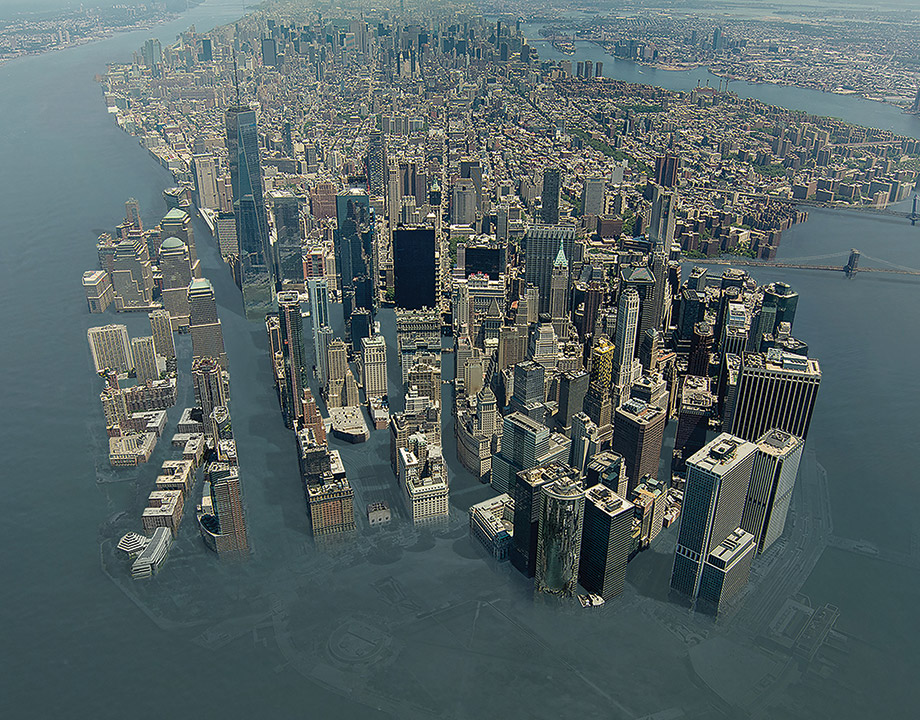
Even a small increase in sea level, have devastating effects on coastal habitats, it can cause destructive erosion, wetland flooding, aquifer and agricultural soil contamination with salt, and destruction of habitat for fish, birds, and plants. Higher sea levels along with dangerous hurricanes and typhoons move more slowly resulting in heavy rain, contributing to more powerful storm surges that can strip away everything in their path. Already, flooding in low-lying coastal areas is forcing people to migrate to higher ground, and millions more are vulnerable from flood risk and other climate change effects. The prospect of higher coastal water levels threatens basic services such as Internet access, since much of the underlying communications infrastructure lies in the path of rising seas.

While all coastal cities will be affected by sea-level rises, some will be hit much harder than others. About four out of every five people impacted by sea-level rise by 2050 will live in East or South-East Asia. US cities, especially those on the East and Gulf coasts, are similarly vulnerable. More than 90 US coastal cities are already experiencing chronic flooding every year and that number is expected to double by 2030. About 3 in every 4 European cities, will be hit hard by massive flooding. Africa is also highly threatened, due to rapid urbanization in coastal cities and the crowding of poor populations in informal settlements along the coast. Big cities like New York, Mumbai, Tokyo, Shanghai, to name a few, are all predicted to go under water in just a few decades if no action is taken. Only a few nations, like Singapore, Finland, New Zealand, Austria, are taking this dangerous situation seriously and spending billions of dollars to build infrastructure to protect itself from potential destruction in the future.

Most Efficient Source of Energy

In today’s world, energy consumption increases by the minute. New technology and equipment are required in all aspects of our lives. Our population is also growing which is increasing the need for energy. What are the different sources of energy and which one is the most efficient?

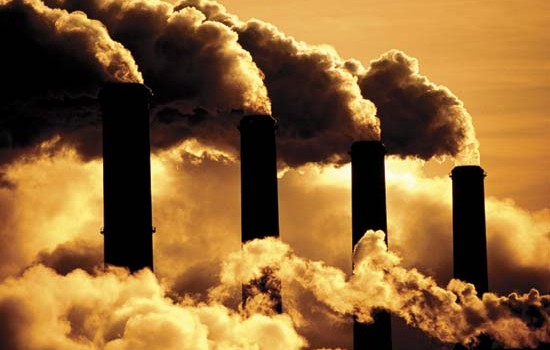
Human beings have been using fossil fuels as the main energy source for a few centuries now, especially in the past couple of decades. But this source is finite. The planet is going to run out of it soon and it is of utmost importance now to make a shift to other sources of energy before it is too late. On top of that, the burning of the fossil fuels for energy is the main contributor to the rapidly rising level of carbon dioxide that is driving the climate change. As the burning of fossil fuel increases, the climatic condition will change and increase the temperature. Fossil fuel extraction, processing, and burning can have negative health effects on all living beings on Earth. Some of the safe and renewable sources of energy that we can harness are solar, wind, tidal and hydroelectric.

  • Solar Energy

Solar energy is generated by harnessing the rays of the sun. Generating solar energy does not cause pollution and is efficient for both residential and commercial use. Maintaining solar panels is easy. The disadvantage of solar energy is that it can be generated effectively only in places that get large amounts of sunshine. If the residence or commercial establishment is in a location that gets an abundance of sunlight, a solar company will install panels to help continuous and efficient solar power generation.

  • Wind Energy

Wind energy is generated using wind turbines. The energy generated by the turbines provides large amounts of energy to homes and commercial establishments. Installing a turbine and getting it up and running is a comparatively easy and inexpensive process. Wind energy is weather dependent. Winds are not reliable, and one cannot guarantee that the turbines can generate enough power at a given time. They can work only in a location where there is sufficient wind speed and it will only be worth the space and investment if the location has good weather throughout the year.
  • Tidal Energy

Tidal energy is a renewable form of energy generated from the movement of tides in the ocean. It is a safe form of energy that does not emit harmful gases. Tidal power plants are long lasting and generate large amounts of energy. Building tidal power plants, however, is expensive and it has to be constructed near land. Additionally, tidal power plants manipulate the movement of the ocean and as a result harm the living organisms in the ocean.

  • Hydroelectric

Hydroelectricity is generated from dams built on rivers that generate power using the flow of water. Transmission lines transport the generated electricity to give power to houses and commercial establishments. Hydroelectric energy is inexpensive, renewable and efficient.

So, which of these is the most efficient renewable source of energy? Some would argue that it is solar, followed by wind. Although this is true, governments and policy makers need to make sure all renewable sources are installed in suitable locations to maximize the output from the sources. For instance, solar panels set up in places that receive sunlight, whereas wind turbines can be installed in areas that have lesser sunlight but more wind speeds, and tidal plants where the water pressure is high. With these strategies, we can completely shift from harmful fossil fuels to a sustainable future.  

Relation between Stock Market and the economy of a country

The stock market and the economy of a country are two terms mentioned all the time in the world of money. But what are these terms and how are they related to each other?

The stock market refers to the collection of exchanges where regular activities of buying, selling, and issuance of shares of publicly-held companies take place. An economy is the large set of inter-related production, consumption, and exchange activities that aid in determining how scarce resources are allocated. The production, consumption, and distribution of goods and services are used to fulfill the needs of those living and operating within the economy, which is also referred to as an economic system.

Generally, the stock market reflects the economic conditions of a country’s economy. If an economy is growing then output will be increasing and firms should be experiencing increased profitability. This higher profit makes the company shares more attractive, because they can give bigger dividends to shareholders. A long period of economic growth will tend to benefit shares of the companies as investors do not fear a recession happening. Just like the stock market and the economy grow together, it also falls together. If a country’s economy is forecasted to enter into a recession, then its stock markets will fall. This happens because a recession means lower profits, reduced dividends and even the chances of companies going bankrupt, which would be bad news for shareholders. During this time of chaos, investors try to avoid shares, because of the greater risk involved in it.

Many times, when recessions are merely predicted to happen, the stock market crashes for weeks or even months at a stretch, even if the predictions were found to be false afterwards. Company shares can rise and fall irrespective of how the economy is doing. For instance, if investors think a company’s share price is over-valued or if a company’s good management is removed and replaced with a bad one, then shareholders sell the stocks, resulting in the fall of the firm in the stock market. Whereas, if a company announces a new innovative product, then more people invest in that company hoping to get a piece of the profit the firm will make, thus causing the shares to rise.

There are cases when a country is in a long recession, but the stock market, after a fall in the initial days or weeks, seem to recover and grow despite the fallen economy. For instance, during the 2008 recession, the stock market did take a big hit along with the economy. But while the country is still recovering at a very slow rate after more than a decade since the economic crisis, the stock market has had one of its best decades, with number of companies reaching new heights of glory, and even a handful of firms entering trillion-dollar valuations.  Despite relatively weak economic growth, companies such as Apple, Google, Amazon and Microsoft, are still attractive to shareholders because they have retained their profitability, and showed a faster growth rate than the GDP of the country they are operating in. 

In conclusion, there is an increasing divergence between the stock market and the economy. How good or bad the economy is doing has much less impact on the stock market today than it did 10 or 20 years ago.

Abhijit Banerjee

Economist Abhijit Banerjee shared the 2019 Nobel Memorial Prize in Economic Sciences with Esther Duflo and Michael Kremer for their experimental approach to alleviating global poverty. Born in 21st February 1961, to both economist parents in Mumbai, Abhijit is currently the Professor of Economics at Massachusetts Institute of Technology. He has also taught at Harvard University and Princeton University.

His work focuses on development economics. Together with his wife, Esther Duflo, he has discussed field experiments as an important methodology to discover causal relationships in economics. They try to measure the effectiveness of actions, such as government programmes, in improving people’s lives. Although polio vaccination is freely available in India, many mothers were not bringing their children for the vaccination drives. Banerjee and Esther Duflo conducted an experiment in Rajasthan, where they gifted a bag of pulses to mothers who vaccinated their children. Soon, the immunization rate went up in the region. In another experiment, they found that learning outcomes improved in schools that were provided with teaching assistants to help students with special needs.

Apart for his research that helped millions of people across the world, he wrote books about economics which are easy to read and understand, enabling even non-economic field readers to quickly grasp the knowledge the books have to offer. Good Economics for Hard Times (2019) looks into how the resources to address issues such as immigration, globalisation, slow economic growth, climate change are already there but we lack the ideas to overcome the divide and distrust that plagues us. In Poor Economics (2011), Abhijit says that by paying attention to evidence, one can not only understand the real causes of poverty but can also assess how to end it. They argue that most charitable organisations want to help the poor but their assumptions are based on generalisations. It looks at how the impoverished make decisions on education, savings, healthcare, food and other issues. Making Aid Work (2007) states that foreign aid can lend a helping hand in reducing poverty. Banerjee says that while billions of dollars flow in to poor countries, they are not used effectiently. Lack of analysis causes considerable waste and inefficiency in this regard. He suggests that donors should conduct randomised controlled trials (RCT) – a method Banerjee and Duflo have mastered.

In 2013, he was named by the United Nations Secretary General Ban Ki-Moon to a panel of experts tasked with updating the Millennium Development Goals after 2015. In 2014, he received the Bernhard-Harms-Prize from the Kiel Institute for the World Economy. In 2019, he delivered Export-Import Bank of India’s 34th Commencement Day Annual Lecture on Redesigning Social Policy. And in the same year, he was awarded the Nobel Prize in Economics, together with Esther Duflo and Michael Kremer, for their work alleviating global poverty.

During the ongoing COVID-19 pandemic, Abhijit Banerjee criticised the government for their poor decision making which resulted in the pandemic reaching the high rates that it is in now. He also said that the healthcare system is built in a way that does not benefit the underprivileged. He expressed his concerns about the pandemic getting worse and how it will affect the world economy in the long term.  

The Degradation of Coral Reefs

Tropical coral reefs are the most diverse marine ecosystems on earth, giving shelter to thousands of animal species. Many millions of people depend on fisheries, tourism and coastal protection provided by healthy coral reefs. Yet today, coral reefs are dying at an alarming rate all around the globe.

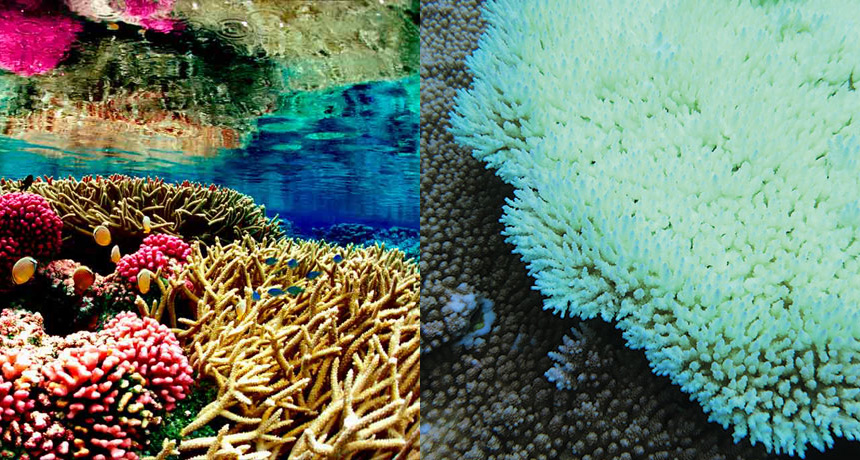
Corals build the reef structure and provide the basis for a functioning coral reef ecosystem. Without corals, reefs will degrade and vanish within years. At present, coral reefs are facing multiple issues such as pollution, overfishing, and the ongoing climate change, which leads to raising sea water temperatures and causing coral bleaching worldwide. As a result, over 50% of the world’s coral reefs have died in the last 30 years and up to 90% may die within the next century.

The impact of our changing climate on coral reefs was manifested by the third global bleaching event in 2015 and 2016. This event has caused a mass destruction of corals, for instance, along the Great Barrier Reef. Unfortunately, there is a clear pattern of severe bleaching events increasing in frequency, to a point where there are now inadequate intervals for corals to recover in between.

A world without corals means not only will we have a less diverse and less beautiful ocean, but it will also be an economic disaster for many people, predominantly in developing countries. Fisheries and tourism provide important livelihoods that directly depend on healthy coral reefs. Reefs are nurseries for many fish species, including commercial ones, and attract millions of tourists every year. Coral reefs offer natural coastal protection, especially in areas frequently impacted by hurricanes and tropical storms. The great biodiversity of coral reefs serves as an important source for new medicinal remedies.

Altogether, coral reefs comprise an area of almost 300 000 km² and are estimated to have an economic value of US$100000 to 600000 per km², thus providing one of the most high-value ecosystems. Coral reefs are among the most complex ecosystems and are revealing the degraded status of coastal environments. Their alarming status represents the poor health of our oceans and if coral reefs disappear other marine realms will follow.

Corals have existed for more than 400 million years, yet stresses and changes from human activities are happening faster than their ability to adapt. Corals may not survive the intensity and swiftness of these ongoing changes. If we want to give coral reefs a fighting chance to survive and thrive for generations to come, we need active restoration measures to complement coral reef conservation.

What Makes Some Countries Happier than Others?

What makes a country happy? A recent report found that people in the happiest countries have a higher per capita gross domestic product (GDP), and have less corruption, its citizens live longer and healthier lives, they have more social support and freedom to make life choices.

The nation of Bhutan was the first society to determine policy based on the happiness of its citizens, when the king of Bhutan famously claiming in 1972 that Gross National Happiness (GNH) was a more important measure of progress than Gross Domestic Product (GDP).

Some of the factors that enhances a country’s happiness are its human resources, standard of living, natural resources, capital formation, social and political factors, among various others. The most important thing for improving the overall development of the entire nation depends on the education system. The nations which focus towards serving people with quality education always contribute to the development of the country also.

From 2013 until today, every time the World Happiness Report has published its annual ranking of countries, the five Nordic countries – Finland, Denmark, Norway, Sweden, and Iceland, have all been in the top ten, with Nordic countries occupying the top three spots in 2017, 2018, and 2019. In Denmark, citizens enjoy tuition-free access to high-quality education and free public health care. The country comes up as having the happiest people in the world in almost every international survey conducted. Having a good education motivates the citizens to do something new, innovative and extraordinary from their daily lives thus raising their standard of living.

Professor Jeffrey Sachs, the director of the Earth Institute at Columbia University, said “Rather than taking a narrow approach focused solely on economic growth, we should promote societies that are prosperous and environmentally sustainable”. He said that the US focuses more on economic growth at the expense of happiness. “There is a very strong message for my country, the United States, which is very rich, has gotten a lot richer over the last 50 years, but has gotten no happier”, “The message for the United States is clear. For a society that just chases money, we are chasing the wrong things. Our social fabric is deteriorating, social trust is deteriorating, faith in government is deteriorating,” he explained.
Unlike the US, Costa Rica, a relatively poor Latin American country, came in 14th, ahead of many wealthier countries. This is perhaps due to its focus on human and environmental health, rather than economic growth alone. All of the countries that ranked in the top 10, have different political approach than in the United States. Lower levels of happiness in the United States could be driven by social conflict, lack of access to affordable health care, high tax rates and income inequality.

External factors like economic and political turmoil caused a significant drop in happiness levels in some countries like Greece, Italy, Spain, and Ukraine. Other countries that suffered economic crises or natural disasters, like Ireland, Iceland, and Japan, were able to maintain their happiness levels, perhaps because of high levels of social support.

Therefore, a government truly committed to enhancing the well-being of all its citizens can obviously do so, regardless of the size of its GDP, or political situation. But this commitment, can only be made by a government that is devoted to the broad public interest, instead of the narrow interests of the rich and powerful.

The Chernobyl Disaster

On April 25, 1986, the worst nuclear accident in history occurred in present day Ukraine as a reactor at a nuclear power plant exploded and burned. The disaster took place near the city of Chernobyl in the former USSR, which invested heavily in nuclear power after World War II.

The accident started during a safety test on an RBMK-type nuclear reactor. The test was a simulation of an electrical power outage to help create a safety procedure for maintaining reactor cooling water circulation until the back-up electrical generators could provide power. Three tests were conducted since 1982, but they had failed to provide a solution. On this fourth attempt, an unexpected 10-hour delay resulted in, unprepared operating shift of workers were on duty. During the planned decrease of reactor power in preparation for the electrical test, the power unexpectedly dropped to a near-zero level. The operators were able to only partially restore the specified test power, which put the reactor in an unstable condition. This risk was not made evident in the operating instructions, so the operators proceeded with the electrical test. Upon test completion, the operators triggered a reactor shutdown, but a combination of unstable conditions and reactor design flaws caused an uncontrolled nuclear chain reaction.

A large amount of energy was suddenly released, and two explosions ruptured the reactor core and destroyed the reactor building. One was a highly destructive steam explosion from the vaporizing super-heated cooling water and the other explosion could have been another steam explosion or a small nuclear explosion. This was immediately followed by an open-air reactor core fire that released considerable airborne radioactive contamination for about nine days that precipitated onto parts of the USSR and Western Europe, especially Belarus, 16 km away, where around 70% landed, before being finally contained on 4 May 1986. The fire gradually released about the same amount of contamination as the initial explosion. As a result of rising ambient radiation levels off-site, a 10-kilometre radius exclusion zone was created 36 hours after the accident. About 49,000 people were evacuated from the area, primarily from Pripyat. The exclusion zone was later increased to 30 kilometres when a further 68,000 people were evacuated from the wider area.

To reduce the spread of radioactive contamination from the wreckage and protect it from weathering, the protective Chernobyl Nuclear Power Plant sarcophagus was built by December 1986. It provided radiological protection for the crews of the undamaged reactors at the site, which continued operating.

The reactor explosion killed two of the reactor operating staff. A massive emergency operation to put out the fire, stabilize the reactor, and clean up the ejected nuclear core began. In the disaster and immediate response, 134 station staff and firemen were hospitalized with acute radiation syndrome due to absorbing high doses of ionizing radiation. Of these 134 people, 28 died in the days to months afterward and approximately 14 suspected radiation-induced cancer deaths followed within the next 10 years. More than 15 childhood thyroid cancer deaths were documented. Significant clean-up operations were taken in the exclusion zone to deal with local fallout, and the exclusion zone was made permanent. The World Health Organisation estimates 4000 people will eventually die as a result of the accident, from cancers and radiation poisoning.

It’s estimated that the amount of radioactive material was 400 times more than the atom bomb dropped on Hiroshima. Scientists estimate the zone around the former power plant will not be habitable for up to 20,000 years.

The Dangerous World of E-Waste

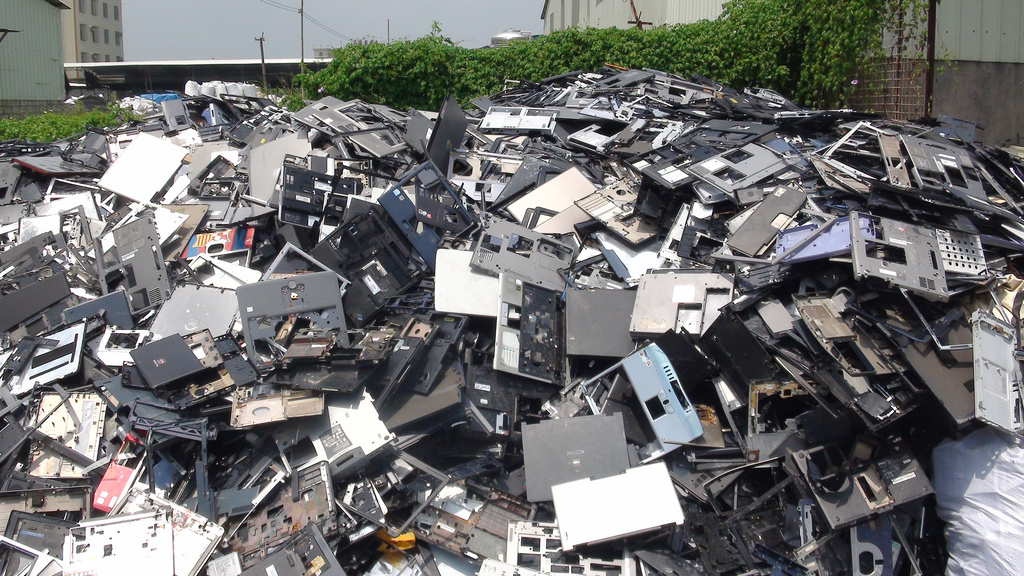
E-waste is any electronic equipment that’s been discarded. If an item goes unsold in an electronic store, it will be thrown away. E-waste is especially dangerous due to toxic chemicals that naturally emit from the metals inside it when the electronic device is buried or left in landfills.

The common things found in an e-waste landfills are smartphones, computers, microwaves, fans, televisions, printers, and countless others.

Technological advances are coming at us with a rapid speed that a lot of electronic devices that still work fine are the ones considered waste. For instance, VCR players got replaced when the DVD player hit the market, and then the DVD players got replaced by Blu-ray players, which soon after got abandoned with the introduction of streaming sites. These days every year smartphone improves drastically from the previous year that the only one year old phone is simply discarded to buy the newer model. And because everyone wants the latest tech gadget, there isn’t much possibility of finding buyers when someone tries to sell their old device.

When E-waste gets buried at a landfill, it dissolves in microscopic traces into the gross sludge that permeates at the landfill. Eventually, these traces of toxic materials pool into the ground below the landfill. This is known as leaching. The more E-waste and metals at the landfill, the more of these trace toxic materials show up in the groundwater.

Not only is this bad for anyone using a natural well, but it also hurts the nearby wildlife. This, in turn, causes the wildlife to get sick from lead, arsenic, cadmium, and other metal poisonings due to the high concentration of these minerals.

There are various ways E-waste can harm the environment, the following being some of the major ones:

  • Air Pollution: Burning of wires release hydrocarbons in the atmosphere.
  • Water Pollution: Electronic devices contain toxic metals like mercury, lead and lithium, which when disposed of improperly, mixes with ponds, lakes and groundwater. Communities that directly depend on these sources of water then consume it unknowingly. These heavy metals are hazardous for all forms of living beings.
  • Soil Pollution: These heavy metals enter the food chain as they are absorbed by plants from the soil. These metals not only destroy the plants, but also are then consumed by other living beings, leading to a poisonous food chain.

The majority of the world’s e-waste is recycled in developing countries, where informal and hazardous setups for the extraction and sale of metals are common. Recycling companies in developed countries face strict environmental regulatory regimes and an increasing cost of waste disposal and thus may find exportation to small traders in developing countries more profitable than recycling in their own countries.

There are some ways to reduce E-Waste and the dangers that come with it. The following are some of them:

  • Donate old Electronics

Donating electronics to the needy is also a practice followed by many. It not only gives the gadget a new life, but also makes someone else’s lives better.

  • Recycle and Dispose of E-Waste Properly

Recycling old electronics allows the expensive electronic parts inside to be reused. This can save a lot of energy and reduce the need for mining of new raw resources, or manufacturing new parts.

  • Maintain your Electronics

One of the best ways to save money and reduce e-waste is to keep your electronics well-maintained, with good care, to increase its life.

E-waste is the largest form of waste on the planet and one of the most dangerous for the environment and all its habitants. Therefore, there is a need for public awareness regarding the hazards of electronic waste and to take steps to prevent the same.

The Origin of Adidas and Puma

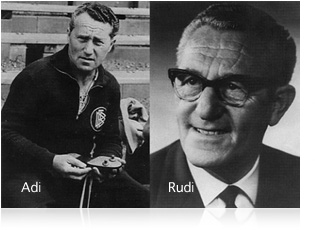
Adolf Dassler, popularly known as ‘Adi’, made sports shoes in his mother’s laundry room in Herzogenaurach, Germany after returning from World War I. In July 1924, his older brother Rudolf joined the business, and they called it Dassler Brothers Shoe Factory (Gebrüder Dassler Schuhfabrik).

The brothers went through a lot of hardships at that time. The electricity supply in Herzogenaurach was unreliable, so the brothers had to use pedal power from a bicycle to run their equipment. The brothers assisted in the development of spiked running shoes for multiple athletic events. To enhance the quality of spiked athletic footwear, Adi shifted from a previous model of heavy metal spikes to using canvas and rubber instead. In 1936, they persuaded U.S. sprinter Jesse Owens to use their spikes, which Adi made with his own hands, at the 1936 Summer Olympics. With those shoes, Owens won four gold medals, and the name and reputation of Dassler shoes became known to sportsmen and trainers worldwide. Their business was extremely successful and the Dasslers were selling 200,000 pairs of shoes every year until World War II. During the war, the company was running the only sport shoe factory in German and mostly supplied shoes to the Wehrmacht, the German military.

In 1948, after over 30 years of working together, Adolf and Rudolf abruptly separated, due to differences in opinion for the future of the company. The same year, Rudolf established his company, Ruda (short for Rudolf Dassler) but later renamed to Puma after the animal. In 1949, Adolf established Adidas (short for Adi Dassler). The original Dassler Brothers Company’s workforce and resources were split between the brothers. Adidas kept the factory by the train station and two-thirds of company’s employees, as most employees believed Adi’s vision of focusing on product development rather than Rudolf’s sales-oriented approach. Rudolf kept remaining workforce and the factory on Würzburger Street.

In the following three decades, both Adidas and Puma rose to dominance and signed deals with athletes. Adidas famously sponsoring professional American boxer Muhammad Ali and Joe Frazier and Puma signing with Brazil national football team. Adidas introduced shoes customized for different sports, and grew rapidly while Puma, driven by Rudolf’s sales approach, kept chasing Adidas throughout these decades, without making much innovations on its own.

It’s said that the Dassler family quarrels were so extreme that the Puma and Adidas families went to separate bakeries, separate butchers, as well as separate pubs. Michael Dassler, the grandson of Puma’s founder, said Adidas employees going into a shop that Puma employees visited, and vice versa, was impossible. He recalls that in his childhood, contact between his grandfather Rudolf and his brother was non-existent. “In our home, the name Adidas was never mentioned,” he said. Families of their home town either identified with Puma or Adidas, never both. When Adolf (in 1978) and Rudolf (in 1974) died, they were buried at opposite ends of the town cemetery.

Now, Adidas has a market value of US$15.6 billion, while Puma values at US$4 billion. Even after 70 years, Adidas and Puma still go head-in-head competing with each other, spending billions of dollars every year for research and development to come up with the next big product to drive customers to their brand.

The Bright Future of Technology

From the moment we wake up, to the moment we go back to sleep, technology is everywhere. The highly digital life we live and the innovations in our technological world has become the new normal. According to The International Telecommunication Union (ITU), almost 50% of the world’s population uses the internet, with over 3.5 billion daily searches on Google and more than 570 new websites being launched every minute. Adding to that, over 90% of the world’s data has been created in just the last couple of years!

A recent report predict that the COVID-19 pandemic will bring the public’s attention on the need to take action to deal with threats to our health and to prevent outbreak of future pandemics. Public attention will drive government policy, with carbon footprint becoming a subject of worldwide concern. Individuals, companies and countries will seek the quickest and most affordable ways to elimination of their carbon footprint. The creation of a sustainable, net-zero future will create energy transformation that significantly reduces the world’s carbon emissions. The report suggests that in just a few years the carbon management industry is going to emerge as one of the largest industries in the world, which will cause more and more players entering the market, thus creating rapid growth towards a sustainable planet.

By 2025, quantum computing will be able tackle meaningful, real-world problems. One major application of this new kind of computer will be the simulation of complex chemical reactions, a powerful tool that opens up new possibilities in drug development. Right now, the development of pharmaceuticals depends massively on trial and error, and a time-consuming and terribly expensive process. Quantum computers may soon be able to change this.

Of cause with this rapid evolution of technology, it makes perfect sense why most people are concerned. But the fear we developed from Hollywood films where artificial intelligence will outsmart humans and take over the world, is most likely not going to happen. Rather than viewing digital disruption as worrisome and challenging, we should be embracing the uncertainty and advances in new technologies, data analytics and artificial intelligence will bring that will benefit billions of people in healthcare and better lifestyle and living conditions for those who are deprived of that at the moment.

These days the biggest threat to humans in the digital world is cybercrime and hacking. Privacy is a topic that is being more and more popular by the day. Individuals and companies are working hard to counter the issue of hacking by working on years of research to enhance cybersecurity that will protect people from any potential danger.

With data growing faster than ever before, the future of technology is even more interesting than what is happening now. We’re just at the beginning of a revolution that will touch every life on this planet.

Celebrity Worship Syndrome

Celebrity worship syndrome (CWS) is an obsessive addictive disorder in which a person becomes overly involved with the details of a celebrity’s personal and professional life.

Celebrity worship for purely entertainment purposes is a perfectly healthy past time for most people. This type of celebrity worship involves harmless actions such as knowing and reading about a celebrity and following them on social media to know about their upcoming movies, music albums or sporting events. But apart from this, there are many different levels of celebrity worship that is harmful to themselves and those around them. The different classifications include simple obsessional, entertainment-social, intense-personal, love obsessional, and borderline-pathological.

  • Entertainment-social

This level of admiration is linked to a celebrity’s ability to capture the attention of their fans. This can be following celebrities on social media, and knowing about their daily life. Although considered the lowest level of celebrity worship, it has been seen to have a number of negative effects like unhealthy eating tendencies, poor body image and low self-esteem.

  • Simple obsessional stalking

This is not necessarily between a common person and the famous person with whom they are obsessed with. This case happens when a person has social awkwardness or low self-esteem and they feel inferior seeing someone they know personally, or a celebrity, for the confidence that they have. Such people bolster their own self-esteem by dominating and intimidating their mates. Exercising power over another gives them some sense of power in a world where they otherwise feel powerless. This is the most common form of obsession and it results in domestic violence in many cases.

  • Intense-personal

This is an intermediate level of obsession that is associated with neuroticism and psychoticism. An example this would be, “I consider my favourite celebrity to be my soul mate”. It has been found that people who worship celebrities in this manner often have low self-esteem, especially if they think that the celebrity is physically attractive. People who have high levels of obsession are more accepting of cosmetic surgery than those who do not obsess over celebrities.

  • Love obsessional

Individuals who demonstrate this sort of stalking behavior develop a love obsession with somebody who they have no personal relation to. The people that demonstrate this form of obsession are likely to suffer from a mental disorder, mainly schizophrenia or paranoia. Individuals that are love obsessional stalkers often convince themselves that they are in fact in a relationship with the celebrity. These are the cases where people have imaginary conversations and discussions with the celebrity they admire.

  • Borderline-pathological

This classification is the most severe level of celebrity worship. It is characterized by pathological attitudes and behaviors. This includes spending tons of money on common items that were once used by the celebrity or even willingness to commit crime on behalf of the celebrity.

Although the media is not the only cause of CWS, it is the main reason for it to go to such dangerous extremes. The mass media is constantly bombarding people with images of glamorous lives of celebrities. The media is thankful for CWS and encourages it, as it gets more viewers, sells more products, and obtain more subscribers. In short, it makes money off of people who have CWS. Celebrity worship is not a new phenomenon. It is only reaching new terrible extremes because the media is coming up with innovative ideas to get people to obsess over celebrities.

Tesla’s Bumpy Road to Success

These days almost everyone knows about Elon Musk and his innovative companies which aims to create a sustainable future for the planet, one of which is Tesla, the electric car company. But very few people know that, unlike Musk’s other companies, Tesla was not actually founded by him.

Tesla, Inc. was founded in 2003 by the engineers Martin Eberhard and Marc Tarpenning in San Carlos, California. It was originally called Tesla Motors, a name the company changed in 2017. The company was named after the 19th-century inventor Nikola Tesla, best known for discovering the properties of rotating electromagnetic fields. His work led to what is known as “alternating current,” the form of electrical transmission still used today. At the founding of Tesla, Eberhard served as its CEO and Tarpenning served as CFO.

Although Musk is now the face of Tesla, he did not join the company until 2004. He invested $30 million into the company and became the chairman of its Board of Directors.

In 2006, they unveiled the prototype for their Tesla Roadster which entered production in 2008. With the Roadster, Tesla achieved something that no company ever had. They produced an entirely electric car that could meet consumer needs. Previous experiments in this field had failed because companies struggled to produce a battery powerful enough to keep cars on the road and a cost-effective motor that could fit inside a vehicle. The Roadster used a standard lithium-ion battery, common to many electronic devices, and customers could recharge the car in a standard wall outlet in charging stations and from their own homes.

Although electric cars are the future and it is here to stay, there are still various issues with it that needs to be fixed in coming years, to enable the whole world to shift to electric transportation. For instance, charging time is one of the biggest problems with the electric cars. While Tesla has drastically improved its technology, to this day it takes more than an hour to fully recharge a Tesla vehicle. This puts them at a huge disadvantage compared to the fraction of a minute it takes to refill a car with gasoline.

In 2007, Eberhard and Tarpenning surprisingly left Tesla entirely, following which Elon Musk took over as CEO. Soon after, Eberhard and Tarpenning sued Musk, saying that they were forced to leave the company and Musk blamed the two for the struggles the company were going through.

Despite launching the Roadster, in 2009 Tesla faced significant financial problems. The company had less than $10 million in cash on hand, less than it needed to even deliver on the cars it had already sold. The company found a stable solution for its short-term capital concerns when it went public in 2010. Opening on the NASDAQ at $17 a share, Tesla raised $226 million in its IPO.

In 2008 Tesla also announced its first attempt at bringing down the cost of its products, the Model S which would retail for $76,000, three-quarters of the price of the Roadster. While still a luxury car, the Model S was Tesla’s first step toward the mainstream consumer market. The car went into full production in 2012.

The Model S was critically successful. It received awards from several automotive and environmental publications and, setting new benchmarks for what electric vehicles could achieve. The Model S had a range of up to 300 miles and a reduced charging time. By the end of 2012, Tesla discontinued the production of the Roadster to focus on its new line of sedans.

Tesla Cybertruck

Tesla has since expanded its ambitions. In 2015 the company announced a new line of solar energy products designed to power homes and businesses through rechargeable batteries. In 2019, Tesla announced its latest vehicle, the Tesla Cybertruck, which received over 250,000 orders just after its announcement. In 2020, Tesla stocks skyrocketed, with the peak price being $900, making Elon Musk the richest man on the planet for a few days, and Tesla emerged as the world’s most valuable vehicle company.

Following Tesla’s success, major vehicle companies like Mercedes Benz, Audi, BMW, among others, realized the potential of electric cars and has since then made it their first priority to develop their own electric vehicles. Reports say that Apple is also planning to enter the EV market soon. With multiple companies competing in the market, it is certain that the world’s roads will be taken over by sustainable electric vehicles in just a matter of few years.  

The Postponed Olympics

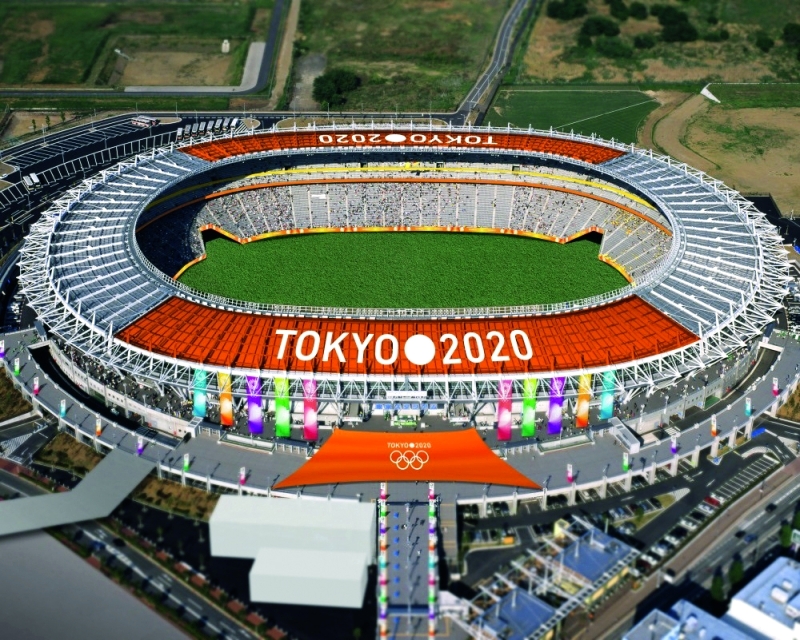
The Tokyo Olympics 2020 was planned to commence on July 2020 but due to the Corona Virus Pandemic, it was postponed many times. After a long wait, the Olympics has finally begun today. But this huge delay has come with an unimaginable cost.

Tokyo is estimated to have spent over $70 million on bidding for the Olympics and an estimated $15.4 billion to build facilities to host it. The one-year delay due to Covid-19 is said to have added $3 billion in costs. The Olympics had been postponed for the first time in its 124 years of existence. Due to this, it would be very hard to turn a profit from the Olympics this time. For instance, ticket sales would contribute $800 million for the Tokyo organizing committee. But this much revenue from tickets is impossible, given that foreign spectators are banned, and domestic fans may be drastically limited in number, or even absent for a lot of events.

In 2019, Japan hosted 31.9 million foreign visitors, who spent approximately $44 billon. These numbers fell down 87% in 2020 to just 4.1 million. Olympics officials said last year that they will refund 600,000 tickets purchased by foreigners. Outsiders not being able to come to the Olympics also means that hotels in Tokyo, especially the ones built around the Olympic stadiums for their accommodation, will go to waste and suffer huge losses.

More than 60 Japanese companies together paid more than $3 billion to sponsor the Olympics. An additional $200 million was also raised due to the postponement. This amount does not include the sponsorship from big corporations like Toyota, Bridgestone, Panasonic, and Samsung.

To add to this misfortune, there could be a lot of participants from many countries who may have suffered from COVID in the last year and aren’t physically or mentally prepared to participate in the postponed Olympics. Many countries may have strict rules that allow limited participants to take part in the Games. On top of all this, if even one participant tests positive for COVID on arriving at the Olympics or their stay at Tokyo, it would cause major setback to the events.  

This much loss due to COVID-19 has indeed drastically affected the Japanese economy. Officials said that cancelling the Games altogether would be so much worse than postponing, which would have estimated to cost $16.5 billion. All this led everyone to think, does Olympics need to be this grand and expensive? Is it all that worth it? The 2016 Rio Summer Olympics cost $20 billion, and the 2014 Russian Winter Olympics cost $50 billion! Some experts say that the 2020 Tokyo Games might just be the last overbudget Olympics.