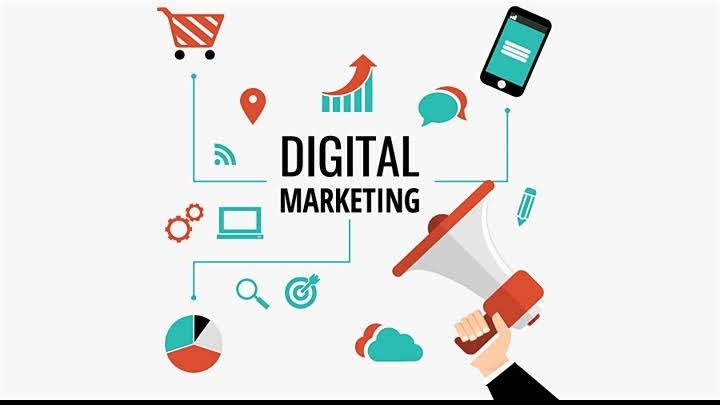
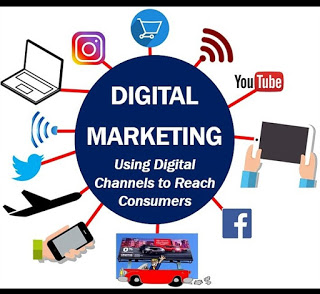
What Is DIGITAL MARKETING :Digital marketing is the component of marketing that utilizes internet and online based digital technologies such as desktop computers, mobile phones and other digital media and platforms to promote products and services.
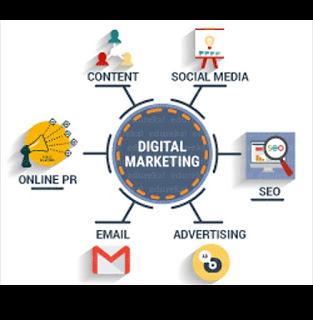
It is the component of marketing that utilizes internet and online based digital technologies such as desktop computers, mobile phones and other digital media and platforms to promote products and services. Its development during the 1990s and 2000s, changed the way brands and businesses use technology for marketing. As digital platforms became increasingly incorporated into marketing plans and everyday life, and as people increasingly use digital devices instead of visiting physical shops, digital marketing campaigns have become prevalent, employing combinations of search engine optimization (SEO), search engine marketing (SEM), content marketing, influencer marketing, content automation, campaign marketing, data-driven marketing, e-commerce marketing, social media marketing, social media optimization, e-mail direct marketing, display advertising, e–books, and optical disks and games have become commonplace. Digital marketing extends to non-Internet channels that provide digital media, such as television, mobile phones (SMS and MMS), callback, and on-hold mobile ring tones.The extension to non-Internet channels differentiates digital marketing from online marketing.
Types of DIGITAL MARKETING :There are as many specializations within digital marketing as there are ways of interacting using digital media. Here are a few key examples. Search engine optimization Search engine optimization, or SEO, is technically a marketing tool rather than a form of marketing in itself. The Balance defines it as “the art and science of making web pages attractive to search engines.” The “art and science” part of SEO is what’s most important. SEO is a science because it requires you to research and weigh different contributing factors to achieve the highest possible ranking. Today, the most important elements to consider when optimizing a web page include: Quality of content Level of user engagement Mobile-friendliness Number and quality of inbound links The strategic use of these factors makes SEO a science, but the unpredictability involved makes it an art.Now a days through Digital Marketing student will earn a lot and build knowledge also.
The Benefits of Digital Marketing :Digital marketing has become prominent largely because it reaches such a wide audience of people, but it offers a number of other advantages as well. These are a few of the benefits. A broad geographic reach Cost efficiency Quantifiable results Easier personalization More connection with customers Easy and convenient conversions.Digital marketing should be one of the primary focuses of almost any business’s overall marketing strategy. Never before has there been a way to stay in such consistent contact with your customers, and nothing else offers the level of personalization that digital data can provide. The more you embrace the possibilities of digital marketing, the more you’ll be able to realize your company’s growth potential.
Brand Awareness :One of the key objectives of modern digital marketing is to raise brand awareness, the extent to which customers and the general public are familiar with and recognize a particular brand.
Enhancing brand awareness is important in digital marketing, and marketing in general, because of its impact on brand perception and consumer decision-making. According to the 2015 essay, “Impact of Brand on Consumer Behavior”:
“Brand awareness, as one of the fundamental dimensions of brand equity, is often considered to be a prerequisite of consumers’ buying decision, as it represents the main factor for including a brand in the consideration set. Brand awareness can also influence consumers’ perceived risk assessment and their confidence in the purchase decision, due to familiarity with the brand and its characteristics.”
Recent trends show that businesses and digital marketers are prioritizing brand awareness, focusing more on their digital marketing efforts on cultivating brand recognition and recall than in previous years. This is evidenced by a 2019 Content Marketing Institute study, which found that 81% of digital marketers have worked on enhancing brand recognition over the past year.
Another Content Marketing Institute survey revealed 89% of B2B marketers now believe improving brand awareness to be more important than efforts directed at increasing sales.
Increasing brand awareness is a focus of digital marketing strategy for a number of reasons:
1.The growth of online shopping
2.The role of digital interaction in customer behaviour
3.The growing influence and role of brand awareness in online consumer decision-making.
4. The use, convenience, and influence of social media
What Is DIGITAL MARKETING :Digital marketing is the component of marketing that utilizes internet and online based digital technologies such as desktop computers, mobile phones and other digital media and platforms to promote products and services.
It is the component of marketing that utilizes internet and online based digital technologies such as desktop computers, mobile phones and other digital media and platforms to promote products and services. Its development during the 1990s and 2000s, changed the way brands and businesses use technology for marketing. As digital platforms became increasingly incorporated into marketing plans and everyday life, and as people increasingly use digital devices instead of visiting physical shops, digital marketing campaigns have become prevalent, employing combinations of search engine optimization (SEO), search engine marketing (SEM), content marketing, influencer marketing, content automation, campaign marketing, data-driven marketing, e-commerce marketing, social media marketing, social media optimization, e-mail direct marketing, display advertising, e–books, and optical disks and games have become commonplace. Digital marketing extends to non-Internet channels that provide digital media, such as television, mobile phones (SMS and MMS), callback, and on-hold mobile ring tones.The extension to non-Internet channels differentiates digital marketing from online marketing.
Types of DIGITAL MARKETING :There are as many specializations within digital marketing as there are ways of interacting using digital media. Here are a few key examples. Search engine optimization Search engine optimization, or SEO, is technically a marketing tool rather than a form of marketing in itself. The Balance defines it as “the art and science of making web pages attractive to search engines.” The “art and science” part of SEO is what’s most important. SEO is a science because it requires you to research and weigh different contributing factors to achieve the highest possible ranking. Today, the most important elements to consider when optimizing a web page include: Quality of content Level of user engagement Mobile-friendliness Number and quality of inbound links The strategic use of these factors makes SEO a science, but the unpredictability involved makes it an art.Now a days through Digital Marketing student will earn a lot and build knowledge also.
The Benefits of Digital Marketing :Digital marketing has become prominent largely because it reaches such a wide audience of people, but it offers a number of other advantages as well. These are a few of the benefits. A broad geographic reach Cost efficiency Quantifiable results Easier personalization More connection with customers Easy and convenient conversions.Digital marketing should be one of the primary focuses of almost any business’s overall marketing strategy. Never before has there been a way to stay in such consistent contact with your customers, and nothing else offers the level of personalization that digital data can provide. The more you embrace the possibilities of digital marketing, the more you’ll be able to realize your company’s growth potential.
Brand Awareness :One of the key objectives of modern digital marketing is to raise brand awareness, the extent to which customers and the general public are familiar with and recognize a particular brand.
Enhancing brand awareness is important in digital marketing, and marketing in general, because of its impact on brand perception and consumer decision-making. According to the 2015 essay, “Impact of Brand on Consumer Behavior”:
“Brand awareness, as one of the fundamental dimensions of brand equity, is often considered to be a prerequisite of consumers’ buying decision, as it represents the main factor for including a brand in the consideration set. Brand awareness can also influence consumers’ perceived risk assessment and their confidence in the purchase decision, due to familiarity with the brand and its characteristics.”
Recent trends show that businesses and digital marketers are prioritizing brand awareness, focusing more on their digital marketing efforts on cultivating brand recognition and recall than in previous years. This is evidenced by a 2019 Content Marketing Institute study, which found that 81% of digital marketers have worked on enhancing brand recognition over the past year.
Another Content Marketing Institute survey revealed 89% of B2B marketers now believe improving brand awareness to be more important than efforts directed at increasing sales.
Increasing brand awareness is a focus of digital marketing strategy for a number of reasons:
1.The growth of online shopping
2.The role of digital interaction in customer behaviour
3.The growing influence and role of brand awareness in online consumer decision-making.
4. The use, convenience, and influence of social media
Online methods used to build brand awareness:The most important and relevant topics of Digital Marketing is now begin if any one have enough knowledge and information about following topics then they do anything through Digital Marketing.
Building brand awareness may involve such methods/tools as:
a) Search engine optimization (SEO):
Search engine optimization techniques may be used to improve the visibility of business websites and brand-related content for common industry-related search queries.
The importance of SEO to increasing brand awareness is said to correlate with the growing influence of search results and search features like featured snippets, knowledge panels, and local SEO on customer behavior.
b) Search engine marketing (SEM):
SEM, also known as PPC advertising, involves the purchase of ad space in prominent, visible positions atop search results pages and websites. Search ads have been shown to have a positive impact on brand recognition, awareness and conversions.
33% of searchers who click on paid ads do so because they directly respond to their particular search query.
c) Social media marketing:
70% of marketers list increasing brand awareness as their number one goal for marketing on social media platforms. Facebook, Instagram, Twitter, and YouTube are listed as the top platforms currently used by social media marketing teams.
d) Content marketing:
56% of marketers believe personalized content – brand-centered blogs, articles, social updates, videos, landing pages – improves brand recall and engagement.
According to Mentionlytics, an active and consistent content strategy that incorporates elements of interactive content creation, social posting, and guest blogging can improve brand awareness and loyalty by 88%.
e) Articles and Blogs:So many peoples are interested in writing articles blogs, news etc it build peoples knowledge and personality. If we have a company blog, share the articles to our social media feeds with direct links where we can. Blog posts sharing company news, open job postings, and industry developments can be repurposed to share on social media.
For Instagram, post an appealing on-brand graphic that fits the content. If we are posting to the feed, redirect users to a link in our bio. If we are posting to Stories (and we have over 10,000 followers), employ the “Swipe up” feature..
In LinkedIn, in-house articles and blog posts are a great way to share our expertise and provide updates on your company’s work. We can share these articles directly through LinkedIn’s publishing platform.
# Ineffective forms of digital marketing :Digital marketing activity is still growing across the world according to the headline global marketing index. A study published in September 2018, found that global outlays on digital marketing tactics are approaching $100 billion. Digital media continues to rapidly grow; while the marketing budgets are expanding, traditional media is declining (World Economics, 2015).Digital media helps brands reach consumers to engage with their product or service in a personalized way. Five areas, which are outlined as current industry practices that are often ineffective are prioritizing clicks, balancing search and display, understanding mobiles, targeting, viewability, brand safety and invalid traffic, and cross-platform measurement (Whiteside, 2016).Why these practices are ineffective and some ways around making these aspects effective are discussed surrounding the following points.
a) Prioritizing clicks:
Prioritizing clicks refers to display click ads, although advantageous by being ‘simple, fast and inexpensive’ rates for display ads in 2016 is only 0.10 percent in the United States. This means one in a thousand click ads is relevant therefore having little effect. This displays that marketing companies should not just use click ads to evaluate the effectiveness of display advertisements (Whiteside, 2016).
b) Balancing search and display:
Balancing search and display for digital display ads are important; marketers tend to look at the last search and attribute all of the effectiveness of this. This, in turn, disregards other marketing efforts, which establish brand value within the consumer’s mind. ComScore determined through drawing on data online, produced by over one hundred multichannel retailers that digital display marketing poses strengths when compared with or positioned alongside, paid search (Whiteside, 2016).This is why it is advised that when someone clicks on a display ad the company opens a landing page, not its home page. A landing page typically has something to draw the customer in to search beyond this page. T Commonly marketers see increased sales among people exposed to a search ad. But the fact of how many people you can reach with a display campaign compared to a search campaign should be considered. Multichannel retailers have an increased reach if the display is considered in synergy with search campaigns. Overall both search and display aspects are valued as display campaigns build awareness for the brand so that more people are likely to click on these digital ads when running a search campaign (Whiteside, 2016).
Channels
Digital Marketing Channels are systems based on the Internet that can create, accelerate, and transmit product value from producer to a consumer terminal, through digital networks. Digital marketing is facilitated by multiple Digital Marketing channels, As an advertiser one’s core objective is to find channels which result in maximum two-way communication and a better overall ROI for the brand. There are multiple digital marketing channels available namely.
A) Affiliate marketing – Affiliate marketing is perceived to not be considered a safe, reliable, and easy means of marketing through online platforms. This is due to a lack of reliability in terms of affiliates that can produce the demanded number of new customers. As a result of this risk and bad affiliates, it leaves the brand prone to exploitation in terms of claiming commission that isn’t honestly acquired. Legal means may offer some protection against this, yet there are limitations in recovering any losses or investment. Despite this, affiliate marketing allows the brand to market towards smaller publishers and websites with smaller traffic. Brands that choose to use this marketing often should beware of such risks involved and look to associate with affiliates in which rules are laid down between the parties involved to assure and minimize the risk involved.
B) Display Marketing: As the term implies, online display advertising deals with showcasing promotional messages or ideas to the consumer on the internet. This includes a wide range of advertisements like advertising blogs, networks, interstitial ads, contextual data, ads on search engines, classified or dynamic advertisements, etc.
C) Email Marketing :Email marketing in comparison to other forms of digital marketing is considered cheap; it is also a way to rapidly communicate a message such as their value proposition to existing or potential customers. Yet this channel of communication may be perceived by recipients to be bothersome and irritating especially to new or potential customers, therefore the success of email marketing is reliant on the language and visual appeal applied. In terms of visual appeal, there are indications that using graphics/visuals that are relevant to the message which is attempting to be sent, yet less visual graphics to be applied with initial emails are more effective in-turn creating a relatively personal feel to the email
D) Search Engine Marketing :Search engine marketing (SEM) is a form of Internet marketing that involves the promotion of websites by increasing their visibility in search engine results pages (SERPs) primarily through paid advertising.
E) Social Media Marketing :The term ‘Digital Marketing’ has a number of marketing facets as it supports different channels used in and among these, comes the Social Media. When we use social media channels ( Facebook, Twitter, Pinterest, Instagram, Google+, etc.) to market a product or service, the strategy is called Social Media Marketing
F) In gaming Advertising :In-Game advertising is defined as the “inclusion of products or brands within a digital game.The game allows brands or products to place ads within their game, either in a subtle manner or in the form of an advertisement banner. There are many factors that exist in whether brands are successful in the advertising of their brand/product, these being: Type of game, technical platform, 3-D and 4-D technology, game genre, congruity of brand and game, prominence of advertising within the game. Individual factors consist of attitudes towards placement advertisements.
G) Content Writing :This is an approach to marketing that focuses on gaining and retaining customers by offering helpful content to customers that improves the buying experience and creates brand awareness. A brand may use this approach to hold a customer’s attention with the goal of influencing potential purchase decisions
#Benefits of Social Media Marketing :
Allows companies to promote themselves to large, diverse audiences that could not be reached through traditional marketing such as phone and email based advertising.
Marketing on most social media platforms comes at little to no cost- making it accessible to virtually any size business.
Accommodates personalized and direct marketing that targets specific demographics and markets.
Companies can engage with customers directly, allowing them to obtain feedback and resolve issues almost immediately.
Ideal environment for a company to conduct market research.
Can be used as a means of obtaining information about competitors and boost competitive advantage.
Social platforms can be used to promote brand events, deals, and news.
Platforms can also be used to offer incentives in the form of loyalty points and discounts.
Self Regulation :
Clear and transparent mechanisms to enable consumers to choose not to have their data collected for advertising or marketing purposes;
Clear indication that a social network site is commercial and is under the control or influence of a marketer;
Limits are set so that marketers communicate directly only when there are reasonable grounds to believe that the consumer
#Stages of planning
Using Dr Dave Chaffey’s approach, the digital marketing planning (DMP) has three main stages: Opportunity, Strategy, and Action. He suggests that any business looking to implement a successful digital marketing strategy must structure their plan by looking at opportunity, strategy and action. This generic strategic approach often has phases of situation review, goal setting, strategy formulation, resource allocation and monitoring.
1) Opportunity
To create an effective DMP, a business first needs to review the marketplace and set ‘SMART’ (Specific, Measurable, Actionable, Relevant, and Time-Bound) objectives.They can set SMART objectives by reviewing the current benchmarks and key performance indicators (KPIs) of the company and competitors. It is pertinent that the analytics used for the KPIs be customized to the type, objectives, mission, and vision of the company.
Companies can scan for marketing and sales opportunities by reviewing their own outreach as well as influencer outreach. This means they have competitive advantage because they are able to analyse their co-marketers influence and brand associations.
To seize the opportunity, the firm should summarize its current customers’ personas and purchase journey from this they are able to deduce their digital marketing capability. This means they need to form a clear picture of where they are currently and how many resources they can allocate for their digital marketing strategy i.e. labor, time, etc. By summarizing the purchase journey, they can also recognize gaps and growth for future marketing opportunities that will either meet objectives or propose new objectives and increase profit.
2) Strategy
To create a planned digital strategy, the company must review their digital proposition (what you are offering to consumers) and communicate it using digital customer targeting techniques. So, they must define online value proposition (OVP), this means the company must express clearly what they are offering customers online e.g. brand positioning.
The company should also (re)select target market segments and personas and define digital targeting approaches.
After doing this effectively, it is important to review the marketing mix for online options. The marketing mix comprises the 4Ps – Product, Price, Promotion, and Place. Some academics have added three additional elements to the traditional 4Ps of marketing Process, Place, and Physical appearance making it 7Ps of marketing.
3) Action
The third and final stage requires the firm to set a budget and management systems; these must be measurable touchpoints, such as the audience reached across all digital platforms. Furthermore, marketers must ensure the budget and management systems are integrating the paid, owned, and earned media of the company. The Action and final stage of planning also requires the company to set in place measurable content creation e.g. oral, visual or written online media.
After confirming the digital marketing plan, a scheduled format of digital communications (e.g. Gantt Chart) should be encoded throughout the internal operations of the company. This ensures that all platforms used fall in line and complement each other for the succeeding stages of digital marketing strategy.
#Understanding the market:
One way marketers can reach out to consumers, and understand their thought process is through what is called an empathy map. An empathy map is a four-step process. The first step is through asking questions that the consumer would be thinking in their demographic. The second step is to describe the feelings that the consumer may be having. The third step is to think about what the consumer would say in their situation. The final step is to imagine what the consumer will try to do based on the other three steps. This map is so marketing teams can put themselves in their target demographics shoes.Web Analytics are also a very important way to understand consumers. They show the habits that people have online for each website. One particular form of these analytics is predictive analytics which helps marketers figure out what route consumers are on. This uses the information gathered from other analytics and then creates different predictions of what people will do so that companies can strategize on what to do next, according to the people’s trends
#Shearing Economy :The “sharing economy” refers to an economic pattern that aims to obtain a resource that is not fully utilized.Nowadays, the sharing economy has had an unimagined effect on many traditional elements including labor, industry, and distribution system.This effect is not negligible that some industries are obviously under threat.The sharing economy is influencing the traditional marketing channels by changing the nature of some specific concept including ownership, assets, and recruitment.
Digital marketing channels and traditional marketing channels are similar in function that the value of the product or service is passed from the original producer to the end user by a kind of supply chain.Digital Marketing channels, however, consist of internet systems that create, promote, and deliver products or services from producer to consumer through digital networks. Increasing changes to marketing channels has been a significant contributor to the expansion and growth of the sharing economy.Such changes to marketing channels has prompted unprecedented and historic growth. In addition to this typical approach, the built-in control, efficiency and low cost of digital marketing channels is an essential features in the application of sharing economy. In presnt days Digital Marketing is good earning opportunity for student and its a trending topic in every social media plateform.



 Eduindex
You must be logged in to post a comment.