Launch of IRCTC iMudra

IRCTC since its inception has been one of the
front-runners of bringing e-commerce to the doorstep of common-man and
has also been a pioneer in bringing many digital innovations in
different railway domains.
Continuing with the same spirit, passion, and lots of enthusiasm, IRCTC has now launched its new product named “IRCTC iMudra” to increase its footprint in the digital payment’s domain.
IRCTC iMudra, a powerful prepaid card cum wallet is
safe, secure and easy to use customer oriented B2C product. It will open
a world of possibilities for you, empowering you with the true power of
going 
cashless on every transaction, whether you are doing a transaction
through POS machines, peer to peer money transfer, withdrawing cash at
ATMs or buying goods and services online.
  • Accessible Across All Channels like mobile app, tablet and desktop.
  • Comes with a virtual and physical card for purchasing goods online or offline.
  • Easy way to send or receive money to friends and family within the network.
  • Widely accepted across all VISA enabled ATMs in India to withdraw cash.
  • Hassle-free ticket booking on IRCTC through wallet as well as prepaid card.
  • Exclusive Launch Offers.

Commerce & Industry Minister holds discussions with CEOs of Indian IT Companies to explore new markets

Union
Minister of Commerce & Industry and Railways, Piyush Goyal,held a
meeting with senior managers of IT companies in New Delhi yesterday. The
meeting was held to discuss opportunities for Indian IT companies to
invest and grow their business in new markets like the Nordic countries,
Eastern and Central Europe, Canada, Australia and Africa and also
exploreavenues for greater investments and growth in East Asian markets
like China, Japan and Korea.
India’s
IT industry contributed 7.7% to the country’s GDP in FY 2017 and is
expected to contribute 10% of India’s GDP by 2025. According to NASSCOM,
the sector aggregated revenues of USD 160 billion in 2017. The United
States account for 2/3rds of India’s IT services exports.
India’s
IT and ITeS industry grew to USD 181 billion in 2018-19. Exports from
the industry increased to USD 137 billion in FY 2019 while domestic
revenues (including hardware) advanced to USD 44 billion.
During
the discussions with Commerce and Industry Ministry, the
representatives of the companies informed that although the Chinese IT
services market is the third largest in the world India’s investments
and business have not been able to grow in China due to various
non-tariff barriersand challenges faced by Indian companies to set up
their entity in China. Marketaccess issues that create hurdles for
Indian companies to open their business in China was also discussed.
The
top five Indian IT service companies like TCS, WIPRO, Infosys, Tech
Mahindra and HCL are doing business in China for more than a decade and
are employing 90% of local people in their China operations but returns
are very low and thereforeIndian IT service companies are not showing
much interest to invest and expand their operations in China.
Commerce
and Industry Minister during the discussions requested National
Association of Software and Services Companies (NASSCOM) and the senior
managers of the companies attending the meeting to share specific data
regarding non-tariff barriers being faced by them inChina and other East
Asian markets. Government of India will give all support for the global
growth of India’s flagship industry and will make all efforts to
facilitate the IT service industry and for that it is ready to engage
with China and also Japan and Korea, informed Piyush Goyal.
Commerce
and Industry Minister urged India’s IT services companies to explore
other markets and not be inhibited in operating in countries that are
non-English speaking. He urged the top five Indian IT firms to create a
corpus that will be spent on training manpower in languages like
Mandarin, Japanese and Korean for accessing the markets in these
countries.
The
meeting was attended by senior managers of TCS, Satyam Venture
engineering, HCL, NIIT Tech, Infosys, Invento Robotics, Tech Mahindra
and WIPRO. SangeetaGodbole, DG of Services Export Promotion Council
(SEPC) and President of NASSCOM, Debjani Ghosh, were also present during
the discussions with Commerce and Industry Minister.
India
is the largest exporter of IT services in the world and exports
dominate the Indian IT industry and constitutes about 79% of the total
revenue of theindustry. India’s IT service sector is now gearing up to
be the digital partner of intelligent automation like smart algorithms,
bots and AI tools, which arefast becoming a part of every industry and
an increasingly digital world.

Sea to be The next Gateway for Tourism in The Country

The
Minister of State for Shipping (I/C) and Chemicals & Fertilizers,
Shri Mansukh Mandaviya and  Minister of State (I/C) for Tourism &
Culture, Shri. Prahlad Singh Patel discussed  the immense potential for 
maritime tourism in the country. In a  meeting between the two
Ministers held in New Delhi yesterday, the two  ministers  emphasised 
the need to promote the important tourist destinations in the coastal
areas of the country through coastal tourism .
It
was decided in the meeting to set up a committee of senior officials of
the two Ministries to explore the avenues for coastal tourism  in the
country and work out ways to promote the same. It was also  decided to
explore  the possibilities and opportunities in the areas of  Coastal
Tourism, Cruise Tourism, Sea Sports, Light House Viewing Gallery.  It
was suggested that every coastal area can create a calendar of events
for  tourist engagement, with activities like beach volleyball, sand
art, food festivals, dances of the fishing community, to name a few.
The
Shipping Ministry is promoting tourism in maritime states under the
Sagarmala Programme. This is being done in convergence with the Ministry
of Tourism and Tourism Development Departments of maritime state
governments.
These
new, unexplored tourism areas will open a door to coastal communities
of the maritime states where they will find many new and diverse job
opportunities. In the coming years, coastal and maritime tourism will be
a source for growth and job creation in the coastal states of India.
The
two Ministers  also underscored the need  for better coordination and
synergy between their respective Ministries so that desired results can
be achieved in a time bound manner.

Lok Sabha passes Consumer Protection Bill, 2019

The
Lok Sabha todaypassed the Consumer Protection Bill 2019 after due
consideration and discussion.The Union Minister for Consumer Affairs,
Food and Public Distribution Shri Ram Vilas Paswan said that the bill
aims at protecting the interests of consumers by establishing
authorities for timely and effective administration and settlement of
consumers’ dispute. Moving the Bill, Minister of State for Consumer
Affairs, Food and Public Distribution, Shri Raosaheb Patil Danve said
the Bill aims to simplify a number of rules. Shri Danve said consumers
do not get quick redressal of their complaints and with the passage of
the Bill, consumers will be able to get speedy justice. He said the
government aims to simplify the entire process of redressal of consumer
grievances.
Under
the Bill, there is provision for central government to set up a Central
Consumer Protection Authority (CCPA) to promote, protect and enforce
the rights of consumers and will be empowered to investigate, recall,
refund and impose penalties. It will regulate matters related to
violation of consumer rights, unfair trade practices, and misleading
advertisements. There is also a provision for class action law suit for
ensuring that rights of consumers are not infringed upon. The authority
will have power to impose a penalty on a manufacturer or an endorser of
up to 10 lakh rupees and imprisonment for up to two years for a false or
misleading advertisement. 
Salient Features of the Bill
1.         Central Consumer Protection Authority (CCPA): Executive Agency to provide relief to a class of consumers. The CCPA will be empowered to-
  1. Conduct  investigations into violations of consumer rights and institute Complaints /Prosecution
  2. Order recall of unsafe goods and services
  3. Order discontinuance of Unfair Trade Practices and Misleading  Advertisements
  4. Impose penalties on Manufactures /Endorsers /Publishers of Misleading Advertisements
2.         Simplified Dispute Resolution process
i) Pecuniary Jurisdiction enhanced to-
  • District Commission –Up to Rs1 crore
  • State Commission- Between  Rs1 crore and Rs 10 crore
  • National Commission –Above Rs.10 crore
ii) Deemed admissibility after 21days of filing
iii) Empowerment of Consumer Commission to enforce their orders
iv) Appeals only on question of law after second stage
v) Ease of approaching consumer commission
  • Filing from place of residence
  • E-filing
  • Videoconferencing for hearing 
3.         Mediation
  • An Alternate Dispute Resolution (ADR) mechanism
  • Reference to Mediation by Consumer Forum wherever scope for early settlement exists and parties agree for it.
  • Mediation cells to be attached to Consumer Forum
  • No appeal against settlement through mediation
4.         Product Liability
A
manufacturer or product service provider or product seller to be
responsible to compensate for injury or damage caused by defective
product or deficiency in services
The Basis for product liability action will be:
  • Manufacturing  defect
  • Design defect
  • Deviation from manufacturing specifications
  • Not conforming to express warranty
  • Failing to contain adequate instruction for correct use
  • Services provided arefaulty, imperfect or deficient
New Bill- Benefit to Consumers
Presently
Consumer only have a single point of access to justice, which is time
consuming. Additional swift executive remedies are proposed in the bill
through Central Consumer Protection Authority (CCPA)
Deterrent punishment to check misleading advertisements and adulteration of products
Product liability provision to deter manufacturers and service providers from delivering defective products or deficient services
Ease of approaching Consumer Commission and Simplification of Adjudication process
Scope for early disposal of cases through mediation
Provision for rules for new age consumer issues: e-commerce & direct selling

Lok Sabha Passes the Code on Wages Bill, 2019

The
Lok Sabha today passed The Code on Wages Bill, 2019. While opening the
discussion for consideration and passing of the Bill,  Minister of State
(I/C) for Labour and Employment Shri Santosh Kumar Gangwar said that it
is a historic Bill which aims to transform the old and obsolete labour
laws into more accountable and transparent ones which is need of the
hour. As many as 17 present labour laws are more than 50 years old and
some of them even belong to pre-independence era.

Among
the four Acts being subsumed in The Code on Wages Bill, The Payment of
Wages Act, 1936 belongs to pre-independence era and The Minimum Wages
Act 1948 is also 71 years old. The Payment of Bonus Act, 1965 and The
Equal Remuneration Act, 1976 are also being subsumed in the Code. 
He
further said that wide consultations were held with trade unions,
employers and State governments and tripartite consultations were held
on 10th March, 2015 and 13th April, 2015. A draft
of Wage Code was made available in public domain through Ministry’s
website. Many persons gave their valuable suggestions. The Bill was
introduced in last Lok Sabha on 10 August, 2017 and was referred to
Parliamentary Standing Committee which submitted its Report on 18th December 2018. Out of 24 recommendations made by standing committee, 17 were accepted by government.
He
further said that the Code ensures minimum wages along with timely
payment of wages to all the employees and workers. Many unorganized
sector workers like agricultural workers, painters, persons working in
restaurants and dhabas, chowkidars etc. who were out of the ambit of
minimum wages will get legislative protection of minimum wages after the
bill becomes an Act. It has been ensured in the bill that employees
getting monthly salary shall get the salary by 7th of next
month, those working on weekly basis shall get the salary on last day of
the week and daily wagers should get it on the same day.
He
expressed hope that The Code on Wages will prove to be a milestone and
give respectable life to 50 crore unorganized sector workers. The
Minister responded to the debate in detail and thanked all the respected
members for cooperation in passing the Bill.
The salient features of the Code are as following:
The
Code on Wage universalizes the provisions of minimum wages and timely
payment of wages to all employees irrespective of the sector and wage
ceiling. At present, the provisions of both Minimum Wages Act and
Payment of Wages Act apply on workers below a particular wage ceiling
working in Scheduled
Employments only. This would ensure “Right
to Sustenance” for every worker and intends to increase the legislative
protection of minimum wage from existing about 40% to 100% workforce.
This would ensure that every worker gets minimum wage which will also be
accompanied by increase in the purchasing power of the worker thereby
giving fillip to growth in the economy. Introduction of statutory Floor
Wage to be computed based on minimum living conditions, will extend
qualitative living conditions across the country to about 50 crore
workers. It is envisaged that the states to notify payment of wages to
the workers through digital mode.

There are 12 definitions of wages in the different Labour Laws leading
to litigation besides difficulty in its implementation. The definition
has been simplified and is expected to reduce litigation and will entail
at lesser cost of compliance for an employer. An establishment will
also be benefited as the number of registers, returns, forms etc., not
only can be electronically filed and maintained, but it is envisaged
that through rules, not more than one template will be prescribed.

At present, many of the states have multiple minimum wages. Through
Code on Wages, the methodology to fix the minimum wages has been
simplified and rationalised by doing away with type of employment as one
of the criteria for fixation of minimum wage. The minimum wage fixation
would primarily based on geography and skills. It will substantially
reduce the number of minimum wages in the country from existing more
than 2000 rates of minimum wages.

Many changes have been introduced in the inspection regimes including
web based randomised computerised inspection scheme, jurisdiction-free
inspections, calling of information electronically for inspection,
composition of fines etc. All these changes will be conducive for
enforcement of labour laws with transparency and accountability.
 •
There were instances that due to smaller limitation period, the claims
of the workers could not be raised. To protect the interest of the
workers, the limitation period has been raised to 3 years and made
uniform for filing claims for minimum wages, bonus, equal remuneration
etc., as against existing varying period between 6 months to 2 years.

It can be said that a historical step for ensuring statutory protection
for minimum wage and timely payment of wage to 50 crore worker in the
country has been taken through the Code on Wages besides promoting ease
of living and ease of doing business.


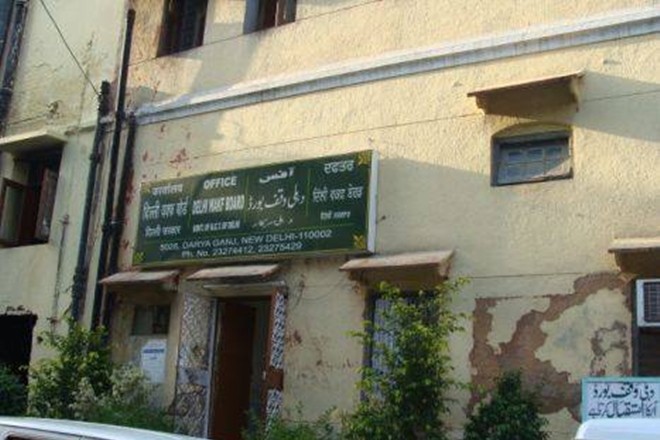
Central government has set a target to achieve 100 per cent digitisation of Waqf properties

Union
Minority Affairs Minister Shri Mukhtar Abbas Naqvi today inaugurated a
national conference of Central Waqf Council (CWC), organised at NDMC
Convention Centre in New Delhi. Shri Mukhtar Abbas Naqvi said here that
the Central Government has set a target to achieve 100 per cent
digitisation of Waqf properties across the country in its first 100
days. There are more than 6 lakh registered Waqf properties across the
country.

         
Shri
Naqvi awarded 8 Mutawalis under “Qaumi Waqf Board Taraqqiati Scheme”
for better management of Waqf properties in their respective state Waqf
boards. This is for the first time that Mutawalis have been encouraged
and awarded for better utilisation of Waqf properties especially for
socio-economic-educational empowerment of needy.
Shri
Naqvi said that Mutawalis are “Custodian” of the Waqf properties and
it’s their responsibility to ensure safety and better utilisation of
Waqf properties.
Secretary,
Ministry of Minority Affairs Shri Shailesh, other senior officials,
Central Waqf Council Secretary, CWC Members, senior officials of the
council, Chairmen/CEOs of state Waqf boards attended this national
conference. 
Shri
Naqvi said that a programme on war footing has been launched for 100
per cent Geo tagging and digitalisation of Waqf properties across the
country to ensure these properties can be utilised for welfare of the
society. Central Waqf Council is providing financial help and technical
assistance to state Waqf boards for digitalisation, GI Mapping/Geo
Tagging of Waqf properties so that state Waqf boards can complete
digitalisation work within decided timeframe.
GIS/GPS
mapping of the Waqf properties has been initiated with the help of IIT
Roorkee and Aligarh Muslim University. The Central Waqf Council has
provided video conferencing facilities to 20 state Waqf boards and it
would be provided in the remaining state Waqf boards by the end of this
year. 
Shri
Naqvi said that for the first time since Independence, Prime Minister
Shri Narendra Modi led Government is providing 100 per cent funding to
develop schools, colleges, ITIs, polytechnics, hospitals, multi-purpose
community hall “Sadbhav Mandap”, “Hunar Hub”, common service centres,
employment oriented skill development centres and other basic
infrastructure on Waqf land under Pradhanmantri Jan Vikas Karykram
(PMJVK) for weaker sections and needy especially girls in those backward
areas which had been deprived of these basic facilities. 
Shri
Naqvi said that while only 90 districts of the country had been
identified for Minority communities’ development earlier; Prime Minister
Shri Narendra Modi led Government has expanded development programmes
for Minorities in 308 districts, 870 blocks, 331 towns and thousands of
the villages of the country.
Shri
Naqvi said that the report of a five-member committee, constituted to
review Waqf properties lease rule, headed by Justice (Retd) Zakiullah
Khan, has been submitted. The recommendations of the committee will
ensure that Waqf rules are made easy and effective for better
utilisation of Waqf properties and to free these properties, several of
these entangled in disputes for several decades, from disputes.  The
Central Government, in consultation with the state governments, is
taking necessary action on the recommendations of the committee.

Subsidy under the Amended Technology Upgradation Fund Scheme (A-TUFS)

The
Office of Textile Commissioner has been providing subsidy under the
Amended Technology Upgradation Fund Scheme (A-TUFS) to the investors
(including the State of Assam) and is also processing new proposals for
availing subsidy for upgradation of machines from the investors.
In
the Mega Handloom Cluster at Sivasagar in the State of Assam, private
investments are encouraged in projects which are sanctioned in the PPP
mode in 80:20 ratio, wherein Government provides 80% funding and 20%
funding is done by the investor, i.e. Special Purpose Vehicle (SPV),
which also provides the land for the project. Since 2017, Govt. of India
has released Rs. 6.91 crores for such projects in Assam with the
investor participation at Rs. 1.91 Crores. The
Office of Development Commissioner (Handicrafts) has taken up 39
clusters under AmbedkarHastshilpVikasYojna (AHVY) for the overall
development of artisans in Assam which has benefitted 4970 artisans
during the last two years.
Following two composite jute mills are enlisted in the State of Assam:
S. No.
Name of the Jute Mill
Address of the Mill
1
Assam Co-operative Jute Mills Ltd.
P.O. Silighat-782143, District- Nagaon, Assam
2
Atlanta Modular Pvt. Ltd.
NH-37, BihandNezone Tubes, West Boragaon, Guwahati, Assam.
                       
Under
North East Region Textile Promotion Scheme (NERTPS), a proposal to
establish two Eri Spun Silk Mills in Assam and Bodoland Territorial
Council (BTC) under Government Sector has been approved during 2018-19.
The Government has set up a Board for Industrial & Financial
Reconstruction (BIFR) under Sick Industrial Companies (Special
Provisions) Act with a view to timely detect sick and potentially sick
companies and for taking remedial measures.
Under
NERTPS Govt. of India, through Central Silk Board have taken measures
to increase silk production in Assam by implementing sericulture
projects in four categories viz., Integrated Sericulture Development
Project (ISDP) and Intensive Bivoltine Sericulture Development Project
(IBSDP), Eri Spun Silk Mills (ESSM) and Aspirational District (AD).  The
details of funds sectioned and released is given below:
[Rs. in crore]
Project Name
Project Cost
GoI share
Funds released Till June-19
ISDP
186.99
153.17
113.06
IBSDP
59.61
53.03
50.37
ESSP
43.06
38.18
AD
41.31
38.19
Total
330.96
282.56
163.43
A
Regional office at Guwahati is functioning to monitor the Central
Sector schemes and to address the issues related to development of
sericulture in NE region in association with the all NE States.
As
on date, no proposal to grant special packages to the Assam Cooperative
Jute Mills Ltd., Silghat, Nagaon (Assam) is under consideration.
However, preferential treatment is given in allocation of Production cum
Supply Orders (PCSOs) as per its capacity under the Jute Packaging
Materials (Compulsory Use in Packing Commodities) [JPM Act], 1987
because of its disadvantageous geographical location and limited options
for local markets.

Mega handloom cluster under Comprehensive Handloom Development Scheme

Mega
handloom cluster is taken up under Comprehensive Handloom Development
Scheme as announced by the Union Finance Minister in the respective
budget with  the financial provision. At present, there is no proposal
for inclusion of Balaramapuram in Thiruvananthapuram district of Kerala
under Comprehensive Handloom Development Scheme.


Details
of assistance provided to the weavers in Thiruvananthapuram   under
various schemes implemented by Government of India since 2014-15 are as
under:
  1. 22 Mudra loans with amount of Rs 9.00 lakh sanctioned and disbursed to the Handloom weavers.
  1. Under
    National Handloom Development Programme, one Block Level Cluster with
    total cost of Rs 185.169 lakh consisting Government of India share of Rs
    179.599 lakh sanctioned in Kollaylin covering 500 weavers.
  1. 6.736 lakh kg of yarn worth Rs 21.52 crore has been supplied to the handloom weavers of Balaramapuram at Mill gate price.
  1. Balaramapuram Saree has been registered under Geographical Indication Act.
  1. Balaramapuram
    Saree and Balaramapur Dhoti have been registered under product list of
    India Handloom Brand (IHB).  28 agencies for Balaramapuram Sarees and 30
    agencies for Balaramapuram Dhoti have been registered for production
    under IHB.
Three Block Level Clusters have been sanctioned in Gujarat under National Handloom Development Programme:
(Rs. in lakh)
Sl. No
Name of the Block/District
Total Project cost
Government of India share
Beneficiaries covered
1
Bhachau, Kutch
133.640
131.740
65
2
Wadhwan, Surendranagar
170.550
165.685
206
3
Lakhtar, Surendranagar
143.410
140.961
86
Total
447.600
438.386
357
This information was given by the Union Minister of Textiles, Smriti Zubin Irani, in a written reply in the Lok Sabha today.

Sericulture Farmers in Kolar

An
exclusive Cluster Development Project covering around 3500 farmers is
under implementation in Kolar Districtfor the development of Bivoltine
sericulture.Besides,Central Silk Board (CSB) is implementinga Central
Sector Scheme (CSS) viz. Silk Samagra “Integrated Scheme for Development
of Silk Industry (ISDSI)” for development of silk industry in the
country including Karnataka with a total outlay of Rs. 2161.68 crore for
the period of three years (2017-20).

Under
the scheme, assistance is extended to sericulture farmers for raising
of Kissan Nursery, plantation with improved incubation facility,
construction of rearing houses, rearing equipment, door to door service
agents for disinfection and input supply, support for improved reeling
units like automatic reeling units, multi-end reeling machines, improved
twisting machines and support for post yarn facilities for qualify silk
and fabric production. The State Governmentcan avail the support under
Silk Samagrafor development of sericulture in Karnataka including Kolar
district.
This information was given by the Union Minister of Textiles, Smriti Zubin Irani, in a written reply in the Lok Sabha today.

Ministry of mines organises a workshop on Effective utilization of Red Mud

In a step towards productive utilisation of bauxite residue, commonly known as the ‘Red Mud’, an interactive workshopcalled ‘Waste To Wealth’
was organized by Ministry of Mines in the capital today. The present
status regarding the generation of Red Mud and its safe disposal and
utilization were discussed. The workshop, which was presided over by Dr
K. Rajeswara Rao, Additional Secretary, Ministry of Mines,was organised
in association with theJawaharlal Nehru Aluminium Research Development
and Design Centre (JNARDDC) Nagpur.
Red
Mud is a solid waste generated during the aluminium production process.
This is an environmental concern due to presence of impurities such as
caustic soda and others minerals. Global generation of red mud is more
than 150 million tons and there exists a global inventory of more than 3
billion tons. Red mud generation in India is around 9 million tons per
year.
The
meet was widely attended by representatives from organisations like
Ministry of Environment and Climate Change, CPCB, Odisha state Pollution
Control Board, BARC, Indian Bureau of Mines, Ministry of Road
Transport, NHAI and BIS, Engineer-in-Chief of Army, top executives from
all three primary aluminium producing companies viz- NALCO, VEDANTA
& HINDALCO as well as from user industries like cement and ceramic
industry. Interacting with the stakeholders, Mr. Anil Mukim, Secretary,
Ministry of Mines asked all the stake holders to work in synergy to find
a lasting solution for productive utilisation of red mud.
The
day long deliberations were held to focus all efforts for effective
bulk utilization of red mud with necessary government support, which
will be a win-win situation for all the stakeholders. Based on the
deliberations, a roadmap will be prepared for the productive utilization
of red mud.

Integrated Scheme for Development of Silk Industry

Under
the Central Sector Scheme Silk Samagra an Integrated Scheme for
Development of Silk Industry (ISDSI) implemented by Government of India
through Central Silk Board (CSB) with a total outlay of Rs. 2161.68
crore for three years (2017-18 to 2019-20) for the overall development
of silk industry in the Country with an objective to scale up production
by improving the quality and productivity.  The scheme comprises four
major components viz. (i) Research & Development, Training, Transfer
of Technology and Information Technology Initiatives, (ii) Seed
Organizations, (iii) Coordination and Market Development and (iv)
Quality Certification Systems (QCS) / Export Brand Promotion and
Technology Up-gradation.
Features of the Scheme  
All
the four major components of Silk Samagra are interlinked with each
other and aimed at a common goal. The main objective of the scheme is to
maintain Breeders stock, Breed improvement through R&D Projects,
Development of mechanized practices, Technology translation through
Sericulture Information Linkages and Knowledge System (SILKS) Portal,
Mobile Application for Stakeholders and for seed quality monitoring,
develop technology packages, impart training on improved technology
programmes to Stakeholders, and transfer technology to the field through
front line demonstration, produce Basic & Commercial Seed of the
improved Silkworm breeds developed by the Research Institutes, encourage
Private Partnership  in Seed sector, and Maintain & Certify the
quality standards set by the R&D units for Silkworm Seed, Cocoon,
Raw Silk and Silk products covering the entire Silk value chain.
Major Interventions:
1.
Research & Development: Race improvement through development of
improved host plant varieties and improved disease resistant Silkworm
breeds through collaborative research with reputed National Research
organizations like IITs, CSIR, IISc and International research
institutes on Sericulture.
     
2.
Seed organisation: Seed production units will be strengthened to bring
in quality standards in production network, besides increasing the
production capacity to cater to the increased silk production target,
promote adopted seed rearers to generate quality seed cocoons, Private
Graineurs to produce quality seed and Chawki Rearing Centres (CRCs) with
Incubation facilities to produce and supply chawki worms,     
3.
Quality Certification /Brand Promotion: Promote Indian silk through
quality certification by Silk Mark not only in the domestic market but
also in the Export market. Besides, emphasis has been given for use of
Silkworm by-products (pupa) for Poultry feed, Sericin for Cosmetic
Applications and Product Diversification into non-woven fabrics, Silk
Denim, Silk Knit etc. for value addition.
                          
The
scheme also comprises of various beneficiary oriented components to
support Mulberry, Vanya and Post Cocoon Sectors. These interventions
cover the major areas viz. (a) Development and expansion of host plant,
(b) Strengthening and creation of Silkworm seed Multiplication
infrastructure, (c) Development of farm and post-cocoon infrastructure,
(d) Up-gradation of reeling and processing technologies in Silk, and (e)
Capacity Building through Skill development / Enterprise Development
Programme. 
The
above scheme interventions are expected to increase /improve the
production and productivity of silk. The details of expected outcome of
the scheme are as under:
      • Increase the Silk production from the level of 30,348 MTs (Metric Tonne) during 2016-    17 to 38,500 MTs by end of 2019-20,

      • Increase the production of Bivoltine Import Substitute Silk to 8500 MTs from 5266          MTs in 2016-17

      • Increasing Vanya Raw Silk production to 11,500 MTs from 9075 in 2016-17 MTs.

      • To produce International Grade Silk of 4A and above to minimize the import to bare  minimum.

      • To
        generate additional employment to about 15 lakh person by reaching 100
        lakh persons by end of March,2020 from the level of 85.10 lakh persons
        in 2016-17.

National Retail Trading e-Commerce System

The
‘National Retail Trade Policy’ is under formulation in the Department
for Promotion of Industry and Internal Trade (DPIIT). Comprehensive
stakeholder consultation in all the States through FICCI, CII, ASSOCHAM,
PHDCCI and other trade and commerce associations are being conducted to
get feedback on the needs and demand of small traders.
A
Video Conference of Minister of Commerce and Industry with
representatives of Industry Associations, Export Organizations and
Traders Organizations was held on 18.02.2019, which was attended by more
than 10,000 participants from 42 NIC Centers and 29 other locations
across the country.

Stakeholder
consultations were also held under the Chairmanship of Secretary,
Department for Promotion of Industry & Internal Trade, on 25.06.2019
to consider issues facing the retail sector and possible solutions for
resolving them.
           
As
regards e-Commerce, the Government of India in the Department of
Commerce established a Think Tank on “Framework for National Policy on
E-commerce” and a Task Force under it, which deliberated on the
challenges confronting India in the arena of the digital economy and
e-commerce. The Think Tank was further divided into various sub-groups,
comprising representation from technical experts in the Government and
from industry members with domain knowledge.
A
draft National e-Commerce policy has been prepared and placed in public
domain. Comments from various stakeholders (companies, Industry
associations, think tanks, foreign governments) have been received.
Meetings have been held under the chairmanship of Minister for Commerce
& Industry with industry stakeholders, e-Commerce companies,
associations of kirana stores, traders and retailers to discuss matters
relating to e-commerce.
This information was given by the Minister of Commerce and Industry, Piyush Goyal, in a written reply in the Rajya Sabha today.