Impact of Covid-19 on the Corporate Sector in India


The impact of coronavirus pandemic on India has been largely disruptive in terms of economic activity as well as a loss of human lives. Almost all the sectors have been adversely affected as domestic demand and exports sharply plummeted with some notable exceptions where high growth was observed. An attempt is made to analyze the impact and possible solutions for some key sectors.


Food & Agriculture

Since agriculture is the backbone of the country and a part of the government announced essential category, the impact is likely to be low on both primary agricultural production and usage of agro-inputs. Several state governments have already allowed free movement of fruits, vegetables, milk etc. Online food grocery platforms are heavily impacted due to unclear restrictions on movements and stoppage of logistics vehicles. RBI and Finance Minister announced measures will help the industry and the employees in the short term. Insulating the rural food production areas in the coming weeks will hold a great answer to the macro impact of COVID-19 on Indian food sector as well as larger economy.


Aviation & Tourism

The contribution of the Aviation Sector and Tourism to our GDP stands at about 2.4% and 9.2% respectively. The Tourism sector served approximately 43 million people in FY 18-19. Aviation and Tourism were the first industries that were hit significantly by the pandemic. The common consensus seems to be that COVID will hit these industries harder than 9/11 and the Financial Crisis of 2008. These two industries have been dealing with severe cash flow issues since the start of the pandemic and are staring at a potential 38 million lay-offs, which translates to 70 per cent of the total workforce. The impact is going to fall on both, White and Blue collar jobs. According to IATO estimates, these industries may incur losses of about 85 billion Rupees due to travel restrictions. The Pandemic has also brought about a wave of innovation in the fields of contactless boarding and travel technologies.


Telecom

There has been a significant amount of changes in the telecom sector of India even before the Covid-19 due to brief price wars between the service providers. Most essential services and sectors have continued to run during the pandemic thanks to the implementation of the ‘work from home’ due to restrictions. With over 1 billion connections as of 2019, the telecom sector contributes about 6.5 per cent of GDP and employs almost 4 million people. Increased broadband usage had a direct impact and resulted in pressure on the network. Demand has been increased by about 10%. However, the Telco’s are bracing for a sharp drop in adding new subscribers. As a policy recommendation, the government can aid the sector by relaxing the regulatory compliances and provide moratorium for spectrum dues, which can be used for network expansions by the companies.


Pharmaceuticals

The pharmaceutical industry has been on the rise since the start of the Covid-19 pandemic, especially in India, the largest producer of generic drugs globally. With a market size of $55 billion during the beginning of 2020, it has been surging in India, exporting Hydroxychloroquine to the world, esp. to the US, UK, Canada, and the Middle-East.

There has been a recent rise in the prices of raw materials imported from China due to the pandemic. Generic drugs are the most impacted due to heavy reliance on imports, disrupted supply-chain, and labour unavailability in the industry, caused by social distancing. Simultaneously, the pharmaceutical industry is struggling because of the government-imposed bans on the export of critical drugs, equipment, and PPE kits to ensure sufficient quantities for the country. The increasing demand for these drugs, coupled with hindered accessibility is making things harder. Easing the financial stress on the pharmaceutical companies, tax-relaxations, and addressing the labour force shortage could be the differentiating factors in such a desperate time.

Oil and Gas

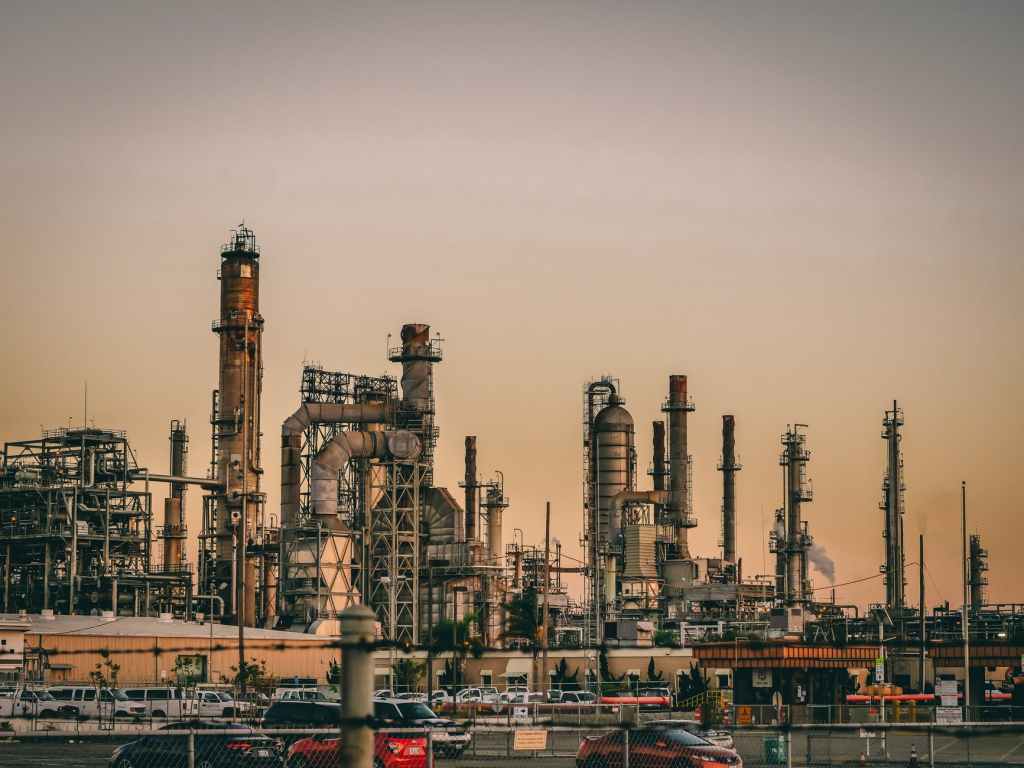
The Indian Oil & Gas industry is quite significant in the global context – it is the third-largest energy consumer only behind USA and Chine and contributes to 5.2% of the global oil demand. The complete lockdown across the country slowed down the demand of transport fuels (accounting for 2/3rd demand in oil & gas sector) as auto & industrial manufacturing declined and goods & passenger movement (both bulk & personal) fell. Though the crude prices dipped in this period, the government increased the excise and special excise duty to make up for the revenue loss, additionally, road cess was raised too. As a policy recommendation, the government may think of passing on the benefits of decreased crude prices to end consumers at retail outlets to stimulate demand.


Beyond Covid: The new normal

In view of the scale of disruption caused by the pandemic, it is evident that the current downturn is fundamentally different from recessions. The sudden shrinkage in demand & increased unemployment is going to alter the business landscape. Adopting new principles like ‘shift towards localization, cash conservation, supply chain resilience and innovation’ will help businesses in treading a new path in this uncertain environment.

Coronavirus (COVID-19), a virus that grew stealthily has become one of the deadliest viruses that are killing people worldwide. This virus took birth in Wuhan city of China and since then have traveled to more than 160 countries. The World Health Organization (WHO) has declared Coronavirus as a pandemic. It has become a mass scare and is leading to the deaths of thousands of people in numerous countries including China, Italy, Iran, Spain, the US, and many more. In India, this pandemic started on 30 January 2020 by affecting an individual who had a travel history from Wuhan, China.


The world economy is seeing its greatest fall ever. Coronavirus has largely impacted the growth of almost every country and is responsible for the slump in GDP worldwide. Like other countries, India is also impacted by this virus but not largely. Almost every industry sector has seen a fall in their sales and revenue. India’s GDP growth has fallen to 4.7% in the third quarter of 2020.


Inflation and Affected Industry:

China is one of the largest exporters of many raw materials to India. Shutting down of factories has damaged the supply chain resulting in a drastic surge in the prices of raw materials. Some of the other products that have seen a rise in their prices are gold, masks, sanitizers, smartphones, medicines, consumer durables, etc. The aviation sector and automobile companies are the hardest hit among the rest. With no airplane landings or take-offs globally and restricted travel has brought the aviation and travel industry to a halt.


Slump in Share market:
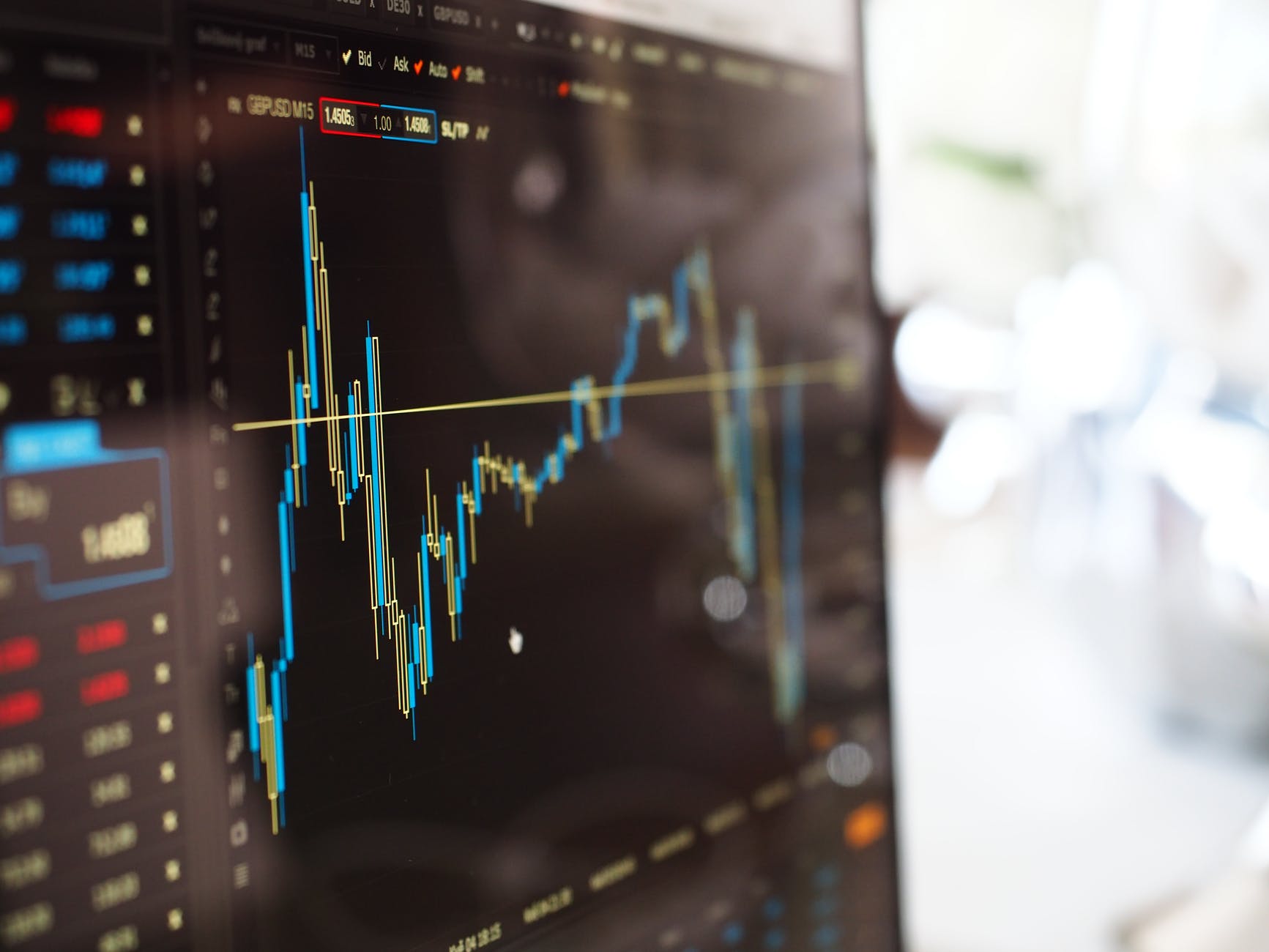
Share markets that include Sensex and Nifty are on nose dive since the occurrence of this pandemic (COVID-19). Sensex has declined close to 8000 points in a month. As of 12 March 2020, share market investors have lost approximately Rs. 33 lakh crore rupees in a month. This could be the beginning of a recession that the Indian market will never want to witness. Investors are advised to stay safe and invested in this virus-infected stock market. Few industries that can benefit from novel coronavirus during the time of the market crash are pharmaceuticals, healthcare, and Fast Moving Consumer Goods (FMCG).



Cash flow Issue:
Due to this outbreak, almost 80% of Indian companies have witnessed cash flow difficulty and over 50% of companies are facing operations issues. As per the Federation of Indian Chambers of Commerce and Industry (FICCI), 53% of companies are impacted by COVID-19. Slow economic activity is resulting in cash flow problems eventually impacting repayments, interest, taxes, etc.


Coronavirus (COVID-19), a virus that grew stealthily has become one of the deadliest viruses that are killing people worldwide. This virus took birth in Wuhan city of China and since then have traveled to more than 160 countries. The World Health Organization (WHO) has declared Coronavirus as a pandemic. It has become a mass scare and is leading to the deaths of thousands of people in numerous countries including China, Italy, Iran, Spain, the US, and many more. In India, this pandemic started on 30 January 2020 by affecting an individual who had a travel history from Wuhan, China.


The world economy is seeing its greatest fall ever. Coronavirus has largely impacted the growth of almost every country and is responsible for the slump in GDP worldwide. Like other countries, India is also impacted by this virus but not largely. Almost every industry sector has seen a fall in their sales and revenue. India’s GDP growth has fallen to 4.7% in the third quarter of 2020.


Efforts from CII and Govt. of India:
Confederation of Indian Industry (CII) has suggested the RBI reduce repo rate up to 50 basis points and also asked for a reduction of 50 basis points on the cash reserve ratio. The government is planning to set up an amount to support MSMEs to overcome the crisis during this phase of shut down, cash flow difficulty, and working capital issues.

Written by: Ananya Kaushal

Cryptocurrency simplified

In the simplest of terms cryptocurrency is a digital currency used to make transactions. It is currently not being used to make transactions but can be potentially used to do so. Before jumping to cryptocurrency let’s clear our basics.

Understanding currency 

Think of cryptocurrency as any other currency, we use currency to fulfil our needs and we exchange currency because we are aware that we will be provided with goods and services in return. Now, this currency is not limited to just notes or coins but can be anything. Like in olden times barter system existed where people would exchange goods and services for other goods and services in return but this concept had a lot of limitations so currency started evolving. We moved to commodity money i.e., gold, silver then to metal money then paper money then plastic money(cards) and now we are moving towards crypto. These currencies evolved because the previous methods of transaction had their own drawbacks.

Like any other method, the method of transaction that the world operates on now also has drawbacks like centralisation, elasticity, the ease with which it can be issued to name a few.

Need for Crypto

Now, this is where cryptocurrency comes into play. It is a virtual form of currency that uses blockchain technology. Blockchain technology is a virtual decentralised ledger that keeps a record of transactions. Cryptocurrency is secured by cryptography which is a secure communication technique.

Now, keep in mind that it does not physically exist, one can’t hold up a bitcoin because it is based on a network distributed across computers. So you don’t have to carry it around, kind of like net banking or online transactions but online transactions are made through banks and can be monitored by any authority. Now, imagine you want to transfer your friends 5 bitcoins. You can do it without a bank or an intermediary interfering. It can be done anonymously with your privacy being protected. And since no authority controls it, that currency cannot be altered either. 

With paper currency, the government can print as much money as they want because they control it and printing a lot of money causes inflation but that is not the case with cryptocurrency because  only a limited number exists. 

For example, only 21 million bitcoins exist on the web. Bitcoin is a form of cryptocurrency created allegedly by a Japanese fellow Satoshi Nakamoto. Now , this could be a pseudonym or perhaps more than one person was involved in the development of said currency. However, for the most part that person’s identity still remains anonymous.  

Now,  this number of 21 million cannot be changed, it is constant. There will always exist 21 million bitcoins and can be found out through miing. This is done by solving puzzles. The more puzzles you solve, the more bitcoin you get. As more and more bitcoins are mined, the puzzles get tougher. These bitcoins are not easy to find and it is definitely not easy to solve the puzzles. Perhaps, that is why Bitcoin is so valuable. 

It is possible that somewhere in the not so far future we would not be using paper currency but crypto. For now, cryptocurrency is highly volatile and is used only for investing money.

Do we have to sacrifice good economy for healthy environment?

Be the change you wish to see in the world. Take a pledge to protect Mother Earth this World Environment day

Past decade has handed over much benefit to human kind and the one to suffer is environment exposing environmental degradation that costs…….. per year worldwide.

“While the overall policy focus should be on meeting basic needs and expanding opportunities for growth, they should not be on the expense of unsustainable environmental degradation.”-muthukmara mani(senior environmental economist).

Using natural resources as fuel to the economic development many have curbed themselves over the poverty, it providing employability and many new opportunities to individuals. With excess greed and overuse of all these resources there has been excruciating effects on environment overall degrading forests, scarring natural resources these are overall affecting the economy in return.

Tony Abbott said his govt. won't "put the environment ahead of the economy". RT if you think he's got his it wrong.

Poverty remains cause of either of both consequence and cause of environmental degradation. Needless mining and overuse of resources that are on first hand limited to us which is quiet evident over degrading agriculture yields per hectare as livestock is overgrazed grassland and forest deplete for human settlements.

            The question that arises is our economic benefit so crucial that it costs us worsened environmental quality, depleted resources, extinct habitats and other impacts?

Something that emerges out is environmental stability, low emission resource efficient greening of the economy should be possible at costs of terms less to that of GDP of each country, valuing the available natural resources and taking policy decision accordingly.

To avail this issue the natural environmental growth be necessary, affordable, desirable, and measurable.

  • If not now it’s going to be a challenge to turn the pages around to covert the damages done to nature with hefty economical costs in future and also proving deadly not only to the flora-fauna but eventually to humans too, hence it’s necessary to avail it at the very moment.
  • Policies such as environmental taxes can positively help minimize the cost and pressure over governments hence making it affordable to all.
  • With so many diversifies ecologies and habitat all over the globe the policies and laws needs to be designed such that it preserves and nourishes these natural gems.
We think cutting edge technology is essential in delivering environmental and economic gains.

What can be done?

Particulate emission reduction can effectively help decrease GDP modestly even reducing 10%.

Making more tractable efficient commitments and following them religiously, look through the environments vision and then make other end decision regarding the communities, societies, business and governments. Science can be at its most use when it’s accessible to every person who wishes to use it. Every person taking this as a personal responsibility the awareness would make it up to history pages. We need to turn around the current situation and consider it as a need of an hour if we wish out economy our trades our families to thrive in peace without draining our economies.

MANAGEMENT CHARACTERISTICS

1) IT IS A CONTINUOUS PROCESS

It is a never ending process. Continuity is an important part of management. It is necessary throughout the life of organization. Management is essential to begin the activity, to run it smoothly and to control the activity.

2) MANAGEMENT IS GOAL ORIENTED

Every business organisation has their own set of goals which is decided prior to the execution of the goal. When the management achieves the goal it is called success. Success depends on proper management skills and a manager takes a lot of efforts to achieve this goals. So management is a goal oriented activity.

3) MANAGEMENT IS DYNAMIC

Management is dynamic and not static in character. It deals with human efforts different situations and activities. It embrace changes in form of technological change, socio-economical change, political changes and many more.

4) MANAGEMENT IS UNIVERSAL

Management is universal in character. The principles and theories of management are equally applicable to everywhere and in every field like defence, business, education, etc. These principles are guidelines which are flexible and capable of adaptation to every type of organization.

BEST COLLEGES IN MUMBAI

A college assists a student in building their career. Colleges are necessary for converting the thoughts into action. The institution acts as a bridge for their career pathways. In college we are taught how to make into the society and working industry and progress in life, the institution boost our overall development. A college provide with many activities, fest, placement, etc so that an individual growth is secured. It’s on us to work hard and achieve our dream; here are few of the best colleges in Mumbai.

1) IIT BOMBAY – INDIAN INSTITUTE OF TECHNOLOGY

It is a public technical and research university, located in Powai. It was established in 1958, the Chairman is Dr Pawan Goenka and the Director is Subhasis Chaudhari. The institute has physically expanded to include more than 584 major building. The institute grant’s admission through JEE and Advance. It offers many courses such as bachelor of technology, bachelor of science. It offer courses for post graduate, doctoral and postdoctoral level. The centre has five primary research areas. It offers a great campus area and an awesome student life.

2) ST. XAVIER’S COLLEGE

It is a private Catholic autonomous higher education institution run by The Society of Jesus in Mumbai, located in the Fort area of South Bombay. It was established in 1869, the Chairman is Fr. Arun de Souza, SJ and the Principal is Dr. Rajendra Shinde. The college was greatly expanded in 1930s and is built in Indo-Gothic style. The college is equipped with modern amenities and has a large common library. It also has a leisure space area known as ‘The Woods’. The college is affiliated with the University of Mumbai, offering undergraduate and postgraduate courses in Arts, Science, Commerce and Management. One can opt for this college for a better career development.

3) MITHIBAI COLLEGE OF ARTS, CHAUHAN INSTITUTE OF SCIENCE AND AMRUTHBEN JIVANLAL COLLEGE OF COMMERCE AND ECONOMICS

Mithibai college is affiliated by the University of Mumbai and was granted the status of autonomous in 2018. The college was established in 1961 by Shri Vile Parle Kelavani Mandal as a part of the trust’s Silver Jubilee Celebration, located in Vile Parle. The principal was Dr. Rajpal Hande. It has 50% reservation for gujrati speaking community. It has been consistently featured on the top 5 ranks in India Today College rankings. It offers an undergraduate and postgraduate courses in commerce. Other courses include bachelor of management studies, bachelor of science and master of science courses in biochemistry, biotechnology and computer science.

4) JAI HIND COLLEGE

Jai Hind College is an autonomous college affiliated by the University of Mumbai, located in Churchgate Mumbai. It was established in 1948, the Principal of the college is Ashok Wadia. The college offers both junior college and regular degree college. The college provides bachelor degree in science, commerce and arts and also offers MSc in Big Data Analytic. It offers great students life and hosts big college fests every year. Once can consider this college if they have to enjoy their college life along with their studies.

SWATCH BHARAT SWASTH BHARAT

SWATCH BHARAT SWASTH BHARAT
Whether the Sun shines or it Rains; Cleaning the India should be our aim.
Pledge for cleanliness to show your keenness to clean India. India will teach us the tolerance and gentleness of mature mind, understanding spirit and a unifying, pacifying love for all human beings.” – Will Durant
India is in dire need of a cleanliness drive like Swachh Bharat Abhiyan to eradicate dirtiness. It is important for the overall development of citizens in terms of health and well-being. This a scheme to help us amd to make India healthy and clean and to make India swatch and swasth.

Swachh Bharat Abhiyan is one of the most significant and popular missions to have taken place in India. Swachh Bharat Abhiyan translates to Clean India Mission. This drive was formulated to cover all the cities and towns of India to make them clean. This campaign was administered by the Indian government and was introduced by the Prime Minister, Narendra Modi. It was launched on 2nd October in order to honor Mahatma Gandhi’s vision of a Clean India. The cleanliness campaign of Swachh Bharat Abhiyan was run on a national level and encompassed all the towns, rural and urban. It served as a great initiative in making people aware of the importance of cleanliness. This helped in making the message reach wider. It aims to build sanitary facilities for all households. One of the most common problems in rural areas is that of open defecation. Swachh Bharat Abhiyan aims to eliminate that. Generally, in these areas, people do not have proper toilet facilities. They go out in the fields or roads to excrete. This practice creates a lot of hygiene problems for citizens. Therefore, this Clean India mission can be of great help in enhancing the living conditions of these people. When we will dispose of waste properly and recycle waste, it will develop the country. As its main focus is one rural area, the quality of life of the rural citizens will be enhanced through it. Similarly, they also wanted to make people aware of health and education through awareness programs. After that, a major objective was to teach citizens to dispose of waste mindfully. Most importantly, it enhances the public health through its objectives. This helped in making the message reach wider. It aims to build sanitary facilities for all households.
Every small step towards sanitation will bring a big change for the nation.
Heaven could be on earth, Cleanness is something which has priceless worth.

The main objective of Swachh Bharat Abhiyan is to aware the citizens of the country of their utmost priority and responsibility towards cleanliness in the nearby surroundings and the spread of filth and infectious parasites. The campaign primarily focuses on eradicating the unhealthy practices of open defecation and provide basic sanitation facilities by constructing toilets, solid-liquid waste disposal systems, supplying clean drinking water, etc.

“Let’s make this our plea; we will make India open defecation free.
Cleanness can provide us inner peace, clean India mission is something that we need.
For cleanness we still have hope, because Swachh Bharat Abhiyan has a big scope.”


Swatch Bharat Abhiyan is a great accomplishment and proved out to a one of a kind project in the history of India. We must carry forward the practices of cleanliness with the same enthusiasm and zeal and help each other by keeping our Mother India clean and beautiful.
There are lots of schemes made for us by our government. These Abhiyan tries to make our beautiful India more beautiful and to make us healthier.
We can make our country beautiful; by participating in Swachh Bharat mission we can achieve something fruitful.
Let’s work on cleanliness from our side, and make India feel pride and clean your houses, roads and street, Cleanliness is our basic need. Make India great again, participate in Swachh Bharat mission to bring new reign.
Due to waste lying in the streets cause dangerous diseases which hampers our health and may cause dangerous diseases. These Abhiyan is a kind initiative to help us and to free us from these dangerous diseases. These are some examples how these Abhiyan help us and gift us a healthy life.
Clean India mission is something which we need for progress of our country.

Contaminated water causes many water-borne infections like diarrhoea, and also serves as a carrier for vectors such as mosquitoes spreading epidemics. Open defecation means no sanitation. It fouls the environment, and spreads diseases. According to WHO-UNICEF report (2010), India has the highest rate of open defecation. Access to safe drinking water and good sanitation are vital for family well-being. It results in control of enteric diseases, and boosts child health. A healthy child has better learning and retaining ability. Girls avoid going to school where there are no proper sanitation measures. Sanitation makes a positive contribution in family literacy. One key goal of sanitation is to safely reduce human exposure to pathogens. Pathogens are excreted by infected individuals and if not properly contained or treated, may present a risk to humans who come in contact with them. These individuals can also be exposed to pathogens through drinking water or eating food contaminated with pathogens found in human excreta. According to a UNICEF study, for every 10 per cent increase in female literacy, a country’s economy can grow by 0.3 per cent. Thus, sanitation contributes to social and economic development of the society.
Improved sanitation also helps the environment. Clean drinking water and good sanitation would not prevent infections without practicing good hygiene. A simple habit of washing hands goes a long way towards preventing diseases. The stored water supply may also serve as a source of infection in the absence of hygiene. Sanitation envisages promotion of health of the community by providing clean environment and breaking the cycle of disease. Sanitation systems aim to protect human health by providing a clean environment that will stop the transmission of disease, especially through the fecal–oral route. For example, diarrhea, a main cause of malnutrition and stunted growth in children, can be reduced through adequate sanitation.

If we follow the sanitation system then we can create a healthy world . If we live healthy then we can be wealthy. Swatch bharat is swasth bharat is a true word. If the world become clean then everyone become healthy.
If we want to make India a developed nation then clean India mission is the necessity.
Let’s take oath; by participating in clean India mission we will make our country proud.
Clean India mission is something which we need for progress of our country.
Working towards sanitation will bring a significant positive change for the nation.

Tips for Share Market

The potential of large gains from share markets can entice you as an investor. To a novice, the stock market may appear to be a place where you may obtain quick returns on your investments or make millions in a flash. On the other hand, the reality is rather different. It’s difficult to make money in the stock market. You’ll need patience and a long-term investment horizon, as well as a deep understanding of the market. You should only employ share market advice from a professional financial advisor, and your investing ideas should correspond with your financial objectives and risk tolerance.

Different investors have different investment objectives when they enter the stock market. Some investors seek rapid and huge profits, while others seek long-term investments and a well-balanced portfolio. However, to prevent volatility, every investor should follow a few share market guidelines during their trading journey.

Best tips for Share Market

1. Prior to investing, set goals

Goal-based investing can assist you in accomplishing your financial objectives. Determine your financial needs and develop short- and long-term goals to meet them. This will assist you in determining the length of your investment, the amount you want to invest, and the best investment channel for your needs. Let’s say you have a short investing horizon. Then you might try to profit on short-term stock price swings. If you have a longer timeline, on the other hand, you may invest in blue-chip stocks, which are renowned to provide strong long-term returns.

2.  Recognize Your Risk Tolerance

Given the volatility of the stock market, it’s a good idea to figure out your risk tolerance before investing. Risk tolerance is an important part of the investment process, and it varies from investor to investor. It primarily refers to the ability to withstand market fluctuations and their impact on the investment’s value. An investor’s low-risk tolerance is determined by his or her hunger for loss or ability to cope with worry in a highly volatile market. Low-risk investors are more likely to sell their stocks in a panic at the wrong time.

3. Choosing a Stock Broker

One of the most important decisions you’ll have to make early in your trading career is which stockbroker to use. In India, there are a plethora of stock brokers to choose from, making it tough for newcomers to make an informed decision. Consider factors such as the broker’s reputation, trading portal or software, and brokerage while making a decision. Keep an eye on the brokerage because you’ll have to pay it whether you make a profit or a loss on a deal. Brokerage fees can be levied as a flat fee or as a percentage of the trade value. This is especially significant for stock traders because the brokerage fees for repeated trades can soon add up.

4. Learn the fundamentals of the stock market

Learn the fundamentals of the stock market before investing your hard-earned money. Learn how the stock market works, what drives it, how stock prices are influenced, trading and investing tactics, and more. To make informed investments, you’ll also need to get familiar with a variety of technical terms. Those who invest without first learning the basics risk losing their money. Learn about the market before you begin your stock market trip if you desire strong and regular results.

5. Choose companies that are fundamentally sound

Consider investing in companies that have solid fundamentals. These businesses not only deliver better long-term returns to investors but also provide more liquidity. Companies with good fundamentals can also withstand share market volatility and changes. As a result, they are a generally safe investment option. Large-cap mutual funds are another option for mutual fund investors.

Conclusion

The potential of big profits tempts many to invest in the stock market. Keep in mind that markets are volatile, and stock prices can swing dramatically. Experienced investors, on the other hand, do not let these dangers affect their decision-making. Instead, they concentrate on research and analysis to determine whether or not to invest, where to invest, and whether or not to buy, hold, or sell a stock. If you’re just getting started, the above share trading advice can help you get started. Use them to create a successful stock market investment strategy that yields consistent profits.

5 Main Problems faced by Small Scale Industries

Just because of their nature and size, small-scale industries do not have many of the advantages that large-scale firms do. They have contributed significantly to economic development, but they have not reached their full potential. They have a lot of issues with how they operate, and a lot of small businesses are sick.

Certain commodities were set aside by the government for exclusive production by Small Scale Industries. Large-scale businesses were not permitted to create commodities reserved for the SSI sector. Many things have been successively De-reserved as the economy has opened up and followed the principles of liberalization and globalization. As a result, small-scale industries must now contend with the dual pressures of rivalry from both Indian large-scale firms and overseas competitors.

In this blog, we are going to learn about the problems faced by Small Scale Industries.

Problems of Small Scale Industries

1. Funding Shortage

When it comes to fundraising, small businesses confront numerous challenges. It is one of the most serious issues. Many of these businesses are unable to raise cash from the capital market due to a lack of creditworthiness. Banks are also wary of lending money to these businesses because many of them lack proper collateral security or guarantees.

A lack of cash can cause a small firm to fail before it even gets off the ground. Following nationalization, several banks make loans to these types of businesses. The situation is still deteriorating due to the sudden outbreak of covid-19, which resulted in a lockdown and a drop in the economy. Entrepreneurs are obliged to seek funds from money lenders at unreasonably high-interest rates, which throws their business calculations into disarray.

2. Idle Capacity 

In the case of small-scale industries, installed capacity is underutilized to the tune of 40 to 50 percent. Various factors contribute to this underutilization, including a lack of raw materials, a lack of cash, and even a lack of power. Small scale units, unlike their large-scale counterparts, are not completely able to deal with all of these issues.

3. Management abilities

A tiny business is started and run by a single person. As a result, that person may lack all of the managerial skills required to run a business. They cannot afford to hire competent managers or staff due to a lack of finances. This can cause minor disruptions in the business’s operations. Delays, errors, poor decision-making, and other factors can all contribute to the company’s demise. This could also be considered unprofessional behavior on the part of the client, which is bad for the company’s market reputation. All of these requirements are easily met in major corporations thanks to various specialized teams.

4. Sickness

It’s heartbreaking to see the majority of the small units succumb to illness. There is a lack of forethought. Another stumbling block is the lack of qualified and trained employees. They have no choice but to sell on credit. Their clients fail to pay them on schedule. There are a lot of terrible debts. As a result, they are unable to maintain the production process due to a lack of operating capital. This results in illness.

5. Unpredictable raw material supply

Small businesses have a difficult time obtaining raw materials, whether they use locally available or imported raw resources. The issues develop as a result of defective and irregular raw material delivery. Other obstacles for the small-scale sector include a lack of sufficient quantities of raw materials, occasionally poor quality of raw materials, rising raw material costs, foreign exchange crisis, and, most importantly, entrepreneurs’ lack of awareness of government policies.

Conclusion

Small-scale entrepreneurs face a slew of issues, including excessive reliance on institutional agencies for finances and consulting services, a lack of creditworthiness, a lack of education and training, reduced profitability, and a slew of marketing and other issues. The Indian government has launched a number of initiatives targeted at enhancing the overall performance of these institutions.

BENEFITS AND LIMITATIONS: Mobile Banking

Advantages 

On these days we do our daily stuff with the help of our mobile phones, that also includes banking. Mobile banking is a free, convenient way to keep up with your finances.

Some of the advantages of using mobile banking are the following:

AVAILABILITY

There are no working hours or operations or particular requirements for mobile banking, customers can check their account, move money, pay bills and various other banking processes with the help of mobile banking. It is available 24*7 for the customers.

PAPERLESS

No one enjoys getting bank statements in the mail. With the help of mobile banking, there is no need for the customer to receive junk mail from the bank. It’s also safer because you are no longer having to get away from sensitive information into the trash.

CONTROL

Mobile banking makes it so easy to have complete control over your finances. You can monitor your balances and move money between accounts to avoid overdraft fees. With bill pay you can alert when it’s time to pay to avoid late fees, or set up recurring bill payments and not have to think about it.

SAFE

Mobile banking is safer and secure. All reputable banks and financial institutions use encryption to safeguard and protect your privacy and identity information on mobile apps.

TIME SAVING

It is time saving because we don’t want to visit the particular bank to do our banking process. We can do it with the help of mobile banking.

HELPS YOU TO TRACK YOUR FINANCES

Managing an account through your mobile also puts you in charge of your money and helps you better to know your financial standing. You can always monitor your account balance and transfer money from a different account if needed be. You can check your balance and statement at any time.

MINIMIZE ERRORS

A comprehensive mobile banking will reduce errors that users make. There hasn’t been a better time to get familiar with mobile banking as indeed, this is the only way forward. 

DISADVANTAGES

OPERATING EXPENSES

It tends to be high in traditional banking, since in addition to having administrative offices, they also have offices to serve their clients in person. Among its main operating expenses are: 

  • Paying rents from the premises where they operate
  • Payment of public services and security
  • Expenses in stationary and issuance of the plastics (for making debit and credit cards)

MOVE TO OFFICES AT CERTAIN TIMES

In case of making a transfer or other type of management, in many cases physical presence must be made in the bank’s office and within the business hours established by the bank, which is considered as a great disadvantage. 

SLOW PROCESSES

Another disadvantage is the slowest process held in the organization. Another demonstration of the slow process time that transactions between different banks usually take.

HIGH COMMISSIONS

In general, traditional banking commissions are high due to higher operating expenses, which makes many of their products or services more expensive compared to other products or fintech companies.

LOW STIMULUS TO SAVINGS

Due to lower interest rates that traditional banks usually pay their savings to the clients if there is a low saving stimulus. This is because traditional banking promotes more bank loans and they are the ones that generate more interest and collection fees, which allows them to create more fiat money and have more profits.

LIMITATION IN ONLINE BANKING

Although traditional banking is using some functions of online banking, the latter is still limited. For example, in many cases this service is conditioned to the use of some of its product. There is also the problem of limits on amount to be transferred in addition to difficulties or restriction in transferring money to other countrie

CONCLUSION

As smartphones become more commonly used, and their capabilities expand, they may increasingly be the means consumers use to access financial services and manage their finances. Their constant presence also makes them a potentially useful tool for the delivery of just in time financial information or as in decision making. 

Given the prevalence of mobile phones, particularly smartphones among minorities, low-income individuals, and younger generations, mobile technology has the potential to empower consumers and expand access to financial services for underserved populations.

The use of mobile banking has increased by more than a third in the past year, and it appears likely to continue to increase as more and more consumers use smartphones. While still small, the use of mobile phones to make payments at the point of sale has increased even more rapidly. Over a quarter of mobile phone users express some interest in using their phones to make payments at the point of sale, giving mobile payments substantial growth potential as the ability to make these payments becomes more widespread.

The two factors limiting consumer adoption of mobile banking and payments are concerns about the security of the technology and a sense that they don’t offer any real benefits to the user over existing methods for banking or making payments. With regards to security, consumers have actually become more likely in the past year to report that they simply don’t know how safe it is to use mobile banking, suggesting that consumers need to be provided with reliable and accurate information on the level of security associated with the various means of accessing mobile banking. In terms of the value proposition to consumers, the significant number of mobile users who reported an interest in using their phones to receive discounts, coupons, and promotions or to track rewards and loyalty points suggests that tying these services to a mobile payment service would increase the attractiveness of mobile phones as a means of payment.

Challenges Faced : Mobile Banking

Challenges Faced 

  • Customer awareness: because of lack of data and awareness regarding mobile banking is  a reason for less trust in mobile banking services and it’s conjointly one more reason for risk and security issue in mobile banking which is a result of this can be new technology in banking and financial set-up therefore all banking client aren’t aware of it and feel risk to adopt it therefore it’s conjointly a big challenge before of mobile banking services in India.
  • Security problems & privacy: there’s security of mobile banking services is massive issue and challenges. In mobile banking for the safety purpose PIN or countersign is employed which can be steal by the offender or unauthorized user if mobile device has loss or steal therefore user got to aware about it. Customers are use sensitive information and data in mobile therefore here risk with pass of a legitimate application as a result of application service are provided by third party it’s going to steal our info and send it to a different third party therefore we’ve to aware of applications used for WAP mobile banking services and transfer a legitimate and authorize application for group action with mobile banking services.                                                                                                                                                                                                                                                                                           
  • Virus & malware attack: there’s conjointly risk with virus and malware attack it’s going to access your account info equivalent to username, countersign and alternative info like in computing system there’s conjointly risk on virus and malware attacks on mobile banking services some  codes are written to default mobile banking like Zeus has used for attacks on SMS banking and Zeus used for steal mobile group action authentication equivalent to password and pin number. therefore it’s a conjointly massive security issue and challenge in mobile banking services.
  • Wireless network: All method of mobile banking service is finished in wireless mode therefore there’s conjointly a security risk in mobile banking services mobile device element contact with cell website and dedicated circuit and microwave for the communication services therefore if there’s any weakness in any a part of this network then risk of attacks is will increase therefore we’ve to secure of these network and network devices for an honest security services.
  • Risk in SMS mobile banking: Format of SMS is in plain text. presently end to finish secret writing isn’t available. The sole encryption is out there in the base station at transceiver and at the SMS server during transmission time. Because of this there’s a risk in SMS banking equivalent to SMS spoofing attack where the offender will send a message on the network by manipulating the user’s number.
  • Authentication issue: In mobile banking there’s authentication risk at the login time or once we access our account through the mobile system as a result of in mobile banking for the authentication PINS numbers are used however PINS authentication technique is associate degree recent method and lots of security problems such as countersign and id thievery were by stealing the password and id unauthorized access is also potential by obtaining the countersign offender might access our account. Another risk regarding authentication in mobile banking as if the mobile has been stolen then the offender may get the countersign through the mobile and might access the account by exploiting your id and password.

IMPORTANCE OF MOBILE BANKING

Mobile banking permits customers to be ready to access banking services from anywhere. Businesses and business homeowners are currently ready to save time by creating use of mobile applications to method their payments or maybe receive funds from shoppers on to their phone numbers. it’s significantly popular among tiny to medium-sized enterprises (SMEs).

With mobile technology, banks are ready to slow down on operational prices whereas still maintaining shopper satisfaction. The actual fact that any shopper of a bank will build use of their app to request a service, equivalent to opening an associate degree account or maybe the power to schedule debit orders or alternative payments from associate degree application, permits for larger transactional volumes, eventually driving business growth.

Benefits of Mobile Banking

  • Perpetually on- mobile are often always or are often portable due to inherent design, enabling users to act in activities equivalent to travel or meeting people, whereas transactions via mobile devices are equipped with Internet.
  • Location-Centric-Not solely is mobile altogether places, world Positioning System (GPS) is also created to acknowledge phones and tries to personalize supported existing services. distinguishing the situation of net users, provides a special advantage for mobile commerce over wired e-commerce. Using this technology, the mobile commerce suppliers can alter to receive and send info to a selected place.
  • Convenience- others aren’t restricted by time or space, access to electronic activities. For example, people that are stuck in traffic or waiting within the queue are going to be able to shop for their favorite Internet-based activities or manage their daily transactions through mobile commerce applications. customers can apprehend a special comfort that may improve their quality of life. By creating a lot of comfort, the client can be a lot more loyal. As a result, Communication facilities with mobile commerce applications produce a comfortable.
  • Customization – mobile is a far higher influence than personal computers. Therefore, mobile commerce producers style a lot of creative and a lot of custom mode tools. For example, exploiting demographic data collected by wireless service providers, and {data} on this location of the mobile users will do a lot of targeted advertising. Advertising messages are often custom supported by the knowledge provided through consultation with the users initial or previous users looking habits.
  • Establish ability – mobile provides to support the secure mobile phone transactions wherever personal computers are nearly unknown (no name). One person perpetually uses mobile devices and it’s ideal for private -based target promoting ,through the technology of worldwide Positioning System (GPS), service suppliers will acknowledge a user rigorously .Personalize chance to deliver messages to totally different components of area and time through sound and look.

Basics of inflation accounting

Inflation accounting is an improvisation of cost accounting in presence of a considerable rate of inflation or deflation.Historical information on financial statements is no longer applicable when a business operates in a country where there is a significant amount of market inflation or deflation. In some cases, companies are allowed to use inflation-adjusted figures to counter this issue, restating the numbers to reflect current economic values.

Advantages of Inflation Accounting

The following are the advantage of Inflation Accounting

  • It reflects the current( market value) and not the historical cost of the balance sheet.
  • It is highly effective in times of general inflation or hyperinflation.
  • Depreciation of the business is valued and cost on the current price and not on the historical or the carrying value of the asset which is the correct method.
  • Profit and loss will be more reliable and true.
  • Financial ratios based on figures, adjusted to the current value, are a good reflection of reliable integrity of the company.

Disadvantages of Inflation Accounting

The following are the disadvantage of Inflation Accounting

  • Changing in price is a never-ending process hence it becomes difficult every time to reinstate the figures of the company and present the financial statements.
  • Inflation accounting is a complicated process and it involves long calculation and the data gathering process thus increased cost incurred

Banking Products “SBI VS ICICI”

Products offered

By SBI and ICICI

Like any other bank these two banks offer similar products :

  • Deposit account – savings and current account
  • Loan                   –  various specialized loan
  • Investment         – Fixed and Recurring deposits
  • Cards                 – Debit and Credit cards
  • Banking              – Net/Mobile Banking

Analysis(SBI VS ICICI)

  1. Deposit account :-As per the site clients with Rs 1 lakh or more in their bank account procures a premium of 3.25 percent. Be that as it may, clients with a store not as much as Rs 1 lakh get a loan fee of 3.5 percent. With this record, an essential RuPayDebit card is given to the clients, that as well, liberated from cost and no upkeep charge is applied. The receipt or credit of cash through electronic installment channels, for example, NEFT and RTGS is free too. There are no charges on actuation of broken records and on account conclusion. It might, in any case, be noticed that in the event that the client as of now has a Savings Bank Account, the equivalent must be shut inside 30 days of opening a Basic Savings Bank Deposit Account. Anyway ICICI offers a loan cost of 3.5 percent on the record equilibrium of underneath Rs 50 Lakh and 4 percent on Rs 50 lakh above. It offers a free Rupay card, money store or withdrawal and passbook office. It takes no charges for non-support of MAB, money withdrawals in accounts at base branch, money withdrawal at non-base branches inside the base city, exchange at non-ICICI Bank ATM. There are no yearly expenses on charge cards and a worth added SMS ready office.
  2. Loan :-

its own pros and cons that have to be evaluated before choosing the best offer. Some of the key results of the comparison between the two banks are:

  • Lowest Interest rate of SBI Personal Loan is 9.60%, which is lower than the lowest interest rate of ICICI Bank at 10.75%. Hence, SBI is offering a cheaper loan option.
  • When compared to other Personal Loan charges such as processing fees, SBI charges a processing fee of 1.00% while ICICI Bank charges a processing fees of Up To 2.25% of Loan Amount.
  • ICICI Bank offers Personal Loan upto an amount of ₹ 30 Lakh while SBI offer Personal Loan upto an amount of ₹ 15 Lakh. ICICI Bank can be a better option if you are looking for a high value amount.
  • One feature that makes Personal Loan a better option is foreclosure facility. ICICI Bank and SBI gives the option to close the loan after 6 months at 5% and 3%. This makes ICICI Bank a better option for Personal Loan.
  • ICICI Bank has an average customer ratings of 4.5, while SBI has an average customer rating of 3.6, based on which it is clear that ICICI Bank has a high customer service focus, an easy Personal Loan process and a quick turnaround.
  • (source: myloancare)
BankSBIICICI BANK
Parameters  
Interest Rate9.60% – 16.40%10.75% – 22.00%
Processing Fees1.00%Upto 2.25% of Loan Amount
Loan Amount₹ 50,000 to ₹ 15 Lakh₹ 50,000 to ₹ 30 Lakh
Loan Tenure6 to 72 Months12 to 60 Months
Lowest EMI Per Lakh₹ 1,832₹ 2,162
Part Payment ChargesNot AllowedNot Allowed
Foreclosure ChargesAllowed after 6 months at 3%Allowed after 6 months at 5%
Borrower’s Age21 to 58 Years23 to 58 Years
Minimum Income₹ 24,000₹ 25,000
Current Work Experience12 Months12 Months
  1. Investments :- 

ICICI

SBI

TenureFD Interest RatesSenior Citizen FD Interest Rates
7 days to 45 days2.90%3.40%
46 days to 179 days3.90%4.40%
180 days to 210 days4.40%4.90%
211 days to 364 days4.40%4.90%
1 year to 1 year 364 days4.90%5.50%
2 years to 2 years 364 days5.10%5.60%
3 years to 4 years 364 days5.30%5.80%
5 years to 10 years5.40%6.20%

SBI

The interest rates on RD offered by SBI are the same as offered in term deposits. At SBI, a five year or more recurring deposit account, will help you earn 6.25% interest. In the case of senior citizen, it is 6.75%.

ICICI Bank: 

This bank has launched a flexible recurring deposit scheme called as iWish.  At ICICI Bank, for a recurring deposit for upto 5 years and above, you can earn interest at 7%. For senior citizens, the interest rate is 7.50%.