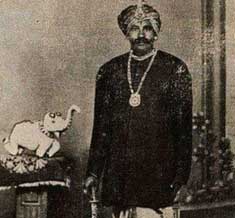
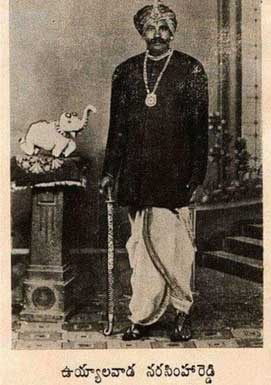
India’s first freedom fighter Narasimha Reddy.

Uyyalawada Narasimha Reddy was an Indian freedom fighter and he was born in Rupanagudi village, on 24 November 1806.

The father of Narasimha Reddy was related to the Palegar family of Uyyalawada in Koilakuntla taluk who had married two daughters of the Palegar of Nossam. He had three sons, of whom Narasimha was the youngest son of the Palegar of Nossam, Seethamma. He married a woman named Siddhamma at the age of 6 .
The British East India Company’s preface to the Chennai Presidency of the 1803 endless agreement, which had first been legislated in Bengal Presidency ten times preliminarily, replaced the agricultural socio- profitable status quo with a further egalitarian arrangement where anyone could cultivate handed that they paid a fixed sum to the East India Company for the honor of doing so.
The Palegars and other advanced- status people who preferred the old agricultural system” represented the decadent social order”, were in numerous cases” arrivistes” and” were also the heirs at law of a social system in which colorful orders of Hindu society were integrated through periods”. These people were ousted of their lands, which were also redistributed, but the primary purpose of the changes was to increase product rather than to restructure the social order. In some cases, it coincided with a discipline because among the dispossessed were those who had lately been involved in fighting the East India Company in the Palegar Wars. Some entered pensions in lieu of the lost lands but at inconsistent rates.


The changes, which included the preface of the ryotwari system and other attempts to maximize profit, deprived vill helmsmen and other advanced- status people of their part as profit collectors and position as lodgers, while also impacting on lower- status tillers by depleting their crops and leaving them impoverished. The East India Company were economically exploiting the people and that those who were dependent on the traditional work were no longer had a means of making a living. As the old order collapsed into disarray, the formerly-authoritative Palegars, including Narasimha Reddy, came the focus of attention from victims, whose pleas fell on deaf cognizance. The Palegars saw a chance to rally peasant opposition both for genuine social reasons.
Narasimha Reddy’s own expostulations too was grounded on their issues. Compared to the Palegar of Nossam, the pension awarded to his family upon their acquisition was paltry and the authorities refused to increase it by redistributing some of the Nossam moneybags when that ultimate family came defunct in 1821. At the same time, some of his cousins were facing proffers for farther reductions in their land rights, including by a reform of the vill policing system.


WAR AGAINT BRITISH EMPIRE
Effects came to a head in 1846 when the Company authorities assumed land rights preliminarily held by colorful people who had failed in the townlets of Goodladurty, Koilakuntla and Nossum. Encouraged by the disgruntlement of others, Reddy came the statuette for an insurrection.
An fortified group, originally comprising those ousted of inam lands around Koilakuntla, was led by Reddy’s Right- hand man Vadde Obanna in July 1846. The Amusement Collector for the area Lord Cochrane, believed that Reddy had material support from fellow pensioners in Bhagyanagar and Kurnool, whose land rights had also been appropriated. The group soon attracted support from the peasantry and was reported by Company authorities to have rampaged in Koilkuntla, taking back the pillaged storeroom there and escaping the police before killing several officers at Mittapally. They also despoiled Rudravaram before moving to an area near to Almore, pursued by the East India Company forces who also girdled them.
A battle between Obanna’s 5000-strong band of revolutionists and a much lower British contingent also took place, with around 200 of the revolutionary being killed and others captured before they were suitable to break out in the direction of Kothakota, Giddalur where Reddy’s family were positioned. He with his family moved to Nallamala Hills . The British offered impulses for information regarding the whereabouts of the revolutionists, who were again girdled amidst reports that uneasiness was now growing in other townlets of the area. In a farther skirmish between the revolutionists and the British, who had transferred for mounts, 40 – 50 revolutionists were killed and 90 were captured, including Reddy. Although there was no substantiation of Obanna’s prisoner, he most conceivably was also a interned along with his leader.
clearances were issued for the arrest of nearly,000 of the revolutionists, of which 412 were released without charge. A farther 273 were bailed and 112 were condemned. Reddy, too, was condemned and in his case entered the death penalty. On 22 February 1847, he was executed in Koilkuntla in front of a crowd of over 2000 people. Reddy’s head on the stronghold wall in public view until 1877.


LEGACY
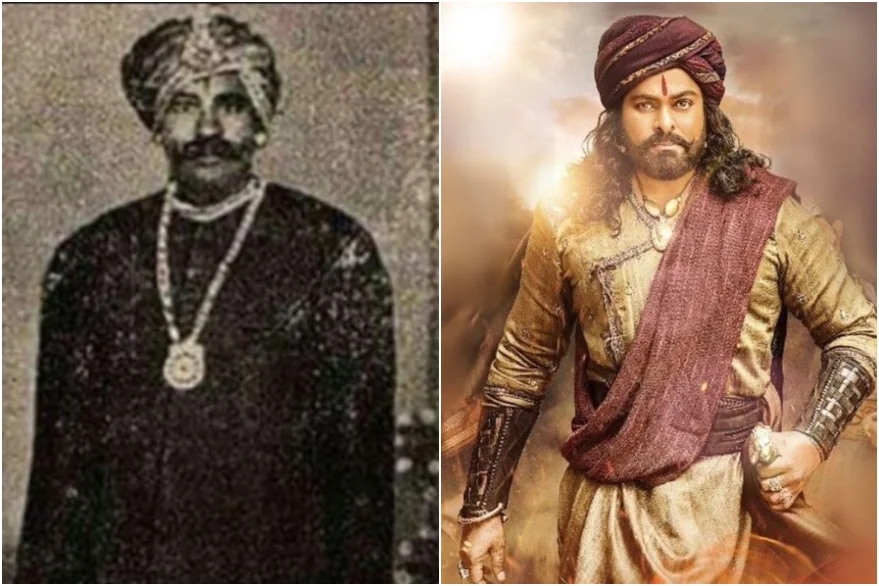
On 2 October 2019 , a film based on the life of Narsimha Reddy’s life named Sye Raa Narasimha Reddy was released . On 25 March 2021 Kurnool Airport at Orvakal was named as Uyyalawada Reddy Airport .
Caste: the historical facet peculiar to India

The caste system, the joint family system and the village system of life are often regarded as the three basic pillars of the historical Indian social system. The caste system as a form of stratification is peculiar to India. The caste system is an inseparable aspect of the Indian society. It is peculiarly Indian in origin and development. Caste is closely connected to Hindu philosophy and religion, customs and traditions, marriage and family, morals and manners, food and dress habits, occupations and hobbies. The caste system is believed to have divine origin and sanctions. The caste stratification of the Indian society has had its origin in the Chaturvarna system. According to the Chaturvana doctrine, the Hindu society was divided into four main varnas namely: the Brahmins, the Kshatriyas, the Vaishyas and the Shudras. The caste system owes its origin to the varna system.

Definition of Caste as given by some prominent sociologists:

MacIver and Page: “When status is wholly predetermined so that men are born to their lot without any hope of changing it, then the class takes the extreme form of caste.”

C. H. Cooley: “When a class is somewhat strictly hereditary, we may call it caste.”

D. N. Majumdar and T. N. Madan have said that caste is a ‘closed group’.

Perspectives on caste system in India:

The perspectives on the study of caste system include Indological or ideological, social anthropological and sociological perspectives. The Indological or ideological perspective takes its cue from the scriptures about the origin, purpose and future of the caste system, whereas the cultural perspective of the social anthropologist looks the origin and growth of caste system, its development, and the process of change in its structure or social structural arrangements as well as in the cultural system also view caste system not only as unique phenomenon found in India, but also in ancient Egypt, medieval Europe, etc. But the sociological perspective views caste system as a phenomenon of social inequality. Society, especially, Hindu social system has certain structural aspects, which distribute members in different social positions. It shows concerns with growth of the caste system. Many sociologists put forward their theory of caste with respect to Indian society. Some prominent sociologists in this regard are, G. H. Ghurye, Louis Dumont and M. N. Srinivas.

G. H. Ghurye theory of caste:

G. H. Ghurye is regarded as the father of Indian sociology. His understanding of caste in India can be considered historical, Indological as well as comparative. In his book, “Caste and race in India” he agrees with Sir Herbert Risley that “Caste is a product of race that came to India along with the Aryans”. According to him caste originated from race and occupation stabilized it. Ghurye explains caste system in India based on six distinctive characteristics:

1. Segmental division of society: Under caste system, society is divided into several small social groups called castes. Additionally, there are multiple divisions and subdivisions of caste system.

2. Hierarchy: According to Ghurye, caste is hierarchical. Theoretically, Brahmins occupy the top position ad Shudras occupy the bottom. The castes can be graded and arranged into a hierarchy on the basis of their social precedence.

3. Civil and religious disabilities and privileges: This reflects the rigidity of the caste system. In a caste system, there is an unequal distribution of disabilities and privileges among its members. While the higher castes enjoy all the privileges, the lower castes suffer from various types of disabilities.

4. Lack of unrestricted choice of occupation: The occupations in caste system are fixed by heredity and generally members are not allowed to change their traditional occupations. The higher caste members maintain their supremacy in their jobs and do not allow other caste group to join in the same occupation.

5. Restriction on food, drinks and social intercourse: Restriction on feeding and social intercourse are still prevalent in Indian society. There are two types of food I.e., Kacha (cooked) food and Pakka (raw) food upon which certain restrictions are imposed with regard to sharing.

6. Endogamy: Every caste insists that its members should marry within their own caste group.

Louis Dumont theory of caste:

Louis Dumont was a French Sociologist and Indologist. His understanding of caste lays emphasis on attributes of caste that is why; he is put in the category of those following the attributional approach to the caste system. Dumont says that caste is not a form of stratification but a special form of inequality, whose essence has to be deciphered by sociologists. Dumont identifies hierarchy as the essence of caste system. According to Dumont, Caste divides the whole Indian society into a larger number of hereditary groups, distinguished from each other and connected through three characteristics:

1. Separation on the basis of rules of caste and marriage,

2. Division of labor, and

3. Gradation of status.

He also put forward the concept of ‘pure’ and ‘impure’ which was widely seen in the Caste ridden society. The Brahmins were assigned with priestly functions, occupied the top rank in the social hierarchy and were considered “pure” as compared to other castes. The untouchables being “impure”, were segregated outside the village and were not allowed to drink water from the same wells from which the Brahmins did so. Besides this, they did not have any access to Hindu temples and suffered from various disabilities.

M. N. Srinivas theory of caste:

M. N. Srinivas was one of the first-generation Indian sociologists in post-Independence period. Srinivas approach to study of caste is attributional I.e., analyses caste through its attributes. He assigned certain attributes to the caste system. These are:

1. Hierarchy

2. Occupational differentiation

3. Pollution and Purity

4. Caste Panchayats and assemblies

5. Endogamy

Besides caste, Srinivas looks for yet another source or manifestation of tradition. He found it in the notion of ‘dominant caste’. He had defined dominant caste in terms of six attributes placed in conjunction:

Sizeable amount of arable land,

Strength of numbers,

High place in the local hierarchy,

Western education,

Urban sources of income and

Jobs in the administration

Of the above attributes of the dominant caste, the following two are important:

Numerical strength, and

Economic power through ownership of land

He also introduced the concept of “Brahmanisation” wherein the lower caste people imitate the lifestyle and habits of the Brahmins. This concept was further changed to “Sanskritisation”.

These are a few theories of caste system that prevailed before the rise of modern India owing to the revolutions undergone during the British rule.

The Green Revolution in India

Photo by Pixabay on Pexels.com

The great increase in production of food grains(like rice and wheat) due to the introduction of high yielding varieties,to the use of pesticides, and to bettter management techniques is known as the Green Revolution in India.
A part of a larger initiative by Norman Borlaug, green revolution in India was founded by M.S Swaminathan. The aim was to increase agricultural productivity in the developing world with the use of technology and agricultural research. The Green Revolution started in 1965 with the first introduction of High yielding variety(HYV)seeds in Indian agriculture. The end result of the Green Revolution was to make India self sufficient when it came to food grains. The Green Revolution in India was first introduced in Punjab in the late 1960s as a part of a development program issued by international donor agencies and the government of India. During the British Raj, India’s grain economy hinged on a unilateral relation of exploitation. The Green Revolution resulted in increased production of food grains (especially wheatand rice) and was in large part due to the introduction into developing countries of new, high-yielding varieties, beginning in the mid-20th century with Borlaug’s work. Borlaug developed a short-stemmed (“dwarf”) strain of wheat that increased crop yields. Previously, taller wheat varieties would break under the weight of the heads if production was increased by chemical fertilizers. Borlaug’s short-stemmed wheat could withstand the increased weight of fertilized heads.Wheat production in Mexico multiplied threefold owing to this and other varieties.Following Borlaug’s success in Mexico, the Indian and Pakistani goverments requested his assistance. Borlaug began his agricultural revolution in Asia. With India and Pakistan facing food shortages due to rapid population growth, the importation of Borlaug’s dwarf wheat in the mid-1960s was a key element if Green Revolution in India and helped the country to become agriculturally self sufficient.

What are the main features of Green Revolution?
1) Introduction of new and high yielding variety of seeds
2) Increased use of fertilizers, pesticides and weedicides to reduce agricultural losses.
3) Increased application of fertilisers to enhance agricultural productivity.
4) Use of latest agricultural machinery like tractors, threshers and harvesters etc.
5) Use of disease resistant varieties so that production will enhance.

Pros and cons of Green Revolution
Pros:
1) increase in agricultural production
2) reduction in import of food grains
3) increase quality of food
4) increase tolerance to pests, diseases and weeds
5) prosperity of farmers and helps in rural employment
Cons:
1) expensive seeds
2) ecological problems like soil erosion, waterlogging, desertification etc.
3) creates lack of biodiversity
4) health impacts from increased pesticides and fertilisers
5) deforestation

The White Revolution in India

Photo by Engin Akyurt on Pexels.com

The revolution associated with a sharp increase in milk production in the country is called the White Revolution in India also known as Operation Flood. White revolution period intended to make India a self-dependent nation in milk production.
Verghese Kurien ,the founder of Amul introduced White revolution in India. He is known as the father of white revolution in India.
Operation Flood started the White Revolution in India and made our country self-sufficient in milk and this was achieved entirely through the cooperative structure.One of the largest of its kind, the programme objective was to create a nationwide milk grid. It resulted in making India one of the largest producers of milk and milk products, and hence is also called the White Revolution of India. It also helped reduce malpractices by milk traders and merchants. The White Revolution in India was successful in transforming the country from a milk deficient nation to a world leader in milk production. It helped dairy-farming become India’s largest self-sustaining industry and also, India’s largest rural employment provider.

Advantages and disadvantages of white revolution
Advantage:
1) ended imports of milk solids in India.
2) India started exporting milk powder to many foreign nations.
3) dairy industries and infrastructures modernised and expanded.
4) more employment in the field of dairy farming.
5) dairy needs are met locally.
Disadvantage:
1) since livestock are prone to many diseases, milk obtained from them during such conditions leads to disease spreading.
2) adulteration of milk and dairy products.

Does language affect thought?

What is language? Linguists, psycholinguists, neurologists, evolutionary biologists, and philosophers have all tried to answer this question. ‘Language’ is often used interchangeably with ‘communication’, but they are not the same. Animals can communicate with each other, but they can’t be said to have language. Language, especially human language is unique and radically different from other types of tools of communication because of its immense vocabulary, ordered structure, use of metaphor and analogy, and syntactic flexibility. Human language can, thus, be broadly defined as an amalgam of lexicon, syntax, and semantics. Our identity is influenced by the language we speak. Identity can be broadly classified into ‘personal’ and ‘collective’ identity. Personal identity is, basically, a definition of yourself, and collective identity is how you define yourself in relation to others. Our identity is defined by myriad factors such as our beliefs, cognition, perception, culture, and tradition. The language we speak influences these factors and thus influences and cultivates our personal and collective identity.

Language affects the way we think. There is a hypothesis in linguistics known as linguistic relativity, also known as the Sapir-Whorf or the Whorf hypothesis. It concerns the relationship between language and thought. According to the Whorfian hypothesis, the language one speaks influences one’s cognition and perception of the world and thus people’s perception is relative to their spoken language. Nuances and idiosyncrasies in our language affect the way we communicate with and perceive the world, thus influencing our perception and cognition. There is empirical evidence available that establishes a link between language and thought, for example, the study of Chinese bilinguals and dialectical thinking. Eastern cultures and languages are proven to promote dialectical thinking. A group of researchers conducted a study in 2013 to see if Chinese bilinguals displayed different levels of dialectical thinking when communicating in different languages. The study concluded that the Chinese bilinguals displayed higher levels of dialectical thinking when primed by the Chinese language than with the English language (Chen et al., 2013).

The study regarding the gender of words and their effect on the speaker’s perception and cognition also helps establish a link between language and thought. The study conducted in 2003 asked German and Spanish speakers to describe objects that have opposite gender assignments in those 2 languages. When the speakers were asked to describe a “key” which is masculine in German and feminine in Spanish, German speakers used words like “hard”, “jagged”, “heavy” whereas Spanish speakers used words like “delicate”, “intricate”, and “lovely”. When asked to describe a “bridge”, feminine in German and masculine in Spanish, German speakers used words like “elegant” and “fragile” whereas Spanish speakers used “strong” and “sturdy” (Boroditsky 6).

These studies, to some extent, prove the Whorfian hypothesis. We think in our primary language, and we alter our thinking to fit our language. We can think without language, but we need language to know that we are thinking. Language thus influences our cognition and thought processes.

Language affects the way we perceive the world. Perception is subjective. The same objects evoke different meanings for different people and thus the way we experience the environment around us also differs from person to person due to different individual values, beliefs, culture, and language. Lera Boroditsky’s work with the Pormpuraaw community shows how language can influence a person’s perception of the world. The pormpuraaw community of aboriginal Australia think about time and space very differently. Their language does not use relative spatial terms like ‘left’ and ‘right’ but instead uses absolute directional terms like ‘north’, ‘south’, ‘south-east’. When asked to arrange cards that depicted temporal progression in the correct order, the Pormpuraawans sometimes arranged the cards from right to left and sometimes left to right. Their decision was not random but was instead dependent on their spatial orientation. If they were facing south the cards would be arranged from left to right and when facing east the cards would come towards the body and so on, thus always arranging the cards from east to west. The Pormpuraawans superior knowledge of spatial orientation stems from their immense vocabulary dedicated to describing time and space (Boroditsky and Gaby, 2010).

Another study was conducted in 2007 that establishes a link between language and perception. The study tested Russian speakers and English speakers on their ability to discriminate between different shades of blue. The result of the 2007 study indicated that the Russian speakers were faster to discriminate between the 2 shades of blue than the English speakers because the Russian language describes a clear distinction between light blue and dark blue unlike the English language (Winawer et al., 2007).

Thus, a person’s language can immensely influence how he views objects, colours, and even fundamental concepts like time and space.

Language is a carrier of culture and tradition. You communicate through language and when you communicate you pass and receive information that reflects your upbringing, your culture, history, and tradition. In a community, the history and culture of that community are passed down generation after generation through a shared language. This fact makes the task of preserving and saving language even more cardinal. When a language dies, it’s not just mere words that go out of existence. The history, heritage, tradition, and culture attached to that language also cease to exist. The Mahabharata and Ramayana were oral stories before they were written, same with the Iliad and Odyssey. The accumulated body of knowledge of a community dies when its language dies. If you lose your language, you also lose a sense of your personal and collective identity because “language carries culture, and culture carries the entire body of values by which we come to perceive ourselves and our place in the world” (Thiong’O, 118).

Humans are social creatures. We have an innate need to communicate with others and it is through communication that we come to define ourselves, our personal identity, and our place in the world, our collective identity. Language is located at the epicentre of our identity as it is through language we communicate with others. Our attachment to language thus cultivates our identities. Our personality, our individuality, our ego, and our existence are defined by the mere words we utter.

Works cited

Chen, Sylvia Xiaohua, et al. “Does Language Affect Personality Perception? A Functional Approach to Testing the Whorfian Hypothesis.” Journal of Personality, vol. 82, no. 2, 2013, pp. 130–43. Crossref, doi:10.1111/jopy.12040.

Boroditsky, Lera. “HOW DOES OUR LANGUAGE SHAPE THE WAY WE THINK? | Edge.Org.” Edge, 09–11-06, http://www.edge.org/conversation/lera_boroditsky-how-does-our-language-shape-the-way-we-think.

Boroditsky, Lera & Gaby, Alice. (2010). Remembrances of Times East. Psychological science. 21. 1635-9. 10.1177/0956797610386621.

Winawer, J., et al. “Russian Blues Reveal Effects of Language on Color Discrimination.” Proceedings of the National Academy of Sciences, vol. 104, no. 19, 2007, pp. 7780–85. Crossref, doi:10.1073/pnas.0701644104.

Thiong’O, Wa Ngugi. “The Language of African Literature.” Decolonising the Mind: The Politics of Language in African Literature, James Currey Ltd / Heinemann, 2011, pp. 109–27.

The Anthropocene

The Earth is divided into geological time scales, each denoting events that occurred in Earth’s geological history, by scientists. The scale begins with the formation of the Earth about 4.5 billion years ago, known as “Hadean”. The current geological epoch is known as the “Holocene”, which began approximately 11,700 years ago. The Holocene epoch is characterized by the rapid proliferation and spread of the human species on Earth. The “Anthropocene” is a proposed epoch that follows the Holocene and marks the period when human activity has started to have a significant impact on the planet’s ecosystem. The term “Anthropocene” was first proposed by the Dutch chemist Paul J. Crutzen and American biologist Eugene F. Stoermer (Crutzen & Stoermer 2000) to denote the current period in Earth’s geological history wherein, instead of the environment shaping humans it is the humans who are shaping and drastically altering the environment.

The Anthropocene, according to Steffen et al. is divided into three periods (616). It begins with the industrial revolution, wherein man first harnessed the energy of fossil fuels, coal, and oil and gas. The extensive use of the newfound wealth of energy in the form of fossil fuels stamped a significant imprint on Earth’s environment, evident in the increase in deforestation and rise in the concentration of methane, carbon dioxide, and nitrous oxide in Earth’s atmosphere (616). The second period, from 1945-to 2015, is known as the “great acceleration”. This period is characterized by an exponential increase in the impact of humans on the Earth system. An increase in the population of humans and an increase in industrialization resulted in a substantial increase in the concentration of greenhouse gases in Earth’s atmosphere (618). The third period, from 2015 onwards, is known as “stewards of Earth’s system”. This period is marked by the recognition of Anthropogenic influences on the Earth system and the subsequent filtration of this growing awareness on decision-making processes (618).

The major problem represented by the Anthropocene is the radical shifts in Earth’s temperature and biodiversity. These shift include global warming, extinction of species, habitat loss, and changes in the chemical composition of oceans and soils. Other probelms inlclude sustenance of human vices like greed, indifference, and intemperance.

There are, according to Steffen et al., three philosophical approaches to dealing with these problems. Firstly, is the business-as-usual philosophy (619), which employs a laissez-faire mindset when dealing with the changing global environment. The second is mitigation which is “based on the recognition that the threat of further global change is serious enough that it must be dealt with proactively” (619). And the third option is geoengineering (619), which attempts to solve the problem of climate change with technology.

Works cited

Crutzen, Paul J. and Eugene F. Stoermer 2000. The “Anthropocene.” Global Change Newsletter (41): 17–18.

Steffen, Will, et al. “The Anthropocene: Conceptual and Historical Perspectives.” Philosophical Transactions of the Royal Society A: Mathematical, Physical and Engineering Sciences, vol. 369, no. 1938, 2011, 842–67. Crossref, https://doi.org/10.1098/rsta.2010.0327.

Steffen, Will, Paul J. Crutzen, et al. “The Anthropocene: Are Humans Now Overwhelming the Great Forces of Nature.” AMBIO: A Journal of the Human Environment, vol. 36, no. 8, 2007, 614–21. Crossref. https://doi.org/10.1579/0044-7447(2007)36[614:taahno]2.0.co;2

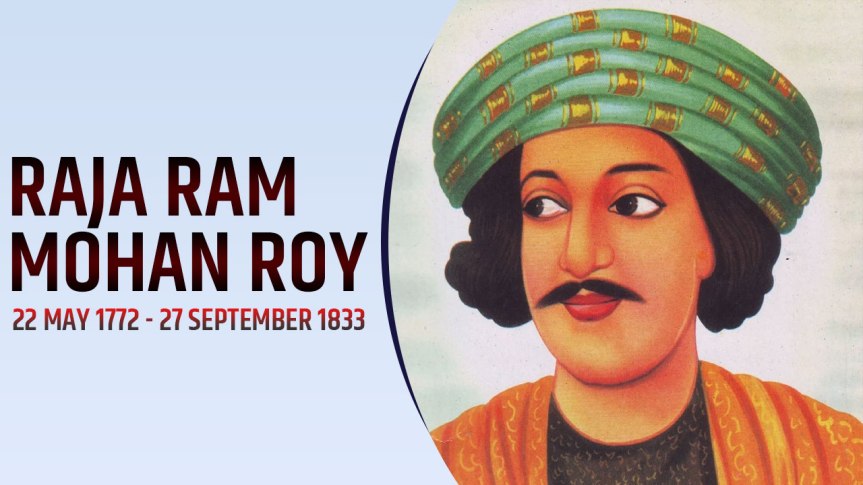
Raja Ram Mohan Roy

Raja Ram Mohan Roy was the father of Modern India’s Renaissance and a tireless social reformer who inaugurated the age of enlightenment and liberal reformist modernisation in India.

Life:

  • Raja Ram Mohan Roy was born on 22nd May 1772 in Bengal. His early education included the study of Persian and Arabic at Patna where he read the Quran, the works of Sufi mystic poets and the Arabic translation of the works of Plato and Aristotle.
  • From 1803 to 1814, he worked for East India Company as the personal diwan first of Woodforde and then of Digby.
  • In 1814, he resigned from his job and moved to Calcutta in order to devote his life to religious, social and political reforms.
  • In November 1830, he sailed for England to be present there to counteract the possible nullification of the Act banning Sati.
  • Ram Mohan Roy was given the title of ‘Raja’ by the titular Mughal Emperor of Delhi, Akbar II whose grievances the former was to present before the British king.
  • In his address, entitled ‘Inaugurator of the Modern Age in India,’ Tagore referred to Ram Mohan as ‘a luminous star in the firmament of Indian history’.

Ideology:

  • Ram Mohan Roy was greatly influenced by western modern thought and stressed on rationalism and modern scientific approach.
  • He believed that religious orthodoxies have become causes of injury and detrimental to social life and sources of trouble and bewilderment to the people, instead of tending to the amelioration of the condition of society.
  • He believed in social equality of all human beings and thus was a strong opposer of the caste system.
  • Ram Mohan was attracted to Islamic monotheism. He said that monotheism is also the fundamental message of Vedanta.
  • His idea of a single, unitarian god was a corrective to the polytheism of orthodox Hinduism and to Christian trinitarianism. He believed that monotheism supported one universal model for humanity.
  • Raja Ram Mohan Roy believed that unless women were freed from unhuman forms of oppression like illiteracy, child marriage, sati, purdah, Hindu society can not progress.
  • He characterised sati as the violation of every humane and social feeling and as symptomatic of the moral debasement of a race.

Contributions

Religious reforms:

  • Raja Ram Mohan Roy’s first published work Tuhfat-ul-Muwahhiddin (a gift to deists) published in 1803 exposed irrational religious beliefs and corrupt practices of the Hindus as the belief in revelations, prophets, miracles etc.
  • In 1814, he founded Atmiya Sabha in Calcutta to campaign against idolatry, caste rigidities, meaningless rituals and other social ills.
  • He criticized the ritualism of Christianity and rejected Christ as the incarnation of God. In Precepts of Jesus (1820), he tried to separate the moral and philosophical message of the New Testament, which he praised, from its miracle stories.

Social reforms:

  • Raja Ram Mohan Roy conceived reformist religious associations as instruments of social and political transformation.
    • He founded the Atmiya Sabha in 1815, the Calcutta Unitarian Association in 1821, and the Brahmo Sabha in 1828 which later became the Brahmo Samaj.
    • He campaigned against the caste system, untouchability, superstitions and use of intoxicants.
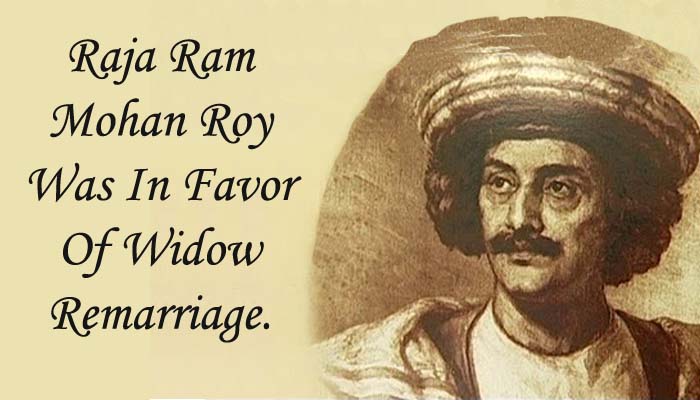
    • He was well known for his pioneering thought and action on the emancipation of women and especially on the abolition of sati and widow remarriage.
    • He attacked child marriage, illiteracy of women and the degraded state of widows and demanded the right of inheritance and property for women.

Educational reforms:

  • He supported David Hare’s efforts to the Hindu College in 1817, while Roy’s English school taught mechanics and Voltaire’s philosophy.
  • In 1825, he established Vedanta college where courses in both Indian learning and Western social and physical sciences were offered.

Economic and Political Reforms:

  • Civil liberties: Roy was impressed and admired the British system of constitutional government for the civil liberties it gave to the people. He wanted to extend the benefits of that system of government to Indian people.

Press freedom: 

Through his writings and activities, he supported the movement for free press in India. When press censorship was relaxed by Lord Hastings in 1819, Ram Mohan found three journals- The Brahmanical Magazine (1821); The Bengali weekly, Samvad Kaumudi (1821); and the Persian weekly, Mirat-ul-Akbar.

Education – passionate studies |5 simple ways

Education is an essential thing in our daily life. According to the growth of society, education must be provided to every citizen. The new world is mysterious, all things that exist had to be known to every people education ensures that. So whatever we want to be we should know about that.

Findings of great peoples, Technological know-how, awareness of the environment, History, etc are the main components of education. An educated person must show good character they were intelligent and efficient. They can build up our economy in a good manner

Nowadays students are struggling with exam results. They were worried about the marks they got. Parents also wanted marks from children. However, studying with understanding makes a perfect education. There are a few tips for good studies.

1. Awareness Of The Chapters

The student must have a correct idea of the chapters including the basic needs. It will increase our energy to study new things.

2. Making The Day For Studies

Mornings are a good time for making good decisions they may whisper through our ears for an entire day. Put a goal for the day in the mornings and we will begin to work toward that.

3. Visualization

When we were teaching or studying, try to imagine the concepts as well it will lead to an incredible memory of the topics.

4. Setting Our Mind

Setting our minds before studies is the best way to attain knowledge. When we think that we are free from anything, nothing can disturb us from our goals. Set our minds to study and make differences

5. Concluding Sentences

When we are willing to study a paragraph, make the important keywords from that. It will help you to study shortly and easily .

All about Civil Services Exam

UPSC has declared the final result for Civil Services 2021 in which Shruti Sharma, Ankita Agarwal and Gamini Singla have secured the first, second and third rank respectively.

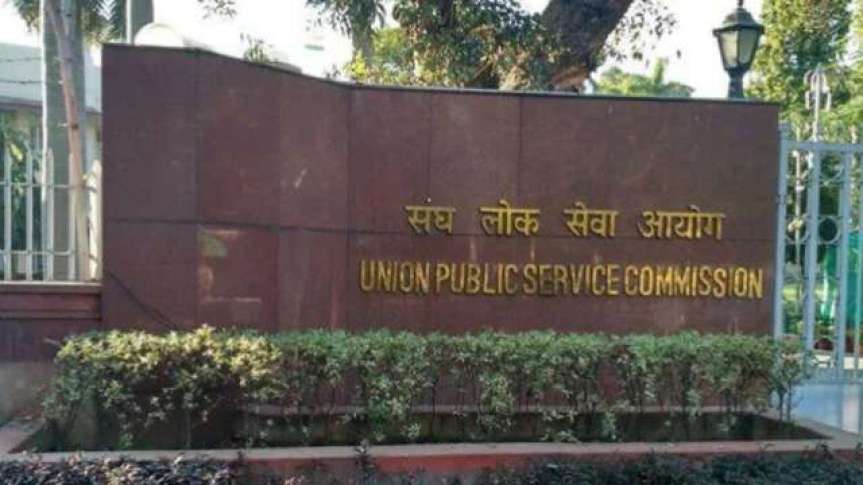
Civil Services Examination (CSE) is one of the examinations conducted by the Union Public Service Commission to recruit suitable candidates into civil services of India including IAS, IPS, IFS, and other allied services.

The prescribed UPSC exam eligibility criteria are that the candidate should be a graduate and must have attained 21 years of age. There is also an upper age limit and a number of attempts restriction based on the candidate’s category. Generally, the upper age limit is 32 years, but the commission gives age relaxation for OBC, SC, ST and PH candidates.

The UPSC exam is held in three stages. The three stages are Prelims, Mains and Interview/personality test. The prelims exam consists of two papers of objective type questions. Paper 1 is GS paper Paper 2 is CSAT (Qualifying in nature- 33%). The mains exam consists of nine descriptive type papers. The last stage consists of an interview round with the UPSC board. Candidates should clear each round in order to qualify for the subsequent round. Final merit is based on combined marks obtained in Mains and Interview.

In Mains there is one Essay Paper, 4 GS papers and 2 Papers for Optional Subject (all of 250 marks) which a candidate has to select from a prescribed list according to his/her interest. Some of the optional subjects are – Agriculture, Animal Husbandry and Veterinary Science, Anthropology, Botany, Chemistry, Civil Engineering, Commerce and Accountancy, Economics Electrical Engineering, Geography, Geology, History, Law, Management, Mathematics, Political Science and International Relations, Public Administration, Sociology etc.

  • PAPER-I: Essay: 
  • PAPER-II: General Studies-I: Indian Heritage and Culture, History and Geography of the World and Society. 
  • PAPER-III: General Studies- II: Governance, Constitution, Polity, Social Justice and International Relations. 
  • PAPER-IV: General Studies-III: Technology, Economic Development, Biodiversity, Environment, Security and Disaster Management. 
  • PAPER-V: General Studies- IV: Ethics, Integrity, and Aptitude 
  • Paper-VI and VII: Optional Paper-I and Optional Paper-II

There are to more papers which are qualifying in nature.

Daylight Saving Time (DST)

Daylight Saving Time (DST) is the practice of setting the clocks forward one hour from standard time during the summer months, and back again in the fall, in order to make better use of natural daylight. The purpose of doing so is that people will have one more hour of daylight in the afternoon and evening during the warmer season of the year.

The daylight saving time is followed in over 70 countries on various dates. In the Northern Hemisphere, Daylight Saving Time usually starts in March-April and ends in September-November. India does not follow daylight saving time; countries near the Equator do not experience high variations in daytime hours between seasons. It is mainly preferred in countries located around the Arctic Circle, as they experience large variation in daylight in the course of the year.

Several countries, including Australia, Great Britain, Germany, and the United States, adopted summer Daylight Saving Time during World War I to conserve fuel by reducing the need for artificial light.

A century ago, when DST was introduced, more daylight did mean less use of artificial light. But modern society uses so many energy-consuming appliances all day long that the amount of energy saved is negligible.

DST clock shifts sometimes complicate timekeeping and can disrupt travel, billing, record keeping, medical devices, and sleep patterns. Computer software generally adjusts clocks automatically.

There is also a disadvantage of DST which includes disruption of the body clock or circadian rhythm.

  • Circadian rhythm is the 24-hour cycle that tells our bodies when to sleep, rise, and eat—regulating many physiological processes.
  • Internal body clock is affected by environmental cues, like sunlight and temperature, and determines whether one feels wide-awake and energized or tired.

Biodiversity – Types and causes of loss

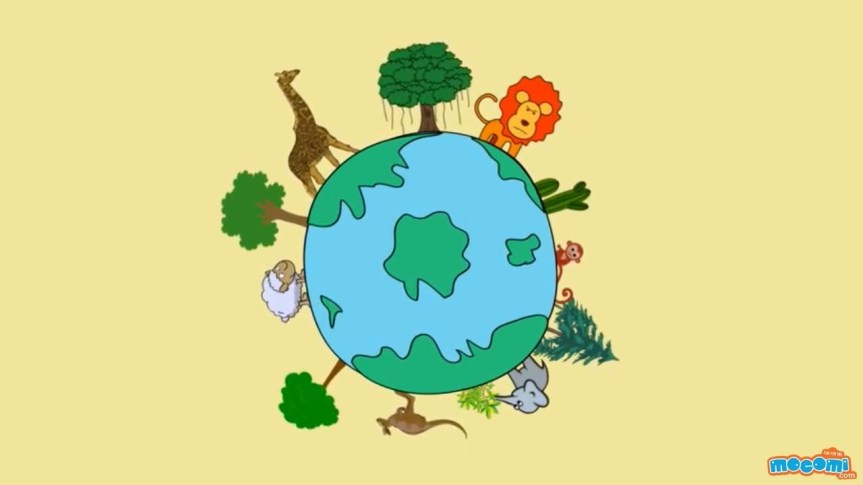
Diversity at all the levels of the biological organisation ca be classified into-

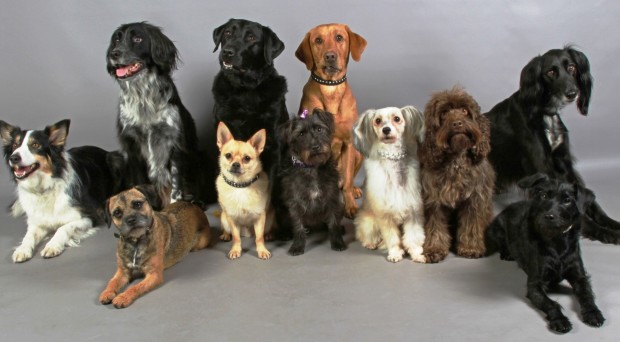
(i) Genetic diversity: A single species might show high diversity at the genetic level over its distributional range. India has more than 50,000 genetically different strains of rice and 1,000 varieties of mango. 

genetic diversity

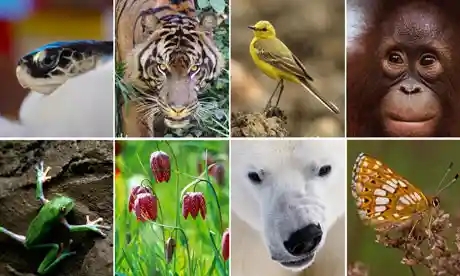
(ii) Species diversity: The diversity at the species level; for example, the Western Ghats have a greater amphibian species diversity than the Eastern Ghats. 

Species Diversity

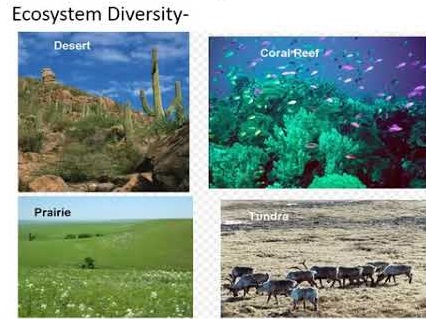
(iii) Ecological diversity: At the ecosystem level, India, for instance, with its deserts, rain forests, mangroves, coral reefs, wetlands, estuaries, and alpine meadows, has a greater ecosystem diversity than a Scandinavian country like Norway. 

Ecological diversity

Patterns of Biodiversity

  1. Latitudinal gradients: Species diversity decreases as we move away from the equator toward the poles. A forest in a tropical region like Equador has up to 10 times as many species of vascular plants as a forest of equal area in a temperate region like the Midwest of the USA.

What is so special about tropics that might account for their greater biological diversity?

(a) Speciation is generally a function of time, unlike temperate regions subjected to frequent glaciations in the past, tropical latitudes have remained relatively undisturbed for millions of years and thus, had a long evolutionary time for species diversification, 

(b) Tropical environments, unlike temperate ones, are less seasonal, relatively more constant and predictable. Such constant environments promote niche specialisation and lead to a greater species diversity

(c) There is more solar energy available in the tropics, which contributes to higher productivity; this in turn might contribute indirectly to greater diversity.

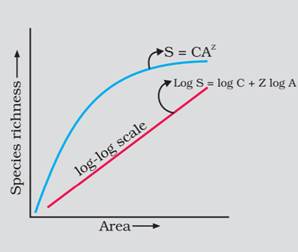
  1. Species-Area relationships: Within a region species richness increases with increasing explored area, but only up to a limit. The relation between species richness and area for a wide variety of taxa is a rectangular hyperbola.

log S = log C + Z log A,     where,

S= Species richness 

A= Area 

Z = slope of the line (regression coefficient) 

C = Y-intercept

Causes of biodiversity losses 

The accelerated rates of species extinctions that the world is facing now are largely due to human activities. There are four major causes ( ‘The Evil Quartet’ )

(i) Habitat loss and fragmentation

(ii) Over-exploitation

(iii) Alien species invasions: When alien species are introduced unintentionally or deliberately for whatever purpose, some of them turn invasive, and cause decline or extinction of indigenous species

(iv) Co-extinctions: When a species becomes extinct, the plant and animal species associated with it in an obligatory way also become extinct. 

Black hole – The basics

A black hole is not really an empty hole or space. Black holes are points in space that are so dense they create deep gravity sinks.

It is formed by a death of a massive star. A black hole takes up zero space but does have mass, that used to be a star. And black holes get more massive as they consume matter near them.

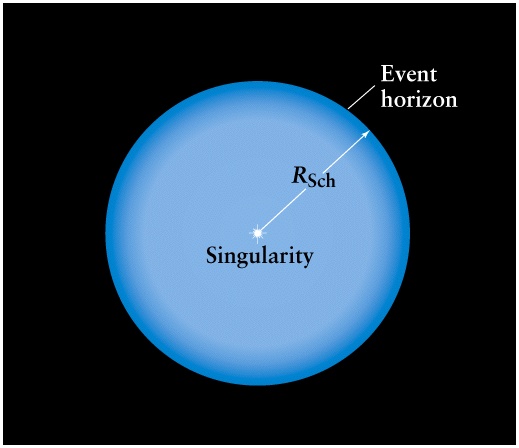
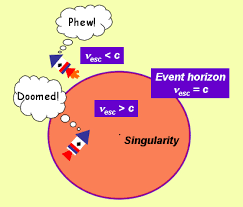
There’s a boundary at the edge of a black hole called the event horizon, which is the point of no return — any light or matter that crosses that boundary is sucked into the black hole. It would need to travel faster than the speed of light to escape, which is impossible.

Event Horizon and Singularity

When a massive star (more than 8 times bigger than Sun) runs out of nuclear fuel in its core hen it’s gravity causes the core to collapse upon itself. This huge weight of its constituent matter falling in compresses the dying star to a point of zero volume and infinite density– called the singularity.

A black hole cannot be observed but only detected by the effects of its enormous gravitational fields on nearby matter.

In April 2019, the scientists at the Event Horizon Telescope project released the first-ever image of a black hole.

Supermassive black holes are found at the centre of most galaxies, including our own Milky Way. The one in our galaxy is called Sagittarius A*.

Interesting Facts-

If our Sun were suddenly replaced by a black hole with Mass equal to that of sun, the orbits of the planets wouldn’t change.

If you travelled close to the black hole, you could escape, as long as you don’t enter the event horizon.

If you entered the black hole, you could still see everything outside, since light can enter a black hole.

You wouldn’t notice anything special about the event horizon, since it isn’t a solid surface.

Once you enter the event horizon, you will pulled into the singularity.

UGC Norms for Dual & Joint Degrees in India

University Grants Commission (UGC) came into existence on 2nd December, 1953. It became a statutory body by an Act of Parliament in 1956, for the coordination, determination and maintenance of standards of teaching, examination and research in university education.

Recently, the UGC has released Academic Collaboration between Indian and Foreign Higher Education Institutions to offer Joint Degree, Dual Degree, and Twinning Programmes Regulations, 2022. 

Under these regulations collaborating institutes will be allowed to offer three kinds of programmes — twinning, joint degrees and dual degrees.

Dual Degree Programmes: The approved amendments include a provision for “dual degree programmes” — both the Indian and foreign institutions will give separate and simultaneous degrees for a course of the same discipline, and at the same level.

Easing Regulation: Indian universities that meet a minimum academic standard will not need UGC’s permission to offer such programmes.

Joint Degrees: Students enrolling for these programmes will have to go abroad to earn credits, but they will not have to seek admission separately while doing so.

In the draft amendments, foreign partner institutions are required to be among the world’s top 1,000 in global rankings.

Dual Degrees: For dual degrees, students will have to complete at least 30% of their course credit at the foreign institution.

  • The degrees awarded by both the Indian and foreign institutions will indicate the credits earned at the respective institutions.
  • At the end of the course, the student will be awarded two degrees, separately and simultaneously, by the Indian and foreign institution.

Twinning Arrangement: A student can study a programme partly in India and partly in a foreign university, but the diploma or degree will be awarded just by the Indian university.

  • Students will have to complete up to 30% of the course’s credits at the foreign institution by means of an exchange programme.

Exception: The new regulations are not applicable to programmes offered online and in the open and distance learning mode.

Significance: The new regulation will prompt Indian students to get a foreign degree and enhance their employability in the international market.

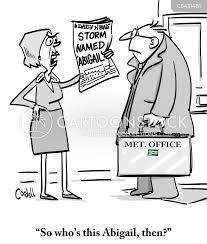
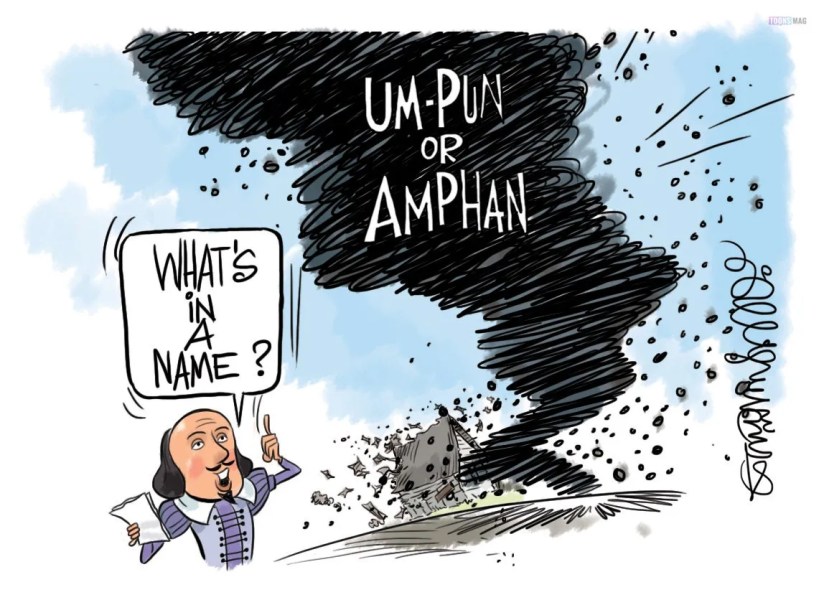
Cyclones – Why and How are they named?

Have you ever wondered how do scientists decides the name for cyclones? Read the whole article to learn it.

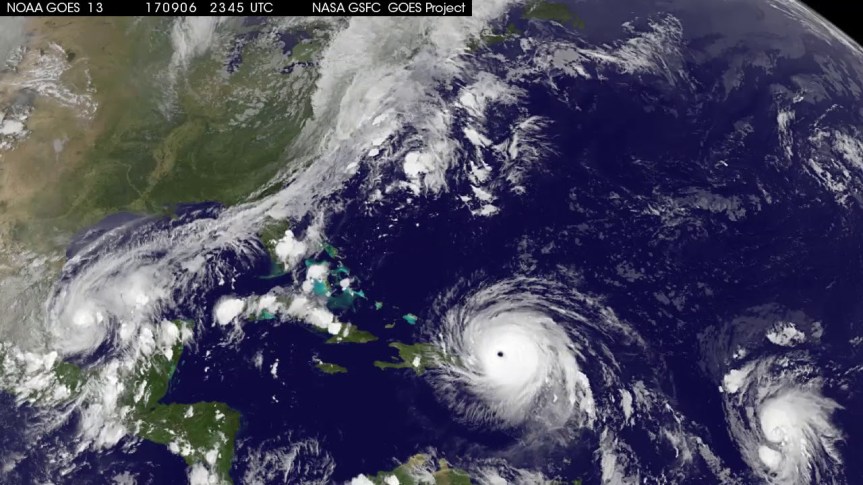
Weather forecasters give each tropical cyclone a name to avoid confusion. Each year, tropical cyclones receive names in alphabetical order. Women and men’s names are alternated. The name list is proposed by the National Meteorological and Hydrological Services (NMHSs) of WMO Members of a specific region, and approved by the respective tropical cyclone regional bodies at their annual/bi-annual sessions.

HISTORICAL BACKGROUND

The practice of naming storms (tropical cyclones) began years ago in order to help in the quick identification of storms in warning messages because names are presumed to be far easier to remember than numbers and technical terms. In the beginning, storms were named arbitrarily. An Atlantic storm that ripped off the mast of a boat named Antje became known as Antje’s hurricane. Then the mid-1900’s saw the start of the practice of using feminine names for storms.

In the pursuit of a more organized and efficient naming system, meteorologists later decided to identify storms using names from a list arranged alphabetically. Thus, a storm with a name which begins with A, like Anne, would be the first storm to occur in the year. By the end of the 1900’s, forecasters started using male names for those forming in the Southern Hemisphere.

Since 1953, Atlantic tropical storms have been named from lists originated by the National Hurricane Centre. The original name lists featured only women’s names. In 1979, men’s names were introduced and they alternate with the women’s names.

Six lists are used in rotation. Thus, the 2019 list will be used again in 2025. The names of tropical cyclones over the north Indian Ocean is however not repeated. Once used, it will cease to be used again.

Why are cyclones given a name ?

Naming of Tropical Cyclones (TCs) helps the scientific community, disaster managers, media and general masses to

  • identify each individual cyclone.
  • use of short, distinctive given names in written as well as spoken communications is quicker and less subject to error than the older more cumbersome latitude-longitude identification methods.
  • create awareness of its development.
  • remove confusion in case of simultaneous occurrence of TCs over a region
  • rapidly and effectively disseminate warnings to much wider audience

These advantages are especially important in exchanging detailed storm information between hundreds of widely scattered stations, coastal bases, and ships at sea.

Criteria for name selection

  • The proposed name should be neutral to (a) politics and political figures (b) religious believes, (c) cultures and (d) gender
  • Name should be chosen in such a way that it does not hurt the sentiments of any group of population over the globe
  • It should not be very rude and cruel in nature
  • It should be short, easy to pronounce and should not be offensive to any member
  • The maximum length of the name will be eight letters
  • The proposed name should be provided along with its pronunciation and voice over

Protocol to Select a name for a cyclone

For north Indian Ocean including Bay of Bengal and Arabian Sea, the RSMC, New Delhi assigns the name to tropical cyclones following a standard procedure.

The naming of the tropical cyclones over the north Indian Ocean commenced from September 2004. This list contained names proposed by then eight member countries of WMO/ESCAP PTC, viz., Bangladesh, India, Maldives, Myanmar, Oman, Pakistan, Sri Lanka and Thailand. A new list containing 169 names has been made available in 2020.

Source : Regional Specialised Meteorological Centre, New Delhi and World Meteorological Organisation

Service Profile of an IAS Officer

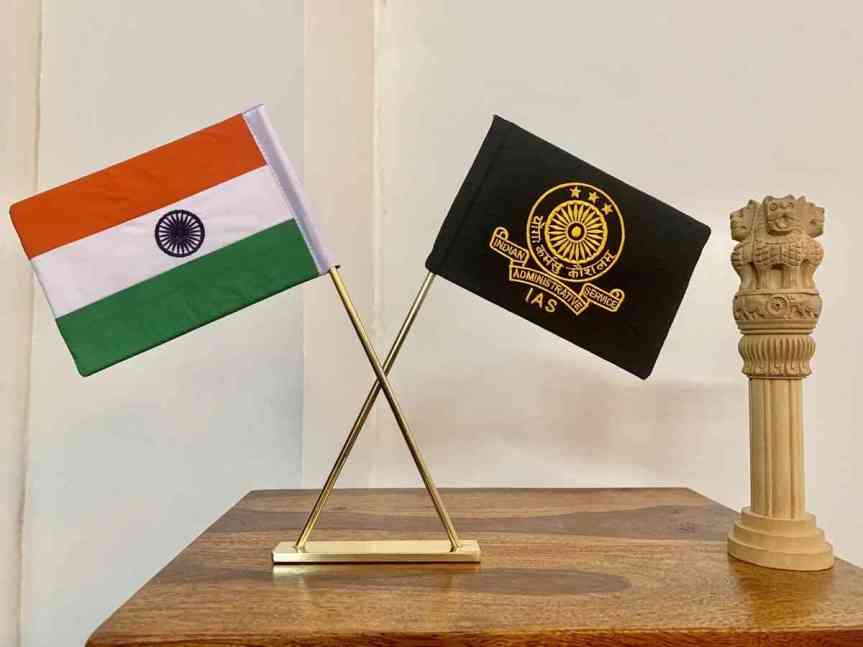
Indian Administrative Service (IAS), the premier service of the Government of India was constituted in 1946. Prior to that Indian imperial Service (1893-1946) was in force. As on 1.1.2013, sanctioned strength of IAS was 6217, comprising of 4313 posts to the filled by direct recruits and 1904 posts to be filled by promotion /appointment of State Civil Services officers/ Non-State Civil Service officers. The civil services have been a hallmark of governance in India. The Constitution provides that without depriving the States of their right to form their own Civil Services, there shall be an All India service recruited on an All- India basis with common qualifications, with uniform scale of pay and the members of which alone could be appointed to these strategic posts throughout the Union.”
No wonder Sardar Vallabhbhai Patel, one of the eminent leaders of the freedom struggle, referred to the. ICS as ‘the steel frame. Of the ‘country. The civil services, therefore, represent the essential spirit of our nation — unity in diversity.

Recruitment

UPSC – Civil Services Exam

At present there are three modes of recruitment to IAS viz

(i) Through Civil Services Examination conducted by UPSC every year;

(ii) Through promotion of State Civil Service officers to IAS

(iii) Through selection of non – State Civil Service officers.

Roughly 66 (1/3)% posts are meant for Direct Recruitment and 33 (1/3%) are
meant for promotion quota.

Training

LBSNAA

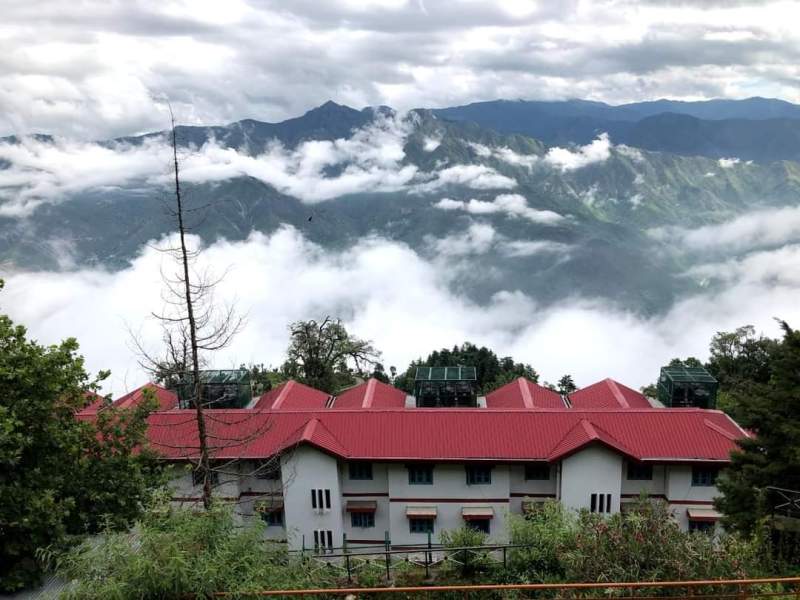
Both Direct Recruit as well as promotee IAS officers are imparted probationary training at Lal Bahadur Shastri National Academy of Administration (LBSNAA). After completion of successful probation, they are confirmed. Also, there is a Provision for mandatory Mid-career Training for IAS officers spread across the entire service span.

Functions of IAS officer

IAS officer is responsible for the maintenance of law and order, revenue administration and general administration in the area under him. His functions broadly include:


(i) Collection of revenue and function as Courts in revenue matters;
(ii) Maintenance of law and order;
(iii) Function as Executive Magistrate;
(iv) Function as Chief Development Officer (CDO)/District Development Commissioner;
(v) Supervision of implementation of policies of State Government and Central Government;
(vi) To travel to places to oversee the implementation of policies;
(vii) Supervision of expenditure of public funds as per norms of financial propriety;
(viii) In the process of policy formulation and decision making, IAS officers at various levels like Joint Secretary, Deputy Secretary etc. make their “contributions and the give final shape to policies;
(ix) To ‘handle the daily affairs ‘of the government, including framing and implementation of policy in ‘consultation with the minister-in-charge of the concerned Ministry.

Source : DoPT website