As consumers of various media, have you ever questioned who owns most of the media you come across? With some quick research, you will be able to learn that a lot of the media companies you know belong to the same group of media owners. This phenomenon of media companies falling into the control of fewer individuals and organizations is known as Media Consolidation. We also call it Media Conglomeration or Concentration of Media Ownership. Comcast, The Walt Disney Company, AT&T, and Paramount Pictures are the largest media conglomerates in the world today.
The media industry can be a monopolistic or oligopolistic structure. If it is a monopoly, a single firm dominates a particular industry. Microsoft had an antitrust suit filed against it in 1998, accusing it of monopolistic practices that made it very difficult for users to uninstall Internet Explorer and use any other browser on their computer, monopolizing the personal computer market. Google has also faced lawsuits against its monopoly over all other search engines. Oligopoly, on the other hand, refers to a few firms dominating an industry. When a few firms control the media industry with large-scale companies getting rid of competitors by buying or forcing them out, it is known as media oligopoly. In such an industry structure, a lot of mergers occur. When a media company buys out another company for control of their resources to increase revenue and viewership, it is a media merger.
Many consider the increasing media consolidation to be a threat to media pluralism. As media ownership gets concentrated, it reduces the plurality of political, social and cultural points of view. A lot of these commercially-driven media care more about their advertisers than their viewers. Their focus tends to be on facilitating maximum profits than on public affairs or true journalism. In a lot of cases, powerful corporations have a great influence on mainstream media. In fact, many multinational corporations own media outlets and stations. These media outlets can be greatly affected by various corporate interests. Large media houses also come under attack for their biased political views. Media companies may act biased towards particular political parties and it can affect the content they show the viewers. They may choose to omit or not cover stories and events that can offend their political views, advertisers or owners. This means that there are less diverse voices and opinions available in the media for the general public. The concentration of media ownership thus opposes the opportunity of citizens to make an informed decision and provides fewer opportunities for minorities and others to voice out their opinions.
The well-known American multinational company, Disney or The Walt Disney Company, is one of the largest conglomerates, owning numerous film studios (Walt Disney Pictures and Animation Studios, Pixar, Marvel Studios, Searchlight Pictures, 20th Century Studios), broadcasting networks (ABC Network, Disney Channel, ESPN, National Geographic, FX), streaming services (Disney+, Star+, ESPN+, Hotstar, Hulu), publishing, merchandising, music and theme parks.
In India, Zee Entertainment Enterprises is a large media conglomerate, operating 45 channels worldwide. Its subsidiaries include the film production and distribution studio, Zee Studios, the music label, Zee Music, the news and regional entertainment channel, Zee News, and a Spanish-language Bollywood film channel targeting Latin America, Zee Munda. The company merged with Sony Pictures Network India in September 2021, which itself is a subsidiary of the mass media conglomerate, Sony Pictures Entertainment.
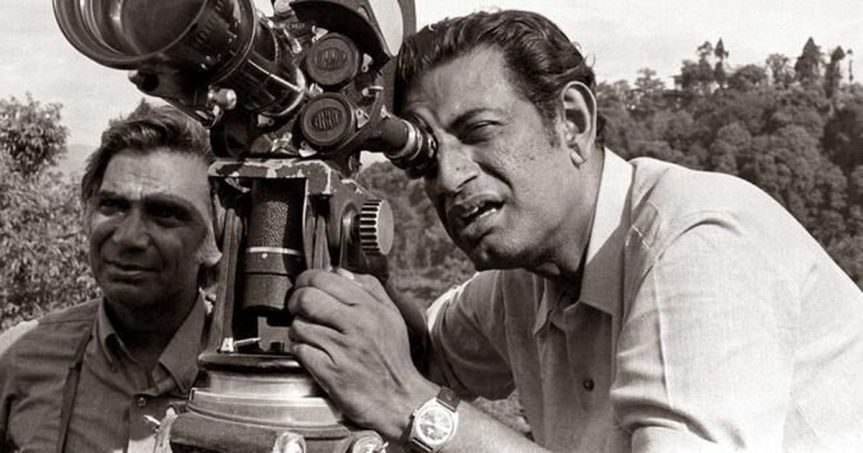
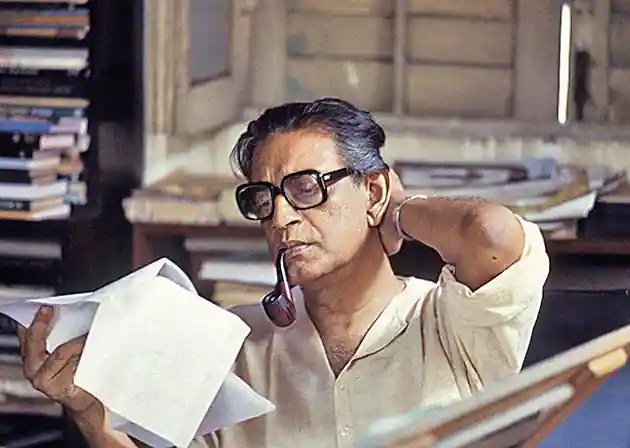
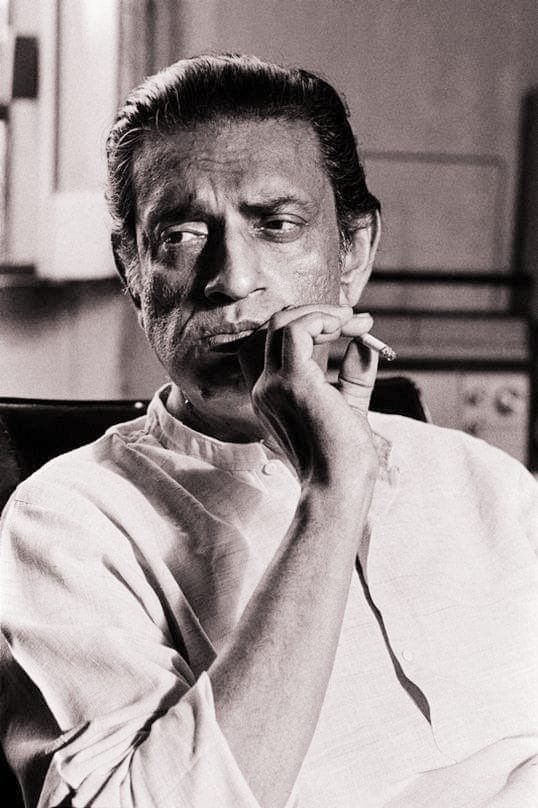
Satyajit Ray was India’s first internationally recognized film-maker and, several years after his death, still remains the most well-known Indian director on the world stage. Ray has written that he became captivated by the cinema as a young college student, and he was self-taught, his film education consisting largely of repeated viewings of film classics by de Sica, Fellini, John Ford, Orson Welles, and other eminent directors.
Satyajit Ray
Early Life and Family Background
Satyajit Ray was born into an illustrious family in Kolkata (then Calcutta) on 2nd May,1921. His grandfather, Upendra Kishore Ray-Chaudhary, was a publisher, illustrator, musician, the creator of children’s literature in Bengali and a leader of the Brahmo Samaj, a religious and social movement in nineteenth century Bengal. His father, Sukumar Ray, was a noted satirist and India’s first writer of nonsensical rhymes, akin to the nonsense verse of Edward Lear. Having studied at Ballygunge Government High School, Calcutta and completed his BA in economics at Presidency College, Satyajit Ray went on to develop an interest in fine arts. Later in life, Satyajit Ray made a documentary of his father’s life. His film, Goopy Gyne Bagha Byne, was based on a story published by his grandfather in 1914, but even other films, such as Hirok Rajah Deshe, “The Kingdom of Diamonds”, clearly drew upon his interest in children’s poetry and nonsensical rhymes.
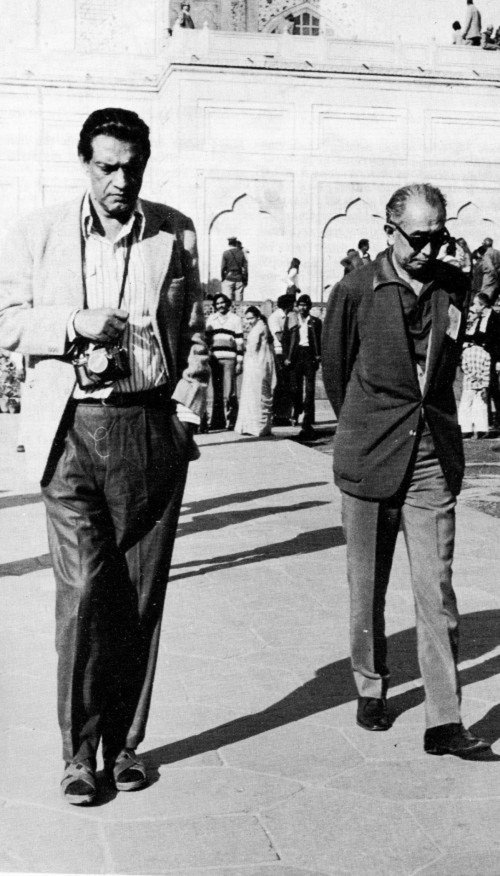
Satyajit Ray with Akira Kurosawa
The Crisis of Indian Cinema Before Ray
From the 1920s to the early 1950s, several directors working within Hollywood—as well as filmmakers in former Soviet Union, France, Italy, Germany, and Japan—considered cinema not as a mere tool of entertainment but as a medium for creative expression. Filmmakers such as Charlie Chaplin, Sergei Eisenstein, Jean Renoir, Roberto Rossellini, Vittorio De Sica, Akira Kurosawa, and others deployed artistically innovative filmic devices to convey profound statements about the complexities of life. Some of the aesthetically satisfying films produced during this period were hailed as cinematic masterpieces. Films in India, however, prioritised cliched elements such as sentimental slush, ersatz emotion, theatricality, romantic tales, spectacle-like songs, and happy endings in these decades. Instead of making serious attempts at formal experimentation, Indian directors continued catering to the lowest common denominator audience.
Iconic scene from Pather Panchali (1955)Pather Panchali (1955)
Breakthrough of Satyajit Ray
A young Ray had grown up on Hollywood movies, so when his ad agency sent him to London for higher training, he spent more and more of his time in the company of films and started “losing interest in advertising in the process,” he once said in an interview. During this trip, he saw Vittorio De Sica’s “Ladri di biciclette” (Bicycle Thieves),in 1948, a neo-realist Italian masterpiece of post-War despair and was entranced by its beguiling simplicity and humanism. Back in Calcutta, he heard that Jean Renoir was in town and walked straight into the hotel where the great French filmmaker was staying to confide in his own dreams of making a movie someday. Renoir, who was location-scouting for The River in Calcutta at the time, encouraged the aspirant. And so began the journey of the song of the little road.
Subir Banerjee as Apu in Pather Panchali (1955)
Ray’s landmark debut, Pather Panchali ( which was adapted from eponymous 1928Bengali novel “Pather Panchali” by eminentBengali novelist Bibhutibhusan Bandopadhay) was on a shoe-string budget in 1955 with a mostly non-professional cast. All the while, he clung on to his job for a safety net even as he shot what would become the first of the classic Apu Trilogy on weekends. The film was apparently being made by a group of neophytes, who had to stop filming more than once, owing to the depletion of their shoestring budget.
Smaran Ghoshal as Apu in Aporajito (1956)
Notable Films of Satyajit Ray
Ray directed 36 films, comprising 29 feature films, five documentaries, and two short films.Pather Panchaliwas completed in 1955 and turned out to be both a commercial and a tremendous critical success, first in Bengal and then in the West following a major award at the 1956 Cannes InternationalFilm Festival. sured Ray the financial backing he needed to make the other two films of the trilogy: Aparajito (1956; The Unvanquished) and Apur Sansar (1959; The World of Apu).Pather Panchaliand its sequels tell the story of Apu, the poor son of a Brahman priest, as he grows from childhood to manhood in a setting that shifts from a small village to the city of Calcutta.
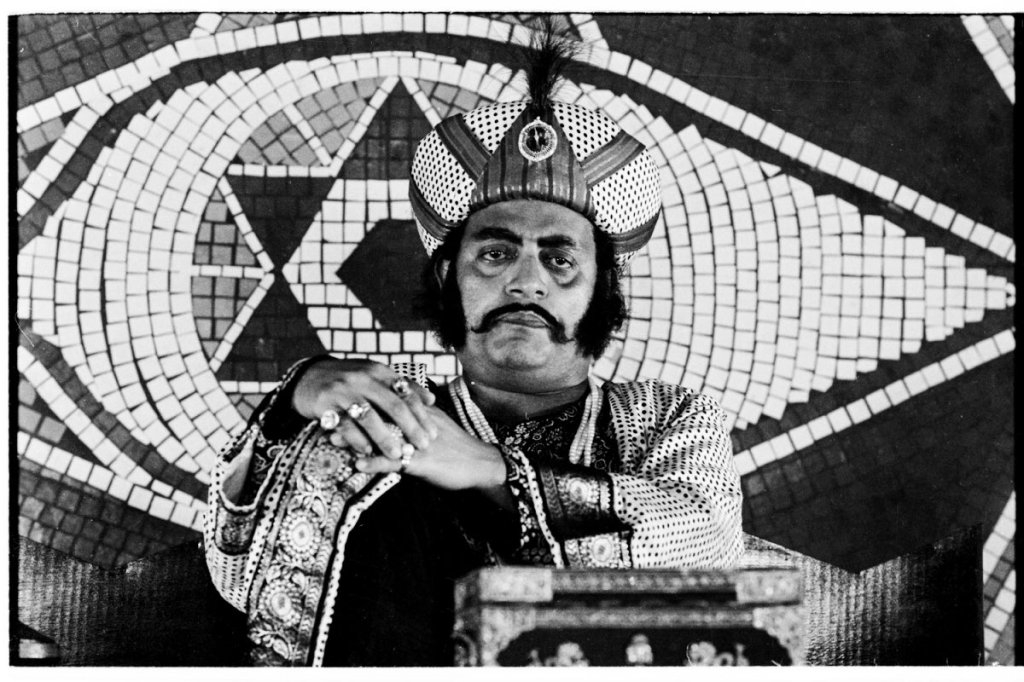
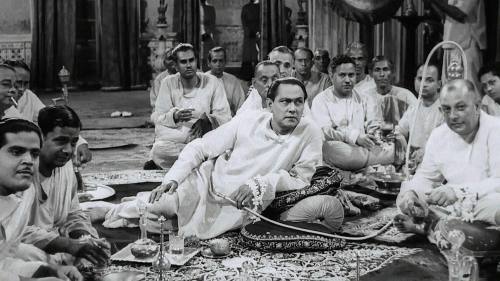
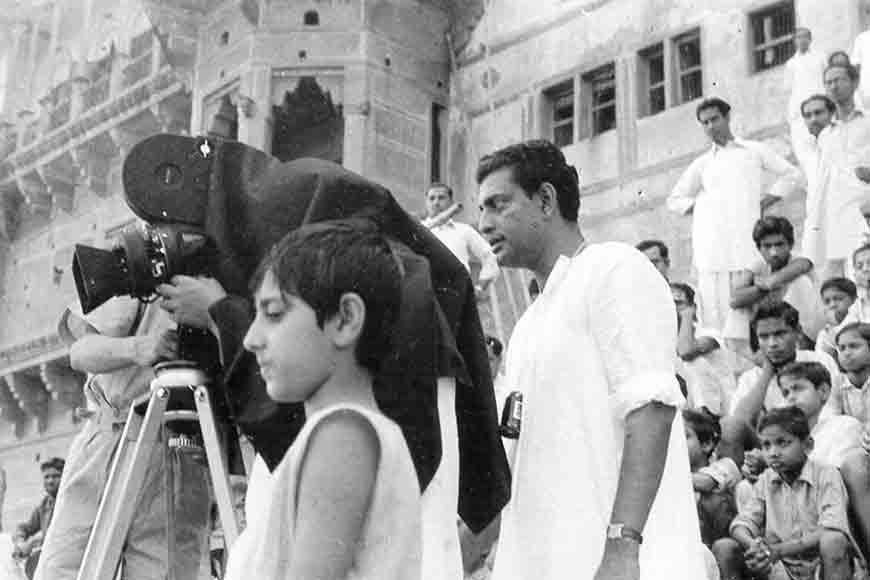
Chandana Banerjee in Teen Kanya (1961)During the Shooting of Jana Aranya (1975)Utpal Dutta in HirokRajar Deshe(1980)Soumitra Chatterjee in Hirok Rajar Deshe (1980)Chhabi Biswas (in middle) in Jalsaghar (1958)Shabana Azmi in Shatranj ke Khilari (1977)Satyajit Ray during the shooting of Sonar Kella(1974)
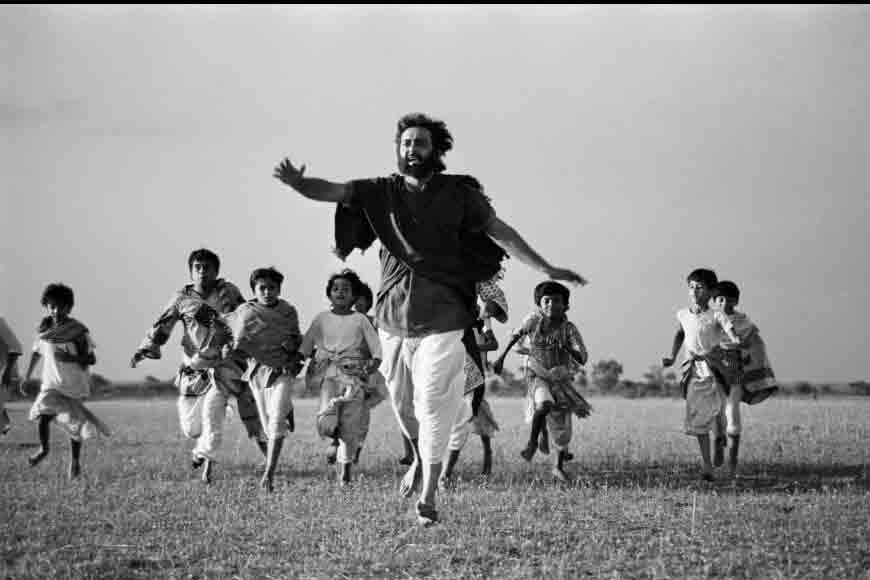
Ray’s major films about Hindu orthodoxy and feudal values (and their potential clash with modern Western-inspired reforms) include Jalsaghar (1958; The Music Room), an impassioned evocation of a man’s obsession with music; Devi (1960; The Goddess), in which the obsession is with a girl’s divine incarnation; Sadgati (1981; Deliverance), a powerful indictment of caste; and Kanchenjungha (1962), Ray’s first original screenplay and first colour film, a subtle exploration of arranged marriage among wealthy, westernized Bengalis.Shatranj ke Khilari (1977; The Chess Players), Ray’s first film made in the Hindi Language , with a comparatively large budget, is an even subtler probing of the impact of the West on India. Although humour is evident in almost all of Ray’s films, it is particularly marked in the comedy Parash Pathar (1957; The Philosopher’s Stone) and in the musical Goopy Gyne Bagha Byne (1969; The Adventures of Goopy and Bagha), based on a story by his grandfather.
His other notable films were Ahsani Sanket (1973; Distant Thunder), Aranyer Din Ratri (1970; Days and Nights in the Forest) , Mahanagar (1963; The Big City) and a trilogy of films made in the 1970s—Pratidwandi (1970; The Adversary), Seemabaddha (1971; Company Limited), and Jana Aranya (1975; The Middleman), Ganashatru (1989; An Enemy of the People), Shakha Prashakha (1990; Branches of the Tree), and the Agantuk (1991; The Stranger).
Poster of Shatranj ke Khilari (1977)Poster of Devi(1960)Poster of Ghore-BairePoster of Mahanagar(1963)Poster of Apur Sansar (1959)Poster of Nayak Poster of Charulata
Work As A Novelist
Ray created two popular fictional characters in Bengali children’s literature—Feluda, a sleuth, and Professor Shanku, a scientist. The Feluda stories are narrated by Topesh Ranjan Mitra aka Topse, his teenage cousin, something of a Watson to Feluda’s Holmes. The science fictions of Shonku are presented as a diary discovered after the scientist had mysteriously disappeared. Ray also wrote a collection of nonsensical verses named Today Bandha Ghorar Dim, which includes a translation of Lewis Carroll’s “Jabberwocky”. He wrote a collection of humorous stories of Mulla Nasiruddin in Bengali. Ray wrote an autobiography about his childhood years, Jakhan Chhoto Chhilam (1982), translated to English as Childhood Days: A Memoir by his wife Bijoya Ray. In 1994, Ray published his memoir, My Year’s with Apu, about his experiences of making The Apu Trilogy.
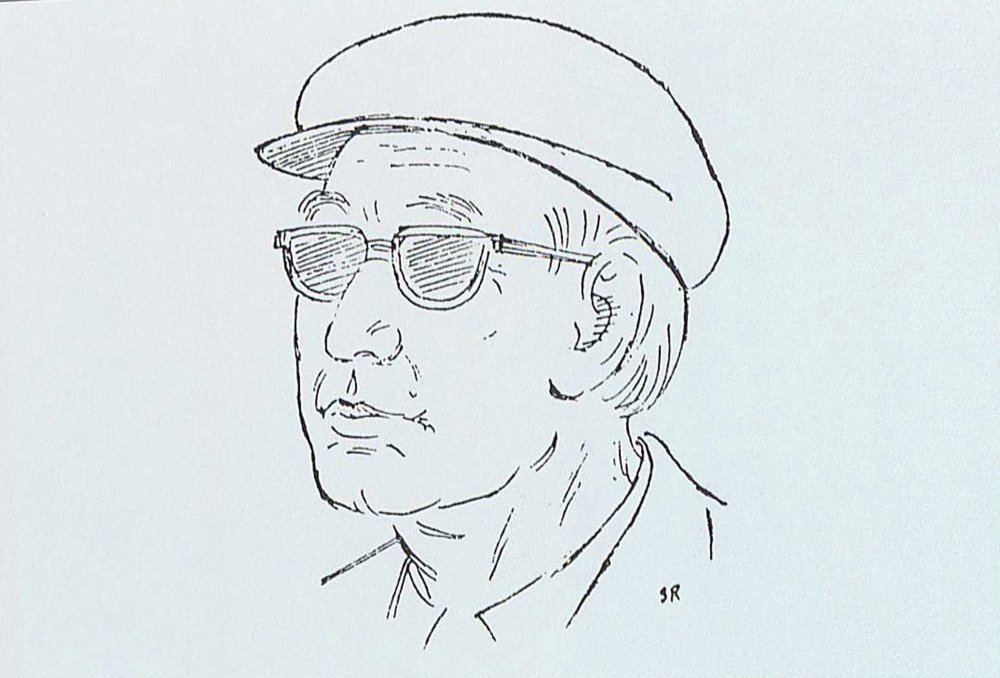
Book Cover illustrated by Satyajit Ray, himself for his first detective novel “Badshahi Angti”.The musical score and Poster for Goopy Gyne Bagha Byne(1969), done by Satyajit Ray, himself Portrait of Akira Kurosawa, illustrated by Satyajit Ray
Critical Analysis of Satyajit Ray
Instead of acting like a propagandist, Ray wanted to make people aware of the persistence of certain social problems. Devi and Ganasatru show people’s blind religious beliefs, Sakha Prasakhadiscloses the involvement of the top officials with bribery and corruption, Shatranj ke Khilari indicates the indolence and lack of political consciousness of the wealthy people, Aranyer Din Ratrireveals the insensitivity and boasting of the urban young men, and Mahapurushmockingly exposes the failure of the urban elite to embrace rational thoughts. Given the necessity of making people conscious of the same problems in present-day society, these films are still relevant today. Ray’s films also made a departure from tradition by frequently including strong women characters. Sarbajaya in Pather Panchali and Aparajito, Manisha in Kanchenjungha, Arati in Mahanagar, Charu in Charulata, Karuna in Kapurush, Aditi in Nayak, Aparna and Jaya in Aranyer Din Ratri, Sudarshana in Seemabadhdha, and Ananga in Asani Sanketappear as bolder, more confident, and more resilient than the male characters. In an interview, Ray states that the inclusion of unwavering women characters reflects his own attitudes towards and personal experience with women.
Awards Received by Satyajit Ray
Ray received many awards, including 36National Film Award by the Government of India, and awards at international film festival. In 11th Moscow InternationalFilm Festival 1979, he was awarded with the Honorable Prize for the contribution to cinema. At the Berlin International Film Festival, he was one of only four filmmakers to win the Silver Bear for Best Director more than once and holds the record for the most Golden Bear nominations, with seven. At the Venice Film Festival, where he had previously won a Golden Lion for Aparajito (1956), he was awarded the Golden Lion Honorary Award in 1982. That same year, he received an honorary “Hommage à Satyajit Ray” award at the 1982 Cannes International Film Festival. Ray is the second film personality after Charlie Chaplin to have been awarded an honorarydoctorate by Oxford University.
He was awarded the Dadasaheb Phalke Award in 1985, and the Legion of Honour by the President of France in 1987. The Government of India awarded him the Padma Bhusan in 1965 and the highest civilian honour, Bharat Ratna, shortly before his death. The Academy of Motion Picture Arts and Sciences awarded Ray an Honorary Award in 1992 for Lifetime Achievement. In 1992, he was posthumously awarded the Akira Kurosawa Award for Lifetime Achievement in Directing at the San Francisco International Film Festival.
Conclusion
Whenever we talk about radical filmmaking in the realm of Bengali cinema, Satyajit Ray’s maiden feature (made in the face of tremendous odds) is mentioned. From Pather Panchali to his last film Agantuk, Ray never compromised on high standards, thereby making a huge impression. Having a greater familiarity with the oeuvre of Ray would enable people to understand the impressive qualities and importance of socially-meaningful cinema. We are surely in need of films that would make us perceive the beauty of a dewdrop on a blade of grass, strengthen our sense of humanism, and raise our social consciousness—hence, the everlasting relevance of the cinema of Satyajit Ray.
Long gone are the days when companies and PR professionals stuck to making announcements via press releases to be aired on TV channels and printed on newspapers. Social media is a valuable asset for everyone and Public relations professionals have also realized these platforms are useful for managing communication and information between a client or company, and the public. Here are 5 ways social media is utilized by PR professionals these days:
To Spread Information:
As previously mentioned, press releases and other traditional forums are not the only channels for spreading news. PR professionals make use of social media platforms like Twitter and Facebook to make announcements about product launches, brand updates, etc. In this increasingly connected world, with platforms like Twitter where news travels at the speed of light, these announcements reach a much wider audience than with traditional media channels.
Crisis Management:
With social media, PR professionals can effectively understand what the public opinion is regarding their client or company. Since users can engage directly with brands online, professionals can identify and respond to customer conversations and online threats, in an effort to avoid negative reputation for the company. In situations of crisis or when negative claims are made against a company, the PR professionals also make use of social media to swiftly provide an apt response and relevant information to the public. This reaches a much wider audience.
To Connect Online with Journalists and Media:
Interacting with journalists on social media is a sure way of increasing the chances of media coverage for a company. Journalists these days make use of social media platforms to see what the public thinks about current news and trending events. PR professionals try to develop a professional relationship with journalists of relevant media outlets, sharing useful information and extending conversations with them, without being annoying or spamming them with data.
To Collaborate with Influencers:
Influencers are celebrities and personalities who have a large following on social media platforms and possess a great influence over their audience. Many companies now maintain connections with major influencers, global and regional, to promote the company and protect their reputation. A lot of brands invite influencers to their events and programs. Influencers are also invited to red carpet events, interviews and other promotional events of major films by their studios. The sway of these personalities is huge, particularly on Instagram, where influencers are the most active.
Campaign Hashtags:
Brands now use specific hashtags to promote their PR campaigns on social media platforms. These hashtags are a very strategic tool that allows companies to observe the conversations surrounding their campaign online. The campaign and brand content becomes easy to find and the company can effectively engage customers online. These catchy, easily recognizable hashtags also help the brand survey how well the campaign is working among the intended audience.
An eye-catching copy is guaranteed to pull in customers for your brand or product. But possessing good creative writing skills is not just enough to create interesting copies. Here are a few useful tips to keep in mind when writing a copy:
Don’t Miss Out on Research:
Before you start your work, do not forget to read and find out as much as possible about the product, brand and target audience. Have a clear idea regarding the objectives of the company and the benefits they are offering the consumers. Who is your target audience and how would this product or service solve their problems? Gather information about the target audience demographics – their age, job title, income range and other general information. Create a profile of a typical user persona and use it to guide you in copywriting.
Bring in your Unique Style and Tone:
You want your copy to grab the attention of the audience and potential consumers. For this, your copy needs to have its distinct tone and style. Prior research on the audience and company also helps you decide on the tone of your copy. Brand personalities would have to be taken into account when writing the copy. This means the copy of a high-class premium brand like Titan would need to maintain the classy, refined style while brands like Zomato adopt a friendlier, humorous approach.
Focus on your UVP:
One of the most important things to highlight when advertising a product or service is its Unique Value Proposition (UVP) To get ahead of your competitors, you need to communicate to your audience exactly what sets you apart. This is the brand’s UVP. It should be included in the copy, explaining to the audience why they should choose your brand.
Keep it Concise and Short:
While including everything needed in the copy, make sure that it doesn’t get too wordy or lengthy. You need to get the message across as quickly as possible, so making it longer would only make your customers impatient and eventually lose interest. Having a short attention span also means you have to use simple, uncomplicated words which people would find easy to understand. Including unfamiliar words and jargon would simply irritate the readers. Too many adjectives and imperatives should also be avoided. Filling your copy with a lot of meaningless adjectives which would also require the audience to take extra effort to understand the meaning is not recommended.
Prove your Claims:
Providing proof for your claims with significant data can be useful in building credibility and trust in the brand. People tend to believe a familiar person or even a celebrity when they talk about how useful a product has been for them. These proofs could be presented in the form of customer testimonials, facts and statistics, case studies and success stories. But avoid making the testimonials appear too sweet and sugar-coated. Also, give specific numbers when presenting data and statistics.
In the marketing and advertising sector, the text that forms a part of an Ad is known as its copy. Copywriting is the process of writing this text. Copywriting may be found on paid Ads, brochures and even on Website pages. The primary objective is what differentiates copywriting from content writing or content marketing. While the goal of content marketing could range from education to entertainment, and awareness, copywriting is mainly focused on making sales, getting people to talk about the brand, and taking the desired actions. The copy should communicate the features, price and values of the product in the quickest way possible.
Here are the different forms of copywriting an aspiring copywriter could get into:
Brand Copywriting
Also called creative copywriting, brand copywriting deals with creating copies that distinguish a brand or company. It is aimed at getting people to recognize a brand with their unique copy, developing strong emotional attachments. Brand copywriters create copy for commercials, posters and jingles for brands. Some popular examples include Nike’s tagline – “Just Do It”, and popular jingles like “I’m lovin’ it” by McDonald’s. It aids in developing brand recognition and brand memory rather than just competing with other brands.
Nike and its slogan
SEO Copywriting
In this age of 24/7 internet and eCommerce, SEO (Search Engine Optimization) is a must-have element. SEO copywriting is all about creating copies that help you get ranked highly on search engines. The copy should be attractive, offering value to readers while also mixing in essential keywords and phrases. A healthy amount of keywords ensure that your blog or web page is visible quickly on search engines, driving traffic to your work. Blog posts, copies of web pages (home page, landing page, etc), articles and product descriptions are forms of SEO copywriting.
Social Media Copywriting
This form of copywriting deals with creating attractive posts for brands on social media. A brand can have profiles on various social media platforms like Facebook, Twitter, Instagram, TikTok and LinkedIn. A social media copywriter attempts to engage its customers through its content on these pages. The aim is to make the brand memorable. The copy would have to suit the style and tone of the social media platform it is posted in. This means that a copy would look different on Facebook and Instagram. It helps reach out to potential consumers and get them to visit your store.
Starbucks on Instagram
Technical Copywriting:
As the name mentions, technical copywriting is all about creating copies that explain information related to your brand or product. The copy goes in-depth in providing useful insight to customers regarding topics like user manuals and product descriptions. This helps in building trust in the brand. Contrary to other forms of copywriting, technical copywriting tends to be more detailed and longer, usually seen in blog posts, user guides and white papers. The tricky part of it is getting the copy to be insightful while also making it simple and easy to understand. You need to have some technical experience and good explanation skills while also using simple language without jargon.
Public Relations Copywriting:
PR copywriters write copies that get your brand noticed by news reporters and journalists, so that they can spread it across various media. This type of copywriting is useful once a brand is established and you want people to remember the brand. Instead of sharing how good your brand is yourself, you get others to talk about your brand. This is generally considered to be unbiased and credible by the viewers because it would be verified and reported by a third party. Press releases and statements of brands and companies you see on television channels and social media are PR copywriting. It can be used to improve a brand’s reputation or as damage control, after something had occurred that could affect the brand’s image negatively.
The Falcon super heavy launch vehicle was designed to transport people, spaceships, and various cargos into space. Such a powerful unit wasn’t created instantly and it also had its predecessors. The history of the Falcon family of vehicles began with the creation of the Falcon 1- a lightweight launch vehicle with a length of 21.3 meters and a diameter of 1.7 meters and a launch mass of 27.6 tones; the rocket could carry 420 kilograms or 926 pounds of payload on board. It became the first private device that was able to bring cargo into low earth orbit. Construction of the Falcon 1 of only two stages, the first of them consisted of a supporting element with fuel tanks, an engine and a parachute system. They chose kerosene as the fuel and liquid oxygen became its oxidizing agent.
The second stage also contains fuel tanks and an engine; though the latter had less thrust compared to the one in the first stage despite the huge launch cost $7.9 million. Totally five attempts were made to send the Falcon 1 beyond the of our planet nut not all of them were successful. During the debut launch of the rocket, a fire started in the first stage engine; this led to a loss of pressure which caused the engine to shut down in the 34th second of flight. The second attempt to start the Falcon 1 incurred a problem with the fuel system of the second stage fuels stopped flowing into its engine at 474 second of flight it shut down as well. The third time of the Falcon 1 went on a flight, it wasn’t alone of the serious cargo the rocket carried onboard the trailblazer satellites and to NASA microsatellites. In phase one with the first stage he flight went normally but when the time came to separate the stages, the first hit the second when it started engine, so the second stage couldn’t continue its flight.
The fourth and fifth launches shoed good results but that wasn’t enough. The main problem with Falcon 1 was low demand due to its low payload abilities. For this reason, they designed Falcon 9; this device can carry on onboard 23 tons of cargo. It’s also a two stage launch vehicle and uses kerosene and l liquid oxygen as fuel. The device is currently in operation and the cost of its launch is equal to $62 million. The first stage of the rocket is reusable; it can return to earth and can be used again. The Falcon 9 is designed to not only launch commercial communication satieties but also to deliver dragon 1 to the ISS. Dragon 1 can carry a six ton payload from the earth, this drone supplies the ISS with everything they needs and it also takes goods back.
The dragon 2 is designed to deliver a crew of four people to the ISS and back to earth. Now there is an ultra heavy launch vehicle with a payload capacity of almost 64 tones. It is the most powerful and heavier device called the Falcon heavy. This rocket was first launched on February 6th 2018 and the test was successful. The rocket sent Elon Musk’s car into space- a red Tesla Roadster. After this debut subsequent launches were also conducted without problem. The launch cost is estimated to $150 million.
The first stage of the Falcon heavy consists f three parts. There are three blocks contain 27 incredibly powerful engines in nine each one. The thrust created when takeoff is comparable to 18 Boeing 747s at full power. The second stage is equipped with a single engine. It is planned that the device would be used for missions to the moon and mars. Currently, SpaceX working on the starship manned spacecraft. According to its creators, this device will be much larger and heavier than all of the company’s existing rockets. This device will able to deliver cargo into space weighing more than a hundred tons. The launch of starship into pace is planned for 2022 to mars with a payload. Who knows, one of the mankind’s largest dreams may come true within the next year.
The MRI (Magnetic resonance imaging) scan is a medical imaging procedure that uses a magnetic field and radio waves to take pictures of our body’s interior. It is mainly used to investigate or diagnose the conditions that affect soft tissue such as tumors or brain disorders. The MRI scanner is a complicated piece of equipment that is expensive to use and found only in specialized centers. Although Raymond Vahan Damadian (1936) is credited with the idea of turning nuclear magnetic resonance to look inside the human body, it was Paul Lauterbur (1929-2007) and Peter Mansfield (1933) who carried out the work most strongly linked to Magnetic resonance imaging (MRI) technology. The technique makes use of hydrogen atoms resonating when bombarded with magnetic energy. MRI provides three dimensional images without harmful radiation and offers more detail than older techniques.
While training as a doctor in New York, Damadian started investigating living cells with a nuclear magnetic resonance machine. In 1971 he found that the signals carried on for longer with cells from tumors than from healthy ones. But the methods used at this time were neither effective nor practical although Damadian received a patent for such a machine to be used by doctors to pick up cancer cells in 1974.
The real shift came when Lauterbur, a U.S, chemist, introduced gradients to the magnetic field so that the origin of radio waves from the nuclei of the scanned object could be worked out. Through this he created the first MRI images in two and here dimensions. Mansfield, a physicist from England, came up with a mathematical technique that would speed up scanning and make clearer images. Damadian went on to build the full body MRI machine in 1977 and he produced the first full MRI scan of the heart, lungs, and chest wall of his skinny graduate student, Larry Minkoff – although in a very different way to modern imaging.
Working of an MRI machine
The key components of an MRI machine are magnet, radio waves, gradient, and a super advanced computer. We all know that human bodies are made up of 60% water, and water is magnetic. Each of the billons of water molecules inside us consists of an oxygen atom bonded to two hydrogen atoms that are called as H2O. Small parts of the hydrogen atoms act as tiny magnets and are very sensitive to magnetic fields. The first step in taking an MRI scan is to use a big magnet to produce a unified magnetic field around the patient. The gradient adjusts the magnetic field into smaller sections of different magnetic strengths to isolate our body parts. Take brain as an example, normally the water molecules inside us are arranged randomly. But when we lie inside the magnetic field, most of our water molecules move at the same rhythm or frequency as the magnetic field. The ones that don’t move along the magnetic field are called low energy water molecules. To create an image of a body part, the machine focuses on the low energy molecules. The radio waves move at the same rhythm or frequency as the magnetic fields in an MRI machine.
By sending radio waves that match or resonate with the magnetic field, the low energy water molecules absorb the energy they need to move alongside the magnetic field. When the machine stops emitting radio waves, the water molecules that had just moved along the magnetic field release the energy they had absorbed and go back to their position. This movement is detected by the MRI machine and the signal is sent to a powerful computer which uses imaging software to translate the information into an image of the body. By taking images of the body in each section of the magnetic field the machine produces a final three dimensional image of the organ which doctors can analyze to make a diagnosis.
“Medicine is a science of uncertainty and an art of probability”. –William Osler
Expressing oneself through art seems a universal human impulse, while the style of that expression is one of the distinguishing marks of a culture. As difficult as it to define, art typically involves a skilled, imaginative creator, whose creation is pleasing to the senses and often symbolically significant or useful. Art can be verbal, as in poetry, storytelling or literature or can take the form of music and dance. The oldest stories, passed down orally may be lost to us now, but thanks to writing, tales such as the epic of Gilgamesh or the Lliad entered the record and still hold meaning today. Visual art dates back 30,000 years, when Paleolithic humans decorated themselves with beads and shells. Then as now, skilled artisans often mixed aesthetic effect with symbolic meaning.
In an existence that centered on hunting, ancient Australians carved animal and bird tracks into their rocks. Early cave artists in Lascaux, France, painted or engraved more than 2,000 real and mythical animals. Ancient Africans created stirring masks, highly stylized depictions of animals and spirits that allow the wearer to embody the spiritual power of those beings. Even when creating tools or kitchen items, people seem unable to resist decorating or shaping them for beauty. Ancient hunters carved the ivory handles of their knives. Ming dynasty ceramists embellished plates with graceful dragons. Modern pueblo Indians incorporates traditional motifs in to their carved and painted pots. The western fine arts tradition values beauty and message. Once heavily influenced by Christianity and classical mythology, painting and sculptures has more recently moved toward personal expression and abstraction.
Humans have probably been molding clay- one of the most widely available materials in the world- since the earliest times. The era of ceramics began, however, only after the discovery of that very high heat renders clay hard enough to be impervious to water. As societies grew more complex and settled, the need for ways to store water, food, and other commodities increased. In Japan, the Jomon people were making ceramics as early as 11,000 B.C. by about the seventh millennium B.C.; kilns were in use in the Middle East and china, achieving temperatures above 1832°F. Mesopotamians were the first to develop true glazes, through the art of glazing arguably reached its highest expression in the celadon and three color glazes of the medieval china. In the new world, although potters never reached the heights of technology seen elsewhere, Moche, Maya, Aztec, and Puebloan artists created a diversity of expressive figurines and glazed vessels.
When Spanish nobleman Marcelino Sanz de Sautuola described the paintings he discovered in a cave in Altamira, contemporizes declared the whole thing a modern fraud. Subsequent finds confirmed the validity of his claims and proved that Paleolithic people were skilled artists. Early artists used stone tools to engrave shapes into walls. They used pigments from hematite, manganese dioxide, and evergreens to achieve red, yelled, brown, and black colors. Brushes were made from feathers, leaves, and animal hair. Artists also used blowpipes to spray paint around hands and stencils.
The James Webb space telescope or JWST will replace the Hubble space telescope. It will help us to see the universe as it was shortly after the big bang. It was named after the second head of NAS James Webb. James Webb headed the office of space affairs from 1961 to 1968. This new telescope was first planned for launch into orbit in 2007 but has since been delayed more than once, now it’s been scheduled for 18 December 2012. After 2030 the Hubble will go on a well deserved rest since its launch in 1990 its provided more than a million images of thousands of stars, nebulae, planets and galaxies. The Hubble captured images of stars that are show about 380 million years after the big bang which supposedly happened 13.7 billion years ago. These objects may no longer exist, we still see their light. Now we expect James Webb to show us the universe as it was only 100 to 250 million years after its birth. It can transform our current understanding of the structure of the universe. The Spitzer space telescope and Hubble telescopes have collected data of gas shells of about a hundred planets. According to experts, the James Webb is capable of exploring the atmospheres of more than 300 different exoplanets.
The working of James Webb space telescope
The James Webb is an orbiting infrared observatory that will investigate the thermal radiation of space objects. When heated to a certain temperature, all solids and liquids emit energy in the infrared spectrum; here there is a relationship between wavelength and temperature. The higher the temperature, there will shorter the wavelength and higher the radiation intensity. James Webb sensitive equipment will be able to study the cold exoplanets with surface temperatures of up to 27° Celsius. An important quality of this new telescope is that it will revolve around the sun and not the earth unlike Hubble which is located at an altitude of about 570 kilometers in low earth orbit. With the James Webb orbiting the sun, it will be impossible for the earth to interfere with it, however he James Webb will move in sync with the earth to maintain strong communication yet the distance from the James Webb to the earth will be between about 374,000 to 1.5 million kilometers in the direction opposite of the sun. So its design must be extremely reliable.
The James Webb telescope weighs 6.2 tones. The main mirror of the telescope is with a diameter of 6.5 meters and a colleting area of 25 square meters, it resembles a giant honeycomb consisting of 18 sections. Due to its impressive size, the main has to be folded for start up; this giant mirror will capture light from the most distant galaxies. The mirror can create a clear picture and eliminate distortion. A special type of beryllium was used in the mirror which retains its shape at low cryogenics temperature. The front of the mirror is covered with a layer of 48.25 grams of gold, 100 nanometers thick; such a coating best reflects infrared radiation. A small secondary mirror opposite the main mirror, it receives light from the main mirror and directs it to instruments at the rear of the telescope. The sunshield is with a length of 20 meters and width of 7 meters. It composed of very thin layers of kapton polyimide film which protects the mirror and tools from sunlight and cools the telescope’s ultra sensitive matrices to 220° Celsius.
The NIRCam- Near Infrared Camera is the main set of eyes of the telescope, with the NIRCam we expect to be able to view the oldest stars in the universe and he planets around them. The nurse back near infrared spectrograph will collect information on both physical and chemical properties of an object. And the MIRI mid-infrared instrument will allow you to see stars being born many unknown objects of the Kepler belt. Then the near infrared imager and sliteless spectrograph or NIRIIS camera is aimed at finding exoplanets and the first light of distant objects. Finally the FGS- Fine Guidance Sensor helps accurately point the telescope for higher quality images updates its position in space sixteen times per second and controls the operation the steering and main mirrors. They are planning to launch the telescope with the help of the European launch vehicle Ariana 5 from the kourou Cosmodrome in French Guiana space center. The device is designed for between 5 to 10 years of operation but, it may serve longer. If everything goes well, $10 billion worth of construction and one year of preparation will have finally started in orbit.
In the 1800s, scientists discovered the realm of light beyond what is visible. The 20th century saw dramatic improvements in observation technologies. Now we are probing distant planets, stars, galaxies and black holes where even light would take years to reach. So how we do that? Light is the fastest thing we know in the universe. It is so fast that we measure enormous distances by how long it takes for light to travel them. In one year, light travels about 6 trillion miles. It is the distance, we call one light year. The Apollo 11 had to travel four days to reach the moon but, it is one light second from earth. Meanwhile, the nearest star beyond our own sun is Proxima Centauri but, it is 4.24 light years away. Our Milky Way galaxy is on the order of 100,000 light years across. The nearest galaxy to our own, Andromeda is about 2.5 million light years away.
The question is how do we know the distance of these stars and galaxies? For objects that are very close by, we can use a concept called trigonometric parallax. When you place your thumb and close your left eye and then, open your left eye and close your right eye. It will look like your thumb has moved, while more distant objects have remained in place. This same concept applies in measuring distant stars. But they are much farther than the length of your arm, and earth is not large enough, even if you had different telescopes across the equator, you would not see much of a shift in position. So we look at the change in the star’s apparent location over six months, when we measure the relative positions of the stars in summer, and then again in winter, nearby stars seem to have moved against the background of the more distant stars and galaxies.
But this method only works for objects less than a few thousand light years away. So, for such distances, we use a different method using indicators called standard candles. Standard candles are objects whose intrinsic brightness, or luminosity that we know well. For example, if you know how bright your light bulb is, even when you move away from it, you can find the distance by comparing the amount of light you received to the intrinsic brightness. In astronomy, we consider this as a special type of star called a Cepheid variable. These stars will constantly contract and expand. Because of this, their brightness varies. We can calculate the luminosity by measuring the period of this cycle, with more luminous stars changing more slowly. By comparing the light that we received to the intrinsic brightness we can calculate the distance.
But we can only observe individual stars up to about 40 million light years away. So we have to use another type of standard candle called type 1a supernova. Supernovae are giant stellar explosions which is one of the ways that stars die. These explosions are so bright, that they outshine the galaxies where they occur. So we can use the type 1 a supernovae as standard candles. Because, intrinsically bright ones fade slower than fainter ones. With the understanding of brightness and decline rate, we can use the supernovae to probe distances up to several billions of light years away. But is the importance of seeing distant objects? Well, the light emitted by the sun will take eight minutes to reach us, which means that the light we see now is a picture of the sun eight minutes ago. And the galaxies are million light years away. It has taken millions of years for that light to reach us. So the universe is in some kind of an inbuilt time machine. The further we can look back, the younger we are probing. Astrophysicists try to read the history of the universe, and understand how and where we come from.
“Dream in light years, challenge miles, walk step by step” – William Shakespeare
A wave begins as the wind ruffles the surface of the ocean. When the ocean is calm and glasslike, even the mildest breeze forms ripples, the smallest type of wave. Ripples provide surfaces for wind to act on, which produces larger waves. Stronger winds push the nascent waves into steeper and higher hills of water. The size a wave reaches depends on the speed and strength of the wind. The length of time it takes for the wave to form, and the distance over which it blows in the open ocean is known as the fetch. A long fetch accompanied by strong and study winds can produce enormous waves. The highest point of a wave is called the crest and the lowest point the trough. The distance from one crest to another is known as the wavelength.
On November 11, 2011, US surfer Garrett McNamara surfed a massive wave (78-foot (23,8-meter)) at Nazaré.
Although water appears to move forward with the waves, for the most part water particles travel in circles within the waves. The visible movement is the wave’s form and energy moving through the water, courtesy of energy provided by the wind. Wave speed also varies; on average waves travel about 20 to 50 Mph. Ocean waves vary greatly in height from crest to trough, averaging 5 to 10 feet. Storm waves may tower 50 to 70 feet or more. The biggest wave that was ever recorded by humans was in Lituya bay on July 9th, 1958. Lituya bay sits on the southeast side of Alaska. A massive earthquake during the time would trigger a mega tsunami and the tallest tsunami in modern times. As a wave enters shallow water and nears the shore, it’s up and down movement is disrupted and it slows down. The crest grows higher and be gins to surge ahead of the rest of the wave, eventually toppling over and breaking apart. The energy released by a breaking wave can be explosive. Breakers can wear down rocky coast and also build up sandy beaches.
Why does a tide occur?
Tides are the regular daily rise and fall of ocean waters. Twice each day in most locations, water rises up over the shore until it reaches its highest level, or high tide. In between, the water recedes from the shore until it reaches its lowest level, or low tide. Tides respond to the gravitational pull of the moon and sun. Gravitational pull has little effect on the solid and inflexible land, but the fluid oceans react strongly. Because the moon is closer, its pull is greater, making it the dominant force in tide formation.
Gravitational pull is greatest on the side of earth facing the moon and weakest on the side opposite to the moon. Nonetheless, the difference in these forces, in combination with earth’s rotation and other factors, allows the oceans to bulge outward on each side, creating high tides. The sides of earth that are not in alignment with the moon experience low tides at this time. Tides follow different patterns, depending on the shape of the seacoast and the ocean floor. In Nova Scotia, water at high tide can rise more than 50 feet higher than the low tide level. They tend to roll in gently on wide, open beaches in confined spaces, such as a narrow inlet or bay, the water may rise to very high levels at high tide.
There are typically two spring tides and two narrow tides each month. Spring tie of great range than the mean range, the water level rises and falls to the greatest extend from the mean tide level. Spring tides occur about every two weeks, when the moon is full or new. Tides are at their maximum when the moon and the sun are in the same place as the earth. In a semidiurnal cycle the high and low tides occur around 6 hours and 12.5 minutes apart. The same tidal forces that cause tides in the oceans affect the solid earth causing it to change shape by a few inches.
When a massive star dies, it leaves a small but dense remnant core in its wake. If the mass of the core is more than 3 times the mass of the sun, the force of gravity overwhelms all other forces and a black hole is formed. Imagine the size of a star is 10times more massive than our sun being squeezed into a sphere with a diameter equal to the size of New York City. The result is a celestial object whose gravitational field is so strong that nothing, not even light can escape it. The history of black holes was started with the father of all physics, Isaac Newton. In 1687, Newton gave the first description of gravity in his publication, Principia mathematica, that would change the world. Then 100 years later, John Michelle proposed the idea that there could exist a structure that would be massive enough and not even light would be able to escape its gravitational pull. In 1796, the famous French scientist Pierre-Simon Laplace made an important prediction about the nature of black holes. He suggested that because even the speed of light was slower than the escape velocity of black hole, the massive objects would be invisible. In 1915, Albert Einstein changed physics forever by publishing his theory of general relativity. In this theory, he explained space time curvature and gave a mathematical description of a black hole. And in 1964, john wheeler gave these objects the name, the black hole.
The “Interstellar” black hole was created using a new CGI rendering software that was based on theoretical equations provided by Thorne.
In classical physics, the mass of a black hole cannot decrease; it can either stay the same or get larger, because nothing can escape a black hole. If mass and energy are added to a black hole, then its radius and surface area also should get bigger. For a black hole, the radius is called the Schwarzschild radius. The second law of thermodynamics states that, an entropy of a closed system is always increases or remains the same. In 1974, Stephen hawking– an English theoretical physicists and cosmologist, proposed a groundbreaking theory regarding a special kind of radiation, which later became known as hawking radiation. So hawking postulated an analogous theorem for black holes called the second law of black hole mechanics that in any natural process, the surface area of the event horizon of a black hole always increase, or remains constant. It never decreases. In thermodynamics, black bodies doesn’t transmit or reflect any radiation, it only absorbs radiation.
When Stephen hawking saw these ideas, he found the idea of shining black holes to be preposterous. But when he applied the laws of quantum mechanics to general relativity, he found the opposite to be true. He realized that stuff can come out near the event horizon. In 1974, he published a paper where outlined a mechanism for this shine. This is based on the Heisenberg uncertainty Principe. According to the principle of quantum mechanisms, for every particle throughout the universe, there exists an antiparticle. These particles always exist in pairs, and continually pop in and out of existence everywhere in the universe. Typically, these particles don’t last long because as soon as possible and its antiparticle pop into existence, they annihilate each other and cease to exist almost immediately after their creation.
In 2019, the Event Horizon Telescope (EHT) collaboration produced the first-ever image of a black hole
In the event horizon that the point which nothing can escape its gravity. If a virtual particle pair blip into existence very close to the event horizon of a black hole, one of the particles could fall into the black hole while the other escapes. The one that falls into the black hole effectively has negative energy, which is, in Layman’s terms, akin to subtracting energy from the black hole, or taking mass away from the black hole. The other particle of the pair that escapes the black hole has positive energy, and is referred to as hawking radiation. Due to the presence of hawking radiation, a black hole continues to loss mass and continues shrinking until the point where it loses all its mass and evaporates. It is not clearly established what an evaporating black hole would actually look like. The hawking radiation itself would contain highly energetic particles, antiparticles and gamma rays. Such radiation is invisible to the naked eye, so an evaporating black hole might not look like anything at all. It also possible that hawking radiation might power a hadronic fireball, which could degrade the radiation into gamma rays and particles of less extreme energy, which would make an evaporating black hoe visible. Scientists and cosmologists still don’t completely understand how quantum mechanics explains gravity, but hawking radiation continues to inspire research and provide clues into the nature of gravity and how it relates to other forces of nature.
The smallest thing that we can see with a light microscope is about 500 nanometers. A typical is anywhere from 0.1 to 0.5 nanometers in diameter. So we need an electron microscope to measure these atoms. The electron microscope was invented in 1931. Beams of electrons are focused on a sample. When they hit it, they are scattered, and this scattering is used to recreate an image. Then what about protons or neutrons? Or what about quarks? The quarks are the most fundamental building blocks of matter. So how did we find such small particles exist? The answer is a particle collider. A particle collider is a tool used to accelerate two beams of particles to collide since 1960s.
The largest machine built by man, the Large Hadron Collider (LHC) is a particle accelerator occupying an enormous circular tunnel of 27 kilometers in circumference, ranging from 165 to 575 feet below ground. It was situated near Genoa, Switzerland. It is so large that over the course of its circumference crosses the border between France and Switzerland. That’s the giant collaboration going on between over 100 countries and 10,000 scientists. The tunnel itself was constructed between 1983 and 1988 to house another particle accelerator, the Large Hadron Collider, which operated until 2000, its replacement, the LHC, was approved in 1995, and was finally switched on in September 2008.
Working of the Large Hadron Collider
The LHC is the most powerful particle accelerator ever built and has designed to explore the limits of what physicists refer to as the standard Model, which deals with fundamental sub-atomic particles. There are two vacuum pipes are installed inside the tunnel which intersects in some places and 1,232 main magnets are connected to the pipe. For proper operation, the collider magnets need to be cooled to -271.3 °C. To attain this temperature, 120 tons of liquid helium is poured into the LHC. These powerful magnets can accelerate protons near the speed of light, so they can complete a circuit in less than 90 millionths of a second. Two beams operate in opposite directions around the ring. At four separate points the two beams cross, causing protons to smash into each other at enormous energies, with their destructions being witnessed by super-sensitive instruments. But it’s not that easy to do this experiment. Each beam consists of bunches of protons and most of the protons just miss each other and carry on around the ring and do it again. Because, atoms are mostly empty space so getting them to collide is incredibly difficult. It like colliding a needle into a needle, provided that the distance between them is 10 kilometers.
The aim of these collisions is to produce countless new particles that stimulate, on a micro scale, some of the conditions postulated in the Big Bang at the birth of the universe. Higgs Boson was discovered with the help of LHC. This so called ‘God Particle’ that could be responsible for the very existence of mass. If it disappeared, all particles in the universe will become absolutely weightless and fly around the universe in the speed of light, the exact value is 299,792,458 m/s. that mean we can reach our moon in 1.3 seconds from earth.
“When you look at a vacuum in a quantum theory of fields, it isn’t exactly nothing.” – Peter Higgs
When the COVID-19 pandemic situation began and the whole world went into lockdown, the taxi and food delivery services company, Uber, released a video on YouTube called “Thank You for Not Riding” that was part of the campaign #MoveWhatMatters. The campaign was an effort by the company of thanking its customers for reducing travel and maintaining social distancing. They compensated Uber drivers around the world who were not able to work for many months and provided free rides and food deliveries to front-line healthcare workers and citizens. This was Uber upholding the responsibility it has in such a challenging situation. In the last two years, a lot of interesting public relations campaigns have been taken up by companies and organizations across the world.
Public Relations or PR refer to the process of communication between an organization, company, or individual, and the public. It is the art and science of talking to the right audience in the right way. Public relations can influence and shape a company’s image, reputation and brand perception. A PR specialist or PR Officer is responsible for maintaining the image of the company they work for. To ensure the company’s good image, they can formulate communication plans and use media and other direct and indirect mediums.
The primary aim of PR is to maintain a good relationship with the public, their target audience, investors, employees and stakeholders which would help the company get a positive reputation, encouraging people to believe the company is honest and relevant.
If PR is related to maintaining a company’s relevance within the public, how is it really different from advertising? Here is the difference. Advertising is paid promotion while PR is earned. Companies pay newspapers, television channels and other media to display their Ads but PR promotes a brand using editorial content appearing in various media. Audiences usually look at Ads skeptically while PR promotions help in building trust in the audience because it has a third-party validation by the medium in which it is promoted. They are also cheaper compared to advertising and marketing services in the industry.
PR is influential in building brand reputation. A good PR agency can help a company improve its credibility and reputation. They make sure the company is getting proper attention and positive feedback for all of their projects, works and news updates. PR also has a very important role to play in crisis management or situations in which the image of a company may be in danger, which may be due to some miscommunication. It is the PR team’s responsibility to communicate with their target audience and public and clear the possible misconceptions. They have to work to get rid of the negative publicity the company may have received.
Here are two more examples of great PR campaigns in India:
#TouchOfCare by Vicks:
Companies often try to bring attention to compelling public issues with their campaign. In 2017, Vicks released a heartwarming video as part of its campaign #TouchOfCare. The video showed how Gauri, a transgender woman, raised an orphan girl, Gayatri, with all the love and care in the world, even when she faced struggles in society. Vicks believes that everyone deserves to be cared for and receive the touch of care. With this video, they showed how everybody needs someone to care and love them, whether they are connected by blood or not. The video got lots of positive feedback, generating about 4 million views in the first 48 hours in which it was released.
#ItsJustAPeriod by Stayfree
Stayfree launched the campaign #ItsJustAPeriod in 2020 to encourage period-related conversations and remove the stigma associated with it in Indian families, particularly as India went into lockdown and schools closed. A video was released on YouTube with many actors and influencers coming forward in support of the movement. With the majority of the Indian population at home, this campaign was able to get a huge social media outreach, with 10.17 million engagements collectively on Facebook, YouTube and Instagram.
In 1964 peter Higgs with five scientists proposed a theory called the Higgs mechanism to explain the existence of mass in the universe. Before 1930s, atoms were considered as the fundamental particles. Then we found electron, protons and neutrons as atomic particles. Later we found that protons and neutrons are made up of even more small fundamental particles called quarks. Quarks are the fundamental building blocks for the whole universe. The key evidence for the existence of these elementary particles came from a series of inelastic electron-nucleon scattering experiments conducted between 1967 and 1973 at the Stanford linear accelerator center. They are commonly found in protons and neutrons. There are six types of quarks, up quark, down quark, top quark, bottom quark, strange quark, charm quark. They can have positive (+) or negative (-) electric charge. Up, charm and top quarks have a positive 2/3 charge. Down, strange, bottom quarks have a negative 1/3 charge. So protons are positive because there are two quarks (+2/3) ups and one down quark (-1/3), giving a net positive charge (+2/3+2/3-1/3 =1). These three quarks are known as valence quarks, but the proton could have an additional up quark and anti-up quark pair.
The Higgs mechanism theory
In the second half of the 20th century, physicists made a developed a theory called a standard model of particle physics. They theorized about twelve fundamental particles that make up all matter, and four particles called bosons are responsible for three fundamental forces of nature. It includes strong force, weak force, and electromagnetism. Gravity is another force, it is not a part of this model but, it can be modeled using general relativity. With these fundamental particles in the standard model and gravity, we can build almost everything in the entire universe. However until 2012, the standard model was an underlying theory. Because all forces carrying particles should be massless. So, although the photons are massless, experiments show that the weak forces bosons have mass. So that was a promising model that could be used to explain our universe. But perhaps, it would need to be thrown out because it had the seemingly fatal flaw in being inconsistent regarding the way the weak force worked in the late 1950s physicists had no idea to resolve these issues all attempts to solve this problem. But indeed it created new theoretical problems. In 1964, Peter Higgs hypothesized that perhaps the force articles were massless but gained mass when they interacted with an energy field that is the reason for the existence of the entire universe.
During the very early moments following the big bang, in the universe, the elementary particles were massless and they were pure streams of energy that move at the speed of light. As the expansion of the universe was proceeding, density and temperature decreased below a certain key value. According to the theory, the Higgs field interacts with particles and can give them mass. It is theorized that different particles interact differently with the field, the particles that interact with it more intensely have greater mass and particles that don’t interact with it that much have lower mass. Just imagine Higgs field as water, pointed shape objects interact lesser with water and cube shaped objects interact more with it. Some particles don’t interact with the field like photons are massless. A fundamental part of the theory was the presence of a specific particle; it’s called the Higgs boson. A boson that would allow the Higgs mechanism to unfold correctly to give mass to all other particles.
CERN’s discovery of a new particle
Even though Higgs theorized it, scientists can’t able to prove that until 2012. The particle accelerators had to possess a huge amount of energy to detect them. Finally, the Large Hadron Collider (LHC), the CERN’s particle accelerator has been turned on in 2008 and managed to recreate the required energy and temperature conditions in 2012. The Higgs boson was finally experimentally detected and on 4th July, a conference held in the CERN auditorium announced the discovery of a particle compatible with the Higgs boson. The machine accelerates Hadron bundles at close to the speed of light and collides them each other in opposite directions. At four separate points the two beams cross, causing protons to smash into each other at enormous energies, with their destructions being witnessed by super-sensitive instruments. Even if LHC is the world’s largest particle accelerator, it had to work hard to detect Higgs boson. If the Higgs field doesn’t exist, all particles in the universe will become absolutely weightless and fly around the universe in the speed of light. For This reason Higgs boson is often called as the ‘God particle’.









































 Eduindex
You must be logged in to post a comment.