Psychological impact of Covid-19

As a result of the emergence of coronavirus disease 2019 (COVID-19) outbreak caused by severe acute respiratory syndrome coronavirus 2 (SARS-CoV-2) infection in the Chinese city of Wuhan, a situation of socio-economic crisis and profound psychological distress rapidly occurred worldwide.

So this blog will look into various forms of psychological distress bought in by this pandemic due to educate and sensitize the readers about these issues.

Many psychological problems and important consequences in terms of mental health including stress, anxiety, depression, frustration, uncertainty during COVID-19 outbreak emerged progressively.Common psychological reactions related to the mass quarantine which was imposed in order to attenuate the COVID-19 spread are generalized fear and pervasive community anxiety which are typically associated with disease outbreaks, and increased with the escalation of new cases together with inadequate, anxiety-provoking information which was provided by media.The psychological reactions to COVID-19 pandemic may vary from a panic behavior or collective hysteria to pervasive feelings of hopelessness and desperation which are associated with negative outcomes including suicidal behavior.Importantly, other health measures may be compromised by abnormally elevated anxiety.

As the general population became increasingly exposed, anxiety-provoking topics related to this emergence of the health and socio-economic crisis need to be rapidly identified to early detect dysfunctional processes and maladaptive lifestyle changes potentially leading to the onset of psychiatric conditions.

So let us discuss the most important psychological impacts of COVID which are the root cause of other mental disorders :

-uncontrolled fears related to infection

This is commonly one of the most frequent psychological reaction to pandemics. Several existing studies demonstrated that those who have been exposed to the risk of infection may develop pervasive fears about their health, worries to infect others and fear infecting family members.

-Pervasive anxiety

Social isolation related to restrictions and lockdown measures are linked to feelings of uncertainty for the future, fear of new and unknown infective agents resulting in abnormally increased anxiety.Anxiety may be directly related to sensorial deprivation and pervasive loneliness.

-Frustration and boredom

Distress, boredom, social isolation and frustration are directly related to confinement, abnormally reduced social/physical contact with others, and loss of usual habits.

-LONELINESS

The final effect of social isolation is pervasive loneliness and boredom, which have potential dramatic effects on both physical and mental individual well-being. Pervasive loneliness may be significantly associated with increased depression and suicidal behavior.Unfortunately, the isolation is progressively enhanced by anxiety, panic or collective hysteria. Cognitive functions and decision making are firstly impaired by hyperarousal and anxiety and later by disabling feelings of loneliness.

After looking at these gruesome psychological impacts,it is crystal clear so as to how psychologically damaging this pandemic has been!The protective factors against these impacts include social support and psychological support.

Implementing community-based strategies to support resilience and psychologically vulnerable individuals during the COVID-19 crisis is fundamental for any community.The psychological impact of fear and anxiety due to the horrible spread of pandemic needs to be clearly recognized as a public health priority for both authorities and policy makers who should adopt clear behavioral and interventional strategies to reduce the burden of disease and the dramatic mental health consequences of this outbreak.

ONLINE EDUCATION PROS V/S CONS


The Majestic year 2020 is marked by two major events.One is the Onset of the worst pandemic that the entire world is reeling under and the other as the title suggests is Online learning!

The Use of Online Learning or E Learning has skyrocketed in the recent times as the only mode of education in a social distancing setup.Indeed it is a necessity as education cannot be put to rest halting the progress of millions of students.As a coin has two sides,similarly online form of education has it’s own perks and drawbacks.So lets find out more!READ MORE

This image has an empty alt attribute; its file name is online-learning.png

Online schooling is a popular alternative to attending a brick-and-mortar college or university. Though online students don’t get the face-to-face experiences of a typical on-campus student, there are many benefits and advantages to online learning, also known as distance learning or e-learning.

While not every program or school imaginable has an online option, a large number of them do, and many programs are nationally or regionally accredited. Students can learn through online lectures, projects and discussions. Online degree programs are available at every level, from certificates to doctorates.

Owing to the Covid situation,organisations that used to vouch for traditional methods of education are now radically shifting towards online education because there is no other alternative.Earlier online education used to be an alternative, now it is the only choice for those who want to desperately continue their education.

When Online Education is the new reality,it is very essential to keep in mind it’s advantages and disadvantages to take maximum benefits out of it and also minimize stress levels.

ADVANTAGES

-Convenient Learning:It can be undertaken anywhere ranging from a tiny corner in the living room to a study table in the bedroom and without a particular dress code(still modest dressing is expected).

-No Infrastructure:No physical infrastructure such as building,classrooms and benches are required for online education.

-Less Travelling: In Online classes there is no need to undertake strenuous travelling routines as students can attend the classes from the comfort of their homes.

-Recordings:Unlike the Traditional Systems,Online Education system provides an option of class recording and hence students can re watch the class recordings to make concepts clear.

-Virtual Reality(VR):Teachers in the online mode can make use of Virtual Reality Techniques to make students understand complex topics in an interesting way.

DISADVANTAGES

-Motivation:The laid back nature of the online classes do not provide much motivation to the students.Students do not take online classes to be as serious as classroom and thus do not pay attention.

-Lack of Concrete Assessments:Online mode of education has so far not been promising for people with theoretical subjects as it is difficult to conduct heavy exams here.

-No practicals:People Who study medicine,chemistry and physics an understand how bad this can be!There are certain subjects which cannot be simply taught,practicals and experiments have to be performed to further the understanding.Online education does not support this.

-Stress on health:The negative impacts of online mode of education on the health of the students is indisputable!Several students have complained of migraines,back aches,eye pain and so forth.Students psychologically too have not been able to cope up with the sudden shift and are suffering.

Thus,Online mode of education is a tricky one and should be suitable for certain conditions,Since it is the only alternative now, educationists and policy makers should study the pros and cons to make amends in the present online education structure to suit the demands of students.We have to always remember that Education is fruitful only when it reaches learners effectively!

If you liked the article,do give it a like.

Thankyou!

Stay Knowledgeable!

FUEL TO INDIAN ECONOMY !

WELL AWARE OF HOW OUR INDIAN ECONOMY IS DETORIATING AND WILL KEEP ON DIMMING IN THE MONTHS AHEAD AS DECLARED BY INTERNATIONAL MONETARY FUND IN 2019 THAT INDIA WILL BE THE WORST EFFECTED COUNTRY FROM THE GLOBAL ECONOMIC SLOWDOWN. OUR GDP GROWTH IS 4.2% AND FORECASTES TO LOWER DOWN IN NEGATIVE . THE GOVERNMENT IS TAKING BOLD STEPS AND ENSURING TO BRING THE ECONOMY AT THE FAST PACE BY TRYING TO UPLIFT THE PROFIT MAKING. RECENTLY , YOU HEARED OF PRIVATISATION IN RAILWAYS SECTOR , AS DUE TO THE UBIQUITOUS QUALITY OF THE PRIVATE SECTOR , THE INTREST BEING ONLY IN THE ANTICIPATION OF PROFITS . IN MY OPINION , THERE IS NEED OF INCREASE IN PUBLIC INVESTMENT IN THIS SITUATION AS INFLATION IS HIGH DUE TO WHICH , WE ARE FACING ECONOMIC SLOWDOWN AND PEOPLE ESPECIALLY LOWER CLASS AND LABOURS ARE GOING THROUGH THE HARD TIME . ATLEAST WE ARE SITTING AT HOME AND WORKING , BUT , THEY ARE JOBLESS AND VULNERABLE , TIED UP WITH UNEMPLOYMENT AND POVERTY . THEY ARE LEFT SHATTERED , I THINK IF YOU WANT GROWTH , YOU NEED TO ERADICATE POVERTY BECAUSE WHEN IT BACKFIRES , IT WILL MAKE ECONOMY LOOSE ITS BREATH , WHICH IS UNDENIABLY HARMFUL FOR THE COUNTRY . PRIVATISATION EYES ONLY ON MAKING PROFITS WITHOUT GIVING ANY PERKS AND INCENTIVES TO THE EMPLOYEES AS IN PENSIONS AFTER RETIREMENT ETC . ATLEAST GOVERNMENT JOBS ARE SAFE IN THIS ASPECT. MULTINATIONAL COMPANIES WILL OPEN THEIR BRANCHES HERE AND HIRE OUR PEOPLE. THEY WILL MAKE INVESTMENT IN OUR COUNTRY AND PROVIDE LIQUIDITY TO OUR COUNTRY . IS IT WE DON’T HAVE ENOUGH FUNDS WITH US OR INVESTMENTS ARE MADE ONLY IN CORRUPTION JUST TO IBNCREASE THEIR WORTH ? .

THEY GOVERNMENT HAS COME UP WITH THE IMPLEMENTATION OF THE SCHEME NAMED ” ATMA NIRBHAR BHARAT ” WITH THE STRONG MESSAGE OF MAKING “A SELF RELIANT INDIA ” . I THINK IT SHOULD HAVE BEEN DONE EARLIER ,NOT AT THE TIME OF DIFFICULTY , SO THAT WE COULD HAVE NOT FACED THIS ICEBERG IN OUR PATH . THE SCHEME IS GRANTING FUNDS FOR DIFFRENT SECTORS , BUT , THIS MUCH IS NOT SUFFICIENT , THAT’s WHEN THE PRIVATISATION ENTERS. HERE , I AM GOING TO REIMAGINE THE EVENTS AND PUT IT IN FRONT OF YOU .

MAIJOR FUELS

  • LARGE BUSINESSES ARE THE BEST CONTRIBUTOR IN GENERATING A HUGE SHARE TO GDP , ENHANCING THE GROWTH IN THE ECONOMY . WE ALL KNOW IN OUR COUNTRY , MAIJORLY BUSINESS HOUSES ARE THE ECONOMIC DRIVERS.
  • MICRO , SMALL , MEDIUM ENTREPRISES ARE LIFELINES TO OUR ECONOMY AS IT TARGETS MIDDLE INCOME POPULATION OF THE ECONOMY WHICH IS ABUNDANT IN OUR COUNTRY.
  • THE TREND OF START UPs HAS A HUGE CONTRIBUTION TO THE ECONOMIC GROWTH AND DEVOLOPMENT. IT IS THE MEANS OF INJECTING INNOVATIONS AND NEW TECHNOLOGIES IN OUR COUNTRY ALONG WITH THE CREATION OF EMPLOYMENT OPPORTUNITIES.
  • WE ALSO HAVE PEOPLE LIVING ABROAD AND ARE RESIDENTS OF INDIA , BRINGING BUNDLE OF INVESTMENTS IN INDIA , WHICH IS ADDING TO OUR ECONOMY.

SUPPORT TO FUELS

  • GOVERNMENT IS SUPPORTING LARGE BUSINESSES TO SUPPORT THEIR OPERATIONS BY WAY OF GRANTING THEM TAX INCENTIVES , PROCUREMENT OF RAW MATERIALS AND OTHER GOODS AND SERVICES , POWERING CONSUMER DEMAND AND FUNCTIONING OF VENDORS , MSME’s.
  • RSERVE BANK OF INDIA , ANOTHER HELPING HAND WE ALSO CALL IT THE LENDER OF LAST RESORT , PROVIDE RESTRUCTURING OF LOANS TO ALL THE BANKS , SO THAT THEY CAN GIVE LOANS TO SMALL ENTREPRISES TO START OFF THEIR BUSINESSES.
  • PREPARATION OF FIVE YEAR PLANS BY THE GOVERNMENT AS 60% OF THE COMPANIES IN CHINA HAVE MOVE OUT FOR INVESTING IN INDIA . IT IS A GOOD NEWS BUT WHAT ABOUT SELF RELIANT INDIA?.
  • FRAMEWORK OF GLOBAL TRADING OPERATIONS FROM INDIA , A GLOBAL TRADING HUB. EXPORTING FINISHED GOODS OUTSIDE INDIA , YES, IT IS A STEP TO SELF RELIANCE.
  • ESTABLISHMENT OF INDEPENDENT INDUSTRIAL CELLS , COMMERCIALS , MARK SPACE MANUFACTURING , EDUCATION , RESIDENTIAL AND IMPROVING SOCIAL INFRASTRUCTURE.
  • THEY ARE TOTAL TEN SECTORS THAT RESIDE IN MAKE IN INDIA , FOCUSING IN ATTAINING SELF RELIANCE – ELECTRICAL , PHARMACEUTICAL , MEDICAL DEVICES , AUTOMOTIVE , MINING , ELECTRONICS , HEAVY ENGINEERING , FOOD PROCESSING , RENEWABLE AND CHEMICLA TEXTILES . THIS WILL HELP US TO ACHIEVE THE SUSTENANCE. COUNTRIES LIKE JAPAN , USA , SOUTH KOREA HAVE SHOWN INTREST IN INDIA .

SUNRISERS

  • ENCOURAGING NATURAl RESOURCES INDUSTRIES SUCH AS BATTERY MANUFACTURE , SOLAR PANEL , BLOCK CHAIN , ROBOTICS , ARTIFICIAL INTELLIGENCE , MACHINES LEARNING , AUGMENTED REALITY , DATA ANALYTICS AND CYBER SECURITY .
  • AS I SAID EARLIER , THE BENIFITS OF HAVING START UPS IN OUR COUNTRY . THERE IS NEED TO SUPPORT START UP SYSTEMS AS PILING UP OF PRESSURE DUE TO LACK OF LIQUIDITY . THIS RESULTS IN DRIVING INNOVATION AND JOB CREATIONS .
  • THE CONTRIBUTION TO AUTOMOBILE INDUSTRY , CONTRIBUTING 9% TO GDP , REDUCING GST RATES , OLD VEHICLE SCRAP POLICY AND TABLE THE TAX INCENTIVES EMPHASISING DEMAND CREATION FOR NEW VEHICLES .
  • MAHARASTRA HAS COME OUT WITH THE PLUG AND PLAY MODEL FOR FOREIGN INVESTORS THAT STATES MUST ACT TOGETHER IN LAND ACQUISITION , LABOUR LAWS , PROVIDING SOCIAL ENVIROMENT AND INFRASTRUCTURE.
  • REFORMS IN LABOUR LAWS , PROVIDING FACILITIES TO THE TO THEM AND MANTAINING DISCIPLINE WITHIN FACRTORY PREMISES, DEMANDING HIGHER PRODUCTIVITY , PROVIDING HEALTH INSURANCE FACILITIES.
  • NRI’s AND OCI’s INVESTING IN INDIA IN DIVIDENDS AND INTRESTS OF INDIAN COMPANIES . DIRECT INVESTMWENT SHOULD BE INCENTIVISED . REDUCTION IN CURRENT RATE OF DIVIDENDS OF FOREIGN COMPANIES FROM 15% TO 5% , RESULTING IN MORE FUNDS TO SUPPORT LOCAL PROJECTS.

TAX INCENTIVES

  • INCOME EARNED FROM DIVIDENDS , INSTRESTS , MUTUAL FUNDS BY NRI’s . THE CAPITAL GAINS ARE TAXED AT 50% OF THE RATES APPLICABLE IN NEXT 30 YEARS.
  • INTRESTS , ROYALITY DIVIDENDS SHOULD BE TAXED AT 5% FOR OVERSEAS INDUSTRIES . GOVERNMENT HOLDING 3 TO 4 YEARS OF MONOTARIUM FOR LOW COST BORROWINGS .
  • SHARES ISSUED BY NRI’s WILL BE PROVIDED RELAXATION ON THE FUNDS RECIEVED BY THEM . THEY ARE SUBJECT TO SIMPLE DOCUMENTS SUCH AS BANKS FOREIGN INWARD , KYC DOCS ETC.
  • TO STRUCTURE OUTSIDE BUSINESSES IN INDIA , SO INDIAN LAWS WILL BE APPLICABLE . FOR INSTANCE , SETTLE THE BUSINESS IN MUMBAI FROM SINGAPORE , AN OFF SHORE INVESTMENT.

EVERYTHING WITH THE OBJECTIVE OF BECOMING SELF-RELIANT !

Graphology

Photo by Karolina Grabowska on Pexels.com

Graphology is the study of hand writing to assess the personality traits of a person. It is the evaluation of physical characteristics and patterns of a handwriting to identify personality characteristics. Graphology is also used to identify the writer and their mental state during the time of writing. The word ‘graphology’ has been derived from the Greek word grapho meaning writing and logos meaning study or discussion. Graphology has been used by European psychologists and counsellors. It says that there is a relationship between personality, conducts, intellectual level, temper and character in handwriting. Hand writing can be analysed according to pressure, size, slant, zones, layout (margins, spaces between letters, words and lines). At present there are also some AI tools and websites which can be used.

Alfred Binet conducted a study on handwriting and called graphology “the science of the future”. In 1929, Milton Bunker founded The American Grapho Analysis Society. It made two different branches in the world of American graphology – graphoanalysis and holistic graphology.

Graphologists:

The works of some graphologists are mentioned below:

Max Pulver had authored three graphology books (from 1931 to 1949) and several articles. He has worked on pressure, intelligence, and crime. He developed the theory of Symbolism of Space and founded the Schweizerische Graphologische Gesellschaft (Swiss Graphological Society) in 1950 and was its president until his death.

Camillo Baldi was an Italian philosopher who worked on a variety of subjects. His best known essay on graphology was the first detailed investigation of the discipline.

Robert Saudek was a Czech-born graphologist. He was also a writer of novels, stories, poems and plays. He had considerable influence on the content and standing of graphology worldwide and published numerous articles in many languages like The Listener, Zeitschrift für Menschenkenntnis and the Journal of Social Psychology. He founded the Professional graphology society in the Netherlands and started two academic periodicals: in Dutch and English. Many graphologists worldwide today refer to Saudek’s work without knowing the origin. He published Experimental Graphology in 1929. Saudek examined the speed in handwriting and quantified handwriting by using a microscope, caliper, pressure board, ruler, protractor and slow-motion pictures. He also dealt with graphological phenomena in terms of the experimental psychologists.

Sheila Lowe is a British-born novelist and graphologist. Her first book was published in 1999 and was a bestseller in the Complete Idiot’s Guides series. In 2007, the first edition of Poison Pen, the first of her Claudia Rose forensic mystery series came out, published by Capital Crime Press. She is at present the president of the American Handwriting Analysis Foundation.

Photo by cottonbro on Pexels.com

Studies:

There has been studies in the U.S. on handwriting and sex. According to the research sex could be determined through writing at a significant level. Studies on ethnicity, race, age, nationality, sexual orientation, weight have got mixed results.

According to the Hungarian Parliamentary Commissioner for Data Protection and Freedom of Information, handwriting analysis without informed consent is considered to be a privacy violation.

Controversy:

Graphology has been a controversial topic for about a century. Some suggest that empirical studies have failed to show its validity to perform personality evaluation. Although it has got support from the scientific community in the mid twentieth century, some recent researches have rejected the validity of graphology as a tool for assessing personality and job performance.

DEMAND

Demand for a commodity is the desire to buy a commodity backed with sufficient purchasing power and the willingness too spend. Quantity demanded refers to a specific quantity to be purchased against a specific price of the commodity.

Demand curve is a graphic presentation of demand schedule, a table showing different quantities of commodity against different possible prices.The curve shows that how quantity demanded of commodity is related to its own prices. The slope of demand curve is estimated as (-)change in prices/ change in quantity. It shows the ratio between price and quantity change. Negative sign indicates the inverse relationship between price and quantity demanded of a commodity.

Demand Function or Determinants of demand: a) Individual demand function shows how demand for a commodity by the individual consumers in the market is related to various determinants.

1) Own price of commodity- other things remaining constant, with rise in own price of the commodity, its demand contacts and vice-versa. This relationship between own price and its demand is called LAW OF DEMAND.

2) Price of related goods- Goods can be divided into Substitute goods which can be interchanged for use, eg- tea and coffee. When price of substitute good increase, demand for that particular good rises. Next complementary goods which complete the demand for each other, eg. pen and ink. When price of complementary good increases, demand for given good falls and vice-versa.

3) Income of consumer- The demand for normal goods tends to increase with increase in income, and vice-versa.On the other hand demand for inferior goods tends to decrease with increase in income.

4) Taste and preferences- They are influenced by change in fashion, climate, innovations, etc. if taste and preferences for product is fading its demand will decrease.

5) Expectations- If the consumer fears acute shortage of commodity in future, he may raise his present demand for commodity at its existing price.

b) Market demand function- The determinants of this function is similar to above with two addition: i) population size or no. of buyers- demand increase with increase in no. of buyers for the commodity.

ii) Distribution of income- Distribution of income between rich and poor also influence the spending in normal and inferior goods.

10 With slow price adjustment, the shift of the demand curve from ...
DEMAND CURVE

REGISTRATION OF A COMPANY

Incorporation of a Company-

Section 3 provides that a company may be formed for any lawful purpose by:

  1. Seven or more individuals, if the corporation to be established is a public company;
  2. Two or more individuals, where the company to be established is a private company;
  3. Only one individual, there where the company to be established is a one-person company, that is somehow, a private company,

By subscribing to a document of their name or name and by following the registration requirements of this Act. The Memorandum of One Person Company shall signify the name of the other person, with his previous written consent, who shall become a member of the pay Company in the event of the death of the subscriber or his inability to contract. The written consent of such other person shall also be filed with along with its memorandum and articles.

Procedural Aspects:

(a) Application for availability of name of company.

According to Section 4, the name stated in the memorandum of association-

  1. shall not be identical with or resemble too nearly to the name of an existing company registered under this Act or any previous company law; or
  2. shall not be such that its use by the company will constitute an offence under any law for the time being in force; or
  3. shall not be such that its use by the company is undesirable in the opinion of the Central Government.

Therefore, Section 4 further provides that a person may select six names in order of preference and make an application in the prescribed form accompanied by the prescribed fee to the Registrar for the reservation of name set out in the application as the name of the proposed company. On receipt of the application, the Registrar may reserve the name for a period of 60 days from the date of the application. If the Registrar finds the name undesirable, it shall inform the applicant within three days of receipt of application. He may ask for any other information in this matter or ask for resubmission of the application with new name.

(b) Preparation of memorandum and articles.

Memorandum of Association is charter of a company. It, inter alia, defines the area with which the company can operate. According to Section 4(1), memorandum shall state the name, registered notice, objects, liability of members, share capital in case of a company having share capital. In case of One Person Company, the name of the person who, in the event of death of the subscriber, shall become the member of the company be stated.

Section 5(1) provides that the articles of a company shall contain regulations for management of the company.

According to Section 7(1) (a) read with Rule 13 of the Companies (Incorporation) Rules, 2014, memorandum and articles must be-signed at least seven subscribers in case of public company, two in case of private company and one in case of One Person Company. Each subscriber should give his address, description and occupation, etc., and number of shares subscribed by them. The subscribers must sign these documents in the presence of at least one witness who shall verify the signature of the subscribers.

(c) Filing of documents with the Registrar of Companies.

The following documents, as per Section 7(1), shall be filed with the Registrar within whose jurisdiction the registered office of a company is proposed to be situated.

(i)Memorandum and articles of the company duly signed by all the subscribers to the memorandum in the prescribed manner. [Section 7(1(a)]

(ii) A declaration that all the requirements of the Companies Act and the rules thereunder have been complied with. Such a declaration has to be signed by an advocate, or any proposed director manager/secretary of the company or by a company secretary or cost accountant or chartered accountant who is in whole-time practice in India.

(iii) An affidavit from the subscribers to the memorandum and from the first directors (if any) to the effect that they are not convicted of any offence in connection with promoting, forming or managing a company or have not been found guilty of any fraud or misfeasance, etc., under the 2013 Act or any previous company law during the last five years along with the complete details of name, address of the company, particulars of every subscriber and the persons named as first directors (including nationality, director identification number, proof of identity).[Section 7(1) (c)]

(iv) The address for communication till the registered office is established. As per Section 12, a company is required to have a registered office within 15 days of incorporation. [Section 7(1) (d)]

(v) The particulars of name, including surname or family name, residential address, etc. [Section 7(1) (e)]

(vi) The particulars of the persons named in the articles as the first directors of the company, their names, including surnames or family names, the Director Identification Number, residential address and other identity proofs. [Section 7(1) (f)]

(vii) The particulars of the interests of the persons mentioned in the articles as the first directors of the company in other firms or bodies corporate along with their consent to act as directors of the company in such form and manner as may be prescribed. [Section 7(1) (g)]

Issue of Certificate of Incorporation by Registrar-

Section 7(2) states that the Registrar on the basis of the documents information filed under Section 7(1) shall register all the documents information referred to in Section 7(1) in the register and issue a certificate of incorporation in the recommended form to the effect that the projected company is incorporated under this Act.

Allotment of corporate identity member: Section 7(3) states that on and from the date mentioned in the certificate of incorporation issued und Section 7(2), the Registrar shall allot to the company a corporate ident number, which shall be distinct identity for the company and which shall also be included in the certificate.

The incorporation records to be preserved: Section 7(4) provides that the corporation shall retain and preserve at its registered office copies of all records and information as originally filed pursuant to Section 7(1) until such time the company is dissolved pursuant to this Act.

Registration and its effect (Section 9): Since the date of registration attributed to in the certificate of registration, all subscribers to the memorandum as well as all other individuals who may, since time to time, become members of the organization shall be the corporate body in the name set out in the memorandum.

It is capable of exercising all the functions of an incorporated company under this Act.

It has perpetual succession and a common seal.

It has power to acquire, hold and dispose of property, both movable and immovable, tangible and intangible.

It is capable of entering into contracts. It can sue and be sued, by the said name.

Conclusive evidence-

Section 35 of the Companies Act, 1956 provided that a certificate of incorporation issued by the Registrar in respect of any association shall provide definite proof that all the provisions of the Act have been satisfied with in respect of registration and the matters preceding and incidental thereto, and that the association is a company authorized to be incorporated and legally registered under the Act.

It means that once the certificate has been issued the existence of the company is not allowed to be questioned on the ground that either certain requirements of the Act have not been complied there was any other discrepancy in the process of formation of the company. For example, in Moosa v. Ibrahim1, the validity of the incorporation was not allowed to be questioned. In this case the memorandum of association was signed by two adult persons and by a guardian of the other five members, who were minors at that time, the guardian making separate signatures for each of the minors. The Registrar, then registered the Company and issued a certificate of incorporation. Likewise in Peel’s Case (1867) it was held that once the incorporation is given nothing is to be inquired into as to the regularity of the prior proceedings. In this case after signature and before registration a proposed memorandum of association had been materially altered without the authority of the subscribers.

In T.V. Krishna v. Andra Prabha (P) Ltd.2, the position was summarised by Chandra Reddy, C.J., as follows: “Thus the position is firmly established that if a company is born, the only method to get it extinguished is not by assailing its incorporation, but by resorting to the provisions of enactments, which provide for the winding up of the companies.” It was held in this case that even if some of the objects were illegal, the legal persona of the company could not have been extinguished by cancelling the certificate. Also in such a situation, the certificate is definitive and the solution will be to terminate the company. In Bowman v. Secular Society Ltd.3, it was held that if a company having illegal objects has been registered, the illegal objects do not become legal by the issue of the certificate of incorporation.

It may be noted that there is no section in the Companies Act, 2013 pertaining to conclusiveness of the certificate of incorporation. Section 7(7) of The Companies Act, 2013 provides that any person may challenge the validity of certificate of incorporation before the Tribunal, if the company is formed by furnishing false or incorrect information or suppressing any material fact. Punishment for furnishing false or incorrect information or suppressing any material fact.

Punishment for furnishing false or incorrect information at time of incorporation-

The Companies Act, 2013 prescribes severe punishment for furnishing false or incorrect information at the time of incorporation. These are as follows:

If a person provides any inaccurate or misleading information or suppresses any material information that he or she is aware of in any of the documents submitted with the Registrar in connection with the registration of a company, he or she shall be liable for action under Section 447. [Section 7(5) of the Rules].

Where a company has been incorporated by offering misleading or inaccurate representation or by suppressing any material fact or data in any of the documents or records submitted or rendered for the incorporation of that company or by malicious action, the promoters shall each be liable for the acts referred to in Section 447 as the first directors. [Section 7(6)].

Conclusion:

After incorporation a company:

It enjoys advantages such as; independent corporate existence, limited liability, separate property (owning, enjoying and disposing property in its own name), perpetual succession (no allotted span of life), capable of enforcing its legal rights or be sued for breach of legal duties, enabling transferability of shares, separation of management and ownership and lastly, allowance for raising capital from public.

It suffers disadvantages such as; formality and complications (incorporation is time consuming, expensive and formal process), loss of privacy, corporate governance, and lifting the corporate veil.

1 ILR (1930) 40 Cal. 1 PC

2 AIR (1960) AP 123

3 AIR (1917) AC 406

6 Amazing Indian Model Villages

These Indian villages are more liveable and happier than any other Indian cities, villages and towns. They are model villages of India resulting from individual initiatives and NPO initiatives often using the Indian government schemes.

Piplantri

Piplantri village of Rajasthan is a hope for Indian development and prosperity as many families still mourn the birth of a female in the community.  Whenever a girl is born in the village, her family and all villagers come together to celebrate this occasion by planting 111 trees. Both are raised with equal respect. To provide financial security, a sum of Rs. 21,000 is contributed by the villagers and Rs. 10,000 is given by the family for every girl and kept as a fixed deposit which can be liquidated once she turns 20. In return, the parents are asked to sign a legal affidavit, which makes it mandatory for them to educate her, and prohibits them to make her marry before the age of 18. This move also tries to demolish the notion of girls being a burden on their parents. To save the plants from termite, villagers plant aloe vera around them. More than 3 million trees and aloe vera plants have been planted till now which is generating livelihood for many families. The trees planted include Neem, Sheesham, Mango, and Amla. This unique initiative was started by former village sarpanch Shyam Sundar Paliwal as ‘The Kiran Nidhi Yojana’ after he lost his daughter named Kiran in 2006. On Raksha Bandhan, girls tie Rakhi to tress. The villagers claim that this tradition has brought immense harmony in the village, and not a single police case has been registered in the last 7-8 years. Several villages nearby have started to adopt similar practice. The village today has eco-friendly gas stoves, toilets, solar lights, anganwaadi, healthcare centres, air-conditioned panchayat hall and modern schools.

Piplantri village
picture source: speakzeasy.wordpress.com

Punsari village

Punsari village of Gujarat is regarded as India’s smartest village. It is rurban village. The word ‘rurban’ (rural+urban) refers to an area which has the economic characteristics and lifestyles of an urban area while retaining its essential rural area features. The village has clean and proper roads, schools and education system, 24-hour electricity supply in every household, school bus and public transport system, proper water supply and RO treated drinking water with minimum charges. The classrooms are air-conditioned. There is a good communication system between the panchayat office and the whole village to keep people well-informed and be available for help anytime they need. A public address system which covers the entire population with the help of about 140 loudspeakers installed all over the village. The village has good healthcare services and employment opportunities. It is a model village of India where there is WIFI, all chowk monitoring by CCTV cameras, solar street lights, with literacy rate of 100%. There is a bio metric system for Gram Panchayat Employees. The transformation of this village is achieved by the efforts of the village sarpanch (headman) Himanshu Patel through effective planning and utilization of central and state government funds. Mr Patel leads an 11-member committee which runs the village affairs including five are female members. Mr Patel says the village council has spent 140m rupees ($2.28m; £1.43m) on development schemes between 2006 and 2012. The state chief minister at that time was Narendra Modi, current Prime minister of India who envisioned to stop migration out of the village. It has been a partial success , as 15-20 families have returned to the village from the cities like Mumbai in recent years.

Punsari village documented

Mendha Lekha village

To enter this Maharashtrian village, we have to walk through a bamboo entrance, which points to the rich growth of bamboo in this village. The villagers living here are mostly the Gond tribe of Madhya Pradesh. There is a notice board at the entrance which says “At the centre, there is Delhi government. At the state, there is Mumbai government, but here we are our own government.” This shows the pride the 450 people take in the way they have used an unexpected opportunity that came their way to reap a fortune. Mendha Lekha became the first village in India to secure community forest rights (CFR). The village is famous for the bio-diversity of its deciduous forest and the struggle of its tribal community towards self-rule. Nearly 80% of the village area is forested and under the legally-recognised control of the villagers represented by the village general assembly (gram sabha). This whole land can be inherited and used but cannot be not sold. Mendha Lekha has proved that legal security of their rights to control, use, manage and protect their own resources and lives, through processes of self-powering, can make people end poverty, maintain food and water supply, and protect local biodiversity.  And all this takes place much more effectively than capitalism and development programs created by central government.

Mendhe Lekha village and its story

Dharnai village

This village in Bihar has never seen electricity until 2014. The village is now fully solar powered. With the help of Greenpeace, the village installed a solar-powered micro-grid, which provides 24×7 electricity to more than 450 households and 50 commercial establishments. The entire project cost them 3 crores. Earlier, were forced to struggle with kerosene lamps and expensive diesel generators. This changed the lives of the villagers in many socio-economic and personal aspects. It created opportunities for female residents to access the public and personal spaces and move after sunset. Children can now study after sunset. People no longer needed to finish cooking before the sunset.

Dharnai village documented

Mawlynnong

This north-eastern village of India is considered as Asia’s cleanest village. Located in Meghalaya, the village has many beautiful and interesting places which include a strange sight of a big rock balancing on another rock. The main occupation of the villagers is agriculture and also offer community based eco-tourism opportunities. A dustbin made from bamboo plant is found throughout the village. All the waste from the dustbins is collected and stored in a pit, which is later used as manure. The villagers plant trees to ensure that the virgin forest is kept intact and also replenished and are currently working towards plastic ban. The village has a literacy rate of 90%.

picture source: http://www.northeasttourism.gov.in

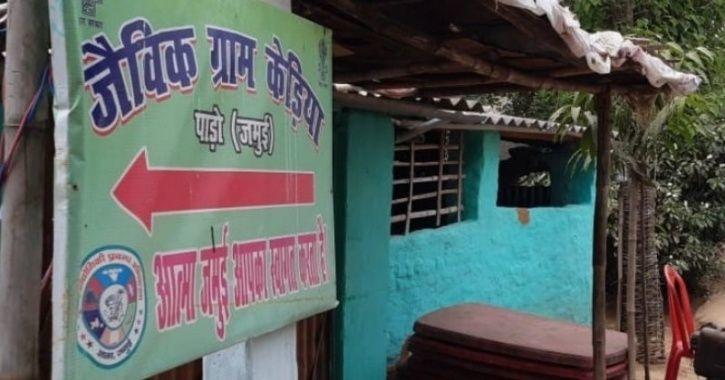
Kedia village

This Bihari village is an ecological village which practices organic farming and have prospered since then. Apart from that, the village has proper water conservation systems and cleanliness is maintained throughout the village. No one in the village is suffering from any kind of serious illness. Every house in the village has electricity supply and uses biogas to save electricity and fuel. All the farmers of Kedia village, followed the ‘Living Soils’ approach under ‘Food for life’ campaign’ run by Greenpeace. This approach is targeted to restore the ruined agricultural practices, by reducing chemical dependency and improve soil health through nourishment of the soil with biomass-based organic practices and materials. By applying scientific methods, existing knowledge and experiences the farmers successfully restored the soil of their village by coordination and collaboration with government for machinery. The villagers till date use only groundwater and lake water for irrigation. The unique toilets of the village households have no underground tanks so that the human waste can be used as a natural manure later on. The results have brought prosperity and happiness to the villagers by ending the dependence on commercial chemical-based materials and enjoying healthier yields with a up to 80% reduce in cost of inputs. The village organizes and celebrates a festival of organic farming called ‘Jashn-e-jaivik’. Greenpeace mentioned that they were able to make organic farming easier and successful in this village “With the help of many governmental schemes like ‘Swachh Bharat Mission’ and ‘Jaivik Krishi Yojana’ besides MNGREGA. Inspired by this, other villages around Kedia have also started adopting similar methods.

Picture sources: 1. India times, 2. Gaon connection and 3. Greenpeace.

The Author

CASE SUMMARY: R.M.D.C. VS. UNION OF INDIA

DETAILS:

Case Name: R. M. D. Chamarbaugwalla vs. Union of India

Citation: 1957 AIR 628, 1957 SCR 930

Court of jurisdiction: Supreme Court of India

Year of the Case: 9 April, 1957

Appellant: R. M. D. Chamarbaugwalla 

Respondent: Union of India

Bench/Judges: HON’BLE JUSTICE T. L. VENKATARAMA AYYAR, HON’BLE JUSTICE S. R. DASS (CJI), HON’BLE JUSTICE B. P. SINHA, HON’BLE JUSTICE S. K. DAS AND HON’BLE JUSTICE P. B. GAJENDRAGADKAR

SUMMARY:

In R.M.D.C. v. Union of India, AIR 1957 SC 628, the constitutionality of the Prize Competitions Act 1955, was challenged on the ground that it violated the Fundamental Right of the petitioners secured by Article 19(1(g). The impugned Act, provided for the control and regulation of prize competitions. It was contended that Section 2(d) of the impugned Act which defined the expression “prize competitions” included not only competitions of a gambling nature but also those in which success to a substantial degree depends on skill.

Having regard to the circumstances under which the impugned Act was passed, the Supreme Court held that it was to control and regulate prize competitions of a gambling character. Therefore, the Court stated that the application of impugned provision of the Act could be restricted to the competitions of gambling character. The provisions of the impugned Act were thus held severable in their application to competitions, in which, success did not depend, to any substantial extent, on skill. The Court held that when a Statute, was in part, void, it would be enforced as regards the rest, if that was severable from what was invalid, The Court then referred to the rules of construction laid down by the American Courts for the operation of the doctrine of severability and applied these to the present case.

The Supreme Court then summed up the rules relating to severability

1. In determining whether the valid parts of the statute are separable from the invalid parts thereof, it is the intention of the Legislature that is the determining factor. The test.to be applied is whether the Legislature would have enacted the valid part if it had known that the rest of the statute was invalid.

2. If the valid and invalid provisions are so indistinguishably mixed up that they cannot be separated from one another, then, the invalidity of a portion must result in the invalidity of the Act in its entirety. On the other hand, if they are so distinct and separate that after striking out what is invalid, what remains is in itself a complete code independent of the rest, then it will be upheld notwithstanding that the rest has become unenforceable.

3. Even when the provisions which are valid are distinct and separate from those which are invalid, if they all form parts of a single scheme which is intended to be operative as a whole, then also the invalidity of a part will result in the failure of the whole.

4. Likewise, when the valid and invalid parts of a statute are independent and do not form part of a scheme but what is left after omitting the invalid portion is so thin and truncated as to be in substance different from what it was when it emerged out of the legislature, then also it will be rejected in its entirety.

5. The reparability of the valid and invalid provision of a statute does not depend on whether the law is enacted in the same section or different sections (Vide Coley’s Constitutional Limitations, Vol. I, pp. 361-362), it is not the form, but the substance of the matter that is material, and that has to be ascertained on an examination of the Act as a whole and of the setting of the relevant provision therein.

6. If after the invalid portion is expunged from the statute what remains cannot be enforced without making alterations and modifications therein, then the whole of if must be struck down as void, as otherwise it will amount to judicial legislation.

7. In determining the legislative intent on the question of severability, it will be legitimate to take into account the history of legislation, its object, the title and the preamble to it.

REMARKS

Intention of the legislature will determine whether the valid part of a statute is severable from the invalid parts. If the valid and invalid provisions are so inseparably mixed up that they cannot be separated from another, then the irrationality of a portion must result in the invalidity of the Act in its whole. On the other hand, if they are so distinct and separate that after striking out what is invalid what remains is itself a complete code independent of the rest, then it will be upheld notwithstanding that the rest had become unenforceable.

Courts would be reluctant to declare a law invalid or ultra vires on account of unconstitutionality. Courts would accept an interpretation, which would be in favour of constitutionality rather than the one which would render the law unconstitutional. The court can resort to reading down a law in order to save it from being rendered unconstitutional. But while doing so, it cannot change the essence of the law and create a new law which in its opinion is more desirable.

INTERNATIONAL YOUTH DAY

 “A few heart-whole, sincere, and energetic men and women can do more in a year than a mob in a century.” –  Swami Vivekananda

International Youth Day is a United Nations-designated day when youth from different countries participate in events and discussions on socio-economic and socio-political issues. It is celebrated on august 12 every year.

This year the theme was ‘Youth Engagement for Global Action’. It focus on majorly three areas:

  • Engagement at the community level
  • Engagement at the national level (formulation of laws, policies, and their implementation)
  • Engagement at the global level.

Due to the coronavirus pandemic, this year no huge events are planned but the UN has launched a social media campaign, Join #31DaysOfYOUth, to celebrate young people throughout the month of August to help spread the word and strike up a conversation surrounding youth engagement for global action. Many online debates and discussions were done to ensure that needs of the young are met. Several universities, colleges and schools had organised a webinar to spread inter generational understanding, organisation of a youth forum to exchange ideas are too done.

Over the past weeks, maybe months, young people have been taking action and developing many creative ideas to face these challenging times, whether by helping their community, finding innovative learning ways, keeping a positive spirit, taking care of their relatives and loved ones, and much much more.

In this time of pandemic, it is important that governments too should listen to youth alongside other sections of the population in responding to COVID-19 challenges.

A young mind and body is far more productive both economy and politically. If directed towards right path they could do wonders for the country as a whole. This day every year lays emphasis on up liftment of people and contribute in spreading awareness about importance of human resources for development of oneself as well as the country.

It is not possible for civilization to flow backwards while there is youth in the world. Youth may be headstrong, but it will advance it allotted length.There is a fountain of youth: it is your mind, your talents, the creativity you bring to your life and the lives of people you love. When you learn to tap this source, you will truly have defeated age.

Reading Habit

One of the many goals which we want to achieve in life, developing a reading habit should be one. It may seem tough at first but with time and practice, everyone can achieve it. While some have mastered it, others might be struggling to be consistent with it. Many of us have tried reading at some point of time and failed to keep at it consistently. This may happen for a number of reasons but none of them mean that we can’t start with it again and give it a try. One of the most common ways in which people start reading is starting with a list of “Good books to start reading with”. The internet is flooded with such lists and many people have shared their suggestions. A book which has some literary value, is easy and engaging is a great choice to start with.

According to many bloggers and writers the following list of books can help someone who has been trying to start reading for a long time. 

Photo by Leah Kelley on Pexels.com
  • The Kite Runner by Khaled Hosseini
  • Train to Pakistan by Khushwant Singh
  • The Diary of a Young Girl by Anne Frank
  • The Harry Potter Series by J.K Rowling
  • Becoming by Michelle Obama
  • The Alchemist by Paulo Coelho
Photo by cottonbro on Pexels.com

While it may work for some, others may not find it helpful. One of the common things which we fail to notice is the fact that most of us can’t bring ourselves to sit down with a book. This may be due to lack of time. In the middle of a busy day we fail to make time for reading. External factors like a proper surrounding can also be the reason for us getting distracted and impatient. So for people who can relate with these, a few suggestions can work.

Firstly, set a separate time for reading. Look at your schedule and take out a time which may be ideal for starting a new activity. Setting aside a specific time of the day for reading will help you focus more and be attentive.

Second, create a good reading atmosphere. Clean your surroundings and declutter everything around you. Attention depends a lot on external factors and an unkept background can often make you inattentive and disturbed.

Third, make a reading list. Write down all the books which you want to read next and keep ticking them off once you’re done. This will be like a to-do list and will motivate you to read. You can also take up reading challenges like ‘Ten books in a year’ or ‘One book a month’. Remember to start small and go one step at a time.

Fourth, start reading with a friend. Select a book and make plans to discuss with your friend once you complete it. You can also start talking about it among yourselves and discuss about what may happen next. This will definitely make you finish the book and also speed up your pace.

Fifth, be consistent. Make it a point to read every day. Even a small 15 minute would do. Once you skip a day it will become a habit and you’ll start repeating it. The same goes for the opposite. Once reading everyday becomes a habit you have developed the habit of reading quite well. So happy reading!

Bulimia:An Eating Disorder

In today’s instagram world,People especially adolescents are getting image and body conscious.They look at the perfect bodies of celebrities and aspire to be like them.In this aspiration,they are psychologically and physically wounded.Most of such people experience eating disorders where in they undergo extreme changes in their eating and exercise habits.Ultimately they damage themselves.

So,in today’s blog lets look at one of the eating disorders called Bulimia Nervosa,it’s causes and it’s impacts.Let’s get started.

Bulimia nervosa is an eating disorder characterized by episodes of binge eating—consuming a lot of food quickly—followed by compensatory behavior, most commonly vomiting or “purging.” People who are bulimic often feel a lack of control over their eating. A bulimic can consume as many as 3,400 calories in little more than an hour and as many as 20,000 calories in eight hours.

People with bulimia often know they have a problem and are afraid of their inability to stop eating. Bingeing is then followed by purging — namely, self-induced vomiting or the abuse of diuretics or laxatives. Bingeing and purging are often performed in secret, with feelings of shame alternating with relief.

The bingeing and purging cycle is usually repeated several times a week. As with anorexia, people with bulimia often have coexisting psychological illnesses, such as depression, anxiety, and substance abuse problems. Many physical dysfunctions result from the purging, including electrolyte imbalances, gastrointestinal troubles, and dental problems.

An estimated one to four percent of females have bulimia nervosa during their lifetime. The prevalence in males is unknown, but bulimia nervosa is far less common in males than females. Most cases begin in the late teens and early 20s, but can go undetected until the 30s or 40s.

SYMPTOMS

Bulimia signs and symptoms may include:

  • Being preoccupied with your body shape and weight
  • Living in fear of gaining weight
  • Repeated episodes of eating abnormally large amounts of food in one sitting
  • Feeling a loss of control during bingeing — like you can’t stop eating or can’t control what you eat
  • Forcing yourself to vomit or exercising too much to keep from gaining weight after bingeing
  • Using laxatives, diuretics or enemas after eating when they’re not needed
  • Fasting, restricting calories or avoiding certain foods between binges
  • Using dietary supplements or herbal products excessively for weight loss

CAUSES

Exact causes are not completely known and are believed to complex.Hence there is no single known cause of bulimia, but there are some factors that may play a part,such as:

  • Culture:As in strict body expectations:Slim and trim girls wanted for marriage in India.
  • Families:Constant pressure and criticism from parents on looks of children
  • Life changes or stressful events: can trigger bulimia.
  • Personality traits: Those with bulimia may have low self-esteem and feel hopeless.
  • Biology.:Genes, hormones, and other biological factors may contribute to development of bulimia.

Impact

Bulimia has a great impact on the individual and can lead to following complications:

  • Negative self-esteem and problems with relationships and social functioning
  • Dehydration leading to kidney failure
  • Heart problems
  • Severe tooth decay and gum disease
  • Absent or irregular periods in females
  • Digestive problems
  • Anxiety, depression, personality disorders or bipolar disorder
  • Misuse of alcohol or drugs
  • Self-injury and suicidal thoughts.

Management

If left untreated,bulimia can create major complications in life as mentioned above.Hence if you see your loved ones experiencing symptoms of bulimia,support them and console them.If the symptoms are unbearable,immediately consult a doctor and psychologist who will be able to help the patient successfully.

Please spread empathy and kindness.Acceptance and kindness can prevent bulimia in such insecure people.Every difficulty can be defeated with empathy,patience and willingness to improve and come out.

If you all found the article useful,do give it a like.

Thankyou!

Stay Kind!

PERSONALITY THEORIES

According to the American Psychological Association,Personality refers to an individual differences in characteristic patterns of thinking, feeling and behaving. The study of personality focuses on two broad areas: One is understanding individual differences in particular personality characteristics, such as sociability or irritability. The other is understanding how the various parts of a person come together as a whole.

So this blog will introduce the readers to some important theories used to describe personality.Let’s get started!

1) FREUD PSYCHOANALYTICAL PERSPECTIVE:

 According to Sigmund Freud Father of Psychoanalysis, an adult personality generally has three determinants: Id, Ego and Super Ego.The outcome of the combination of all the three determinants shapes an adult personality. Freud believed than an individual’s personality has three parts and thus is often called as tripartite personality.

  • Id:Irrational demands and urge.
  • Ego:Helps in fulfillment of Id after taking into consideration the reality.
  • Superego:Moral constraints of the individual.

Defense mechanisms play an important role in pushing unrealistic thoughts out of awareness. Stressful thoughts which are threatening to an individual’s survival should be pushed into unconscious mind to reduce anxiety through them.

2)ERIK ERIKSON:PSYCHOSOCIAL DEVELOPMENT THEORY:-

Erikson believes there are 8 stages in a person’s life and to enter into the next stage,a virtue has to be learnt from the previous stage and this leads to personality development.He focuses on different identity crisis in a person’s lifespan.As in

STAGE 1:Trust v/s Mistrust;Virtue:Hope

STAGE 2:Autonomy v/s Doubt;Virtue:Will

STAGE 3:Initiative v/s Guilt;Virtue:Sense of Purpose.

STAGE 4:Industriousness v/s Inferiorty;Virtue:Competence

STAGE 5:Identity cohesion v/s Role confusion;Virtue:Fidelity

STAGE 6:Intimacy v/s Isolation;Virtue:Love

STAGE 7:Generativity v/s Stagnation;Virtue:Care

STAGE 8:Ego Integrity v/s Despair;Virtue:Wisdom

3)CARL JUNG:INTOVERSION V/S EXTRAVERSION

Carl Jung established a theory, which saw universal types in human personality. The types categorized by Carl Jung are present in all of us. But, certain types are predominant over the normal mode of organizing our experience.Carl Jung also developed a theory of personality. His theory is one of the type theories of personality, as it involved typology of introversion and extraversion.There are 4 functions :Sensing,intuiting,thinking and feeling.

4)JULIAN ROTTER-LOCUS OF CONTROL

“Locus of Control.” For many people, their only exposure to the ideas of Julian B. Rotter is his concept of generalized expectancies for control of reinforcement, more commonly known as locus of control. Locus of control refers to people’s very general, cross-situational beliefs about what determines whether or not they get reinforced in life. People can be classified along a continuum from very internal to very external.
People with a strong internal locus of control believe that the responsibility for whether or not they get reinforced ultimately lies with themselves. Internals believe that success or failure is due to their own efforts. In contrast, externals believe that the reinforcers in life are controlled by luck, chance, or powerful others. Therefore, they see little impact of their own efforts on the amount of reinforcement they receive.

Thus we come to the end of the blog.This blog is aimed at introducing the readers to the world of personality analysis.However one must remember that human beings are complex and not one theory explains all the human behavior.The readers are requested to read more articles about the same and fill themselves with knowledge.

Give a like,if you all felt this article was informative and interesting.

Thankyou!

ENVIRONMENT IMPACT ASSESSMENT (EIA)

Definition of Environment Impact Assessment:

The International Association for Impact Assessment describes an environmental impact assessment as “a mechanism to determine, forecast, evaluate and mitigate the biophysical, cultural and other related effects of development initiatives prior to the adoption of major decisions and commitments”.

“A systematic process of identifying future consequences of a current or proposed action.” The process is- Transparency, Certainty, Participation, Practicability, Electricity, Cost effectiveness, Credibility, Accountability.

The Finnish International Development Agency (FINNIDA)[1], have defined Environment Impact Assessment in the most innovative way in following ways:

1. The Environment Impact Assessment may be defined as a planning tool which is used, together with the project feasibility study to ensure that, the project plan is the optimal economic. Environmental plan, i.e. the plan is environmentally as well as economically sound and thus represents the best approach to planning for development projects in order that continuing economic development will be sustainable. The essential message of the famed UN Brundtland Report of 1987 is that, the only sustainable development is economic-cum-environmental development;

2. The Environment Impact Assessment is not intended to disrupt nor to impede economic development, a project plan which is economic cum-environmental will have a higher benefit/cost ratio than a plan which is not responsive to environmental needs, especially when long term as well as short term effects are considered;

3. The role of Environment Impact Assessment is not just to identify and describe environmental hazards which a proposed project will likely cause if no EPM (Environmental Protection Measures) are included in the project. Rather, the Environment Impact Assessment should specify the necessary EPM and ensure that these EPM are included in the overall project plan as delineated by feasibility study.

Need for Environment Impact Assessment:

Every anthropogenic activity has some impact on the environment, but these activities cannot be stopped, because human beings cannot survive, without taking up these activities for his food, security and other needs. Environment Impact Assessment (EIA) is one such tool available with the planners to achieve the concerned goal.

Principle 17 of Rio Declaration, 1992 also requires the states to follow EIA. It states as follows:

“Environmental Impact Assessment, as a national instruments shall be undertaken for proposed activities that are likely to have a significant adverse impact on the environment, and are subject to a decision of a competent national authority.”[2]

The objective of Environment Impact Assessment (EIA) is to foresee the potential environmental problems that would arise out of a development address them in the projects planning and design stage.

The objectives of EIA described by Council of European Economic Committee are as follows:

“The effects of the project on the environment must be measured in order to take into account issues related to the security of human health, to contribute to the quality of life through an improved environment, to safeguard the diversity of species and to preserve the reproductive potential of the ecosystem as a basic resource of life. According to the EIA, the safest environmental strategy is to avoid negative consequences rather than seek to mitigate them subsequently.”[3]

By using Environment Impact Assessment (EIA) both environmental and economic benefits can be achieved, such as reduced cost and time of project implementation and design, clean-up costs and impacts of laws and regulations.

Origin of Environment Impact Assessment:

The technique of EIA finds its origin from the “precautionary principle” which requires refusal of consent or approval of the developmental activity by the competent authority, if such project poses threat of serious or irreversible environmental damage. To determine the serious or irreversible nature of the environmental effects on the developmental activity, EIA is necessary. The precautionary principle’ mandates that the EIA should be made obligatory for developmental activities which are likely to have significant adverse effect on the environment. In case, EIA reveals that the developmental activity poses threat of serious or irreversible environmental damage, the competent authority must withhold the consent for approval or permission to such activity.

The ‘precautionary principle’ mandates that EIA should be carried not only at the time of commencement of the developmental project development during the operation of the project. EIA involves continuing assessment and evaluation of the environmental effects on the developmental projects as the project is in operation and is not confined to pre-project evaluation of possible environmental effects.

India and Environment Impact Assessment:

EIA, in India started in 1976–77 as the Planning Commission asked the Science and Technology Ministry of the period to examine the projects in the river valley from an environmental point of view. This was subsequently extended to cover those projects which required approval of the Public Investment Board (PIB), but as these were only administrative decisions and lacks statutory backing the Government decided to give it statutory backing under Environment (Protection) Act, 1980. Thereafter, a notification in this regard was issued on 27th January 1994 under the Environment (Protection) Act, 1986 which was subsequently amended on 4th May 1994, 10th April 1997, 27th January 2000 and September 14, 2006 making environment impact assessment (EIA) mandatory for 30 activities. Some practices allowed under the Coastal Regulation Notification Zone 1991 also entail clearance.

Further, Government notifies, from time to time, certain areas in the country as ecologically sensitive and developmental activities to be taken up, these areas are regulated as per the provisions of these notifications. Such as include Coastal Regulation Zone, Doon valley, Murud-Janjira, Dahanud, Namaligarh, Taj trapezium and Aravalli ranges in Gurgaon (Haryana) and Alwar (Rajasthan) districts. Activities to be conducted in forest areas are administered by Forest (Conservation) Act and Wild Life Protection Act.


[1] Guidelines for Impact Association in Development Assistance, Finnish International FINNIDA’s Draft, 1989.

[2] https://www.iaia.org/wiki-details.php?ID=4

[3] “EEC Directive dated 27 June 1985, 85/337/EEC of 27 June 1985 OJL 175/40, 5 July 1985.”

Maneka Gandhi case: The one on the right to travel abroad

Background :    

The Supreme Court in the case of  Satwant Singh Sawhney vs D. Ramarathnam[1] held that the right to travel abroad was well within the ambit of Article 21 of the Constitution of India. Therefore, to combat the above laid down law the Parliament enacted Passports Act 1967.

Passport Act, 1967 empowers the authorities to impound the passport of certain

individual if such action is necessary in the interest of sovereignty and integrity of India, the security of India, friendly relations of India with any foreign country, or general public.[2]  The reasons of such impoundment are also to be communicated the affected party however in the interests of the general public these reasons can be withheld.[3]

In the present case, Maneka Gandhi, the petitioner, was issued a passport on 1st July, 1976 under the Passport Act 1967. The regional passport officer, New Delhi, issued a letter on 2nd July 1977 addressed to the petitioner, in which she was asked to surrender her passport under section 10(3)(c)of the Act in Public Interest, within seven days from the date of receipt of the letter. The petitioner immediately reverted back to the authorities seeking in return a copy of the statement of reasons for such order. However, the Government of India, Ministry of External Affairs refused to produce any such reason in the interest of general public. Later, a writ petition was filed by the petitioner under Article 32 of the Constitution in the Supreme Court challenging the order as violating her fundamental rights guaranteed under Article 21 of the Constitution.

Issues:

  1. Whether right to go abroad is a part of Right to Personal Liberty under Article 21.
  2. Whether the Passport Act prescribes a ‘procedure’ as required by Article 21 before depriving a person from the right guaranteed under the said article.
  • Whether section 10(3)(c) of the Passport Act violates Article 14,19(1) (a) and 21of the Constitution.
  • Whether the impugned order of the Regional passport officer is in contravention of the principle of natural justice.

Judgments :

  • To the extent to which Section 10(3)(c) of the Passport Act, 1967 authorises the passport authority to impound a passport “in the interest of the general public”, it does violate Article 14 of the Constitution since it confers vague and undefined power on the passport authority.
  • Section 10(3)(c) is void as conferring an arbitrary power since it does not provide for a hearing to the holder of the passport before the passport is impounded.
  • Section 10(3)(c) violates Article 21 of the Constitution since it does not prescribe ‘procedure’ within the meaning of that article and the procedure practiced is worst.
  • Section 10(3)(c) is against Articles 19(1)(a) and 19(1)(g) since it permits restrictions to be imposed on the rights guaranteed by these articles even though such restrictions cannot be imposed under articles 19(2) and 19(6).
  • A new doctrine of post decisional theory was evolved.

The court held that though the phrase used in Article 21 is “procedure established by law” instead of “due process of law” however, the procedure must be free from arbitrariness and irrationality. The court also managed to respect and protect the sanctity of the Constitution makers by this black stain that the legislature was trying to portray. The procedure established by law must satisfy certain requisites in the sense of being reasonable and just and it cannot be arbitrary depriving the citizens the Fundamental rights. The court also for once and for all rested the debate by holding that each Fundamental Rights are not distinct from each other whereas they are mutually dependent on each other.

Conclusion:

The court in Maneka Gandhi adopted the dissenting view of Justice Fazal Ali in A.K. Gopalan v. State of Madras[4] . It was overruled by stating that there is a unique relationship between the provisions of Article 14, 19 & 21 and every law must pass the tests of the said provisions. Therefore, the court held that the while the procedure established by law should be reasonable, just and fair it shall be free from any unreasonableness and arbitrariness.

The judgment saved the citizens from unquestionable actions of Executive, the sanctity of Parliamentary law when it did not strike down Section 10(3)(c) & 10(5) of 1967 Act. The court also reminded the authorities to only rarely use the prerogative of Section 10(5) so as to satisfy that their actions were rational and well thought. The court held that Section 10(3)(c) & 10(5) is an administrative order therefore, open to challenge on the grounds of malafide, unreasonable, denial of natural justice and ultra vires.

One of the significant interpretation in this case is the discovery of inter-connections between the three Articles- Article 14, 19 and 21. A law which prescribes a procedure for depriving a person of  “personal liberty” has to fulfill the requirements of Articles 14 and 19 also.

It was finally held by the court that the right to travel and go outside the country is included in the Right to Personal liberty guaranteed under Article 21. The Court ruled that the mere existence of an enabling law was not enough to restrain personal liberty. Such a law must also be “just, fair and reasonable”.

The judgment’s importance can be seen today also because the way in which the bench construed Article 21 and expanded its horizons has given way for the resolving of problems left unsolved by the Parliament. It’s quite evident that this judgment has played an imperative role in construing Right to clean Air, Right to Clean Water, Right to freedom from Noise Pollution, Speedy Trial, Standard Education, Fair Trial, Legal Aid, Right to Livelihood, Right to Food, Right to Medical Care, Right to Clean Environment etc., as a part of Right to Life & Personal liberty mentioned under Article 21.


[1] Satwant Singh Sawhney vs D. Ramarathnam,(1967) 3 S.C.R. 525

[2] Passport Act,1967, No. 15, Acts of Parliament, 1967 (India)

[3] Passport Act,1967, No. 15, Acts of Parliament, 1967 (India)

[4] A.K. Gopalan v. State of Madras,A.I.R. 1950 S.C. 27

Promissory estoppel as a substitute to the consideration

The doctrine of consideration and promissory estoppel is a term used in contract law that deals with the bargaining condition of the contract.

The Doctrine of Promissory Estoppel

The doctrine of promissory estoppel is an equitable doctrine. It is a principal evolved by equity to avoid injustice to the parties. The true principal of promissory estoppel is where one party has by his worlds on conduct made to the offer a clear and unequivocal promise which is intended to create legal relations or effect a legal relationship to arise in the future knowing or intending that it would be acted upon by the other party to whom the promise is made and it is in fact so acted upon by the other party, the promise would be binding on the party making it and he would not be entitled to go upon it is necessary for the application of the doctrine that one party has his position in reliance of the promise.in other words, promissory estoppel is a unilateral promise from one side and intended to induce some action by the other party. The promisee is note bound to act, for his gives no promisor to his promise. His act is at the same time an acceptance of and a consideration for the same. To attract the application of this doctrine, the following ingredient must be satisfied:

1)         That there was a promise in regard to something to be done in future.

2)         That the promise was intended to affect the legal relationship of the parties and to be acted upon accordingly.

3)         That it is one on which the other side has, in fact acted to its prejudice. 

The case of Hughes v. Metropolitan Railway[1] is known as a part of the origin of the doctrine. In the case the property owner gave his tenant the option of repairing the property in six months or face forfeiture. Under the lease, the owner, could make the tenant. Metropolitan Railway, do repairs on the building, so the tenant had six months to complete the repairs. Before the six months had transpired, the tenant proposed to the owner to buy the property. There were negotiations for the purchase of the property, but it wasn’t settled. After the six months expired, the owner sued the tenant for breach of contract and attempted to evict the tenant. The tenant had completed the agreed upon repairs past the six-month deadline. The owner was successful in suing the tenant, however, the appellate court overruled the decision. It was originally believed that the plaintiffs were trying to take advantage of the defendants by negotiating with them and then stalling, causing the six months to expire and then suing them. But that wasn’t true. They sued them because the six months had expired.

The ruling was that through their dealings, both parties made it inequitable to count the time of the negotiations as a part of the six months. The defendants relied on this promise, and therefore, it would be unfair to make them liable in this case. The implied promise is enough to allow estoppel to apply.

The Doctrine of Consideration

Consideration is defined under section. 2(d) of Indian Contract Act, 1872. The doctrine of consideration is defined as an act, or promise, of the price in which the other party is bought, and the entire agreements is then enforceable. The doctrine of consideration is important in all contracts, as it refers simply to an agreement that is legally enforceable.

However, it is important to note that there have been significant modifications to the pre-existing doctrine of consideration.

 In the case of Dunlop Pneumatic Tyre Co Ltd v Selfridge Ltd[2] the court held in a unanimous decision that Dunlop could not claim for damages in the circumstances. The court found that firstly, only a party to a contract can claim upon it. Secondly, Dunlop had not given any consideration to Selfridge and therefore there could be no binding contract between the parties. Lastly, Dunlop was not listed as an agent within the contract and could therefore not be included as a valid third-party who had rights to claim on the contract.

Promissory estoppel as a substitute to the consideration

The doctrine of promissory estoppel is an alternative to the doctrine of consideration. It refers to a contract that cannot be withdrawn because one party acted on the other parties’ promise. In most cases, one party was harmed or served injustice because of the broken promise that they relied on. The promissory estoppel acts as a legal shield against the other’s claim, even though they did not give any consideration.

The doctrine of promissory estoppel is the exception to the contract consideration rule. It implies that a contracted promise is enforceable by law even without any consideration present. It is important, however, to understand that the promissory estoppel can only be used as a legal defense and not to initiate a legal claim.

Promissory estoppel is an important doctrine in contract law in which a non-contractual promise lacking consideration rendered enforceable to avoid an injustice. Promissory estoppel arises when injustice can be avoided only by means of the enforcement of a promise that would otherwise be unenforceable for lack of consideration. It is usually applied in cases in which a party has relied on another party’s promise, and that party’s nonbinding promise will be enforced because to do otherwise would be unfair. Promissory estoppel is commonly used in the context of charitable donations. In some jurisdictions the charity must have reliance on the promise but in others reliance is not necessary.


[1] UKHL 1977 AC 439

[2] UKHL 1915 AC 847