A New Approach to Figure Out What You’re Meant to Do

A New Approach to Figure Out What You’re Meant to Do was originally published on The Muse, a great place to research companies and careers. Click here to search for great jobs and companies near you.
Way back in school, when you first thought about the working world, I bet you had a pretty limited view of what kinds of jobs existed: Doctor, teacher, lawyer, and, maybe accountant.
But even though, you eventually learned that there were lots of other careers out there, you probably still had a limited view of what to do with your life. Based on your education, your upbringing, and maybe how many episodes of “CSI” you’d watched, you began to formulate a vision. Instead of starting with “What do I like to do?” you started at the end, trying to fit your future a box that made sense with your life and learning thus far.
The result? The problem? Many of us end up in jobs that aren’t quite right, simply because we didn’t know there were other options.
My friend Lisa is a great example. A successful executive at a digital marketing agency for many years, she realized she wasn’t happy. She mulled over a career transition and decided that what she really wanted to do was help people. She assumed that meant returning to grad school for a counseling degree.
On the eve of her first day of classes, she realized that it wasn’t counseling that drove her per se; it was the “helping” part—something she’d done successfully without a masters. Instead of pursuing this degree, she found a way to put her skills and interest to use, and she’s now a well-respected career coach at my company.
What you really need to do if you want to carve a new path for yourself is examine what’s brought you joy and fulfillment in the past. You can put together a full picture of the type of activities, work environment, and organization in which you’d be most satisfied—before you commit to an expensive degree or training program.
What Lisa did, essentially, and what you can do, too—is “follow the breadcrumbs” to figure out what you’re meant to do. Here’s how to get started:

1. Look Behind You

If you’re over the age of 25, your past is full of experiences that are loaded with clues. Think back to previous work experiences, school and volunteer projects, interactions with friends and co-workers, and ask yourself:
  • What do people consistently turn to me for? Help in prepping their presentations? Wardrobe or home styling suggestions? Advice on how to handle sticky interpersonal situations?
  • What do I love so much I’d do for free? You may not be able to build a career out of whitewater rafting or cartooning, but think about this information as a jumping-off point.
  • What do I do at work that’s not a part of my job, and why do I do it (even when it’s not my job and why)? Do you offer to create presentations, plan the holiday party, negotiate the cell phone bill? What motivates you to do these “extra” things? Is it a desire to help others, learn new skills, solve problems?

2. Look Around You

It’s important to look at your current environment, how you got there, what floats your boat—and what doesn’t. Ask yourself:
  • What do I love about my working environment right now? Friday happy hours, no micromanaging, latest in tech tools?
  • What would I change? More professional development, ability to telecommute, more collaboration?
  • What can I not do without? Autonomy, flex hours, involved boss?
Review your answers to find patterns. Do you thrive in independent working situations, or do you love being part of a collaborative team? Do you like to research and build to an optimal solution, or do you prefer solving in-the-moment problems and challenges under a deadline? Do you get a lot of satisfaction from helping coach or teach others? You may want to get assistance from a friend or coach at this point, as sometimes it’s tough to find commonalities on your own

STILL HAVEN’T FOUND THE RIGHT JOB FOR YOU?

Good thing we have 20,000+ openings listed just one click away
This is the one click
'jobs'

3. Look Ahead

Once you’ve got a good sense of what you love (and don’t love) about where you are and where you’ve been, you can apply those findings to your future.
If you’ve discovered you enjoy solving urgent problems, especially those involving interpersonal conflict, ask yourself where you could find someone with those skills. Ask others. Investigate. Do a Google search.
For instance, a simple Google search on “Great jobs for conflict resolution” brings up several opportunities you might not have considered. You can do the same search with “Jobs for funny people,” “Jobs for good communicators,” or “Jobs for people with great taste buds.”
Don’t rush through this important stage. I’ve noticed that my clients often undergo what psychologists call “attention bias. Once you become aware of something, you start to see it in unexpected places. Let this phenomenon work for you, and use this cognitive illusion to your advantage by giving it time and attention.
Take your findings and notice how it expands your horizons. Maybe your ears perk up when your neighbor mentions that her cousin works as a contract negotiator. Over dinner with your best friend’s parents, you learn that there’s a huge demand for people with great negotiation skills in the retail industry.
The goal is to grow your concept of where your most enjoyable and fulfilling skills and talents can be employed.
Once you’ve got a sense of the types of roles that sound interesting and the kinds of companies that appeal to you, it’s up to you to go out and explore more deeply. There’s so much more in the world than our limited view of what “work” entails. Open your eyes to the possibilities. It’s easy to find opportunities when you know how and where to look.


How to Write a Cover Letter

College student job hunting
While many jobs no longer require cover letters (especially most jobs on WayUp), when a job does require one, your cover letter could be a big part of whether or not you get to the next round. If you haven’t written a cover letter before (or even if you have), you may be wondering whether writing one is really necessary. The answer is yes, if you do it effectively. Think of your cover letter as your edge. If you write it well, it will give potential employers an insight into your personality, something that’s hard to discover by just skimming your resume.
Here’s our simple formula to writing an amazing cover letter.

Don’t restate everything in your resume. Instead, tell your story.

Think of your resume and your cover letter as a package — they complement each other, but they’re not the same thing. While your resume covers your educational background and work experience, your cover letter tells a story about who you are and what you’d like to do with your career. Since recruiters look through hundreds (sometimes thousands) of resumes every day, a memorable cover letter is more likely to stand out. Give them something to remember by highlighting some of your unique qualities.

Keep it short and to the point.

Cover letters should be short, sweet and to the point. Keep in mind that the recruiter is likely reading dozens or hundreds of them, so make yours pop in a succinct way, and definitely don’t make it longer than one page.
Opening paragraph
In two-three sentences, explain who you are and what position or program you’re applying for.
Second paragraph
Then, in one-two sentences explain why you want the job. Be sure to mention your knowledge of the industry and your interest in the company. This is where research will come in handy.
Third paragraph
In three sentences, explain why you’re qualified for the job. Include relevant work experience (paid and unpaid internships or other jobs you’ve had) and mention classes you’ve taken that have guided you towards this field.
Closing sentence
Your final sentence is all about finishing strong. Tell the employer that you look forward to hearing from them and include your contact information (email and phone number).

Ask an advisor or professor to look it over.

Once you’ve finished writing your cover letter, make a few edits to ensure that there are no typos. Then ask an advisor or professor to look it over, focusing on whether there are any additional areas you can highlight or any unique skills you can mention. Make sure to incorporate their feedback before doing a final edit and pressing send.
Although writing a cover letter isn’t always necessary when applying for a job, if done effectively it can be a valuable add-on to your job application. By following the steps outlined here, you can write a great cover letter and land the internship or entry-level job you’ve been dreaming of.

Alumni Coaching Hotline

No matter how hard we try, we rarely have all the answers—particularly when it comes to our careers and professional development. Many times we turn to friends and family for advice, but frankly, they don’t always know what they’re talking about! When you were in college, you had the robust Career Center to lean on, but now it’s been a few years since graduation and you’re not sure where to turn.
It can be tempting to simply Google, “Top Interview Questions” or “Best Resume Template,” but you may find the internet to be a contradicting and confusing place—particularly when it comes to what makes the most sense for your career and professional growth. This is even more true as you move further along in your career and need more nuanced insight and advice. So if the internet can’t be trusted and you’re not sure your parents’ advice still holds, where should you go?
Turn to the career experts that make up the Alumni Career & Professional Development team, of course! They offer, “Quick Questions,” scheduled hours that staff has set aside throughout the week when they are available to alumni.  Call in or email about your pressing career questions during Quick Questions hours. Topics can include, but are not limited to, resume and cover letter reviews, interview strategy and advice, salary negotiation and networking tips. Appointments are on a first-come, first-served basis and typically last about 15 minutes. Staff is available by phone at 303-871-4331 at the following times:

7 Things You Need to Double-Check Before You Submit Your Cover Letter

7 Things You Need to Double-Check Before You Submit Your Cover Letter was originally published on The Muse, a great place to research companies and careers. Click here to search for great jobs and companies near you.
Congrats, you did all the hard work that comes with writing the ultimate cover letter!
You included all your relevant experience, you added a creative and eye-catching introduction, and you ended on a great note. (Or, at least I hope you did all these things.) You’re so close to pressing “send” and getting one step closer to that dream job.
But—you probably know where I’m going with this—before you declare you’re completely and utterly done, you have to give it one more edit.
Not sure what you should keep an eye out for while double checking your work? Everything you need to think about is below:

1. The Hiring Manager’s Name

First off, are you addressing your cover letter to the right person? Notice how I said person here, not “To Whom it May Concern” or “Dear Hiring Manager.” You should always do your best to find the name of the hiring manager so that your cover letter is personalized, shows you did your research, and proves to the reader it’s not a copy-and-paste job you send to everyone.
Then, check the spelling, as well as their title. According to career expert Lily Zhang, when in doubt of “Ms.” vs. “Mrs.” vs. “Dr.”, it’s better to just drop the title.

2. The Company’s Name

Similarly, this is crucial to check, especially if your mind (and computer) is jam-packed with various company names. Not only should you question if it’s the right name, but also is it spelled correctly? Do you include the full name (for example, is there an “Inc.” at the end)? The more considerate you are of their reputation, the more likely they’ll read on.

3. Your Contact Information

How horrible would it be if your cover letter was absolutely error-free, except the hiring manager couldn’t reach you?
Pretty horrible, I’d imagine.
Stop this from even being a possibility by making sure your address, phone number, email, or any other form of communication is included and correct.

4. Dates

Now, I’m going to hope you don’t use the exact same cover letter for every job you apply to, right?
Vigorously shakes head.
Good—but if you did use older ones as a template, you may want to check that the dates included are accurate. For example, if the letter is a year old, would you now be working in marketing for “the past two years,” not “the past year.”
And, don’t forget about the formal date in the upper corner! If you wrote it last week, make sure the date is the same as the day you actually submit it.

5. Length

Does the application box have a character limit? Or, will it get cut off after a certain length? Best to be safe and copy and paste your work into Wordcounter.net and see how you’re doing.
And, if you find it’s too long after all, we have just the tips to cut it down without losing the important stuff.

DOES YOUR COVER LETTER CHECK ALL THESE BOXES?

Great! Now get out there and land some interviews.
20,000+ openings right this way
'jobs'

6. Formatting

It would be nice if everyone used the exact same program, brand of computer, and font as you, but this just isn’t the case. Which means there’s always a possibility that that pretty and neat cover letter on your PC won’t look so pretty and neat on the hiring manager’s Mac.
To avoid this, simply download it as a PDF to “freeze” it in its place (and make it easy for anyone to open without Microsoft Word) and check that it looks good on two different computers or phones.
 7. Basic Spelling and Grammar
Let’s face it, spellcheck has let us down before, and it could do it again. So, print it out (seriously, print it out, don’t just say you will and do it on your computer) and give it one more proofread for spelling and grammar mistakes.
For example, is it “your” or “you’re”? Did you mean “affect” or “effect”? (Hint: one’s a verb, one’s a noun). Do you consistently use oxford commas? Even the tiniest mistake could turn a busy hiring manager away from reading on—especially if the job you’re applying to requires “good communication skills.”
If you’re unsure what to look out for, maybe take a gander at these commonly misspelled words and these words people mix up.
OK—we promise you’re done now. Good luck!

My Team Reviews 1,000,000 Resumes a Year and These Are the People Who Stand Out

My Team Reviews 1,000,000 Resumes a Year and These Are the People Who Stand Out was originally published on The Muse, a great place to research companies and careers. Click here to search for great jobs and companies near you.
Does standing out really help you get hired? And is there such a thing as being too different? The answer is yes—to both.
As VP of Talent Acquisition at Johnson & Johnson, I’ve seen it all: the good, the bad, and the pink. (No really, we’ve received applications printed on pink paper and sprayed with perfume.) And after overseeing a team that screens one million resumes a year, I can tell you how to stand out from the crowd—the right way.
So, if you’re thinking of taking a creative approach, keep the following in mind:

Do: Show Off Your Work in a Portfolio

Why not take a cue from designers and architects and display your accomplishments in a portfolio?
Even if you don’t work in one of those two fields, you can still showcase a recent project in a visually interesting way. For example, I recently interviewed a digital marketer who walked me through her three most recent influencer-marketing projects. She had created a simple PowerPoint presentation with three case studies outlining what she had done and the results for each initiative. She made it easy to see how she could add tangible value to our business by highlighting how she approached these influencers and how she measured her projects’ success.
Even before the interview stage, a portfolio can help you get noticed. For example, you can create a personal website that showcases your work (more on exactly how to do that here). You can send the link to networking contacts and even include it your email signature.

Don’t: Go for Quantity Over Quality

Do you know someone who humblebrags about sending out hundreds of applications? If so, my guess is they achieved this seemingly impressive feat by sending a generic message out as widely as possible.
I receive at least 10 LinkedIn messages a day from candidates throwing their resume over the digital fence and hoping it lands. These generic messages expect me to do the work to match them to our open jobs.
While using social media in your job search can be an effective strategy, using it to mass contact decision-makers with a form message is a gimmick (and one that doesn’t work). For all I know, your exact message has also been sent to 20 other companies. How do I know that it’s our company that you’re really interested in?
Instead, take a more thoughtful approach. Utilize your professional network. Do you know anyone at the company you’d like to work at? If so, find out whether the company has an employee referral program and send this note. If you reach out to someone cold, use a customized template.

I BET YOU FEEL LIKE YOU CAN GO AFTER ANY JOB YOU WANT NOW

…Within reason of course, let’s not go completely nuts.
Check Out 20,000+ Openings Now
'jobs'

Do: Solve a Company Problem

Do your research on the role you’ve applied for. What’s the team working on? Can you identify any pain points? Even better, can you solve them?
Demonstrate how much you want to work at the company by arriving at the interview equipped with fresh ideas and solutions. Knock their socks off with your insight and give the recruiter a sneak preview of what they’ll be getting.
For example, I recently interviewed a social media manager who came to the interview with a complete scan of our social media properties and a set of recommendations that left me wondering what we had been doing the last year. He not only demonstrated that he had the skills needed to be successful in the job but also he cared enough about the opportunity to put in the work before we gave him the job (which we did).
Remember, your relationship with your boss starts during the interview process, not on your first day!

Don’t: Propose Something That Shows You’re Out of Touch

Caveat: It’s not enough for your solution to be innovative. It only works if it still fits with the overall goals, vision, and values of the organization.
For example, just last week, we interviewed a candidate who suggested a sales method that was so far removed from the values of the J&J Credo that we had to wonder if he’d even heard of it. A matter of minutes spent researching the company would have revealed that it’s the underpinning to everything we do.
If a company truly is on your wish list, it shouldn’t be a chore to do your research. Find specific open roles that match your abilities and honestly assess your skills against the listed requirements. Follow your target company’s social handles, see what current employees are discussing, and get to know the company culture.
That way, if you’re asked to interview, you can show the recruiter that you understand and embody their values.
Some companies and recruiters appreciate an unconventional approach; others most definitely don’t. What is universal, however, is that employers want to see that you’re serious about the opportunity and that you have the skills they need. So, if you’re considering doing something unconventional, first ask yourself, “Does this help demonstrate my skills and experience?”
If you have to think about it, the answer is probably no.
Is there something that worked well for you? I’d love to hear from you on Twitter.

How to get your foot in the door for the marketing job you really want

It’s hard for me to believe, but it’s been 12 years since I was getting ready to graduate college and I was looking for my first full-time job in marketing. From the rise of social media to the advent (and growth) of the smartphone, a lot has changed. But when it comes to trying to get your foot in the door for your first job, a lot has stayed the same.
Below are a few notes about getting your foot in the door at the agency at which you want to work. They’re written for recent or soon-to-be grads. That said, I think they can be helpful to a variety of folks.
Know where you want to work
It might seem obvious, but it’s the first step and an important one at that: know where you want to work.
When I was going through my job search my senior year at Mizzou, I knew I wanted to work in St. Louis. I also knew that I wanted to work at a company that valued its culture, employees, and clients. I desired a work environment in which I would learn a lot and grow as a copywriter.
After hours and hours of research and a few painful campus job fairs (you need to be going to these!), I had a list ready to go. Names like Rodgers-TownsendMomentum and Moosylvania were on it. These were agencies that were well-respected, treated their employees in a way that I wanted to be treated, and had strong, long-lasting relationships with their clients.
I’m going to write more on what I think you should look for in an agency at another time. But for now, just know that all agencies aren’t the same, and while there are a lot of great places to start your career, there are plenty of bad ones too.
Avoid the HR person
 It was accurate when I was an aspiring copywriter, and it’s accurate now that I handle the hiring and firing at Gorilla – avoid the HR person until it’s no longer possible.
Don’t get me wrong, if you apply for a job, and the HR person reaches out (which is likely the scenario), don’t walk to the interview, run to it. But, if you’re reaching out cold, meaning there’s no job posted and you’re looking to just connect with the company, don’t make the first stop the HR department. Their job, as I’ve learned in my own experience as the HR guy at Gorilla, is to keep people out more often than it is to get people in.
Instead, use LinkedIn and Google and company “About us” pages to figure out who is the right person at a company with which to connect. If you’re a writer, look to connect with writers at the company. If you’re a designer, look to connect with designers. Pretty simple, right? You’d be surprised.
When I was in school, we didn’t really have resources like LinkedIn and some of the companies didn’t even really have websites. And if they did, they rarely showcased the team and they definitely didn’t have a blog where the employees were writing. Instead, I read award annuals and industry publications and looked to find the names of the creative directors and copywriters at the agencies at which I wanted to work. It wasn’t a perfect system, but it worked and I got in touch with the right people.
Before we move to the next point, let’s connect on Instagram and on LinkedIn. Gorilla has a presence on both as well: InstagramLinkedIn.
Ask for the informational interview
As the HR arm at Gorilla, I hear from many looking for jobs. Some are obvious in stating it: “Dear Sir/Madam…I am formally inquiring about any open positions…” They get deleted.
Others are craftier and more strategic. They reach out to our employees first to try to get in to see “what it’s like to work at Gorilla” and to see if they can get some feedback on their book or resume or whatever. And then they might reach out to me to ask a question or two and to see if they can pop by to chat for 15 minutes. They often tell me they really admire our work and love the culture we’re building and they read such and such on page X of our website and it really lined up with their long-term professional goals.
They DON’T get deleted.
My ego is engaged and I feel like I have someone looking to me for wisdom – it’s impossible to say no! Now, I might not always have the perfect advice, but it doesn’t really matter for the job-seeker. Their foot is in the door, and that’s all that really matters.
Follow up, again and again and again…          
So you’re getting close. You’ve identified where you want to work. You’ve contacted the right folks. You’ve even gotten in to meet them. Now, you have to follow up.
First, write the thank you note. For the love of everything, don’t forget this step. It’s so obvious and disappointing when someone drops the ball here. Don’t settle with the email “thank you.” Go old school. Pen. Paper. And a few thoughts. Nothing more. Some are concerned that it takes too long to reach the recipient – that’s not a bad thing. Just as they start to forget they met with you (it’s a cruel world, sorry), you remind them of a great conversation you had just a few days or a week prior.
Next, stay in touch with them. Not too often, but remember, the “squeaky wheel gets the grease.”
Send them work samples you’re working on and ask for feedback. Send them an article you read and explain why it was relevant to your conversation. Show them updates you’ve made on your portfolio, based on the feedback they gave you when you sat down with them (this is how I got my first job).
Whatever you do and however you do it, just make sure you do it. Your goal is to come across their desk at just the right time.
Go land that gig
As you can guess, a lot has changed since I was looking for my job. After all, many of you reading this post were getting ready to finish first grade while I was looking for my first job.
That said, a lot of old-school practices are still relevant today in a multitude of areas. Getting a job in marketing is no exception. As for me, I ended up landing a job at Moosylvania, and to this day, I’m incredibly grateful for that experience. If you’re looking for a great sales promotion agency, they’re as good as it gets in St. Louis.
Author Bio: A founder of Gorilla 76, Jon was named to the 2010 St. Louis Business Journal’s “30 Under 30” class and was named as one of St. Louis’ “Top Young Entrepreneurs” by the Small Business Monthly. He’s a passionate Missouri Tiger and loves to spend his spare time hunting ducks and fishing for fish. Jon has served as a board member for Launch St. Louis (co-founder), the Friends of Clifton Park (co-founder) and Brightside St. Louis. He’s a graduate of the University of Missouri School of Journalism.

25 Tips for Winning In the Workplace

1.      When you prepare and complete tasks, be aware of how your work may circulate up the organizational hierarchy
2.      Networking never ends so take the time to establish relationships and networks even when you’re getting situated into a career because they will always be valuable.
3.      If you discover a resource that may be beneficial to a supervisor, screenshot it and include in an email.
4.      Watch: How Great Leaders Inspire Action by Simon Sinek
5.      Even though you landed a job, there is always room to learn. Mentors are an important part of the process, use them!
6.      Communicate to your supervisor that you value their methodologies and thoughts by asking for their advice when you need it.
7.      If you’re not sure what to wear, it’s always best to be conservative. Apparel is important because it portrays an individuals’ level of dedication and determination.
8.      Although your phone may be a big part of your life, try to refrain from spending too much time on it. A general rule of thumb is to take a quick walk around the block and finish a conversation when necessary.
9.      As accustomed as you are to using your laptop, writing down notes on paper will impress your boss even more.
10.  As you may work on a team, it’s important to professionally treat all co-workers with respect and kindness because you never know when they might resurface in your life.
11.  When preparing for meetings, conduct some research about individuals attending so you are knowledgeable about their positioning and overall perspectives.
12.  Read the ‘deck’ (slide show or power point in the work place) before a meeting. This will demonstrate that you are prepared and ready to contribute ideas and thoughts.
13.  If faced with a task you don’t know how to complete, attempt to navigate through it yourself before reaching out for help. This will exemplify your ability to critically think and problem solve.
14.  Refrain from anything that resembles gossip or negative word of mouth regarding employees, past employers, etc.
15.  During your transition into a profession, it is normal to experience a lack of instant gratification, it doesn’t mean that you aren’t working hard. Just remember that appraisal doesn’t exist for simply doing your job.
16.  Don’t expect to always have feedback or be consistently evaluated on your performance. Silence isn’t always a negative thing.
17.  When asking for or negotiating a raise, support your argument with evidence or data that your contributions, work ethic, and achievements are valuable to the organization.
18.  Although we live in a rather open culture, it is best to avoid discussions about personal matters.
19.  It is imperative to understand that in the business world, you must bring in more than you make or the organization cannot afford you.
20.  Although it can seem tedious, read every single email you receive and respond thoughtfully with questions to answers, interest, and enthusiasm.
21.  If your mailbox is consistently flooded with emails, try to prioritize and organize them by using flags and categories.
22.  To demonstrate your interest and engagement with an organization, gain knowledge by attending lectures and conferences, reading blogs, and keeping up to date with current events regarding your industry.
23.  When you receive advice, do your best to demonstrate that you value it by executing it within your workplace.
24.  If you are not already, genuinely try to find inspiration from your occupation. The more inspired you are, the more you will achieve, and the more you achieve, the more satisfied you will be.
25.  Make friends! Friends within the workplace are an important part of your job because they can inspire you, help guide you, and contribute their skill sets.
The University of Denver would like to thank the rock star employees who make up the Millennial Club at the very awesome Denver powerhouse company, Zayo, for creating this amazing list of tips.

How To Make Your Resume Stand Out With No Work Experience

Great news! You’ve found an advertisement for your dream graduate job. All you have to do now is get it.
You need to write a resume, but you don’t have any work experience. What are you going to put on there? Competition for graduate jobs is tough. You need a resume that is going to stand out from the crowd, to get you the interview where you can really shine.
Don’t worry. Hiring managers for graduate positions know you’re not going to have extensive work experience. What they want to see is evidence of strong transferable skills, a can-do attitude, and the ability to do the simple things well.
Here’s how you show them that you’re the stand-out candidate.

Simple things

If it’s a good graduate job that’s on offer, it’s likely the Hiring Manager is going to receive a lot of resumes. You don’t want yours to end up in the trash because of a simple error.
Open with a short summary. An elevator pitch. Detail your core skills and educational achievements. Give the Hiring Manager encouragement to read on.
Make sure your resume is laid out in a way that’s easy to read. Ensure it’s free of spelling mistakes and grammatical errors.

Show off your skills

Transferable skills are what the Hiring Manager is primarily looking for, and if you have no work experience, you have to find other ways to show off your skills.
Anything can be a skill. Think of times where you demonstrated a skill that could be useful for the job. If you play for a sports team, do drama, volunteer, you’re displaying transferable skills. Leadership, initiative, ability to multitask. Find them, and put them on your resume.
If you have computer skills that are relevant for the job, like Microsoft Photoshop if you’re applying for a role in an ad agency, include it on your resume. It will put you one step ahead of someone who doesn’t have that skill.
Use specific numbers where possible. ‘Directed a play seen by 2,000 people’ is better than ‘directed a play many people saw’, take a look at some of these resume samples on how to elucidate your experience with numbers.

Attitude

Skills can be taught, but attitude cannot. On your resume, demonstrate times when you’ve shown a can-do attitude, willingness to learn, and good interaction with people.
When detailing your time at university, relate a time when you’ve had to study outside of your core subject. Let the Hiring Manager see that you are eager to learn and not afraid to go the extra mile.
All these tips will help you land that interview.
To conclude, a couple more insider tips. Research the company for the cover letter. Put something in there that shows you are actually interested in working for that company. If you have an idea that would benefit the company, don’t be afraid to put it down.
If possible, talk to the Hiring Manager on the phone. It gives them an opportunity to get to know you, and remember you. Do it under the guise of checking they received your resume, if you need to.

Right Foot Forward- Bringing Mentoring to Student Veterans

This blog is co-authored by Damon Vine and Patty Hickman.
Veterans face many challenges as they transition from active duty or reserve status back into civilian life. The University of Denver is doing its part to help veterans reintegrate into civilian life. Nationally, the average age of a student veteran is 28; this includes graduate and undergraduate students.
Most veterans departing from the military are unfamiliar with the career skills they need to begin their civilian career. DU’s Veterans Services has partnered with Career & Professional Development to bring our student veterans the Right Foot Forward (RFF) program. RFF matches current student veterans with a mentor in the field in which they wish to pursue a career.
The participants must also attend two career fairs as well as schedule three meetings with Career & Professional Development to review their resume/cover letter, LinkedIn profile and practice interview skills. After these objectives have been completed they are matched with their mentor, a senior executive with at least five years separation from the military, and/ or five years professional experience in their field.
After completing the five meetings with their mentor Veterans Services accompanies the participating veteran to Brooks Brothers for a custom suit fitting at no charge to the veteran.
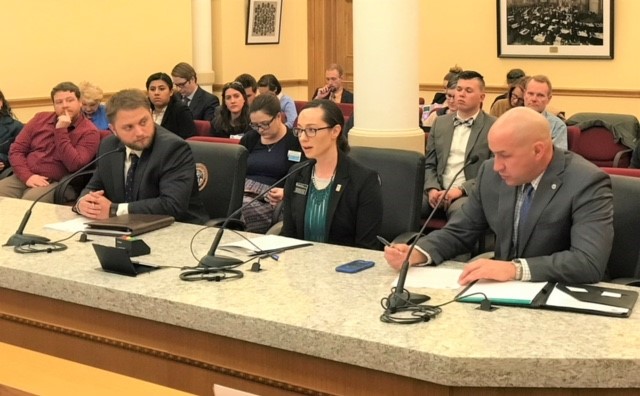
RFF has experienced great success and has been asked to speak in front of the State of Colorado’s Senate Committee on Education (see picture) along with CU-Boulder and CU-Denver’s programs which have programs similar to DU’s Right Foot Forward.
For more information about the Right Foot Forward program please contact Damon Vine at damon.vine@du.edu or  303-871-2074.
 Submitted by Damon Vine/Veterans Service Coordinator and Patty Hickman/Director Graduate Career & Professional Development

10 Ways to Stay Healthy When You Work in an Office

Many people think that the safest jobs are those that involve being in an office all day. Sure, you likely aren’t going to have any heavy objects falling, or have to deal with injuries involving heavy equipment, but working in an office comes with its own particular set of health hazards. In fact, a lot of people who work in offices are less healthy than those who work at jobs that are much more physically demanding. Today we are going to take a look at 10 things you can do to help you to stay healthy if you work in an office.
  • Walk to Work – If you don’t live far away from the workplace, keep your car parked at home and start walking to work. You may not always be able to do this (lack of time, bad weather, etc.), but the more often you walk, the healthier you are going to be.
  • Use a Standing Desk – We are learning more and more about the dangers of sitting all day long. In fact, they say that sitting is the new smoking. It is important to be able to stand and sit, so if you have an adjustable desk, you can sit for periods, and then stand up for periods as well.
  • Use a Fitness Ball – Instead of using a regular chair, get yourself a fitness ball. Sure, it may look a bit kooky, but it is a great way to work the muscles in your back and legs, because you have to be able to balance yourself on the ball as you work.
  • Don’t Eat Out – One of the biggest problems facing office workers is eating out. It is so easy to grab something quick from a take-out or the cafeteria, but it isn’t always the healthiest option. Stop eating out, and bring your own healthy lunches and snacks to work instead.
  • Bring Exercise Gear – You can exercise both while you are working and while you are on breaks if you have some fitness gear in your office. Bring some dumbbells or elastics to work, and do exercises while you are reading notes, making phone calls, etc.
  • Exercise in the Office – There are loads of things you can do right in the office that are going to help you to stay in good shape. For instance, you can start taking the stairs instead of the elevator. Do various exercises right in your chair, such as leg raises and isometrics. Move around as much as possible. 
  • Ask for a Fitness Corner – Many companies don’t have the space for an in-house fitness center, but you can suggest that they offer a fitness corner with one or two fitness apparatuses, such as a mini trampoline. This can easily be set up in the lunch room, or any other corner in the building and as this article by Groom+Style suggests can be completed on a small budget.
  • Exercise on Breaks – Instead of sitting down for lunch and other breaks, use this time to get some exercise. If it is nice outside, go for a walk. Find a work buddy to walk with you so it is more enjoyable. You may even find a group of coworkers who want to start walking regularly.
  • Hold Walking Meetings – Another way to exercise while at work is to walk while you talk. Instead of holding meetings in the boardroom, get everyone to go for a walk in the park, around the block, etc. You can talk about everything you would in the boardroom, and get some exercise too.
  • Set Up Fitness Classes – Get together with your fellow employees and hold fitness classes in the workplace. These can take place during lunch hours, and they are not only a great way to stay in shape, but also a great way to get to know your colleagues better in a non-work setting.

Smart Writing as a New Start for Your Career

Hero Images/Getty Images
If you search “smart writing” on Google, you’ll come across Moleskine’s smart writing system, but you won’t find much more information on the term. What’s smart writing, anyway? It’s not a term reserved for Moleskine. It’s something much broader; something that affects all of us.
In its simplest definition, smart writing is a writing practice that serves a purpose. It helps you achieve a precise goal. You plan how you’ll achieve that goal, and you organize the process of writing in a way that helps you get there.
When it comes to launching your future as a professional in any field, smart writing can really help. You can start the practice before you even graduate, and you can take it further when you’re ready to hit the job market. We’ll tell you how.
  1. Start With Your School Projects
When you’re at college or graduate school, a big part of your responsibilities are based on writing. This is your chance to practice smart writing. These are not mere assignments without any purpose. Oh; they serve a big purpose: they teach you how to conduct research and develop arguments based on facts. You’ll benefit from those skills no matter what career you choose. Whether you’re a doctor, economist, marketing expert, or social sciences, research and writing will be a big part of your professional progress.
So pay attention to these projects! If you’re not a good writer, the best paper writing service can help you develop these skills. You will work with a professional writer, who will guide you through all steps of the planning, research, writing, and editing.
If you’ve already graduated, then you can learn by going through the papers you’ve written. You surely stored several of them on your hard drive, right? Well, it’s time to improve them. Do some smart writing! What can you do to make them more convincing?
  1. Start Blogging
Let’s get back to those school projects. Are you confident enough to share your research with a wider audience? This will boost your smart writing practice. When you connect with like-minded people through your blog, you’ll learn from their comments. Some of them will ask questions that will require more research. With time, you’ll learn how to develop stronger arguments and convey them through content that people love reading.
Your blog doesn’t have to be reserved for research projects. Regular blogging can be smart writing, too. Just pick a niche that corresponds to the career path you want to follow. Then, start working on different topics and write awesome content!
A great blog requires an investment. You’ll make it successful not only through high-quality content published on a regular basis, but through a SEO and social media marketing strategy, too. It will take a lot of work, but you’ll yield great results in return.
The blog can literally start your career! When you submit a CV or resume for a job and you include a link to your blog, the potential employer will be curious to see what you’ve got. If they see an influential blogger who knows tons about the industry, you’ll definitely get an interview.
  1. Improve Your Vocabulary
No; we’re not saying you should become one of those people who write endless sentences with “big” words. That’s not smart writing. It’s silly writing!
However, smart writing still has a lot to do with vocabulary. The language used in research projects, professional blogging, and business communication is different from the language you use for speaking or personal writing. This means you’ll have to explore some new, more influential ways to express yourself.
For starters, you should learn more about the industry of your choice. Understand the slang! You won’t want to use it so much when you write for a general audience, but you still have to understand it. You should know how to define and use all terms related to your profession. Strong vocabulary will make your writing more convincing.
  1. Learn from Constructive Criticism
This is the biggest favor you could do to yourself: hire an editor for the important content that you’re going to publish. Yes; it’s an investment. However, it will greatly improve the quality of your writing. It’s not easy to see your “baby” taken apart. The editor will remove all unnecessary parts of your sentences. They will make the content more readable. They will contact you with advice to add information where the logical flow fails.
This will test your ability to learn from constructive criticism. You don’t have to hire an editor every single time. Do it only for the most important smart writing projects. You will not allow the editor to change your voice, tone, and message. However, you should certainly accept their detached involvement.
The same thing goes for the comments you get on your blog. Sure, you’ll be getting some of the “keep up the good work” stuff, but that won’t be all. Some of your readers will be critical. They will argue your point. You should listen to their criticism, too! It actually helps you to write better content next time. Progress – that’s what smart writing is all about.
Are you ready to start this journey? Smart writing can make you a better professional in any career. It makes you a more attractive candidate for employment or promotion, too!

About the Author

 Mark Delarika is a professional content writer, teacher, and a blogger. He taught in more than 10 countries for students all over the world. He is major in educational innovations. Mark is a business writer at best paper writing service. He helps students to improve writing skills, shares his personal experience and gives practical tips for educators. 

How to Future-Proof Your Career Against AI

In a just a decade or too, artificial intelligence has gone from science fiction fantasy to an everyday reality for many of us. Do you have a smartphone with Siri or Google Assistant baked in? Perhaps an Amazon Echo standing on a bookcase back home? Those disembodied voices, linked over the internet to a vast network of servers and self-propelled neural networks, are AI – and they are moving ever closer to passing the legendary Turing Test.
Of course, none of these products are genuinely self-aware, in the broadest sense of the term ‘intelligent’. But that is coming (probably). Popular futurologist Ray Kurzweil, who now works for Google, believes we will achieve the so-called ‘singularity’, the point at which artificial intelligence overtakes the human variety, in just a few decades’ time. That’s either an exciting or scary prospect, depending on how you look at it.
But what does the gradual spread of AI mean for us today? Physical factory robots have existed for decades, freeing people from the most repetitive and wearisome tasks but at the same time causing job losses. Since then they become ever sophisticated, and their development has run alongside the growth of AI. Now we find ourselves at a point when a notable number of non-factory positions are also under threat from machines – more than at third of administrative and support service positions for example, and just under a third of financial and insurance positions. Finance, in particular, has taken with enthusiasm to AI: many loan and insurance assessments are made by machines, and stockbroking is now hugely automated, with computers buying and selling shares between themselves at tremendous speeds and with little human intervention.
This will only continue, so is there anything we can do? Is it possible to future-proof your job and keep the robots from the door? The first thing to realize is that AI, at least in its current form, can only do certain things, and all that must be rigidly programmed in. AI cannot be creative, think spontaneously, or tackle the multiple intricacies of social interaction: although scientists and engineers are doing their very best to teach them all those things. But it’s a tough task: these are all tremendously difficult things for machines to grasp. No matter how polished a user experience they produce, AI is, fundamentally, a product of computing, and that in turn boils down at the deepest level to binary ones and zeros. Not very human.
So the more human your job is, the safer it will be is from AI: for now, anyway! But what if you work in a field that is vulnerable to the rise of the robots – for example, transportation, wholesale distribution or manufacturing? The best approach is perhaps to accept that the robots will be always better at repetition and heavy lifting, and AI will always be better at crunching numbers. Instead, move sideways and adapt to the new opportunities that will present themselves. Learn to repair the robots or programme the AI. Become a manager or supervisor – a position no robot can take. Or move into a customer facing role and specialize in all that tricky social interaction.
For all its continuous evolution and intricacy, AI is still characterized as much by what it can’t do as what it can. As HAL famously put it, “I’m sorry Dave, I’m afraid I can’t do that…” We humans aren’t redundant just yet!

Is It Feasible to Turn a Passion for Blogging into a Career?

A few people have turned blogging into a very successful career. But as you probably already know, there are countless blogs out there, and their owners are not necessarily making a living out of their efforts.
So, if you are thinking of getting into blogging, not just as a hobby, but as a way to earn a living, then there are some points you need to understand first.
First of all, you should know that starting a blog is pretty inexpensive. Setting up a blog site is one of the easiest things to do, and also the cheapest ways to have a site of your own. That said, you will need to have a few other skills to make your blogging career a success.
Learn about Digital Marketing
As a professional blogger, should have a decent grasp of what digital content marketing entails. At the end of the day, if you are getting into blogging for the money, you are running a business. And any good business needs good marketing to be a success.
Without going into details, you should know a few marketing techniques you can use to promote your site and get it the online attention it needs to offer monetization opportunities.
Some of the marketing channels you can try include social media, being a guest poster on similar blogs, and getting endorsements from influential individuals in the niche you are blogging about.
Basically, you should go with the marketing modes that will give you the greatest benefits. So, do not be afraid to step out of your comfort zone as you explore ways to market your blog.
Keep your Audience Interested
Blogging as a career will also require that you keep your audience interested through fresh content. That means you should be ready to write regularly or at least pay someone to write or create great content for you. While at it, make sure you give your audience value for their time. 
Write about What You Know
It helps to write about a subject you are (or are willing to become) an expert at. Do not struggle to try to blog about topics you are unfamiliar with, especially if you intend to create the content yourself. Writing about things you love and know about in depth will give you greater authority, in addition to, ensuring you always have something of worth to give your audience whenever you sit down to create new content.
Matt from Greece, who has always enjoyed trying new products and writing reviews, started his a blog in 2014 and he has focused it on product reviews that educate and inspire. He advises new bloggers to choose a topic they are passionate about.
Steven from New York, who was working as a journalist for a cybersecurity magazine, started blogging about Internet security, giving tips, endorsing products, and offering deals and coupons for award-winning antivirus and security software that can protect his blog readers from the ever-increasing threats in the cyberspace.
Alex from Ireland, who struggled as a student to make ends meet, and became an expert at saving money using coupons throughout his college years, created a voucher site that today helps people save hundreds of dollars annually.
You can Get Paid to Blog
Your career can still be a success when you decide to blog for others. Obviously, there is a level of satisfaction that comes with creating your own blog, but being a blogger at an established site is also a good way to make a living in this field.
The benefit of this option is that you will start getting paid immediately. You will also have the assurance that your blogging will actually make money. Creating your own blog is fraught with many risks. For one, it could take months before the blog starts making any money for you, if you are lucky.
You don’t even have to be loyal to a single blog. Many professional bloggers work with many companies or sites, making significant amounts of money from their blogging careers. So, finding a blogging job is something worth considering. And who says you cannot have your own blog even as you work as a professional blogger for sites you don’t own?
Take your Blog Seriously
Also, while trying to launch a career as a blogger, you need to get rid of “I’m doing this as a hobby” mentality. Creating web content about things you like can certainly be fun, especially if you have people who follow your work closely as fans. However, you should take blogging seriously if you consider it a career. That means you have to actively seek out opportunities to make money off your blogging.
Such options include getting companies like Google to advertise on your site so that you earn when people visit your site. You can also post sponsored content, but without ruining the content quality your audience has come to expect from your blog.
Be a Learner
A blogger also needs to be open to learning. Many bloggers out there had no clue their successful money-minting sites would turn out the way they did when they started out. But with patience and a willingness to learn, they set up blogs that turned into raging monetary successes.
Similarly, you should be open to learning if you are to succeed as a blogger. For instance, your blog will need things like a good ranking on Google. That means you will have to learn more about how these rankings are made to ensure your site is better-positioned in search engine results.
In Conclusion
So, you can definitely have a successful career as a blogger. All you need is to put in the appropriate effort. If you can learn more about content marketing, offer your bloggers value for their time, and be open to learning new things about the field, then you can certainly succeed as a blogger.

What to Do with a Public Policy Major?

Careers for Public Policy Majors

WHAT IS A PUBLIC POLICY MAJOR?
The University of Denver’s interdisciplinary program in public policy focuses on major social issues and how they impact the public and private sectors. public policy is a highly disciplined, evidence-based approach to the analysis and solution of contemporary issues like fiscal policy and government spending, entitlement reform, health care, national security, regulation, criminal justice, education, and immigration.
Also, visit the government/public policy career resources page.

COMMON CAREERS FOR PUBLIC POLICY MAJORS

With a deep understanding of the issues of the day, many public policy majors go on to work in the education, government, non-profit or healthcare industries.

COMMON JOB TITLES HELD BY THESE PUBLIC POLICY MAJORS INCLUDE:

  • advocate
  • attorney
  • campaign worker
  • communications specialist
  • contractor or consultant
  • development assistant
  • director of government relations
  • foundation manager
  • grants specialist
  • legislative auditor
  • lobbyist
  • nonprofit manager
  • paralegal
  • planner
  • policy adviser
  • policy analyst
  • policy director
  • politician
  • political activist
  • program analyst
  • public administrator
  • public relations specialist
  • researcher
  • sustainability coordinator
  • teacher or professor

PROFESSIONAL SKILLS OF PUBLIC POLICY MAJORS

In addition to the careers listed above, public policy majors are well-suited to fields that require the following skills:
  • interpersonal communication
  • research
  • communication
  • persuasion
  • data analysis
  • critical thinking and interpretation
  • problem-solving
  • writing

IS A PUBLIC POLICY MAJOR RIGHT FOR YOU?

Still unsure if you should major in public policy? Schedule a session with a career counselor, attend our “Choosing a Major” workshop, and attend career events where you can network with employers that hire public policy majors and alumni who majored in public policy. Also, schedule a session with the department chair, where you can explore other possible career paths.
PROFESSIONAL ORGANIZATIONS FOR PUBLIC POLICY MAJORS
RESOURCES FOR PUBLIC POLICY MAJORS

Alumna, Robin Colombin, Building Community in Benin

A few days before Christmas I touched base with Robin Colombin over a Facebook messenger phone call. Robin (BS ’16, international business, minor in fine art) is stationed with the Peace Corps in rural Benin and traveled two hours to the capital, Cotonou, to make this call.
When I caught up with Robin, she was teeming with enthusiasm for her work and loads of new international economics and business vocabulary. French is the official language of Benin, so our conversation was marked by the vacillations and pauses that develop when communicating ideas and concepts across multiple languages and cultures. Colombin, who studied French at DU, traveled abroad her junior year to Aix-in-Provence in southern France.
DU Alumni: Tell me about your time at DU. How did you get here, what did you study, etc.?
Colombin: I was really interested in marketing and was impressed with Daniel’s College of Business when I came to visit. I graduated with a bachelor’s in international business from Korbel and Daniels. I took some first year classes in international politics and economics and I fell in love. I was especially inspired by Professor Robert Uttero. It was through my class work and work study position in the humanitarian assistance graduate program that I became interested in humanitarian aid. I took a lot of Korbel classes and knew that if I wanted to do it seriously, I also wanted to have an idea of what it is like on the ground, which led me to the Peace Corps.
DU Alumni: How did you choose Benin? What was that like?
Colombin:  With the Peace Corps, you pick your top three placement choices, much like the study abroad program at DU.  You could always choose “Wherever I’m Needed” as an option and roll the dice, or you can choose a specific region or country.  I chose Benin as my first choice.  It was the only country that had an opening for a Community Economic Development Advisor in a Francophone country, which were two of my requirements.
DU Alumni: What was the process like?
Colombin: A lot of paperwork and medical tests. I had to wait a few months to hear back. I graduated in March 2016 and I heard back from Peace Corps right after graduation, but I didn’t leave for Benin until September, six months later. It’s a bit of a leap of faith—you don’t know a lot when you are accepted. I knew I’d be doing community economic development because I had applied particularly for that, but the descriptions are very generic. You might be working with various organizations—women’s groups, savings groups, NGOs, etc.
When I got to Benin, I first traveled to Lokossa, which is in the South of the country for training. I was living with a host family and I had training every day for three months. After two months, they told me where my permanent post was and who I would be working with. I was told that I would be going to Agon, Benin. At that point, I got to visit the village for two weeks and meet the people I’d be working with.
DU Alumni: What is your life in Agon like?
Colombin: I’m the only American and non-local in the community. There are about 2,000 people living here and it’s largely an agricultural economy. Most people are farming corn, cassava, pineapples, palm trees, and local vegetables.
I personally really like being in a smaller community where most people know me, but it is a lot like living in a fishbowl.  Everyone has been so understanding and supportive here, and it’s been amazing working with them.
DU Alumni: How did you end up in Agon as opposed to another city in Benin?
Colombin: Each volunteer gets requested by someone in the community – that person becomes your counterpart. My counterpart is Delphin Sessou–he’s been working for over 10 years to get savings and loans groups started – there were 10 in place when I got here. They have been growing, too. We teach community members the structure, how to manage them and oversee the accounting.  While we provide overall management of groups, each group has its own self-elected managerial structure.
DU Alumni: What is a savings and loans group?
Colombin: Savings and loans groups go by a few different names and acronyms. In French they are called AVEC (L’association villageoise d’épargne et de crédit) and the English translation is VSLA (village savings and loans association). The need for AVEC comes from a gap between banking and microfinance. There are not a lot of banks nearby, especially in small villages, so it’s not easy to do banking. The goal of AVEC is to help the most vulnerable people, particularly women, save and loan money to each other when access to a bank is not possible, or individuals are not comfortable doing business with banks. Big banks can be intimidating. Many people can’t read or write and the documents are in French.  Quite simply, some people just don’t see the value in having a savings account either.
DU Alumni: So, how does the AVEC work?
Colombin: Each AVEC has its own rules, but generally speaking, members agree to contribute a small amount of money to the savings group each week. The group then makes loans from their combined savings. Individuals pay interest on their loans and pre-decided fees (fees for coming late to meetings, reimbursing loans late, etc.). At the end of the year, the interest and fees are divided based on savings and paid out to the individual members.  So after a year, members get their total savings back plus interest.
AVEC serves as a money-management tool as well as an easy way for people to invest and take out loans.  There is also an insurance element to the structure.  Individuals pay a small amount into an emergency fund that individuals can access for urgent cases—medicine, funeral expenses, etc.  It is an amazing structure to financially empower those who need it most.
DU Alumni: You said that the AVECs are growing. Can you tell us about the growth you’ve seen?
Colombin: When I arrived there were 10 AVECs. About a year later, we have 15 groups made up of 450 people. They are also opening new AVECS in other nearby villages where there is demand. For now, the groups meet under a tiny, flood-prone shelter, essentially a dirt floor covered by palm fronds. When it rains, the meeting space floods. Also, the palm fronds need to be replaced, and there is not nearly enough room for everyone so some groups meet under nearby trees.
They have made a lot of progress as far as building their own organizational infrastructure goes; now they need a permanent building structure.  They have a project to build an Integrated Business Development Center where the groups can meet and store documents.  They will hold free business classes there, and two rooms will be left open for any entrepreneurs in need of the space to use—that includes agricultural groups and women’s groups.  Agon does not have a community center of any kind, so everyone is very excited about having this open community space. We would love your help (see link)!
DU Alumni: So, we like to ask alumni a few questions to connect with current students and with their fellow alumni. What advice do you have for a first or second year students who are just getting started at DU?
Colombin: I recommend taking classes that sound interesting to you; the best thing you can do is figure out what you are most passionate about and dive in.  I came out with an entirely different degree than I thought I would.
DU Alumni: What professional or life advice do you have for fellow alumni or students who are about to graduate and launch their careers?
Colombin: Apply for things you don’t feel qualified for.  Once you have the position, work hard to be over-qualified for it.  That is how you’ll grow.
Robin Colombin (’16) is a Peace Corps Volunteer in Agon, Benin. In addition to serving the community on economic development projects, she is helping to raise funds for the Integrated Business Development Center. Wondering how you can help? Click to learn more about the project and donate.