Short Biography of ‘Paul Laurence Dunbar’ (116 Words)

‘Paul Laurence Dunbar’ was born on June 27, 1872 in Dayton, Ohio. He was the son of ex-slaves. His father’s name was Joshua and his mother’s name was Matilda.

Paul Laurence Dunbar wrote his first poem at age 6 and gave his first public recital at age 9. At an early age he edited and published many newspapers.

Paul Laurence Dunbar wrote many short stories, novels, plays, songs, essays and poetry. Due to racial discrimination, he could only find work as an elevator operator. He wrote most of his works while taking people up and down the elevator. Paul Laurence Dunbar was among the first African-American poets to gain national prominence. He passed away on February 9, 1906.

Short Biography of ‘Harry Houdini’ (141 Words)

‘Harry Houdini’ was born on March 24, 1874 in Hungary. His real name was ‘Eric Weisz’. His parents were Rabbi Mayer Samuel Weisz and Cecília Weisz. When Harry was still a baby, his parents decided to go and live in the U.S.A.

Harry Houdini was a great escape-artist. When he was nine years old he gave his first public performance. Houdini was so very interested in magic, that he practiced many tricks until they were perfect.

Houdini’s most famous trick was to escape. On stage he would be tied up or locked up with chains and in a few minutes he would get free. He performed many other famous tricks. Some of his tricks were very dangerous.

Harry Houdini died on October 31, 1926 at the age of 52. He had shown in his life that he was ready to meet any challenge.

Short Biography of ‘Siegfried Sassoon’ (117 Words)

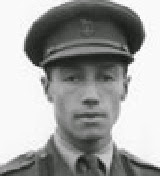
‘Siegfried Sassoon’ was born on 8th September, 1886 in England. His full name was Siegfried Loraine Sassoon. His father Alfred Ezra Sassoon was a member of the wealthy Baghdadi Jewish Sassoon merchant family. Siegfried Sassoon was an eminent English poet and writer.

Siegfried Sassoon served during the first world war as a captain. At first he was very excited and felt honoured to be in the war and fighting for his country; but then, when he saw the horrors of the war at first hand, he began to speak out against it. He wrote some moving poetry about the hardships and tragedy felt in war. Siegfried Sassoon died on 1st September 1967 at the age of 80.

Short Biography of ‘Louis Braille’ (97 Words)

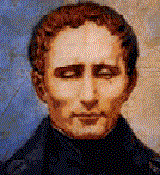
‘Louis Braille’ was born on 4th January 1809 in France. Due to an accident in early life he was completely blind in both eyes.

Louis Braille himself was a blind and worked in a blind school in Paris. He perfected a system of reading and writing especially for the blind. This writing is called Braille. The system that he developed in 1834 was not used much until about the time of his death.

Louis Braille died on 6th January, 1852 at the age of 43. He will always be remembered for his system remains known worldwide simply as braille.

Short Article on ‘Uses of Domestic Animals’ (160 Words)

The ‘Domestic Animals’ are the animals that have been tamed and kept by humans as a work animal, food source or pet. There are different kinds of domestic animals. Cow, buffalo, sheep, goat, dog, cat, elephant, horse, camel, cock, hen, parrot, pigeon are some example of domestic animals.

Domestic Animals are very useful to man. Cow gives us milk. bullocks help the farmers in farming. Furs of sheep are very soft and long. These furs are sheared and made into wool. We get milk from the she-goats. Dogs are very faithful animals and they watch our houses. Elephants are used to carry heavy logs of wood. Horses are used to ride. Camels are used in deserts. The parrot is a talking bird. Most of the domestic animals are greatly devoted to their masters. Our domestic animals are quite friendly to us. They do very useful jobs for our benefit. Hence, we should treat them with all kindness.  

Short Biography of ‘Jagdish Chandra Bose’ (176 Words)

‘Jagdish Chandra Bose’ was born on 30 November 1858 in Bengal, India (Now in Bangla Desh). His father, Bhagawan Chandra Bose was a leader of the Brahmo Samaj. Jagdish Chandra Bose was raised in a home committed to pure Indian traditions and culture.

Jagdish Chandra Bose attended Cambridge University after studying physics at Calcutta University. He returned to India in 1884 after completing a B.Sc. degree from Cambridge University. He made many discoveries in biology and physics. He showed that plants have feelings. He found that metals get ‘tired’ after some time. He invented a machine to measure the growth of plants.

Jagadish Chandra Bose is one of the most prominent first Indian scientists who proved by experimentation that both animals and plants share much in common. He authored two illustrious books, ‘Response in the Living and Non-living’ and ‘The Nervous Mechanism of Plants’. He set up the Bose Institute at Calcutta. He was honoured with many notable awards for his great work.

Jagdish Chandra Bose passed away on 23 November 1937 at the age of 78.

‘Care to be taken while completing Life Insurance Proposal Forms’ (150 Words

A contract of life insurance is a contract of utmost good faith technically known as uberrima fides. The principle of disclosing all material facts is embodied in this important concept which applies to all form of life insurance. It becomes the duty of the proposer to inform the insurer of everything likely to affect the judgement of the insurer, however unimportant it may seem to him/ her (the proposer).

Hence, the proposer should ensure that all questions in the proposal form are correctly answered. Any misrepresentation, non- disclosure of facts/ information which is material to acceptance of risk, or fraudulent information in any document leading to the acceptance of the risk will render the insurance contract null and void.

Hence, it is quite important that the policyholders and his dependants provide the correct and full information to secure the precious benefits of the insurance policy for his near and dear ones. 

Short Biography of ‘Salim Ali’ (122 Words)

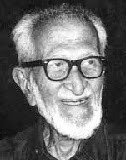
Full name of ‘Salim Ali’ was Salim Moizuddin Abdul Ali. He was born on 12 November 1896 in Mumbai, India. His father’s name was Moizuddin and his mother’s name was Zeenat-un-nissa. His parents died in the very early age of Salim Ali.

Salim Ali was a famous ornithologist and naturalist of India. He is known as the ‘Bird Man of India’ because he was an expert on Indian Birds. He studied the habits and lifestyles of Indian birds all his life. Salim Ali has written books on the birds of India. For his great work he was awarded the Padm Bhushan and Padma Vibhushan by the Government of India.

Salim Ali was passed away on 20 June 1987 at the age of 90. 

Short Biography of ‘A.J. Cronin’ (74 Words)

Full name of ‘A.J. Cronin’ was Archibald Joseph Cronin. A.J. Cronin was born on 19 July 1896 in Cardross, Scotland. He was a great physician and a writer from scotland.

A.J. Cronin wrote several novels and short stories. His works are renowned for their memorable characters and powerful portrayal of the injustices in the society. His best-known novel was ‘The Citadel’. A.J. Cronin was passed away on 6 January 1981 at the age of 84. 

Short Biography of ‘Lala Lajpat Rai’ (132 Words)

‘Lala Lajpat Rai’ was born on 28 January 1865 in Punjab state of India. His father’s name was Radha Krishan, who was a was an Urdu teacher.

Lala Lajpat Rai was a large believer in the idea of Hinduism. He joined Indian National Congress and took active part in the freedom struggle of India. He was a great Indian freedom fighter and for this he was deported to Burma. Lala Lajpat Rai was elected President of the Congress party in the Calcutta Special Session of 1920.

Lala Lajpat Rai worked with great Energy and enthusiasm to improve education and social conditions in India. He was popularly known as ‘Punjab Kesari’ meaning the lion of Punjab also known as ‘Sher-e- Punjab’. He was died on 17 November 1928 at the age of 63. 


Swami Vivekananda: A Great Legendary Personality and Selfless Person

January is an auspicious and significant month for many people in the world. With the starting of 1 January, English New year starts. Many Orthodox Christians celebrate Christmas on 7 January as they believe date works to the Julian calendar that pre-dates the Gregorian calendar (when I was in Eritrea, Africa observed the Orthodox Christians celebrate Christmas on 7 January). Anyway, in India Makara Sankranti, Magh Bihu, Lohri, Thai Pongol etc., are celebrated in this month and on 26 January our country became Republic.  In addition, two great souls were born in January in our country – Swami Vivekananda and Netaji Subhas Chandra Bose.

Swami Vivekananda was born on 12 January 1863 in Kolkata then Calcutta.  His real name in school / college was Narendranath Dutta and pet name was “Biley”.  By this (“Biley”) name parents used to call him.  Although he is considered a key personality in introduction of Vedanta philosophy and Yoga to Western countries mainly in USA and Europe but humanity was his only consideration. Swami Vivekananda was intelligent since childhood. He was the only student to have received first division marks in Presidency College entrance examination. He was a positive and broad-minded person with the feeling for all human beings irrespective of caste, creed and religion. To get an in-depth idea about his philosophy few lines from his speeches are quoted here, “All power is within you, you can do anything and everything.  Believe in that; do not believe that you are weak.  You can do anything and everything, without even the guidance of any one.  Stand up and express the divinity within you. Arise, Awake, and Sleep no more.  Within each of you there is the power to remove all wants and all miseries.  Believe in this, and that power will be manifested”.

Love and affection towards others is reflected from his saying, “All expansion is life, and all contraction is death.  All love is expansion, all selfishness is contraction.  Love is therefore the only law of life”.  His positive feeling towards different religious is realized by this discourse, “The Christian is not to become a Hindu or a Buddhist, nor a Hindu or a Buddhist to become a Christian.  But each must assimilate the spirit of the others and yet preserve his individuality and grow according to his own law of growth”.  He further told, “Feel like Christ, you will be a Christ; feel like Buddha and you will be a Buddha. It is feeling that is the life, the strength, the vitality, without which no amount of intellectual activity can reach God.” Thus one can easily understand Swami Vivekananda’s feeling towards human beings.

He was great believer of welfare of humanity and hard work without selfish attitude.  In his words, “It is a tremendous error to feel helpless.  Do not seek help from anyone.  We are our won help.  If we cannot help ourselves, there is none to help us.  The moment you fear, you are nobody.  It is fear that is the great cause of misery in the world”.   His patriotic fervour can be understood through this line, “The soil of India is my highest heaven, the good of India is my good and repeat and pray day and night…….O Thou Mother of Strength, take my weakness, take my unmanliness and make me a man!”

Swami Vivekananda was always in favour of development for all. In fact today’s Inclusive Growth concept may be termed as his vision. His beautiful message in this regard, “In India there are two great evils, trampling on the women and grinding the poor through caste restrictions.” “…..forget not – the ignorant, the poor, the illiterate, the cobbler, the sweeper, are thy flesh and blood, thy brothers.  Thou brave one, be bold, take courage, be proud that thou art an Indian and proudly proclaim – ‘I am an Indian – every Indian is my brother’, Say, The ignorant Indian, the poor and destitute Indian, the Brahmin Indian, the pariah Indian, is my brother. ……..Our only work is to arouse this knowledge in our fellow-beings.  We see that they too are the same pure self.  Only they do not know it; we must help them to rouse up their infinite nature”.

Our former Prime Minister Pandit Jawaharlal Nehru had high regards for him. This one line of Nehruji’s saying reflects fully about Swami Vivekananda, “I think that our younger generation will take advantage of his fountain of wisdom, spirit and fire that flows through Swami Vivekananda”.

Although, Vivekananda passed away on 4th July 1902 but no Indian can forget him as his thought-provoking lecture in Chicago in 1893 at the Parliament of the World’s Religions conquered heart of the millions of the people of the World. The people of the world could get an in-depth idea about Hindu philosophy which earlier many of them had no knowledge or superficial knowledge.                                  

Dr. Shankar Chatterjee

Former Professor& Head (CPME)

NIRD &PR (Govt. of India),

Hyderabad-500 030

Telangana, India

Email <shankarjagu@gmail.com>


                                        ****************

Heavenly treasures

“Do not lay up for yourselves treasures on earth, where moth and rust destroy and where thieves break in and steal, but lay up for yourselves treasures in heaven, where neither moth nor rust destroys and where thieves do not break in and steal. For where your treasure is, there your heart will be also” (Matthew 6:19-21).

Jesus has been discussing “practicing righteousness.” With these words, he appears to change the subject. Jesus has described how to give to others, how to pray, and how to fast. Now he addresses worldly concerns, such as worry, and loving money more than we love God.

Even if Jesus is making a transition to a new subject, this transition should not be viewed as a sudden change. His new thought remains connected to the previous thought. Jesus taught us to pursue our relationship with God while keeping God in mind. He tells us not to be religious (or “spiritual”) to impress other people. When people admire our holiness, their admiration is also a worldly treasure. If the admiration of other people for our holiness is the only reward we receive for our efforts, then all those good works are wasted efforts.

All the religions of the world agree that worldly riches are inferior to eternal riches. All religions agree that being wealthy in this lifetime is a paltry goal compared to the good that is possible for us in the future. Better teachers in the nonChristian world agree with Jesus that admiration from others is not sufficient reason to pursue a life of holiness and goodness. If we are going to be holy—if we are going to do what is right—we do good things for the sake of what is holy and what is right. We do not display our goodness to impress the neighbors who are less holy than we are.

Good deeds, prayers, and fasting, even when performed with God in mind, still are not heavenly treasures. These good deeds are done on earth, not in heaven. No matter how good we become, our good deeds can never equal the value of what God has stored in heaven for us, the good things that God has done for us.

Jesus lived a perfect life for us. He now gives us credit for the good things he accomplished. He freely gives us the rewards that he alone earned. Jesus fought the forces of evil, including death. He single-handedly won a victory; now he shares that victory with us. We will rise to eternal life in a new, perfect world; the power of that resurrection gives us strength even today. None of the things we do for God—not our gifts to the poor, not our prayers and fasting, not even forgiving those who sin against us—measures up to the value of what Jesus has done for us.

Jesus expects us to do good things. He expects us to strive to imitate his perfection. Whatever good we accomplish is not our treasure. Like money and other worldly wealth, our goodness in this sin-polluted world is easily corrupted or stolen. Our treasure is in heaven. Our treasure contains the gifts of Jesus, the blessings he bestows upon us. No power can corrupt those treasures or steal them away from us. Nothing in all creation can separate us from the love of God that is in Christ Jesus our Lord. J.

Remembering my uncle

He was my uncle. When I was a boy, he was also my neighbor, my keyboard teacher, and my mentor. He passed away December 23, 2019, at the age of 97.

During the Great Depression, my grandfather went to a famous food company and offered to work at any job they had available. They had him loading trucks for a few weeks, until one company official discovered that the new man was very talented mathematically. They hired him as a bookkeeper, a position he held for many years. By the end of the 1930s, my grandparents had purchased a farm house and three acres of land in a western suburb. They intended that their son and their daughter, after each of them married, could have a quarter of the property on which to build a house. My uncle and my mother accepted this gift, and so the family remained in close contact. Traveling east to west, or west to east, one would encounter a street, a front yard, a house, a back yard, a garden (two adjacent cultivated gardens, one belonging to each household), another back yard, another house, another front yard, and another street. Both households had a small orchard at the north end of the garden, and journeys through the orchards from one household to another were common. There were also paths from each household to my grandparents’ house to the south.

My uncle was hired as a chemist by the same company that had hired my grandfather. He also served in the U.S. Army during World War II. His company was among the waves of soldiers that continued the invasion and occupation of German-held France in Normandy after D-Day; he and his fellow soldiers landed on June 8, 1944, the third day of the landing, and he saw action in France during the war.

He had two sons and two daughters. One daughter preceded him in death (due to cancer), and one son became estranged from the family. His four children were all older than me; in fact, during family gatherings I frequently joined the two sons of my cousin, playing in the basement while the adults visited upstairs. The family came together to celebrate birthdays and wedding anniversaries, as well as Thanksgiving, Christmas, and Easter. Even children’s birthdays were marked by multi-generational gatherings that featured cake, ice cream, and (for the adults) coffee.

When he was working outside, my uncle would frequently have a young boy following him. That boy was me. My uncle teased with riddles. (Can you identify the longest day of the year? It’s the day each fall when we turn back our clocks to end Daylight Saving Time, because that day lasts twenty-five hours.) I learned a great deal from my father and from my mother, but my grandparents and my uncle were also part of my life nearly every day.

My uncle played the piano. I am sure he taught his children how to play. My sister also took lessons from him. When she wanted to quit, I was ready to start. Since I was only in the first grade, my parents doubted that I was ready for lessons, but my uncle was willing to give it a try. I still remember the triumph of mastering the piece that had frustrated my sister, leading to her quitting and my starting the lessons. But I did not practice on a piano. My grandparents had an electric organ on which I would practice my assignment every weekday afternoon. When I thought I was ready, I would make an appointment with my uncle and play the piece for him. He would either suggest improvements or pass me and assign a new piece. We completed all three books of the Thompson Method, and then he suggested various classical pieces for me to learn. His favorite was Schubert’s “March Militaire.” Because I practiced on an electric organ, I did not learn the fine points of piano technique until I was in high school, where I finally had regular access to pianos.

Eventually I grew up, took on a full-time job, was married, had children, and only occasionally visited my parents. When I stopped by the old place for a visit, I usually took time to cross through the orchards and visit my uncle as well. In his later years he battled failing sight, hearing, and strength. Despite these limitations, his mind remained strong, and provided I didn’t mind shouting and repeating myself, I was able to converse with him.

The death of my uncle produces a mild melancholy, not a deep grief. He had a long and meaningful life, and I have many fond memories of our time together. I know that I will still think of him from time to time. I am thankful to the Lord for my uncle’s place in my life and in my memories. J.


When you fast

“And when you fast, do not look gloomy like the hypocrites, for they disfigure their faces that their fasting may be seen by others. Truly, I say to you, they have received their reward. But when you fast, anoint your head and wash your face, that your fasting may not be seen by others but by your Father who is in secret. And your Father who sees in secret will reward you” (Matthew 6:16-18).

People who fast give up something voluntarily for a time. Generally, when we think of fasting, we think of giving up food, or at least some kind of food. Fasting can also meaning giving up an activity, such as video games or surfing the Internet. Some fasts are performed for religious reasons; others are done for medical reasons. Fasting often has a goal for this lifetime: a healthy body, or a clearer mind, or a better way of life.

Jesus assumes that we will fast for religious reasons. He assumes that fasting is part of our relationship with God. Jesus warns us not to fast to impress other people. He tells us to keep our fasting a secret that is known only to us and to God. Jesus could easily have added that fasting for other reasons, such as our own health, should not be confused with fasting for God.

Perhaps some of us would benefit from fasting. We might lose weight and improve our health. Such a fast is not rewarded by God, except in the way that his creation functions to reward our fasting with health benefits. If we fast to break a bad habit and gain control over our lives, that fast is also not rewarded by God aside from the rewards we receive through his creation. When we fast for worldly reasons, we are not fasting for God. Our goals may be good, and we may achieve them; but when we achieve those goals, we have received the only reward we will get for fasting.

We fast for God to show him that we love him. We fast for God to show him that nothing is more important to us than he is. When we choose to fast for God—whether we choose to go without food for a day or television for a week or chocolate for a month or alcohol for the rest of our lives—we learn self-control. By saying no to a desire, we learn to say no to temptations. We do this for God, as part of our relationship with him. We are not trying to improve ourselves or impress other people.

Some people treat their fasting as a way of bargaining with God, doing something for him that will force God to do something for us. Such an attitude reveals an unhealthy relationship with God. Some people try to force others to fast along with them, delivering a group message to God by their fasting. Such fasting is also not done in the spirit of what Jesus teaches regarding the privacy of fasting.

Fasting teaches us about Jesus—that is its greatest reward. When we give up something for Jesus, we remind ourselves of all that Jesus surrendered to rescue us. All glory belongs to him, and he is in charge of the universe. Yet he left his exalted position to live among us as one of us. Then, as one of us, he sacrificed his comfort, his freedom, his health, and even his life to pay for our sins and to claim us for his kingdom.

If our fast reminds us of what we want, we receive—at best—only worldly rewards for our fasting. When our fast reminds us of Jesus and his saving work on our behalf, then we receive an eternal reward. We have faith in Jesus. We have fellowship with him. Those gifts are worth far more than any other reward we might gain from fasting. J.

Merry Christmas

For the next few days, I will be living “off the grid” so that I can focus this Christmas season on Christ, on Church, and on family. I will return next week to continue my series on Christ’s Sermon on the Mount, and to write of other things.

Let me take this opportunity to wish each of you a merry and blessed Christmas. May God richly bless you and those you love during this holy season and in the coming new year. And (as I said yesterday to two coworkers who are retiring), may you have as much fun and excitement as you want and as much peace and calm as you want. J.