Singapore is a threat to the national security of the US

Prime Minister Lee Hsien Loong should go on TV and broadcast to his countrymen that Singapore has “arrived”. The mighty US is scared of little Singapore. Perhaps a national holiday in Singapore will be declared to mark the event !
I am referring to the US government blocking the bid by Broadcom for the takeover of Qualcomm, on the grounds of national security. Broadcom is a Singaporean company (never mind that Broadcom had offered to move its headquarters to San Jose if the deal went through). Qualcomm is an American company. So Singapore is a threat to the national security of the US. Great !
The US government is giving a specious argument to justify national security. According to the government, Broadcom would cut R&D spending after it took Qualcomm over.  This would affect the development of 5G technology. Instead Huawei would become the leader in 5G. Huawei is a Chinese company. Therefore the US would be dependent on China for its mobile networks. That is the threat to national security.
That is an even more laughable argument. Qualcomm is an important player, but not the leader in the development of 5G in the first place. Have you forgotten Cisco ? Intel ? AT&T ? Samsung ? Ericsson ? And innovation is not the monopoly of anybody – even a rudimentary understanding of business should tell you that. Innovation comes from the strangest of places. If Qualcomm slashes R&D, does anybody seriously think other US companies will not succeed in 5G. If the US was solely dependant on Qualcomm, it was screwed long ago.
And why is 5G technology a matter for national security ? If this is truly the case with wireless technology, China’s national security has long been compromised  because of US leadership thus far. Why is ownership of 5G technology and standards so  worrying ? Is the argument that Huawei will get a monopoly of technology and therefore all US companies will have to buy telecommunication equipment only from them and therefore China will have a backdoor entry and control over the entire US telecommunications infrastructure ? That stretches incredulity to the limit.
There’s an interesting subplot to this. In the midst of the drama with Broadcom, Qualcomm  itself  is currently trying to take over NXP – another semiconductor company. That deal is awaiting clearance from Chinese regulators. Fat chance of that happening now. The people really screwed by these developments are Qualcomm shareholders – they don’t get NXP and they don’t get to be bought out by Broadcom at a stiff premium. And before you say you don’t care about shareholders, let’s just note for the record that US institutional investors , including mutual funds and pension funds, hold nearly 80% of Qualcomm stock.
No, this is not about national security at all. These days it appears you can claim national security for anything – even steel and aluminium tariffs. This is pure and simple economic nationalism. We don’t want an American company to be taken over by “Chinese looking people”. That’s it.
The current US administration is supposed to be a Republican one.  Standing for free trade and non interference of government into business. Has ideology, beliefs and policy ceased to matter at all ?

The Indian parliament is a waste of time

In democracies, the will of the people is supposed to be supreme. The forum for expression of the will of the people is the parliament. All laws and policies are enacted by the parliament and you need a majority of the elected representatives to pass any bill. Issues are debated and a majority vote determines the outcome. So goes the theory. Ha Ha .
India’s parliament has become a joke. It has descended into a complete farce, where regular business is impossible to conduct because every party disrupts roceedings by protesting and shouting. Witness the current session of the Lok Sabha. The TDP is protesting against non grant of special status for their state. The AIADMK is protesting against the non formation of the Cauvery Board. The Congress, Trinamool, et al are protesting against the PNB scam. The Shiv Sena , which is actually a part of the government is agitating for, of all things,  inclusion of Marathi as a “classical language” . Each one has disrupted the Lok Sabha such that it has been stalled every day with nothing being discussed or transacted. This has been the way for at least 10 years now, but it has worsened over the last two years with not even one day of sane, sensible proceedings. Every party is guilty of this appalling behaviour. The ruling BJP did exactly the same thing when they were in opposition.
The trigger for this post is the Finance Bill. In India, economic policy is often manifested in the form of the annual Finance Bill (Budget, as it is called in common parlance). This is supposed to be debated and then passed in Parliament by a certain date, else the government will be shut down (similar to the position in the US).
But how do you discuss and pass anything when all the worthies are shouting and agitating. In true Ramamritham fashion, we have invented a process called the “guillotine”. When the deadline for passing the Finance Bill comes, it is just “passed” with no discussion or debate. Not even a minute of debate and discussion has happened on major fiscal, monetary and economic legislation. Its just considered adopted by parliament !! What a joke.
The passing of the Finance Bill is one of the most important, if not THE most important job of parliament every year.  Yet for many years now, there has been no debate and it just gets guillotined as a matter of routine. Begs the question, why do we need a parliament at all ? Have elections every five years and instead of actual representatives, put a wax dummy coloured with the party colours in a seat in a room. Each party represented in the parliament simply indicates which way it decides to vote . That can be tallied by a computer (actually even an abacus will do).  Much simpler. In any case, every member of parliament votes according to a party whip. Nobody even reads the damned bill. If you are an opposition party, vote against any bill saying it is the greatest blot on humankind. If you are in the government vote for saying that it is the long awaited final avatar of Lord Vishnu. So why bother with a parliament at all ?
Let this be the first instance where “artificial intelligence” replaces human beings entirely. Replacing our esteemed members of parliament is a simple task as they perform no function at all bar shouting . We don’t even need artificial intelligence. Wax dummies are enough to be a major improvement – at least they will be silent.  
If that is considered way too extreme, then perhaps taping the mouths, tying the hands and gluing the seat of the pants (dhothi) to the chair can be resorted to.  For abundant caution, you can also shackle their legs. That would be an improvement over the current situation.

How do you solve a problem like CEO pay

It’s very simple really to most people and that’s why its such a complex problem. The problem of executive pay (lets just take CEO pay as a proxy to make it easier to analyse).
For the left, CEOs are greedy bastards who make too much money, when lower level staff in the company can barely make ends meet. Income equality is one the biggest issues facing society. Therefore the answer has to be to curb CEO pay.  Preferably by law. Where is the problem ?
For the right, who is anybody to say what somebody else earns. It’s a free market and CEOs perform one of the most difficult jobs of all. When a CEO can increase shareholder value by $10 bn, why should he not get $10 m. Where is the problem ?
In the US, this issue has got into prominence because companies are now required to report how much their Chief Executives make in comparison to the median paid worker. This was opposed tooth and nail by industry, but now the law has come into effect. And the first reports are starting to come in – In Marathon Petroleum it was 935 times, in Del Monte produce it was 1465 times, in Manpower, a temp agency, it was 2483 times. In Berkshire Hathaway it was 2 times.
Governments are starting to act. In the great state of Oregon, where a couple of readers of this blog live, the city of Portland has levied a 10% tax on companies where the ratio is more than 100 times. Many other states and cities are planning a similar levy. I don’t think that is right.
Remember, just because something is popular does not make it right. If you held a referendum that the state must burn down the house of every billionaire, it’s quite likely to pass with a 75% majority. That won’t make it right.
This is not as easy a problem to solve as it seems to the extremists. First to take on the left.
If you extend the same principle to every other domain – no film star should get more than 100 times the salary of an extra. Ditto music star. Ditto sportsman. For that matter why should the mutual fund where your pensions come from, make 100 times more than the janitor who cleans the stock market building. If you sell your property and make a fortune, then of course you shouldn’t be doing that as its 100 times more than what the majority of us who have no property to sell are making. We can go on and on. Its been proven time and again  that arbitrary wage equations for everybody will only create a Soviet Union. And why should 100 be some golden number simply because it satisfies somebody’s sensibilities.
Now to take on the right. 
Is anybody really worth $98 million ? Really ? That’s what Thomas Rutledge took in 2016. The median CEO salary is some $ 11m, but there are also wild outliers. But more than the absolute quantum,  the real problem with executive pay is the reward that even poor performers get. Like golden parachutes if you are sacked. Like pay rises when your company results go down. Like bonuses which don’t get returned even though the results are later proved to have been fiddled and overstated. Like backdated stock options. Like saying you have to honour bonus contracts even though your company has just been bailed out by the government.
And then there is certainly the reality that CEO pay has risen far more dramatically in the last 20 years than the pay of others working in the company. It is therefore natural that there is a societal backlash. No society can live with wild inequalities, whatever be the justification.
Companies must be seen to behave sensibly, else regulation is inevitable. A formula could be to more tightly link to company performance, something that’s happening anyway. No contractual sweetners that would not be in any other employee’s contract. In good years, distribute the bonus pool more widely. Take pay rises only when company performs very well – employees won’t grudge your pay rise then. Maybe CEO’s can think of contributing 1% to a staff welfare fund. Its all optics. If you not only are fair, but seen to be fair, people won’t grudge your pay.
As we began the post, its not an easy problem to solve. So sit back an enjoy how a problem like Maria was solved !

A “different” politician

I received an email from a classmate of mine, who is now the CFO of a large Indian company. It was such a lovely story that I asked for his permission to publish it in my blog. It is contextually, very Indian and the specifics may be unfamiliar to an overseas reader, but the overall story can easily be appreciated.


Here is the message from my classmate.

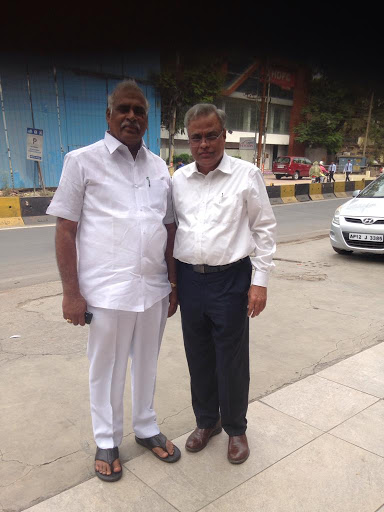
(On the left is Mr Konnappa, the MLA who is the subject of this post)

PART 1

The person with me is Konnappa, MLA (equivalent to a Congressman in a state in the US) from the north west part of Telangana adjoining Maharashtra.  I happened to meet him while pursuing some factory location.
He was originally elected on a BSP ticket – only one of two MLAs of BSP (Mayawati). But then seeing his good work, the Chief Minister asked him not to waste his time, join the ruling party and continue his work. So they merged. His constituency is in the vicinity of Ramagondam, Sirpur, and Singareni coal mines.
Recently the area has seen some factories shut down and many workers in the streets. He is working hard to bring some industries into the area or revive the shut ones.  
We learnt about some of the good work that he has been doing. This based on my colleagues’ personal visit to the area and my interaction with him.
The closure of factories has thrown some 2400 children potentially out of school – due to loss of jobs of parents. He has supported the children attending school by paying their fees – some Rs 34 lacs ($ 50K) per annum. “Children cant afford to lose their precious years of schooling”   is his logic. “Whats the source of funds – Personal?” I quizzed. “No sir I am not that wealthy.  I ask some money from Chief Minister, some other like minded MLAs, I asked some theatre owners, shop keepers and some  industries who support such efforts. I only make up the balance. Its more of a co-ordination exercise” said he.
Konappa is providing one meal a day for some 1500 poor children in his area. “Half my salary and allowances goes in this”. He had invited one of my colleagues during an earlier visit to eat with them and said  “your colleagues was very pleased to do that.”
Recently some potential investors were visiting a factory closed for last 3-4 years. “To make it presentable, I worked alongside the workers to clean it and make it as good as the … he showed the table top of our lunch table in Bikanerwala restaurant. If you start any industry here, I will work one day in the factory free to see that everything goes smooth for you. “

“When your colleague had visited my town, I made him talk to the workers of a closed factory to pep up their mood. They were all happy and appreciative.”           
“From last 6-7 months back, I have started a scheme for pregnant women. Tribal women suffer  blood deficiency. This causes several deaths of the mother during child birth or poor health of children. I have started giving them 2 kgs Gude (Jaggery) +some other thing he said which he claimed is good for blood generation + 2 Kgs of Ragi which he claimed he ensures that only the pregnant get to eat’ (may be thru social policing). The deaths have started coming down. Now the state has witnessed it and wants to roll it statewide’ he said with a pride in his voice. 
I did not get the impression that his claims were unjustified. He seemed utterly sincere; guileless for a MLA. Moreover when the Deputy Chief Minister introduced him to us said,  “he is firstly a social worker; incidentally he happens to be a politician. Ask him for whatever help you need “
PART 2
It was supposed to be the final meeting to say Yes or No as to whether we would take over the closed factory and revive it. The MLA had done stupendous work in the last 4-6 weeks which would have taken 6-8 months for us.
It was in relation to takeover and restarting a sick mill. At stake was the livelihood of 2000 odd workers and their families, the children’s education, daughters’ marriage, etc. And a passionate MLA who felt the weight heavily on his shoulder.
The Secretary to the government informed us of the decisions of his govt on various help, assurances and policy incentives and assured supply of feedstock etc, we had sought.  It fell short of what we wanted. The MLA , Konappa,  and the Government had gone a great distance; yet it was below our threshold. 
My colleague and myself had a quick discussion and said that in the interest of moving forward we will take it. We said so to the Secretary and requested him not to completely shut the door on the others requests. We thanked him and got up to go. The Secretary must have sensed our discomfort.  and said ‘If there are some difficulties later, you can always come back. It is also our interest that you keep things going’  
We came out. In the corridor, I congratulated the MLA for his efforts. Even while shaking his hands I found his eyes getting wet. I am yet to learn how to handle such situations. My colleague, senior in age, sympathised, and consoled the now visibly shaken man. He told him he can’t be seen by others in that state and that we should get into some room and we moved into one.
Konappa said  “Sir, for the first 61 years of my life, I did not have any BP or sugar. Last 3 -4 years, I have developed both. Loss of livelihood, children’s education, the future, no growth in my constituency… have all affected me. Today I see some hope return”. 
“This is the first time I have stayed in Hyderabad, the state capital for 9 days continuously. To go from one person to person to plead for a solution in the best interest of the workers and their families “
 
“When the factory closes and there is no one to care, people start looting. I closed the scrap shop nearby 3-4 years ago and warned other dealers  within the vicinity against dealing in any material from the factory or they will close down for ever. I told the workers some day or the other someone will come and  not even a single bolt should be missing. I know the pains and delays such things can cause for I have been a daily labour in the very same factory several years ago”
“Sir, please  don’t worry. It is my personal responsibility that you people will face no difficulties. “
He seemed much more in control by now. and we told him it was time for us to leave. He walked us down. “These are the times that give me satisfaction. Far more than seeing Rs 2-3 lacs in my bank account  (I thought their unit of thought will be in crores rather than lakhs, but this man seems stuck in a time warp of his own).  That’s when I feel … this earth (pointing downwards) which has to bear my weight. I feel I am repaying a part of the debt I owe to it, when I see some poor people appreciate it”
He was composed by now,  with some pride and a smile on his face.  But I was shaken. My mouth was quivering. In full public view at the entrance to the car park.

Some politician this. Some human being. Hope I can work with him some day. Imitation is the  best form of flattery they say. I hope I will be able to imitate him … one day… some day.

    A "different" politician

    I received an email from a classmate of mine, who is now the CFO of a large Indian company. It was such a lovely story that I asked for his permission to publish it in my blog. It is contextually, very Indian and the specifics may be unfamiliar to an overseas reader, but the overall story can easily be appreciated.


    Here is the message from my classmate.

    (On the left is Mr Konnappa, the MLA who is the subject of this post)

    PART 1

    The person with me is Konnappa, MLA (equivalent to a Congressman in a state in the US) from the north west part of Telangana adjoining Maharashtra.  I happened to meet him while pursuing some factory location.
    He was originally elected on a BSP ticket – only one of two MLAs of BSP (Mayawati). But then seeing his good work, the Chief Minister asked him not to waste his time, join the ruling party and continue his work. So they merged. His constituency is in the vicinity of Ramagondam, Sirpur, and Singareni coal mines.
    Recently the area has seen some factories shut down and many workers in the streets. He is working hard to bring some industries into the area or revive the shut ones.  
    We learnt about some of the good work that he has been doing. This based on my colleagues’ personal visit to the area and my interaction with him.
    The closure of factories has thrown some 2400 children potentially out of school – due to loss of jobs of parents. He has supported the children attending school by paying their fees – some Rs 34 lacs ($ 50K) per annum. “Children cant afford to lose their precious years of schooling”   is his logic. “Whats the source of funds – Personal?” I quizzed. “No sir I am not that wealthy.  I ask some money from Chief Minister, some other like minded MLAs, I asked some theatre owners, shop keepers and some  industries who support such efforts. I only make up the balance. Its more of a co-ordination exercise” said he.
    Konappa is providing one meal a day for some 1500 poor children in his area. “Half my salary and allowances goes in this”. He had invited one of my colleagues during an earlier visit to eat with them and said  “your colleagues was very pleased to do that.”
    Recently some potential investors were visiting a factory closed for last 3-4 years. “To make it presentable, I worked alongside the workers to clean it and make it as good as the … he showed the table top of our lunch table in Bikanerwala restaurant. If you start any industry here, I will work one day in the factory free to see that everything goes smooth for you. “

    “When your colleague had visited my town, I made him talk to the workers of a closed factory to pep up their mood. They were all happy and appreciative.”           
    “From last 6-7 months back, I have started a scheme for pregnant women. Tribal women suffer  blood deficiency. This causes several deaths of the mother during child birth or poor health of children. I have started giving them 2 kgs Gude (Jaggery) +some other thing he said which he claimed is good for blood generation + 2 Kgs of Ragi which he claimed he ensures that only the pregnant get to eat’ (may be thru social policing). The deaths have started coming down. Now the state has witnessed it and wants to roll it statewide’ he said with a pride in his voice. 
    I did not get the impression that his claims were unjustified. He seemed utterly sincere; guileless for a MLA. Moreover when the Deputy Chief Minister introduced him to us said,  “he is firstly a social worker; incidentally he happens to be a politician. Ask him for whatever help you need “
    PART 2
    It was supposed to be the final meeting to say Yes or No as to whether we would take over the closed factory and revive it. The MLA had done stupendous work in the last 4-6 weeks which would have taken 6-8 months for us.
    It was in relation to takeover and restarting a sick mill. At stake was the livelihood of 2000 odd workers and their families, the children’s education, daughters’ marriage, etc. And a passionate MLA who felt the weight heavily on his shoulder.
    The Secretary to the government informed us of the decisions of his govt on various help, assurances and policy incentives and assured supply of feedstock etc, we had sought.  It fell short of what we wanted. The MLA , Konappa,  and the Government had gone a great distance; yet it was below our threshold. 
    My colleague and myself had a quick discussion and said that in the interest of moving forward we will take it. We said so to the Secretary and requested him not to completely shut the door on the others requests. We thanked him and got up to go. The Secretary must have sensed our discomfort.  and said ‘If there are some difficulties later, you can always come back. It is also our interest that you keep things going’  
    We came out. In the corridor, I congratulated the MLA for his efforts. Even while shaking his hands I found his eyes getting wet. I am yet to learn how to handle such situations. My colleague, senior in age, sympathised, and consoled the now visibly shaken man. He told him he can’t be seen by others in that state and that we should get into some room and we moved into one.
    Konappa said  “Sir, for the first 61 years of my life, I did not have any BP or sugar. Last 3 -4 years, I have developed both. Loss of livelihood, children’s education, the future, no growth in my constituency… have all affected me. Today I see some hope return”. 
    “This is the first time I have stayed in Hyderabad, the state capital for 9 days continuously. To go from one person to person to plead for a solution in the best interest of the workers and their families “
     
    “When the factory closes and there is no one to care, people start looting. I closed the scrap shop nearby 3-4 years ago and warned other dealers  within the vicinity against dealing in any material from the factory or they will close down for ever. I told the workers some day or the other someone will come and  not even a single bolt should be missing. I know the pains and delays such things can cause for I have been a daily labour in the very same factory several years ago”
    “Sir, please  don’t worry. It is my personal responsibility that you people will face no difficulties. “
    He seemed much more in control by now. and we told him it was time for us to leave. He walked us down. “These are the times that give me satisfaction. Far more than seeing Rs 2-3 lacs in my bank account  (I thought their unit of thought will be in crores rather than lakhs, but this man seems stuck in a time warp of his own).  That’s when I feel … this earth (pointing downwards) which has to bear my weight. I feel I am repaying a part of the debt I owe to it, when I see some poor people appreciate it”
    He was composed by now,  with some pride and a smile on his face.  But I was shaken. My mouth was quivering. In full public view at the entrance to the car park.

    Some politician this. Some human being. Hope I can work with him some day. Imitation is the  best form of flattery they say. I hope I will be able to imitate him … one day… some day.

      The Blogger drafts a new law to be passed

      There are various ways to vent out road rage.  I am trying a novel experiment here to douse the fire that is consuming me. By attempting to write a law !! Read on and see if you agree.

      Office of the Frustrated Motorists of Bangalore
      Middle of Nagwara Junction
      Bangalore – 560045
      25th April 2018

      Do No 435/16/346A/FMB/2018-16

      Dear Sirs

      The Motorists Community of Bangalore is considering an amendment to the Motor Vehicles Act to provide guidance for vehicles driving on the wrong side of the road. It is recognised that in Bangalore the number of vehicles driving on the wrong side of the road have exceeded the number of vehicles driving on the right side of the road. It is therefore in the public interest that clear rules are formulated in this regard.

      The draft rules titled “The Bangalore Motor Vehicles (Wrong Side ) Rules 2018 ” are hereby being released for public comment & consultation. We are seeking your opinion on these draft rules so that they may be considered before the final Rules are framed and enacted.

      Please submit your final comments to this office on or before 13th May, 2018.

      -sd-

      Assistant Deputy Chief Officer (Acting)
      Office of the Frustrated Motorists of Bangalore

      The Bangalore Motor Vehicles (Wrong Side) Rules 2018

      DRAFT

      CHAPTER 1


      1. Short title, extent and commencement

      (1) These rules may be called the Bangalore Motor Vehicles (Wrong Side) Rules, 2018.

      (2) They shall extend only to the city of Bangalore, Karnataka.

      (3) They shall come into force on the First day of May, 2018.

      2. Need for these Rules

      (1) It is recognised that in the city of Bangalore more people drive on the wrong side of the road than on the right side of the road.

      (2) The current Motor Vehicles Act is silent on the rules governing driving on the wrong side of the road.

      (3) It is therefore considered expedient in the public interest to frame clear rules to guide motorists to drive correctly on the wrong side of the road.

      CHAPTER 2

      3. Definition of Lanes

      (1) The left most lane on any road is exclusively meant for 2 wheelers coming in the opposite direction.

      (2) The second and third lanes are exclusively reserved for traffic going in the forward direction.

      (3) The right extreme lane (often erroneously called as the fast lane) is meant for

      a. Four wheelers coming on the wrong side of the road
      b. Two wheelers who are preparing to dart into the opposing side of the road
      c. Trucks and buses who have broken down and are denoted by some leaves placed on their rear
      d. Yellow board taxis who have had a puncture and whose tires are being replaced

      (4) It is expressly clarified that no matter how wide the road is , these four lane rules shall apply.

      (5) When a vehicle is parked in the left most lane, right of way on the second lane is for the 2 wheeler coming in the wrong direction.

      (6) These definition of lanes cater also to single carriageways where they will apply head on , on both sides.

      CHAPTER 3

      4. Rules regarding Lights

      (1) Any vehicle coming on the wrong side of the road must have their headlamps in high beam. It is preferable that high powered lights are fitted so that oncoming drivers can be blinded as effectively as possible.

      (2) It is optional for such vehicles to have their hazard warning lights on.

      5. Rules regarding turn indicators

      (1) Vehicles coming on the wrong side of the road should not use their turn indicators at all . (Note that Rule 4 (2) encourages them to be used as hazard warning lights).

      (2) Any vehicle signalling with their turn indicator is liable to face a penalty of a maximum of Rs 1000 or simple imprisonment not exceeding six months , or both.

      CHAPTER 4

      6. Special Rules for Two Wheelers

      (1) There must be at least 3 people riding on the two wheeler. If any of the riders are less than 12 years of age, the minimum number of riders shall be 4.

      (2) The driver shall carry his helmet on the arm. Under no circumstances shall he wear it on his head. Only ISI mark helmets are allowed.

      (3) The driver shall speak into the mobile phone for the entire duration of driving on the wrong side of the road. He shall not use the left hand to hold the phone and instead cradle the phone between his neck and the head with the head tilted at a minimum of 35 degrees from the vertical.

      CHAPTER 5
      7. Rules at Traffic Junctions

      (1) Traffic lights shall have the following meaning for vehicles coming on the wrong direction of the road

      a. Red means Go
      b. Amber means Go
      c. Green means Go

      (2) At any traffic junction vehicles coming from the wrong side of the road may either continue on the wrong side of the road or change to the opposite side. Such change can be executed at any time while crossing the junction and shall have right of way.

      CHAPTER 6
      8. Service lanes

      (1) For sake of abundant clarity it is hereby reiterated that these Rules are applicable to service lanes to National & State Highways as well. Motorists are encouraged to avail of this facility and drive on the wrong side of service lanes.

      (2) It is recognised that all service lanes have either craters of a minimum dimension of 3ft by 2 ft by 4 ft or a lake of equal dimensions. Therefore the lane rules stated in 3 above do not apply to service lanes and any vehicle can occupy any lane.

      Chapter 7
      9. U Turns

      (1) Vehicles coming on the wrong side of the road are permitted to do a U turn anywhere and at any point in time. This provision is to enable them to do an instant U turn at the sight of a Traffic Cop in the distance. Vehicles coming on the right side of the road must give way for those taking U turns.

      (2) A minimum of 6 points must be executed while performing a U turn. 3 point U turns are not permitted.

      (3) All vehicles coming on the wrong side may, at any time, cross the divider and move on to the right side . Both 2 wheelers and 4 wheelers are allowed to climb the divider and cross over for this purpose. Vehicles coming on the right side shall patiently wait while this maneuver is completed.

      (4) Vehicles coming on the right side of the road shall not honk while maneuvers described in (1) , (2) and (3) above are being carried out. If they do provisions of Chapter 8 relating to Road Rage shall apply.

      CHAPTER 8
      10. Road Rage

      (1) In recognition of the extreme stress faced by drivers coming on the wrong side of the road, it is allowed that they freely curse those coming on the right side of the road.

      (2) In accordance with Karnataka Promotion of Local Language Act, such cursing is permitted only in Kannada.

      (3) Drivers of vehicles coming on the right side of the road shall keep their mouths firmly shut and enjoy the colourful insults, especially on the questions of their parentage and the status of the female members of their family. If they open their mouth they shall be liable to face a penalty of a maximum of Rs 1000 or simple imprisonment not exceeding six months , or both.

      CHAPTER 9
      11. Pedestrians

      (1) Pedestrians are expected to look both sides before crossing the road. If they only look right, and are run over by a two wheeler coming on the wrong side, then there is no liability on the two wheeler and it is entirely the fault of the pedestrian.

      (2) Pedestrians are required to move only sideways while walking on a road. This is to enable them to look both right and left , to ensure that they sight vehicles coming on the wrong side of the road early.

      (3) Pedestrians are required to do the 360 degree head rotate while they are shuffling sideways along the edge of the road. The sequence and purpose of the rotation is described below

      – First right to check vehicles coming on the right side of the road.
      – Then down to avoid the crater, lake, fallen board having 136 photographs of politicians looking like constipated owls, egestion output of various animals, etc.
      – Then left to check vehicles coming on the wrong side of the road.
      – Then up to avoid being entangled by electrical / cable TV wires.

      CHAPTER 10

      12. Monitoring and Penalties
      (1) Traffic policemen shall be deployed at strategic locations to check on compliance with the said rules. They shall be deployed in teams of 2 – one facing the right side of the road and one facing the wrong side of the road to effectively catch offenders.

      (2) The maximum fine for offences under these rules is Rs 1000. This can be compounded by a discrete folded note of Rs 100 slipped unobtrusively (amount increases to Rs 200 at monthends to ensure no loss of lifestyle to public servants in the difficult last week of the month) .

        Where have all the promotions gone ?

        Many men of this blogger’s vintage are seriously challenged when it comes to matters of fashion. This blogger is a card carrying member of the tribe who behaves like this when it comes to clothes

         – A few shirts and a few trousers, all looking very similar, hang in the closet
         – A shirt is plucked from the leftmost corner,  the trouser is picked from the rightmost corner and worn
         – As they are laundered , they join the back of the queue in the hanging sequence; thereby ensuring an automatic first in first out principle !
         – When a hole appears in any of the garments, it is thrown away
         – When there comes a day when not enough shirts or trousers are hanging in the closet, a shopping expedition ensues and half a dozen items are bought and the cycle repeats all over again !!

        The last of the above happened recently to yours truly and off I trooped off to the mall to replenish supplies.

        By way of background, you must know that this is the way men’s clothes are sold in India

         – An anemic looking shirt or trouser is priced at a king’s ransom. Let us say that in India it is something like Rs 3000 (circa $50 ; a ridiculous price to pay for a shirt)
         –  Random words such as ‘Uncrushables”, “Perfect Fit”,  “Wrinkle Free”, “Soft”, “Smooth” , all of which are nonsense, are displayed prominently to justify the price tag. Of course they all mean absolutely nothing.
         – Then a promotion scheme is run wherein you get 2 items free, if you buy 3, or even Buy One and Get One Free (BOGOF is an accepted word in Indian English)
         – Everybody is happy

        Men at the level of fashion consciousness as this blogger , shop for clothes as follows

         – Enter the store. Go to the section where their size is stocked
         – Pick the first three shirts on display
         – Pick the first three trousers on display
         – Go to the cash counter and pay
         – Snigger at the lady draping and preening in front of the mirror and  and suggest rudely that no amount of this or that garment can hide the fact that she needs to go to the gym !
         – Exit store, preferably within 5 minutes

        Accordingly, I entered a store and performed all of the above maneuvers. And then when I went to the cash counter to pay, the guy said I had to pay for all of them. I told him that I would of course pay for all as per whatever promotion scheme was running. He said there was no promotion scheme and I had to pay full price for all. WHAT ? I have never heard anything more ridiculous. He repeated that I had to pay full price. I said, I don’t understand. He patiently said – No promotion. The he spelt it out letter by letter – N O ; P R O M O T I O N.

        I stalked out of the store yelling that he must be joking and if he expected me to pay $50 for a shirt, he must be a member of the Monster Raving Loony Party (such a political party actually exists in Her Majesty’s land). I stormed  into the next shop and went through the same sequence.

        No promotion. Stormed out and went to the next shop. No promotion. Next shop. No promotion. There wasn’t anymore shops to enter into. And I had no shirt to wear tomorrow. So I went back to the first shop, tail between my legs, paid $ 50 and bought just one shirt and slunk back home. There is still a  huge hole in  my closet, but I am damned if I am going to pay the ridiculous full price tag to fill it up. I shall launder and iron my clothes twice a day and live with just a pair or two !!!

        This facetious post underscores a serious issue. The explosion of promotions and consumer behaviour which has now been tailored to buy only promoted items. All promotions are a distortion on a fair price-value equation. The true price of a product can never be determined when crazy promotions are running all the time.  The seller tries to hoodwink the consumer, the consumer shops around for what he believes is the best promotion and this has become a complicated dance.

        And so, apparel manufacturers stopping all promotions is a good thing. But then  they have cheekily not cut the price tag at all. It remains the ridiculous $50.  That’s absurd. I live in India and not in the US of A. I am not shopping on Bond Street or the Champs-Élysées. A shirt should cost $10. OK $20. Not $50.

        Every manufacturer has withdrawn promotions at the same time. This smacks of collusion. Is the Competition Commission looking ? Or have the stocks of shirts and trousers of the worthies not diminished enough to warrant a visit to the shop ?

          Wallowing in Nostalgia

          This blogger has reached a stage in life where he often turns nostalgic. Ahhh – the good old days … Sigh …
          Today it was nostalgia in ads. All from about 40 years ago. Colour television had not yet come to India (it came with the Asian Games of 1982). Black & White TVs were few and far between and it was perfectly OK to go to your neighbour’s house to watch TV because they had a set and you didn’t. Of course, there was only one channel – Doordarshan, the state TV. 
          Ads were primarily through cinema. Before the movie started, there would be a series of ads shown in full colour. Those days, you eagerly looked forward to the ads as much as you looked forward to the movie itself And then when TV came, these ads morphed to TV, but the largest reach was through cinemas for a long time. Of all the ads, there were  3 or 4  that almost everybody knew by heart. We could hum along, skip along to each of them.
          First Gold Spot. When Coca Coal exited India in 1977, a local entrepreneur quickly cashed in with equivalents – Thums Up (Coke), Limca ( a lemon drink) and Gold Spot (Fanta). The Gold Spot ad was a classic – Indians with a taste for Bollywood might recognise a young Javed Jaffrey. Gold Spot, alas, disappeared when Coca Cola reentered India in the late 1990s.
          My second classic of course has to be Liril, by Unilever.  It completely took India by storm sending the soap skyrocketing as the largest selling soap in India. The ad was so successful that the model Karen Lunel  was paid by Unilever never to appear in any other ad ever again. She will forever be the Liril girl. Liril is still going strong in India – it was , and  has always been, an “India soap”. Unilever , despite being global never sold Liril in any other country, but in India it was a mega hit.
          My personal favourite of them all is  Close Up also from the Unilever stable. The wonderful Close Up jingle; I can still remember the words and hummed along when I listened to the song today. Alas, the ad has been lost to history. I can’t find it on You Tube at all. When Close Up was launched with this ad, it caught on to become one of India’s best selling toothpastes. Today, Unilever has withdrawn from toothpastes in most countries, but in India, Close Up is still a star. The ad seems to have been lost, but the song on which it is based is very much there – Walter Navarro’s lovely classic. Listen to the song and those of you old enough to remember that ad, imagine it before your eyes. Even better that way.
          Why is it that my vision is a tad blurred today !

            Amazon vs Walmart in India

            The war for the future of the retail trade in the world is going to be fought in India. It has happened by default, but happen it nevertheless has. The irony hasn’t struck the policymakers in India as yet – they of the medieval dinosaur disposition of still not allowing foreign companies into the retail sector in India. If that makes your head reel, then this is India, true to its form.
            Globally, Walmart (the old incumbent) and Amazon ( the not so new disruptor) have been itching for a gigantic fight for a long time. In the US, Walmart dominates in store and Amazon dominates online. There it is a fight between one form of retail trade and another. Not a headlong fight. In China, which would have been the logical war zone, both have failed against domestic competition – not least because the playing field is not level (actually tilted a full 90 deg). Hence India, by default, has become the battlefield.
            It actually is peculiar that India is the chosen fighting arena. This is a country where foreign firms are still not allowed to open a store in India. You need domestic partners. Every rabble rousing politician has demonstrated and agitated in the past against allowing wicked foreigners into the retail trade. Most of India’s retail trade continues to be the mom and pop store. 
            Amazon was the first to enter. Amazon.in is now globally second (distantly) only to Amazon.com in the Amazon universe. E Commerce is still minuscule in India but given India’s size , even minuscule is big. Amazon has been pouring money into India, adopting the time tested formula from the US. Their competition was Flipkart, a local E Commerce provider. Now Walmart is acquiring Flipkart. This will now become an all out battle between the two for the online market . Right now Flipkart and Amazon.in are close in India with Flipkart being the marginal leader. With the acquisition, Walmart will now be bigger online than Amazon in at least one country.
            I wonder what the other global majors are thinking about all this. Carrefour and Tesco, the old European giants, are not present here at all.  OK Tesco is , via a joint venture, but you would be hard pressed to find a store. The newer European upstarts Aldi, Lidl, et al, can’t point to India on a map and so, have not come. The Chinese, notably Tmall and JD seem to be interested only in slugging it out in home territory. Alibaba is of course more global in outlook, but they are  in the B2B space. So its just the Americans wanting to fight in India.
            Where is the famous Ramamritham in all this. How come none of the rabble rousers are yelling their heads off against evil Americans ? The truth is that both Ramamritham and the political worthies are old foggies. Neither know how to switch on a computer, let alone how to buy anything online. Events have overtaken these dinosaurs before they have realised what’s happening. The same thing happened with the Indian IT industry a couple of decades ago. The only way to beat Ramamritham is with something he does not understand.
            So now the war will begin. This blogger is salivating at the prospect. You see, he is a piddling customer of both Amazon and Flipkart. “When elephants fight, it is the grass that suffers”,  goes the old saying. I beg to differ. When these two elephants fight, it will be the grass that will flourish. I am looking forward to all the lovely deals and freebies !

              Government is providing higher education to tribal students through Central Tribal Universities

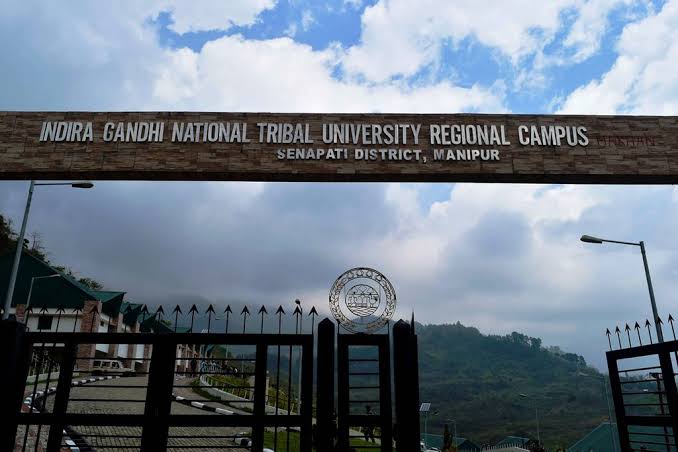
              The Central Government has already established two Central Tribal Universities namely the Indira Gandhi National Tribal University, Amarkantak and Central Tribal University of Andhra Pradesh, Vizianagram with a view to provide avenues of higher education and research facilities primarily for the tribal population of the country. Besides, the Andhra Pradesh reorganization Act, 2014 inter-alia mandates for establishment of a new Central Tribal University in Telangana. Further, there are several Central Universities in different States which also fulfil the aspirations of higher education of tribal youth of the region.

              Further, the UGC is implementing a scheme for the benefit of Scheduled Tribe (ST) students i.e. National Fellowship for Higher Education of Scheduled Tribe Students. In addition to this, UGC is implementing the following schemes for the benefit of weaker sections of the society including ST students:

              1. Residential Coaching Academies of Minorities /SC/ST and Women
              2. Establishment of Centres in Universities for study of Social exclusion and inclusive Policy
              3. Establishment of Equal Opportunities Cells (EOCs)
              4. Establishment of Scheduled Caste and Scheduled Tribe Cells in Universities
              5. Coaching Schemes for Scheduled Castes/ Scheduled Tribes/OBC (non-creamy layer)/ Minorities: (i) Remedial Coaching at UG & PG level (ii)  Coaching for entry into services (iii) Coaching for NET.


              This information was given by the Union Minister for Human Resource Development, Dr. Ramesh Pokhriyal ‘Nishank’ in a written reply in the Rajya Sabha today.


              *****

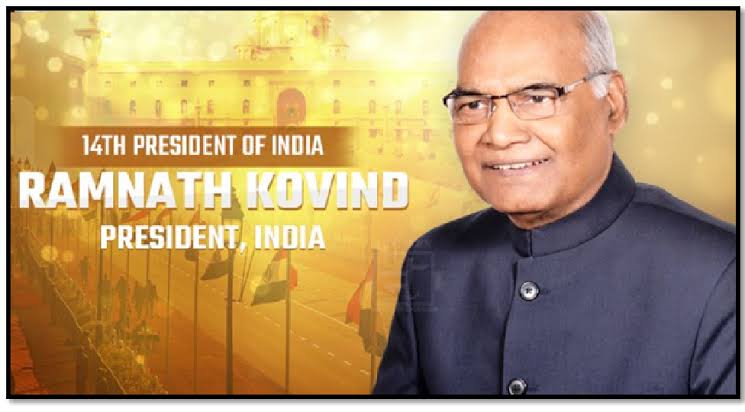
              Address by the Hon’ble President of India Shri Ram Nath Kovind at the FICCI Higher Education Summit

              1. I am happy to address the 15th Higher Education Summit 2019 organised by the Federation of Indian Chambers of Commerce and Industry in collaboration with the Ministry of Human Resource Development and the Ministry of Commerce and Industry. This global conference has come to occupy a vital place in the thought leadership forum on higher education. We have a large and diverse gathering of stakeholders from India and abroad participating in the event. I am sure you will find this edition as enriching as the previous ones.


              1.  Higher education as a public-policy issue enjoys primacy the world over. It is seen as a fundamental enabler of social, economic, scientific and intellectual progress and advancement. In the case of India, we have a distinguished history of higher education to inspire us as we work to strengthen and illuminate our universities as fonts of knowledge and learning. India has been home to the oldest university in the world. At its peak in the 7thcentury CE, the Nalanda University had 10,000 students from all over Asia enrolled in its campus. The methods of teaching prevalent in these ancient temples of learning and the emphasis on critical analyses could be of relevance as we look at modern trends in pedagogy.


              1. Investing in people through higher education and education in general has an omnibus impact on nation-building. The investment is made once but the dividends are realised in perpetuity. Recently, I had gone to Mysore to join the centenary celebrations of the enlightened “Monarch – Democrat” Jayachamaraja Wadiyar, the late Maharaja of Mysore. He was a pioneer in higher education who generously invested in his people. The lead that the Maharaja took in empowering people several decades ago, today provides the strong foundation of technological transformation that we see in Bengaluru, Mysuru and the adjoining areas. A country such as ours that wishes to transform itself within a short span of time, must transform its higher education journey first.


              Ladies and gentlemen,

              1. Higher education is a subject close to my heart, both for personal and professional reasons. I have myself experienced its power and potential to bring about intra-generational change and mobility. As President of India, I am Visitor to 152 Universities and Institutes of Higher Learning. I have had the opportunity to interact with Vice-Chancellors and Directors of almost all of them.  India with over 990 Universities is home to one of the largest higher education ecosystems in the world. We are constantly at work to improve their standards and convert them into global knowledge hubs. We have just begun nationwide consultations on the New Education Policy. It would lay out the path for transforming Indian education landscape suited to 21st century needs.


              1. The world of tomorrow will be driven by knowledge, machine-intelligence and digital pathways. To prepare ourselves for this transformation and to leverage its limitless opportunities, we have to recast our higher education with new courses and deeper research-orientation. Ideation, innovation and incubation should be given primacy in our curriculum. India has the third largest scientific human resource pool in the world.  If we establish robust academia-industry linkages, we have the potential to become the R&D capital of the world.  And along with science, liberal arts and humanities must get equal attention – for fruits of technology have to be ultimately made relevant to people, communities and cultures. The connectedness of disciplines is not a mere reality today, but the inner core of knowledge itself.  I am happy that our Universities have already made progress with                            inter-disciplinary approach, combining courses in mathematics with music, and artificial intelligence with animal husbandry. Much more work is required on this account.


              Ladies and gentlemen,

              1. Another important aspect that we need to attend is how to bring pedagogical changes in our education system.  Spirit of inquiry, critical thinking and an overall culture of looking at what, how and why of issues and perspectives needs to be nurtured. Creativity, imagination and thought in the minds of our students have to be unlocked and its exuberance allowed to flow and flower. To bring about this educational renaissance, we would require attitudinal adjustments and openness about new concepts on several fronts: at the level of academic leadership; at the level of student-teacher engagement; and at the level of technology integration.  These would only be possible if there is a vision to move forward and a committed urge to make things happen. In this context, I would like to commend the programmes initiated by the Ministry of Human Resource Development – LEAP that is “Leadership for Academicians Program” and   ARPIT that is “Annual Refresher Programme in Teaching”. While LEAP aims to build leadership and vision among higher education administrators, ARPIT is geared to improve pedagogical skills of our teachers.


              1.  Earlier I had talked about our ancient universities. They had a learning culture where ideas and concepts were constantly tested and subjected to verification and critical analyses. The system that produced a Panini, an Aryabhat, a Charak, or a Kautilya must have been robust. We must use modern tools to reopen wisdom stored in our countless knowledge traditions, even as we optimize the opportunities of a machine-intelligence age. An open learning culture will foster the spirit to innovate and give new wings to Atal Innovation Centres established in our Universities.


              Ladies and gentlemen,

              1. Our economic needs are immense. Over the next several decades, India will witness tremendous growth leading to higher standards of living for its people. All this demands that we bring new energy and dynamism in our higher education profile. Programmes for vocational education, apprenticeship and internship are needed for combining theoretical and practical knowledge streams. We have to also draw and learn from global institutions and experiences.


              1. At the same time, India’s diverse higher education ecosystem offers immense opportunities for the world at large. The forces of globalisation pose their own imperatives for making learning a cross-cultural experience and an integrated construct. To promote India as a global knowledge destination, the Government of India has begun a “Study in India” programme to attract international students. Our Universities have also been developing international networks for faculty, student, pedagogy and knowledge exchange. Making our higher education ecosystem world class will also give a wider choice to Indian students who go abroad seeking quality education.


              Ladies and Gentlemen,

              1. The world of higher education is an expansive one. For it to grow and empower us, we need support from all stakeholders – policymakers, educationists, researchers, entrepreneurs and others. Given the socio-economic reality of our country, public institutions will play a lead role. But along with it, the private sector must continue to contribute to national efforts.  We will also have to look at innovative models of funding to boost research and scholarship. Just last month,            I had the pleasure to launch the IIT Delhi Endowment Fund. This is the first of its kind Fund in India and is based on the contribution of the alumni. The Fund within a very short span has raised Rupees 250 crore and has a target to raise 1 billion US dollars for supporting academic excellence and research at IIT Delhi. I impress upon FICCI Higher Education Committee to galvanize greater people’s participation in strengthening our higher education system.


              Ladies and gentlemen,

              1. As we talk of higher education as a public good, a critical bearing in the Indian context is how to deal with regional imbalance in the quality of education. We are trying to narrow the gap but a lot more initiatives are required.  Another related aspect is the rural-urban divide that we see in the field of higher education. Our Founding Fathers, Mahatma Gandhi and Rabindranath Tagore had paid detailed attention to it, be it the Medical College in Wardha or the Visva Bharati in Santiniketan. I had the opportunity to visit both these illustrious campuses this year. For our inclusive growth and progress, we have to take inspiration from them and build on their ideas. In this effort, technology platforms such as digital classrooms, e-learning and National Digital Library can be a key enabler.


              Ladies and gentlemen,

              1. I have put forth some of my ideas on higher education before you.  It is now for you, the stakeholders, to flesh out the way forward. And as you deliberate and discuss, I would remind you of an old saying in Sanskrit, and I quote : “ सा विद्या या विमुक्तये” that is “true learning is that which liberates”.  Let us together create that university, that classroom, that curriculum, that culture which allows our students to realize their fullest potential as a human being, in service of our people, our nation and the world.


              1. I wish the Summit all success.


              Thank you,

              Jai Hind!

              Lachit Borphukan: Great Patriot and Dedicated Army General

              Time to time in India many great legendry personalities and patriots were born as India’s civilisation is one of the oldest in the world and the country is endowed with all types of resources including human resource. So many foreigners invaded India at times.
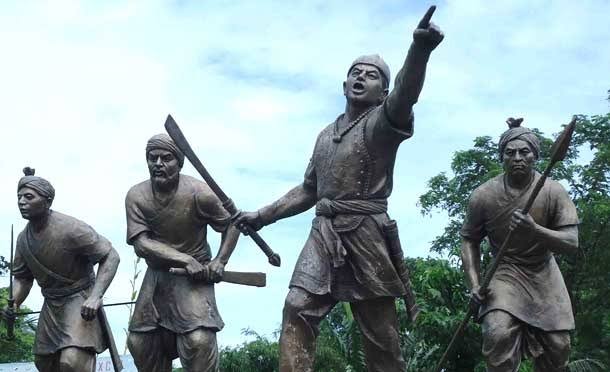
              One of them is Lachit Borphukan who was born on 24 November 1622 at Gargaon (near Sivasagar of Assam). His courage and dedication, no Indians in general and people of north-east in particular can forget. In commemorative of his dedication, every year on 24 November Lachit Divas (Lachit Day) is celebrated across the State (Assam) as well as the victory of the Ahom Army at the Battle of Saraighat (now near Guwahati). Today his statue may be seen in many places of Assam including at National Defence Academy (NDA), Khadakwasla of Maharashtra. Also the best passing out cadet of National Defence Academy – the Lachit Borphukan Gold Medal- is conferred in his name every year from 1999.
              Lachit Borphukan
              Lachit Borphukan’s name and Ahom rule are closely associated. It is pertinent to mention that, Ahom rule started in upper part of Assam (popularly known as Upper Assam) in 1228 with the entering of a person named Sukaphaa with his followers, a Tai prince originally from Mong Mao (which is now included within the Dehong-Dai Singhpho Autonomous Prefecture of Yunnan in Peoples Republic of China). He established his relation with the local persons by making them friends. It is believed that Sukaphaa and his people helped by imparting knowledge and practical demonstration to the local people for cultivation of wet rice which earlier were not known to them thoroughly. With the pace of time, Ahom kings expanded their base in other parts of Assam. As religious faith Hinduism influenced Ahom and Assamese language gained popularity all over the State. Literatures show Ahom rulers never neglected their defense base rather they gave importance for the protection of their territory, as sequel time to time different invaders attacked Assam but could not succeed. Against the back-drop, it may be mentioned that in 1962, our leaders could not anticipate strong defense-force after independence as sequel China took the advantage triggering lot of damage to our properties, killing of our soldiers, forcefully occupying land etc. However, Ahom rule continued up to 1826, and after the Treaty of Yandaboo with the British, Assam was under British rule.
              As mentioned already during Ahom rule, a great army general as well as a patriot Lachit Borphukan was born. The people of India remember Lachit Borphukan because of his valour, sincerity, patriotism and dedication for which the Battle of Saraighat (a naval battle) needs to be mentioned here. The Battle was fought in 1671 between the Mughal Empire (led by Raja Ramsingh I), and the Ahom Kingdom (led by Lachit Borphukan) on the Brahmaputra river at Saraighat, now in Guwahati. The various literatures reveal that the Ahom Army was not strong in comparison to the Mughal Army in spite of this, by meticulous uses of the terrain, guerrilla tactics, psychological warfare, military intelligence etc., the Mughal Army was defeated. The Battle of Saraighat was the last battle in the major attempt by the Mughals to spread their rule into Assam. The most memorable event of the Battle was that Lachit Borphukan beheaded his own maternal-uncle who was also with him during the war. The incident happened like this, to foil the attack Lachit ordered to construct an earthen wall for fortification under the supervision of his own maternal uncle within the night. When Lachit came at mid-night to take stock of the situation, he found his maternal uncle was telling others to have nap because of mid-night. Lachit became furious and immediately, beheaded his maternal uncle in presence of all the persons uttering, “My maternal uncle is not greater than my country”. In Assamese the famous saying is “Desotkoi Momai Dangor Nohoi”. That night with Lachit’s initiative (in spite he had fever), the fort was completed. This is reflected as his sincerity, seriousness, dedication and patriotism. He was great hero, a great patriot and a great Army General.
              Dr Shankar Chatterjee
              Former Professor & Head (CPME),NIRD & PR ( Govt. of India), Hyderabad,  India
              Former Associate Professor, Eritrea
              Former Assistant Prof, Govt. Degree College, Tripura, India
              Former Senior Planning Officer, Govt of Assam, India 

              Five Books Written In Five Ways by Piyush Goel – Miracle Man of India

              1.Mirror Imaged Shree Mad BhagvadGita (Pen)
              Piyush Goel has a unique art, he can write words in mirror image Piyush Goel can write words in mirror image in two languages Hindi and English.
              He has completed “World First Mirror Image Book Shreemad BhagvadGita”, all 18 chapters, 700 verses in two languages Hindi and English.Besides all of these he has completed “ShreeDurga Saptsatti” in Sanskrit Languages,ShreeSai Satcharitra in two languages Hindi and English,Sundar Kand (two times).
              Mirror Imaged Shree Mad BhagvadGita
              2. Needle Write Book “Madhushala”(Needle)
              To read a book in front of a mirror ,reading then mirror very hard.People asked Piyush to read your mirror imaged books,mirror is necessary, he replied “Yes”.
              After a lot of thinking an idea stuck into his mind “Why should i not write a book with Needle.Then he started writing “Madhushala”,a book of Harbans Rai Bachchan,father of Amitabh Bachchan,Legend of Indian
              Cinema,now no need of Mirror.(Mirror image but no need of mirror).
              2-needle-book
              3. Book “Gitanjali”written with Mehndi Cone(Mehdi Cone)
              Piyush always think “DO SOMETHING NEW”,because of this thinking,he make a project and work on it.Whenever he has spare time and bring out the work at the end and this is the result of “Gitanjali”a book of Noble Literate Rabindra Nath Tagore,completed with the help of Mehndi Cone.
              3-mehandi-book
              4. Book “PiyushVani” with the help of Iron Nail (Iron Nail)
              Imagination and Creativity brings new things to the world, Piyush started writing “PiyushVani” one of his own published book, written on A-4 size Aluminium Sheet with the help of “Iron Nail”.(Mirror image but no need of mirror).
              4-piyushvani
              5. Book ‘Panchtantra”with the help of Carbon Paper (Carbon Paper)
              Recently Piyush Goel completed “Vishnu Sharma”,s “Panchtantra” 5 tantras ,41 stories with the help of Carbon Paper,on one page both the words(mirror/non mirror) appeared in front and in the reverse.(Mirror image but no need of mirror).
              5-panchtantra

              Union HRD Minister Shri Ramesh Pokhriyal ‘Nishank’ addresses education

              Union HRD Minister Shri Ramesh Pokhriyal ‘Nishank’ addressed education ministers/representatives of of nearly 190 countries at the 40th UNESCO General Conference today in Paris. Speaking on the occasion he said that age-old immortal Indian culture has considered the whole world as family. Spreading the great idea of ​​VasudhaivaKutumbakam all over the world,  India has prayed for the welfare of the entire humanity by accepting the hypothesis of “SarveBhavantuSukhinah, Survey SantuNiramaya”, he added.By contemplating the idea of Integral Human Debate, we have pledged to reach out to the last person in the society.
              The HRD Minister said that the motto of India is “Collective efforts, for growth of all, with everyone’s trust” as it was mentioned by thePrime Minister of India, Mr Narendra Modi, at the 74thConference of the United Nations General Assembly.
              The Minister said that this session of UNESCO has another significance as it is being held at a time when the whole world is celebrating the 150th birth anniversary of Mahatma Gandhi. His message on truth and non-violence is even more important and relevant today.Through education, we are trying to pursue and spread the spirit of universal brotherhood, social harmony, cordiality, human values and love to each and every citizen of India, he added.
              Shri Nishank said that being the third largest education system in the world, it is important for India to be committed in building a bright future of more than 33 crore students.There are more than 1000 universities andmore than 45000 degree colleges in India and is the country with the largest number of young population. India has been playing a positive and constructive role to carry forward the UNESCO’s mission and realize our common objectives.
              He assured continuous support of India to UNESCO in its effort to pursue its core mandate of building peace through international cooperation in  Education,Science,Environment and Culture. He said that our philosophy, our thinking and our feeling everything remains focused for the welfare of humanity,”Asato Ma SadgamyaTamaso Ma Jyotirgamya”meansleadall creatures from  falsehood to truth and from  darkness to  light.
              He appreciated the efforts of UNESCO to ensure that every child and citizen receives quality education. He said that according to our mandate, we were able to reach every child across India by implementing the Right to Education Act 2009. He said that India has one of the oldest centres of learning in the world, the Nalanda University. Nalanda, Vikramashila, Vallabhi University have been the centre of attraction for students and scholars from different parts of the world.
              He informed the gathering that in a span of 33 years, some radical changes have been made  in the education sector of the country. Through our new education policy, we are committed to achieve the target fixed in the areas of quality, employability, creativity, inclusiveness, human values, science & innovation, skill, Social interest, practical research, and environmental education.
              The HRD Minister further said that India is highly determined to make higher education qualitative and affordable.Through SWAYAM-portal, we are trying to provide free online education not only Indian students but also to foreign students. In India, already  12.3 million students are taking online education under the SWAYAM portal. We are also providing free online education through E-VidyaBharati and Arogyabharati, through SWAYAM PRABHA, DTH Channel. He also informed that we have already entered in to an agreement with African Countries for providing the same at free of cost.
              He also informed the gathering that India has provided 1000 scholarships to all of the ASEAN countries for research, in our excellent IITs. He said that IMPRINT, SPARC, STRIDE, NIRF Ranking, IMPRESS and GIAN are some of our schemes by which students from other countries are getting education in India. He said that more than 100 excellent educational institutes of India are available as attractive destination for students all over the world under Study in India program.
              While speaking about teachers’ training he said that we understand the importance of training programs for the teachers therefore we have started the world’s largest teacher training programme “Nishtha” under which more than 4.2 million teachers will be trained. In the same manner, more than 1 million higher education teachers will be trained under ARPIT programme, he added.
              The HRD Minister conveyed his thanks to UNESCO for including the city of Jaipur in the World Heritage List. He also thanked UNESCO for including KumbhMela, the world’s largest human gathering, in the list of intangible heritage. Likewise he also welcomed the selection of Mumbai and Hyderabad in list of network of creative cities.The Minister said that we are in favour of strengthening the 1970’s conference which discussed the illegal import, export and transfer of ownership of cultural property.
              He said that this year UNESCO has declared “International Year of Indigenous Languages”. Hesaid that there are more than 2000 indigenous languages in India and India is committed to preserving and strengthening Hindi, Sanskrit and all other Indian languages ​​and their script.
              He said that India is committed to achieve UNESCO’s sustainable development goals with the help of science and technology. In this context, the Prime Minister of India, Shri Narendra Modi has unveiled ‘India Technology Vision 2035’ at the 103rd Indian Science Congress, which focuses on 12 subjects.
              The Minister said that new schemes like clean energy, research, solar energy and water technology have been introduced to protect our environment. India Has led the “International Solar Alliance” to reduce the growing climate imbalance in the field of environment in India, he added.
              The challenge before the world of climate change is to face it together.Climate change is a major challenge before all of us.India wants to take this kind of initiative with other countries in the fields of education, culture, science, technology, water and sanitation. He requested the entire world that together we can meet the Sustainable Development Goals of the UNESCO Environment Sector.
              The Minister reiterated that India is in favor of integrating UNESCO into the broader framework of UN reform in the organization. We believe that the amendment to the UNESCO Constitution will have far-reaching effects and will encourage mutual cooperation and committee, he added.
              He also reiteratedthat India needs to integrate into the broader framework of UN reform in UNESCO’s organization. We believe that amending the UNESCO Constitution will have far-reaching effects, he added.
              *****

              MCA notifies Insolvency and Bankruptcy (Insolvency and Liquidation Proceedings of Financial Service Providers and Application to Adjudicating Authority) Rules, 2019 (Rules)

              The Ministry of Corporate Affairs (MCA) has notified the Insolvency and Bankruptcy (Insolvency and Liquidation Proceedings of Financial Service Providers and Application to Adjudicating Authority) Rules, 2019 (Rules) today to provide a generic framework for insolvency and liquidation proceedings of systemically important Financial Service Providers (FSPs) other than banks. The Rules shall apply to such FSPs or categories of FSPs, as will be notified by the Central Government under section 227 from time to time in consultation with appropriate regulators, for the purpose of their insolvency and liquidation proceedings.
              The Insolvency and Bankruptcy Code, 2016 (Code) provides a consolidated framework for reorganisation, insolvency resolution and liquidation of corporate persons, limited liability partnerships, partnership firms and individuals in a time-bound manner. Section 227 of the Code enables the Central Government to notify, in consultation with the financial sector regulators, financial service providers (FSPs) or categories of FSPs for the purpose of insolvency and liquidation proceedings, in such manner as may be prescribed.
              Shri Injeti Srinivas, Secretary, Corporate Affairs, stated that the special framework provided under Section 227 of the Code for financial service providers is essentially aimed at serving as an interim mechanism to deal with any exigency pending introduction of a full-fledged enactment to deal with financial resolution of Banks and other systemically important financial service providers.  The special framework under Section 227 of the Code shall not apply to Banks.  Separately, however, the government will notify specific categories of FSPs that do not fall under the systemically important category and shall be resolved under the normal provisions of the Code as ordinarily applicable to corporate debtors.

              The Rules provide that the provisions of the Code relating to the Corporate Insolvency Resolution Process (CIRP), Liquidation Process and Voluntary Liquidation Process for a corporate debtor shall, mutatis mutandis, apply to a process for an FSP, subject to modifications, as under:
              1. The CIRP of an FSP shall be initiated only on an application by the appropriate regulator.
              2. On admission of the application, the Adjudicating Authority shall appoint the individual, who has been proposed by the appropriate regulator in the application for initiation of CIRP, as the Administrator.
              3. While conducting a proceeding of an FSP, the Administrator shall have the same duties, functions, obligations, responsibilities, rights, and powers of an insolvency professional, interim resolution professional, resolution professional or liquidator, as the case may be. He shall be appointed or replaced by the Adjudicating Authority on an application made by the appropriate regulator in this behalf.
              4. The appropriate regulator may constitute an Advisory Committee of three or more experts to advise the Administrator in the operations of the FSP during the CIRP.
              5. An interim moratorium shall commence on and from the date of filing of the application for initiation of CIRP by the appropriate regulator till its admission or rejection by the Adjudicating Authority.
              6. The provisions of interim-moratorium or moratorium shall not apply to any third-party assets or properties in custody or possession of the FSP, including any funds, securities and other assets required to be held in trust for the benefit of third parties.
              7. The Administrator shall take control and custody of third-party assets or properties in custody or possession of the FSP and deal with them in the manner, to be notified by the Central Government under section 227.
              8. The license or registration which authorises the FSP to engage in the business of providing financial services shall not be suspended or cancelled during the interim-moratorium and the CIRP.
              9. Upon approval of the resolution plan by the Committee of Creditors, the Administrator shall seek ‘no objection’ from the appropriate regulator to the effect that it has no objection to the persons, who would be in control or management of FSP after approval of the resolution plan. The appropriate regulator shall issue ‘no objection’ on the basis of the ‘fit and proper’ criteria applicable to the business of the FSP without prejudice to the provision of Section 29A of the Code.
              10. The FSP shall obtain prior permission of the appropriate regulator for initiating voluntary liquidation proceedings.
              11. The Adjudicating Authority shall provide the appropriate regulator an opportunity of being heard before passing an order for liquidation or dissolution of the FSP.
              These Rules shall come into force on the date of their publication on the official gazette.
              These Rules are available at www.mca.gov.in and www.ibbi.gov.in.
              ****