Caste Discrimination

Caste discrimination is one of the most exceedingly awful denials of basic freedoms on the planet today. It is minimal perceived and infrequently recognized, and influences in excess of 260 million individuals around the world. Through a hierarchical situation, the task of essential rights among different castes is profoundly inconsistent, with those at the top getting a charge out of most rights combined with least obligations and those at the base performing most obligations combined with no rights. The situation is kept up with through the inflexible implementation of social segregation (an arrangement of social and financial punishments).

Caste discrimination includes enormous infringement of common, political, financial, social and social rights. It is normal banned in nations influenced by it, yet an absence of execution of enactment and caste-inclination inside the equity frameworks to a great extent leave casualties without security.

The rejection of supposed ‘lower caste networks’ by different gatherings in the public eye and the intrinsic underlying disparity in these social connections lead to significant degrees of neediness among influenced populace gatherings. There is little admittance to advantages and improvement measures, and their position by and large blocks contribution in dynamic and significant investment openly and common life.India’s caste framework is maybe the world’s longest enduring social progressive system. A characterizing highlight of Hinduism, caste includes an unpredictable requesting of gatherings of people based on custom immaculateness. An individual is viewed as an individual from the caste into which the person in question is conceived and stays inside that caste til’ the very end, albeit the specific positioning of that caste might differ among areas and over the long run. Contrasts in status are generally advocated by the strict regulation of karma, a conviction that one’s place in life is controlled by one’s deeds in past lifetimes.

Conventional grant has portrayed this over 2,000-year-old framework inside the setting of the four head varnas, or enormous caste classes. Arranged by priority these are the Brahmins (ministers and educators), the Ksyatriyas (rulers and officers), the Vaisyas (dealers and merchants), and the Shudras (workers and craftsmans). A fifth classification falls outside the varna framework and comprises of those known as “untouchables” or Dalits; they are regularly appointed undertakings also customarily dirtying to justify incorporation inside the customary varna system.7 Almost indistinguishable designs are likewise noticeable in Nepal.

Regardless of its established abrogation in 1950, the act of “distance”- the inconvenience of social incapacities on people by reason of birth into a specific caste-stays a lot of a piece of rustic India. Addressing more than one-6th of India’s populace or exactly 160 million individuals Dalits suffer close to finish social segregation. “Untouchables” may not go too far isolating their piece of the town from that involved by higher castes. They may not utilize similar wells, visit similar sanctuaries, or drink from similar cups in tea slows down. Dalit youngsters are regularly made to sit at the rear of study halls. In what has been called India’s “covered up politically-sanctioned racial segregation,” whole towns in numerous Indian states remain totally isolated by caste.

“Distance” is supported by state portion of assets and offices; separate offices are accommodated separate caste-based areas. Dalits frequently get the less fortunate of the two, in the event that they get any whatsoever. In numerous towns, the state organization introduces power, disinfection offices, and water siphons in the upper-caste segment, however fails to do likewise in the adjoining, isolated Dalit region. Fundamental conveniences, for example, water taps and wells are additionally isolated, and clinical offices and the better, covered rooftop houses exist solely in the upper-caste province. As uncovered by the contextual analysis underneath on the tremor in Gujarat, these equivalent practices remain constant even in the midst of extraordinary cataclysmic event.


Homo Sapiens!

No defination can define humanity. Humanity is something that a person does for another person’s well-being and betterment. Being human does not mean that an individual possesses humanity. Humanity means caring for and helping others whenever and wherever possible. Humanity means helping others at times when they need that help the most, humanity means forgetting your selfish interests at times when others need your help. Humanity means extending unconditional love to each and every living being on Earth.

Humanity is all about feeling love and compassion for others, for other people, be they relatives or even people who are distant from our life. It’s a feeling of love and compassion for everyone, irrespective of religion, caste, and creed, irrespective of nationality, and even for our enemies. Matters like religion, caste, creed, and nationality often separate people and do not unite them.

Humanity, however, is much more than that. The feeling of love and compassion is not just for human beings, but also for plants, animals, and also for the environment in which we live.

Unfortunately, many of us have detached ourselves from humanity. We have become inhuman in many ways.

Now is the moment, it’s done or die. So do it for hunger, do it for charity, do it for peace or do it for freedom, do it for equality, do it for cancer, or do it for the poor, do it for the living, but do it for change and do it for today…do it for HUMANITY.

Skills of the Future

The new world order, brought on by the fourth Industrial Revolution, demands that today’s children acquire skills that will serve them well in the future.

Photo by Andrea Piacquadio on Pexels.com

The world we live in will change so fundamentally that students who come out of school by 2030 will make careers in fields that we have no idea about in the present.

As all of these trends happen, the winners will be those who are able to participate fully in innovation-driven ecosystems by providing new ideas, business models, products, and services, rather than those who can offer only low-skilled labor or ordinary capital, points out Klaus Schwab, founder and executive chairman of the World Economic Forum, in his seminal work, the Fourth Industrial Revolution.

This view is supported by other experts.

According to David Deming, associate professor of education and economics at Harvard University, Soft Skills like sharing and negotiating will be crucial. Modern workplace, where people move different roles and projects, closely resembles pre- school classrooms where we learn social skills such as empathy and cooperation. =

In effect, the skills and traits that must be inculcated in our children include : Social Intelligence

Photo by Polina Zimmerman on Pexels.com

This set of skill include empathy or the awareness of self and others perspective collaboration, negotiations and conflicts resolution, persuasive communication that can change minds and hearts.

A sense of service mindedness, trustworthiness and transparency.

Reference

http://www.timesofindia.com

http://www.wikipedia.com

INDIA OVER CHINA IN 2024 , IN OVERPOPULATION

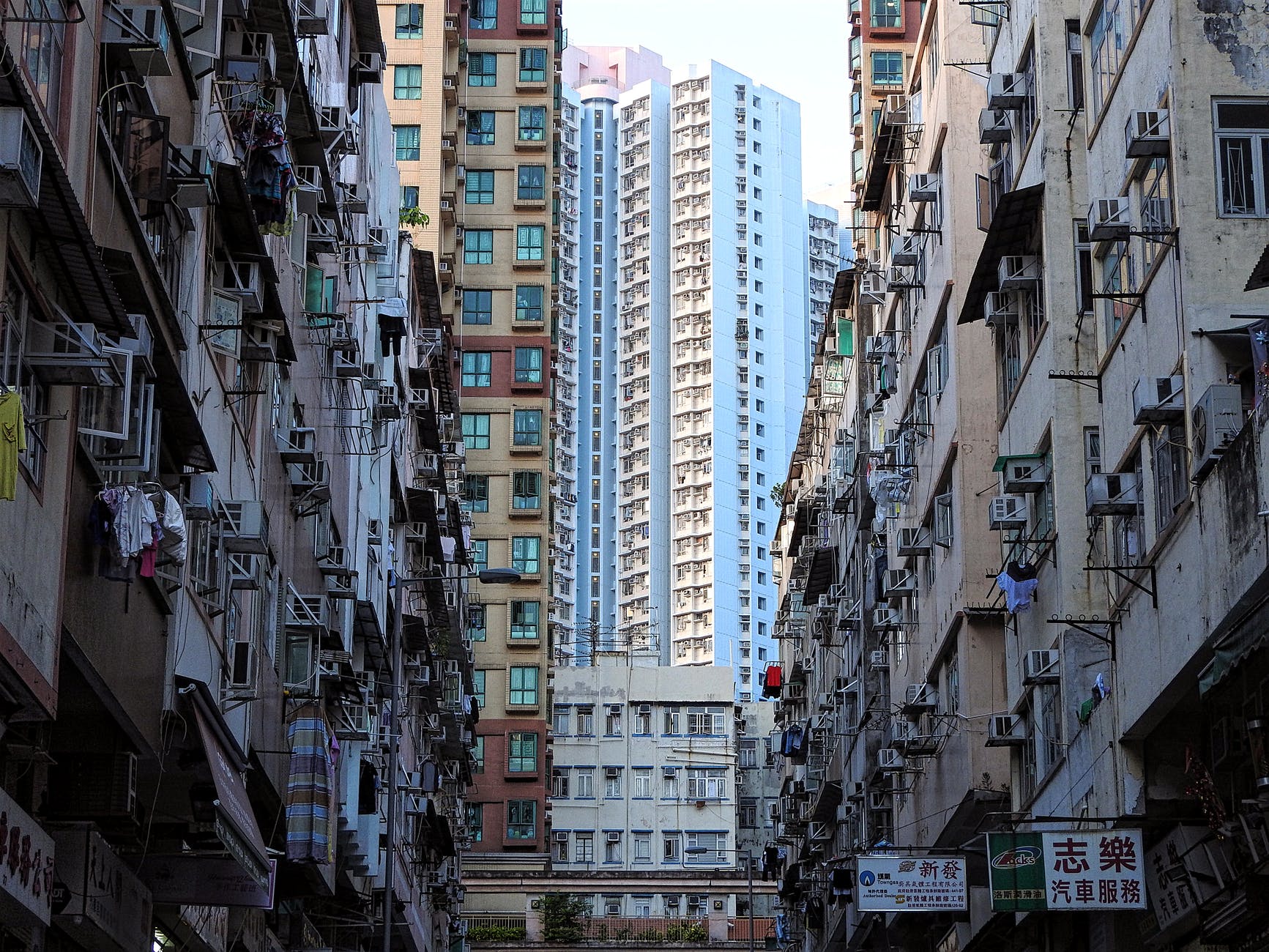
Whether you are in a metro station, airport, railway station, road, highway, bus stop, hospital, shopping mall, market, temple, or even in a social/ religious gathering, we see all these places are overcrowded at any time of the day. This is a clear indication of overpopulation in the country. This is the major issue of , India is facing right now. Food production is limited & population is unlimited , we can say wants are unlimited & resources are limited & population is unlimited hence can be concluded that the reason behind poverty in India is over population.

Some of the common effects of overpopulation are :

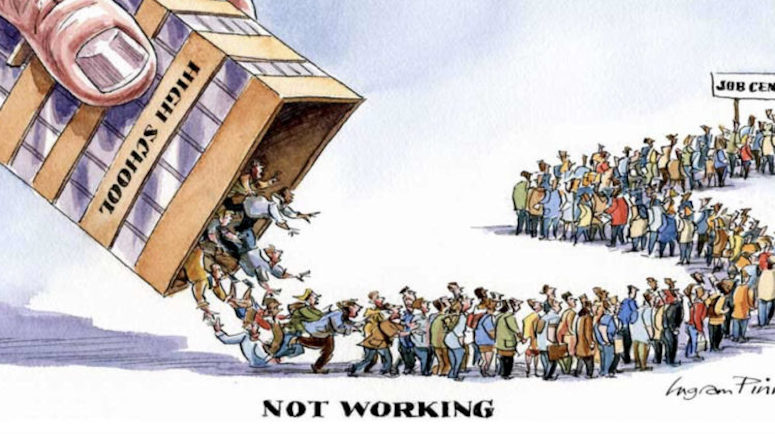
  1. Unemployment : Every body knows India’s state of employment , employment rate is decreasing & unemployment rate is increasing . Since their is no employment people are starving , their is no living , literacy rate is also decreasing . This one problem of over population is bringing so many more problems with it .
  2. Manpower utilization: The number of jobless people is on the rise in India due to economic depression and slow business development and expansion activities.
  3. Pressure on infrastructure: Development of infrastructural facilities is unfortunately not keeping pace with the growth of population. The result is lack of transportation, communication, housing, education, healthcare etc. There has been an increase in the number of slums, overcrowded houses, traffic congestion etc.
  4. Resource utilization: resource are already scare , & they are being exploited . Land areas , water , trees are being exploited due to overpopulation .
  5. Inequitable income distribution: In the face of an increasing population, there is an unequal distribution of income and inequalities within the country widen.

STEPS TO CONTROL OVER POPULATION

Indian government should take bold steps to control overpopulation because if they want to improve economic growth they should control overpopulation . Major steps which have been already implemented but still need to be emphasized more control population. Increasing the welfare and status of women and girls, spread of education, increasing awareness for the use of contraceptives and family planning methods, sex education, encouraging male sterilization and spacing births, free distribution of contraceptives and condoms among the poor, encouraging female empowerment, more health care centers for the poor, to name a few, can play a major role in controlling the population. India’s growth in the whole world cannot be ignored , whether it is in science & technology , medicine , health , communication , entertainment , literature or military . So experts believe that if people of India will follow the strict population control norms , it will be able to overcome this problem too .

School vs Workspace

Our children must learn how to acquire knowledge that can be applied across domains and situations.

Photo by samer daboul on Pexels.com

Traditionally, schools and colleges have been cloistered enrollments where students only acquire knowledge. They then move to the next stage of their lives – into work places – where they may or may not apply the knowlege they have.

This separation has ensured that young people who join the work force have no idea about the exigencies of the work environment and are completely unprepared to deal with this situation.

However, future workplaces are likely to be far removes from conventional or current experiences.

In fact, it is estimated that most of tomorrow’s workforce may be contractual. In fact, already many large organizations are tapping into on-demand talent of the gig economy.

Increasingly, these new economy workers will be required to rely on their own knowledge and the skills to provide services and produce products that solve businesses’ and society’s pressing problems.

Photo by Burst on Pexels.com

Our children, therefore, must learn how to acquire relevant knowledge that can be applied in different domains and circumstances. They must discover the joy learning so that they can become learners for life as well as independent learners, capable of handling uncertainty with flexibility.

Schools must therefore re-engineer their systems, curricular and pedagogies to ensure that students have agency over their own learning and lives and learn to learn, unlearn and re-learn with agility.

Schools, therefore, must teach children to be entrepreneurs, expose them to real life work and social environments through projects and experiences so that they know how to tackle challenges that lie ahead and are capable of solving problems independently.

Reference

http://www.timesofindia.com

http://www.wilipedia.com

http://www.hindustantimes.com

ACCIDENTLY CREATED INVENTIONS

Hello fellas, the following are some of the things that are created accidentally by the creators when they wanted to do something else.

  1. The Microwave Oven :
  • The engineer was doing his job as usual when he noticed that the candy bar in his pocket had melted. 
  • Quickly Spencer realized that it was the magnetrons that were causing this phenomenon. 
  • By 1945, he had filed a patent for his metal cooking box powered by microwaves.

2. Chocolate Chip Cookies :

  • Ruth Graves Wakefield, co-owner of the Toll House Inn, was preparing some chocolate cookies for her guests when she realized that she was out of baker’s chocolate. 
  • Thinking on her feet, Wakefield decided to chop up a block of Nestle semi-sweet chocolate, assuming that it would melt and spread evenly throughout the batter.
  • Instead, what came out of the oven was the very first batch of chocolate chip cookies.

3. Matches:

  • In 1826, chemist John Walker he accidentally scraped a stick coated in chemicals across his hearth and found that it caught fire.
  • Walker’s “Friction Lights,” as he called them, were originally made out of cardboard, but eventually he switched over to using wooden splints and sandpaper.

4. Vaseline:

  • Robert Augustus Chesebrough decided to head to the town where the product had been discovered to play around with it a bit.
  • While there, Chesebrough observed that the men drilling the petroleum would use a byproduct of the process on their skin to soothe and heal cuts and burns.
  • Later, he turned this observation into the product known today as Vaseline.

5. Bubble Wrap:

  • Engineers Alfred Fielding and Marc Chavannes did invent bubble wrap on purpose. But when they made it, the intended use for the product was all wallpaper, not as packing material.
  • when their bubbly wallpaper proved to be unsuccessful the two entrepreneurs decided to pivot and market their product instead as greenhouse insulation and later in 1960 as protective packaging. 

The Comptroller and Auditor- General of India

Another essential office in the Government of India is that of the Comptroller and Auditor- General who controls and checks the financial operation of the entire country [Article 148], at the Union as well as State levels. As observed by Dr. Ambedkar, the Comptroller, and Auditor General of India shall be the most prominent officer under the Constitution of India. For he, is to be the guardian of the public purse and he must look after expenditures out of the Consolidated Fund of India or if a state without the authority of the appropriate Legislature. To discharge his duty properly, his office must be independent of any control of the Executive. The office of the Comptroller and Auditor General, in the Constitution, is substantially modeled upon that of the Auditor General under the Government of India Act, 1935.

Conditions of Service:- The independence of the Comptroller and Auditor General has been protected by the following provisions of the Constitution—

Though appointed by the President, the Comptroller and Auditor General may discard only on the ground of ‘proved misbehavior’ or ‘incapacity’, on an address from both the Houses of the Parliament. He thus excepted from the general rule that all civil servants of the Union hold their office at the pleasure of the President [Article 310(1)].

His salary and conditions of service shall be statuary and shall not be liable to variation to his disadvantages during his term of office. Under this power, Parliament has enacted the Comptroller and Auditor General’s Act 1971, as amended, provides as follows:

(i) The term of office of the Comptroller and Auditor General shall he six years from the date on which he presumes office, but—

• he shall vacate office on attaining the age of 65 years if either than the expiry of the six-year term;

• he may, at any time, resign his office, by writing under his hand, addressed to the President of India;

• he may be removed by impeachment [Article 148, 124(4)].

(ii) His salary shall be equal to that of the Judge of the Supreme Court.

(iii) On retirement, he shall be eligible for an annual pension as per the High Court and Supreme Court Judges.

(iv) In order matters his conditions of service shall be determined by the rules applicable to a member of the IAS, holding the rank of a Secretary of the Government of India.

(v) he shall disqualify for any further Government office after retirement.

(vi) the salaries, etc of the Comptroller and Auditor-General, his staff, and administrative expenses of his office shall be charged upon the Consolidated Fund of India and shall be non-votable [Article 148].

Duties and Powers:- The Comptroller and Auditor General shall perform such duties and exercise such powers about the accounts of the Union and the States as may be prescribed by Parliament. In exercise of this power, Parliament has enacted the Comptroller and Auditor General’s duties, powers, and conditions of services Act, 1971 which relieves him of his pre- Constitution duty to compile the accounts of the Union; and the States may enact similar legislation with the prior approval of the President — to separate accounts from audit at the State level, and to relieve the Comptroller and Auditor General of his responsibility in the matter of preparation of accounts, either of the States of the Union.

Is Russia Banned From Olympics??

If you are following Tokyo Olympics 2020 closely, you might notice that there is no name of Russia instead you will find acronym ROC ( Russian Olympic Committee) . Even at the inauguration ceremony Russian flag was slightly modified and represented. Why is this so?? Is Russia banned from Olympics?? Here’s what to know—

In December 2019 World Anti Doping Agency (WADA) banned Russia from participating in any international events for four years. It was after the new revelation came up about a doping programme that Russia had been accused of. Many whistleblower and investigator reported that Russia had been running dope programme for many years in order to reach new heights. This investigation was going on for many years and in September 2018 WADA promised to lift the sanction only at the condition that Russia will hand over the data of athletes , so that thorough check could be done on them. Later Russia had been found tempering with the data, which led to the banning of Russia for 4 years.

It all started when in 2014 , 800 m runner of Russia ,Yolia Stepanova and her husband , who was the former employee of Russian Anti Doping Agency revealed that sophisticated doping programmes had been running in sports history of Russia. Two years later , another whistle blower – Grigory Rodchaenkov , a former head of RUSADA revealed the same.

This is the reason why ,though 335 sportsmen from Russia are participating in Olympics this year, they are refrained from using country’s name , flag and even national anthem. These are only the athletes that have been found having no relation with doping programmes. Russia is not only banned from Olympics but also from Fifa World Cup 2022 and Winter Olympics that will be held in 2022.

World Nature Conservation Day 2021

“Only if we understand, will we care. Only if we care, will we help. Only if we help, shall all be saved.”

– Jane Goodall

Introduction

Every year July 28th is celebrated as World Nature Conservation Day. This is to raise awareness to protect the planet we live on, our Mother Earth. The meaning of conservation is carefully using valuable natural substances that exist in limited amounts to make certain that they will be available for as long a time as possible. The practice of not using resources carefully has also led to the extinction of many species. Conservation will help in the growth of biological, economic, cultural, and recreational values. Non-conservation for so many years has also resulted in Climate change which we know is affecting the planet in many negative ways.

Significance

It is important to recognize that we need nature for our survival, if we let that go, it will disturb the environment which will then disturb the climate harming the harvests and the well-being of all humans. Not just that, we also need nature for all the non-renewable resources we keep using for our industries. Celebration of this day recognizes the importance of a healthy environment which is the foundation of a stable and productive society, it ensures the well-being of present and future generations. The aim of this day is to introspect on how we Homo sapiens are exploiting nature and the effects we are facing because of it, such as global warming, natural disaster, increased temperature, and various diseases. 

Theme for this year

The theme for this year’s World Nature Conservation Day is “Forests and Livelihoods: Sustaining People and Planet”. This theme highlights the importance of co-existing with nature.

Forests are often underestimated and looked upon as just a source of wood, but it is important to know their importance. We greatly depend on forests for our survival, be it the air we breathe or the wood we use. Forests provide habitat for animals and also a livelihood for humans, it also offers watershed protection. Forests help in preventing soil erosion and help in the mitigation of climate change. Over 2 billion people rely on forests for shelter, livelihoods, water, food, and fuel security. Forests are home to over 80% of the world’s terrestrial biodiversity and 60 million indigenous people. Forests provide jobs for more than 13 million people across the world. They are the second-largest storehouses of carbon which is very important to solve the issue of global warming and to reach the goals described in the Paris Agreement.

Things to do to Conserve Nature

Cut Down on plastic use – Although the use of plastic is convenient for us, it is non-biodegradable and leaves its trace for a very long time, it not only stays in the environment but also impacts other species, like choking animals and birds because of plastic.

Save Electricity – Electricity is produced by using non-renewable resources. If we control how much electricity we use, and don’t waste it, less non-renewable resources will be used. The creation of electricity produces extra carbon waste which increases global warming. 

Save Water – Wasting water is resulting in decreasing levels of drinking water. Not only that but it also creates a lot of energy to treat, pump, and heat water. We should use water judiciously. 

Recycle-Reuse – Following the practice of recycling and reusing will help in reducing the amount of waste we create.

Conclusion

We have learnt about the importance of nature and its conservation above. It is high time to realize the importance of following this practice as we are in deep waters already. This summer the world has experienced nature’s wrath all across, floods in China and Europe, high temperatures in Canada, the US, and the UK. The last few years have seen a rise in forest fires and if this isn’t warning enough of the damage we have caused, then we’re just waiting for a big disaster to hit us.

References

Ethical Business

“A business that makes nothing but money is poor business.” This is a well known and most commonly used quote of Henry Ford, an Amercian Industrialist and the founder of Ford Motor company. This quote clearly expresses that a business should not only aim for profit maximisation , there are various other responsibilties that one should bear. Ethical business not only means to have a good relationship with the customer but also to protect the health of consumers and other citizens. But how of many businesses are following such practices? How many are following the guidelines provided by the government? How many are ensuring the life protection of the workers?

A common agenda of most of the businesses these days is ‘profit-maximisation’ and in order to achieve this goal they tend to forget that if they are taking something from the society , they need to give something back. The enrionmental havoc that many industries are creating just to earn profit is beyond imagination and unfathomable. Top four industries that contribute to global warming and other environmental hazards are Fertilizer industry, Tannery industry , Pesticides industry, Chemical industry. Central Pollution Control Board classified The Indian Fertilzer Industry under ‘red catregory’ which is really a matter of concern. Not only this , CPCB also stated that out of 52% plants, assessed in study, 12 plants received directions or show cause and even closure notices for water pollution and air pollution and solid waste management. All these figures clearly indicates the irresponsibility and carelessness of businesses.

In the era where every industries and businesses focusses on gaining profit there are certain businesses which are balancing both ethics and profits.One of such corporation is Anand Milk Union Limited (Amul). Amul is really setting an example for ethical business by providing jobs to around 12 million small farmers. They do not lean on big farmers rather they collect milk from small farmers, benefitting both the service industry and the Corporation. These small producers are grouped in nearly 108547 village – level dairy corporation society. According to data, India’s milk production has increased from 21.2 million metric tons in 1968-69 to 88.1 million metric tons in 2003-2004. These figures are gradually increasing year by year. Not only Amul , in 2018 seven leading industries namely Adidas , Method, Norton Point, West Paw, Clifbar, Waitrose, Rubbermaid, took up ‘End Plastic Pollution’ Campaign in order lessen the plastic pollution.

All the above examples suggests that it is possible to do business keeping ethics in mind. In a run long for a business to survive and thrive , community service and profit should go hand in hand . There are many ways through which a business can cater service to the needy or environment. ‘Cleaning Campaigns’, ‘charitable works’, ‘donation,’ ‘providing jobs to the lower class people’ are some of the ways to balanace profit and ethics. If business follows “one must clean his own mess” rule it will not only gain public support and profit , but also it will set example for other businesses to follow.

THE SOCIAL NOVEL

The Social Novel may be defined as a fictional narrative that focuses on the varieties of human behavior in society and the way in which the characters reflect or contradict the values of that society.

In this genre, the characters are seen in the background of their social milieu and culture. The inner life of the characters find the place in such novels, greater importance is given to their conflicts and collisions with classes and believes. The essence of a social novel is the conflict between the individual and the society that surrounds him based on different concepts of values.

Two Groups of Social Novel:

Social novels can be divided into two groups.

  • The novel of Manners.
  • The novel of Civilization.

The novel of Manners:

The novel of manners is concerned with social behavior and its correctness in a given society. The concept of behavior achieves some grant moral effect as we find in the novels of Jane Austen “Pride and Prejudice” and Emma are the best examples. The novelist is preoccupied with the niceties of social conduct and often, commerce by the employment of Irony and satire exposes undesirable passions like arrogance, hypocrisy, and snobbery. Henry James’ novel ‘The ambassador’ is a successful social novel of manners. It depicts with great humor and delicacy the reaction of different American types to a European environment. Evelyn Waugh’s “A handful of dust” is a social novel of manners that presents The vision of sin and guilt in the modern world. The social novel of manners has a satiric structure as we find in Jane Austen. Even modern novelists make use of the same formula. For instance, Philip Roth satirizes the self-protective attitude of the modern middle class in his novel ‘Goodbye Columbus’.

The novel of Civilization:

The social novel of Civilization takes a comprehensive view of the whole Civilization. The best examples are Charles Dickens’s “Little Dorrit” and Tolstoy’s “War and Peace” the novel Civilization aims at revealing the meanings, principles, and social styles that govern people’s lives. The action of individuals is examined in the light of the Civilization that surrounds them. In “Little Dorrit” Dickens explores the English society dominated by the corrupt business class. In the novel Civilization characters or viewed as part of the developing environment. The splendor or shame of their past is exploding. The significance of the character’s behavior becomes clear only in the background of the Civilization which he represents. In “War and Peace” Tolstoy presents the different stages in the development of each character. The novel Civilization, sometimes, depicts the different stages in the growth of the writer’s consciousness as in Marcel Proust’s ‘Remembrance of Things Past’. Sometimes it uses our family story as in Faulkner’s ‘Sartoris’ or Galsworthy’s ‘Forsyte Saga’.

The Social Novel is a technique in literature. In which the authors express and illustrate society, ethics, etiquette, and protocols. Nowadays, various authors are following this technique in their writings. Especially, to illustrate the Epic society, Dynasty, and fictional Mythologies. This literary form serves as a device to illustrate society.

The Detective Novels

The Gothic Novels

Powers and Duties of the President of India

Nature of the powers of the President:- The Constitution says that “executive powers of the Union shall be vested in the President”. The President of India shall thus be the head of the “Executive Powers” of the Union. The ambit of the executive powers has been thus explained by our Supreme court— it may be possible to frame an exact definition of what executive function means and implies. Ordinarily, the executive powers connote the residue of governmental functions that remain after legislative and judicial functions are taken away, subject, of course, to the provisions of the Constitution or of any law.

Limitations on President’s Powers:- Firstly, he must exercise these powers according to the Constitution [Article 53(1)]. Thus, Article 75(1) explicitly requires that Ministers can be appointed by the President only on the advice of the Prime Minister. If the President violates any mandatory provisions of the Constitution, he will be dismissed by impeachment. Secondly, the executive powers shall be exercised by the President of India only on the advice of the Council of Ministers [Article 74(1)].

Executive powers of the President are discussed under the following heads:-

(1) The Administrative Powers:- The President is the formal head of the administration. He shall not have any administrative function to discharge or to control or supervise the Department of Government. Though the President shall have the power to appoint —

• The Prime Minister of India

• Other Ministers of the Union

• The Attorney General of India

• The comptroller and Auditor General of India

• The Governor of a State

• The Finance Commission

• The Election Commission

• The judges of the Supreme Court

• The judges of the High Court

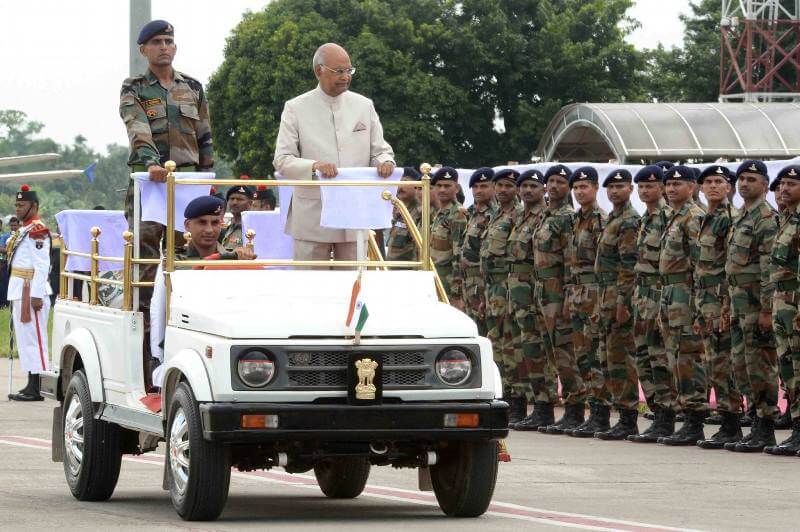
(2) The Military Powers:- The supreme command of the Defense Forces vested in the hand of the President of India, the powers regulated by [ Article 53(2)]. The President may have the powers for declaration of any war or peace or the employment of the Defense Forces.

(3) The Diplomatic Powers:- The task of negotiating treaties and agreements with other countries are subject to ratification by parliament, therefore belong to the President. The President of India represents India in International Affairs and has the powers to appoint Indian representatives for other countries and receiving diplomatic representatives of the other states, acknowledged by the Parliament.

(4) The Legislative Powers:- The Legislative powers of the President, indeed according to Ministerial advice [Article 74(1)] and may discuss in the following heads:

• Summoning, Prorogation, and Dissolution

• The Opening Address

• The right to Address and to send Messages

• Nominations of the members of the Houses

• Laying reports before the Parliament

• Previous sanction to Legislation

• Assent to Legislation and Veto power

• Disallowance of State Legislation

• The Ordinance-making power

(5) Pardoning Power:- The President of India has the power to grant a pardon in case of :

• Punishment by a court-martial.

• Offence against the laws made under the Union and Concurrent Lists.

• Pardoning a sentence of death.

(6) Emergency Powers:- The President of India shall have certain extraordinary powers to deal with emergencies, which deserve a separate treatment. These extraordinary powers of the President arise at the time of:

“Proclamation of Emergency” on the ground of threat to the security of the Nation or any part thereof by war, external aggression, or armed rebellion.

• Break down of the Constitutional machinery may take place either as a result of a political deadlock or the failure by a state to carry out the directions of the Union [Article 356,365].

• Financial stability or credit of India or any part thereof is threatened [Article 360].

INTERNSHIP IS THE NEED OF EVERY STUDENT RIGHT NOW !

An internship is the position of a student or trainee who works in an organization, sometimes without pay, in order to gain work experience or satisfy requirements for a qualification. A good degree with good marks will not take you to an organization , but internship will . you need the experience to get hands-on knowledge in your career field. In today’s labour market, employers rely heavily on CVs that demonstrate relevant work history, whether it is from actual job experience, volunteer work, or interning at a company. According to NACE’s Class of 2019 Student Survey, “More than half of all graduating seniors who applied for a full-time job (53.2%) received at least one job offer. Within this group, 57.5% of students who had an internship and 43.7% of graduating seniors who did not have an internship received a job offer.”

An internship is an official program offered by organizations to help train and provide work experience to students and recent graduates. The concept of working as an intern began a long time ago but has drastically evolved over the years. Internships first started as a labourer who would take on young individuals and teach them their art or trade. In exchange for being taught a skill, the trainee would agree to work for the labourer for a specific time. The skill taught there will help you in the real market scenarios , which will help you to solve real market problems .

Getting job experience is very important in today’s life . You can get an internship at a small company or get experience by freelancing. Any experience where you use skills that you can transfer to your future career is an excellent addition to your CV. It can help you demonstrate your commitment and capabilities to an employer while highlighting the skills that are both appropriate and transferable to the post you are applying for. An internship will give you the best experience regarding the job .

FIVE IMPORTANCE OF INTERNSHIP

  1. You will get an experience of the real market , the things which you have learnt in books , the things which you are having the book knowledge of , that book knowledge is used in the practical form .
  2. You will learn skills that will help you in your future jobs & these skills will let you fit in a better organization
  3. Internship allows you to learn about yourself , the more you will discover the job , the more you will get to know about yourself , your qualities & abilities.
  4. Internship allows you to gain competitive edge over others , those who have not done any internship will not get the exposure that you have received & will for sure lack the direction to do a specific work
  5. Internship helps you to build critical network connections because you are involve with them who are expert in that field .

Basics of Communication

Introduction:
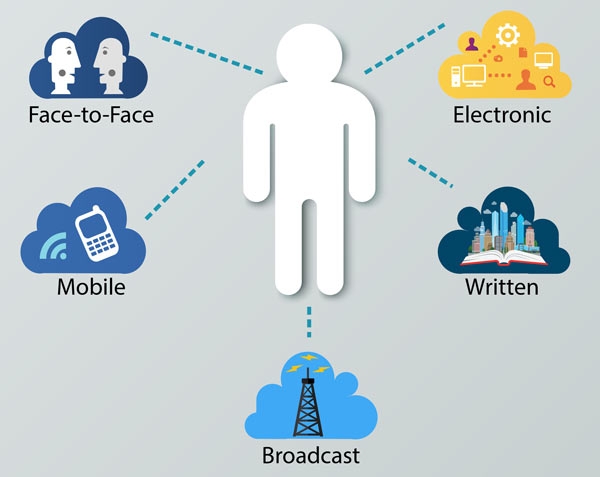
Communication happens when there is exchange or transfer of information between people through channels. The main elements for communication to happen is when there is a sender, a receiver a message and feedback. Communication is a very important part of a daily life and without communicating one cannot just go on spending their life without it. The communicator needs to make sure that the receiver or the audience understands the information and has no confusion. The 10 most important elements of communication are sender receiver, message, feedback, context, effect, noise, encoding, decoding and channel.


• Sender:
Sender is the one who is sending all the messages he/she is the one who addresses the audience and is also called speaker. The sender needs to be an effective communicator for the audience to understand them clearly. The speaker needs to be bold and for about what he is trying to convey.


• Receiver:
Receiver is the person who receives the message. They are also called the audience. The understand what the speaker is trying to convey and try to implement or interpret whatever they have understood. They are the ones who are capable of questioning the speaker if they are doubtful of something.


• Message:
What the speaker and receiver are communicating about is known as the message. This is the element which holds all the information about what the speaker is trying to convey and what the receiver is trying to understand. Messages can be many type it doesn’t always have to be formal or informal. The message depends on the audience and the speaker.


• Channel:
Channel refers to the medium in which they are communicating. It could be through Television, radio and newspapers or even to face to face communication. The receiver will understand the message even more clearly if it is face to face communication as the receiver can clear the doubts immediately. It also depends on how effective the speaker is.


• Encoding:
Encoding happens in the mind of the speaker when a message is about to be sent to the the audience. Encoding is an important process as if the speaker does not encode his information properly then the audience will not know what they are learning and there will be confusion among the audience. This might lead to communication gap and few misunderstandings.


• Decoding:
When the information is received by the audience from the speaker, they start to decode the message. This process happens so that they understand the message properly and clear about what they learnt. Decoding is a process of understanding the message sent to them. If this does not happen then the audience will not know what the speaker is trying to convey which might create problems.


• Noise:
Communication is also called the barrier to communication. This happens when, if a person is communicating with someone and there is an external disturbance, it is termed as noise. It will come in different forms like humans or things or nature etc.


• Effect:
Effect is what impact has been left on the audience. We get to see the effect in communication with the listener reacts to that information given by the speaker. The better the speaker, the better the impact or effect.


• Feedback:
Feedback is what the sender received by the audience. The audience lets them know if they were impactful and thoughtful enough through this process of feedback. This helps the speaker to better or advance his talents and skills.


• Context:
Context is what the speaker is trying to refer to while giving the speech. If there is no context to the speech, then the entire speed has no meaning to it.


Conclusion:
In communication, all the 10 elements are important and more than these, skills matter the most as if one is not skillful then no matter how useful the information is, it won’t leave the speaker in an effective way and it definitely will not reach the audience in an impactful manner.

FEMINISM : Good or Bad ?

Feminism is the advocacy of the equality of the sexes. It does not seek exploitation and harassment of men by women in any field as many ‘intellectuals’ think! It only seeks to eradicate the violence against women and their poor treatment by their male counterparts wherever it is happening. People think feminism is giving women another superpower through which they can rule others , but this is not the true side , Feminism means equality in education & professional fields , equality in terms of rights , & this equality is not only for women but for men also . Feminism seeks to achieve the political, economic, personal, and social equality of BOTH the sex & not just females. Societies around the world often give exclusive rights and privileges to men (like standing up for themselves without being branded as being ‘loud’ and ‘bossy’, doing what they love to do, not being responsible for bringing up the kids and many more!) while women, in general, are treated unfairly. Feminism fights against gender stereotypes and seeks equal educational and professional opportunities for women. Feminists work for women’s rights, like the right to work, to remove the gender pay gap, to get an education, to have equal rights and respect within marriage, and to have paid maternity leave , to do what ever they want to , etc.

FIVE REASON WHY FEMINISM IS STILL A NEED OF THE HOUR ARE :

  1. Gender inequality is very bad for women health : Gender inequality is bad for women health , it makes them think that they are not superior to others , which leads to bad mental health . Further mental health leads to many diseases like PCOD, heart diseases, etc.
  2. Equal pay for all genders : Since work hours are same , so should be the pay range is the moto of feminism. Women are often paid less as compare to men & gives the reason that they work less , this belief should be removed & females should be paid equal to men .
  3. Education : Girls are pressurized to marry , then what about their dreams & education ? This is why we need feminism , just like men are asked to study so do women should have been asked too .
  4. Right to work : Still there is this stereotype in our brain that women can not do this job or this job is not meant for women . to remove this thinking from the society , feminisms is the need of the hour.
  5. Have equal rights & respect within the marriage .

At last i would like to conclude this article with a quote , ” Feminism is not a dirty word. It does not mean you hate men. It does not mean you hate girls that have nice legs and a tan, and it does not mean you are a bitch or a dyke, it means you believe in equality.”

– Words of REBBICA WEST