Explained: Net Zero and India’s stand on it

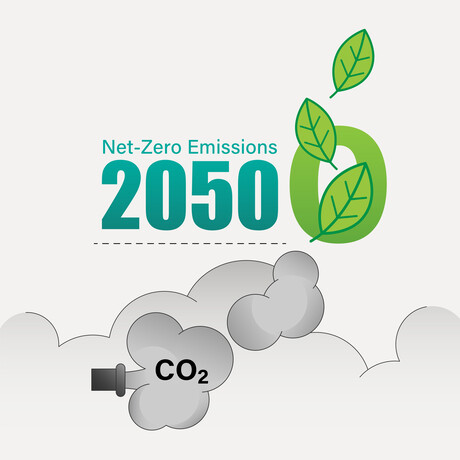
Lately, in April 2021, the US conducted a virtual summit on climate change with 40 world leaders to take bold pledges and chalk out prominent decisions on climate change. The summit has committed to achieving the Net-Zero target by 2050.

What is the Net Zero target?


Net Zero also referred to as carbon-neutrality is that situation where the entire man-made greenhouse gas from the atmosphere has been removed.

The summit held in April decided to achieve a balance on the emission of greenhouse gases and the removal of the same from the atmosphere.
Canada, South Korea, Japan, and Germany have committed to attaining a net-zero future.
India is the third-largest emitter of carbon after the US and China. And India plays a major role in global climate actions.

We all know that there has been a continuous rise in greenhouse gas emissions from industries, transportation, and livestock, resulting in global warming and prominent changes in climate patterns.
These harmful gases trap the heat and don’t allow them to escape the earth, causing temperature rise. The continuous change in climate patterns are causing severe floods, droughts, cyclones, and whatnot thereby leading to mass destruction of lives and property.

“The global temperature rose a total of 4 to 7 degrees Celsius over about 5,000 years. In the past century alone, the temperature has climbed 0.7 degrees Celsius, roughly ten times faster than the average rate of ice-age-recovery warming” as observed by NASA World Observatory.
“Models predict that Earth will warm between 2 and 6 degrees Celsius in the next century”.

If the global temperature rose at this pace, it would prove catastrophic. So in 2015, the 21st meeting of the United Nations Climate change conference took place to collectively agree to limit carbon emission by 1.5 degrees Celsius.

How to achieve Net Zero target?


Thus, the countries jointly agreed to become carbon-neutral or Net Zero carbon emitter by 2050. In achieving so the countries would have to balance their carbon emissions by removing the carbon from the atmosphere.

The countries have to develop renewable energy resources instead of burning fossil fuels, replacing fuel-based vehicles with electric vehicles, developing efficient technologies, etc. Also, the energy, transportation, and manufacturing sectors need to adopt net-zero targets.

Plants and water bodies are great carbon sinks as they absorb carbon from the air. Hence, expanding more forest cover would eliminate the carbon content from the atmosphere.
There are other technological techniques for containing atmospheric carbon.
Carbon sinks are a man-made reservoir where carbon-containing compounds are stored for an indefinite period for future usage, thereby decreasing the CO2 concentration from the atmosphere.

Measures adopted by countries:


Bhutan is the only country in the world that is “carbon negative” which means that it absorbs more carbon than it emits.
Countries like UK and France, have already enacted laws promising to achieve a net-zero emission by the middle of the century. China has promised to go net-zero by 2060.

India’s stand:


For India the scenario is different. India still has to reach the peak of emission, as for over next 2-3 decades the carbon emission would to grow because the country has to pull millions of people out of poverty.
Also, the carbon removal technologies are either unreliable or very expensive.
So, it’s not that India is straightaway striking out the carbon neutrality target by 2050, it’s that India at this point does not want to internationally announce any commitments.

Thus, the decision of attaining the Net Zero target is very arduous and challenging. The developed countries responsible for great carbon emission historically must take urgent steps and help developing nations with technology and capital to fulfill the cause.

Why artificial pollination industry is blooming?

Decline in bee population, forcing some farmers to pollinate crops by hand.

Pollination is the main mode of reproduction in plant’. It’s a method of transferring pollen grains from the male anther of a flower to the female stigma, later enabling fertilisation and the production of seeds and a pollinator is an animal that moves pollen from the male anther of a flower to the female stigma of a flower, Majority of the flower’s plants rely on pollinators move pollen from plant to plant. Honey bee is the most widely knows pollinator. Without pollinators we won’t be able to grow the crops necessary for food, majority of our staple crops and food crops requires pollinators. Increasing air pollution, climate change, loss of habitat and over- development, pollinators are pollinating less. To overcome this problem artificial techniques have been developed.

In artificial pollination the plants are hand pollinated. In this method pollination is done by manually transferring pollen from the stamen of one plant to the pistil of another and for pollinating tall trees mechanical devices have been developed. The devices used in mechanical pollination is generally made of long telescopic light metal or plastic tubing to reach the target. The existing methods for mechanical pollination are difficult, uneconomical and time consuming also.

Recent studies revealed that electrostatic forces play an important role in pollination. Electrostatic is a scientific study and application of electric charges which accumulate on a surface. Electrostatic devices can be used for both non-contact detachment as well as electro-deposition of pollen. The biggest advantage of non detachment method using electrostatic forces is that it reduces physical damage to the pollen grains and flowers, enables safe and healthy pollination which ensures higher field, better quality and expected market rates. Electrostatic pollination is very important, it could reduce the pollen requirement to one third of conventional artificial pollination and could double the full seed percentage without reduction in viability. It is the need of the hour to bring in expertise from both plant breeding and agricultural engineering fraternity to develop a versatile and cost-effective electrostatic artificial pollination technology system. AS the population of natural pollinators in the world is declining so the Electrostatic pollination technique seems to be the saviour of the global food security and food-supply chain.

In conventional hand pollination method, there is a high wastage of pollen grains that need to be produced to ensure fertilization occurs, which greatly raises production costs. On the other hand, the process of artificial pollination using electrostatic charging would scatter lesser pollen mass to pollinate similar number of plants. The concept of electrostatic non contact detachment and deposition of charged pollens in plant pollination ensures less physical damage to pollen therefore, it has better potential to increase the fruit set and its quality. Moreover, the Electrostatics in artificial pollination is reliable, economic and much convenient while dealing with pollination of larger tress which is a very tedious job while working with manual method.

At present, electrostatic pollination method is routinely used for date palms in Arab countries, for larch in forestry and pistachio pollination, etc.

21/03 – Forest+Poetry

” I think that I shall never see A poem lovely as a tree “

Forest is of course the best poem ever. And what’s better than celebrating the beauty of both; the forests & the poems, on the same day. The starting lines of the blog & the March 21 , both relate the forests to the poetry. Yes, today is the day for the aesthetic, the day to celebrate beauty. Today is the international day of forest & also the world poetry day.

Let’s first talk about the history of the day.

The International Day of Forests (IDF) was proclaimed by The United Nations General Assembly on March 21st 2012.The Day celebrates and raises awareness of the importance of all types of forests.This day is an effort to attain the SDG 15. Each year , on this day, countries are encouraged to undertake efforts to organize activities involving forests and trees, such as tree planting campaigns. The theme for the year 2021 is “Forest  restoration : a path to recovery and well-being.”

During UNESCO’s 30th session which was held in Paris in 1999, the decision to proclaim March 21st as World Poetry Day was taken. The Day is celebrated to recognize ability of poetry to capture the creative spirit of the human mind.One of the main objectives of the Day is to support linguistic diversity through poetic expression and to offer endangered languages the opportunity to be heard within their communities. The day is celebrated to encourage every art form.

March 21st , is the day to celebrate the confluence of two beautiful arts, one by God & one by human.

Ps : For all those who’re in search of a poem, the forest could become the one. And for all those who’re in love with forests, poetry could express the feeling of pure love.🌿🌺💚✍️

Let Nature beam… Please Go Green..🌿🍃

🕊️ May the peace prevail on our Earth. May the hope abide in our Hearts. 🕊️

Happy Reading…🙂

The Shark that glows in the deep,dark sea

Kitefin Shark

The world is full of mysterious and interesting creatures and this year is proving especially lucky for scientists to identify unique organisms. In February, a rodent named Springshare was identified, which glows pink and orange in ultraviolet rays. Living in the savannah forests of East Africa, this organism produces this color with the help of the porphyrin pigments present in its hair.

Recently, the world’s largest luminous vertebrate has been identified near New Zealand. This blue glowing creature is a kitefin shark (Biological name- Dalatias licha), which can grow to be around six feet tall. It shows the property of bioluminescence. Scientists have published an article about it in the Frontier Marine Science Journal, however they have not yet found what process it uses to shut off or turn on its luminescence.

Bioluminescence is the production and emission of light by a living organism. It is a form of chemi-luminescence i.e. using chemical substances to produce light. Bioluminescence occurs widely in marine vertebrates and invertebrates, as well as in some fungi, microorganisms including some bioluminescent bacteria, and terrestrial arthropods such as fireflies.

Scientists at the Catholic University of Belgium conducted a sea search expedition to identify kitefin sharks. According to Jerome Melfet, he was successful in taking a picture of a living shark. Their samples were also taken to research about the science behind the bioluminescence the shark shows.

According to scientists, bioluminescence is advantageous to this creature as this glow is meant to dodge big enemies. The blue glow of these sharks helps them to camouflage in the blue light coming from the sky and hide to avoid becoming the food of bigger fishes.

The hormone that helps us sleep makes the shark glow. This glow is not caused by hormones, but from their brain or nervous system. This hormone is melatonin, which helps us sleep, but gives shine to the sharks. However, it is not very clear whether these hormones have anything to do with the brightness of the shark.

Green Warriors ~ Women in woods

“Two roads diverged in a wood , and I took the one less traveled by , and that has made all the difference…”

These lines fit well on those women who choose the paths which aren’t meant for them , according to the society.

On 8th March, everyone talks about the women in space , in politics , in engineering , in mining , in medical , in Police, in writing , in this , in that. So I think I should also write about the women in most underrated service of India, The Forest Services.

Well , I searched a lot , but couldn’t get any extra information about the first Green Warrioress of India except their names and their years of joining the woods.

” In 1980,three young Women, C.S.Ramalakshmi, Veena Sekhari and Meera Agarwal, made history by entering into the Indian Forest Service. “

Later , Veena Sekhari was also appointed as the principal chief conservator of forests of Uttarakhand in 2015. She was the first woman to reach at the post of PCCF.

Presently, there are 284 women IFS officers , three of them are heads of forest force in different states.

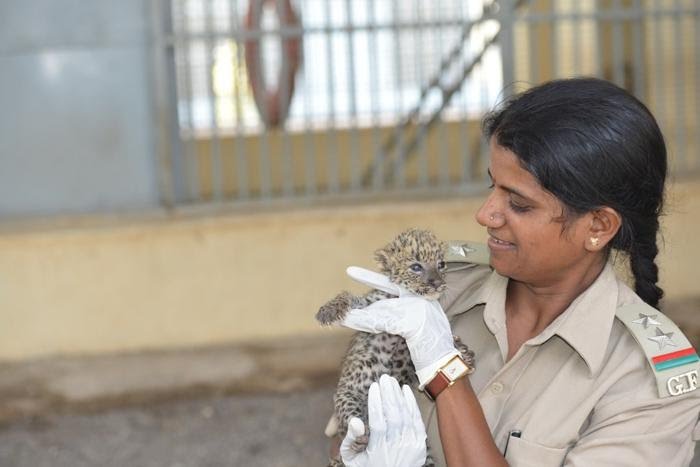
But women aren’t only limited to the post of IFS. It was only in year 2007, the Gujarat Forest Department recruited its first batch of 43 women.One of them was Rasila Wadher who was the first woman to join the the Forest Department in Gir. Since then she has managed to rescue around 1,100 animals.

Rasila Wadher, one of the lion queen of India.
~ From the forest guard to the head of Gir’s Rescue Department ~

Life in woods, isn’t that much easy , as everyone thinks. Unlike a policeman/woman in a city , a forest ranger is in a situation where there’s no one to help. They spend their nights and days in maintaining the coordination between humans and wild animals.

From the forest officers to forest guards, green warriors work not only for the welfare of forest and wildlife but also for the local tribes.And of course dangers are always there, from wild animals to bullets of poachers, from the rough terrains to the angry locals. Well , this explains that why I’m calling them Green Warriors.

And yes, the training is that much difficult & comprehensive as the job is. From the horse riding , shooting , swimming, rafting , trekking ,scuba diving to paragliding, it teaches the trainees everything from the endurance to the courage.

But these challenges are the love of our Green Warrioress ~

“We didn’t join as women guards, but as guards”, that’s what female guards say.

“Life needs purpose & empowerment needs confidence , IFS gives you both.” thinks a female IFS officer.

Women have came a long way , but still there’s a long way ahead. But as our inspiring warriors are risking their lives to save the wild & the wood, I remember these beautiful lines —-

“Woods are lovely dark & deep, but we have promises to keep.”🤝

I believe that there’s still beauty, peace & magic left in the world , & that’s in the forests. But these woods also have challenges. Ohh yeah , magic comes up with some challenges & responsibilities. If you also think of joining the green warriors club , then All The Very Best…

May the peace prevail on our Earth. May the hope abide in our Hearts. 🕊️

Happy Reading…🙂

Save Trees…💚🌱

Creating miracles while fighting air pollution- The inspiring story of Bhutan

Flag Of Bhutan

The amount of carbon dioxide emission is increasing day by day causing a rise in overall temperature and global warming. Main reason behind the increase is that most of the energy producing sources emit carbon dioxide (for e.g. in thermal plants), burning of combustible substances and even our vehicles and transports emit carbon dioxide.

Usually, the plants and trees are able to absorb most of the carbon dioxide that is emitted but due to increase in deforestation it has become hard to maintain that balance.

While most of the countries are struggling to become carbon neutral that is trying to find a balance between carbon dioxide emission and absorption, Bhutan has already achieved that milestone.

Bhutan may be a small country but it is the only country in this world that is carbon negative.

Carbon negative can be explained by the comparison between total amount of carbon dioxide released to total amount carbon dioxide absorbed in the atmosphere as total amount of carbon dioxide released is lower than the amount of carbon dioxide absorbed.

Bhutan produces around two million tonnes of Carbon Dioxide and absorbs around 7 million tonnes of carbon dioxide.

This milestone was achieved because the 4th king of Bhutan-King Jigme Singye Wangchuck’s belief that Gross National Happiness of the population of Bhutan was more important that Gross National Product. And further development was done by keeping this ideology in mind.

Few steps that were taken to achieve this are as follows-

-By maintaining 60+% of forest cover at all the times and not letting it go below that number played a huge role.

-By building Biological Corridors- People of Bhutan believe in co-existence that is why they have built biological corridors between forests to enable the free movement of wildlife throughout the forests

-By using Hydro-Power plants to generate electricity without causing pollution, and they highly promote the use of sustainable resources.

-By planting more trees, in 2016 on the birthday of the last prince they planted over 1 lakh trees, they even have the Guinness World record for planting the highest no. of trees in one day in the year 2015.

But despite its great efforts to maintain the balance, Bhutan is still suffering from the global warming without any of its own fault. China and India, two of those countries which contribute the most to the world’s pollution, surround Bhutan from two sides and is causing it to suffer from global warming, melting glaciers resulting in flash floods. Some states in India and China have the highest pollution index in the world. Unless some strict actions are taken, it is not possible reduce the pollution. We should learn from Bhutan, even though is has a smaller economy than most of the developed and developing countries but it is still better at controlling the air pollution than most of them.

FUEL PRICE SURGE ADDS TO THE WOES OF PANDEMIC HIT INDIA

The oil marketing companies have continuously been surging the price of fossil fuels for the past few weeks which resulted in the prices reaching an all-time high. During a time when the country is struggling to recover from the covid crisis, the fuel price hike is sure to have a tremendous impact on its citizens and economy. The rise in the price of commodities and public transportation are expected along with a significant dip in the automobile industry. Today, the price of LPG cylinders have been increased by 25 rupees, resulting in a cumulative hike of about 200 rupees within the past three months.

India, being the third-largest importer of oil in the world has always ended up on the suffering end whenever the crude oil price has seen a surge in the international market. The recent firming of international crude oil rates in addition to the high taxes levied on fuel by central and state governments is the major reason for the extremely high fuel price in the country. Since India follows a dynamic system for altering fuel rates, oil marketing companies are mostly responsible for the recent hikes and the government has no control over it. However, the government does impose a tax on the base price of fuel. At the moment, Indians pay one of the highest taxes on fuel in the world.

By late January, the price of extra premium petrol has touched the magic digit of 100 at Rajasthan, with Madhya Pradesh and many other states following the trend in early February. The price of diesel has also set the record of reaching an all-time high in the past days. A remarkable fact is that the Indian citizens are paying about 200% of the actual fuel price as taxes, by far the highest anywhere in the world. Sources close to the oil companies have reported that the fuel prices might see a further hike as the companies will be forced to meet the global developments to avoid making losses on the sale of the fuels. The price of LPG is also on the rise with the surge being constantly climbing higher for the third in this month itself. Within the last 10 days, the price of LPG was increased by more than 50 rupees.

The government is looking forward to getting the situation under control as the surge in the price of auto fuels can directly reflect in its economy and might even result in inflation. Though short term remedies like cutting down taxes and other related costs are in line, the major emphasis is on turning towards sustainable and renewable energy resources and reducing the dependency on fossil fuels in the long run. Plans have already been laid on increasing the natural gas share in the energy basket and to cut short the reliance on fossil fuels to about 60% of the total energy share by 2030.

Green nanotechnology and Sustainability

Everybody knows what is nanotechnology, it is the study and control of matter at the nano-scale, rearranging atoms and molecules. Nanotechnology has made marvelous contributions in the world of science especially in computer science and medical science.

But have you heard of green nanotechnology? The name itself suggests that it has something to do with greenery. It is the study of how nanotechnology can benefit the environment, such as by using less energy during the manufacturing process, the ability to recycle products after use and using Eco-friendly materials.

It builds on the principles of green chemistry and green engineering, and focuses on using the unique effects that occur in nano-scale materials.

Green nanotechnology can help to provide clean water to billions of people via novel filtration techniques, and has the ability to decontaminate dirty water. It can help in increasing the use of renewable energy and help in waste management too.

It can also influence the design of nano-materials and products by eliminating or minimizing pollution from the production of these materials.

It is all about making green nano-products and using them in support of sustainability. Sustainable development refers to a development that meets the needs of the present of the present, without compromising the ability of future generations to meet their own needs. It will aim at producing nano-materials without harming environmental or human health.

Nanotechnology can help reduce agricultural waste and bring down pollution levels. Scientists are working on nano-engineered enzymes that will allow simple and cost-effective conversion of cellulose from waste plant parts into ethanol.

Another example is rice husk that can become a source of renewable energy with nanotechnology. When rice husk is burned into thermal energy or bio-fuel a large amount of high quality nano-silica is produced, which can be further utilized to make other materials such as glass or concrete.

Nano sensors dispersed in the field can also detect presence of plant viruses and the level of soil nutrients.

Nanotechnology can reduce manufacturing costs for solar cells as a result of using a low temperature process.

Nanotechnology is being hailed as the next sunrise industry for India. The Department of Science and Technology of the Central Government has announced a national initiative in nano-materials, while the Jawaharlal Nehru Center for Advanced Scientific Research, Bangalore, has pioneered the study of nanotechnology in India. Prof. C.N.R Rao and the center has done world class research in nanotechnology using state of the art equipment.

A stream of nanotechnology-based products is beginning to emerge in India, with applications in the security realm. Besides D.R.D.O. (Defense Research & Development Organization) serious researches are also taking place in institutions like IIT, and Madras University.

Hopefully, in the near future as we advance further in the field of green nanotechnology, it will help us in replacing existing products with Nano-products that are more environment friendly.

Food Waste – The Social , Economical and Environmental Issue

Do you know that more than 40% of food produced in India is wasted ?

Inspite of adequate food production , India’s ranking is 103 in global hunger index. According to UN approximately 190 million Indians remain undernourished. Estimated value of food wastage in India is ₹ 92,000 crore per annum.

Why the data seems so much scarious ? Do you know how much you contribute to this wastage of food ?

Well , next time if you go to a wedding , or a party , or function , just observe everyone around you , you yourself”ll get the answers of these questions. Just observe people in restaurants or observe everyone in your house.

And if you want to see the dark side of India , then just move out of your house , & observe people around the bins. There’re a lot who just eat food from the dustbins. Can you just imagine about them ?

For some it’s waste , for some a day’s Meal

There’s a lot of leftover but edible food which can be provided to those who need this. Many NGOs work in this direction. They collect the leftover edible food from restaurants , households , weddings & from other sources & provide them to the needy.

It’s not always like that , one can also leave some food in their plates when it’s simply not edible or when she/he isn’t feeling good.

And this leftover food from your plates then go to dustbins & then it decompose in landfills. This leads to the emission of green house gases like CO2 & CH4 .

The impacts of food waste on the global scale are huge. According to the World Resources Institute, if food waste was a country, it would be the world’s third largest carbon emitter after the USA and China.

Food waste rotting in landfills produce millions of tonnes of methane in CO2 equivalents , a measure that directly compares the global warming potential of pollutants.

But do you know that wasted food can be used effectively ?

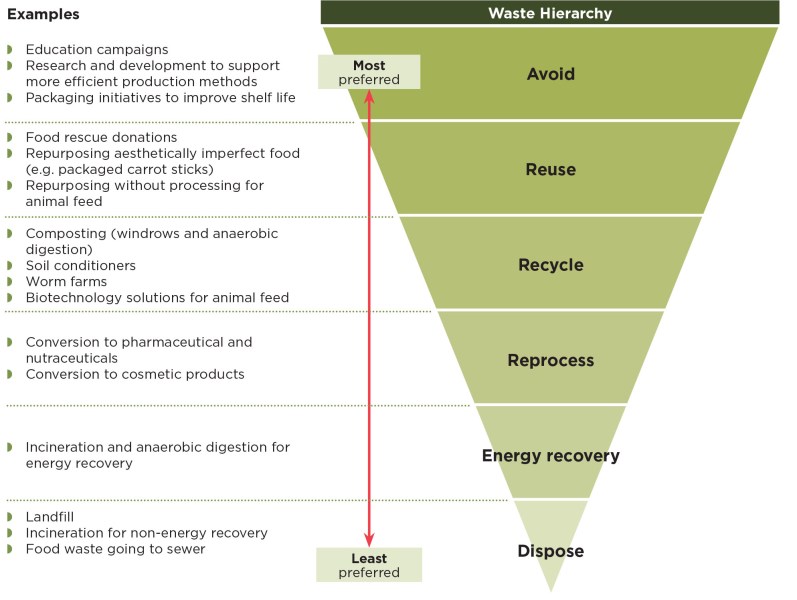
Yes , food waste can be transformed into valuable resources. It can be used as fertilizer , can be transformed into energy , & can be transformed into a bunch of innovative products , from pharmaceuticals to building materials.

Food waste can be recycled to produce nutrient rich fertilisers. Household composting recycles food waste in an environment where lot of oxygen is available. Fungi and bacteria break down the proteins, fats and carbohydrates in the waste into compost and CO2. The CO2 released from the breakdown of organic materials returns to the atmosphere , which is then captured by the plants. So it’s a carbon-neutral process.

Food waste can generate sustainable energy through waste-to-energy processes , where organic waste is used to generate electricity or heat. It is categorised as renewable energy. Various technologies are available to generate such energy ,although they do produce greenhouse gases like CO2, methane and nitrous oxide, so measures should be taken to reduce these emissions.

Extractions from the food waste can be used in production of biofuels like biodiesel & bioethanol.

Fruits and vegetables have the highest wastage rates of any food products. The Food and Agriculture Organization of the United Nations  estimates that globally, 45 per cent of fruits and vegetables are wasted along the supply chain. But these scrapped by-products can be reprocessed into functional and valuable products.

There are researches investigating how mango seeds could be used to make surfboard wax & fibres in root vegetables could be used in super strong concrete. Rice husks have variety of applications , such as cement, insulators, adsorbents and various construction material.They can also be ground with glass to create lightweight bricks that are resistant to fire and termites.

Discarded parts of fruits & vegetables are often rich in bioactive phytochemicals. These extracts can be used in pharmaceuticals , dietary supplements & food preservatives. Extracts & oils derived from food waste also be used in cosmetics.

The essential chemicals needed to create bioplastics include various carbs, fats and cellulose fibre that can be extracted from food waste using methods like freeze drying and hydrodynamic shockwave technology. Bioplastics ,are plastics produced from renewable sources and can be used for packaging, coatings and adhesives.Turning food waste into bioplastics can reduce food and plastic waste. It could also minimize the emissions associated with plastic production.

There’s need to reliase that this waste is not only causing social & economical problem but is also a cause of green house gases emissions, & thus is a harm for the environment.

Obviously , we should think of alternate ways to transform the waste into resource but our first priority should be to minimize the waste.

Avoid wastage of food. Provide the leftover edible food to those who need this instead of throwing this out. Use the leftover food as fertilizer


Love & Food are meant for sharing not for wasting
🙂 Don’t waste Food 🙂

Ice Volcanoes ~ Nature never fails to amaze us

Recently a 45 feets tall ice volcano was seen in the Almaty region of Kazakhstan . Yes , you read it right , it’s a ice volcano.

This volcano is formed over an underground hot spring , which is in Almaty region of the country , between the villages Kegan & Shrganak.

The volcano is a cone- shaped frozen structure which was formed by the spouting water of spring. As the hot water spouts out from the spring it freezes almost instantly due to the extreme cold weather.The volcano also sprays water from the top vent.

Last year also , a small ice volcano was observed here. But the recent one is more organised. Ice volcanoes were also witnessed at the Oval Beach in Saugatuck, Michigan in February 2020. 

An ice volcano is a conical mound of ice formed over a terrestrial lake via the eruption of water and slush through an ice shelf. The formation process is wave-driven , & the wind is energy provider for the waves to cut through ice & form the volcanoes.It may take hours or days for the formation. Their formation is temporary , frequently destroyed by the storms & warm weather. It requires precise conditions for the formation of these volcanoes.

Such ice volcanoes are often observed along the southern coast of Lake Erie and Lake Ontario in North America during specific conditions.

51st @tiger reserve

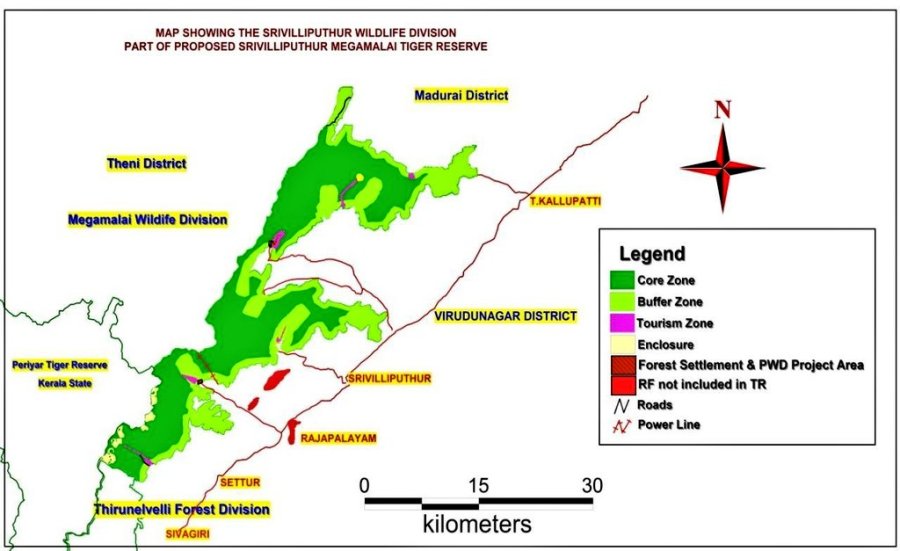
Indian government recently approved a new tiger reserve .Srivilliputhur Megamalai Tiger Reserve in Tamil Nadu is the latest addition. It’s 51st tiger reserve in the country & 5th in the state of Tamil Nadu. The 50th tiger reserve was Kamlang , which was the first & only tiger reserve of Arunachal Pradesh, & was approved 6 years ago.

The land encompassing the Meghamalai Wildlife Sanctuary (spread across the districts of Theni and Madurai) and Srivilliputhur Grizzled Squirrel Wildlife Sanctuary, which adjoins Kerala’s Periyar Tiger Reserve and Tirunelveli’s Kalakkad Mundanthurai Tiger Reserve is declared as the 51st tiger reserve of the country.

This land is habitat of 63 mammal species & 323 bird species.

Meghamalai Wildlife Sanctuary hosts ungulates (hoofed mammals), spotted deers, Indian gaurs, wild boars and other carnivores.Srivilliputhur on the other hand,  is habitat of grizzled giant squirrels, flying squirrels, leopards, Nilgiri tahrs, jungle cats, Sambars, elephants and many species of birds, including the lion-tailed macaque.

This new tiger reserve is spread over 1,016,57 sq km (core area – 641.86 sq km, buffer area – 374.70 sq km) with the potential to provide much needed habitat for tigers dispersing from neighbouring Periyar Tiger Reserve & Anamalai Tiger Reserve.

This new tiger reserve will act as a boost in direction of restoration of the health of forests & wildlife.

As a tiger reserve, illegal entry into the area becomes a punishable offence, with five years of imprisonment & it also gets a better team of dedicated officers , researchers & guards.

Conservationists believe that by declaring the Meghamalai Srivilliputhur Tiger reserve, there are great chances for the Vaigai River rejuvenation.

As per latest estimation , the number of tigers in India is 2,967 (range 2,603 to 3,346). And the largest tiger reserve of the country is Nagarjunsagar Srisailam Tiger Reserve which covers 5 districts of the states of Andhra Pradesh & Telangana.

BIO-TERRORISM AND CLIMATE GETTING WORSE- TWO MORE PANDEMICS WAITING FOR US IN THE FUTURE

In 2015, when Bill Gates warned us about a possible global pandemic occurring in the future, which could kill above 10 million people, he predicted that it would not be because of a nuclear war but it would come in the form of a deadly virus. He warned us that we are not prepared enough to face the pandemic head-on and our unpreparedness will result into very adverse outcomes.

Looking back at it, he was right wasn’t he. We remained unprepared ignoring the warnings and then coronavirus hit us, and it hit us so bad that even developed countries like China, Italy, USA and UK took a serious blow and the death toll is still increasing. Vaccines are being developed but we still have a long way to go.

And while we are still recovering, we are facing the danger of two more pandemics which are- Bio-terrorism and Climate change. In his recent interview, Bill Gates talked about these issues, he warned about increasing death toll in future due to changing climate and spread of biological weapons in form of infectious bacteria and viruses with the intention to cause damage globally. Many physical impacts of climate change are already visible, including extreme weather events, glacier retreat, increase in level of sea water, drought and wildfires etc. And he also suggested us the ways in which we could better prepare ourselves to fight effectively against these future pandemics, they are-

  1. Field based activity- Appointing a team of epidemiologists so that they could go to the affected locations and collect data about the problems and difficulties they are facing because vaccine research begins only after a careful assessment of public health priorities. Work conducted in the basic research laboratory forms the scientific foundation for all subsequent investigation.
  2. R&D activity- Investing more in the Research and development for the solutions to the pandemics, like in case of an infectious virus developing mRNA vaccines and developing warning systems using technology.
  3. Contact Tracing- Contact tracers use clear protocols to notify, interview, and advise close contacts to patients with confirmed or probable infections . Jurisdictions can use the following steps and considerations as a framework when developing a protocol for the tracing of close contacts.

To prevent climate change we have to take some important steps ourselves to save our environment and sustain our resources by-

  1. Planting more trees & Stop deforestation
  2. Using resources like water and fuels responsibly
  3. Using energy efficiently and minimizing wastage
  4. Using natural resources like solar power to generate electricity.
  5. Recycling and using renewable resources
  6. Informing and educating others of these dangers and ways to fight against it

Twinkle Twinkle little star – Now I wonder why so far

You must have read & recited the poem ‘Twinkle Twinkle Little Star’ in your childhood days. Kids still read & recite the poem. But there’s a difference in their recitation.While we used to recite it in starry nights, they just watch twinkling stars in a youtube video.What else can they do ?

Those starry nights are no longer visible. Even in a small town , there are only a few stars you can see by naked eyes. Future generations will see the starry nights only in pictures.

Now you can’t just point out your finger in the north to show someone the pole star.

Now the question is why ? Why the night sky is vanishing ? Why the Milky Way is fading ? Why the stars are no longer visible ?

Well , the reason is light pollution. With the advancement of more & more LEDs , the milky way is now no longer visible to more than a third population of the world. Those thousands of stars have just turned into hundreds.

Buildings’ lights , residents’ lights , street lights, vehicles’ lights , neon signs. Well , this much amount of light is creating a permanent ‘skyglow’ at night,which is obscuring that beautiful sight.

Is it only about the stars ? No , excessive lighting at night has other adverse consequences too –

1. It can disrupt our sleep , or in long run can cause stress.

2. It is waste of energy , not all the lights you see in cities at night , are needed. A lot of buildings or streets just glow for the sake of beauty.Thus , a lot of energy get wasted.

3. It’s not good for animals , birds & ecosystem. Migratory birds often get bewildered by lighting buildings , sea turtles lose their ability to navigate in ocean due to the confusion lighting from coastal create. There’re evidences that artificial lighting make it harder for the zooplankton to eat harmful algae in lakes , thus degrades the water quality.

And of course this one consequence is also there , from which I started the blog. Future generation will not be able to see the milky way without a telescope , thus it”ll lessen their interest in astronomy. It”ll lessen their sense about vastness of Universe.

Of course , the street lighting is necessary , but not for the show off. Unnecessary lighting can be avoided. Street lights can be replaced by more focused LEDs which only send light downward rather than those lights which scatter the lights in all directions. There can be other ways to reduce the light pollution. As it is said “Where there’s a will , there’s a way”.

India – The land of Green Gems

Have you ever wondered why some advertisement makers show that we’ve used this or that plant in our product ?

Do you know there are about 47,000 plant species in India ?Out of these , many have healing capacities , they have abilities to cure some diseases. You may have even used one out of these plants’ leaves or bark to heal your wounds or to beautify yourself or to cure some disease .

India has about 8000 species of plants which have some medicinal qualities. About 2000 species have been described in Ayurveda & more than 500 are in regular use. You may be familiar with some medicinal plants , herbs & trees like Tulsi , Neem , Babool , Palash , Ashok & Arjun.

Let’s talk about their qualities .

Tulsi is used to cure not only cough, cold & headache but is also useful in indigestion, heart diseases & respiratory diseases. Neem has antibiotic & antibacterial properties. People often use its twig to clean their teeth , its bark can be used to heal wounds , it is also used to cure bloody nose & leprosy & to kill intestinal worms. Babool has its use in healing of bleeding gums , its leaves are used to cure eye sore , it is also used as tonic. Palasha is used as a cure in complexion of skin, worm infestations, roundworm. Ashok is used to cure menstrual irregularities & used as uterine stimulant . Arjun’s leaves are used as a cure for earache , it is also used to regulate blood pressure.

Sarpgandha is one such medicinal plant which is found in India only. It is used to treat blood pressure.

Some other popular medicinal plants are Amaltas , Amla , Kachnar , Jamun , Varun , Brahmi , Kateki & Akarkara.

There are many medicinal plants which are like all-rounders , they are not only for medicinal purposes but also used as beauty products. Some are edible ( & off course tasty too ). People use some of these plants for decorative purposes , some of these are used to make colors , & some are used as jewellery too. Some plants like Tulsi are worshipped by many Indians.

India’s ancient culture valued its flaura & fauna. But now we’re losing on it.The World Conservation Union’s Red List has named 352 plants out of which 52 are critically threatened & 49 are endangered.It’s not only about saving the culture , it’s about preservation of the biodiversity , or you can say it’s about saving our own lives.

There are a lot of local medicinal plants & herbs in India. They are not so popular but are very useful. Only the locals have knowledge about them & only they can save such plants , trees & herbs.

There’s a need to create & implement policies which include locals. Locals , administration , & government together can change the whole scenario . One such example is of India’s only orchid sanctuary, where the administration together with the locals rejuvenated the Sessa Orchid Sanctuary in just 21 days.

Let’s come together to preserve the beautiful Indian culture , & the biodiversity.

Ps : It’s never too late to make a change.

BEHIND THE SCENES: A CONCEALED FACE OF THE FASHION INDUSTRY

The fashion-cosmetic industry is a multibillion-dollar consumer-focused ever-growing global enterprise that has become an indispensable part of our lives. Everyone has a fashion or cosmetic brand which is close to their heart, but are heedless of its dark side. Animals and animal materials are vastly used in the industry, but the barbaric processes behind this are often left unaddressed. Certain kinds of animals are overbred for the production of fashion products with animal materials resulting in the extreme use of resources and the production of organic and toxic waste. These animals are denied basic comforts of living where they are confined in abhorrent conditions with restricted space for movement, mere food and brutally slaughtered at the end. Certain exotic endangered species also fall into this wretched fate for fashion. When affected with diseases, these animals are often rejected medical care and are placed alive in plastic bags to die. 

Animals are skinned alive for fur, feather, leather, wool, etc and are also subjected to various chemical experiments for the cosmetic industry. Millions of animals including unborn calves are skinned for the production of leather, a timeless trend of the fashion industry. These animals are treated ruthlessly where they reach the factories deprived of food, water and rest; are castrated and skinned alive by hanging upside down and eventually bled to death. Many believe that sheep are not harmed for the production of wool but on the contrary, they also have to undergo inhumane treatments like mulesing during the process. It is estimated that about 1 million sheep die from exposure to cold as the wool which is meant to protect them from the weather is sheared off in winter itself to meet the market demands. In Australia, a global leader in merino wool production, sheep are specifically bred to have wrinkled skin to increase wool production. But this makes their skin more prone to flystrike, a condition where the flies lay eggs in the skin folds and maggots eat the sheep alive. In order to prevent flystrike, mulesing, a practice in which huge pieces of skin are carved off the buttocks area is done. This process which causes great pain to the animal is carried out without anaesthesia. The sheep are sent to slaughterhouses once their wool production descends. Birds like parakeets, egrets, ostriches, and animals like mink, chinchillas, foxes, dogs, rabbits, cats etc caught for their feathers and fur also undergo the same fate. 

In order to ensure the safety of the customers, the companies of cosmetic and personal care products use animals to test their products. As the New England Anti-Vivisection Society (NEAVS) describes, animals are subject to “testing new drugs to infecting with diseases, poisoning for toxicity testing, burning skin, causing brain damage, implanting electrodes into the brain, maiming, blinding, and other painful and invasive procedures.” Mice, birds, rabbits, monkeys, dogs, and cats are the common victims of vivisection (live testing) and spend the majority of their lifetime inside cages of laboratories. The exposure to these chemicals have severe impacts on these animals.  Pain relievers are never provided and they always die or get killed at the end of each test. 

We should strive to help these animals to have a life instead of “trapping animals in bone-breaking steel traps, clubbing them to death, electrocuting them through the mouth or anus, breaking their necks and backs, skinning them alive”. A fashion industry without harming animals is always possible and we all share this responsibility as this world is theirs too.