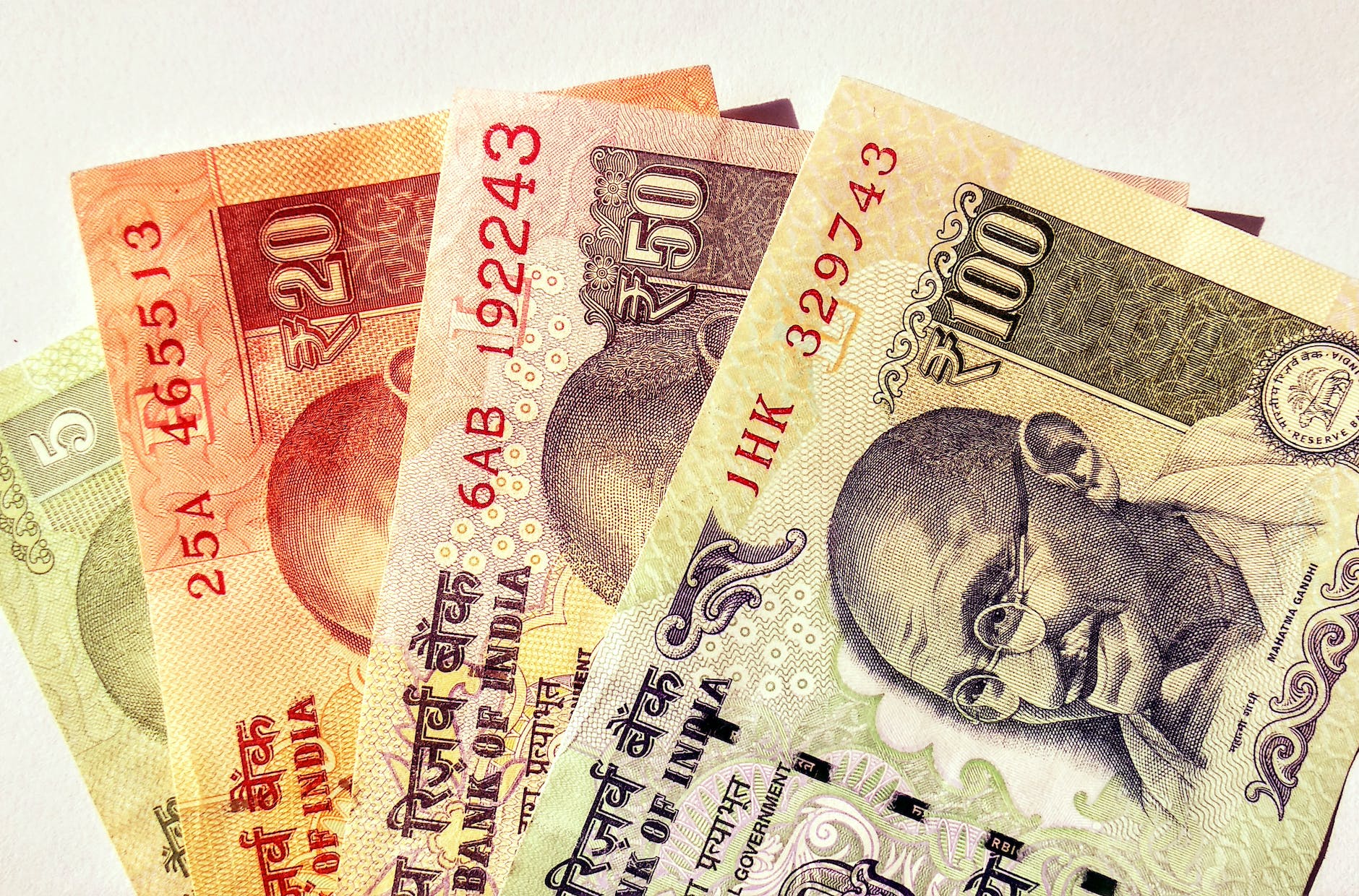
Gold surpasses rupees 57000 per 10 grams.

Gold futures on the Multi Commodity Exchange hit an all-time high of Rs 57,099 per 10 grams on 24 January. Gold prices jumped tracking gains in overseas markets and a depreciation in the rupee currency. However, the surge dampened demand in the world’s second biggest consumer of the precious metal.

Gold prices have inverse correlation with the dollar index. The index has fallen nearly 15% in the past three months, which has pushed up the prices of gold. A rise in index value denotes that the dollar is gaining against its counterparts and a fall in index value denotes a depreciation in the dollar’s value.

Adani Enterprises files India’s largest FPO.

Adani Enterprises, the flagship company of ports-to-energy conglomerate Adani Group, said it would raise ₹20,000 crore in follow-on public offering of new shares, which is being touted as the country’s biggest FPO.

The Adani Group’s flagship company has filed papers with capital market regulator Securities and Exchange Board of India (Sebi) for the FPO.

An FPO is the issuance of shares to investors by a publicly listed entity. Its name comes from the fact that it follows an initial public offering (IPO). 

Over the past five years, Adani’s fortune has skyrocketed. In the past year, the share prices of his many publicly traded firms have soared by more than fivefold. Four of the six companies have increased investor worth by more than ₹1 lakh-crore. In five years, shares of his flagship company, Adani Enterprises, have increased by almost 2,500 per cent.

Gold hits all time high.

Indian gold futures hit a record high on Friday, tracking gains in overseas market, but the price rise dampened demand in the world’s second biggest consumer of the precious metal, dealers said.

Local gold futures rose to 56,245 rupees ($691.45) per 10 grams, surpassing the previous record of 56,191 rupees hit in August 2020.

Fears of recession and rising interest rates led to a fall in stock prices in the developed world. At the same time, the fall of cryptocurrencies prompted investors to move toward safe haven. That spurred the demand for gold.

Benguluru tops among all Indian cities for startup funding in 2022.

Bengaluru topped the startup funding chart in India with $10.8 billion in 2022, followed by Mumbai at $3.9 billion, and Gurugram at a distant $2.6 billion.

Startups based in Delhi and Chennai registered $1.2 billion each in funding, followed by Pune at $1 billion, according to data provided by Tracxn, a leading global market intelligence platform.

In 2021, Bengaluru-based startups had raised $20.8 billion in funding and Mumbai-based startups had pocketed $5.2 billion in the same year, showing the impact of the deepening funding winter last year.

There were 22 unicorns in 2022, compared to 46 in 2021, and average funding before the unicorn round was around $160 million.

It is now taking an average of 5.1 years from Series A funding to the Unicorn round for the Indian startups.

Indian rupees was worst performing asian currencies in 2022.

The Indian rupee ended 2022 as the worst-performing Asian currency with a fall of 10.14%, its biggest annual decline since 2013, as the dollar rocketed on the U.S. Federal Reserve’s aggressive monetary policy stance to tame inflation.

The rupee finished the year at 82.72 to the U.S. currency, down from 74.33 at the end of 2021, while the dollar index was headed for its biggest yearly gain since 2015.

A rise in oil prices brought on by the crisis between Russia and Ukraine also hurt the rupee and resulted in India’s current account deficit reaching an absolute record high in the third quarter of that year.

Market participants anticipate that the rupee will trade with an appreciation bias in 2023.finding comfort in declining commodity prices and holding out hope that foreign investors will continue to purchase Indian stocks.

Heading into 2023, market participants believe the rupee would trade with an appreciation bias, finding relief from easing commodity prices and hopeful of foreign investors continuing to buy Indian equities.

RBI emerges as the top buyer of gold among its global counterparts.

With 132.34 metric tonnes (MT) of gold purchase, RBI emerged as the largest buyer of the yellow metal among central banks between April 2020 and September 2022. Also, RBI was the top gold buyer among its peers in 2020 while it stood third in 2021. In 2020, it bought 41.68 MT of gold while in 2021 and 2022 (till September end) it bought 77.5 MT and 31.25 MT respectively.

In 2021 the huge gold buying by RBI occurred in the backdrop of falling yellow metal price in the global bullion market but War in Europe proved beneficial for gold as the price crossed $2,000 per ounce in the first week of March 2022. But, the yellow metal lost its gains in the middle of March as consistent rate hikes by the Federal Reserve strengthened Dollar Index and bonds emerged as attractive investment options for Institutions and retail investors.

 Every major central bank keeps a portion of its reserves in gold as it plays a fine hedging instrument in the time of uncertainty and economic turmoil. During the balance of payment crisis in 1990-91, Indian government pledged 67 MT of gold to the Bank of England and Union Bank of Switzerland. During uncertain economic conditions, gold price takes upward trajectory and it was evident in 2020 when Covid induced economic turmoil made gold price touch an all time high of $2,067 per ounce. Since then GDP across the globe has picked up. Demand for yellow metal reduced with economic stability and prices declined consistently in 2021.

What is ‘Vostro’ account, initiated by RBI to facilitate smoother trade.

Vostro accounts are accounts a bank holds on behalf of another, often foreign bank, and this forms a key part of correspondent banking.’

In July 2022, the Reserve Bank of India introduced a new mechanism for international trade settlements in rupees, aiming to promote exports and facilitate imports.

Rupee Vostro Accounts keep a foreign entity’s holdings in the Indian bank, in Indian rupees. When an Indian importer wants to make a payment to a foreign trader in rupees, the amount will be credited to this Vostro account, and when an Indian exporter needs to be paid for supplying goods or services, this Vostro account will be deducted, and the amount will be credited to the exporter’s account.

“The banks are acting in a fiduciary relationship and they share a principal-agent relationship. The correspondent foreign bank is a financial intermediary in the transactions that they are involved in. The foreign bank acts as an agent that provides services such as executing wire transfers, performing foreign exchange, enabling deposits, enabling withdrawals, expediting international trade on behalf of the domestic bank. It is most used in settlement of foreign exchanges or foreign trade. No interest will be paid on the vostro account maintained, as per the directives that have been issued by the RBI in India. An overdraft facility can only be availed if it is specifically sanctioned,” explained tax experts at Clear.

“In order to promote growth of global trade with emphasis on exports from India and to support the increasing interest of global trading community in INR, it has been decided to put in place an additional arrangement for invoicing, payment, and settlement of exports / imports in INR,” the RBI had said in a statement.


India doubled its steel production capacity in the past 8 years, to become world 2nd largest steel producing country.

India’s steel production has reached a historic level of 120 million tonnes per year making it the world’s second-largest producer of Steel, the government informed the Rajya Sabha.

Steel Minister Jyotiraditya Scindia said India intends to double its steel production to 300 million tonnes per annum by 2030.

“There has been a doubling in the last eight years of steel production in the country, which has been historic and which is why we have become the second largest steel producer in the world today,” he informed the Rajya Sabha during question hour.

The minister informed that steel production in the country has increased at a historic level. In 2013-14, we had only close to about 60 million tonnes per annum production of steel, we are today at 120 million tonnes,” he said.

Central Government raised more than 4 lakh crore trough disinvestment since 2014.

The government raised over Rs4.04 lakh crore through disinvestment and strategic sale of public-sector enterprises (PSEs) since the Modi government came into power in 2014, the Finance Ministry said on 20 decm.

Of this, the largest amount totalling over Rs1.07 lakh crore through offer for sale in 59 cases. This was followed by a stake sale through Exchange-Traded Fund (ETF) in 10 tranches, aggregating to Rs98,949 crore. Strategic sales in 10 companies, including Air India, yielded Rs69,412 crore to the exchequer in the last 8 years. Share buyback in 45 cases fetched Rs45,104 crore.

17 CPSEs were listed since 2014-15, which yielded Rs50,386 crore. Of this, the initial public offering (IPO) of LIC alone fetched the government Rs20,516 crore. The additional market capitalisation of Rs7.31 lakh crore was achieved through new listings, the ministry said. Besides, the government has sold its residual stake in Paradeep Phosphate Ltd, IPCL, and Tata Communication for Rs472 crore, Rs219 crore and Rs8,847 crore, respectively. 

After Russia, Sri Lanka to use Indian rupee(INR) for internation trade.

India’s rupee trade settlement mechanism, which was set up by the Reserve Bank of India in July 2022, is attracting interest from more countries apart from Russia.

The mechanism is a means of using rupees instead of dollars and other big currencies for international transactions in order to promote growth of global trade with emphasis on exports from India and to support the increasing interest of global trading community in the rupee.

Dollar-strapped Sri Lanka and sanctions-hit Russia will be the first countries to use the Indian rupee trade settlement mechanism.

Sri Lanka has agreed to use Indian rupee (INR) for international trade. It comes days after the Government of India said it is looking at ways to bring countries that are particularly short of dollars into the ambit of Indian rupee trade settlement mechanism. Central Bank of Sri Lanka (CBSL) said it is waiting for RBI’s (Reserve Bank of India) approval to designate Indian rupee as foreign currency of Sri Lanka.

Tajikistan, Cuba, Luxembourg and Sudan have begun talking to India about using the mechanism, reported Reuters, quoting two sources and an official document. It has already been used by Russia following the imposition of sanctions on Moscow over the Ukraine war.

India climbs to 5th spot in top global 500 list released by Hurun.

India, with 20 of the most valuable companies in the world, has moved into the fifth position among countries that are home to the world’s top 500 firms. Last year, it ranked ninth with eight companies. The US continued to top the charts, according to the 2022 Hurun Global 500 list.

Of the 20 Indian companies featuring on the list this year, 11 are based in Mumbai, four in Ahmedabad and one each in Noida, New Delhi, Bengaluru and Kolkata. The list, released by the Hurun Research Institute, is a compilation of the 500 most valuable non-state-controlled companies in the world. Companies were ranked according to their market capitalisation (for listed companies) and valuations for non-listed companies.

Led by energy giant Reliance Industries with market capitalisation of $202 billion, the list includes Tata Consultancy ($139 billion) and HDFC Bank ($97 billion).

Billionaire Gautam Adani controlled Adani Group has debuted in the global top 500 companies list with four companies — Adani Enterprises ($63 billion), Adani Transmission ($44 billion), Adani Total Gas ($43 billion) and Adani Green Energy ($40 billion). The other new entrants in the list from India include ITC ($52 billion), Avenue Supermarts ($33 billion), Axis Bank ($33 billion), Bajaj Finserv ($32 billion) and Larson & Toubro ($32 billion)

UPI payments remains favourite mode for Indians.

UPI has once again emerged as the most favoured mode of payment in India. The UPI transactions volume and value has almost doubled since last year and recorded about an 88 per cent increase in volume and over 71 per cent increase in value in the third quarter of the current fiscal as compared to the same quarter last year, according to Worldline India’s ‘Digital Payments Report’ for the third quarter.

UPI clocked over 19.65 billion transactions in volume and Rs 32.5 lakh crore in terms of value in the third quarter this year. The top three UPI apps in terms of volume and value were PhonePe, GooglePay and Paytm Payments Bank App.

UPI, Debit and Credit cards, Prepaid Payment Instruments like Mobile Wallets, and Prepaid Cards executed a total of 23.06 billion transactions amounting Rs 38.32 trillion. 

India’s first gold ATM launched in Hyderabad.

India’s first Gold ATM began its operations in Hyderabad and now users can purchase pure gold coins from the ATM using their debit and credit cards. According to the sources, the first Gold ATM was inaugurated at Raghupathi Chambers in Begumpet, Hyderabad. Telangana women commission chairperson Sunitha Lakshmareddy inaugurated the gold ATM centre.

Users can purchase gold coins from 0.5 grams to 100 grams and the customers will also get a certificate stating their purity and weight. Gold ATMs will be available for 24 hours. It is said that the officials will set the Gold ATMs at Guljar House, Secunderabad and Abids in Hyderabad and Peddapalli, Karimnagar and Warangal.

How is digital currency different from UPI.

The Reserve Bank of India (RBI) on December 1, 2022, began the much-awaited trial run of India’s first retail central bank digital currency (CBDC) or ‘e-rupee’ in four cities—Mumbai, Delhi, Bengaluru, and Bhubaneswar—through eight participating banks.

CBDC is not expected to replace India’s premier instant payment solution, Unified Payment Interface (UPI), instead, it is touted to replace physical cash.

Experts pointed out that to carry out payments through UPI, individuals need to have a bank account and often a functioning debit card, but for accessing the e-Rupi wallet, there will be no need to have such a bank account.

UPI transactions are backed by physical currency. This means the payment will not go through if the user’s bank account does not have enough funds. The e-rupee, however, can be used for digital payments in lieu of currency/cash. “The e-rupi is issued by RBI and is a legal tender in itself. It need not necessarily be backed by physical currency.

Sensex index may hit 80,000 at the end of next years.

Equity Research major Morgan Stanley (MS) on Monday said the Sensex could hit 80,000 by the end of 2023. This comes even as the Sensex closed at a record high of 62,504 after gaining 0.34 per cent, or 211 points. The Nifty rose 0.27 per cent, or 50 points, to close at 18,562. Nifty is just 53 points away from making a new lifetime high.

The bull-run in Indian equity markets is intact, said analysts at Morgan Stanley in a recent note, and expect the S&P BSE Sensex to hit 80,000 levels by December 2023 in their bull-case scenario, to which they have assigned a 30 per cent probability. From the current levels, this translates into an upside of nearly 29 per cent.

For this, while the corporate earnings are projected to compound 25 per cent annually over FY22-25, Morgan Stanley expects India to be included in the global bond indices, which could result in nearly $20 billion of inflows over the subsequent 12 months. That apart, commodity prices including oil and fertiliser are expected to correct sharply.

As their base-case, however, Morgan Stanley sees the S&P BSE Sensex to scale up to 68,500 levels – up 10 per cent from the current levels.