MP HC Asks Person Accused Of Outraging Modesty Of Neighbour To Request Her To Tie The Rakhi

In a first of its kind, the Indore Bench of Madhya Pradesh High Court just recently on 30 July, 2020 in a latest case titled Vikram Vs The State of Madhya Pradesh in Case No. – MCRC-23350-2020 released a person who was apprehended for outraging the modesty of a woman on bail. The unique condition that was imposed for releasing him on bail was that he visits the house of the complainant and requests her to tie the Rakhi band to him “with the promise to protect her to the best of his ability for all times to come”! This is what gave a lot of prominence to this case. The case was heard through video conferencing.

                                    To start with, this notable judgment authored by Justice Rohit Arya of Indore Bench of Madhya Pradesh High Court sets the ball rolling by first and foremost observing that, “This is the first application under Section 439 of Cr.P.C., for grant of bail filed on behalf of the applicant. The applicant is in custody since 02/06/2020 in connection with crime No. 133/2020 registered at Police Station Bhatpachlana, District – Ujjain for the offence punishable under Sections 452, 354(A), 354, 323 and 506 of IPC.”

                                     To put things in perspective, it is then pointed out in this judgment that, “As per the prosecution story, on 20/04/2020 at about 2 : 30 am, the applicant as a neighbor has entered the house of the complainant and caught hold of hand of the complainant attempting to outrage her modesty. Accordingly, case has been registered. Investigation is complete. Challan has been filed.”

                             On the contrary, the judgment then mention the applicant’s version stating that, “Learned counsel for the applicant submits that the applicant is innocent and has been falsely implicated in the crime. Investigation is complete. Challan has been filed. He is no more required for further custodial interrogation. The applicant is in custody since 02/06/2020. It is further submitted that as a matter of fact, the applicant had asked the husband of the complainant to return back the outstanding loan amount against him, which was advanced by the applicant during the lockdown period. The complainant’s husband had taken exception thereto and as a sequel to the demand, filed the instant false case against the present applicant. Besides, the applicant is a married person and cannot think of entering the house of the neighbour to outrage the modesty of a women/complainant. The family is on the verge of starvation due to his jail incarceration. Further jail incarceration shall jeopardise the life of the family members. Due to prevailing Covid-19 situation, trial is not likely to conclude early in the near future. Under such circumstances, the applicant deserves to be enlarged on bail on such terms and conditions, Hon’ble Court deems fit and proper.”

                                          As a corollary, what then ensues is stated thus: “Per contra, learned Panel Lawyer opposes the bail application supporting the order impugned. It is submitted that even if, this Court is inclined to grant bail to the applicant, certain stringent conditions are imposed.”

                                  Most significantly, it is then pointed out further in this judgment that, “Upon hearing learned counsel for the parties, without commenting upon the rival contention so advanced, but regard being had to the fact that the applicant has already suffered jail incarceration for more than two months, he is no more required for further custodial interrogation, therefore, he is held entitled for enlargement on bail. Consequently, the application of the applicant filed under Section 439 of the Cr.P.C. is hereby allowed. It is directed that the applicant be released on bail, on furnishing personal bond in the sum of Rs. 50,000/- (Rupees Fifty Thousand only)  with one solvent surety in the like amount to the satisfaction of the trial Court, on the condition that he shall remain present before the Court concerned during trial and also comply with the conditions enumerated under Section 437(3) of Cr.P.C., with following further conditions:

(i)  the applicant along with his wife shall visit the house of the complainant with Rakhi thread/band on 03 August, 2020 at 11:00 am with a box of sweets and request the complainant to tie the Rakhi band to him with the promise to protect her to the best of his ability for all times to come. He shall also tender Rs. 11,000/- (Rs. Eleven Thousand Only) to the complainant as a customary ritual usually offered by the brothers to sisters on such occasion and shall also seek her blessings. The applicant shall also tender Rs. 5,000/- to the son of the complainant-Vishal for purchase of clothes and sweets.

             The applicant shall obtain photographs and receipts of payment made to the complainant and her son, and the same shall be filed through the counsel for placing the same on record of this case before this Registry.

              The aforesaid deposit of amount shall not influence the pending trial, but is only for enlargement of the applicant on bail.

(ii)                      the applicant shall furnish a written undertaking with his complete residential details that he shall abide by the terms and conditions of various circulars and orders issued by the Government of India and the State Government as well as the local administration from time to time in the matter of maintaining social distancing, physical distancing, hygiene etc., to avoid proliferation of Novel Corona virus (COVID-19);

(iii)                   the applicant shall install Aarogya Sethu App (if not already installed) in his mobile phone;

(iv)                   the applicant shall not tamper with the evidence whatsoever in any manner or induce or threat any person acquainted with the facts of the case;

(v)                      the applicant shall cooperate during trial and will not seek unnecessary adjournments during trial;

(vi)                   the applicant shall not leave India or the area without previous permission of the trial Court/Investigating Officer, as the case may be;

(vii)                the concerned jail authorities are directed that before releasing the applicant, the medical examination of the applicant be conducted through the jail doctor and if it is prima facie found that he is having any symptoms of COVID-19, then the consequential follow up action including the isolation/quarantine or any further test required be undertaken immediately. If not, the applicant shall be released on bail in terms of the conditions imposed in this order and shall also be given pass or permit for movement to reach his place of residence;

                                      Going ahead, it is then also pointed out in this judgment that, “In the event of violation of any of the terms and conditions of the order by the applicant, the prosecution is at liberty to seek cancellation of the bail granted to the applicant. Learned Panel Lawyer is directed to send an e-copy of this order to all the concerned including the concerned Station House Officer of the police station for information and necessary action. Registry is directed to send an e-copy of this order to the Court concerned for necessary compliance.”

                                         Finally and before concluding, it is then held in the last para that, “It is made clear that this e-copy order be treated as Certified copy in terms of the advisories issued by the High Court from time to time.”

                                         To conclude, it may be very rightly recalled that earlier the Madhya Pradesh High Court had directed few accused to register themselves as “COVID-19 Warriors” and work in the “COVID-19 Disaster Management”, as per directions of the concerned District Magistrate, as a pre-condition for bail. Similarly there have been some other such unique cases also. This latest judgment by Justice Rohit Arya of Madhya Pradesh High Court of releasing an accused on bail on condition of offering the woman to tie him rakhi is certainly unique and gives an opportunity to the accused to reform himself on a very light punishment due to which it is rightly in the headlines also!  

Sanjeev Sirohi, Advocate,

s/o Col BPS Sirohi,

A 82, Defence Enclave,

Sardhana Road, Kankerkhera,

Meerut – 250001, Uttar Pradesh.
Use Of Social Media By Army Personnel Enables Enemies To Gain Edge

While dismissing a petition challenging the ban on army officers using social media, the Delhi High Court in Lt Col PK Choudhary Vs Union of India & Ors. in W.P.(C) No. 4181/2020 delivered via video conferencing on August 5, 2020 has observed in no uncertain terms that the scope of judicial review over matters concerning defence and security is limited. We thus see that the Delhi High Court declined to interfere with the government conclusion that use of social media by army personnel enables enemies to gain edge. Very rightly so!

                               To start with, this extremely laudable, latest and landmark judgment authored by Mr Justice Rajiv Sahai Endlaw for himself and Ms Justice Asha Menon first and foremost sets the ball rolling in para 1 by observing that, “The petitioner, a Lieutenant Colonel with the Indian Army, has filed this petition seeking a writ of mandamus directing the respondents (i) Union of India, (ii) Director General of Military Intelligence, and (iii) Chief of the Army Staff to withdraw their policy dated 6th June, 2020 to the extent that it bans the petitioner and other members of the Indian Army from using social networking platforms like Facebook and Instagram and to the extent it orders the petitioner and other members of the Indian Army to delete their accounts from social networking platforms like Facebook and Instagram; declaration is also sought that the respondent no. 2 Director General of Military Intelligence is not empowered under the Constitution of India or under any other law, to modify, amend or abrogate the fundamental rights of the petitioner and other members of the Armed Forces.”    

                      While elaborating further, it is then observed in para 2 that, “The petition came up before us first on 14th July, 2020. It was found that though the petitioner had pleaded that on 9th July, 2020, the policy aforesaid was circulated to the members of the Indian Army but the policy had not been produced before the Court. It was the plea and contention of the counsel for the petitioner that the petitioner, as a responsible officer, to maintain confidentiality, had not annexed the policy, which is for restricted circulation, to the petition or reproduced the contents thereof in the petition. Being of the view that the counsels should be heard only after we have had an occasion to peruse the policy and if the documents prescribing the policy did not record the reasons therefor, the documents containing the reasons for the policy, we directed the counsel for respondents, appearing on advance notice on 14th July, 2020 to circulate in a sealed cover the policy and/or the documents containing the reasons therefor and deferred the hearing to 21st July, 2020.”  

                                     To put things in perspective, it is then pointed out in para 17 that, “We find it to be a fit case to apply the law as discussed in the paragraph before the preceding paragraph. Even if there is any error in the respondents issuing the impugned policy and direction, without complying with the procedure prescribed in Section 21 of the Army Act, considering that the issue has an element of urgency and concerns the safety and security of the entire country, we do not deem it necessary to, for the grievance of the petitioner only, render an adjudication on the questions urged and which may require us to refer to the documents and materials shown to us in confidence. What has also weighed in our mind is, that any interpretation given by us in the facts of the present case, of Section 21 of the Army Act, Defence Regulations and army orders, may be prejudicial to the personnel of the armed forces in a case with better facts. The counsel for the petitioner also has in response to the question posed to him not been able to give any explanation, why we should not in our discretion refuse to adjudicate the question urged of violation of fundamental rights of the petitioner of speech and expression without in accordance with law. In fact, save for stating that Facebook and Twitter are more convenient, no answer was forthcoming to, why the filial and other social needs of the petitioner cannot be fulfilled by other means of communication cited by the ASG, which are still available to the petitioner. It was suggested that the petitioner cannot explore other people whose contacts are not known to him. In this context we may record that we find the petitioner, on Facebook and Twitter, following and being followed by a large number of persons from other fields and making comments on their posts/tweets and qua which the ASG said, is breach of earlier advisories/Regulations.”     

                                            While citing the relevant case laws, it is then envisaged in para 18 that, “Supreme Court, in People’s Union for Civil Liberties Vs. Union of India (2004) 2 SCC 476 was concerned with writ petitions seeking disclosure of information relating to purported safety violations and defects in various nuclear installations and power plants across the country. It was held that (i) the jurisdiction of the Courts in such matters is very limited; (ii) the Court will not normally exercise its power of judicial review in such matters unless it is found that formation of belief by the statutory authority suffers from mala fide, dishonesty or corrupt practices; (iii) the order can be set aside if it is held to be beyond the limits for which the power has been conferred upon the authorities by the legislature or is based on the grounds extraneous to the legislation and if there are no grounds at all for passing it or if the grounds are such that no one can reasonably arrive at the opinion or satisfaction required thereunder, no such case had been made out in the facts of that case; (iv) the State must have the prerogative of preventing evidence being given on matters that would be contrary to public interest and, (v) when any claim of privilege is made by the State in respect of any document, the question whether the documents belong to the privileged class, is first to be decided by the Court; the Court cannot hold an enquiry into the possible injury to public interest which may result from the disclosure of the document in question; the claim of immunity and privilege has to be based on public interest.  Again, in State of N.C.T. of Delhi Vs. Sanjeev (2005) 5 SCC 181, it was held that (a) the present trend of judicial opinion is to restrict the doctrine of immunity from judicial review to those classes of cases which relate to deployment of troops, entering into international treaty etc.; the distinctive features of some of these recent cases signify the willingness of the Court to assert their power to scrutinize the factual basis upon which discretionary powers have been exercised; (b) the administrative action is subject to control by judicial review on the grounds of illegality, irrationality and procedural impropriety; (c) if the power has been exercised on a non-consideration or non-application of mind to relevant factors, the exercise of power will be regarded as manifestly erroneous; (d) if a power is exercised on the basis of facts which do not exist and which are patently erroneous, such exercise of power will stand vitiated; and, (e) judicial review can be limited in the case of national security. Again, in Ex-Armymen’s Protection Services Pvt. Ltd. Vs. Union of India (2014) 5 SCC 409, it was held that (i) the decision on whether the requirements of national security outweigh the duty of fairness on a particular case is for the government and not for the Courts; the government alone have access to the necessary information and in any event the judicial process is unsuitable for reaching decisions on national security; (ii) those who are responsible for the national security must be the sole judges of what the national security requires and it is undesirable that such matter should be made the subject matter of evidence in a Court of law or otherwise discussed in public; (iii) what is in the interest of national security is not a question of law – it is a matter of policy and it is not for the Court to decide whether something is in interest of State or not; and, (iv) once the State is of the stand that the issue involves national security, the Court shall not disclose the reasons to the affected party. The same was followed in Digi Cable Network (India) Pvt. Ltd. Vs. Union of India (2019) 4 SCC 451.”

                                 While explaining the reasons behind denying the petitioner what he wanted, it is then stated in para 22 that, “It is also in the light of the aforesaid judgments that we have herein observed that we do not deem it appropriate to exercise the discretion vested in us as aforesaid in exercise of powers under Article 226, to not entertain the petition and not adjudicate the issues raised. Had we, on perusal of the impugned policy which itself is a restricted document or the supporting material thereof found the same to be suffering from the vice of non-application of mind or being not based on any material on record or being without proper deliberations, we would have certainly proceeded to answer the legal issue raised by the petitioner, of the ban being imposed on the petitioner and others similarly placed as the petitioner without complying with Article 33 of the Constitution and Section 21 of the Army Act. However, once we are satisfied on the aforesaid parameters and find other means of communication to be still available to the petitioner and the ban being with respect to certain social networking websites only and more so, once we have found the petitioner himself to have been posting tweets which according to the ASG are in violation of the policy earlier in force qua use of social media, we do not deem it apposite to at the instance of the petitioner to go into the questions urged. Rather, we do not appreciate the pleadings of the petitioner as a senior officer in the Army, of army personnel being treated as slaves and the government not trusting its army.”

                          Most significantly, it is then held in para 23 that, “We may also notice that warfare and inter-country rivalries and animosities today are not confined to accession of territory and destruction of installations and infrastructure of enemy countries but also extend to influencing and affecting the economies and political stability of enemy country including by inciting civil unrest and disturbance and influencing the political will of the citizens of the enemy country. In such a scenario, if the government, after complete assessment, has concluded that permitting of certain social networking websites by personnel of its defence forces is enabling the enemy countries to gain an edge, the Courts would be loath to interfere.”

                                   To summarise, the Delhi High Court Bench of Justice Rajiv Sahai Endlaw and Justice Asha Menon made it clear by this notable judgment that the Government has the power to ban use of social media by army personnel when it feels that this will give enemies an edge as we see here also! The Delhi High Court also took a serious note of the submission of the Centre that army officers were posting pictures and details of their posting locations in social media which can easily convey a full picture to an expert espionage eye. Thus we see that the Delhi High Court clearly and convincingly ruled while dismissing petitioner’s claim that no case for interference is made out! Very rightly so!  

Sanjeev Sirohi, Advocate,

s/o Col BPS Sirohi,

A 82, Defence Enclave,

Sardhana Road, Kankerkhera,

Meerut – 250001, Uttar Pradesh

Right To Property Is A Constitutional As Well As Human Right

In a well-balanced, well-reasoned, well-analysed and well-articulated judgment, a two Judge Bench of Supreme Court comprising of Justice Indu Malhotra and Justice Indira Banerjee in Hari Krishna Mandir Trust vs State of Maharashtra in Civil Appeal No. 6156 of 2013 delivered on August 7, 2020 reiterated that the right to property is still a constitutional and a human right. This was held so while allowing an appeal filed by Hari Krishna Mandir Trust in the matter of a land dispute with the Pune Municipal Corporation. Very rightly so!

                               To start with, this latest, landmark and laudable judgment authored by Justice Indira Banerjee for herself and Justice Indu Malhotra sets the ball rolling by first and foremost observing in para 1 that, “This appeal is against a judgment and order dated 15.09.2008 passed by a Division Bench of Bombay High Court dismissing Writ Petition No. 904 of 2008 filed by the appellant, challenging an order dated 3.5.2006, whereby the State Government refused to sanction modification of a Scheme under the provisions of Section 91 of the Maharashtra Regional and Town Planning Act, 1996, hereinafter referred to as “the Regional and Town Planning Act”.”

                                        While discussing the facts of the case, it is then enunciated in para 2 that, “One Thorat family was the owner of Plot No. 1092 at Bhamburda in Pune. By a registered deed of conveyance dated 21.12.1956 one Mrs. Krishnabhai Gopal Rao Thorat sold the northern part of the plot admeasuring 4910 sq.m. jointly to Swami Dilip Kumar Roy, one of the most eminent disciples of Sri Aurobindo, and Smt. Indira Devi, daughter disciple of Swami Dilip Kumar Roy. The names of Swami Dilip Kumar Roy and Smt. Indira Devi were duly recorded in the relevant revenue records in 1959.”

                              Interestingly enough, it is then disclosed in para 3 that, “Swami Dilip Kumar Roy had moved to Pune to propagate the philosophy of Sri Aurobindo and established the Hare Krishna Mandir with his daughter disciple Smt. Indira Devi, on the land purchased from Mrs. Krishnabai Gopal Rao Thorat.” 

                                   To be sure, it is then disclosed in para 4 that, “According to the appellants, by an order dated 20.8.1970 of the Pune Municipal Corporation, Plot No. 473 which was originally numbered Survey No. 1092, was divided. Final Plot No. 473B was sub divided into 4 plots being plot Nos. 473 B1 comprising an area of 1025 square meters, 473 B2 comprising an area of 603.00 square meters, 473 B3 comprising an area of 2838 square meters and 473 B4, a private road admeasuring 414.14 square meters.”  

                                        Furthermore, it is then revealed in para 5 that, “Plot No. 473 B1 was owned by Mrs. Kanta Nanda, Plot No. 473 B2 by Mr. Premal Malhotra and Plot No. 473 B3 by Swami Dilip Kumar Roy and Smt. Indira Devi. Plot No. 473 B4, which was a vacant plot of land, was shown as an Internal Private Road measuring 444.14 Sq. mtr., in the possession of Swami Dilip Roy and Smt. Indira Devi and the holders of Plot Nos. 473 B1 and 473 B2, namely Mrs. Kanta Nanda and Mr. Premal Malhotra. It is not in dispute that the Pune Municipal Corporation was not mentioned in the order dated 20.8.1970.”   

                       While continuing in the same vein, it is then stated in para 6 that, “On 20.8.1970 the City Survey Officer directed issuance of separate property cards in view of a proposed Development Scheme under the Regional and Town Planning Act which included Final Plot No. 473, and an Arbitrator was appointed. The Arbitrator made an Award dated 16.5.1972 directing that the area and ownership of the plots were to be as per entries in the property register.”      

                                    Going ahead, it cannot be overlooked that it is then explicitly mentioned in para 92 that, “From the records of the case, particularly the order dated 20.8.1970 of sub division of plot number 473B and the award of the arbitrator, it is patently clear that the name of Pune Municipal Commissioner was at no point of time reflected as holder of the private road. There is no whisper as to how the road came to be shown in possession of Pune Municipal Commissioner nor of the procedure adopted for effecting changes, if any, in the property records.”

                                      Interestingly enough, it is then further revealed in para 93 that, “On perusal of the documents, there can be no doubt at all that the road in question measuring 444.14 sqm. Never belonged to the Pune Municipal Corporation. In the property records, there was no private road. There were three plots 473B1, B2, B3 and 473B4 shown as vacant land held by the owners of all the three adjacent plots.” 

                                  Most significantly, it is very rightly underscored in para 96 that, “The right to property may not be a fundamental right any longer, but it is still a constitutional right under Article 300A and a human right as observed by this Court in Vimlaben Ajitbhai Patel v. Vatslaben Ashokbhai Patel and Others, (2008) 4 SCC 644 (para 42). In view of the mandate of Article 300A of the Constitution of India, no person is to be deprived of his property save by the authority of law. The appellant trust cannot be deprived of its property save in accordance with law.”    

                                 To put things in perspective, the Bench very rightly makes it a point to put across in a forthright manner in para 98 that, “It has been established beyond any iota of doubt that the private road admeasuring 414 sq. meter area had never been acquired by the Pune Municipal Corporation. The right to property includes any proprietary interest hereditary interest in the right of management of a religion endowment, as well as anything acquired by inheritance. However, laudable be the purpose, the Executive cannot deprive a person of his property without specific legal authority, which can be established in a court of law.”

                                        As it turned out, the Bench then makes it clear in para 99 that, “In case of dispossession except under the authority of law, the owner might obtain restoration of possession by a proceeding for Mandamus against the Government as held by this Court in Wazir Chand v. State of Himachal Pradesh AIR 1954 SC 415. Admittedly, no compensation has been offered or paid to the appellant Trust. As observed by this Court in K.T. Plantation Private Limited and Anr. V. State of Karnataka (2011) 9 SCC 1 even though the right to claim compensation or the obligation of the State to pay compensation to a person who is deprived of his property is not expressly provided in Article 300A of the Constitution, it is inbuilt in the Article. The State seeking to acquire private property for public purpose cannot say that no compensation shall be paid. The Regional and Town Planning Act also does not contemplate deprivation of a land holder of his land, without compensation. Statutory authorities are bound to pay adequate compensation.”

                                           More crucially, the Bench then also makes it amply clear in para 107 that, “In the facts and circumstances of the instant case, in the light of admissions, on the part of the respondent authorities that the private road measuring 414 sq. was private property never acquired by the Pune Municipal Corporation or the State Government, the respondents had a public duty under Section 91 to appropriately modify the scheme and to show the private road as property of its legitimate owners, as per the property records in existence, and or in the award of the Arbitrator. In our considered opinion, the Bombay High Court erred in law in dismissing the Writ Petition with the observation that the land in question had vested under Section 88 of the Regional and Town Planning Act.”  

                                  Equally significant is what is then stated in para 115 and para 116. Para 115 states that, “In the absence of any proceedings for acquisition or for purchase, no land belonging to the Appellant Trust could have vested in the State.” Para 116 further states that, “The High Court also erred in its finding that the modification proposed involved substantial alteration by deletion of a public road and was therefore impermissible. The modification only involved deletion of the name of Pune Municipal Corporation as holder of the private road. The finding that deletion of a public road is a substantial alteration is, for the reasons already discussed above, completely baseless.”

                           Be it noted, it is then observed in para 117 that, “The appeal is therefore allowed, and the judgment and order under appeal is set aside.”

                                      Finally, it is then observed in the last para 118 that, “In exercise of our power under Article 142 of the Constitution of India to do complete justice between the parties, we direct the Respondent authorities to act in terms of the Award dated 16th May, 1972 and delete the name of the Pune Municipal Corporation as owner of the private road in the records pertaining to the Scheme and carry out such other consequential alterations as may be necessary under Section 91 of the Regional and Town Planning Act. The appellant trust shall within a fortnight from the date of this order, give an undertaking to the Planning Authority not to obstruct access of adjacent plot owners through the private road in question. The necessary alteration or modification under Section 91, as directed above, shall be carried above, shall be carried out within six weeks from the date of furnishing of the undertaking by the appellant, as directed above.”

                                          In essence, the key takeaway from this latest, landmark and extremely laudable judgment is that the two Judge Bench of Apex Court comprising of Justice Indu Malhotra and Justice Indira Banerjee has once again very firmly reiterated that right to property is a constitutional as well as human right. It is also made clear that the Executive has no right to deprive a person of his/her property without specific legal authority. There can be no denying or disputing it!  

Sanjeev Sirohi, Advocate,

s/o Col BPS Sirohi,

A 82, Defence Enclave,

Sardhana Road, Kankerkhera,

Meerut – 250001, Uttar Pradesh.
MBA Degree Not Equivalent To PG Degree/Diploma In Human Resource Management

Just recently, a three Judge Bench of the Supreme Court in North Delhi Municipal Corporation Vs Kavinder and Others in Civil Appeal No. 232 of 2020 delivered on July 21, 2020 has observed that Master of Business Administration (MBA) degree is not equivalent to a post graduate degree or diploma in Social Work, Labour Welfare, Industrial Relations or Personnel Management. What can be surmised from this is what the top court held so clearly and convincingly in this very case that, “Tribunal was manifestly in error in holding that the candidate was qualified merely because he studied two subjects as a part of his MBA degree programme.” Very rightly so!  

                                        To start with, Dr Dhananjaya Y Chandrachud who authored this noteworthy judgment for himself, Justice Indu Malhotra and Justice KM Joseph of the Supreme Court sets the ball rolling by first and foremost observing in para 1 that, “The appeal arises from a judgment and order of the Division Bench of the High Court of Delhi dated 29 November 2016. The High Court has, in exercise of its jurisdiction under Article 226 of the Constitution, affirmed a judgment and order of the Central Administrative Tribunal at its Principal Bench at New Delhi, by which the first respondent was held to be qualified for appointment to the post of Labour Welfare Superintendent.”

                                 While elaborating on the posts advertised, it is then stipulated in para 2 that, “An advertisement was issued for inviting applications for various posts in the Municipal Corporation of Delhi on a competitive basis. Among the posts that were advertised was that of a Labour Welfare Superintendent in the Municipal Corporation.. The qualification and experience required for the post were prescribed as follows:-

               “Essential Qualifications:

(1)         Degree of a recognized University or Equivalent.

(2)         Experience in the field in responsible capacity of Labour Welfare/Industrial Relations/Personnel Management and/or in allied fields.””    

                                         To put things in perspective, it is then envisaged in para 3 that, “The selection process was conducted by the Delhi Subordinate Services Selection Board by way of written examinations. Even after the candidate had appeared for the examinations, the Board or the appellant retained the authority to cancel their candidature during the recruitment process, if she/he failed to meet the said eligibility criteria. The first respondent applied for the post and appeared in the examination conducted by the Board. He was provisionally short-listed for the Part II examination upon the declaration of the results of the Part I objective examination. He was, however, declared not to be eligible for selection.”

                                          As a corollary, what followed next is then  stated in para 4 that, “Aggrieved by his non-selection, the first respondent moved the Central Administrative Tribunal (CAT) contending that he fulfilled the eligibility requirements. The Tribunal, by its judgment and order dated 20 May 2016, came to the conclusion that the first respondent fulfilled the conditions of eligibility. The first respondent holds a B.Sc. degree from Maharshi Dayanand University, Rohtak and thus, satisfied the first condition of eligibility. With regard to the second condition, the Tribunal noted that the first respondent did not claim to have a degree or diploma in Social Work or Labour Welfare, but that as a student of the MBA degree programme of Maharshi Dayanand University, Rohtak, he had studied certain subjects which had a bearing on the eligibility requirements. Accepting the contention of the first respondent, the Tribunal held that he had studied Human Resource Management and Industrial Relations in the course of the MBA degree programme. It was on this basis that the first respondent was held to be eligible and having passed the competitive examination, a discretion was issued for his appointment to the post. This order of the Tribunal has been affirmed by the Division Bench of the High Court of Delhi while rejecting a writ petition instituted by the appellant.”    

                                             To be sure, it is then enunciated in para 5 is that, “The issue which falls for determination in the appeal is whether the first respondent fulfills the requirements of eligibility. The advertisement issued by the appellant specifies that the essential qualifications would consist of (i) a degree of a recognized University or equivalent; (ii) a post graduate degree/diploma in Social Work, Labour Welfare, Industrial Relations or Personnel Management or in any other allied subject of a recognized University/Institution or equivalent.”

                                           After hearing both the sides, the Bench then, more significantly, goes on to add in para 8 that, “While assessing merits of the rival contentions, we must at the outset have due regard to the basis which has been adopted by the first respondent in support of his contention that he fulfills the eligibility requirements. The categoric position of the first respondent is that during the course of the MBA degree programme, he had studied the subjects of Human Resource Management and Industrial Relations and Labour Legislation. Having regard to this position, the issue which falls for determination is whether this would lead the Court to the conclusion that the first respondent fulfills the eligibility requirements. The eligibility requirements stipulated in the advertisement are that the candidate must have a post graduate degree or diploma in (i) Social Work; or (ii) Labour Welfare; or (iii) Industrial Relations; or (iv) Personnel Management; or (v) in any other allied subject of a recognized University/institution or equivalent.”   

                                       Most significantly, it is then made absolutely clear in para 9 that, “The first respondent completed the MBA degree programme from Maharshi Dayanand University, Rohtak. The mark sheets which have been relied upon by the first respondent indicate that during the course of the second semester, he studied Human Resource Management as a subject. In the fourth semester, the first respondent had a course in Industrial Relations and Labour Legislation. Studying these two subjects would not lead to the conclusion that the first respondent holds a post graduate degree or diploma in the disciplines which have been specifically spelt out in the advertisement or in any allied subject. The MBA degree cannot be regarded as allied to a post graduate or diploma in Social Work, Labour Welfare, Industrial Relations or Personnel Management. The recruitment was being made to the service of the appellant. The advertisement did not specifically provide how equivalence was to be established between a postgraduate degree/diploma in the subjects specified in the advertisement and a post graduate degree/diploma in an allied subject. The appellant as an employer was best suited to judge whether the degree of the first respondent was in an allied subject. Unless this assessment was perverse or contrary to the requirement prescribed, the Tribunal had no reason to interfere. We are of the view that the Tribunal was manifestly in error in holding that the first respondent was qualified merely because he studied two subjects as a part of his MBA degree programme, namely, Human Resource Management and Industrial Relations and Labour Legislation. The High Court has simply affirmed the view of the Tribunal.”

                                     Finally, we then see that it is held in the last para 10 that, “For the above reasons, we are of the view that the findings which have  been arrived at by the Tribunal and affirmed by the High Court are erroneous. We accordingly allow the appeal and set aside the impugned judgment and order of the High Court dated 29 November 2016. In consequence, OA No 1492 of 2013 filed by the first respondent before the Central Administrative Tribunal shall stand dismissed. However, in the circumstances of the case, there shall be no order as to costs.”

                                          In conclusion, the three Judge Bench of the Apex Court has made it amply clear in this latest, landmark and laudable judgment that the Master of Business Administration (MBA) degree is not equivalent to a post graduate degree or diploma in Social Work, Labour Welfare, Industrial Relations or Personnel Management. It also minced just no words to convey in simple, suave and straight language that, ““Tribunal was manifestly in error in holding that the candidate was qualified merely because he studied two subjects as a part of his MBA degree programme.” Very rightly so!     

Sanjeev Sirohi, Advocate,

s/o Col BPS Sirohi,

A 82, Defence Enclave,

Sardhana Road, Kankerkhera,

Meerut – 250001, Uttar Pradesh.

Not Admit ‘General Category’ Candidate To ‘Sponsored Category’ Vacancy

In a latest, landmark and laudable judgment titled “Nipun Sharma vs Post Graduation Institute of Medical Education and Research, Sector 12 Chandigarh through its Director” in Civil Writ Petition No. 10684 of 2020 (O&M) delivered just recently on August 14, 2020, the Punjab and Haryana High Court unequivocally upheld the Medical College’s righteous decision to not admit the ‘general category’ candidate to ‘sponsored category’ vacancy. The two Judge Bench of Punjab and Harayana High Court comprising of Justice Rajeev Sharma and Justice Harinder Singh Sidhu were hearing this case. Justice Harinder Singh Sidhu authored the judgment for himself and Justice Rajeev Sharma.

                                          To start with, it is first and foremost pointed out in para 1 that, “This writ petition has been filed for issuance of writ, order or direction for reading down condition 7(3)(g) as contained in the Prospectus for Session July, 2020 issued by respondent – PGIMER for admission to DM/M.Ch. Courses, wherein it has been provided that no request for change of category applied for shall be entertained after submission of application to the extent that in case no eligible candidate is available under the ‘Sponsored Category’, then eligible candidate if available, under ‘General Category’ be considered and granted admission to the course of Master of Surgery (M.Ch.) (Plastic Surgery) on fulfilling the requisite eligibility conditions.”

                                           What follows next is stated in para 2 that, “Further prayer has been made for setting aside the action of respondent in not considering the candidature of petitioner for said course against vacant seat available under ‘Sponsored Category’ in view of fact that petitioner had applied for direct category.”

                                     To put it succinctly, para 3 then states that, “It is also prayed that the NOC/Sponsorship Certificate (Annexure-P6) issued in favour of petitioner by Department of Health and Family Welfare, Himachal Pradesh be accepted.”

                             In hindsight, while dwelling on the petitioner’s past academic background, it is then put forth in para 4 that, “The petitioner secured admission in MBBS Course at Indira Gandhi Medical College and Hospital at Shimla (2006-2012) and served in rural area after appointment in 2013 for a total period of 2 ½ years. He was selected for Post Graduate Course in General Surgery in 2017 as a sponsored candidate (2017 to 2019) in PGIMER, Chandigarh and secured 2nd rank in Post Graduation final examination. After completing his Post Graduation successfully with the respondent institution he joined back as a Medical Officer in Deendayal Upadhyay Zonal Hospital, Shimla. Thereafter, the petitioner with an aim to study further and super specialize in the field of Plastic Surgery decided to get admission in the Master of Surgery (M.Ch.) (Plastic Surgery).”

                                               To be sure, it is then envisaged in para 5 that, “As per the Prospectus for the Session July 2020 in the PGIMER for securing admission in Post Graduation or Super Speciality Course i.e. M.Ch., two categories have been provided i.e. (a) General category and (b) Sponsored Category. In ‘General Category’, a candidate can apply directly i.e. without seeking permission of any State authority directly whereas in the ‘Sponsored Category’ only that candidate can apply, who is sponsored by the State Government with which he or she is employed. The sponsorship so made by the State Government is also in the nature of a No Objection Certificate whereby a candidate is authorized by the State Government to do a Super Specialty Course with an undertaking to serve the State Government for a specified period.”   

                                            Coming to the chief grievance of the petitioner, it is henceforth stated in para 11 that, “Thus the grievance of the petitioner is that despite there being no other eligible candidate available till date, the candidature of the petitioner, who applied under the ‘General Category’, is not being considered under the ‘Sponsored Category’. In case, the respondent-institution accepts the candidature of the petitioner then not only the petitioner would secure admission in the super specialty course of M.Ch. (Plastic Surgery) but the vacant seat will also get utilized and would not be left vacant.”   

                                      As a corollary, it is then further stated in para 12 that, “It was also pleaded by the petitioner that two candidates Dr. Lucky Kumar and Dr. Ashok Garg, who hail from Himachal Pradesh had applied for admission in M.Ch. in Cardiology and Neonatology respectively with respondent. Those candidate also secured their NOC cum Sponsorship certificate after the declaration of the result. They have been granted admission and their NOC cum Sponsorship certificate has been duly accepted. Thus the petitioner has been discriminated against.” 

                                          What cannot be left unnoticed is what is then stated in para 14 that, “It has been stated that as per clause 7 (3)(g) of the Prospectus:

“No request for a change of category applied for shall be entertained after the submission of the application”.

Since, Petitioner applied under ‘General Category’, therefore his request for grant of admission on the vacant seat under ‘Sponsored Category’ cannot be considered.”

                                         Having said this, it is then observed in para 20 that, “The examination for admission to the M.Ch. Plastic surgery course was held on 21.06.2020. The result was declared on 26.05.2020. On 30.06.2020 the institute vide notice dated 30.06.2020 uploaded a tentative list of selected candidates wherein petitioner was shown at Waiting list No. 1 in the Direct Category. The petitioner was given the NOC/Sponsorship Certificate on 08.07.2020. Clearly as per condition 7(3)(g) of the Prospectus the request for change of category from ‘General’ to ‘Sponsored’ could not be entertained at a stage when even the result have been declared in view of Clause 7(3)(g) of the Prospectus.”

                                      While adding further weight to its ruling, the Bench then observes in para 21 that, “It has been consistently held in different Full Bench decisions of this Court that prospectus has a force of law and is to be strictly followed. Reference can be made to Amardeep Singh Sahota v. State of Punjab 1993 (4) S.C.T. 328, Raj Singh v. Maharishi Dayanand University 1994 (2) S.C.T. 766, Sachin Gaur v. Punjabi University 1996 (1) S.C.T. 837, Rahul Prabhakar v. Punjab Technical University, Jalandhar 1997 (3) S.C.T. 526, Indu Gupta v. Director of Sports, Punjab 1999 (4) S.C.T. 113 and Rupinder Singh v. The Punjab State Board of Technical Education & Industrial Training, Chandigarh 2001 (2) S.C.T. 726.”

                                            To put things in perspective, it is then noted in para 23 that, “This being the settled legal position the respondent-institution is right in strictly adhering to condition 7(3)(g) of the Prospectus and not entertaining the request of the petitioner for change of category after the last date of application and granting him admission against the vacant seat in the sponsored category.”

                                        As it ostensibly turned out, the Bench then also clearly and convincingly holds in para 24 that, “The contention of the Ld. Counsel that provision 7(3)(g) be read down to the extent that in case no eligible candidate is available under the ‘Sponsored Category’, then eligible candidate, if available, under ‘General Category’ be considered and granted admission to the course of Master of Surgery (M.Ch.) (Plastic Surgery) on fulfilling the requisite eligible conditions also is not tenable.”

                                    No wonder, it is then rightly held in para 27 that, “The respondent-institution in its reply has given valid reasons as to why such a provision has been incorporated and any deviation from it would create an untenable and uncertain situation.” Finally, it is then held in the last para 28 that, “Accordingly, there is no merit in the petition and the same is dismissed.”

                                         In conclusion, the two Judge Bench of the Punjab and Haryana High Court comprising of Justice Rajeev Sharma and Justice Harinder Singh Sidhu  in this notable judgment has clearly and convincingly for cogent reasons explained above has rightly rejected the contention of the petitioner! The arguments forwarded by the petitioner were found to be not tenable by the Chandigarh High Court. The Court also made it amply clear that the respondent-institution is right in strictly adhering to condition 7(3)(g) of the Prospectus and not entertaining the request of the petitioner for change of category after the last date of application and granting him admission against the vacant seat in the sponsored category! Very rightly so!

Sanjeev Sirohi, Advocate,

s/o Col BPS Sirohi,

A 82, Defence Enclave,

Sardhana Road, Kankerkhera,

Meerut – 250001, Uttar Pradesh.

Daughters Have Coparcenary Rights Even If Their Father Was Not Alive

In a most significant judgment with far reaching implications that will immensely benefit Hindu daughters, the Apex Court in Vineeta Sharma vs Rakesh Sharma & Ors. in Civil Appeal No. Diary No. 32601 of 2018 along with some other Special Leave Petition (SLP) just recently on August 11, 2020 has held in no uncertain terms that a daughter will have a share after the Hindu Succession (Amendment) Act, 2005, irrespective of whether her father was alive or not at the time of amendment. This is certainly a significant step towards the attainment of gender equality in our country for which the Apex Court Bench which decided this extremely landmark and laudable judgment deserves full credit! Till this laudable judgment was delivered we saw how despite several amendments to the Hindu Succession Act, 1956 there was none such provision that gave unconditional rights to women pertaining to her father’s property!

                               To start with, Justice Arun Mishra who authored this notable judgment for himself and Justice Abdul Nazeer and Justice MR Shah first and foremost set the ball rolling by observing in para 1 that, “The question concerning the interpretation of section 6 of the Hindu Succession Act, 1956 (in short, ‘the Act of 1956’) as amended by Hindu Succession (Amendment) Act, 2005 (in short, ‘the Act of 2005’) has been referred to a larger Bench in view of the conflicting verdicts rendered in two Division Bench judgments of this Court in Prakash & Ors. v. Phulavati & Ors., (2016) 2 SCC 36 and Danamma @ Suman Surpur & Anr. v. Amar & Ors., (2018) 3 SCC 343. In other connected matters, the question involved is similar; as such, they have also been referred for hearing along.”

                       Be it noted, it is then enunciated in para 116 that, “The intendment of amended Section 6 is to ensure that daughters are not deprived of their rights of obtaining share on becoming coparcener and claiming a partition of the coparcenary property by setting up the frivolous defence of oral partition and/or recorded in the unregistered memorandum of partition. The Court has to keep in mind the possibility that a plea of oral partition may be set up, fraudulently or in collusion, or based on unregistered memorandum of partition which may also be created at any point of time. Such a partition is not recognized under Section 6(5).”

                                        What’s more, it is then observed in para 126 that, “The protection of rights of daughters as coparcener is envisaged in the substituted Section 6 of the Act of 1956 recognises the partition brought about by a decree of a court or effected by a registered instrument. The partition so effected before 20.12.2004 is saved.”

                                    More significantly, the Bench then minces no words to state in suave, simple and straight language in para 127 while highlighting the dire need to protect daughter’s interests in property that, “A special definition of partition has been carved out in the explanation. The intendment of the provisions is not to jeopardize the interest of the daughter and to take care of sham or frivolous transaction set up in defence unjustly to deprive the daughter of her right as coparcener and prevent nullifying the benefit flowing from the provisions as substituted. The statutory provisions made in section 6(5) change the entire complexion as to partition. However, under the law that prevailed earlier, an oral partition was recognised. In view of change of provisions of section 6, the intendment of legislature is clear and such a plea of oral partition is not to be readily accepted. The provisions of section 6(5) are required to be interpreted to cast a heavy burden of proof upon proponent of oral partition before it is accepted such as separate occupation of portions, appropriation of the income, and consequent entry in the revenue records and invariably to be supported by other contemporaneous public documents admissible in evidence, may be accepted most reluctantly while exercising all safeguards. The intendment of Section 6 of the Act is only to accept the genuine partitions that might have taken place under the prevailing law, and are not set up as a false defence and only oral ipse dixit is to be rejected outrightly. The object of preventing, setting up of false or frivolous defence to set at naught the benefit emanating from amended provisions, has to be given full effect. Otherwise, it would become very easy to deprive the daughter of her rights as a coparcener. When such a defence is taken, the Court has to be very extremely careful in accepting the same, and only if very cogent, impeccable, and contemporaneous documentary evidence in shape of public documents in support are available, such a plea may be entertained, not otherwise. We reiterate that the plea of an oral partition or memorandum of partition, unregistered one can be manufactured at any point in time, without any contemporaneous public document needs rejection at all costs. We say so for exceptionally good cases where partition is proved conclusively and we caution the courts that the finding is not to be based on the preponderance of probabilities in view of provisions of gender justice and the rigor of very heavy burden of proof which meet intendment of Explanation to Section 6(5). It has to be remembered that courts cannot defeat the objects of the beneficial provisions made by the Amendment Act. The exception is carved out by us as earlier execution of a registered document for partition was not necessary, and the Court was rarely approached for the sake of family prestige. It was approached as a last resort when parties were not able to settle their family dispute amicably. We take note of the fact that even before 1956, partition in other modes than envisaged under Section 6(5) had taken place.”

                           Most significantly, the Bench then cogently, convincingly and clearly holds in para 129 that, “Resultantly, we answer the reference as under:

(i)                         The provisions contained in substituted Section 6 of the Hindu Succession Act, 1956 confer status of coparcener on the daughter born before or after amendment in the same manner as son with same rights and abilities.

(ii)                      The rights can be claimed by the daughter born earlier with effect from 9.9.2005 with savings as provided in Section 6(1) as to the disposition or alienation, partition or testamentary disposition which had taken place before 20th day of December, 2004.

(iii)                   Since the right in coparcenary is by birth, it is not necessary that father coparcener should be living as on 9.9.2005.

(iv)                   The statutory fiction of partition created by proviso to Section 6 of the Hindu Succession Act, 1956 as originally enacted did not bring about the actual partition or disruption of coparcenary. The fiction was only for the purpose of ascertaining share of deceased coparcener when he was survived by a female heir, of Class-I as specified in the Schedule to the Act of 1956 or male relative of such female. The provisions of the substituted Section 6 are required to be given full effect. Notwithstanding that a preliminary decree has been passed the daughters are to be given share in coparcenary equal to that of a son in pending proceedings for final decree or in an appeal.

(v)                      In view of the rigor of provisions of Explanation to Section 6(5) of the Act of 1956, a plea of oral partition cannot be accepted as the statutory recognised mode of partition effected by a deed of partition duly registered under the provisions of the Registration Act, 1908 or effected by a decree of a court. However, in exceptional cases where plea of oral partition is supported by public documents and partition is finally evinced in the same manner as if it had been effected by a decree of a court, it may be accepted. A plea of partition based on oral evidence alone cannot be accepted and to be rejected outrightly.”

                               No less significant is what is then stated finally in the last para 130 that, “We understand that on this question, suits/appeals are pending before different High Courts and subordinate courts. The matters have already been delayed due to legal imbroglio caused by conflicting decisions. The daughters cannot be deprived of their right of equality conferred upon them by Section 6. Hence, we request that the pending matters be decided, as far as possible, within six months. In view of the aforesaid discussion and answer, we overrule the views to the contrary expressed in Prakash v. Phulavati and Mangammal v. T.B. Raju & Ors. The opinion expressed in Danamma @ Suman Surpur & Anr. v. Amar is partly overruled to the extent it is contrary to this decision.”

                                          No doubt, this latest, landmark and laudable judgment by a three Judge Bench of the Apex Court must be applauded, admired and appreciated in no uncertain terms as it places daughter on an equal footing with son in property matters which is a revolutionary move that will ensure that a daughter’s rights are not smothered under any circumstances by anyone as they like as per their own whims and fancies! But what is even more crucial is that society’s patriarchal mindset favouring only son must also change at the earliest and simultaneously the litigation processes in courts must be simplified, made inexpensive so that the poor women too can get their due and time-bound so that women does not suffer the ordeal of running from pillar to post first in lower courts, then in higher courts and then ultimately in the highest court! More awareness programme must be launched by Centre and State Governments to ensure that women are made aware of their legal rights as have been marked by the Apex Court in this landmark judgment! Only then can daughters gain immensely by this extremely laudable and landmark judgment which they must as no society can progress where women remains backwards and stands deprived of her basic legal rights!

Sanjeev Sirohi, Advocate,

s/o Col BPS Sirohi,

A 82, Defence Enclave,

Sardhana Road, Kankerkhera,

Meerut – 250001, Uttar Pradesh.

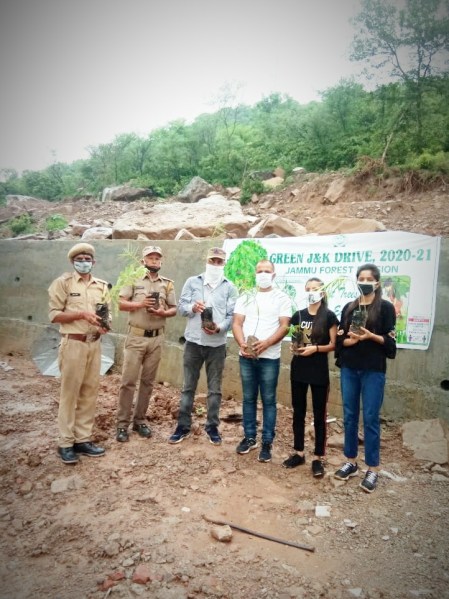
GDC, Jindrah in collaboration with Jammu and Kashmir Forest department organised plantation drive

GDC, Jindrah in collaboration with Jammu and Kashmir Forest department has organised plantation drive . The NSS Unit of the college directed by Prof Raj Shree Dhar , Principal of the college along with NSS volunteers has organised plantation drive  in  the new college premises on 21/8/2020 . The plantation drive carried out by  Ajay Choudhary block officer Jindrah, Prof Dr. Sunil Dutt Sharma Head of the Department NSS,  Sh. Sham Singh, Shadi Lal,  Sh Nityanand, Sh Darshan Lal, Sh Anil Sharna. NSS volunteers includes Ms Chakshu Sharma and Ms Monika Jamwal.

The Army has initiated a tree plantation drive here, involving students of local schools and colleges, as part of ‘Green Earth – Clean Earth’ campaign, a defence spokesperson said.

students of local schools and colleges were also incorporated in the drive and were motivated to plant trees to save the environment.

In order to ensure that the saplings survive, their ownership is being entrusted to the individuals planting them.

Swachh Bharat Abhiyan

“Sanitation should not be seen as a political tool, but should only be connected to patriotism commitment to public health.” – Narendra Modi

Swachh Bharat Abhiyan campaign, launched on 2 October 2014 on the birth anniversary of Mahatma Gandhi, by our P.M. Narendra Modi aimed to reduce open defecation and improve the management of municipal solid waste in both urban and rural areas.

He also flagged off a walkathon at Rajpath and surprised people by joining in not just for a token few steps, but marching with the participants for a long way. With the view to fulfil the dream of hygienic India, he took the broom cleaning dirt and making the cleanliness drive successful.

Many parts of India celebrated the day by hosting speeches informing about the mission, cleaning seaside waste in groups, doing marches with slogans such as ‘Na gandagi karenge, Na karne denge.’, swaach bharat swasth bharat. This is seen as a major step contributing to understanding the significance of sanitation and health. A sense of responsibility has been evoked among the people through the Clean India Movement.

It aims to provide every rural family with a toilet by 2019. It helps to maintain the GDP growth improving the economic conditions. The major slogan of One step towards cleanliness was adopted. One individual could take his responsibility to take care of cleanliness around his residence or area can prove to be helpful.

To promote the idea the Swachh Bharat Swachh Vidyalaya campaign was launched by the Minister of Human Resource Development, Government of India by participating in the cleanliness drive along with the school’s teachers and students.

The idea is propagated in universities and colleges on large scale.

Keep your earth clean and green as cleanliness is next to godliness!

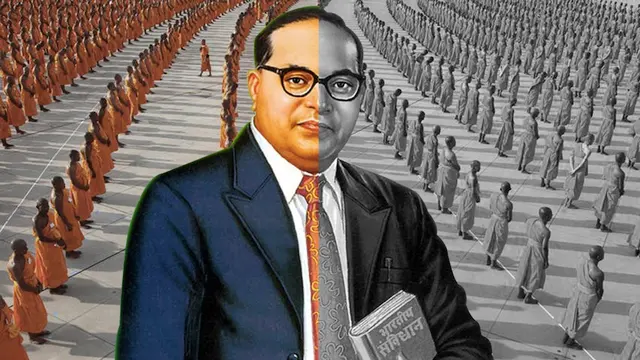
B. R. Ambedkar

Bhimrao Ramji Ambedkar was an Indian economist, politician and social reformer. He was also known as Babasaheb Ambedkar. He campaigned against social discrimination against the lower castes or Dalits of the country. Completing his doctorate from Columbia University and The London School of Economics, he gained reputation as a scholar for his research in economics, law and political science. 

In the early phases of his career, he was an economist, professor and lawyer. Towards the later phases, he was actively involved in campaigns for India’s independence. He published journals and advocated for political and social rights for Dalits. He made a significant contribution to the establishment of the state of India. He was the first Minister of Law and Justice of India and the chief architect of the Constitution of India. 

He had a Marathi family background and was from the town of Ambadawe in Ratnagiri district of modern-day Maharashtra. Ambedkar was born into a poor Mahar (Dalit caste), who were treated as untouchables and faced a lot of socio-economic discrimination. Although he attended school, Ambedkar and other untouchable children were segregated from the rest of the children and given little attention by teachers. They were not even allowed to sit inside the class. He had to sit on a gunny sack which he took home after school. When they needed to drink water, someone from a higher caste had to pour that water from a height as they were not allowed to touch the water vessel. It was usually the peon who did this for him and on days when the peon was not available, he had to go without water. He had later described this as “No peon, No water” in one of his writings.  

During British rule, Ambedkar’s effort for the political representation of the oppressed untouchables of India bore fruit in the 1920s. The colonial state was forced to include two members from among the Dalits in the Round Table Conference in 1930. This eventually led to the framing of the Government of India Act, 1935.   

From 1927, Ambedkar launched active movements against untouchability. He began public movements and marches to open up public drinking water resources for all. He led a satyagraha in Mahad to fight for the right of the untouchable community to draw water from the main water tank of the town. He also began a struggle for the right of Dalits to enter Hindu temples. In a conference in1927, Ambedkar publicly condemned the Hindu text Manusmriti (Laws of Manu), for ideologically justifying caste discrimination and “untouchability”. He ceremonially burned copies of the ancient text. On 25th December 1927, he led thousands of followers to burn copies of Manusmrti. Since then 25 December is celebrated as Manusmriti Dahan Din (Manusmriti Burning Day) by Ambedkarites and Dalits.  

In 1956, he converted to Buddhism, initiating mass conversions of Dalits which eventually led to the Dalit-Buddhist movement. 

A few days after completing his final manuscript ‘The Buddha and His Dhamma’, he died in his sleep on 6 December 1956 at his home in Delhi.  

The Casteless Collective

The Casteless Collective is a Chennai based Tamil indie band.   

The band currently consists of 19 members including Tenma (leader and music producer), singers Muthu, Bala Chandar, Isaivani, Arivu and Chellamuthu, Dharani (Dholak), Sarath (Satti), Gautham (Katta molam), Nandan (Parai and Tavil), Manu Krishnan (drums) and Sahib Singh (guitar).  

Formed in the year 2017, the band was started by Pa. Ranjith and Tamil Indie Musician and Composer, Tenma, founder of Madras Records. The band’s name originated from the phrase ‘Jaathi Illadha Tamizhargal’ which was coined by the 19th century anti caste activist C. Iyothee Thass. He was a social activist who urged Dalits across Tamil Nadu to register themselves as Tamils without caste in the first census in 1871. The band makes music to protest and rebel against the age-old caste-based discrimination and violence. Their songs are political which speaks against the inequalities of the caste system and oppression of women and minorities in Tamil Nadu.  

The leader and music producer of the band, Tenma was preparing to put together a group of indie musical artists for the Madras Indie Collective in 2017 when he got the idea from Pa. Ranjith, of training Gaana musicians for it. They prepared auditions for over 150 applicants and looked for artists who had a socio-political motivation in their lives as well as musical strengths. A mixture of Gaana, hip hop, rap and folk musicians were brought together. About 19 singers were selected for the initial ensemble.  

Jai Bhim Anthem (2018), Quota (2018), Magizhchi (2018), Vada Chennai (2018), Thalaiva (2019), Dabba Dabba (2019) are popular singles of the band.  

It has broken caste boundaries by engaging with the current social and political issue in the state. Instead of making music for entertainment alone the band has tried to eradicate discrimination through its music. Their main intention is “to create political awareness through music and art” because “art which makes us question discomfort is beautiful”. The band is a collective without caste which aims to eradicate caste based and religious discrimination through music.  

The Casteless Collective had their very first concert on January 2018 in Chennai. It was their first performance in front of more than 4000 people. The 19 members including one female artist, all dressed in identical grey suits gave a wonderful performance. Their cries of “Jai Bhim!” would be greeted with thunderous applause. They did not expect such a big entusiastic crowd and it was a very emotional experience for all of them. This was also because most of the artists came from small backgrounds and they had mostly performed in one or two funeral processions. The instumentalists who played katte and chatti were really overwhelmed as these instuments were restricted to only funeral events. 

It was not a concert that had people head-banging or jumping to the beat of drums. Instead, the audience listened to the songs with rapt attention. They broke into applause and shouts of agreement whenever the lyrics hit home. The Bhim Rap, a song on BR Ambedkar’s life and work, was met with a very enthusiastic reception. So was the rap song that condemned honour killings in the name of caste pride which was a major social evil in Tamil Nadu. Another popular track, Madrasin Magizhchi, spoke about the small joys of living in Madras, despite being poor.  

They say that people often ask them about the song lyrics and the stories about their experiences, so a discussion has begun. The band believes that social problems cannot be solved unless it is spoken about. Without discussions around caste-based discrimination one cannot attempt to eradicate the social evil. Their songs have already fulfilled their aim and created a stir among people. We hope that the band achieves greater heights and reaches out to everyone out there who has been a victim of caste discrimination and that it becomes successful in eradicating the malpractices of the system.  

6 Amazing Indian Model Villages

These Indian villages are more liveable and happier than any other Indian cities, villages and towns. They are model villages of India resulting from individual initiatives and NPO initiatives often using the Indian government schemes.

Piplantri

Piplantri village of Rajasthan is a hope for Indian development and prosperity as many families still mourn the birth of a female in the community.  Whenever a girl is born in the village, her family and all villagers come together to celebrate this occasion by planting 111 trees. Both are raised with equal respect. To provide financial security, a sum of Rs. 21,000 is contributed by the villagers and Rs. 10,000 is given by the family for every girl and kept as a fixed deposit which can be liquidated once she turns 20. In return, the parents are asked to sign a legal affidavit, which makes it mandatory for them to educate her, and prohibits them to make her marry before the age of 18. This move also tries to demolish the notion of girls being a burden on their parents. To save the plants from termite, villagers plant aloe vera around them. More than 3 million trees and aloe vera plants have been planted till now which is generating livelihood for many families. The trees planted include Neem, Sheesham, Mango, and Amla. This unique initiative was started by former village sarpanch Shyam Sundar Paliwal as ‘The Kiran Nidhi Yojana’ after he lost his daughter named Kiran in 2006. On Raksha Bandhan, girls tie Rakhi to tress. The villagers claim that this tradition has brought immense harmony in the village, and not a single police case has been registered in the last 7-8 years. Several villages nearby have started to adopt similar practice. The village today has eco-friendly gas stoves, toilets, solar lights, anganwaadi, healthcare centres, air-conditioned panchayat hall and modern schools.

Piplantri village
picture source: speakzeasy.wordpress.com

Punsari village

Punsari village of Gujarat is regarded as India’s smartest village. It is rurban village. The word ‘rurban’ (rural+urban) refers to an area which has the economic characteristics and lifestyles of an urban area while retaining its essential rural area features. The village has clean and proper roads, schools and education system, 24-hour electricity supply in every household, school bus and public transport system, proper water supply and RO treated drinking water with minimum charges. The classrooms are air-conditioned. There is a good communication system between the panchayat office and the whole village to keep people well-informed and be available for help anytime they need. A public address system which covers the entire population with the help of about 140 loudspeakers installed all over the village. The village has good healthcare services and employment opportunities. It is a model village of India where there is WIFI, all chowk monitoring by CCTV cameras, solar street lights, with literacy rate of 100%. There is a bio metric system for Gram Panchayat Employees. The transformation of this village is achieved by the efforts of the village sarpanch (headman) Himanshu Patel through effective planning and utilization of central and state government funds. Mr Patel leads an 11-member committee which runs the village affairs including five are female members. Mr Patel says the village council has spent 140m rupees ($2.28m; £1.43m) on development schemes between 2006 and 2012. The state chief minister at that time was Narendra Modi, current Prime minister of India who envisioned to stop migration out of the village. It has been a partial success , as 15-20 families have returned to the village from the cities like Mumbai in recent years.

Punsari village documented

Mendha Lekha village

To enter this Maharashtrian village, we have to walk through a bamboo entrance, which points to the rich growth of bamboo in this village. The villagers living here are mostly the Gond tribe of Madhya Pradesh. There is a notice board at the entrance which says “At the centre, there is Delhi government. At the state, there is Mumbai government, but here we are our own government.” This shows the pride the 450 people take in the way they have used an unexpected opportunity that came their way to reap a fortune. Mendha Lekha became the first village in India to secure community forest rights (CFR). The village is famous for the bio-diversity of its deciduous forest and the struggle of its tribal community towards self-rule. Nearly 80% of the village area is forested and under the legally-recognised control of the villagers represented by the village general assembly (gram sabha). This whole land can be inherited and used but cannot be not sold. Mendha Lekha has proved that legal security of their rights to control, use, manage and protect their own resources and lives, through processes of self-powering, can make people end poverty, maintain food and water supply, and protect local biodiversity.  And all this takes place much more effectively than capitalism and development programs created by central government.

Mendhe Lekha village and its story

Dharnai village

This village in Bihar has never seen electricity until 2014. The village is now fully solar powered. With the help of Greenpeace, the village installed a solar-powered micro-grid, which provides 24×7 electricity to more than 450 households and 50 commercial establishments. The entire project cost them 3 crores. Earlier, were forced to struggle with kerosene lamps and expensive diesel generators. This changed the lives of the villagers in many socio-economic and personal aspects. It created opportunities for female residents to access the public and personal spaces and move after sunset. Children can now study after sunset. People no longer needed to finish cooking before the sunset.

Dharnai village documented

Mawlynnong

This north-eastern village of India is considered as Asia’s cleanest village. Located in Meghalaya, the village has many beautiful and interesting places which include a strange sight of a big rock balancing on another rock. The main occupation of the villagers is agriculture and also offer community based eco-tourism opportunities. A dustbin made from bamboo plant is found throughout the village. All the waste from the dustbins is collected and stored in a pit, which is later used as manure. The villagers plant trees to ensure that the virgin forest is kept intact and also replenished and are currently working towards plastic ban. The village has a literacy rate of 90%.

picture source: http://www.northeasttourism.gov.in

Kedia village

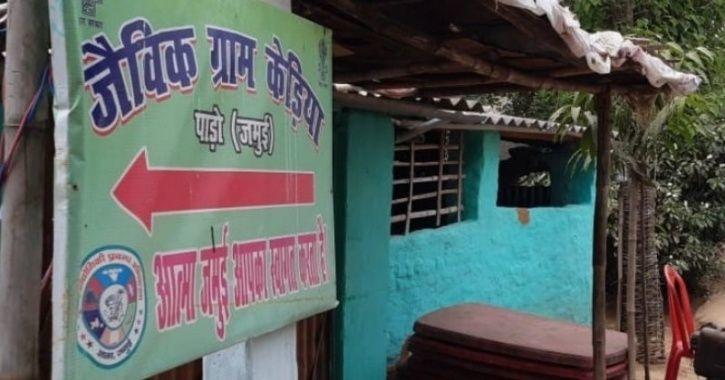
This Bihari village is an ecological village which practices organic farming and have prospered since then. Apart from that, the village has proper water conservation systems and cleanliness is maintained throughout the village. No one in the village is suffering from any kind of serious illness. Every house in the village has electricity supply and uses biogas to save electricity and fuel. All the farmers of Kedia village, followed the ‘Living Soils’ approach under ‘Food for life’ campaign’ run by Greenpeace. This approach is targeted to restore the ruined agricultural practices, by reducing chemical dependency and improve soil health through nourishment of the soil with biomass-based organic practices and materials. By applying scientific methods, existing knowledge and experiences the farmers successfully restored the soil of their village by coordination and collaboration with government for machinery. The villagers till date use only groundwater and lake water for irrigation. The unique toilets of the village households have no underground tanks so that the human waste can be used as a natural manure later on. The results have brought prosperity and happiness to the villagers by ending the dependence on commercial chemical-based materials and enjoying healthier yields with a up to 80% reduce in cost of inputs. The village organizes and celebrates a festival of organic farming called ‘Jashn-e-jaivik’. Greenpeace mentioned that they were able to make organic farming easier and successful in this village “With the help of many governmental schemes like ‘Swachh Bharat Mission’ and ‘Jaivik Krishi Yojana’ besides MNGREGA. Inspired by this, other villages around Kedia have also started adopting similar methods.

Picture sources: 1. India times, 2. Gaon connection and 3. Greenpeace.

The Author

Karnataka’s stand on New EIA Draft

EIA Draft, 2020

New updates to the Environmental Impact Assessment Draft, 2020 notice set out the process for companies to determine the economic and environmental effects of their planned operations and the method by which they will be evaluated by expert committees appointed by the Ministry of the Environment.

Why is the draft problematic?

The current draft breaches many provisions of the Forest Rights Act, 2006, the Prevention of Genocide Act, 1989, as well as other legislation protecting local communities’ rights. The draft infringes the Scheduled Caste and Scheduled Tribe (Prevention of Atrocities) Act, 1989.

The legislation also limits the role of environmental consultants and scientists in environmental clearance systems.

Draft EIA 2020 has a description issue. It provides precise definitions of eco-sensitive areas and also tends to leave several protected areas out of its definition, such as wetlands, coasts, reserve forests, village forests etc.

Definition indirectly favours the polluters and violators and ignores the conditions regarding environment violating projects which are approved by regulatory authority.

The deforestation for future initiatives will reduce carbon sinks and the habitat loss of ecologically associated biodiversity (inclusive humans) will also increase. It all would result in a further deterioration of the environmental and ecological equilibrium, leading to a disaster.

It can be characterized by the easiness, instead of common people’s rights, but of manufacturing, company, company, capitalism. As more than 40 hazardous projects have been discharged from public discussion.

Karnataka’s upfront

As the EIA draft notification was published in two languages, i.e. Hindi and English concerning official languages act by the Central Government. This subsequently led in raising of many objections against it, regarding its publicity.

Karnataka also lifted its voice against the same by filing a petition i.e. United Conservation Movement Charitable and Welfare Trust(r) v. Union of India[1]. Petitioners claimed that, the draft notification breaches the former practices and lacked sufficient publicity. The draft was not published in vernacular languages and was only made available on official website of Ministry of Environment, Forest and Climate Change. Also, inadequate time was provided by the centre, to the public for sharing their views and opinions.

Therefore, Karnataka High Court restrain the Central Government from publishing the EIA Daft final Notification i.e. passing the legislation, provided to lend reasonable time to public in order to file objections and send feedback regarding the draft. Also, to translate the draft in all the 22 languages which are recognised by the schedule 8 of Indian Constitution. Union Ministry of Environment was asked to take permissible necessary steps concerning impugned EIA draft notification. The Government was cautioned regarding the publicising the controversial draft otherwise, court will pass a stay order through an interim prayer (was verbally mentioned by the bench).

Hence, the Government cannot proceed with publishing the final draft notification without verifying and satisfying the plea of petitioners.

Karnataka’s united Conservation Movement (UCM) has begun an online petition calling on the public to demand and seek an enhanced and impugned EIA. The EIA 2020 draft tends to encourage increased emissions, by diluting restrictions on manufacturing and construction activities. In this era of tremendous pollution in our city areas, the EIA 2020 needs to be improved, rather than permitting over 30 criteria that dilute the reports for more than 25 hazardous industries.

Ecological scientists and environmentalists in Karnataka warns that diluting EIA will be a direction towards disaster. This will harm the Indian Biodiversity hotspots especially the sensitive areas of Western Ghats which is ecologically fragile and is already degrading.

Conclusion:

EIA is defined by the UNEP as a tool used to identify the environmental, social and economic impacts of a project prior to decision-making. It involves public opinion regarding likely environmental impacts of a proposed project with an aim to reduce adverse impacts. The Delhi High Court in Samarth Trust case had considered EIAs “a part of participatory justice in which the voice is given to the voiceless and it is like a jan sunwai, where the community is the jury.”

The government needs to promote and protect the right to life and a healthy environment as mentioned in the Article 21.

The government needs to bring down the delays in granting environmental clearance in order to improve India’s position in the ease of doing business rankings. Covid-19 has given us all a wakeup call to mend our relationship with the Earth; therefore, it’s time to make environmental laws stricter. The need for stricter and efficient environmental laws has become imperative in the present age of climate change. Administrations, on a domestic and a global level need to formulate policies that reduce their carbon footprint and the per capita emissions of greenhouse gases. The first step in making this change towards a sustainable future is to regulate and monitor the activities of the industries that contribute the majority share towards polluting the environment, which means that firm environmental clearances and legislations need to be enforced. The EIA is such a draft that aims to assess the impact of such projects on the environment.


[1] W.P. NO. 8362/2020 [PIL]

NON-COOPERATION MOVEMENT

It was the first mass movement that took place in 1920 launched by Gandhi. Its historical background could be seen as the impact of the first world war where the Indian economy suffered badly as the british give them Rowlatt act. Congress became slow so Gandhiji became hostile to the Britishers.

This movement gained its importance after the khilafat and Jalliawala bagh incidents.  Congress meets at Banaras and Calcutta passing this movement.

Programmes followed were boycott and swadeshi. The boycott was a negative concept and swadeshi is a positive one. Boycott of British goods, titles, honourable offices, legal courts, schools and colleges, election to the legislative assembly and provisional council and recruitment of services in Mesopotamia were done.

Swadeshi movement leads to the establishment of national schools and educational institutions, setting up of tribunals for the administration of justice for solving legal cases, encouragement to wear handspun khadi, the establishment of fund in the name of tilak to finance non-cooperation activities and volunteers. At Nagpur Congress meets to discuss the progress of the movement. Nagpur government-supported

Hindu and Muslim unity. A 15 member committee was appointed to look after the day to day work. It set up an all India Congress commission of 350 members. The reorganisation of Congress provisional commission on linguistic basis. The objective was changed to attain swaraj by peaceful and legitimate means.

This movement had great economic significance as it boosts the handloom and khadi industries interms of employment and wages, Village sanitation and reconstruction is achieved, irradiction of untouchability, unity of Hindu and Muslims, increase in participation of women and formation of new social groups.

It spread to Punjab, Gujarat, Bengal, Bombay, where traders and peasants mainly participated. Andhra Pradesh; forest satyagraha was started. In Assam cullies of tea gardens demanded a wage rise, in Awadh no land revenue movement started. A new era of political life emerged and India is known for her culture. Gandhiji motivated people with his speeches.

On November 1921 the government arrested major leaders of khilafat declaring Congress as unlawful, banning public protest and 30,000 nationalists were put behind the bars. On feburary, 1922 CHARA CHAURI incidence took place were people marched and burned police stations killing 22 police officers.

Gandhiji withdraws this movement on 11 February 1922 due to spread on non-violence.

This movement had a great significance in the history of Indian struggle which makes us realize the strength our leaders and people put forward to get independence. This independence day our salutes are to all those who sacrifice their lives for our independence

TERRITORIAL SEA

INTRODUCTION

Sea is a large body of water that is surrounded by the land. It is an important a part of human trade and commerce, voyage, mineral processing, power generation and is additionally considered as an important source of blue economy nowadays. International law of the ocean may be a law of maritime space that peacefully settles the worldwide disputes on maritime boundary between or among the States and defines various jurisdictions of the maritime zones also because the rights and obligations of the coastal States in these zones, especially with reference to the conservation of marine environment and biodiversity.

Territorial sea is that part of the sea which is adjoining to the coastal State and which is adjacent to the high seas on its outer boundary. The Coastal State exercises its supremacy over this area as it exercises over its domestic waters. The sovereignty expands to the airspace over the territorial sea as well as its bed and sub-soil. This sovereignty accumulates to a State under the customary international law which no State can rebut.

Law of the Sea

The law of the ocean may be a body of customs, treaties, and global agreements; by which governments maintain order, productivity, and amicable relations on the ocean. It involves subjects such as navigational rights, sea mineral claims, and coastal waters jurisdiction.

Body of international law concerned with civic order at sea. Much of this law is codified within the United Nations Convention on the Law of the ocean, signed Dec. 10, 1982. The convention, described as a “constitution for the oceans,” represents an endeavor to systemize international law regarding territorial waters, sea-lanes and ocean resources. It came into authority in 1994 after it had been approved by the required 60 countries; by the early 21st century the convention had been approved by 150+ countries.

UN Convention of the Law of the Sea

Maritime zones are a principal component of present law of the sea. The first effort to publish and codify a comprehensive law of the sea was in the 1950s, shortly after the Truman proclamation on the continental shelf. In 1956, the United Nations held its first Conference on the Law of the Sea (UNCLOS I) in Geneva, Switzerland, outcome of which was four treaties concluded in 1958: Convention on the Territorial Sea and Contiguous Zone, entry into force: 10 September 1964 Convention on the ocean floor, entry into force: 10 June 1964 Convention on the High Seas, entry into force: 30 September 1962 Convention on Fishing and Conservation of Living Resources of the High Seas, entry into force: 20 March 1966

The Convention on the ocean floor effectively codified Truman’s proclamation as customary law of nations. While UNCLOS I was widely considered a triumph, it left unwrap the concern of the extent of territorial waters. In 1960, the UN held a second Conference on the Law of the Sea (“UNCLOS II”), but this did not result in any new agreements. The pressing issue of varying claims of territorial waters was elevated at the UN in 1967 by Malta, prompting in 1973 a third United Nations Conference on the Law of the Sea in New York City. In an effort to scale back the likelihood of groups of nation-states dominating the negotiations, the conference used a consensus process instead of majority vote. With quite 160 nations participating, the conference lasted until 1982, leading to the UN Convention of the Law of the ocean, also referred to as the Law of the Sea Treaty, which defines the rights and responsibilities of nations in their use of the world’s ocean.

Territorial Sea

Maritime Belt or territorial waters is that belt of the sea which is adjacent to the costal state and over which costal state exercises the sovereignty. The territorial sea (also called territorial waters) may be a maritime area beyond and adjacent to the interior waters, and shall not extend beyond twelve nautical miles (‘nm’) from the baselines. In the territorial sea the coastal State exercises sovereignty extending to the air space over the territorial sea also on its bed and subsoil.[1]

However, the sovereignty over this zone has to be exercised subject to the provisions of the conventions and ‘to other rules of international law’ which provides several rights to other States, particularly right of ‘innocent passage’ within the body of water of the State. The territorial sea extends to a limit of 12 nautical miles from the baseline of a coastal State. Within this zone, the coastal State exercises full sovereignty over the air space above the sea and over the seabed and subsoil. A coastal State may enact on matters concerning the security of navigation, the preservation of the environment, and the prevention, reduction, and control of pollution without any compulsion to make these rules compliant with international benchmark. Resource use within the territorial sea is strictly reserved to the coastal State.

Territorial sea, as defined by the 1982 United Nations Convention on the Law of the ocean[2] , may be a belt of coastal waters extending at the most 12 nautical miles (22.2 km; 13.8 mi) from the baseline (usually the mean low-water mark) of a coastal state. The territorial sea is taken into account the sovereign territory of the state, although foreign ships (military and civilian) are allowed innocent passage through it, or transit passage for straits; this sovereignty also extends to the airspace over and seabed below. Adjustment of those boundaries is named, in law of nations, maritime delimitation.

A state’s territorial sea extends up to 12 nautical miles (22.2 km; 13.8 mi) from its baseline. If this is often ready to overlap with another state’s territorial sea, the border is taken because the median point between the states’ baselines, unless the states in question agree otherwise. A state also can prefer to claim a smaller territorial sea.

Problem of Breadth of Territorial Waters

The breadth of the territorial sea has remained a tricky issue, and up to 18th century the opinion was that breadth of territorial sea extends to the range of a ‘cannon-shot’ which at that time was three nautical miles. The three-mile rule which is popularly known as ‘cannon-shot’ rule was promulgated by the Dutch jurist, Bynkershock. He had a hypothesis that a State’s sovereignty broaden to the sea as far as a canon or fire could reach.

In order to fix breadth of the maritime belt, first important attempt was made by the league of the Nations. The Hague Conference of 1930 made an unsuccessful attempt to obtain consensus of the nations on a specific breadth of territorial sea. Since, International Law could not fix definite breadth of maritime belt, different countries claimed different breadths. In order to resolve this problem, Geneva Conference on the Law of the sea was called but the controversy could not be resolved. For the same purpose another conference, known as UN Convention on the Law of the Sea was called in 1960. In this conference, America presented a compromise formula which provided that the breadth of territorial waters should be 6 miles and beyond these 6 miles rights for fishing etc. for another 6 miles. The proposal was defeated by majority of a single vote.

Before the 1982, Sea Convention was concluded; States announced varying breadth of the territorial sea, ranging from 3 to 12 miles, though in certain cases they had state publicly wider areas comparatively, in few cases up to 200 nautical miles. But at the UNCLOS-III, claims broader than 12 miles did not find favour and the 12 miles rule was accepted by the Conference, which may be considered the present customary international law position.

The U.N. Convention of 1982 under Article 3 adopts the twelve-mile limit as a breadth of the territorial sea.  It provides that every State has the right to establish the breadth of its territorial sea up to a limit not exceeding 12 nautical miles measured from baselines determined in accordance with the Convention. Two methods have been laid down for measuring the breadth of the territorial sea:

  1. The low-water line 2. The straight baseline.

 The normal method used is the low-water line as marked on large-scale charts officially recognized by coastal State.

The method of straight baseline was expressed by the Anglo Norwegian Fisheries case, which had a decisive effect on the baseline issue.

Innocent Passage

Under the 1982, the sovereignty of a coastal State over its territorial water has a vital limitation that is the right of innocent passage enjoyed by ships (merchant ships, governmental ships and warships) of all States, whether coastal or landlocked, over the territorial sea of the coastal State.  Passage means navigation through the territorial sea for the purpose of passing through that sea with no entering into internal waters or calling at a roadstead or port facility outside internal waters. Passage must be continuous and efficient; however, it may include stopping and anchoring in so far as they are incidental to ordinary navigation or are rendered necessary by inevitable accident or anguish or for the purpose of rendering assistance to persons, ships or aircraft in danger or trouble.  Passage must take place in conformity with the 1982 Convention and with other rules of International Law.

 Passage must be innocent; it is innocent so long as it is not detrimental to the peace, order or security of the coastal State. The coastal States has the right to make laws to regulate the territorial waters. It can implement laws and regulations governing innocent passage, and to prevent passage which is not innocent. Foreign ships in the innocent passage are required to comply with all such laws and regulations, framed by the coastal State, and other common international regulations for the prevention of collisions at sea.

The 1982 Conventions provides that the coastal State must not hamper the innocent passage of foreign ships through its territorial seas except in accordance with the Convention. The Coastal State, within the application of the Convention or of any laws or regulations adopted in conformity with it, must not impose requirements aiming at denying or impairing the right of innocent passage, or discriminate on form or actually against the ships of any State or against ships carrying cargoes to, from or on behalf of any State. It must give appropriate publicity to any danger to navigation, of which it’s knowledge, within its territorial sea. It must not levy any charges upon foreign ships by reason only of their passage through its territorial sea; charges could also be levied as payment just for specific services rendered to the ship.[3]

The coastal State is under an obligation not to exercise its criminal jurisdiction on foreign ship elapsing through its territorial sea, except in the cases precise by the Convention. It is also under an obligation not to exercise civil jurisdiction in relation to a foreign ship or a person on its board, except in the cases specified by the Convention. Remarkably, the warships and other government ships operated for non-commercial purposes are exempted from any jurisdiction; however the coastal State, during a case of failure of any of those ships from obeying with its laws and regulations, may order it to leave its territorial Sea immediately.

The right of innocent passage is additionally enjoyed by submarines and other underwater vehicles. However, it is required that they pilot on the surface and show their flag.

Rights of the Coastal State over the Territorial Sea[4]                

As the 1982 Convention provides, the sovereignty of the coastal State extends to its territorial sea as well as to the air-space over its territorial sea, its bed and subsoil.  In this regard the coastal State enjoys the following:

(1)     The exclusive right to fish, and to exploit the resources of the seabed and subsoil of its territorial sea.

(2)     The exclusive right in the air-space over its territorial sea to the exclusion of other States. Foreign aircrafts, unlike ships, have no right of innocent fly in the air-space over the territorial sea of a State.

(3)     The right to enact laws and regulations, in conformity with the 1982 Convention and other rules of International Law, particularly in respect of navigation, health, customs, immigration and preservation of the environment.

(4)     The right to take the necessary steps in its territorial Sea to prevent passage which is not innocent.

(5)     The exercise of criminal jurisdiction on board of a foreign ship (arresting any person or conducting any investigation in connection with any crime committed on board of the foreign ship) in the following cases: if the consequences of the crime extend to it; if the crime is of a kind to disturb the peace of the country or the good order of its territorial sea; if the assistance of the local authorities has been requested; if the measures are necessary for the suppression of illicit traffic in narcotic drugs; or after leaving its internal water.

(6)     The exercise of civil jurisdiction in relation to a foreign ship (levy execution against or arrest the ship for the purpose of any civil proceedings) in respect of obligations or liabilities assumed or incurred by the ship itself in the course or for the purpose of its voyage through its waters, or in respect of any civil proceedings against a foreign ship after leaving its internal waters.


[1] Art. 2 UN Convention on the Law of the Sea; Arts 1–2, Geneva Convention on the Territorial Sea and the Contiguous Zone

[2]UNITED NATIONS CONVENTION ON THE LAW OF THE SEA, retrieved 27 April 2016.

[3]https://sites.google.com/site/walidabdulrahim/home/my-studies-in-english/12-the-law-of-the-sea

[4] The 1982 Convention on the Law of the Sea, Article 2, 21, 22, 25-28.

Indian Folk Art

India is home to around 2500 tribes and it has always been portrayed as a land of cultural and traditional diversity. Every corner of the country has a distinctive cultural identity which is represented through different art forms. These art forms can be collectively put under the topic of Indian Folk Art. Each region has a different style and pattern of art which is practised by the rural folks living there. These art forms are colourful and simple and reflect the rich cultural heritage of India. The country is home to around 2500 tribes and ethnic groups. So each region has a unique and interesting form of folk art.

Previously these were done using natural dyes and mostly used for decorating walls and houses. These art forms have undergone many changes through all these years including change of medium, colours and pattern. Here are 10 such art forms which give us a peek into the cultural heritage of different regions of the country.

MADHUBANI

Madhubani, also known as Mithila art, was developed by women of Mithila in Northern Bihar. It is characterised by line drawings, colourful patterns and motives. These were practised for hundreds of years but were discovered in 1934 by a British colonial officer during an inspection after an earthquake.

PATACHITRA

The word ‘patachitra’ derives from the Sanskrit words patta, meaning canvas and chitra, meaning picture.  It is one of the oldest art forms of Odisha. It is done on canvas and portrays simple mythological themes through rich colours and motives. Some of the themes include Thia Badhia – depicting the temple of Jagannath, and Panchamukhi – depicting Lord Ganesh as a five-headed deity.

WARLI

Warli is the name of cultivator tribes belonging to Northern Maharashtra and Gujarat. Though discovered in early seventies, the roots of the art form can be traced back to as early as 10th century A.D. Mostly featuring geometrical shapes, they portray daily life, hunting, fishing and festival scenes. They show a common human figure through a circle and two triangles which move in circles resembling the circle of life.

RAJASTHANI MINIATURE PAINTING

The art form was introduced in the country by Mughals who brought in Persian artists for creating the art. The Mughal emperor Akbar built an atelier for them to promote the artwork. They trained Indian artists who produced it in a new style inspired by the royal lives of Mughals. Eventually the paintings made by these Indian artists came to be known as Rajput or Rajasthani miniature. They are characterized by strong lines and bold colours made from minerals, precious stones, even pure gold and silver.

TANJORE ART

Originating in Tanjavore, about 300kms from Chennai, this art form evolved under the rulers of the Chola empire. Characterized by brilliant colour schemes, decorative jewellery with stones and remarkable gold leaf work, these paintings mostly consist themes of gods and goddesses.

KALAMEZUTHU

Similar to Rangoli and Kolam, this art form originated in Kerala. It mostly consists of the representation of deities like Kali and Lord Ayyappa on temple floors. Natural pigments and powders in five colours are used by the makers and the art is done by bare fingers without the use of any tools. The five colour shades are made from natural pigments like – rice powder for white, burnt husk for black, turmeric for yellow, a mixture of lime and turmeric for red and the leaves of certain trees for green.  Lighted oil lamps brighten the colours in the figures which usually feature anger or other emotions.