
Love Is A Parallax by Sylvia Plath

 ‘Perspective betrays with its dichotomy:

train tracks always meet, not here, but only

 in the impossible mind’s eye;

horizons beat a retreat as we embark

on sophist seas to overtake that mark

 where wave pretends to drench real sky.

‘Well then, if we agree, it is not odd

that one man’s devil is another’s god

 or that the solar spectrum is

a multitude of shaded grays; suspense

on the quicksands of ambivalence

 is our life’s whole nemesis.

So we could rave on, darling, you and I,

until the stars tick out a lullaby

 about each cosmic pro and con;

nothing changes, for all the blazing of

our drastic jargon, but clock hands that move

 implacably from twelve to one.

We raise our arguments like sitting ducks

to knock them down with logic or with luck

 and contradict ourselves for fun;

the waitress holds our coats and we put on

the raw wind like a scarf; love is a faun

 who insists his playmates run.

Now you, my intellectual leprechaun,

would have me swallow the entire sun

 like an enormous oyster, down

the ocean in one gulp: you say a mark

of comet hara-kiri through the dark

 should inflame the sleeping town.

So kiss: the drunks upon the curb and dames

in dubious doorways forget their monday names,

 caper with candles in their heads;

the leaves applaud, and santa claus flies in

scattering candy from a zeppelin,

 playing his prodigal charades.

The moon leans down to took; the tilting fish

in the rare river wink and laugh; we lavish

 blessings right and left and cry

hello, and then hello again in deaf

churchyard ears until the starlit stiff

 graves all carol in reply.

Now kiss again: till our strict father leans

to call for curtain on our thousand scenes;

 brazen actors mock at him,

multiply pink harlequins and sing

in gay ventriloquy from wing to wing

 while footlights flare and houselights dim.

Tell now, we taunq where black or white begins

and separate the flutes from violins:

 the algebra of absolutes

explodes in a kaleidoscope of shapes

that jar, while each polemic jackanapes

 joins his enemies’ recruits.

The paradox is that ‘the play’s the thing’:

though prima donna pouts and critic stings,

 there burns throughout the line of words,

the cultivated act, a fierce brief fusion

which dreamers call real, and realists, illusion:

 an insight like the flight of birds:

Arrows that lacerate the sky, while knowing

the secret of their ecstasy’s in going;

 some day, moving, one will drop,

and, dropping, die, to trace a wound that heals

only to reopen as flesh congeals:

 cycling phoenix never stops.

So we shall walk barefoot on walnut shells

of withered worlds, and stamp out puny hells

 and heavens till the spirits squeak

surrender: to build our bed as high as jack’s

bold beanstalk; lie and love till sharp scythe hacks

 away our rationed days and weeks.

Then jet the blue tent topple, stars rain down,

and god or void appall us till we drown

 in our own tears: today we start

to pay the piper with each breath, yet love

knows not of death nor calculus above

 the simple sum of heart plus heart.
FRANZ KAFA

I think we ought to read only the kind of books that wound or stab us. If the book we’re reading doesn’t wake us up with a blow to the head, what are we reading for? So that it will make us happy, as you write? Good Lord, we would be happy precisely if we had no books, and the kind of books that make us happy are the kind we could write ourselves if we had to. But we need books that affect us like a disaster, that grieve us deeply, like the death of someone we loved more than ourselves, like being banished into forests far from everyone, like a suicide. A book must be the axe for the frozen sea within us. That is my belief. -Franz kafka

Franz kafa was born on July 3, 1883 in Prague, Bohemia.

He grew up in a middle class Jewish family Both of his brother’s died before he was seven year’s old and his sisters died in concentration camps during the holocaust.

He studied law at the University of Prague.

During his lifetime, he didn’t publish much of his work, his  friend Max Brod published his work posthumously.

The metamorphosis is his most popular and best selling short story. It was completed in 1912 and got published in 1915. In his book ‘The Judgement’ he wrote about his relationship with his father.

Kafka burned many manuscripts before his death because he was not completely satisfied with his works.

Notable Work

The Metamorphosis

The Castle

Amerika

The Trial

If By Rudyard Kipling

If you can keep your head when all about you
Are losing theirs and blaming it on you,
If you can trust yourself when all men doubt you,
But make allowance for their doubting too;
If you can wait and not be tired by waiting,
Or being lied about, don’t deal in lies,
Or being hated, don’t give way to hating,
And yet don’t look too good, nor talk too wise:

If you can dream—and not make dreams your master;
If you can think—and not make thoughts your aim;
If you can meet with Triumph and Disaster
And treat those two impostors just the same;
If you can bear to hear the truth you’ve spoken
Twisted by knaves to make a trap for fools,
Or watch the things you gave your life to, broken,
And stoop and build ’em up with worn-out tools:

If you can make one heap of all your winnings
And risk it on one turn of pitch-and-toss,
And lose, and start again at your beginnings
And never breathe a word about your loss;
If you can force your heart and nerve and sinew
To serve your turn long after they are gone,
And so hold on when there is nothing in you
Except the Will which says to them: ‘Hold on!’

If you can talk with crowds and keep your virtue,
Or walk with Kings—nor lose the common touch,
If neither foes nor loving friends can hurt you,
If all men count with you, but none too much;
If you can fill the unforgiving minute
With sixty seconds’ worth of distance run,
Yours is the Earth and everything that’s in it,
And—which is more—you’ll be a Man, my son!

Wind And Window Flower by Robert Frost

Lovers, forget your love,
And list to the love of these,
She a window flower,
And he a winter breeze.

When the frosty window veil
Was melted down at noon,
And the caged yellow bird
Hung over her in tune,

He marked her through the pane,
He could not help but mark,
And only passed her by,
To come again at dark.

He was a winter wind,
Concerned with ice and snow,
Dead weeds and unmated birds,
And little of love could know.

But he sighed upon the sill,
He gave the sash a shake,
As witness all within
Who lay that night awake.

Perchance he half prevailed
To win her for the flight
From the firelit looking-glass
And warm stove-window light.

But the flower leaned aside
And thought of naught to say,
And morning found the breeze
A hundred miles away.

10 BEST BOOKS OF ALL TIME

1.Anna Karenina by Leo Tolstoy

Leo Tolstoy was a Russian write. Tolstoy is regarded as one of the greatest authors of all time.

2.Lolita by Vladimir Nabokov

Vladimir Nabokov was a Russian -American novelist, poet and translator and entomologist. He wrote in both Russian and English.

3. Hamlet by William Shakespeare

William Shakespeare was a English playwright, poet a and actor. He is regarded as the greatest writer in the English language.

4. The Great Gatsby by F. Scott Fitzgerald

Fitzgerald is a short- story writer and novelist. He is famous for his depictions of the jazz age.

5. Middlemarch by George Eliot

George Eliot was a poet, novelist, journalist and translator. She was one of the leading writers of the Victorian era.

6. Ulysses by James Joyce

James Joyce was an Irish poet, novelist, short stories writer, teacher and literary critic. He is regarded as one of the most influential writer of 20th century.

7. Pride and Prejudice by Jane Austin

Jane Austin was an English novelist. she published only four novels during her lifetime- Sense and Sensibility, Pride and Prejudice, Emma and Mansfield park.

8. Wuthering Heights by Emily Bronte

English novelist and poet, Emily Bronte wrote over 200 poems but only a small fraction was published.

9. Nineteen Eighty-Four by George Orwell

George Orwell was an English novelist. essayist, journalist and critic. He is one of the worlds most influential author.

10. Great Expectations by Charles Dickens

Charles Dickens was an English writer and social critic, he is considered as the greatest novelist of the Victorian era.

HOPE IS THE THING WITH FEATHERS by EMILY DICKINSON

Hope is the thing with feathers That perches in the soul, And sings the tune without the words, And never stops at all,

And sweetest in the gale is heard; And sore must be the Storm That could abash the little bird That kept so many warm.

I have heard it in the chillest land, And on the strangest sea; Yet, never, in extremity, It asked a crumb of me.

12 Inspiring Quotes by George Eliot

  1. Wear a smile and have friends; wear a scowl and have wrinkles.
  2. Hold up your head! You were not made for failure; you were made for victory. Go forward with joyful confidence.
  3. Keep true. Never be ashamed of doing right. Decide what you think is right and stick to it.
  4. One must be poor to know the luxury of giving.
  5. Pride helps, and pride is not a bad thing when it only urges us to hide our hurts — not to hurt others.
  6. The strongest principle of growth lies in human choice.
  7. It seems to me we can never give up longing and wishing while we are thoroughly alive. There are certain things we feel to be beautiful and good, and we must hunger after them.
  8. Adventure is not outside man; it is within.
  9. It is good to be unselfish and generous, but don’t carry that too far. It will not do to give yourself to be melted down for the benefit of the tallow-trade; you must know where to find yourself.
  10. Be courteous, be obliging, but don’t give yourself over to be melted down for the benefit of the tallow trade.
  11. Don’t judge a book by its cover.
  12. Our deeds determine us, as much as we determine our deeds.

10 MOST BEAUTIFUL QUOTES BY JOHN MILTON

John Milton was an English Poet, Pamphleteer and Historian. He is best known for his poem paradise lost. Milton is considered as most significant English author after William Shakespeare

1.To be blind is not miserable; not to be able to bear blindness, that is miserable.

2. The mind is its own place, and in itself can make a heaven of hell, a hell of heaven.

3. Better to reign in hell, than to serve in heaven.

4. Innocence, once lost, can never be regained. Darkness, once gazed upon, can never be lost.

5. Give me liberty to know, to utter and to argue freely according to conscience, above all liberties.

6. Never can true reconcilement grow where wounds of deadly hate have pierced so deep.

7. A good book is the precious life- blood of a master spirit, embalmed and treasured up on purpose to a life beyond life.

8. Freely they stood who stood, and fell who fell.

9. They also serve who only stand and wait.

10. Solitude sometimes is the best society.

THE MASTER OF REALISTIC FRICTION: LEO TOLSTOY

Freethinkers are those who are willing to use their minds without prejudice and without fearing to understand things that clash with their own customs, privileges, or beliefs. This state of mind is not common, but essential for right thinking. -Leo Tolstoy

Leo Tolstoy was a Russian writer, who is regarded as one of the greatest authors of all time. He was also known as Nikolayevich Tolstoy. Anna Karina and War and Peace are his best novels. He was born on August 28, 1828, in Yasnaya Polyana, central Russia. At that time Tolstoy family was one of the oldest and wealthy families in Russia.

He lost his mother when he was two, and his father when he was nine. He was not good at studying and he left his studies without finishing his degree. After a few years, he started writing and in 1952 his first novel childhood was published. He also wrote plays and essays. Tolstoy joined the army in 1851 but the loss of life filled him with horror, as a result, he left the army’ in 1862, he got married to Sofia Andreyevna Behrs. His wife also helped him in his work. Tolstoy experienced a major spiritual crisis when he was sixty.

Tolstoy believed that violence is wrong and people should refuse to fight in the war. Mahatama Gandhi was greatly influenced by Leo Tolstoy’s ideas of non-violence resistance. Tolstoy died in 1910 from pneumonia, at the age of eighty-two.

WILLIAM FAULKNER


Never be afraid to raise your voice for honesty and truth and compassion against injustice and lying and greed. If people all over the world…. would do this, it would change the earth.
-William Faulkner

Best known for his novels the sound and the fury and as I Lay Dying, William Faulkner was a Nobel prize-winning novelist. He was awarded the Nobel prize in(literature)1949. He also won two Pulitzers and two national book awards as well. Faulkner was born on September 25, 1897, in a small town of New Albany, Mississippi. In 1919 he enrolled at the University of Mississippi, where he started writing for the student newspaper.
Through his work, he highlighted controversial matters related to race, class sex, and social ideologies.

7 Best Books by William Faulkner Everyone Should Read

  1. Sanctuary
  2. Soldiers Pay
  3. A Rose for Emily
  4. The Sound and The Fury
  5. Light in August
  6. As I Lay Down
  7. The Hamlet

WILLIAM BUTLER YEAST

William butler yeast was one of the greatest poets of the 20th century. He was born on June 13, 1865, in Sandymount, Ireland

 He studied at Dublin’s metropolitan school of art while studying there he published his first work. He was awarded the Nobel prize for literature in 1923. His father was a lawyer and a well-known painter. His mother Susan Pollexfen was the daughter of a prosperous merchant.

Yeast joined the order of the golden dawn; it was an organization that explored topics related to mysticism and occult. He also wrote many plays.

William died in 1939, in France. He is remembered as one of the leading Western poets of the 20th century.

Some of his important works include 

  • The Wanderings of Oisin and Other Poems
  • Michael Robarets and The Dancer
  • The Countess Kathleen and Various Legends and Lyrics
  • In the Seven Woods.
  • Responsibilities and Other Poems
  • The Tower
  • The Winding Stair and Other Poems
  • The Wild Swans at Coole

VIRGINIA WOLF

Virginia wolf is considered as one of the most important modernist authors of the 20th century.

She is known for using the stream of consciousness in her writing. Woolf is best known for her novels, especially To The Lighthouse and Mrs.Dalloway.

Virginia Woolf’s best quotes

  1. “Books are the mirrors of the soul.” From Between The Acts.
  2. “I don’t believe in aging. I believe in forever altering one’s aspect to the sun,” From A Writers Diary.
  3. “If you don’t tell the truth about yourself, you cannot tell it about other people.” From The Moments and Other Essays.
  4. “I am drowning, my dear, in seas of fire.” From To The Lighthouse.
  5. “I am made and remade continually. Different people draw different words for me.” From The Waves.
  6. “Each had his past shut in him like the leaves of a book known to him by heart, and his friends could only read the title.” From Jacobs Room.
  7. .“One cannot think well, love well, sleep well if one has not dined well.” From A Room of One’s Own.
  8. Why are women… so much more interesting to men than men are to women?” From A Room of One’s Own.
  9.  “As long as she thinks of a man, nobody objects to a woman thinking.” From Orlando.
  10. “A woman must have money and a room of her own if she is to write fiction.”From A Room of One’s Own.
  11. “For most of history anonymous was a woman.” Virginia Woolf
  12. “The eyes of others our prisons; their thoughts our cages.”Virginia Woolf

BEST OSCAR WILDE QUOTES

  1. Be yourself; everyone else is taken. 
  2. We are all in the gutter, but some of us are looking at the stars.
  3. The only difference between the saint and sinners that every saint has a past and every sinner has a future.
  4. The books that the world calls immoral are books that show the world its own shame.
  5. You can never be overdressed or overeducated.
  6. Most people are other people. Their thoughts are someone else’s opinion, their lives a mimicry, their passions a quotation.
  7. Some cause happiness wherever they go; others whenever they go.
  8. A cynic is a man who knows the price of everything and the value of nothing.
  9. You will always be fond of me. I represent to you all the sins you never had the courage to commit.
  10. Experience is merely the name men gave to their mistakes.

OSCAR WILDE

Anglo-Irish playwright, novelists, poet, and critic oscar Wilde is regarded as one of the greatest playwrights of the victorian era. He was born on October 16, 1854, in Dublin. Ireland.

Oscar Wilde in his lifetime wrote numerous poems, one novel, nine plays, short stories, and essays. He was imprisoned for his homosexual relationship because at that time it was considered a crime. His father sir Willam Wilde was an eye doctor and his mother jane Francisca Elgee was a poet and journalist. He published his first collection of poetry in 1881.

The picture of Dorian is his first and only novel. He attended oxford’s Magdalen college between 1874-1878 where he gets involved in the aesthetic movement and became an advocate for ‘art for art’s sake’.

Arts for art’s sake was an idea that art should not exist for any other motive than beauty. He also wrote children’s stories, the happy prince, and other tales.

The Picture of Dorian Gray( Poem), The Ballad of Reading Gaol (poem), and The Importance of Being Earnest (play) are some of his famous works.

MARRY SHELLY

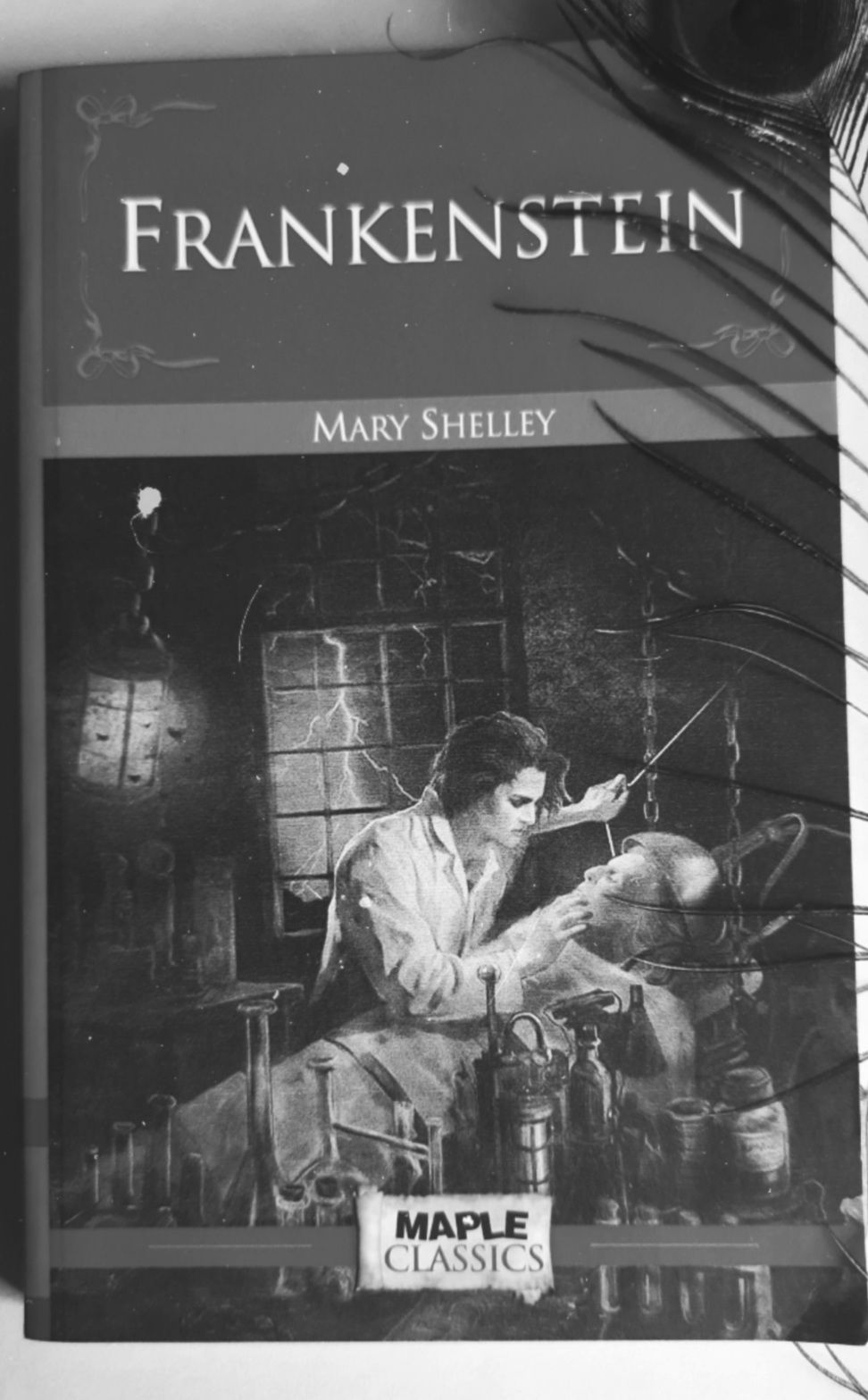
Marry Shelly was born on 30 august 1797 in London, England. Frankenstein is her most famous novel. When the book was published she was only twenty-one years old. She also wrote two dramas, numerous short stories, travelogues, and biographies.

 Her father William Godwin was a philosophy and political writer. Her mother Mary Wollstonecraft died shortly after Shelley’s birth.

Mounseer Nongtonpow was her first poem, which was published in 1807. Mary met poet Percy Bysshe in 1812. They fell in love. The couple was married in 1816, after the suicide of Shelley’s wife.

In 1822 Percy selly died, and after his death, she returned to London. Mary also compiled the collection of poems by her husband.

She worked very hard to support herself and her only child Percy Florence. She wrote several novels before she died of brain cancer in 1851 at the age of 53.

Works:

Valperga(1823)

The last man (1826)

Lodore (1835)

Posthumously published Mathilde.