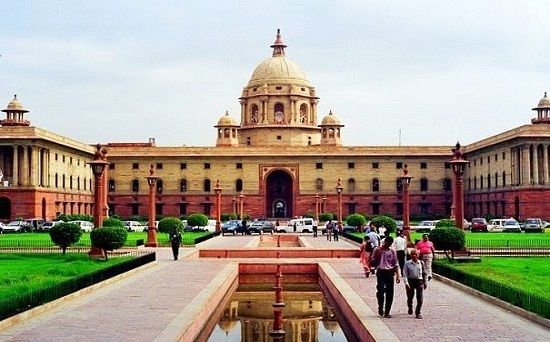
Parliament Rightly Makes Triple Talaq Criminal But Bailable Offence

“It is a happy moment for not just me but for Muslim society as a whole. We have been freed of an evil custom. Generations of women have suffered due to instant triple talaq. They have been thrown out of their house overnight and made to go through hell.”

– Shayara Bano who litigated in Apex Court to outlaw it and got it done.

It is a Himalayan blunder that while Hindus were banned from marrying more than one women or men but Muslims were not similarly banned which cannot be justified under any circumstances. Jawaharlal Nehru only thought about welfare and prosperity of Hindus but not of Muslims. The population of Hindus thus got contained due to which they have gained immensely but Muslims suffered terribly as their population swelled as they were permitted to marry upto 4 wives in case of Sunnis and no limit among Shias by virtue of Muta marriage and a large chunk of the population is compelled to live in dire straits!

Similarly Nehru took no other initiative to end other bad practices prevalent among Muslims like triple talaq and nikah halala by which if a husband pronounces triple talaq and he wants to marry her again then the women first has to undergo marriage with some other men then take divorce from him and then marry her former husband! Nothing on earth can be more terrible than this which makes a complete mockery of the dignity and esteem of women in the society! But why blame Nehru alone? No PM till recently ever took any initiative in this regard! Yes, late former PM Rajiv Gandhi wanted to take initiatives with his Union Minister Arif Mohammad Khan advising him but he buckled under pressure from fundamentalists and politicians supporting them within his party who were more in number!

What a crowning irony that now when PM Narendra Modi has taken this great initiative, he is being criticized and castigated by members of the same grand old Congress party! Former Finance Minister and senior BJP leader Arun Jaitley said that the triple talaq bill aimed at banning the practice of instant divorce among Muslims, “exposed those who consider themselves liberals”. He wrote in his tweet that, “A ‘liberal’ should ordinarily be hostile to the idea of discrimination and injustice perpetuated by an oral divorce. In this case, not one spoke in favour of the Bill which is ending the injustice. They raised weak arguments so that the fundamentalists amongst the Muslims are kept happy.”

Without mincing any words, the former Union Law Minister Arun Jaitley rightly said that, “Let us assume the reverse of the present situation. What if such a provision existed in Hindu law? Liberals, leftists, women organizations and perhaps even the judiciary would have been shocked with such a provision and would have attempted either for a repeal of the law or it being declared unconstitutional. These people stand exposed because what they have attempted to raise farcical objections.” He also rightly pointed out that, “While the Constitution has the right to practice and propagate one’s religion as well as an individual’s fundamental rights in the same chapter, there is a need to do a rethink on provisions of personal law which violate fundamental rights.” He then goes on to make a distinction between the rights and rituals in any religion. He wrote that, “Rituals cannot be decided by the law. They remain squarely within the right to practice one’s religion. However, fundamental rights belong to all. One section of the society cannot be denied these rights. What affects the right of a citizen – in this case the Muslim wife, cannot be determined by religion.”

Needless to say, “Triple talaq”, as it’s known, allows a husband to divorce his wife by repeating the word “talaq” (divorce) three times in any form, including email or text message. It has been mostly always misused by men and it is the women who had to bear the maximum brunt because of it. Opposition especially Congress is attributing political motives to Centre ‘s bold moves to ban it and criminalise it even though it is bailable. While rebutting all such charges, Amit Shah who is Union Home Minister rightly points out that, “We need to understand that women who fought a long battle against triple talaq didn’t have any political motive. They were normal women who showed extreme courage to fight against injustices they were subjected to. They were determined to put an end to this practice and finally won the battle in the country’s highest court. By legislating a triple talaq our government has given a statutory backing to their battle. After all, lawmakers and political parties are duty bound to give voice and right direction to such fights. Opposition’s argument questioning the need for law applicable only to Muslim society is also baseless. Independent India has seen enactment of laws aimed at reforming entrenched practices in other communities. Hindu Marriage Act, Christian Marriage Act, and laws to ban child marriage and dowry are examples of such interventions. Those engaging in opportunistic, narrow political arguments refuse to acknowledge these. Those who question making triple talaq a criminal offence conveniently ignore that several other practices related to Hindu society are considered criminal offence and attract severe punishment.” Why no brouhaha is made for them similarly? This leaves us in no doubt that all opposition is because of vote bank politics!

To put things in perspective, it is most heartening to note that “The Muslim Women (Protection of Rights on Marriage) Bill, 2019” better known as the Triple Talaq Bill finally got President Ram Nath Kovind’s assent on August 1, 2019. Hence it has now become a law which shall be binding on Muslims. This is no less than a boon for Muslim women who earlier were subjected to the mercy of the whims and fancies of her husband who could dump her whenever he wanted!

As it turned out, it must be mentioned here that with this assent of President, this historic Bill has replaced the triple talaq ordinance promulgated in February 2019. It was on July 25 that Lok Sabha passed this historic Bill with 303 votes in favour and 82 against. It was on July 30, 2019 that in the 245-member Upper House that is Rajya Sabha voted in favour of the Bill and 84 opposed it while 62 members stayed away by either walking out or abstaining or being absent!

Let me say this on record: It is because of this 62 members of Rajya Sabha who either walked out in the name of formal protest or abstained from voting or remained absent that this historic Bill could see the light of the day! Centre did not have enough members in Rajya Sabha to ensure that it get passed even though it had comfortable majority in Lok Sabha. But these 62 members decided to lend their support indirectly by not voting against the Bill by either remaining absent or staging a walk out or abstained from voting! All Muslim women must remain grateful to these 62 MPs also apart from Centre! There can be no denying or disputing it!

It is most heartening to note that the triple talaq bill has been finally outlawed! But its passage has been far from smooth. The ruling dispensation that is NDA led by Prime Minister Narendra Modi and Union Law Minister Ravi Shankar Prasad showed a steely resolve, firm determination and grit to make sure that women get their basic rights and those men who insult them by resorting to triple talaq are not able to escape the long arms of the law! It took three attempts to make sure that ultimately it becomes a law! Head of IMC (Ittehad Millat Council) – Maulana Tauqeer Raza Khan said that instead of opposing Triple Talaq Bill we should look at it from the viewpoint of a sister and daughter and it will protect them totally from harassment. He also rightly said this work should have been done by us but we didn’t do so Allah made Prime M inister Narendra Modi to do this! He rightly pointed out that, “In Islam triple talaq is criminalized since 1400 years and it was Khalifa-e-Waqt Hazrat Umar Farooq who had done this! The punishment is not as much as the Bani-e-Islam had expressed anger! Even Prophet Mohammad had expressed his anger at it”! Very rightly said!

Kudos to the Centre for taking such a historic initiative! It left no stone unturned to make sure that more and more members from different parties support this historic triple talaq bill to ensure that women don’t keep on suffering endlessly in silence as has been happening since past 72 years! Jawaharlal Nehru had the guts to usher in reforms in Hindu law and Hindu Marriage Act 1955 was passed and he very rightly ensured that Hindus who both male and female could marry as many as they want earlier were restricted to just one and if they violated they could be punished for a term of seven years for which Hindus must always be grateful to him and should salute him as it is because of this that the population has been controlled to a very large extent. But he did not do anything to ensure that polygamy is similarly banned among Muslims also which would have benefited them also and their population could have been brought under control! However, now PM Narendra Modi has done to Muslims what Jawaharlal Nehru could never do to ensure that Muslim women benefits by making sure that triple talaq bill gets passed in Parliament and finally becomes a law.

As things stand, this Triple Talaq Bill has been a bone of contention and a point of friction between the Narendra Modi led NDA government and the Opposition since December 2017, when the government first tabled this historic legislation in the Lok Sabha. The Bill followed a Supreme Court judgment famously known as Shayara Bano case and titled as Shayara Bano Vs Union of India & Ors. It was in this landmark case that the Supreme Court in a 3:2 majority verdict struck down the age-old regressive and abominable practice under which a Muslim man could divorce his wife by uttering the word “talaq” thrice in one sitting and declared it as void and illegal.

Be it noted, minutes after the vote, Prime Minister Narendra Modi tweeted that by abolishing triple talaq, “Parliament corrects a historical wrong done to Muslim women.” As many as eight Congress members were absent during the vote in Rajya Sabha. Janata Dal (U) and the AIADMK walked out. Also absent were high profile Opposition leaders like the NCP’s Sharad Pawar and Praful Patel thus lending their indirect support to this historic Bill!

It must be pointed out here that as many as 22 Muslim countries including Pakistan, Afghanistan and Bangladesh – or their provinces have abolished triple talaq either explicitly or implicitly. The list includes Turkey and Cyprus, which have adopted secular family laws; Tunisia and Algeria and the Malaysian state of Sarawak, which do not recognize a divorce pronounced outside a court of law; and Iran, where triple talaq doesn’t have validity under its Shia law. Instant talaq is also banned in Algeria, Jordon, Egypt, Iraq, Brunei, the UAE, Indonesia, Libya, Sudan, Saudi Arabia, Morocco and Kuwait.

It was way back in 1961 that Pakistan had abolished triple talaq. It also deserves mention that Sri Lanka’s Marriage and Divorce (Muslim) Act, 1951, as amended up to 2006, doesn’t recognize instant divorce. This is because the law requires a husband wishing to divorce his wife to give notice of his intention to a Qazi (Islamic Judge) who should attempt reconciliation between the couples over the next 30 days. It is only then after all this that the husband can give talaq to his wife and that too in the presence of the Qazi and two witnesses. But what we see in India is that triple talaq is given from telephone or even email which is most reprehensible as it degrades and demolishes the unique identity of women and subjects her to the whims and fancies of men alone! Describing the practice of triple talaq as “barbaric and inhuman”, Ravi Shankar Prasad rightly pointed out that nearly 22 countries have regulated triple talaq but gender justice was given a complete go-by in a secular country like India because of blatant vote bank politics.

It cannot be lost on us that Ravi Shankar Prasad who is Union Law Minister while hailing the passage of the Triple Talaq Bill pointed out emphatically that, “Finally, Parliament has passed the Triple Talaq Bill after three attempts. The kind of jubilation it has caused across the country, barring conservative elements, indicates how it is a proud moment for India. Our country is transforming and the women of India feel empowered. Triple talaq has never been sanctioned in Islamic scriptures. During the debate in Parliament, I quoted a very authoritative book on Islamic laws from an eminent jurist, Amir Ali, wherein Prophet Mohammad (PBUH) has been quoted as disapproving of it in the strongest possible terms, and, forcing one of his disciples who had given triple talaq to his wife to accept her again. Despite disapproval from the highest quarters in Islam, and the fact that many Muslim countries following sharia laws also chose to reform it one way or another – including making it penal in many cases – it took more than 70 years in India to not only delegitimise this curse, but also provide for penal consequences. Regrettably, this shows the hold the communal and conservative elements continue to exercise over the country’s polity.”

What’s more, Ravi Shankar Prasad further points out with full zeal that, “Today, I need to salute great women like Shayara Bano and Ishrat Jehan and many others who went to the Supreme Court in 2013 challenging this pernicious practice. When the NDA government came to power in 2014, the Prime Minister boldly directed me to stand firmly with these women and support their cause.” He also lamented that, “After the Supreme Court judgment set aside triple talaq, many of us had thought that now this practice will come to an end. However, it continued unabated, even on the flimsiest of grounds. I had shared before Parliament, a large number of cases that we could gather from the media and other reports, where it was revealed how helpless women (75 percent of the victims are poor) were driven out by uttering “talaq-talaq-talaq”, irrevocably annulling the marriage.”

Let me say this on record: What a complete mockery does this make of women! Should it be allowed to permit under any circumstances? Certainly not. If it was not made a penal offence then certainly it would not serve as a adequate deterrent. The worst sufferers in such case would have been none other than women herself!

It also cannot be lost on us that many opposition parties have opposed this historic Bill on the ground that it criminalizes the triple talaq and this will break marriages more quickly. What they very conveniently forget is that even Hindus earlier could marry as many as they wanted both men and women but it was outlawed and they were made liable to be punished under Section 494 of IPC for imprisonment which may extend to seven years and shall also be liable to fine! Then why so much of brouhaha for a three year bailable jail term for Muslims now?

It is a no brainer that to prevent this and taking on board such valid concerns, Ravi Shankar Prasad points out rightly that, “When we framed the law we took on board some of the legitimate concerns, namely: The FIR must be filed by the victim/wife or her relations, by blood or marriage, to prevent abuse, and, it must be compoundable. The provision of bail was specifically added, but after hearing the wife. Besides, there are provisions for subsistence allowance and custody of minor to the wife. It was a very simple and straight legal framework, and yet, the Congress took a very negative stand that it should not be made penal at all. Therefore, while formally opposing triple talaq Bill, the Congress was insisting upon a law whereby this curse could go unabated for want of any deterrence.” Very rightly said! How can this be permitted?

It would be fair to ask: if the law was not made penal, would it have served its desired purpose of protecting Muslim women from being subjected to arbitrary divorces? It goes without saying that certainly not. It would have been toothless and the offence against women would have continued unabated as rightly pointed out by the Law Minister!

Most importantly, noted Islamic scholar and former Union Minister in late PM Rajiv Gandhi’s Cabinet – Arif Mohammad Khan very rightly sums up by saying that, “This is a very positive step taken by the Government. It has performed its constitutional duty. It was an obligation of the government to ensure that the Supreme Court (SC) judgment is followed in letter and spirit. Unless some penal provision is incorporated or it is made a punishable offence, the law is not respected. The malpractice of triple talaq has its roots in history. In India, the Supreme Court held triple talaq unlawful on two counts. One, it is arbitrary. Second, it is part of the religious law. The aprties defending this malpractice also admitted in their affidavit that it is ‘Haram’ (prohibited), and it is ‘bidat’ (innovative practice), which is not part of the original scheme. They said it is sinful but legally permissible – bad in religion but good in law. On it, the SC judgement said that this is unimaginable that something in a religious law can be ‘bad in religion and good in law’. If something is bad in religion then it must be bad in religious law also.”

While lambasting the Opposition leaders for criticizing it, Arif Mohammad Khan minced no words in saying that, “If the parties like the Congress and AIMIM feel that an act which is “Haram” and sinful is part of the Muslim identity, then I can only feel sorry about it and I would say it is highly insulting to every Muslim.” He also condemned those who say it is an attack on the Muslim identity saying that, “I find this language and these assertions absolutely insulting for the Muslims, because the triple talaq, according to the defenders of the practice also, is prohibited and sinful.

About Nikah Halala, Arif Mohammad Khan said that, “I think Halala is a related issue. Once triple talaq comes to an end, Halala will die its natural death.” About polygamy, he said that, “Though I am not a practicing lawyer, I argued in the SC against triple talaq. And, I intend to do the same, when the polygamy issue is taken up. Based on my studies of the Quran, I am convinced that polygamy is as untenable as triple talaq and has very weak ground. The Quran clearly directs to ‘marry those among you who are single’. When the scripture is saying, ‘marry one who is single’, then why should she marry a man who already has a wife? I am very sure that it will also be outlawed. I am of the opinion that why should the government wait for the SC. The Legislature should initiate the process.”

It must be pointed out that Zakia Soman who is co-founder of Bharatiya Muslim Mahila Andolan has also hailed the outlawing of triple talaq by observing that, “The passage of the Triple Talaq Bill is a welcome development. Although this has been long overdue and Muslim women have been steadfastly demanding it for many years now, this is a historic step forward in the movement for gender justice by ordinary women.”

To conclude, in the 21st century why should women not have the same rights as men? Why should women suffer at the hands of men as he likes, whenever he likes, wherever he like and how he likes without any hindrance whatsoever? Why when polygamy was banned among Hindus in 1955 has it not been banned among Muslims 54 years later in 2019? It is for Centre to answer! Hindus have gained as the population has come under control but Muslims still are suffering because of it not being outlawed. It must take the great initiative in this direction also as rightly pointed out by Arif Mohammad Khan! Let’s hope so!

Sanjeev Sirohi, Advocate,

s/o Col BPS Sirohi,

A 82, Defence Enclave,

Sardhana Road, Kankerkhera,

Meerut – 250001, Uttar Pradesh.

Victory of Gender Justice and will Further Equality In Society: PM on the Passage of Triple Talaq Bill

PM Shri
Narendra Modi thanked all the parties and MPs who have supported the
passage of the Muslim Women (Protection of Rights on Marriage) Bill,
2019 in both Houses of Parliament. He said that they have risen to the
occasion and this step of theirs will be forever remembered in India’s
history.
In a series
of tweets he said that “An archaic and medieval practice has finally
been confined to the dustbin of history! Parliament abolishes Triple
Talaq and corrects a historical wrong done to Muslim women. This is a
victory of gender justice and will further equality in society. India
rejoices today!”
He further
tweeted that “This is an occasion to salute the remarkable courage of
those Muslim women who have suffered great wrongs just due to the
practice of Triple Talaq.The abolition of Triple Talaq will contribute
to women empowerment and give women the dignity they deserve in our
society.”

Plaintiff Cannot Be Forced To Add Parties Against Whom He Does Not Want To Fight: Supreme Court

It is worth noting and worth mentioning that in a latest, landmark and laudable judgment titled Gurmit Singh Bhatia Vs Kiran Kant Robinson and others in Civil Appeal Nos. 5522-5523 of 2019 delivered on July 17, 2019, the Supreme Court while exercising its civil appellate jurisdiction has reiterated that, in a suit, the plaintiff is the dominus litis and cannot be forced to add parties against whom he does not want to fight unless there is a compulsion of the rule of law. All the courts must always bear this in mind while delivering judgments in such matters. There can be no denying or disputing it! 

To start with, the ball is set rolling in para 1 of this noteworthy judgment authored by Justice MR Shah for himself and Justice DY Chandrachud of Supreme Court wherein it is pointed out that, “Feeling aggrieved and dissatisfied with the impugned judgment and order dated 3.7.2013 passed in Writ Petition No. 856/2012 and order dated 5.8.2013 passed in Review Petition No. 169/2013 in Writ Petition No. 856/2012 by the High Court of Chhattisgarh at Bilaspur, by which the High Court has allowed the said writ petition preferred by the original plaintiffs and has quashed and set aside the order passed by the learned trial Court allowing the application preferred by the appellant herein for impleading him as a necessary party to the suit filed by respondent nos. 2 and 3 herein – the original plaintiffs, the original applicant – appellant has preferred the present appeals.”

To recapitulate, it is then stated in para 2 that, “The facts of the case leading to these appeals in nutshell are as follows:

Respondent nos. 2 & 3 herein – the original plaintiffs filed a suit against respondent no. 1 herein – original defendant no. 1 for specific performance of the agreement to sell/contract dated 3.5.2005 executed by respondent no. 1 – original defendant no. 1 in the Court of learned 4th Additional District Judge, Bilaspur. That during the pendency of the aforesaid suit and despite the injunction against respondent no. 1 herein – original defendant no. 1 – original owner not to alienate or transfer the suit property, respondent no. 1 herein – original defendant no. 1 executed a sale deed in favour of the appellant herein vide sale deed dated 10.07.2008. The appellant herein – purchaser who purchased the suit property during the pendency of the suit filed an application in the pending suit under Order 1 Rule 10 of the CPC for impleadment as a defendant in the suit. It was the case on behalf of the appellant herein that he has purchased the suit property and is a necessary and proper party to the suit as he has a direct interest in the suit property. That by an order dated 5.11.2012, the learned trial Court allowed the said application and directed the original plaintiffs to join the appellant as a defendant in the suit.”

Put plainly, it is then pointed out in para 2.1 that, “Feeling aggrieved and dissatisfied with the order passed by the learned trial Court dated 5.11.2012 allowing the application and permitting the appellant herein to be joined as a party defendant in the suit filed by the original plaintiffs – respondent nos. 2 & 3 herein, respondent nos. 2 & 3 herein filed writ petition No. 856/2012 before the High Court of Chhattisgarh. By the impugned judgment and order dated 3.7.2013, the High Court has allowed the said writ petition and has quashed and set aside the order passed by the learned trial Court allowing the impleadment application preferred by the appellant herein by holding that as regards the relief claimed against the original defendants and as no relief has been claimed against the appellant herein, the appellant cannot be said to be a necessary or formal party. That thereafter the appellant preferred a review application which came to be dismissed. Hence, the present appeals by way of special leave petitions.”

Be it noted, para 3.1 then discloses that, “Learned Senior Advocate appearing on behalf of the appellant has vehemently submitted that once the learned trial Court allowed the impleadment application submitted by the appellant herein under Order 1 Rule 10 of the CPC holding that the appellant is a necessary and proper party, the High Court, in exercise of powers under Article 227 of the Constitution of India, ought not to have interfered with the same.”

Moving on, para 3.2 then further discloses that, “It is vehemently submitted by the learned Senior Advocate appearing on behalf of the appellant that as such the appellant has purchased the suit property from the same vendor and, in fact, the appellant was in prior agreement to sell holder and to protect the interest of the appellant, the appellant is a necessary and proper party. It is submitted that therefore the learned trial Court rightly allowed the impleadment application submitted by the appellant.”

Going forward, it is then further added in para 3.3 that, “Making the above submissions and relying upon the decision of this Court in the case of Robin Ramjibhai Patel v. Anandibai Rama @ Rajaram Pawar, reported in (2018) 15 SCC 614 and the decision of the Bombay High Court in the case of Shri Swastik Developers vs. Saket Kumar Jain, reported in 2014 (2) Mh. L.J. 968, it is prayed to allow the present appeals and quash and set aside the impugned judgments and orders passed by the High Court and restore the order passed by the learned trial Court.”

On the contrary, we then see that para 4 discloses that, “The present appeals are vehemently opposed by Shri M. Shoeb Alam, learned Advocate appearing on behalf of the original plaintiffs. It is vehemently submitted that in fact the appellant purchased the suit property during the pendency of the suit and that too in violation of the injunction granted by the learned trial Court. It is submitted that as such the prior agreement to sell upon which reliance has been placed by the appellant is a concocted and forged one. It is submitted that in any case the appellant cannot be impleaded as a defendant in a suit filed by the original plaintiffs for specific performance of the agreement to sell/contract to which the appellant is not a party. It is submitted that the original plaintiffs are the dominus litis and without their consent nobody can be permitted to be impleaded as defendant.”

While citing the relevant case law thus adding more ammunition to its submissions, it is then pointed out in para 4.1 that, “It is vehemently submitted that as such the issue involved in the present case is squarely covered against the appellant in view of the decision of this Court in the case of Kasturi v. Iyyamperumal, reported in (2005) 6 SCC 733”.

Furthermore, it is then illustrated in para 4.2 that, “Insofar as the reliance placed upon the decision of this Court in the case of Robin Ramjibhai Patel (supra) as well as the decision of the Bombay High Court in the case of Shri Swastik Developers (supra) by the learned Senior Advocate appearing on behalf of the appellant, it is vehemently submitted by Shri M. Shoeb Alam, learned Advocate appearing on behalf of the original plaintiffs that the said decisions shall not be applicable to the facts of the case on hand. It is submitted that in the aforesaid two cases, it was an application by the original plaintiff to implead the subsequent purchaser who purchased the property during the pendency of the suits. It is submitted that as held by this Court in the case of Kasturi (supra), it is for the plaintiff/plaintiffs to implead a particular person/persons as defendant/defendants and if he/they does not/do not join then it will be at the risk of the plaintiff/plaintiffs. It is further submitted that the plaintiff cannot be forced to implead any other person, more particularly who is not a party to the contract, against the wish of the plaintiff. It is submitted that therefore the aforesaid two decisions, upon which reliance has been placed by the learned Senior Advocate appearing on behalf of the appellant, shall not be applicable to the facts of the case on hand. It is submitted that as such the decision of this Court in the case of Kasturi (supra) clinches the issue and shall be squarely applicable to the facts of the case on hand.”

To put things in perspective, it is then ruled in para 5.1 after hearing the learned counsel for the respective parties at length that, “At the outset, it is required to be noted that the original plaintiffs filed the suit against the original owner – vendor – original defendant no. 1 for specific performance of the agreement to sell with respect to suit property dated 3.5.2005. It is an admitted position that so far as agreement to sell dated 3.5.2005 of which the specific performance is sought, the appellant is not a party to the said agreement to sell. It appears that during the pendency of the aforesaid suit and though there was an injunction against the original owner – vendor restraining him from transferring and alienating the suit property, the vendor executed the sale deed in favour of the appellant by sale deed dated 10.7.2008. After a period of approximately four years, the appellant filed an application before the learned trial Court under Order 1 Rule 10 of the CPC for his impleadment as a defendant. The appellant claimed the right on the basis of the said sale deed as well as the agreement to sell dated 31.3.2003 alleged to have been executed by the original vendor. The said application was opposed by the original plaintiffs. The learned trial Court despite the opposition by the original plaintiffs allowed the said application which has been set aside by the High Court by the impugned judgment and order. Thus, it was an application under Order 1 Rule 10 of the CPC by a third party to the agreement to sell between the original plaintiffs and original defendant no. 1 (vendor) and the said application for impleadment is/was opposed by the original plaintiffs. Therefore, the short question which is posed for consideration before this Court is, whether the plaintiffs can be compelled to implead a person in the suit for specific performance, against his wish and more particularly with respect to a person against whom no relief has been claimed by him?”

As it turned out, it is then envisaged in para 5.2 that, “An identical question came to be considered before this Court in the case of Kasturi (supra) and applying the principle that the plaintiff is the dominus litis, in the similar facts and circumstances of the case, this Court observed and held that the question of jurisdiction of the court to invoke Order 1 Rule 10 CPC to add a party who is not made a party in the suit by the plaintiff shall not arise unless a party proposed to be added has direct and legal interest in the controversy involved in the suit. It is further observed and held by this Court that two tests are to be satisfied for determining the question who is a necessary party. The tests are – (1) there must be a right to some relief against such party in respect of the controversies involved in the proceedings; (2) no effective decree can be passed in the absence of such party. It is further observed and held that in a suit for specific performance the first test can be formulated is, to determine whether a party is a necessary party there must be a right to the same relief against the party claiming to be a necessary party, relating to the same subject matter involved in the proceedings for specific performance of contract to sell. It is further observed and held by this Court that in a suit for specific performance of the contract, a proper party is a party whose presence is necessary to adjudicate the controversy involved in the suit. It is further observed and held that the parties claiming an independent title and possession adverse to the title of the vendor and not on the basis of the contract, are not proper parties and if such party is impleaded in the suit, the scope of the suit for specific performance shall be enlarged to a suit for title and possession, which is impermissible. It is further observed and held that a third party or a stranger cannot be added in a suit for specific performance, merely in order to find out who is in possession of the contracted property or to avoid multiplicity of the suits. It is further observed and held by this Court that a third party or a stranger to a contract cannot be added so as to convert a suit of one character into a suit of different character.”

More significantly, it is then further added in this same para 5.2 that, “That thereafter, after observing and holding as above, this Court further observed that in view of the principle that the plaintiff who has filed a suit for specific performance of the contract to sell is the dominus litis, he cannot be forced to add parties against whom, he does not want to fight unless it is a compulsion of the rule of law. In the aforesaid decision in the case of Kasturi (supra), it was contended on behalf of the third parties that they are in possession of the suit property on the basis of their independent title to the same and as the plaintiff had also claimed the relief of possession in the plaint and the issue with regard to possession is common to the parties including the third parties, and therefore, the same can be settled in the suit itself. It was further submitted on behalf of the third parties that to avoid the multiplicity of the suits, it would be appropriate to join them as party defendants. This Court did not accept the aforesaid submission by observing that merely in order to find out who is in possession of the contracted property, a third party or a stranger to the contract cannot be added in a suit for specific performance of the contract to sell because they are not necessary parties as there was no semblance of right to some relief against the parties to the contract. It is further observed and held that in a suit for specific performance of the contract to sell the lis between the vendor and the persons in whose favour agreement to sell is executed shall only be gone into and it is also not open to the Court to decide whether any other parties have acquired any title and possession of the contracted property. It is further observed and held by this Court in the aforesaid decision that if the plaintiff who has filed a suit for specific performance of the contract to sell, even after receiving the notice of claim of title and possession by other persons (not parties to the suit and even not parties to the agreement to sell for which a decree for specific performance is sought) does not want to join them in the pending suit, it is always done at the risk of the plaintiff because he cannot be forced to join the third parties as party-defendants in such suit. The aforesaid observations are made by this Court considering the principle that plaintiff is the dominus litis and cannot be forced to add parties against whom he does not want to fight unless there is a compulsion of the rule of law. Therefore, considering the decision of this Court in the case of Kasturi (supra), the appellant cannot be impleaded as a defendant in the suit filed by the original plaintiffs for specific performance of the contract between the original plaintiffs and original defendant no. 1 and in a suit for specific performance of the contract to which the appellant is not a party and that too against the wish of the plaintiffs. The plaintiffs cannot be forced to add party against whom he does not want to fight. If he does so, in that case, it will be at the risk of the plaintiffs.”

It cannot be lost on us that it is then envisaged in para 6 that, “Now so far as the reliance placed upon the decision of this Court in the case of Robin Ramjibhai Patel (supra) and the decision of the Bombay High Court in the case of Shri Swastik Developers (supra), relied upon by the learned Senior Advocate for the appellant is concerned, the aforesaid decisions shall not be applicable to the facts of the case on hand as in both the aforesaid cases, it was the plaintiff who submitted an application to implead the third parties/subsequent purchasers who claimed title under the vendor of the plaintiff. Position will be different when the plaintiff submits an application to implead the subsequent purchaser as a party and when the plaintiff opposes such an applicant for impleadment. This is the distinguishing feature in the aforesaid two decisions and in the decision of this Court in the case of Kasturi (supra).”

All told, it is then finally held in the last para 7 that, “In view of the above and for the reasons stated above, we are in complete agreement with the view taken by the High Court. No interference of this Court is called for. The appellant cannot be impleaded as a defendant in the suit for specific performance of the contract between the original plaintiffs and original defendant no. 1 against the wish of the plaintiffs. Accordingly, the present appeals stand dismissed. However, in the facts and circumstances of the case, there shall be no order as to costs.”

In the ultimate analysis, the Apex Court has made it absolutely clear in this notable case that plaintiff cannot be forced to add parties against whom he does not want to fight unless there is a compulsion of the rule of law. It has been elaborated upon also in great detail which we have already discussed above. No doubt, all the courts must always comply with it in all such cases!

Sanjeev Sirohi, Advocate,

s/o Col BPS Sirohi,

A 82, Defence Enclave,

Sardhana Road, Kankerkhera,

Meerut – 250001, Uttar Pradesh.

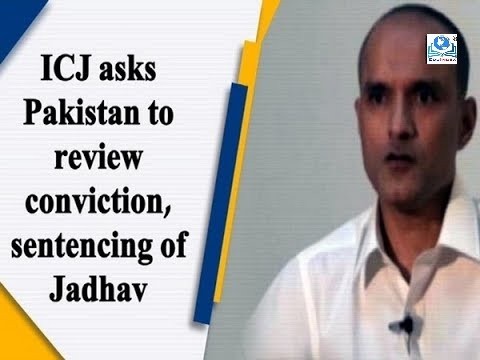
Legal Article Review And Reconsider Conviction And Sentencing Of Jadhav: ICJ To Pakistan


“Truth and justice have prevailed. Congratulations to ICJ for a verdict based on extensive study of facts. I am sure Kulbhushan Jadhav will get justice.”

– PM Narendra Modi

It goes without saying that in a major legal and diplomatic victory for India and also simultaneously in a major legal and diplomatic setback along with global embarrassment for Pakistan, the International Court of Justice (ICJ) has held upfront that Pakistan violated the Vienna Convention in the Kulbhushan Jadhav case and it should review and reconsider his conviction and sentencing while allowing India consular access to the Indian national. Importantly, the ICJ ruling said unequivocally that the stay on the death sentence pronounced on Jadhav must remain. It minced no words in saying clearly, categorically and convincingly that, “The court considers that a continued stay of execution constitutes an indispensable condition for the effective review and consideration of the conviction and sentence of Jadhav”.

To be sure, while indicating its unhappiness with the judicial process regarding Kulbhushan Jadhav, the ICJ said that, “Court considers it imperative to re-emphasise that the review and reconsideration of the conviction and sentence of Jadhav must be effective.” This clearly comes as a rap on the knuckles of Pakistan’s opaque way of trial of Jadhav by military courts which is the biggest proof that it was just a sham trial and everything was pre-decided! It is a no-brainer that this sharp observation of ICJ clearly tantamount to an open indictment of Jadhav being tried before secret military “black” courts where the evidence against him and his legal defence remains unknown! How can this by any standard be termed as “fair trial”?

What’s more, while rejecting all the major contentions put forward by Pakistan, the ICJ said the Vienna Convention was applicable in the Jadhav case regardless of allegations that he was engaged in espionage. It also conveyed unambiguously that, “Pakistan must inform Jadhav without further delay of his right under Article 36 and allow and arrange for his legal representation”. Pakistan should be ashamed that ICJ has to remind it that what all legal rights should be provided to Jadhav!

Bluntly put: If Pakistan has nothing to hide as it repeatedly asserts and tries to present a brave face then why was it so determined to deny even consular access and legal representation to Kulbhushan Jadhav? This itself is the biggest testimony of the irrefutable fact that Pakistan has a lot to hide and has very little to show and has no genuine proof to vindicate its false claim that Kulbhushan Jadhav is a spy and a terrorist! Why ICJ conveyed its unhappiness with the way Jadhav was tried in Pakistan? Still should Pakistan not wake up its ideas and act in the right manner?

Before proceeding ahead, it would be pertinent and imperative to mention now the entire sequence of events in which the Jadhav case unfolded. This will help us understand better the entire case and how it reached its logical conclusion. It is as follows: –

2016

March 3: Kulbhushan Jadhav, then 46 years, is arrested by Pakistan allegedly from Mashkel in Balochistan Province. Pakistan terms him “an Indian spy” for India’s external intelligence agency, RAW.

March 25: India notified about Jadhav’s arrest in a press release by Pakistani authorities. India rejects Pakistan’s claims and says there’s no proof that he was arrested in Balochistan.

March 26: The then Ministry of External Affairs spokesperson Vikas Swarup releases a statement stating that while Jadhav was a former naval officer, he had no links with RAW or the government.

March 29: India seeks consular access to Jadhav which Pakistan does not provide.

March 30: Union Minister Kiren Rijju rubbishes Pakistan’s claims and calls Jadhav’s “confession” about his alleged involvement in terror activities in Balochistan a lie. Indian authorities claim Jadhav was abducted from Iran where he was conducting business after retiring from Navy.

December 7: Pakistan Foreign Minister Sartaj Aziz confirms that conclusive evidence against Kulbhushan Jadhav has not been found. Pakistan Foreign Ministry then makes a U-turn on its earlier released statement.

2017

Jan 6: Pakistan announced that it has submitted a dossier to the new United Nations Secretary General Antonio Guterres over Indian interference in Islamabad, which was aimed at “destabilising” the nation.

April 1: India starts sending diplomatic communications to Pakistan for providing consular access to Jadhav. Authorities claim that access denied despite repeated requests.

April 10: Pakistan army says Jadhav has been sentenced to death by a military court for espionage and waging war against the country.

April 12: According to a media report, Jadhav is charged with terrorism and sabotage by a court.

May 8: India moves ICJ against Pakistan’s decision and for “egregious violation of the Vienna Convention on Consular Relations”. It seeks ‘provisional measures’ from ICJ and asks it to issue instructions to Pakistan to not take any action on the death sentence till India’s request for ‘provisional measures’ was considered by the court.

May 9: What came as a shot in the arm for India was ICJ staying Jadhav’s execution on India’s request. ICJ sends urgent communication to the Pakistan PM asking the country not to take measures that would result, in an ICJ ruling not having the appropriate effect thus prohibiting Pakistan from executing Jadhav.

May 15: ICJ begins hearing. ICJ hears India’s request for ‘provisional measures’.

May 18: In a further major gain for India, ICJ unanimously issues binding order on ‘provisional measures’, says all measures to be taken to prevent execution of Jadhav pending the final judgment.

June 16: World Court asks India to make its submission by September 13.

Sep 13: India files its memorial (first round of written pleadings), Pakistan follows with counter memorial on December 13, 2017.

Dec 19: India seeks 3 months to file reply (2nd pleadings). Pakistan opposes India’s request.

Dec 25: Pakistan facilitates meeting of Jadhav with his mother and wife in Islamabad but here too they are subjected to undergo humiliation like asking them to remove mangalsutra, bindi, shoes etc.

2018

Jan 17: ICJ accepts India’s request and gives 3 months each to India and Pakistan to file a second round of written pleadings.

April 17: India files second round of written pleadings.

July: Pakistan also follows with its own filing of second round of written pleadings.

Oct 3: ICJ fixes dates for final hearing in the matter.

2019

Feb 18: ICJ begins four-day final public hearing in this case.

Feb 21: ICJ concludes the hearing and reserves the order.

July 17: ICJ orders that Jadhav must be given consular access. ICJ also orders that it has jurisdiction to decide India’s plea for Kulbhushan Jadhav. It also holds that stay of Jadhav’s execution ordered by Pakistan’s military court will continue and Pakistan has to review and reconsider conviction and sentencing of Jadhav.

Be it noted, all the 16 Judges of ICJ on the panel unanimously ruled that the ICJ’s jurisdiction held over the case. It said that the court “unanimously, finds that it has jurisdiction, on the basis of Article 1 of the Optional Protocol concerning the Compulsory Settlement of Disputes to the Vienna Convention on Consular Relations of 24 April 1963, to entertain the Application filed by the Republic of India on 8 May 2017”. The judgment which was read out by Judge Abdulqawi Ahmed Yusuf who is the President of the ICJ at the Peace Palace on July 17, 2019 was decided with 15 judges in favour while only Pakistan’s ad-hoc Judge – Justice Tassaduq Hussain Jilani was the lone dissenter! Pakistan must be gracious enough to accept this biggest slap on its face and comply with the order passed by the ICJ to save its own reputation in front of the world!

What’s more, the ICJ specifically ruled that it “finds that the Islamic Republic of Pakistan is under an obligation to inform Mr. Kulbhushan Sudhir Jadhav without further delay of his rights and to provide Indian consular officers access to him in accordance with Article 36 of the Vienna Convention on Consular Relations”. Pakistan till now was totally opposed to giving any consular access to Kulbhushan Jadhav but now it has no option but to comply! The ICJ said that the court finds that the “appropriate reparation in this case consists in the obligation of the Islamic Republic of Pakistan to provide by the means of its own choosing, effective review and reconsideration of the conviction and sentence of Jadhav so as to ensure that full weight is given to the effect of the violation of the rights set forth in Article 36 of the Convention.”

Not stopping here, it added that a “continued stay of execution constitutes an indispensable condition for the effective review and reconsideration of the conviction and sentence of Jadhav. The Court also found that, “by not informing Jadhav without delay of his rights under Article 36, paragraph 1(b) of the Vienna Convention on Consular Relations”, Pakistan “breached the obligations” incumbent upon it under that provision. It also said that by “not notifying the appropriate consular post of the Republic of India in the Islamic Republic of Pakistan without delay of the detention of Mr Kulbhushan Sudhir Jadhav and thereby depriving the Republic of India of the right to render the assistance provided for by the Vienna Convention to the individual concerned, the Islamic Republic of Pakistan breached the obligations incumbent upon it under Article 36, paragraph 1 (b), of the Vienna Convention on Consular Relations.”

What a pity that it is now after such a long legal battle that ensued and raged on in ICJ for more than 3 years and after ICJ asked Pakistan to comply that it has finally buckled after being forced to eat the humble pie and say in a mellowed manner that it has decided to grant consular access to Kulbhushan Jadhav hours after Indian Foreign Minister S Jaishankar sought it following the ICJ verdict! Pakistan’s Foreign Ministry announced in a statement that, “Pursuant to the decision of the ICJ, Commander Kulbhushan Jadhav has been informed of his rights under Article 36, Paragraph 1(b) of the Vienna Convention on Consular Relations. As a responsible state, Pakistan will grant consular access to Commander Kulbhushan Jadhav according to Pakistani laws, for which modalities are being worked out.” One fails to understand that why it took so long for Pakistan to become a responsible state? Why was it an irresponsible state for so long? Why it took ICJ’s intervention for Pakistan to realise its responsibility of providing consular access to Pakistan? Were Pakistan’s lawyers who claim to be very intelligent not aware even of this also that it had to face so much of international humiliation and now finally it has decided to relent on this? I pity them!

Needless to say, Pakistan’s move has to be viewed as a ritualistic peace missive to India following its increasing isolation in the international community. We all know that the Financial Action Task Force has already placed Pakistan on its grey list and can be blacklisted also by October if it fails to mend its ways even now and find itself in the company of rogue countries like North Korea and Yemen among others! Can Pakistan afford this? Certainly not!

While making a statement in both Houses of Parliament on the judgment by the ICJ, Foreign Minister S Jaishankar said that, “Pakistan was found to have deprived India of the right to communicate with Jadhav, have access to him, visit him in detention and arrange his legal representation”. Has Pakistan been able to justify this in ICJ? Certainly not!

This alone explains that why following this landmark ICJ judgment, the Pakistan Foreign office in a terse statement has said that, “Having heard the judgment, Pakistan will now proceed as per law.” What does this reflect of Pakistan? That it was not even aware of what the law is!

As things stand, we thus see that Pakistan is compelled to act now after this landmark ICJ ruling. It has now no other option but to act as per the directions of ICJ of providing Jadhav consular access, legal aid and trying him properly as per law. It is most astounding to see that Jadhav who is a retired Indian Navy officer was sentenced to death by the Pakistani military court on charges of “espionage and terrorism” after a closed kangaroo trial in April 2017. Jadhav was not just denied consular access but also denied all type of legal aid! If this is not an open mockery of justice then please tell me that what else is?

Let me say this on record: The sole credit for this landmark ICJ verdict goes to eminent lead lawyer in this case and former Solicitor General of India Harish Salve who charged just one rupee for this case and left no stone unturned and pulled out all the stops to ensure that Kulbhushan Jadhav gets justice from ICJ. It is this same Harish Salve who had earlier ensured that Lt Col Shrikant Prasad Purohit who was most wrongly kept in jail for about 9 years without even charge sheet being filed against him could walk in the open air once again by securing bail for him and pointing out how injustice had been meted out to him. His popularity has increased manifold since then not just among people but even among the legal fraternity including me!

To say the least, in Jadhav’s case, Harish Salve while expressing happiness at the landmark ICJ verdict said that, “The ICJ verdict calling for the consular access to Kulbhushan Jadhav and making it incumbent upon Pakistan to ensure an effective review of its legal processes is a victory of the rule of law that has ‘gladdened our hearts’. There is relief, satisfaction and a lot of hope. The judgment has restored our faith in the rule of law, in the ICJ and in the systems which we as mankind put together to protect the citizens of the world.”

Going forward, Salve further disclosed that, “We had challenged the conduct of Pakistan in its brazen refusal to adhere to the Vienna Convention and allow consular access to Mr. Jadhav. The court found Pakistan guilty of internationally wrongful acts and that it must cease those acts. It is important to be positive after such a positive ruling.” He also said that he hoped Pakistan would fully comply with the judgment and that its conduct will be under watch in case it chooses to “brazenly violate” the ruling in any way.

Interestingly enough, Harish Salve also added that any violation of the order would mean taking things back to the ICJ to seek further instructions. Can Pakistan afford this now? He also warned that sanctions in the United Nations Security Council and other remedies could also come into play if Pakistan fails to comply with the ICJ order. He also further added that, “The ICJ had been categorical in its verdict that Pakistan must do everything to make the Vienna Convention a living reality. The government of Pakistan must ensure all necessary “review and reconsideration” measures, including ‘legislative’ means.”

To put things in perspective, this landmark verdict clearly denotes that Jadhav will continue to be protected from the death sentence on spy and terror charges as Pakistan could not prove anything against him and now that the ruling has gone against them, Islamabad will certainly find it too difficult to risk international criticism and opprobrium by ignoring the ruling. No wonder that Pakistan as anticipated sought to downplay the big setback arguing that ICJ did not order Jadhav’s release but even they too cannot deny that the court clearly said that Pakistan is “under obligation” to review the conviction and carry out retrial in a more transparent manner which they know would ostensibly lead to Jadhav’s acquittal as they have no reliable evidence to convict him!

As it turned out, the ICJ rejected Pakistan’s contention that it had no jurisdiction and that India’s complaint is not admissible. Even the Chinese Judge Xue ruled against Pakistan! ICJ held that, “Pakistan’s objection based on ‘clean hands’ doctrine must be rejected. Pakistan has not explained how any of the wrongful acts allegedly commited by India may have prevented Pakistan from fulfilling its obligation. The court finds that it has jurisdiction to entertain India’s claim. India was under no obligation to consider other dispute settlement mechanisms prior to instituting proceedings. Thus, Pakistan’s objection based on alleged non-compliance cannot be upheld.” The ICJ also held that the 2008 India-Pakistan bilateral agreement in no way trumped Islamabad’s obligations under the Vienna Convention. The ICJ was abundantly clear to hold that Pakistan had violated Article 36 of Vienna Convention on Consular Relations in denying consular access to Jadhav!

Happily enough, while addressing a press conference in London, Harish Salve remarked confidently that, “I have a degree of personal satisfaction that a lot of adjectives were used by Pakistan in its submissions that I described as unfortunate because of my upbringing as Indian. The Court has said Pakistan is guilty of internationally wrongful acts and it must cease those acts. This is a trenchant indictment”. He also said that, “The court said Pakistan has to do everything to make the Vienna Convention a living reality” while pointing out that the international legal body also asked for a fair trial of Mr Jadhav. There can be no denying it!

Suffice it to say, Salve rightly said that the judgment gives India a “good moment” to help Mr Jadhav get justice. He also very wisely pointed out that a re-trial of Mr Jadhav in a military court in Pakistan would not meet the standards set by the ICJ. He also rightly described the verdict as a victory for the rule of law.

It is heartening to note that even the Opposition parties have welcomed the verdict. Former Union Finance Minister and also a senior Supreme Court lawyer P Chidambaram said that, “ICJ delivers ‘justice’ in the true sense of that word, upholding human rights, due procedure and the rule of law.” Former Union External Affairs Minister Sushma Swaraj too said that, “I wholeheartedly welcome the verdict of International Court of Justice in the case of Kulbhushan Jadhav. It is a great victory for India.” Very rightly said!

It also cannot be lost on us that Gautam Bambawale who as India’s envoy to Pakistan when Jadhav was arrested had bombarded the Pakistani government with repeated official requests for consular access, thereby creating the right conditions for India’s case at the ICJ has said most unequivocally that, “ICJ has clearly ruled that Pakistan must review the case. This implies that the earlier military court proceeding did not give Jadhav due process. So a retrial must take place which must be fairer than earlier, with full consular access and a defence attorney for Jadhav.” The ICJ has worked with precedents in the cases of Germany vs the United States (LaGrand) and Mexico vs the United States (Avena), and in both these cases it had ruled that the US was in violation of the Vienna Convention and ordered a “review and reconsideration” of its process!

It is worth mentioning here that ICJ emphasized in no uncertain terms that the review of Jadhav’s case by Pakistan must be effective as the outcome of his mercy petition to the Pakistan Army Chief was not known, and no evidence was submitted to the court on the presidential clemency procedure. ICJ noted that Pakistan had stated during arguments that its high courts were competent to carry out a review.

Going forward, ICJ also observed that Article 199 of Pakistan’s Constitution had been interpreted by the Supreme Court as limiting the availability of such a review for a person like Jadhav, who is subject to the Pakistan Army Act. The ICJ in its historic verdict also said that, “Thus, it is not clear whether judicial review of a decision of a military court is available on the ground that there has been a violation of the rights set forth in Article 36, paragraph 1 of the Vienna Convention.” The verdict, however, added that, “Pakistan contends that its domestic legal system provides for an established and defined process whereby the civil courts can undertake a substantive review of the decisions of military tribunals, in order to ensure procedural fairness has been afforded to the accused, and that its courts are well suited to carrying out a review and reconsideration that gives full weight to the effect of any violation of Article 36 of the Vienna Convention.”

Before parting, it must be said that in a 15-1 order, the ICJ held that Jadhav’s execution will remain on hold until Islamabad “effectively reviews and reconsiders’ his execution. ICJ also made it amply clear that, “A continued stay of execution constitutes an indispensable condition for the effective review and reconsideration of the conviction and sentence of Mr Kulbhushan Sudhir Jadhav”. The World Court also ruled decisively in favour of India’s plea to allow it full consular access to Jadhav which Pakistan has consistently denied so far.

It is most heartening to note that the Pakistani Judge Tassaduq Hussain Gilani from Pakistan was completely isolated and was the only one to go against the majority judgment. Even the Judge from China – Vice President Xue also voted in favour of the judgment. India could just not secure the annulment of Jadhav’s conviction by the military court in Pakistan and his immediate release. But here too now Pakistan is under an obligation to ensure that the trial held is proper, legal and fair! The ICJ found that Pakistan deprived India of the right to communicate with and have access to Jadhav, to visit him in detention and to arrange for his legal representation and thereby breached obligations incumbent upon it under the Vienna Convention! Pakistan is left now with no option but to comply gracefully with this historic ICJ judgment as it has itself conceded also! What more could India have asked for than this?

Sanjeev Sirohi, Advocate,

s/o Col BPS Sirohi,

A 82, Defence Enclave,

Sardhana Road, Kankerkhera,

Meerut – 250001, Uttar Pradesh.
Delhi HC Imposes Rs. 50,000 Cost On Woman For False Sexual Harassment Plea

It is most heart warming to note that Delhi High Court in a latest, landmark and extremely laudable judgment titled Anita Suresh vs. Union of India & Ors in W.P.(C) 5114/2015 delivered on July 9, 2019 has rightly gone the extra mile and imposed Rs. 50,000 cost on a woman for false sexual harassment plea. The blatant misuse of laws against men is all too well known even though much as woman activists among others would like to gloss it over on one ground or the other! But this latest extraordinary judgment has served to send a very loud and stern message to all women that they dare not try to misuse laws against men without any valid cause and if they dare to do so then they should be prepared to face the music and cough up a huge amount as fine! From now onwards, women must always ensure before approaching courts that their own hands are clean and if they still don’t care then well they might find themselves landing in a hot soup as we see has happened with the petitioner in this commendable case!

To start with, the ball is set rolling in para 1 of this notable judgment by Justice JR Midha of the Delhi High Court wherein it is pointed out that, “The petitioner has challenged the order dated 20th January, 2012 of the Internal Complaints Committee (ICC). The petitioner is seeking a direction to respondent No. 2 to withhold the retirement benefits of respondent No. 3 to initiate independent departmental enquiry against respondent No. 3 and to also prosecute respondent No. 3.”

To recapitulate, it is then outlined in para 2 that, “The petitioner was working as an Assistant Director with ESI Corporation in Manesar, Gurgaon in July 2011. On 08th July, 2011, the petitioner made a written complaint to the Director General of ESI Corporation alleging sexual harassment by respondent No. 3. According to the petitioner, respondent No. 3 misbehaved and made attempts of sexual advances. The petitioner reported following two incidents dated 07th July, 2011 in the complaint:-

(i) ‘Yesterday when I was seated with my colleagues on the 1st floor of the building, Sh. Verma came and commented indicating sexual advances. I cannot for the reasons of modesty bring on papers the filthy language he uses for me’.

(ii) ‘Yesterday in the presence of my staff and other members he asked me to come alone to check the shortcomings of the male toilet when nobody is there and I will follow you soon’.”

To be sure, para 3 then states that, “Respondent No. 1 constituted an Internal Complaints Committee to examine the complaint of the petitioner. Respondent No. 3 appeared before the Committee and denied all the allegations made by the petitioner. According to respondent No. 3, the petitioner made the complaint because of the grudge against him due to certain official work disposed by him in her absence.” Para 4 then reveals that, “The Committee examined the petitioner as well as respondent No. 3. The Committee examined eight witnesses namely Rashmi Kapoor (O.S.), Lakhan (Supervisor Housekeeping), Rajender Yadav (SSO), Prasanna (Staff Nurse), Hema (Staff Nurse), Pradeep Kataria (Nursing Orderly), Jai Bhagwan (Nursing Orderly) and Kalpana (Dietician).”

Be it noted, para 5 then envisages that, “The Committee submitted its report on 20th January, 2012, in which it observed that the exact content of communication of the incident dated 07th July, 2011 could not be established. The Committee gave benefit of doubt to respondent No. 3 and recommended relocating both the petitioner and respondent No. 3 from their present posting.”

Needless to say, para 6 then brings out that, “Learned counsel for the petitioner urged at the time of the hearing that the findings of the Committee are erroneous and unjustified. It is submitted that the petitioner had proved by sufficient evidence that respondent No. 3 misbehaved and made attempts of sexual advances against the petitioner on 07th July, 2011 mentioned in the written complaint on 08th July, 2011. Respondent No. 3 pressurized the petitioners to withdraw her complaint whereupon a warning was issued to him on 04th November, 2011. The transfer of both the parties to different places was not a justified penalty to the respondent No. 3.”

As things stand, para 7 then discloses that, “Learned counsel for the respondent No. 1 urged at the time of the hearing that respondent No. 1 transferred both the petitioner and the respondent No. 3 from their posting. It was further submitted that respondent No. 3 superannuated on 28th February, 2015.”

Furthermore, it is then disclosed in para 8 that, “Vide order dated 28th March, 2019, this Court directed the employer, ESI Corporation to produce the original relevant records which were produced on 09th April, 2019 and have been examined by this Court.”

Moving on, it is then illustrated in para 9 that, “The petitioner made the complaint dated 08th July, 2011 against the respondent no. 3 which is reproduced hereunder:-

‘To,

The Director General,

ESI Corporation,

Hqrs. Office, CIG Marg,

New Delhi – 02.

Sub: Sexual harassment by Sh. O.P. Verma, Dy Director, ESI Hospital, Manesar, Haryana.

Sir,

I am posted as Assistant Director in the office of ESI Hospital, Manesar. In the same office another officer Sh. O.P. Verma, Dy. Director is seated in the adjoining room where I work. For some time passed Sh. O.P. Verma has been misbehaving with me and makes attempts of sexual advances. It was only yesterday when I was seated with my colleagues on the 1st floor of the building. Sh. Verma came and commented indicating sexual advances.

I cannot for the reasons of modesty bring on papers the filthy language he uses for me. Yesterday in the presence of my staff and other members he asked me to come alone to check the shortcomings of the male toilet when nobody is there and I will follow you soon.

I am to request you to safeguard my honour and take necessary action against him. I will explain the earlier instances of harassment as and when the matter will be investigated.

This matter has also been brought to the notice of the Medical Superintendent in earlier and in the afternoon of 07.07.2011 also.

Yours faithfully, Signed/-

( Anita Suresh)

Assistant Director

ESI Hospital, Manesar.’”

To say the least, para 10 then states that, “As per the complaint dated 08th July, 2011 of the petitioner, the respondent no. 3 made comments indicating sexual advances against the petitioner who was sitting with her colleagues on the first floor of the building on 7th July, 2011. The second incident mentioned in the complaint is that the respondent told the petitioner to come alone in the male toilet to check the shortcomings in the presence of the staff and other members.”

More significantly, para 11 then discloses that, “The Committee examined the petitioner who could not recollect the names of any of the persons present at the time of the aforesaid incidents. The petitioner was shown the relevant papers relating to the staff members present on that day but still she could not recollect the names. The petitioner stated that she confided the incidents to Rashmi Kapoor (O.S.) on the same day after the incident. The Committee examined Rashmi Kapoor who stated that she was not present at the time of incident. However, she stated that the petitioner told her that the attitude of respondent No. 3 towards the petitioner was not good. She further stated that the petitioner told her that respondent No. 3 made two inappropriate comments against her. However, these two comments were not stated by the petitioner in her statement to the Committee.

What’s more, para 12 then points out that, “The Committee examined Lakhan (Supervisor Housekeeping) who stated that the petitioner was matching the goods with the list and he did not witness any incident on 07th July, 2011 as alleged by the petitioner.” Also, para 13 then reveals that, “The Committee examined Rajender Yadav (SSO) who was present at the time of incident and he stated that there was no altercation between the petitioner and respondent No. 3.” All this certainly serves to weaken the petitioner’s claims and the serious charges which she leveled against the respondent No. 3.

Going forward, para 14 then further discloses that, “The Committee examined Prasanna (Staff Nurse) who stated that the petitioner had normal relations with respondent No. 3 who never commented on her in her presence.” Para 15 then also makes it clear that, “The Committee examined Staff Nurses Hema (Nursing Orderly), Pradeep Kataria (Nursing Orderly), Jai Bhagwan (Nursing Orderly) and Kalpana (Dietician) who did not witness any incident on 07th July, 2011.”

Not stopping here, it is then brought out in para 16 that, “The Committee examined respondent No. 3 who denied all the allegations of sexual harassment made by the petitioner. He stated that he brought the absence of soap in the male toilet to the notice of the petitioner. He further stated that his remarks were misinterpreted and taken totally out of context. He further stated that the petitioner made complaint against him due to a grudge which was the result of certain official work disposed by him in petitioner’s absence.”

To put things in perspective, para 17 then enunciates that, “On careful consideration of the record of the inquiry proceedings, this Court is of the view that the complaint dated 08th July, 2011 of the petitioner appears to be false. The complaint dated 08th July, 2011 contains two incidents out of which the first incident was in the presence of the staff and other members. During the inquiry proceedings, the petitioner could not give the name of any person present at the time of the incident. The petitioner was shown the record of the staff persons present on duty on the date of the incident but still she could not recollect the names of any colleague/staff member. It is not believable that the petitioner would not remember the names of any colleague/staff member. The Committee examined all the persons who were on duty on that day but no persons supported the allegations of the petitioner. The petitioner has not mentioned the alleged comments of respondent No. 3 in the complaint on the ground of modesty. The petitioner did not even disclose the alleged comments before the Committee. Nor reason or justification was been given by the petitioner for not disclosing the same before the Committee. The entire complaint of the petitioner appears to be false and has been filed with some ulterior motive.”

It cannot be lost on us that delving deeper, para 18 then brings to light that, “The record produced by the respondent No. 5 contains the service record of the petitioner. The petitioner joined ESI Corporation as an Insurance Inspector on 24th September, 1997. On 15th February, 1998, the petitioner was issued a charge sheet for major penalty proceeding for negligently surveying two firms ignoring vital information and suppressing material information while submitting the survey reports. Vide order dated 23rd October, 2001, the Insurance Commissioner took the view that the petitioner had only put one year of service in the Corporation and no malafide intention was proved and therefore, a lenient view was taken and the penalty of ‘Censure’ was imposed upon her. On 03rd March, 2006, the petitioner was issued a charge sheet for major penalty proceeding by Regional Office, Delhi on the allegations that during her posting in Legal Branch as an Insurance Inspector for the period from 22nd March, 2004 to 12th July, 2004, the petitioner had exhibited gross misconduct as she failed to follow the reasonable order of her superiors and exhibited lack of devotion towards duty. Vide order dated 22nd September, 2009, the Insurance Commissioner observed that the conduct of the petitioner was unbecoming of a Corporation employee and imposed the penalty of reduction pay by one stage for one year. The petitioner filed an appeal which was rejected by the Appellate Authority vide order dated 27th October, 2010 and thereafter, she preferred a revision petition which was also rejected. This rejection order was further challenged by the petitioner before this Court in W.P. (C) 8529/2011 which was dismissed by this Court vide order dated 24th November, 2011. On 13th July, 2011, the Medical Superintendent of ESIC, Hospital, Manesar, Haryana, Dr. Archana Rani gave a written memorandum to the petitioner who was posted in the hospital as an Assistant Director to show cause as to why the action should not be taken against her for insubordination and gross misconduct. The above mentioned incidents show that the petitioner did not have a clean service record.”

Most importantly, it is then held in para 19 that, “There is no merit in this writ petition which is dismissed with cost of Rs. 50,000/- to be deposited by the petitioner with the Delhi High Court Advocates Welfare Trust within four weeks.” Thus we see that all the tall claims made by the petitioner falls flat and fails to impress the Delhi High Court as she could not produce anything substantial to back her tall claims against the respondent No. 3! This alone explains why it is then ruled in the next para 20 that, “Respondent No. 2 is at liberty to initiate appropriate action against the petitioner for filing false complaint against the respondent No. 3 in accordance with law.”

To conclude, the Delhi High Court has acted most wisely by deciding to not allow the petitioner to go scot free. She willingly decided to defame the respondent No. 3 without any concrete ground in front of the whole society. So she had to be taken to task for it! This alone explains why the Delhi High Court imposed Rs 50,000 cost on petitioner for false sexual harassment plea. Very rightly so! Not just this, she should be jailed also for at least six months or an year so that the right message goes across to all women that they dare not misuse the sexual harassment laws against men whenever they want at their own whims and fancies! We all saw how recently even the incumbent CJI Ranjan Gogoi was not spared when a subordinate women employee levelled grave charges but failed to prove anything in front of the in-house Committee set up by the Supreme Court under the chairmanship of Justice Sharad A Bobde and so palapably the CJI Ranjan Gogoi had to be exonerated! Law must apply to erring women also now! This is what the Delhi High Court has rightly sought to do here! No denying or disputing it!

Sanjeev Sirohi, Advocate,

s/o Col BPS Sirohi,

A 82, Defence Enclave,

Sardhana Road, Kankerkhera,

Meerut – 250001, Uttar Pradesh.

Why Only Lawyers Are Held Liable For Accepting Foreign Funding And Not Politicians?

Why
is it that under our Indian law only lawyers are held liable for
accepting foreign funding and not politicians? Why politicians are
mostly never held accountable for accepting foreign funding? Why Centre
does not care even for the views of Election Commission of India which
has opposed the Centre’s decision to introduce electoral bonds for
funding of political parties?

                                 
Why Centre does not care that the Election Commission of India had told
the Supreme Court that electoral bonds for funding of political parties
will have serious repercussions for transparency of political funding
and had termed it as a retrograde step? Why Centre ignores that in an
affidavit filed in the Supreme Court, the Election Commission of India
had said that the scheme to allow the parties to accept funds from
companies and foreign sources is in violation of law? Why one set of
rules for senior lawyers like Ananad Grover and former Additional
Solicitor General of India Indira Jaising who faced CBI raids at their
office and residence and another set of rules for politicians who have
the liberty to accept any amount from foreign funding in the form of
electoral bonds?
                                         
Why politicians of all parties want that donations made in the form of
electoral bond to political parties should be kept out of the ambit of
mandatory reporting to poll panel? Why are the views of the Election
Commission of India openly disregarded which had categorically said in
an affidavit filed in the Supreme Court that it would allow the parties
to accept funds from government companies and foreign sources in
violation of law? Are politicians and political parties above the law
and above our Constitution and above our country and above our national
interests who can do anything whatever they want, whenever they want and
wherever they want like they did in 1947 by accepting the partition of
India which under no circumstances should have been accepted and not
allowing the full merger of Jammu and Kashmir into India and imposing
absurd conditions like not allowing any Indian to either settle there or
purchase any inch of land there or apply for any government job there
and what not thus making a total mockery of our nation and a laughing
stock in front of the whole world?
                                    
Why Centre cares a damn that the Election Commission of India had way
back in 2017 expressed concern and had asked the Centre to re-examine it
saying that, “This is a retrograde step as far as transparency of
donations is concerned and this proviso need to be withdrawn”?  Why
Centre overlooks that the affidavit of the Election Commission of India
had categorically said that, “The respondent informed the Ministry of
Law and Justice that in a situation where contributions received through
electoral bonds are not reported, on perusal of the contribution report
of the political parties, it cannot be ascertained whether the
political party has taken any donation in violation of provisions under
Section 29B of the Representation of the People Act, which prohibits the
political parties from taking donations from government companies and
foreign sources”? Why can’t politicians and political parties be more
transparent just like they expect lawyers to be more transparent and
disclose the source of donation and the total amount of donation? Have
they got to hide anything? If not, then why are they afraid to make
everything public just like they expect lawyers to make everything
public?
                                        
Why Centre decided that the system of corporate donations be made
correspondingly secretive by removing the requirement of disclosure of
the names of political parties to whom contributions have been made by
amendment to the Company Act, 2013 which culminated in it being
challenged and a batch of petitions were filed in the Apex Court? Why
Centre ignores that the petition had said that, “In effect, at both ends
of the transaction, neither the contributor nor the recipient of the
funds is required to disclose the identity of the other. The inevitable
consequence of these amendments is the destruction of the principle
underlying Article 19(1)(a) and the concept of democratic institutions”?
                              
Why Centre also ignores that while referring to amendment in Foreign
Regulation Contribution Act by which political parties were allowed to
receive donation from foreign companies which are having majority stake
in Indian companies, the Election Commission of India had said that,
“This would allow unchecked foreign funding of political parties in
India which could lead to Indian policies being influenced by foreign
companies”?  Can anyone of us ever imagine how dangerous this is? Will
it not be correct to say that this would again allow foreign companies
to indirectly first start controlling India just like East India Company
started doing in Mughals rule in India? How can Centre allow all this
under its very nose?
                
                  Why Centre ignores that the affidavit by Election
Commission of India had said that, “The respondent had informed the
Ministry of Law and Justice that certain provisions of the Finance Act,
2017 and the corresponding amendments carried out in the Income Tax Act,
the Representation of the People Act and the Companies Act will have
serious repercussions/impact on the transparency aspect of political
funding of political parties”? Why can’t Centre be more transparent on
this?  Why only senior lawyers like Indira Jaising and Anand Grover
expected to display total transparency in all their dealings? Should we
be proud of it?  
                                     
Not surprising that apart from Opposition MPs condemning the raid on
the offices and residence of most respected and senior Supreme Court
lawyers of India – Anand Grover and Indira Jaising even the
International Commission of Jurists (ICJ) have also condemned the raid
on the two lawyers and Sam Zarifi who is Secretary General of ICJ said
that, “This raid seems designed to harass and intimidate two tireless
advocates of Constitutional and international rights in India. The
Indian government must immediately cease harassment of the Lawyers
Collective and its founders Anand Grover and Indira Jaising.”
                            
 It is this same Indira Jaising who ensured that a brave retired
soldier of Indian Army like Kargil war veteran Honorary Captain Mohammad
Sanaullah who after more than 30 years of distinguished service and
winning President’s certificate also and even after retirement joined
the Border wing of the Assam State Police yet was thrown most
shamelessly in ‘Detention Centre’ could come out in the open once again
and it is because of this that I hold her in highest esteem! Why is
accountability demanded only from lawyers alone and not from
politicians? Why politicians even after beating someone are debarred
permanently from becoming an PM or MLA like we see in the case of other
services?
                                     
 Why politicians and in particular Centre does not listen to what the
former Chief Election Commissioner SY Quraishi had said that, “The
electoral bonds scheme of Narendra Modi government has legalised and
legitimised crony capitalism and taken away transparency from political
funding?” He had warend of the perils of corporate donating money to
political parties without any cap on the amount as a percentage of its
profits. He also had rightly said that, “Earlier no company could donate
more than 7.5% of their last three years profit, that limit has been
taken away altogether. The provisions of Electoral Bonds scheme allows
the companies to donate ‘100 percent’ of their profits. Obviously there
is no free lunch…if they give money they want something back…they will
be running the country.” Is this the main reason that foreign investment
is being ushered in all the fields on the ground that we will get more
profit?
                               
Is it because of this relentless foreign funding that Centre is taking
some most absurd decisions like earlier it took of withdrawing stone
pelting cases against about 10,000 Kashmiri stone pelters, declaring
“Ramzan ka ceasefire” for terrorists and Pakistan which allowed them to
kill our soldiers with impunity and behead them and take away their head
to be used as football to play match between terrorists and soldiers of
Pakistani Army? Is it because of this foreign funding that
interlocutors are appointed for holding talks and dialogues with
representatives of various terror groups in North east and other parts
of the country? Is it because of this foreign funding that India
repeatedly keeps engaging Pakistan and keeps trusting Pakistan inspite
of its soldiers losing their lives while fighting Paksitani soldiers or
terrorists trained and sent by Pakistan to India?
                                    
  Is it because of this foreign funding that Centre is proceeding ahead
with Kartarpur Corridor knowing it fully well that it would be used for
carrying out anti-India agenda as many senior former Army Generals like
Maj Gen (retd) SP Sinha have pointed out openly in many news channels
with full fury and asked that, “How can religion be above nation? How
can we compromise so easily with our national security”? When we know
that Pakistan is fully backing Khalistani movement then why Centre is
allowing them to further foment trouble in India by allowing Sikhs to
travel there and get radicalized which will only foment more terror in
India?   
                               
How can Centre ignore that Khalistani terror leaders like Gopal Chawla
were included in the Pakistani panel formed to interact with India and
when he was removed he was replaced with another person who too had
links with Khalistani terrorists? When Centre has closed all trade with
Pakistan then why is it opening Kartarpur Corridor with Pakistan thus
directly playing in the hands of foreign powers like UK, Canada and US
in whose soil we regularly see anti-India propaganda being carried out
openly like “Khalistan Referendum 2020” etc over which many Army
Generals like Maj Gen (retd) GD Bakshi have expressed their strongest
displeasure? 
                                      
This is why I very strongly believe that politicians too must be held
fully accountable and should account for every pie which they get from
different sources. If the income of any politician suddenly rises so
much which he/she can’t explain then CBI must raid them also and they
too should be sent to jail! Why only senior and most distinguished
lawyers of India like Indira Jaising and Anand Grover are alone
targeted? Centre must come clean on this!
                                 
    Let us be very clear: Centre did not get such a huge mandate from
people to grant more and more dangerous concessions to Pakistan in the
form of “Kartarpur Corridor” very conveniently ignoring what most Army
Generals say openly that, “Trust a snake but never trust Pakistan as it
has already bitten you more than thousand times but the  standard reply
of our politicians is that let us give ‘Pakistan’ and ‘Peace’ one more
chance very conveniently ignoring the blind hatred which Pakistan
nurtures for our nation and our soldiers like Kulbhushan Jadhav whom it
is not ready to leave under any circumstances”! If Centre does not mend
its ways soon then people will say more vociferously that, “Politicians
are more dangerous than Pakistan itself who stay in India and get
everything from India yet bat for Pakistan on one specious ground or the
other”!
                                        
There can be no two opinions that politicians too like lawyers must
also be held fully liable for all the money they get and for all the
acts which they do! Only then can we call ourselves a true democracy in
the real sense!
                                     
Why should politicians be always exempted fully from all sorts of
liability? Are we not making a mockery of our law and Constitution which
treats everyone as equal as envisaged under Article 14? Why should they
not be held accountable for all the donation that they get?
                                   
Why should the CBI always function under politicians only? It is high
time now and CBI must be freed completely from all political control of
any kind! No doubt that the earlier this is done, the better it shall
be!       
Sanjeev Sirohi, Advocate,
s/o Col BPS Sirohi,
A 82, Defence Enclave,
Sardhana Road, Kankerkehra,
Meerut – 250001, Uttar Pradesh.

Biggest Slap By ICJ Directly Right On The Face Of Pakistan

It is a no brainer that in a major landmark, latest and laudable judgment that has endorsed India’s plea that former Indian naval officer Kulbhushan Jadhav’s trial under espionage and terror charges in Pakistan violated clearly and blatantly the international law, the International Court of Justice on July 17, 2019 clearly, categorically and convincingly ruled that Pakistan should “review and reconsider” his conviction and death sentence. The ICJ which is based at the Hague in the Netherlands has also ruled that Pakistan should give the Indian government consular access to Mr. Jadhav, something Pakistan has miserably failed to do in the three years since his arrest, and to stay the execution of his sentence, pending the review process. Very rightly so!

Needless to say, the ICJ in its historic and praiseworthy judgment has very clearly held that the denial of consular access constituted a “breach” of Article 36 para 1(b) of the Vienna Convention on Consular Relations which Pakistan is a signatory to, which clearly stipulates that all foreign nationals arrested must be given access to their government or local embassy, and rejected outright Pakistan’s counter-claim that the Vienna Convention didn’t apply in a case of espionage! If this is not the biggest slap by ICJ directly right on the face of Pakistan, then what else is? Can anyone please tell me? I would be glad to know it! The ICJ also upheld India’s contention that the Vienna Convention overrides a 2008 bilateral agreement between India and Pakistan on consular access.

Be it noted, all the 16 Judges of ICJ on the panel unanimously ruled that the ICJ’s jurisdiction held over the case. It said that the court “unanimously, finds that it has jurisdiction, on the basis of Article 1 of the Optional Protocol concerning the Compulsory Settlement of Disputes to the Vienna Convention on Consular Relations of 24 April 1963, to entertain the Application filed by the Republic of India on 8 May 2017”. The judgment which was read out by Judge Abdulqawi Ahmed Yusuf who is the President of the ICJ at the Peace Palace on July 17, 2019 was decided with 15 judges in favour while only Pakistan’s ad-hoc Judge – Justice Tassaduq Hussain Jilani was the lone dissenter! Pakistan must be gracious enough to accept this biggest slap on its face and comply with the order passed by the ICJ to save its own reputation in front of the world!

What’s more, the ICJ specifically ruled that it “finds that the Islamic Republic of Pakistan is under an obligation to inform Mr. Kulbhushan Sudhir Jadhav without further delay of his rights and to provide Indian consular officers access to him in accordance with Article 36 of the Vienna Convention on Consular Relations”. Pakistan till now was totally opposed to giving any consular access to Kulbhushan Jadhav but now it has no option but to comply! The ICJ said that the court finds that the “appropriate reparation in this case consists in the obligation of the Islamic Republic of Pakistan to provide by the means of its own choosing, effective review and reconsideration of the conviction and sentence of Jadhav so as to ensure that full weight is given to the effect of the violation of the rights set forth in Article 36 of the Convention.”

Not stopping here, it added that a “continued stay of execution constitutes an indispensable condition for the effective review and reconsideration of the conviction and sentence of Jadhav. The Court also found that, “by not informing Jadhav without delay of his rights under Article 36, paragraph 1(b) of the Vienna Convention on Consular Relations”, Pakistan “breached the obligations” incumbent upon it under that provision. It also said that by “not notifying the appropriate consular post of the Republic of India in the Islamic Republic of Pakistan without delay of the detention of Mr Kulbhushan Sudhir Jadhav and thereby depriving the Republic of India of the right to render the assistance provided for by the Vienna Convention to the individual concerned, the Islamic Republic of Pakistan breached the obligations incumbent upon it under Article 36, paragraph 1 (b), of the Vienna Convention on Consular Relations.”

It may be recalled that Kulbhushan Sudhir Jadhav who is a retired Navy officer was arrested allegedly on March 3, 2016 and India was informed of this on March 25, 2016, when the Pakistan Foreign Secretary raised the matter with the Indian High Commissioner in Islamabad. On that day itself, India sought consular access to Jadhav at the earliest. But Pakistan kept denying on one pretext or the other.

As it turned out, Pakistan claimed that its security forces arrested Jadhav from restive Balochistan province on March 3, 2016 after he reportedly entered from Iran. But India has consistently maintained that Jadhav was kidnapped at gun point from Iran where he had business interests after retiring from the Navy. Later he was falsely charged with terror related activities and espionage!

By all accounts, New Delhi then rightly moved the ICJ in May in 2017 against the “farcicial trial” by the military court of Pakistan against 48-year-old Jadhav. He was sentenced to death on charges of espionage and terrorism in April 2017. India had first approached the ICJ on May 8, 2017, for the “egregious violation” of the provisions of the Vienna Convention on Consular Relations, 1963 by Pakistan by repeatedly denying it consular access to Jadhav.

To put things in perspective, on May 9, 2017, the ICJ asked the two countries to present their arguments and till such time, asked Pakistan from not doing anything. In other words, the ICJ clearly forbid Pakistan from proceeding further with Kulbhushan Jadhav’s case any further! On May 15, the two sides presented their arguments at a public hearing and on May 18, the 10-member Bench of the ICJ restrained Pakistan from executing Jadhav – until a final verdict.

Truth be told, after written submissions by both sides in mid 2018, the ICJ then fixed oral arguments to be made by representatives from both countries from February 18 to 21, 2019. While India argued on February 18 and 20, Pakistan responded on February 19 and 21. India was represented by former Solicitor General and eminent Supreme Court senior lawyer Harish Salve and Ministry of External Affairs’s Joint Secretary (Pakistan-Afghanistan-Iran), Deepak Mittal. Pakistan was represented by Anwar Mansoor Khan who is the Attorney General of Pakistan and the legal counsel was Khawar Qureshi.

No doubt, it is quite ostensible that Pakistan could not submit anything concrete to prove before the ICJ which is the United Nations top court that Kulbhushan Jadhav had indulged in some kind of terror activity or spy activity and this alone explains that why ICJ too has asked Pakistan to review and reconsider his conviction and death sentence! Pakistan was thus reduced to a laughing stock in front of the entire world! If this is not a rap on the knuckles of Pakistan then what else can be?

This alone explains that why our Foreign Minister S Jaishankar rightly demanded that Pakistan should respect the International Court of Justice ruling on Kulbhushan Jadhav and release and repatriate the Indian national immediately. He was making a statement on the ICJ landmark ruling slamming Pakistan for violating the Vienna Convention in the Jadhav case. Jaishankar also very rightly minced no words in stating it quite upfront that the ICJ judgment was not only a vindication for India and Jadhav but for all those who believed in the rule of law and the sanctity of international conventions.

Of course, it needs no Albert Einstein to conclude that the Union Foreign Minister’s remarks clearly manifest that India will continue to forcefully demand Jadhav’s return having rejected allegations of spying levelled against him. While rightly describing the ICJ ruling on Kulbhushan Jadhav as a landmark judgment, the Foreign Minister of India S Jaishankar rightly said that no forced confession, that too without legal representation and due process, would change the fact that Jadhav was innocent of the charges levelled against him. We all know that India has always maintained that Jadhav was kidnapped by Pakistan in Iranina waters at gun point and made to confess after torturing him to acts of terror in a bid to falsely depict Indian involvement in Balochistan.

To be sure, Foreign Minister S Jaishankar rightly said in Rajya Sabha that, “In 2017, the government made a commitment on the floor of the House to undertake all steps necessary to protect the interest and welfare of Jadhav. The government has made untiring efforts in seeking his release including through legal means in the International Court of Justice. I am sure that the House will join me in appreciating the efforts of all those involved, especially the legal team led by Harish Salve.” It is Harish Salve who has single handedly ensured that ICJ rules in India’s favour for which the whole nation shall always remain indebted to him and took a token fee of just Rs 1! It is again this same Harish Salve who commendably ensured that Lt Col Prasad Shrikant Purohit rightly got bail after unlawfully remaining in jail for nearly 9 years without even charge sheet being framed against him as the whole system got after him who is still a serving Army Officer in the Malegaon blast case and is determined to ensure that just like Kulbhushan Jadav, he too gets justice at the earliest! Very rightly so! This is the real reason that why Harish salve commands so much of respect in the hearts of each and every Indian!

It also cannot be lost on us that Gautam Bambawale who as India’s envoy to Pakistan when Jadhav was arrested had bombarded the Pakistani government with repeated official requests for consular access, thereby creating the right conditions for India’s case at the ICJ has said most unequivocally that, “ICJ has clearly ruled that Pakistan must review the case. This implies that the earlier military court proceeding did not give Jadhav due process. So a retrial must take place which must be fairer than earlier, with full consular access and a defence attorney for Jadhav.” The ICJ has worked with precedents in the cases of Germany vs the United States (LaGrand) and Mexico vs the United States (Avena), and in both these cases it had ruled that the US was in violation of the Vienna Convention and ordered a “review and reconsideration” of its process!

Put simply, it is quite ostensible that Pakistan by terming ICJ’s verdict as its own victory is only making a mockery of its ownself! Who does not know that Pakistan itself is standing on the verge of being declared a terror state and is already in the grey list of Financial Action Task Force and in the October month could be considered to be placed in the black list along with other rogue states like North Korea and Yemen? It is under world pressure that Pakistan recently itself re-opened the Pakistan’s airspace, made concessions on Kartarpur corridor and also re-arrested Hafiz Saeed who is the mastermind of 26/11 attack on Bombay! It goes without saying that the ICJ landmark verdict has admittedly made it enormously difficult for Pakistan to re-impose the death sentence on Jadhav! To put pressure on Pakistan, India must put on hold Kartarpur Corridor which Khalistani terrorists and ISI along with Pakistani Army are determined to abuse to further the Khalistan 2020 agenda propagated in US, UK and Canada and if still Pakistan does not budge then India must nuke all relations with Pakistan!

Truth be told, in its ruling, the ICJ said that the continued stay of Jadhav’s execution was an “indispensable condition” for the review of his conviction at a forum of Pakistan’s choice. Union External Affairs Ministry spokesperson Raveesh Kumar rightly said that, “We expect Pakistan to implement the directive immediately without any further delay. Pakistan must now grant consular access to Jadhav and conduct an effective review of his case. Each and every point was ruled in favour of India and there is no confusion.”

To say the least, former Union Law, Defence and Finance Minister Arun Jaitley rightly summed up by saying that, “A plain reading of the International Court of Justice (ICJ) judgment in former naval officer Kulbhushan Jadhav’s case shows that India has won on almost all counts. Pakistan lost conclusively before the ICJ. Its farcical process through which innocent are held guilty stand exposed. The ICJ had given Pakistan an opportunity to comply with the rule of law and reform its processes. Will Pakistan use this opportunity or will they squander it? Pakistan is now under a global gaze as to what direction it follows. The ICJ judgment in this case is a comprehensive victory for India.”

Going forward, Harish Salve also very rightly said that, “I see this as a sense of relief , gratification. I see this as something which we are very happy with. It is now the moment for us to help Jadhav to get justice.” Pakistan must always remember that ICJ has declared a “continued stay of execution constitutes an indispensable condition for the effective review and reconsideration” of Jadhav’s death sentence. Indicating its unhappiness with the opaque judicial process in Pakistan regarding Jadhav, the ICJ said that, “Court considers it imperative to re-emphasise that the review and reconsideration of the conviction and sentence of Jadhav must be effective.”

To conclude, Pakistan in its own larger national interests must be gracious enough to concede that Kulbhushan Jadhav was wrongly arrested, wrongly tortured, wrongly framed and wrongly tried. They should initiate the process of setting him free and handing him over to India. This will only serve to smoothen the ruffled feathers in India who are very agitated over India opening Kartarpur Corridor with Pakistan and also help normalize relations between the two countries which will be in Pakistan’s own best interests!” Now let’s see what Pakistan decides! The ball is clearly in Pakistan’s court!

Sanjeev Sirohi, Advocate,

s/o Col BPS Sirohi,

A 82, Defence Enclave,

Sardhana Road, Kankerkhera,

Meerut – 250001, Uttar Pradesh.

Non-Appointment Of Judges Affects Speedy Justice: Youth Bar Association Of India

It is most heartening and most satisfying to learn that in a daring and diligent initiative, the Youth Bar Association of India has filed a writ petition in the Supreme Court praying for issuance of writ in nature of mandamus, appropriate order or directives to be issued for filling up the judicial vacancies in the High Courts as per their sanctioned strength as expeditiously as possible and also to decide their representation seeking increase in the sanctioned strength. This writ petition which has been filed by the President of the Youth Bar Association of India – Advocate Sanpreet Singh Ajmani cogently points out that, “That though some appointments have been made in the various High Courts as well as in this Hon’ble Court but still about 39% of the sanctioned strength of the Judges of the High Courts are lying vacant as on 01.06.2019”. The petition alleges that the fundamental rights of the citizens under Article 14, 19 and 21 of the Constitution have been violated by denying them the right to speedy justice due to non-appointment of Judges in Courts. 

What’s more, it is then pointed out by the Youth Bar Association of India in para 8 of its petition that, “That it is of utmost necessity that present situation may be addressed and meaningful directions may be issued for interest of justice in large public interest.” More importantly, para 8 then mentions the grounds which justify the issuance of directions by the Supreme Court for filling up the judicial vacancies. The numerous grounds which have been mentioned are as follows:-

1. Because ‘judiciary’ is the part of basic structure of the Constitution and also considered to be a pillar of democracy. Interference, by any means, affecting its smooth functioning amounts to interference in the independence of judiciary. Causing delay in appointing the judges might not be the expressive way of interfering with the independence of judiciary but it might be an indirect way of hampering its independence. For rule of law to prevail, judicial independence is of prime necessity.

2. Because judiciary is a limb of the democracy. It should not be left bare handed to cause its own work done. Not providing adequate human resource to cause its function perform is nothing less than impeding dispensation of justice. Justice, socio-economic or political are the constitutional goals aspired by the founding fathers. Preamble of the Constitution containing the collective aspirations of the framers of the Constitution forms part of a basic structure. It provides that ‘justice’ as the basic features for democracy to survive. Any obstruction in the dispensation of justice shall amount to deviation from the aspirations of Constitution makers. Wait for long to get justice in the want of sufficient strength of judges is impliedly an impediment in the dispensation of justice.

3. Because while filling up the vacancies in the Council of the States and the House of the People a statutory time limit has been prescribed under Section-151A of THE REPRESENTATION OF THE PEOPLE ACT, 1951 as well as under ARTICLE 62(1) AND (2) OF THE CONSTITUTION OF INDIA, which deals with the specific time of the appointment to be done in case of the President of India and that is being strictly observed while making appointment but while in appointment of judges although having prior information regarding the retirement of the Hon’ble Judges still no effective steps are taken to fill up those vacancies.

4. Because speedy trial is a part of reasonable, fair and just procedure guaranteed under Article 21. This constitutional right cannot be denied even on the plea of non-availability of adequate judges or financial resources. The state may have its financial constraints and expenditure but the law does not permit any government to deprive its citizens of the constitutional rights on plea of poverty.

5. Because the Right to Speedy Trial is considered as a Fundamental right of the citizen of this country which has been explicitly dealt by this Hon’ble Court in Hussainara Khatoon Vs State of Bihar AIR 1979 SC 1377 in the year 1979 and this right is implicit in ARTICLE 14 AND 21 OF THE CONSTITUTION OF INDIA. It is the constitutional obligation of the government to devise such procedures as would ensure and implement speedy trial. This Hon’ble court being majestic authority has to act as guardian of Fundamental rights of the citizens.

6. Because Timely delivery of justice is a part of human rights. Denial of speedy justice is a threat to public confidence in the administration of justice.

7. Because ‘Justice delayed is justice denied’. If the process of administration of justice is so time consuming, laborious, indolent and frustrating for those who seek justice that it dissuades or deters them from even considering resort to that process as an option, it would tantamount to denial of not only access to justice but justice itself.

8. Because the leniency shown by the Government by the way of withholding the recommended names from this Hon’ble court for the appointment of judges in High Court for a long period of time without any justification increases the vacancy at its peak. It is important to maintain the ratio of judges to the population for the fast as well as timely disposal of cases.

9. Because in Supreme Court Advocates-On-Record Association vs. Union of India (1993) 4 SCC 441 in its para 486(2) it is stated that “initiation of the proposal for appointment in the case of the Supreme Court must be by the Chief Justice Of India and in the case of High Court by the Chief Justice of that High Court…..”. Thus, duty is cast upon the Chief Justice of the concerned High Court to fill up the vacancies but despite a huge number of vacancies, the Hon’ble High Court is not proposing enough names to fill up the vacancies.

10. Because the constitutional task assigned to the judiciary is in no way less than that of other functionaries i.e. legislature and executive.

11. Because primacy to be accorded to Hon’ble Chief Justice of India’s views amongst the consultees mentioned in Articles 124(2), 217(1) and (c) primacy in the sense that the opinion of the Chief Justice of India would be binding on the President, i.e., the executive. Therefore, the government cannot sit idle over the recommended names by this Hon’ble Court.

12. Because as per the Article 50 of the Constitution of India for the very specific purpose of independence of judiciary, a direction is given to take steps to separate the judiciary from the executive in the public services of the State.

13. Because the citizens of this country being frustrated due to the long pendency of the cases and dates after dates started losing faith on judiciary and it may lead to the worst situation in the upcoming time that the society will start taking law in their own hands and the ultimate sufferer in whatever situation may be are the common and poor people of this country.

14. Because the main intention of the framers of the constitution in regard to judiciary was to carry out the constitutional message, and it is its responsibility to keep a vigilant watch over the functioning of democracy in accordance with the dictates, directives and imperative commands of the constitution by checking excessive authority of other constitutional functionaries beyond the ken of the constitution. In that sense the judiciary has to act as a sentinel on the qui vive. But the intention of the framers of the constitution is not adhered to at its inception by not appointing judges as per the sanctioned strength.

15. Because the young lawyers who have opted law and litigation as means to live with the dignity are on the verge of extinction due to prolong delay in disposal of the cases. The inordinate delay caused in conclusion of the cases hampering, on the one hand, entire justice administration, on the other hand, affecting adversely the young lawyers striving for a securing career.

16. Because the reputation of the institution is at the stake. Unexplained delay in filling up the vacancies and delayed disposal of cases consequent thereto impeding the trust and the faith of not only the sufferer but also the common people in this institution.

17. Because ‘judiciary’ is the part of basic structure of the Constitution and also considered to be a pillar of democracy. Interference, by any means, affecting its smooth functioning amounts to interference in the independence of judiciary. Causing delay in appointing the judges might not be the expressive way of interfering with the independence of judiciary but it might be an indirect way of hampering its independence. For rule of law to prevail, judicial independence is of prime necessity.

18. Because while filling up the vacancies in the Council of the States and the House of the People a statutory time limit has been prescribed in Section-15A of THE REPRESENTATION OF THE PEOPLE ACT, 1951. The above said section states as follows-

‘151A. Time limit for filling vacancies referred to in sections 147, 149, 150 and 151. – Notwithstanding anything contained in section 147, section 149, section 150 and section 151, a bye-election for filling any vacancy referred to in any of the said sections shall be held within a period of six months from the date of the occurrence of the vacancy: Provided that nothing contained in this section shall apply if-

(a) the remainder of the term of a member in relation to a vacancy is less than one year; or

(b) the Election Commission in consultation with the Central Government certifies that it is difficult to hold the bye-election within the said period’.”

19. Because it is further stated that even in the case of filling up the vacancies in the office of the President Article 62(1) of the Constitution of India has clearly stated that “an election to fill a vacancy caused by the expiration of the term of office of President shall be completed before the expiration of the term” and Article 62(2) of the Constitution of India states that “an election to fill a vacancy in the office of President occurring by reason of his death, resignation or removal, or otherwise shall be held as soon as possible after, and in no case later than six months from, the date of the occurrence of the vacancy; and the person elected to fill the vacancy shall subject to the provisions of Article 56 be entitled to hold the office for the full term of 5 years from the date on which he enters upon his office”.”

20. Because it is an admitted fact that judiciary, in this country is the last resort and faith left to a victim as well as to an aggrieved person. The citizen of this country comes before the judiciary with a hope to get justice and justice within time. Even the same was also the intention of the maker of the Constitution of India, but unfortunately the interest of that intention is not taken care of. It is further submitted that in case of vacancy of legislative bodies, by-election is being conducted and the vacancy is filled up but in case of judiciary it is being given a step motherly treatment.

21. Because for instance it may be mentioned here that the Calcutta High Court has a total strength of 72 but there has been no appointments as per the sanctioned strength, which resulted into huge protest. The question arises here that who is responsible for such a huge vacancy? The answer of this question is very well enumerated in the case of ‘Supreme Court Advocates-on-record Association vs. Union of India’ (1993) 4 SCC 441. In para 486(2) it is stated that “initiation of the proposal for appointment in the case of the Supreme Court must be by the Chief Justice of India and in the case of High Court by the Chief Justice of that High Court…..”.

22. Because the constitutional task assigned to the judiciary is in no way less than that of other functionaries – legislature and executive. Indeed, it is role of the judiciary in carrying out the constitutional message, and it is its responsibility to keep a vigilant watch over the functioning of democracy in accordance with the dictates, directives and imperative commands of the constitution by checking excessive authority of other constitutional functionaries beyond the ken of the constitution.

23. Because the delay in appointment of the judges is not only destroying the functioning of democracy but also leading towards the lawless society which also violates the main intention of the maker of the constitution.

24. Because this Hon’ble Court in Supreme Court Advocates-On-Record Assn. Vs Union of India (1993) 4 SCC 441, it has been explicit in giving primacy to the opinion of Hon’ble Chief Justice of India. It is pertinent to mention herein that in para 478(8) it is clearly stated about the instances of non-appointment which are permissible and justified.

25. Because due to the non-appointment of judges increases the huge backlog of pending matters awaiting disposal at the High Court. It is pertinent to mention herein that disposal of cases is a “must” and should mean ‘disposal with a decision’ and not merely “striking out” from the list of pending matters. The non-appointment of judges is more than painful for the judiciary which universally professes that “delayed justice almost amounts to denial of justice”.

26. Because the central government is sitting idle over the subject matter neither paying any heed to the representation submitted by the Bar Association nor giving any valid reasons in writing for withholding the clearance of names of the judges which are already cleared by the Hon’ble Chief Justice of India.

27. Because the concept of separation of powers is a well-known fundamental political maxim which many modern democracies have adopted. Our Constitution has not strictly adhered to that doctrine but it does provide for distribution of powers to ensure the one organ of the Government does not trench on the constitutional powers of other organs. This is evident from Part V and Part VI of the Constitution. There is and can be no dispute that the distribution of powers concept assumes the existence of a judicial system free from external as well as internal pressures. Under our constitutional scheme, the judiciary has been assigned the onerous task of safeguarding the fundamental rights of our citizens and of upholding the rule of law. Since the Courts are entrusted the duty to uphold the Constitution and the laws, it very often comes in conflict with the State when it tries to enforce its orders by exacting from recalcitrant or indifferent State agencies. Therefore, the need for an independent and impartial judiciary manned by persons of sterling quality and character and determination and resolute impartiality and independence who would dispense justice without fear or favour, ill-will or affection. Justice without fear or favour, ill-will or affection, is the cardinal creed of our Constitution and a solemn assurance of every judge to the people of third great country. There can be no two opinion at the Bar that an independent and impartial judiciary is the most essential characteristic of a free society. Even though on the question that our judiciary should be independent of the executive and the legislature there is no divergence of views at the Bar, there was some difference of opinion on the actual content of the concept.

28. Because the Constitution makers strived to ensure that justice promised in the Preamble of the Constitution is pure and is not in any manner polluted by executive or political interference as is wrtit large on the face of the Constitution. Extraordinary powers have been conferred on the Supreme Court and the High Courts under Articles 32 and 226, respectively, manifesting the confidence of the people in the court’s ability to do justice. By Article 50 of the Constitution of India a direction is given to take steps to separate the judiciary from the executive in the public services of the State. The offices of the Attorney General and Advocates General have been given constitutional status with a view to making quality legal advice available to the Union and the States so that they function consistently with the rule of law and safeguard public interest.

29. Because the concept of primacy to be accorded to the views of the Chief Justice of India has three elements, namely, (a) primacy as ‘pater families’ of Indian Judiciary, (b) primacy to be accorded to his views amongst the consultees mentioned in Articles 124(2), 217(1) and (c) primacy in the sense that the opinion of the Chief Justice of India would be binding on the President, i.e., the executive. The position of the Chief Justice of India under the Constitution is unique, in that, on the judicial side he is primus inter pares, i.e., first among equals, while on the administrative side he enjoys limited privacy in regard to managing of the court business. As regards primacy to be accorded to his views vis-à-vis the President, i.e. the executive, although his views may be entitled to great weight he does not enjoy a right of veto, in the sense that the President is not bound to act according to his views. However, his views would be of higher value vis-à-vis the views of his colleagues, more so if he has expressed them after assessing the views of his colleagues but his view will not eclipse the views of his colleagues forbidding the President, i.e. the executive, from relying of them. The weight to be attached to his views would be much greater as compared to the weight to be accorded to the views of the other consultees under Article 217(1) since he has had the advantage of filtering their views and ordinarily his views should prevail except for strong and cogent reasons to the contrary but that does not mean that the views of the other consultees would be rendered irrelevant or non-est forbidding the President, i.e. executive, from noticing or relying on them. The views of the Chief Justice of India would be entitled to even greater weight when he is the sole consultee under the constitution, e.g. Article 222(1), more so when it concerns a member of the judicial family and ordinarily his view should be accepted and acted upon by the President, i.e. the executive, unless there are compelling reasons to act otherwise to be recorded in writing so that the apprehension of the executive having acted in a manner tantamounting to interference with judicial independence is dispelled.

30. Because the Framers of the Constitution placed a limitation on the power of the Executive in the matter of appointment of Judges to the Supreme Court and the High Courts. The requirement of prior ‘consultation’ with the superior Judiciary is a logical consequence of having an “independent Judiciary” as basic feature of the Constitution. If the Executive is left to ignore the advice tendered by the Chief Justice of India in the process of consultation, the very purpose and object of providing consultation with the Judiciary is defeated. Therefore, there should not be any doubt regarding the basic intention of the constitution makers that the Executive is bound by the advice/recommendation of the Chief Justice of India in the process of consultation under Articles 124(2) and 217(1) of the Constitution.

Frankly speaking, there is no reason why the Supreme Court should not issue writ as prayed by the petitioner in the nature of mandamus, orders or directions to the respondents to immediately appoint Judges as per sanctioned strength in Hon’ble High Courts and Subordinate Courts functioning in the country in the interest of justice. We all know fully well how the former CJI TS Thakur had publicly wept over the state of affairs in judiciary especially the huge vacancies in courts all across the country while requesting the Centre to take steps to fill them up! Even the incumbent CJI Ranjan Gogoi had himself immediately on assuming office had suo motu taken cognizance of the huge vacancies in lower courts and High Courts. Not just this, he has also ensured that all the vacancies of Judges in the Supreme Court are filled up fully which has happened after a long time! Similarly in big courts like Allahabad High Court also earlier we used to see how more than half of the Judges post kept lying vacant but now under CJI Ranjan Gogoi things have changed a lot even though still a lot remains to be done and he has directed all the High Courts as also the Public Service Commissions to fill up the vacancies at the earliest and keeps reminding them at regular intervals!

One fondly hopes that the petitioner’s legitimate prayer is accepted by the Apex Court as it is in the public interest and not in interest of the petitioner or any other private individual! The petitioner has very remarkably pointed out that just like seats of MLAs and MPs are filled up at the earliest similarly why the same we don’t see in case of Judges? Not just this, he has also pointed out so many other strong points which I have already illustrated above which are certainly commendable and deserve to be accepted in totality!

No doubt, we have to keep our fingers crossed till the Apex Court finally delivers its judgment on it! But there can be no two opinions that the petitioner has really put across his valid point that “non-appointment of Judges affects speedy justice” with strong and cogent reasons which cannot be disputed! When MPs and MLAs can be appointed in time and not even one seat is left vacant and as soon as it becomes vacant, bye-elections are held at the earliest then why the same yardstick is not applied to appointment of Judges also who play the pivotal role of dispensing justice which directly affects the law and order situation in our country which in turn affects our global standing and international reputation?

Sanjeev Sirohi, Advocate,

s/o Col BPS Sirohi,

A 82, Defence Enclave,

Sardhana Road, Kankerkhera,

Meerut – 250001, Uttar Pradesh.

National Education Commission Of NEP 2019


After decades, now the newly and second time elected BJP led
NDA government has brought a New Education Policy 2019 just after their
swearing ceremony. There have been two National Education Policies, in 1968,
during the respective regimes of Indira Gandhi and Rajiv Gandhi. The NEP of
1986 was revised in 1992 when P V Narasimha Rao was the Prime Minister. Now it
has been proved that the NEP of 1986 had opened the flood gate of privatization
and commercialization of education and had converted the entire education
system into the market commodity. The Bharatiya Jana Sangh, or the BJP in its
original form, was part of the 1977-79 Janata Party Government, which attempted
to draw up a policy in 1979, but it was not approved by the Central Advisory
Board for Education. In a way this is the BJP’s second attempt of drafting the
education policy.
And now after getting full majority in the General Election
of 2019, BJP has taken up the education first. The draft of NEP 2019 has 23
chapters with 478 pages. The government wants to change the entire education
system but the time provided for submitting suggestions is very less. Just in a
one month, how the grass root level discussions among all the section of common
people and all stakeholders is possible? It shows the real intension of the
government! New Education Policy – 2019 submitted by the nine-membered K
Kasturinangan Committee to HRD ministry will create a disastrous effect on
Indian education and social system, if implemented. Why so much hurry if the
government really wants to provide quality education to all?

All the provisions of the draft will lead to the
commercialization and privatization of education. Here I just want to discuss
the core point of NEP 2019. And it is about the Chapter 23 titled ‘Rashtriya
Shiksha Ayog’. It aims synergistic functioning of India’s education system, to
deliver equity and excellence at all levels, from vision to implementation, led
by a new Rashtriya Shiksha Aayog. The Rashtriya Shiksha Ayog or National
Education Commission will be an apex body and it will be headed by the Prime
Minister. And this is the most dangerous and objectionable thing. It clearly
means that the entire education system will come under the total government
control. The NEP has suggested that the Ministry of Human Resources and
Development will be converted into the Ministry Education. But by formation of
National Education Commission, there will be no independent role of the
Education Department as our all educational institutions starting from school
education to higher education will come under the PMO as PM is heading the
chair of National Education Commission. The Vice Chairperson of the NEC will be
the Union Minister of Education. It means that our ministers but not teachers, educationists,
students, parents will decide our education.
Structure of NEC
•             20-30
members includes Union Ministers, in rotation, whose ministries impact
education directly (e.g. health, woman and child development, finance), as well
as a few Chief Ministers of states, in rotation, the Principal Secretary to the
PM, the Cabinet Secretary, Vice Chairperson of the Niti Ayog, the senior most
secretary in the Ministry of education and other such senior
bureaucrats/administrators as the government may deem appropriate.
•             At least
50% of the members will be eminent educationists, researchers and leading
professionals from various fields such as arts, business, health, agriculture
and social work. Well, there is no mention of science’s field in above
mentioned list!
•             There
will be National Education Commission Appointment Committee consisting of the
PM, The Chief Justice of India, the Speaker of the LS, the leader of the
opposition in the parliament and the UME.
There are so many different provisions and sub committees
under the NEC. Same provisions under the name of Higher Education Council have
been already introduced in different states where the Education Ministers are
heading the chair and controlling education in their respective states.
As per the draft, the NEC will be responsible for
developing, articulating, implementing, evaluating and revising the vision of
education in the country. If this draft will be finalized, then our educational
institutions and our syllabus will be full of irrationality, intolerance
towards other communities and unscientific thoughts. It will push our future
generation towards darkness. Already the BJP government has introduced
books  in primary education which has so
many myths about scientific inventions in ancient India like plastic surgery,
test tube babies, aero planes and what not! 
We have witnessed the Prime Minister propagating publicly unscientific
ideas, even in the forum of Indian Science Congress which had formed to fight
out unscientific thoughts prevailing in common people. Eventually this will
lead to a fascistic centralisation of the education.
The educationists from entire world have dreamt for
democratic, secular and scientific education. “The University must be free from
external control over the range of subjects of study and methods of teaching
and research. We have to keep it equally free from trammels in other directions
So there may be many golden words in NEP 2019 which can
attract us. But it can never be tolerated that our universities and education
system will be caged by reactionary forces. Our education system must be
decided by educationists, professors, teachers, students, parents and neither
by any Prime Minister nor by any bureaucrats!
In that situation we are affected into different ways.
Firstly, it is our duty to put historical truths in front of the people and
secondly criticize the history made up with political ideological intensions.”
So let us come forward before our schools and colleges get converted into the
place of spreading political agenda of hatred and thus save our society and
future generations. It is the prime need of the hour.
-Editorial Team, Eduindex News

Plea For Anticipatory Bail Not Maintainable Before High Court Without Approaching Sessions Court, Unless There Are Special Reasons: Allahabad High Court


It must be said right at the outset that in a latest, landmark and laudable judgment titled Harendra Singh @ Harendra Bahadur Vs The State Of U.P. in Criminal Misc. Application No. 6478 of 2019 (Bail) delivered on July 8, 2019 by the Allahabad High Court, it has been held that plea for anticipatory bail is not maintainable before High Court without approaching Sessions Court unless there are special reasons. Justice Chandra Dhari Singh of Allahabad High Court has authored this noteworthy and commendable judgment. This noteworthy judgment makes it absolutely clear that the party has to explain why it has come to the High Court directly without approaching first the Sessions Court and anticipatory bail application filed under Section 438 of the Code of Criminal Procedure is not maintainable before the High Court without exhausting remedy before the Court of Sessions, unless there are ‘extraneous or special reasons’. 

First and foremost, after stating that, “Heard learned Counsel for the applicant and learned A.G.A.” in para 1, it is then clearly pointed out in para 2 that, “By means of instant application filed under Section 438 of Cr.P.C., the applicant has sought anticipatory bail in Case Crime No. 476 of 2019, under Sections 419, 420, 467, 468, 471 IPC lodged at Police Station, Kotwali Nagar, District Raebareli.”

It would be pertinent to mention here that it is then pointed out in para 3 that, “Before adverting to the factual matrix of this case and to ascertain as to whether the applicant is entitled for grant of anticipatory bail or not; a serious legal question has been raised before this Court by the learned A.G.A. that the applicant without exhausting the remedy under Section 438 of Cr.P.C. before the jurisdiction Sessions Court, has directly approached this Court. Therefore, this application is not maintainable and the applicant has to be relegated to the Court of Sessions first and then he can approach this Court. In this background, the legal question that arises for consideration of this Court is that-

‘Whether the application filed under Section 438 of the Cr.P.C. is maintained before the High Court without exhausting remedy under the said provision before the Court of Sessions which has concurrent jurisdiction with that of the High Court?’”

What’s more, it is then rightly pointed out in para 6 that, “On plain and meaningful reading of the abovesaid provision, it is crystal clear that it confers concurrent jurisdiction on the High Court as well as the Court of Sessions. The wide discretion has been entrusted on the Court of Sessions as well as on the High Court to enlarge such person who comes to the Court, on anticipatory bail. Both the courts have got jurisdiction to enlarge the applicant on anticipatory bail, considering the relevant guidelines in the said provision.”

To be sure, it is then rightly pointed out in para 16 that, “In a decision reported in 1983 (2) KLJ 8 in the case of K.C. Iyya Vs. State of Karnataka, the High Court of Karnataka has observed as follows:

‘7. Since both the Courts, the Court of Sessions and this Court have concurrent powers in the matter, it appears desirable, for more than one reason, that the Sessions Court should be approached first in the matter’.”

In a similar vein, it is then also rightly stated in para 17 that, “In the case of Shivasubramanyam Vs. State of Karnataka and another; 2002 CRI.L.J 1998, the Karnataka High Court has reiterated the abovesaid principles and ultimately held that the application filed under Section 438 of Cr.P.C. directly to the High Court is maintainable only under exceptional and under special circumstances, but not as a routine and the party cannot come before the Court as a matter of right.”

In totality, it is then observed in para 18 that, “By looking into the abovesaid discussions, I am of the opinion that the party has to approach the Sessions Court first and then he has to approach the High Court which is the normal course. But the courts have also observed that in extraordinary circumstances with special reasons, the party can also approach the High Court. The High Court cannot entertain Section 438 of Cr.P.C. as a matter of routine without examining whether there are any special reasons or special circumstances to entertain the said application.”

It also cannot be lost on us that it is then observed in para 19 that, “In the case of Sri Kwmia Gwra Brahma Vs. State of Assam (Bail No. 3024 of 2014), the Gauhati High Court has also expressed similar view and held that the party has to approach the Court of Sessions first under Section 438 of Cr.P.C. and he can later approach the High Court.”

Needless to say, para 20 then leaves no stone unturned to make it absolutely clear that, “The intention of bringing out Section 438 of Cr.P.C. is enabling each and every person in the country if under extraordinary circumstances under exigencies either to approach the Court of Sessions or the High Court which can be concurrently exercised by both the courts. Though such remedy, cannot be riddled down by imposing any extraordinary condition but still the Court can refuse to entertain the bail petition and direct the party to approach the Court of Sessions first because Section 438 of Cr.P.C. shall not be exercised as a matter of right by the party, though it can be invoked either before the Sessions Court or before the High Court. It is purely the discretionary power of the Court to exercise power depending upon the facts and circumstances of each case. Therefore, the High Court can direct the party to go first before the Court of Sessions and then come to the High Court though there is no embargo under the statute itself, but the Court can do so on the basis of various factors.”

Be it noted, it is then illustrated in para 21 why the party should first approach the lower court by stating that, “It is worth to note here that whenever the concurrent jurisdiction is vested under the statute simultaneously in two courts of one is superior to the other, then it is appropriate that the party should apply to the subordinate Court first, because the higher Court would have the advantage of considering the opinion of the Sessions Court. Moreover, the party will get two opportunities to get the remedy either before the Sessions Court or before the High Court but if once he approaches the High Court, he would run the risk that, the other remedy is not available to him if he failed to get the order in the High Court, he cannot go before the Sessions Court for the same remedy. However, vice versa is possible.”

While continuing in the same vein as to why the parties should first approach the lower court, it is then further noted in para 22 that, “It is also to be notable that the Sessions Court will always be nearest and accessible Court to the parties. Moreover, considering the work load of the courts in the country, the High Courts are flooded with heavy pendency of cases. In order to facilitate the other parties who come before the Court with other cases before the High Court (which has got exclusive Jurisdiction) and also in order to provide alternative remedy to the parties, it is just and necessary that the party shall first approach the Sessions Court under Section 438 of Cr.P.C. so that the High Court can bestow its precious time to deal with other pending cases which requires serious attention and expeditious disposal, where the parties who have come to the High Court after exhausting remedy before the Magistrate Court or the Sessions Court for grant of bail and for other reliefs.”

Not stopping here, it is then further observed in para 23 that, “The grant of anticipatory bail or regular bail requires appreciation, scrutiny of facts and after going through the entire materials on record. In that context, if the Sessions Court has already applied its mind and passed the appropriate order, it would be easy for the High Court to look into or have a cursory glance of the observation made by the Sessions Court and dispose of the case, with expedition.”

Going forward, it is then stipulated in para 24 that, “It is also worth to note here that the Sessions Court and the High Court arte concurrently empowered to grant bail under Section 438 of Cr.P.C. The object is that if the party who is residing in the remote area can directly approach the Sessions Court which is easily accessible. In order to obviate the very object and purpose, the party has to explain why he did not go to that Court. Otherwise, it amounts to making that provision redundant, so far as the Sessions Courts are concerned. Even once again re-looking into structure of Section 438 of Cr.P.C., it is purely the discretionary power given to the Court to entertain the Petition. It is the discretion given to the Courts to exercise that power. When discretion vests with Court, the party has to explain why he has come to the High Court directly, for the discretionary relief under the said provision.”

To say the least, it is then summed up in para 25 by holding that, “Therefore, looking to the abovesaid rulings of different High Courts, I do not find any strong reason to deviate from the said view taken by the other High Courts. Hence, I am of the opinion, the point formulated by me noted above has to be answered accordingly.”

While proceeding ahead on a sure wicket, it is then envisaged in para 26 that, “Hence, I answer the point raised as follows:

“The bail application filed under Section 438 of Cr.P.C. is not maintainable before the High Court without exhausting remedy before the Court of Sessions, which has got concurrent jurisdiction. However, for extraneous or special reasons, the High Court can also exercise such power for grant of the remedy under the said provision”.”

Interestingly enough, it is then observed in para 27 that, “Having held in such manner, now let me see whether the petitioner has approached this Court with any such extraneous or special reason.”

Briefly stated, it is then recapitulated in para 28 that, “Factual matrix of the case is that an FIR was lodged by informant Sri Atul Kumar Singh, Officer In-charge of Police Station Kotwali Nagar, District Rae bareli in Case Crime No. 476 of 2019, under Sections 419, 420, 467, 468, 471 IPC against the applicant. It is alleged in the FIR that the complainant along with S.I. Pawan Pratap Singh, S.I. Umesh Chandra, S.I. Vivek Tripathi and some police constables were engaged in checking of the vehicles. In the meantime, they received an information through “Mukhbir” that a Bolero vehicle is on the way in which 7-8 persons are seated and they are in possession of Ganja. It is also alleged that the Bolero was stopped and five persons were arrested. The arrested persons were disclosed their identity as Jitreya Tarabdar, Radheshyam Viswas, Jayant Sardar, Brojoshish Viswas and Bobby Halder.”

Moving on, para 29 then discloses that, “It has been averred by the applicant in the bail application that he is a member of Gram Sabha and due to difference in opinion between him and the Gram Pradhan, he has been falsely implicated in the present case by the local police. In the earlier occasion also, the son of the applicant, namely, Vikas Kumar was falsely implicated in a case at the instance of the same Gram Pradhan. It is also disclosed in the application that against the present applicant, a criminal case is pending before the court of Additional District Judge VIth, Raebareli arising out of Case Crime No. 71 of 2018, under Section 8/20 of N.D.P.S. Act but in the entire application, the applicant has not disclosed the urgency for filing the instant application before this Court directly.”

As it turned out, para 30 then sums up saying that, “In view of the above facts and circumstances the learned Counsel for the applicant also failed to explain as to why he has rushed to this Court directly for seeking said discretionary relief under the provisions of Section 438 of Cr.P.C. He has also failed to disclose any extraneous or special reason.” Para 31 then states that, “Lastly, learned Counsel for the applicant has sought permission to withdraw the bail application with liberty to approach the concerned Sessions Court.”

Finally and most crucially, it is then held in para 32 that, “Considering the abovesaid circumstances and the request made by the learned Counsel for the applicant for withdrawing the bail application with liberty to approach the concerned Sessions Court and also in the interest of justice, the instant bail application is dismissed as withdrawn with liberty to the applicant to approach the concerned sessions court and file an application under Section 438 of Cr.P.C.”

In a nutshell, this extremely laudable, latest and landmark judgment which has been delivered recently by the Allahabad High Court has served to send an unmistakable message to all litigants that they should first approach the Sessions Court only and only then should they knock the doors of the High Court. The benefits of doing so has already been pointed out in detail above. It is only under exceptional circumstances that the litigant can approach the High Court directly without approaching the Sessions Court which has to be explained also. Such permission also cannot be granted as a matter of routine unless there are “extraneous or special reasons” to do so! In this present case, the applicant clearly failed to prove any such “extraneous or special reasons” and so had no option but to withdraw the plea and the Allahabad High Court was magnanimous enough to grant the permission to do so accordingly with liberty to approach the Sessions Court! Very rightly so!

Sanjeev Sirohi, Advocate,

s/o Col BPS Sirohi,

A 82, Defence Enclave,

Sardhana Road, Kankerkhera,

Meerut – 250001, Uttar Pradesh.

Fall In Line Or Be Ready To Face Action: FATF To Pakistan


It is most heartening to learn that in a clear, loud and unequivocal message, the Financial Action Task Force (FATF) has sought to send out a blunt message to Pakistan on the issue of curbing terror financing: Either fall in line or be ready to face action. The FATF on June 22 has clearly held out the possibility of placing Pakistan on its “black list”, saying Islamabad had failed for the second consecutive time to implement an action plan to counter terror financing. Pakistan cannot any longer now continue “running with the hare and hunting with the hound”! It has to take decisive action now against all terror related activities that are carried on with impunity from its soil till now!

Before proceeding ahead, it would be instructive to briefly state the background about FATF. The FATF was established in July 1989 by a G-7 summit in Paris to examine and develop measures to combat money laundering. In October 2001, it expanded its mandate to also incorporate efforts to combat terrorist financing as well.

It must be specifically mentioned here that the FATF’s objectives are “to set standards and promote effective implementation of legal, regulatory and operational measures for combating money laundering, terrorist financing and other related threats to the integrity of the international financial system”. It would not be out of context to mention here that the FATF monitors the progress of members and non-members in implementing the FATF Recommendations stipulating “a comprehensive and consistent framework of measures which countries should implement in order to combat money laundering and terrorist financing as well as the financing of proliferation of weapons of mass destruction”. Also, it identifies jurisdictions with “weak measures to combat money laundering and terrorist financing (AML/CFT) in two FATF public documents that are issued three times a year”.

Interestingly enough, the FATF’s decision-making body , the FATF Plenary, meets three times in Paris between July and June. The FATF’s 38 members (36 member jurisdictions and two regional organizations, the European Commission and Gulf Cooperation Council), two observer jurisdictions (Indonesia and Saudi Arabia), and multiple observer organizations (mainly international banks and law enforcement bodies) attend the Plenary meet. India is a FATF member but Pakistan is not.

It would be pertinent to mention here that the multilateral international watchdog against money laundering and financing of terrorism – the FATF had placed Pakistan on a list of “jurisdictions with strategic deficiencies”, also known as the “grey list” last June that is in June 2018 for failing to counter fund-raising by terror groups such as Lashkar-e-Taiba (LeT) and Jaish-e-Mohammad (JeM). FATF’s reasoning is Pakistan’s “structural deficiencies” in anti-money laundering (AML) and combating financing of terrorism (CFT). Who does not know Pakistan’s leading role in fomenting terrorism in Jammu and Kashmir and other parts of India?

Interestingly enough, this is not the first time that Pakistan has found itself on one of FATF’s list of not-so-good guys. Pakistan was there earlier also in 2008 and then again from 2012 to 2015 for its direct role in fomenting terrorism and promoting various terror groups. The other countries that are on the FATF list, in alphabetical order, are Ethiopia, Serbia, Sri Lanka, Syria, Trinidad and Tobago, Tunisia and Yemen.

During an assessment in February, FATF said pointblank that, “Pakistan made ‘limited progress’ in curbing terror financing and failed to show proper understanding of risks posed by banned groups such as Islamic State and al Qaeda.” It must be brought out here that following an assessment at its June 19-21 plenary meeting in Orlando, Florida, FATF expressed “concern that not only did Pakistan fail to complete its action plan items with January deadlines, it also failed to complete its action plan items due May 2019”.

Be it noted, the international watchdog FATF said in a statement issued on June 22 that, “The FATF strongly urges Pakistan to swiftly complete its action plan by October 2019 when the last set of action plan items are set to expire. Otherwise, the FATF will decide the next step at that time for insufficient progress.” It is quite ostensible that though the statement didn’t specifically mention the “black list”, which entails harsher financial sanctions, people familiar with developments said the tacit threat was an indication FATF could downgrade Pakistan from the grey list. Pakistan has every reason to feel most worried on this key issue which directly affects its economy and its reputation on the international forum!

Needless to say, after Pakistan was placed in the grey list, it was asked to implement a 27-point action plan and a 15-month deadline to curb terror financing and money laundering in order to avoid being downgraded to a worse “black list” which could lead to strict sanctions which could impact imports, exports, remittances and access to international lending. It could lose potential loans and foreign investment which it badly needs now as its economy is in dire straits, be shunned by the IMF, the World Bank, the ADB and the EU and also suffer a downgrade by credit rating agencies such as Moody’s, S&P and Fitch which will further harm its economy! Pakistan has to now show that it has taken action in concrete terms and lip service just won’t work in its favour! Following inspections by FATF and Asia Pacific Group (APG) earlier this year, experts had clearly concluded that Pakistan had done a lot to align its domestic laws with international counter-terror obligations but had failed to do enough on the ground to curb fund-raising or freeze assets of eight terror groups, including LeT, JeM, Jamaat-ud-Dawah, Falah-e-Insaniyat Foundation, al Qaeda, Islamic State, Haqqani Network and the Taliban.

Furthermore, at the meeting in Florida, the participants agreed to keep the pressure on Pakistan to act tough against terror groups operating from its soil. It was disclosed by diplomatic sources that contrary to media reports, there was no voting at this meeting. The voting will be part of the October plenary when Pakistan’s fate is decided. For the second time, FATF crtiticised Pakistan for its failure to “demonstrate a proper understanding of Pakistan’s transnational TF (terror financing) risk”.

More significantly, it will be at the October plenary in Paris that Pakistan will need 15 countries to support it to stay out of the grey list. Whether Pakistan will remain in the grey list or is placed in the black list will be pretty clear by October 2019. Pakistan can draw some comfort from the fact that China which is its traditional partner and a close ally will take over the presidency of FATF and it will be in a position to help Islamabad to stay out of the grey list or at least block it from being placed in the black list. In front of global pressure we saw how China had to relent and endorse declaring Masood Azhar as a global terrorist! How things pan out ultimately will be clear only in October!

While making its stand clear on Pakistan, India said that it expects Pakistan to take all necessary steps to effectively implement the FATF action plan fully by September and take credible, verifiable and irreversible measures to address global concerns to terrorism and terrorist financing emanating directly or indirectly from its soil. In response to a media query pertaining to the FATF report, Minister of External Affairs Spokesperson Raveesh Kumar said that the FATF has decided to continue to keep Pakistan on its compliance document (i.e. Grey List) for the International Cooperation Review Group (ICRG) monitoring for its failure to complete the action plan items due in January and May 2019. FATF which is a Paris-based global body is arduously and relentlessly working to curb terrorist financing and money laundering and has asked Pakistan to reassess the operation of banned terrorist outfits in the country.

To put things in perspective, the FATF in a statement issued at the conclusion of its plenary meeting in Orlando, Florida said that Pakistan should also demonstrate that “facilities and services owned or controlled by designated persons are deprived of their resources and the usage of the resources” – a reference to UN-designated terrorists such as LeT founder Hafiz Saeed and JeM chief Masood Azhar allegedly having access to the financial assets of their groups. The watchdog also asked Pakistan to take action to “identify and take enforcement action against illegal money or value transfer services” and to improve “inter-agency coordination including between provincial and federal authorities on combating” terror financing. The statement by FATF also said that, “Law enforcement agencies should identify and investigate the “widest range of TF activity” and investigations and prosecutions should “target designated persons and entities”.”

Not stopping here, FATF also further added that, “Pakistan should also demonstrate effective implementation of targeted financial sanctions (supported by a comprehensive legal obligation) against all 1267 and 1373 designated terrorists.” So far, Pakistan has seized 800 properties belonging to JuD, FIF, JeM and arrested some of their leaders. But it needs to do a lot more and act against other terror groups also operating from its soil like Hizbul Mujahideen etc. FATF had also questioned Pakistan on the funding of these terror groups-run schools. It asked that, “Where is the investigation about the source of funds for these bodies?” Pakistan has itself assessed that it takes $14 million (about Rs 180 crore) a year to run all of them.

It would be worthwhile to mention here that Pakistan has narrowly managed to avoid being placed on the FATF blacklist for now following support from all-weather friend ally China, traditional ally Turkey and Malaysia. It would also be useful to mention here that the FATF charter mandates support of at least three member states to avoid the blacklisting. Pakistan may have got a temporary respite but the black clouds looming on the horizon are still intact as a formal decision of the FATF on blacklisting is to be announced in October 2019.

As things stand, in a statement after the end of the plenary, FATF urged Pakistan to complete its action plan by October 2019 when the last set of ‘action plan’ items is set to expire.” If Pakistan still does not comply by October, FATF will decide the next step at that time for insufficient progress which could refer to a possible blacklisting. The Indian delegation headed by Financial Intelligence Unit chief PK Mishra had pressed for Pakistan’s blacklisting and provided fresh evidence on the role of Hafiz Saeed’s Falah-e-Insaniyat Foundation (FIF) and its deputy Shahid Mahmood in the June 16-21 meet in Orlando, US. Citing investigations into FIF, Delhi vehemently argued that Pakistan based terror groups continue to create unrest in other Indian states too besides Jammu and Kashmir.

It must be reiterated here that Pakistan which has been on the global money laundering and terror financing watchdog FATF’s “grey list” since June 2018 after it was placed in the list of terrorist financing and money laundering risks following a thorough assessment by the Asia Pacific group (APG) of the country’s security mechanism and its financial systems has been under scanner since a long time and cannot run away from its dubious role in fomenting terrorism in India, Afghanistan and other countries! It cannot be lost on us that India which is the co-chair of the joint group of FATF and the Asia Pacific group (APG) along with other global powers, has been pushing vocally for blacklisting of Islamabad as the country has clearly failed to meet international standards in combating financial crimes and terror financing. APG which functions under the FATF is the largest of nine FATF-Style Regional Bodies (FSRBs) whose 41 members include both India and Pakistan. 11 of these members are members of FATF as well. India became a member of the APG in March 1998 and Pakistan in May 2010.

To say the least, Pakistan has not been able to implement the action plan which was assigned to it by the APG and FATF, deadline of which ended in January 2019, but was given breather of sorts till May 2019. FATF has also demanded that Pakistan should work on implementing its 10-point action plan to address its strategic deficiencies. Pakistan must act now decisively against terror groups and terror support emanating from its soil if it wants to escape being blacklisted in October 2019! Pakistan is left with no option now but to either fall in line or be ready to face action. FATF has made this crystal clear to Pakistan. Now the choice is of Pakistan as to what does it want to do!

Time is clearly running out for Pakistan. It has been unable to complete 25 action points. It has one last chance, till its 15-month deadline ends in October, when the FATF plenary will be held! It cannot just escape its responsibility by blaming India for everything! The four countries which originally named Pakistan in the grey list last year – US, UK, Germany and France said that they want “sustained and irreversible” action against its terror infrastructure. Pakistan should now shut down its terror factories operating from its soil and should stop day dreaming that just lobbying with China and other countries like Malaysia will save it from being black listed! It should not forget how China ditched Masood Azhar from being labelled a global terrorist after international pressure mounted even though earlier it kept saving him repeatedly! Pakistan should stop blaming India as it has got accustomed to for everything and act decisively against terror groups and terror support emanating from its soil! If it fails to do so, it will face sanctions. Now it is for Pakistan to decide what it wants to do! The ball is now clearly in Pakistan’s court!

Sanjeev Sirohi, Advocate,

s/o Col BPS Sirohi,

A 82, Defence Enclave,

Sardhana Road, Kankerkhera,

Meerut – 250001, Uttar Pradesh.

Launch of National Freight Index | Freight Rates and Trends for Better Decision Making

In line with our goal of transforming the logistics industry in India, I am excited to share with you the launch of the National Freight Index (NFI). With this, we aim to bring transparency to the previously opaque sector. Unrestricted, easy and open access to freight rate information through National Freight Index would empower millions of small fleet owners as well as logistics decision makers in India.

NFI is the first-of-its-kind barometer of the road freight spot market and is based on Rivigo Rate Exchange (RRE) that gives a live spot rate on over 7 million lanes (origin, destination) and vehicle type combinations in the country. NFI offers an aggregated picture of both, live rates and historical trends of spot prices across 150 different combinations. Both RRE and NFI are based on Rivigo’s machine learning and economics powered pricing algorithms.

On the page www.nationalfreightindex.com, you can look at the live freight index across adjustable filters on truck types, origin zones and haulage distance for spot rates. Additionally, 13-month index history and a dedicated page on insights generated from indices are available. Over the next few months, new features will be launched to enable index personalization and reflect market sentiment. A whitepaper for you to better understand and use the National Freight Index, is accessible here.

With NFI, it is easier to gauge the health of the road freight market and draw real and meaningful insights. It can cater to use cases for logistics decision makers, supply chain professionals in companies, consultants, researchers, sales force of trucking related businesses (OEMs, NBFCs) and academicians. One can use the trends reflected in the indices as a part of their operating plans, freight spend decisions, business proposals and research for providing sharper context to the earlier opaque freight industry. For example, trucking profitability can be sensed by evaluating NFI, fuel prices, interest rates together. Companies closely tied to trucking can adjust their product offerings, manufacturing volumes and sales strategy by understanding emerging trends from NFI.

Centre Must Now Immediately Order Creation Of HC Bench In West UP


How long will Centre like a shameless mute spectator just keep watching the law and order situation in West UP from turning more and more lawless? How long will Centre overlook the repeated murder of lawyers in West UP? How long will Centre overlook that while it proudly ensured the creation of a High Court Bench in West Bengal at Jalpaiguri for just about 4 districts which already had a Bench at Port Blair for 3 lakh people living there as the Justice Jaswant Singh Commission headed by former Supreme Court Judge – Justice Jaswant Singh had recommended a high court bench there in mid 1970s but has taken no steps to create a high court bench in West UP as recommended very strongly by it for the more than 9 crore people living in more than 26 districts here?

How long will Centre overlook that many UP CM have in the past recommended that high court bench must be created in West UP at the earliest? How long will Centre overlook that it was Sampoornanand who had first recommended the creation of a high court bench in West UP at Meerut in 1955 after more than 100 elected representatives from West UP met him and apprised him of the need for the same? How long will Centre just admonish UP CM Yogi Adityanath that he cannot do anything on this just like it admonished him for placing 17 castes in SC list as it is the Parliament’s jurisdiction and State cannot on its own do so but itself will just do absolutely nothing to create a high court bench in West UP even as the law and order situation is turning from worse to worst and even though many of its elected MPs, Union Ministers like Defence Minister Rajnath Singh, Home Minister Amit Shah, Gen VK Singh, Sanjeev Baliyan and many other former Union Ministers also like Dr Mahesh Sharma, Satyapal Singh among others who have all spoken in one voice demanding the creation of a high court bench in West UP and have repeatedly raised this legitimate and crying demand in Parliament also?

It is a matter of greatest national shame that Uttar Pradesh which is the biggest state amongst all the states in India with maximum population at more than 22 crore as UP Chief Minister Yogi Adityanath and Prime Minister Narendra Modi keep proudly bragging about at public rallies time and again which is more than even that of Pakistan and many other countries, maximum MPs in Lok Sabha at 80, maximum MPs in Rajya Sabha at 31, maximum MLAs in Vidhan Sabha at 404, maximum MLAs in Vidhan Parishad at 100, maximum Judges at lower courts at more than 5000, maximum Judges in High Courts at 160, maximum pending cases in lower courts at more than 50 lakhs, maximum pending cases in high court at more than 10 lakh, maximum members in UP Bar Council which is more than one lakh which is the highest not just in India but in the whole world as is pointed out in the website of UP Bar Council itself, maximum elected representatives at all levels including villages like Sarpanch, maximum villages which is again more than one lakh, maximum tehsils, maximum Mayors, maximum constituencies at 80, maximum districts at 75, maximum poverty and what not yet has least high court benches in India – only one and that too just about 200 km away from Allahabad at Lucknow! What a shame that Jawaharlal Nehru had the great guts to create a high court bench in Lucknow on July 1, 1948 about 71 years ago which is just 200 km away from Allahabad where main high court is located but no PM had the guts to create a high court bench thousands of kilometers away at any of the 13 districts in hilly areas which now constitute a separate state called Uttarakhand and the people then numbering 88 lakh living there had to travel so far for more than 50 years after independence which led to resentment and agitation of a separate state and now it has a high court nor at any other district in UP!

Why is it that West UP which owes for more than 57% of the total pending cases of UP as acknowledged by the Justice Jaswant Singh Commission itself has not even a single bench of high court in any of the 26 districts? Why is it that the situation in West UP is so lawless which can be gauged from this that the newly elected Chairperson of UP Bar Council – Darvesh Singh Yadav was shot dead right inside court premises just three days after being elected just recently on June 12, 2019 yet West UP has not even a single bench of high court? Why is it that another lady advocate Kuljeet Kaur who was a Supreme Court lawyer and wife of a retired Army Officer has been found murdered in less than a month after UP Bar Council former Chairperson Darvesh Yadav’s murder right inside her house in Noida in West UP which prompted the Honorary Secretary of the Supreme Court Bar Association to write to UP CM seeking protection of live and properties of the advocates and to say that, “This murder exposes the serious slackness in law and order situation in Noida.”

Where is Noida located? It is in West UP where Centre for undisclosed reasons has been shamelessly opposing the creation of a bench in any of the 26 districts and the people living here are compelled to travel whole night all the way to Allahabad to attend court hearings as there is no bench here!

Why is it that the former UP High Court Chief Justice Dilip Babasaheb Bhosale who hails from Maharashtra in a heinous case involving rape of few women on national highway in Bulandshahr in West UP had rightly said as Chief Justice of Allahabad high Court that there is total lawlessness in UP as compared to Maharashtra where women can travel alone in night anywhere without any fear but still see the crowning irony that Maharashtra has 4 high court benches at Panaji, Nagpur, Aurangabad and latest at Kolhapur for just 6 districts but for UP just a single bench since 1948? When peaceful states like Maharashtra can get benches in no time then why Allahabad High Court in UP which has maximum pending cases in India has been denied its due share unfairly for such a long time?

Why the lawyers of more than 20 districts of West UP keep going on strike for last nearly 40 years from May 1981 till now every Saturday protesting the denial of bench but Centre does not deem it fit to even consider it most seriously? Why the lawyers of West UP even went on strike for 6 months in 2001 and earlier also several times similarly and not stopping here even went on strike for 3 months in 2014-15 also and for nearly a month every year time and again but still West UP has no bench? Why is it that litigants of West UP are compelled to travel more than 800 to 900 km away to Allahabad to attend cases as there is no high court bench in West UP yet CJI says nothing on it? Why even the repeated murder of lawyers, police officers and others fail to shake Centre to do anything on this score?

Why is it that West UP always remains in the news for wrong reasons for brutal crimes and still Centre never orders creation of a bench for it? Why is it that the population of West UP at more than 9 crore is more than all states except UP of which it is a part, Maharashtra and Bihar and here too areawise West UP at 98,933 square km is bigger than Bihar which has just 94,000 square km but still has not even a bench? What a crying shame that UP CM Yogi Adityanath government has the ability to bear Rs 36,000-crore for construction of 600 km Ganga Expressway for better connectivity of Allahabad with western districts of the state and which will be the longest expressway in the world but it can’t spare just a few crores for creating a high court bench in lawless West UP or at Bundelkhand or at any other deserving place so that people are not compelled to travel so far and waste huge money in doing so for various expenses like staying, travelling, etc as Centre is just not ready for it!

Why can’t Centre take serious steps to address this cancerous problem of law and order in UP root and branch by creating more benches here and not just resorting to baby steps, gimmickry and bandaid measures like reducing time limit to reach Delhi by about an hour or so by spending more than 20 crores on creating 14 lane national highways? Why can’t Centre direct UP government to immediately create a bench in West UP? Who is stopping Centre?

Who can deny that Allahabad High Court is the biggest high court not just in India but in whole of Asia yet has just one bench which is so close at Lucknow and is also one of the oldest high court which completed its 150 year of creation in 2016? Who can deny that Bar Council of UP has maximum members in whole world yet its former Chairperson Darvesh Yadav just within three days of being elected is brutally murdered right inside court premises by pumping three bullets on her? Who can deny that many senior lawyers in the past also have been brutally murdered not just in West UP but in other parts also as we saw in Basti?

Why is it that UP has just one bench and here too West UP which owes for more than half of pending cases has none? Why a single bench only for UP at Lucknow which is so close to Allahabad just about 200 km away and not anywhere else as in West UP where people have to travel about 700-800 km on an average all the way to Allahabad as there is no bench here? Why a bench for Lucknow since July 1, 1948 for just about 8 districts but no bench for West UP even in 2019 for 26 districts for more than 9 crore people living here which constitutes for nearly half of the population of UP? Can this be justified on any ground and under any circumstances? Certainly not!

If Lucknow is capital then so is Bhopal which has neither high court nor bench and same is true for Dispur which is capital of Assam, Bhubaneshwar which is capital of Odisha, Dehradun which is capital of Uttarakhand, Thiruvananthapuram which is capital of Kerala, Raipur which is capital of Chhattisgarh, etc! Allahabad High Court must get its due share as it has maximum pending cases, maximum Judges and what not yet has just one bench since 1947 till 2019 which is most shameful and most disgraceful! Allahabad High Court needs special care and not special neglect as most unfortunately we have been seeing till now!

It must have maximum benches in India and not minimum as most unfortunately we have been seeing since last 72 years! Centre’s adamant approach to not create any bench anywhere else in UP other than Lucknow is responsible for demand being raised for separate state as we see in Bundelkhand, West UP, Poorvanchal and other parts also! Centre can shamelessly create 2 more benches for a peaceful satte like Karnataka at Dharwad and Gulbarga for just 4 and 8 districts even though it had a bench already at Hubli also for just 6 crore people living there but for more than 9 crore people of West UP it is not ready to create even a single bench! Karnataka has just about 1 lakh pending cases still it has 3 benches but for UP which has more than 10 lakh pending cases and West UP alone which has more than 5 lakh pending cases it has none! Same is true for Assam and Maharashtra which have 4 benches even though their pending cases stand nowhere when compared to UP whom Ban ki moon who is former UN Secretary General had slammed as “rape and crime capital of India” and even West UP alone has more cases which is more than both the states put together!

Is this is what Article 14 which talks about right to equality stands for? Is Centre not making an open mockery of Article 14 of Indian Constitution? Are the people of West UP not entitled to get “speedy justice”, “justice at doorsteps” and “cheap justice” just like the people of Karnataka, Maharashtra, Assam etc?

Needless to say, Centre must clarify its stand and not maintain a conspicuous and deafening silence on it! Former Attorney General Soli J Sorabjee had clearly said in 2001 while he was Attorney General that, “Centre is fully empowered to create a bench in any of the districts in West UP without any recommendation from the Chief Justice or anyone else in this regard.” Former Supreme Court Bar Association Chairman Krishnamani had also said that, “Only by the creation of a high court bench in West UP will the people living here get real justice.”CJI Ranjan Gogoi while disposing of a petition on this filed by a lady advocate KL Chitra last year had appreciated the dire need for a bench in West UP but also had said that it is for Centre to decide on it!

How long will Centre take to decide it? Another 100 years or 200 years or 300 years or never? It must have the guts to at least specify its clear stand on this! Dr BR Ambedkar who is the founding father of Constitution wanted UP to be divided into 3 parts as it was very big but Centre decided not just to not divide UP but also not to allow any bench anywhere else other than in Lucknow for reasons it has never had the guts to disclose from 1947 till now even though it created 2, 3 and more benches for smaller states shamelessly which alone explains that it did not accept the historic recommendation of Justice Jaswant Singh Commission to create 3 benches in UP in Agra, Nainital and Dehradun!

If a high court bench is created in West UP, it is “poorest of poor” and the most deprived and hapless women who will benefit most as they will be saved from the unnecessary trouble of travelling so far and spending so much extra money, time etc to just attend one hearing alone! We all saw how a 8 year old girl was brutally raped and murdered in Aligarh just recently! Rape, gang-rape and murder have become a very common thing in West UP! This alone explains why former PM Atal Bihari Vajpayee who is the tallest leader of NDA till now himself forcefully raised this crying demand for bench in West UP inside Parliament more than 33 years ago in 1986 when he was Leader of Opposition!

On a concluding note, Centre must have some pity on woman at least who are most unsafe in lawless UP and especially West UP where they are repeatedly being brutally murdered as we have seen in case of Supreme Court lawyer Kuljeet Kaur, former UP Bar Council Chairperson Darvesh Yadav among others and immediately order creation of more benches not just in West UP but also in other parts of UP where the crime rate is high! Crime rate is highest in West UP which necessitates prompt creation of high court bench here! Will Centre deny or question this also? It cannot even if it wants because the crime statistics are easily available! Centre must now immediately come into action and order the creation of a high court bench in West UP as strongly recommended by Justice Jaswant Singh Commission also! Let’s hope so fervently!

Sanjeev Sirohi, Advocate,

s/o Col BPS Sirohi,

A 82, Defence Enclave,

Sardhana Road, Kankerkhera,

Meerut – 250001, Uttar Pradesh.

UAPA: SC Dismisses PFI Leader’s Plea Seeking Discharge In RSS Worker Murder Case


In a latest and significant development, the Supreme Court Bench comprising of Justice Ajay Rastogi and Justice AM Khanwilkar in a latest judgment titled Asim Shariff Vs National Investigation Agency in Criminal Appeal No(s). 949 of 2019 (Arising out of SLP (Cri.) No(s). 1253 of 2019) delivered on July 1, 2019 has dismissed an appeal filed by a Popular Front of India leader Asim Shariff accused in the murder of a RSS worker Rudresh in Karnataka. It may be recalled that Asim Shariff’s application under Section 227 of Code of Criminal Procedure, 1973 seeking his discharge from the case in which he was accused of various provisions under Indian Penal Code and Unlawful Activities (Prevention) Act was dismissed by the Special Court. Also the Special Court framing charges against him was affirmed by the High Court rejecting his challenge against it.

To start with, this latest judgment authored by Justice Ajay Rastogi for himself and Justice AM Khanwilkar first and foremost after granting leave as mentioned in para 1 then goes on to point out in para 2 that, “The present appeal has been preferred by the accused appellant against whom a criminal case bearing no. RC04/16-NIA-HYD came to be registered along with four other accused persons for the offences punishable under Sections 120-B, 109, 150, 153A, 302, 201 read with Section 34 of IPC; Sections 3 and 27 of the Arms Act and Sections 15, 16, 17, 18 & 20 of the Unlawful Activities (Prevention) Act, 1967 (hereinafter being referred to as “UAP Act”).”

Moving on, it is then stated in para 3 that, “After completion of the investigation, final report was submitted before the trial Court against the accused persons including appellant. The appellant claims that there was no material for registering the criminal case neither investigating nor submitting the final report against him. At this stage, the appellant filed application under Section 227 of Code of Criminal Procedure, 1973 (hereinafter being referred to as “CrPC”) seeking his discharge from the case for the aforesaid offences. The application was dismissed by the trial Judge/Special Judge who ordered for framing of charges against him for the aforesaid offences under Order dated 2nd January, 2018 came to be challenged by the appellant in a writ petition filed under Article 226 and 227 of Constitution of India read with Section 482 CrPC which was dismissed by a lucid impugned judgment dated 22nd November, 2018 which is a subject matter of challenge in the instant appeal.”

To recapitulate, para 4 then while dealing with the background of the case states that, “The background facts giving rise to this appeal which needs to be noted are that a criminal case came to be registered as Crime No. 124/2016 on 16th October, 2016 for the offences punishable under Section 302 read with Section 34 IPC by Commercial Street Police after a complaint was filed by one Jayaram (CW-1), who stated that on 16th October, 2016 at around 12.40 p.m. when he along with his friends namely Rudresh, Harikrishna and Kumar assembled near Srinivas Medical Stores, Shivajinagar, one person (accused) being the pillion rider of the motorcycle hacked Rudresh with a sharp edged and lethal machete on the right side of his neck and fled. Rudresh was taken to a hospital wherein he was declared brought dead.”

Delving deeper, it is then envisaged in para 5 that, “Initially, four accused persons (Accused nos. 1 to 4) were arrested on 27th October, 2016. Accused no. 5 (appellant herein) was arrested on 2nd November, 2016. Subsequently, the task of investigation was entrusted to National Investigating Agency (NIA) by the Union of India, Ministry of Home Affairs, New Delhi on 7th December, 2016. NIA registered FIR in RC No. 24/2016 against all five accused persons on 21st April, 2017 which stated that accused nos. 1 to 4 conspired with the accused appellant (accused no. 5) to kill RSS members and in furtherance of their acts, they committed offence punishable under Sections 302, 201 read with Section 34 IPC. The accused persons were said to be in possession of weapons without license, thereby it attracted the offence punishable under Sections 3 and 27 of the Arms Act. Further, the acts of the accused persons including the accused appellant amounted to offences punishable under Sections 120B, 109, 150, 153A, 302, 201 read with Section 34 IPC and under Sections 16(1)(a), 18 and 20 of the UAP Act.”

To put things in perspective, it is then revealed in para 6 that, “The appellant sought discharge under Section 227 CrPC along with other accused persons which came to be rejected vide order dated 2nd January, 2018 and framed charges against the accused persons including accused appellant. Special NIA Court under its Order dated 2nd January, 2018 while deciding the application of appellant seeking discharge under Section 227 observed that it was admitted by the defence counsel that the appellant is the President of Bengaluru unit of Popular Front of India (PFI) and the other accused persons nos. 1 to 4 are also the members of PFI.”

More damningly, it is then further revealed in this same para 6 that, “It was also admitted by the defence counsel that there was frequent telephonic/mobile phone conversation among the accused persons nos. 1 to 5 prior and subsequent to 16th October, 2016 (the date of the incident) which gave rise to the Special NIA Court to arrive at a conclusion that the material placed in the charge-sheet on record gives rise to sufficient grounds of subjective satisfaction of prima facie case of alleged offence of conspiracy being hatched among the accused persons. It further observed that the accused appellant has failed to justify the necessary ingredients of Section 227 CrPC and finally held that the matter deserved to be proceeded with framing of charge. The said order came to be affirmed by the High Court on dismissal of the writ petition preferred by the unsuccessful appellant vide its impugned judgment dated 22nd November, 2018.”

On the contrary, it is then pointed out in para 7 that, “Ms. Kamini Jaiswal, learned counsel for the appellant submits that the impugned judgment has resulted in grave miscarriage of justice and is based on an erroneous interpretation of the factual circumstances of the case and the High Court has not taken into consideration the oral and documentary evidence on record in the proper perspective which has vitiated the entire proceedings and led to gross injustice.”

More pertinently, it is then observed in para 23 that, “That apart, we have also gone through the relevant record and extract of the charge-sheet placed on record for perusal, the fact reveals that the accused appellant is the President of Bengaluru unit of Popular Front of India (PFI) and the other accused nos. 1 to 4 are also the members of PFI. It reveals from the charge-sheet that there was frequent telephonic/mobile conversation between appellant (accused no. 5) with other accused persons (accused nos. 1 to 4) prior and subsequent to 16th October, 2016 (the alleged date of incident) which persuaded the Court to arrive to a conclusion that there is a prima facie material of conspiracy among the accused persons giving rise to sufficient grounds of subjective satisfaction of prima facie case of alleged offences of conspiracy being hatched among the accused persons and truth & veracity of such conspiracy is to be examined during the course of trial.”

Most pertinently, it is then held in para 24 that, “After going through the records and the judgment impugned before us in the present facts and circumstances, we find no error in the judgment passed by the trial Court and confirmed by the High Court by the impugned judgment dated 22nd November, 2018 which calls for our interference.”

Needless to say, it cannot be lost on us that it is then enunciated in para 25 that, “We make it clear that what has been observed by this Court is only for the purpose of disposal of the present appeal and any observations made shall either way not prejudice the rights of the parties during the course of trial and the trial Court may also not to be influenced/inhibited by the observations made by us and proceed with the trial independently in accordance with law.” Para 26 then states that, “With these observations, the appeal is dismissed.” Lastly, para 27 then concludes by holding that, “Pending application(s), if any, stand disposed of.”

In a nutshell, it can well be said that the road ahead for the appellant – Asim Shariff is very bumpy and thorny! He clearly failed to get the relief of discharge which he was seeking from the case in which he was accused of various provisions under the Indian Penal Code and the Unlawful Activities (Prevention) Act for being involved in the murder of a RSS worker – Rudresh in Karnataka! Also, accused No. 4 has confessed that accused appellant was the mastermind behind the killing of RSS member! He has to now face the law as there is no option now before him! Very rightly so! The famous dictum which states that, “As you sow so shall you reap” clearly applies on the appellant here!

Sanjeev Sirohi, Advocate,

s/o Col BPS Sirohi,

A 82, Defence Enclave,

Sardhana Road, Kankerkhera,

Meerut – 250001, Uttar Pradesh.

How To Record The Evidence Of Deaf And Dumb Rape Victim? : Bombay High Court


It has to be remarked that in a significant judgment titled Hanumant Vs The State Of Maharashtra in Criminal Appeal No. 493 of 2019 and Criminal Application No. 1702 of 2019 in Criminal Appeal No. 493 of 2019 delivered just recently on June 26, 2019 by the Aurangabad Bench of Bombay High Court has explained as to how to record the evidence of deaf and dumb rape victim. It has also remanded the rape case to the Trial Court on the ground that evidence of deaf and dumb victim was recorded without considering the provisions of Section 119 Evidence Act. As per the proviso to Section 119 Evidence Act, when the witness is unable to communicate verbally, the court shall take the assistance of an interpreter or a special educator in recording the statement, and such statement shall be videographed.

To start with, the ball is set rolling by Justice AM Dhavale who authored this noteworthy judgment by first and foremost pointing out in the introductory part in para 1 that, “Heard Shri Nilesh S. Ghanekar, learned counsel for the appellant and Shri S.J. Salgare, learned APP for respondent/State.” Para 2 then states that, “Considering the important issue of mode of recording of evidence of deaf and dumb victim girl, the appeal is admitted.” Furthermore, it is then stated in para 3 that, “With the consent of the parties, the matter is taken up for final disposal at the stage of admission.”

To recapitulate, it is then pointed out further in detail in para 4 that, “The appellant has been convicted for offence u/s 376(2)(1) IPC for committing rape on a deaf and dumb girl and is sentenced to suffer RI for 10 years and to pay fine of Rs. 10,000/-, in default to suffer RI for three months. He is also convicted for offence u/s 323 IPC. On 16.11.2016, the victim’s brother lodged FIR at Shirur Police Station, Tq. Shirur Kasar, Dist. Beed. As per the FIR, the informant had five sisters and the victim was deaf and dumb. She was aged 23 years. Since 7-8 days prior to the FIR, the victim girl had abdominal pains and was feeling weakness. When she was taken to the Civil Hospital, it was disclosed that she was pregnant for five months. When the informant and his parents made enquiry with her as to with whom she had relations, she pointed by signs the house of the accused and stated that the person residing there had entered her house before Ramjan and used force to press her neck and thereafter committed sex with her. FIR was registered at Crime No. 226/2016 and was investigated into. The investigation revealed that the victim was illiterate and was not even knowing the scientific sign language of the deaf and dumb persons. Her statement was recorded through an interpreter from mentally retarded school and its video recording was done.”

To be sure, it is then revealed in para 5 that, “Shri S.J. Salgare, learned APP submits that, the victim girl has delivered a child and there was DNA testing which proved that the accused was biological father of the child. The accused has taken a defence of total denial. Shri Ghanekar, learned counsel for the appellant submits that, when witness or victim girl is deaf or dumb, her evidence should be recorded as per Section 119 of the Evidence Act. He relies on the judgment of the Apex Court in State of Rajasthan vs. Darshan Singh @ Darshan Lal reported in 2012 AIR SCW (S.C.) 3036, wherein it was laid down that,

21. To sum up, a deaf and dumb person is a competent witness. If in the opinion of the Court, oath can be administered to him/her, it should be so done. Such a witness, if able to read and write, it is desirable to record his statement giving him questions in writing and seeking answers in writing. In case the witness is not able to read and write, his statement can be recorded in sign for language with the aid of interpreter, if found necessary. In case the interpreter is provided, he should be a person of the same surrounding but should not have any interest in the case and he should be administered oath.”

Going forward, it is then brought out in para 6 that, “Shri Ghanekar submits that, since the victim girl was illiterate, first course to record her evidence in writing was not possible but the ld. Trial Judge committed error in recording her statement with the aid of interpreter without giving him oath. Besides, the interpreter was the same person who had recorded her statement u/s 161 Cr.P.C. The ld. Trial Judge was bound to record the signs made by victim girl while giving answers. He argued that, though there is no specific defence that the act was committed with the consent, the prosecution is bound to show that if there was sexual intercourse it was against the will or without the consent of the victim girl. She was major and cannot be presumed to be mentally retarded or idiot. She is capable of giving consent and if the act has taken place with her consent, there would be no offence. He points out that, the victim girl had not disclosed the incident to anybody for a period of more than five months. Even the FIR was not immediately lodged after knowledge of her pregnancy. Shri Ghanekar relies on the evidence of Dr. Babasaheb Dhakane (PW6) to submit that the pregnancy of the victim girl was detected by her relatives in August-2016 only whereas the FIR is filed in November-2016. The victim’s brother has turned hostile. He also pointed out that, as per Section 119, it is mandatory to record the evidence of deaf and dumb person with videography. This has not been followed. The victim girl was not in a position to tell her name and age. No questions were asked to make enquiry about her intellectual capacity. Considering the facts, there was no fair trial and the accused has been prejudiced.”

On the contrary, it is then pointed out in the next para 7 that, “Per contra, learned APP submits that, statement of deaf and dumb was recorded with the help of interpreter and it was also videographed. Her evidence is supported with DNA report which shows that the accused is biological father of the child begotten by her. He refers to the evidence of PW3 that, she has identified the accused at the time of her evidence and showed by signs that he had pressed her throat and had moved her hand on her stomach indicating that the accused is responsible for her pregnancy.”

After hearing both the sides and considering their viewpoint and facts, it is then held in para 8 that, “Considering the facts, the most material issue in this matter is whether PW3 – the victim girl was consenting party or not? She was major and it is nobody’s case that she was not sound. She was capable of giving consent. There are some facts which may support the defence story that she was consenting as there was delay in reporting the matter to police. Nonetheless, there can be reasons which can be accepted for delay in lodging the FIR in such matters.”

More significantly, it is then held in para 9 that, “I find that, the ld. Trial Judge while dealing with a case of deaf and dumb girl ought to have considered the provisions of Section 119 and the apex court’s judgment on the same. The trial court did not verify her understanding capacity. Though evidence of the witness was recorded by appointing an interpreter, the ld. Trial Judge has not followed certain conditions. No oath was administered to the interpreter that he would fully and correctly interpret the questions put to the witness and shall also fully and correctly interpret the answers given by the witness in sign language to the court. As per Section 119 of Evidence Act amended from 03.02.2013, the proviso lays down that, when the witness is unable to communicate verbally, the court shall take the assistance of an interpreter or a special educator in recording the statement, and such statement shall be videographed. The apex court has observed that, the Judge has not only to record the interpretation given by the interpreter but also he has to record the signs made by the witness. This is difficult and now the videography will solve the problem faced by the Judge in recording the signs. These provisions are not followed.”

What’s more, it is then further held in para 10 that, “Considering the facts, it is difficult to determine whether the prosecutrix was a consenting party or not. In the light of these facts, the conviction cannot be sustained and the matter will have to be remanded to the Sessions Judge with direction to record the evidence of PW3-victim girl afresh by following the provisions of Section 119 as interpreted by the Apex Court in Darshan Singh @ Darshan Lal’s case (supra). The Judge shall record the competency to understand and interpret the sign language of deaf and dumb person. The Judge shall give oath to the interpreter for correctly interpreting the questions to the witnesses and the answers given by the victim to the court. Once it is done, the evidence shall be recorded and the same shall be videographed. The prosecution shall make arrangement of the videography of the evidence. The focal point of the evidence should be, whether the act was with consent or without consent. However, the parties shall be at liberty to lead evidence and challenge the same on any other legally permissible point according to law.

It cannot be lost on us that it is then held in para 11 that, “Considering the facts the appeal is partly allowed. The conviction is set aside. The matter is remanded to the trial Court to record evidence of the prosecutrix again and decide the matter afresh. Since the accused is in Jail from 17.11.2016, he is permitted to file fresh Bail Application which the trial Court shall consider on its own merits.”

Not stopping here, it is then further held in para 12 that, “The appellant is directed to remain present in the trial Court on 08.07.2019. The ld. Trial Judge shall hear the matter expeditiously and shall dispose it of within one month from the date of receipt of record and appearance of the parties. The Registrar shall forward the record immediately.” Finally, it is then held in the last para 13 that, “In view of disposal of main appeal, nothing survives in the connected Criminal Application and same stands disposed of.”

In a nutshell, the Aurangabad Bench of Bombay High Court in this notable case seeks to explain how to record the evidence of deaf and dumb rape victim. The Trial Court was directed to follow the procedure of recording such evidence and also to dispose it of within one month as pointed out in the above para. The Trial Court earlier didn’t follow the proper procedure in this regard as has already been explained in detail in the above paras and now it has to comply according to the procedure laid down by the Aurangabad Bench of Bombay High Court. Very rightly so!

Sanjeev Sirohi, Advocate,

s/o Col BPS Sirohi,

A 82, Defence Enclave,

Sardhana Road, Kankerkhera,

Meerut – 250001, Uttar Pradesh.