Mere Aggressive Behaviour Of Wife Not A Ground Of Divorce: Punjab and Haryana High Court


It has to be candidly conceded by all of us that a Division Bench of Punjab and Haryana High Court comprising of Hon’ble Mr Justice Rakesh Kumar Jain and Hon’ble Mr Justice Harnaresh Singh Gill in a latest, landmark and extremely laudable judgment titled Ravinder Yadav Vs Padmini @ Payal in FAO-M-126-2019 (O&M) delivered on May 17, 2019 has categorically and convincingly held that mere aggressive behaviour and sadness of mood of wife does not mean that the wife is spoiling the atmosphere of her matrimonial home. Thus we see that the Punjab and Haryana High Court in this case dismissed a matrimonial appeal filed by a husband. The Division Bench was considering an appeal filed by a man against the Family Court order which dismissed his petition.

While the ball is set rolling in the first para of this notable and praiseworthy judgment authored by Hon’ble Mr Justice Harnaresh Singh Gill for himself and Hon’ble Mr Justice Rakesh Kumar Jain wherein it is pointed out that, “By way of present appeal, appellant-Ravinder Yadav has assailed the judgment and decree dated 03.04.2019 passed by the District Judge, Narnaul, vide which his petition filed under Section 13 of the Hindu Marriage Act, 1955 (for short ‘the Act’) against respondent-Padmini @ Payal was dismissed.” The appellant thus wanted the Division Bench of High Court to review the judgment and decree which went against him!

To recapitulate, it is then pointed out in the next para that, “The facts which need to be elaborated are that the marriage of the appellant and the respondent was solemnized on 09.03.2015 as per Hindu rites and ceremonies. The marriage was consummated but no child was born out of the said wedlock. As per the allegations in the petition, the respondent-wife always imbibed with independent and modern thoughts posing herself to be a broad minded lady. Right from the next day of marriage, respondent started quarrelling with the appellant and his parents and threatened them to do everything under her command. The respondent flatly refused to perform household work and alleged that if she was compelled to do so, she would commit suicide and create problems for appellant and his family members. It was alleged that the respondent used to consume liquor and take drugs and had illicit relations with one Kuldeep Shekhawat. She was in the habit of leaving matrimonial home without informing the appellant and his family members and on asking, she used to say that nobody was allowed to interfere in her personal life. The respondent often used to make phone calls on mobile No. 9521677437 (at some places the mobile number is mentioned as 9621677437) and whenever the appellant called her she would remain busy on whatsapp and facebook with strangers and friends. The respondent even refused to share bed with the appellant which had caused mental cruelty to him. As per the appellant, the respondent left her matrimonial home on 17.04.2015 without informing him and his family members. On 06.05.2015, her father along with other respectable came to the appellant’s place and used bad words against him and his family members. The respondent also broke the Mangalsutra (Necklace) in the presence of the Panchayat members and flatly refused to live with the appellant as his wife and left her matrimonial home on 13.05.2015.”

Needless to say, it is then pointed out in the next para that, “On the other hand, the respondent-wife, though admitted the factum of marriage yet specifically denied that she had ever raised her voice, rather asserted that she had followed all the social and religious customs in her matrimonial home. She alleged that the appellant is M.Sc., M.Ed. qualified and was doing job in a private school. It is also alleged that the appellant used to pressurize the respondent to bring more money from her parents and asked her parents to sell their land, but the respondent and her father did not accede to such demand of the appellant. It was the appellant and his parents, who harassed the respondent physically and mentally and used to call a Tantrik for doing black magic upon her. She had denied the factum of attempting to commit a suicide. She used to prepare the food for the appellant and his family members at proper time and used to serve the guests as well. It was also denied by the respondent that she was a wanderer or used to consume liquor or drugs. The incident dated 06.05.2015 was admitted by the respondent as her family members came to drop her back to her matrimonial home. However, she was never accepted by the appellant and his family. They tortured her and ultimately she was turned out of her matrimonial home.”

As things stand, it is then pointed out in the next para that, “In the present case, issues were framed on 09.05.2017 and the appellant had examined as many as five witnesses along with his mother, namely, Bhatteri Devi as PW-2.”

Moving on, it is then illustrated in the next para that, “On the other hand, respondent had appeared into the witness box as RW-1 along with his father and other witnesses. After taking into consideration the evidence on record, the petition under Section 13 of the Act was dismissed on the ground that marriage was solemnized on 09.03.2015 and the respondent-wife had been residing with her parents since 13.05.2015 and the present petition was filed by the appellant-husband on 25.02.2016. It was, thus, held that the allegations of cruelty remained unsubstantiated.”

After hearing both sides, it is then held in the next para that, “We have heard learned counsel for the parties and are of the view that there is no infirmity and illegality in the impugned judgment and decree passed by the trial Court.”

Furthermore, it is then held in the next para that, “PW-3, namely, Vartika, in her cross examination had testified that the respondent was having illicit relations with one Kuldeep Shekhawat and his name was told to her by her friend Raveena. This witness further stated that she had come in contact with the respondent while studying and staying as a Paying Guest and had made a complaint to the owner of the P.G. regarding the behavior and conduct of the respondent-wife. Neither the owner of the P.G. stepped into the witness box to throw light on the said aspect nor any link evidence in this regard was led. Thus, the oral evidence of Vartika, PW-3 will not advance the cause of the appellant/petitioner.”

What’s more, it is then pointed out in the next para that, “Though it is an admitted fact, as it had come through oral testimony, that the respondent-wife has been residing separately since 13.05.2015, but to our mind, it is the appellant, who alone is instrumental in ensuring that the respondent-wife stays away from her matrimonial home and there is no intentional cessation of cohabitation on the part of the respondent-wife nor there is any intention to desert the appellant-husband.”

It cannot be lost on us that it is then made clear in the next para that, “The statutory period of two years of desertion, as envisaged under the Act, immediately preceding the presentation of the petition, had not expired, before the filing of the divorce petition by the appellant. At this stage, it would be relevant to consider Section 13(ia) and (ib) of the Act which reads as under:-

13. Divorce

(1) Any marriage solemnised, whether before or after the commencement of this Act, may on a petition presented by either the husband or the wife, be dissolved by a decree of divorce on the ground that the other party

[(i) xxx xxx xxx

[(ia) has after the solemnization of the marriage, treated the petitioner with cruelty; or

[(ib) has deserted the petitioner for a continuous period of not less than two years immediately preceding the presentation of the petition; or”

To be sure, we thus see that it is then laid down explicitly in the next para that, “In Section 13(1)(ib) of the Act, it has been specifically laid down that desertion is to be considered for the continuous period of not less than two years, immediately preceding the presentation of the petition.”

As it turned out, it is then held in this new para that, “In the case in hand, the respondent-wife has allegedly left her matrimonial home on 13.05.2015 and the present petition was filed on 25.02.2016, thus, on the date of filing of the divorce petition, the statutory period of two years had not expired. Thus, the present divorce petition had rightly been rejected on this count by the Court below.”

To say the least, it is then held that, “Thus, the relief of divorce was denied because the legislation in its wisdom had framed the Act on the basis of “fault theory” and “break down theory” which was not proved in the present case.”

To put things in perspective, it is then pointed out that, “In Rajni Goyal versus Amit Kumar 2015 (2) R.C.R. (Civil) 871, the Hon’ble Court has held that “adultery is a serious charge and has to be proved beyond reasonable doubt. But at the same time it is difficult to procure direct evidence for procuring such a charge. It is only from the circumstances that an inference can be drawn that the spouse against whom complaint has been made was leading an adulterous life”.”

More importantly, it is then held that, “To our mind, in the present case there is ordinary wear and tear of the married life of the parties, which happens in day to day life. Mere aggressive behavior and sadness of mood of wife does not mean that the wife is spoiling the atmosphere of her matrimonial home.”

To put it succinctly, it is then aptly pointed out that, “It has been held by the Apex Court in Samar Ghosh versus Jaya Ghosh, 2007 (2) R.C.R. (Criminal) 515 that the concept of cruelty differs from person to person, depending upon his or her upbringing, level of sensitivity, educational, family and cultural background, financial position, social status, customs, traditions, religious beliefs, human values and their value system. Therefore, it is essential for the party claiming the relief to prove that a particular conduct or behaviour has resulted into cruelty to him or her. The aggrieved party has to make specific case that the conduct of the spouse had caused cruelty to him/her. It is for the Court to weigh the gravity of alleged cruelty. It has to be seen whether the conduct was such that no reasonable person would tolerate it.”

Finally and perhaps most importantly, it is then very rightly held that, “In the present case, no cogent evidence has been placed on record that the behaviour of respondent is uncalled for. Regarding relationship of respondent-wife with Kuldeep Shekhawat the same had not been proved and above all Kuldeep Shekhawat had not been arrayed as party in the divorce petition so that he could join the proceedings and some light could have been thrown on the allegation. As a matter of fact adultery cannot be considered without impleading the alleged adulterer as per Rule 10 of Hindu Marriage (Punjab) Rules, 1956. Rather unsubstantiated and uncorroborated testimony associating the respondent with adulterer has caused mental cruelty to the respondent. Thus nuptial knots cannot be allowed to be broken on these types of unfounded allegations of cruelty, physical or mental. In view of the above, we do not find any illegality or infirmity in the order passed by the learned trial Court, which may warrant interference by this Court in the present appeal. Hence, the present appeal is dismissed. No order as to costs.”

In conclusion, the Division Bench of Punjab and Haryana High Court has made it explicitly clear in this latest, landmark and extremely laudable judgment that mere aggressive behaviour of wife cannot be a ground for divorce. There have to be strong grounds on which divorce can be granted. Just mere allegations of adultery also are not sufficient to constitute a ground of divorce. It must also be proved beyond a shadow of doubt for it to be admissible in a court of law. It was held in this case that the husband failed to produce cogent evidence against the wife and therefore his petition for divorce on the ground of cruelty was rejected! It was also very rightly held that mere aggressive behaviour wife and sadness of mood of wife does not mean that the wife is spoiling the atmosphere of her matrimonial home! Very rightly so!

Sanjeev Sirohi, Advocate,

s/o Col BPS Sirohi,

A 82, Defence Enclave,

Sardhana Road, Kankerkhera,

Meerut – 250001, Uttar Pradesh.

Condition Of Lady Advocates Vulnerable: Lawyer Approaches Supreme Court Seeking CBI Enquiry In Darvesh Yadav Murder Case


To start with, a woman advocate named Ms Indu Kaul who is a regularly practising lady advocate duly entered on the roll of bar Council of Delhi under Advocates Act, 1961 has approached the Supreme Court by filing a Public Interest Litigation (PIL) seeking CBI enquiry in the murder case of Ms Darvesh Yadav who was the newly elected President of UP Bar Council and who was shot dead within just three days of her election right inside court premises! It merits no reiteration that her brutal murder in court premises itself has thrown up very serious questions regarding the security level and this has been taken very seriously even by the Allahabad High Court itself! Chief Justice Govind Mathur of Allahabad High Court has asked all the District Judges of the State to take necessary steps for security of court campuses across the state. The Registrar General of Allahabad High Court in the communication dated June 21 has asked all the District Judges to ensure that adequate security is provided to all the persons related to ‘dispensation of justice’ in the state.

Earlier a delegation led by acting Chairman of UP Bar Council Prashant Singh Atal had met the Chief Justice with regard to murder of advocate and Chairperson of UP Bar Council – Darvesh Yadav on the Agra court premises. The delegation had demanded security for office-bearers and members of the UP Bar Council and also earnestly requested the Chief Justice to ban entry of persons carrying weapons in court premises across the state. Why ban entry of persons carrying weapons in just UP alone? It should be banned uniformly all across India in all the courts in our country!

It must be mentioned here that in her PIL, advocate Indu Kaul has also sought a direction to the Bar Council of India to formulate a scheme towards the Social Security Measures for lady advocates and also for providing police security to lady advocates in court premises and its amenities beyond court working hours throughout the country. There is a lot of merit in what she has said so eloquently in her petition. The Supreme Court has agreed to hear the matter on June 25.

First and foremost, it is pointed out in the petition that, “The instant petition under Article 32 of the Constitution of India is in the nature of a Public Interest Litigation highlighting the dastardly murder of first chairperson of U.P. Bar Council and lady advocate Ms Darvesh Yadav practicing at Agra District Court on 12.06.2019 by her male colleague Manish Sharma inside the chamber situated in precinct of Agra district court, State of U.P. Late Darvesh Yadav got elected as Chairperson of the Bar Council of Uttar Pradesh on 09.06.2019 and immediately after that she propelled into the world of success being the first lady Chairperson of the state bar council. Prior to this no lady advocate in the country has earned this accolade in any Bar Council in the country. Darvesh was 38 years of age and was single and unmarried. The irony is that the scourge of her dastardly murder was none other than her male colleague Manish Sharma who had been her senior in law college also and thus an old acquaintance. It is claimed by several eyewitnesses to her murder as reported in livelaw.in on 12.06.2019 and the Times of India dated 13.06.2019 and other websites namely Bar and Bench, The First Post etc. that Manish Sharma was heard saying “Tu jeet gayi (You’ve won.)” before he shot her dead thrice minutes after the victory procession was taken out at Agra district court celebrating the victory of Darvesh Yadav’s on her becoming elected as the Chairperson of Uttar Pradesh Bar Council. As reported there had been a fallout between Darvesh and Manish recently and advocate colleagues were surprised to see Manish present at the celebrations. Manish Sharma shot her thrice and then shot himself. Darvesh Yadav succumbed to her injuries on the spot. Manish Sharma was taken to the hospital where he died later. Male insecurity has been a common feature from women placed at a higher position and in many instances this becomes a constant threat for successful women. While reporting this incident it has also been found on social media that this male insecurity might have been the motive for killing Darvesh Yadav as she broke the glass ceiling by intruding and trespassing into the men’s domain.”

Furthermore, it is then mentioned that, “It is germane to mention that Bar Council of India respondent no. 3 has made an appeal for Advocate Protection Bill. As reported in livelaw.in dated 12.06.2019 Chairman, Bar Council of India issued a Press Release demanding that a compensation of Rs. 50 lakhs be given to the family of the deceased besides strict security of members of the Bar across country. It is ironical that the Bar Council of India Respondent No. 3 instead of paying a suitable compensation to the deceased from its own Advocate Welfares’ Fund collected from the enrolment advocates’ across the country through respective state bar councils is issuing a Press release. In addition to this Bar Councils from different states and Bar Council of India collect a huge amount of money on the sale of Advocates’ Welfare Stamp affixed mandatorily on every Vakalatnama irrespective of the fact that the case is criminal, jail petition, of women, old and indigent persons and/or PIL.”

More importantly, it is then pointed out in the next para that, “This petition raises an important issue that there is no social security provided to the advocates either through bar councils or bar associations. Many a times in case of premature death or fatal illness some bar associations for e.g. Supreme Court Bar Association extends a paltry sum of Rs 50000/- to Rs. 1 lakh for illness and Rs 5 lakhs in case of death and it is not out of context to mention here that on the common appeal for financial assistance by advocates, there has been some occasions when senior advocates/advocates who are well off have made generous contributions/donations. Recently as per the newspapers and bar circulars Delhi Government has promised a sum of Rs. 50 lakhs to the Bar Council of Delhi but as per the information of the petitioner there is no uniform policy of disbursement of the ‘Advocate Welfare Funds’ to ill, indisposed of on death of an advocate. Neither the bar councils nor the bar associations have formulated any policy for providing social security to the advocate members. It will not be out of context to mention here that even after ‘one bar one vote’ advocates do take membership of different associations for availing the bar facilities in the court premises but may opt to cast their vote in a bar of their choice, the paradox is when they suffer illness or injury they are left at the mercy of their own funds. The petitioner by this writ petition vindicates the fundamental rights of ill, indisposed, indigent, old and lady advocates (young and married) as guaranteed under Article 21 of the Indian Constitution to lead a life with dignity in such conditions when they are not in active practice. For instance, the petitioner by way of this Public Interest Litigation raises an issue of national importance as to would there have been any source of sustenance of Darvesh Yadav if luckily she would have survived the attack but became physically indisposed for being able to continue in active practice? An advocate like any other citizen of India has to pay for medical treatment by taking life insurance, medi claim insurance, pension, disability allowance, non-practising allowance for looking after themselves, their old parents, children’s education etc. The present petition thus raises the issue of social security of advocates at large and particularly of lady advocates and protection of lady advocates in court premises, chambers, restrooms, car parking, bar offices and libraries after the court hours.”

What’s more, the sequence of events is then described in chronological order stating that, “The List of Dates is as follows:

09.06.2019 Darvesh Yadav was elected as the Chairperson of Bar Council of U.P.

12.06.2019 The last rites of Ms. Darvesh Yadav were performed in her native village Chandpur, Etah district, UP. State Law Minister Brijesh Pathak also attended the last rites of Darvesh Yadav.

12.06.2019 FIR No. 0390 dated 12.06.2019 has been lodged at P.S New Agra Distt. Agra, Uttar Pradesh by one informant Sunny Yadav, nephew of the deceased. It is reported that the chief minister of Uttar Pradesh gave instructions to the Distt. Authorities for investigation through SSP but no announcement has been made to give ex gratia amount to the deceased advocate.

19.06.2019 The petitioner invokes the extra ordinary jurisdiction of this Hon’ble Court by way of Public Interest Litigation under Article 32 of the Constitution of India praying for protection of lady advocates in the court precincts including her chamber and implementation of social security system by bar councils who have enormous funds in the name of Advocates’ Welfare Funds.”

Most importantly, the reasons why relief is sought is very rightly highlighted by the petitioner in para 9 stating, “That the present Writ Petition under Article 32 of the Constitution of India raises important issues pertaining to protection of lady advocates in court premises and also for having a uniform social security measure provided to them for sustaining themselves in case they suffer from any physical disability and premature death. The Petitioner thus invokes the extra ordinary civil writ jurisdiction for the issuance of the writ of mandamus on following amongst other:-

REASONS

I. BECAUSE the safety in court premises, chamber blocks, bar libraries, bar offices, car parking has no security provision like deployment of police personnels at these places.

II. BECAUSE for the safety of lady separate rest rooms for ladies at distanced locations in close proximity of chamber blocks need to be constructed.

III. BECAUSE there are combined chamber blocks for men and lady advocates, lady advocates fall easy prey to misbehaving male advocates including those who do not desist from consuming liquor inside the chambers and under the pretext of liquor loosely conduct themselves at public places like car parking, bar libraries and at times inside the bar offices.

IV. BECAUSE women by and large are still unsafe in this country post amendments in criminal law and as almost every day one finds reporting about incidents of rape, sexual assault, acid attack etc. The common psyche of men in general and male advocates in particular is a lady advocate working late hours and/or wearing modern dresses is an easy going person and often lewd comments are passed against her.

V. BECAUSE Lady advocates are found to be contesting elections in many bar associations and bar councils, the brutal murder of Darvesh Yadav in court chamber is a big deterrent for any lady advocate to dare to contest elections.

VI. BECAUSE such incidents of rape, sexual assault, voyeurism, eve teasing reflects gender disparity even after nearly 100 years of entry of lady advocates who still maintain the rule of ‘sunrise to sunset practice’ as they still do not find it safe to work beyond court hours.

VII. BECAUSE the women representation in the legal profession is abysmally low despite mushrooming law colleges all over the country as lady advocates still prefer corporate practice and law firms instead of litigations mainly due to lack of infrastructural facilities and security.

VIII. BECAUSE the young lady advocates who get into marriage and have to stay away from courts periodically when they are on family way, there is no social security measure introduced towards maternity benefits. In case of illness, indisposition, old age and her becoming indigent her situation is even worse for want of non practising allowance.

IX. BECAUSE there is no retirement age in the profession a lady advocate becomes pitiable in her old age when her practice diminishes due to her health condition and her family still nourishes the impression that being an advocate she must be capable of earning her livelihood. Through social security measures there must be a provision for pension when she opts out of active practice.

X. BECAUSE wide gender difference is found despite increased women participation due to the professional uncertainties. The requirement of legal professional coupled with societal expectations act as inherent barriers for women. One has to invest at least 12 hours every day to survive in the field. Under these circumstances, a lady lawyer has to slog for long hours in their chambers so without adequate security facilities it is not possible.

XI. BECAUSE if a lady advocate breaks the stereotype of being meek and that she can break the glass ceiling all circumstances start working against her such as hostility from male colleagues, insecurity in the court premises, lack of social security measures and family expectations. She has to fight it all alone.

XII. BECAUSE the Bar Council of India instead of paying a suitable compensation to the deceased from its own Advocates Welfares’ Fund collected from the enrolment advocates’ across the country through respective state bar councils is issuing a Press release. In addition to this Bar Councils from different states and Bar Council of India collect a huge amount of money on the sale of Advocates’ Welfare Stamp affixed mandatorily on every Vakalatnama irrespective of the fact that the case is criminal, jail petition, of women, old and indigent persons and/or PIL. Bar Council of India, state bar councils have not formulated any social security measures for the sustenance of the lady advocates in their non-active period in the profession despite having huge savings under ‘Advocates Welfare Funds’ as enrolment fee, verification of licence fee and earnings from welfare stamps.”

All said and done, the petitioner has raised very valid points in her writ petition by which lady advocates can stand to gain immensely if the Supreme Court grants her relief. The petitioner Indu Kaul who herself is a practicing lady advocate has very rightly sought direction to the Bar Council of India to formulate schemes towards the Social Security Measures for lady advocates and most importantly has very rightly sought police security to lady advocates not just in court premises but also beyond court premises in working hours throughout the country. It will be a major breakthrough if the Supreme Court accepts her writ petition and this will not just be her personal victory but it will be the victory of all lady advocates who under present circumstances are working in unfavourable conditions with no security available to them which some times even culminates in their gruesome murder also as we saw just recently in the case of UP Bar Council Chairperson Darvesh Yadav who was murdered right inside court premises shortly after attending the welcome ceremony of being elected as Chairperson! This burning issue directly concerning the security of lady advocates cannot be kept any longer in the cold storage! There can be no denying or disputing it!

Sanjeev Sirohi, Advocate,

s/o Col BPS Sirohi,

A 82, Defence Enclave,

Sardhana Road, Kankerkhera,

Meerut – 250001, Uttar Pradesh.

Enact Strict Law To Ensure Personal Safety Of Doctors

Let me begin with a candid confession: I have not seen God with my own eyes whom I worship but yes I have always seen the best creation of God – “Doctors” right from my childhood days because whenever I had any problem of any kind pertaining to my physical well being, my parents always took me to doctor who always took utmost care to ensure that I don’t suffer from any problem any more and prescribed the best medical treatment for my problem! The mere soothing words of doctors prove to be the biggest medicine for patients in many cases.
 Yet it is most unfortunate that doctors themselves in our country are not safe and are abused, attacked and assaulted by some disgruntled people on one pretext or the other! It is an unpalatable truth and sad commentary on the state of affairs in our country that three out of every four doctors admit to face some form of verbal or physical abuse!
                               To put things in perspective, we all saw just recently how the seven-day old strike by junior doctors and ‘cease-work’ in West Bengal medical colleges and hospitals was spreading all over India but ultimately when the Chief Minister of West Bengal – Mamata Banerjee agreed to accept their demand, the doctors promptly called off their strike! The strike was triggered by an attack on a doctor – Dr Paribaha Mukhopadhyay with bricks who is now being treated for a skull fracture by the family of patient who died at the NRS Medical College and Hospital at Kolkata! We all saw how doctors across the country joined the protests and observed a shutdown in response to a call by the Indian Medical Association.
                                    It is most distressing that people fail to realize that doctor can only perform operation but the survival of patient cannot be controlled wholly by a doctor! Which doctor will ever want that the patient whom he/she is treating should ever die? Is it fair that a doctor is beaten black and blue just because a patient fails to survive?
                               As it turned out, just recently we saw that when the Union Health Minister Dr Harsh Vardhan who is himself also a doctor wrote to Chief Ministers of States asking them to frame laws for protection of medical professionals, he also attached to it a draft law framed by the Indian Medical Association (IMA). The draft titled Protection of Medical Service Persons and Medical Service Institutions (Prevention of Violence and Damage of Loss of Property) Act, 2017 proposes a ten-year jail term and a Rs 5-lakh fine for violence against doctors. The IMA is currently seeking a seven-year jail term for the offence.
                             Needless to say, there is no reason why the IMA proposal should not be accepted in its entirety. Violence against doctors in any form cannot be justified under any circumstances! Those who still dare to indulge in it must be made to pay heavily for it and under no circumstances should be allowed to escape unpunished! Only then will the fear of punishment deter potential offenders from letting loose violence of the worst kind against doctors!
                                It may be recalled here that the draft law was submitted by the IMA to the Health Ministry in 2017. It had demanded a central law for the protection of doctors and has raised it again in the wake of the NRS Medical College and Hospital incident in Kolkata. Very rightly so!
                         To be sure, the provisions of the draft law are stringent: it categorizes both mental and physical abuse as violence against doctors and covers not just hospitals and a radius of 50 metres around them, but also home visits. Such violence, it says, will constitute an offence that is cognizable, non-bailable, non-compoundable and fit for trial by a court of the Judicial Magistrate of First Class. Apart from penal provisions, it also provides that the offender in case of any property damage will have to pay twice the price of the damaged property as compensation. Very rightly so!
                                        What’s more, the draft law lays down specifically that, “any act of violence, mental or physical abuse against medical service personnel during or incident to, including, but not limited to going to or coming from medical service institution, discharge of his lawful duties pertinent to medical and healthcare delivery within or within 50 metres of such medical institutions, (safe zone) or in a mobile clinic or in an ambulance or during home visits shall be prohibited”. 
                                    It cannot be lost on us that Dr KK Aggarwal who was President of IMA when the draft Act was submitted told the media that, “At that time, when we looked at the legal protection available to doctors, we found that 19 states have some provisions, many have promulgated ordinances. When we met the Inter-Ministerial Committee, the Additional Secretary told us that health is a state subject, so only if some states write to the Centre for such an Act, can a central Act be made. Their position was that there are enough provisions in the IPC to tackle this situation, but our position was that in public interest, doctors need a special provision. If one doctor is assaulted, several hundred patients suffer as he goes off duty.”
                            As things stood, in his letter to Chief Ministers, Dr Harsh Vardhan cited a July 2017 letter sent by the Union Health Ministry to all Chief Secretaries which contains the decision taken by the Inter-Ministerial Committee constituted under the Ministry to review the Ministry to review the issues raised by the IMA. The Committee, in its report, recommended that the Health Ministry suggest to all state governments, which do not have a specific legislation to protect doctors and health professionals, to consider one to strictly enforce the provisions of special legislation wherever they exist or enforce the IPC/CrPC provisions with vigour.
                                        To say the least, Dr Harsh Vardhan who is Union Health Minister also wrote that, “The Indian Medical Association (IMA) has raised this concern many a time. Since ‘Police’ and ‘Public Order’ are State subjects, Government of India, on many occasions has drawn attention of State Governments for an urgent need for a robust criminal justice system with emphasis on prevention and control of crime.”   
                                       No doubt, this burning issue cannot be any longer allowed to hang fire! It must be addressed forthwith. Doctors must be provided adequate security so that they can function without any fear! When politicians can be provided security then why can’t doctors also be similarly provided security?    
                                       Be it noted, at least 19 states which includes West Bengal which is the real epicenter of the protests have already passed what is called the Protection of Medicare Service Persons and Medicare Service Institutions (Prevention of Violence And Damage To Property) Act, also known as the Medical Protection Act (MPA). The Act which is covering doctors affiliated to institutions as well as independent practitioners, outlaws attacks against physicians and damage to their property. The offenders under this Act can get a jail term of up to three years and a fine of Rs 50,000.    
                                Well, it must be said that as stringent as it sounds, the Act, however, utterly fails to really protect doctors because it features neither in the Indian Penal Code (IPC) nor in the Code of Criminal Procedure (CrPC). It goes without saying that this makes it difficult for victim doctors to approach the police for help or the latter to file a complaint against suspects. The palpable reason underlying it is explained by Dr Neeraj Nagpal who is the Convener and Managing Trustee of the Medicos Legal Action Group in Chandigarh and who aptly points out that, “Without any provision in the IPC, filing a case can sometimes mean taking a copy of the Act to the police because she or he may not even know about it.” He also further added that, “Police may not even be sure under which section to file such a case.”
                                      It needs no Albert Einstein to conclude that all this can be addressed if the Centre displays political will power and brings in suitable legislation in this regard to ensure personal safety of doctors at all cost. It is known all too well that doctors have long been demanding that a central law be put in place instead of a state-wise MPAs as well as adequate security at hospital premises. Dr Rajan Sharma of the Indian Medical Association was at pains to point out that, “I have lost count of the number of requests we have made for a central law.”
                                      Going forward, Dr Rajan also lamented that, “Protests only take place after attacks happen and it has been impossible for us to keep track of the rising number of such cases.” Why can’t Centre accede to their legitimate  and well deserved requests which is their biggest grievance also? Centre must accede now!
                        It cannot be dismissed lightly that in 2017, the IMA released a study that found 75 percent of doctors faced some form of violence while on duty. Dr HL Nag who is a sports doctor at All India Institute of Medical Sciences rued that, “Violence is not just physical. We also face verbal abuse almost every day. I have even been forced to call the police several times.” It is very rightly feared by doctors that intermittent attacks on physicians may stop people from taking up the profession. Dr HL Nag also further rightly lamented that, “The number of doctors vis-à-vis the number of patients is already less in hospitals across the country. We skip food and work without taking breaks to cater to patients. With news about attacks against doctors on the rise, more and more people are leaving the profession. Resident doctors and those practicing in rural areas are most at risk of being violently attacked.”    
                                    To say the least, barring the Pre-Conception and Pre-Natal Diagnostic Techniques (PCPNDT)  Act, 1994 – making prenatal sex determination illegal – the Central Government generally does not intervene in any health laws. Here also, Centre is dishing out the same reason! Many nod their head in approval with Centre’s stand!
                                   Having said this, it is high time and Centre must also now consider the serious gravity of the situation concerning increasing attacks on doctors! Dr Nagpal very rightly hit the nail on the head by pointing out that, “Why is the PCPNDT Act a central one? It is because the authorities saw a unique problem that could be better monitored and remedied by a central law. The situation is same when it comes to violence against doctors.”  
                                It is heartening to note that the IMA too stands firmly with the protesting doctors and echoes demand for a central law and better security of physicians. Centre must now step up on the gas and take a strong stand on it and enact swiftly a strict law in this regard to ensure that unabated violence against doctors never goes unpunished and unchecked under any circumstances. Violence against doctors is completely unacceptable and unjustified.
                                     On a concluding note, it must be said that doctors too rightly want that their community should be left alone so that they can do their jobs safely. Shame on us, shame on our lawmakers and shame on our system that cannot even ensure that those who attack doctors are sent behind bars for at least 10 years as rightly proposed by IMA and heavy fine of Rs 5 lakh also imposed which may even be raised if the damage is more! No more excuses, no more delays, no more ifs and buts! Only and only prompt action is needed to enact a strict law that is enforced in totality and with swiftness to ensure that those who lay their dirty hands on doctors are made to face the dire consequences! Assault on doctors must be made a non-bailable offence! No compromise can be done here!
Sanjeev Sirohi, Advocate,
s/o Col BPS Sirohi,
A 82, Defence Enclave,
Sardhana Road, Kankerkhera,
Meerut – 250001, Uttar Pradesh.

Ban Advocates From Carrying Weapons Inside Court Premises

It is most horrifying to learn that a 37 year-old young and promising lawyer Darvesh Yadav who had just recently on June 9, 2019 been elected as the first woman chairperson of Bar Council of UP was on June 12 just three days later shot dead right inside the Agra District Court by another lawyer Manish Sharma thus cutting short her life in the most gruesome manner which can never be justified under any circumstances! 
Why can’t advocates as well as others be barred from carrying weapons inside court premises? UP Bar Council is the biggest Bar Council in the world with maximum members numbering more than one lakh and what a spectacle has been created that none other than the Chairperson of UP Bar Council has been shot dead right inside court premises!
                                        Needless to say, the lawyers of not just West UP but of entire UP observed strike the next day following her murder and everyone roundly condemned the dastardly manner of her killing right inside court premises! Manish Sharma fired at least three rounds at Darvesh Yadav inside the chambers of another lawyer – Arvind Kumar Mishra and then later shot himself on the head. Alas, a promising young woman’s career who became UP Bar Council head at such a young age of 37 and her life was brought to an abrupt end! It must be ensured that henceforth no person whether he/she is advocate or anyone else is allowed to carry weapons right inside court premises!
                                      In an emergent meeting convened by the Oudh Bar Association in the wake of the shocking murder, it condemned the incident and resolved to abstain from work to protest the attack. The Association also resolved to call for special enquiry by the State Government into the crime. Last March, a lawyer was shot dead in a court campus in Basti district.
                                        It must be revealed here that Agra City’s Assistant Superintendent of Police Prashant Verma said that she was shot by lawyer Manish Sharma who had been her long time acquaintance. He said that the pistol used by the lawyer is a licensed weapon and the police have taken possession of it. Manish Sharma who also shot himself is currently undergoing treatment at a hospital and is in a critical condition.”  
                                     To be sure, Prashant Verma disclosed that an FIR has been lodged against Manish Sharma on charges of murder at the New Agra police station. According to Verma, lawyers on morning of june 12 took out a victory procession to celebrate Darvesh Yadav’s victory, which ended at around 2.30 pm. Darvesh Yadav then went to the chamber of a local lawyer Arvind Mishra. Verma also revealed that, “While Darvesh was talking to lawyers, Manish Babu arrived there. A few minutes later, a heated argument took place between Darvesh Singh and Manish Babu over some issue. Suddenly, Manish took out his licensed pistol and shot her thrice.”
                        Furthermore, Verma also revealed that, “Before lawyers present there could understand, Manish Babu shot himself in the head with the same pistol. An autopsy report is still awaited.” Verma also said that police were yet to determine the motive. He said that, “Manish Babu was a long-time acquaintance of Darvesh Singh. So far, no lawyers had come forward to tell if there was a dispute between Darvesh Singh and Manish Babu. The investigation is on.”
                                             Both Darvesh and Manish had started practicing in Agra district court in 2004 and had been sharing the same office also. Lawyers at Agra court reveal that Manish Sharma was the biggest supporter of Darvesh and had even campaigned for her in the UP Bar Council elections and are too shocked to explain the reason for this extreme act. In photo also he can be seen waving victory sign along with Darvesh Yadav after she won!
                          To say the least, Agra Bar Association’s General Secretary DP Ojha said that, “Manish Babu was once a junior of Darvesh Singh, who was unmarried. We have no idea of the dispute between them.” Darvesh Yadav was staying at the Khandari area of Agra. He said that, “On Wednesday morning the Agra Bar Association had organised a welcome programme for Darvesh Singh. After she returned to advocate Arvind Mishra’s chamber after the programme ended, the incident occurred. Darvesh Singh was shot thrice in the head and chest.” It must be revealed here that Arvind Kumar Mishra who is former legal advisor to ex UP Governor BL Joshi did not speak to media about it and refrained from saying anything.
                                Going forward, Durgvijay Singh Bhaiya who is the former General Secretary of Agra Greater Bar Association said that, “We are shocked. Darvesh and Manish had cordial relation for several years. Can’t understand how could Manish shoot his colleague.” This gruesome incident has certainly shocked not just the entire legal fraternity but also others who have no association with courts in any manner!  Ajay Kaushal who is station house officer of New Agra told media that, “Darvesh’s body has been sent for autopsy, while Manish who shot himself in head has been referred to Medanta hospital in Gurgaon.”                  
                         According to eye-witnesses, Manish Sharma, who shared office with Darvesh Yadav in Agra district court and had close ties with her for over a decade, pumped three bullets from his licensed pistol into Darevsh head, chest and stomach while standing at the entrance door of advocate Arvind Kumar Mishra’s chamber inside court premises. Later in the evening, Darvesh’s nephew Sunny Yadav lodged an FIR in which he named Manish Sharma, his wife Vandana and another advocate Vineet Gulecha. The three have been booked for murder, criminal conspiracy and criminal intimidation.    
                                 Be it noted, the FIR says that, “My aunt Dravesh Singh Yadav was sitting at advocate Arvind Kumar Mishra’s chamber when accused Manish Sharma came with his pistol and fired shot at her and another relative Manoj Kumar. While Kumar escaped the bullet, Darvesh suffered three hits. Later, Manish shot himself with the same weapon.” Meanwhile, the CM Yogi Adityananth while taking immediate cognizance of it had directed the Agra DM and SSP to investigate the reason for the incident. The investigation is still on.
                                          It would be pertinent to mention here that advocate Abhishek Yadav whose office is opposite the chamber where the crime took place said that, “A heated argument had broken out inside Mishra’s chamber between Darvesh and Manish. Seconds later, he came out of Mishra’s chamber and took out his weapon to load bullets. He went back and stood at entrance of chamber and fired three shots at Darvesh.”
                                    It would be worth mentioning here that the Bar Council of India has condemned the murder and demanded security for its members. It sought a minimum compensation of Rs 50 lakh to the family of the victim. Very rightly so! Former UP Bar Council Chairperson and present member – Akhilesh Awasdthi said that Darvesh Singh was elected chairperson on June 9. He said that, “She was earlier Vice President of the Bar Council. We demand compensation of Rs 50 lakh for her family. We also request the state government to provide security to all UP Bar Council member and lawyers.”   
                                     More importantly, a law should be made whereby no advocate or anyone else is allowed to carry weapons or bullets inside court premises under any circumstances. Also, even advocates must be checked to ensure that no one carries weapon with him/her inside court premises under any circumstances! Only then can security of advocates and those working in courts be ensured which is indispensable four judicial system to function normally and fearlessly under all circumstances!  
                                          It must be mentioned here that National Commission for Women Chairperson Rekha Sharma who visited the court premises expressed her strong displeasure over the armed weapon been brought inside the court premises. She rightly said that, “Why should lawyers or anyone be allowed to bring weapon inside court premises. We will write to Bar Council of India and UP Bar Council to ensure that no weapon is allowed in court premises. It’s extremely disappointing that an advocate was shot inside court by her own colleagues. I’ll submit my finding report to Union Home Minister.”
                               Taking a stern view of the Uttar Pradesh Bar Council Chairperson Darvesh Yadav’s murder in Agra court premises, the Allahabad High Court directed the state government to ensure foolproof security in all court premises in the state. The Registrar General of the Allahabad High Court, through a press note has informed that as the Chief Justice has taken serious view of the matter, has directed the state government to take appropriate steps immediately regarding ‘zero error security’ in the High Court, Allahabad and Lucknow and district courts of the state. The press note of the Registrar General mentions that, “I am directed to assure all the advocate fraternity that the court is taking all necessary steps to beef up the security of the court’s campus and the persons related to dispensation of justice on the subordinate courts.”
                                       It is welcome to note that following this dastardly incident of murder of UP Bar Council Chairperson, the lawyers of District Court of Allahabad held a condolence meeting and thereafter observed a day’s strike condemning the incident. Manoj Kumar Singh alias Lokesh who is Secretary of District Bar Association of Allahabad has minced no words in saying unequivocally that, “We have demanded that all the necessary steps should be taken to revamp the security of all the courts of the state and no one, be it lawyers and common public, should not be allowed with arms including those possessing licensed weapon.” Absolutely right!
                                   Ban advocates and also all others absolutely from carrying any kind of weapons or bullets inside the court premises under any circumstances! Only then can it be ensured that in future no young and promising advocate like Darvesh Singh Yadav’s life is cut short so abruptly and suddenly for no fault of hers! There can be no denying or disputing it!
Sanjeev Sirohi, Advocate,
s/o Col BPS Sirohi,
A 82, Defence Enclave,
Sardhana Road, Kankerkhera,
Meerut – 250001, Uttar Pradesh. 

Why Is CJI So Conspicuously Silent On More High Court Benches?

It is a matter of greatest national shame that Uttar Pradesh which is the biggest state amongst all the states in India with maximum population at more than 22 crore as UP Chief Minister Yogi Adityanath and Prime Minister Narendra Modi keep proudly bragging about at public rallies time and again which is more than even that of Pakistan and many other countries, maximum MPs in Lok Sabha at 80, maximum MPs in Rajya Sabha at 31, maximum MLAs in Vidhan Sabha at 404, maximum MLAs in Vidhan Parishad at 100, maximum Judges at lower courts at more than 5000, maximum Judges in High Courts at 160, maximum pending cases in lower courts at more than 50 lakhs, maximum pending cases in high court at more than 10 lakh, maximum members in UP Bar Council which is more than one lakh which is the highest not just in India but in  the whole world as is pointed out in the website of UP Bar Council itself, maximum Mayors, maximum villages which is again more than one lakh, maximum tehsils, maximum Mayors, maximum constituencies at 80, maximum districts at 75, maximum poverty and what not yet has least high court benches in India – only one and that too just about 200 km away from Allahabad at Lucknow!

What a shame that Jawaharlal Nehru had the great guts to create a high court bench in Lucknow on July 1, 1948 about 71 years ago which is just 200 km away from Allahabad where main high court is located but no PM had the guts to create a high court bench thousands of kilometers away at any of the 13 districts in hilly areas which now constitute a separate state called Uttarakhand and the people then numbering 88 lakh living there had to travel so far for more than 50 years after independence which led to resentment and agitation of a separate state and now it has a high court nor at any other district in UP!

                                        Why is it that Justice Jaswant Singh Commission headed by former Supreme Court Judge Justice Jaswant Singh had in late 1970s recommended 3 high court benches at Agra, Dehradun and Nainital but Centre did not approve even a single bench for UP even though it created bench at Aurangabad in Maharashtra, at Jalpaiguri in West Bengal and Madurai in Tamil Nadu on its recommendations? Why former UN Secretary General Ban ki moon had slammed UP as the “rape and crime capital” of India when he was in office but our law makers never felt it necessary to create even a single more bench for any other district in UP other than Lucknow where it was created way back in 1948? Why peaceful states like Karnataka has 3 high court benches, Assam has 4 high court benches, Maharashtra has 4 high court benches but UP which has maximum pending cases at more than 10 lakh cases in high courts even though other states have just 1 or less than 2 lakh pending cases yet they have so many high court benches but UP has just one?
                               Why is it that West UP which owes for more than 57% of the total pending cases of UP as acknowledged by the Justice Jaswant Singh Commission itself has not even a single bench of high court in any of the 26 districts? Why is it that the situation in West UP is so lawless which can be gauged from this that the newly elected Chairperson of UP Bar Council – Darvesh Singh Yadav was shot dead right inside court premises just three days after being elected just recently on June 12, 2019 yet West UP has not even a single bench of high court? Why is it that the former UP High Court Chief Justice Dilip Babasaheb Bhosale who hails from Maharashtra in a heinous case involving rape of few women on national highway in Bulandshahr in West UP had rightly said as Chief Justice of Allahabad high Court that there is total lawlessness in UP as compared to Maharashtra where women can travel alone in night anywhere without any fear but still see the crowning irony that Maharashtra has 4 high court benches at Panaji, Nagpur, Aurangabad and latest at Kolhapur for just 6 districts but for UP just a single bench since 1948? When peaceful states like Maharashtra can get benches in no time then why Allahabad High Court in UP which has maximum pending cases in India has been denied its due share unfairly for such a long time?    
                                       One cannot but fully agree with Chief Justice of India – Ranjan Gogoi that the number of Judges must be increased and the retirement age of High Court Judges must also be increased from 62 to 65 but what about High Court Benches? Why is CJI so conspicuously silent on such a sensitive issue? Why is it that CJI Ranjan Gogoi fully admired that KL Chitra a woman advocate who filed a PIL pleading for a high court bench in West UP last year was right that there is a valid reason for creating a bench in West UP but declined to entertain it as he said that it is for the Centre to do so knowing fully well that Centre has done nothing in last more than 70 years even after the historic recommendations of Justice Jaswant Singh Commission of creating 3 benches in UP but not a single bench was created in any hook and corner of UP?  
                                        Why is it that CJI ignores that the 230threport of Law Commission of India recommended more high court benches for states? Why CJI ignores that Centre created 2 more high court benches for Karnataka at Dharwad and Gulbarga for just 4 and 8 districts in 2008 first as circuit benches which were made permanent in 2012 apart from the bench at Hubli but for UP not a single bench created till now in 2019  even though Karnataka has less than 2 lakh pending cases and UP has more than 10 lakh pending cases and here too West UP alone has more than 5 lakh pending cases in high court? Why CJI does not writer about this to Centre?
                                          Why the lawyers of more than 20 districts of West UP keep going on strike for last nearly 40 years from May 1981 till now every Saturday protesting the denial of bench but CJI does not deem it fit to mention it to Centre? Why the lawyers of West UP even went on strike for 6 months in 2001 and earlier also similarly and not stopping here even went on strike for 3 months in 2014-15 also and for nearly a month every year but still West UP has no bench? Why is it that litigants of West UP are compelled to travel more than 800 to 900 km away to Allahabad to attend cases as there is no high court bench in West UP yet CJI says nothing on it?           
                               Why is it that West UP always remains in the news for wrong reasons for brutal crimes and still CJI doesn’t write to Centre demanding high court bench for it? Why is it that the population of West UP at more than 9 crore is more than all states except UP of which it is a part, Maharashtra and Bihar and here too areawise West UP at 98,933 square km is bigger than Bihar which has just 94,000 square km but still has not even a bench? Why CJI does not point out that so many UP CM like Sampoornanand had recommended a high court bench for West UP at Meerut in 1955 but till now not a single bench created anywhere in any of the 26 districts of West UP? Why CJI does not point out that even small islands like Andaman and Nicobar islands have high court bench with just 3 lakh population at Port Blair but West UP with more than 9 crore population has none?
                                          Why CJI does not recommend more benches for other lawless states like Bihar which has none even though we daily keep listening news of horrifying crimes in different districts of Bihar? Why other big states like Odisha has no high court bench even though the lawyers of Western districts keep protesting for a bench frequently, why  Rajasthan has just one high court bench at Jaipur alone and not at other places like Udaipur where lawyers keep demanding the same? Why only a few big states like Maharashtra, Karnataka and Assam have either 3 or more than 3 benches? Why not others who either have just one or have none? Why can’t this glaring and shameful indiscrepancy be corrected immediately?
                                    What a crying shame that UP CM Yogi Adityanath government has the ability to bear Rs 36,000-crore for construction of 600 km Ganga Expressway for better connectivity of Allahabad with western districts of the state and which will be the longest expressway in the world but it can’t spare just a few crores for creating a high court bench in lawless West UP or at Bundelkhand or at any other deserving place so that people are not compelled to travel so far and waste huge money in doing so for various expenses like staying, travelling, etc! Why can’t Centre take serious steps to address this cancerous problem of law and order in UP root and branch by creating more benches here and just resorting to baby steps and bandaid measures like reducing time limit to reach Dlhi by about an hour or so by spending more than 20 crores on creating 14 lane national highways? Why can’t CJI direct Centre to do so accordingly?    
                               Why is CJI so conspicuously silent on more high court benches not just in UP but in other different states also like Bihar from where the present Union Law Minister Ravi Shankar Prasad hails? Why only a few states are enjoying the right to speedy justice, justice at doorsteps and cheap justice? Why big states like UP, Bihar and others are being wrongly deprived of the same?
                         Let me again reiterate that there can be no denying or disputing what CJI says regarding increasing the number of Judges in Supreme Court and High Court and age also of High Court Judges but  this alone is not enough to ensure that people get justice easily and cheaply! More high court benches also must be created for big states like UP, Bihar, Rajasthan, Odisha and others as was very rightly recommended by the 230th report of Law Commission of India more than 10 years ago but which has been implemented only in Karnataka, Maharashtra and West Bengal! Why UP which has maximum pending cases and other states left out in the cold?
                                      Should the CJI not speak out most vociferously on this also? Who can deny that Allahabad High Court is the biggest high court not just in India but in whole of Asia yet has just one bench which is so close at Lucknow and is also one of the oldest high court which completed its 150 year of creation in 2016? Who can deny that Bar Council of UP has maximum members in whole world yet UP has just one bench and here too West UP which owes for more than half of pending cases has none? Can this be justified on any ground and under any circumstances? Certainly not! Allahabad High Court must get its due share as it has maximum pending cases, maximum Judges and what not! It must have maximum benches in India and not minimum as most unfortunately we have been seeing since last 72 years! It is CJI’s moral and constitutional duty to point out in detail about this to the Centre and if still Centre does not act then the CJI must most promptly order the creation of a high court bench in any of the 26 districts of West UP and also at other suitable places in different deserving states like Bihar, Odisha and Rajasthan! It brooks no more delay anymore now!
Sanjeev Sirohi, Advocate,
s/o Col BPS Sirohi,
A 82, Defence Enclave,
Sardhana Road, Kankerkhera,
Meerut – 250001, Uttar Pradesh. 

Why Should UP Have Least High Court Benches In India?

Let
me begin on a bitter note by expressing my profuse disappointment and
utmost disenchantment with the continuous and callous disregard of more
than 19 crore people living in different parts of UP which is more than
10 small states put together by Centre since 1947 till 2019! Why is it
that only Eastern UP has high court at Allahabad and a single bench at
Lucknow and all the other regions like Western UP, Bundelkhand and
Purvanchal etc have been completely disregarded and denied their
legitimate share by giving them at least one high court bench? Why no
government in Centre has ever taken any initiative to correct this worst
injustice since 1947 till now in 2019? It is UP where maximum cases of
crimes takes place and West UP alone owes for more than half of the
total cases in UP and yet it has not even a single bench of high court
even though Justice Jaswant Singh Commission headed by former Supreme
Court Judge Jaswant Singh categorically recommended bench for West UP in
early 1980s even though on its historic  recommendations benches were
created in Aurangabad in Maharashtra and Madurai in Tamil Nadu and other
places!

                                        Which
state has maximum districts in India – 75? UP! Which state sends
maximum MPs to Lok Sabha – 80? UP! Which state sends maximum MPs to
Rajya Sabha – 31? UP! Which state sends maximum members to Vidhan Sabha –
404? UP!
                                       Which
state sends maximum representation to Vidhan Parishad – 100? UP! Which
state elects maximum Mayors? Which state elects maximum representatives
at all levels? UP! Which state has maximum population which is more than
19 crore as per 2011 census even though in public rallies UP CM Yogi
Adityanath and PM Narendra Modi keep saying more than 22 crore? UP!
                                         Which
state has maximum villages more than one lakh even though no other
state has more than few thousand villages at the most? UP! Which state
has maximum poverty? UP! Which state has maximum cities which is more
than 700? UP!
                                    Which
state has maximum crime to the extent that former UN Secretary General
Ban ki moon had slammed UP as the “rape and crime capital of India”? UP!
Here too which part of UP owes for more than 52% of pending cases of UP
and yet has no high court bench? West UP! Which state has maximum
pending cases which is more than the cases of 10 states put together?
UP! Which state owes for maximum dowry deaths? UP! Which state owes for
maximum custodial deaths? UP! Which state has maximum pending cases in
lower courts more than 65 lakhs? UP!
                                    Which
state has maximum pending cases of communal violence and riots as we
saw in Muzaffarnagar in 2013, Meerut riots in 1988, Bareilly riots, Agra
riots etc all in Western part? UP! Which state has maximum pending
cases of rape, molestation, murder and other crimes against women? UP!
Which state has maximum strength of Judges both in high court at 160 and
in lower courts at 5000? UP! Which state has maximum vacancies of
Judges? UP! Which state has sent maximum PM which includes Narendra Modi
from Varanasi? UP!
                                  The
larger point that I want to make here is this: Why is it that Allahabad
High Court tops among all states when it comes to the number of pending
cases which is more than 10 lakhs whereas most of other states have not
more than one lakh cases and still Centre is busy creating more and
more high court benches for them with latest at Jalpaiguri for just a
handful of districts!  Assam till a few years ago had 7 high court
benches but after Manipur, Meghalaya and Tripura were given separate
high courts, it now stands reduced to 4! But Allahabad High Court which
is the biggest court not just in India but in whole of Asia with so vast
a jurisdiction and also one of the oldest high court in India has just
one! This is certainly most shameful!
                                Lamentably,
even small states like Sikkim, Tripura, Meghalaya, Manipur, etc with
just about 6 lakh population, 29 lakh , 36 lakh, 27 lakh have high
courts but West UP with more than 9 crore population has not even a
single bench of high court! Even Andaman and Nicobar islands with just 3
lakh population has bench but not West UP with more than 9 crore
population!  
                                              Not
just this, Centre has always ensured that this high court has maximum
vacancies of Judges which is highest in country with more than half of
seats which stands at 160 keep lying vacant! Is this fair? Is Centre not
aware that Allahabad High Court needs “special attention” and not
“special neglect”? Allahabad High Court is biggest court not just in
India but in whole of Asia with maximum High Court Judges and maximum
District Judges and also Judges at lower level still it has the least
bench in India – only one!
                                         Is
Centre not aware that Justice Jaswant Singh Commission had
categorically pointed out that West UP owes for about 57% of the total
pending cases which is more than half of the total pending cases in UP
still why its landmark recommendation to create a bench here to take
care of nearly 40 districts at Agra with circuit benches at Nainital and
Dehradun overlooked? Why not a single bench approved for UP? It must be
investigated by a retired CJI or a retired Judge of Supreme Court! 
                         Why
when Sampoornanand recommended a high court bench to be created at
Meerut in 1955 after more than 100 elected representatives met him and
convinced him of the dire need of the same did Nehru refuse? Why when
even other UP CM like ND Tiwari, Rajnath Singh and others recommended
was bench not approved? Why when bench could be created at Lucknow in
1948 could a bench not be created at Meerut which is more than 700 km
away? Why when Kapil Sibal wanted a high court bench to be created at
Meerut when he was Union Law Minister as another Union Minister RPN
Singh had disclosed but the then UP CM Akhilesh Yadav objected did
Centre not listen to its own reputed and one of the most reputed jurist
of India?   Why Centre said that the recommendation made by Law
Commission in its fourth report in 1955 recommended against creating
more benches and so West UP could not be given a bench conveniently
overlooked everything when it came to other states and kept on creating
benches there and also overlooked that the Law Commission in its 230
th report
in 2009 recommended creation of more benches yet West UP and other
parts of UP like Bundelkhand were overlooked for benches?
                            
                                 Why
Centre took no time to create 2 more high court benches for Karnataka
with just 6 crore population which is less than even West UP population
alone and which already had a bench at Hubli for just 4 and 8 districts
at Gulbarga and Dharwad respectively but for 26 districts and more than 9
crore people of West UP not a single bench was approved even though the
lawyers here keep going on strike as they did thrice like once in 2001
for 6 months from July to December and for 3 to 4 months as they did in
2014-15 and for one month as they did in 2010 and for many weeks as they
keep doing every year apart from the strikes on Saturdays for last 38
years and many times even on Wednesdays? Why Centre disregarded the most
commendable recommendation made by one of the most eminent jurist of
India – Soli J Sorabjee who as Attorney General in 2001had categorically
recommended that, “Centre is empowered to create a high court bench in
West UP without any recommendation from the Chief Justice or Chief
Minister or anyone else in this regard”? Why Centre even disregarded
what former Chairman of Supreme Court Bar Association BN Krishnamani
said that, “Only by the creation of a high court bench in any of the
districts in West UP will the people living there get real justice”?
                                     Why
Centre approves one more bench for Mumbai high court at Kolhapur for
just 6 districts which already had 3 benches at Panaji, Aurangabad and
Nagpur just recently in 2018 itself but cites 100 reasons for not
creating a single more bench for Allahabad High Court in any hook and
corner of UP leave alone West UP? Why Centre from 1947 till 2019 has
taken the stand that, “Ask anything for UP but not a high court bench as
only Lucknow deserves it”? What rubbish!  
                          If
Lucknow is capital then so are Bhopal which is capital of Madhya
Pradesh, Dehradun which is capital of Uttarakhand, Bhubaneshwar which is
capital of Odisha, Dispur which is capital of Assam, Raipur which is
capital of Chhattisgarh and Thiruvanathapuram which is capital of Kerala
yet they have neither high court nor bench! Also, Lucknow’s area
jurisdiction is just 62,00 square km and that of West UP is 98,933
square km! The number of districts which come under the jurisdiction of
Lucknow bench is just 12 and that of West UP is 26! The population of
districts under Lucknow jurisdiction stands nowhere as compared to West
UP whose population at more than 9 crore is more than any other state
except UP of which it is itself a part, Maharashtra and Bihar and here
too areawise West UP has 98,933 square km and that of Bihar is just
94,000 square km!   
                                   Why
catchy slogans like “speedy justice”, “justice at doorsteps” and “cheap
justice” not implemented for West UP and other remote areas of UP by
creating more benches here? Why Mayawati wanted high court itself for
West UP by recommending to Centre that it be made a separate state way
back in 1995 but Centre is not ready to concede even a bench for West
UP? Why is BJP a blind follower of Congress in this regard and till now
has ensured that not a single high court bench is created in any hook
and corner of UP except the one created already by Nehru 70 years ago in
1948 at Lucknow?  
                               This
despite the fact that former PM Atal Bihari Vajpayee had thundered in
Parliament way back in 1986 as Opposition Leader demanding the creation
of a High Court Bench in West UP and Yogi Adityanath who is now UP CM
also himself thundered while demanding for a High Court Bench at
Gorakhpur way back in 1998 right inside Parliament but 20 years later we
don’t see any High Court Bench anywhere being created in UP! One can
understand that Vajpayee didn’t enjoy majority but Modi has it but we
see no action forthcoming on this so far even though he is taking other
steps for UP like pompously inaugurating the 14 lane highway connecting
Delhi with Meerut and other districts of West UP in which many crores of
rupees have been spent which will reduce the time limit from Meerut to
Delhi from 2 hours to just 45 minutes which is commendable but what
about high court bench in West UP which is affecting the litigants of 26
districts most adversely due to which they are still compelled to
travel more than 700 km all the way to Allahabad whole night without
reservation many times and bear all sorts of inconveniences?  When will
action be taken on this score? Why can’t few crores be spared for
creating a bench in West UP and other needy areas of UP like in Jhansi
in Budelkhand and in Gorakhpur?
                                   It
is not for nothing that Union Minister Satyapal Singh demanded in
Parliament the creation of 5 high court benches at Meerut, Agra, Jhansi,
Gorakhpur and Varanasi but the real tragedy is that his own PM is not
listening to him and not creating even one more bench anywhere else in
UP other than the one which already exists at Lucknow! Similarly many
other BJP MPs like former Union Minister Sanjeev Baliyan, Union Minister
Gen VK Singh, Mahesh Sharma and other MPs like Rajinder Agarwal keep
demanding benches but to no avail!
                                      As
per the Section 51 of the States Reorganisation Act of 1956, the Centre
can create a high court bench in any of these 3 states – UP, Bihar and
J&K directly by bringing it up in Parliament. Centre does not need
any recommendation from State Government or the Chief Justice as has
been very wrongly propagated for many decades! What a national disgrace
that these very 3 states – Uttar Pradesh, Jammu and Kashmir and Bihar
keep on grabbing the national news headlines for all the wrong reasons
as crime incidents keep multiplying very rapidly and what is worst is
Centre’s stupid and crazy determination to not allow a single more bench
in all these 3 states!
                              It
is incomprehensible why Centre can approve 3 or 4 or 5 benches for
peaceful states like Maharashtra, Karnataka among others but not more
than one for UP which has maximum pending cases which is more than 10
states put together! Allahabad High Court must be given its due honour
and it must have maximum high court benches and not minimum! Disband all
high court benches in India if Allahabad High Court cannot be given
more benches, West UP cannot be given a bench nor can Bundelkhand or
Gorakhpur (which is CM Yogi’s constituency and where BJP just recently
lost) for people living so far away who face maximum sufferings because
of this but which no PM has ever dared to address for reasons never
disclosed!
                                      This
all-important issue directly affecting billions of litigants coming
from all sections of society is lying largely unattended and untreated
since many decades! But now not any longer! Allahabad High Court must
get its due by creating more benches for it! 
                             No
one is safe in UP! Even lawyers and those in police are themselves not
safe! Criminals know that it take ages for cases to be decided in UP as
UP has least benches in India and maximum pending cases in India! Former
UP High Court Chief Justice Dilip Babasaheb Bhosale in a case involving
rape of few women on national highway in Bulandshahr in West UP rightly
said that there is total lawlessness in UP as compared to Maharashtra
where women can travel alone in night anywhere without any fear and this
I have also seen myself at Pune from where I did LLB but see the
difference that Maharashtra has four high court benches with latest at
Kolhapur for just 6 districts  and Pune is all set to get another as CM
Devendra Fadnavis has approved it for which we all must applaud him but
Centre must create benches in UP also! When Maharashtra can get benches
in no time then why Allahabad High Court in UP which has maximum pending
cases be denied its due share? Why in last more than 70 years has a
single bench more not been added for UP?
                       Why
can’t Centre take serious steps to address this cancerous problem root
and branch and not just resort to baby steps and bandaid measures like
reducing time limit to reach Delhi by spending many crores of rupees on
creating 14 lane national highways but doing nothing at all to create
more benches anywhere in UP so that people are not compelled to travel
whole night to Allahabad? Why can’t this be done? Is it such a big deal?
Certainly not! Only political will needed! What a crying shame that
Yogi Adityanath government has the ability to bear Rs 36,000-crore for
construction of 600 km Ganga Expressway for better connectivity of
Allahabad with western districts of the state and which will be the
longest expressway in the world but it can’t spare just few crores for
creating a high court bench in West UP for which people numbering more
than 9 crore are ready to bear the expenses also!       
Sanjeev Sirohi, Advocate,
s/o Col BPS Sirohi,
A 82, Defence Enclave,
Sardhana Road, Kankerkhera,
Meerut – 250001, Uttar Pradesh. 

Drop This Episode From Your Minds And Gossips”: BCI Endorses Bobde Panel Report, Accuses The Complainant

Image result for BCI Endorses


In a latest, landmark and extremely laudable decision, the Bar Council of India (BCI) which represents all the lawyers of India and lays down rules and regulations which all lawyers have to follow has clearly, courageously and convincingly endorsed in no uncertain terms the Bobde Panel Report which was prepared by the second most senior Judge of Supreme Court – Justice Sharad A Bobde along with two eminent women Judges of Supreme Court – Justice Indu Malhotra and Justice Indira Banerjee. The Bobde Panel Report after examining the charges in detail had found no substance in the allegations made by the woman complainant against the CJI Ranjan Gogoi and therefore her complaint was rejected. The incumbent CJI Ranjan Gogoi thus stands exonerated!

Needless to say, the Bar Council of India (BCI) has very rightly minced no words in directly appealing to the members of the legal fraternity, the Judges and the people of this country to rise to the occasion and come forward, get united, and be vocal to discourage negative forces which are all out to weaken the most sacred institution of judiciary! The Bar Council of India has made this most fervent and most commendable plea in the backdrop of the complaint of sexual harassment charges against CJI Ranjan Gogoi and everything that happened in its aftermath bringing judiciary in limelight in a bad way, saying rightly that judiciary is the only ray of hope for the poor people of the country. The Bar Council of India (BCI) certainly deserves to be complimented and congratulated for daring to take the bold decision to stand by the incumbent CJI Ranjan Gogoi who ever since he took oath as office has demonstrated extraordinary determination to reform the judiciary and ensure that all vacant posts for Judges in different courts are filled up at the earliest and he suo motu took action on it as we all know very well! Yet, the CJI has faced unwarranted and unbecoming criticism from a powerful section of the media without any strong basis!

To be sure, the statement from Bar Council of India says that a common advocate always feels that his first duty is to protect the institution of judiciary and that bar cannot tolerate any attempt that tears at reputation of courts of law and damages and demolishes their authority. Absolutely right! Moreover, this CJI has never once faced any iota of any sort of allegation against him of any kind and has rather himself always shown the determination to act against corruption as we saw while in his stint as Chief Justice of Punjab and Haryana High Court he ensured that a Judge involved in corruption was made to resign!

Not just this, he took all the High Courts to task right on assuming office for not filling Judges vacancies and warned them that if they fail to fill up the vacancies in a fixed time, the power of appointing Judges would be taken away from them and given to either UPSC or the Supreme Court will itself take upon itself this onerous task! This resulted in vacancies being released in huge numbers in different states and for first time in UP we saw HJS vacancies being notified twice in a year which is a record by itself! Should this not be appreciated and applauded?

Earlier we saw how vacancies came out after 2 or 3 years and in case of UPPCSJ no vacancies came out from 2007 to 2012 that is for full five years! If CJI has vowed that now this will not go on like this, should this not be appreciated or should here also question marks be raised on CJI? If I fail to clear Judges exam as I have till now then I must have the guts to admit that I have not worked hard enough instead of finding fault in CJI or in any other person and questioning the fairness of the system without any basis whatsoever! If there is one CJI whom I hold in highest esteem it is none other than this CJI Ranjan Gogoi because he has shown the urge to do what no other CJI has ever at least to the best of my knowledge ever dared to do in filling up Judges vacancies not just in Supreme Court or High Court but even in lower courts also by taking suo motu note of it and asking all High Courts to start filling up vacancies within a time limit and setting clear deadlines for it!

It is this CJI Ranjan Gogoi who inspite of qualifying for prestigious Civil Services exam opted for judiciary as he felt it to be more sacred for him. Similarly it is this CJI who had left his roaring practice in Guwahati High Court to take up Judgeship knowing it fully well that Judges get very meager pay but as Judges get more reputation, he opted for it! His whole life is an inspiration for others to follow but in one fell stroke all this has been laid to tatters which has certainly shattered him yet he has managed to control his emotions and is still discharging his duties most commendably! This alone explains why I wrote very rightly in heading in my earlier articles that, “Even God Cannot Shake My Faith In CJI Ranjan Gogoi” and “My Unflinching Faith In CJI Stands Fully Vindicated Now”!

For me, character is always more important than reputation. This is because reputation is “what people think you are” and character is “what actually you are” and “which only you yourself know that”! That is why it is rightly said that, “When you lose your reputation, you fall in the eyes of others but when you lose your character, you fall in your own eyes”!

Complaint Against CJI Is Fishy

Truth be told, while smelling foul in the modalities followed by the complainant in filing the complaint, BCI says that on examination of the complaint and the annexures and the way facts have been narrated by the complainant in her complaint, and the manner she claims to have recorded everything in her mobile while at police station, and the way she has been dealing with the police, the Courts, CBI, IB and everyone is fishy from every angle! How can this be dismissed lightly? It also says that Indians are wise enough to understand the dirty game to spoil the dignity of country’s judicial system and says further that there is now realization amongst the Indian masses that there is some backing behind the complaint against CJI and that complainant is not a “simple lady”! Which sane person can ever deny this?

To say the least, the BCI also said that, “If you examine the complaint and the annexures and see the way facts are narrated; the manner in which she claims to have recorded everything in her mobile while at police station, and the way she has been dealing with police, the Courts, CBI, IB, everyone, if one analyses these things carefully, you will find something fishy”. This observation is not made by some single, petty individual like me or anyone else but this observation has come from none other than the Bar Council of India! Will critics of CJI now question this also?

Nothing Wrong With Justice Bobde Report

It is most heartening to read in the web portal “LiveLaw” what all has been stated in detail by the BCI for which it too certainly deserves to be complimented and congratulated for the common person would not have come to know all this had it not been published by them in their website! I too have gathered most of my information from this website! BCI says in no uncertain terms that there is nothing wrong with the report of the in-house committee which has given clean chit to the CJI and that its decision is “just and proper” as it has not found any merit in allegations against the CJI.

It also says that complainant was not happy with anyone after Justice Gogoi, she started blaming and commenting against Justice NV Ramana that he favoured Justice Gogoi [being close to him] due to which Justice Ramana had to recuse himself from the case after which two very noble, fair, polite and soft spoken lady Judges were included in the in-house panel. Not stopping here she still continued raising questions and did not attend the proceedings till the end and left it mid way while casting aspersions on the fairness of the proceedings itself! How can this be condoned or justified under any circumstances?

To put it succinctly, while making a humble request to the members of the Bar, it says that Bar is duty bound to protect the democracy and protect the independence of judiciary and should desist from commenting on and criticizing each and every step of the institution of judiciary and the authorities. It makes also a request equally to the senior and other advocates of Supreme Court of India and of all the High Courts and to entire legal fraternity to stand united and fight the negative elements that destroy the credibility of institution of judiciary.

Justice Bobde A Man Of Nice Behaviour

Of course, Bar Council of India is also not happy with the way complainant has made allegations of “unfairness” against Justice Bobde Committee and says that the members of the Supreme Court and those aware of the functions of the Supreme Court know about the politeness and the nice behavior of Justice Bobde. It says that Justice Bobde is a man who always smiles and is never angry and same is true about other two lady Judges on the panel. Can anyone ever deny or dispute this? Certainly not!

As it turned out, the BCI said that, “The members who practice in Supreme Court and those who are aware of the functionings of Supreme Court are fully aware of the politeness and nice behaviour of Justice Bobde, he is a man who always smiles, we have never seen him angry; same is the case with the other two lady judges (Mrs Justice Indira Banerjee and Mrs Justice Indu Malhotra). But the complainant opted to make allegations of unfairness even against this Committee and refused to appear before this panel.” This is so strange and perhaps most baffling! This alone explains why BCI further goes on to state that, “We were of the considered opinion that the Committee should proceed ahead and the inquiry should be completed at the earliest. This could be called an attempt to scandalise the Institution. It is due to this reason that we appreciate the procedure adopted by the Committee.” There can be no denying it!

Procedure Adopted By Committee Proper And Fair

No doubt, BCI rightly says that Committee has taken the proper decision after examining the material and everything before it carefully and no one should doubt the decision of the Committee which would send a wrong signal and there would be no end to the malicious complaints against the respectable authorities discharging important functions. It says that complainant, as per her own story, was at police station for quite long time and there she demanded no legal help nor felt need for videography or audio-recording and was quite comfortable but surprisingly before the panel of three Judges of the Supreme Court, which included two ladies, the complainant allegedly felt nervous and felt the need for audio and video recording. It pointed out that, “Even the proceedings of Courts, or in camera proceedings held in chambers of Judicial officers or Hon’ble Judges are not Video-graphed. Therefore, there is nothing wrong in the procedure adopted by the Committee in this particular case. Why there should be some deviation in this special case?”

Bluntly put, the BCI sought to send an unmistakable message that, “Those who love this Institution and whose livelihood is attached to it, those who love the Constitution and our democracy, will never tolerate disrespect of our Supreme Court, High Court or our Judges by anybody.” It also made it clear that it fully respects the opinions of Justice DY Chandrachud but all those concept and suggestions expressed by him for providing liberties and legal assistance to complainant are for innocent, ignorant and helpless complainants and not for a litigant, who is apparently trying to malign the highest institution. Further, BCI said that, “There was, thus in our opinion, in this case, no need to include any other outsider or of any assistance of any Lawyer when the lady boldly came out and refused to participate in the inquiry. We are sure that Hon’ble Mr Justice Chandrachud will also agree with our view.”

End The Unfounded Controversy

As things stood, BCI said that instead of filing an FIR, Complainant had lodged her complaint with the Judges of the Supreme Court and had herself opted for the same and now that in-house committee has decided the matter, there is no justification on commenting over it or criticizing it and there should be an end to this “unfounded controversy”.

Judges Themselves Responsible For Such Unfortunate Situation

As anticipated, BCI rightly says that judiciary is itself responsible for the culture of “malicious complaints” by encouraging them. It says further that some of the totally “absurd, sentimental and reckless verdicts” of the Judges of the Supreme Court has resulted in lodging of such complaints frequently and expects practicality from Judges in future.

Going forward, BCI also gave a note of advice to Judges saying said that, “The oral testimony of the prosecutrix is enough to convict under Section 354 or 376 IPC,” Why? We are not in 18th century, that one can presume that a female will never make such allegations to falsely implicate her enemies. We have great respect for our women. But time has changed, we must keep in mind. Our Judges are expected to be practical now, they should think of common man and other respectable citizen also while deciding or dealing with such cases. They should not be guided by the sentiment or presumptions only. Always think that like 498A IPC, such cases of false implications have now become very common/very easy/rampant.”

Hope That Our Judges Will Lay Down Some Law Soon

To put things in perspective, the BCI said that, “Bar is hopeful that our Judges would now realize the problems, the mental and physical agony and harassments of the common men. So long our traditional Laws, Evidence Act were properly applied by our Law Courts, we found 90% cases resulting in acquittals; but, when our Honourable, Learned, Experienced, Knowledgeable Judges started keeping the settled principles of Evidence Act in waste paper boxes, the incidents of false implications started increasing and today we have reached to this situation.”

Limitation

Be it noted, the BCI also rightly suggested that, “When Indian Judiciary and our Legislature are treating such offences of Section 354 or 376 I.P.C. very serious, then why should not there be some period of limitation for reporting such offences? If some delay is there in lodging a case of murder, it is viewed with doubt, then why should the case of 354 or 376 I.P.C. could be taken and accepted so casually, without considering the delay factor? The delay normally very much proves and establishes that the so called prosecutrix was/is either a liar or was a consenting party. And after sometimes, when the situation changes or for blackmailing, complaints are lodged.”

Moving on, the BCI also then rightly laments that, “But our Judges have made this most vital factor of delay in such cases totally meaningless and redundant. Is it not against the set principles of our Criminal Jurisprudence? If such cases are not reported immediately, the benefit of doubt should go to the accused. What is the sense in entertaining such cases reported after several days, several weeks, several months or even for several years of alleged occurrence/story?” Also, it rightly urges that, “This is the high time, the Parliament and our Supreme Court are required to apply their mind over this important factor in the changed social scenario and degeneration of moral values.”

Appeals To Members Of Bar And Common People

What’s more, the BCI requests the members of the Bar to drop this episode from their minds and gossiping as it is causing serious harm to the institution of judiciary. Manan Kumar Mishra who is Chairman of Bar Council of India rightly urges that, “I request the members of the Bar to drop this episode from their minds and gossiping; it is causing serious harm to the Institution; one should imagine the mental agony suffered by a respectable man because of someone’s conspiracy to malign his image and/or to lay so much of undue pressure upon him.” It says candidly that, “It is the duty of the entire Legal fraternity to save and protect the institution on such occasion of crisis.” It also says explicitly that, “It is sure that not only the members of the Bar but every sensible citizen of the country will agree with the views expressed by the apex body of advocates, and will stand with the highest institution of the justice. The statement of BCI reads: “We are to save our Constitution and the Democracy. And for that purpose, the independence of the Judiciary, creation of a fearless atmosphere for the smooth discharge of functions by our Judges, would be first and foremost necessity.”

On a concluding note, it has to be said without any caveats that the BCI deserves certainly to be complimented, commended and congratulated wholeheartedly for taking such a balanced, principled and determined decision of fully endorsing the Justice Bobde panel report and also for reposing unflinching faith in the incumbent CJI Ranjan Gogoi who has always enjoyed an unblemished reputation and who never believes in giving out-of-turn hearing to even senior advocates and who believes that all advocates must adhere to rules and procedure while arguing cases and should not try to rush cases just because they are senior! BCI too feels that there is no substance in the allegations made by the complainant against the CJI Ranjan Ggoi! History will always judge BCI very lavishly on this score! Eminent and senior lawyers like Harish Salve too have posed their full faith in CJI Ranjan Gogoi and so have lawyer-turned-politicians like our Finance Minister Arun Jaitley and many others! Very rightly so!

Sanjeev Sirohi, Advocate,

s/o Col BPS Sirohi,

A 82, Defence Enclave,

Sardhana Road, Kankerkhera,

Meerut – 250001, Uttar Pradesh.

Successive Bail Applications Should Be Placed Before The Same Judge Who Considered The First One: SC

Image result for bail application


In a fresh and latest development, the Supreme Court on May 6, 2019 has in a latest, landmark and laudable judgment titled M/s Gati Limited Vs. T. Nagarajan Piramiajee & Anr. in Criminal Appeal No. 870 of 2019 [Arising out of SLP (Cri.) No. 6677 of 2018] reiterated as it has several times in the past that successive bail applications filed by an accused should be placed before the same Judge who had refused bail in the first instance, unless that Judge is not available. If that Judge is not available who had refused bail at the first instance then it can be placed before some different Judge. Both the litigants and also all the Judges must always keep this key point in mind on such cases. There can be no denying or disputing it!

To start with, this notable judgment begins by first and foremost observing in para 2 that, “This appeal is filed questioning the order dated 25.07.2018 passed by the Madurai Bench of the Madras High Court in Cri. O.P. (MD) No. 9348 of 2018 passed by the Madurai Bench of the Madras High Court in Cri. O.P. (MD) No. 9348 of 2018 granting anticipatory bail in favour of Respondent No. 1.”

To recapitulate, it is then pointed out in para 3 that, “Respondent No. 1 is the accused (hereinafter “the accused”) in Crime No. 364 of 2017 registered at SIPCOT Police Station, District Thoothukudi, Tamil Nadu for the offences punishable under Sections 420, 465, 467, 468 and 472 of the Indian Penal Code (for short “the IPC”). The allegations against the accused as found in the First Information Report (FIR) are that he had furnished two forged Bank Guarantees each amounting to Rs. 5,00,00,000/- (Rupees Five Crores) to the Appellant in lieu of the services of the Appellant. Initially, the FIR was registered for milder offences. However, the High Court passed an order directing the police to alter the offences suitably, and accordingly, the FIR was altered by adding Sections 467, 468 and 472 of the IPC. The accused was absconding during that time. The High Court directed the police to arrest him and report to the Court by 22.12.2017. Despite the same, the accused was not arrested. Ultimately, on 02.01.2018, he filed an application for anticipatory bail before the High Court as Cri. O.P. (MD) No. 288 of 2017 in the first instance. The application came to be dismissed by the High Court on 09.04.2018. Prior to the disposal of the said application by the High Court, the accused had approached this Court in SLP (Cri.) Diary No. 7830 of 2018 questioning the order of the High Court directing alteration of sections in the FIR and the same had been dismissed by this Court with the specific direction that the accused was at liberty to surrender before the Trial Court and to obtain regular bail. Despite the said order of this Court, the accused subsequently pressed his anticipatory bail application before the High Court filed as Cri. O.P. (MD) No. 288 of 2017 which, as mentioned supra, came to be dismissed by the High Court. The said order of the rejection of the application for anticipatory bail by the High Court was confirmed by this Court in SLP (Cri.) Diary No. 15986 of 2018 on 17.05.2018. Thereafter, after a lapse of merely 13 days, i.e. on 31.05.2018, the accused filed a second application for anticipatory bail bearing Cri. O.P. (MD) No. 9348 of 2018 before the High Court that too without any change in circumstance. The High Court by the impugned order granted anticipatory bail to the accused.”

To be sure, it is then pointed out in a sharp stinging remark in para 4 that, “On a perusal of the impugned order, it is clear that the High Court has not applied its mind to the merits of the matter. The High Court has not assigned any valid reason or shown any change of circumstance since the rejection of the first application for anticipatory bail, for granting anticipatory bail to the accused.” This is clearly a rap on the knuckles of the High Court which is pretty obvious. There can be no denying it.

Furthermore, it is then pointed out commendably in para 5 while citing some landmark cases that, “Another aspect of the matter deserves to be noted. The first application for anticipatory bail was rejected by a certain learned Judge, but the second application for anticipatory bail was heard by another learned Judge, though the Judge who had heard the first application was available. This Court in the case of Shahzad Hasan Khan v. Ishtiaq Hasan Khan (1987) 2 SCC 684, in a similar matter concerning filing of successive applications for anticipatory bail, made the following observations:

“5. …The convention that subsequent bail application should be placed before the same Judge who may have passed earlier orders has its roots in principle. It prevents abuse of process of court inasmuch as an impression is not created that a litigant is shunning or selecting a court depending on whether the court is to his liking or not, and is encouraged to file successive applications without any new factor having cropped up. If successive bail applications on the same subject are permitted to be disposed of by different Judges there would be conflicting orders and a litigant would be pestering every Judge till he gets an order to his liking resulting in weakening the creditability of the court and the confidence of the other side being put in issue and there would be wastage of courts time. Judicial discipline requires that such matters must be placed before the same Judge if he is available for orders…”

In State of Maharashtra v. Captain Buddhikota Subha Rao, 1989 Supp (2) SCC 605, this Court placing reliance upon Shahzad Hasan Khan (supra) observed:

“7. …In such a situation the proper course, we think, is to direct that the matter be placed before the same learned Judge who disposed of the earlier applications. Such a practice or convention would prevent abuse of the process of court inasmuch as it will prevent an impression being created that a litigant is avoiding or selecting a court to secure an order to his liking. Such a practice would also discourage the filing of successive bail applications without change of circumstances. Such a practice if adopted would be conducive to judicial discipline and would also save the Court’s time as a Judge familiar with the facts would be able to dispose of the subsequent application with dispatch. It will also result in consistency…”

At the risk of repetition, we would like to quote similar observations made by this Court on subsequent occasions. In the case of Vikramjit Singh v. State of Madhya Pradesh, 1992 Supp (3) SCC 62, this Court observed:

“3. …Otherwise a party aggrieved by an order passed by one bench of the High Court would be tempted to attempt to get the matter reopened before another bench, and there would not be any end to such attempts. Besides, it was not consistent with the judicial discipline which must be maintained by courts both in the interest of administration of justice by assuring the binding nature of an order which becomes final, and the faith of the people in the judiciary…”

To the same effect, this Court observed in M. Jagan Mohan Rao v. P.V. Mohan Rao (2010) 15 SCC 491:

“3. In view of the principle laid down by this Court, since the learned Judge who had refused bail in the first instance was available, the matter should have been placed before him. This Court has indicated that such cases of successive bail applications should be palced before the same Judge who had refused bail in the first instance, unless that Judge is not available…”

In Jagmohan Bahl and Another v. State (NCT of Delhi) and Another, (2014) 16 SCC 501 too, this Court has observed along the same lines:

“15. …when the Sixth Additional Sessions Judge had declined to grant the bail application, the next Fourth Additional Sessions judge should have been well advised to place the matter before the same Judge. However, it is the duty of the prosecution to bring it to the notice of the Judge concerned that such an application was rejected earlier by a different Judge and he was available. In the entire adjudicatory process, the whole system has to be involved. The matter would be different if a Judge has demitted the office or has been transferred. Similarly, in the trial court, the matter would stand on a different footing, if the Presiding Officer has been superannuated or transferred. The fundamental concept is, if the Judge is available, the matter should be heard by him. That will sustain the faith of the people in the system and nobody would pave the path of forum-shopping which is decryable in law”.”

What’s more, the Bench then minces no words in pointing out in para 6 that, “In the matter on hand, it is clear that the well settled principle of law enunciated in the decisions cited supra has not been followed, inasmuch as the second application for anticipatory bail was heard by a different Judge in spite of the availability of the Judge who had disposed of the first application.”

It cannot be lost on us that it is then observed in para 7 that, “Be that as it may, even on merits we do not find any reason to take a lenient view in favour of the accused. This Court vide its order dated 19.03.2018 observed that the accused is at liberty to surrender before the concerned Trial Court and obtain regular bail, but he did not choose to surrender. In any event, since there has been no change of circumstance for grant of anticipatory bail in the second application since the disposal of the first, in our considered view, the High Court was not justified in granting anticipatory bail to the accused.”

More crucially, it is then observed in para 8 that, “It may be noted that the only reason assigned by the High Court for granting anticipatory bail is that the accused has shown his bona fides towards liquidating his liability by offering an encumbered property in Survey No. 121 belonging to his father, which might fetch a sum of Rs 45 lakhs, and also by handing over demand drafts for a sum of Rs 40 lakhs in favour of the complainant. Except for this, no other reason has been assigned. Since the allegation against the accused is that he has furnished two forged Bank Guarantees worth Rs. 10 Crores in lieu of the appellant’s services, and having regard to other facts and circumstances on record, we do not find this to be a change in circumstance that justifies the order of anticipatory bail based on the second application of the accused.”

Now it is time to dwell on the concluding paras. It is held in para 9 that, “In this view of the matter, we find that the order of the High Court granting anticipatory bail to the accused is liable to be set aside, and the same stands set aside accordingly.” Lastly, it is then held in para 10 that, “The accused is directed to surrender before the concerned Trial Court and it is open for him to seek regular bail. The appeal is allowed accordingly.”

As things stand, we thus see that leave is granted. Also, the appeal is allowed in terms of the signed order. The accused is directed to surrender before the concerned Trial Court and it is open for him to seek regular bail.

All said and done, this noteworthy, latest and commendable judgment makes it absolutely clear that successive bail applications should be placed before the same Judge who considered the first one. Many case laws were cited in this notable judgment to support this logical point of view which has already been considered in exhaustive detail in the above paras. It is only when the Judge either resigns or is transferred or is not available for some other reason that the bail application can be placed before some other Judge! All courts and all Judges must always strictly adhere to what has been laid down in this landmark and latest case by none other than the top court itself so explicitly and so elegantly!

Sanjeev Sirohi, Advocate,

s/o Col BPS Sirohi,

A 82, Defence Enclave,

Sardhana Road, Kankerkhera,

Meerut – 250001, Uttar Pradesh.
Witness Can Be Called Interested Only When He/She Derives Some Benefit Seeing An Accused Person Punished: SC

Image result for interested in crime
It has to be remarked right at the outset that in a latest, landmark and laudable judgment titled Sadayappan @ Ganesan Vs. State Represented by Inspector of Police in Criminal Appeal No. 1990 of 2012 delivered on April 26, 2019 has explicitly, elegantly and eruditely ruled while rejecting a defence contention in a criminal appeal that, “The witness may be called ‘interested’ only when he/she derives some benefit from the result of a litigation in a civil case, or in seeing an accused person punished”. It was also held that, “A witness cannot be said to be ‘interested’ witness merely by virtue of being a relative of the victim.” Very rightly said!

First and foremost, this noteworthy judgment authored by Justice NV Ramana for himself and Justice Mohan M Shantanagoudar sets the ball rolling in para 1 by stipulating that, “This appeal is directed against the Judgment dated 13th December, 2011 passed by the High Court of Judicature at Madras in Criminal Appeal No. 346 of 2011 whereby the Division Bench of the High Court dismissed the appeal preferred by the appellant herein and upheld his conviction and sentence passed by the Trial Court for the offence punishable under Section 302 read with Section 34, IPC.”

Briefly stated, para 2 then envisages that, “Prosecution case in brief is that Selvam @ Thangaraj (deceased), Karuppusamy (A1) and Sadayappan @ Ganesan (A2/appellant herein) were neighbouring agricultural land owners in the village of Kandavayal who used to go together for hunting of rabbits in the nearby forest area. Around 15 years prior to the incident, the deceased Thangaraj had negotiated to buy some agricultural land from A1 and paid him Rs. 30,000/- towards the sale value and took possession of the said land. However, despite, repeated requests, A1 had never come forward for registering the sale deed in favour of the deceased. Owing to this, A1 and the deceased developed animosity towards each other. A2 – appellant herein is the adjacent landowner who always supported A1 in avoiding registration of the sale deed. Despite animosity against the deceased, A1 and A2 kept on going to the forest for hunting along with him. On May 27, 2008 at about 11 p.m., both A1 and A2 went to the house of deceased and insisted that he accompany them to the fields/forest. Eventually, the deceased went with him hesitatingly. When the deceased did not return home till 4 am in the morning, his wife – Rajamal (PW1) sent one Palanisamy (PW2 – brother of the deceased) and Govindarajan (PW3 – nephew of the deceased) to search for her husband. PWs 2 and 3, while searching for the deceased, found his dead body near the fields with bleeding injuries. They immediately rushed to PW1 and informed her of the same.”

As it turned out, it is then pointed out in para 3 that, “On a complaint given by PW1, the Sub-Inspector of Police (PW14) at Sirumugai Police Station registered the crime under Section 302, IPC and Section 25 (1B)(a) of the Indian Arms Act against the accused. The Assistant Commissioner of Police (PW15 – Pandian) took up the investigation and after completing the formalities of holding inquest and preparing inquest report (Ext.P21), sent the body of the deceased for post-mortem. On August 29, 2008 the accused appeared before the Village Administrative Officer (VAO) and confessed to committing the crime. When the VAO produced the accused with their confessional statements, at their instance recovered material objects including Single Barrel Muzzle Loading Gun (MOI), torch light with battery, blood stained and normal soil, torn clothes, lungi, towel etc. and sent them for chemical analysis. Subsequently, the learned Judicial Magistrate committed the case to the Principal District and Sessions Judge, Coimbatore who framed charges against the accused-appellant under Section 302 read with Section 34, IPC. The appellant denied the charges and claimed to be tried.”

Furthermore, it is then pointed out in para 4 that, “After an elaborate trial, the Trial Judge opined that the circumstantial evidence correlates with the accused and clearly proves that owing to prior enmity, A1 and A2, in furtherance of their common intention, committed the murder of the deceased with a gun shot from the unauthorized gun owned by accused-appellant. The Trial Court thereby found both the accused guilty and accordingly convicted the appellant herein under Section 302 read with Section 34, IPC and sentenced him to life imprisonment and also to pay a fine of Rs. 10,000 vide order dated 18.05.2011. Both the accused preferred an appeal before the High Court which was dismissed vide order dated December 13, 2011. Aggrieved thereby, both the accused preferred separate appeals before this Court. It is pertinent to state that the appeal of the A1 stood abated owing to his death during its pendency. Thus, we are now concerned only with the appeal preferred by A2.”

On one hand, it is pointed out in para 5 that, “Learned counsel appearing on behalf of the appellant contended that the courts below have incorrectly relied on the testimonies of interested witnesses who are relatives of the deceased. He submitted that the chain of circumstances connecting the appellant to the crime is incomplete. He further submitted that the courts below erred in holding that the appellant had motive to commit the alleged crime and shared a common intention with A1, inasmuch as the land dispute between A1 and the victim had already been settled amicably in the panchayat. He argued that A1, A2 and the victim were on friendly terms thereafter which is reinforced from the fact that they used to go to the forest for hunting together.”

On the other hand, it is then pointed out in para 6 that, “Learned counsel appearing for the State, however, supported the judgment of the High Court and submitted that there was no occasion for this Court to interfere with it.”

Needless to say, the Bench while observing in para 7 that, “We have heard the learned counsels for the parties and meticulously perused the material on record” then goes on to add in para 8 that, “Admittedly, the deceased A1 and A2 (appellant herein) were neighbouring agricultural landowners and used to go for hunting together. Further, there is no denial of the fact that around 15 years prior to the date of incident, the deceased and A1 had entered into a deal through which land was sold to the deceased, but the same was never registered. Additionally, record shows that A2 – the appellant herein, whose land was adjacent to that of A1, always supported A1 in the matter of delaying the registration of land in favour of the deceased. This is the factual matrix of enmity between the accused and the deceased which serves as motive for the offence. Despite this, the deceased kept on going to the forest for hunting with the accused persons. These facts are abundantly clear from the testimonies of PWs1, 2, 3, 4 and 6.”

Going forward, it is then observed in para 9 that, “Further, PW1 – wife of the deceased (complainant), who is the witness to the last seen, supported the prosecution version and deposed that two days prior to the incident she had pressed A1 to register the land, but he kept quiet and went away. She further stated that owing to this pre-existing enmity, the accused persons were motivated to eliminate her husband. Thus, on the fateful night, the accused had come armed to take the deceased along with them to the forest, a request which was acceded to by the deceased hesitatingly.”

To be sure, it is then envisaged in para 10 that, “With respect to the deposition of PWs 1, 2, 3, 4 and 6 which firmly establish the prosecution version, the learned counsel for the appellant contended that they are inter-related and interested witnesses, thus making their evidence unreliable.”

What’s more, it is then held in para 11 that, “Criminal law jurisprudence makes a clear distinction between a related and interested witness. A witness cannot be said to be an “interested” witness merely by virtue of being a relative of the victim. The witness may be called “interested” only when he or she derives some benefit from the result of a litigation in the decree in a civil case, or in seeing an accused person punished. [See: Sudhakar v. State, (2018) 5 SCC 435].”

Interestingly enough, it is then also clarified in para 12 that, “In the case at hand, witnesses may be related but they cannot be labelled as interested witnesses. A scrutiny of their testimonies which has stood the rigour of cross-examination corroborates the prosecution story.”

Truth be told, it is then revealed in para 13 that, “PW2 – brother of the deceased and PW3 – nephew of the deceased, clearly deposed that when they came to know from PW1 that the deceased did not turn up after leaving home at 11 pm on the previous night, they went in search of him and found his dead body in ‘Vaalaithope’. Similarly, PW4 – another nephew of the deceased has also deposed that upon coming to know from his brother – PW3 about the death of his uncle, he along with his mother went to ‘Vaalaithope’ where they found the dead body of the deceased. PW6 – another nephew of the deceased also deposed in his statement that when he went to Sirumugai Police Station he saw the accused persons there and witnessed their confessional statements recorded by the police. He also stated that he accompanied the police with the accused to the place of occurrence where normal and blood stained mud was collected and that he signed the observation Mahazar (Ex. P7).”

What cannot be lost on us is that it is then held very clearly and convincingly in para 14 that, “Going by the corroborative statements of these witnesses, it is discernible that though they are related to each other and to the deceased as well, their evidence cannot be discarded by simply labeling them as “interested” witnesses. After thoroughly scrutinizing their evidence, we do not find any direct or indirect interest of these witnesses to get the accused punished by falsely implicating him so as to meet out any vested interest. We are, therefore, of the considered view that the evidences of PWs 1, 2, 3, 4 and 6 are quite reliable and we see no reason to disbelieve them.”

On a different note, it is then pointed out in para 15 that, “With respect to forensic evidence, Dr. T. Jeya Singh (PW12), who conducted post mortem on the body of the deceased, found prominent injuries on the body of the deceased and opined that the deceased died due to shock and haemorrhage from multiple injuries (perforating and penetrating) which were possible due to piercing of pellets. The post mortem report and chemical analysis report confirms the gun shot and proves that the gun powder discovered on the body and clothes of the deceased was the residue of the gun (MO1). The ownership of this gun (MO1), which was discovered on the basis of his extra-judicial confession, has not been disputed by the appellant in his Section 313 Cr.P.C. statement.”

Not stopping here, it is then added in para 16 that, “The counsel appearing on behalf of the appellant agitated the genuineness and admissibility of the extrajudicial confession of the accused on the basis of which recovery of gun (MO1) was made. He questioned the same on the basis of absence of the examination of the VAO who allegedly recorded the same. It is to be noted that the record indicates that the VAO could not be examined due to his death before the commencement of the trial. However, it is clear that the said confessional statement, was sent by the VAO to the Inspector of Police along with a covering letter (Ext. P14). Moreover, the Village Assistant – PW 11, even though turned hostile, had specifically deposed that the said extrajudicial confession was recorded by the VAO.”

No doubt, it would be pertinent to also mention here that it is then held in para 17 that, “Though the prosecution case is premised on circumstantial evidence in the absence of any eye witness, the depositions of prosecution witnesses which have stood the rigour of cross-examination clearly support the prosecution version and establishes enmity between the accused and the deceased. This fact supported by PW1’s last seen evidence, her prompt complaint to the police and the forensic evidence which correlates the recovered weapon to the physical injuries on the body of the deceased proves the prosecution case beyond any reasonable doubt independent of the extrajudicial confession.”

Finally, it is held in the last para 18 that, “Thus, the High Court was justified in upholding the conviction of the appellant and did not commit any illegality in passing the impugned judgment which merits interference. Therefore, the appeal being devoid of merit stands dismissed.”

In the ultimate analysis, it has to be said with certitude that it is a very well balanced and quite reasonable judgment which gives adequate and justified reasons in its findings. It was rightly held by the Bench of Apex Court that witness can be called interested only when he/she derives some benefit seeing an accused person punished. It is rightly held that just because the witnesses are related to each other or to the deceased, they cannot on this ground alone be termed as “interested witnesses”! This must be always kept in mind by all the Judges of all Courts while deciding on such cases! There can be no denying or disputing it!

Sanjeev Sirohi, Advocate,

s/o Col BPS Sirohi,

A 82, Defence Enclave,

Sardhana Road, Kankerkhera,

Meerut – 250001, Uttar Pradesh.

Mere Abuse In A Filthy Language Does Not Attract Offence Of Criminal Intimidation U/s 506 IPC: SC


First and foremost, it must be said that the Supreme Court just recently on April 26, 2019 has in a notable judgment titled Vikram Johar v The State of Uttar Pradesh & Anr in Criminal Appeal No. 759 of 2019 (arising out of SLP (Crl.) No. 4820/2017) has sought to send a loud and clear message that mere act of abusing a person in filthy language does not satisfy the ingredients of the offence of criminal intimidation under Section 506 of the IPC. Very rightly so! This latest judgment authored by Justice Ashok Bhushan for himself and Justice KM Joseph came after hearing an appeal filed by one Vikram Johar against the High Court and the Trial Court orders refusing to discharge him from a criminal case.

At the outset, it is pointed out in para 2 of this judgment that, “This appeal has been filed challenging the judgment of the Allahabad High Court dated 06.02.2017 by which judgment, the criminal revision filed by the appellant was dismissed. The criminal revision was filed by the appellant challenging the order dated 29.11.2016 passed by the Additional Chief Judicial Magistrate rejecting his discharge application moved under Section 239 read with Section 245 Cr.P.C. in a complaint case No. 483 of 2013 under Section 504 and 506 of IPC.”

In hindsight, it would be useful to now dwell on the brief facts of this case. Para 3 states that, “The brief facts of the case, which need to be noted for deciding this appeal are: –

3.1 The respondent No. 2 (hereinafter referred to as “complainant”), was a partner of M/s Ram Company engaged in business of wood processing and sale. The company had its premises at Kosikala, District Mathura, Uttar Pradesh.

3.2 On 18.12.2010 at 3.00 AM fire broke into the premises of M/s. Ram Company. Fire brigade and police were informed, which reached on the spot and fire could be controlled after several hours. The cause of fire was shown as electric short circuit in electric cable. Fire caused damages of stocks, plant and machinery and building. M/s. Ram Company had taken a Standard Fire & Special Perils Policy from M/s. United India Insurance Co. Ltd. M/s. Ram Company had submitted insurance claim on 20.12.2010. Total claim raised by the company was Rs. 3,62,45,114/-. The United India Insurance Co. Ltd. (hereinafter referred to as “insurance company”) appointed the appellant M/s. Protocol Surveyor and Engineers Private Limited, who is a certified surveyor by Insurance Regulatory and Development Authority. The appellant being Director of M/s. Protocol Surveyor and Engineers Private Limited undertook survey of insurance claim of the company.

3.3 On 04.04.2011, the appellant visited the premises at Kosikala, District Mathura for the purposes of preparing a survey report. Joint Inspection note was prepared on 04.04.2011, for which various documents were asked from the company. After various correspondences, the appellant submitted a final survey report dated 23.09.2011. M/s. Ram Company wrote letter dated 15.07.2011 and 22.07.2011 to the surveyor, which was duly replied on 23.07.2011 by the surveyor. M/s. Ram Company has also written to insurance company, which was replied by insurance company on 08.08.2011 informing M/s. Ram Company that surveyors have been asked to submit their final report at the earliest.

3.4 On 11.09.2011, the M/s Ram company submitted a letter to insurance company requesting to make payment of policy amount of Rs. 285.60 Lacs. In the said letter, some complaints were also made against the surveyor. Again on 19.09.2011, a letter was sent by M/s. Ram Company to the insurance company, whose allegations were made against the surveyor. The surveyor, i.e., the appellant submitted final report on 23.09.2011 with regard to claim of M/s. Ram Company, in detail noticing all aspects of the matter. In the Survey Report in the last paragraph, following was stated:-

“15) Underwriters Liability

In view of the above, it stands established that

(a) The insured has misrepresented their claim of building.

(b) The insured has misrepresented their claim of Plant & Machinery.

(c) The insured had made false declaration to inflate the stock quantity.

(d) The insured had made false declaration on the stock value declaration.

This policy shall be voidable in the event of misrepresentation, mis description or non disclosure of any material particular.

If the claim be in any respect fraudulent, or if any false declaration be made or used in support thereof if any fraudulent means or deices are used by the insured or anyone acting on his behalf to obtain any benefit under the policy or if the loss or damage be occasioned by the willful act, or with the connivance of the insured, all benefits under this policy shall be forfeited.

It is clear that the insured’s Misrepresentation & False declaration have breached both the above stated policy conditions.

In view of above, that the subject claim is not admissible under the captioned policy of insurance.

This report is being submitted without prejudice and is subject to the terms and conditions of the policy of insurance.

Signed

Protocol Surveyors & Engineers Pvt. Ltd.”

3.5 On 14.11.2011, respondent No. 2, i.e., complainant filed an application under Section 156(3) Cr.P.C. alleging offences under Sections 383, 384, 471, 504 and 506 I.P.C. In the complaint, allegation was made against the appellant that he alongwith two or three other unknown persons, one of whom was holding a revolver, came to the complainant’s house on 02.10.2011 at 7.00 PM and abused him in filthy language and was about to assault him, when some neighbours arrived there, the appellant and two or three other unknown persons fled the spot on their vehicle. On the above application dated 14.11.2011, on the order of the Magistrate, first information report was lodged being F.I.R. No. 367 of 2011 under Sections 383, 384, 471, 504 and 506 I.P.C. registered on 24.11.2011. Insurance company by letter dated 12.12.2011 repudiated the claim of M/s Ram Company.

3.6 I.O. conducted the investigation calling the appellant also and submitted a closure report. In the closure report, I.O. also had stated that as per the call details and location of Vikram Singh’s mobile (appellant), there was no roaming of his mobile from 1st October to 4th October and his location was within the NCR area. After recording the statements of several persons, the I.O. submitted final form, closure report. Against this report, a protest petition was filed by the complainant before the Judicial Magistrate, who by order dated 18.05.2012 allowed the protest petition and directed for further investigation in the Crime No. 448 of 2011. Further investigation was also conducted by another I.O., who again submitted a final report opining that no offence has been committed. Again, a protest petition was filed. The Judicial Magistrate by order dated 21.12.2012 held that no further investigation is required and it shall be justified to try and dispose of the case as a complaint case. Complainant’s statement under Section 200 Cr.P.C was recorded. Complainant also got recorded statement of PW1 – Ganesh Sharma and PW2 – Roop Singh @ Munna.

3.7 The Magistrate by order dated 07.02.2014 summoned the appellant under Sections 504 and 506 I.P.C. Against the order dated 07.02.2014 an application under Section 482 Cr.P.C was filed by the appellant in the Allahabad High Court, which application was disposed of by the High Court by order dated 30.07.2014. High Court while disposing of the application under Section 482 Cr.P.C. observed that in case, if discharge application is moved by the applicant within 30 days, it is expected that the same shall be considered and decided by a reasoned and speaking order, and till disposal of the application on merit, no coercive action shall be taken against the appellant.

3.8 An application was filed by the applicant under Section 239 read with Section 245 Cr.P.C before the Court of Judicial Magistrate praying that appellant be discharged. In the application under Sections 239 and 245, details of claim, various reports and consideration by insurance company was mentioned. Additional Chief Judicial Magistrate vide its order dated 29.11.2016 rejected the application for discharge against which Criminal Revision was filed in the High Court, which has been dismissed on 06.02.2017. Aggrieved, by above order, this appeal has been filed.”

Having said this, the Bench then also maintained in para 9 that, “We have noticed the facts and sequences of events, which led to filing of the application under Section 156(3) Cr.P.C. by the complainant against the appellant. We, in the present case, are not concerned on the merits of the claim of the complainant pertaining to fire incident dated 18.12.2010. Our consideration has to confine only to the question as to whether the appellant has made out a case for discharge under Sections 504 and 506 I.P.C.”

While referring to Fiona Shrikhande Vs. State of Maharashtra & Another, (2013) 14 SCC 44, it was held very rightly and aptly that, “The intentional insult must be of such a degree that should provoke a person to break the public peace or to commit any other offence. The mere allegation that appellant came and abused the complainant does not satisfy the ingredients as laid down in paragraph No. 13 of the judgment of this Court in Fiona Shrikhande (supra).”

While referring to Manik Taneja and Another Vs. State of Karnataka and Another (2015) 7 SCC 423, it is then held in para 25 that, “In the above case, allegation was that appellant had abused the complainant. The Court held that the mere fact that the allegation that accused had abused the complainant does not satisfy the ingredients of Section 506.”

Going ahead, it is then explicitly envisaged in para 26 that, “Now, we revert back to the allegations in the complainant against the appellant. The allegation is that appellant with two or three other unknown persons, one of whom was holding a revolver, came to the complainant’s house and abused him in filthy language and attempted to assault him in filthy language and attempted to assault him and when some neighbours arrived there the appellant and the other persons accompanying him fled the spot. The above allegation taking on its face value does not satisfy the ingredients of Sections 504 and 506 as has been enumerated by this Court in the above two judgments. The intentional insult must be of such a degree that should provoke a person to break the public peace or to commit any other offence. The mere allegation that appellant came and abused the complainant does not satisfy the ingredients as laid down in paragraph No. 13 of the judgment of this Court in Fiona Shrikhande (supra).”

More importantly, it is then held in para 27 that, “Now, reverting back to Section 506, which is offence of criminal intimidation, the principles laid down by Fiona Shrikhande (supra) has also to be applied when question of finding out as to whether the ingredients of offence are made or not. Here, the only allegation is that the appellant abused the complainant. For proving an offence under Section 506 IPC, what are the ingredients which have to be proved by the prosecution? Ratanlal & Dhirajlal on Law of Crimes, 27th Edition with regard to proof of offence states following: –

“… The prosecution must prove:

(i) That the accused threatened some person.

(ii) That such threat consisted of some injury to his person, reputation or property; or to the person, reputation or property of some one in whom he was interested;

(iii) That he did so with intent to cause alarm to that person; or to cause that person to do any act which he was not legally bound to do, or omit to do any act which he was legally entitled to do as a means of avoiding the execution of such threat.”

A plain reading of the allegations in the complaint does not satisfy all the ingredients as noticed above.”

Most importantly, it is then held in para 28 that, “On the principles as enumerated by this Court in Fiona Shrikhande (supra) and Manik Taneja (supra), we are satisfied that ingredients of Sections 504 and 506 are not made out from the complaint filed by the complainant. When the complaint filed under Section 156(3) Cr.P.C., which has been treated as a complaint case, does not contain ingredients of Sections 504 and 506, we are of the view that Courts below committed error in rejecting the application of discharge filed by the appellant. In the facts of the present case, we are of the view that appellant was entitled to be discharged for the offence under Sections 504 and 506.”

Lastly, it is then held in para 29 that, “Thus, in result, the appeal is allowed. The judgment of the High Court dated 06.02.2017 as well as the order of Chief Judicial Magistrate dated 29.11.2016 are set aside and the appellant stands discharged from the offence under Sections 504 and 506.”

In conclusion, it can rightly be said that it is a balanced decision by the Apex Court which took into account all the factors before pronouncing decision on it. The Bench thus discharged Vikram Johar as no case for trial was made out. It is true that Vikram had used filthy language but that by itself was not considered sufficient by the two Judge Bench of Apex Court comprising of Justice Ashok Bhushan and Justice KM Joseph to attract the offence of criminal intimidation under Section 506 of the IPC. Very rightly so!

Sanjeev Sirohi, Advocate,

s/o Col BPS Sirohi,

A 82, Defence Enclave,

Sardhana Road, Kankerkhera,

Meerut – 250001, Uttar Pradesh.
Even God Cannot Shake My Faith In CJI Ranjan Gogoi

Even if
God himself appears before me and says anything against this incumbent CJI
Ranjan Gogoi, I will say pointblank that, “You are God and can never speak
lies. But I consider this CJI Ranjan Gogoi as one who can never do anything
wrong. If you say anything against me I will immediately believe it. If you say
anything against anyone else I will certainly believe it. But if you say
anything against this CJI Ranjan Gogoi then certainly I will refuse to believe it.
If you feel bad then I can’t help it!”

                       
Even if my own parents or my brother or my best friend Sageer Khan who
when I had lost my unflinching faith in Lord Shiva took a vow from me that I
shall always worship him till my last breath in 1994 or other friends whom I
love dearly say anything against this CJI Ranjan Gogoi, I will still just not
believe it. It is this CJI who inspite of qualifying for Civil Services opted
for law as a profession and it was this CJI who decided to give up his roaring
practice and become a Judge so that he can contribute for people’s welfare
invaluably! Even if hundred bullets pierce my heart they would not give me so
much of wound as these allegations against CJI have given me! No medicine can
heal them ever! If such allegations were made even against me I would have
still tolerated it but such serious allegations against this CJI who has always
enjoyed an totally impeccable reputation has shattered me to the hilt but my
unflinching faith in him still remains intact and shall always remain so in the
future also!
                              
It was for the first time in my life that I had noticed that a CJI took
personal interest in filling up Judges vacancies at all levels. For the first
time vacancies of UP HJS were issued two times in a year which is unprecedented
never heard of before and even before the initial mains exams were held, fresh vacancies
were notified. All the aspirants at that point of time were full of praise for
him for having taken decisive action by ensuring that judicial vacancies are  promptly filled!
                           
Not just this, more than 100 vacancies of UP HJS are scheduled to be
notified shortly. The same is true for other states. It is solely because this
CJI Ranjan Gogoi immediately on assuming office in October last year
immediately took suo motu notice of it and issued warning to all High Courts to
fill up vacancies immediately or else the power of appointing Judges would be
taken away from them and given either to UPSC or the Supreme Court will step in
to fill in the vacancies! Has any CJI ever before acted so swiftly to ensure
that judicial vacancies are filled up? Certainly not!
                                   It is this
same CJI Ranjan Gogoi who had earlier demonstrated zero tolerance against
corruption at all levels and had compelled a sitting Judge of Punjab and
Haryana High Court to resign after allegations surfaced of corruption against
that Judge! For first time in my entire life did I feel seriously that a CJI
wants to reform the judicial system and fill in all the vacancies! It is a fact
also which no one can deny!
                                      It is
heartening to note that this CJI Ranjan Gogoi is not afraid of any inquiry
because he has nothing to hide! Why did the concerned woman who has made
serious allegations against CJI Ranjan Gogoi not complained immediately against
him to the police? Why did she take such a long time to speak up?
                                     Why she
has not produced any clinching evidence to prove her point? Why did she keep
quiet for a long period? Why didn’t she immediately speak up? This itself
speaks for what is the real story!
                        
    If any sane person goes
through his rulings they will speak for themselves what type of character he
has! He has never hesitated to take action against top politicians and top
bureaucrats and powerful people! Who can behave like this? Only an honest
person with an impeccable character!
                                   This alone
explains why in my humble article titled “CJI Ranjan Gogoi Is Determined To Ensure
Sweeping Changes In Judiciary” I have not praised him extravagantly but written
what is the real truth! We all know that it is this CJI Gogoi who has ensured
that no senior advocate is given out of turn hearing! It is this CJI who laid
down strict rules for arguing cases!
                                 I have no axe to grind
with this CJI and if in future I decide to ever practice in Supreme Court, he
(CJI Gogoi) would have retired by then as he has just few months left! So there
is no reason why I will ever bat for him for some vested cause! I will not hide
that I was certainly disappointed when he appreciated the issue of setting up a
high court bench in West UP as more than 9 crore people of 26 districts were
being compelled foolishly to  travel so
far to Allahabad just to attend a court hearing as there is no bench here
because both high court and single bench at Lucknow are in Eastern UP  but said that it was for Centre to take the
decision when a woman lawyer KL Chitra filed PIL  last year! When Centre fails to act for more
than 70 years in setting up a bench in West UP even though it lost no time to
set up a bench at Lucknow in 1948 on July 1 then judiciary must act and moreso
when the Bench issue is directly connected with judiciary and when Justice
Jaswant Singh Commission also had categorically recommended that a high court
bench must be set up in West UP! But that has certainly not shaken my unflinching
faith in him and his personal integrity!
                           It was Justice Gogoi who had ruled in 2013
that no one could contest elections without a full and honest disclosure of
their assets and also their educational and criminal antecedents. It was
Justice Gogoi who in August 2018 led a Bench that instructed Centre to put in
place special courts for the speedy trial of criminal cases involving
politicians! It was Justice Gogoi who wanted that reservations for Scheduled
Castes should be state specific and kept Jats out of the ambit of OBCs in
central services as he felt that they are well off which certainly cannot be
questioned!  
                                     Even if
some inquiry panel finds him guilty, even if a retired Supreme Court Judge
finds him guilty, even if all the Supreme Court Judges speak against him, even
if the Lokpal speaks against him, even if the entire nation speaks against him,
even if the whole world speaks against him still I will always trust him fully
because it is in this CJI that I felt for first time an urge to change the
system and to wipe out the rot prevalent in the system! I have every right as a
citizen of India to have my own view and no one can force his/her views on me!
I am sure that truth will certainly prevail sooner or later! CJI’s reputation
has certainly suffered immensely but I rate character as far more important
than reputation! This is because I very strongly believe that, “When you lose
your reputation, you fall in the eyes of others but when you lose your character
you fall in your own eyes”!
                             
I am hundred percent certain that CJI Ranjan Gogoi’s character shall
always remain intact and no power can ever dent it even slightly and at the
risk of repetition let me say this again that not even God nor my parents nor anyone
else can shake my unflinching faith in this CJI who right from day one started
taking concrete steps like suo motu to fill up judicial vacancies and this
cannot be ever lost sight of! The reward he is getting is he has become first
CJI on whom so serious allegations have been levelled! Who will benefit if he
is removed from office? Those who didn’t like his dead honesty and his firm
determination not to give anyone any special treatment at any cost!
                              Let me make it very
clear: He (CJI Ranjan Gogoi) commands respect from me not just because he became
CJI but because his life speaks for itself and how he rejected power by
rejecting the prestigious Civil Services and simultaneously money also by
accepting Judgeship instead of continuing with his roaring practice just like
other senior lawyers where he could have made huge amount of money without any
difficulty! The money which he has made as a Judge is nothing! Even new law
graduates working under senior lawyers in higher courts earn more money than
CJI!
                                  A Judge
values his reputation more than anything else! But I value character more than
reputation or anything else and with his character being uncompromising there
is no reason for him to worry on any score! This is what makes me also relaxed
when I think about him!    
Sanjeev Sirohi, Advocate,
s/o Col BPS Sirohi,
A 82, Defence Enclave,
Sardhana Road, Kankerkhera,
Meerut – 250001, Uttar Pradesh.

Woman Driven Out Of Matrimonial House Can File Case Where She Has Taken Shelter: SC


Leaving not even an iota of doubt, the Supreme Court just recently on April 9, 2019 in a latest case titled Rupali Devi v State of Uttar Pradesh in Criminal Appeal No. 71 of 2012 with Criminal Appeal No. 619 of 2019 [Arising out of SLP (Cri.) No. 5695/2010], Criminal Appeal No. 620 of 2019 [Arising out of SLP (Cri.) No. 8246/2010], Criminal Appeal No. 621 of 2019 (Arising out of SLP (Cri.) No. 7387/2011), Criminal Appeal No. 622 of 2019 [Arising out of SLP (Cri.) No. 5052/2014], Criminal Appeal No. 623 of 2019 [Arising out of SLP (Cri.) No. 5139/2014] has laid down categorically that women can file matrimonial cases, including criminal matters pertaining to cruelty from the place where they have taken shelter after leaving or being driven out of their matrimonial home. This landmark and extremely laudable judgment came on an appeal filed by Rupali Devi against the Allahabad High Court which dismissed her plea to file a dowry harassment case from her parents house. We thus see that after failing to get any relief from Allahabad High Court, Rupali Dei ultimately gets justice from the top court!

To be sure, it must be mentioned here that the Allahabad High Court held that cruelty punishable under Section 498A of the IPC is not a continuing offence and thus cannot be probed or punished in a jurisdiction outside the one in which the matrimonial house of the complainant is situated. But this was overruled by the top court. The top court has laid down clearly and categorically the law in this regard!

To start with, this noteworthy and commendable judgment authored by CJI Ranjan Gogoi for himself, Justice L. Nageswara Rao and Justice Sanjay Kishan Kaul sets the ball rolling in para 1 by first and foremost observing that, “Whether a woman forced to leave her matrimonial home on account of acts and conduct that constitute cruelty can initiate and access the legal process within the jurisdiction of the courts where she is forced to take shelter with the parents or other family members”. It is then further said in this same para 1 that, “This is the precise question that arises for determination in this group of appeal.” Absolutely right!

Needless to add, it is then clarified in para 2 that, “The opinions of this Court on the aforesaid question being sharply divided, the present reference to a larger Bench has been made for consideration of the question indicated hereinabove.” There can be no denying it!

Furthermore, it is then brought out in para 3 that, “In

(i) Y. Abraham Ajith and Others . Inspector of Police, Chennai and Another (2004) 8 SCC 100.

(ii) Ramesh and Others v. State of Tamil Nadu (2005) 3 SCC 507.

(iii) Manish Ratan and Others v. State of Madhya Pradesh and Another (2007) 1 SCC 262.

(iv) Amarendu Jyoti and Others v. State of Chhattisgarh and Others (2014) 12 SCC 362.

a view has been taken that if on account of cruelty committed to a wife in a matrimonial home she takes shelter in the parental home and if no specific act of commission of cruelty in the parental home can be attributed to the husband or his relatives, the initiation of proceedings under Section 498A in the courts having jurisdiction in the area where the parental home is situated will not be permissible. The core fact that would be required to be noted in the above cases is that there were no allegations made on behalf of the aggrieved wife that any overt act of cruelty or harassment had been caused to her at the parental home after she had left the matrimonial home, it is in these circumstances that the view had been expressed in the above cases that the offence of cruelty having been committed in the matrimonial home the same does not amount to a continuing offence committed in the parental home to which place the aggrieved wife may have later shifted.”

While referring to the past relevant rulings, it is then elaborated in para 4 that, “In Sujata Mukherjee v. Prashant Kumar Mukherjee (1997) 5 SCC 30; Sunita Kumari Kashyap v. State of Bihar and Another (2011) 11 SCC 301 and State of M.P. v. Suresh Kaushal & Anr. (2003) 11 SCC 126 a seemingly different view has been taken. However, the said view may appear to be based in the particular facts of each of the cases in question. For instance, in Sujata Mukherjee (Supra) there was a specific allegation that the husband, after committing acts of cruelty in the matrimonial home, had also gone to the parental house of the wife where she had taken shelter and had assaulted her there. On the said facts this court in Sujata Mukherjee (Supra) held that the offence is a continuing offence under Section 178 (c) of the Cr.P.C. In Sunita Kumari Kashyap (Supra), there was an allegation that the wife was illtreated by her husband who left her at her parental home and further that the husband had not made any enquiries about her thereafter. There was a further allegation that even when the wife had tried to contact the husband, he had not responded. In the said facts, this court took the view that the consequences of the offence under Section 498A have occurred at the parental home and, therefore, the court at that place would have jurisdiction to take cognizance of the offence alleged in view of Section 179 of the Cr.P.C. Similarly in State of M.P. vs. Suresh Kaushal (Supra) as the miscarriage was caused to the wife at Jabalpur, her parental home, on account of cruelty meted out to her in the matrimonial home, it was held that the court at the place of the parental home of the wife would have jurisdiction to entertain the complaint under Section 179 Cr.P.C.”

To put it aptly, it is then unfolded in para 5 that, “The above two views which the learned referring bench had considered while making the present reference, as already noticed, were founded on the peculiar facts of the two sets of cases before the Court. It may be possible to sustain both the views in the light of the facts of the cases in which such view was rendered by this Court. What confronts the court in the present case is however difficult. Whether in a case where cruelty had been committed in a matrimonial home by the husband or the relatives of the husband and the wife leaves the matrimonial home and takes shelter in the parental home located at a different place, would the courts situated at the place of the parental home of the wife have jurisdiction to entertain the complaint under Section 498A. This is in a situation where no overt act of cruelty or harassment is alleged to have been committed by the husband at the parental home where the wife had taken shelter.”

Interestingly enough, it is then laid bare in para 6 that, “A look at the provisions of Chapter XIII of the Code of Criminal Procedure, 1973 (Cr.P.C) dealing with the jurisdiction of the Criminal Court in inquiries and trials will now be required. Section 177 of the Code of Criminal Procedure contemplates that “every offence shall ordinarily be inquired into and tried by a Court within whose local jurisdiction it was committed”. It is, therefore, clear that in the normal course, it is the court within whose local jurisdiction the offence is committed that would have the power and authority to take cognizance of the offence in question.”

Notably, it is then spelt out in para 7 that, “Sections 178 and 179 are exceptions to the above rule and may be set out hereinunder:

“178. Place of inquiry or trial –

(a)When it is uncertain in which of several local areas an offence was committed, or

(b) where an offence is committed partly in one local area and partly in another, or

(c) where an offence is a continuing one, and continues to be committed in more local areas than one, or

(d) where it consists of several acts done in different local areas, it may be inquired into or tried by a Court having jurisdiction over any of such local areas.”

“179. Offence triable where act is done or consequence ensues – When an act is an offence by reason of anything which has been done and of a consequence which has ensured, the offence may be inquired into or tried by a Court within whose local jurisdiction such thing has been done or such consequence has ensued”.”

What’s more, it is then envisaged in para 8 that, “Section 178 creates an exception to the “ordinary rule” engrafted in Section 177 by permitting the courts in another local area where the offence is partly committed to take cognizance. Also if the offence committed in one local area continues in another local area, the courts in the latter place would be competent to take cognizance of the matter. Under Section 179, if by reason by the consequences emanating from a criminal act an offence is occasioned in another jurisdiction, the court in that jurisdiction would also be competent to take cognizance. Thus, if an offence is committed partly in one place and partly in another, or if the offence is a continuing offence or where the consequences of a criminal act result in an offence being committed at another place, the exception to the “ordinary rule” would be attracted and the courts within whose jurisdiction the criminal act is committed will cease to have exclusive jurisdiction to try the offence.”

It would be instructive to take note of what para 9 illustrates. It stipulates that, “At this stage it may also be useful to take note of what can be understood to a continuing offence. The issue is no longer res integra having been answered by this court in State of Bihar v. Deokaran Nenshi (1972) 2 SCC 890. Para 5 may be usefully noticed in this regard.

“5. A continuing offence is one which is susceptible of continuance and is distinguishable from the one which is committed once and for all. It is one of those offences which arises out of a failure to obey or comply with a rule or its requirement and which involves a penalty, the liability for which continues until the rule or its requirement is obeyed or complied with. On every occasion that such disobedience or non-compliance occurs and reoccurs, there is the offence committed. The distinction between the two kinds of offences is between an act or omission which constitutes an offence once and for all and an act or omission which continues, and therefore, constitutes a fresh offence every time or occasion on which it continues. In the case of a continuing offence, there is thus the ingredient of continuance of the offence which is absent in the case of an offence which takes place when an act or omission is committed once and for all”.”

It cannot be lost on us that it is then mentioned in para 10 that, “The question that has posed for an answer has nothing to do with the provisions of Section 178 (b) or (c). What has to be really determined is whether the exception carved out by Section 179 would have any application to confer jurisdiction in the courts situated in the local area where the parental house of the wife is located.”

For the sake of brevity, it must be stated briefly that it is then mentioned in para 12 that, “Section 498A of the Indian Penal Code was introduced by the Criminal Law (second amendment) Act, 1983. In addition to the aforesaid amendment in the Indian Penal Code, the provisions of Section 174 and 176 of the Code of Criminal Procedure, 1973 relating to inquiries by police in case of death by suicides and inquiries by magistrates into cause of such deaths were also amended. Section 198A was also inserted in the Code of Criminal Procedure with regard to prosecution of offences under Section 498A. Further by an amendment in the first schedule to the CrPC the offence under Section 498A was made cognizable and non-bailable. Of considerable significance is the introduction of Section 113A in the Indian Evidence Act by the Criminal Law (second amendment) Act, 1983 providing for presumption as to abetment of suicide by a married woman to be drawn if such suicide had been committed within a period of seven years from the date of marriage of the married woman and she had been subjected to cruelty.”

In plain and simple language, it is then stated in para 13 that, “The object behind the aforesaid amendment, undoubtedly, was to combat the increasing cases of cruelty by the husband and the relatives of the husband on the wife which leads to commission of suicides or grave injury to the wife besides seeking to deal with harssament of the wife so as to coerce her or any person related to her to meet any unlawful demand for any property, etc. The above stated object of the amendment cannot be overlooked while answering the question arising in the present case. The judicial endeavour must, therefore, always be to make the provision of the laws introduced and inserted by the Criminal Laws (second amendment) Act, 1983 more efficacious and effective in view of the clear purpose behind the introduction of the provisions in question, as already noticed.”

More importantly, it is then outlined in para 14 that, “ “Cruelty” which is the crux of the offence under Section 498A IPC is defined in Black’s Law Dictionary to mean “The intentional and malicious infliction of mental or physical suffering on a living creature, esp. a human; abusive treatment, outrage (Abuse, inhuman treatment, indignity)”. Cruelty can be both physical or mental cruelty. The impact on the mental health of the wife by overt acts on the part of the husband or his relatives; the mental stress and trauma of being driven away from the matrimonial home and her helplessness to go back to the same home for fear of being illtreated are aspects that cannot be ignored while understanding the meaning of the expression “cruelty” appearing in Section 498A of the Indian Penal Code. The emotional distress or psychological effect on the wife, if not the physical injury, is bound to continue to traumatize the wife even after she leaves the matrimonial home and takes shelter at the parental home. Even if the acts of physical cruelty committed in the matrimonial house may have ceased and such acts do not occur at the parental home, there can be no doubt that the mental trauma and the psychological distress caused by the acts of the husband including verbal exchanges, if any, that had compelled the wife to leave the matrimonial home and take shelter with her parents would continue to persist at the parental home. Mental cruelty borne out of physical cruelty or abusive and humiliating verbal exchanges would continue in the parental home even though there may not be any overt act of physical cruelty at such place.”

Most importantly, it is then underscored in para 15 that, “The Protection of Women from Domestic Violence Act, as the object behind its enactment would indicate, is to provide a civil remedy to victims of domestic violence as against the remedy in criminal law which is what is provided under Section 498A of the Indian Penal Code. The definition of the Domestic Violence in the Protection of Women from Domestic Violence Act, 2005 contemplates harm or injuries that endanger the health, safety, life, limb or well-being, whether mental or physical, as well as emotional abuse. The said definition would certainly, for reasons stated above, have a close connection with Explanation A & B to Section 498A, Indian Penal Code which defines cruelty. The provisions contained in Section 498A of the Indian Penal Code, undoubtedly encompasses both mental as well as the physical well-being of the wife. Even the silence of the wife may have an underlying element of an emotional distress and mental agony. Her sufferings at the parental home though may be directly attributable to commission of acts of cruelty by the husband and the matrimonial home would, undoubtedly, be the consequences of the acts committed at the matrimonial home. Such consequences, by itself, would amount to distinct offences committed at the parental home where she has taken shelter. The adverse effects on the mental health in the parental home though on account of the acts committed in the matrimonial home would, in our considered view amount to commission of cruelty within the meaning of Section 498A at the parental home. The consequences of the cruelty committed at the matrimonial home results in repeated offences being committed at the parental home. This is the kind of offences contemplated under Section 179 Cr.P.C which would squarely be applicable to the present case as an answer to the question raised.”

Lastly, we then see that para 16 concludes by saying that, “We, therefore, hold that the courts at the place where the wife takes shelter after leaving or driven away from the matrimonial home on account of acts of cruelty committed by the husband or his relatives, would, dependent on the factual situation, also have jurisdiction to entertain a complaint alleging commission of offences under Section 498A of the Indian Penal Code.”

All said and done, it is certainly a landmark and laudable judgment which has spoken vocally for the affected woman. This alone explains that why the three-Judge Bench of Apex Court headed by CJI Ranjan Gogoi has held categorically and convincingly that, “498A case can be filed at a place where a woman driven out of matrimonial home takes shelter.” Very rightly so! This will certainly save a woman from being subjected to unnecessary inconveniences like travelling to some other place just to file a case! There can be no denying or disputing it!

Sanjeev Sirohi, Advocate,

s/o Col BPS Sirohi,

A 82, Defence Enclave,

Sardhana Road, Kankerkhera,

Meerut – 250001,

Uttar Pradesh.
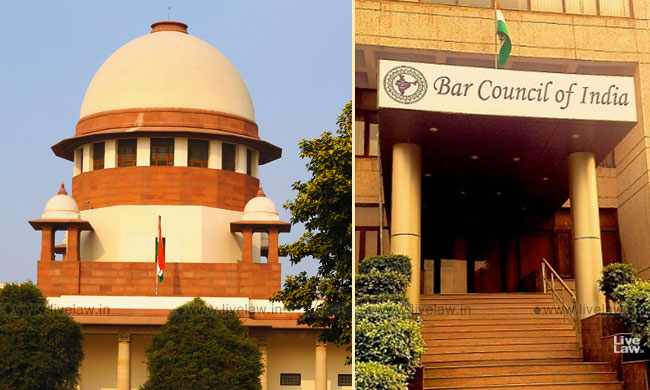
May’s Brexit Deal Voted Down For The Third Time

It has to be acknowledged candidly that in a huge jolt to the British Prime Minister Theresa May, the British lawmakers have outrightly rejected for a third time on March 29 her Brexit deal to avoid a chaotic no-deal divorce from the European Union (EU) thus sounding its probable death knell and leaving Britain’s withdrawal from the EU in turmoil on the very day it was supposed to leave the bloc. Thus we see that attempts by both Parliament and British Prime Minister Theresa May to clear the Brexit deadlock have floundered and failed miserably! There can be no denying or disputing it!
                                    Needless to say, MPs failed to back any of eight alternative options in a vote held on night of March 27, while Ms Theresa May’s pledge to make way for a successor in time for the next phase of Brexit negotiation did not cut ice and failed to persuade enough MPs to back her deal. It goes without saying that the decision to reject a stripped-down version of May’s divorce deal has left it totally unclear how, when or even whether Britain will leave the EU in the coming days ahead! No doubt, this certainly plunges the three-year Brexit simmering crisis to a more deeper level of uncertainty.
                               As it turned out, after a special sitting of Parliament, lawmakers voted 344-286 against May’s 585-page EU Withdrawal Agreement, agreed after two years of tortuous negotiations with the bloc. This is certainly without an iota of doubt a major setback for British PM Theresa May! May had told Parliament in no uncertain terms that the vote was the last opportunity to ensure that Brexit would take place and cautioned that if the deal failed, then any further delay to Brexit would probably be a long one beyond April 12.
                                   To put things in perspective, hours after May promised her Conservative members of Parliament on March 27 that she’d step down if they back her Brexit deal, she still looked short of having the numbers needed to win. It’s already been overwhelmingly defeated twice but still May was determined to try again. It must be pointed out here that May told the House of Commons that, “There are those who will say: ‘The House has rejected every option so far, you’ll probably lose so why bother?’ I bother because this is the last opportunity to guarantee Brexit. If we do not vote for this motion today, people will ask: Why did you not vote for Brexit?”
                                     What’s more, May told Parliament after the defeat that, “I fear we are reaching the limits of this process in this House. This House has rejected ‘no deal’. It has rejected ‘no Brexit’. On Wednesday, it rejected all the variations of the deal on the table. This government will continue to press the case for the orderly Brexit that the result of the referendum demands.” The British pound, which has been buoyed in recent weeks by hopes that the likelihood of an abrupt ‘no-deal’ Brexit is receding, fell half a percent after May lost, to as low as $1.2977. This is certainly not surprising and was much anticipated!
                                       Truth be told, within minutes of the vote, European Council President and Summit Chair Donald Tusk tweeted that EU leaders will meet on April 10 to discuss Britain’s departure from the bloc. The EU executive, the European Commission said that a “no-deal” exit on April 12 was now “a likely scenario”. It was a third straight failure for May, who had offered to resign on March 27 if the deal passed, in a bid to win over eurosceptic rebels in her Conservative Party who support a more decisive break with the EU than the divorce her deal offers.
                               Simply put, it leaves May’s Brexit strategy in tatters. Her strongly pro-Brexit Trade Minister Liam Fox had said on March 29 that it represented the last chance to “vote for Brexit as we understood it”. It must be mentioned here that the deal had twice been rejected by huge margins and although May was able to win over many Conservative rebels, a hard core of eurosceptics and the Northern Irish Democratic Unionist Party, which props up her minority government refused to back it.
                                 It may be recalled that in a referendum on June 23, 2016, those favouring Brexit (Leave) won by 52% to 48% (Remain). The “transition period” was scheduled to start from March 29, 2019 and to end on December 31, 2020 which could be extended by up to two years if both the UK and the EU agree. This was to allow both time to agree to their future relationship. But all this was subjected to Parliament accepting PM Theresa May’s deal which has already been rejected twice and now rejected again for third time putting the proposed plan in a soup! During this transition period, the UK was expected to follow all EU rules, but would have no say in the framing of new ones.
                                     It must be brought out here that in November 2018, the UK and the EU agreed to the terms of the exit, known as the withdrawal agreement. However, the agreement has failed to clear in British Parliament with MPs voting twice against it in 2019. On January 15, they voted 432-202 to reject the deal. Withdrawal agreement is a legally binding document that has to be passed by both the British and the European Parliaments. It covers the following:
a)  Irish backstop: Right now, there is free movement of goods and people between the Republic of Ireland which will remain part of the EU and Northern Ireland which is part of the UK. The Irish backstop is a measure in the withdrawal agreement which will primarily make sure that this continues after Brexit and comes into effect only if the deal deciding the future relationship between the UK and EU is not agreed by the end of the transition period. Until then, the backstop keeps the UK effectively inside the EU Customs Union (a trade agreement that fortbids trade negotiations with EU member states separately from the EU). It also means that Northern Ireland conforms to some rules of the single market (goods, services, people and money move between EU member states and some other states).
b) Citizens rights: The draft deal preserves the rights of the more than three million EU citizens living in Britain and the one million British citizens living in the EU.
c)   Brexit bill: It calls for a fair settlement for UK taxpayers that the British government estimates to be up to 39 billion pounds.
                                 It must also be brought out here that the British PM Theresa May then renegotiated certain terms with the EU but on March 12, MPs voted against the withdrawal agreement again, this time by 391 votes to 242. The following day, the MPs then rejected the idea of leaving the EU without a deal – an option called the “No Deal”. Under this, it would be legal for the UK to unilaterally leave the European Union, cancel Brexit and cuts all ties immediately with no need for agreement at all in place with the other 27 EU countries.
                                    Furthermore, the UK would simply follow the World Trade Organization rules to trade with the EU and other countries while trying to negotiate free-trade deals. Under WTO rules, each country sets tariffs on goods entering. If the UK chooses to put no tariff on goods from the EU, it must also have no tariffs on goods from every WTO member. If no other course of action can be agreed, the default option then would be that UK crashes out of the EU on April 12. Then we saw how on March 14, they voted 413-202 in favour of Prime Minister May asking the EU for a delay to carry out Brexit.
                            It is a no brainer that now Parliament will again try to take control of UK’s departure from the EU with some lawmakers hoping to force PM Theresa May to drop her Brexit strategy and pursue close economic ties with the bloc. Underlining how uncertainty is hurting business, the UK head of German industrial giant Siemens, Juergen Maier said that, “Britain was wrecking its reputation for stability and he urged lawmakers to back a customs union with the EU.”
                                 More importantly, the head of the European Commission Jean-Claude Juncker said in an interview on Italian state TV RAI on March 31, 2019 that, “The European Union has had a lot of patience with Britain over Brexit but patience runs out.” Juncker whose words were translated into Italian said he would like Great Britain to be able to reach an agreement in the coming hours and days that could be followed. He said that, “So far we know what the British Parliament says no to but we don’t know what it might say yes to.”
                                 Be it noted, Parliament will vote on different Brexit options on April 8, possibly showing a majority backing for a customs union and then May could try one last roll of the dice by bringing her deal back to a vote in Parliament as soon as Wednesday. May’s government and her party, which has grappled with schism over Europe for 30 years, was in open conflict between those pushing for a customs union with the EU and eurosceptics who are demanding a cleaner break with the bloc. May’s enforcer in Parliament – known as the chief whip – said that the government should have been clearer that May’s loss of her majority in Parliament in a snap 2017 election would inevitably lead it to accept a softer Brexit. Julian Smith said that, “The government as a whole probably should have just been clearer on the consequences of that. The parliamentary arithmetic would mean that this would be inevitably a kind of softer type of Brexit.” Smith also lamented that ministers had tried to undermine the Prime Minister.    
                                     It would be imperative to mention here that Article 50 is part of the Lisbon Treaty among EU member states. It covers how a member country can leave. This Article was triggered at the end of March 2017, hence Brexit Day in March 2019. It must also be mentioned here that to stop the Article 50 process, the UK may act on its own and to extend it all the EU countries must agree.
                                     Logically speaking, if the deadlock between Parliament and government continues, then in such a situation the MPs or the executive could trigger a general election. This would well mean the end of British PM Theresa May’s reign as PM! Let’s wait and watch how things play out in UK in the days ahead! But one thing is clear: The sailing would be very rough for British PM Theresa May which even her best admirers would readily agree! Her Brexit deal being rejected for the third time is already a big setback for her!
Sanjeev Sirohi, Advocate,
s/o Col BPS Sirohi,
A 82, Defence Enclave,
Sardhana Road, Kankerkhera,
Meerut – 250001, Uttar Pradesh.  

SC Designates 37 Lawyers As Senior Advocates

In a major and significant development, the Supreme Court which is the highest court in India has for the second time designated 37 lawyers as “Senior Advocates”. It goes without saying that it is a big honour for all these 37 lawyers to be designated as “Senior Advocates”. But then they deserve also as they have given their “prime years” in this noble profession of lawyer and that too right in the Apex Court itself and have certainly worked hard relentlessly to achieve it.

                                So, it goes without saying that they certainly deserve all the “applause and accolades” which they are now getting! We all as citizens of India also ought to know as to who all are these 37 lawyers who have been designated as “Senior Advocates”. They are as follows: –
1.  Madhavi Goradia Divan
2.  R. Balasubramanian
3.  Anitha Shenoy
4.  Aruneshwar Gupta
5.  Jugal Kishore Tikamchand Gilda
6.  Sanjay Parikh
7.  Preetesh Kapur
8.  Ashok Kumar Sharma
9.  Deepak Madhusudan Nargolkar
10.                   Ajit Shankarrao Bhamse
11.                   Nikhil Nayyar
12.                   S. Wasim A. Qadri
13.                   M.G. Ramachandran
14.                   Manish Singhvi
15.                   Gopal Sankaranarayanan
16.                   Mohan Venkatesh Katarki
17.                   Nakul Dewan
18.                   Devadatt Kamat
19.                   Anip Sachthey
20.                   Anupam Lal Das
21.                   G. Venkatesh Rao
22.                   Jayanth Muth Raj
23.                   Arijit Prasad
24.                   Jay Savla
25.                   Aparajita Singh
26.                   Menaka Guruswamy
27.                   Siddhartha Dave
28.                   Siddharth Bhatnagar
29.                   C.N. Sreekumar
30.                   Aishwarya Bhati
31.                   Santosh Paul
32.                   Gaurav Bhatia
33.                   Bharat Sangal
34.                   Vinay Prabhakar Navare
35.                   Manoj Swarup
36.                   Ritin Rai
37.                   Priya Hingorani.  
                           
                            Needless to say, this is the second instance of Supreme Court conferring senior designation as per the “Supreme Court Guidelines to Regulate Conferment of Designation of Senior Advocates, 2018”, notified in August 2018. It must be pointed out here that out of these 37 advocates designated as “Senior Advocates”, six are women lawyers who have made a mark for themselves by excelling. They are Aishwarya Bhati, Anitha Shenoy, Madhavi Goradia Divan, Menaka Guruswamy, Priya Hingorani and Aparajita Singh. It would be apt to know in brief about these six women lawyers now designated as “Senior Lawyers”.
                                     To be sure, Madhavi Divan is at present an Additional Solicitor General (ASG) in the Supreme Court. She was appointed ASG on December 17, 2018 and will hold office till June 30, 2020. She obtained her law degree from Pembroke College, Uniersity of Cambridge, UK and began her practice in the Bombay High Court. She has since represented two state governments – that of Gujarat and Madhya Pradesh while also being recognized as an accomplished author. Anitha Shenoy is a 1995 graduate of National Law School of India University, Bangalore and has been the standing counsel for State of Karnataka in the Supreme Court for long.
                               Furthermore, Menaka Guruswamy is a 1997 graduate of National Law School of India University, Bangalore. She read law as a Rhodes Scholar at Oxford University where she was awarded a Doctor of Philosophy in Law (D. Phil.) and as a Gammon fellow for a Masters in Law at Harvard Law School. She has worked as a human rights consultant to the United Nations and has taught at the New York University School of Law. In the Navtej Johar case which decriminalized homosexuality, she represented IIT students and graduates who belong to the LGBTQIA community. She has also assisted the Supreme Court as amicus curiae in the Manipur Extra-Judicial killings case. She has the rare honour of having her portrait unveiled at Rhodes House in Oxford University. Her name was also included in the Forbes list of 2019 trailblazers which is a great achievement.  
                                   Moving on, Aishwarya Bhati is an Advocate-on-Record. In 2017 she was appointed as Additional Advocate General of Uttar Pradesh in Supreme Court. She did not hide her true feelings and termed the “Senior Advocate” designation as a “dream come true” and also acknowledged that she was conscious of the “great responsibility” that comes with the designation.
                                Going ahead, Priya Hingorani has been in active law practice since 1990 when she was enrolled as an Advocate with the Bar Council of Delhi. Her primary practice has been in the Supreme Court of India and has also appeared in many High Courts. Aparajitha Singh was a junior to “Senior Advocates” Harish Salve and UU Lalit before starting independent practice. She had assisted the Apex Court as amicus curiae to suggest measures for curbing air pollution, which led to the ban of sale of BS III vehicles since April 2017. She was also a part of a Committee which had suggested a common working plan on rehabilitation of destitute widows.   

                             To put things in perspective, it was in September 2018 that the Supreme Court had designated 25 former High Court Judges, who started practice in Supreme Court as senior advocates. It cannot be lost on us that the guidelines are notified pursuant to the Supreme Court judgment in Indira Jaising’s case titled “Ms Indira Jaising v. Supreme Court of India Through Secretary General and others in Writ Petition (C) No. 454 of 2015 which had very clearly prescribed the parameters for designation of advocates as “senior advocates” after senior advocate Ms Indira Jaising who filed the petition pointed out that the present system of designating advocates as “senior advocates” is flawed! This was certainly a major landmark development which shall always be embedded in the golden pages of history and the contribution of Ms. Indira Jaising is certainly historic and remarkable!
                             What’s more, the guidelines empower a permanent committee called “Committee for Designation of Senior Advocates” to deal with all the matters pertaining to such conferment. This Committee shall comprise of the Chief Justice of India as its Chairperson, along with two seniormost Supreme Court Judges, Attorney General for India and a member of the Bar as nominated by the Chairperson and other members. The Committee is expected to meet at least twice in a calendar year. It will also have a Permanent Secretariat, the composition of which shall be decided by the CJI in consultation with the other members of the Committee.  
                                    Be it noted, it would be very significant to now discuss in detail the four point criteria that will play a key role in the assessment of advocates as “Senior Advocates”. Every advocate who aspires to become a “Senior Advocate” must know about this. Even otherwise it would be useful even for those not in this field to know about it so that they understand what it means to be a “Senior Advocate”. The four point criteria for assessment of advocates for senior designation is as follows: –
1.  Number of years of practice of the applicant from the date of enrolment (10 points for 10-20 years of practice, 20 points for practice beyond 20 years) – 20 points
2.  Judgments (reported and unreported), which indicate the legal formulations advanced by the Advocate in the course of proceedings of the case; pro-bono work done by the Advocate; and domain expertise of the Advocate in various branches of law – 40 points
3.  Publications by the Advocate – 15 points
4.  Test of personality and suitability on the basis of interview/interaction – 25 points
                  Application and eligibility
                          It would be useful and instructive to mention here that a recommendation in writing can be submitted by the Chief Justice of India or any other Judge of the Supreme Court of India if they are of the opinion that an advocate deserves to be conferred with the designation. An Advocate on Record (AoR) who is seeking to be conferred with the unique distinction as “Senior Advocate” may also submit an application in the prescribed format to the Secretariat. The Secretariat will invite applications from retired Chief Justices or Judges of the High Court and advocates seeking conferment of the distinction every year in the months of January and July. The notice shall be published on the official Supreme Court website, and the information would also be provided to the Supreme Court Bar Association and also to the Supreme Court Advocates-on-Record Association.    
                              As far as eligibility is concerned, it has to be borne in mind that an Advocate shall be eligible for designation as “Senior Advocate” only if he has 10 years combined standing as an advocate or a District Judge, or as a Judicial Member of any Tribunal whose qualification for eligibility isn’t less than that prescribed for a District Judge. It must also be remembered that retired Chief Justices or Judges of the High Courts are also eligible for the distinction of being designated a “Senior Advocate”.
                   Procedure for designation
                              It must be reiterated that all the applications and written proposals are to be submitted to the Secretariat which will then compile data on the applicant’s reputation, conduct and integrity, including his participation in pro bono work and the number of judgments in which the advocate appeared during the past five years. The application or the proposal would then be published on the Supreme Court website. The whole point of this exercise would be to invite the suggestions and views of other stakeholders. After the data-base on the Advocate is complied, the Advocate’s case would be put before the Committee for further scrutiny, which will assess the candidates on the basis of four-point criteria which has already been discussed above in great detail.
                                      Simply put, post such overall assessment, the Advocates candidature would then be submitted to the Full Court, which would then vote on the same. It must be noted here that the guidelines however leave no room for doubt by clarifying in no uncertain terms that the cases of retired Chief Justices and Judges of the High Courts will straightaway be sent to the Full Court for its consideration. The Rules also further specify that voting by secret ballot will not normally be resorted to in the Full Court except when “unavoidable”.
                          While continuing in the same vein, it is then added that the guidelines however do clarify that cases which are rejected by the Full Court can be considered afresh after two years and cases which are deferred can be considered after one year from such deferment. The Rules clarify that if a Senior Advocate is found guilty of conduct, which according to the Full Court disentitles the Senior Advocate to continue to be worthy of the designation, the Full Court may review its decision to designate the person concerned and recall the same. The Full Court should, however, give an opportunity of hearing to the concerned Senior Advocate before any action is taken against them.  
                                  Let me say this point blank: Each and every person who is in legal field must know how advocates are designated as “Senior Advocates” in Supreme Court. Not stopping here, it has to be said that even those who are not in legal profession must also know what it takes to become “Senior Advocates”. A humble effort has been made in this direction by me to make my esteemed readers more aware on this front. Hope that they have found it useful!
Sanjeev Sirohi, Advocate,
s/o Col BPS Sirohi,
A 82, Defence Enclave,
Sardhana Road, Kankerkhera,
Meerut – 250001, Uttar Pradesh.

Kartarpur Meet Delayed Over Khalistan Activists


It is nothing but stupidity of the highest order that politicians of India are not ready to learn any lessons from repeated betrayals by Pakistan and always indulges in day dreaming. This alone explains why inspite of so much of tension between India and Pakistan, India foolishly once again decided to trust Pakistan and go ahead with holding the second meeting with Pakistan to discuss modalities for the Kartarpur corridor! What did India get in return? Once again India was compelled to call off the meet with Islamabad on April 2 over legitimate concerns about the inclusion of pro-Khalistani activists in a Pakistani committee to facilitate Sikh pilgrims!

Why do our politicians behave so shamelessly and senselessly? Why do politicians expect that Pakistan will not play the Khalistan card to foment unrest in Punjab? Should Kartarpur corridor be opened at all under such circumstances? What has happened to our politicians?

Why can’t politicians of India nuke all relations with Pakistan and label it as “Aatankistan” as demanded by Maulana Mehmood Madani and BJP MP Rajeev Chandrashekhar long time back when he was an independent MP? Why politicians of India want to give Pakistan an opportunity to create unrest in Punjab? Why can’t we just lay off totally from Pakistan?

How can religion be above nation? How can religious interests be above national interests? Why our politicians repeatedly want to give Pakistan one more chance? Do they understand the consequences of what they do?

No wonder that on Pakistan’s 10-member panel we saw a man who demanded Sikh referendum last year. Sources said that the induction of Gopal Singh Chawla on the 10-member committee of the Pakistan Sikh Gurudwara Parbandhak Committee (PSGPC) which will “help facilitate” the visit of Indians pilgrims to the Kartarpur Sahib gurudwara. It is this same Gopal Singh Chawla who had played a key role in raising pro-Khalistan slogans and putting up posters on a Sikh referendum in November 2018 during the visit of pilgrims!

What was most shocking was that Centre decided to adopt a “relax” approach and “care a damn” approach and did not lodge any protest? Should we be proud of it? What did we get in return? Now that same Gopal Singh Chawla is on the 10-member committee of Pakistan panel! Had Centre strongly protested at the first place perhaps they had dared not bring him in the panel! But for inexplicable and undisclosed relations, Centre for the sake of Sikh pilgrims decided to bite the bullet!

Centre must stop biting the bullet! Centre must not fritter away the extreme goodwill that it has generated after the Balakot air strike among the people! What did Centre get by declaring Ramzan ka ceasefire with Pakistan and terrorists? It gave them a golden opportunity to pounce on our soldiers, kill them and behead them! Can any Indian be ever proud of this so called “Ramzan ka ceasefire”? When there is no Holi ka ceasefire or Diwali ka ceasefire or Christmas ka ceasefire then why Ramzan ka ceasefire? Does Pakistan or its army or terrorists ever care for it? They use it as a golden opportunity to kill more soldiers of ours on the border areas! Shame on our leaders who give them such a golden opportunity! One hopes that no politician will ever again place Pakistan and terrorists above nation! Terrorists have no nation yet repeatedly our leaders stupidly, shamelessly and senselessly declare “Ramzan ka ceasefire”! Terrorists have no religion then why link Ramzan with terrorists? It is for our leaders to ponder upon!

What’s more, Pakistan’s Information Minister Fawad Chaudhry not just announced Chawla’s inclusion but also went ahead to announce at last three other pro-Khalistan elements – Tara Singh, Bishon Singh and Kuljeet Singh. What could Centre do under such circumstances? India should have cancelled Kartarpur but our reaction once again was mild and we decided to just postpone talks!

Needless to say, Kartarpur corridor represents the best opportunity for Pakistan to revive militancy in Punjab. Who is allowing them to do this? Centre if it decides to go ahead with Kartarpur corridor as we all are seeing for ourselves. Who will be most happy with Kartarpur corridor? Pakistan, terrorists and the likes of Navjot Singh Sidhu whom BJP keeps criticizing so frequently yet is determined to fulfil his “dangerous and divisive” agenda of fully opening Kartarpur corridor in the name of Sikh pilgrims getting an opportunity to visit the birthsite of Guru Nanak!

To be sure, sources said that, “These developments have raised fresh concerns in India about the safety and security of pilgrims from India and misuse of the corridor for anti-India activities. India has made amply clear in the meeting and draft agreement that Kartarpur Sahib Corridor shall not be misused for any anti-India propaganda and activities. India has been strongly emphasizing on the need for foolproof security of pilgrims on Pakistani soil and demanding commitment from Pakistan to insulate them from any anti-India propaganda or activity during their visit to Gurudwara Kartarpur Sahib.”

What does Centre think it is doing? What does Centre think that Pakistan will honour its commitments of not fuelling anti-India propaganda from its soil? Why Centre places Sikh religion above India? Why is Centre not ready to learn anything from our past experiences with Pakistan?

How long will our leaders hope that Pakistan will address India’s concerns at the earliest? How long will our leaders overlook photos of dreaded slain terrorist Bhindrawale pasted all over the route to the Gurudwara Kartarpur Sahib not sparing even the Gurudwara also as we saw with our own eyes on various news channels? How long will our leaders overlook photo of Pakistan Army Chief Qamar Javed Bajwa with dreaded Khalistani terror leaders shaking hands and congratulating each other obviously for being able to fool our leaders who are not ready to see the stark reality which even an insane person can see through? It is for our leaders to decide!

At a time when our nation is on the verge of war with Pakistan, should we even think of opening the Kartarpur corridor let alone open it? Don’t we read nowadays frequently that our alert planes forced Pakistani planes to flee back when they tried to sneak into India? Should then religion be placed above nation? Sikh or Hindus or Muslims or Christians cannot be above our nation that is India!

Don’t our leaders know that Pakistan always indulges in double-speak? Don’t our leaders know that Islamabad is surreptitiously usurping land belonging to Kartarpur Singh Gurudwara in the name of developing the corridor? Don’t we know that India and Pakistan signed a pact in 1974 to facilitate visit of their pilgrims to the shrines located in each other’s territories but Kartarpur Sahib was not included despite repeated Indian requests?

Which reasonable person will ever trust Pakistan when it has been repeatedly betraying India and mercilessly killing our soldiers and not sparing even our women and children? How can BJP which proudly calls itself “party of chowkidar” and PM Narendra Modi who always proudly calls himself “chowkidar” do the stupidity most senselessly and most shamelessly of trusting Pakistan again and allowing Khalistani terrorists to misuse this route for their own dangerous and divisive agenda of “Khalistan 2020” as they keep propagating in UK, Canada, USA etc? At whose instance? Only and only BJP and PM Narendra Modi can best answer this!

All talks on Kartarpur corridor must be called off and similarly there should be no talks on opening of Sharda corridor for Hindu pilgrims or any other corridor because nation and national interest come first, always and every time and the religion and religious interest comes next, always and everytime! It is our politicians who ought to remember this always!

Sanjeev Sirohi, Advocate,

s/o Col BPS Sirohi,

A 82, Defence Enclave,

Sardhana Road, Kankerkhera,

Meerut – 250001, Uttar Pradesh.