Category: News Update
news
Flexible learning and the expression – You can bring a horse to a float but you can\’t make it go in or stay inside
I found the session stimulated me to speak about my past learning experiences. For example, the Diploma of Teaching in which the learning was all done through self-directed and mentored assignments. Half the 120 credits were allowed to be attributed to RPL. The oral presentation at the end was where I had to present reflections about my learning journey and my teaching framework to a panel. That was scary.
The most memorable thing for me regarding flexible learning in my past life, was in the Certificate in Clinical Teaching because a facilitator from Christchurch used to travel to Dunedin to run two and three day workshops as part of the programme. Not only was the timing of her teaching innovative, her style was flexible because it was very experiential and she facilitated our learning rather than just lecturing us. She did a mixture of presentation, activities and discussion, self-directed activities, teleconference, block courses and peer work. Her assessments were also innovative, for example, a poster was the main assessment.
Since I started working at Otago Polytechnic in 1992 as a bioscience lecturer, I have seen a huge number of changes in the type of assessments offered to students right across the polytechnic. Now it is not just essays, quizzes and exams, there are a multitude of things offered to students. There are also a huge number of ways in which teachers communicate with their students. Once upon a time, lecturers used to be aghast at the idea of emailing students and now it is a given. Some are also using texting to communicate and chat and skype as well as web and video conferencing.
I am interested to hear how participants in the Flexible learning course assess and communicate flexibly. These are very important aspects of flexible learning, and even more important than content in my opinion. What do you think?
The horse analogy and flexible learning
The title of this post has come about due to the number of hours I have spent recently helping my daughter to teach a horse to get in a float. There was a lot of work involved to get it to even enter and then a lot more to get it to stay in the float. The experience reminds me of my work at Otago Polytechnic. Perhaps this sounds a bit silly, and you are thinking what has a horse got to do with teaching at a tertiary institution? Well I can see several similarities. Let me set the scene first.
Over the years as a staff developer and educational developer, I have spent many, many hours assisting staff – academic and general – with the use of technology in the workplace. I have also taught Health Informatics to health students with the aim of up-skilling them in computing for their practice. I have also spent a lot of energy leading people to the big eLearning pond, trying to get them to dabble their toes on the edge, walk out a bit even though it was chilly and scary and then swimming with them when they decided to take the plunge. Sometimes I pushed the occasional person in, but hey I did rescue them, mostly. Some I could not catch as they swam away to distant horizons once they found their flippers. 🙂 It\’s been like swimming with the dolphins – fun, scary, challenging and playful and also like swimming with the sharks – terrifying, serious, exhilarating. It is also very similar to the work required to get a scared horse to enter a float.
Image: Pond at Autumn – Teich im Herbst by Tobi_2008
Thinking back on my experiences over the last nine years, and about my experiences recently with the horse float, I realise that there is also a lot of merit in the expression, \”you can lead a horse to water but you cannot make it drink\”. Just as we led the horse to the float and could not get him to go in..for ages…but with some repetition, gentle and firm persuasion, guiding ropes (structure) and patience, we got him in and we got him to stay longer each time. This is much like my experiences in getting teachers to accept flexible ways of offering learning.
And to continue with the analogy of the float. Some back off before they get even close, others walk up to it and watch, others walk up, sniff and turn round, others walk right on in and stay and never leave, others walk in halfway, and some go in, back out, go back in and so on, and some only ever keep one foot on the door, always looking side to side and behind… My motto is to keep trying, so if you see me coming towards you with a horse whip I promise to be gentle.
\’Assignment in Life Insurance Policy\’ (197 Words)
If the policy is assigned, the assignee receives the claim amount as per rules. It should be noted that an assignment of a policy automatically cancels the existing nomination.
Hence, when such a policy is reassigned in favour of the policyholder, it is necessary to make a fresh nomination to avoid delay in payment of the claim.
Assignment:
- Assignment means transfer of rights, title and interest.
- When an assignment is executed, all rights, title and interest in respect of the property assigned are immediately transferred to the Assignee/s and the Assignee/s become the owner/s of the policy subject to any lawful condition made in the assignment.
- Assignment can be either conditional or absolute.
- On assignment, Nomination automatically stands cancelled.
- Hence, when such a policy is reassigned, the policyholder will have to make a fresh nomination to avoid delay in settlement of claim.
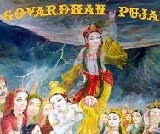
Short Essay on \’Govardhan Puja\’ (100 Words)
\’Govardhan Puja\’ is a famous festival of Hindus. It is widely celebrated in the northern part of India. This is the fourth day of Diwali. It is celebrated on the first day of Shukla Paksha of Karthik month according to Hindu Calendar. It is celebrated on the next day of Diwali festival.Govardhan Puja is a festival to worship Lord Krishna and Mount Govardhan popularly known as Govardhan Parvat. It is celebrated in commemoration of lifting the mountain Govardhan by Lord Krishna on his finger tip. The day is to worship Govardhan Parvat which is said to have saved its’ inhabitants from incessant rains. It symbolizes the importance of nature in our lives.
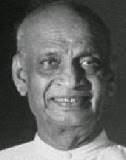
Short Biography of \’Sardar Vallabhbhai Patel\’ (176 Words)
Sardar Vallabhbhai Patel was a very hard-working individual from his childhood. He used to help his father in farming and also took time for his studies. He became an Indian barrister and statesman.
Sardar Vallabhbhai Patel was one of the leaders of the Indian National Congress and one of the founding fathers of the Republic of India. He took active part in the struggle of India.
Sardar Vallabhbhai Patel became the first Home Minister and Deputy Prime Minister of India. He used strength and determination to bring together the many Indian princely states to form one united country- India as we know it today. He was often known as the \’Iron Man of India\’.
Sardar Vallabhbhai Patel died on 15 December 1950 at the age of 75. He will ever be remembered for his great works.
Short Essay on \’Madhu Limaye\’ (100 Words)
Madhu Limaye was an Indian Socialist essayist and activist. He was the follower of Ram Manohar Lohia. He played an active part in the JP movement. Madhu Limaye was a freedom fighter. In 1955, Portugese put him in jail from where he wrote letters to his little son, Aniruddha, also called Popat. In retirement, through the 1980s, he continued to write. He was especially caustic on Constitutional issues.
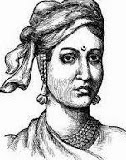
Short Essay on \’Rani Lakshmibai\’ (220 Words)
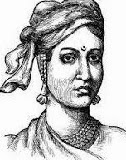
Rani Lakshmibai was married to Gangadhar Rao in 1842. Gangadhar Rao was the king of Jhansi. In 1851, the Rani had a son; he unfortunately died when he was barely four months old. Raja Gangadhar Rao could not bear the shock and after a long illness, he died on November 21, 1853.
Jhansi became a major center of the revolt of 1857. Rani Lakshmibai of Jhansi, began to strengthen security and started a volunteer army. Ordinary people also contributed to the revolt. In 1857, the kings of the neighboring state of Jhansi, Orchha and Datia attacked. Rani Lakshmibai defeated them successfully. In March 1858 the British army besieged the city of Jhansi. But Rani, with her adopted son Damodar Rao was able to escape. Rani died on June 18, 1858.
Rani Lakshmibai was the great heroine of the First War of Indian Freedom. She was the embodiment of patriotism, self-respect and heroism. Her life is a thrilling story of womanliness, courage, adventure, deathless patriotism and martyrdom. Rani Lakshmibai was the real meaning of the ideal heroine. She was proud of not just India but the world\’s women.
\’Present Status of LIC of India\’ (491 Words)
Life Insurance Corporation of India was created on 1st September, 1956, with the objective of spreading life insurance much more widely and in particular to the rural areas with a view to reach all insurable persons in the country, providing them adequate financial cover at a reasonable cost.
LIC had 5 zonal offices, 33 divisional offices and 212 branch offices, apart from its corporate office in the year 1956. Since life insurance contracts are long term contracts and during the currency of the policy it requires a variety of services need was felt in the later years to expand the operations and place a branch office at each district headquarter. Re-organization of LIC took place and large numbers of new branch offices were opened. As a result of re-organisation servicing functions were transferred to the branches, and branches were made accounting units. It worked wonders with the performance of the corporation. It may be seen that from about 200.00 crores of New Business in 1957 the corporation crossed 1000.00 crores only in the year 1969-70, and it took another 10 years for LIC to cross 2000.00 crore mark of new business. But with re-organisation happening in the early eighties, by 1985-86 LIC had already crossed 7000.00 crore Sum Assured on new policies.
Today LIC functions with 2048 fully computerized branch offices, 109 divisional offices, 8 zonal offices, 992 satallite offices and the Corporate office. LIC’s Wide Area Network covers 109 divisional offices and connects all the branches through a Metro Area Network. LIC has tied up with some Banks and Service providers to offer on-line premium collection facility in selected cities. LIC’s ECS and ATM premium payment facility is an addition to customer convenience. Apart from on-line Kiosks and IVRS, Info Centres have been commissioned at Mumbai, Ahmedabad, Bangalore, Chennai, Hyderabad, Kolkata, New Delhi, Pune and many other cities. With a vision of providing easy access to its policyholders, LIC has launched its SATELLITE SAMPARK offices. The satellite offices are smaller, leaner and closer to the customer. The digitalized records of the satellite offices will facilitate anywhere servicing and many other conveniences in the future.
LIC continues to be the dominant life insurer even in the liberalized scenario of Indian insurance and is moving fast on a new growth trajectory surpassing its own past records. LIC has issued over one crore policies during the current year. It has crossed the milestone of issuing 1,01,32,955 new policies by 15th Oct, 2005, posting a healthy growth rate of 16.67% over the corresponding period of the previous year.
From then to now, LIC has crossed many milestones and has set unprecedented performance records in various aspects of life insurance business. The same motives which inspired our forefathers to bring insurance into existence in this country inspire us at LIC to take this message of protection to light the lamps of security in as many homes as possible and to help the people in providing security to their families.
Short Essay on \’Chhath Puja\’ (250 Words)
\’Chhath Puja\’ is a famous festival of Hindus. It is celebrated in Bihar and Uttar Pradesh and many other parts of India. It is also followed in some parts of West Bengal, Jharkhand, Odisha, Assam and also Mauritius and Nepal. It is celebrated mainly among the Bhojpuri and Maithali speaking people. Chhath Puja takes place during 6th day (Shasthi) lunar fortnight (Shukla Paksha) of Karthik month according to Hindu Calendar. It generally falls in the month of October-November. The festival lasts for four days.Chhath Puja is also known as Dala Chhath. In this important festival setting Sun (dawn) is worshiped. The festival is observed with the faith that the Sun God fulfills wishes if \’araghya\’ is offered with complete dedication and devotion. It is a festival connected with purity, devotion to the Sun God who is considered as the source of life on this earth and is regarded as the deity who fulfills all our wishes. The festival is with an aim to express thanks to Sun God for offering energy to earth continuously enabling the environment suitable for the people to live. Along with the Sun God people worship \’Chhathi Maiya\’ on this day.
On this festival devotees assemble at the ghats at rivers and ponds and take a holy dip before preparing offerings (Prasad). The main constituent of the offerings are Thekua, which is a wheat based cake. Offerings are preferably cooked on earthen Chulha (oven). During the offerings, offerings are contained in small, semicircular pans woven out of bamboo strips called soop.
Short Biography of \’Chaudhary Charan Singh\’ (193 Words)
Chaudhary Charan Singh was the fifth Prime Minister of the India. He served country as Prime Minister from 28 July 1979 until 14 January 1980. He holds the record of being the only Prime Minister of India who did not face the Parliamentary floor for a single day after assuming the office. He is also remembered for the one and only budget he presented in 1979. His passionate appeal and magnetic persona united all the farmers against the moneylenders and landlords.
Chaudhary Charan Singh died on 29th May, 1987. His life was very simple and he contributed a lot to improvise the life of Indian farmers. In the memory of former Prime Minister, \’Farmer\’s Day\’ (Kisan Divas) is observed every year in India on the birth anniversary of Chaudhary Charan Singh on 23rd December. Various agricultural events, seminars, poster competitions and debates are organized to mark this event.
Short Essay on \’Festival I Like Most\’ (188 Words)
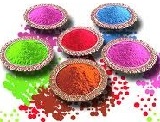
Many festivals are celebrated all over the year in India but I like Holi festival the most. Holi is one of the greatest festival of Hindus. It is a festival of colours. This festival falls on a full moon day in Phalgun Month of Hindu Calender. I like it most because this festival brings lot of joy and happiness.The story behind the Holi festival is that there was a king named Hiranya kashyap, he had a son, Prahlad, a holy spirit and highly devoted to God but Prahlad\’s devotion enraged Hiranya kashyap and he planned to kill his own son. He asked her sister Holika, who was immune to fire, to sit in fire taking Prahlad in her lap. Fortunately Prahlad, who was blessed by Lord, was saved and Holika was burnt to ashes.
Holi is also a festival of love and unity and celebrates the triumph of good over evil. The festival is celebrated with lot of pomp in north India. After a fun filled and exciting day, the evenings are spent in sobriety when people meet friends and relatives and exchange sweets and festive greetings.
Short Essay on \’Rani Lakshmibai Jayanti: 19 November\’ (145 Words)
Rani Lakshmibai was the great heroine of the First War of Indian Freedom. She was the embodiment of patriotism, self-respect and heroism. Her life is a thrilling story of womanliness, courage, adventure, deathless patriotism and martyrdom. Rani Lakshmibai was the real meaning of the ideal heroine. She was proud of not just India but the world\’s women.
Rani Lakshmibai Jayanti is celebrated grandly in the whole country. On this occasion, cultural events, speeches and seminars are organized at many places. \’Deepdan\’ and \’Mashalyatra\’ are also held at number of places on this day.
Short Essay on \’Monument I Like Most\’ (118 Words)
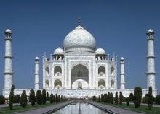
I have visited many monuments but the beauty of Taj Mahal attracted me the most. Taj Mahal is the monument I like most and its my favourite monument. The Taj Mahal can be referred to as a symbol of eternal love since Shah Jahan built it for his beloved queen upon her death in 1631 A.D.
It is located in Agra, Uttar Pradesh, India and considered one of the Seven Wonders of the World. The Taj Mahal was built by Emperor Shah Jahan as a Mausoleum for his wife Empress Mumtaz Mahal.
It\’s matchless beauty draws visitors from all parts of the world. The Taj Mahal got the highest ranking among the seven wonders of the world after
Short Biography of \’Dr. Rajendra Prasad\’ (251 Words)
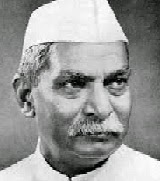
After the completion of elementary education, Rajendra Prasad went to study at T.K. Ghosh\’s Academy in Patna. He joined the Presidency College, Calcutta in 1902. Once an examiner wrote on his answer sheet \’examinee is better than examiner\’. It proves that he was a great scholar. Rajendra Prasad served in various educational institutions as a teacher. He joined the High Court of Bihar and Odisha as a lawyer in 1916.
Rajendra Prasad was a good political leader, lawyer, statesman and social worker. He took active part in the freedom movements of India. He joined the Indian National Congress in 1911. He was elected as the President of the Indian National Congress during the Bombay session in October 1934. He was sent to Jail many times. He was elected the President of Constituent Assembly on 11 December 1946. Dr. Rajendra Prasad was elected the first President of the Republic of India.
Dr Rajendra Prasad died on 28 February 1963. His death was a great loss for the nation. He was subsequently awarded the Bharat Ratna, the India\’s highest civilian award. He authored many books. He was a great educationist and a man of world fame. High principles and ideals of Dr. Rajendra Prasad will always alive to show the right path.
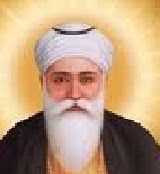
Short Essay on \’Guru Nanak Jayanti\’ (200 Words)
\’Guru Nanak Jayanti\’ is also known as Gurpurab. It is one of the biggest festivals of Sikhs. The birthday of Guru Nanak Dev is celebrated as Guru Nanak Jayanti. Guru Nanak Jayanti is celebrated in the month of Kartik on the day of full moon known as Kartik Purnima.Guru Nanak was the founder of the Sikh religion. He was the first Sikh Guru. Guru Nanak Dev Ji was born on 15th April 1469 in Rai-Bhoi-di Talwandi in the present Shekhupura District of Pakistan, which is now known as Nankana Sahib.
On Guru Nanak Jayanti , Sikhs wear new clothes and go to the Gurudwaras. The morning of Guru Nanak Jayanti starts with Prabhat Feris in the Gurudwara followed by processions in localities singing hymns. Sikhs offer their prayers and pay homage to the Guru Granth Sahib. On this day, the holy book of Sikhs, the Guru Granth Sahib is continuously read and recited in the Gurudwaras. Lamps are lit, processions are taken out, free langars (meals) are arranged and a sweet prasad is distributed all over the country. The Nanakpanti Hindus and the other followers of Guru Nanak’s philosophy apart from the Sikhs also observe this sacred festival.


You must be logged in to post a comment.