Short Essay on \’Alexander Graham Bell\’ (120 Words)

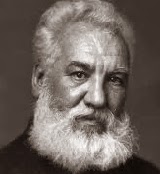
The inventor of the telephone, \’Alexander Graham Bell\’, was born on 3rd March 1847 in Edinburgh, Scotland. His father was Professor Alexander Melville Bell and his mother was Eliza Grace. He later settled in the United States of America.

Alexander Graham Bell was an eminent scientist, inventor, engineer and innovator. Throughout his life, Bell had been interested in the education of deaf people, as both his mother and his wife were deaf. This interest led to invent the microphone and in 1876, his \’Electrical Speech Machine\’, which we now call a telephone.

What followed after that is history. Bell Telephone Company (later AT&T) was set up in 1877, which grew to be one of the largest telephone companies in the world
Short Article on \’My Life as a Teenager\’ (150 Words)

I am going to begin my real life out of the shell of security of my parents. What I know and understand about being a teenager is happiness, parties, friendship and attraction. But, what I am being told is that it is a period of life of rage and serenity. It is the delicate period of my life where I will be shutting between being a pampered child to being an adult of whom a lot is expected.

It will be difficult for me to understand the emotional and physical changes. I don\’t know how I will be able to handle the peer pressure but I will try to face all this with the support of my parents.

I hope that it will be a period which I will cherish and enjoy but within the limits, which if crossed then no Rama would come to save me from the clutches of Ravana. 

Short Article on \’Child Labour in India\’ (400 Words)

In India, there are several temples of \’Bal Ganesh\’, \’Bal Gopal\’, ‘Bal Krishna’, ‘Bal Hanuman’ ie Childhood of God. According to Hindu philosphy, a child is considered to be form of God. India is better known to be the country of Dhruv, Prahlad, Lav-Kush and Abhimanyu, the children having talents wisdom, intelligency and warriership. Apart from this, present day picture of poor Indian child is very dark. The poor child is the most neglected, most exploited and the most abused. Female child is the most deprived and under privileged of the whole class of such children. The girls are not only withdrawn from schools and forced to indulge in child labour but they are even dragged in the prostitution.

Child labour is violation of human rights and is considered to be a ‘necessary evil’ in any country in the whole world.. It hampers their normal and natural physical, mental, spritual, intellectual, emotional, moral and social development. Children are doing work as domestic servants. They are employed in hotels, workshops, service stations, shops, construction sites and pulling rickshaws etc. They are even working in hazardous and unhygienic forms of labour in manufacturing factories.

Article 24 of the Constitution of India, 1950 says, “No child below the age of fourteen years shall be employed to work in any factory or mine or employed in any hazardous employment”. Indian legislature has also enacted the Factories Act, 1948 , The Children Act, 1960, The Child Labour (Prohibition and Regulation) Act, 1986 etc. for the protection of rights of children. Article 45 of the Constitution of India, 1950 casts duty on the State to pendeavour to provide free and compulsory education to the children. Article 25(2) of the Universal Declaration of Human Rights also states about the special care and assistance for the motherhood and children.

For the past few years, work done by the Government of India and the States Government in this issue is praiseworthy. Many new schemes and policies are introduced for the education and betterment of the children. But, this problem is still in existence in India even though all these policies are available in India.

There may no other opinion that child labour should be restricted and if possible completely vanished. It is a socio-economic national problem, which requires close analysis and practical solutions to meet with this burning question. 

Short Paragraph on \’Lightning Conductor\’ (140 Words)

The \’Lightning Conductor\’ consists of a long rod or a strip of metal running from the top of the building to be protected from destruction by lightning down to the earth. The upper end of the rod is furnished with sharp points and the lower end is fixed to metal plate well buried in wet earth. During a thunder storm, when a charged cloud passes above the points of the lightning conductor, induced charge of the opposite kind accumulates at the points. This results in charging of the air particles by contact around the points. This creates an electric wind directed towards the cloud. The cloud thereby becomes gradually discharged. If, on other hand, the difference of potential between the cloud and the conductor is so great as to produce a discharge, lightning conductor passes on the discharge to earth without damaging the building. 
 

Short Essay on \’Jai Prakash Narayan (JP Narayan)\’ (200 Words)

\’Jai Prakash Narayan\’ was born on October 11, 1902 in the village of Sitabdiara, Bihar, India. His father\’s name was Harsu Dayal Srivastava and mother\’s name was Phul Rani Devi. His father Harsu Dayal Srivastava was a junior official in the State Government Department. He was married to Prabhavati Devi in 1920.

Popularly known as \’Lok Nayak\’, Jai Prakash Narayan was a great freedom fighter and political leader. He was a leader (Nayak) of the people (Lok). He was dedicated social worker and took part in the Bhoodan Movement to give land to the poor and landless people of India. He is remembered especially for leading the opposition to Indira Gandhi in the 1970s and for giving a call for peaceful Total Revolution. He was an author too. His essay, \’The present state of Hindi in Bihar\’ won a best essay award. Lok Nayak Jai Prakash Narayan was awarded posthumously India\’s highest civilian award, the \’Bharat Ratna\’ in 1999. He was also awarded by \’Ramon Magsaysay Award\’ in 1965.

Jai Prakash Narayan died on 8 October 1979 in Patna, Bihar, India. He was a great Indian Hero and will always be remembered as the true patriot and sarvodaya leader of

Short Essay on \’Harry Houdini\’ (141 Words)

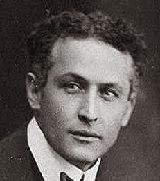
\’Harry Houdini\’ was born on March 24, 1874 in Hungary. His real name was \’Eric Weisz\’. His parents were Rabbi Mayer Samuel Weisz and Cecília Weisz. When Harry was still a baby, his parents decided to go and live in the U.S.A.

Harry Houdini was a great escape-artist. When he was nine years old he gave his first public performance. Houdini was so very interested in magic, that he practiced many tricks until they were perfect.

Houdini\’s most famous trick was to escape. On stage he would be tied up or locked up with chains and in a few minutes he would get free. He performed many other famous tricks. Some of his tricks were very dangerous.

Harry Houdini died on October 31, 1926 at the age of 52. He had shown in his life that he was ready to meet any challenge. 

Short Article on \’Spices are the Essence of Indian cooking\’ (252 Words)

Spices have been used since ancient times. They have been mentioned in the ancient Hindu scriptures for example Vedas, ancient Egyptian papyruses and the Old Testament. Although it was not until the Roman conquests that western countries discovered their culinary possibilities. Spices have always been believed to have healing and magical qualities. They have been used to cast spells, as incense in religious rites, to embalm corpses, to add fragrance to perfumes and as medicines. The word Spice comes from Latin \’Species\’, meaning a commodity of value and distinction. During their long and fascinating history, spices have often been more valuable than gold or precious stones and the trade of Spices has been an extraordinarily influential factor in history.

Many researchers have attempted to explain why hot Spices are pleasant to taste. It seems the burning sensation is the pain of nerve endings on the tongue. This releases endorphins, the body\’s natural painkiller, giving rise to pleasurable and even euphoric sensations.

Flowers, leaves, roots, bark, seeds and bulbs (the simplest of natural ingredients) are used in endless combinations to produce an infinite variety of flavours: sweet, sharp, hot, sour, spicy, aromatic, tart, mild, fragrant and pungent. Their tastes and aromas combine to create a kaleidoscope of exotic flavours to delight the palate. It is best to obtain spices in whole seed form and to grind them just prior to use.

Indian spices offer significant health benefits and contribute towards an individual\’s healthy life. They add flavour and nutrients to dishes without fat or calories! 

Short Article on \’Childhood is the best part of Life\’ (150 Words)

Old people say that childhood is the best part of life. They look back at their childhood and remember all its happy days. Perhaps these old folks are right. And yet they forget many things that were not so pleasant in their childhood.

Their is a funny story that tells of a boy who was crying because he had to go back to school after the holidays and the father scolded him and said, \”Why, I only wish I could be a boy and go to school again.\” And all in a moment, the father was a little boy and his son was a grown-up man like his father. And the father, in the shape of a little boy, had to go to school; and I can tell you he did not like it at all. A child\’s troubles may seem small to grown-ups but they were very big to him. 

Short Paragraph on \’Computer\’ (70 Words)

The \’Computer\’ is an automatic device that performs mathematical calculations that logical operations. Computers are being put to use in widely divergent fields such as book-keeping, spaceflight controls, passanger reservation service, language translation, etc. There are two broad categories: analong and digital. The former represents numbers by some physical quantity such as length, angular relation or electric current whereas the latter represent numbers by seperate devices for each digit. 
 

Short Essay on \’Sarojini Naidu\’ (250 Words)

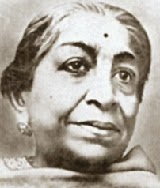
\’Sarojini Naidu\’ was born on 13th February 1879 in Hyderabad, Andhra Pradesh, India. Her father Aghore Nath Chattopadhyay was a carpenter of Science from Edinburgh University. From the years of her very early childhood, she showed signs of exceptional talent. She got married to Dr. Naidu of Andhra Pradesh in 1895. She was also known as the \’Nightingale of India\’. Her birthday is celebrated as \’National Women\’s Day\’ in India.

This great leader and freedom fighter used to write poems and also sing very well. Sarojini Naidu began writing poems in English while she was still in school. With the help and inspiration of Gopal Krishna Gokhale, she found her way into the politics of India. She got closely involved with the freedom movement of the INC (Indian National Congress). She became a member of the Royal Literary Society London. She also became the President of the Indian National Congress. Sarojini Naidu took active part in the Civil Disobedience Movement, Satyagraha Movement and the Quit India Movement. She was also sent to jail several times.

Lastly India got independence in 1947 and Sarojini Naidu was made the Governor of Uttar Pradesh State. She was the first Indian woman to become the President of the Indian National Congress. She was also the first Indian woman to become Governor of any State in India. Sarojini Naidu passed away on 2nd March 1949. She has left a great name for herself in the History of India. 

Short Essay on \’Collecting Things\’ (138 Words)

\’Collecting\’ has always been a pleasant pastime for children all over the world. Many different things can be made into collections. The world is full of interesting things. So, quite often children and adults too, become interested in collecting things.

People may collect anything and everything. Collecting is a great hobby. It can be different, unique for everyone. There is no rule that says a particular kind of object must not be collected.

Stamps, shells, butterflies, hats, feathers, leaves, flowers, stones, matchbox covers and antiques etc. are collected by people in every corner of the world. People also collect plates, costumes, cars and thousands of other things.

There are many ways of keeping a collection. Generally people begin collection as a hobby. Collection of things is an enjoyable way to spend free time. Sometimes this hobby develops into a profession. 


Short Debate on \’Should Students be allowed to carry Mobile Phones to School\’ [FOR] (254 Words)

The future is here, time has changed. With today\’s world becoming so technological, it is important that students should incorporate technology and communication into their daily lives. Cell phones are great, they enhance learning. But there can also be a distraction if students use them in the wrong way. When it comes to allowance of cell phones what matters is that students should be mature enough to use it justifiably.

Whenever teacher is teaching, he or she can ask the students to search for various answers on the Internet through the cell phones. By this way students will also take interest in studies.

While doing studies, students can also use cell phones for other purposes like for calculations which are complex through calculator. They can also use cell phones as dictionary for searching meanings of different words.

Students can record video or audio of what teacher teaches during his or her class and can watch it or listen to it later in the hour of need. Cell phones can also be useful to students doing adversity and problems. Cell phones will also minimize the educational expenses.

If it is a battle worth to ban or not, to ban the cell phones altogether, I feel that finding positive uses for this might become the key to success in the field of education. All we have to do is to find a balance. Nothing can replace the basics but, in my opinion, with technology ruling the world, gadgets should be allowed to become a part of the educational scenario. 

Short Debate on \’Is 21st Century man really cultured and civilized\’ [AGAINST] (300 words)

Respect and reverence for elders is a key stone of any culture. In 21st Century, man is living in an age where popular culture has almost extinguished the light of manhood. A growing number of young man have never received a vision of what a gentleman can be, this is the real picture of today.

This new generation of young man can no longer depend on the images that current popular culture has given them. Respect and reverence for elders is demonstrated through endearing customs, like, not sitting while they are standing, even serving their food first. We find the youngsters never using the proper names of their elders too. Today new generation is not touching the feet of all elders, holy men and women in recognition of their great humility and attainment.

There is no end to crimes even after a lot of development but a lot of increase in it. What matters if women are educated in today’s world but the crimes are just upon them at a sight. The youngsters riding motorcycles snatch the jewelleries of women walking on the street etc.

We should never use harsh, angered and indecent language and keep our body healthy and clean. It is very important for a cultured and civilized man to apologize immediately if one touches someone with his shoes or sandals, but in 21st century these things are not happening. The character traits of courage, vision, discipline, loyalty and work ethic are disappearing from this generation of young man. But most importantly they lack the courage to become risk takers and leaders at home, in their community, and at work.

In the End I would like to say that “The quest for true manhood, authentic leadershi

Short Paragraph on \’Brain Drain\’ (100 Words)

\’Brain Drain\’ is the migration of talented persons like doctors, engineers, lawyers, teachers and technicians from their home country to a foreign country for higher remuneration and better working conditions. It is a troublesome problem from developing countries like India which cannot pay high salaries nor wish to curtail the individual’s personal freedom permitted in democracies. The reason behind the brain drain is that the foreign countries encourage over the import of the talented manpower. On the other hand, the owners inheriting such brains are happy to go out because of having congenial work atmosphere and ethos. If we make the atmosphere healthier for some good work, I feel at least some of the brains may stay back in the country. 
 

\’Death Claim in LIC\’ (128 Words)

In the event of the death of the life assured, the claimant (the nominee, assignee or next of kin) should immediately intimate the fact of such death to the Branch Office of Life Insurance Corporation of India where the policy is serviced to help the Corporation to consider the claim promptly.

The claim is usually payable to the nominee/ assignee or the legal successor, as the case may be. However, if the deceased policyholder has not nominated/ assigned the policy or if he/ she has not made the will regarding the policy moneys, the claim is payable to the holder of a Succession Certificate or some such evidence of title from a Court of Law. If the life assured dies during the term of the policy,