
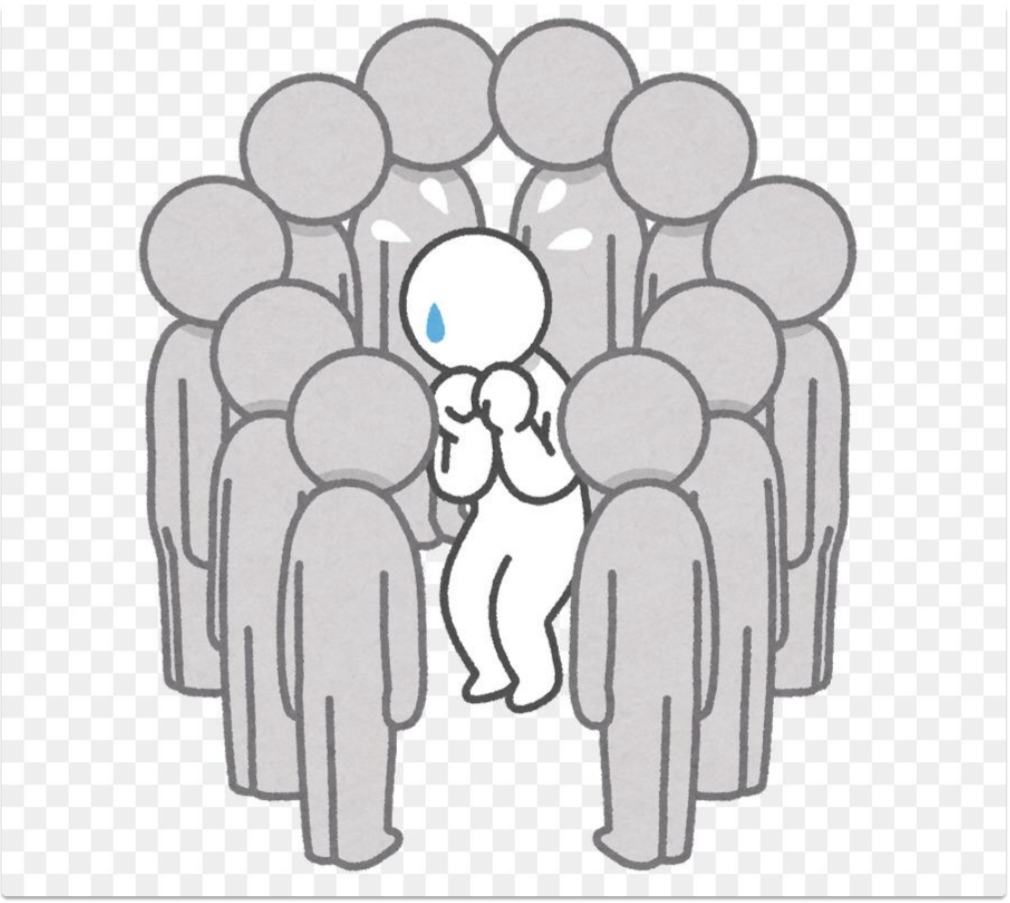
PEER PRESSURE

A term often read and heard about but very little pondered upon. The Cambridge dictionary defines peer pressure as ‘the strong influence of a group, especially of children, on members of that group to behave as everyone else does’. A simple definition but an impactful cycle. It plays an extremely important role in the social and emotional development of children as well as adolescents .So what exactly is a peer group? A peer group is made up of individuals who socialize together. It generally increases through childhood and reaches its intensity in the preteen and teen years. Maslow’s theory of hierarchy of needs defines social acceptance and acknowledgement as one of the primary needs for survival of human being in a society. This urge of social acceptance gives rise to a constant need for validation. As long as this urge is in alignment with one’s will and control, it creates a positive peer influence and the moment this urge takes over one’s ability to distinguish between the right and the wrong, it starts to create a psychological pressure. This psychological pressure exists in various forms amongst us and becomes a means to gauge what one ought to do.

Broadly classified as positive and negative, peer pressure can be spoken or unspoken and direct or indirect. While positive peer pressure leads to outcomes that are healthy, negative peer pressure leads to catastrophes. For example, if your friend constantly pushes you to eat healthy, its a positive peer influence. While a peer pressure to participate in a bike race without a driving license is a negative peer pressure. Positive peer pressure is beneficial and is also an important way to create and retain social bonds. It’s the negative peer pressure what needs attention today. You remember the last time you went for a movie with your friend despite detesting it? Or the latest college fashion wear that you had to pretend to like because it was the ‘new cool’? You might wonder what harm did it do and is it even that bad to switch priorities and likings in order to have a healthy peer group? Well, taking the above examples it actually isn’t but this is the initiation point of negative peer pressure. In most cases it starts off with incidents too minute to be reacted upon which is why the ‘initiation points’ goes completely unnoticed and neglected. What follows later leads to a devastating impinge like consumption of alcohol, drugs, cigarettes and one’s indulgence in unethical and illegal activities. The vicious cycle of peer pressure is sometimes attributed to ‘Social Stockholm Syndrome’. It is a psychological response where over the course of time, the victim starts to develop a sense of commonality with their victimizer. This sense of commonality later becomes toxic.

It isn’t always a cakewalk to shield yourself from negative peer pressure. But it isn’t a herculean task either. An individual’s environment at home greatly impacts one’s reaction when exposed to negative peer pressure. When children and adolescents have parents whom they can confide in, their psychological response towards this social infliction is more positive and less hampering in comparison to those who find it difficult to express themselves and are subjected to some or the other form of abuse at a very early age. As a parent one needs to gain their progeny’s confidence and trust. It requires small initiatives like a before bed talk every night and spending quality time with them at least on the weekends. Teens have to be taught to trust their instincts when in doubt and to say the magical word ‘NO’ when subjected to circumstances their morals don’t approve of instead of blindly following someone else’s path. Schools on the other hand, should hold more seminars on peer pressure to enable teens to identify the red flags which often come across as subtle signals. If prepared at a tender age to hold onto one’s own belief irrespective of the pressure around, negative peer pressure is one such social stigma that wouldn’t take much to eradicate.

What I know for sure

What I know for sure

No matter what challenge you may be facing, you must remember that while the canvas of your life is painted with daily experiences behavior reaction and emotions, you are the one controlling the brush.

Before reading this book I knew Oprah Winfrey as the Anchor of popular TV show.  A lady with her common looks and uncommon way of hosting a show made it matchless worldwide. I remember, I first heard about her in my class room where my English teacher asked us to say few lines on her. Being on the first bench I was the first to answer.   I don’t remember any of us would have spoken any words about her leaving, me even more curious about the lady.  I goggled to know her whereabouts; she is the anchor or Oprah Winfrey show and is visiting India for the very first time. My quest ended up there.  But little did I know that she is good author and has published many of her write ups.  One of her book ‘I KNOW FOR SURE’ was suggested by a friend stating it as mood up lifter.  Winfrey has written a book –this info was enough to get me excited and it is motivational as well, WOW.  Soon, I had the book in my hand. The title only appeared thought-provoking to me and I know for sure, I will like it.

It took me three days to finish this book written without acknowledgement letter and praise words.  I know for sure she must not need them as her moral purpose is to enlighten the society and people around the globe.  So she does well. Every line and story in this book is thought provoking, leaving you to understand your purpose of being alive.  WHY I AM HERE? WHAT IS MY PURPOSE OF BEING ALIVE? WHAT ALL I HAVE ACHIEVED? WHAT STONE IS LEFT UNTURNED IN MY LIFE? And many more! I feel, each book is written with a purpose, some to motivate, some to educate, some to make laugh, fall in love and some to make you think of you being alive.  Every page I turned has something vivid in it be it a story of a 13 year old boy who happily died or a person who survived defeating death. it has a kind of story telling that will lingers for a long time in my mind and  inspired me to keep moving no matter what.

You are here for a purpose and you just living if it’s not fulfilled.  Doesn’t stop keep learning, and if you think you know enough than you have lived your life. Your purpose of being on this planet is over.  These lines make sense to me.

I knew Opera Winfrey only as successful host of a show before I read this book.  But knowing her past life gave me adrenaline rush. Life has been a roller coaster ride to this lady and she has overcome all the problems, shining. I owe her my respect.

 All I learnt is ‘we shouldn’t make opinion about other unless we know their story of fight and struggle to win.  

RISE AND SHINE BEFORE YOU TIE A KNOT

Since you were a baby girl, you always had plans and dreamt about your perfect marriage and certainly your life after that. Isn’t it? But, it’s time to rethink and live your life before someone else enters in it forever. Love yourself and never give yourself a chance to think “I wish I did this before”.  You might never get a chance to live and enjoy as much as you want after your big day. Set yourself free and be ready to rise above all. SO, girls the clock is ticking, grab your notepad and pen to add these things on your checklist before you happily tie a knot-

images (1)

Know yourself – This is the first and most basic thing that you need to do. Know and discover yourself. Be aware of what you want from life and what your expectations from it are.  Make mistakes and grow out of it. Don’t stick to your past. Observe things around you and let it tell you where you belong.

Be independent– Live life the way you want to. Do things you always thought of. Be financially independent and spend the money the way you want. Pamper yourself. Take decisions for yourself. Even if the decisions are bad, they are yours and you will only gain out of it. Learn from your own experiences.

Solo trips– Every girl has this on their checklist. But how many actually do this?  It’s high time you do what you feel like. Go on solo trips, adventure life. Make new friends, learn and explore the world. It’s time to reconnect you from the world and live life without restrictions.

Become fearless – Face your anxieties and fears. Come over it. Do things you never thought you could. Surprise yourself and the world. Go hiking, driving, or learn a new sport. Know that it’s your time to rise and no one can stop you from this.

Follow your heart– Do what your heart says, follow your hobbies, and your passion. Give yourself a break and know that not all things are supposed to fall into the correct order. Life is messy but it’s a beautiful one. Sing, write, or just lay around and read your favorite book.


Introversion And Nature

If you ask me, nature is the ultimate elixir. It rejuvenates, exhilarates, and calms us in equal measures. Whether it’s the woods, the mountains, or the beach (whatever vibe most suits you), many of us find solace in the outdoors — whether we’re introverts or extroverts.

However, speaking as an introvert, I’ve always found a special comfort in nature. It’s where I turn when I’m stressed or overwhelmed, as well as when I want to feel invigorated. Walking in a forest, hiking in the mountains, or bathing in the sea makes me feel connected to the world as a whole in a way I rarely feel with other people.

Spending time outside has well-documented benefits for everyone, but here are five reasons it’s especially great for introverts.

Why Nature Is Great for Introverts

1. It gives us the space we need to process.

Typically, we need more time than extroverts to process our feelings and experiences. It’s often necessary for us to spend time “digesting” our thoughts before discussing them. This doesn’t mean we don’t want to share what we’re thinking. It just means at times it feels right and even easy to share, while other times the simple task of forming our ideas into coherent sentences seems… herculean.

The weird thing is that our reticence doesn’t just apply to the big things. Sometimes, even a well-intentioned, “How was your day?” can send an introvert’s mind spinning and alarm bells ringing. We want to give an honest answer, but if we’re still processing something ourselves, it can be difficult for us to verbalize straight away.

Taking a walk or sitting outdoors with a book or sketchpad gives introverts the space we need to let things settle in our mind. Sometimes this means actively mulling something over — but not always. For me, the simple lack of pressure to express myself prepares me to do so more clearly later on.

2. Science says so.

Countless studies have shown that spending time outside is extremely beneficial for both our mental and physical health. Interacting with nature:

fights depression, anxiety, and other mental health issues

lowers blood pressure

reduces inflammation levels

lowers cortisol, the “stress” hormone

improves short-term memory

improves vision by reducing the risk of developing nearsightedness

improves focus and memory

In one study, researchers introduced variables that made it difficult for participants to focus on a task. They then instructed one group to take a walk in nature, a second group to walk through the city, and a third group to simply relax. When everyone returned, they were given a proofreading exercise. Can you guess which group scored the best? That’s right — the ones who spent time in nature.
Another study involved sending some students to a forest and some students to a city. Both groups spent two nights in their respective locations. When they returned, the students sent to the woods had lower levels of cortisol — the hormone that is often used as a marker for stress — than those who stayed in the city.

Introverts can be more prone to stress, overwhelm, and mental health issues than extroverts. That’s why it’s even more important for us to get a healthy dose of sunshine and fresh air.

3. We get to step away and unplug.

There’s a lot of talk of unplugging these days — putting the phone or laptop away and engaging more holistically with what’s right in front of you. Being present with our surroundings helps us connect more deeply with the people we care about, as well as ourselves. Going outdoors gives us the perfect means of not only taking a break from technology, but also from the draining aspects of daily life.

Why is this especially important for us “quiet ones”? Due to the way we’re wired, we process and feel things deeply. That means we get more easily stressed and drained from stimulation than our extroverted counterparts. If you’ve ever mentally and physically crashed after attending a party, group project, or meeting at work, you know exactly what I mean.

The solution: avoid overscheduling and plan adequate time alone to recharge our “batteries.” This doesn’t have to — always — mean holing up at home. The revitalizing effects of doing something outside at your own pace, in the fresh air, can be pretty instantaneous. Although I’m often tempted to crash at home when I’m feeling extra-introvertey, putting on my shoes and getting out the door for a walk makes me feel much better, much sooner.
If you ask me, nature is the ultimate elixir. It rejuvenates, exhilarates, and calms us in equal measures. Whether it’s the woods, the mountains, or the beach (whatever vibe most suits you), many of us find solace in the outdoors — whether we’re introverts or extroverts.

Why is this especially important for us “quiet ones”? Due to the way we’re wired, we process and feel things deeply. That means we get more easily stressed and drained from stimulation than our extroverted counterparts. If you’ve ever mentally and physically crashed after attending a party, group project, or meeting at work, you know exactly what I mean.

The solution: avoid overscheduling and plan adequate time alone to recharge our “batteries.” This doesn’t have to — always — mean holing up at home. The revitalizing effects of doing something outside at your own pace, in the fresh air, can be pretty instantaneous. Although I’m often tempted to crash at home when I’m feeling extra-introvertey, putting on my shoes and getting out the door for a walk makes me feel much better, much sooner.

4. It inspires our creativity.

Not all introverts have a sensitive, artsy side, but many of us do. We enjoy hobbies — or careers — that involve writing, drawing, photography, or anything that allows us to express ourselves. When we create, we share a bit of our private inner world with the outside world — in a way that’s more comfortable than speaking up in a group.

Nature’s beauty has inspired countless artists. Whether it be a jaw-dropping landscape, or simply a pleasant outdoor park, the natural environment is the perfect backdrop to set the creative mind in motion.

5. It’s a great way to be out in the world.

Introverts are parodied as shy, sensitive types that hide themselves away at home watching Netflix or hanging with their cats. Okay, this might be true to a degree, but it’s in no way the whole picture. Introverts have just as much desire as extroverts to connect with others and discover what the world has to offer — we just do it differently.

We have no qualms about doing things alone, like traveling solo or heading out for a day by ourselves. We enjoy the freedom that comes with letting the day unfold as it may, knowing we don’t have to keep up constant conversation or worry about whether someone else is bored. When it comes to socializing, introverts prefer hanging out one-to-one or in small groups. It’s easier for us to open up that way, and allows us to go deeper.

Preparing for the Interview (part 3)

In last articles of this series, we gave you
glimpses of the interview process. By now, we have discussed why interview
process is important for the interviewer and for the candidate. We have
discussed what the interviewer is looking for in the interview process. We have
also discussed how to mentally prepare and present yourself at the interview
venue. In one phrase-
“Be professional and mean Business.”
In an
earlier article we had also talked about the two types of interview and gave
you a brief idea on how to prepare for the technical round of the interview. If
you are preparing for technical roles and not very high in the organization
chart roles, then the two-three articles will take care of you perfectly fine.
But everybody progresses and sooner or later (we will pray sooner) you will be
dealing with the most grueling parts of the interview.

The Interview

In the previous article we discussed what
preparations you need to do before reaching the interview venue or rather
interview room. Once you are called for interview, gather your things from the
lobby, follow the person who called you. Unless you are showed inside, it is
always better to knock and ask for permission before you enter the room. Firmly
shake hands if the interviewers are offering, or a polite hello would suffice.
Take chair when you are offered. Try not to
drag the chair a lot, but do not be uncomfortable. Appropriately distance the
chair from the table. You may place the file on the table. Pass it to
interviewer when they ask for it. They probably already have your resume, but
it is always better to carry an extra copy at the top of your file. If you want
water, you may ask for it politely. But it is better to do so at the beginning
of the interview process itself.
Now, we are ready to face the interviewer.

Introduce Yourself

Invariably, 95% of the interviews begin with
customary “Tell me about yourself.” This may seem mundane, even unnecessary.
After all they have your full CV and your file. There is everything that you
ever did or achieved! Why they cannot just go through that. Why this stupid
question! But remember, there are no unnecessary questions. This first
open-ended question is your opportunity to give direction to the interview
process.
Since this is such a common question, it is better
to practice answering such questions. Self-introduction reveals lot many more
things about you than you can imagine. Practice short crisp answers. Something
between 1-2 minutes is a decent length introduction. Do not rush, go
chronologically. Leave no important details out, but do not drag the answer.
And most importantly, personalise the answer. Do not sound like machine. Speak
clearly and calmly. Add personal details such as hobbies, your city etc
wherever suitable.
We will be discussing few more of such common
questions in the latter articles.
Good Luck!