In today’s instagram world,People especially adolescents are getting image and body conscious.They look at the perfect bodies of celebrities and aspire to be like them.In this aspiration,they are psychologically and physically wounded.Most of such people experience eating disorders where in they undergo extreme changes in their eating and exercise habits.Ultimately they damage themselves.
So,in today’s blog lets look at one of the eating disorders called Bulimia Nervosa,it’s causes and it’s impacts.Let’s get started.
Bulimia nervosa is an eating disorder characterized by episodes of binge eating—consuming a lot of food quickly—followed by compensatory behavior, most commonly vomiting or “purging.” People who are bulimic often feel a lack of control over their eating. A bulimic can consume as many as 3,400 calories in little more than an hour and as many as 20,000 calories in eight hours.
People with bulimia often know they have a problem and are afraid of their inability to stop eating. Bingeing is then followed by purging — namely, self-induced vomiting or the abuse of diuretics or laxatives. Bingeing and purging are often performed in secret, with feelings of shame alternating with relief.
The bingeing and purging cycle is usually repeated several times a week. As with anorexia, people with bulimia often have coexisting psychological illnesses, such as depression, anxiety, and substance abuse problems. Many physical dysfunctions result from the purging, including electrolyte imbalances, gastrointestinal troubles, and dental problems.
An estimated one to four percent of females have bulimia nervosa during their lifetime. The prevalence in males is unknown, but bulimia nervosa is far less common in males than females. Most cases begin in the late teens and early 20s, but can go undetected until the 30s or 40s.
SYMPTOMS
Bulimia signs and symptoms may include:
Being preoccupied with your body shape and weight
Living in fear of gaining weight
Repeated episodes of eating abnormally large amounts of food in one sitting
Feeling a loss of control during bingeing — like you can’t stop eating or can’t control what you eat
Forcing yourself to vomit or exercising too much to keep from gaining weight after bingeing
Using laxatives, diuretics or enemas after eating when they’re not needed
Fasting, restricting calories or avoiding certain foods between binges
Using dietary supplements or herbal products excessively for weight loss
CAUSES
Exact causes are not completely known and are believed to complex.Hence there is no single known cause of bulimia, but there are some factors that may play a part,such as:
Culture:As in strict body expectations:Slim and trim girls wanted for marriage in India.
Families:Constant pressure and criticism from parents on looks of children
Life changes or stressful events: can trigger bulimia.
Personality traits: Those with bulimia may have low self-esteem and feel hopeless.
Biology.:Genes, hormones, and other biological factors may contribute to development of bulimia.
Impact
Bulimia has a great impact on the individual and can lead to following complications:
Negative self-esteem and problems with relationships and social functioning
Dehydration leading to kidney failure
Heart problems
Severe tooth decay and gum disease
Absent or irregular periods in females
Digestive problems
Anxiety, depression, personality disorders or bipolar disorder
Misuse of alcohol or drugs
Self-injury and suicidal thoughts.
Management
If left untreated,bulimia can create major complications in life as mentioned above.Hence if you see your loved ones experiencing symptoms of bulimia,support them and console them.If the symptoms are unbearable,immediately consult a doctor and psychologist who will be able to help the patient successfully.
Please spread empathy and kindness.Acceptance and kindness can prevent bulimia in such insecure people.Every difficulty can be defeated with empathy,patience and willingness to improve and come out.
If you all found the article useful,do give it a like.
“People who lie to themselves about investing are the same as overweight people who blame their genes for their obesity.”
A change in the lifestyle of youngsters had not only to change their working habits but also brought a huge change in eating habits resulting in conditions like overweight and obesity. Engaging ourselves in works related to inactivity had worsened the situation.
Eating junk and spicy food instead of a regular balanced diet had contributed in disturbing our BMI index. It is a medical problem that increases your risk of other diseases and health problems, such as heart disease, diabetes, high blood pressure, and certain cancers.
However, the terms overweight and obese differs from each other for adults, WHO define overweight and obesity as-
overweight is a BMI greater than or equal to 25; and
obesity is a BMI greater than or equal to 30.
Body mass index (BMI) is a simple index of weight-for-height that is commonly used to classify overweight, underweight, normal, and obesity in adults. It is defined as a person’s weight in kilograms divided by the square of his height in meters.
According to the studies of WHO, In 2016, more than 1.9 billion adults aged 18 years and older were overweight. Of these over 650 million adults were obese. The worldwide prevalence of obesity nearly tripled between 1975 and 2016.
Causes of obesity?
Intake of excess sugar and carbonated drinks, eating fried and unhealthy products, and eating after being full.
Smoking and drinking frequently.
Genetic and medications.
Lack of exercise and sleep.
Social issues.
How it affects one’s social life?
Obesity not only affects a person physically but also mentally. We live in a world where social media had become a crucial part of our lives. We tend to believe in ideal body shape and size and get more prone to body shame ourselves. Obese people are more inclined to get bullied and teased they are seen as a liability on the economy as obesirty contribute towards laziness and lack of interest. This leads to distress and anxiety situations making a person more disposed towards depression. They may also face social isolation making them feel lonely and losing their confidence. Guilt, lower work achievement, and sex problems are some of the major factors affecting the quality of life.
In undeveloped countries the ability to afford food, high energy expenditure with physical labor, and cultural values favored a larger body size are believed to contribute to the observed patterns.
How to prevent obesity?
Exercise on a daily bases maybe it is yoga or cardio. Stay consistent with what you do.
Try to eat a healthy diet enriched with proteins, vitamins, and minerals. Take salad and fruits on a regular bases. Eat-in small intervals.
Quit smoking
Everything takes time but the important thing is to never stop believing in youself and never stop trying
You are special and have a purpose, so take steps to fulfill it. It is never too late to start.
Domestic violence is defined when victims including anyone, despite external identities which differ from citizen to citizen1. Domestic violence was initially known as wife abuse, Victims of domestic violence include:
Spouses
Sexual/Dating/Intimate partners
Family members
Children
Cohabitants
DATA
The National Family Health Survey (NHFS) data shows that almost 30% of Indian women have been abused in some way or the other by their husbands at some points of their life.
Thirty-one percent of respondents in NFHS (Round 3, 2005) – somewhat 20,000 women –complained that they were sufferers of domestic violence. Surprisingly, almost 75% did not look for assistance from anyone.2Instances of reporting to the police amplifies more than two folds when the cases of domestic violence are severe. Ergo, even then only 1.5% of women go to the police.
The ethnographic data evinces, that of the women becoming the sufferers of severe atrocities – ranging from broken bones, bruises to burns – none approached the police to report violence except in one instance where a woman sought police help not for battery, but the abduction of her toddler son by her husband.
Many have a sceptical attitude towards the working of police, that unless bribed they won’t work and that seeking police intervention would tarnish their reputation in the society.
The extent to which women approached multiple sources of help is quite scanty. Of all women experiencing domestic violence, 26% seek help from at least one source, and 7% seek help from more than one sources. Many women in the rural areas continue to bear the atrocities inflicted upon them because they have nobody to rely on except for their husband, so they accept their fate and do not report to the authorities concerned.
CONSTITUTIONAL RIGHTS
RIGHT TO BE FREE FROM VIOLENCE:
Every citizen in the country has the right to be free from violence at any point in time. This is because everyone is equal despite age, colour, race, caste, sex. Everyone deserves a peaceful life. This right is applicable from women and children who undergo domestic violence as well.
RIGHT TO DIGNITY:
The Constitution provides personal liberty to all persons. It includes, all the dimensions of life which makes a person’s life purposeful, complete and provides a reason for them to live.3 The human life has its reason and there is no reason why life should not be enjoyed with permitted legal pleasures.
RIGHT TO SHELTER:
The need of human is different from that of an animal. For animals it is about the safe guarding of the body, whereas for a human being it is the residing The Constitution aims at fulfilling the development of every child. The shelter does not have to satisfy the features of a luxurious houses, but it should be mud proof and fire proof. This is the basic shelter any being requires to run a life. The Court held that the right to shelter is a fundamental right to citizens of the nation and it was looked into Article 21 of the Constitution. The right to shelter serves as an vital right to make life function naturally.4
WHAT REMEADY DOES THE LAW PROFFER?
The Indian parliament was well cognisant of the quantum of atrocities faced by women. Hence, in order to put the kibosh on domestic violence, the protection of women from Domestic Violence Act 2005 was created. This act has the women and their concern in its fulcrum. Prior to the formulation of this exemplary piece of legislation, women had to approach the courts under IPC (498-A) which did not even make a mention of “domestic violence”. Further, the women had to leave the matrimonial place in fear of what might transpire out of retaliation by the husband. By the virtue of section 17 and section 19 of this act, women can continue to stay in the matrimonial house and file a complaint against the preparators, thus vanquishing the fear that the rural women had that where will they sojourn till any significant decision is taken. Fear of being homeless after filing the complaint against the husband was one of the driving forces of women not complaining the offence against the husband especially in rural areas. Moreover, if the women decide on discontinuing to stay in her matrimonial home, then by the virtue of section 6, the protection officer or a service provider (NGO) may request the person in charge of any shelter home and that person in charge is under an obligation to provide shelter to such aggrieved woman. The magistrate, after hearing both the parties, if comes to a conclusion that the domestic violence has taken place or is likely to take place, then he may pass orders of protection by the virtue of section 18.
In the case of Sabita Mark Burges vs Mark Lionel Burges,5 the Bombay High Court ruled that the court may, if it deems fir, may pass orders directing the respondent from a shared household or the lone ownership of a man, a man has no right to inflict violence on the violence he lives with and if such a misadventure occurs, he may be stalled form entering the premises to secure the person of the wife and children. However, an exception of this rule is found when the respondent is a female.
Furthermore, unlike IPC which is oblivious of domestic violence, the DV ACT adduces an all-encompassing and exhaustive definition of the term under section 3. The definition is not limited to merely physical injury, but also sweepingly takes into account the emotional, economic, mental, verbal and sexual abuse. An important judgement comes of Gujrat HC which provided new dimensions to the definition of “domestic violence”, in Bhartiben Bipinbhai Tamboli vs State of Gujarat & others6 on 20 September, 2016.
In the case of Smt. Haimanti Mal vs, The State of West Bengal7 on 09.07.2019. Calcutta High Court granted Rs.1,00,000/- as compensation to the wife for psychological anguish that she had gone through owing to the behaviour of the husband.
Section 2(f) of the act defines domestic relationship. Domestic relationship relates to the relationship between two persons in which they stay in a shared household together, by the virtue of relation by marriage, blood, relation which is of similar nature to marriage, adoption or a joint family, thus the act includes but is not limited to the married woman, it also takes into its shade the mother, sister, daughter live-in relationship etc. In the case of Sadhana V. Hemant8, Bombay High Court held that if at the time of filing of petition, the wife has already been divorced, there cannot exist any domestic relationship and, divorced wife cannot be entitled for protection under Domestic Violence Act.
In the case of D. Veluswamy V. D. Patchaiammal9, the court recognised the status of women in live in relationships under the definition of “aggrieved person”. However, in the same case 5 key ingredients were laid down:
Their demeanour must be such that they seem to be husband and wife and they must be recognized as husband and wife in the society.
Both must be of valid and legal age of marriage.
They must meet the qualification of entering into a matrimonial relationship.
They must have cohabitated with consent for a significant time duration.
They must live together in a shared household.
Shared household has been more elaborately and unambiguously defined in the judgement of S.R. Batra And Anr vs Smt. Taruna Batra10,authored by M Katju, wife would be entitled to the possession of only a share household, a shared household, interpreted in the light of section 2(s) cannot be a property belonging to mother-in-law or father-in-law. it must be a property that the husband owns or has taken on rent of belongs to aa joint family of which the husband is a member.
OBLIGATIONS OF THE GOVERNMENT
Under section 8 of the herein mentioned act, the government must appoint a protection officer in each district. The number of such officers may vary in accordance with the need. Also, such an officer, preferably must be a woman
Section 11 lays down the duties of the government. It speaks that the central and the state governments are duty bound to publicise the sections of this act in media through various conduits like T.V. radio, newspaper etc. at regular intervals in order to ensure that no woman stays oblivious to her rights. The central and state government officers must be given public sensitisation and awareness training.
CONCLUSION
To summarize, every citizen of our nation is equal as per the Indian Constitution, but unfortunately women and children are ill-treated. While the legislation has worked immensely well for the protection of women, extant poor implementation is still an issue. The protection officer is usually a part time officer or an incompetent officer who fails to do justice to the job. There is no provision in favour of male child. The legislation is highly women centric and is often exploited by cunning women, hence is often construed against the tenants of article 14. Providing such a superfluous definition of domestic violence can be used against men often times to persecute them. It also perceives that only women can be subject to domestic violence and turns a nelsons eye to the cases in which the men are aggrieved.
‘If a free society cannot help the many who are poor, it cannot save the few who are rich’, quoted John F. Kennedy years before an epidemic like Covid-19 could have even been forecasted.
Starting from the Plague, a bacteria led pandemic to the Spanish Flu caused by a virus in 1918, the world has seen an invisible enemy mongering fear among the people. Though the epidemics did not change the patterns in people’s reactions but it outbreaks have certainly taught us about social distancing and responsibility. The response to the current pandemic, Novel Coronavirus Disease (COVID 19) has been no different. The current situation where the Government has been repeatedly asking people to be selfish about their loved ones and stay indoors is undoubtedly a decision in the public welfare as it stands as the only way to fight the issue. This infection with symptoms is frightening and can kill people in large numbers as evident in the developed countries but the epidemic is more threatening when thought of people it might affect without symptoms.
Looking back, the plague epidemic was certainly a major turning point in India’s public health system. The principles introduced were new then and vaccines developed turned the history of hospitalization in the country. But when it first came in Mumbai, there were only Social Service leagues and other voluntary organizations which did the work of supplying food and medicine to the needy. Thus, there was impression of hope and being taken care of even when the situation turned helpless.
The society is divided into sections and it is not unknown to anyone of the country. Even though the upper class can claim money not being important more than happiness, the lower class does not even know the meaning of happiness if there is no penny in the pocket. The lockdown period has pushed the lower class people, working under ‘no work, no pay’ policy to the extreme points of their lives so much that the deaths due to hunger can compete with the numbers of deaths due to the virus after a couple of months. The situation is similar to the Plague in a lot of ways, maybe it is time to change the principles and policies of the wage workers and mark it in the history once again.
Coronavirus pandemic is not a depression yet but it is a recession already. The country can easily fall back into a temporary economic crisis and technical point of actions can prevent permanent scars of depression. Compelling the payment of wages to the daily wage workers can be a measure that can instantly transform the social safety of the nation as once these workers lay off; there might be irreparable damages to the entire nation’s productive capacity.
The government has issued directions to the employers to pay wages on mere humanitarian grounds and, it is not only for the permanent workmen but for the contract workers as well. The Disaster Management Act, 2005 or the Epidemic Diseases Act, 1897 which specifically came into force after the epidemic in Mumbai does not guarantee any such direction to be in compliance with the statutory law. However, Central and State governments can take its measures accordingly and it is backed by the provisions.
Though it has taken time but the Government has come up with ideas to deal with the situation. The government has strictly advised to support the country by paying wages without any consequential deduction in wages for this period. The direction is issued particularly for the casual or contractual workers. On non-payment, the employees can drive down morally to combat their fight. On such kind of a scene, India, as a country, would lose even if it manages to fight the virus.
But the circular is only an ‘advisory’ and has not been issued under any law, ultimately making it not binding on any person. As dealt in the judgment of Narendra Kumar Maheshwari v Union of India that any policy does not take the place of law. Even the legislation under the Disaster Management Act, 2005 does not prohibit any employer from terminating employees or to vary their terms of service. But it does mention securing employees as it requires them to be paid salaries in the course of business. There also lies a major difference between the terms, employees and workmen as pointed out in Dhrangadhra Chemical works Limited v State of Saurashtra. The matter stands important since a workman is entitled to retrenchment as well as other benefits unlike the employers irrespective of whether temporary or permanent. It is important to note that ‘natural calamity’ is not particularly defined in the Act and can be claimed to fall under the ambit of it.
The migrants are stranded on roadways due to the current situation but hands of employers are tied as well and even though some might think but everyone cannot afford the same. Such a crisis is itself not compensated under loan forbearance.
In such a situation, the solution can be to adopt the idea of common law ‘lay off’ concept to pay 50% of wages so that their daily needs are at least met and also so that it can be done for a larger period to a bigger audience. The Government can also secure by adopting Canada’s plan to subsidize certain requirements and by giving them a privileged position by offering different schemes.
It is time that the country understands that we are all in this together. Without one section the other cannot sustain for long. Very evidently, when John F. Kennedy quoted, he might not have forecasted viruses or pandemics but he knew the world required to stand together for development.
Marital Rape implies to unsolicited intercourse by a man with his wife misappropriated by force, intimidation of force, or bodily violence, or when she is unable to give consent. It is a non-consensual act of violent distortion by a husband against the wife where she is physically and sexually abused. Marital Rape alludes to the consummation between a man and a woman, who is lawfully acknowledged as a couple, where the woman does not give assent for such intercourse. Marriage, as examined prior is an irreproachable bond in which the man and a woman promise to live respectively in bliss just as in torment by welcome the blemishes of one another.
Despite the fact that marital rights are the most widely recognized and offensive type of masochism in the Indian culture, it is very much taken cover behind the iron drape of marriage. While the legal definition shifts, marital rape can be characterized as any undesirable intercourse or entrance misappropriated (vaginal, butt-centric, or oral) acquired forcibly, the danger of power, or when the spouse cannot assent. Regardless of the commonness of marital rape, this issue has gotten moderately little consideration from social scientists, specialists, the criminal justice system, and the bigger society all in all. The term rape has been imitated from the word rapio, which means to seize.
Marital Rape otherwise called ‘Spousal Rape’ or ‘Inmate Partner assault’ is an assault submitted by one companion against the other.[1] To comprehend the difficulties of Marital Rape one should initially comprehend the distinction between Rape and Marital Rape as both the terms have various implications and can’t be utilized reciprocally.
The marital rape exemption can be traced to statements by Sir Mathew Hale, Chief Justice in
England, during the 1600s. He wrote
“The husband cannot be guilty of a rape committed by himself upon his lawful wife, for by their mutual matrimonial consent and contract, the wife hath given herself in kind unto the
husband, whom she cannot retract.”
In the present day, studies indicate that between 10 and 14% of married women are raped by their husbands: the incidents of marital rape soars to 1/3rd to ½ among clinical samples of battered women. Sexual assault by one’s spouse accounts for approximately 25% of rapes committed. It is a conscious process of intimidation and assertion of the superiority of men over women.[2]
India, even after being advancing with a pace into the modern-day timeline haven’t criminalised marital rape. Despite amendments, law commissions and new legislation, one of the most humiliating and debilitating acts is not an offence in India.
Section 375, Indian Penal Code has provisions to rape in India, its exception clause- “Sexual intercourse by a man with his wife, the wife not being under 15 years of age, is not rape” reverberate very ancient sentiments.
VIOLATION OF FUNDAMENTAL RIGHTS
Marital rape is an extensive problem for a woman that has occurred for centuries all over the world. Regardless of this fact, marital rape has been mainly ignored in the rape and domestic violence literature’s, this problem has received comparatively little attention from social scientists, legal practitioners, the criminal justice system, and the society as a whole but after examining the need for reforms in the legal system regarding the punishment of various crimes against women and especially married women, various countries have recognized this as a crime with severe penalties.
At the very outset, a law can only stand if it is in consonance with the Indian Constitution. The dereliction in perceiving Marital Rape as criminal offence prima facie violates the fundamental rights of a woman.
Article 14[3] of the Indian Constitution ensures the Right to Equality as a fundamental right of citizens. The Marital Rape Exception proves to be unconstitutional as contravenes the Right to Equality. The exception marks a clear dichotomy between women as wives and non-wives which ascertains as to who can bring criminal charges against a man for rape. In a male-dominant or patriarchal society of India any law concerning rights of women, being a right accessible to fewer section of women or the whole female population is exceedingly difficult and challenging to be reformed. Article 14 of Indian Constitution expresses ‘Equality before law’ but it collapses on its own provision when question comes about protection of women rights. Indian Government and the Judicial system conceal their failure to perform functions under the blanket of Customs i.e. Marriage is a sacrament. The Supreme Court in its interpretation of Article 14 held that, the classification made under this article must pass the ‘test of reasonableness’ that can only be achieved if the classification has a rational nexus to the object that the legislation in question seeks to achieve.[4] However, this interpretation when kept in juxtaposition with Section 375 implies that the entire rationale behind Section 375 stands vanquished when the Marital Rape Exception is upheld. This is thus interpreted because the solitary intention of Section 375 is to protect the integrity and dignity of women from sexual offenders and the purpose of this section is not performed when marital rape is not acknowledged by the eyes of law.
The Indian Constitution provides Right to Life as a fundamental right to its citizens. Article 21[5] states that “No person shall be denied of his life and personal liberty except according to the procedure established by law”. In Maneka Gandhi v. Union of India,[6] the Supreme Court
perspicuously stated, “Article 21, is not merely a physical right but it also includes within its ambit, the right to live with human dignity”. The Exception 2 of Section 375 fails to provide women the right to live with human dignity as husbands are not discouraged to engage in non-consensual sexual acts with their wives. Such iniquitous acts of the husbands take a toll on the mental health of a woman thus negating her life of dignity.
In the wake of the Maneka Gandhi judgment, the Supreme Court has incorporated various other rights under Right to Life which consists of right to health, right to a safe environment, right to safe living conditions and right to be informed among other rights. One of the major establishments was made by the Supreme Court in the judgment of Justice K.S. Puttaswamy v. Union of India and others[7], in which the Honourable Court held privacy to be a fundamental right under Article 21. Right to Privacy thus entailed, “Decisional privacy reflected by an ability to make intimate decisions primarily consisting of one’s sexual or procreative nature and decisions in respect of intimate relations”. This again directs to the infringement of a woman’s right of not being able to make intimate decisions for herself. In Bodhisattwa Gautam v. Subhra Chakraborty[8], the Supreme Court was crystal clear in saying, “Rape is a crime against basic human rights and a violation of the victims’ most cherished of fundamental rights, namely, the right to life enshrined under Article 21 of the Constitution”. Yet the Exception negates this very pronouncement by not recognizing marital rape.[9]
CONCLUSION
Marital Rape stands to be one of the most horrific forms of crimes against women in a family. Women mostly choose not to come up with their sufferings because of the patriarchal subjugation and the lack of facilities for them to be economically independent. The ever-existing patriarchy embedded in the minds of the society pays no heed to the abuse faced by women. This mindset proves to be crucial in letting the law makers provide plethora of unreasonable defences to not provide any penalties for this crime. Rape is not simply a physical ambush; however, it is dangerous of the entire persona of the person in question. The law did not conceptualize it as an offense against the individual of the woman, one that pulverizes her opportunity; rather, it considered rape as an instrument for defending a man’s property from the sexual conflicts of other men. Along these lines, the demonstration of rape inside marriage was not perceived as an offense as a woman was viewed as the property of the spouse, and a man could not be seen to abuse his own property.
Marital rape can be observed in families of all types irrespective social class, level of education, economic reasons and so on. Women in rural areas lack the considerably basic awareness that such an act is a wrongful one and are forced to believe that it is a part and parcel of marriage. This is another reason why even the research data cannot be fully relied upon because of the untold stories of these unaware women.
While the Marital Rape Exception continues to be central to the struggle faced by the supporters and feminist activists but problems such as gathering reliable evidence especially in cases where there are no physical injuries and proving that consent of the wife was not taken, still exists. Relying on the sole testimony of the woman with no concrete evidence or where evidence is negligible leads to the rise of false allegations against men to which there exists no damage control.
Racism, also called racialism, the belief that humans may be divided into separate and exclusive biological entities called “races”; that there is a causal link between inherited physical traits and traits of personality, intellect, morality, and other cultural and behavioural features; and that some races are innately superior to others. The term is also applied to political, economic, or legal institutions and systems that engage in or perpetuate discrimination based on race or otherwise reinforce racial inequalities in wealth and income, education, health care, civil rights, and other areas. Such institutional, structural, or systemic racism became a particular focus of scholarly investigation in the 1980s with the emergence of critical race theory, an offshoot of the critical legal studies movement. Since the late 20th century the notion of biological race has been recognized as a cultural invention, entirely without scientific basis.
Racism takes many forms and can happen in many places. It includes prejudice, discrimination or hatred directed at someone because of their colour, ethnicity or national origin.
People often associate racism with acts of abuse or harassment. However, it doesn’t need to involve violent or intimidating behaviour. Take racial name-calling and jokes. Or consider situations when people may be excluded from groups or activities because of where they come from.
Racism can be revealed through people’s actions as well as their attitudes. It can also be reflected in systems and institutions. But sometimes it may not be revealed at all. Not all racism is obvious. For example, someone may look through a list of job applicants and decide not to interview people with certain surnames.
Racism is more than just words, beliefs and actions. It includes all the barriers that prevent people from enjoying dignity and equality because of their race.
Lives Matter (BLM) movement and their provocative protest tactics have played a significant role in this shifting public discourse.
BLM has been resisting dominant narratives in new ways. The movement amplifies knowledge and counter-discourses that affirm the identities and needs of Black communities. The BLM movement can be seen as a “subaltern counterpublic,” defined by critical theorist Nancy Fraser as a space dedicated to centring marginalized voices.
The dominant public often expects marginalized groups to use persuasion to educate them about their grievances. However, some have argued that persuasion alone cannot facilitate substantive systemic change. Dominant society will generally tolerate only those transformations in public discourse that leave
Counterpublics, like BLM, have successfully cultivated their power and drawn attention to their messaging by forcing their narratives onto the public.
That painful past is still present today — not only in the form of violence, but in the everyday experience of deeply rooted discrimination. We see it in our criminal justice system, in the disproportionate toll of the disease on Black and Brown communities, in the inequalities in neighbourhood services and the educations our children receive.
While our laws have changed, the reality is that their protections are still not universally applied. We’ve seen progress since the America I grew up in, but it is similarly true that communities of colour continue to endure discrimination and trauma.
Marriage in India is steeped in traditions and deep-rooted cultural beliefs. Practices are passed down by word of mouth and in some cases, re-interpreted to align with the changing times. There is, however, one custom that stubbornly resists change: the dowry system.
In India, it has its roots in medieval times when a gift in cash or kind was given to a bride by her family to maintain her independence after marriage. During the colonial period, it became the only legal way to get married, with the British making the practice of dowry mandatory. The trend in present India, with its booming economy, is now encouraging ever-higher bride prices among all socioeconomic strata. But the rising bride price has brought with it an increase in violence against women.
Dowry violence is usually perpetrated by the husband or the in-laws in a bid to extract a higher dowry from the bride’s family. The dowry price paid at the time of marriage may be significant, but the greed of husbands and in-laws can grow after marriage. This frequently translates into physical, mental or sexual violence against the bride. The violence ranges from slashing genitalia or breasts with razors to burning her alive by pouring kerosene on her. In some cases, women are driven to suicide.
Although seeking a dowry has been outlawed in India since 1961, the ban has been a challenge to enforce. An amendment to the law in 1986 mandated that any death or violence within the first seven years of marriage would be tried as related to dowry. The reality is that most cases of dowry violence go unreported.
Even today, over 90% of marriages are “arranged” by the parents of the couple, as has been the case historically. However, the fraction of marriages in which members of the couple have some say over who their partner is has doubled from around 20% in 1960 to 40% by 2005. Marriages are concentrated within small geographical areas. 80% of brides marry grooms who reside within the same district, and the average travel time between the houses of brides and grooms is approximately three hours. As has been the case historically, 95% of marriages are between individuals of the same jati (sub-caste group). The rate of inter-caste marriage in rural areas is approximately the same now as it was in 1950, while in urban areas it has only increased by around 2 percentage points.
The blowout of the dowry system forced the government to take action in the middle of the last century, introducing the Anti-Dowry Act in 1961 which outlawed the giving and receiving of dowries. After its introduction, the act received little support and was not strongly enforced, leading to a rampant and thriving illegal market for dowries.
It wasn’t until later in the twentieth century, when women’s rights groups were campaigning strongly against dowries and former Indian Prime Minister Indira Gandhi organized the marriage of her son without accepting a dowry from the bride’s parents, that the public took notice, leading to an amendment of the Anti-Dowry Act in 1989 and public enforcement of the law. Among other initiatives, the government established an all-female police taskforce in 1992, set up with the sole purpose of investigating dowry dispute-related abuse or deaths. There are now more than 300 of these police taskforces across the country
Citizenship is the status of a person recognized by the law of the state. Citizen is a legal member of a sovereign state. The idea of citizenship has been defined as the capacity of individuals to defend their rights in front of the governmental authority.
According to Aristotle, citizen is he “who has the power to take part in the deliberative or judicial administration of any state is said by us to be a citizen of that state”. Vattal has defined citizens as, “the members of a civil society bound to this society by certain duties, subject to its authority and equal participants in its advantages”. “Citizenship”, according to Laski, “is the contribution of one’s instructed judgment to the public good”. On the basis of these definitions we can mention here three important features of a citizen: (1) The membership of the state. (2) The social and political rights. (3) Sentiment of devotion to the state.
There are two primary sources of citizenship:
Birthright in which a person is presumed to be a citizen if he or she was born within the territorial limits and naturalization, a process in which an eligible legal immigrant applies for citizenship and is accepted.
Classification of Citizenship A person can be recognized or granted citizenship on a number of bases. Usually citizenship based on circumstances of birth is automatic, but in other cases an application may be required.
One of the most common paths to citizenship is jus sanguinis, which, from Latin, translates to ‘right of blood’. This describes a person whose parent, grandparent or other ascendant is already a citizen of a specific state separate from the country that the person was born in. In many jurisdictions such as Canada, Israel or Greece, jus sanguinis and jus soli are combined into one model.
Jus soli or ‘right of soil’ generally refers to the instance in which a citizen born within a country is given its citizenship. Sometimes, a person is given automatic citizenship of the state they are born in, however this is not the case everywhere or may be restricted to certain regulations. Jus soli originated from the United Kingdom .
Naturalisation is another common route to acquiring citizenship. This usually applies to those who have entered the country legally, through political asylum or have lawfully lived there for a specific period. For those becoming new citizens, it is customary to take a test demonstrating understanding of the nation’s laws, culture, tradition and language.
Citizenship by investment or Economic Citizenship
Wealthy people invest money in property or businesses, buy government bonds or simply donate cash directly, in exchange for citizenship and a passport.
Excluded categories.
In the past there have been exclusions on entitlement to citizenship on grounds such as skin colour, ethnicity, sex, and free status (not being a slave). Most of these exclusions no longer apply in most places. Modern examples include some Arab countries which rarely grant citizenship to non-Muslims, e.g. Qatar is known for granting citizenship to foreign athletes, but they all have to profess the Islamic faith in order to receive citizenship.
The “Startup India” initiative announced by the Hon‟ble Prime Minister on 15.08.2015 aims at fostering entrepreneurship and promoting innovation by creating an ecosystem that is conducive to growth of Startup. Startup India is a flagship initiative of the Government of India, intended to build a strong ecosystem for nurturing innovation and Startups in the country that will drive sustainable economic growth and generate large scale employment opportunities.
The efforts of the government are aimed at empowering Startups to grow through innovation and design. It is intended to provide the much needed impetus for the Startups to launch and scale greater heights. In order to meet the objectives of the initiative, the Hon‟ble Prime Minister on 16th January 2016 launched the Startup India Action Plan. The Startup India Action Plan consists of 19 action items spanning across areas such as “Simplification and handholding.”
“Funding support and incentives” and “Industry-academia partnership and incubation”. Since the launch of the programme, a number of forward looking strategic amendments to the existing policy ecology have been introduced, like:
Fund of Funds For providing fund support for Startups, Government has created a „Funds for Startups (FFS) at Small Industries Development Bank of India (SIDBI) with a corpus of Rs 10,000 crore. The FFS shall contribute to the corpus of Alternative Investment funds (AIFs) for investing in equity and equity linked instruments of various Startups. The FFS is managed by Small Industries Development Bank of India (SIDBI) for which operational guidelines have been issued. In 2015- 16, Rs.500 crores was released towards the FFS corpus.
2. Credit Guarantee Fund for Startups Since debt funding for Sartups is perceived as high risk activity, a Credit Guarantee Fund for Startups is being setup with a budgetary corpus of Rs.500 crore per year, over the next four years, to provide credit guarantee cover to banks and lending institutions providing loans to Startups. Once rolled out, the scheme in the lines of credit guarantee scheme for MSME, is likely to provide a huge impetus for enabling flow of much needed credit to the Startups which may run into several thousands of crores.
3. Relaxed Norms in Public Procurement for Startups Provision has been introduced in the procurement policy of Ministry of Micro, Small and Medium Enterprises (Policy Circular No. 1(2)(1)/2016-MA dated March 10, 2016) to relax norms pertaining to prior experience/ turnover for Micro and Small Enterprises. Department of Expenditure has issued a notification for relaxing public procurement norms in respect of all Startups (including medium enterprises) by all central Ministries/ Departments.
4. Tax Incentives
(i) Income Tax Exemption on profits under Section 80-IAC of Income Tax (IT) Act: The Inter-Ministerial Board of Certification is a Board set up by Department for Promotion of Industry and Internal Trade (DPIIT) which validates Startups for granting tax related benefits.
A DPIIT recognized Startup is eligible to apply to the Inter-Ministerial Board for full deduction on the profits and gains from business (exemption under Section 80IAC of the Income Tax Act) provided the following conditions are fulfilled.
The entity should be a private limited company or a limited liability partnership, Incorporated on or after 1st April 2016 but before 1st April 2021, and Products or services or processes are undifferentiated, have potential for commercialization and have significant incremental value for customers or workflow. The deduction is for any three consecutive years out of seven years from the year of incorporation of start-up.
(ii) Tax Exemption on Investments above Fair Market Value.
– DPIIT Recognized Startups are exempt from tax under Section 56(2)(viib) of the Income Tax Act when such a Startup receives any consideration for issue of shares which exceeds the Fair Market Value of such shares.
– The startup has to file a duly signed declaration in Form 2 to DPIIT {as per notification G.S.R. 127 (E)} to claim the exemption from the provisions of Section 56(2)(viib) of the Income Tax Act.
(iii) Introduction of Section 54EE in the Income Tax Act, 1961.
Exemption from tax on long-term capital gain if such long-term capital gain is invested in a fund notified by Central Government. The maximum amount that can be invested is Rs. 50 lakh.
(iv) Amendment in Section 54GB of the Income-tax Act
Exemption from tax on capital gains arising out of sale of residential house or a residential plot of land if the amount of net consideration is invested in prescribed stake of equity shares of eligible Startup for utilizing the same for purchase of specified asset:
a. The condition of minimum holding of 50% of share capital or voting rights in the start-up relaxed to 25%
b. The period of extension of capital gains arising from for sale of residential property for investment in start-ups has been extended up to 31st March 2021.
(v) Amendment in Section 79 of Income Tax Act.
Startups can carry forward their losses on satisfaction of any one of the following two conditions:
a. Continuity of 51% shareholding/voting power or
b. Continuity of 100% of original shareholder.
Legal Support and Fast-tracking Patent Examination at Lower Costs
A scheme for Startups IPR Protection (SIPP) for facilitating fast rack filing of Patents, Trademarks and Designs by Startups has been introduced. The scheme provides for expedited examination of patents filed by Startups. This will reduce the time taken in getting patents. The fee for filing of patents for Startups has also been reduced up to 80%.
Panels of facilitators for Patents and Trademark applications have been formed to facilitate the process of patent filing and acquisition. The facilitators would provide legal guidance and handholding through the entire patent acquisition process free of cost.
Self-Certification based Compliance Regime:
Compliance norms relating to Environmental and Labour laws have been eased in order to reduce the regulatory burden on Startups thereby allowing them to focus on their core business and keep compliance costs low. Ministry of Environment and Forests (MOEF) has published a list of 36 white category industries. Startups falling under the “White category” would be able to self certify compliance in respect of 3 Environment Acts.
The Water (Prevention & Control of Pollution) Act, 1974.
2. The Water (Prevention & Control of Pollution) Cess (Amendment) Act, 2003;
3. The Water (Prevention & Control of Pollution) Act, 1981.
Further, Ministry of Labour and Employment (MOLE) has issued guidelines to State Governments whereby Startups shall be allowed to self-certify compliance in respect of Labour laws. These shall be effective after concurrence of States/UTs.
The Acts are :
The Building and Other Constructions Works (Regulation of Employment & Conditions of Service) Act, 1996.
2. The Inter-State Migrant Workmen (Regulation of Employment & Conditions of Service) Act, 1979.
3. The Payment of Gratuity Act, 1972.
3. The Contract Labour (Regulation and Abolition)) Act, 1970.
4. The Employees Provident Funds and Miscellaneous Provisions Act, 1952
5. The Employees State Insurance Act, 1948
So far 9 States have confirmed compliance to the advisory issued by Ministry of Labour and Employment (MOLE):
Under Atal innovation Mission, Niti Aayog will set up Atal Incubation Centres (AICs) in Public and Private sector. Niti Aayog has received 3658 applications (1719) from academic institutions and 1939 from non-academic instution) for setting up Atal Incubation Centres (AICs) from both Public and Private sector organizations. Under the Mission, a grant in aid of Rs.10 crore would be provided to scale up an existing incubator for a maximum of 5 years to cover the capital and operational costs in running the centre. Niti Aayog has received 233 applications for providing scale up support for established incubation centres.
8. Setting up of Startup Centres and Technology Business Incubators (TBIs)
14 Startup Centres and 15 Technology Business incubators are to be set up collaboratively by Ministry of Human Resource Development (MHRD) and the Department of Science and Technology (DST). Out of the 14 Startup Centres, 10 have been approved. Once MHRD releases its share of Rs.25 lakhs each for the Startup centres, the Startup centres would be supported by DST by December, 2016. Against the target of sanctioning 15 TBIs, 9 TBIs have been approved and other 6 TBIs, 9 TBIs have been approved and other 6 TBIs are under process of being approved.
9. Research Parks
7 Research Parks will be set up as per the Startup India Action Plan. Out of these 7 IIT Kharagpur already has a functional Research Park. Further, DST will establish 1 Research Park at IIT Gandhinagar and the remaining 5 shall be set up by Ministry of Human Resource development (MHRD) at IIT Guwahati, IIT Hyderabad, IIT Kanpur, IIT Kanpur, IIT Delhi and IISc Bangalore.
Eligibility for becoming a Startup Company
The Government of India has announced ‘Startup India’ initiative for creating a conducive environment for startups in India. The various Ministries of the Government of India have initiated a number of activities for the purpose.
An entity shall be considered as a Startup:
i. Upto a period of ten years from the date of incorporation/ registration, if it is incorporated as a private limited company (as defined in the Companies Act, 2013) or registered as a partnership firm (registered under section 59 of the Partnership Act, 1932) or a limited liability partnership (under the Limited Liability Partnership Act, 2008) in India.
ii. Turnover of the entity for any of the financial years since incorporation/ registration has not exceeded one hundred crore rupees. The words “Turnover” is as defined under the Companies Act, 2013.
iii. Entity is working towards innovation, development or improvement of products or processes or services, or if it is a scalable business model with a high potential of employment generation or wealth creation.
Provided that an entity formed by splitting up or reconstruction of an existing business shall not be considered a ‘Startup’.
An entity shall cease to be a Startup on completion of ten years from the date of its incorporation/ registration or if its turnover for any previous year exceeds one hundred crore rupees.
Recognition as Startups
The process of recognition of an eligible entity as startup shall be as under:
i. A Startup shall make an online application over the mobile app or portal set up by the DPIIT.
ii. The application shall be accompanied by –
a. a copy of Certificate of Incorporation or Registration, as the case may be, and
b. a write-up about the nature of business highlighting how it is working towards innovation, development or improvement of products or processes or services, or its scalability in terms of employment generation or wealth creation.
iii. The DPIIT may, after calling for such documents or information and making such enquires, as it may deem fit, –
a. recognise the eligible entity as Startup; or
b. reject the application by providing reasons.
Certification of the Inter-Ministerial Board for availing the Tax Benefit under Section 80-IAC
A Startup being a private limited company or limited liability partnership, which fulfils the conditions specified in sub-clause (i) and sub-clause (ii) of the Explanation to section 80-IAC of the Income Tax Act,1961(Act) may, for obtaining a certificate for the purposes of section 80-IAC of the Act, make an application in Form-1 along with documents specified therein to the Board and the Board may, after calling for such documents or information and making such enquires, as it may deem fit, –
(i) grant the certificate referred to in sub-clause (c) of clause(ii) of the Explanation to section 80- IAC of the Act; or
(ii) reject the application by providing reasons.
The Board” means the Inter-Ministerial Board of Certification comprising of the following members: (i) Joint Secretary, Department of Promotion of Industry and Internal Trade, Convener
(ii) Representative of Department of Biotechnology, Member
(iii) Representative of Department of Science & Technology, Member
Post getting recognition a Startup may apply for Tax exemption under section 80 IAC of the Income Tax Act. Post getting clearance for Tax exemption, the Startup can avail tax holiday for 3 consecutive financial years out of its first ten years since incorporation.
Eligibility Criteria for applying to Income Tax exemption (80IAC)
-The entity should be a recognized Startup
– Only Private limited or a Limited Liability Partnership is eligible for Tax exemption under Section 80IAC
– The Startup should have been incorporated after 1st April, 2016.
Tax Exemption under Section 56 of the Income Tax Act (Angel Tax)
Post getting recognition a Startup may apply for Angel Tax Exemption. Eligibility Criteria for Tax Exemption under Section 56 of the Income Tax Act:
– The entity should be a DPIIT recognized Startup
– Aggregate amount of paid up share capital and share premium of the Startup after the proposed issue of share, if any, does not exceed INR 25 Crore.
Approval for the purposes of clause (viib) of sub-section (2) of section 56 of the Act:
A Startup shall be eligible for notification under clause (ii) of the proviso to clause (viib) of sub-section (2) of section 56 of the Act and consequent exemption from the provisions of that clause, if it fulfils the following conditions:
(i) it has been recognised by DPIIT under para 2(iii)(a) or as per any earlier notification on the subject.
(ii) aggregate amount of paid up share capital and share premium of the startup after issue or proposed issue of share, if any, does not exceed, twenty five crore rupees:
Provided that in computing the aggregate amount of paid up share capital, the amount of paid up share capital and share premium of twenty five crore rupees in respect of shares issued to any of the following persons shall not be included –
(a) a non-resident; or
(b) a venture capital company or a venture capital fund;
Provided further that considerations received by such startup for shares issued or proposed to be issued to a specified company shall also be exempt and shall not be included in computing the aggregate amount of paid up share capital and share premium of twenty five crore rupees.
(iii) It has not invested in any of the following assets,─
(a) building or land appurtenant thereto, being a residential house, other than that used by the Startup for the purposes of renting or held by it as stock-in-trade, in the ordinary course of business;
(b) land or building, or both, not being a residential house, other than that occupied by the Startup for its business or used by it for purposes of renting or held by it as stock-in trade, in the ordinary course of business;
(c) loans and advances, other than loans or advances extended in the ordinary course of business by the Startup where the lending of money is substantial part of its business;
(d) capital contribution made to any other entity;
(e) shares and securities;
(f) a motor vehicle, aircraft, yacht or any other mode of transport, the actual cost of which exceeds ten lakh rupees, other than that held by the Startup for the purpose of plying, hiring, leasing or as stock-in-trade, in the ordinary course of business;
(g) jewellery other than that held by the Startup as stock-in-trade in the ordinary course of business;
(h) any other asset, whether in the nature of capital asset or otherwise, of the nature specified in sub- clauses (iv) to (ix) of clause (d) of Explanation to clause (vii) of sub-section (2) of section 56 of the Act.
Provided the Startup shall not invest in any of the assets specified in sub-clauses (a) to (h) for the period of seven years from the end of the latest financial year in which shares are issued at premium;
Explanation.─ For the purposes of this paragraph,-
(i) “specified company” means a company whose shares are frequently traded within the meaning of Securities and Exchange Board of India (Substantial Acquisition of Shares and Takeovers) Regulations, 2011 and whose net worth on the last date of financial year preceding the year in which shares are issued exceeds one hundred crore rupees or turnover for the financial year preceding the year in which shares are issued exceeds two hundred fifty crore rupees.
(ii) the expressions “venture capital company” and “venture capital fund” shall have the same meanings as respectively assigned to them in the explanation to clause (viib) of sub Section( 2) of Section 56 of the Act.
A startup fulfilling conditions mentioned in para 4 (i) and para 4 (ii) shall file duly signed declaration in Form 2 to DIPP that it fulfills the conditions mentioned in para 4. On receipt of such declaration, the DPIIT shall forward the same to the CBDT.
Indian States with Startup policies
States have a vital role to play in promoting the Startup ecosystem. One of the core strengths of India lies in its diversity, leading to enormous opportunities for cross-learning from each other. Only four State Governments were actively supporting Startups before the launch of Startup India through a State Startup policy. The Startup movement across the country was fragmented and there was a need for consolidating standalone efforts.
Emphasis was also required simultaneously to encourage more and more States to undertake new initiatives. The national priority initiative has led to a wide spread movement across the country and presently 22 States have their own Startup policies. Many other States and Union Territories (UTs) are in the process of drafting their policies and operating guidelines.
CONCULSION
The core functioning of an enabling ecosystem in a State is a function of the policy framework and effective implementation of the same. In the journey of developing a conducive Startup community, it is important that States and UTs exchange and adopt good practices undertaken by each other. Another important role of State is to reduce the regulatory burden on budding Startup founders by simplifying labour, taxation, land, and other laws and regulations under the State purview. Many States are organizing hackathons, boot camps, pitching sessions to promote Startups. Several other States have already begun to actively setup world class incubators for Startups across various sectors.
WAY FORWARD
However, a significant effort is required to accelerate the pace of these initiatives to be at par with the pace of growth of Startups. Concerted initiatives by States will accelerate the growth of Startup ecosystems in their respective territories and transform the country into a flourishing Startup Nation.
LLP is a corporate business vehicle that enables professional expertise and entrepreneurial initiative to combine and operate in flexible, innovative and efficient manner, providing benefits of limited liability while allowing its members the flexibility for organizing their internal structure as a partnership.
The Limited Liability Partnership Act, 2008(LLP Act) does not provide an exhaustive definition. Sub-section (n) of section 2 of the Act states that “limited liability partnership” means a partnership formed and registered under this Act.
NATURE AND CHARACTERISTICS OF LLP
1. The LLP is a body corporate having separate entity from its partners and perpetual succession.
2. An LLP in India is governed by the Limited Liability Partnership Act, 2008 and, therefore, the provisions of Indian Partnership Act, 1932 are not applicable to it.
3. Every Limited Liability Partnership shall use the words “Limited Liability Partnership” or its acronym “LLP” as the last words of its name.
4. An LLP is a result of an agreement between the partners, and the mutual rights and duties of partners of an LLP are determined by the said agreement subject to the provisions of LLP Act, 2008.
5. The LLP being a separate legal entity is liable for all its assets, with the liability of the partners limited only to the amount of contributed by them just like a company. No partner will be individually liable for any wrongful acts of other partners. However if the LLP was formed for the purpose of defrauding creditors or for any fraudulent purpose, then the liability of the partners who had the knowledge will be unlimited.
6. There must be at least two designated partners in every LLP of whom one shall be resident in India.
7. Every LLP shall maintain annual accounts to show its true state of affairs. It must prepare a statement of accounts and solvency every year and file with the Registrar.
8. The Central Government may, whenever it thinks fit, investigate into the affairs of an LLP by appointing a competent Inspector.
9. A firm, private company or an unlisted public company have the option to convert itself into LLP as per the provisions of the Act. Upon such conversion, the Registrar will issue a certificate to that effect. After issuance of a certificate of registration, all the property of the firm or the company, all assets, rights, obligations relating to the company shall be vested in the LLP so formed, and the firm or the company stands dissolved.
10. The name of the firm or the company is then removed from the Registrar of Firms or Registrar of Companies, as the case may be. Like the company, an LLP can be wound up either voluntary or by the Tribunal established under the Companies Act, 2013
11. The LLP Act 2008 also enables the Central Government to apply the provisions of the Companies Act whenever it thinks appropriate.
ADVANTAGES OF LLP
Easy to form: Forming an LLP is an easy process. It is less complicated and time consuming unlike the process of formation of a company.
2. Liability: The partners of the LLP is having limited liability which means partners are not liable to pay the debts of the company from their personal assets. No partner is responsible for any other partner’s misconduct.
3. Perpetual succession: The life of the Limited Liability Partnership is not affected by death, retirement or insolvency of the partner. The LLP will get wound up only as per provisions of the LLP Act.
4. Management of the company: An LLP has partners, who own and manage the business. This is different from a private limited company, whose directors may be different from shareholders.
5. Easy transferability of ownership: There is no restriction upon joining and leaving the LLP. It is easy to admit as a partner and to leave the firm or to easily transfer the ownership to others.
6. Taxation: an LLP is not subject to Dividend Distribution Tax. (DDT). Distributed profits in the hands of the partners is not taxable. For Income Tax purposes, LLP is treated on par with partnership firms.
7. No compulsory audit required: Every business has to appoint an auditor for checking the internal management of the company and its accounts. However, in the case of LLP, there is no mandatory audit required. The audit is required only in those cases where the turnover of the company exceeds Rs 40 lakhs and where the contribution exceeds Rs 25 lakhs.
8. Fewer compliance requirements: An LLP is much easier and cheaper to run than a private limited company as there are just three compliances per year. On the other hand, a private limited company has a lot of compliances to fulfil and has to compulsorily conduct an audit of its books of accounts.
9. Flexible agreement: The partners are free to draft the agreement as they please, with regard to their rights and duties.
10. Easy to wind-up: Not only is it easy to start, it is also easier to wind-up an LLP, as compared to a private limited company.
DISADVANTAGES OF LLP
Restricted Access to Capital Markets: LLPs are small form of business and cannot get its shares listed in any stock exchange through initial public offerings. With this restriction, limited liability partnerships may find it difficult to attract outside investors to buy the shares.
2. Rights of partners: An LLP can be structured in such a way that one partner has more rights than another. So it isn’t a one vote per share system. So, some lesser partners may feel compromised if higher shareholders choose to move the business in a direction that affects their interests.
3. Public Disclosure of LLP Information: A LLP must file its Annual Returns, Financial Statements etc to the Registrar of LLPs annually. Which become public document once filed with Registrar of LLPs and may be inspected by general public including competitors by paying some fees to the Registrar of LLPs. Information disclosure can make an entity competitively disadvantaged. Competitors – especially those not required to disclose any documents – can access that information and use it to improve their own business.
4. Limitations in Formation of LLP: LLP cannot be formed by a single person. A non – resident Indian and a Foreign National willing to form a LLP in India must have one person resident in India to act as Designated Partner. Further FDI in LLP is allowed only through government route only and that too in those sectors only where 100% FDI is allowed under automatic route under the FDI Policy. This limitation makes LLP an unattractive form of business.
5. Offenses and penalties: Limited Liability Partnership Act, 2008 provides that for non-compliance on procedural matters such as delay in filing of e-forms, one has to pay default fee for every day for which the default continues. Such default fee would be payable at the rate of rupee one hundred per day after the expiry of the date of filing up to a period of three hundred days. The offense can result in either:-
(i)through payment of fine or
(ii) through payment of fine as well as imprisonment of the offender.
6. Exit Options are Not Easy for LLPs in default of Filings: A LLP who has defaulted in filings its statement of accounts and annual return with the Registrar of LLPs, willing to shut down its operations and wind up, will have to make its default good first by filing necessary e-forms with late filing fee. This provision is making LLP an unattractive form of business as in India there are many businesses that are ignorant about compliances.
7. Limitation in External Commercial Borrowings (ECB): Limited Liability Partnerships are not allowed to raise ECB. Therefore, a LLP cannot avail commercial loans from its foreign partners, FIIs, Foreign Banks, and any financial institution located outside India.
PROCEDURE FOR AN INCORPORATION OF LLP
The incorporation document shall be filed in Form FiLLiP (Form for incorporation of Limited Liability Partnership) with the Registrar having jurisdiction over the State in which the registered office of the limited liability partnership is to be situated.
If an individual required to be appointed as designated partner does not have a DPIN or DIN,application for allotment of DPIN shall be made in Form FiLLiP The application for allotment of DPIN shall not be made by more than two individuals in Form FiLLiP: an application for reservation of name may be made through Form FiLLiP: Provided also that where an applicant had applied for reservation of name under rule 18 in Form RUN-LLP (Reserve Unique Name-Limited Liability Partnership) and which has been approved, he may fill the reserved name as the proposed name of limited liability partnership.
THE SUMMARIES PROCEDURE FOR
Incorporation of LLP is as under:
Procure DSC and DIN:
Procure DSC and DIN for the individuals acting as Designated Partners of LLP. A person, who already has a DIN, is not require to obtain any new DIN. Existing DIN to be used for Designated Partner (However, DIN should have all latest details such as resident of India, name, address etc.). Any person proposed to become the Designated Partner in a new LLP shall have to make an application through eform FiLLiP. An application for allotment of DIN up to two Designated Partners, shall be filed in an e-form FILLiP with the Registrar, in case of proposed Designated Partners not having approved DIN.
2. Name reservation: The first step in incorporation of an LLP is reservation of name of the proposed LLP. There are two ways of reserving name of the proposed LLP.
i. File an application under LLP-RUN for ascertaining availability and reservation of the name of an LLP.
ii. Name can be proposed in eform FiLLiP, an application for incorporation of LLP.
3. Incorporate LLP: After reserving a name under LLP-RUN, applicant should file eform FiLLiP for incorporating a new LLP. eform FiLLiP contains the details of LLP proposed to be incorporated, Partners’/ Designated Partners’ details and consent of the Partner/ Designated Partners to act as Partners/ Designated Partners. On approval of the form, the RoC will issue the certificate of incorporation.
Where the Registrar, on examining Form FiLLiP, finds that it is necessary to call for further information or finds such application or document to be defective or incomplete in any respect, he shall give intimation to the applicant to remove the defects and re-submit the e-form within fifteen days from the date of such intimation given by the Registrar.
After re-submission of the document, if the Registrar still finds that the document is defective or incomplete in any respect, he shall give one more opportunity of fifteen days time to remove such defects or deficiencies: Provided that the total period for re-submission of documents shall not exceed thirty days.
Documents to be attached with form FiLLiP:
i. Consent of the partners.
ii. In case of the partners who are body corporates, certified true copy of the board resolution is passed by such body corporate partners.
iii. Proof of address of registered office of LLP.
iv. Subscribers’ sheet including consent.
v. Detail of LLP(s) and/ or company(s) in which partner/ designated partner is a director/ partner.
vi. Copy of approval obtained from any sectoral regulator/in-principle approval.
vii. Identity and address proof of individuals acting as Partner and/or Designated Partner.
viii. List of main objects of an LLP.
ix. If the name proposed is liked to registered trademark, NoC from the trade mark owner.
x. NOC of foreign body corporate for usage of name (In case of foreign entities intending to incorporate LLPs in India).
“I’ve been making a list of the things they don’t teach you at school. They don’t teach you how to love somebody. They don’t teach you how to be famous. They don’t teach you how to be rich or how to be poor. They don’t teach you how to walk away from someone you don’t love any longer. They don’t teach you how to know what’s going on in someone else’s mind. They don’t teach you what to say to someone who’s dying. They don’t teach you anything worth knowing.”
― Neil Gaiman,
The greatest disease in the West today is not TB or leprosy; it is being unwanted, unloved, and uncared for. We can cure physical diseases with medicine, but the only cure for loneliness, despair, and hopelessness is love. There are many in the world who are dying for a piece of bread but there are many more dying for a little love. The poverty in the West is a different kind of poverty — it is not only a poverty of loneliness but also of spirituality. There’s a hunger for love, as there is a hunger for God. As Mother Teresa said in A simple path
“Poverty” is the worst form of violence”, said Mahatma Gandhi. Over the years, poverty has proved to be the biggest hurdle in the way of success of India’s development. Poverty is that condition in which a person fails to not only fulfil his basic physiological needs, but also fails to protect himself from diseases, get balanced nutrition, maintain good health etc.
In simple terms, a person in order to survive should have proper food, clothing, shelter, health care and education. Thus, poverty refers to a person failing to acquire these minimum levels of subsistence and in turn suffer from starvation, malnutrition, and diseases.
Poverty has been an inevitable problem since the time immemorial. From late 19th century through early 20th century, under British colonial rule, poverty in India intensified, peaking in 1920’s. Over this period, the colonial government, de-industrialised India by reducing garments and other finished products’ manufacturing by artisans in India.
They instead imported these from Britain. These colonial policies moved unemployed artisans into farming and transformed India as a region increasingly abundant in land, unskilled labour and low productivity, capital and knowledge. Moreover famines and diseases killed millions each time.
Recently, in 2013, the Indian Government stated 21.9% of its population is below official poverty limit. In other words, India with 17.5% of world’s total population, had 20.6% share of world’s poorest in 2013. A large proportion of poor people live in rural areas. Poverty is deepest among members of scheduled castes and tribes in the country’s rural areas.
On the map of India, the poorest areas are in parts of Rajasthan, Madhya Pradesh, Uttar Pradesh, Bihar, Jharkhand, Odisha, Chhattisgarh and West Bengal. In fact, the story of our prolonged poverty and tyranny attached has got so much fame that a , foreign director (Danny Boyle) produced a whole movie on the issue. This movie is Slumdog Millionaire which got worldwide acclamation through Oscar Awards.
Statistics reveals that economic prosperity has indeed been very impressive in India, but it is the distribution of wealth that has been uneven and has caused the grave problem of poverty. Other major causes of poverty are illiteracy along with uncontrolled population growth, unemployment and under-employment, dependence on agriculture, caste system and corruption. The causes of rural poverty are manifold including inadequate and ineffective implementation of anti-poverty programmes.
The over-dependence on monsoon with non-availability of irrigational facilities often results in crop-failure and low agricultural productivity forcing farmers in the debt-traps. The children of poor families are forced to take up jobs at a tender age to fend for their large families, thus are not only deprived of their childhood but education too adding to the illiterate bulk of the country.
Central grants for programmes like Indira Awas Yojana and others, which was aimed at providing housing to the poor, have been utter failures due to lack of proper implementation. Massive transfer of ‘Black Money’ overseas and under-utilisation of foreign aid have also contributed to the deepening of poverty in India. Nelson Mandela once quoted:
“Like Slavery and Apartheid, poverty is not natural. It is man-made and it can be overcome and eradicated by the actions of human beings”.
Interestingly, the incidence of rural poverty has declined somewhat in the past years as a result of rural to urban migration. In order to combat the grave problem of poverty, first and foremost, there should be a strict check on population increase. Creation of employment opportunities, spread of education, elimination of black money, decentralisation of planning, helping women and youth to become self-reliant are some other ways to combat this problem. Empowering the weaker and backward section of society is also expected to contribute to the alleviation of poverty. It is not due to lack of resources or technical assistance that we are failing in achieving our goals but more so due to lack of execution of these plans and programmes.
“In a country well governed, poverty is something to be ashamed of. In a country badly governed, wealth is something to be ashamed of.”
The companies can be divided into different types based on parameters such as Size of company, a number of its members, Control of ownership, Liability to shareholders, need of capital from public & On the basis of the manner in which capital can be accessed. A company is popularly referred as a group of person coming together with resources in terms of capital, manpower, and skill for the common objective of making profits.
In old companies Act 1956 a company should have at least 2 persons as its member or shareholder. However, the companies Act 2013 introduced a new concept of One Person Company in India wherein only one Indian person who is a citizen of India can register a private limited company with some limitation, the different types of companies can be classified based on different parameters.
CLASSIFICATION OF THE COMPANIES
1. Classification on the basis of Incorporation: Companies may be Incorporated under the following categories:
(a) Statutory Companies: These are constituted by a special Act of Parliament or State Legislature. The provisions of the Companies Act, 2013 do not apply to them. Examples of these types of companies are Reserve Bank of India, Life Insurance Corporation of India, etc.
(b) Registered Companies: The companies which are incorporated under the Companies Act, 2013 or under any previous company law and registered with the Registrar of Companies, fall under this category.
2. Classification on the basis of Liability: Under this category there are three types of companies: –
(a) Unlimited Companies: In this type of company, the liability of members of the company is unlimited, Section 2(92) of the Companies Act, 2013 provides that unlimited company means a company not having any limit on the liability of its members, Such companies may or may not have share capital. They may be either a public company or a private company. . The members is liable to the company and to any other person.
(b) Companies limited by guarantee: Section 2(21) of the Companies Act, 2013 provides that a company that has the liability of its members limited to such amount as the members may respectively undertake, by the memorandum, to contribute to the assets of the company in the event of its being wound-up, is known as a company limited by guarantee. The members of a guarantee company are, in effect, placed in the position of guarantors of the company’s debts up to the agreed amount. the members is liable to the company and to any other person.
(c) Companies limited by shares: A company that has the liability of its members limited by the liability clause in the memorandum to the amount, if any, unpaid on the shares respectively held by them is termed as a company limited by shares. Section 2(22) of the Companies Act, 2013 provides that “company limited by shares” means a company having the liability of its members limited by the memorandum to the amount, if any, unpaid on the shares respectively held by them.
For example,a shareholder who has paid Rs. 75 on a share of face value Rupees 100 can be called upon to pay the balance of Rupees.25 only’. Companies limited by shares are by far the most common and it may be either public or private.
3. Other Forms of Companies
(a) Section 8 Companies: a person or an association of persons proposed to be registered under this Act as a limited company and proved to the satisfaction of the Central Government that the company –
i. has in its objects the promotion of commerce, art, science, sports, education, research, social welfare, religion, charity, protection of environment or any such other object;
ii. intends to apply its profits, if any, or other income in promoting its objects; and
iii. intends to prohibit the payment of any dividend to its members such person or association of person may be allowed to be registered as a limited company without addition to its name of the word “limited” or private limited by the Central government by issuing a license and by prescribing specified condition.
The association proposed to be registered under section 8 shall not be proposed to be an unlimited company. However the same may be company limited by guarantee or a Company limited by shares.
(b) Government Companies: As per section 2(45) of the Companies Act, 2013 the Government company” means any company in which not less than fifty-one per cent of the paid-up share capital is held by the Central Government, or by any State Government or Governments, or partly by the Central Government and partly by one or more State Governments, and includes a company which is a subsidiary company of such a Government company;
(c) Foreign Companies: As per section 2(42) of the Companies Act, 2013 the “foreign company” means any company or body corporate incorporated outside India which,-
(a) has a place of business in India whether by itself or through an agent, physically or through electronic mode; and
(b) conducts any business activity in India in any other manner.
(d) Holding and Subsidiary Companies; As per section 2(46) of the Companies Act, 2013 46) the “holding company”, in relation to one or more other companies, means a company of which such companies are subsidiary companies and the expression “company” includes any body corporate.
As per section 2(87) of the Companies Act, 2013 “subsidiary company” or “subsidiary”, in relation to any other company (that is to say the holding company), means a company in which the holding company –
(i) controls the composition of the Board of Directors or
(ii) exercises or controls more than one-half of the 19[total voting power] either at its own or together with one or more of its subsidiary companies:
Provided that such class or classes of holding companies as may be prescribed shall not have layers of subsidiaries beyond such numbers as may be prescribed.
Explanation.- For the purposes of this clause, –
(a) a company shall be deemed to be a subsidiary company of the holding company even if the control referred to in sub-clause (i) or sub-clause (ii) is of another subsidiary company of the holding company;
(b) the composition of a company’s Board of Directors shall be deemed to be controlled by another company if that other company by exercise of some power exercisable by it at its discretion can appoint or remove all or a majority of the directors.
(c) the expression “company” includes any body corporate.
(d) “layer” in relation to a holding company means its subsidiary or subsidiaries.
As per section 2(11) of the Companies Act, 2013, the “body corporate” or “corporation” includes a company incorporated outside India, but does not include –
(i) a co-operative society registered under any law relating to co-operative societies and
(ii) any other body corporate (not being a company as defined in this Act), which the Central Government may, by notification, specify in this behalf.
(e) Associate Companies/ Joint Venture Company: As per section 2(6) of the Companies Act, 2013 the “associate company”, in relation to another company, means a company in which that other company has a significant influence, but which is not a subsidiary company of the company having such influence and includes a joint venture company.
Explanation.- For the purpose of this clause, –
(a) the expression “significant influence” means control of at least twenty per cent. of total voting power, or control of or participation in business decisions under an agreement.
(b) the expression “joint venture” means a joint arrangement whereby the parties that have joint control of the arrangement have rights to the net assets of the arrangement.
(f) Investment Companies: the term “investment company” includes a company whose principal business is the acquisition of shares, debentures or other securities 13[and a company will be deemed to be principally engaged in the business of acquisition of shares, debentures or other securities, if its assets in the form of investment in shares, debentures or other securities constitute not less than fifty per cent. of its total assets, or if its income derived from investment business constitutes not less than fifty per cent. as a proportion of its gross income.
(g) Producer Companies: Producer Company means a body corporate having objects or activities specified in section 581B of the Companies Act, 1956 and registered as Producer Company under the Companies Act.
The objects of the Producer Company shall relate to all or any of the following matters, namely:
i. production, harvesting, procurement, grading, pooling, handling, marketing, selling, export of primary produce of the Members or import of goods or services for their benefit: Provided that the Producer Company may carry on any of the activities specified in this clause either by itself or through other institution ;
ii. processing including preserving, drying, distilling, brewing, vinting, canning and packaging of produce of its Members ;
iii. manufacture, sale or supply of machinery, equipment or consumables mainly to its Members.
iv. providing education on the mutual assistance principles to its Members and others.
v. rendering technical services, consultancy services, training, research and development and all other activities for the promotion of the interests of its Members.
vi. generation, transmission and distribution of power, revitalisation of land and water resources, their use, conservation and communications relatable to primary produce.
vii. insurance of producers or their primary produce.
viii. promoting techniques of mutuality and mutual assistance.
ix. welfare measures or facilities for the benefit of Members as may be decided by the Board.
x. any other activity, ancillary or incidental to any of the activities referred above or other activities which may promote the principles of mutuality and mutual assistance amongst the members in any other manner.
xi. financing of procurement, processing, marketing or other activities specified above which include extending of credit facilities or any other financial services to its Members.
(h) Nidhi Companies: A nidhi company is a type of company in the Indian non-banking finance sector, recognized under section 406 of the Companies Act, 2013 their core business is borrowing and lending money between their members.
They are also known as Permanent Fund, Benefit Funds, Mutual Benefit Funds and Mutual Benefit Company. These companies are regulated under the Nidhi Rules, 2014 issued by the Ministry of Corporate affairs.
(i) Dormant Companies covered under Section 455 of the Companies Act. 2013 and includes a company which is formed and registered under the Act for a future project or to hold an asset or intellectual property and which has not been carrying on any business or operation, or has not made any significant accounting transaction during the last two financial years, or has not filed financial statements and annual returns during the last two financial years.
(j) Non-banking Financial Companies: A Non-Banking Financial Company (NBFC) is a company registered under the Companies Act, 1956 / 2013 engaged in the business of loans and advances, acquisition of shares/stocks/bonds/debentures/securities issued by Government or local authority or other marketable securities of a like nature, leasing, hire-purchase, insurance business, chit business but does not include any institution whose principal business is that of agriculture activity, industrial activity, purchase or sale of any goods (other than securities) or providing any services and sale/purchase/construction of immovable property.
A non-banking institution which is a company and has principal business of receiving deposits under any scheme or arrangement in one lump sum or in installments by way of contributions or in any other manner, is also a non- banking financial company.
(k) Listed Company: “listed company” means a company which has any of its securities listed on any recognised stock exchange.
Application under section 14 for conversion of public company into private company.
(1) An application under the second proviso to sub-section (1) of section 14 for the conversion of a public company into a private company, shall, within sixty days from the date of passing of special resolution, be filed with Regional Director in e-Form No. RD-l along with the fee as provided in the Companies (Registration Offices and Fees) Rules, 2014 and shall be accompanied by the following documents, namely:-
(a) a draft copy of Memorandum of Association and Articles of Association , with proposed alterations including the alterations pursuant to sub-section (68) of section 2 of the Act;
(b) a copy of the minutes of the general meeting at which the special resolution authorising such alteration was passed together with details of votes cast in favour and or against with names of dissenters;
(c) a copy of Board resolution or Power of Attorney dated not earlier than thirty days, as the case may be, authorising to file application for such conversion;
(d) declaration by a key managerial personnel that pursuant to the provisions of sub-section (68) of section 2 of the Act , the company limits the number of its members to two hundred and also stating that no deposit has been accepted by the company in violation of the Act and rules made thereunder;
(e) declaration by a key managerial personnel that there has been no non-compliance of sections 73 to 76A, 777 , 178,185,186 and 188 of the Act and rules made thereunder;
(f) declaration by a key managerial personnel that no resolution is pending to be filed in terms of sub- section (3) of section 779 and also stating that the company was never listed in any of the Regional
Stock Exchanges and if was so listed, all necessary procedures were complied with in full for complete delisting of the shares in accordance with the applicable rules and regulations laid down by Securities Exchange Board of India: Provided that in case of such companies where no key managerial personnel is required to be appointed, the aforesaid declarations shall be filed any of the director.
(2) Every application filed under sub-rule (1) shall set out the following particulars, namely:-
(a) the date of the Board meeting at which the proposal for alteration of Memorandum and Articles was approved;
(b) the date of the general meeting at which the proposed alteration was approved;
(c) reason for conversion into a private company, effect of such conversion on shareholders, creditors, debenture holders, deposit holders and other related parties;
(d) details of any conversion made within last five years and outcome thereof along with copy of order;
(e) details as to whether the company is registered under section 8.
(3) There shall be attached to the application, a list of creditors, debenture holders, drawn up to the latest practicable date preceding the date of filing of application by not more than thirty days, setting forth the following details, namely:-
(a) the names and address of every creditor and debenture holder of the company;
(b) the nature and respective amounts due to them in respect of debts, claims or liabilities;
(c) in respect of any contingent or unascertained debt, the value, so far as can be justly estimated of such debt: Provided that the company shall file an affidavit, signed by the Company Secretary of the company, if any, and not less than two directors of the company, one of whom shall be managing director, where there is one, to the effect that they have made a full enquiry into affairs of the company and, having done so, have formed an opinion that the list of creditors and debenture holders is correct, and that the estimated value as given in the list of the debts or claims payable on contingency or not ascertained are proper estimates of the values of such debts and claims that there are no other debts, or claims against, the company to their knowledge.
(4) A duly authenticated copy of the list of creditors and debenture holders shall be kept at the registered office of the company and any person desirous of inspecting the same may, at any time during the ordinary hours of business, inspect, and take extracts from the same on payment of ten rupees per page to the company.
(5) The company shall, at least twenty-one days before the date of filing of the application
(a) advertise in the Form No.INC.25A, in a vernacular newspaper in the principal vernacular language in the district and in English language in an English newspaper, widely circulated in the State in which the registered office of the company is situated;
(b) serve, by registered post with acknowledgement due, individual notice on each debenture holder and creditor of the company; and
(c) serve, by registered post with acknowledgement due, a notice to the Regional Director and Registrar and to the regulatory body, if the company is regulated under any law for the time being in force
(6)(a) Where no objection has been received from any person in response to the advertisement or notice referred to in sub-rule (5) and the application is complete in all respects, the same may be put up for orders without hearing and the concerned Regional Director shall pass an order approving the application within thirty days from the date of receipt of the application.
(b) Where the Regional Director on examining the application finds it necessary to call for further information or finds such application to be defective or incomplete in any respect, he shall within thirty days from the date of receipt of the application, give intimation of such information called for or defects or incompleteness, on the last intimated e-mail address of the person or the company, which has filed such application, directing the person or the company to furnish such information, to rectify defects or incompleteness and to re-submit such application within a period of fifteen days in e-Form No. RD-GNL-5:
Provided that maximum of two re-submissions shall be allowed
(c) In cases where such further information called for has not been provided or the defects or incompleteness has not been rectified to the satisfaction of the Regional Director within the period allowed under sub-rule (6), the Regional Director shall reject the application with reasons within thirty days from the date of filing application or within thirty days from the date of last re-submission made. as the case may be.
(d) Where no order for approval or re-submission or rejection has been explicitly made by the Regional Director within the stipulated period of thirty days, it shall be deemed that the application stands approved and an approval order shall be automatically issued to the applicant.
(9) (i) Where an objection has been received or Regional Director on examining the application has specific objection under the provisions of Act, the same shall be recorded in writing and the Regional Director shall hold a hearing or hearings within a period thirty days as required and direct the company to file an affidavit to record the consensus reached at the hearing, upon executing which, the Regional Director shall pass an order either approving or rejecting the application along with reasons within thirty days from the date of hearing, failing which it shall be deemed that application has been approved and approval order shall be automatically issued to the applicant.
(ii) In case where no consensus is received for conversion within sixty days of filing the application while hearing or otherwise, the Regional Director shall reject the application within stipulated period of sixty days: Provided that the conversion shall not be allowed if any inquiry, inspection or investigation has been initiated against the company or any prosecution is pending against the company under the Act.
(10) On completion of such inquiry inspection or investigation as a consequence of which no prosecution is envisaged or no prosecution is pending, conversion shall be allowed.
(11) The order conveyed by the Regional Director shall be filed by the company with the Registrar in Form No. lNC-28 within fifteen days from the date of receipt of approval along with fee as provided in the Companies (Registration Offices and Fees) Rules, 2014.
(1) Appointment process of independent directors shall be independent of the company management; while selecting independent directors the Board shall ensure that there is appropriate balance of skills, experience and knowledge in the Board so as to enable the Board to discharge its functions and duties effectively. Independent director may be selected from Databank.
(2) The appointment of independent director(s) of the company shall be approved by the company at the meeting of the shareholders.
(3) The explanatory statement attached to the notice of the meeting for approving the appointment of independent director shall include a statement that in the opinion of the Board, the independent director proposed to be appointed fulfils the conditions specified in the Act and the rules made thereunder and that the proposed director is independent of the management. It shall also indicate the justification for choosing the appointee for appointment as Independent Director.
(4) The appointment of independent directors shall be formalized through a letter of appointment, which shall set out:
(a) The term of appointment;
(b) The expectation of the Board from the appointed director; the Board-level committee(s) in which the director is expected to serve and its tasks;
(c) The fiduciary duties that come with such an appointment along with accompanying liabilities;
(d) Provision for Directors and Officers (D and O) insurance, if any;
(e) The Code of Business Ethics that the company expects its directors and employees to follow;
(f) The list of actions that a director should not do while functioning as such in the company; and
(g) The remuneration, mentioning periodic fees, reimbursement of expenses for participation in the Boards and other meetings and profit related commission, if any.
(5) The terms and conditions of appointment of independent directors shall be open for inspection at the registered office of the company by any member during normal business hours.
(6) The terms and conditions of appointment of independent directors shall also be posted on the company’s website.
(7) He shall be hold office for a term of upto 5 consecutive years of a company. [Section 149(10)]
RE-APPOINTMENT OF AN INDEPENDENT DIRECTOR
The re-appointment of independent director shall be on the basis of report of performance evaluation. (
Schedule IV – Code for Independent Directors)
Section 149(11) provides that the Independent Director shall be eligible for re-appointment on passing of special resolution. He shall not hold office for more than 2 consecutive terms, but such independent director shall be eligible for appointment after the expiration of 3 years of ceasing to become an independent director. However, he shall not, during the said period of 3 years, be appointed in or be associated with the company in any other capacity, either directly or indirectly.





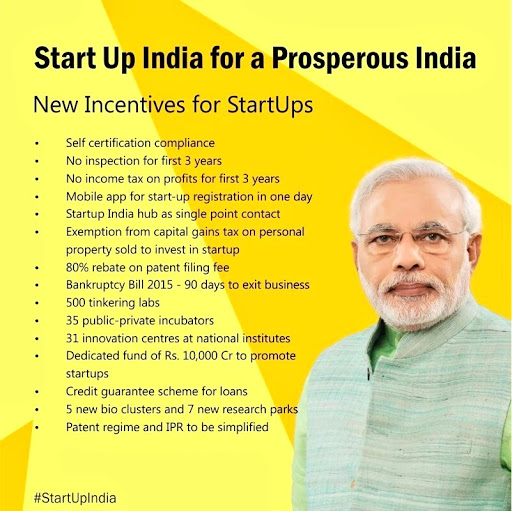




 Eduindex
You must be logged in to post a comment.