8 Hardest Languages to Learn In The World For English Speakers

Which languages are the most difficult to learn? You can see where different languages broke off as you peel back the onion to the beginnings of language creation, often known as the ‘Old World Language Families.’ You may now see why Spanish has parallels to languages such as German, Italian, and French. And why Korean is comparable to Mandarin, Japanese, and other Asian languages. We’ll concentrate exclusively on the most difficult languages for English speakers to learn.

Photo by Pixabay on Pexels.com

1. Mandarin: Why it’s so difficult: English may be the most widely spoken language on the planet, but it comes with its own set of challenges for native speakers. Because Mandarin is a tonal language, adjusting your tone can give a word a whole different meaning. Thousands of letters, intricate systems, and a wealth of homophones make it one of the most difficult languages to learn in the world.

2. Icelandic: Why it’s difficult: The Icelandic language has remained unchanged since the ninth and eleventh centuries, but it continues to add new meaning to old terms. It also doesn’t help that there are only about 400,000 native speakers with whom you can practise.

3. Japanese: Why is it difficult: There are three distinct writing systems in Japanese: hiragana, katakana, and kanji. Japanese students must first study thousands of distinct characters in these writing systems before they can begin writing. It is, nevertheless, much less difficult to learn than Mandarin!

4. Hungarian: Why is it difficult: As previously stated, most languages are descended from the Indo-European language family. Hungarian, on the other hand, is a Finno-Ugric language in which words are produced separately. To put it another way, it’s not the way English speakers generally construct words or phrases. ‘With my [female] friend,’ for example, is shortened to to ‘barátnőmmel.’ Are you perplexed yet? We’re in the same boat.

5. Korean: Why is it difficult: Korean is an isolated language that is not related to any other language family. There’s more, though. There are seven main speech levels in Korean, which native speakers switch between, depending on the formality.

6. Arabic: Why is it difficult: Despite the fact that there are 221 million native speakers from whom you can learn, Arabic remains one of the most difficult languages to master. First, when writing, vowels are not included. To make matters even more complicated, most Arabic letters are written in four distinct ways depending on where the word is placed.

7. Finnish: Have you ever seen The Lord of the Rings? The Elvish language was founded on the Finnish language by author J.R.R. Tolkien. Finnish, like Hungarian, is a Finno-Ugric language with a lot of grammatical intricacy. And just when you think you’ve figured out how to translate Finnish to English, you’ll discover that current Finnish speakers have their own method of expressing emotions that differs from the standard translation!

8. Polish: Making pierogies is one thing, but speaking the language of the country that produces them is another. The Polish language’s complexity can be divided into two categories. First and foremost, the pronunciation. For novice learners, simply saying ‘hello’ (cześć) is a headache because the ‘c’ and’s’ are pronounced significantly differently than in English. The other is that the Poles have seven different gender-affected grammatical cases and seventeen different cases for numbers. Yes, there are seventeen distinct ways to say ‘ten.’

The main crux is that the most difficult languages to learn for English speakers are determined by a variety of criteria, not just one. The number of speakers, linguistic origins, resemblance to English, and other factors all contribute to how difficult it will be to learn. Every language will have its own set of difficulties, but it will also have its own set of rewards, joys, and fulfilment. Remember that whatever language you choose to study, your time will be well invested.

10 Interesting Facts About Harry Potter

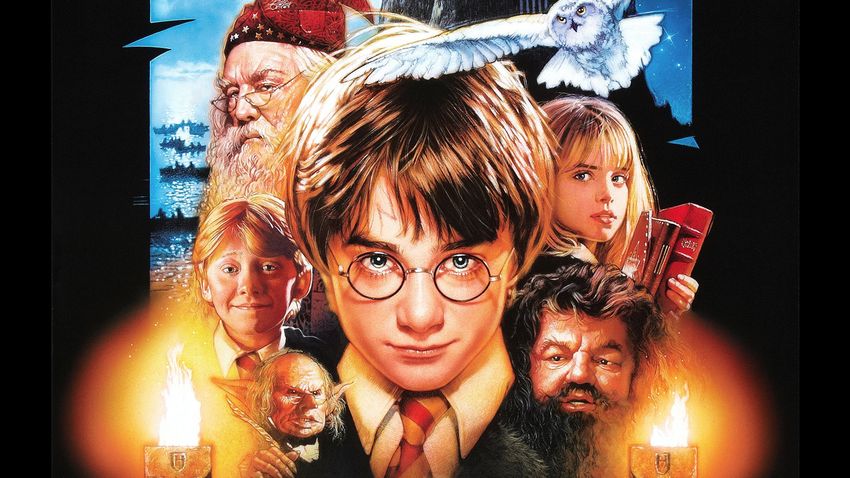
There’s no arguing that “Harry Potter” is a cultural phenomenon, whether you’re a die-hard fan or a Muggle who’s only seen the movies. Here are 10 interesting facts that you did not know about the Harry Potter franchise.

1. Rowling and Harry Potter share a birthday: J.K. Rowling: J.K. Rowling’s birthday comes on July 31st; being the author of Harry Potter, Rowling took the advantage of the writing license, and decided to give her birthday (except the year, of course) to her main character.

2. Rowling gave her characters names that reflect their roles in the series: Rowling’s world-building is legendary among fans, and the unique names she gave her characters are no exception. She disclosed on Pottermore that she came up with names for 40 Hogwarts students in Harry’s year, including every member of the Golden Trio, early in the creative process. Harry’s name, for example, refers to his leadership skills, while Ron’s refers to his function as a sidekick. “Harry” is a Middle English variant of the name “Henry,” which has been popular among English kings for ages. Rowling appears to have based “Ronald” on the Old Norse “Rögnvaldr,” a title for a ruler’s adviser. Hermione’s name, which comes from Shakespeare’s “The Winter’s Tale” (as well as Greek mythology in general), has less to do with her personal characteristics and more to do with her Muggle parents’ desire to come up with a witty pseudonym.

3. The “Harry Potter” books have been translated into around 80 languages, from Albanian to Hebrew to Scots: The “Harry Potter” books have sold more than 500 million copies worldwide and have been translated into 80 different languages, including Scots, which is spoken as a first language by 90,000 people.

4. Rowling jotted down the Hogwarts house names on an airplane vomit bag: Many people, including celebrities, connect strongly with a Hogwarts house. Rowling first scribbled the words Gryffindor, Slytherin, Ravenclaw, and Hufflepuff on the back of an aircraft puke bag, which may surprise you. In 2017, she divulged this tidbit on Twitter.

5. When she invented Dementors, Rowling drew from her past experiences with depression: Rowling struggled with depression when she was in her twenties. Dementors, she said in an interview with Oprah Winfrey, are based on the “hollowed-out feeling” of sadness. “I know sadness. Sadness is to cry and to feel. But it’s that cold absence of feeling — that really hollowed-out feeling. That’s what Dementors are,” she stated.

6. Rowling planned in advance who would meet a grim fate in the series — but she decided to spare one character’s life at the last minute: One of the plot aspects that Rowling planned ahead of time is character deaths. She had intended for Ron’s father, Arthur Weasley, to die in “Order of the Phoenix,” but she altered her mind. In a 2007 interview with “Today,” she said, “I think part of the reason for that is there were very few good fathers in the book.”

7. Some of the most expensive costumes to make were the Hogwarts uniforms: The Hogwarts uniforms were arguably of the most expensive clothes in the series to produce because they contained silk ties and wool sweaters. She previously told Insider, “I never wanted to use anything but the most beautiful material.” “The ties are silk, the sweaters are wool, and the gowns are made of a very expensive material.”

8. Some of the food on set was real: Despite the fact that part of the food in the “Harry Potter” films was painted resin, there were edible things in the mix for the feast scene in “Goblet of Fire.” Try some of the wonderful options at Universal Studios’ Wizarding World of Harry Potter, from butterbeer to bangers and mash, if you want to eat like a Hogwarts student.

9. Edinburgh, Scotland, where Rowling resides, provided a ton of inspiration for the series: The Gothic architecture, cobblestone streets, and tight alleys abound in Scotland’s capital. From Greyfriars Kirkyard, where the “genuine” Tom Riddle is buried, to George Heriot’s School, a private institution whose turreted architecture inspired Hogwarts, Rowling was fascinated by the city’s locations.

10. Like the multitude of spells in the series, Hogwarts’ official motto is also in Latin: Rowling is well-versed in Latin, having studied Classical languages and mythology at Exeter University. The series’ many spells, as well as Hogwarts’ motto, “Draco dormiens nunquam titillandus,” (“Never tickle a sleeping dragon”) are based on that old language. “You know the way that most school slogans are things like persevere and nobility, clarity, and fidelity or something,” Rowling noted in a 2005 BBC interview “it just amused me to give an entirely practical piece of advice for the Hogwarts school motto.”

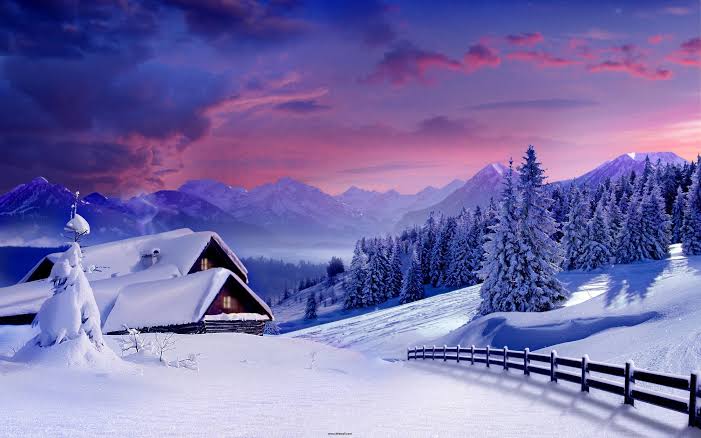
Chilly memories -winter

Winter is one of the most important seasons in India. It is a part of the four seasons that occur in India. Winters are the coolest season that starts from December and last till March. The peak time when winter is experienced the most in December and January. In India, winters hold great importance. In addition, the essence it has is admired by many people. Winters give you the time to indulge in various activities like snowball fighting, building snowmen, ice hockey and more. It is a great time for kids to enjoy their vacations and get cozy in their blankets.

Essence of Winter

During winters, schools usually take a break and close down. The days are shorter and the nights get longer. The chilly mornings give you a different sense altogether. Hot drinks like coffee, tea, and hot chocolate are enjoyed more during winters. The sun rises quite late and sometimes it does not.

Even when it does, it doesn’t get a bit hot. People long for a little sunshine as the cold weather sends chills down the spine. You see people on the roads burning woods and paper to get a little warmth. However, not many people prefer going out in winters. They like sitting by the fireplace or heater all day.

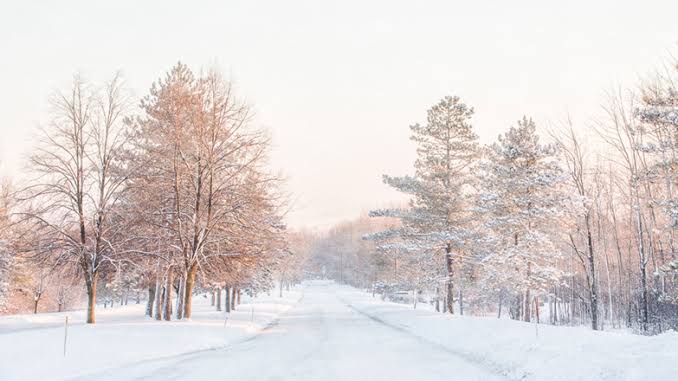
In the hilly areas, people experience snow during winters. They have to shovel it out of the way to make way for walking. The essence of winters is enhanced by Christmas as well. It sets the holiday mood for people and is admired all over the world.

In the hilly areas, people experience snow during winters. They have to shovel it out of the way to make way for walking. The essence of winters is enhanced by Christmas as well. It sets the holiday mood for people and is admired all over the world.

As the animals do not have proper shelter, they too lose their lives. In addition, many flights are also canceled during this season. Nonetheless, this does not make winter any less important. It is quite essential to maintain balance in the weather of our country.

Why I Love Winter?

I personally love winters. This season brings a lot of healthy fruits and vegetables. People get the chance to eat fresh grapes, apples, carrots, cauliflower, guava and more. Furthermore, so many beautiful flowers bloom during this season. These flowers include roses, dahlias and more. This makes winter even more beautiful than it already is.

Other than that, no lizards are to be found as they go in hibernation. This makes me very happy and lets me live fearlessly. Most importantly, winter mornings are the best part of this season for me. I like getting up early in winters and witnessing the morning dew on flowers. There is a different vibe altogether that comes with winters.

Also, our school organizes bonfire which is one of the most awaited events of the year.

In short, winter is as important as any other season. Sure, it may have its negative sides and positive sides, but that happens with every season. Winters helps you enjoy long morning walks and fresh air.

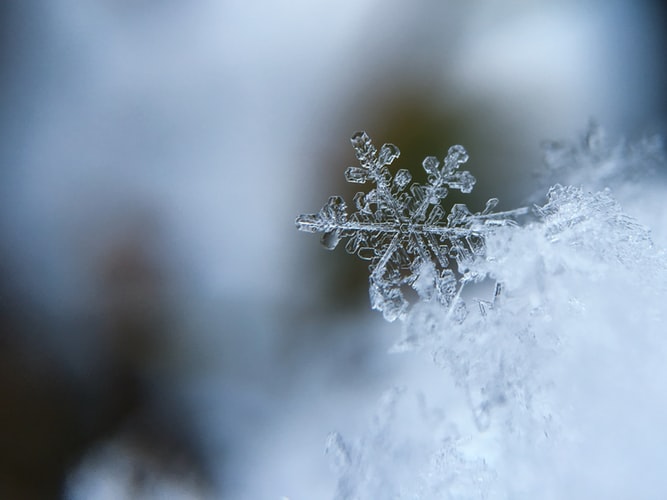
“To appreciate the beauty of a snowflake it is necessary to stand out in the cold”

—ARISTOTLE