
LA DOLCE VITA (1960) MOVIE REVIEW


La Dolce Vita is directed by Frederico Fellini, and it is one of my favourite films of all time. The film shows seven days in the life of this journalist, Marcello Rubini. these seven days show him pursuing people who can fetch him news, hanging out with a famous movie star, hanging out with his father, dealing with his toxic girlfriend while he is trying to find his place in modern Roman society.

La Dolce Vita is not a film for everyone, on the surface, it looks like a film about a guy who’s navigating through life. But below the surface it’s one of the deepest films ever made. It is a satire on modern society and a character study about this hedonistic guy who is really involved in the upper class Rome party life. He is living this glamourous life in which he is trying to find pleasure and entertainment. He has this idea of an ideal life which he is trying hard to achieve. seeing his friend, Steiner living it makes him envious. He spends time with various women but none of them are able to alleviate the emptiness inside him. Throughout the film he is not able to achieve the things he wants. Fellini is trying to convey to the viewers how meaningless and futile life is. he is also trying to say that we look for happiness elsewhere and how we are not able to harness the happiness inside us.

All the seven chapters end with dawn. The night seems to be going good but as dawn comes, something or the other happens that makes our lead Marcello feel disappointed. The film also shows how every relationship that this guy has is not that good, be it the relationship with his father who he barely knows or his girlfriend who he doesn’t love. Fellini has also shown the city of Rome, as both a city of dreams but also as a city of disappointments. He’s also shown the contrast that this city presents, from people of the high-class cafe society to the underprivileged people. People are emotionally detached from each other and most relationships are selfish and superficial. There is also some commentary on religion specifically Christianity- about how people would just blindly believe anything related to God.


This review will not complete if I don’t talk about Marcello Mastroianni. He embodies this existential character. A lot of the film relies on his facial expressions, and I think that he’s done a tremendous job. His character has been given so many layers that you understand why he may be acting a certain way.

In the end, La Dolce Vita is a really deep movie that would take a few watches to fully understand the essence of. Frederico Fellini is a genius, the things that he has talked about and the way he has shown them is truly extraordinary. La Dolce vita just may be my favourite Italian film of all time.


THE ASPHALT JUNGLE (1950) AND CHARLIE WILSON’S WAR (2007)

  1. THE ASPHALT JUNGLE (1950)

John Huston’s The Asphalt Jungle (1950) is about a group of people who plan to steal jewels that are worth $ 1 million. As they are done with the heist they face betrayals from each other. They have to deal with their greed while also ensuring that they do not get caught by the authorities.

In this film the heist is not what matters, but the characters do. The characters have been given different shades, so we understand their motives. They aren’t bad guys after all, they are like you and me. This humanness given to the characters is what makes this film stand out from other noirs. They’ve been shown from an empathetic lens.

This is one of the best ensembles I’ve ever seen. Sterling Hayden is a star, he’s charismatic as this low life/hooligan. Sam Jaffe just fills every scene with his somber energy and Louis Calhern is charming as this criminal attorney.

John Huston is one of the most important figures in American cinema. He gave the American noir genre a head start. This is one of the very first caper films. He has a very unique way of capturing a scene. He shoots it in small and confined locations. This helps in elevating the tension. This style of his has inspired several great filmmakers. With this movie, he’s done a great job at creating tension, you’re on your toes from the very first scene. Huston is at the top of his game with this movie, Asphalt Jungle is one of the best heist films ever made.

  1. CHARLIE WILSON’S WAR (2007)

Charlie Wilson’s War is based on the true story of congressman Charlie Wilson about how he let go of his glamourous life and helped support the Afghan troops against Soviet invaders.

Charlie Wilson was a very interesting personality with a controversial and vibrant life. He enjoyed his drugs, booze and girls to the fullest. The film portrays him in an alluring way. It also nicely portrays the things he went through, and how he persuaded people at different positions for the funding. It was interesting to see how things run inside the closed doors of the congress and government in general along with all the talk that goes behind everything. Tom hanks is captivating as Charlie Wilson. The charisma that he exudes with this persona is really noteworthy. The guy who stole the show for me though is Philip Seymour Hoffman. He’s super mesmerising as a CIA operative. My favorite scene of him was one in which he’s arguing with his superior over an assignment, it was just amusing and cleverly written. Which brings me to the writing. Written by the legend, Aaron Sorkin this film smartly balances comedy and drama. It is deftly structured and he knows how to write smart and funny dialogues without making them sound cheesy. Mike Nichols’ has done a fine job with the direction, and I loved the way he’s presented the characters.

Overall Charlie Wilson’s War is an entertaining political satire that is definitely worth your time.

A path to self-discovery


How often do you sit with yourself in isolation? Or how often do you practice meditation and try to find answers to your inner conflicts? Many of you might not find the time or have patience to sit and watch your own thoughts, right? Well, meditation is much like observing a movie but to take a seat and watch your own thoughts for 2 hours is especially difficult unlike watching an enticing two-hour movies easily, because it’s like watching your own reality dealing with your own thoughts.
Sitting quiet for 15-20 minutes or even an hour is pretty challenging as you cannot completely detach yourself from the thoughts occurring in your mind. It is thus exhausting to many. But, if you can calm your mind, stay focused and confront your thoughts and challenges, your growth in life is certain.
Similarly, if you want to understand life and find your true self, it is important to understand that your life is not defined by what’s happening around you or the circumstances you are put through but it is actually defined by the way you look at things and the way you deal with your inner self at the times of crisis.
Seating in solitude and spending time with oneself is essential at times to understand and analyze yourself better. It helps you to become your own best guide by observing and analyzing the mistakes you have done so far in your life, the lessons learned from it and how you should make peace with yourself. After all, the entire experience of your existence is within you and nowhere else. Inner peace is thus very essential for one’s mental well-being.
However, the problem with today’s modern life is that we don’t give ourselves the much-needed time to stop and reflect upon the life we have lived so far, as we are too busy making an attempt to create a life or too busy trying to become someone we are not. This is where sitting in silence or meditating for few minutes can help us dig deeper into our inner self and ultimately help us discover our true self and also help in finding the true purpose of life.

As Doctors embrace AI

In part one of our look at AI’s inexorable march into medicine and wellness, we explored how AI enhances diagnostics, clinical infrastructure, and preventative care.

Start there for a primer on attitudes, regulations, and the underlying technology, including Lenovo’s role in everything from hospital administration to algorithm development.

All that powerful transformation serves as atoolfor both patients and provider–and that trend will continue over the next decade.

So if AI is unlikely to supplant trusted doctors and must accommodate patient data privacy, where will the big changes happen?

AI in Five Years: Smarter Machines and Virtual Assistant

Incremental jumps in technology will increase the ubiquity and strength of the examples above, but where will the real change happen?

Consider how much happens behind-the-scenes when working with a virtual assistant on your smartphone.

From voice recognition that learnsyourvoice to combing through live search results to leveraging past behaviors to sharing results across devices—this unfolds instantly and most of us never even consider the AI-poweredhow.

“Imagine you go to the hospital for a PET scan or MRI,” said Scott Tease, Lenovo’s executive director of High Performance Computing and Artificial Intelligence.

“Before the doctor or technician reviews the images, an algorithm will interpret the data and flag every irregularity.

This accelerates the caregivers’ efforts, draws their attention to issues, and helps ensure nothing is overlooked.

In fact, these processes are under review by regulatory bodies right now.”

Enhanced resolution and analysis will allow remote scanning and diagnosis — even of small and subtle symptoms.

Doctors may be more apt to embrace this use of AI, but what about the deluge of tracking data?

The prospect of health-tracking devices automatically pinging clinics with potential concerns raises more than a few eyebrows.

We may also see the growing demand for “convenience”—everything available at your fingertips through a website or app—reshape low-risk patient care.

Here, AI may lead to chatbot-style physician care, where a series of targeted questions combined with biometrics will help people find the right care.

Telemedicine, of course, made consulting a doctor from the comfort of home possible years ago, but an electronic physician could radically reduce cost.

Even if a real person steps in to review and approve, an AI-led interview and data assessment would certainly increase efficiency.

“Convenience, risk assessment, and accuracy all play a role.

We’re not likely to see the chatbot approach take over for anything with dangerous symptoms.”

AI in 10 Years: Personalized, Globally Accessible Medicine

Assume that the changes outlined so far march forward, driven by advances in technology and wider adoption.Misconceptions about AI will also continue to erode, and successful deployment of AI-assisted technology

Who can guess how fleets of autonomous vehicles smoothly navigating city streets and highways will change perception?

AI also notoriously employs a so-called “black box”—the essential genius of deep-learning unfolds behind a closed curtain.

We know the input and output, of course, but seldom the step-by-step process of the AI reaching its conclusion.

It can be difficult to trust an answer when the underlying work is hidden (and may contain accidental bias).

Trust will likely grow over the next decade, but even without that embrace, things may wildly transform—as much as possible in the regulated world of medicine.

Mapping a genome opens a window into inherited conditions, susceptibility to disease, potential response to treatment, and countless other insights.

But the process takes time and the considerable might of high-performance computers.

“A patient anywhere in the world could share a blood sample and deep biometrics,” he said

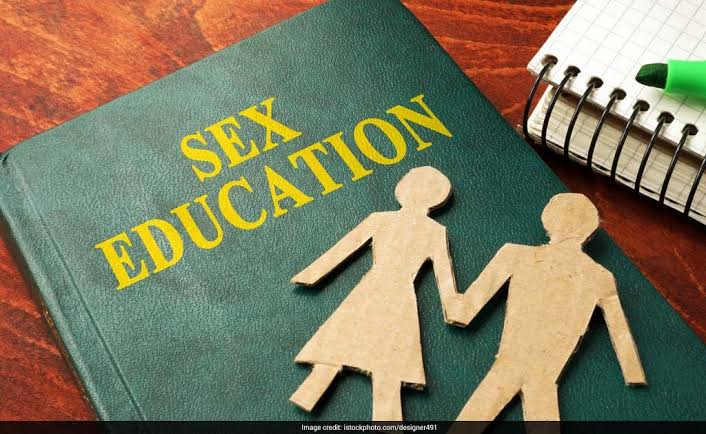
Sex Education in India

“SEX” One of the biggest taboo in India. There are very few people comfortable talking about sex and don’t think sex as taboo. The condition of sex education in India is not very much impressive, there is need of strict education system to ensure sex education in every school. It is important for making student aware about proper information about sex, contraceptive and diseases related.

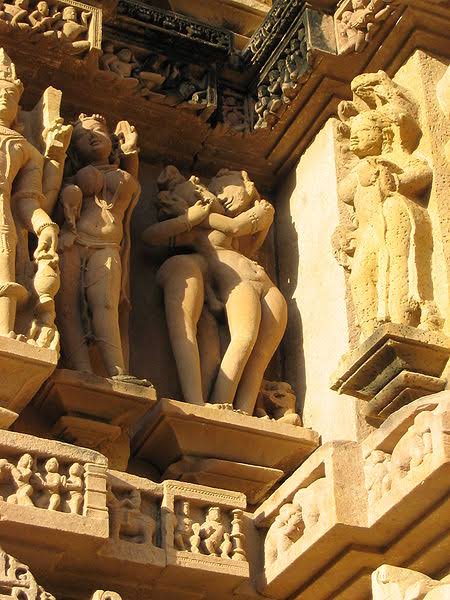
In early time there were images of sexuality and gratification and biggest book of early time about sex ‘kama sutra’ by Vatsyayana, which is a Sanskritic text dating as far back as 400 BCE – 200 CE. It talks about the four main philosophies of Indian life or the purusharthas, namely Dharma, Karma, Atharva and Moksha. These are virtuous living, material prosperity, desire, and liberation. These books talk about sex education but still some Indian does not accept sex as natural thing.

In 1976 a seminar held by Indian Council for Child Welfare (ICCW), and sex education was introduced in India but not as a whole subject but as a part of a subject. There are three categories of sex education in India (1) targeted at adolescents at school (2) family planning for adults (3) HIV/AIDS prevention education.

Beside being sex education in course many teachers are not comfortable and confident about teaching sex education to students. The reason behind it the culture and thinking people have. In India parents are not even teaching there children about safe sex and contraceptive, in rural areas girls were not aware of menstruation before the age and don’t know about safe sex. girls are encouraged to reproduce as early as they can after they are married. Therefore, 36% of children (aged 13–16) and 64% of adolescents (aged 17–19) are pregnant or already mothers.

One the reason of rape in India is lack of sex education. Because they don’t get proper information about sex and consent of partner, they get to know about sex through wrong sources what we call porn. Knowing about something through wrong source leads to wrong action. Many girls are not aware of contraceptive and diseases HIV. National Family Health Survey conducted in 1992–1993, 7.1% of married women (aged 15–19) use contraception, compared to 21% among women (aged 20–24).

There must be strict rules for sex education in every school and exam should be conducted to know that students are really aware of information or not. Proper information will help to reduce the spread of HIV and spread the awareness about contraceptive. Using contraceptive and family planning will help. The major reason of growing population of India is not getting information about contraceptive and making comfortable using it. Media should take the responsibility to spread awareness among the masses. A proper sex education will help Indian to grow in several manner and reduce the problem of rapes in india. There is sex education but not properly implemented and there is no one to check the system. Government should make it strict and appoint someone to check and balance

O BROTHER, WHERE ART THOU, AND Y TU MAMA TAMBIEN – MOVIE REVIEWS

  1. O BROTHER, WHERE ART THOU (2000)


O Brother, Where Art Thou is set in 1937 Mississipi, and it’s about Ulysses Everett who escapes from prison with his two companions Pete and Delmar. Their goal is to now find the treasure that Ulysses had buried, without getting caught by the authorities. And we are shown all the problems and chaos that they encounter on the way. It’s based on the greek poem Odyssey by Homer.

I like what Coen brothers have done with this movie, they have nicely captured the depression era. There’s a lot of attention to detail to create a sense of that time period. The extensive use of the sepia tint adds to it. The characters are all whacky and nicely done. Our leads George Clooney, John Turturro, and Tim Blake Nelson are excellent as these convicts. Even the minor characters made me laugh as they are all eccentric, like the scene with Coen’s long time collaborator, John Goodman was the most memorable because of how surreal and funny it was.

As always, the writing is really fine. Coen Brothers know how to create a clever southern crime comedy. It’s really funny and entertaining. And it’s all very unique! I’ve never seen anything like this.

I really liked how they’ve used folk and country music. The music is important to the film as it precedes the story. The film would not have been the same without the music.

All in all, O Brother, Where Art Thou is one of the many perfect films made by the Coen Brothers. It’s odd, unpredictable, hilarious, and original.


2.

Y TU MAMA TAMBIEN is about two guys in their late teens, Tenoch (Diego Luna) and Julio (Gael Garcia Bernal) who take a trip to an imaginary beach in order to impress this Spanish woman who they are infatuated by. On the surface this may look like a  normal road trip film, but below all this there’s a lot of intelligent subtext. It’s them coming to terms with their identities while also learning about the important things in life.


Cuaron perfectly captures youth. Our two leads are two hedonisitic teens who are oozing of sexual energy. Them just looking for simple pleasures in life was very interesting to watch. One of the most important themes of the film is that of sex, it shows how sex can often make or break a relationship and it’s often used by our characters just to ignore and get over stuff. The film also talks about life and shows how often people we know may be living a completely different life that we are not aware of. We also see how this brings strain in their relationship.


The movie also captures the political atmosphere of Mexico in that period, and how a few economic changes have repercussions on the lives of the common people. We also see the class divide in Mexico, our leads the two friends are from completely different backgrounds. There are often subtle nods to these things. Hats off to the writers for creating these smart and subtle nuances.


The movie does a very unique job at portraying the characters. We see things as they occur and there’s no in point into the mind of any of the characters. So we do not know if the characters understand how moral their actions are. It’s open to our interpretation. That was very smart.


Alfonso Cuaron has created an atmosphere where we feel like we are at an arm’s length from these characters. There are close to no close ups, which helps in adding to this feeling. We are like a fly on the wall witnessing these raw moments just as they play out. I also loved his use of symbolism that adds an extra layer of meaning and helps the movie move forward. Emmanuel Lubezki’s cinematography is an entity of it’s own. There are close to a dozen shots that made my jaw drop, two of them being long takes of just the characters talking.


Y tu mama tambien may seem like a teenage sex comedy but it’s much deeper. This film could be studied, and every time you’ll find something new. This is a hilarious, thought provoking and thematically rich film made by one of the most versatile directors working today.

Easy steps to lose weight fast

Losing weight is one of the most difficult tasks that I am sure everybody has faced once in their life, specially those who have weight loss goals in their minds but are still some how not being able to achieve it. Don’t worry readers, you can achieve your weight loss goals with certain dietary changes and get your desired body. Determination and consistency in binging healthy food is all that’s required. You need to stay focused on your goal and say no to every food that does no good to your body, and instead makes you gain more weight.

1. Avoid Sugar intake- food with excessive sugar are very bad for your health as it only helps in excessive weight gain. Excessive sugar consumption leads to building up of fat around the abdomen as sugar consists of both glucose and fructose. The liver when gets overloaded with fructose turns it into fats which gets stored in your body, thus leading to more weight gain. Therefore you should stay away from sugary food and sugary drinks in order to avoid weight gain.
2. Consume more protein- protein is the most important nutrient for a person aiming to lose weight. Protein rich food can lower down one’s appetite and helps you feeling full the entire day which ultimately make you consume fewer calories everyday. Egg is a good source of protein.
3. Fewer intake of carbs- fewer consumption of carbs is another effective way for losing weight. Low carb diets lead to quick reduction in water weight, which often gives people faster results. Avoiding refined carbs like sugar, candy, and white bread can help. You can also substitute white bread and white rice for brown bread and brown rice respectively.
4. Consume more fibre rich food-  eating plenty of fibre rich food is equally important for weight loss. The best way to get more fibre is to eat fruits and vegetables. Legumes are good source of fibre. Cereals like oats can also be consumed for breakfast or dinner as they are very low in calories.
5. Exercise regularly- Exercise is the best thing you can choose to lose weight in a healthy way. Regular exercise would not only make your body lose extra pounds but would also help you live a long, healthy life devoid of diseases. You can get started from easy exercises like jogging, brisk walking,sprinting or cycling. Walking is the best exercise to start with for beginners. Walking not only helps in eliminating rigid body fats and your belly but it also has many other health benefits.
Apart from walking,weight training and cardiovascular exercises are very effective in eliminating fat across your body.
So, this time be determined and focused enough to achieve your ideal weight and achieve that dream body. Good luck for your weight loss journey, but always remember that losing weight ideally is always about 80% diet and 20% exercise. Go ahead readers and change your life by choosing a healthy lifestyle for yourself, starting from today!

Tips to boost your mood when you feel low

Feeling low? We’ve all been there! There are times in our life when everything seems so difficult to achieve. We feel lost and blue when life donot go the way we want to. Life is full of hardships. Everybody is fighting their own battle. Feeling low is quiet normal for anybody. There will be people who criticise you and would try their very best to break you and bring you down. It is probably during such points in life when you start degrading yourself and start treating yourself as a loser just because some people are labelling you so. Many people fall for it. They take people’s judgements personally instead of ignoring it and this is where you slowly start losing your self esteem and confidence in yourself. You get so affected by the negativities around you that you tend to forget about your accomplishments in life against all odds.
Follow the following tips to feel better about yourself whenever you feel low.
1) Stay away from negative people- Don’t let anybody influence your mood no matter what. Next time if anybody tries to pull you down and make you feel like a loser, simply ignore them, be it any person- your friend, cousin or a relative. A true friend would never try to bring you down. Don’t surround yourself with people who don’t have any good intention for you. Choose your friends wisely.
2) talk it out- call someone who genuinely cares for you. Talk to your parents or your beat friend. Tell them what’s bothering you. Venting out your emotions really helps at times. Speak to the ones who won’t judge you and who loves you for who you are as a person.
3) pen down your accomplishments- write down about everything if you have accomplished so far. Write down even the smallest of things like cooking for the first time, learning a new skill, winning a prize for any competition and so on. This would boost your spirit and make you feel worthy. You will gain back your self-confidence which you might have lost to people’s opinions.
4) Be thankful- be thankful to God and the Universe for what you have achieved so far. Stand before the mirror and appreciate what you see. Be thankful to the nature for your existence and for how you look and how you are as a person.
5) self- care- self care is very important in today’s busy life. We are so busy in our work life and in the rat race to success that we often tend to ignore our health and mental well being. Practise yoga and meditation early in the morning. This would help you in reducing stress and would lift your mood, filling your mind with positivity for the day.
6) Seek professional help- if you constantly feel low from a long period and nothing helps in boosting your mood then you should seek professional help. Prolonged feeling of lowness may lead to anxiety and depression, therefore seeking help of a professional is advisable.

The key to happiness lies in your own self. Don’t let anybody steal your happiness. You deserve to be happy. Don’t let anybody kill your happiness.You

OUT OF THE PAST (1947) AND PHANTOM THREAD (2017)- MOVIE RECOMMENDATIONS

  1. OUT OF THE PAST (1947)

Out of the Past (1947) is about a private detective who moves to a Californian countryside to start a new life. But his past catches up with him. He’s once again drawn into the world of crime, deceit and corruption.

This is easily in my top 3 favourite noirs ever. It’s all because of the complex and mind boggling script. The director finds ways to tell the story in unique and smart ways. The second act onwards the film is one jazzy and complicated trip. A lot of events take place, and things get twisted. So it may get hard to keep up, but this crazy ride is what the film is all about.

Jane Greer in my opinion, plays the best femme fatale ever. It’s because her character is not as over the top as the others. Her character is smart, subtle and low key. Robert Mitchum is a great actor who I think didn’t get his due. He’s charming as this private eye. The beef between him and Kirk Douglas’ character is really well done.

Tourneur has made this film in his unique style, it’s stylistically a little different from other noirs of that period. I loved his use of darkness in every frame. The rhythm that this film moves with, and the melancholic atmosphere add to the suspense.

You have to watch this movie if you’re into film noir. It’s one of the more meatier and complex films of that period. All thanks to Daniel Mainwaring’s brilliant script and Jacques Tourneur’s powerful direction.

  1. PHANTOM THREAD (2017) is about a well known designer, Reynolds Woodcock (Daniel Day Lewis) who lives a meticulous and fixed lifestyle. He’s controlling, obsessive and stubborn. He wants everything a certain way. All this changes when he falls for a waitress, Alma Elson (Vicky Krieps) who ends up becoming his muse.

This film is like one elegant and sophisticated dinner. The atmosphere is posh, eerie and claustrophobic. Everything looks so perfect, which means that something is bound to go wrong. Johnny Greenwood’s incredible score helps in creating this mood. The lighting is some of the best I’ve ever seen and the film is gorgeously shot. The colour grading is whitish and warm. It’s soothing to the eyes, and also helps evoke an old school British aesthetic.

The way Paul Thomas Anderson has portrayed power dynamics, is masterful and I’ve never seen anything like this. Just a scene of Reynolds taking measurements of Alma establishes so much about the character. The depth given to the characters is really commendable and does pay off till the very end. Daniel Day Lewis is brilliant as always. He just gets lost in the character and you see no shade of DDL in Woodcock. This was his last performance before he retired and it’s a brilliant farewell performance.

The dialogues are paper cut sharp. There are a lot of silences, and the silences often convey more emotions than the dialogues. PTA is a master storyteller as you all know, he has incorporated a lot of fairy tale references. The film is very dense and intricate, on every viewing, you’ll be rewarded more stuff.

Phantom Thread has a pretty interesting ending, it’s weird and may not work for everyone but it worked for me. I love it when great filmmakers like PTA take risks and show us something new and out of the picture. Ballsy decisions like these help in developing this art form further.

Phantom Thread is a masochistic love story like no other. It’s elegantly made with a lot of amazing “show-offy” filmmaking by the greatest director of the century, and after seeing it a second time I could say that it’s close to a masterpiece.

MOVIE SUGGESTIONS- MAN BITES DOG (1992) AND RIO BRAVO (1959)

  1.  Man Bites Dog (1992)  is a Belgian dark comedy about a film crew that follows the daily routine of a serial killer as he goes on killing and hurting people. But as time moves on, even they start participating in his wrongdoings.

This is one of the most disturbing films I’ve ever seen and it is a great satire on media. It talks about how people working in that industry would often themselves commit crimes in order to get a sensational story. They would go till any lengths to get something violent and controversial.

Benoit Poolveoorde is the lead and he is very charming. He’s always giving his thoughts on various subjects and he is hilarious. You are made to identify and relate with him. But every time he commits a crime, the film makes us question ourselves over whether we enjoyed seeing him do that. And I think that’s extremely smart. The film shows how we often lose our humanity in order to just enjoy ourselves. You’ll be laughing as he goes on killing people in the first half but after a point you’ll ask yourself, “should I be laughing at this?”. This message is what the directors are trying to convey to us.

The film is made in a mokumentary format and it often feels like the events that we are seeing are actually real. I think this stylistic choice was pretty great because it suits the film’s shoe string budget. Man Bites Dog is an amazing example of independent filmmaking. It’s been made in the hands of barely 3-4 people, that too students. And they’ve succeeded in showing an entertaining character study and in making us actually think about humanity.


  1. RIO BRAVO (1959)

Rio Bravo is about the sheriff of a small town in Texas who must keep custody of a murderer whose powerful brother is trying to get him out of there. The sheriff and his deputies – a “bar fly” and an “old cripple” must find a way to ensure that they are not able to help him escape.


Howard Hawks is one of the most important figures in American cinema, with this film I loved how he’s blocked and framed every scene. He positions every character in very interesting places in the frame. This aspect of the film could be studied in film schools. I like how he portrays the lead in his films. His lead character is always this cool and professional guy. He’s given this persona or attitude that makes us believe that he is capable enough to deal with whatever problem comes his way. This idea of masculinity went on to inspire many films.


Rio Bravo is what Tarantino calls a “hangout movie”. It’s not heavy on plot, you just see these characters hanging out, and by the time the movie is over you are friends with them. I loved the dialogues, the whole movie relies on the constant bickering between these characters. This approach to story telling actually made me care for them.


The characters have all been given a lot of layers. We are told a lot about their past. It’s entertaining to see them struggle in these dangerous situations. The film focuses a lot on their relationships with each other. John Wayne, the biggest Western star of that time is very charismatic and so are Dean Martin, Walter Brennan and Ricky Nelson. They all share great chemistry. The production design is stunning, and the action sequences are uniquely classy.


All in all, Rio Bravo is a well directed western with crisp dialogues and great performances. The pacing may be an issue for those who are new to this genre, but just stick with it, because once you’re sucked into this world, you’ll have a great time.

NATIONAL EDUCATION POLICY 2020

Education is the fundamental way for achieving full human potential, developing an equitable and just society and promoting national development. Providing quality education universally to raise the literacy rate to its extent, the main motive and only key to boost economic growth, social justice and equality, scientific advancement, cultural advancement and nation’s integrity. Moreover its best way forward for developing and maximizing the country’s talent and utilizing it for good of the individual, the society, the country and for whole world. India is going to have world’s highest population of young people over the next decade, and our ability to provide worth education opportunities is going to decide the future of the nation.

Although today in the eve of technology, where machine learning , artificial intelligence are replacing humans with machines , the only person stands out is that which have something that makes it different from others . This gap of what we possess or current state of learning outcomes and what is required get bridged through undertaking change in reforms of education policy. The Education policy we were till relied on was designed and implemented in 1986 which somehow based on memorizing things i.e. the more you memorize the more scores you get.

But, under the purview of self reliant India and in respect with ongoing pandemic situations, to make Indians self sufficient, along with change in many fields the change in education policy is appreciable.  In July 2020, “New Education Policy, 2020” [NEP] was approved by cabinet and it is based on the principle that education must develop not only cognitive capacities –both included foundational [literacy and numeracy] and high order thinking skills [critical reasoning and logic based] but also social, ethical, emotional and dispositions capacities too. This policy aims for the major overhaul of the Indian education system and under this it is expected that the education system will be completely transferred by 2040.

Positive Impacts on The Education System

  • On Schools
  • School years are changed from 10+2 format to 5+3+3+4 format which to be precise means that students get freedom of choosing their subjects in 9th  standard and AISSCE get transferred to collages. And for the first time, Early childhood Care and education [ECCE] get included in education policy. This aims at achieve the gross enrollment ratio 100% in pre-schools to secondary education by 2035.
  • To   eliminate the rote learning and promotes the holistic development of the children, the present curriculum and pedagogy will be revamped to make it suitable for 21st century.
  • Nutritious breakfast will be provided in addition to mid day meal to make students more focused and concentrates on studies.
  • Vocational studies that impacts or improves employability chances as per trends among developed countries gets integrated to mainstream education which in previous policy considered as inferior subject.
  • It purposed imparting emotional skills such as empathy, communication, perseverance, public speaking, leadership qualities and many more in students along with intellectual skills. NEP 2020 also stresses on encouraging creativity and innovativeness in students. they will be provided technology advancements knowledge, fundamental duties, social issues etc.
  • “Right to Education” extended from 14 to 18 years.
  • To increase gross enrollment ratio and access to education, Online Distance learning, MOOC [Massive open online courses] options are given adequate consideration.
  • A regulatory system worked towards stooping the commercialization of education by increasing arbitrary fee.
  • National Test agency (NTA) will conduct high quality common aptitude test for entrances in order to reduce multiple test logarithms.
  • Teachers will be given “Continuous professional development “[CDP] for self improvement and to get more indulge or to bring more innovativeness in their existing approaches of teaching.
  • On higher education
  • Aims to increase gross enrollment ratio in higher education from 26% to 50% by 2030
  • Many higher educations are providing only limited courses but with NEP, 2020 it integrates these institutes into multidisciplinary institutions by proving wide choices of subjects.
  • It made degree flexible by proving entry and exit options to degree courses.
  • India will be transformed as a global study destination by allowing TOP 100 universities of world to open colleges in India. And further no student will be deprived of education because of financial inability.
  • “National Higher Education Regulatory Authority” [NHERA] will regulate all higher education institutes to eliminate duplicate regulatory efforts.

But a coin always has two sides; criticism comes always wherever positives come.

CRITICISM:

  • It was provided that funding for the education will increased from 4.6% to 6% of GDP to in=implement NEP,2020. But this COVID outbreak impacted the economy so badly that increase funding share in any sector is a terrible thought itself.
  • Mother tongue or local language as a medium of instruction was made mandatory till class 5th. This being criticized on the ground that English connects the whole world as its being spoken in many countries and somewhere it might impacts immigrants too.
  • This policy mentioned online education but in India stilt ere are many people who don’t have access to digital devices and internet connection
  • Poor infrastructure in educational institutions and shortage of teachers are not addressed.
  •  In general, some companies do not prefer recruiting the students that are graduated through distance learning courses. So, employability value of open learning courses should be addressed.

 CONCLUSION:

At present, the Indian education system is criticized by many due to many reasons such as its rote learning methods, outdated curriculum etc. India is ranking 35th in global education rankings of 2020. National Education Policy 2020 can completely change our education system for good because it crafted well according to the requirements of the 21st century. By 2030, India will have the largest population of youth. NEP 2020 helps in utilizing this demographic dividend. And It can also make India a knowledge hub of the world by attracting foreign students

NATIONAL EDUCATION POLICY 2020

Education is the fundamental way for achieving full human potential, developing an equitable and just society and promoting national development. Providing quality education universally to raise the literacy rate to its extent, the main motive and only key to boost economic growth, social justice and equality, scientific advancement, cultural advancement and nation’s integrity. Moreover its best way forward for developing and maximizing the country’s talent and utilizing it for good of the individual, the society, the country and for whole world. India is going to have world’s highest population of young people over the next decade, and our ability to provide worth education opportunities is going to decide the future of the nation.

Although today in the eve of technology, where machine learning , artificial intelligence are replacing humans with machines , the only person stands out is that which have something that makes it different from others . This gap of what we possess or current state of learning outcomes and what is required get bridged through undertaking change in reforms of education policy. The Education policy we were till relied on was designed and implemented in 1986 which somehow based on memorizing things i.e. the more you memorize the more scores you get.

But, under the purview of self reliant India and in respect with ongoing pandemic situations, to make Indians self sufficient, along with change in many fields the change in education policy is appreciable.  In July 2020, “New Education Policy, 2020” [NEP] was approved by cabinet and it is based on the principle that education must develop not only cognitive capacities –both included foundational [literacy and numeracy] and high order thinking skills [critical reasoning and logics based] but also social, ethical, emotional and dispositions capacities too. This policy aims for the major overhaul of the Indian education system and under this it is expected that the education system will be completely transferred by 2040.

Positive Impacts on The Education System

  • School years are changed from 10+2 format to 5+3+3+4 format which to be precise means that students get freedom of choosing their subjects in 9th  standard and AISSCE get transferred to collages. And for the first time, Early childhood Care and education [ECCE] get included in education policy. This aims at achieve the gross enrollment ratio 100% in pre-schools to secondary education by 2035.
  • To   eliminate the rote learning and promotes the holistic development of the children, the present curriculum and pedagogy will be revamped to make it suitable for 21st century.
  • Nutritious breakfast will be provided in addition to mid day meal to make students more focused and concentrates on studies.
  • Vocational studies that impacts or improves employability chances as per trends among developed countries gets integrated to mainstream education which in previous policy considered as inferior subject.
  • It purposed imparting emotional skills such as empathy, communication, perseverance, public speaking, leadership qualities and many more in students along with intellectual skills. NEP 2020 also stresses on encouraging creativity and innovativeness in students. they will be provided technology advancements knowledge, fundamental duties, social issues etc.
  • “Right to Education” extended from 14 to 18 years.
  • To increase gross enrollment ratio and access to education, Online Distance learning, MOOC [Massive open online courses] options are given adequate consideration.
  • A regulatory system worked towards stooping the commercialization of education by increasing arbitrary fee.
  • National Test agency (NTA) will conduct high quality common aptitude test for entrances in order to reduce multiple test logarithms.
  • Teachers will be given “Continuous professional development “[CDP] for self improvement and to get more indulge or to bring more innovativeness in their existing approaches of teaching.
  • Aims to increase gross enrollment ratio in higher education from 26% to 50% by 2030
  • Many higher educations are providing only limited courses but with NEP, 2020 it integrates these institutes into multidisciplinary institutions by proving wide choices of subjects.
  • It made degree flexible by proving entry and exit options to degree courses.
  • India will be transformed as a global study destination by allowing TOP 100 universities of world to open colleges in India. And further no student will be deprived of education because of financial inability.
  • “National Higher Education Regulatory Authority” [NHERA] will regulate all higher education institutes to eliminate duplicate regulatory efforts.

But a coin always has two sides; criticism comes always wherever positives come.

CRITICISM:

  • It was provided that funding for the education will increased from 4.6% to 6% of GDP to in=implement NEP,2020. But this COVID outbreak impacted the economy so badly that increase funding share in any sector is a terrible thought itself.
  • Mother tongue or local language as a medium of instruction was made mandatory till class 5th. This being criticized on the ground that English connects the whole world as its being spoken in many countries and somewhere it might impacts immigrants too.
  • This policy mentioned online education but in India stilt ere are many people who don’t have access to digital devices and internet connection
  • Poor infrastructure in educational institutions and shortage of teachers are not addressed.
  •  In general, some companies do not prefer recruiting the students that are graduated through distance learning courses. So, employability value of open learning courses should be addressed.

 CONCLUSION:

At present, the Indian education system is criticized by many due to many reasons such as its rote learning methods, outdated curriculum etc. India is ranking 35th in global education rankings of 2020. National Education Policy 2020 can completely change our education system for good because it crafted well according to the requirements of the 21st century. By 2030, India will have the largest population of youth. NEP 2020 helps in utilizing this demographic dividend. And It can also make India a knowledge hub of the world by attracting foreign students.

AMARCORD (1973) AND, A SCANNER DARKLY (2006) – FILM REVIEWS

AMARCORD (1973)

Amarcord (1973) is set in a small Italian town near Rimini, and it is a whimsical tale about the vibrant people of this town shown in a span of a year. Most of it is based on the director, Frederico Fellini’s childhood.

The film follows a very unique narrative style, even though we see this town through the eyes of teenager Titta Biondi, the film’s focus is not on one character, the movie is like a collection of vignettes that portray the lives of the people of this town. The narrators keep changing. There’s no plot, this film is like a carnival – you’re transported to this world and you are supposed to enjoy all the chaos shown on screen.

This is an extremely light and breezy movie. The film flows like music, because the focus changes from one character to the other very smoothly. All characters are eccentric and lively. It feels surreal and dreamlike, the use of washed out colours adds to this feeling. I like how personal all of Fellini’s films are and this is probably his most personal one. I loved how he’s captured the spirit of youth. I found the film very relatable because of how he’s shown all the emotions and experiences of childhood.

Fellini has touched on the subjects of Christianity, sex and Mussolini’s fascist government with a lot of humour. One of the scenes that made me laugh super hard was when the priest of this town tells all the school boys to avoid masturbation because it would make Saint Louis cry. And while confessing, the protagonist Titta starts recalling all his sexual fantasies.

Amarcord is one of the most dazzling film experiences I’ve ever had, Fellini succeeds at evoking nostalgia by telling a dreamy and personal story about his youth in a small Italian town. In the end- a masterpiece.

A SCANNER DARKLY (2006)

A Scanner Darkly (2006) is set a few years into the future and it’s about an undercover detective Bob Arctor (Keanu Reeves) who’s trying to get to the distributers of this brain damaging drug named “Substance D”. While working on this assignment, he gets addicted to the substance and starts losing his identity.

This film is grim and hypnotic, these elements are elevated by it’s stunning rotoscope animation. The characters are abstruse and well done. Keanu Reeves, Robert Downey Jr. and Woody Harrelson have all given top notch performances.

Linklater has created this feeling of claustrophobia and paranoia. The film maintains a certain ambiguity, which could make it hard to follow, but that’s part of the experience. It is based on Philip K Dick’s novel of the same name which was about his experience with drugs. This is a faithful adaptation of his novel that gives an important message in a hard hitting and impactful way.

A minor nitpick that I have with the movie is that it does get a little convoluted in the third act. A lot of things happen, a few twists take place here and there, I think these could have been done in a smoother fashion. A few small plot points do not make sense when everything adds up.

Overall, A Scanner Darkly is an entrancing experience with a rousing screenplay and an important message.

Vice President expresses profound grief on the passing away of Shri Pranab Mukherjee

The Vice President of India, Shri M. Venkaiah Naidu has expressed profound grief on the passing away of former President, Shri Pranab Mukherjee today. In a message, he said that Shri Mukherjee was a statesman and an illustrious son of India who brought dignity and decorum to every post held by him. In his death, India has lost one of the outstanding leaders, Shri Naidu added.

Following is the full text of the Vice President’s message –

“I learnt with profound grief the passing away of former President, Shri Pranab Mukherjee. He was a statesman and an illustrious son of India, who rose from humble beginnings to occupy the country’s highest constitutional position through hard work, discipline and dedication.

Shri Pranab Mukherjee brought dignity and decorum to every post held by him during his long and distinguished public service. Known for his administrative acumen and deep understanding of India’s parliamentary system, he held several important positions including Finance Minister, Defence Minister, External Affairs Minister and Deputy Chairman, Planning Commission. As President, he encouraged people to participate in innovative programmes at Rashtrapati Bhavan.

 He was an encyclopedia on parliamentary processes, contemporary political and other matters and was known for his scholarly knowledge. He was an excellent parliamentarian and known for his oratorical skills. His phenomenal memory and quick grasp of the issues were legendary. He took an abiding interest in deepening democracy and strengthening various institutions. He was one of the great consensus figures and used to reach out to everybody across the political spectrum.

In his death, India has lost one of the outstanding leaders. I convey my deepest condolences to bereaved family members and pray to God to give them strength and fortitude to the bear this huge loss.”

ECI mourns passing away of Sh Pranab Mukherjee

Election Commission of India deeply mourns the passing away of Former President Sh Pranab Mukherjee.

Expressing grief, Chief Election Commissioner Sh Sunil Arora said “In his demise, the nation has lost a widely respected savant and a Rajrishi known for his encyclopaedic knowledge of economic, constitutional and historical affairs.” 

Recalling Sh Pranab Mukherjee’s specific association with Election Commission of India, CEC Sh Arora said despite failing health Shri Pranab Mukherjee had graciously accepted ECI’s invitation and delivered the first Sukumar Sen Memorial Lecture, organised by ECI on 23rd January 2020. Shri Mukherjee, as President of the republic, had addressed ECI’s National Voters Day event twice in 2016 and 2017.

 “May God give his family the strength to bear this irreparable loss”, Sh Arora added.