

The Nation is celebrating 74th Independence Day today. Prime Minister Narendra Modi hoisted the national flag at the ramparts of the historic Red Fort in Delhi and addressed the nation this morning. Mr Modi was received by Defence Minister Rajnath Singh at the Red Fort. The Prime Minister then inspected the Guard of Honour.
The Guard of Honour contingent for the Prime Minister consisted of one officer and 24 men each from the Army, Navy, Air Force and Delhi Police. This year, the Guard of Honour was commanded by Lieutenant Colonel Gaurav S Yewalkar.
Before coming to Red Fort, the Prime Minister paid homage to Father of the Nation Mahatma Gandhi at Rajghat.
Silk Industry
Silk is a natural protein fiber produced from the silk glands of silkworms and some form of which can be woven into textiles. Making in triangular prism pattern make silk fabric appearance shimmering which allows silk cloth to refract incoming light at different angles which resultant to produce different colors.
Silk is considered as one of the most expensive and luxurious fabric available in today’s fashion world. These days wearing any dress or accessory in silk fabric has become a society status. For women silk is the material that flaunts and patronizes their beauty. Because of its unique soft gleaming quality, silk fabric is called as Royal garment which was discovered by Chinese. In ancient time it was the fabric of aristocrats and the royals and was the garment exclusively for them.
Merely mentioning silk fabric causes the mind to think luxury. Royal garment has now turned to the chosen material for fashion. From expensive wedding dresses, men’s shirt to tie, from silk sarees or shiny suit-dupatta, silk is the material for it. In fact a little touch of silk just renders the right kind of impression to the whole outfit.
Historically, sericulture was introduced for the first time, into China in 27th Century B.C. In fact, raising silk worms was one of the many chores of the farm women in China. From China, silk was exported via the Silk Route.
To know about how silk is made and the history behind the production of silk is absolutely fascinating. The technique of silk production is called as ‘Sericulture’ that comprises cultivation of mulberry, silkworm rearing and post cocoon activities leading to production of silk yarn. The farmers collect these cocoons and deliver them to the factory, where they are subject to filature operations.
There are innumerable varieties of silk but only few types of commercially valuable natural silk.
Types of silk are :
- Chiffon
- China Silk
- Crepe de Chine
- Charmeuse
- Jacquard
- Douppioni
- Noil
- Raw silk
- Tussar
- Shantung
The process of making silk is delicate and involves a number of steps :
- The first step is to sort the cocoons according to color, size, shape and texture
- Then, the cocoons are made to go through a serious of hot and cold immersions. In this way, the sericin (the gummy substance that holds the fibroin strands in the silk filament together) is softened
- Once this is done, the filament is unwound from the cocoon and combined to produce a thread of raw silk. This is the process of reeling. Usually, three to ten strands are reeled at a time
- Finally the skeins, into which the filament was reeled, are packed into bundles called books which are then put into bales to be exported to the mill
- In the mill, the silk fiber is woven into silk fabric, using either a hand loom or a power loom.
India is the second largest producer of silk after China and the largest consumer of silk in the world. According to reports available, sericulture was introduced into India about 400 years back and the industry flourished as an agro-industry. As per the 2001-02 records, India produced 17550 MT of silk. India is known for mainly five types of silk namely, Mulberry silk, Tasar, Oak tasar, Eri, Muga. In India, mulberry silk is produced mainly in the states of Karnataka, Andhra Pradesh, Tamil Nadu, Jammu & Kashmir and West Bengal, while the non-mulberry silks are produced in Jharkhand, Chattisgarh, Orissa and north-eastern states.
The public sector organizations in the textile industry are governed by the Ministry of Textiles of Government of India. This ministry offers a wide range of employment opportunities through different public sector organizations, autonomous and statutory bodies, advisory bodies and textile research associations are working under its control. To lift up this sector and for its overall development of sericulture and silk industry, Central Silk Board was established in 1949 as a statutory body under government of India is a national organization. Headquarter of central silk board is located in Bangalore.
The India silk industry is an integral part of the Indian Textile Industry and is among the oldest industries in India. The silk industry in India engages around 60 lakh workers and it involves small and marginal farmers. There is a lot of scope for doing extensive research work in the field of textile for those who want to do something different and dedicate themselves in making new inventions. Indian silk industry is flourishing and has lots of job openings for talented and skilled human resource.
Textile jobs primarily fall into the following categories –
- Textile design jobs
- Textile pattern makers
- Fabric jobs
- Apparel jobs
- Knitting jobs
Other related jobs for professionals mostly prevalent in textile sector are Marketing professionals, Technical professionals, Process development professionals, Packaging professionals, Administrative and Finance professionals. Different courses related to this sector are offered in India. Candidates having any specialized degree in their hands can easily find employment in silk industry.
In developing countries, like India, agriculture and agro-based industries play a vital role in the improvement of rural economy. Globally, silk production is around 70,000 to 90,000 M.T. and the demand for silk is annually increasing by 5%. With the increase in population and also with the increased demand for fashionable clothing items due to fast changing fashion designs in developed countries, the demand for silk is bound to increase even more. International Trade Council is involved in its work to help developing countries to improve their exports.
On the other hand, Sericulture provides gainful employment, economic development and improvement in the quality of life to the people in rural area and therefore it plays an important role in anti poverty programme and prevents migration of rural people to urban area in search of employment.
Tea Industry
There are lots of reasons why people enjoy a hot cup of tea. Countless tea lovers take it as a source of refreshment. Most of us have a sip of tea in the morning while reading a newspaper just to make our day complete. Hot tea mug warms many hands in winter morning. Sipping tea in front of the fire place is a great way to relax. Ladies Chit chat remains incomplete till they don’t share a cup of tea together. In many homes tea serves as a welcome drink. Quantity of two soft green tea leaves is enough to inject energy into your body. This is what called the magic of TEA.
“Tea” refers to the aromatic beverage prepared from the cured leaves by combination with hot or boiling water and is the common name for the Camellia sinensis plant itself. Camellia sinensis is an evergreen plant that grows mainly in tropical and sub-tropical climates.
After water, tea is the most widely consumed beverage in the world. Its aroma of cooling, slightly bitter, astringent flavor attracts many. The term herbal tea usually refers to infusions of fruit or herbs containing no actual tea, such as rosehip tea or chamomile tea.
There are at least six varieties of tea :
- White
- Yellow
- Green
- Black oolong
- Oolong (can be used medicinally)
- Post-fermented teas (can be used medicinally)
Tea plants takes approximately 4 to 12 years for a tea plant to bear seed, and about 3 years before a new plant is ready for harvesting. Tea plants require at least 127 cm. (50 inches) of rainfall a year. Only the top 1-2 inches of the mature plant are picked. These buds and leaves are called flushes. A plant will grow a new flush every seven to fifteen days during the growing season, and leaves that grow slowly will always produce better flavored teas.
Tea is known as nature’s wonder drug. Tea not only good in taste, but have many health benefits as well. It also contains a variety of ingredients that are favorable to one’s health.
Let us see how a small cup of tea can be beneficial to your health :
- Tea contains antioxidants : Antioxidants can help to slow down the aging process, and help to regenerate and repair the body cells. Many studies suggest antioxidants also assist our bodies in preventing cancer.
- Tea help to lower stress hormone levels : Black tea can reduce the effects of stressful events by lowering the amount of the stress hormone cortisol in the body.
- Tea fights cavities and reduces plaque : Tea gives you a sweet smile. Tea contains fluoride and tannins that are capable of killing or suppressing growth and acid production of cavity causing bacteria in our mouths
- Tea reduces the risk of stroke and heart attack : Tea helps to prevent from formation of unwanted blood clots that are formed from cholesterol and blood platelets, which are often the cause heart attacks and strokes.
- Tea help to lower blood pressure : Drinking green tea daily can reduce the risk of hypertension by up to 50%.
- Tea aids body in digestion : Tea is used as an after-meal digestive aid. It can also help to relieve stomach cramps and help body’s immune system to fight off infection. According to researchers, tea drinkers’ immune system activity in the blood is higher than non tea drinkers.
- Tea prevent from diabetes : There is some evidence that suggests, green tea might help to lower the risk of getting Type 2 Diabetes.
- Tea increases metabolism : Green tea helps to increase metabolic that can burn 70 to 80 additional calories by drinking just five cups of green tea per day.
Tea contains caffeine, so its benefits are bit controversial. But Green tea, is no doubt, is very useful and beneficial for health.
Tea is nearly 5,000 years old and was discovered in 2737 B.C. by a Chinese Emperor. In the 1600s, tea became popular throughout Europe and the American colonies. Since colonial days, tea has played a role in American culture and customs. In India almost 178 years ago, the race for growing tea has begun. Robert Bruce in 1823 discovered tea plants growing wild in Brahmaputra Valley. In 1838 the first Indian tea from Assam was sent to United Kingdom for public sale.
India is one of the largest tea growers in the world. However, over 70% of it is consumed by Indians themselves. Cultivation of tea in India, popularly known as ‘Chai’ started in 1833. The production of tea really took off during the days of British rule in India, when the industry primarily produce & trade tea for the British East India Company. Assam, Darjeeling, Dooars, Nilgiris are the name of the major regions in India where tea plantation thrives.
Indian tea is the finest quality in the world. Indian Tea industry is the second largest employer in the country. It occupies an important place and plays a keen role in Indian foreign trade that’s why it enjoys government attention. Indian tea industry has major participation in Indian economic growth. In all aspects of tea production, consumption and export, India has emerged to be the world leader, mainly because it accounts for 31% of global production.
The Tea industry is an agro based labour intensive industry. It provides direct employment to over 1 million persons. It is one of the largest employers of women amongst organized industries in India. Women constitute nearly 51% of the total workforce.
There is ample scope for making a career in this field. The demand for human resources to operate tea industry with professional expertise increases tremendously. Work in the Tea industry includes plantation, processing, auctioning, branding, marketing and research. Tea tasting is the highly specialized area of work. You can opt for any specialized area for a bright career in Tea Management such as Plantation/factory Manager, Tea Taster, Researcher, Tea Brokers, Marketing or Consultants. Several varieties of tea can be grown in one garden. Tea gardens are controlled by professional Managers. Some employment area for tea management professionals are : Tea Companies, Tea Gardens, Tea Broking House, Tea Associations, Tea Board of India, Tea Researcher Companies. There are a plenty of jobs emanates from the Tea Management.
Environment Protection is at stake or not with the New Bill?
As Environment has always been an hot topic in India.Everybody what is the importance of pure and natural environment,good quality of air and proper care for the forest life.In the month of March an draft of New Environment Bill was notified since than it was open for the public to give their opinion on it.As the opinion or suggestion have been closed on 11th August 2020.
According to what is written in the draft of the bill it states that many industries will be exempted from taking permissions.So it means that it will directly harm the society and make a bad environment to live in.In this bill it can be clearly seen that public cannot raise their voice against any of the industries if they are harming their vicinity or any particular place.
The EIA(Environment Impact Assessment) came into force on 1994 after regulatory short comings in the Environmental Protection Act,1986 were brought to light.The proposed amendment or bill is giving the industry full liberty and easing industrial activity all around the country.This bill not only drifts away from the promise made under Article 48A of the constitution which fosters to protect and improve the environment but also protects the forest and wildlife of the country.It also disgraces the promise made to the global community under Rio Declaration 1992.
With this bill fundamental rights and duties of a citizen concerning the environment under Article 51A(g),the new notification is considered to be inappropriate as concerning the fundamental rights and directive principles.The preamble which is the most important part of constitution says that India is a ‘democratic Republic’,which means people interests and consultation is an important task in making any government decision.In this they have reduced the time for public hearing from 30 to 20 days so that there is limit in raising objections.Secondly,the failure of the government that they did not publish the bill into 22 different languages before July 10 as ordered by the Delhi High Court,it is only been carried in Hindi and English.Third thing by iterating that no reporting of public violence.
Introduction of legislation such as EIA 2020 would bring disturbances in the country such as increased pollution,violences,inconsistencies between state and central laws and there will be lot of pressure on the courts because judicial activism will be more.It is really important to have safe,clean and green environment else it will be just a dream for many to experience good environment.
Exotic Island Getaways
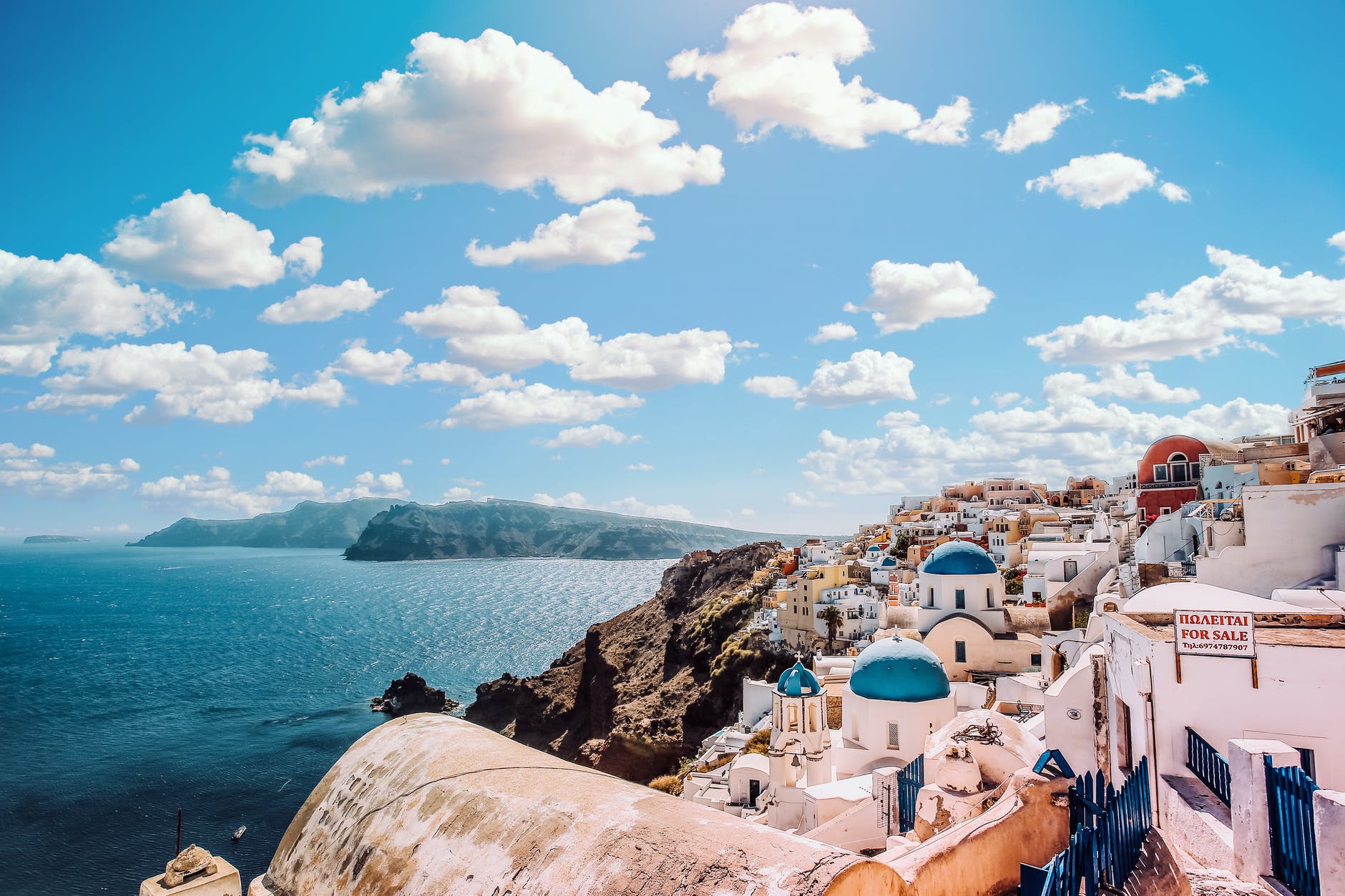
Island destinations offer beautiful beaches, exotic food and interesting tales of history and culture. Such islands are present all across the world. Iconic beaches, striking landscapes and coral reefs will make one fall in love with these beautiful islands. Most travellers would keep such destinations in their travelling bucket list. Some of these iconic travel destinations are mentioned here –
Santorini – The iconic island city of Greece, is a very popular travel destination which is a must visit in every traveller’s list. The turquoise waters, aromatic Mediterranean flavours and historical tales will surely make you admire and fall in love with the island. It was devastated by a volcanic eruption in the 16th century BC, which has shaped its rugged landscape. The two principal towns Fira and Oia are situated along cliffs above an underwater crater. The unique red and black sand beaches due to the volcanic setting of the island makes some picturesque sites. Visitors can walk around the lanes of white washed villages and find some great restaurants and shops.
Cyprus – This Mediterranean island is a home to both Greek and Turkish descendants which makes it a rich cultural amalgamation. The honey coloured beaches, ancient ruins will appeal to every traveler. It is known as the jewel of the Meditteranean. History enthusiasts can admire the Hala Sultan mosque while beach lovers will love the vibrant waters of Nissi Beach. While in Cyprus, one can also visit the city of Paphos which is the mythical birthplace of Aphrodite, the ancient Goddess of love and beauty. The traditional food include grilled meat kababs, pork marinated in coriander, fried halloumi cheese, olives, pitta bread, lamb, rabbit stews, root vegetables, chickpeas and artichokes.

Maldives – Situated in the Indian Ocean, this island is a paradise for all beach lovers. It has striking beaches and exceptional diving spots. You can also try activities like snorkeling at Hulhumale beach, or take a pleasant evening stroll at Cocoa Island during the sunset. The Grand Friday Mosque and Male’ Fish Market are also some popular spots. It consists of a chain of about 1,200 small coral islands and sandbanks (some 200 of which are inhabited), grouped in clusters. The archipelago was inhabited as early as the 5th century BC by Buddhist peoples, from Sri Lanka and southern India.

Phuket – This dreamy Thai island in the Andaman Sea with its dreamy white beaches with mountainous rain-forests will give you the best views. The towns are full of ornate Buddhist temples like Wat Chalong. The southernmost tip of the island, Promthep Cape, is something which you wouldn’t want to miss. You can also enjoy shopping and dining in Patong. It is famous for a number of things like exotic beaches, vibrant nightlife, colourful night markets, delicious seafood, white marble Big Buddha and scuba diving. Phuket has a tropical climate and it is usually warm, cool or rainy. It can however get quite hot in April and May. The tourist season is from November to February when it has a cool and dry weather.

Features of Postmodernism
Postmodernism is a revolution in art and Literature during the mid to the late 20th century which succeeded the Modernist movement. They were both reactions against the Enlightenment ideas. It began to flourish during the 1960s as a socio-cultural phenomena that revolutionized modernism and put forth ideas and created note worthy creations such as Catch-22, Lost in the Fun house, Satanic Verse and White Noise. As the very term suggests, it has some relation to modernism, with various features which are both distinct to its period and which are in relation to the modernist period.
The Modern and the Postmodern era incorporate pastiche and parody and do not take the boundaries and distinction between high and low art into consideration. They rather enforce the idea that any work is constructed and fictional. Both the schools of thought view a work as a product of decentralisation. This also brings about a similarity between postmodernism and post structuralism because they advocate the rejection of a coherent center. The centre, which is generally considered as the powerhouse is not really powerful and the periphery as in Derridian term moves towards the centre in scope of acquiring power. Therefore it is clear that there is not just a centre but rather multiple centres because the works are generally broken or fragmented and do not exist as a whole due to which a solid meaning cannot be formed. Just as this leads to multiple centres, it also paves way for multiple interpretations as the meanings are purposely made ambiguous.
But unlike modernism, post modernism does not just stop with treating both high and low art equally, but also infuses the class of arts, the time periods and the genres. The fragmentation and decentralisation of the western world is considered to be tragic in the modern world as unity, center of life and cohesion which is supposed to provide rationality and order are absent. But on the other hand in the postmodern era this fragmentation is rather celebrated than lamented upon because this is considered as the only possible way of existing. Unlike modernism which believes that there is order and the ‘other'(disorder), in postmodernism there is nothing such as order and disorder. It goes against this idea and critics the concept of binary oppositions by considering everything as disorder.
Modernism follows what Lyotard calls as metta-narratives which ‘creates’ conceptions of a society or culture which may not be really true or happening. This silencing of these unreal conceptions are questioned by Post modernists. Baudrillard uses the term “Simulacrum” to throw light on what the modernists conceptualize which are referred to as metta-narratives. He calls it as the substitution of artificial and fake realities simulated by the media or ideological apparatus. Therefore it can be said that there is no actual escape from reality but it is created artificially. And according to Post modernists humans have also lost the ability to differentiate between real and artificial. The postmodernism era also faced what critic Fredric Jameson calls as ‘cultural logic of late capitalism’ because it focused more on marketing and consumption rather than production.
Therefore, Postmodernism can be called as a revolutionary movement in art, technology, fashion, literature etc which is an embodiment of fragmentation, ambiguity, decentralisation and flexibility serving as a break away from Modernism.
Does your salary justify your input to the job
A justified wage refers to an income level determined by market dynamics, work experience, education and skill. A justified wage is the wage level that is high enough to attract workers but low enough to enable employers to offer employment. The divergence between a justified wage and the legal minimum wage may depend on several factors including the state of the economy and level of unemployment.
- A justified wage is a fair level of compensation paid to an employee that takes into account both market and non-market factors.
- It is a wage that is often greater than the minimum wage, but which also allows employers to actively seek out and hire workers.
- The type of work, the skills demanded, experience, job duties, and the general state of the economy all come into play when establishing a justified wages.
Understanding a justified wage
A justified wage combines economic factors of supply and demand in the workforce with more social and culturally relevant inputs like work experience, education and skills training, and type of job. A wage is justified when it is seen as socially acceptable while at the same time economically feasible for both workers and employers.
In a recession, the actual level of wages for this worker may drop to just above minimum wage due to the high level of unemployment and a stagnant economy. After the Great Recession, many investment banks justified lower wages due to slow economic growth. To learn more about investment banker wages, see: what drives investment banker salaries.
Justified wages for employees :
Companies may compare their employees’ salaries and work experience when determining a justified wage. For example, Meagan, a current employee, has 10 years’ experience and receives a salary of $65,000. Based on this information, management determines that Paul’s justified wage is $60,000 given that he has eight years’ experience. Management may also consider other factors when establishing a justified wage, such as what responsibilities the employee has and the revenue they generate. For instance, the amount of commission a stockbroker writes could justify his or her wage. Employees can help determine their justified wage during pay reviews by discussing how they add value to the company.
Justified wages for CEOs
When determining a justified wage for a CEO, the board of directors of a company typically considers:
- Leadership: What leadership skills does the CEO have? Does he or she have the ability to unite the senior management team and lead by example during times of transition? A CEO’s justified wage might be based on his or her ability to motivate employees.
- Strategic Ability: Does the CEO allocate resources effectively? Do they enter markets that enable the organization to grow and attract new customers? For example, the board of a multinational company may determine the justified wage of a CEO by his or her proven record of successfully entering foreign markets.
- Network: A CEO’s justified wage might be dependent on how effectively he or she can utilize connections. For instance, do they have the ability to lure senior executives from competitors? A CEO may have a higher justified wage if they have contacts that allow them to secure new suppliers and customers.
Fortune Global 500
Fortune is a global media organisation situated in the USA. It publishes news relating to the business world in its magazine Fortune. Annually it also puts out a list of top 500 companies of the world which ranks them according to their revenue. This list is the Fortune Global 500. The more the revenue of a company the higher is its rank in the list.
This year the list is stopped by Walmart with revenue of $523,964 billion, followed by Sinopac Group at number 2 with $407,009 billion revenue and State Grid at number 3 with $383,906 billion revenue. However the company which made maximum profit is Saudi Aramco whose profit is $86,270 billion.
There are many Indian companies in this list as well. Reliance industries Limited (RIL) is at number 96 which is the highest position ever earned by an Indian company. RIL has risen 10 ranks as compared to last year. Its revenue is $86,270 billion and profit $5,624.9 billion. In 2012 also RIL was in the top hundred at 99th position. It is interesting to note that RIL has been in the Fortune Global 500 list for the past 17 years.
The other Indian companies in this list Indian Oil Corp at 151, Oil and Natural Gas Corp (ONGC) at 190, State Bank of India (SBI) at 221, Bharat Petroleum Corp Limited at 309, Tata Motors at 337 and Rajesh Exports at 462.
The Global 500 list has companies from across 32 countries. This year the combined revenue of all companies amounted to $33.3 trillion and profit of $2.1 trillion. All the 500 companies in this list have accumulated 7 crore employees currently.
India’s road to becoming a Developed nation
India is one of the fastest growing major economy in the world. Stealing the title of the slowing economy of China, this country has had an amazing journey to get to where it is today and with the right management it is very likely to become one of the world’s most powerful economy very soon. Not quite there yet. The total economy is still smaller in GDP terms than the economy of California. Over half of the native populations, nor works in agriculture and poverty is still very prevalent problem. Only open upload and throughout the past three decades it has seen unbelievable level of growth that has, among other things, hundreds of millions of people out of poverty. Completely understand how this country is going to get going. You must first understand where it has come from.
After over a century of servitude to the British under colonial rule and many, many decades of assertive efforts, India claimed its independence in August of 1947. This often sore a sharp downturn in economic prosperity because while colonists were oppressive, an undeniably exploitative called their host nations, they did ensure that they were able to effectively extract every bit of economic value they could from their colonies, India. It had lunch well from past lessons and actually ran a pretty effective economy once they were free from colonial rule. India developed a very protectionist economy. Protectionism is the policy of a nation to favour the goods produced by the nation over those produced abroad. Now all nations, to some extent will have a level of protectionism. This can be seen in things like tariffs charged on the important role materials or import quotas, limiting the amount of foreign cars that can enter a country that, given you the severity and extent of these policies, will determine how protectionist an economy is. A small side note is that this issue of protectionism has been in the news a lot recently with the US and Chinese trade war. This is ultimately a back and forth of protectionist policies that will work to favor the products of their respective local countries rather than the imports from abroad by artificially raising the prices of foreign goods. With these import taxes, countries will do this for many reasons. Primarily, it will be to protect their local industries and jobs from cheaper foreign competitors with lower wages. Sometimes it will just be political chess feeding. And sometimes it’s just another geopolitical negotiating strategy. In India’s case, though, it had a very different reason to adopt this protectionist policy. India had experienced first hand what colonialism and early global trade had meant for the countries on the bottom of the industrial ladder, it decided that instead of potentially subjecting another nation to the same kind of hardship did experience it would rather just do everything itself. The way to achieve this was through a series of five year plans which to regular channel viewers or savvy students of history sounds like the type of economic planning associated with a certain type of economic system. To top this off, India effectively nationalized most of its major industries in the mid 1950s and onwards, and its biggest trading partner at the time of the Soviet Union, and it had typical Soviet Esque style laws around pretty much everything called the license Raj, which was pretty much just a big book of bureaucratic red tape for anybody that wanted to do anything in the economy. So India was a communist country. Well no, it had a lot of central planning characteristics of the communist nation. I did trade with Communist Nations, but it really wasn’t a communist nation itself. India still supported free trade outside of its core industries of the nation. If you want to open a restaurant and turn a profit, you could. If you want to work your way up the corporate ladder, you could. So long as you are here to licensing Raj, which was easier said than done, you were in business. So it kind of was just a weird mix of both the worst of communism and the worst of capitalism. Be honest, India in the early years of the Cold War tried really, really hard to stay neutral. Eventually, though, it did actually lean more towards the Soviet Union and 1971 India and Soviet Union signed the windows Soviet Treaty of friendship and cooperation, which was just a very public way of saying that they would keep on trading in cooperating as they had been for the decades beforehand. This was all well and good, but the country really didn’t do that much economically. It grew in line with similar communist economies in the region and remain primarily agricultural with aside emphasis. On government run heavy industry, but this was all about the change.
Up until the 90s, the Soviet Union was India’s major trading partner. But then in 1991, the Soviet Union collapsed and with it India lost a majority of its trade and a large portion of its industrial support. 1991 was the slowest growth in the country had experienced since its independence. This was paired with a spike in oil prices that the growing economy relies so heavily on. All of this culminated in India facing the very real possibility of defaulting on its heavy debt burden. It found itself in in a last ditch effort to avoid the fates of economies in similar positions. At this time,Indian government reached out to the International Monetary Fund for a 1.8 billion dollar bailout loan. The International Monetary Fund is an international organisation that consists of 189 member country. And try to basically act as an intermediary to get everybody to do business with one another. It raises money by basically charging membership fees, two member states that will then use that money to lift up struggling economies like India in 1991. The International Monetary Fund is worth it for member states like the USA for example because it promotes global trade, monetary cooperation and sustainable economic growth. All things that are really important for a world power like the US. India, on the other hand, had up until this point shunned international trade, grasping onto their protectionist policies and state run enterprises. The International Monetary Fund agreed to loan India that money it so desperately needed. If India agreed to deregulate and open up its economy.
Since the agreement with the International Monetary Fund India has gone through a bold period of embracing free enterprise, it’s once government run industries have been prioritized. It’s very very strict. Trade policies have been relaxed, the country has opened itself up to business from around the world and the extremely limiting Licence Raj. That book of bureaucratic red tape that had rules about everything has since been thrown in the wood chipper. This was followed by an explosion in growth. India, the country has effectively doubled in size every five years since its turn around in 1991, which for a major economy is a growth rate that has only ever really been rivaled by nations like China and Japan, which is today the second and third largest economies in the world, respectively. These economic miracles are becoming more and more common around the world, though it has impacted large nations like the ones mentioned earlier. But many, many Eastern European and South East Asian countries seem to be going through these. Matthew industrial revolutions all together in a very short space of time.
Revolution took place in England and started around 1760. The process took many decades and the nation wasn’t really a fully industrialised nation until the mid 1800s. The technology of steam and water power eventually overflowed into other European economies that slowly started to go through their own industrial revolutions, changing from primarily agricultural nations to industrialise nations. These early European revolutions to many, many decades to fully get to the point where they could be considered an industrialised nation though. But recently this process has become a lot faster. China went from a primarily agricultural nation to primarily industrial nation and then onto a primarily server space nation. All in the span of about 20 years. Thailand did the same in around 5 years. The process of industrialization is getting faster and faster for every economy that goes through the transition. And here is why. Back in the 1760s when the first steam powered textile factories were spring into existence, these factories literally had to reinvent the wheel. The best layout for a factory floral. Best ways. Design everything from box to assembly lines was a little bit of unknown. This inevitably slowed down the whole process just a little bit. In today’s world we already have the knowledge and how all this industrial business should be done. So nations making the transition from agriculture to industry don’t have to reinvent the wheel. Oftentimes they can just buy machinery directly off established nations to carry out their business effectively from the get go. And this brings us neatly onto the second point. But world is now a large, interconnected global economy, with large businesses looking for new opportunities. As soon as a nation shows promising industrialising itself. International support tends to flock to these new nations in the form of multinational investment. Normally this takes the form of investment into industries can take advantage of cheaper Labour of developing countries, which one could argue four or against, but it does mean though is that these nations get the investment they need to hit the ground running as an industrialised nation. India is already a very very large economy simply by virtue of its resources at the main population. An favourable environmental conditions. The nation is already the 5th largest country in the world. As of late 2019 and it has achieved this ranking while still having a majority of its population. Working in agriculture. But this is all changing uncertainty and the rising cost of doing business in China is making the global business community look for a new base of its industrial operations for low cost manufacturing, India is the ideal according to take the reins right number of reasons and these same reasons are like India is likely behind the biggest and most rapid economic boom yet. India is a former British colony and while the country is much better off now as a free and independent state, it did take some of the best bits Britain had with it, namely its laws and its language. Language is actually normally seen as a pretty big hindrance to the economy because of the vast array of dialect spoken within the country that makes internal business. It’ll be difficult, but it does have going for it though is the second largest English speaking population in the world, falling only behind the USA?
English is the language of international trade and business population being able to speak English is a huge plus for when India bully sticks out onto the ball today. For reference, in China, less than 80% of the population speak English, which does create frictions in international business and could potentially just making the easier option in the future. Already India has benefited from this finding the world home of service call centres, the stereotypical Indian call centre is kind of thing that we make fun events. But to the Indian economy it means relatively good paying jobs that can be done by people of any age and industry. It is worth 10s of billions of dollars. This is just one small example of an industry that India has been able to monopolise that other industrialising nations would not have had the opportunity to be cause of their language barrier. The other big consideration is the Indian legal system. India does have its own system of government, although it is a system that basically reflects a western democracy. India has a president as the head of state and upper and lower House of governments to pass laws and a ranked court system. This again doesn’t sound like a huge deal but to international businesses shopping around for a new base of operations. This is huge to companies having a legal system similar to the western home countries, where trade dispute will be settled fairly. Business contracts will be honoured and intellectual property laws will be enforced is a very, very big deal and it is not something that multinationals have confidence in with countries like China. Now it must be noted that Indian law is not all roses and sunshine, it does have its problems with corruption but corruption tends to be something that international corporations can deal with as long as all that other stuff stays intact to protect them.
But what this all means is that India is likely on the cusp of an unbelievable technique that it is in the same position that I was 15 years ago. But it has a few big things going for it that China did not. If India is able to capitalise on the. And business attractiveness of the country. It is likely that the countries economy will continue to double in size many times over. This does not only mean that India will soon give China USA a run for their money, but on a smaller scale it will also mean that living conditions for hundreds of millions will be dragged up along with this economic explosion.
IS YOUR CHARECTER REFLECTED IN THE WAY YOU DRESS?
Why do we chose to buy or to wear the clothes we have? Is the intention to be attractive? Revealing? Modest? I always wonder why a lady would like to appear to be sexy. I what is her intention? It applies for men too……. I believe that what we wear is a true refection of the heart. When you go shopping, you only buy what you like, and when you wear it, you advertise the fact. So you show off your personality and reveal your character to those who see you. Does it make sense!?
The choice of your clothing speaks louder than the talk. The motives of one’s charecter are always judged by what they wear. People will always judge you by the looks. If you present yourself in cheap clothing, the thing that will be remembered is this and not your goodness or character.
Though we have the freedom to dress anyway we please, I do believe that our clothes reflect our character and hence we should be careful.
But if we think from another perspective, we miss out on many opportunities by judging by appearance only. This happens a lot of times. Dressing varies from land to land do judging personality based on dressing would be inappropriate. True Charecter I’d reflected is how we behave and not in how we dress.
In my opinion, in the case of a few, we can judge them by their looks while in some other cases, we cannot do like that. To be sure, dressing is your choice. Wear what you like, but only decent ones.
Power outage
A power outage (also called a power cut, a power out, a power blackout, power failureor a blackout) is the loss of the electrical power network supply to an end user.
There are many causes of power failures in an electricity network. Examples of these causes include faults at power stations, damage to electric transmission lines, substations or other parts of the distribution system, a short circuit, cascading failure, fuse or circuit breakeroperation.
Power failures are particularly critical at sites where the environment and public safety are at risk. Institutions such as hospitals, sewage treatment plants, and mines will usually have backup power sources such as standby generators, which will automatically start up when electrical power is lost. Other critical systems, such as telecommunication, are also required to have emergency power. The battery room of a telephone exchange usually has arrays of lead–acid batteries for backup and also a socket for connecting a generator during extended periods of outage.
SPORTS
FOOTBALL
Champions League: Lionel Messi’s toughest task as Barcelona face up to Bayern Munich –
Lionel Messi might never have been faced with a more daunting task at Barcelona than engineering a victory against Bayern Munich here on Friday.
The only surviving former winners of European club football’s greatest prize — with five titles each — meet in a heavyweight Champions League quarterfinal behind closed doors at the Estadio da Luz.
It is not often that Messi’s Barcelona comes into such a big European tie as the underdog, but it has this time, with Quique Setien’s team having lost to Real Madrid in the Spanish title race while Bayern appeared flawless on the way to winning a German league and cup double.
Messi is now 33, yet Barcelona appears more reliant on him than ever.
CRICKET
Australia’s tour of England to end on September 16, IPL-bound players can only play from September 26 –
England and Australia’s IPL-bound players are likely to miss the first week of the Indian Premier League after it was announced that the two teams will play six white-ball games from September 4-16 at Southampton and Manchester respectively.
England and Australia will be playing three T20 Internationals at the Ageas Bowl on September 4, 6 and 8 while the ODIs will be held on September 11, 13 and 16 at Old Trafford.
The latest that the players can touch base in UAE is September 17 or 18 and as per the IPL SOP, will be quarantined for six days with RT-PCR tests on days 1, 3 and 6. On the seventh day, they will be entering the bio-bubble provided they test negative on all three occasions.
TENNIS
Novak Djokovic to play the U.S. Open- Novak Djokovic confirmed on Thursday he will play at the US Open, ending speculation about his presence at the first Grand Slam tournament since the coronavirus restart.
It is preceded by the Western and Southern Open, which is normally played in Cincinnati but has been moved to New York this year.
Djokovic’s decision to take part in the US Open is a major boost for the tournament after a host of headline names pulled out.
The list of absentees includes four-time champion Rafael Nadal and woman’s world number one Ashleigh Barty.
MUGHAL ARCHITECTURE PART I
Features of Mughal architecture :
Elaborate calligraphy designs on the walls of the monument.
Charbagh design architecture: gardens at four sides of the monument.
Jail work and arabesque design. Contributed by Pietra dura.
Foresighting technique- Qufi has written on monuments that appear the same from every angle.
Mughal architecture is too called INDO- ISLAMIC ARCHITECTURE.
It has a Rajput and Sikhs influence also. Focus had been made on the construction of the mosque, tomb, and fort architecture.
Architecture becomes complex, the use of white marble is huge. An autobiography of Babur he described his interest in planning and laying out formal gardens, placed within rectangular walled enclosed and divided into four quarter artificial channels.
These gardens were called Chahar bagh, four gardens as their symmetrical division into quarters.
There were several architecture innovations during Akbar’s region, construction with red sandstone, edged with white marble accelerated. The creation of large empires brought different regions under their rule heped in the cross-fertilisation of artistic forms and styles.
For example in Vrindavan near Mathura temples were constructed in architectural styles that were very similar to Mughal places in Fatehpur Sikri. Mughal rulers were particularly skilled in adapting regional architecture styles in the construction of their buildings.
In Bengal, too local rulers had developed a roof that was designed to resemble a thatched hut. Mughal liked this ‘BANGLA DOME’ and adopted it in their monuments.
Babur the first ruler can not contribute much to architecture as he ruled for only four years and he continuously fights for survival.
The mosque at Panipat and Rohikhand is the most famous one. Babur’s tomb in Afganistan also had char bagh architecture.
INFLATION SHOOTS UP !
I WAS DRINKING COFFE IN THE MORNING WHILE GOING THROUGH THE NEWSPAPER WITH A PLEASANT WEATHER AROUND. BUT , THE NEWS INSIDE IT WAS NOT AT ALL PLEASANT , WE ARE WELL AWARE OF THE ECONOMIC DOWNTURN ,WE ARE FACING. THE SCHOLARS HAVE ALEARDY PREDICTED , IT’S GONNA BE WORSE FOR THE WHOLE WORLD ESPECIALLY FOR INDIA ; AS SHE IS GOING TO FACE THE WORST OF WORST SCENARIOS , GDP IS GOING TO BE AT THE LOWEST , MORE THAN THE YEAR 1947. IT WAS WRITTEN IN THE HEADLINE ‘ INFLATION ACCELARATES TO 6.93% DIMMING CHANCES OF A RATE CUT ‘ , WE HAVE WITNESSED THE VARIATIONS IN THE INFLATION THIS YEAR , HOW IT HAS BECOME AN ICEBERG IN OUR PATH ! . THE INTREST RATES CAN’T BE FURTHER REDUCED AS SAID BY THE RESERVE BANK OF INDIA , THERE IS A LIMMIT TO CUT THE INTRESTS RATES , WE CAN’T MOVE BEYOND THAT LINE.
INDIA ‘s RETAIL INFLATION HAS SHOOT TO THE HUGE PERCENTAGE OF 6.93% , WHICH IS MAJIORILY DUE TO THE RISE IN THE PRICES OF FOOD , WHICH IS TERMED AS FOOD INFLATION . THIS MONSTER HAS GONE BEYOND THE MEDIUM TARGET OF RESERVE BANK OF INDIA FOR THE TENTH MONTH , UPSETTING IT IS . THE FIGURE IN THE JULY WAS 6.15% , BUT , IT IS BEING SAID THAT IT IS HIGHER , ACORDING TO THE FORECASTS IN THE REUTERS POLL OF ANALYSTS . IT WAS RECORDED 6.23% IN THE MONTH OF JUNE . THE FOOD PRICES HAVE CLIMBED UP , DUE TO SUPPLY SIDE DISRUPTIONS. A HIGH JUMP OF 9.62% COMPARED TO THAT OF 8.72% IN JUNE . RESERVE BANK OF INDIA LAST WEEK ANNOUNCED FEW CHANGES IN THE POLICY , UNCHANGING THE INTREST RATES AND CUT DOWN THE REPO RATE BY 115 BASIS POINTS . THE MEDIUM TERM SET BY THE RESERVE BANK OF INDIA FOR INFLATION IS 4% ABOUT WHICH I MENTIONED ABOVE.
INDIA HAS EXPECTATIONS ABOUT THE CONTRACTION OF THE ECONOMY MORE THEN 4.5% IN THIS CURRENT FISCAL YEAR . CORE INFLATION HAS BEEN IN BETWEEN 5.8% AND 5.9%. BUT THE GOOD NEWS IS WE ARE EXPIRIENCING BEAUTIFULL MONSOON THEESE DAYS AND DUE TO THE MONSOON RAINS , AWAITING THE AVERAGE OF 104% FOR LONG TERM IN THE MONTHS OF AUGUST AND SEPTEMBER. THIS IS A SIGN DESIGNATING THE HEAVY AND RICH HARVESTS , ADDING TO OVERCOME THE DAMAGES INCURRED DUE TO THE NOVEL CORONAVIRUS PANDEMIC.
I FEAR FOR THE BALLOON HEADING FOR A BURST !
Rajasthan Assembly Session begins, Ashok Gehlot-led govt to move vote of confidence today
A key session of the Rajasthan Assembly began today. The motion for vote of confidence was presented in the Legislative Assembly on behalf of the State Government, which is being debated in the house. Legislative Affairs Minister Shanti Dhariwal introduced the motion for vote of confidence in the house.
Starting the debate, Mr Dhariwal said that today the issue has attracted attention of people of entire state and the country. Speaker Dr C. P. Joshi said that the discussion would be concluded within three hours. It is believed that voting will be take place on the confidence motion by this evening.
The house assembled at 11 a.m. and paid tributes to Lalji Tondon, Ajit Jogi and other leaders who recently passed away. After the obituary remarks, the Speaker adjourned the house till 1 P.M. Special seating arrangements were made in the house to maintain social distancing in view of the Corona pandemic.
 Eduindex
You must be logged in to post a comment.