Defence Minister Rajnath Singh today launched the initiatives of a number of modernisation and up-gradation of facilities as also new infrastructure creation by Defence Public Sector Undertakings, DPSUs and Ordnance Factory Board OFB through digital link in New Delhi.
It was part of the of the Atmanirbhar Week celebration of the Ministry of Defence.
Speaking on the occasion, Mr Singh recalled Prime Minister Narendra Modi’s clarion call for Atmanirbhar Bharat Abhiyaan and his 5-I formula of ‘Intent, Inclusion, Investment, Infrastructure and Innovation’ will put the economy on high growth trajectory.
The Minister said, Government has made timely and thoughtful interventions during Covid-19 times like issuing negative list for import, increase in FDI limits, separate budget for domestic capital procurement and emphasis on indigenisation.
He said, the ban on imports of 101 items by Defence Ministry is a big step towards an Atmanirbhar Bharat.
This list of negative items contains not only small items but weapon systems of high and critical technology. He said, more such items will be added to this list shortly which will save crores of rupees in imports.
The Defence Minister said, more steps will be taken towards, indigenisation, investment in defence infrastructure and expansion in defence manufacturing capability.
He said, these steps will create big opportunities for the Indian defence industry.
Mr Singh said, in keeping with the vision of the Prime Minister, the Department of Defence Production, DPSUs and OFB have shown great enthusiasm and commitment in ushering in a truly Atmanirbhar Bharat.
He said, Defence industry has always been the forerunner of cutting-edge technologies world across and hence self-reliance in Defence is a tall task which needs whole hearted involvement of all to be fruitful.
The Minister said, the defence industries have been the force behind the Armed Forces.
Minister of State for Defence Shripad Naik, Defence Secretary Dr Ajay Kumar, Secretary Defence Production Raj Kumar and senior officials of OFB, DPSUs participated in the event through video conference links.
Lebanon’s Prime Minister Hassan Diab has resigned from his post in the wake of major blast in Beirut that has triggered public outrage. In a brief televised speech after three of his ministers resigned, Mr Diab said he is taking a step back so he can stand with the people and fight the battle for change alongside them.
The Prime Minister’s resignation follows a weekend of anti-government protests after the August 4 explosion in Beirut’s port that decimated the facility and caused widespread destruction, killing more than 160 people and injured about six thousands. Diab’s government was formed in January this year after his predecessor, Saad Hariri, stepped down in October last year in response to the demonstrations. It took months of bickering among the leadership factions before they settled on Diab.
President Michel Aoun has accepted the resignation of the Diab government and asked it to stay on in a caretaker capacity until a new cabinet is formed.French President Emmanuel Macron hosted an international donors’ conference on Sunday. US President Donald Trump and 15 other heads of state were present, pledging nearly 300 million dollars in aid to Lebanon.
In Manipur, N. Biren Singh-led government won the trust vote during one-day State Assembly session yesterday. The BJP led-coalition headed by Chief Minister Singh won the confidence vote by a margin of 12 votes in the house. Eight Opposition Congress MLAs skipped the session defying the party whip.
The 60-member house has an effective strength of 53, including Speaker Y Khemchand. The Congress had submitted a notice of No Confidence Motion against the government on 28th of July. Days later, the State Government submitted a notice to the Speaker for a trust vote.
Prime Minister Narendra Modi has emphasized on better coordination between all central and state agencies to have a permanent system for forecasting of floods and extensive use of innovative technologies for improving forecast and warning system. Mr Modi today held a meeting with Chief Ministers of Assam, Bihar, Uttar Pradesh, Maharashtra, Karnataka and Kerala through video conference to review their preparedness to deal with south-west monsoon and current flood situation in the country.
He said, over the past few years, forecasting agencies like India Meteorological Department and Central Water Commission have been making concerted efforts to make better and more usable flood forecasts.
They are trying to provide not only rainfall and river level forecast but also location specific forecast of inundation.
Mr Modi said, there are pilot efforts underway to also use innovative technologies such as artificial intelligence to improve location specific forecast, for which States should provide necessary information to these agencies and disseminate the warnings timely to local communities.
The Prime Minister mentioned that investment should be increased in localised early warning system so that people in a particular area can be provided with timely warning in case of any threatening situation such as breach of river embankment, inundation level and lightning.
Mr Modi also emphasized that in view of COVID situation, while undertaking rescue efforts, States must ensure that people follow all health precautions such as wearing of face mask, hand sanitization and maintain adequate physical distance.
He said, relief materials must include provision for hand washing and sanitizing and face masks for the affected people. He added that special provisions should be made for elderly people, pregnant women and people with co-morbidity.
The Prime Minister conveyed that States should ensure that all development and infrastructure projects must be built with resilience to withstand local disasters and to help in reducing consequential losses.
Chief Ministers of Assam, Bihar, Uttar Pradesh, Maharashtra, Kerala and Home Minister of Karnataka gave on the flood situation, rescue efforts made in their States.
They complimented the efforts of central agencies including NDRF teams in timely deployment and rescuing people. They also gave some suggestions for short-term and long-term measures for mitigating the effects of floods.
The Prime Minister directed the Officers of concerned Ministries and organisations to take action on the suggestions given by the States and assured that the Centre will continue to provide its support to the States and Union Territories in order to strengthen their capabilities for dealing with various disasters.
The meeting was also attended by Defence Minister, Health Minister, Ministers of State in Home Affairs and senior officers of the concerned central Ministries and organizations.
Communication Minister Ravi Shankar Prasad has said that Government of India has been taking measures on priority to provide connectivity in the far flung, difficult, border areas of strategic importance, so as to ensure better quality of life to the people as well as to those who are working in these areas.
Talking to reporters in New Delhi today, Mr Prasad spoke about various projects being implemented by the Department of Telecommunications to provide connectivity in remote and difficult areas.
He informed that a tender for 354 uncovered villages in the strategic, remote and border areas of the country has been finalised and is under implementation in 144 villages of the Union Territories of Jammu and Kashmir and Ladakh and remaining villages in the States ofBihar, Rajasthan, Uttrakhand, Himachal Pradesh and other priority areas of Gujarat.
These villages have been strategically choosen to cover border area connectivity on mobile. Mr Prasad said, after commissioning of these villages, there will be no uncovered villages in UTs of Jammu and Kashmir, Ladakh for mobile connectivity.
He informed that Satellite based Digital Satellite Phone Terminal DSPTs are also being provided at 1347 sites for Army, BRO, BSF, CRPF, ITBP, SSB etc. Out of which 183 sites are already commissioned and remaining are in process.
The Minister told that Department of Telecommunications is also working on providing mobile connectivity in villages of 24 aspirational districts of Bihar, Uttar Pradesh, Rajasthan and Madhya Pradesh and remaining 44 Aspirational Districts for 7,287 uncovered villages in Chhatisgarh, Odisha, Jharkhand, Andhra Pradesh will also be covered for which government approval is under submission.
Prime Minister Narendra Modi today inaugurated the 2300 kilometre submarine optical fibre cable network between Chennai and Andaman and Nicobar Islands. Mr Modi said this project is the Union government’s commitment for Ease of living.
Saying this project will boost tourism in the Islands, Prime Minister expressed happiness over completion of the project before deadline. Mr Modi said this is Independence Day gift for the people of Andaman and Nicobar islands .
The Prime Minister said not only the Andaman people will get a big boost but also sea trade will rise exponentially. Mr Modi said, high speed net in Andaman and Nicobar islands is a big day as the people will get all the benefits of digital India.
Saying connectivity is part of tourism growth, Prime minister emphasised the tourists who will travel to the Islands will also be benefitted by the digital initiative.
The Prime Minister asserted that the Government is committed to the speedy development of national security linked border areas and island states.
He said that the Indian Ocean has been the center of India’s trade and strategic prowess for thousands of years and that Andaman and Nicobar is an important centre for India’s Economic-Strategic Cooperation. He said all the Islands of India would be playing an important role under India’s new trade strategy for Indo-Pacific region.
Mr Modi said under the Act-East policy, the role of Andaman and Nicobar in India’s strong relations with East Asian countries and other countries connected to the sea is very high and is going to increase.
Communications and IT Minister Ravi Shankar Prasad was also present on the occasion.
This cable project is running 2313 kilometre under-sea between Chennai and Portblair at the cost of Rs. 1,224 Crore.
Seven islands of Andaman and Nicobar islands other than Portblair are connected namely Swaraj Dweep, Little Andaman, Car Nicobar, Kamorta, Great Nicobar, Long Island, and Rangat. This will boost digital services like tele-education, tele-health, e-governance services and toursim on the island.
Tradition. Huntingdon’s longest traditions are its hallmarks: faith, wisdom, and service.
Do you love to learn? Do you yearn to serve others? For more than 160 years, Huntingdon has provided an outstanding liberal arts education that touches not only the mind and heart, but also the spirit.
A college of the United Methodist Church, we are led by our motto, “Enter to grow in wisdom, go forth to apply wisdom in service.”
QUICK FACTS
An Introduction
Founded: 1854 in Tuskegee, Alabama; moved to Montgomery, Alabama, in 1909.
Motto: “Enter to grow in wisdom; go forth to apply wisdom in service.”
Hallmarks: Faith, Wisdom, and Service; The Huntingdon College Honor Code
Location: 70-acre campus in a safe and beautiful residential neighborhood of Montgomery, Alabama, state capital; just three hours from the Gulf Coast.
Present-day Gadsden State Community College began with the merger of Alabama Technical College, Gadsden State Technical Institute, Gadsden State Junior College and Harry M. Ayers State Technical College.
One of the initial founding institutions of Gadsden State is Alabama Technical College. Established in 1925 as the Alabama School of Trades, it was the first state-operated trade school in the south and is the oldest of Gadsden State’s campuses. Now, it is the home to a number of Gadsden State’s technical programs, the One Stop Center, the Joe Ford Center and the Alabama Technology Network. It is known as the East Broad Campus.
Gadsden State Technical Institute began in 1960 as the Gadsden Vocational Trade School, a private vocational training school for African Americans. It was founded by Eugene N. Prater, director of the Veterans Continuation Program for Negroes, in response to discontent expressed by black veterans of Etowah County for being denied admission to the all-white Alabama School of Trades. Currently, it is known as the Valley Street Campus and houses the Construction Technology Program, HVACR Program, Certified Nursing Assistant Program, Diagnostic Medical Sonography Program, Therapeutic Massage Program and several academic courses. The U.S. Department of Education designated this institution as a Historically Black College or University (HBCU) in 1997.
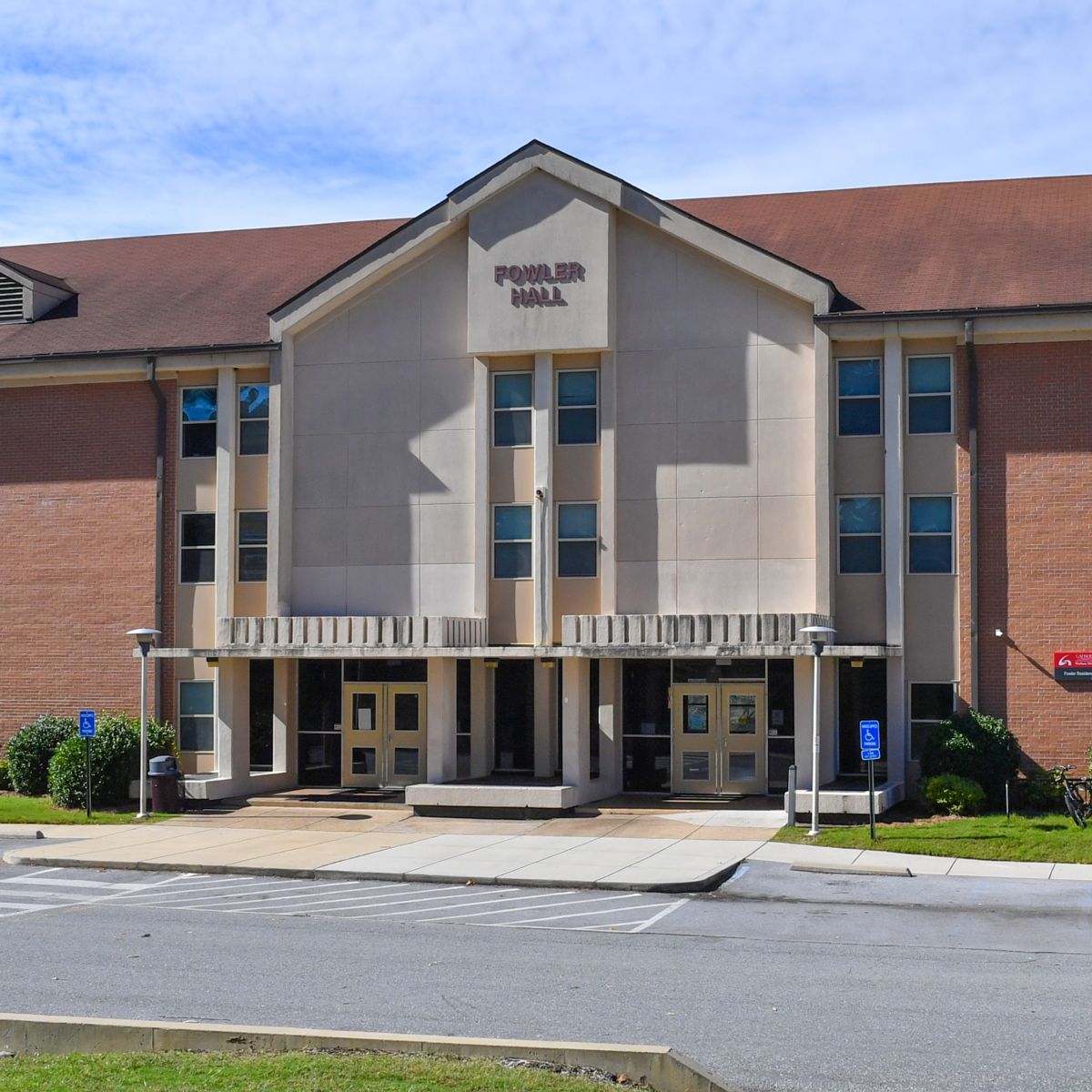
Gadsden State Junior College was established in 1965 by an act of the Alabama State Legislature during the administration of Gov. George C. Wallace. The course offerings included professional programs, such as architecture, dentistry, journalism, law, medicine and teacher education, as well as technical programs in management, nursing, secretarial science and data processing. It is currently identified as the Wallace Drive Campus of Gadsden State and is home to academic courses, the Inzer Student Center, Fowler Residence Hall, Wallace Hall Fine Arts Center and Beck Field House and Conference Center.
Harry M. Ayers State Technical College was founded as a trade school by an act of the Alabama State Legislature on May 3, 1963. In 1972, the institution was designated as a technical college offering associate degrees and certificate programs in such fields as accounting, automotive body repair, carpentry and cosmetology, among others. To eliminate duplication of courses, the consolidation of Gadsden State and Ayers State was completed on July 8, 2003. It is now known as the Ayers Campus of Gadsden State Community College.
In August 2002, Gadsden State Cherokee was opened as an instructional site in response to community and governmental efforts to meet the growing educational needs in the region. A new multi-level complex was opened in August 2008, where Gadsden State Cherokee now offers an expanded list of courses for students wishing to earn an associate degree or transfer to a four-year institution. Gadsden State Cherokee also houses an Economic Development Center, the Cherokee County Chamber of Commerce and a multi-purpose 2,500-seat arena.
Mission
Gadsden State Community College prepares students from all backgrounds for success through quality education, innovative workforce development, and inclusive community and global engagement.
The public junior college system of Alabama was established in 1963 through the efforts of Governor George C. Wallace and the Alabama Legislature. Enterprise was selected as the site for one of the original twelve state junior colleges. Area citizens and civic groups raised money for the purchase of a 100-acre campus site, donated library materials, and provided a number of scholarships— thus beginning a history of college and community cooperation for which Enterprise State Community College is noted.
On September 27, 1965, the first freshman class, numbering 256 students, was registered at the College which was originally named Enterprise State Junior College. These students attended classes in rented rooms in downtown Enterprise and in the educational building of the First Methodist Church. Fortunately these makeshift arrangements lasted during the first year, for in the fall of 1966 the present campus was occupied. This campus has grown and now consists of seven modern buildings situated on a beautifully landscaped site. An addition to the Learning Resources Center in Snuggs Hall, an addition to Lolley Hall, and a new building— Talmadge Hall—were occupied spring quarter of 1990. In 1983, the College began offering credit courses and non-credit short courses at the Fort Rucker site. Recently, in 2018, the site was closed.
Upon the retirement in 1981 of the College’s first president, B.A. Forrester, Dr. Joseph D. Talmadge was appointed President of the College. Dr. Talmadge had served as Dean of the College since its establishment and provided dynamic leadership for the development of the College’s academic program. He retired in September 1994. When Dr. Talmadge retired, Vice Chancellor for the Alabama Department of Postsecondary Education, Dr. Stafford L. Thompson, was appointed Interim President. Dr. Thompson was appointed President of the College on March 28, 1996. He led the College through the reorganization to include the state’s aviation maintenance training programs. He obtained funding to build the Aviation Technical Training Center on the Ozark Campus. Dr. Thompson retired July 1, 2008. At that time, Dr. Nancy W. Chandler was appointed Interim President. Dr. Chandler came to ESCC from Faulkner State Community College where she served as Vice President of Instruction, Institutional Advancement and Effectiveness. She was appointed President of the College on May 28, 2009 and worked diligently to expand the availability of Aviation training for students in Alabama. On March 5, 2014 Dr. Chandler resigned and on March 24, 2014 Dr. Cynthia Anthony was selected as interim president. Dr. Anthony moved to Shelton State Community College in September, 2015 and Dr. Vicky Ohlson was appointed interim president on October 1, 2015.
In February 2003, the Alabama State Board of Education approved the reorganization of Enterprise State Junior College with the Alabama Aviation College at Ozark and the Aviation Center at Mobile of George C. Wallace Community College—Dothan. This created a new comprehensive community college that was named Enterprise-Ozark Community College. The Alabama Aviation College in Andalusia opened fall semester of 2006, and the Alabama Aviation College at Albertville opened spring semester 2009. Aviation maintenance courses are taught at both of these sites. In November 2009, the Alabama State Board of Education approved a name change to Enterprise State Community College and approved a marketing name for the aviation programs as the Alabama Aviation College, a unit of Enterprise State Community College.
The Alabama Aviation College at Ozark originated in 1960 as a part of the educational program administered by the Ozark City Board of Education. In 1962, the institution’s aviation maintenance program was certified by the Federal Aviation Administration. By act of the State Legislature in 1963, the institution, which was then known as the Alabama Institute of Aviation Technology, was brought under the Alabama State Board of Education as a state vocational trade school. In 1970, the institution was accredited by the Commission on Occupational Education Institutions of the Southern Association of Colleges and Schools. In 1973, the Alabama State Board of Education changed the name to Alabama Aviation and Technical College, and in 1976, the Board authorized the establishment of an off- campus center in Mobile, Alabama. In 1991, the College was accredited by the Commission on Colleges of the Southern Association of Colleges and Schools to award the associate in applied science degree, and the College’s accreditation was reaffirmed in 1997. In 1996, the College and its Mobile center were merged with George C. Wallace Community College, and the names of the locations were changed to the Alabama Aviation College in Ozark and the Aviation Center at Mobile. In 2008, under EOCC, the new Aviation Technical Training Center on the Alabama Aviation College in Ozark opened its doors for classes. Additional sites have been added for aviation programs, including the Alabama Aviation College at Andalusia. For a time Enterprise controlled all aviation sites in the state, however in the Alabama Community College System decided that each site should be governed by an institution in the same geographic region.
The College received state and national recognition for a variety of student activities. For more than 30 years, the Enterprise Campus chapter of Phi Theta Kappa, the national honor society of American two-year colleges, was recognized as one of the top chapters in the nation. In 1984 and 1992, the chapter was named The Most Distinguished Chapter in the Nation. In 1986-87, 2001-02, and again in 2010 the sponsors were named Most Distinguished Sponsor, and the Enterprise Chapter continues to be placed in the top ten percent internationally. The chapter is also active at the Alabama Aviation College at Ozark. The First Impressions Team (FIT), now the Ambassadors. leads the orientation programs for new students, has been recognized by the Southern Regional Orientation Workshop of the National Orientation Directors Association (NODA) for outstanding leadership. Former FIT sponsor, Dr. Betty Cully, was designated as an Outstanding Orientation Director in 1995 and 2003. The College’s show choir, the Entertainers, has been consistently rated Superior in competitions and the group continues to receive “Best in Class” awards.
Athletics have been an important part of the ESCC collegiate experience as well. The baseball team won the Alabama State Junior College Championship in 1982 and the Southern Division Championship in 1986. In 1985, the College’s Weevil Women earned the runner-up trophy in the state championship tournament in women’s basketball and were fourth in the state championship tournament in 2003. Also in 2003, the men’s basketball team was runner-up in the Alabama Junior College Division I Conference. The men’s team won that conference in 2004. Former head coaches David James, Dr. Chelita DuBois, and Jimmy Messer were named 2003 Coaches of the Year by the Alabama Community College Athletic Division, and Coach Messer received this honor again in 2004. At one time the College had a women’s tennis team which won second place in state competition for Division II in 1997 and 1998. The College’s golf team won second place in state competition for Division II in 1998.
Throughout its history, Enterprise State Community College has been successful in attracting federal and private funds that have enabled the College to develop innovative programs and services. The College received four major five-year development grants and three endowment grants totaling approximately $9 million from the U.S. Department of Education’s Title III Strengthening Institutions Program. In addition to comprehensive faculty development and curriculum improvement projects, these grants have financed the purchase of state-of-the-art computer equipment throughout the campus and other projects focused on student retention. Other federal and foundation grants enabled the College to establish the Tutorial Assistance Program for Students—now Student Support Services—the Adult Basic Education Program, the Workplace Literacy Program, Student Academic Support Services Laboratory, and the National Science Foundation scholarship program. In 2000 and 2001, National Science Foundation Grants provided scholarships to students majoring in science, engineering, or computer information science. In 2005, a Community-Based Job Training Grant was awarded by the Department of Labor to build the capacity of the College to train technicians for the skills required to succeed in high-growth, high-demand aviation industries. In 2010, a 3-Dimensional Simulation and Modeling short-term certificate program began, funded by a grant from the Alabama Governor’s Office of Workforce Development.
The ESCC Foundation was established in 1982 to enhance the College’s ability to seek private funding. Administered by a Board of Directors composed of business and civic leaders, the Foundation has developed an endowment program that funds student scholarships as well as faculty development, curriculum improvement, and continuing education projects.
Before his untimely death in 1993, Enterprise native and nationally renowned theatre director and producer, James Hatcher, made arrangements for his valuable collection of theatre memorabilia and literature to be displayed at ESCC. The James Hatcher Collection is housed in Forrester Hall.
On August 9, 2017, Matt Rodgers was named the fifth permanent president of the College. During his first year, the College received approval to offer two new career and technical programs: the Medical Assistant Program and the Commercial Truck Driving License program. The College continues its rich tradition of serving the needs of the community. Mr. Rodgers, the faculty, and staff are continuing the College’s legacy of excellence in education at all locations of the College and in the surrounding communities. Dynamic leadership, dedication to the teaching-learning process, and superior support services achieve the College’s mission.
MISSION
The mission of Enterprise State Community College, including the Alabama Aviation College, is to improve our communities by providing students with excellent opportunities to further their education and enter the workforce.
VISION
To prepare our students to learn, to work, and to create a better community as a leading community college.
VALUES
Enterprise State Community College respects the diversity of its student body and recognizes the worth and potential of each student. Therefore, the College affirms the following values:
EXCELLENCE
COMMUNITY
INNOVATION
COMMITMENT
INSTITUTIONAL GOALS
To prepare students for transfer
To prepare students for immediate employment and career advancement
To assist students in developing and achieving their educational goals
To support students in improving learning skills, overcoming educational deficiencies, and adapting to technological changes
To improve the social, economic, and cultural/recreational life in our communities
Enterprise State Community College is accredited by the Southern Association of Colleges and Schools Commission on Colleges to award Associate’s degrees and certificates. Contact the Commission on Colleges at 1866 Southern Lane, Decatur, Georgia 30033-4097 or call 404-679-4500 for questions about the accreditation of Enterprise State Community College. Specific questions regarding ESCC’s educational programs, admission requirements, financial aid, and other matters related specifically to the College should be forwarded directly to the College.
The telangana state government decided to conduct online classes for 6 th to 10 th from August 20,and proposed online exams like TSCET is going to conduct on August 31th
intermedia admission for academic year 2020-31 starts from SEP 1 ,Eamcet exam will conduct on sep 9,10,11,14,the final year exams will be decided on the basis of supreme court orders
WE HAVE CAME ACROSS MANY CHANGES THIS YEAR , IN THE MONTHS OF COVID-19 PANDEMIC , IN THE STRUCTURE OF MONETARY POLICY . RBI HAS AGAIN REVIEWED THE MONETARY POLICY BUT THERE ARE NO CUTS IN INTREST RATES RATES BUT FEW CHANGES IN THE POLICY . INDIA IS GOING THROUGH INCREASING INLATIONARY PRESSURES ALONG WITH THE CONSTANT SLOWING DOWN OF THE ECONOMY . IN THE MONTHS OF MAY AND JUNE , WE HAVE SEEN LITTLE RETRIEVE IN DEMAND , GIVING US HOPES FOR THE ECONOMIC RECOVERY . AGAIN , WE SEE THE DOWNFALLS IN COMING MONTHS . THE DEMAND WILL RETRIEVE BUT WILL TAKE TIME , FEW MORE MONTHS .THE KEY POLICY DECISIONS MADE BY RBI IN THIS REVIEW ARE :
BANKS ARE ALLOWED TO RESTRUCTURE STRESSED CORPORATE AND MSME LOANS , DIDN’T EXTEND THE MORATORIUM ON LOAN REPAYMENTS , OFFERED TO BORROWERS AHEAD OF AUGUST 31 . LOANS CAN BE RESTRUCTURED FROM LARGE CORPORATES , MICRO , SMALL AND MEDIUM ENTREPRISES , INDIVIDUALS TO LOWER THEIR RISING STRESS.
BORROWING LIMITS AGAINST GOLD RELAXED , INCOMES AND JOBS HITTING ACROSS SECTORS , HAS ALLOWED INDIVIDUALS TO RESTRUCTURE THEIR LOANS BY DECEMBER 31 , 2020 , WITH MAXIMUM EXTENSION OF 2 YEARS.
RS 10000 CRORES SUPPORT FOR NHB , NABARD.
SUPPORTING THE START UPS WHICH ALL ARE INCLUDED IN THE PRIORITY SECTOR IN THEIR LENDING NORMS.
IT IS BELEIVE THAT THERE WILL BE CONTRACTION IN INDIA’s GDP IN 2020-21 AND INFLATION WILL REMAIN A HUGE BEAR IN FRONT US , SUPPLY CHAIN DISRUPTIONS , PRICE SURGES IN FOOD SECTORS. INFLATION HAD GONE UP FROM 5.8% IN MARCH TO 6.1% IN JUNE 2020 .
RESERVE BANK OF INDIA HAS ALSO EXTENDED THE ONE TIME DEBT RESTRUCTURING FOR THE SMALL BUSINESSE BY ANOTHER 3 THREE MONTHS TO MARCH 2021 , SOME EXISTING PRVISIONS ARE ALSO RELAXED FOR AVAILING OF THIS SCHEME BY MICRO , SMALL AND MEDIUM ENTREPRISES , RECENTLY.
RBI GOVERNOR , SHAKTIKANTA DAS , SAID THAT IMPROVEMENT IS MADE IN THE MONETARY TRANSACTIONS AS LIQUIDITY CONDITIONS ARE BEARABLE AND HAVE GIVEN BENIFIT TO THE BORROWERS BY REDUCING THE LENDING RATES BY 1.62 PERCENTAGE POINTS . RBI HAS OVERALL RS5 LAKH CRORES OF LIQUIDITY AND HAS SLASHED TYHE BENCHMARK OF 250 BASIS POINTS AND OTHERS WERE THE INFORMATION REGARDING THE FOOD CREDITS AND NON BANK FINANCIAL COMPANIES.
Lifelong commitment between two people who decides to grow together, to sculpt each other, to selflessly love each other and to support each other throughout, when legally decide to marry each other, then that bond is known as marriage. Marriage or matrimony or wedlock, is a culturally accepted union between people, called spouses, which establishes rights and obligations between them, as well as between them and their children, and between them and their in-laws. Marriage is said to be a new beginning of one’s life. But the reality of some people’s life is way too different in the actual word.
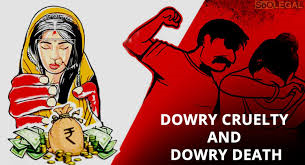
Violence caused in a unique manner against women, which in all ways it is always murder. The major categories of Dowry death is violence against women, alongside rape, bride burning, eve teasing, female genital mutilation, and acid throwing. The most common way to kill the bride was bride burning, which was the most inhuman activity that was done by either the husband or by her in-laws and the most awful part was that, Bride burning was disguised as suicide or accident.
In 2015, over 7634 brides were burned to death in India due to dowry disputes which is approximately a bride being burned every hour. In Uttar Pradesh (2335 cases) alone were reported which is 30.6% of total cases of dowry deaths in India, followed by Bihar (1154 cases). According to the Indian National Crime Record Bureau, India has by far the maximum number of dowry-related deaths in the world. In 2012, 8,233 dowry death cases were reported across India. This means a bride was burned every 90 minutes, or dowry issues cause 1.4 deaths per year per 100,000 women in India.
Dowry which was always a traditional concept (then) of giving and taking money or gifts from the bride’s family at the time of marriage as a perfunctory of love and acceptance and for the future of the couple, which binds both families into one. Unfortunately, over the years the term has shifted from being an affectionate gesture to a horrifying nightmare. In 1980s, most of the Indian women, who were either newly married or within 2-3 years of their marriage period were spotted dead due to the dowry demands.
Section 304B talks about dowry death, which is defined in IPC, stating:-
304B. DOWRY DEATH. — (1) Where the death of a woman is caused by any burns or bodily injury or occurs otherwise than under normal circumstances within seven years of her marriage and it is shown that soon before her death.
she was subjected to cruelty or harassment by her husband or any relative of her husband for, or in connection with, any demand for dowry, such death shall be called “dowry death”, and such husband or relative shall be deemed to have caused her death. Explanation: For the purposes of this sub-section, “dowry” shall have the same meaning as in section 2 of the Dowry Prohibition Act, 1961 (28 of 1961)
(2) Whoever commits dowry death shall be punished with imprisonment for a term which shall not be less than seven years but which may extend to imprisonment for life.
In other words, if any women who is newly married or is within seven years of her marriage period, is going through cruelty or harassment by her husband or by any relative from his husband’s side and from her in-laws, due to the demand for dowry, which causes her death, either due to the bodily injury or due to burns or which may drive her to commit suicide due to continuous harassment and torture or due to any other circumstance; within seven years of her marriage, then such death shall be called as dowry death.
The necessary ingredients to draw Section 304-B IPC, laid down by the Hon’ble Supreme Court, in Pawan Kumar v. State of Haryana are :-
(1) death of a woman is either by burns or by bodily injury or otherwise than under normal circumstances;
(2) it should be within seven years of marriage;
(3) it should also be shown that soon before her death she was subjected to cruelty or harassment by husband or any relative of husband;
(4) such harassment or cruelty should pertain to demand for dowry.
Another significant aspect of the definition provided under Section 304-B is that the death should be caused “otherwise than under normal circumstances”.
In Kamesh Panjiyar v. State of Bihar, the Court gave a practical aspect to this. The body of the victim was found by her brother, lying in the veranda of the appellant’s house with blood radiating from her mouth and evident marks of violence on her neck. It appeared that the victim had been murdered by choking in the previous night.
The Court counted on the opinion of the doctor, the evidences were recovered and the testimony of the witnesses to hold that the death of the woman had been caused otherwise than under normal circumstances as expressed in Section 304-B, and hence it was a case of “dowry death”.
DOWRY PROHIBITION ACT After 14 years of gaining Independence, a specific Act was introduced that tackled with the problem of dowry called the Dowry Prohibition Act, 1961. This Act prohibits the practice of giving or taking of dowry by either party to a marriage, that is, not only prohibits the groom’s side to take dowry but also restricts the bride’s side as well. The definition of “dowry” provided by section 2 of the dowry prohibition act is:-
“any property or valuable security to be given directly or indirectly by one party to a marriage to the other party to marriage at or before or any time after the marriage in connection with the marriage of the said parties”.
The Act is also punishable on demanding and advertising dowry, as observed in the case of Shanti v. State of Haryana, the court said that the term “dowry” has not been defined anywhere except in Section 2 of the Dowry Prohibition Act, 1961.
OTHER SECTIONS RELATED TO DOWRY DEATH Section 113B of evidence act: – — When the question is whether a person has committed the dowry death of a woman and it is shown that soon before her death such woman has been subjected by such person to cruelty or harassment for, or in connection with, any demand for dowry, the Court shall presume that such person had caused the dowry death.
CLASSIFICATION U/SCHEDULE 1 CrPC The punishment of the offence of dowry death is imprisonment for not less than 7 years, but up to life imprisonment. It is a cognizable and non-Bailable offence. Triable by the Court of Session.
COMPOSITION U/S 320 CrPC Dowry death is an offence which is not listed under compoundable offences.
Indian education system has always been about making the students excel in their academic path. The best way for which is making the students disciplined. The act of making them disciplined has been a part of Indian educational system since time immemorial. Quite often in such an endeavour it involves a teacher beating the student as a form of punishment known as corporal punishment which can be either physically or mentally, a practice which had been followed and was normalized and in fact was even endorsed by many schools and hostels.
It wasn’t until the NCPR survey in 2009- 10 which reviewed that the use of physical punishments was rampant in Indian schools and as brutal as cane beatings were a common practice being inflicted upon young students. Even though there is prevalence of laws to prohibit such an act covered in Cr Pc, Juvenile act etc. yet its roots are so deeply engraved in the education system that the students find themselves in thraldom of physical assault just to make them “well- disciplined”.
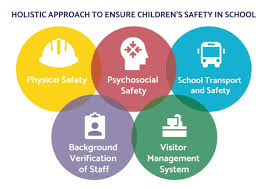
Furthermore there have been cases like sexual assault, bullying and physical violence have been on an upsurge in many universities across India indicating a steep administrative failure. Can then the “no touch” policy be implemented to overcome this hurdle and insure a safe and protected environment for the campuses in India as well as a means for the young students to set themselves free from the clutches of corporal punishment?
The ‘no touch’ policy when implemented in any organization or campus discourages any sort of physical touch including hugging and horseplay. Violators of such a policy face the threat of suspension or even expulsion on these grounds if the accusations filed against them are found to be true.
However, rather than being as a relief measure and a firm stance of the administration against corporal punishment, this policy extends to all the people in that school or campus. This ‘no touch’ policy gradually has started being implemented in many schools internationally.
Parents are relieved about a safe and secure environment for the children whereas teachers have a chance to prove their worth and excel in their career as through such a policy in place, it reduces the amount of false accusations and name blaming by the students of having been physically or sexually harassed. This might also lead to a drastic reduction in the number of cases of sexual and physical harassment taking place on school grounds. However, such a policy is not devoid of its disadvantages. Instead this policy might as very well prove to be a double edged sword.
Due to such a policy any physical touch which might be necessary under any uncertain or unwarranted circumstance like a medical emergency where physical touch is necessary or during P.E activities or music lessons, might prove to be inappropriate and give a wrong impression thereby creating a negative atmosphere rather than creating a positive impact in the bodies present at school.
According to child psychologist Sean Cameron, “What’s missing is recognition of how important touch is. And that withholding touch is in itself of form of psychological abuse.” In today’s atmosphere and environment it is more than necessary to impart correct sexual education; its importance can never be stressed enough. Parents and educational institutions play a primary role in articulating this knowledge.
However, this might all go all down the hill if there is adherence to such type of policy as it will only cause a psychological hindrance for them. The whole difference between what is a safe touch and what is an inappropriate touch will become a blurry concept for them as the environment in which they are growing up plays a centrifugal premise in their understanding capacity.
This policy might dazzle the eyes in a first glance but in reality it is nothing but just another form of hindrance in letting the children grow in a proper environment and substantive environment, such a policy might create a negative feeling towards any sort of touch made by the opposite sex and might even lead to a disruptive response of any sort of human touch.
India’s youth suicide rate is among the world’s highest. Thereby, a no touch policy in campus might seem as an adequate step and a head- strong decision in the direction to overcome this social problem in the society as even Combating physical violence and bullying is indeed a difficult obstacle to overcome.
However is physical violence, bullying etc. one of the major contributors of causing and un- cohesive environment among these students in campus to such an extent that it plays a role in student suicide rate and for which ‘no touch’ policy might seem the absolute option?
Almost all students in the country face a tremendous amount of pressure from family members to excel in their academic life in such a coat throat competing academic structure , adopting such a policy will act as a catalyst in detailing their mental health. It needs to be understood that adolescence is a tender age, it is an age where they want to revolt against any sort of tradition or rules set by the society which might seem to hinder their personal liberty or might seem orthodox.
Already as per the set guidelines of UGC the student’s activities are already being monitored through CCTV cameras, security check posts, random checking etc. a regressive policy like this might lead to an aggressive revolt, which shall be nothing but prove to be bane for the university administration as well as in student’s well-being.
As stated earlier the causes for student suicide are family problems, drug addiction etc. rather than addressing these problems, a ‘no- touch’ policy is nothing but a hasty step and a vague attempt in understanding the youth’s problems reasoned by bigot understanding of the situation at hand. What needs to be noted is that
Clearly, such a policy is just a digressive way and does not even address the problem at hand that is prevalent in today’s youth culture. For the children at school so much more can be done.
The principals or the dean can send out a strong message showing zero tolerance over corporal punishment, conducting seminars and campaigns and imparting sex- education in the best way possible from an early age. With regular parents- teacher meet or conducting seminars for parents even they can get involved with their child’s performance and behaviour at school grounds and looking at rather corporal punishment, coming up with other means and effective tools to make them disciplined. Whereas in the university campuses such a regressive policy has no grounds.
The cases of bullying or physical or sexual harassment can be combatted with a strict and active student as well as administrative councils, where the administration staff with a healthy discussion with the student body can come up with strong policies, to combat such hurdles.
Hence, a ‘no touch’ policy in campuses holds no substantive grounds and should be left to just theory rather than coming up with steps on how to implement it effectively.
The cash-for-votes scandal was an Indian political scandal allegedly masterminded by then Opposition Party Bharatiya Janata Party politician Sudheendra Kulkarni in which the United Progressive Alliance, the majority-holding parliamentary-party alliance of India led by Sonia Gandhi, allegedly bribed Bhartiya Janta Party MPs in order to survive a confidence vote on 22 July 2008. The vote in the Lok Sabha arose after the Communist Party of India (Marxist)-led Left Front withdrew support from the government, who wanted to pursue an Indo-US nuclear deal.
A Delhi court on Thursday put 11 former members of Parliament on trial for the 2005 cash-for-query scam. Special Judge Kiran Bansal framed graft and criminal conspiracy charges against the MPs. The trial will begin from January 12.
A sting operation by online news site Cobra post that aired on a private TV channel on December 12, 2005, showed the 11 MPs accepting cash in exchange for raising questions in the Parliament.
Out of the 11 MPs accused in the case, six were from the BJP, three from BSP, and one each from the RJD and Congress. They were Y G Mahajan (BJP), Chhatarpal Singh Lodha (BJP), Anna Saheb M K Patil (BJP), Manoj Kumar (RJD), Chandra Pratap Singh (BJP), Ram Sewak Singh (Congress), Narender Kumar Kushwaha (BSP), Pradeep Gandhi (BJP), Suresh Chandel (BJP), Lal Chandra Kol (BSP) and Raja Rampal (BSP). The Lok Sabha expelled 10 members, while Lodha, who was the sole Rajya Sabha member, was also expelled.
On December 24, 2005, the Parliament voted to expel the 11 MPs in a historic vote. Pranab Mukherjee, the leader of the house at the time, introduced a resolution asking for expulsion of the members while then Prime Minister Manmohan Singh did the same in Rajya Sabha.
While all parties had clamoured for action against the accused MPs, the BJP walked out of the vote saying it was a ‘kangaroo court’. BJP senior leader LK Advani, who was leader of the Opposition at the time, said that while what the MPs had done was corruption, but “more than that it was stupidity” and the punishment of expulsion was too harsh.
In January 2007, a Supreme Court verdict upheld the Parliament’s decision to expel the MPs. The MPs had filed a petition challenging their expulsion, which ignited a debate whether the court could interfere in Parliament procedures.
The Delhi High Court in 2007 directed the Delhi Police to book people involved in the offence. Two cobra post journalists, Aniruddha Bahal and Suhasini Raj, were also named in the chargesheet for abetting the offence under the Prevention of Corruption Act, but the case against them was later quashed, with the court ruling that no one could be prosecuted for carrying out sting operations.
The cash-for-vote scam rocked both the houses of parliament on Thursday after senior BJP leader L.K. Advani challenged the Government to arrest him in connection with the 2008 scandal. Speaking in the Lok Sabha, the BJP Parliamentary Party chief said that if the two BJP MPs are guilty in the cash-for-votes scam, then he should also be arrested.
Advani said that he was aware of a sting BJP conducted in 2008 to expose the UPA’s willingness to buy support to survive a trust vote.
Both the Lok Sabha and the Rajya Sabha had to be adjourned as the BJP pressed for the suspension of the Question Hour and demanded immediate discussion on the issue. While the Lok Sabha was adjourned till noon, the Rajya Sabha was adjourned till 12:30 PM after uproar over the scam.
Advani gave a notice for suspension of Question Hour in the Lok Sabha to discuss the new developments in the case. A similar notice was given in the Rajya Sabha by BJP member Ravi Shankar Prasad. It may be recalled that BJP MPs, Faggan Singh Kulaste and Mahavir Singh Bhagora, along with former Samajwadi Party leader Amar Singh were on Tuesday sent to judicial custody in the cash-for-votes scam.
Advani’s former aide Sudheendra Kulkarni, who has also been charge sheeted in the case, has been ordered to appear in court on September 19. The BJP and other Opposition parties have questioned as to why the Congress-led UPA government, which was the prime beneficiary in the cash-for-votes scam, has not been investigated.
With the onset of political stability and the introduction of universal adult suffrage, the votes had been the greatest liability offered to people of the country to choose their own government. But amidst the growing greed of power, the authenticity of casting of votes within the country and within the parliament had been a far cry. The cash for vote scam is one such type of scam, gained notion now-days, revealing the bitter secrets of the chosen one’s within the parliament.
The elected members of the parliament played a key role in bringing out new reforms and bills that would help the nation and the people of the nation to progress and develop. But seeing the today’s world scenario ,where money and politics go hand-in-hand, this power of the members has opened a door for outside gratifications for his valuable vote in favour of a particular party. The cash for vote scam reveals the involvement of Member of Parliament in changing their votes on the US-India Nuclear deal, thereby bringing in the ambiguity over its authenticity.
The involvement of senior samajwadi party leader Amar Singh and MP’s of Bhartiya Janta Party shows that the fixture on the deal had been on a very high level than thought. The US-India Nuclear deal is one of the important deals between India and US paving way for future development, thus an unbiased voting would have brought in a clear state of response. But the scam brought in an enigma among the members thus making the worst out of the deal, out of which the most can be make out.
The cash for vote scam also put forward the weakened disciplinary acts against the tormenters of democracy and showcases the line of breakage of trust among the members of the same party leading towards a huge political upheaval, showing clear signs of anarchy onset in the country. As the parties are facing a growing distrust from people, bringing in the need for a stable and fare government. A raging behaviour has started to grow up among the people of the country giving a clear sign of cutting off such types of scams.
In a huge relief to former Samajwadi Party leader Amar Singh, L K Advani’s ex-aide Sudheendra Kulkarni and three BJP leaders including two MPs, a Court here today gave a clean chit to them in the 2008 cash-for-vote scam, saying facts on record do not create sufficient grounds for proceeding against them.
While discharging Kulkarni, BJP leaders Ashok Argal, Faggan Singh Kulaste (sitting MPs), former BJP MP Mahabir Singh Bhagora, and party activist Sohail Hindustani, the court said they had “the intention to expose horse was trading” which was corroborated by the fact that currency notes were taken to Parliament House and tabled to be viewed by the entire nation.
However, of the 7 accused, only one, Amar Singh’s former aide Sanjeev Saxena was ordered to be proceeded against under section 12 of Prevention of Corruption Act (abetment of offence relating to illegal gratification to a public servant). He was discharged of criminal conspiracy.
The cash-for-vote scam pertains to the BJP MPs displaying wads of currency notes during the July 22, 2008 trust vote in the Lok Sabha after the Left Front withdrew its support to UPA-I government on the issue Of Indo-US nuclear deal.
While Singh and Kulkarni spent 49 and 52 days respectively in jail before they were granted bail, Kulaste, Bhagora and Hindustani spent two-three months in jail. Argal was granted anticipatory bail.
“…on study of record on the case and the documents submitted and after hearing the parties, this court has come to an opinion that facts that have emerged on record do not create sufficient grounds for proceeding against Sudheendra Kulkarni, Sohail Hindustani, Faggan Singh Kulaste, Mahabir Singh Bhagora, Amar Singh and Ashok Argal.
“They are accordingly discharged of all the offences,” Special Judge Narottam Kaushal said while absolving them of charges of criminal conspiracy and various provisions of the Prevention of Corruption Act.
Indian society suffers from substantial inequalities in education, employment, and income based on caste and ethnicity. Compensatory or positive discrimination policies reserve 15% of the seats in institutions of higher education and state and central government jobs for people of the lowest caste, the Scheduled Caste; 7.5% of the seats are reserved for the Scheduled Tribe. These programs have been strengthened by improved enforcement and increased funding in the 1990s.
The Convention on the Rights of the child has important implications for the education of children. In the Convention are numerous articles that deal with education and with children’s rights education. First is the child’s right to education on the basis equal opportunity (article 28). This includes the right to free primary education and to accessible secondary and higher education. Second are the child’s rights in education (articles 2, 12, 13, 14, 15, and 19). This includes the right to non-discrimination, participation, protection from abuse and violence, and freedom of thought, expression, and religion. Third are the child’s rights through education (article 29 and 42). This refers to education where children are able to know and understand their rights and to develop respect for human rights, including their own human rights.
Discrimination on any grounds- religion, race, caste, sex, place of birth or any other is prohibited under Art 15 of the Constitution. This constitutes an important move away from the graded inequalities and discrimination based on the caste system.
Discrimination is widespread on various counts – caste, ethnicity, religion, gender, age, class, disability, region, language, family occupation, or a combination of these. These have found their way into every aspect of social life, including the education system. Dalit’s face the worst forms of discrimination and violence, given the religious basis of the caste system, concepts of purity, pollution and untouchability.
Article 21A Indian Constitution mandates the state to provide free and compulsory education to all children aged 6-14 years has the right to free and compulsory elementary education with adequate infrastructure facilities, free textbooks, writing materials and uniforms;
the government should ensure that children from disadvantaged social groups are not discriminated against and prevented from pursuing and completing elementary education;
The Constitution categorically abolished “untouchability” and its practice in any form declaring it ‘offence punishable under law’.
In the context of education, Article 30 (2) prohibits the state from discriminating in granting aid to educational institutions on the ground of its management under a minority. Article 46 of Indian Constitution recognises the state should promote with special care the educational interests of scheduled castes.
Caste based discrimination in the education system can be seen at two levels – institutional and relational. Institutional discrimination includes the many ways in which the education system denies equitable education opportunities, education services and supportive mechanisms to facilitate Dalit students to access an equal quality of education and to reduce educational inequalities between Dalit’s and non-Dalit’s.
It may include both active and passive forms of discrimination, default and intentional. The relational forms of caste based discrimination against students in the schools and higher education institutions take various forms too.
At the school level, discrimination has been reported and studied- caste based verbal abuse and name calling, in midday meals, teaching and learning practices, in the use of drinking water, in assigning cleaning tasks in schools, not paying attention to Dalit students and de-motivating them, preventing their participation in schools, heightened corporal punishments, and so on.
Discrimination and violence against Dalit schools have been reported by students across the country, including sexual violence against Dalit girl students. The current and long-term negative impact of this discrimination on Dalit students in terms of their learning, educational achievements as well as future opportunities are yet to be fully grasped.
Adivasis, in addition to suffering from the same low expectations, face a different set of issues. Demographically, tribal habitations are small and sparsely populated and hence lack many infrastructural facilities, including schools and roads.
Even when schools are within walking distance for pupils, it is not unusual for the roads to become impassable during the monsoon and for the teachers, who often live in larger towns, to surreptitiously close the school. These factors are particularly constraining for tribal children who live in isolated communities.
Language poses another major challenge for tribal education. Trial’s normally speak local dialects rather than the main language of the state in which they reside, and tribal students feel further alienated when the teachers are not well trained to communicate in their tribal dialects (Sujatha 2002).
Muslim students suffer from similar disadvantages. Many Muslims would like to see education take place in Urdu, their mother tongue, but few schools accommodate this.
Children often face harassment and ridicule, and rising religious tensions lead to children’s alienation from school. Since Muslim families are disproportionately urban, access to schools is less likely to be a problem, but discrimination by teachers and a hostile school environment may pose a major impediment.
Human rights activists are concerned that the discrimination is preventing the realisation of India’s Right to Education (RTE) that aims to provide quality education to all children between the ages of 6 to 14 till elementary school (till eighth grade).
Since RTE came into force in 2010, nearly all children are in school. Government data shows that the total enrolment of children in primary school increased by 14.6 million in the past five years, which includes 56 per cent girls, as well as 55 per cent backward castes and 41 per cent Muslims.
Meenakshi Ganguly, head of Human Rights Watch in India, said that it was the responsibility of the government to ensure that all the enrolled children feel safe and welcome in school, which allows them to complete their education. “We are a proudly diverse country, we celebrate that diversity, let’s do that with honour, equity and not with discrimination,” she said, making an appeal for zero discrimination at the launch of the report.
But would the appeal cut into the thick cloak of prejudice? Experts believe that few efforts have been made to sensitise teachers, or detecting and preventing discrimination. Vimala Ramachandran, an education pioneer for over two decades, said that at present no mechanism exists to monitor teachers and penalise them for discrimination.
Unaddressed discrimination
Annie Namala, executive director at the Centre for Social Equity and Inclusion, pointed that government bodies and civil society groups had done studies to address discrimination, but these recommendations were not being implemented. “None of these are really getting to the light of the day, nor it translating into any point down the files and papers,” she said.
Increasingly, parents with even some money are opting to send their children to any cheap private school in the vicinity. And so, government schools are filled with the most marginalised children, while their teachers belong to upper castes. Ambarish Rai, national convener at the Right to Education Forum, says that these teachers don’t understand why children of cobblers and washer men should be taught.
Their thinking, he said, is “what will they do with studying”. Besides child labour, girl dropouts are especially vulnerable to early marriages. Government data shows that the dropout rate among girls is more than 41 per cent till the eighth grade and over 57 per cent till the tenth grade. Girls from lower castes are made to clean toilets, while girls from the higher castes make tea for the teacher.
In Rajasthan, she pointed out that government schools for girls don’t offer science and math beyond the eighth grade.
Access to childcare
To succeed in bringing and retaining marginalised children in schools, the government will have to ensure zero discrimination in classrooms. Girls and children with disabilities will need even more attention.
For this, any future teacher training should go beyond improving learning outcomes to focus on inclusive learning practices that are effective, ensure greater participation of children from marginalised communities and healthy interaction among children from different backgrounds. Civil society groups can be important government allies in this venture.
It is also time to expand the Right to Education so that all children are entitled to 12 years of free and accessible education by 2030. Equally, there needs to be universal access to early childhood care and education to guarantee children’s long-term development, health and well-being. These goals are part of the proposed global agenda and India too sees them as priorities. The government should set an example at the World Education Forum by announcing special commitments toward implementing these goals.






 Eduindex
You must be logged in to post a comment.