Death toll in spurious liquor tragedy rises to 86 in Punjab; ED begins probe

The death toll in Punjab’s spurious liquor tragedy has risen to 86. Tarn Taran alone accounted for 63 deaths, followed by 12 in Amritsar and 11 in Gurdaspur’s Batala. Chief Minister Amarinder Singh suspended seven excise officials and six policemen. Among the suspended officials are two deputy superintendents of police and four station house officers. State government also announced a compensation of 2 lakh rupees for each of the families of the deceased.

The Enforcement Directorate (ED) has begun investigations into the Majha tragedy. ED has started collecting information about the financial transactions by those named or booked in the case. The recoveries and assets of the key accused need to be thoroughly probed. 

New Education Policy will transform job seekers into job creators: PM Modi

Prime Minister Narendra Modi has said that New Education Policy (NEP) will transform job seekers into job creators. Addressing Smart India Hackathon 2020, he said the NEP is not just a policy but a compilation of aspirations of all the Indians.

The Prime Minister gave a mantra to students and said, never stop three things in life – learning, questioning and solving. The Prime Minister said that the time has come for increased focus on learning, research and innovation in the field of education. He said, the 21st century is the era of knowledge and this is exactly what New Education Policy does.

The Prime Minister said we are focussing on the quality of education in the country. Elaborating on the Centre’s attempts to transform the content and method of imparting education in the country, Mr Modi said, the New Education Policy emphasizes on inter-disciplinary study, which will ensure that the focus is on what the student wants to learn instead of being compelled to learn.

Mr Modi also said that India is shifting from the burden of school bags to the boon of learning. He said, Languages of India will develop more due to the changes brought about in the education policy. This will not only increase India’s knowledge but will also increase the unity among its people, the Prime Minister told the students participating in the Smart India Hackathon 2020. This year, around 10,000 students are participating in the hackathon.

The grand finale of Smart India Hackathon 2020 (Software) is being held from August 1 to 3. He also interacted with students and enquired about their projects ranging from women’s hygiene products to crime detection technologies to water harvesting. This year, over 4.5 lakh entries were received for the competition.

The Golden city :Jaisalmer

Jaisalmer nicknamed “The Golden city”, is a city in the Indian state of Rajasthan, located 575 kilometres (357 mi) west of the state capital Jaipur. The town stands on a ridge of yellowish sandstone and is crowned by the pad Jaisalmer Fort. This fort contains a royal palace and several ornate Jain temples. Many of the houses and temples of both the fort and of the town below are built of finely sculptured sandstone. The town lies in the heart of the Thar Desert (the Great Indian Desert) and has a population, including the residents of the fort, of about 78,000. It is the administrative headquarters of Jaisalmer District. Jaisalmer was once the capital of Jaisalmer State.
Jaisalmer is named after Rawal Jaisal, a Bhati ruler who founded the city in 1156 AD. Jaisalmer means the Hill Fort of Jaisal. Jaisalmer is sometimes called the “Golden City of India” because the yellow sandstone used throughout the architecture of both the fort and the town below, imbues both with a certain golden-yellow light.

Loaction:
It is the largest district of Rajasthan and 3rd largest Town by territorial region in the country, hugged on the west & south-west by the Pakistani border. The length of the international border attached to Jaisalmer District is 464 km (288 mi). It is located 790 kilometres away from the national capital Delhi.
Places to visit
Jaisalmer fort:
Built in 1156 by the Bhati Rajput ruler Jaisal, Jaisalmer Fort, situated on Meru Hill and named as Trikoot Garh has been the scene of many battles. Its massive sandstone walls are a tawny lion colour during the day, turning to a magical honey-gold as the sun sets. The famous Indian film director Satyajit Ray wrote a detective novel and later turned it into a film − Sonar Kella (The Golden Fortress) which was based on this fort. About a quarter of city’s population still live inside the fort. The main attractions inside the fort are: Raj Mahal (Royal palace), Jain temples and the Laxminath temple.

Gadsisar Lake:
Excavated in 1367 by Rawal Gadsi Singh, it is a scenic rainwater lake surrounded by the small temples and shrines of Amar Sagar. Earlier, this lake was used to be the main water source of Jaisalmer. Due to an
increased water demand for agriculture, the lake is increasingly threatened to dry out.

Festival:
Desert Festival of Jaisalmer is the most awaited and famous cultural and colourful event of Rajasthan. Camel races, Turban-tying and Mr. Desert competitions are organised. It is held in the month of February every year. The festival showcases Rajasthani folk songs and dance and it is very attractive to foreign tourists. Gair and Fire dancers which are the major attraction of the Jaisalmer desert festival celebrations. This is the best time to visit Jaisalmer to witness performing arts like Kalbelia dances and folk songs and music.

Desert:
The Thar Desert, also known as the Great Indian Desert, is a large arid region in the northwestern part of the Indian subcontinent that covers an area of 200,000 km² and forms a natural boundary between India and Pakistan. It is the world’s 17th largest desert, and the world’s 9th largest subtropical desert.

Travelling after corona

We will travel again, but it will not be the same. Even if borders reopen, travellers must trust that boarding a plane is safe and that they will be able to enter the destination country. New health safety protocols and systems will need to be in place, and these have yet to be defined. As governments and industry plan for recovery in this new context and adapt to changing traveller behaviour, the use of digital identity and biometrics technologies could restore trust while also ensuring a seamless journey. However, these tools will only be effective if users feel that their data is protected. Privacy, consent and transparent data governance must be at the heart of any technical solution.

1. The queue at immigration will be longer than ever before

We’re already seeing with China, Singapore, and South Korea, countries that feel like they are on top of their outbreaks, that the biggest worry now is new infections coming from outside. Korea is ordering all persons entering from the US and Europe to isolate for two weeks, even if they test negative for COVID-19. Those without a permanent residence are being sent directly to an isolation ward. Manufacturers of heat cameras are seeing a spike in demand. Even when lockdowns in Europe are over and we start to travel again, countries will test at the border. If you thought the line at JFK immigration control was torturous before, now consider what it’ll be like as you line up, take a swab test, and wait for the results. 

2. You’ll need more than a passport

Some countries will not even take the chance of testing at the border. Especially if you’re coming from an outbreak hotspot. Entrance will be refused unless you have a certificate of immunity since you’ve recovered from an infection or because you’ve been vaccinated (once there are vaccines available). Wristbands with barcodes like those in the movie Contagion are a very real prospect. Certainly in the short-term, travel will become more defined by purpose. Any business travel will need to be strictly validated as an economic activity, with companies tightening the numbers of employees who travel for them. Countries will likely only open their borders where there is merit and it’s safe to let travellers through. This may mean temporary visas and more documentation that you’ll need to take with you when travelling. 

3. Travel will have different (expensive) seasons

A very influential paper from Imperial College London speculates that governments will need to turn lockdown measures on and off to keep demands on healthcare systems at a manageable level. This means there will be windows of opportunity to travel that last only weeks or even days. Even with airlines desperate to get airborne again, seats will be limited and we could see dramatic increases in pricing during those windows.

4. Recovery will be uneven

We’re seeing already that the factors influencing this pandemic are numerous. Strictness and timing of lockdown measures, robustness of healthcare systems, the weather, luck, and other factors are all at work. Meaning some countries and regions will recover first. We will see corridors of recovery open back up one by one. 

5. You’ll pack differently

We may well see the relaxing of liquid carry-on restrictions as travellers want to take more than 100ml, especially on long-haul flights. Along with hand sanitizer travel packs, it’s a pretty easy prediction to make that a lot more people will travel with masks. In the same way that companies like Away have made luxury, fashionable travel baggage, we will most likely see “desirable” travel masks worn by Instagram influencers. 

6. You’ll tick that little box every time

We’re all very used to aeroplane bookings coming with tens of add-ons once we’ve chosen our flight. Let’s be honest, most of us skip past speedy boarding, extra baggage, car rental, and even seat selection. One box that we won’t be skipping past as much as the one asking us if we want to ensure the flight. Be careful though, often this “insurance” doesn’t cover you for many things, including the outbreak of a pandemic. Either airline providers or insurance companies are going to have to change to accommodate our new reality.

7. Society won’t like you when you’re sick

Even those who have recovered from COVID-19, and have built up immunity (if the virus doesn’t mutate too much) won’t want to travel with a cold. The current situation and the conviction with which the world is adopting social distancing will make it socially unacceptable to travel with a cold or any symptoms. The looks you will get if you cough or sneeze at an airport or on a plane will be scathing.

8. You’ll take the train before the plane

Domestic travel will recover first (there’s no border control) and for most countries that means taking a train. Not only will we be able to get back on tracks (ha, a pun) first, we’ll also be more secure about it. Trains are less crowded, have windows that open, and also are much more environmentally friendly. Once the lockdowns we see in Europe now are lifted, I predict people will rush to take a train, just because they can. 

9. Air quality will be an advertised feature

Any idea what grade air filter Lufthansa uses on their flights? How about British Airways? Korean Air? Which Airbus model has the cleanest air? Do Boeing planes have fewer microbes in the air? No idea? Well, you may not know now, but once we’re flying again, airlines will start boasting about their filtration systems. Some have already started emailing customers about their current systems in a bid to stop people cancelling. By the end of the year, it’ll be a question many people will be asking—how safe is the air onboard?

Touchless travel

The most immediate and perhaps most visible change will be a shift to touchless travel from airport curbside to hotel check-in. Even with strict cleaning protocols in place, exchanging travel documents and touching surfaces through check-in, security, border control, and boarding still represent a significant risk of infection for both travellers and staff.

Automation across the entire sector will become the new norm. Biometrics is already a widely accepted solution for identity verification, and their use will become more widespread as physical fingerprint and hand scanners are phased out. More touchless options will come into play including contactless fingerprint, as well as iris and face recognition. Moreover, technology for touchless data-entry such as gesture control, touchless document scanning and voice commands are already being tested. Care must be taken to ensure these technologies are inclusive and to eliminate the risk of potential biases.

Greenwashing – blurring the line between green and greed


“Green” is becoming one of the pressing words almost for the past two decades with the increasing need for sustainability. As the demand for green practices is increasing by the day, companies are striving to appear more sustainable than they are in actual practice for which they inevitably opt for the easy out by using green washing through marketing and advertisements, misleading consumers regarding the environmental practices of a company in order to appear environmentally responsible.

Green washing is the practice of making an unsustainable or misleading claim about the environmental benefits of a product, service, and technology or company practice attempting to capitalize on the growing demand for environmentally sound products. It is also referred to as “green sheen”. These so called “Green” products promote green washing by not just using it as a catch phrase but rather as a marketing strategy. The world is embracing the pursuit of greener practices which has encouraged Companies to produce and sell the so called “green” products. These companies employ green washing techniques to cover for their environmentally destructive business operations and elude from the influx of litigation.
Greenwashing is applied to the daily products that people use almost everyday. For example, many popular tooth paste brands which claim to be “herbal” are not just herbal but harmful too. A study conducted by Prof .Agarwal of DISPAR suggests that some tooth paste brands consists of 18 and 10 mg of nicotine, which is equivalent to the quantity found in nine and five cigarettes respectively which in turn can cause cancer.
A 2019 class action against Nestle’s sustainably sourced cocoa beans claimed that this act cannot be called sustainable when the production of the key ingredient in the company’s chocolate products is helping drive massive deforestation in West Africa. It is also said that the cocoa comes from farms that use child and slave labour.
H&M is a fast fashion brand with stores rapidly popping up in India. It had an initiative called the “garment brand collection program” where people received a discount voucher for giving a bag of their old clothes to any of their stores. The company claimed that those clothes would be recycled. In simple words, leaving nothing to waste. But this brands entire shtick of providing this feel good environmentally sustainable image is a classic case of green washing. The problem doesn’t lie in the classic reuse or recycle approach but the fact that these brands themselves are a part of the problem. The best way to reduce textile waste is buying fewer clothes.Dropping a bag of clothes for coupons will only get the cycle going on and on.
Origin of the term “Greenwashing “:
The term “greenwashing” was coined by Jay Westerveld in 1986 in a critical essay which was inspired by the irony of the ”save the towel” movement in the South Pacific hotel where he happened to pick up a card having the recycling symbol that read “Save Our Planet: Every day, millions of gallons of water are used to wash towels that have only been used once. You make the choice: A towel on the rack means, ‘I will use again.’ A towel on the floor means, ‘Please replace.’ Thank your for helping us conserve the Earth’s vital resources.” the world embraces the pursuit of greener practices. Westerveld saw the irony in the statement since hotels consume and waste a lot of resources that are on the line and not washing the towels would not make a lot of difference. But eventually he found out that this act of sustainability was not to save resources but rather to save money used on laundry. This enlightenment pushed him to coin the term “green washing”.
DIFFERENT WAYS OF GREEN WASHING
Green washing can be based on two grounds, firstly, a company can adopt an eco-friendly directive for an existing production method as if they were influenced by the concern for the environment to claim credit. For example, a company will ban the use of plastic bags under the name of green initiative but the actual motive of this initiative would have been to cut costs that the company spends on baggage. Secondly, a company will lie about the eco friendliness of a product by using catchphrases as marketing strategies to appear green and organic . For example, phrases like “paraben-free” “eco-friendly” etc. Further green washing can be done by using environmental imageries, misleading labels, hidden trade offs, irrelevant or unproven claims and red herring.
Seven sins of Green washing :
Terra choice in the year 2010, investigated the claims of 4,744 “green” products carried in the stores across the U.S, UK and Canada finding that more than 95% of these products were guilty of at least one of what they call as “the seven sins of green washing”
Sin of Hidden trade-off
It refers to labelling a product as environmentally friendly based on a small set of attributes when other concerns that could cause greater damage to the environment are not addressed. This might make a bigger impact on the eco-friendliness of a product as a whole.
Sin of no proof:
It is the making of an environmental claim without providing easily accessible evidence on either the label, product website with no reliable third party certification.
Sin of vagueness:
It is when a product description uses broad terms that cannot be properly understood.
Sin of irrelevance :
Starting something that is technically true but not a distinguishing factor when looking for eco-friendly products.
Sin of lesser of two evils:
Claiming to be greener than the other products in its category when the category as a whole may be environmentally unfriendly.
Sin of fibbing:
Advertising something that just isn’t true. Environmental claims that are simply false.
Sin of worshipping false labels:
Implying that a product has a third party endorsement or certification that doesn’t actually exist often through the use of fake certification labels.

How to avoid being green washed?
It is important that people don’t just assume something is truly natural because there’s a pretty sticker on the front label that claims so. One should head straight to the full ingredient list on the back of the product because that might tell the full story. It is important to look beyond pretty packaging and buzzwords because a green leaf on a package, pretty herbs on a shampoo bottle or any number of phrases that claim to be natural, eco – friendly or non toxic can paint a picture of health and sustainability which are meant to be a hook, prompting shoppers to pick up that product without digging deeper. Every person must strive to become an expert label reader and must look for proof, research and verify every product. It is important to draw the line between green and greed.

India fastly pacing towards inclusive growth

Introduction


The agenda of inclusivity and sustainability has become the focus of policy framework both at national and international level. The approach of development through “including” the general mass is directed towards a broad based growth, shared growth, and pro-poor growth.

World Bank defines the IG as follows:
“Inclusive Growth refers both to the pace and pattern of growth, which are interlinked and must be addressed together.”
Thus, in broad sense, IG means the inclusion of all sections of society in the process of economic development and sharing of its benefit. Therefore, IG is not only an outcome or end but a process or a mean in itself.

Dimensions of IG


These are the pillars of the building block of IG, or in simple terms, these are the ideals on which IG is based. Without these ideals, the IG remains superfluous in its merit.
Economic Growth
India is among the fastest-growing major economies in the world. However, currently Indian economy is facing slowdown due to both cyclic and structural challenges.
However, the target of becoming a $ 5 trillion economy by 2024-25 can allow India to reduce inequality, increase social expenditure and provide employment to all.

Equality:
Equality of opportunity in terms of access to markets, resources, and unbiased regulatory environment are the ends to mean of equality. In-equalities exist in various manners which are social inequalities, rural-urban divide, regional disparities, digital divide etc. To realize the IG in its ultimate form, equality is the most fundamental criteria. IG and equality impact each other. Without equality, IG can’t be achieved and lack of IG may lead to in-equality in real or perceived forms. Thus, IG and equality are mutually reinforcing. In contemporary economic environment, gender equality has become a basic element of IG. Gender inequality is a pervasive problem in Indian social set-up which has adverse effect on women. Although Indian economy has progressed, the equality has retrograded at all levels whether social or economic. An OECD report has identified that inequality in India has been continuously rising which has posed policy challenges in promotion of inclusiveness.

Technological Advancement
The world is moving towards an era of Industrial Revolution 4.0. These technological advancements have capabilities to both decrease or increase the inequality depending on the way these are being used.
Technology can help to combat other challenges too,
Agriculture- Modern technology can help in making an agro-value chain from farmer to consumer more efficient and competitive.
Manufacturing– Technology can resolve the problems of finance, procuring raw materials, land, and linkages with the user market. GST was made possible only with the help of sound technology.
Education– Innovative digital technologies can create new forms of adaptive and peer learning, increasing access to trainers and mentors, providing useful data in real-time.
Health– Technologies could transform the delivery of public health services – extend care through remote health services.
Social Development
It means the empowerment of all marginalised sections of the population like SC/ST/OBC/Minorities, women and transgenders.
Empowerment can be done by improving institutions of the social structure i.e. hospitals especially primary care in the rural areas, schools, universities, etc.
Investment in social structures will not only boost growth (by fiscal stimulus) but will also create a healthy and capable generation to handle future work

Sustainability
In long term, it has been identified that, there has been a gross mismatch between the outcomes of the Indian Economic Planning for IG with respect to environment. Although, Indian economy has witnessed a rapid growth, there has been a decline in the environment and standard of living of the poor. In the issues related to IG as discussed ahead, it has been elaborated that Liberalization, Privatization and Globalization (LPG) has put a sheer pressure on the environment and created a rural-urban divide. Sustainability and IG can’t be achieved in isolation and they supplement each other.

Good Governance:
In simple words, governance means the regulatory, monitoring or controlling process which facilitates the devilry of the government services. Good governance results in effectiveness and efficiency, it upholds justice in the rule of law, and accountability and it encourages popular participation, consensus, and equality. Tenth plan defines governance in following way”.

As per OECD (Organisation for Economic Co-operation and Development), inclusive growth is economic growth that is distributed fairly across society and creates opportunities for all.

Defining inclusive growth, rapid pace of economic growth is necessary for substantial poverty reduction and for the growth to be sustainable in the long run, it must be broad based across sectors and inclusive of large part of a country’s labour force.
Promoting inclusive growth requires policymakers to address both growth and income distribution, so it requires an understanding of the relationships between growth, poverty and inequality. Economic growth is a prerequisite for poverty reduction when income distribution is held constant. The acknowledgment that inequality affects the impact of growth on poverty reduction has led to a broad agreement that it is necessary to look beyond a ‘growth-first’ agenda in order to successfully deliver inclusive growth.

The United Nations 17 Sustainable Development Goals (SDG) are
Countries have committed themselves to time-bound targets of prosperity, people, planet, peace, partnership (five P’s) keeping in line with the United Nations 2030 agenda and the Sustainable Development Goals. The Paris Agreement, which is part of the SDG framework, requires every country to achieve net zero greenhouse gas emissions by mid-century . In order to achieve results in SDG, policy frameworks adopted by the Governments play a crucial role. The three principle layers to measure government efforts to implement the long-term objectives of the 2030 Agenda and the Paris Agreement:
The SDG index summaries countries’ current performance and trends on the 17 SDGs.India ranks 115 in 2019.
In the context of India’s inclusive growth trajectory, the strategies of Inclusive growth and development came into the attention in the progressing policies of emerging market economies (EMEs) with higher economic growth rates. With an accelerated economic growth rate, Indian policy makers too moved their concentration on Inclusive growth and expansion while formulating the 12th five-year plan.Thus, the plan targeted deprived sections of the Indian population, health, employment, rural urban infrastructure, women and child development and social security measures against the backdrop of the strategy.

Key elements of inclusive growth


Since globalization, significant improvement in India’s economic and social development made the nation to grow strongly in the 21st century. The following factors encouraged India to concentrate more on inclusive growth:
• India is the 7th largest country by area and 2nd by population. It is the 12th largest economy at market exchange rate and 4th largest by PPP. Yet, India is far away from the development of the neighbourhood nation, i.e., China.
• The exclusion in terms of low agriculture
• There are so many studies that estimate that the cost of corruption in India amounts to over 10% of GDP. Corruption is one of the ills that prevent inclusive growth.
• Although child labour has been banned by the law in India and there are stringent provisions to deter this inhuman practice, still, many children in India are unaware of education as their lives are spoiled to labour work.
• Literacy levels have to rise to provide the skilled workforce, required for higher growth.
Achievement of 9% of GDP growth for
• as a whole is one of the boosting factors which gives the importance to the Inclusive growth in India.
• Reducing poverty and other disparities and raising economic growth is the key objectives of the nation through inclusive growth.

Measuring Inclusive Growth


Inclusive Development Index (IDI)
In the Inclusive Development Index (IDI) compiled by the World Economic Forum (WEF), India ranked 62nd out of 74 emerging countries and was among the least inclusive countries in Group of 20 (G-20) countries.
The IDI is based on the idea that most people base their country’s growth not on GDP but by their own standard of living.
It gives a measure of inequality based on three parameters: :
• Growth and development
• Inclusion
• Inter-generational equity and sustainability.
India also did not make it to the top 10 most inclusive emerging and developing economies, where its neighbours Nepal, China and Sri Lanka made a mark.
India performed its best in terms of “intergenerational equity and sustainability”, ranking 44th, for which credit can be attributed to its demographic dividend

Measures Taken by India to Achieve Inclusive Growth


Several schemes are being implemented by the government for inclusive growth which includes the following:
• Mahatma Gandhi National Rural Employment Guarantee Act Scheme (MGNREGA)
• Prime Minister’s Employment Generation Programme (PMEGP)
• Mudra Bank scheme
• Pt. Deen Dayal Upadhyaya Grameen Kaushalya Yojana (DDU-GKY)
• Deendayal Antyodaya Yojana- National Urban Livelihoods Mission (DAY-NULM)
• Sarva Siksha Abhiyan (SSA)
• National Rural Health Mission (NRHM)
• Bharat Nirman
• Swachh Bharat Mission
• Mission Ayushman
• Pradhan Mantri Jan Dhan Yojana
• Government is working with NGOs and International groupings in policy making eg:
o DISHA Project is being implemented in partnership with UNDP for creating employment and entrepreneurship opportunities for women in India.
• NITI Aayog’s Strategy for New India @75 has the following objectives for the inclusive growth:
o To have a rapid growth, which reaches 9-10% by 2022-23, which is inclusive, clean, sustained and formalized.
o To have an inclusive development in the cities to ensure that urban poor and slum dwellers including recent migrants can avail city services.
o To make schools more inclusive by addressing the barriers related to the physical environment (e.g. accessible toilets), admission procedures as well as curriculum design.
o To make higher education more inclusive for the most vulnerable groups.
o To provide quality ambulatory services for an inclusive package of diagnostic, curative, rehabilitative and palliative care, close to the people.
o To prepare an inclusive policy framework with citizens at the center

Conclusion


• Indian government along with the state gouvernments and local governments should continue to focus on eradicating poverty and achieving sustainable development in order to improve the lives of India’s people.
• Inclusive growth will help in the empowerment of vulnerable and marginalized populations, improve livelihoods, and augment skill-building for women.


The factors for stress and its management

Stress management policies and procedures are then explained and specified for each significant type of a stressors . This is done using a case study of an organisation , where it shows how this firm deals with each kind of different stressor.

Introduction

Stress is a dynamic condition in which an individual confronted with an opportunity, constraint and demand related to what he or she desires and for which the outcome is perceived to be both uncertain and important.

Organizations are mainly concerned with work stress . Nevertheless , organisations provide training to their employees how to manage other personal stresses, since it affects work performance . In addition, organisation always follow up with economical , environmental and political stresses , since they all directly affect organisational work and increase their internal stress.

Types of stress

(i) Challange stressors (beneficial stressors) : Stress associated with workload, pressure to complete tasks , and time urgency. They enhance motivation, energy, alertness, and positive attitude.

(ii) Hindrance stressors (negative stressors) : Stress that keeps you from reaching your goals , and leave a feeling of depression , Anxiety , or pressure , such as red tape , role ambiguity , role conflict, role overloaded, job insecurity etc. and they cause greater harm than challenge sterssors.

sources of stressor:

# Environmental factors:

i) Political uncertainties of political systems

ii) Economic uncertainties of the business cycle : Many organisations are downsizing , so workers are afraid of losing their jobs.

iii) Technological uncertainties of technical innovations, where many technologies are replacing human forces, and other require high technical education in order to use, which forces employees to always keep learning and following up with these technologies.

Organisational factors:

  • Long working hours
  • Work- life balance
  • Retirement plan
  • Safety fears
  • security Hassles
  • Job stability and fear of downsizing
  • Stress to produce
  • Stress to abide by rules
  • Stress to live up to expectations
  • Task demand related to the job
  • Role demands for functioning in an organisation
  • Interpersonal demands created by other employees, stress to interact with other co-workers, supervisors, and to do this without causing hardship to ourselves or other.
  • work place diversity

Personal factors:

i》Family and personal relationships

ii》 Economic problems from exceeding earning capacity

iii》Personality problems arising from basic disposition

Consequence of stress

Stress are additive. High level of stress can lead to these following symptoms :

  • Physiological : Blood pressure, Headache and Stroke
  • Psychological : Dissatisfaction, tension, anxiety, irritability, boredom and procrastination . These effects are greater when roles are unclear in the presence of conflicting demands.
  • Behavioral : Changes in job behaviours , increased smoking and drinking , different eating habits, rapid speech, fidgeting and sleep disorders .

Cost of stress on Organisation

a) Lowered productivity

b) Excessive absenteeism

c) Increased insurance costs

d) Increased turnover

An organisation implementation of stress management

The following are demonstrations of several kinds of stressor and solutions that organisation’s management implements for them:

Long working hours:

# Management teaches and trains its employee on the following:

  • good time management techniques, and never to delay work for the last minutes etc.
  • The organisation applies recognition and rewards programs
  • Managers give positive reinforcement : they tell their employees when they do a good job , and compliment on it.
  • Change employees’ attitudes and current positive self- talk : how to think of successful situations as a challenge to your creative thinking, Always say, “I am capable of doing it, it’s good for me to enhance my capabilities and learn new tough skills etc.”

Work- life Balance :

  • Applying flex-time , especially for females who have children and house responsibilities , where do not have to be restricted to come and leave at a specific time , as long as total sum of working hours still the same.
  • Establishing nurseries in the organisation for the day care of employees’ children
  • Applying labour law that states to offer paid vacations of minimum 21 days for employees (this varievaries according to each country)

Technology :

  • The organisation employs specialized IT professional who is only responsible for assisting all employees on their IT related issues
  • Tge organisation provides specialised training courses on any topic required for work advancement

Manager’s inability to find solutions for stress :

  • The organisation encourages communication and always asks for feedback , where the HR manager is always accessible to any employee to listen to.
  • The organisation always try to follow up all the corporate and business news , in addition to new studies published regarding work stress, how to spot in and solve it.

Security fears:

The organisation has done great efforts in making employees and people feel safe by applying laws for security checks , checking identities of visitors to the firm and not allowing unauthorized people to enter.

Retirement plans:

Applying social security system and pension fund, which is a great insurance and relief for employees in order not to worry about their retirement any more.

Job security and fear of downsizing:

The economic crisis is very complex. Unfortunately, layoffs and downsizing are forced on many organisations , and there is nothing that management can do internally to stop this issue.

# Workplace diversity

# Task demands related to job and Role demands of functioning in an organisation

India vs China, Economic Differences Yet India Liveable

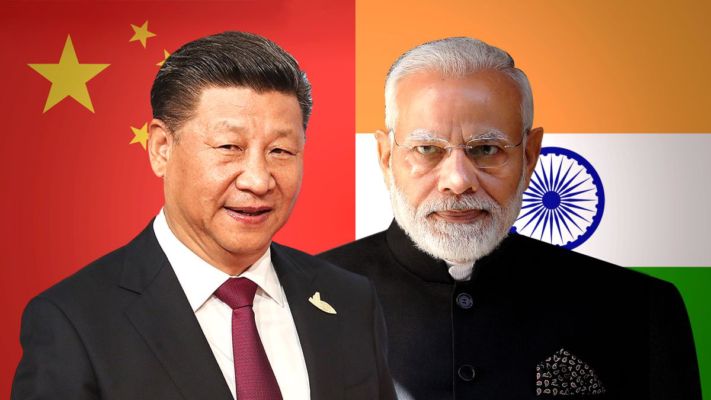
The President of China (Left) and The Prime Minister of India (Right)

China and India are the two fastest growing Asian economies. Respective governments have left no stones unturned to project the two nations as ideal investment destination on global platform, inviting industrialists with the lure of a business-friendly atmosphere. The two countries have always been at loggerheads for political reasons, making their bilateral relationship really rocky. The leaders at the helm of power of these two neighbours are known for their reformative approach and the similarities between Indian Prime Minister Narendra Modi and Chinese President XI Jinping are conspicuous. Both of them are known to rub shoulders with ten-figure friends to draw investments. While China has wowed the world with its bullet trains, India is pacing ahead in its space mission, launching valuable communication satellites.

Here’s a list of four fronts in which India is ahead of China in terms of growth:

India Being one of the Greatest Economy Balancer

An important metric where India beats China is financial market development. India ranks 38, while China ranks 56. Though the two nations introduced separate sets of reforms at different points of time, China started moving towards the pro-market economy in 1978 and India did the same in 1991. But India is 15 years ahead of China with regard to reforms in economic and financial markets. Experts are of the opinion that India has performed better than China in the financial sector. Indian bond market is known as one of the most liquid in Asia, which is well regulated by the RBI and is fully electronic. India is known as one of the best countries in the world in the way the financial sector is managed. As far as equity markets are concerned, reporting standards in India maintain global standards.

Tight Competition Among India and China in Space Technology

Though China is doing really good in space missions, India is not much behind with its successive launching of communication satellites. Recently, India has sent its heaviest communication satellite with its own GSLV MK III. India reportedly aims to win a bigger share of the $300-billion global space industry. It has successfully launched record 104 satellites, earning praise even from its northern neighbour. China started its space missions in the late 1950s while India entered the space in 1962 and is racing fast.

India being a Top Pharmaceutical Manufacturer and Exporter

India regards pharmaceutical production and exports as one of its biggest strengths. It has consistently beaten China in exports of pharmaceutical products to Latin America in the past five years. In 2016, India exported products worth $651 million to Latin America, as compared to China’s $404 million-worth exports, stated the IBEF report. Fortunately, India has never suffered regulation bottlenecks in the sector, ensuring the ease of doing business for Indian manufacturers and vendors.

What makes our country’s growth in this sector more interesting is the fact that it imports the bulk of its raw materials from China. This sector is not really the focus area of Beijing. A study by Assocham forecasted in june 2016 that India’s pharma exports could reach $20 billion by 2020. It has already crossed this mark and in fact the impact of covid-19 in 2020 has led to major medicinal demands from India than any time before. Demands of hydroxychloroquine from India have surged to a point where many countries like US, Australia, UK & other European countries are all lined up for getting these and many other medical drugs.

Judge yourself

Don’t give advice because people never listen. Did you listen to someone? If yes you are lying. If you listen to someone then you will never advice someone. If you don’t listen to someone then you will always prefer to advice the advice you got.

My suggestion is you never listen to other suggestions because it remains as a suggestion. But you have to listen to my suggestion of you don’t want to listen others suggestion. People cannot accept the fact of denying their capacity. Accept your worth if you wanna improve your skills.

Atleast be honest with yourself because it’s you with whom you have to spent rest of your life. Accept yourself and try to keep on improving. If you wanna improve them listen to yourself. You are the only judge who can make right choice. Listen to your advice and make yourself out of it. Never betray yourself and try to fix the things that you wanna fix. Make yourself by listening to yourself.

Privatisation of Indian Railways

Indian railways has the 4th largest railway network in the world. And the maintenance of such a big network is solely on the Railways. To lessen this burden, empowered group of secretaries headed by NITI  Aayog CEO Amitabh Kant have planned the privatisation of the railways. Railways currently recovers only 57% of its cost through passenger tickets. Some of its income is through freight. At the same time it has many expenses such as salaries of the employees, maintaining trains etc. Under privatisation, there will be an investment of around 30,000 crore and many expenditures will be borne by private players.

It is to be noted that now our Railways have the same corridor for both freight and passenger trains, which is expected to get separated when the privatisation happens. If such a thing happens it is expected that the problem of punctuality of trains will improve and the passengers will get better service. The government has identified 109 busy routes which will get 151 private trains, but this is only 5% of the total trains that run in India. This means that 95% of the control remains with Railways.

The privatisation will be done in 12 clusters, namely Patna, Jaipur, Bengaluru, Secunderabad, Howrah, Prayagraj, Chandigarh, Chennai and two clusters each in Delhi and Mumbai. The private firms will be placing bids on those particular clusters which they want to take up. The first round of bidding has ended and the second one will end by this financial year and the first set of 12 trains is estimated to be on tracks by the year 2022-23. Thereafter 45 trains in 2023-24, 50 in 2025-26 and 44 in 2026-27, which in total will be 151 private trains. Any private company, Indian or foreign are allowed to place their bids. But there are some conditions as well. The company should have a minimum net worth of ₹1,165 crore in its last financial year. This amount is different according to different clusters and can go up to ₹1,600 crore. The companies have to follow government rules and regulations. The trains should have a maximum speed of 160 km per hour and also minimum of 16 coaches. Of course the company which will give the Railways the maximum revenue who will win the bid but there is also a performance indicator which is punctuality which has the highest number of points to ascertain the performance. The Railways on its part will provide land to this private companies to work on. This is the same land which Railways have.

It is obvious that the tickets of these trains will be higher than we have now. Some people fear that this may cause segregation among the middle class or poor people and the upper class since these trains may not be affordable to all. But our Railway Minister Mr. Piyush Goyal has clarified that Railway will have sufficient control and also the recruitments will happen under the Railway Ministry only. The privatisation is happening to just a fraction of total capacity of the Railways. According to him it is more like a Public-Private Partnership. He assured that Indian Railways will not be fully privatised.

Don’t be a tool of a tool :

Influencer Marketing is a magic bullet, it’s going to solve all your problems, it works every time, but it increases your odds. And in marketing, that’s all you can ask for. And if you can break even or turn a profit two times more than you fail, guess what?That is a remarkable record. The value of Influencer Marketing , Lots of other data is out there in the marketing statistics. As a society were the passive tool for a business to kick start at its worse and become better we’re also going to help you develop a business case for Influencer Marketing in your organization because , Because ultimately, you’re going to need some funding. One of the things that unfortunately is happening in most businesses today is there are little experiments going on with Influencer Marketing, and they’re all underfunded. And so, one of the things that goes beyond strategy and tactics is to say how do you explain this to top management in such a way that they’re going to give you a budget to actually implement it. There are other ways to spend your money and they are much more likely to be effective, and we’re going to explore that. But we want you to know what, let’s just say the suckers, are falling for, what the rubes, the naive people, who think, “Oh, if I just give enough money to the right influencer, magic happens.” That’s a total story , no magic is gonna happen until unless you make yourself up for being a tool for a tool , as a rational human beings we’ve all got bigger stuff to do than just being someone who just keeps up with anything.

When the right influence hits the top most elite button that’s when actual productivity starts to show up in the phases of marketing influences and strategies. It’s not a big deal to cut yourself off from something that makes you feel like anything less than a tool , being helpful is way more different from being a tool for a tool. Actual and authentic magic happens when you put your actual self out there and step out of your comfort zone.

Innuendo: The other kind of Defamation

Innuendo is used to describe defamation from libel or slander. It is derived from a Latin term “innuere”, “to nod toward”. In lawsuit for defamation, usually to show that the party suing was the person about whom the defamatory statement was made. Example: ‘the former Mayor is a crook,” and Joe Alexander is the only living ex-Mayor, thus by innuendo Alexander is the target of the statement.

Defamation is the injury to the reputation of a person. If a person harms the reputation of another he does so at his own risk. As in the case of interference with the property, a man’s reputation is his property, and if possible, more valuable, than other property.

Any intentional false, defamatory statement or communication, written or spoken that decrease the respect, regard or confidence of a person will be called defaming him. Essential of defamation include, the statement being published, the statement should not be truth and it must refer to the plaintiff.

The intention to defame is not necessary  as held in the Scottish  case of Morrison v. Ritchie and Co.[1] ,where damages were recovered against the proprietors of a newspaper who in all innocence had announced in the paper that a lad, who had in fact been married only a month, had given Innuendo is a concept that is related to tort law and is a personal injury law. The word is derived from ‘innuere’, which is a Latin word and means to ‘nod forward’. In legal terms, Innuendo is used to describe defamation from either libel or slander. It usually shows that the plaintiff had bad comments made about him and those comments were in fact defamatory.

The innuendo is usually just used in actions for slander, when a defamation made by words or gestures. Innuendo typically refers to a condition where a person explains a factual situation which on the first note might not sound defamatory but, yet after interpreting can cause or has caused damage to the person.

Thus, when Innuendo is on the table to be proved, it must always show the entire scenario from start to the end of the declaration. This serves to be very important to prove that the intent can be mistaken, or when it cannot be directly obtained from the forms of slander or libel.

There are two major types of innuendo. True Innuendo and False Innuendo. False innuendo is a defamatory statement made that has an implied meaning. So, only individuals who have the necessary contextual knowledge can understand that the comment made is defamatory.

Secondly, legal or true innuendo. While this is not defamatory on its face, a true innuendo statement can be defamatory when combined with certain outside circumstances. This contextual information may cause a statement to be considered defamatory in a certain way while not another.

A statement may be prima facie defamatory when their natural, obvious and primary sense is defamatory. Sometimes, the words may prima facie be innocent but because of some latent or secondary meaning, it may be considered to be defamatory.

Where the words alleged to be defamatory do not appear to be such on their face, the plaintiff must make out the circumstances which made them actionable, and he must set forth in his pleading the defamatory sense he attributes to them. Such an explanatory statement is called an innuendo.

When the natural and ordinary meaning is not defamatory but the plaintiff wants to bring an action for defamation, the burden of proof lies on him to prove the innuendo.

In the absence of an innuendo, no evidence can be admitted to prove a special meaning and the suit will be dismissed.

An innuendo is necessary where the imputation is made in an oblique way, or by way of question, exclamation, or conjecture, or irony.

An innuendo, properly so called, which provides a separate cause of action, must be supported by extrinsic facts or matter and cannot be founded on mere interpretation.


[1] 1902 SLR 39

Phoney healthy influences :

The gist of the problem is simple. Most of the content that most of the marketers are creating on most of their social media platforms is, pardon me, corporate propaganda. It’s not something that you would share with a friend.The alternative is not to try to get people who have learned to write one way over their entire marketing career and they create brochureware. And put it on a social platform and expect magic to happen, it doesn’t. Boring content is still boring content. But boring doesn’t mean to make up hideous content and end up causing mental illness to the viewers out there , there’s toxic consequences of each ugly marketing strategy that’s taken up by all these people who are desperate enough to make it up to their organization. Here the joke is on us , it’s literally on the people who believe that everything’s that put on to a certain platform is true which actually is not. But there is a different group of people out there who are creating engaging content, amazing content. Content that people are commenting on. Content that people are sharing. Content that people are liking like mad. And who are these people? For lack of a better term, we’ll call them influencers. We as society are blinded up by all the appealing phony things that have been put out on the cyber platforms which isn’t something of authentic content and we are forgetting how pathetic the interaction is with people in the social platform. There were very few shares. There were very few likes. There were incredibly few comments. I don’t know how much you’re paying your staff to create this content. But if nobody’s interacting with it, if it isn’t engaging anyone, why are you doing it? What’s the big deal? Of course when some activity of that such is engaged through many means with the society it makes a big deal and people need to route for healthy influences.

Tentative business issues

Indecisiveness in any area of business organizations are a common thing , in a society like today times we need to actualize certain factors that effect the underrated things in business. Yes or no decisions are very common in business problems. In prescriptive analytics, yes or no decisions are modeled with binary variables.Each publisher breaks down the subscriber base into a number of groups based on demographics and location. The company has set a budget for the advertising campaign and wants to maximize the number of subscribers exposed to its ads. The company wants to determine which publishers to select and how many groups to purchase from each publisher but there comes the actual issue , business is a chain which isn’t guaranteed of transparency and assured loyalty. Clearly, the selection of a publisher requires a yes or no decision. That is, a publisher is either selected or not. Once a publisher is selected, a second decision must be made regarding the number of subscriber groups to purchase. The model for this problem must take into consideration that no subscriber groups can be purchased from a publisher that has not been selected. It also must consider that when two publishers are competitors, the company wants to select amongst one of them. Finally, the model should take into account that there is a fixed cost for engaging a publisher. These analyzing contributions to the business benefit the subordinates and defining chances of minimizing the indecisiveness which causes to the loss of business.

Subordinates or the superiors who are utmost torn between a yes or no often end up having serious doubts about the overall subjecting of several other aspects effecting the business’s There are many more in areas such as network design in supply chain management, portfolio selection in finance, and power generation in energy. Energy contributing into the organization must be cut into rational and fair parts of the business , it keep the game on.

Money heist 5

The famous Netflix series “Money heist” is setting for fifth season,Money heist stars Alvaro morte,Ursula corbero,alba Forbes,are gearing for the final season

Money heist all four seasons are streaming in Netflix,the four seasons contains 31 episodes

The season started from 2 May 2017 in Netflix