Heart attack

In one of my previous article I had talked about cardiac arrest and mentioned that it was different from heart attacks so today I will talk about heart attacks. A heart attack (also known as a myocardial infarction or MI) is the damage and death of heart muscle from the sudden blockage of a coronary artery by a blood clot. Coronary arteries are blood vessels that supply the heart muscle with blood and oxygen

SYMPTOMS

  • Pain, fullness, and/or squeezing sensation of the chest
  • Jaw pain, toothache and headache
  • Shortness of breath
  • Nausea, vomiting and/or general epigastric (upper middle abdomen) discomfort
  • Sweating
  • Heartburn and/or indigestion
  • Arm pain (more commonly the left arm, but may be either arm)
  • Upper back pain
  • General malaise (vague feeling of illness)
  • No symptoms (Approximately one quarter of all heart attacks are silent, without chest pain or new symptoms. Silent heart attacks are especially common among patients with diabetes mellitus.)

One cannot overemphasize the importance of seeking prompt medical attention in the presence of new symptoms that suggest a heart attack. Early diagnosis and treatment save lives, and delays in reaching medical assistance can be fatal.


Jobs for the Future

There are two reasons why students are interested in sustainable management studies.

Photo by Magnetme on Pexels.com

Youngsters are now facing the impact of climate change themselves. Many of them have experienced-led disasters such as floods and cyclones, more than their previous generation did.

Second, there is growing awareness on the regulatory requirement and the investor’s demand, said Jagdish Ratnani, a Professor.

Nevertheless, the fact is that many jobs of the future will require hordes of managerial talent who understand ESG. Its a great career opportunity, Aditya Shelar, a student at IIM Lucknow, thinks that business in future will think beyond numbers and they would need people who under- stand a range of issues.

The transition to electric vehicles, higher solar power adoption, green practices in real-estate as well as carbon neutral policies will all require manpower that drive these shifts.

Environment and sustainability will have to be embedded in both corporate thought and actions. Its a requirement for branding, for raising funds, and to capture young and aware consumers. Institutions will increasingly adopt that in the classroom and beyond. It was said by Gopal Sarangi of TERI Institute of Advance Studies.

Photo by Angela Roma on Pexels.com

Some firms want to evaluate if their manpower is conscious about ethical business strategies. Some firms want to evaluate if their manpower is conscious about ethical sourcing, environment reservation, SGD goals like equality at workspace, the side effects of child labour and fair wage.

All this will fuel demand for more courses in B- Schools.

Reference

http://www.intershala.com

http://www.timesofindia.com

Jobs for the Future

There are two reasons why students are interested in sustainable management studies.

Photo by Magnetme on Pexels.com

Youngsters are now facing the impact of climate change themselves. Many of them have experienced-led disasters such as floods and cyclones, more than their previous generation did.

Second, there is growing awareness on the regulatory requirement and the investor’s demand, said Jagdish Ratnani, a Professor.

Nevertheless, the fact is that many jobs of the future will require hordes of managerial talent who understand ESG. Its a great career opportunity, Aditya Shelar, a student at IIM Lucknow, thinks that business in future will think beyond numbers and they would need people who under- stand a range of issues.

The transition to electric vehicles, higher solar power adoption, green practices in real-estate as well as carbon neutral policies will all require manpower that drive these shifts.

Environment and sustainability will have to be embedded in both corporate thought and actions. Its a requirement for branding, for raising funds, and to capture young and aware consumers. Institutions will increasingly adopt that in the classroom and beyond. It was said by Gopal Sarangi of TERI Institute of Advance Studies.

Photo by Angela Roma on Pexels.com

Some firms want to evaluate if their manpower is conscious about ethical business strategies. Some firms want to evaluate if their manpower is conscious about ethical sourcing, environment reservation, SGD goals like equality at workspace, the side effects of child labour and fair wage.

All this will fuel demand for more courses in B- Schools.

Reference

http://www.intershala.com

http://www.timesofindia.com

A health professional checks blood pressure with a sphygmomanometer

Sphygmomanometer : An instrument for measuring blood pressure, particularly in arteries. The two types of sphygmomanometers are a mercury column and a gauge with a gauge with a dial face.

Sphygmomanometer, instrument for measuring blood pressure. It consists of an inflated rubber cuff, which is wrapped around the upper arm and is connected to an apparatus that records pressure, usually in terms of the height of a column of mercury or on a dial (an aneroid manometer).

An arterial blood pressure reading consists of two numbers, which typically may be recorded as x/y. The x is the systolic pressure, and y is the diastolic pressure.

Systole refers to the contraction of the ventricles of the heart, when blood is forced from the heart into the pulmonary and systemic arterial circulation, and diastole refers to the resting period, when the ventricles expand and receive another supply of blood from the atria.

At each heartbeat blood pressure is raised to the systolic level, and, between beats, it drops to the diastolic level. As the cuff is inflated with air, a stethoscope is placed against the skin at the crook of the arm.

As the air is released, the first sound heard marks the systolic pressure; as the release continues, a dribbling noise is heard. This marks the diastolic pressure, which is department on the elasticity of the arteries.

Based on long- term experience, blood pressure measurement using the mercury sphygmomanometer is regarded as the gold standard method for indirect measurement of blood pressure.

The use of the mercury sphygmomanometer has practical and technical limitations, and requires specific training.

In 1881, Von Basch created the sphygmomanometer and the first non-invasive BP measurements. However, in 1896, Scipione Riva-Rocco developed further the mercury sphygmomanometer, almost as we know it today.

A health professional checks blood pressure with a sphygmomanometer

Sphygmomanometer : An instrument for measuring blood pressure, particularly in arteries. The two types of sphygmomanometers are a mercury column and a gauge with a gauge with a dial face.

Sphygmomanometer, instrument for measuring blood pressure. It consists of an inflated rubber cuff, which is wrapped around the upper arm and is connected to an apparatus that records pressure, usually in terms of the height of a column of mercury or on a dial (an aneroid manometer).

An arterial blood pressure reading consists of two numbers, which typically may be recorded as x/y. The x is the systolic pressure, and y is the diastolic pressure.

Systole refers to the contraction of the ventricles of the heart, when blood is forced from the heart into the pulmonary and systemic arterial circulation, and diastole refers to the resting period, when the ventricles expand and receive another supply of blood from the atria.

At each heartbeat blood pressure is raised to the systolic level, and, between beats, it drops to the diastolic level. As the cuff is inflated with air, a stethoscope is placed against the skin at the crook of the arm.

As the air is released, the first sound heard marks the systolic pressure; as the release continues, a dribbling noise is heard. This marks the diastolic pressure, which is department on the elasticity of the arteries.

Based on long- term experience, blood pressure measurement using the mercury sphygmomanometer is regarded as the gold standard method for indirect measurement of blood pressure.

The use of the mercury sphygmomanometer has practical and technical limitations, and requires specific training.

In 1881, Von Basch created the sphygmomanometer and the first non-invasive BP measurements. However, in 1896, Scipione Riva-Rocco developed further the mercury sphygmomanometer, almost as we know it today.

HORTICULTURE

Horticulture is a branch of agriculture that deals with cultivation of fruits, vegetables and ornamental plants. Horticulture is the science and art of the development, sustainable production, marketing and use of high-value, intensively cultivated food and ornamental plants.

They are four main classes of Horticulture
✓Pomology (fruit farming)
✓Olericulture (vegetable farming)
✓Floriculture (flower farming)
✓Landscape gardening

Pomology (fruit farming)

The term pomology is derived from the latin word ‘pomum’ means fruit and ‘logy’ means study. It deals with development, enhancement of fruit quality, cultivation techniques, regulation of production periods and reduction of production cost of fruits.

Olericulture (vegetable farming)

Olericulture is the science of growing vegetables. Vegetable farming can be classified into:
✓Kitchen or Nutrition gardening
✓Commercial gardening
✓Vegetable forcing

Kitchen gardening

Kitchen gardening is growing of vegetables in small scale at household. e.g. Beans, Cabbage, Lady’s finger, Tomato, Brinjal, Carrot, Spinach etc.

Commercial gardening

It is the production of vegetables in large scale to be sold in markets.

Vegetable forcing

It is the method of growing vegetables in buildings, green houses, cold farms or under other artificial growing conditions. It is the most intensive type of vegetable growing. e.g. Cabbage, Tomato, Brinjal etc.

Green House or Poly House

It is a framed structure covered with transparent material to grow crops under partiality or fully controlled environmental conditions to get optimum growth and productivity. It is the fastest growing sector in the agriculture worldwide.

Floriculture (Flower farming)

Floriculture is the art of cultivation of flowering and ornamental plants in garden for beauty of floristry. It is concerned with growing traditional flowers, cut flowers, bedding plants, foliage potted plants, arboriculture trees, turf grass for beautification and value added products like essential oils, pharmaceutical and nutraceutical compounds.

Landscape Gardening

Landscape horticulture is the study of designing and constructing landscapes in homes, business firms and public areas to imitate natural scenery.

HORTICULTURE

Horticulture is a branch of agriculture that deals with cultivation of fruits, vegetables and ornamental plants. Horticulture is the science and art of the development, sustainable production, marketing and use of high-value, intensively cultivated food and ornamental plants.

They are four main classes of Horticulture
✓Pomology (fruit farming)
✓Olericulture (vegetable farming)
✓Floriculture (flower farming)
✓Landscape gardening

Pomology (fruit farming)

The term pomology is derived from the latin word ‘pomum’ means fruit and ‘logy’ means study. It deals with development, enhancement of fruit quality, cultivation techniques, regulation of production periods and reduction of production cost of fruits.

Olericulture (vegetable farming)

Olericulture is the science of growing vegetables. Vegetable farming can be classified into:
✓Kitchen or Nutrition gardening
✓Commercial gardening
✓Vegetable forcing

Kitchen gardening

Kitchen gardening is growing of vegetables in small scale at household. e.g. Beans, Cabbage, Lady’s finger, Tomato, Brinjal, Carrot, Spinach etc.

Commercial gardening

It is the production of vegetables in large scale to be sold in markets.

Vegetable forcing

It is the method of growing vegetables in buildings, green houses, cold farms or under other artificial growing conditions. It is the most intensive type of vegetable growing. e.g. Cabbage, Tomato, Brinjal etc.

Green House or Poly House

It is a framed structure covered with transparent material to grow crops under partiality or fully controlled environmental conditions to get optimum growth and productivity. It is the fastest growing sector in the agriculture worldwide.

Floriculture (Flower farming)

Floriculture is the art of cultivation of flowering and ornamental plants in garden for beauty of floristry. It is concerned with growing traditional flowers, cut flowers, bedding plants, foliage potted plants, arboriculture trees, turf grass for beautification and value added products like essential oils, pharmaceutical and nutraceutical compounds.

Landscape Gardening

Landscape horticulture is the study of designing and constructing landscapes in homes, business firms and public areas to imitate natural scenery.

The significance of children’s rights

There are numerous purposes behind singling out children’s rights in a different common liberties Convention . Children are neither the assets of guardians nor of the state, nor are they simple individuals really taking shape; they have equivalent status as individuals from the human family.

Children start life as absolutely dependent creatures , Children should depend on grown-ups for the support and direction they need to develop towards freedom. Such support is undeniably found from grown-ups in children’s families, yet when essential grown-up parental figures can’t address children’s issues, it is up to the State as the essential obligation conveyor to track down an option to the greatest advantage of the child. The activities, or inactions, of government sway children more unequivocally than some other gathering in the public eye . Essentially every space of government strategy – from schooling to general wellbeing – influences children somewhat. Childish policymaking that neglects to consider children adversely affects the fate of all citizenry.

Children’s perspectives ought to be heard and considered in the political interaction , Children by and large don’t cast a ballot and don’t generally partake in political cycles. Without extraordinary thoughtfulness regarding the assessments of children – as communicated at home and in schools, in neighborhood networks and surprisingly in governments – children’s perspectives go unheard on the numerous significant issues that influence them now or will influence them later on. Numerous progressions in the public eye are having an unbalanced, and regularly adverse, sway on children . Change of the family structure, globalization, environmental change, digitalization, mass relocation, moving business designs and a contracting social government assistance net in numerous nations all emphatically affect children. The effect of these progressions can be especially decimating in circumstances of equipped clash and different crises.

The solid improvement of children is essential to the future prosperity of any general public. Since they are as yet creating, children are particularly defenseless – more so than grown-ups – to helpless day to day environments like destitution, insufficient medical services, nourishment, safe water, lodging and ecological contamination. The impacts of infection, hunger and neediness undermine the fate of children and hence the eventual fate of the social orders wherein they live. The expenses for society of bombing its children are colossal

Social examination discoveries show that children’s soonest encounters essentially impact their future turn of events. The course of their improvement decides their commitment, or cost, to society throughout their lives.

The significance of children's rights

There are numerous purposes behind singling out children’s rights in a different common liberties Convention . Children are neither the assets of guardians nor of the state, nor are they simple individuals really taking shape; they have equivalent status as individuals from the human family.

Children start life as absolutely dependent creatures , Children should depend on grown-ups for the support and direction they need to develop towards freedom. Such support is undeniably found from grown-ups in children’s families, yet when essential grown-up parental figures can’t address children’s issues, it is up to the State as the essential obligation conveyor to track down an option to the greatest advantage of the child. The activities, or inactions, of government sway children more unequivocally than some other gathering in the public eye . Essentially every space of government strategy – from schooling to general wellbeing – influences children somewhat. Childish policymaking that neglects to consider children adversely affects the fate of all citizenry.

Children’s perspectives ought to be heard and considered in the political interaction , Children by and large don’t cast a ballot and don’t generally partake in political cycles. Without extraordinary thoughtfulness regarding the assessments of children – as communicated at home and in schools, in neighborhood networks and surprisingly in governments – children’s perspectives go unheard on the numerous significant issues that influence them now or will influence them later on. Numerous progressions in the public eye are having an unbalanced, and regularly adverse, sway on children . Change of the family structure, globalization, environmental change, digitalization, mass relocation, moving business designs and a contracting social government assistance net in numerous nations all emphatically affect children. The effect of these progressions can be especially decimating in circumstances of equipped clash and different crises.

The solid improvement of children is essential to the future prosperity of any general public. Since they are as yet creating, children are particularly defenseless – more so than grown-ups – to helpless day to day environments like destitution, insufficient medical services, nourishment, safe water, lodging and ecological contamination. The impacts of infection, hunger and neediness undermine the fate of children and hence the eventual fate of the social orders wherein they live. The expenses for society of bombing its children are colossal

Social examination discoveries show that children’s soonest encounters essentially impact their future turn of events. The course of their improvement decides their commitment, or cost, to society throughout their lives.

Caste Discrimination

Caste discrimination is one of the most exceedingly awful denials of basic freedoms on the planet today. It is minimal perceived and infrequently recognized, and influences in excess of 260 million individuals around the world. Through a hierarchical situation, the task of essential rights among different castes is profoundly inconsistent, with those at the top getting a charge out of most rights combined with least obligations and those at the base performing most obligations combined with no rights. The situation is kept up with through the inflexible implementation of social segregation (an arrangement of social and financial punishments).

Caste discrimination includes enormous infringement of common, political, financial, social and social rights. It is normal banned in nations influenced by it, yet an absence of execution of enactment and caste-inclination inside the equity frameworks to a great extent leave casualties without security.

The rejection of supposed ‘lower caste networks’ by different gatherings in the public eye and the intrinsic underlying disparity in these social connections lead to significant degrees of neediness among influenced populace gatherings. There is little admittance to advantages and improvement measures, and their position by and large blocks contribution in dynamic and significant investment openly and common life.India’s caste framework is maybe the world’s longest enduring social progressive system. A characterizing highlight of Hinduism, caste includes an unpredictable requesting of gatherings of people based on custom immaculateness. An individual is viewed as an individual from the caste into which the person in question is conceived and stays inside that caste til’ the very end, albeit the specific positioning of that caste might differ among areas and over the long run. Contrasts in status are generally advocated by the strict regulation of karma, a conviction that one’s place in life is controlled by one’s deeds in past lifetimes.

Conventional grant has portrayed this over 2,000-year-old framework inside the setting of the four head varnas, or enormous caste classes. Arranged by priority these are the Brahmins (ministers and educators), the Ksyatriyas (rulers and officers), the Vaisyas (dealers and merchants), and the Shudras (workers and craftsmans). A fifth classification falls outside the varna framework and comprises of those known as “untouchables” or Dalits; they are regularly appointed undertakings also customarily dirtying to justify incorporation inside the customary varna system.7 Almost indistinguishable designs are likewise noticeable in Nepal.

Regardless of its established abrogation in 1950, the act of “distance”- the inconvenience of social incapacities on people by reason of birth into a specific caste-stays a lot of a piece of rustic India. Addressing more than one-6th of India’s populace or exactly 160 million individuals Dalits suffer close to finish social segregation. “Untouchables” may not go too far isolating their piece of the town from that involved by higher castes. They may not utilize similar wells, visit similar sanctuaries, or drink from similar cups in tea slows down. Dalit youngsters are regularly made to sit at the rear of study halls. In what has been called India’s “covered up politically-sanctioned racial segregation,” whole towns in numerous Indian states remain totally isolated by caste.

“Distance” is supported by state portion of assets and offices; separate offices are accommodated separate caste-based areas. Dalits frequently get the less fortunate of the two, in the event that they get any whatsoever. In numerous towns, the state organization introduces power, disinfection offices, and water siphons in the upper-caste segment, however fails to do likewise in the adjoining, isolated Dalit region. Fundamental conveniences, for example, water taps and wells are additionally isolated, and clinical offices and the better, covered rooftop houses exist solely in the upper-caste province. As uncovered by the contextual analysis underneath on the tremor in Gujarat, these equivalent practices remain constant even in the midst of extraordinary cataclysmic event.

Caste Discrimination

Caste discrimination is one of the most exceedingly awful denials of basic freedoms on the planet today. It is minimal perceived and infrequently recognized, and influences in excess of 260 million individuals around the world. Through a hierarchical situation, the task of essential rights among different castes is profoundly inconsistent, with those at the top getting a charge out of most rights combined with least obligations and those at the base performing most obligations combined with no rights. The situation is kept up with through the inflexible implementation of social segregation (an arrangement of social and financial punishments).

Caste discrimination includes enormous infringement of common, political, financial, social and social rights. It is normal banned in nations influenced by it, yet an absence of execution of enactment and caste-inclination inside the equity frameworks to a great extent leave casualties without security.

The rejection of supposed ‘lower caste networks’ by different gatherings in the public eye and the intrinsic underlying disparity in these social connections lead to significant degrees of neediness among influenced populace gatherings. There is little admittance to advantages and improvement measures, and their position by and large blocks contribution in dynamic and significant investment openly and common life.India’s caste framework is maybe the world’s longest enduring social progressive system. A characterizing highlight of Hinduism, caste includes an unpredictable requesting of gatherings of people based on custom immaculateness. An individual is viewed as an individual from the caste into which the person in question is conceived and stays inside that caste til’ the very end, albeit the specific positioning of that caste might differ among areas and over the long run. Contrasts in status are generally advocated by the strict regulation of karma, a conviction that one’s place in life is controlled by one’s deeds in past lifetimes.

Conventional grant has portrayed this over 2,000-year-old framework inside the setting of the four head varnas, or enormous caste classes. Arranged by priority these are the Brahmins (ministers and educators), the Ksyatriyas (rulers and officers), the Vaisyas (dealers and merchants), and the Shudras (workers and craftsmans). A fifth classification falls outside the varna framework and comprises of those known as “untouchables” or Dalits; they are regularly appointed undertakings also customarily dirtying to justify incorporation inside the customary varna system.7 Almost indistinguishable designs are likewise noticeable in Nepal.

Regardless of its established abrogation in 1950, the act of “distance”- the inconvenience of social incapacities on people by reason of birth into a specific caste-stays a lot of a piece of rustic India. Addressing more than one-6th of India’s populace or exactly 160 million individuals Dalits suffer close to finish social segregation. “Untouchables” may not go too far isolating their piece of the town from that involved by higher castes. They may not utilize similar wells, visit similar sanctuaries, or drink from similar cups in tea slows down. Dalit youngsters are regularly made to sit at the rear of study halls. In what has been called India’s “covered up politically-sanctioned racial segregation,” whole towns in numerous Indian states remain totally isolated by caste.

“Distance” is supported by state portion of assets and offices; separate offices are accommodated separate caste-based areas. Dalits frequently get the less fortunate of the two, in the event that they get any whatsoever. In numerous towns, the state organization introduces power, disinfection offices, and water siphons in the upper-caste segment, however fails to do likewise in the adjoining, isolated Dalit region. Fundamental conveniences, for example, water taps and wells are additionally isolated, and clinical offices and the better, covered rooftop houses exist solely in the upper-caste province. As uncovered by the contextual analysis underneath on the tremor in Gujarat, these equivalent practices remain constant even in the midst of extraordinary cataclysmic event.

𝑯𝑰𝑺𝑻𝑶𝑹𝒀 𝑶𝑭 𝑻𝑨𝑴𝑰𝑳 𝑳𝑨𝑵𝑮𝑼𝑨𝑮𝑬

TAMIL is not just a LANGUAGE, it’s an ancient history”

Tamil is an old language spoken by the Tamil people of South India. Tamil is one of the longest surviving classical languages in the world. Tamil Language is classified as a classical language of India.

Tamil has a literary history of over 2000 years. Most of the Tamil literature is documented in various forms. In 1578 a Tamil Prayer book in Tamil old script names Thambiran Vanakkam was printed and published by the Portuguese Christian Missionaries. Because of that Tamil was considered as the first Indian language to be printed as a book. The university of Madaras published the first Tamil dictionary Tamil Lexicon one of the earliest dictionaries published in the Indian languages.

Tamil is one of the Dravidian Languages a family of around 26 languages. The closest major relative of the Tamil language is the Malayalam language. According to Hindu legend, Tamil is considered as a god (Tamil Thai) was created by Lord Shiva and Murugan.

Everybody has a question about that how an ancient language survived this much . the answer is the old south Indian kings have a literature knowledge in Tamil, so they organized various sources to develop literature in the Tamil language. Some south Indian kings such as Pandian kings created Sangam and collect and compiled such as universities.

Tamil sangams are acted as universities, they helped to document the works of literature in the Tamil language into various forms. Tamil sangams updated every time the technology is changed. Madurai Tamil Sangam which is has over 1200 years of history still working.

Tamil kings build huge temples rather than huge forts, so they curve the life history of god in the temple walls. the old Tamil script history is acknowledged in every temple in tamilnadu.

Study of Tamil becomes important to other Indians living outside Tamil Nadu only if they change their biased mindset against Tamil. If any one wants to understand the real India, they will have to visit Tamil Nadu, stay there temporarily and learn Tamil. Many westerners have done it in the past and went back in awe of the language. G.U. Pope from England translated into English the Tamil literary works – The ThirukuRaL the Naaladiyaar and the Thiruvaasagam, a saivaite poetic work. The Government of Tamil Nadu, in memory of this Tamil savant, installed his statue on the Marina in Chennai, on the occasion of the Second International Tamil Conference in Chennai, in the year 1968. Bishop Robert Caldwell, Ellis,Beschi and Kamil Zvelibil are the other westerners who took a great interest in the study of Tamil. Several other unsung westerners have also studied Tamil with dedication.

Caldwell’s “ A Comparative Grammar of the Dravidian Languages” ( 1856) , introduced Tamil studies outside Tamil Nadu. The Tamil Nadu government also installed the statues of Beschi and Robert Caldwell on the Marina, Chennai, in 1968. Dr. Asko Parpola, the Finnish linguistic scholar has devoted his entire life for the study of Tamil and for the decipherment of the Indus seals. Dr. George Hart, Professor of Sanskrit and Tamil, University of California, Berkeley, the USA. has authored many books in Sanskrit and Tamil. In 2015, he was honoured with the Padmasri award, the third highest civilian award, by the Government of India…

Dance of Democracy

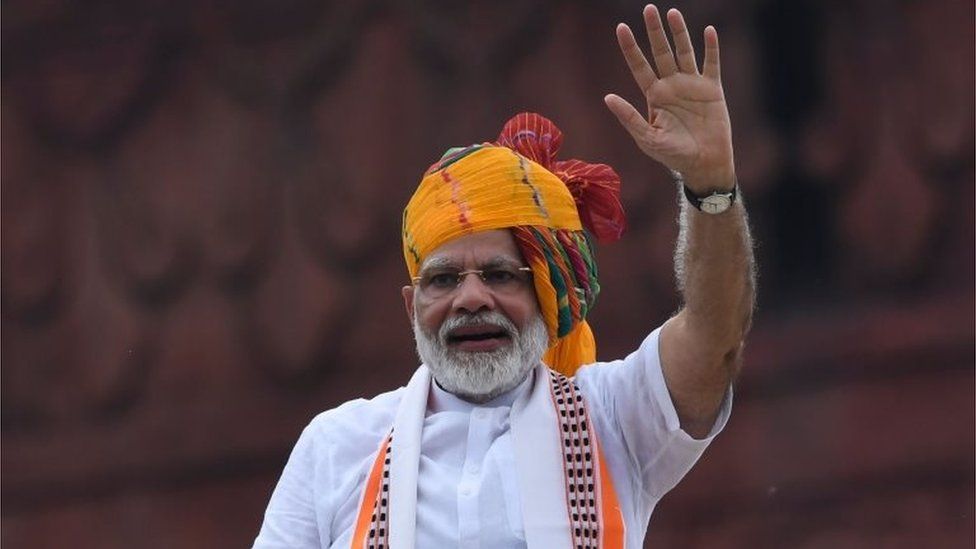
In the term of Prime Minister Narendra Modi

Democracy is derived from the Greek language which means a government by the people. The citizens of the country are given a right to choose their respective representative. There are mainly two types of democracy – direct and representative and semi-democracy or hybrid. In a democratic country power is vested with the people and is exercised by them in indirectly or directly through a system of representation which usually involves free elections. In order to progress human development a democratic land is essential. This helps and enables citizens to have a free will and live freely in the society. Moreover, it allows people to have equal rights. This helps to enable that equality prevails all over country.

Narendra Modi | NarendraModi.in Official Website of Prime Minister of India

During the rule of the Britishers, the country did not have any democracy. They imposed structures of bureaucracy which maintained order through rule of the law rather than thought arbitrary authority. They controlled the country and refused to give any authority to the citizens on India and kept imposing laws and orders on them. In the small journey as an independent nation, democracy has been a cornerstone of the Indian success saga. From the time when doubts were cast on the ability of the country’s survival as a nation to a time where it holds the powers across the global look for our guidance, India has travelled miles. In the year 1947 when the rule of Britishers came to an end the constitution was adopted in 1950 which led to India being known to have the largest democracy in the world. The country declared itself to be democratic, sovereign and a republic state. The constitution of India gave power to its citizen to elect their representative and their own choice of government. India is known to be a quasi-federal parliamentary system of government which is known to be largely based on the UK model. 

Narendra Modi and India's new climate change norms | ORF

Although India is largest democracy it still has a long way of progression. The country faces a lot of issues which does not let it efficiently function as a democracy. The caste system in country is still prevalent which does hampers with the socialist principle of democracy. Communalism is also on the rise and has led to many bad consequences in India. These factors interfere with the secular aspect of the country. All these differences need to be set aside to ensure happiness and prosperity of the citizens. Democracy in the country is still better than that in most of the countries. Still, there is a lot of room for improvement which we must pay attention on. The government must implement stringent laws to ensure that there is no discrimination that takes place. In addition, awareness must be made to make citizens aware of their rights and duties.

𝑯𝑰𝑺𝑻𝑶𝑹𝒀 𝑶𝑭 𝑻𝑨𝑴𝑰𝑳 𝑳𝑨𝑵𝑮𝑼𝑨𝑮𝑬

TAMIL is not just a LANGUAGE, it’s an ancient history”

Tamil is an old language spoken by the Tamil people of South India. Tamil is one of the longest surviving classical languages in the world. Tamil Language is classified as a classical language of India.

Tamil has a literary history of over 2000 years. Most of the Tamil literature is documented in various forms. In 1578 a Tamil Prayer book in Tamil old script names Thambiran Vanakkam was printed and published by the Portuguese Christian Missionaries. Because of that Tamil was considered as the first Indian language to be printed as a book. The university of Madaras published the first Tamil dictionary Tamil Lexicon one of the earliest dictionaries published in the Indian languages.

Tamil is one of the Dravidian Languages a family of around 26 languages. The closest major relative of the Tamil language is the Malayalam language. According to Hindu legend, Tamil is considered as a god (Tamil Thai) was created by Lord Shiva and Murugan.

Everybody has a question about that how an ancient language survived this much . the answer is the old south Indian kings have a literature knowledge in Tamil, so they organized various sources to develop literature in the Tamil language. Some south Indian kings such as Pandian kings created Sangam and collect and compiled such as universities.

Tamil sangams are acted as universities, they helped to document the works of literature in the Tamil language into various forms. Tamil sangams updated every time the technology is changed. Madurai Tamil Sangam which is has over 1200 years of history still working.

Tamil kings build huge temples rather than huge forts, so they curve the life history of god in the temple walls. the old Tamil script history is acknowledged in every temple in tamilnadu.

Study of Tamil becomes important to other Indians living outside Tamil Nadu only if they change their biased mindset against Tamil. If any one wants to understand the real India, they will have to visit Tamil Nadu, stay there temporarily and learn Tamil. Many westerners have done it in the past and went back in awe of the language. G.U. Pope from England translated into English the Tamil literary works – The ThirukuRaL the Naaladiyaar and the Thiruvaasagam, a saivaite poetic work. The Government of Tamil Nadu, in memory of this Tamil savant, installed his statue on the Marina in Chennai, on the occasion of the Second International Tamil Conference in Chennai, in the year 1968. Bishop Robert Caldwell, Ellis,Beschi and Kamil Zvelibil are the other westerners who took a great interest in the study of Tamil. Several other unsung westerners have also studied Tamil with dedication.

Caldwell’s “ A Comparative Grammar of the Dravidian Languages” ( 1856) , introduced Tamil studies outside Tamil Nadu. The Tamil Nadu government also installed the statues of Beschi and Robert Caldwell on the Marina, Chennai, in 1968. Dr. Asko Parpola, the Finnish linguistic scholar has devoted his entire life for the study of Tamil and for the decipherment of the Indus seals. Dr. George Hart, Professor of Sanskrit and Tamil, University of California, Berkeley, the USA. has authored many books in Sanskrit and Tamil. In 2015, he was honoured with the Padmasri award, the third highest civilian award, by the Government of India…

Dance of Democracy

In the term of Prime Minister Narendra Modi

Democracy is derived from the Greek language which means a government by the people. The citizens of the country are given a right to choose their respective representative. There are mainly two types of democracy – direct and representative and semi-democracy or hybrid. In a democratic country power is vested with the people and is exercised by them in indirectly or directly through a system of representation which usually involves free elections. In order to progress human development a democratic land is essential. This helps and enables citizens to have a free will and live freely in the society. Moreover, it allows people to have equal rights. This helps to enable that equality prevails all over country.

Narendra Modi | NarendraModi.in Official Website of Prime Minister of India

During the rule of the Britishers, the country did not have any democracy. They imposed structures of bureaucracy which maintained order through rule of the law rather than thought arbitrary authority. They controlled the country and refused to give any authority to the citizens on India and kept imposing laws and orders on them. In the small journey as an independent nation, democracy has been a cornerstone of the Indian success saga. From the time when doubts were cast on the ability of the country’s survival as a nation to a time where it holds the powers across the global look for our guidance, India has travelled miles. In the year 1947 when the rule of Britishers came to an end the constitution was adopted in 1950 which led to India being known to have the largest democracy in the world. The country declared itself to be democratic, sovereign and a republic state. The constitution of India gave power to its citizen to elect their representative and their own choice of government. India is known to be a quasi-federal parliamentary system of government which is known to be largely based on the UK model. 

Narendra Modi and India's new climate change norms | ORF

Although India is largest democracy it still has a long way of progression. The country faces a lot of issues which does not let it efficiently function as a democracy. The caste system in country is still prevalent which does hampers with the socialist principle of democracy. Communalism is also on the rise and has led to many bad consequences in India. These factors interfere with the secular aspect of the country. All these differences need to be set aside to ensure happiness and prosperity of the citizens. Democracy in the country is still better than that in most of the countries. Still, there is a lot of room for improvement which we must pay attention on. The government must implement stringent laws to ensure that there is no discrimination that takes place. In addition, awareness must be made to make citizens aware of their rights and duties.