Critical Analysis of Small pain in my Chest

SMALL PAIN IN MY CHEST

    BY MICHAEL MACK

SUMMARY:

The poem records a dying soldier asking for aid from the narrator. He is injured and about to meet the horn of death. He finds himself lucky as his injury is not severe as he is alive in comparison to those who met their death already, yet doesn’t deserve this fate only for fulfilling the ill-desires of some warmongers.  

The young soldier was smiling at his best to hide his pain and asked for the narrator’s aid.The narrator saw a number of soldiers lying dead, who had fought a long and difficult battle throughout the night and had died in the battle.

The narrator finds a large reddish-brown stain of blood on the soldier’s shirt which is a mixture of his blood and the local Asian dirt. The soldier then describes his experience of the battle which took place at night, that he along with a troop of two hundred soldiers was climbing a hill and as they reached the top, there was an explosion and then he felt this small pain in his chest. The soldier then feels bad and tells the narrator that though he is an enthusiastic and big man, he was defeated and left with a small pain in his chest. It seemed that the soldier was injured in the explosion and the pain was of the injury that he went through, and was hiding the pain with his subtle yet brave smile. Finally,the soldier succumbs to the fatal pain, the world closed in on him.The narrator had put his arms around the dead soldier and as he pulled him towards himself, he could feel their wounds pressed against each other- the large one in the narrator’s heart due to the deep agony he was in after watching a soldier die for his country, against the small one in the soldier’s chest.  

SETTING:

This poem is based on the prolonged struggle of the Vietnam War between 1955 and 1975.  The word ‘HERE’ is written in capital letters to indicate the battlefield, which is of no use to humanity. 

THEME:

“Small Pain in My Chest” is another addition to the ‘Anti-war’ poem group. This poem joins the crusade against the uselessness and negativity of war. 

Irony: The title of the poem Small Pain in My Chest is used ironically. The expression “small pain” is repeatedly used in the poem only to make sure we get the irony. The pain was not at all a small one, rather it was a fatal injury that the soldier boy succumbed to. But, the poet is hinting that the injury of the soldier boy was small compared to the destruction war can cause.

The narrator felt extremely sad at the futility of war which takes away so many great young lives. He saw the soldier boy, helped him respond to his call, talked to him, felt his concerns and saw him yield to the injury. So he can’t, but feel the evils of war at heart, which overwhelmed him to an extent that his pain seemed greater than the physical pain of the soldier boy. 

The pity of war is felt all over the poem. War cannot bring merriment; it always has a sad ending. The real pity is aroused when the soldier boy expresses his concern regarding what his mother and wife, who immensely depend on him, would think if they saw him in such helpless condition.War doesn’t have any productive potential; it only destroys. The soldier wouldn’t mind even dying for a noble cause, but to be sitting here without a good reason seems silly to him. 

Theme of sacrifice: The soldier boy has been used as an idol of Sacrifice to portray the sacrifice made by the soldiers while fighting for their country which comes out of a sense of duty and bravery without having any grudge against anyone on the opposite side of the battle.He says:

We fought all day and fought all night with scarcely any rest –

I kept firing at them, sir. I tried to do my best,

But we see he has no complaints against anyone, not even any demand. He fought bravely and tried to do his best just from his sense of giving service for his motherland. We see him covering up his fatal pain with a subtle smile that only imparts strength to think of it as a “small” pain. 

War takes away those lives for a wrong reason. All those lives are lost and spoiled. It’s a sacrifice more of a nation than for a nation. The love and spirit of sacrifice the soldier has within himself for his country does not consider his injury as fatal but just a small pain in his chest. He showed his bravery till which gives us the emotions of the poet on the sacrifice made by the soldier boy who died happily even after making such a huge sacrifice out of the sense of duty and responsibility. 

TONE: 

We find ‘Small Pain in My Chest’ to reflect strong condemnation against the war. This poem through the conversation between the two soldiers reflects that war brings pain, separation, agony, hatred and above all loss of all innocent lives.The death of the young soldier hints that warmongers do go in the battlefield and fight rather guileless young soldiers are sent to kill and to be killed. War does not bring any solution, it kills humans and humanity. Nothing influences a soldier on the battlefield than the fear of being killed and the task of killing the enemy.They have no space for emotion, feelings, sympathy or leisure. Food, rest, recreation etc. become baffling to them

STRUCTURE/STYLE/LANGUAGE:

“Small pain in my chest” is a ballad with a refrain. The poem has a musical tenet. The whole poem is of 36 lines and divided into nine four-line stanzas.It maintains the rhyme scheme of aa bb. It comprises stanzas that can be sung to musical instruments. We find the use of alliteration, inversion, enjambment, imagery, and refrain in the poem.

A Refrain is a repeated line or number of lines in a poem or in a song that comes typically at the end of each verse, which generally carries the main message of the poem. Here the refrain hints at the horrors of war, pain and suffering of a soldier in the war.

POETIC DEVICES:

Alliteration

Alliteration is repetition of consonant sounds in the beginning of nearby words.

What would my Wife be thinking…

Refrain

The poet has repeated the expression ‘a small pain in my chest’ at the end of each stanza beginning from the second one. 

Symbolism

Can it be getting dark so soon?…

I thought that the day had just begun.

These two lines are symbolic. Here, ‘getting dark’ signifies the approaching death of the young soldier. ‘The day’ indicates his life which he thought had just begun.

The ill-fated soldier boy can no longer withstand the fatal wound and the great pain. He is nearing his death. ‘The day’ here symbolises the life of the soldier, which had just begun, and he had a long future ahead. He could not believe that it was ending so soon. 

Euphemism

This is the use of good-sounding indirect words to substitute harsh and unpleasant ones.

They’re all gone while I feel this…

In the above example, ‘gone’ is used to mean ‘dead’ to make it sound milder.

Transferred Epithet

The night exploded and …

Here, the night didn’t really explode, rather the bombs that exploded at night. 

Hyperbole

It is an exaggerated statement, generally to make an emphasis.

…the brightest that I’ve seen.

The speaker has described the soldier’s smile as the brightest smile he has ever seen. Clearly this is an exaggeration.


Critical Analysis of Small pain in my Chest

SMALL PAIN IN MY CHEST

    BY MICHAEL MACK

SUMMARY:

The poem records a dying soldier asking for aid from the narrator. He is injured and about to meet the horn of death. He finds himself lucky as his injury is not severe as he is alive in comparison to those who met their death already, yet doesn’t deserve this fate only for fulfilling the ill-desires of some warmongers.  

The young soldier was smiling at his best to hide his pain and asked for the narrator’s aid.The narrator saw a number of soldiers lying dead, who had fought a long and difficult battle throughout the night and had died in the battle.

The narrator finds a large reddish-brown stain of blood on the soldier’s shirt which is a mixture of his blood and the local Asian dirt. The soldier then describes his experience of the battle which took place at night, that he along with a troop of two hundred soldiers was climbing a hill and as they reached the top, there was an explosion and then he felt this small pain in his chest. The soldier then feels bad and tells the narrator that though he is an enthusiastic and big man, he was defeated and left with a small pain in his chest. It seemed that the soldier was injured in the explosion and the pain was of the injury that he went through, and was hiding the pain with his subtle yet brave smile. Finally,the soldier succumbs to the fatal pain, the world closed in on him.The narrator had put his arms around the dead soldier and as he pulled him towards himself, he could feel their wounds pressed against each other- the large one in the narrator’s heart due to the deep agony he was in after watching a soldier die for his country, against the small one in the soldier’s chest.  

SETTING:

This poem is based on the prolonged struggle of the Vietnam War between 1955 and 1975.  The word ‘HERE’ is written in capital letters to indicate the battlefield, which is of no use to humanity. 

THEME:

“Small Pain in My Chest” is another addition to the ‘Anti-war’ poem group. This poem joins the crusade against the uselessness and negativity of war. 

Irony: The title of the poem Small Pain in My Chest is used ironically. The expression “small pain” is repeatedly used in the poem only to make sure we get the irony. The pain was not at all a small one, rather it was a fatal injury that the soldier boy succumbed to. But, the poet is hinting that the injury of the soldier boy was small compared to the destruction war can cause.

The narrator felt extremely sad at the futility of war which takes away so many great young lives. He saw the soldier boy, helped him respond to his call, talked to him, felt his concerns and saw him yield to the injury. So he can’t, but feel the evils of war at heart, which overwhelmed him to an extent that his pain seemed greater than the physical pain of the soldier boy. 

The pity of war is felt all over the poem. War cannot bring merriment; it always has a sad ending. The real pity is aroused when the soldier boy expresses his concern regarding what his mother and wife, who immensely depend on him, would think if they saw him in such helpless condition.War doesn’t have any productive potential; it only destroys. The soldier wouldn’t mind even dying for a noble cause, but to be sitting here without a good reason seems silly to him. 

Theme of sacrifice: The soldier boy has been used as an idol of Sacrifice to portray the sacrifice made by the soldiers while fighting for their country which comes out of a sense of duty and bravery without having any grudge against anyone on the opposite side of the battle.He says:

We fought all day and fought all night with scarcely any rest –

I kept firing at them, sir. I tried to do my best,

But we see he has no complaints against anyone, not even any demand. He fought bravely and tried to do his best just from his sense of giving service for his motherland. We see him covering up his fatal pain with a subtle smile that only imparts strength to think of it as a “small” pain. 

War takes away those lives for a wrong reason. All those lives are lost and spoiled. It’s a sacrifice more of a nation than for a nation. The love and spirit of sacrifice the soldier has within himself for his country does not consider his injury as fatal but just a small pain in his chest. He showed his bravery till which gives us the emotions of the poet on the sacrifice made by the soldier boy who died happily even after making such a huge sacrifice out of the sense of duty and responsibility. 

TONE: 

We find ‘Small Pain in My Chest’ to reflect strong condemnation against the war. This poem through the conversation between the two soldiers reflects that war brings pain, separation, agony, hatred and above all loss of all innocent lives.The death of the young soldier hints that warmongers do go in the battlefield and fight rather guileless young soldiers are sent to kill and to be killed. War does not bring any solution, it kills humans and humanity. Nothing influences a soldier on the battlefield than the fear of being killed and the task of killing the enemy.They have no space for emotion, feelings, sympathy or leisure. Food, rest, recreation etc. become baffling to them

STRUCTURE/STYLE/LANGUAGE:

“Small pain in my chest” is a ballad with a refrain. The poem has a musical tenet. The whole poem is of 36 lines and divided into nine four-line stanzas.It maintains the rhyme scheme of aa bb. It comprises stanzas that can be sung to musical instruments. We find the use of alliteration, inversion, enjambment, imagery, and refrain in the poem.

A Refrain is a repeated line or number of lines in a poem or in a song that comes typically at the end of each verse, which generally carries the main message of the poem. Here the refrain hints at the horrors of war, pain and suffering of a soldier in the war.

POETIC DEVICES:

Alliteration

Alliteration is repetition of consonant sounds in the beginning of nearby words.

What would my Wife be thinking…

Refrain

The poet has repeated the expression ‘a small pain in my chest’ at the end of each stanza beginning from the second one. 

Symbolism

Can it be getting dark so soon?…

I thought that the day had just begun.

These two lines are symbolic. Here, ‘getting dark’ signifies the approaching death of the young soldier. ‘The day’ indicates his life which he thought had just begun.

The ill-fated soldier boy can no longer withstand the fatal wound and the great pain. He is nearing his death. ‘The day’ here symbolises the life of the soldier, which had just begun, and he had a long future ahead. He could not believe that it was ending so soon. 

Euphemism

This is the use of good-sounding indirect words to substitute harsh and unpleasant ones.

They’re all gone while I feel this…

In the above example, ‘gone’ is used to mean ‘dead’ to make it sound milder.

Transferred Epithet

The night exploded and …

Here, the night didn’t really explode, rather the bombs that exploded at night. 

Hyperbole

It is an exaggerated statement, generally to make an emphasis.

…the brightest that I’ve seen.

The speaker has described the soldier’s smile as the brightest smile he has ever seen. Clearly this is an exaggeration.
Critical Analysis of Daffodils

DAFFODILS

by William Wordsworth

I wandered lonely as a cloud

That floats on high o’er vales and hills,

When all at once I saw a crowd,

A host, of golden daffodils;

Beside the lake, beneath the trees,

Fluttering and dancing in the breeze.

Continuous as the stars that shine

And twinkle on the milky way,

They stretched in never-ending line

Along the margin of a bay:

Ten thousand saw I at a glance,

Tossing their heads in sprightly dance.

The waves beside them danced; but they

Out-did the sparkling waves in glee:

A poet could not but be gay,

In such a jocund company:

I gazed—and gazed—but little thought

What wealth the show to me had brought:

For oft, when on my couch I lie

In vacant or in pensive mood,

They flash upon that inward eye

Which is the bliss of solitude;

And then my heart with pleasure fills,

And dances with the daffodils.

SUMMARY:

The speaker was walking aimlessly down the hills and valley when he stumbled upon a beautiful field of daffodils which sparked up his creative spirit. He is transfixed by the daffodils seemingly waving, fluttering, and dancing along the waterside. Albeit, the lake’s waves moved as fervently but the beauty of daffodils outdid with flying colors. The poet feels immensely gleeful and chirpy at this mesmerizing naturalistic sight. He remains transfixed at those daffodils wavering with full vigor, oblivious to the fact that this wondrous scenery brings the poet immense blithe and joy when he’s in a tense mood or perplexed. His heart breathes a new life and gives him exponential happiness at a sight worth a thousand words.The flowers were a “jocund company” to him that he could not find in humans. Their silent presence told more than the words of humans could convey to him. They had a purity that made the poet spellbound, and celebrated the beauty of nature along with the bliss of solitude, which he deems as an asset that inspires him to live a meaningful life.

STRUCTURE/FORM:

The poem is composed of four stanzas, six lines each. It is an adherent to the A-B-A-B-C-C (quatrain couplet rhyme scheme) as it uses consistent rhyming to invoke nature at each stanza’s end. Consonance and alliteration are used to create rhymes.

This poem is written from the first person point of view, therefore it is an ideal example of a lyric poem.

POETIC DEVICES and LITERARY TOOLS:

Similes are used since the poet alludes himself to an aimless cloud, as he takes a casual stroll.The poet metaphorically compares him to a cloud for describing his thoughtless mental state on that day.  The daffodils are compared to star clusters in the Milky Way to explicate the magnitude of daffodils fluttering freely beside the lake. 

Hyperbole is used to explain the immensity of the situation. By “ten thousand”, he meant a collection of daffodils were fluttering in the air. It’s just a wild estimation at best as he supposes ten thousand daffodils at a glance.  

The poet makes an  allusion to the Milky Way, our galaxy filled with its own planetary solar systems stretched beyond infinity. Along the Milky Way’s premises lie countless stars which the poet alludes to daffodils fluttering beside the lake.

The daffodils are even made anthropomorphous in order to create a human portrayal of Mother Nature in this instance.

He has also used personification, equating humans to clouds, and daffodils to humans with constant movement. He personifies the daffodils, dancing, a trait relatable to humans. The term “sprightly” comes from sprite which is primarily dandy little spirits, people deemed existed in such times. They are akin to fairies.

THEMES:

Symbolism: The poem begins with a symbolic reference to the cloud, wandering aimlessly and lonely. The poetic persona is the embodiment of such a cloud.Although the clouds mostly travel in groups, this cloud prefers singular hovering. Hence, it symbolises being lonely and thoughtless, free from mundane thoughts. The daffodils act as a symbol of rejuvenation and pure joy. In his pensive mood, they become a means for the poet’s self-reflection, through which the flowers express their vibrance.

The “inward eye” is a reference to the mind’s eyes. When one shuts his physical eyes, it unleashes those eyes. Wordsworth compares the daffodils to the “bliss” of his solitary moments. 

According to him, the memory associated with the daffodils fills his heart with pleasure, making his heart leap up once again like a child. Blissful memories are so gripping that they stick with a person throughout his or her life.

Imagery: The image of the cloud describes the poet’s mental state, and the images that appear thereafter vividly portray the flowers. These images are visual and some have auditory effects (Example, “Fluttering and dancing in the breeze.”) The waves are sparkling due to the sunlight. This image is contrasted with the dance of daffodils.

 The space continuum holds great mystery for our Romantic Era poet as he envisions the daffodils to be in a constant state of wonder as are the stars beyond the reach of humans.

TONE and MOOD:

The tone  of this poem is emotive, hyperbolic, expressive, and thoughtful. Using this clever tactic of personification, the poet brings people closer to nature, becoming a hallmark of William Wordsworth’s most basic yet effective methods for leading the readers to appreciate nature’s pristine glory. Throughout, the poet maintains a calm and joyous mood. This poem is famous for its simplicity, sing-song-like rhythm, and thematic beauty.

Critical Analysis of Daffodils

DAFFODILS

by William Wordsworth

I wandered lonely as a cloud

That floats on high o’er vales and hills,

When all at once I saw a crowd,

A host, of golden daffodils;

Beside the lake, beneath the trees,

Fluttering and dancing in the breeze.

Continuous as the stars that shine

And twinkle on the milky way,

They stretched in never-ending line

Along the margin of a bay:

Ten thousand saw I at a glance,

Tossing their heads in sprightly dance.

The waves beside them danced; but they

Out-did the sparkling waves in glee:

A poet could not but be gay,

In such a jocund company:

I gazed—and gazed—but little thought

What wealth the show to me had brought:

For oft, when on my couch I lie

In vacant or in pensive mood,

They flash upon that inward eye

Which is the bliss of solitude;

And then my heart with pleasure fills,

And dances with the daffodils.

SUMMARY:

The speaker was walking aimlessly down the hills and valley when he stumbled upon a beautiful field of daffodils which sparked up his creative spirit. He is transfixed by the daffodils seemingly waving, fluttering, and dancing along the waterside. Albeit, the lake’s waves moved as fervently but the beauty of daffodils outdid with flying colors. The poet feels immensely gleeful and chirpy at this mesmerizing naturalistic sight. He remains transfixed at those daffodils wavering with full vigor, oblivious to the fact that this wondrous scenery brings the poet immense blithe and joy when he’s in a tense mood or perplexed. His heart breathes a new life and gives him exponential happiness at a sight worth a thousand words.The flowers were a “jocund company” to him that he could not find in humans. Their silent presence told more than the words of humans could convey to him. They had a purity that made the poet spellbound, and celebrated the beauty of nature along with the bliss of solitude, which he deems as an asset that inspires him to live a meaningful life.

STRUCTURE/FORM:

The poem is composed of four stanzas, six lines each. It is an adherent to the A-B-A-B-C-C (quatrain couplet rhyme scheme) as it uses consistent rhyming to invoke nature at each stanza’s end. Consonance and alliteration are used to create rhymes.

This poem is written from the first person point of view, therefore it is an ideal example of a lyric poem.

POETIC DEVICES and LITERARY TOOLS:

Similes are used since the poet alludes himself to an aimless cloud, as he takes a casual stroll.The poet metaphorically compares him to a cloud for describing his thoughtless mental state on that day.  The daffodils are compared to star clusters in the Milky Way to explicate the magnitude of daffodils fluttering freely beside the lake. 

Hyperbole is used to explain the immensity of the situation. By “ten thousand”, he meant a collection of daffodils were fluttering in the air. It’s just a wild estimation at best as he supposes ten thousand daffodils at a glance.  

The poet makes an  allusion to the Milky Way, our galaxy filled with its own planetary solar systems stretched beyond infinity. Along the Milky Way’s premises lie countless stars which the poet alludes to daffodils fluttering beside the lake.

The daffodils are even made anthropomorphous in order to create a human portrayal of Mother Nature in this instance.

He has also used personification, equating humans to clouds, and daffodils to humans with constant movement. He personifies the daffodils, dancing, a trait relatable to humans. The term “sprightly” comes from sprite which is primarily dandy little spirits, people deemed existed in such times. They are akin to fairies.

THEMES:

Symbolism: The poem begins with a symbolic reference to the cloud, wandering aimlessly and lonely. The poetic persona is the embodiment of such a cloud.Although the clouds mostly travel in groups, this cloud prefers singular hovering. Hence, it symbolises being lonely and thoughtless, free from mundane thoughts. The daffodils act as a symbol of rejuvenation and pure joy. In his pensive mood, they become a means for the poet’s self-reflection, through which the flowers express their vibrance.

The “inward eye” is a reference to the mind’s eyes. When one shuts his physical eyes, it unleashes those eyes. Wordsworth compares the daffodils to the “bliss” of his solitary moments. 

According to him, the memory associated with the daffodils fills his heart with pleasure, making his heart leap up once again like a child. Blissful memories are so gripping that they stick with a person throughout his or her life.

Imagery: The image of the cloud describes the poet’s mental state, and the images that appear thereafter vividly portray the flowers. These images are visual and some have auditory effects (Example, “Fluttering and dancing in the breeze.”) The waves are sparkling due to the sunlight. This image is contrasted with the dance of daffodils.

 The space continuum holds great mystery for our Romantic Era poet as he envisions the daffodils to be in a constant state of wonder as are the stars beyond the reach of humans.

TONE and MOOD:

The tone  of this poem is emotive, hyperbolic, expressive, and thoughtful. Using this clever tactic of personification, the poet brings people closer to nature, becoming a hallmark of William Wordsworth’s most basic yet effective methods for leading the readers to appreciate nature’s pristine glory. Throughout, the poet maintains a calm and joyous mood. This poem is famous for its simplicity, sing-song-like rhythm, and thematic beauty.

INCREASING OF DIVORCE CASES


Meetali soni
WHAT IS DIVORCE ?

Divorce simply means the end of a marriage relationship between two person. It sounds simply , but it’s not easy for a husband and wife to decide to end a marriage. They spend a long time together and try to slove their problems, but they not successed and then they have to take the decision of divorce . Divorce is harder for everyone.

The marriage is a sacrament for every Hindu. The only way to end the marriage or the relationship of husband and wife is the death of the one spouse. It is a process by which two people understand to each other and make their relationship official and permanent until the death. Marriage is the joining of connecting two people in a soulful bond that is going lasts until the last breath. But in now a day’s marriage is a practice is often cut short by the divorce and separation. In every marriage there are some conflicts are grow. Every marriages brings challenges but it is dependent on the how to tackal this ( the husband and wife), or manage the conflict and save their relation. In past some decades, Divorce rate has started increasing rapidly. There are many reasons of increasing divorce rate. Divorce is happened by the mutual consent of husband and wife and also happened through other theories
In some cases husband and wife wants to take divorce because the marriage was done forcefully or against their wishes by their parents. Our present generation is fun loving generation. They don’t know the meaning of love, relationship. They making fun of everything in fact marriage is also fun for them. The present generation has to understand the marriage is a sacrament. It is a relationship between two souls.


REASON OF INCREASING DIVORCE RATE :-
Marriage against the consent of man or woman
Conflict between husband-wife
Physical and mental abuse
Drugs or alcohol addiction
Misunderstanding between the couple
Aggressive behaviour of the spouse
Demand of the dowry
Insulting the wife in front of his family and friends.
Conflict between mother-in-law and daughter-in-law
Lack of communication between the spouse
Forced marriage
Issues in joint family
Women becoming financially independent


CONCLUSION :-
In marriage many conflicts are take place but divorce is not the one and only solution to resolve the conflict. In India the divorce rate is not too much high as compared to other nation. In our country, people still believes that marriages are the bond of two souls. Some relationships need time, understanding and patience from the partners. Due to statistics half of the marriages will end in divorce. And if children are involved, they are suffering most. Both husband and wife have responsibilities to build marriage and provide a stable environment for their children. In my opnion that husband and wife just have to calm down in every fight and in every situations. This is a weapon to shoot divorce which is come in your mind. For avoiding divorce the couples should understand what the biggest issues in their marriage.
Thanks for reading……

INCREASING OF DIVORCE CASES

Meetali soni
WHAT IS DIVORCE ?

Divorce simply means the end of a marriage relationship between two person. It sounds simply , but it’s not easy for a husband and wife to decide to end a marriage. They spend a long time together and try to slove their problems, but they not successed and then they have to take the decision of divorce . Divorce is harder for everyone.

The marriage is a sacrament for every Hindu. The only way to end the marriage or the relationship of husband and wife is the death of the one spouse. It is a process by which two people understand to each other and make their relationship official and permanent until the death. Marriage is the joining of connecting two people in a soulful bond that is going lasts until the last breath. But in now a day’s marriage is a practice is often cut short by the divorce and separation. In every marriage there are some conflicts are grow. Every marriages brings challenges but it is dependent on the how to tackal this ( the husband and wife), or manage the conflict and save their relation. In past some decades, Divorce rate has started increasing rapidly. There are many reasons of increasing divorce rate. Divorce is happened by the mutual consent of husband and wife and also happened through other theories
In some cases husband and wife wants to take divorce because the marriage was done forcefully or against their wishes by their parents. Our present generation is fun loving generation. They don’t know the meaning of love, relationship. They making fun of everything in fact marriage is also fun for them. The present generation has to understand the marriage is a sacrament. It is a relationship between two souls.

REASON OF INCREASING DIVORCE RATE :-
Marriage against the consent of man or woman
Conflict between husband-wife
Physical and mental abuse
Drugs or alcohol addiction
Misunderstanding between the couple
Aggressive behaviour of the spouse
Demand of the dowry
Insulting the wife in front of his family and friends.
Conflict between mother-in-law and daughter-in-law
Lack of communication between the spouse
Forced marriage
Issues in joint family
Women becoming financially independent

CONCLUSION :-
In marriage many conflicts are take place but divorce is not the one and only solution to resolve the conflict. In India the divorce rate is not too much high as compared to other nation. In our country, people still believes that marriages are the bond of two souls. Some relationships need time, understanding and patience from the partners. Due to statistics half of the marriages will end in divorce. And if children are involved, they are suffering most. Both husband and wife have responsibilities to build marriage and provide a stable environment for their children. In my opnion that husband and wife just have to calm down in every fight and in every situations. This is a weapon to shoot divorce which is come in your mind. For avoiding divorce the couples should understand what the biggest issues in their marriage.
Thanks for reading……

The Threat To Your Privacy!

Image source

Would you like if anyone secretly hacks your phone Or keeps a watch on you via your smartphones. If they see all your personal data, messages, pictures etc. Basically, if you’re spied on!? No right. But what if it’s your own government or some agency doing it for them, while you are absolutely unaware about it. It’s possible. Let me tell you how.

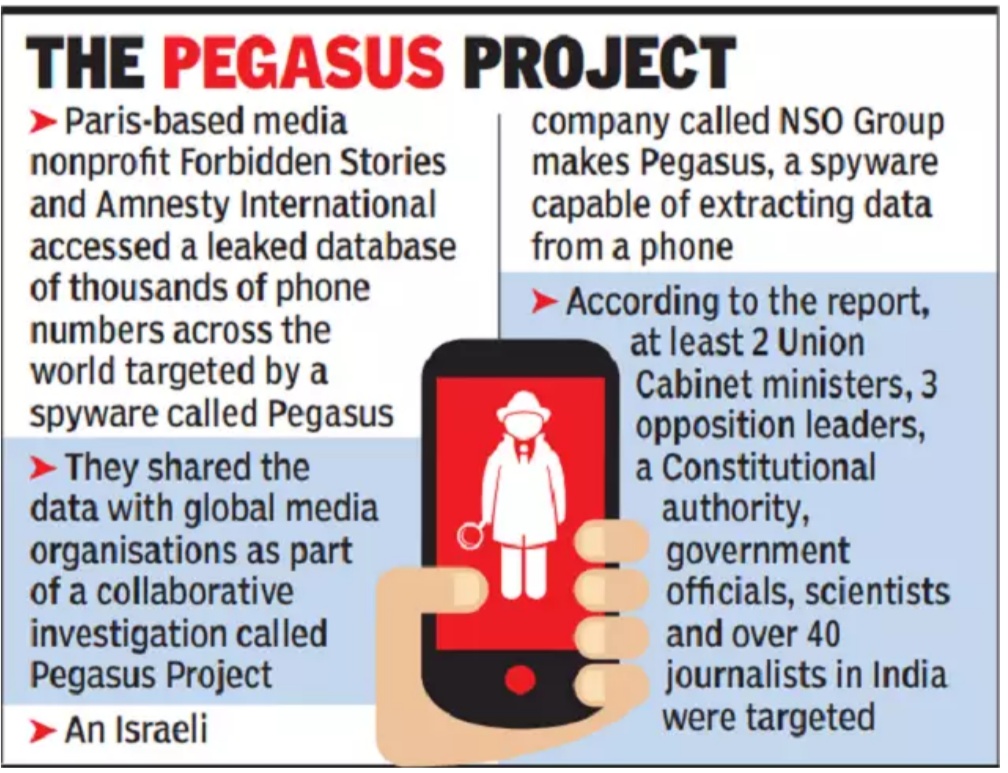
As per the information of En. M. Wikipedia. Org Pegasus is a spyware developed by the Israeli cyberarms firm NSO Group that can be covertly installed on mobile phones (and other devices) running most versions of iOS and Android. The 2021 Project Pegasus revelations suggest that the current Pegasus software can exploit all recent iOS versions up to iOS 14.6. As of 2016, Pegasus was capable of reading text messages, tracking calls, collecting passwords, location tracking, accessing the target device’s microphone and camera, and harvesting information from apps. The spyware is named after the mythical winged horse Pegasus—it is a Trojan horse that can be sent “flying through the air” to infect phones. NSO Group has published sections of contracts which require customers to use its products only for criminal and national security investigations and has stated that it has an industry-leading approach to human rights. Rather than being a specific exploit, Pegasus is a suite of exploits that uses many vulnerabilities in the system. Infection vectors include clicking links, the Photos app, the Apple Music app, and iMessage. Some of the exploits Pegasus uses are zero-click- attacks that is, they can run without any interaction from the victim. Once installed, Pegasus has been reported to be able to run arbitrary code, extract contacts, call logs, messages, photos, web browsing history, settings,[22] as well as gather information from apps including but not limited to communications apps iMessage, Gmail, Viber, Facebook, WhatsApp, Telegram, and Skype.

HISTORY.

Pegasus was discovered in August 2016 after a failed installation attempt on the iPhone of a human rights activist led to an investigation revealing details about the spyware, its abilities, and the security vulnerabilities it exploited. News of the spyware caused significant media coverage. It was called the “most sophisticated” smartphone attack ever, and marked the first time that a malicious remote exploit using jailbreak to gain unrestricted access to an iPhone had been detected. On August 23, 2020, according to intelligence obtained by the Israeli newspaper Haaretz, NSO Group sold Pegasus spyware software for hundreds of millions of US dollars to the United Arab Emirates and the other Gulf States, for surveillance of anti-regime activists, journalists, and political leaders from rival nations, with encouragement and mediation by the Israeli government. Later, in December 2020, the Al Jazeera investigative show The Tip of the Iceberg, Spy partners, exclusively covered Pegasus and its penetration into the phones of media professionals and activists; and its use by Israel to eavesdrop on both opponents and allies. In late 2019, Facebook initiated a suit against NSO, claiming that Pegasus had been used to intercept the WhatsApp communications of a number of activists, journalists, and bureaucrats in India, leading to accusations that the Indian government was involved.

Image source

THE CURRENT AFFAIRS

A leak of a list of over 50,000 phone numbers believed to have been identified as those of people of interest by clients of NSO since 2016 became available to Paris-based media nonprofit organisation Forbidden Stories and Amnesty International. They shared the information with seventeen news media organisations in what has been called “Project Pegasus”, and a months-long investigation was carried out, which reported from mid-July 2021. A total of 300 Phone numbers including that of Indian ministers, opposition leaders, ex-election commissioners and journalists were allegedly found on a database of NSO hacking targets by Project Pegasus in mid July. Independent digital forensic analysis conducted on 10 Indian phones whose numbers were present in the data showed signs of either an attempted or successful Pegasus hack. The results of the forensic analysis threw up shows sequential correlations between the time and date a phone number is entered in the list and the beginning of surveillance. The gap usually ranges between a few minutes and a couple of hours. 11 phone numbers associated with a female employee of the Supreme Court of India and her immediate family, who accused the former Chief Justice of India, Ranjan Gogoi, of sexual harrasment, are also allegedly found on a database indicating possibility of their phones being snooped. However, the crucial investigations are still being carried forward by officials.

The Threat To Your Privacy!

Image source

Would you like if anyone secretly hacks your phone Or keeps a watch on you via your smartphones. If they see all your personal data, messages, pictures etc. Basically, if you’re spied on!? No right. But what if it’s your own government or some agency doing it for them, while you are absolutely unaware about it. It’s possible. Let me tell you how.

As per the information of En. M. Wikipedia. Org Pegasus is a spyware developed by the Israeli cyberarms firm NSO Group that can be covertly installed on mobile phones (and other devices) running most versions of iOS and Android. The 2021 Project Pegasus revelations suggest that the current Pegasus software can exploit all recent iOS versions up to iOS 14.6. As of 2016, Pegasus was capable of reading text messages, tracking calls, collecting passwords, location tracking, accessing the target device’s microphone and camera, and harvesting information from apps. The spyware is named after the mythical winged horse Pegasus—it is a Trojan horse that can be sent “flying through the air” to infect phones. NSO Group has published sections of contracts which require customers to use its products only for criminal and national security investigations and has stated that it has an industry-leading approach to human rights. Rather than being a specific exploit, Pegasus is a suite of exploits that uses many vulnerabilities in the system. Infection vectors include clicking links, the Photos app, the Apple Music app, and iMessage. Some of the exploits Pegasus uses are zero-click- attacks that is, they can run without any interaction from the victim. Once installed, Pegasus has been reported to be able to run arbitrary code, extract contacts, call logs, messages, photos, web browsing history, settings,[22] as well as gather information from apps including but not limited to communications apps iMessage, Gmail, Viber, Facebook, WhatsApp, Telegram, and Skype.

HISTORY.

Pegasus was discovered in August 2016 after a failed installation attempt on the iPhone of a human rights activist led to an investigation revealing details about the spyware, its abilities, and the security vulnerabilities it exploited. News of the spyware caused significant media coverage. It was called the “most sophisticated” smartphone attack ever, and marked the first time that a malicious remote exploit using jailbreak to gain unrestricted access to an iPhone had been detected. On August 23, 2020, according to intelligence obtained by the Israeli newspaper Haaretz, NSO Group sold Pegasus spyware software for hundreds of millions of US dollars to the United Arab Emirates and the other Gulf States, for surveillance of anti-regime activists, journalists, and political leaders from rival nations, with encouragement and mediation by the Israeli government. Later, in December 2020, the Al Jazeera investigative show The Tip of the Iceberg, Spy partners, exclusively covered Pegasus and its penetration into the phones of media professionals and activists; and its use by Israel to eavesdrop on both opponents and allies. In late 2019, Facebook initiated a suit against NSO, claiming that Pegasus had been used to intercept the WhatsApp communications of a number of activists, journalists, and bureaucrats in India, leading to accusations that the Indian government was involved.

Image source

THE CURRENT AFFAIRS

A leak of a list of over 50,000 phone numbers believed to have been identified as those of people of interest by clients of NSO since 2016 became available to Paris-based media nonprofit organisation Forbidden Stories and Amnesty International. They shared the information with seventeen news media organisations in what has been called “Project Pegasus”, and a months-long investigation was carried out, which reported from mid-July 2021. A total of 300 Phone numbers including that of Indian ministers, opposition leaders, ex-election commissioners and journalists were allegedly found on a database of NSO hacking targets by Project Pegasus in mid July. Independent digital forensic analysis conducted on 10 Indian phones whose numbers were present in the data showed signs of either an attempted or successful Pegasus hack. The results of the forensic analysis threw up shows sequential correlations between the time and date a phone number is entered in the list and the beginning of surveillance. The gap usually ranges between a few minutes and a couple of hours. 11 phone numbers associated with a female employee of the Supreme Court of India and her immediate family, who accused the former Chief Justice of India, Ranjan Gogoi, of sexual harrasment, are also allegedly found on a database indicating possibility of their phones being snooped. However, the crucial investigations are still being carried forward by officials.

The Art of Conversation

Among other things, what distinguishes man from other animals is speech and language. The very fact of being man signifies speech and conversation. Conversation as a tool and vehicle of expression of ideas, emotions and experience is of great importance. It lessens pain and suffering, multiplies joy, enjoyment and exaltation and enriches experience. Man can best reveal his mind, intentions, ideas, purpose and personality through words of the mouth or talk. A man is known by his words and talk. A talk reveals a man’s inner being, his thoughts and emotions. A conversation also means participation, cooperation and interaction. This is the best means of communication and expression and also the oldest and the richest. Our oldest and most cherished religious and spiritual works were originally in the form of oral communication, conversation and dialogues. Conversation is essential for success, social interaction, business, learning and education. In a broader and general sense conversation is very comprehensive and includes a talk, lecture and public speech. A lecture or talk may be termed as an extension of conversation. In a conversation a talk is confined to two-three persons but in a speech or lecture it extends to many persons forming a large audience. Moreover, a speech is more or less a one way traffic. While conversation implies intimacy, informality, equal participation, warmth etc. A good and enjoyable conversation is an art in which both heart and mind are involved in an intimate way. It is polite, sweet, intelligent, enjoyable and close.

The art of conversation is essential for influencing people, making friends and achieving success. It can be cultivated and developed. It is a great boon which can be possessed by training, practice, patience and perseverance. One who acquires this art, his labours are fully rewarded. He is welcomed wherever he goes. People like his company and he can become a leader among equals. He will be acceptable and his reputation will acquire wings.

A good conversation is always interesting, polite, warm, relaxed natural, spontaneous, rhythmic and comfortable. A good talker and conversationalist can take his message across successfully, convince the other party and leave long lasting impression. To possess this art one has to be self confident. Self confidence carries conviction, acceptability and popularity. Success in conversation arises from confidence. To attain self confidence read as much as possible, acquire knowledge and then practice talking about it with your friends, neighbours, parents and groups of people around you. Life is full of opportunities to develop this skill. Get yourself involved in others and then get them involved in your sweet, polite, meaningful and relevant talk. There is nothing like practice. Practice makes a man perfect. Any topic is good enough to converse and practice. Make your talk interesting, informative and relevant. Attend lectures, talks and addresses of well known speakers. It will give you a lot of experience, confidence and material to talk about. Be positive, hopeful and always think of the best.

The more you talk with various people, the more you possess knowledge, experience and confidence. Exchange of ideas, experience, emotions, opinions and concepts is likely to prove a great asset in your life and career. Your conversation even with a poor shoemaker , bus conductor, illiterate farmer or an uneducated house helper would not go waste. But talk with a purpose, be conscious of your aim and object and never lose sight of what you want to achieve. Nothing should be half hearted and half bake. Never monopolise the conversation and allow others to speak. Never dictate terms but be friendly, funny, considerate, liberal and polite

The Art of Conversation

Among other things, what distinguishes man from other animals is speech and language. The very fact of being man signifies speech and conversation. Conversation as a tool and vehicle of expression of ideas, emotions and experience is of great importance. It lessens pain and suffering, multiplies joy, enjoyment and exaltation and enriches experience. Man can best reveal his mind, intentions, ideas, purpose and personality through words of the mouth or talk. A man is known by his words and talk. A talk reveals a man’s inner being, his thoughts and emotions. A conversation also means participation, cooperation and interaction. This is the best means of communication and expression and also the oldest and the richest. Our oldest and most cherished religious and spiritual works were originally in the form of oral communication, conversation and dialogues. Conversation is essential for success, social interaction, business, learning and education. In a broader and general sense conversation is very comprehensive and includes a talk, lecture and public speech. A lecture or talk may be termed as an extension of conversation. In a conversation a talk is confined to two-three persons but in a speech or lecture it extends to many persons forming a large audience. Moreover, a speech is more or less a one way traffic. While conversation implies intimacy, informality, equal participation, warmth etc. A good and enjoyable conversation is an art in which both heart and mind are involved in an intimate way. It is polite, sweet, intelligent, enjoyable and close.

The art of conversation is essential for influencing people, making friends and achieving success. It can be cultivated and developed. It is a great boon which can be possessed by training, practice, patience and perseverance. One who acquires this art, his labours are fully rewarded. He is welcomed wherever he goes. People like his company and he can become a leader among equals. He will be acceptable and his reputation will acquire wings.

A good conversation is always interesting, polite, warm, relaxed natural, spontaneous, rhythmic and comfortable. A good talker and conversationalist can take his message across successfully, convince the other party and leave long lasting impression. To possess this art one has to be self confident. Self confidence carries conviction, acceptability and popularity. Success in conversation arises from confidence. To attain self confidence read as much as possible, acquire knowledge and then practice talking about it with your friends, neighbours, parents and groups of people around you. Life is full of opportunities to develop this skill. Get yourself involved in others and then get them involved in your sweet, polite, meaningful and relevant talk. There is nothing like practice. Practice makes a man perfect. Any topic is good enough to converse and practice. Make your talk interesting, informative and relevant. Attend lectures, talks and addresses of well known speakers. It will give you a lot of experience, confidence and material to talk about. Be positive, hopeful and always think of the best.

The more you talk with various people, the more you possess knowledge, experience and confidence. Exchange of ideas, experience, emotions, opinions and concepts is likely to prove a great asset in your life and career. Your conversation even with a poor shoemaker , bus conductor, illiterate farmer or an uneducated house helper would not go waste. But talk with a purpose, be conscious of your aim and object and never lose sight of what you want to achieve. Nothing should be half hearted and half bake. Never monopolise the conversation and allow others to speak. Never dictate terms but be friendly, funny, considerate, liberal and polite

Books to read once.

It’s been said that we are what we read, our thoughts are made at what we are surrounded with , so are some books which are to be read once:

  1. To kill a mocking bird by Harper lee
  2. 1984 by George Orwell
  3. The great Gatsby by F. Scott Fitzgerald
  4. The diary of a young girl, by Anne Frank
  5. The Book Thief, by Markus Zusak
  6. The Hobbit, by J.R.R Tolkien
  7. Jane Eyre , by Charlotte Bronte
  8. Gone with wind , by Margaret Mitchell
  9. Charlotte’s Web, by E.B White
  10. The Kite Runner ,by Khaled Hosseini

Books to read once.

It’s been said that we are what we read, our thoughts are made at what we are surrounded with , so are some books which are to be read once:

  1. To kill a mocking bird by Harper lee
  2. 1984 by George Orwell
  3. The great Gatsby by F. Scott Fitzgerald
  4. The diary of a young girl, by Anne Frank
  5. The Book Thief, by Markus Zusak
  6. The Hobbit, by J.R.R Tolkien
  7. Jane Eyre , by Charlotte Bronte
  8. Gone with wind , by Margaret Mitchell
  9. Charlotte’s Web, by E.B White
  10. The Kite Runner ,by Khaled Hosseini

Magnificent Mary

Born in the Khangati Village of Manipur,where very girl only wished for marriage, Mary Kom dared to dream. It is her dream that keeps her still going. Nicknamed as Magnificent Mary, Mary Kom was born on 24th November 1982

As a kid Mary Kom was always interested in all kind of sports. She played football , volleyball and athletics. She was very fond of marathon and volleyball. But when Dingko Singh, a fellow Manipuri returned with a gold medal from 1998 Bangkok Asian Games, Mary kom took inspiration from him. She was so enthralled that she decided to learn boxing.

At the age of 15, she left her hometown to study at Sports Academy in the state capital , Imphal. After that she won the state level boxing championship. She hid her love for boxing from her father. Her father never supported her for boxing as he was afraid that she might hurt her face and would not find a man to marry. When her father show the picture of Mary Kom on newspaper in 2000 after her win, he was furious. It was only after 3 years later, that he grew to accept Mary Kom’s love for boxing.

Today, Mary Kom is the only female to win the World Amateur Boxing Championship for six times. She is also the only boxer ( male or female) with eight World Championship. She has many titles in her name and has also been ranked no. 1 female light – flyweight by International Boxing Association. She also represented India in Olympics in 2012 and bagged a bronze home . Her list of achievements goes on and on.

Mary Kom was married in 2005 and has 3 children. She is currently representing India in Tokyo Olympics 2020. Many Indian women after being married leave all the dreams behind, but Mary was never one of those. She is inspiration for many, especially women. She is the definition of “Will Power”.

Magnificent Mary

Born in the Khangati Village of Manipur,where very girl only wished for marriage, Mary Kom dared to dream. It is her dream that keeps her still going. Nicknamed as Magnificent Mary, Mary Kom was born on 24th November 1982

As a kid Mary Kom was always interested in all kind of sports. She played football , volleyball and athletics. She was very fond of marathon and volleyball. But when Dingko Singh, a fellow Manipuri returned with a gold medal from 1998 Bangkok Asian Games, Mary kom took inspiration from him. She was so enthralled that she decided to learn boxing.

At the age of 15, she left her hometown to study at Sports Academy in the state capital , Imphal. After that she won the state level boxing championship. She hid her love for boxing from her father. Her father never supported her for boxing as he was afraid that she might hurt her face and would not find a man to marry. When her father show the picture of Mary Kom on newspaper in 2000 after her win, he was furious. It was only after 3 years later, that he grew to accept Mary Kom’s love for boxing.

Today, Mary Kom is the only female to win the World Amateur Boxing Championship for six times. She is also the only boxer ( male or female) with eight World Championship. She has many titles in her name and has also been ranked no. 1 female light – flyweight by International Boxing Association. She also represented India in Olympics in 2012 and bagged a bronze home . Her list of achievements goes on and on.

Mary Kom was married in 2005 and has 3 children. She is currently representing India in Tokyo Olympics 2020. Many Indian women after being married leave all the dreams behind, but Mary was never one of those. She is inspiration for many, especially women. She is the definition of “Will Power”.

Fruits Which Will Cost Your Fortune

I have already written about expensive fruits before ( Here is the link — https://wordpress.com/post/eduindex.org/55706 .Please check it also .) but that was not enough . Apart from Buddha Shaped Pear ,Sembikiya Queen strawberries ,Square watermelons ,Sekai-ichi Apple ,Yubari melon ,Taiyo – No – Tamago Mango , there are some more fruits in the world which can be proudly placed in the list of expensive .Let’s talk about them .

1) Ruby Red Grapes or Ruby Roman : This comes under the species Vitis vinifera .Its color is beautiful ruby red that’s why it is called ruby red grapes .Every grape is as big as a ping pong ball & perfectly round in shape  .These types of grapes are very juicy & sweet in taste .You can only able to buy it from  Ishikawa Prefecture in Japan as it is grown & cultivated in this place . These grapes first appeared in 2008 in Japan . According to a 2019 report , One bunch of a ruby roman costs almost 750000 rupees & one grape costs almost 35000 rupees in Indian currency . The reason for this high price value is the low amount of production of these grapes as only 2400 bunches are harvested per year .

Ruby Roman or Ruby Red Grapes
Ruby Red Grapes in a Japanese store

2) Heligan Pineapple or British Pineapple : Pineapples usually grow in warm weather but the cold weather of Europe, especially the United Kingdom is not very suitable . But these heligan pineapples are exclusively cultivated only in a Victorian garden, The Lost Gardens of Heligan which has existed from the 18th century & situated in Cornwall in UK .This pineapples are grown in utmost care & in special condition .They cost more than $ 1500 or 100000 rupees . Still now the highest price of heligan pineapple is $ 16000 .

Heligan Pineapple
Heligan Pineapple cultivation in Lost Gardens of Heligan

3) Dekopon Orange : Dekopon orange is a hybrid citrus fruit of two citrus species Kiyomi & Ponkan .It was first developed in 1972 in Japan .It is a seedless orange with sweet juicy flesh .It is considered as one of the best & expensive citrus fruit & only sold in Japan . The price of a dekopon orange is $ 80 or 6000 rupees per pack which contains only 6 oranges .

Dekopon Orange
Dekopon Orange

4) Densuke Watermelon : It is one of the most costly watermelons in the world .This watermelon is perfectly round shaped with spotless deep green outer surface .The edible red flesh of this watermelon are much sweeter & juicier than other watermelons .Each piece of watermelon is weight of 11 kg or more than  11 kg . Densuke watermelon are only farmers in the Hokkaido island in Japan & only  can be brought from Sembikiya Flagship store situated in Tokyo , Japan . Only 10000 number of densuke watermelons are produced  per year .It costs almost $ 6000 or 4.4 lakh in Indian currency .

Densuke Watermelon

5) Black Diamond Apple : These apples have a very unique color .The outer shell is of the deep blackish red or purple color ,very different from any other types of apple. They are much sweeter & flavorful than the rest of the apples .It is a scarce breed ,which belongs to the Huaniu apple species . These apples are only produced in Nyingchi provinces in Tibet .It is believed that this unique color is due to the cultivation in high altitude (3500 m or above ) & ultraviolet ray .This apples are not available in Indian market for its low lifetime . It cost almost $ 7 or 500 rupees per piece .