

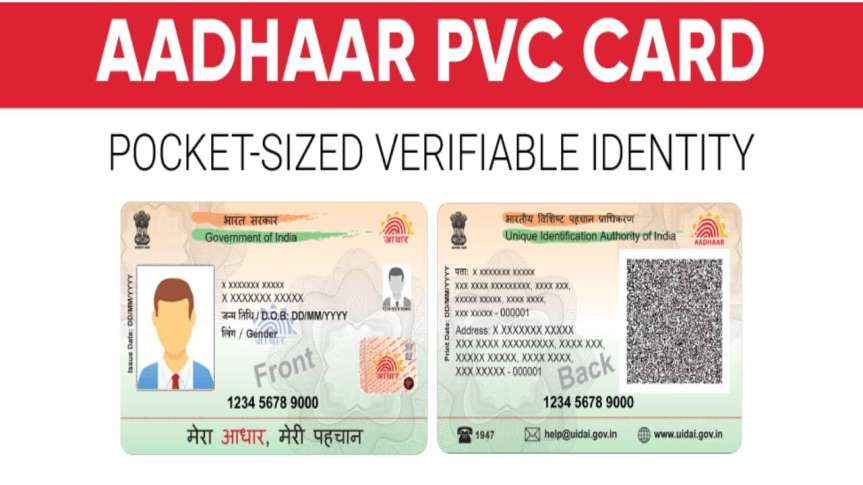
Recently, Unique Identification Authority of India (UIDAI) first issued a warning to the public not to share a photocopy of their Aadhaar with any organisation, and then withdrew the warning over worries that it was open to “misinterpretation”.

What is the Unique Identification Authority of India?
The UIDAI is a statutory authority established on 12th July 2016 by the Government of India under the jurisdiction of the Ministry of Electronics and Information Technology, following the provisions of the Aadhaar Act 2016. The UIDAI was initially set up by the Government of India in January 2009, as an attached office under the aegis of the Planning Commission.
The UIDAI is mandated to assign a 12-digit unique identification (UID) number (Aadhaar) to all the residents of India.
As of 31st October 2021, UIDAI had issued 131.68 crore Aadhaar numbers.
What was the Initial Warning from UIDAI?
The UIDAI warned the “general public not to share photocopy of one’s Aadhaar with any organisation, because it can be misused”.
- Rather, it recommended using “a masked Aadhaar, which displays only the last four digits of the Aadhaar number,”.
- It also asked the public to avoid using public computers to download their e-Aadhaar.
- In that case, they were reminded to “permanently delete” any downloaded copies of the same.
- Only those organisations that have obtained a User License from the UIDAI can use Aadhaar to establish the identity of a person.
- Moreover, hotels and movie theatres are not allowed to collect or maintain copies of the Aadhaar cards, due to the Aadhaar Act.
What are the Concerns related to Aadhaar?
Misuse of Aadhaar Data:
- Many private entities in the country insist on an Aadhaar card, and users often share the details.
- There’s no clarity on how these entities keep these data private and secure.
- More recently with Covid-19 testing, many would have noticed that most labs insist on Aadhaar card data, including a photocopy.
- It should be noted that it is not mandatory to share this for getting a Covid-19 test done.
Excessive Imposition:
- In 2018, the Supreme Court ruled that Aadhaar authentication can be made mandatory only for benefits paid from the Consolidated Fund of India and that alternative means of identity verification must always be provided when Aadhaar fails.
- Children were exempt but aadhaar continues to be routinely demanded from children for basic rights such as anganwadi services or school enrolment.
Arbitrary exclusions:
- Central and state governments have made routine use of the “ultimatum method” to enforce the linkage of welfare benefits with Aadhaar.
- In this method, benefits are simply withdrawn or suspended if the recipients fail to comply with the linkage instructions in good time, such as failing to link their job card, ration card or bank account with Aadhaar.
Fraud-prone Aadhaar-enabled Payment System (AePS):
- AePS is a facility that enables someone who has an Aadhaar-linked account to withdraw money from it anywhere in India through biometric authentication with a “business correspondent” – a kind of mini-ATM.
- There have been rampant abuses of this facility by corrupt business correspondents.
 Eduindex
You must be logged in to post a comment.