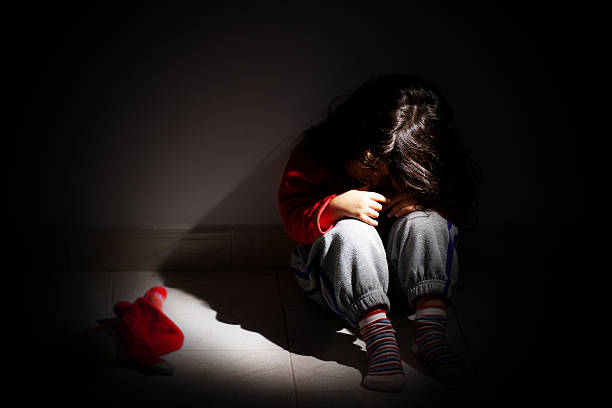
Due to lack of evidence, every day four children of sexual abuse are being denied justice

Rising cases of sexual abuse in young children shows that even though there are strict laws, but they are not being implemented with the same strictness. The figures which have come out reveal that childhood is still unsafe. On average, four of the sexually abused children are not getting justice every day, as the police close the case due to lack of evidence.

This fact came to light after studying the cases filed under the POCSO (Protection of Children from Sexual Offences) Act 2012 by the Kailash Satyarthi Children’s Foundation and how they were disposed. The data were collected on the basis of a study of cases filed between 2017 and 2019 at the National Crime Records Bureau. Meanwhile, the number of cases closed has increased. The police closed the cases citing lack of evidence after investigation and did not file charge sheets.
51% of cases of five states including UP, Haryana, Delhi. About 51% of the cases were reported in Madhya Pradesh, Maharashtra, Uttar Pradesh, Haryana and Delhi. The punishment percentage ranges from 30% to 64%. Most of the victims come from weaker sections. In this case, cases are closed.
3000 cases do not reach court: Around 3000 cases registered under POCSO
do not reach court after investigation and four victims children are not able to get justice every day and their cases are closed. Nearly 43% of cases were closed in 2019 as compared to 2017 and 2018.
Reason for closure of the case: Despite the registration of the case, the case does not reach the court for trial due to lack of evidence and evidence. In closed cases the police have considered the lack of evidence as the reason.
The matters required to form a monitoring unit should be monitored by a DSP level officer. It has been recommended to set up separate units to monitor child sexual abuse cases in all districts.

Women have the right to register a complaint against harassment even after decades

Former Union Minister M.J. Akbar has received a setback in the criminal defamation suit against Priya Ramani, a journalist who accused of him sexual harassment, when Delhi Court acquitted Ramani on Wednesday. Dismissing Akbar’s plea, the court said that a woman who has been tortured has the right to register a complaint even after decades. The court said that women who raise their voice against such crimes cannot be punished. Akbar alleged that Ramani’s tweet during the #me_too campaign has defamed him.

Additional Chief Metropolitan Magistrate(A.C.M.M.) Ravindrakumar Pandey dismissed the plea of ​​former Union Minister Akbar saying that no allegations against Ramani were proved. The court reserved the verdict on February 1. Apart from Ramani, Akbar was accused of harassment by around 20 women journalists.
Previously, Ramani accused Akbar during the Me too campaign.
ACMM, Ravindrakumar Pandey, added that this crime is shameful in the country of Ramayana-Mahabharata. He said crimes against women are shameful in a country where great texts like the Mahabharata and the Ramayana have been written, which teach women how to respect them.
Akbar rejected the allegations and had filed a complaint against Priya Ramani on October 15, 2018, for defaming him after she accused him for misconduct. However, on October 17, 2018, Akbar was accused of misconduct and had to resign as Union Minister.
No one’s reputation should be protected at the cost of women’s dignity-
The court said in the judgment that no one’s reputation can be saved at the cost of a woman’s life and dignity. Under Article 21 of the Constitution this has been guaranteed. At the same time under Article 14, the right to equality before the law and the right to equal protection have also been guaranteed.
Any invisible hindrance cannot stop Indian women from moving forward for equal opportunity in society. Now, the time has come for society to understand the hardship of sexual harassment. Society must see the victim just like any other common person and not discriminate. A victim should be able to  lead a life like a dignified person in society.

Scale Of Drug Usage In Kerala Unacceptably High

It is certainly refreshing, rejuvenating and remarkable to see that the Kerala High Court most recently in a leading judgment titled Suo Motu Proceedings Initiated Based On A Representation Submitted By Sri. N. Ramachandran I.P.S. (Retired), Regarding The Efforts To Be Undertaken To Curb The Increasing Menace Of Drug Abuse vs State of Kerala and others in W.P.(C). No. 9001/2019(S) has observed that the “scale of drug usage in Kerala is unacceptably high” and has therefore issued a slew of directions to control drug abuse among youngsters and students in educational institutions. A Division Bench comprising of Chief Justice S Manikumar and Justice AM Shaffique took note of an alarming report of the State Special Branch that around 400 institutions in the State are affected by drug abuse and out of such education institutions, 74.12% are schools, 20.89% are colleges and professional institutions and 4.97% are other institutions viz, ITI, Polytechnics etc. This invariably results in surge in crime and violence which cannot be just glossed over!

First and foremost, it is observed in para 1 that, “Instant writ petition is registered, suo motu, taking note of the menace of drug consumption and trade, in the State of Kerala.”
To start with, the ball is set rolling in real sense in para 2 of this notable judgment authored by Chief Justice S Manikumar for himself and Justice AM Shaffique wherein it is observed that, “Short facts leading to the writ petition are that a representation dated 15.03.2019 has been submitted by Sri. N. Ramachandran, IPS (Retd.), former District Police Chief, Kottayam, to a Hon’ble Judge of this Court highlighting various aspects of drug abuse in Kerala. The letter has thrown light to the increasing rate of crimes committed by the youth under the influence of drugs and its alarming growth by the children/ students of both genders. The letter emphasised the need for proper utilisation of funds provided by the Central, as well as State Governments, in the field of drug abuse.”
To put things in perspective, the Bench then observes in para 3 that, “On consideration of the representation, this Court has decided to register a suo motu public interest writ petition. It was observed that issues concerning the rampant drug abuse were recently reported in the editorials of major newspapers in the State. It was further observed that ‘Abon Kits’ used by the Police in Vadodara and Gujarat can detect whether a person has consumed contraband, besides identifying the type of drug consumed. Writ court has suggested that efforts have to be taken to identify whether any ‘user-friendly’ device, at the same time ‘less expensive’, is available, and if so, to cause it to be procured and make the same available to the Police, Excise, and such other departments for extensive use. In the above-said circumstances, instant writ petition has been registered.”
Be it noted, the Bench then enunciates in para 10 that, “Report of the State Special Branch, as regards drug abuse in educational institutions, reveals that in the past so many years, there is a significant increase in the number of drug abuse cases and it has become a serious problem in the educational institutions. On enquiry, it came to understand that around 400 institutions in the State are affected by drug abuse and out of the education institutions, 74.12% are schools, 20.89% are colleges and professional institutions, and 4.97% are other institutions viz., ITI, Polytechnics etc.”
It cannot be glossed over that it is then stated in para 11 that, “The report also reveals that a range of drugs from Ganja, Hashish to Synthetic Drugs are used by the student community. Majority of cases registered are regarding possession and sale of Ganja. The State Special Branch has provided intelligence inputs on drug trafficking, drug peddling, drug use centered around schools, college campuses and other educational institutions to the concerned District Police Chiefs, State Police Chief, and Excise Commissioner, depending on the jurisdiction of the offence and its magnitude involved.”
More revealingly, the Bench then enunciates in para 12 that, “The report further reveals that in most of the cases detected in the college campuses, the seizure is below 1 kg of ganja, which is bailable, and this encourages a person to engage in drug abuse. Apart from the narcotic and synthetic drugs usage being rampant among the student community, inhaling of Noxious chemicals like whitener, ink, fevicol, varnish solution used for repairing tyre puncture, are being used by the students for getting intoxication. This would cause illness and sometimes damage their organs permanently. Since the above substances do not come under the purview of NDPS Act, no legal action was initiated. In the report, the State Special Branch has recommended the following, to curb the drug abuse in educational institutions:
(a) In order to conduct regular checking inside the educational institutions, or personal search of students by the Police and Excise, the Government may adopt a method of establishing Campus Police Units, which is widely used in western countries. Measures may also be identified to make it easier for the enforcement agencies to enter the educational institutions, so as to enforce the NDPS Act. 
(b) To make the campuses of educational institutions drug free, the Universities/Colleges/School authorities be provided with guidelines as a charter of duties and responsibilities of such officials. 
(c) Since, most of the students are unaware of the health and career hazards, and also the legal repercussions of usage and trafficking of drugs, sensitization on health as well as legal aspects are necessary. For this purpose, the services of Student Police Cadets, NCC, NSS and other Non Governmental Organisations may be used. 
(d) There is a necessity to establish regular counseling and rehabilitation mechanisms to save the students already using drugs and addicts. For this purpose, co-operation of University authorities, affected students and their parents should be elicited. 
(e) A special scheme may be introduced to declare educational campus as drug free. The educational institutions and Universities could initiate steps to conduct anti drug programmes, health awareness campaigns and use social media to propagate the message and conduct of voluntary random urine/blood tests of students.”
As it turned out, the Bench then states in para 41 that, “Section 32B(d) of the NDPS Act, 1985 speaks about the fact that offence is committed in an educational institution or social service facility or in the immediate vicinity of such institution or facility or in other place to which school children and students resort for educational, sports and social activities as one of the aggravating factors, which may be justified for imposing higher than the minimum penalty prescribed for the offence.
Most significantly, the Bench then points out in para 42 that, “In order to tackle the problem of sale of drugs in schools and colleges, the following measures can be adopted:
a) Local police shall pay special attention to areas surrounding schools and colleges in their efforts to tackle drug peddlers.
b) Schools and colleges be encouraged to look out for peddlers in their vicinity and report them to police.
c) Schools and colleges be encouraged to conduct surveys (possibly anonymous) to assess the levels of drug addiction among their students, and if addicted students can be identified, to talk to their parents or wards to find medical help to cure their addiction.
d) The Central and State Education Authorities to include a mandatory and comprehensive chapter on drug abuse and illicit trafficking and its socio-economic costs to self, society, and the country, in the syllabus for 10+1 and 10+2 students.
e) Schools and colleges be encouraged to constitute the AntiDrug Club to promote a drug free life among its members and also in the institution.”
Equally significant is what is then stated in para 43 that, “Street peddlers being an important link between the addicts and the traffickers, it is vital to contain them to tackle the drug problem. Hence, to deal with street peddlers, the following steps shall be taken:
a) Increase the public awareness about the potential harm street peddlers can do to their societies and their children and the need to report peddlers to police and to follow up. 
b) NGOs, resident welfare societies, etc., be involved in reporting peddlers and follow up with police.
c) Sensitize police that dealing with street peddlers is an important part of their job.
d) Train and build capacities of the local police to deal with peddlers, including those who are addicts themselves. 
e) In large cities, develop special, mobile, anti-peddling squads of police with jurisdiction all over the city and linked to a helpline.
f) Similar to the method of contact tracing followed in the case of Covid-19 patients, police can explore the possibility of tracking drug peddlers.
g) Like in the case of history sheeters, there should be constant monitoring of street peddlers.”
No less significant is what is then stated aptly in para 45 that, “Considering the entire material on record, we issue the following directions to the concerned: 
I. Respondent No.1 is directed to adopt a method of establishing Campus Police Units, since the Law Enforcement agencies are not conducting regular checking inside the educational institutions. Measures shall also be taken to make it easier for the police and excise personnel to enforce NDPS Act, 1985, in the educational institutions. 
II. Respondent No.1, is also directed to convene a meeting of all the key officials from the Department of Home Affairs, Excise, Health, Law, Education and representative of State Mental Health authority, Department of Social Justice, and chalk out programmes, to ensure reduction in the incidence of Substance abuse among teenagers and youth and for the implementation of the suggestions made above.
III. The Universities/Colleges/School authorities shall be provided with guidelines as a charter of duties and responsibilities, to make the campuses of the educational institutions, drug free. 
IV. Respondent No.3 shall seek the services of Student Police Cadets, NCC, NSS and other similar organisations to tide over the situation that the students are unaware of the legal repercussions of the usage and trafficking of drugs, and the health and career hazards caused due to the usage of drugs. 
V. Respondent No.3 is also directed to introduce a special scheme to ensure that the premises of the educational institutions and Universities are drug free. The 3rd respondent shall initiate steps to conduct anti-drug programmes in the institutions, propagate health awareness campaigns, and use the assistance of social medias.
VI. The 3rd respondent is further directed to establish counselling and rehabilitation mechanisms, to save the students who are already using drugs and addicts, and for that purpose, co-operation of University authorities, affected students, and their parents be elicited.”
Finally, it is then held in the last para 46 that, “The directions issued, be complied with strictly, in letter and spirit, in accordance with law, within a period of three months from the date of receipt of a copy of this judgment. Failure to implement the directions, by the authorities concerned, would only affect many. Writ petition is disposed of accordingly. Registry to post the writ petition after three months, for submitting the compliance report. Copy of this judgment shall be communicated to the Chief Secretary, State of Kerala, for appropriate action and compliance.” 
No doubt, the remarkable and commendable directions issued by the Kerala High Court in this leading case must be implemented forthwith. It brooks no more delay anymore now! This noteworthy judgment also minces no words to underscore that the directions issued, be complied with strictly, in accordance with law, within a period of three months from the date of receipt of a copy of this judgment. The Division Bench of Kerala High Court issued the directives as stated above while disposing of a suo motu case initiated on the basis of a letter from a former IPS officer N Ramachandran highlighting the rampant abuse of drugs in schools and colleges. It is a no-brainer that if the directives that have been outlined by the Division Bench of the Kerala High Court are honestly implemented in letter and spirit then it will make a huge sea change and the rampant abuse of drugs in schools and colleges can certainly be considerably checked to a large extent.
Sanjeev Sirohi


Media Trial During Investigation Interferes With Administration Of Justice

In a well-written, well-drafted, well-articulated, well-reasoned and well-worded judgment titled Mr Nilesh Navalakha and others vs Union of India and others in Public Interest Litigation (ST) No. 92252 of 2020 with Interim Application No. 95156 of 2020 that was delivered on January 18, 2021, the two Judge Bench of Bombay High Court comprising of Chief Justice Dipankar Datta and Justice GS Kulkarni minced no words to pronounce in no uncertain terms that media trial during criminal investigation interferes with administration of justice and hence amounts to ‘contempt of court’ as defined under the Contempt of Courts Act, 1971. The Court also held that media reports interfering with criminal investigation, before the initiation of trial, can amount to interference with administration of justice. Very rightly so! We had seen for ourselves how raucously the Sushant Singh Rajput case was discussed in different news channels.

To start with, as a prelude, the Bench first and foremost sets the ball rolling by first and foremost observing in para 1 that, “While COVID-19 was wreaking havoc in the country and causing unimaginable misery [viz. the working class losing jobs and thereby their livelihood, innumerable innocent lives being lost including those of migrant labours not only due to its direct but also indirect effects, the health-care system in all the States across the country facing extreme stress, justice seekers finding the justice delivery system almost inaccessible, etc.] and thus creating an atmosphere of severe tension and despair in the country, the unnatural death of a relatively young film actor (hereafter “the actor”, for short) in Mumbai on June 14, 2020 became the cynosure of the electronic media. The manifold problem, hardship and inconvenience brought about by the pandemic all over the country notwithstanding, various TV channels initiated intense discussion during prime time on the probable cause of death of the actor. Some of such channels, resorting to “investigative journalism” as they call it, sought to spread the message among its viewers that Mumbai Police has been passing off a homicidal death as a suicidal death and that a close acquaintance of the actor, who herself is an actress (hereafter “the actress”, for short), had orchestrated his death. What followed such reportage is noteworthy. The actor’s father had lodged an FIR at Patna, Bihar naming the actress as an accused for his son’s homicidal death. Incidentally, the actor hailed from Bihar prior to making a career in films and settling down in Mumbai. To conduct investigation into such FIR, police personnel from Bihar landed in Mumbai. Citing the pandemic, such personnel were promptly quarantined. It is not necessary for the present purpose to ascertain who were behind such move and what the motive was. Suffice it to note, the actress applied before the Supreme Court for transfer of a First Information Report at a police station in Patna and all consequential proceedings from the jurisdictional court at Patna to the jurisdictional court at Mumbai, under section 406 of the Code of Criminal Procedure (hereafter ‘the Cr.P.C’ for short) read with Order XXXIX of the Supreme Court Rules. Upon hearing the parties, the Supreme Court passed an order dated August 19, 2020 entrusting the Central Bureau of Investigation (hereafter “the CBI”, for short) with investigation into the complaint of the actor’s father. In compliance with such order, the CBI took over investigation. In due course of time, the Enforcement Directorate (hereafter “the ED”, for short) and the Narcotics Control Bureau (hereafter “the NCB”, for short) too joined the fray by launching separate prosecution suspecting offences under the Prevention of Money Laundering Act, 2002 and the Narcotics Drugs and Psychotropic Substances Act, 1985 (hereafter “the NDPS Act”, for short), respectively. After the intervention of the Supreme Court, it had been the claim of some of the TV channels that Mumbai Police’s vicious attempt to suppress the homicidal death of the actor, which had been unearthed by “investigative journalism”, stands validated by reason of the order of the Supreme Court. It had also been the claim of one of the TV channels that because of its persistent vigorous demands for divesting Mumbai Police of investigative powers in the case that truth has triumphed with the CBI being entrusted with the investigation by the Supreme Court. Investigation by the CBI, the ED and the NCB are still in progress.” 
Adding more to it, the Bench then observes in para 2 that, “Apart from the above, a couple of TV channels aired several programmes raising questions as to the manner of investigation by Mumbai Police and also as to why the actress had not been arrested in view of materials that such channels had gathered through “investigative journalism”. One of them even went to the extent of obtaining opinion from the viewers on whether the actress should be arrested. One other channel flashed that the actor had been murdered. The persistent efforts of the channels for arrest of the actress did bear fruit in that although the CBI did not find reason to arrest her, she came to be arrested by the NCB. After a monthlong incarceration, this Court by its order dated October 7, 2020 granted the actress bail upon recording a finding that materials collected thus far by the NCB prima facie did not suggest that she had committed any offence under the NDPS Act.” 
Most significantly, the Bench then further waxes eloquent to hold in para 349 that, “Having given our anxious consideration to all aspects of the matter, we are inclined to the opinion that the press/media ought to avoid/regulate certain reports/discussions/debates/interviews in respect of and/or touching upon any on-going inquiry/investigation into a criminal offence and that only those items are presented for reading/viewing and otherwise perceiving through the senses which are merely informative but in public interest instead of what, according to the media, the public is interested in. No report/discussion/debate/ interview should be presented by the press/media which could harm the interests of the accused being investigated or a witness in the case or any such person who may be relevant for any investigation, with a view to satiate the thirst of stealing a march over competitors in the field of reporting. Accordingly, we direct the press/media to exercise restraint and refrain from printing/displaying any news item and/or initiating any discussion/debate/interview of the nature, as indicated hereunder:
a. In relation to death by suicide, depicting the deceased as one having a weak character or intruding in any manner on the privacy of the deceased;
b. That causes prejudice to an ongoing inquiry/investigation by: 
(i) Referring to the character of the accused/victim and creating an atmosphere of prejudice for both;
(ii) Holding interviews with the victim, the witnesses and/or any of their family members and displaying it on screen; 
(iii) Analyzing versions of witnesses, whose evidence could be vital at the stage of trial;
(iv) Publishing a confession allegedly made to a police officer by an accused and trying to make the public believe that the same is a piece of evidence which is admissible before a Court and there is no reason for the Court not to act upon it, without letting the public know the nitty-gritty of the Evidence Act, 1872;
(v) Printing photographs of an accused and thereby facilitating his identification; 
(vi) Criticizing the investigative agency based on half-baked information without proper research; 
(vii) Pronouncing on the merits of the case, including pre-judging the guilt or innocence qua an accused or an individual not yet wanted in a case, as the case may be;
(viii) Recreating/reconstructing a crime scene and depicting how the accused committed the crime; 
(ix) Predicting the proposed/future course of action including steps that ought to be taken in a particular direction to complete the investigation; and
(x) Leaking sensitive and confidential information from materials collected by the investigating agency; 
c. Acting in any manner so as to violate the provisions of the Programme Code as prescribed under section 5 of the CTVN Act read with rule 6 of the CTVN Rules and thereby inviting contempt of court; and
d. Indulging in character assassination of any individual and thereby mar his reputation.” 
For the sake of clarity, the Bench then makes it clear in para 350 that, “These are not intended to be exhaustive but indicative, and any report carried by the print media or a programme telecast by a TV channel, live or recorded, ought to be such so as to conform to the Programme Code, the norms of journalistic standards and the Code of Ethics and Broadcasting Regulations; in default thereof, apart from action that could be taken under the prevailing regulatory mechanism, the erring media house could make itself liable to face an action in contempt, i.e., criminal contempt within the meaning of section 2(c) of the CoC Act which, as and when initiated, would obviously have to be decided by the competent court on its own merits and in accordance with law.”
Quite remarkably, the Bench then observes in para 351 that, “It has been urged on behalf of the media houses that on diverse occasions, the guests are invited to speak and address the audience on a particular topic during programmes which are telecast live and, in such cases, it is difficult for the media houses to censor the statements of such guests. What the media houses say could be true, but that would not grant any speaker the license to either abuse or defame any particular individual, who could be the target of the speech, to tarnish his reputation in the eyes of the viewers or to indulge in interference with and/or obstruction to administration of justice by such public speaking. In case of the former, the targeted individual could sue the media as well as the speaker for defamation, which must ordinarily sound in damages but in case of the latter, both the media house and the speaker may be proceeded against for criminal contempt. It would not be enough for the media house to put up a disclaimer at the end of the programme that it does not associate itself with the views of the speaker and thereby evade liability. To obviate such situation, the media houses would be well advised to inform, guide and advise the guest speakers to refrain from making public utterances which are likely to interfere with and/or obstruct administration of justice and thereby attract contempt. The role of the anchor, in such cases, is also important. It is for him/her to apply his/her mind and avoid the programme from drifting beyond the permissible limits. Muting the speaker if he flies off or shows tendency of flying off at a tangent could be one of several ways to avoid embarrassment as well as contempt.”
In the same vein, the Bench then holds in para 352 that, “At the same time, while emphasizing on the need for a free, fair, effective and meaningful investigation of an FIR disclosing commission of cognizable offence by an accused ~ be it a celebrity or an ordinary person ~ to be conducted by the investigative agency, we also consider it appropriate to remind the investigative agencies that they are entitled to maintain secrecy in course of investigation and are under no obligation to divulge materials thus collected. If indeed there is leakage or disclosure of materials, which has the potential of stifling a proper investigation, it could pave the way for such information being laid before the competent court having powers to punish for criminal contempt under section 2(c) of the CoC Act and in an appropriate case, for being dealt with in accordance with law.”
In addition, the Bench then also adds in para 353 that, “That apart, one of the suggestions of Mr.Datar seems to us to be worthful and hence, we observe that Mumbai Police as well as the other investigating agencies may consider the desirability of appointing an officer who could be the link between the investigator and the media houses for holding periodic briefings in sensitive cases or incidents that are likely to affect the public at large and to provide credible information to the extent such officer considers fit and proper to disclose and answer queries as received from the journalists/reporters but he must, at all times, take care to ensure that secret and confidential information/material collected during investigation, the disclosure whereof could affect administration of justice, is not divulged. Such officer, if at all appointed, would nonetheless be instructed to bear in mind the decision of the Supreme Court in Rajendran Chingaravelu (supra). There, the Court warned of the growing tendency among investigating officers (either police or other departments) to inform the media, even before completion of investigation, that they have caught a criminal or an offender and that such crude attempts to claim credit for imaginary investigational breakthroughs should be curbed. The investigating agency should refrain from such acts that would prejudice not only the investigation but also the trial before the Court. We say no more on this topic.”
As it turned out, the Bench then also adds in para 354 that, “Finally, what remains for our consideration is Mr.Kamath’s suggestion that if any adverse order is passed by the UOI against an erring news broadcaster for violation of the Programme Code and such order has the effect of abridging the right guaranteed under Article 19(1)(a), this Court may direct that the same as against the broadcaster will remain in abeyance for a period of 15 days or so as to enable the news broadcaster to approach the appropriate Court for relief. We do not consider such suggestion worthy of acceptance. It is not open to the High Courts to further legislate when a legislation is in place. The duty of the High Court would be to interpret the law, if the occasion therefor arises. It is only in exceptional cases where there is no legislation covering a particular topic/subject but right of a subject is infringed or threatened to be infringed that the court may consider attempting to issue guidelines/directions to be followed till such time legislation in that behalf is made. While we have ourselves suggested measures that need to be followed so as to enforce the right to life of individuals accused of criminal offences under investigation as well as laid down guidelines for media reporting on criminal investigation at the prechargesheet stage, the latter is with the obvious intent of marking the ‘lakhsman rekha’ within which the media must operate to avoid contempt of court. However, in view of the provisions of the CTVN Act and the CTVN Rules, it is considered unnecessary to make any direction of the nature suggested by Mr.Kamath.”
In conclusion, the two Judge Bench of Bombay High Court in this noteworthy case makes it crystal clear that media trial during investigation interferes with the administration of justice and this is just not acceptable. All the news channels must always comply with what the Bombay High Court has held so explicitly, elegantly and effectively in this leading case. It also made it amply clear that doing media trial as stated above amounts to contempt of court as defined under the Contempt of Courts Act, 1971. The slew of directions that were remarkably issued by the Bombay High Court as we discussed above must be implemented in letter and spirit! It was also made amply clear that the media trial not only runs counter to the Program Code framed under the Cable TV Act but also interferes with the criminal investigation by police. It was also rightly held that, “Press media ought to avoid discussions, debates relating to criminal investigation and should confine only to informative reports in such matters in public interest. Media should observe restraint in discussions about ongoing investigation so as not to prejudice the rights of the accused and witness.” Media must comply now! 
Sanjeev Sirohi, Advocate,
s/o Col BPS Sirohi,
A 82, Defence Enclave,
Sardhana Road, Kankerkhera,
Meerut – 250001, Uttar Pradesh.