

The Air (Prevention and Control of Pollution) Act was passed in the early 1980s, but due to lax regulation, it has failed to make an impact. India ranks third in the world in terms of greenhouse gas emissions, trailing only China and the United States.
India was marked the fifth most polluted country by WHO (2019) based on PM2.5 emission concentrations, with 21 of the top 30 contaminated cities being in India.
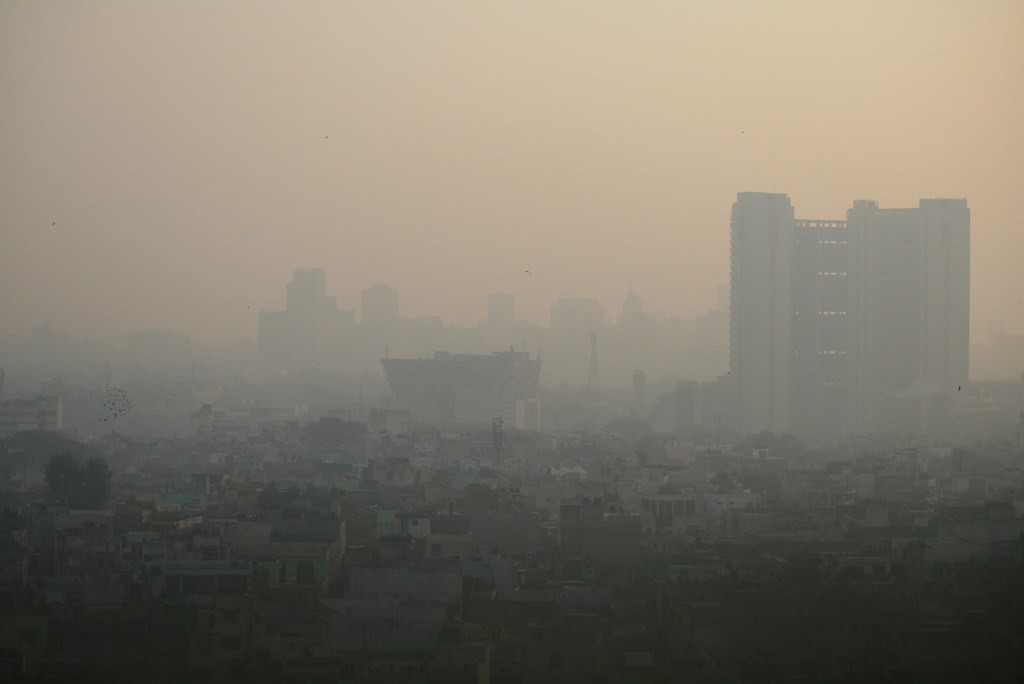
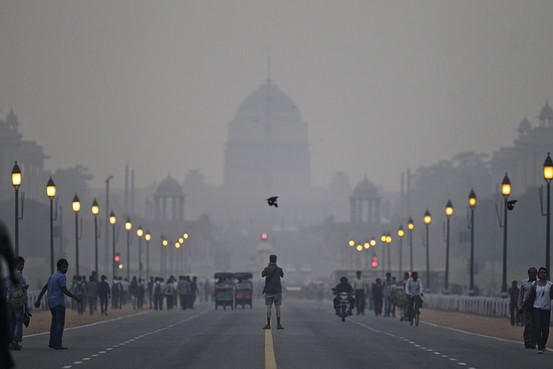
According to WHO (2016), air pollution was responsible for one out of every nine deaths in 2012, with roughly 30 lakh deaths entirely attributable to outdoor air pollution.
In India alone, air pollution was estimated to have caused approximately 11 lakh premature deaths in 2017 (HEI 2019), with 56 percent of those deaths linked to exposure to outdoor PM2.5 concentrations and 44 percent to domestic air pollution. Indians are susceptible to an average of 83.2 g/cubic meter of PM2.5 pollutants, opposed to a much lower level of merely 8 g/cubic meter in cleaner countries.
SOURCES OF POLLUTION
Over time, India’s air quality has deteriorated due to large expansions in industries, population density, human activities, and the increased usage of automobiles. Transportation, factories, agriculture, power, waste management, biomass burning, household, construction, and demolition waste are the seven key sectors that contribute to air pollution.
Industry accounts for 50% of the pollution, with cars accounting for 27%, agricultural burning for 17%, and household cooking accounting for 7%. Air pollution-related diseases claim the lives of about 2 million Indians.
In practically every city, the transportation sector is the primary source of air pollution, although this situation is exacerbated in metropolitan areas.
In recent decades, the country has undergone considerable industrialization. As a corollary, the air quality in most metropolitan areas has plummeted. Polluting firms were divided into 17 categories by the Central Pollution Control Board (CPCB), all of which were small and medium-sized businesses. Seven among those industries designated as “essential,” namely iron and steel, sugar, paper, cement, fertilizers, copper, and aluminum. SPM, SOX, NOX, and CO2 emissions being the principal pollutants.
The main pollutants emitted by farming activities are ammonia (NH3) and nitrous oxide (N2O). Farming methods such as ‘slash and burn’ are major contributors to photochemical smog.
Power plants constitute a substantial amount of air pollution in India. The biggest source of SO2 and TSP emissions are thermal power plants. Between 1947 and 1997, emissions of SO2, NOX, and PM grew by more than 50 times, according to The Energy and Resources Institute (TERI).
Households are a prime source of pollution in India. Although most metropolitan areas use liquefied petroleum gas (LPG) as a cooking fuel, the bulk of rural Indians rely on cow dung cakes, biomass, charcoal, or wood for cooking and other needs. These emissions have dire impacts on air quality, especially indoor air quality, and may significantly impact health.
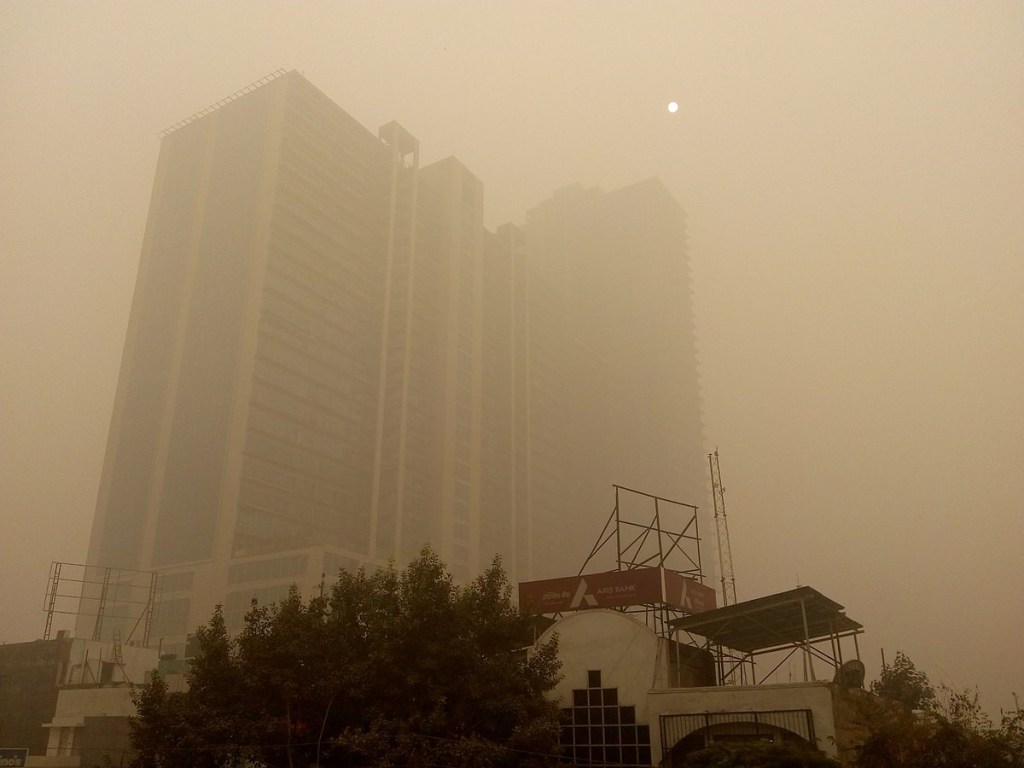
People living in polluted cities are prone to a myriad of health concerns, ranging from mild respiratory issues to life-threatening illnesses. PM, O3, SOX, and NOX emissions have the power to damage people’s cardiovascular and pulmonary systems.
More than 100,000 new-borns died as a result of indoor and outdoor harmful pollutants during their first month of life. The usage of charcoal, wood, and dried dung cakes for cooking and heating homes was associated with a substantial number of these deaths.
According to a study, over 30% of Delhi’s population experienced respiratory illnesses in 2016 as a result of air pollution. Another study indicated that between 1990 and 2010, the fatality rate in Delhi due to air pollution doubled. In 1995, 2800 individuals died prematurely in Mumbai as a result of air pollution; which climbed exponentially to 10,800 in 2010. In 2010, the number of premature deaths in Kolkata was projected to be around 13,500 whereas, Delhi recorded 18,600 annual fatalities.
MEASURES IMPLEMENTED TO CUT EMISSIONS
The Central and State governments have taken several steps to reduce pollution and enhance air quality. The use of compressed natural gas (CNG) as an alternative fuel, the odd-even measures enforced in Delhi, the introduction of Bharat Stage VI vehicle and fuel standards, the Pradhan Mantri Ujjwala Yojana (PMUY), and the National Clean Air Programme (NCAP) are all examples of initiatives in this direction.
Adoption of zig-zag technology for stack emissions from brick kilns, online surveillance of emissions via the Online Continuous Emission Monitoring Systems (OCEMS), and the installation of webcams in environmentally damaging factories are some of the steps taken to combat Air pollution in the industry sector.
Initiation of door-to-door collection of separated waste and various compost pits have been installed in metro areas to mitigate the issue of open burning of garbage and domestic wastes. Furthermore, varied steps have been taken over the years to limit the particulate matter (PM) and dust particle densities, such as green buffer around cities, the maintenance of a 33 % green cover around city environments, and the installation of water fountains throughout cities. On city streets, any car that is more than 15 years old or does not satisfy the BS6 emission regulations will be banned.
But it will take a lot more than this; to control pollution, all citizens of the country must work together.
 Eduindex
You must be logged in to post a comment.