A Streetcar Named Desire

A still from A Streetcar Named Desire (1951) ft. Marlon Brando and Vivien Leigh

A Streetcar Named Desire is a 1947 play by the American playwright Tennessee Williams. It is regarded as one of Williams’ best plays and has received several awards including the Pulitzer Prize. It was also later adapted into a film in the year 1951 starring Marlon Brando and Vivien Leigh, and is still considered to be a classic. Through its eleven scenes, the play delivers a raw reality of the middle class in conflict with the fallen bourgeoise of the American South. 

The story is set in motion when Blanche Dubois, a schoolteacher from Mississippi visits her younger sister Stella in New Orleans. Stella has been newly married to Stanley Kowalski, a Polish descent working class man. The Kowalskis live in a tiny apartment located in the shabbier side of New Orleans where jazz music constantly plays right around the corner. Blanche is sophisticated and looks down upon the living condition of Stella. She takes long baths, only wears fancy clothes and jewelleries and still lives a lifestyle that disagrees with her income. She informs her sister that she lost their ancestral plantation called Belle Reve and intends to stay with the Kowalskis for a while. During her stay, she gets close to one of Stanley’s friend Mitch.

Stella, despite having previously led the same luxurious life as Blanche has surprisingly adjusted quite well to her surroundings. She is head-over-heels for her husband and fears the thought of Blanche looking down on him. Stanley is the working-class hero who is unapologetic of his social status. He values his friends and is passionate about Stella. He lives in the practical world which is in stark contrast to the illusionary world of Blanche. He is strong and opinionated and has his way with everything whereas Blanche is soft spoken and is the embodiment of a chaste shy woman.

“I don’t want realism. I want magic! Yes, yes, magic! I try to give that to people. I misrepresent things to them. I don’t tell the truth, I tell what ought to be the truth. And it that’s sinful, then let me be damned for it!”

-Tennessee Williams

As the play unravels, we see the true colours of the characters. Despite trying her best fit the southern ideals of a naïve young woman, Blanche is revealed to be the exact opposite. She is obsessed with her beauty, is promiscuous with young men and has a severe drinking problem. She has no money left but is too proud to accept that and pretends to be an aristocrat who still expects everyone to be at her command. When she meets Mitch, she tries desperately to hide her promiscuous past from him. She refuses to see him in the day or under a light because she’s afraid that he’ll find her old. Her drinking problem starts soon after the suicide of her previous young husband. Stanley sees right through her and is adamant is calling her out. Through her, he takes out all his pent-up anger against the bourgeoise. He despises Blanche for looking down on him and makes up his mind to bring her to reality. He isn’t swayed by her flirting and succeeds in showing her true colours that she desperately wanted to hide. He even goes as far as to assault her. Despite knowing his true nature, Stella chooses to defend him over her sister.        

A Streetcar Named Desire is thus a raw reminder of the fall of the Southern Aristocracy. Williams reminds his audience that inequality of power never prevails and that those who still cling onto the old ideals are bound to perish with it. He also shows that truth eventually finds its way and that its impossible to live in an imaginary world. The play thus brings us to reality and reminds us of its harshness.
Tennessee Williams as a Southern Writer

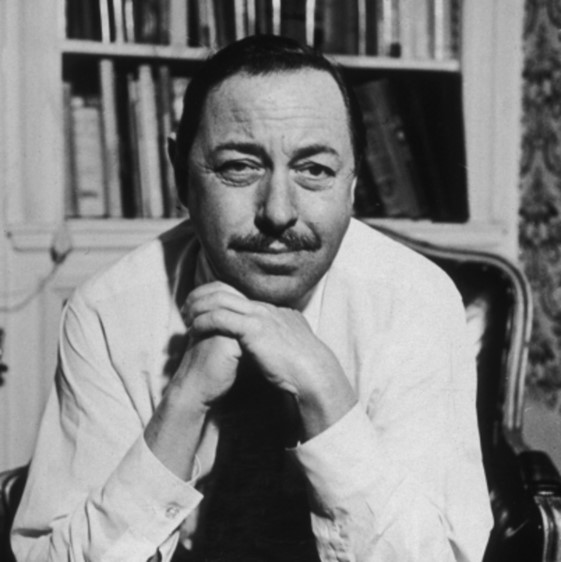
Tennessee Williams

Tennessee Williams is an American playwright hailing from the southern state of Mississippi. For him, writing was an outlet through which he explored the mores of Southern life and the eccentricities and complexities of his own family. His most notable works include The Glass Menagerie (1944) which was considered to be a turning point in his career, A Streetcar Named Desire (1947) and Cat on a Hot Tin Roof (1955) both of which received Pulitzers, Summer and Smoke (1948), Orpheus Descending (1957) etc. Although he wrote throughout his life, his subsequent works never achieved the high acclaim of his earlier works.

Williams as a Southern writer shared a love-hate relationship with the south which provided for dramatic conflicts and excitements. Most of his work reflected traditional topics like agrarianism vs urbanism, New South vs antebellum South, chevalier vs the upstart and so on. For example, his play The Streetcar Named Desire represents the fallen aristocracy with the ethnic denizens a new industrial order, and his play Cat on a Hot Tin Roof represents the different family dynamics of the neo-rich. He drew upon the full resources of language to convey their pictures of culture based on moral absolutes. His characters are portrayed in a way in which they are unable to escape the burdens of their regional histories. Most often, the weight of the southern history the power of racial and social divisions, his rituals and taboos often make self-determination and moral choice unachievable for the characters. In his world, any defiance of this code results in personal destruction.

One of Williams’ most prominent southern trait is the very theatrical display of emotions, dysfunctional characters and unalterable sociological circumstances. He deconstructs the magical appeal of the southern culture and portrays the tension between their dream of an idyllic life and the reality of living it. He also provides constant allusions to plantations like Belle Reve in The Streetcar Named Desire. He also adheres to certain stereotypes of small-town life like gossipy neighbours, fear of scandal, aristocratic families who are deferentially treated by the rest of the community etc.

The usual southern hero is usually almost like an epic figure who embodies the ideals of the society and performs chivalric behaviour which is distinctly different from northern protagonists. A typical southern hero is the leader of men, honest, compassionate, a defender of the faith. They are usually heterosexual, while being protective of the women. But no such southern character exists in Williams’ work. But instead of abandoning the concept of a hero, he has adapted it to the world which has been hopelessly corrupted. He questions the paternalistic order of old South, the enslavement of the black men, the subjugation of the female, the corrupting power of wealth, and the obsession with keeping up appearances. He instead shows guilt caused by the acknowledgement of one sexuality, and the guilt of black subjugation in an antebellum society. Williams attributes perversion and distortions of human behavior to the rigid gender stereotypes that he uncovers in the southern landscape. Certain characters like Brick, who is Blanche’s husband, are unable to cope with the extreme need for masculinity in men. He also questions hypocrisy of a society that denies a woman’s sexuality. Although he does cling to prevailing and romantic point of view past offered luxury and that the present forces the individual to accept barest realities.

“Williams understands human needs and aspirations and is supremely aware of the artist’s role in illuminating urgent personal and social issues; yet his consistent exposure of hypocrisy and his off-beat is reverent sense of humor never hides his deep compassion for those who fear the truth.”

-Kimball King

On one hand, he appreciates the elegance of the past, while on the other, he considers its denial of plurality sufficient cause for its demise. This reflects the love-hate relation that he shares with the South. He does not set out to explain the South and its effects on his characters, but he understands the South and presents characters as real people. He’s a regional writer who does not exploit the peculiarities of his region, and his exploration of the southern value system and conflicts has influenced several later dramatists. To quote Kimball King, “Williams understands human needs and aspirations and is supremely aware of the artist’s role in illuminating urgent personal and social issues; yet his consistent exposure of hypocrisy and his off-beat is reverent sense of humor never hides his deep compassion for those who fear the truth.”

Reference Links:

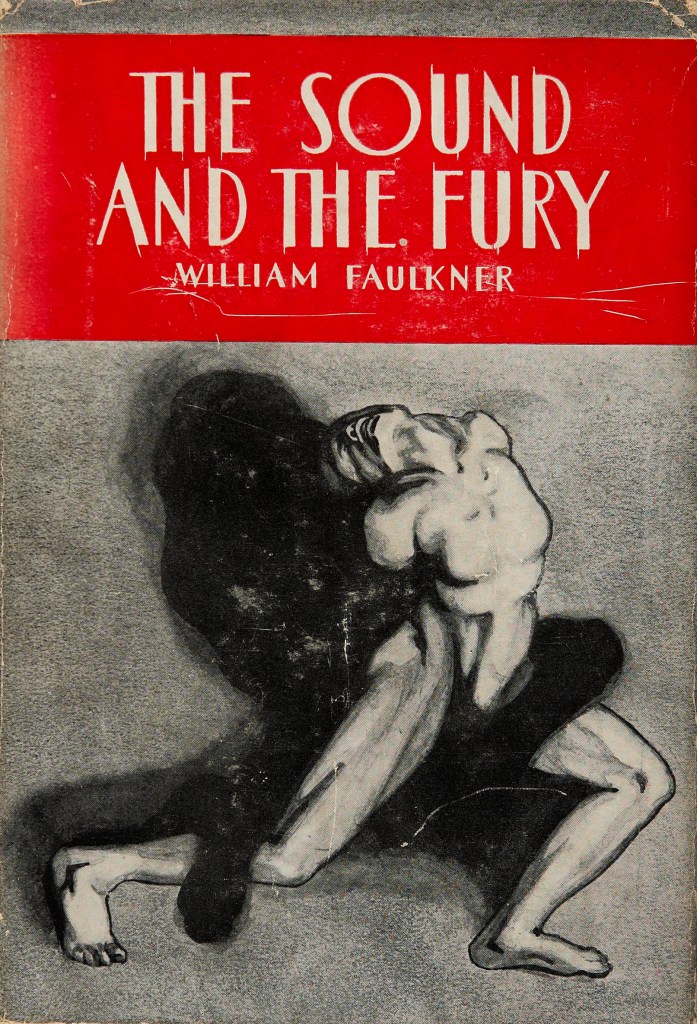
William Faulkner’s ‘The Sound and the Fury’

The Sound and the Fury is 1929 novel by the American author William Faulkner. Faulkner is widely renowned for his experimentation of the narrative technique called ‘stream of consciousness’. William James in his Principles of Psychology describes it as ‘the unbroken flow of perceptions, memories, thoughts and feelings in the waking mind’. In this narrative technique, the narrator seemingly rants about thoughts and introspections that flows through their mind. The novel is a true testament to this narrative.

The book follows the story of the Compson family who are slowly losing their way in the an postbellum (post-war) American South. The Composn family used to be wealthy and mighty in their olden days, but unlike their ancestors, the current members of the family cannot seem to command the power they once held. The story is divided into four parts. The first part takes place on April seventh 1928 and is narrated by Benjy Compson, the mentally challenged youngest son of the family. The second part takes place eighteen years prior on June second, 1910. It is narrated by the oldest son Quentin who is a student at Harvard. The third part takes place a day before the first part, on April sixth 1928. It is narrated by the headstrong third son Jason Compson. The final part takes place a day after the first part, on April eighth 1928. It is narrated by a seemingly omniscient narrator who records the observations of Dilsey, the family’s loyal black servant.

“Clocks slay time… time is dead as long as it is being clicked off by little wheels; only when the clock stops does time come to life.”

– William Faulkner

The story is fragmented and is narrated in a non-chronological manner. Most of the story has been uncovered based on audience’s interpretation to try and form a coherent narrative of the same. The story narrates the three Compson brothers’ seeming obsession over their sister Caddy, who surprisingly does not narrate any portion of the novel. Despite not having her own narrative, it is clear that Caddy has influenced her brothers and holds a strong presence throughout the novel. Growing up with an incompetent and absent-minded father, Caddy assumes charge of her brothers. This sense of control continues to grow and she proves that she is capable of making her own way in life. Her family disapproves of her promiscuity and banishes her after she gets pregnant out of wedlock.

The first part, narrated by Benjy is the most convoluted of all. It gives a glimpse of what his thoughts and records his accounts on how people around him treat him. His memories are interconnected and they create a domino effect as they are triggered by senses like smell or touch. For instance, a sensation that he experiences in the present triggers a memory of similar sensation in the past. Caddy is the only one who treated Benjy as a normal being and he misses her. They both share a strong emotional bond and lot of his memories are associated to her. The second narrator Quentin has a similar strong bond with Caddy. Being the older brother, he is overprotective of her and even hints of incestual jealousy over her. Quentin is also deeply disturbed by his sister’s promiscuity which is unlike the ‘Southern morals’. He is intelligent and his narration is crudely interspersed with philosophy and existential questioning. The narrator of the third part Jason is strongly against Caddy. He is petty and resentful and blames everyone else around him for his misfortunes. He blames Caddy for the loss of his job which was promised to him by her ex-husband. He is headstrong and clings desperately to the old power that the Compson family once held. He obtains this feeling by controlling his family including Caddy’s child. The narrator of the fourth part Dilsey is the only objective narrator in the family. Despite being a black woman in a post-slavery abolishment era, she serves the Compson family loyally and seems to be the only one holding the family together. Although the family bosses her around, she’s content and dedicated to the work she does and is the only ‘sane’ one among the rest.  

The Sound and the Fury is definitely worth a read to understand the complexities of a non-chronological narrative. It is impossible to be explained through a conventional synopsis as it only scratches the surface of the true depth of the novel. It is riddled with symbolisms and open-ended plotlines that motivates the readers to think for themselves. The realistic aspect of the novel also makes the characters more endearing to the readers. It is easily one of Faulkner’s best.

Reference Links:

Brazil’s fight against deforestation

The Amazon rainforest is considered to be the largest rainforest in the world spread over 6 lakhs sq. km it contributes to more than half of the forests present in the world. Home to a variety of species of animals like the Amazon River dolphin, the Howler monkey and many other rare and endangered species. It also hosts the most beautiful and diverse flora and fauna that cannot be found anywhere on the planet except here.

The Amazon currently lies in almost nine different countries, but a major part of it is situated in Brazil. It is the home of over 2 million insect species and thousands of varieties of plants and at least 1000 different species of mammals and birds. It is considered a haven for several thousands of migratory birds that reside in these thick rainforests.

During the pre-Columbian period, parts of the forest were highly populated solely for agriculture. Once the Europeans arrived in the 16th century, the hunt began for Gold and rubber. But later on, these settlements were abandoned due to famines and some slavery revolts. The Amazon has not only been home to flora and fauna and several other species, but it has also provided immense support and resources for the local tribes to sustain their lives in the forest.

Presently, environmentalists are severely concerned about the future of the Amazon rainforest. They are concerned about the loss of biodiversity that might occur due to deforestation. Due to deforestation, there might also be a huge imbalance in the carbon cycle which could lead to severe issues.

Deforestation has increased exponentially over the past few years; we have witnessed the most amount of deforestation this month over the past 12 years. Deforestation mainly occurs due to many factors like exploitation of resources, cattle grazing, agriculture and many others.

Well according to a paper published by the World bank in 2004 the cattle sector which contributed towards beef and leather industries contributed to over 80% of the deforestation caused. In the year 2019, a devastating forest fire lasted for over half a year shrinking the forest cover by around 1300 sq.km. To add on to this in the year 2020 deforestation caused rose by almost 50% in the first three months.

In efforts to curb the rates at which deforestation is occurring the President of Brazil has ordered troops into the forest to protect the forest by preventing illegal activities like mining and slaughtering of wild animals. This action was forced onto the president after the severe surge in deforestation and criticism from numerous international organizations and media houses.  

The move from the President was applaudable but did not contain any details on the number of troops sent into the forest or the target they intend to achieve in this fight against deforestation. Moreover, it is immensely important to note that a move has been taken to control deforestation.

The Vice President stated that the operation will be kept active for two months since the current season in the Amazon is very dry and allows easy mobility into the forests. The government’s main intention is to take control over the illegal activities occurring in the rainforest and help make the forest a haven for the species dependent on it.

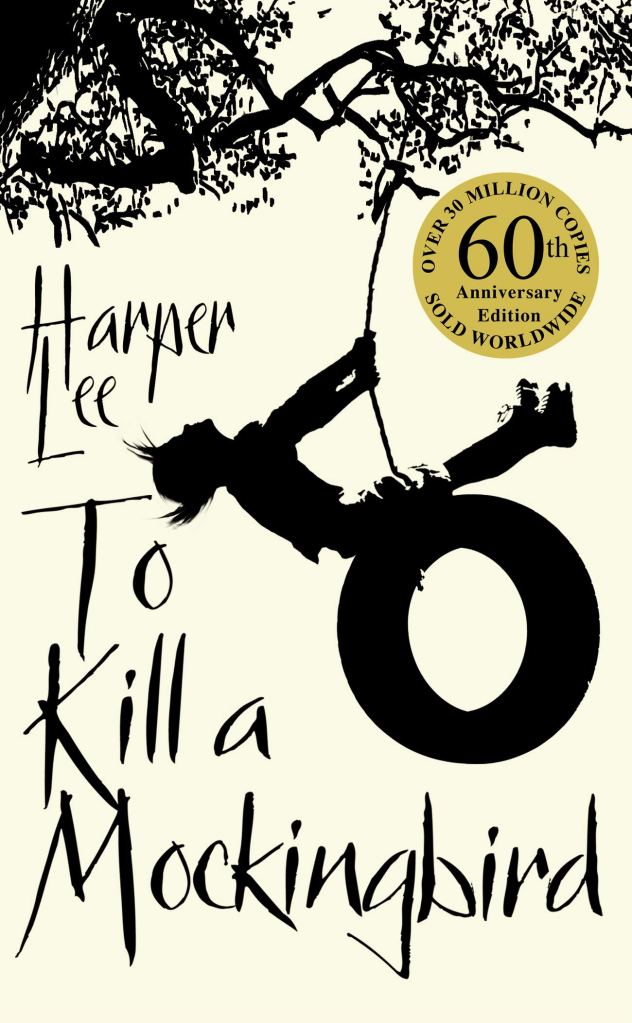
Race and class in Harper Lee’s ‘To Kill a Mockingbird’

‘To Kill a Mockingbird’ is a Southern gothic bestseller written by Harper Lee. The novel is narrated by Scout Finch, a six-year-old white girl who learns about life, people and the injustices prevalent in her society. Through her, Lee cleverly portrays issues such as gender, race and class discrimination in the fictional setting of Maycomb county, Alabama. Readers have speculated that the character of Scout was based on Lee’s own childhood experiences, wherein she combines the nostalgic elements with the political situation that she witnessed around her in America. Scout’s innocence and her defiance against the social hierarchies in Maycomb cuts a deeper meaning into the futility of these societal constructs.

Race is one of the issues that is evidently portrayed in the novel. Scout’s father Atticus Finch is a lawyer who defends the less privileged. He strives hard to stand by his moral compass and wishes to set an example for his children through his actions. One of the major events in the novel takes place when Atticus chooses to defend Tom Robinson, a black man accused of raping a white woman. The racist residents of Maycomb, as well as his family members are horrified and attempt hard to dissuade him. So much so, that even Scout and her brother Jem are subjected to verbal abuse by other children for his actions. During the trial, Atticus provides clear evidence to prove Tom’s innocence. Despite the impressive evidences, the extremely racist jury sentences him to jail where he later attempts to escape, but is shot and killed. We see that even the law is corrupted when it comes to rendering justice to innocent African Americans. Tom Robinson’s trial scene is monumental in proving the racial discrimination in America.

Calpurnia, the Finch family’s black maid plays a significant role in Scout’s life. Unlike most southern black characters, she is well- educated and is highly respected within the Finch family. Having lost her mother at a young age, Scout regards Calpurnia as a mother-like figure. One of the important moments in the novel is when Calpurnia takes Jem and Scout to the Black Church. Here, the children witness a different side of characteristics in Calpurnia as she interacts with the rest of her community. W. E. B. Du Bois refers to this as “double consciousness”; a phenomenon wherein a person exhibits two different personalities with the blacks and the whites. This can be seen as a defence mechanism to gain acceptance in a white supremist society due to their own internalised racism. Furthermore, despite being a novel that is concerned with issues like racism, it only portrays a subjective version of it. The black community are not given a voice of their own against this prejudice, which marginalises them within the text. If they are given a voice, it is usually to show gratitude to the good white people instead of raising their anger and frustration against the racial injustices in Maycomb.  

Social class prejudice is an important element highlighted in ‘To Kill a Mockingbird’. This can be understood clearly when Jem imagines ‘folks’ as being divided into four different kinds. “Our kind of folks don’t like the Cunninghams, the Cunninghams don’t like the Ewells, and the Ewells hate and despise the coloured folks.” (Lee, 249) Through Jem, Lee clearly explains the class hierarchical structure of Maycomb. It is a prejudice engrained in Maycomb which even dictates the relationship between children at school. But the novel also explains that the class system can eventually be dismantled. Initially, when Scout treats Walter Cunningham Jr differently, Calpurnia teaches her otherwise and makes her realise that a person’s financial background has nothing to do with their personality. When Cunningham Sr. arrives with a mob to lynch Tom Robinson, Scout’s innocence humbles him, saving Tom’s life briefly. Scout thus is able to achieve a small proportion of justice by disregarding the class system. Her reply “I think there’s just one kind of folks. Folks.” (Lee, 250) is an innocent yet powerful statement against the prevailing class structure in the society.

“You never really understand a person until you consider things from their point of view…”

Harper Lee

Aside from race and class, the novel also deals with other important issues like gender, disability, and sexuality. As Scout belongs to a middle-class white family, the primary concern that she personally deals with is sexism. She is portrayed as a tomboy, who is forced to confirm to the conventional idea of a girl. Over the years, readers have come up with multiple theories from the book pertaining to current social issues which proves that even after sixty years, it is still contemporary. Atticus’s advice that “You never really understand a person until you consider things from his point of view . . .” is a principle that could serve as a solution for all types of prejudices. And as mentioned by John Green, the “combination of nostalgia and criticism makes Mockingbird both endearing and enduring.” To Kill a Mockingbird is revolutionary in the fact that it brilliantly portrays multiple serious themes through the eyes of an innocent child.

Reference Links: